Delivery of temperature sensitive items including proteins and kits will be paused on 6/19 for the Juneteenth holiday. For urgent orders please contact customer service.
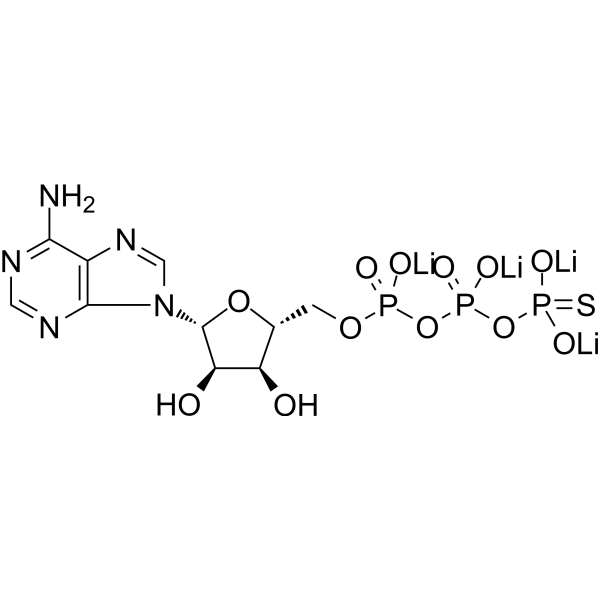
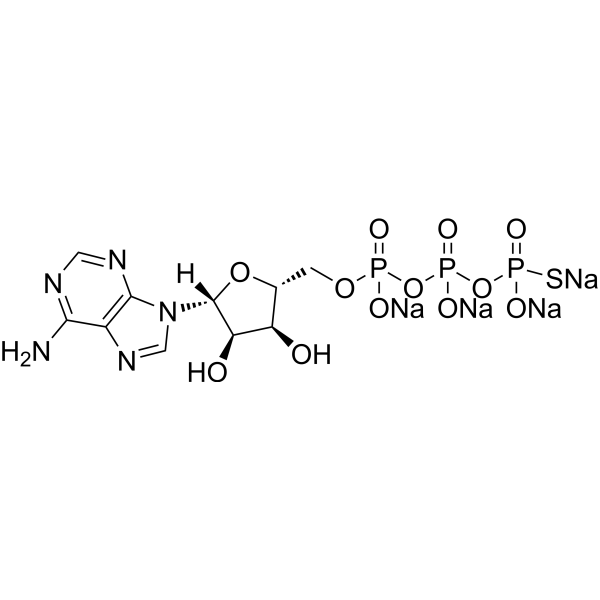
ATPγS (tetralithium salt) is a P2Y11 receptor agonist, an antioxidant and a neuroprotective agent. ATPγS (tetralithium salt) can be used as a substrate for the nucleotide hydrolysis and RNA unwinding activities of eukaryotic translation initiationfactoreIF4A. ATPγS (tetralithium salt) is active in ATP hydrolysis .
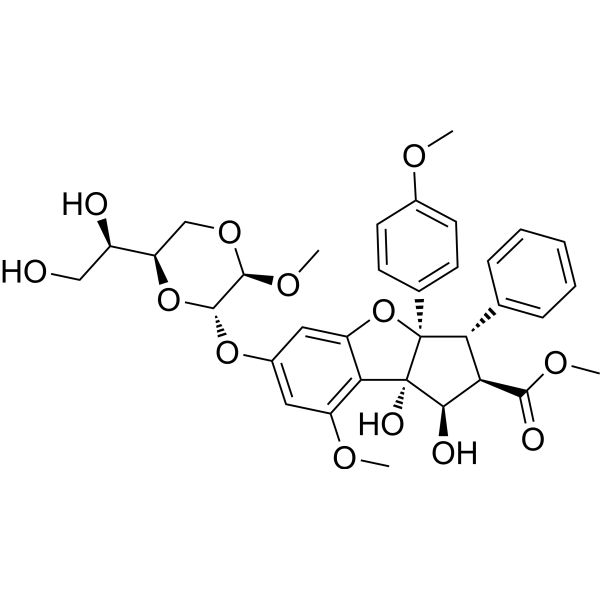
Silvestrol is a eukaryotic translation initiationfactor 4A (eIF4A) inhibitor isolated from Agave americana Linn.. Silvestrol induces autophagy and caspase-mediated apoptosis .
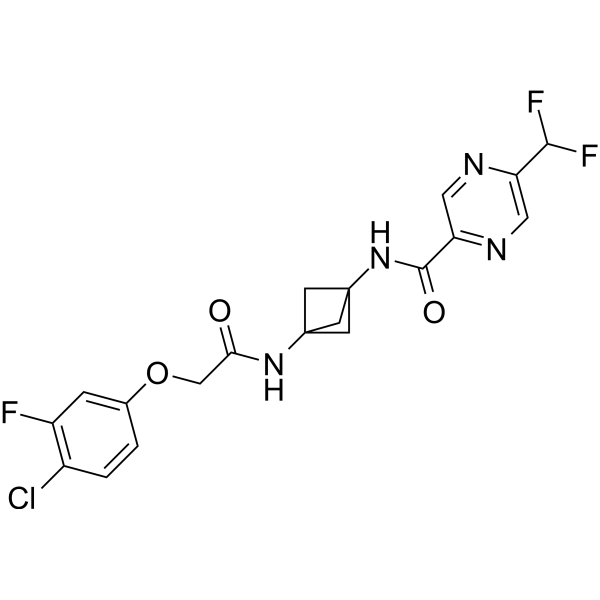
2BAct is a highly selective, orally active, and CNS-penetrant eIF2B (eukaryoticinitiationfactor 2B) activator with an EC50 of 33 nM. 2BAct prevents neurological defects caused by a chronic integrated stress response. 2BAct displays improved solubility and pharmacokinetics relative to eIF2B activator ISRIB trans-isomer (HY-12495) .
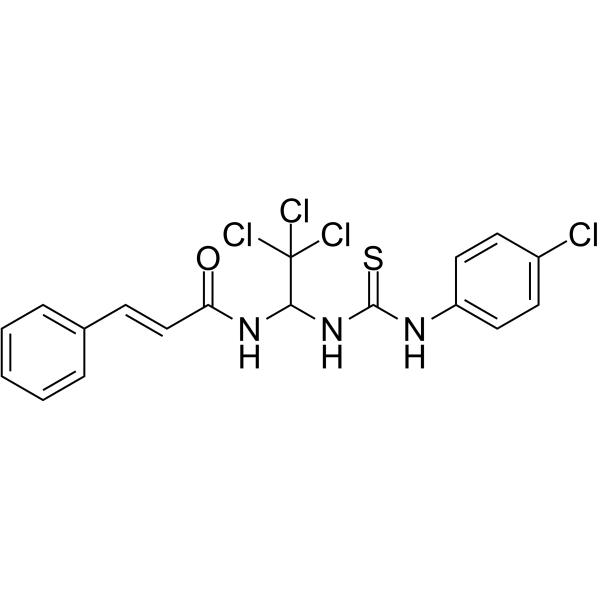
Sal003 is a potent, specific and cell-permeable inhibitor of the eukaryotic translation initiationfactor 2α (eIF2α) phosphatase. Sal003 is a derivative of salubrinal .
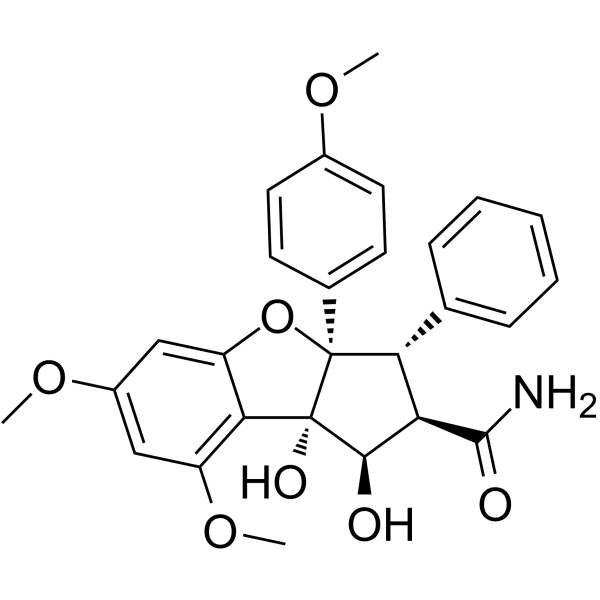
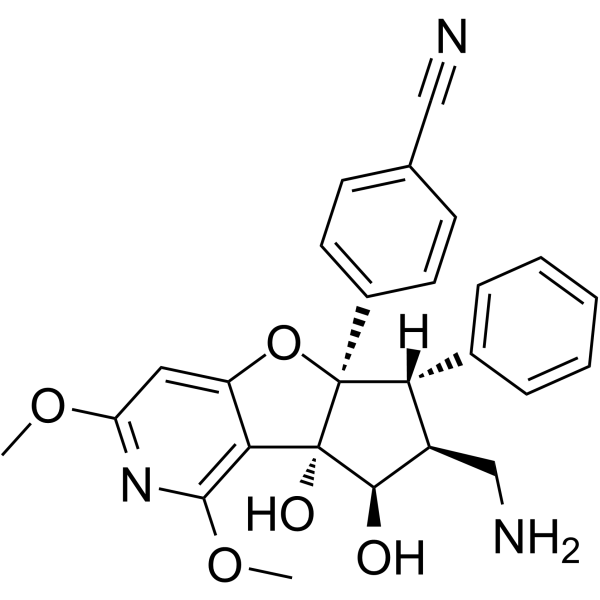
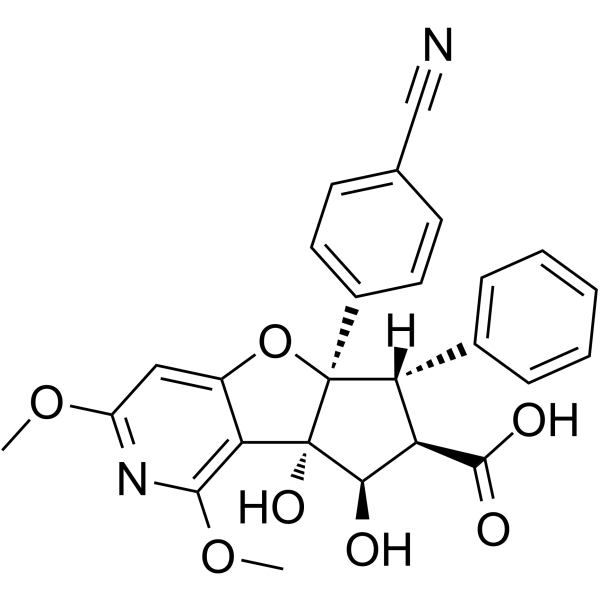
Didesmethylrocaglamide, a derivative of Rocaglamide, is a potent eukaryoticinitiationfactor 4A (eIF4A) inhibitor. Didesmethylrocaglamide has potent growth-inhibitory activity with an IC50 of 5 nM. Didesmethylrocaglamide suppresses multiple growth-promoting signaling pathways and induces apoptosis in tumor cells. Antitumor activity .
DNL343 is a potent, selective, orally active and brain-penetrant activator of eukaryoticinitiationfactoreIF2B. DNL343 inhibits the activity of the integrated stress response (ISR) in the central nervous system (CNS) and reverses neurodegeneration and neuroinflammation. DNL343 also prevents motor dysfunction and premature death in eIF2B loss-of-function (LOF) mutant mice. DNL343 can be used in the study of neurodegenerative diseases .
Fosigotifator (ABBV-CLS-7262) THAM sodium is a brain penetrant, orally active EIF2b (eukaryoticinitiationfactor) activator. Fosigotifator THAM sodium stabilizes the elF2B complex and boosts the activity, including that of complexes carrying pathogenic vanishing white matter (VWM) mutations. Fosigotifator THAM sodium is an integrated stress response inhibitor (ISRI). Fosigotifator THAM sodium can be used for amyotrophic lateral sclerosis research .
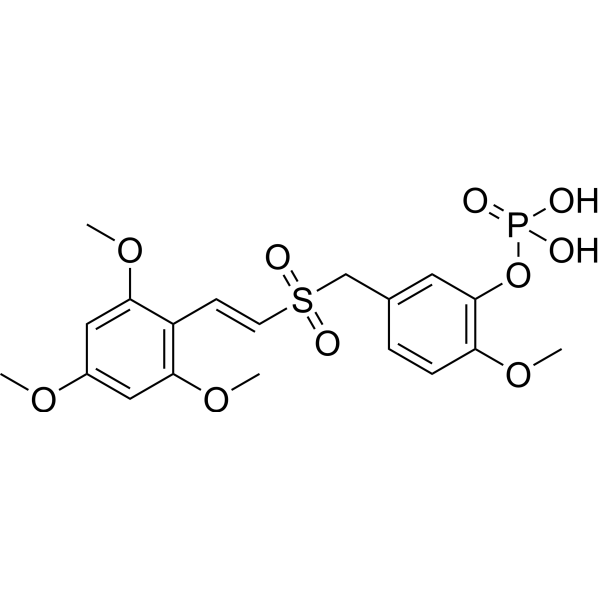
Briciclib (ON 014185) is a eukaryotic translation initiationfactor 4E (eIF4E) inhibitor. Briciclib exhibits broad-spectrum anti-cancer activity, including in mantle cell leukemia, breast cancer, gastric cancer, and esophageal cancer cells. Briciclib reduces the expression of cyclin D1 and c-Myc, and enhances the expression of P53 and Cleaved Caspase 3 pro-apoptotic proteins. Briciclib can be used for the study of hematological system tumors and solid tumors .
eIF4A3-IN-8 serves as a negative control targeting eukaryoticinitiationfactor 4A3 (eIF4A3), with an IC50 > 100 μM; it exhibits no significant activity .
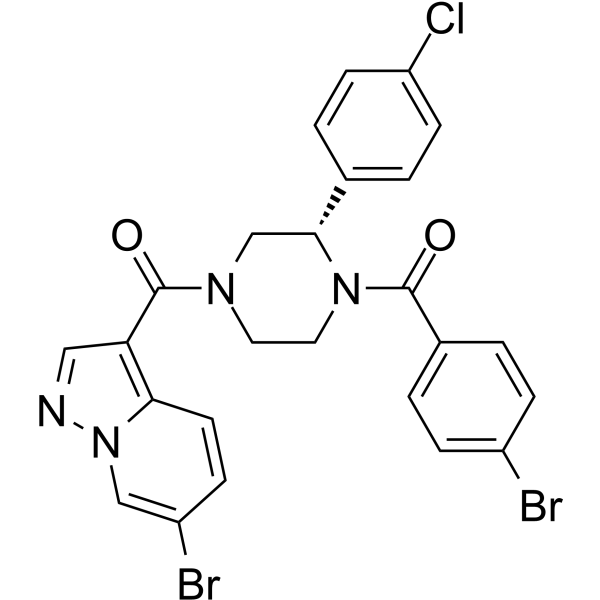
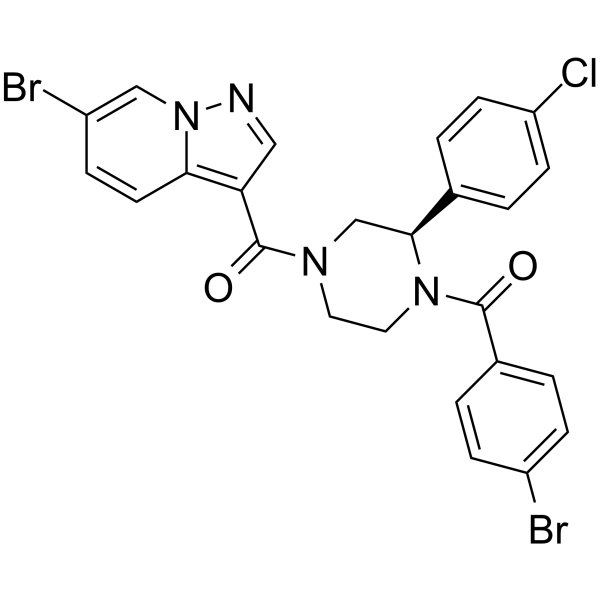
eIF4E-IN-2 is a potent inhibitor of eukaryoticinitiationfactor 4e (eIF4e) with an IC50 of 13 nM. eIF4E-IN-2 inhibits MDA-MB-361 cells proliferation. eIF4E-IN-2 can be used for the study of breast cancer .
eIF4A-IN-1 intermediate (Compound 71E) is an intermediate of Eukaryotic translation initiationfactor 4A (eIF4A) inhibitor. eIF4A-IN-1 intermediate can be used as a cytotoxic payload for synthesis of antibody-drug conjugates (ADCs) .
ATP-γ-S (tetrasodium) is a P2Y11 receptor agonist, an antioxidant and a neuroprotective agent. ATP-γ-S (tetrasodium) can be used as a substrate for the nucleotide hydrolysis and RNA unwinding activities of eukaryotic translation initiationfactoreIF4A. ATP-γ-S (tetrasodium) is active in ATP hydrolysis .
RK-9123016 is a potent inhibitor of SIRT2. RK-9123016 inhibits the enzymatic activity of SIRT2 with an IC50 value of 0.18 µM but not other human sirtuin members including SIRT1 and SIRT3 at 100 µM. RK-9123016 increases the acetylation level of eukaryotic translation initiationfactor 5A (eIF5A), a physiological substrate of SIRT2, and reduces cell viability of human breast cancer cells accompanied with a decrease in c-Myc expression .
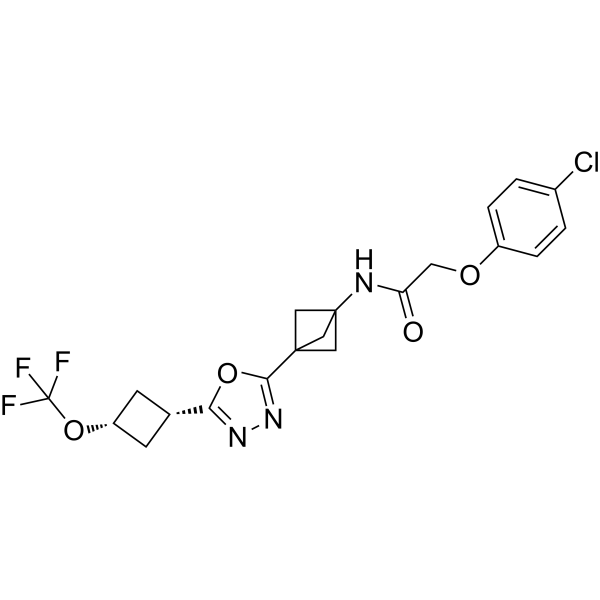
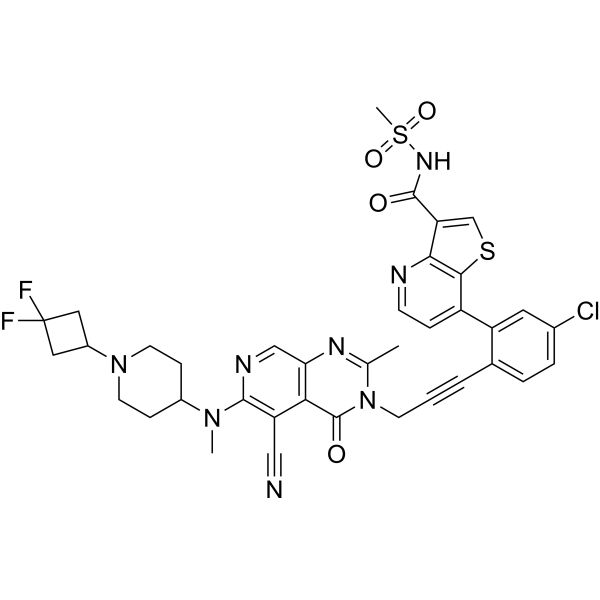
eIF4A-IN-2 (Compound 93) is an Eukaryotic translation initiationfactor 4A (eIF4A) inhibitor. eIF4A-IN-2 can be used as a cytotoxic payload for synthesis of antibody-drug conjugates (ADCs) .
eIF4A3-IN-6 is a potent inhibitor of eukaryoticinitiationfactor 4A(eIF4A), such as eIF4AI and eIF4AII. eIF4A3-IN-6 has the potential for the research of eIF4A dependent diseases, including the research of cancer (extracted from patent US20170145026A1) .
eIF4E-IN-4 (Compound 33) is a selective inhibitor of eukaryoticinitiationfactor 4E (eIF4E) with biochemical
activity value of 95 nM. eIF4E-IN-4 inhibits cap-dependent mRNA translation with an IC50 value of 2.5 μM. eIF4E-IN-4 can be used for breast cancer, colon cancer, and head and neck cancer study .
Fosigotifator (ABBV-CLS-7262) is a brain penetrant, orally active EIF2b (eukaryoticinitiationfactor) activator. Fosigotifator stabilizes the elF2B complex and boosts the activity, including that of complexes carrying pathogenic vanishing white matter (VWM) mutations. Fosigotifator is an integrated stress response inhibitor (ISRI). Fosigotifator can be used for amyotrophic lateral sclerosis research .
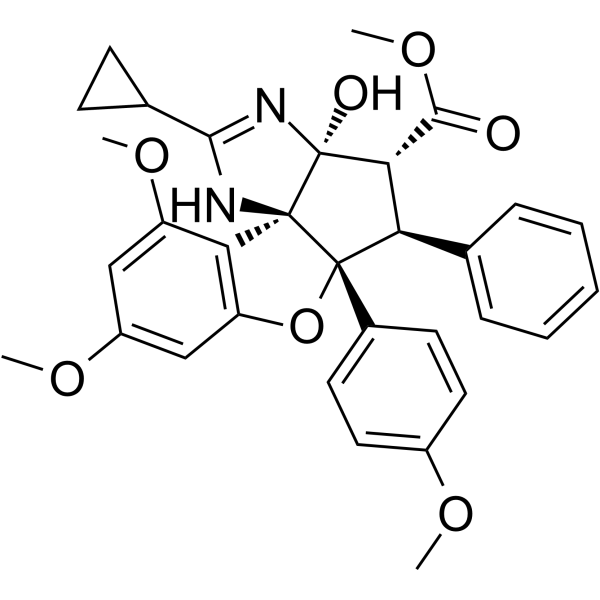
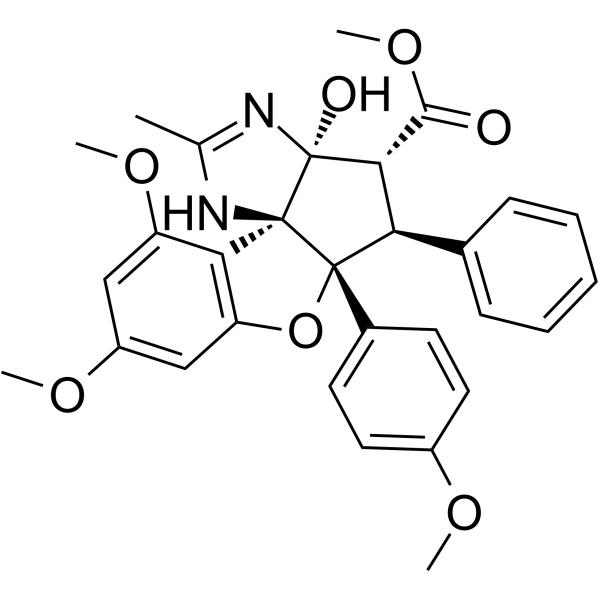
CMLD012072 is an amidino-rocaglates and is a potent eukaryoticinitiationfactor 4A (eIF4A) inhibitor. CMLD012072 can induce RNA clamping of eIF4A1 and eIF4A2 and possess potent anti-neoplastic activity .
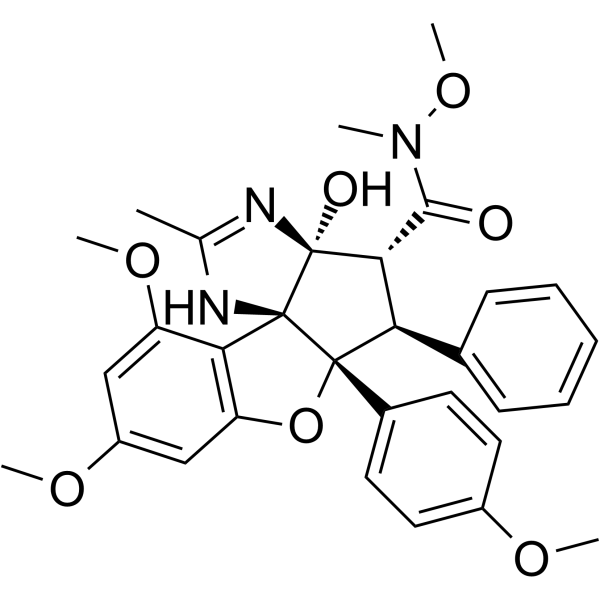
CMLD012612 is an amidino-rocaglate containing a hydroxamate group and is a potent eukaryoticinitiationfactor 4A (eIF4A) inhibitor. CMLD012612 inhibits cell translation and is cytotoxic to NIH/3T3 cells with an IC50 value of 2 nM. CMLD012612 inhibits eukaryotic translation initiation by modifying the behavior of the RNA helicase (eIF4A) and possesses potent anti-neoplastic activity .
Deoxyhypusine is an unusual amino acid formed during the posttranslational modification of eukaryotic translation initiationfactor 5A (eIF-5A) by the enzyme deoxyhypusine hydroxylase (DOHH) .
CMLD012073 is an amidino-rocaglates and is a potent eukaryoticinitiationfactor 4A (eIF4A) inhibitor. CMLD012073 inhibits the growth of NIH/3T3 cells with an IC50 of 10 nM. CMLD012073 inhibits eukaryotic translation initiation by modifying the behavior of the RNA helicase (eIF4A) .
(R)-eIF4A3-IN-2 is a less active enantiomer of eIF4A3-IN-2. eIF4A3-IN-2 is a highly selective and noncompetitive eukaryoticinitiationfactor 4A-3 (eIF4A3) inhibitor with an IC50 of 110 nM .
eIF4A3-IN-5 is a potent inhibitor of eukaryoticinitiationfactor 4A(eIF4A), such as eIF4AI and eIF4AII. eIF4A3-IN-5 has the potential for the research of eIF4A dependent diseases, including the research of cancer (extracted from patent US20170145026A1) .
Hypusine dihydrochloride is a natural amino acid found only in the eukaryotic translation initiationfactor 5A (eIF-5A). Hypusine is formed by the transfer of the butylamine portion from spermidine to the ϵ-amino group of a specific lysine residue of eIF-5A precursor and by the hydroxylation at carbon 2 of the incoming 4-aminobutyl moiety .
Human EIF2AK2 mRNA encodes the human eukaryotic translation initiationfactor 2 alpha kinase 2 (EIF2AK2) protein, a serine/threonine protein kinase that is activated by autophosphorylation after binding to dsRNA. EIF2AK2 plays a key role in the innate immune response to viral infection and is also involved in the regulation of signal transduction, apoptosis, cell proliferation and differentiation.
Antiproliferative agent-64 (Compound 76) is an inhibitor for eukaryotic translation initiationfactor 4E(eIF4E), that block the secondary structure of mRNA, thereby inhibiting protein translation. Antiproliferative agent-64 inhibits the 5' untranslated region (5'UTR) of c-Myc (c-myc 5'UTR) with an EC50 of 1.2 nM, inhibits 5'UTR encoding tubulin (tub 5'UTR) with an EC50 of 40 nM. Antiproliferative agent-64 inhibits the proliferation of MDA-MB-231 with an EC50 of 7 nM .
eIF4A3-IN-2 (Standard) is the analytical standard of eIF4A3-IN-2 (HY-101785). This product is intended for research and analytical applications. eIF4A3-IN-2 is a highly selective and noncompetitive eukaryoticinitiationfactor 4A-3 (eIF4A3) inhibitor with an IC50 of 110 nM .
NUCC-0231068 is a MNK1 and MNK2 inhibitor with IC50 values of 8 nM and 7 nM, respectively. NUCC-0231068 inhibits the phosphorylation of eukaryotic translation initiationfactor 4E (eIF4E) at Ser209, with an IC50 of 23 nM in its purified form and 17 nM in its D2B form. NUCC-0231068 can be used in studies related to glioblastoma .
MG-002 is an orally active eIF4A inhibitor. MG-002 non-productively traps the eukaryotic translation initiationfactor 4A (eIF4A) onto RNA, hindering the recruitment and scanning of ribosomes, thereby inhibiting mRNA translation. MG-002 selectively inhibits the growth and metastasis formation of triple-negative breast cancer (TNBC) tumors and induces cell apoptosis. MG-002 significantly inhibits the protein expression of c-MYC and cyclin D1. MG-002 can be used for research on TNBC .
ATPγS tetralithium salt (Standard) is the analytical standard of ATPγS (tetralithium salt) (HY-108666). This product is intended for research and analytical applications. ATPγS (tetralithium salt) is a P2Y11 receptor agonist, an antioxidant and a neuroprotective agent. ATPγS (tetralithium salt) can be used as a substrate for the nucleotide hydrolysis and RNA unwinding activities of eukaryotic translation initiationfactoreIF4A. ATPγS (tetralithium salt) is active in ATP hydrolysis .
Briciclib (ON 014185) sodium is a eukaryotic translation initiationfactor 4E (eIF4E) inhibitor. Briciclib sodium exhibits broad-spectrum anti-cancer activity, including in mantle cell leukemia, breast cancer, gastric cancer, and esophageal cancer cells. Briciclib sodium reduces the expression of cyclin D1 and c-Myc, and enhances the expression of P53 and Cleaved Caspase 3 pro-apoptotic proteins. Briciclib sodium can be used for the study of hematological system tumors and solid tumors .
Silvestrol is a eukaryotic translation initiationfactor 4A (eIF4A) inhibitor isolated from Agave americana Linn.. Silvestrol induces autophagy and caspase-mediated apoptosis .
The EIF3G protein is an RNA-binding component of the eIF-3 complex that initiates protein synthesis by promoting the recruitment of factors to form the 43S PIC. EIF3G is critical in both mRNA recruitment and AUG recognition scanning. EIF3G Protein, Human (His-SUMO) is the recombinant human-derived EIF3G protein, expressed by E. coli , with N-SUMO, N-6*His labeled tag.
The EIF5 protein is a key member of the 43S pre-initiation complex (43S PIC) and actively participates in mRNA cap-proximal binding, scanning 5'-untranslated regions and locating start codons. EIF5 Protein, Human (GST) is the recombinant human-derived EIF5 protein, expressed by E. coli , with N-GST labeled tag.
EIF5A2 is a translation factor critical for promoting elongation and termination, helping stalled ribosomes encounter specific amino acid environments. EIF5A2 is located between the ribosome exit (E) and peptidyl (P) sites and rescues stalled ribosomes, especially those translating polyproline-containing peptides. EIF5A2 Protein, Human (His) is the recombinant human-derived EIF5A2 protein, expressed by E. coli , with N-6*His labeled tag.
The EIF1AX protein is an important member of the 43S preinitiation complex (43S PIC) and is responsible for coordinating mRNA cap-proximal binding, scanning the 5'-untranslated region, and pinpointing the start codon. EIF1AX Protein, Human (His) is the recombinant human-derived EIF1AX protein, expressed by E. coli , with N-6*His labeled tag.
EIF4A2, an ATP-dependent RNA helicase, is a vital subunit of the eIF4F complex, pivotal in cap recognition and mRNA binding to ribosomes. In translation initiation, EIF4A2 crucially unwinds RNA secondary structures in mRNA 5'-UTRs. This activity facilitates small ribosomal subunit binding and efficient scanning for the initiator codon, orchestrating translation initiation. EIF4A2 Protein, Human (GST) is the recombinant human-derived EIF4A2 protein, expressed by E. coli , with N-GST labeled tag.
The EIF3S5 protein is an important component of the eukaryotic translation initiation factor 3 (eIF-3) complex and plays a crucial role in various stages of protein synthesis initiation. It stimulates mRNA recruitment, scans for AUG recognition, and promotes disassembly and recycling of posttermination ribosomal complexes within the 43S preinitiation complex (43S PIC). EIF3S5 Protein, Human (GST) is the recombinant human-derived EIF3S5 protein, expressed by E. coli , with N-GST labeled tag.
The EIF5 protein is a key member of the 43S pre-initiation complex (43S PIC) and actively participates in mRNA cap-proximal binding, scanning 5'-untranslated regions and locating start codons. EIF5 Protein, Human (His-SUMO) is the recombinant human-derived EIF5 protein, expressed by E. coli , with N-SUMO, N-6*His labeled tag.
The GSK-3 beta protein is an enzyme that plays a crucial role in multiple cellular processes, including cell proliferation, differentiation, and apoptosis. It regulates various signaling pathways and is involved in the development of several diseases, such as cancer and neurodegenerative disorders. GSK-3 beta is active in its unphosphorylated form and can phosphorylate a wide range of substrates to modulate cellular functions. EIF5A Protein, Human (His) is the recombinant human-derived EIF5A protein, expressed by E. coli , with N-6*His labeled tag.
The EIF1 protein is a key member of the 43S preinitiation complex (43S PIC), binding to the mRNA cap-proximal region, scanning the 5′-untranslated region, and localizing the initiation codon. EIF1 Protein, Human (GST) is the recombinant human-derived EIF1 protein, expressed by E. coli , with N-GST labeled tag.
EIF1B Protein likely intricately participates in translation, playing a crucial role in facilitating accurate and efficient protein synthesis within cellular machinery. Its involvement suggests a key function in orchestrating various steps required for proper decoding of mRNA and subsequent assembly of polypeptide chains. EIF1B Protein, Human (His) is the recombinant human-derived EIF1B protein, expressed by E. coli , with N-6*His labeled tag.
IF4E protein plays multiple roles in cells, regulating processes such as protein synthesis, mRNA export, RNA processing and splicing. As part of the eIF4F protein complex, IF4E recognizes the mRNA cap and promotes ribosome binding. It is also involved in translation repression and regulation of mRNA stability. In P bodies, IF4E is involved in storing translationally inactive mRNA. In addition, IF4E also plays a role in spermatogenesis, neurogenesis, and mRNA nuclear-cytoplasmic transport. The ability of IF4E to participate in mRNA export relies on binding to the m7G cap and the EIF4E-sensitive element (4ESE). LRPPRC promotes the formation of EIF4E-dependent mRNA export complexes. The action of IF4E changes the composition of nuclear pores and promotes the nuclear export of specific mRNAs. EIF4E Protein, Human is the recombinant human-derived EIF4E protein, expressed by E. coli , with tag free.
The eIF3K protein is an important component of the eukaryotic translation initiation factor 3 (eIF-3) complex and plays a crucial role in various steps of protein synthesis initiation.It stimulates recruitment of mRNA to the 43S preinitiation complex (43S PIC) and promotes AUG recognition scanning.EIF3K Protein, Human (sf9, His-GST) is the recombinant human-derived EIF3K protein, expressed by Sf9 insect cells , with N-His, N-GST labeled tag.
The EIF4A1 protein is an ATP-dependent RNA helicase and an important subunit of the eIF4F complex, which is essential for cap recognition and promoting the binding of mRNA to ribosomes. In the translation initiation model, EIF4A1 helps unravel RNA secondary structure in the mRNA 5'-UTR. EIF4A1 Protein, Human is the recombinant human-derived EIF4A1 protein, expressed by E. coli , with tag free.
The EIF4A1 protein is an ATP-dependent RNA helicase and an important subunit of the eIF4F complex, which is essential for cap recognition and promoting the binding of mRNA to ribosomes. In the translation initiation model, EIF4A1 helps unravel RNA secondary structure in the mRNA 5'-UTR. EIF4A1 Protein, Human (His, Strep) is the recombinant human-derived EIF4A1 protein, expressed by E. coli , with N-Strep, N-6*His labeled tag.
EIF4EBP2 is a translation initiation repressor protein that plays a critical regulatory role in synaptic plasticity, learning, and memory. In the hypophosphorylated state, EIF4EBP2 competes with EIF4G1/EIF4G3, forms a complex with EIF4E, and inhibits translation. EIF4EBP2 Protein, Human (His) is the recombinant human-derived EIF4EBP2 protein, expressed by E. coli , with N-6*His labeled tag.
EIF4G1 is a key component of the eIF4F complex and plays a critical regulatory role in translation initiation. EIF4G1 plays different roles in complexes with EIF1 or EIF4E. EIF4G1 Protein, Human (His-B2M-JD, Myc) is the recombinant human-derived EIF4G1 protein, expressed by E.coli , with N-10*-B2M-JD and C- Myc labeled tag.
rHuEukaryotic translation InitiationFactor 4E-binding protein 1/EIF4EBP1, His; Eukaryotic Translation InitiationFactor 4E-Binding Protein 1; 4E-BP1; eIF4E-Binding Protein 1; Phosphorylated Heat- and Acid-Stable Protein Regulated by Insulin 1; PHAS-I; EIF4EBP1
EIF4EBP1 is a translation initiation repressor protein that complexly regulates EIF4E activity. In the hypophosphorylated state, EIF4EBP1 competes with EIF4G1/EIF4G3 to inhibit translation by binding to EIF4E. EIF4EBP1 Protein, Human (His) is the recombinant human-derived EIF4EBP1 protein, expressed by E. coli , with N-6*His labeled tag.
The EIF3M protein is a component of the eIF-3 complex and promotes protein synthesis initiation (eg, mRNA recruitment, scanning, and ribosomal subunit attachment) (PubMed:17403899, PubMed:25849773). EIF3M Protein, Human (His-SUMO) is the recombinant human-derived EIF3M protein, expressed by E. coli , with N-His, N-SUMO labeled tag.
The EIF2AK2 protein is an interferon-inducing kinase that initiates the innate immune response against viral infection. It phosphorylates eIF-2-α, activating the integrated stress response, inhibiting overall protein synthesis and favoring ISR-specific mRNAs such as ATF4. EIF2AK2 Protein, Human (Active, sf9, GST) is the recombinant human-derived EIF2AK2 protein, expressed by Sf9 insect cells, with N-GST labeled tag.
4E BP3; 4E-BP3; 4EBP3; eIF4E binding protein 3; EukaryoticInitiationFactor 4E binding protein 3; Eukaryotic translation InitiationFactor 4E binding protein 3; OTTHUMP00000159879.
WB
Transfected
eIF4EBP3 Antibody (YA5315) is a Mouse-derived and non-conjugated monoclonal antibody, targeting to eIF4EBP3.
4E-BP2; 4EBP2; 4EBP2_HUMAN; eIF4E binding protein 2; eIF4E-binding protein 2; Eif4ebp2; Eukaryotic translation InitiationFactor 4E binding protein 1; Eukaryotic translation InitiationFactor 4E-binding protein 2; PHASII; phosphorylated, heat and acid stable regulated by insulin protein II.
WB
Transfected
eIF4EBP2 Antibody (YA5314) is a Mouse-derived and non-conjugated monoclonal antibody, targeting to eIF4EBP2.
Formyl-Histone H2B (Lys108) Antibody (YA9993) is a Rabbit-derived and non-conjugated IgG Monoclonal, Recombinant antibody, targeting to Formyl-Histone H2B (Lys108).
EIF4EBP1; Eukaryotic translation InitiationFactor 4E-binding protein 1; 4E-BP1; eIF4E-binding protein 1; Phosphorylated heat- and acid-stable protein regulated by insulin 1; PHAS-I
WB, IHC-P, IP
Human, Mouse, Rat, Hamster
eIF4EBP1 Antibody (YA650) is a Rabbit-derived and non-conjugated IgG monoclonal antibody, targeting to eIF4EBP1.
EIF2AK2; PKR; PRKR; Interferon-induced; double-stranded RNA-activated protein kinase; Eukaryotic translation InitiationFactor 2-alpha kinase 2; eIF-2A protein kinase 2; Interferon-inducible RNA-dependent protein kinase; P1/eIF-2A protein k
WB, IHC-P, ICC/IF, IP, ELISA
Human, Mouse, Rat
PKR Antibody (YA5849) is a Rabbit-derived and non-conjugated IgG monoclonal antibody, targeting to PKR.
EIF4EBP1; Eukaryotic translation InitiationFactor 4E-binding protein 1; 4E-BP1; eIF4E-binding protein 1; Phosphorylated heat- and acid-stable protein regulated by insulin 1; PHAS-I
WB, IHC-P, ICC/IF, IP, ELISA
Human, Mouse, Rat
eIF4EBP1 Antibody (YA6024) is a Rabbit-derived and non-conjugated IgG monoclonal antibody, targeting to eIF4EBP1.
EIF4EBP1; Eukaryotic translation InitiationFactor 4E-binding protein 1; 4E-BP1; eIF4E-binding protein 1; Phosphorylated heat- and acid-stable protein regulated by insulin 1; PHAS-I
WB, IHC-P, IP
Human, Mouse, Rat
Phospho-eIF4EBP1 (Thr46) Antibody (YA230) is a Rabbit-derived and non-conjugated IgG monoclonal antibody, targeting to Phospho-eIF4EBP1 (Thr46).
EIF4EBP1; Eukaryotic translation InitiationFactor 4E-binding protein 1; 4E-BP1; eIF4E-binding protein 1; Phosphorylated heat- and acid-stable protein regulated by insulin 1; PHAS-I
WB, IHC-P, IP
Human, Mouse, Rat, Hamster
eIF4EBP1 Antibody (YA650) is a Rabbit-derived and non-conjugated IgG monoclonal antibody, targeting to eIF4EBP1.
EIF2AK2; PKR; PRKR; Interferon-induced; double-stranded RNA-activated protein kinase; Eukaryotic translation InitiationFactor 2-alpha kinase 2; eIF-2A protein kinase 2; Interferon-inducible RNA-dependent protein kinase; P1/eIF-2A protein k
WB, IHC-P, IP, ChIP
Human
Phospho-PKR (Thr446) Antibody (YA1026) is a Rabbit-derived and non-conjugated IgG monoclonal antibody, targeting to Phospho-PKR (Thr446).
EIF4EBP1; Eukaryotic translation InitiationFactor 4E-binding protein 1; 4E-BP1; eIF4E-binding protein 1; Phosphorylated heat- and acid-stable protein regulated by insulin 1; PHAS-I
WB, ICC/IF, ELISA
Human, Mouse, Rat
Phospho-eIF4EBP1(Thr37/46) Antibody (YA5780) is a Rabbit-derived and non-conjugated IgG monoclonal antibody, targeting to Phospho-eIF4EBP1(Thr37/46).
EIF2AK2; PKR; PRKR; Interferon-induced; double-stranded RNA-activated protein kinase; Eukaryotic translation InitiationFactor 2-alpha kinase 2; eIF-2A protein kinase 2; Interferon-inducible RNA-dependent protein kinase; P1/eIF-2A protein k
WB
Human
Phospho-PKR (Thr451) Antibody (YA1025) is a Rabbit-derived and non-conjugated IgG monoclonal antibody, targeting to Phospho-PKR (Thr451).
EIF4EBP1; Eukaryotic translation InitiationFactor 4E-binding protein 1; 4E-BP1; eIF4E-binding protein 1; Phosphorylated heat- and acid-stable protein regulated by insulin 1; PHAS-I
WB, IHC-P, IP
Human, Mouse, Rat
Phospho-eIF4EBP1 (Thr46) Antibody (YA230) is a Rabbit-derived and non-conjugated IgG monoclonal antibody, targeting to Phospho-eIF4EBP1 (Thr46).
Human EIF2AK2 mRNA encodes the human eukaryotic translation initiationfactor 2 alpha kinase 2 (EIF2AK2) protein, a serine/threonine protein kinase that is activated by autophosphorylation after binding to dsRNA. EIF2AK2 plays a key role in the innate immune response to viral infection and is also involved in the regulation of signal transduction, apoptosis, cell proliferation and differentiation.
Western blot analysis of extracts from THP-1(lane 2(20μg), Jurkat (lane 3(20μg) and NIH3T3(lane 4(20μg) using FOXO1A (HY-P80132) Rabbit mAb. Proteins were transferred
to a PVDF membrane and blocked with 5% non-fat milk in TBST for 2 hour at room temperature. The primary antibody (1/1000) and Loading control antibody (Beta Actin, HY-P80438, 1/10000) was
used in 5% non-fat milk in TBST at 4°C overnight. Goat Anti-Mouse/Rabbit IgG-HRP Secondary Antibody (1/10000) was used for 1 hour at room temperature.
Western blot analysis of extracts from THP-1(lane 2(20μg), Jurkat (lane 3(20μg) and NIH3T3(lane 4(20μg) using FOXO1A (HY-P80132) Rabbit mAb. Proteins were transferred
to a PVDF membrane and blocked with 5% non-fat milk in TBST for 2 hour at room temperature. The primary antibody (1/1000) and Loading control antibody (Beta Actin, HY-P80438, 1/10000) was
used in 5% non-fat milk in TBST at 4°C overnight. Goat Anti-Mouse/Rabbit IgG-HRP Secondary Antibody (1/10000) was used for 1 hour at room temperature.
Western blot analysis of extracts from THP-1(lane 2(20μg), Jurkat (lane 3(20μg) and NIH3T3(lane 4(20μg) using FOXO1A (HY-P80132) Rabbit mAb. Proteins were transferred
to a PVDF membrane and blocked with 5% non-fat milk in TBST for 2 hour at room temperature. The primary antibody (1/1000) and Loading control antibody (Beta Actin, HY-P80438, 1/10000) was
used in 5% non-fat milk in TBST at 4°C overnight. Goat Anti-Mouse/Rabbit IgG-HRP Secondary Antibody (1/10000) was used for 1 hour at room temperature.
Western blot analysis of extracts from THP-1(lane 2(20μg), Jurkat (lane 3(20μg) and NIH3T3(lane 4(20μg) using FOXO1A (HY-P80132) Rabbit mAb. Proteins were transferred
to a PVDF membrane and blocked with 5% non-fat milk in TBST for 2 hour at room temperature. The primary antibody (1/1000) and Loading control antibody (Beta Actin, HY-P80438, 1/10000) was
MedchemExpress Validation 03
Western blot analysis of extracts from THP-1(lane 2(20μg), Jurkat (lane 3(20μg) and NIH3T3(lane 4(20μg) using FOXO1A (HY-P80132) Rabbit mAb. Proteins were transferred
MedchemExpress Validation 04
Western blot analysis of extracts from THP-1(lane 2(20μg), Jurkat (lane 3(20μg) and NIH3T3(lane 4(20μg) using FOXO1A (HY-P80132) Rabbit mAb. Proteins were transferred
to a PVDF membrane and blocked with 5% non-fat milk in TBST for 2 hour at room temperature. The primary antibody (1/1000) and Loading control antibody (Beta Actin, HY-P80438, 1/10000) was
used in 5% non-fat milk in TBST at 4°C overnight. Goat Anti-Mouse/Rabbit IgG-HRP Secondary Antibody (1/10000) was used for 1 hour at room temperature.
MedchemExpress Validation
Western blot analysis of extracts from THP-1(lane 2(20μg), Jurkat (lane 3(20μg) and NIH3T3(lane 4(20μg) using FOXO1A (HY-P80132) Rabbit mAb. Proteins were transferred
to a PVDF membrane and blocked with 5% non-fat milk in TBST for 2 hour at room temperature. The primary antibody (1/1000) and Loading control antibody (Beta Actin, HY-P80438, 1/10000) was
used in 5% non-fat milk in TBST at 4°C overnight. Goat Anti-Mouse/Rabbit IgG-HRP Secondary Antibody (1/10000) was used for 1 hour at room temperature.
Western blot analysis of extracts from THP-1(lane 2(20μg), Jurkat (lane 3(20μg) and NIH3T3(lane 4(20μg) using FOXO1A (HY-P80132) Rabbit mAb. Proteins were transferred
to a PVDF membrane and blocked with 5% non-fat milk in TBST for 2 hour at room temperature. The primary antibody (1/1000) and Loading control antibody (Beta Actin, HY-P80438, 1/10000) was
used in 5% non-fat milk in TBST at 4°C overnight. Goat Anti-Mouse/Rabbit IgG-HRP Secondary Antibody (1/10000) was used for 1 hour at room temperature.
MedchemExpress Validation
Western blot analysis of extracts from THP-1(lane 2(20μg), Jurkat (lane 3(20μg) and NIH3T3(lane 4(20μg) using FOXO1A (HY-P80132) Rabbit mAb. Proteins were transferred
to a PVDF membrane and blocked with 5% non-fat milk in TBST for 2 hour at room temperature. The primary antibody (1/1000) and Loading control antibody (Beta Actin, HY-P80438, 1/10000) was
used in 5% non-fat milk in TBST at 4°C overnight. Goat Anti-Mouse/Rabbit IgG-HRP Secondary Antibody (1/10000) was used for 1 hour at room temperature.
MedchemExpress Validation
Western blot analysis of extracts from THP-1(lane 2(20μg), Jurkat (lane 3(20μg) and NIH3T3(lane 4(20μg) using FOXO1A (HY-P80132) Rabbit mAb. Proteins were transferred
to a PVDF membrane and blocked with 5% non-fat milk in TBST for 2 hour at room temperature. The primary antibody (1/1000) and Loading control antibody (Beta Actin, HY-P80438, 1/10000) was
used in 5% non-fat milk in TBST at 4°C overnight. Goat Anti-Mouse/Rabbit IgG-HRP Secondary Antibody (1/10000) was used for 1 hour at room temperature.
MedchemExpress Validation
Western blot analysis of extracts from THP-1(lane 2(20μg), Jurkat (lane 3(20μg) and NIH3T3(lane 4(20μg) using FOXO1A (HY-P80132) Rabbit mAb. Proteins were transferred
to a PVDF membrane and blocked with 5% non-fat milk in TBST for 2 hour at room temperature. The primary antibody (1/1000) and Loading control antibody (Beta Actin, HY-P80438, 1/10000) was
used in 5% non-fat milk in TBST at 4°C overnight. Goat Anti-Mouse/Rabbit IgG-HRP Secondary Antibody (1/10000) was used for 1 hour at room temperature.
MedchemExpress Validation
Western blot analysis of extracts from THP-1(lane 2(20μg), Jurkat (lane 3(20μg) and NIH3T3(lane 4(20μg) using FOXO1A (HY-P80132) Rabbit mAb. Proteins were transferred
to a PVDF membrane and blocked with 5% non-fat milk in TBST for 2 hour at room temperature. The primary antibody (1/1000) and Loading control antibody (Beta Actin, HY-P80438, 1/10000) was
used in 5% non-fat milk in TBST at 4°C overnight. Goat Anti-Mouse/Rabbit IgG-HRP Secondary Antibody (1/10000) was used for 1 hour at room temperature.
MedchemExpress Validation
Western blot analysis of extracts from THP-1(lane 2(20μg), Jurkat (lane 3(20μg) and NIH3T3(lane 4(20μg) using FOXO1A (HY-P80132) Rabbit mAb. Proteins were transferred
to a PVDF membrane and blocked with 5% non-fat milk in TBST for 2 hour at room temperature. The primary antibody (1/1000) and Loading control antibody (Beta Actin, HY-P80438, 1/10000) was
used in 5% non-fat milk in TBST at 4°C overnight. Goat Anti-Mouse/Rabbit IgG-HRP Secondary Antibody (1/10000) was used for 1 hour at room temperature.
MedchemExpress Validation
Western blot analysis of extracts from THP-1(lane 2(20μg), Jurkat (lane 3(20μg) and NIH3T3(lane 4(20μg) using FOXO1A (HY-P80132) Rabbit mAb. Proteins were transferred
to a PVDF membrane and blocked with 5% non-fat milk in TBST for 2 hour at room temperature. The primary antibody (1/1000) and Loading control antibody (Beta Actin, HY-P80438, 1/10000) was
used in 5% non-fat milk in TBST at 4°C overnight. Goat Anti-Mouse/Rabbit IgG-HRP Secondary Antibody (1/10000) was used for 1 hour at room temperature.
MedChemExpress values your privacy and your trust is important to us. We use cookies to enhance your website experience. Some cookies are necessary to run the website.
Privacy and Cookie Policy