



Sal003
Based on 5 publication(s) in Google Scholar
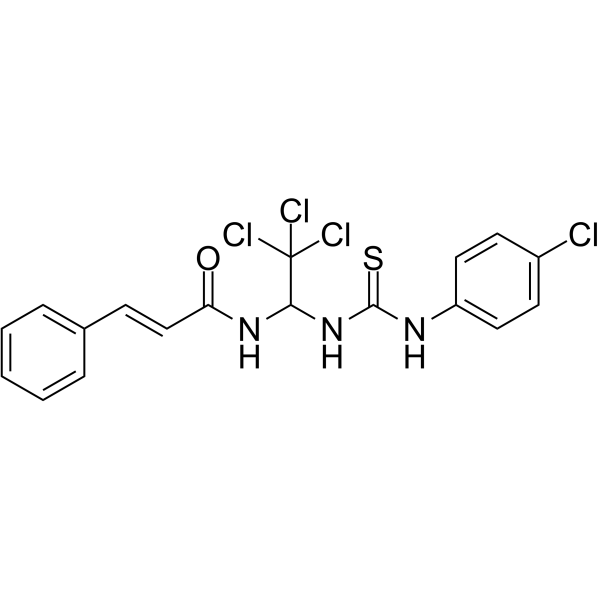
Sal003 is a potent, specific and cell-permeable inhibitor of the eukaryotic translation initiation factor 2α (eIF2α) phosphatase. Sal003 is a derivative of salubrinal.
For research use only. We do not sell to patients.
- Purity : 99.00%
- CAS No.: 1164470-53-4
- Formula: C18H15Cl4N3OS
- Molecular Weight:463.21
-
Storage:Powder -20°C, 3 years , 4°C, 2 years ; In solvent -80°C, 2 years , -20°C, 1 year

To place orders, for customer services and technical support, please contact: MedChemExpress USA
Tel: 609-228-6898 E-mail: [email protected] [email protected]


-
 Biological Activity
-
Chemical Information
-
Solvent & Solubility
- Purity & Documentation
- References
-
 Help & FAQs


-
HY-12495
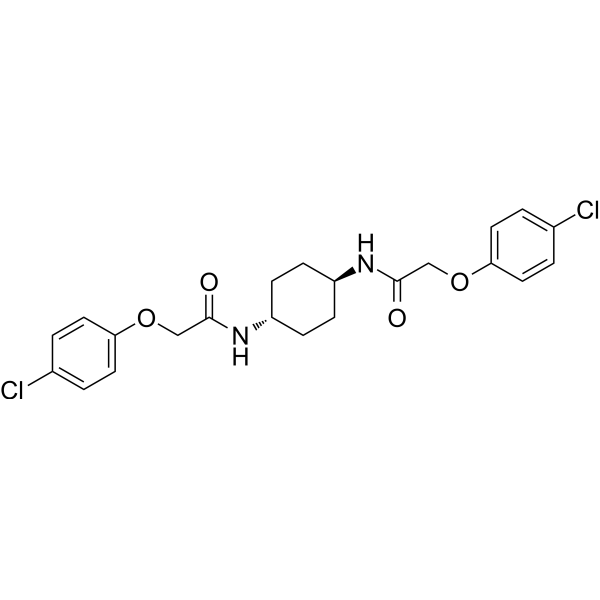
ISRIB (trans-isomer)PERK Inhiitor -
HY-18983
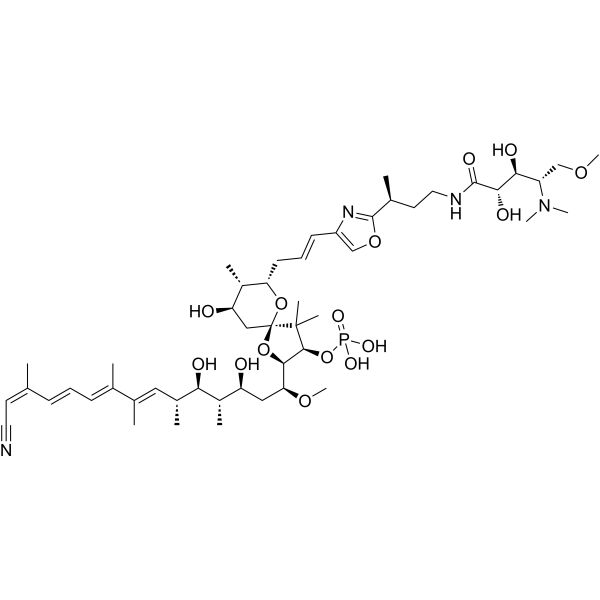
Calyculin APhosphatase Inhibitor -
HY-108543
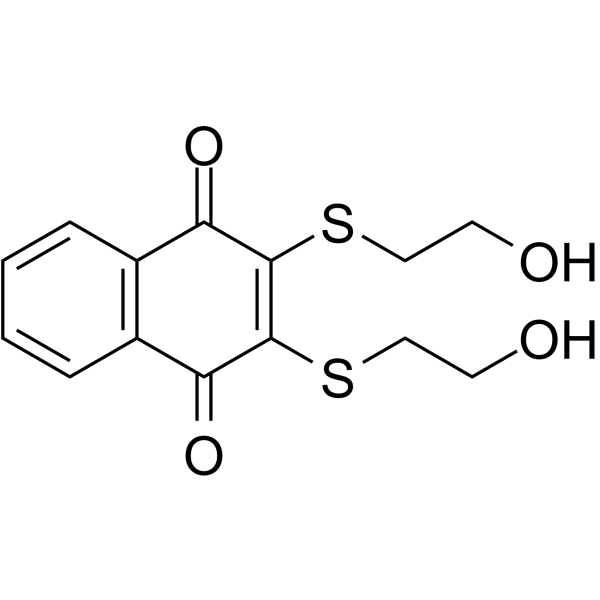
NSC 95397Cdc25 Phosphatase Inhibitor -
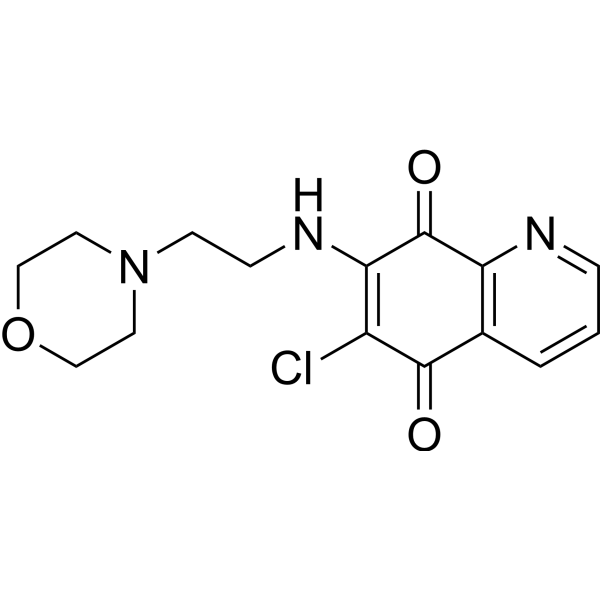
HY-100034
NSC 663284Cdc25 Inhibitor -
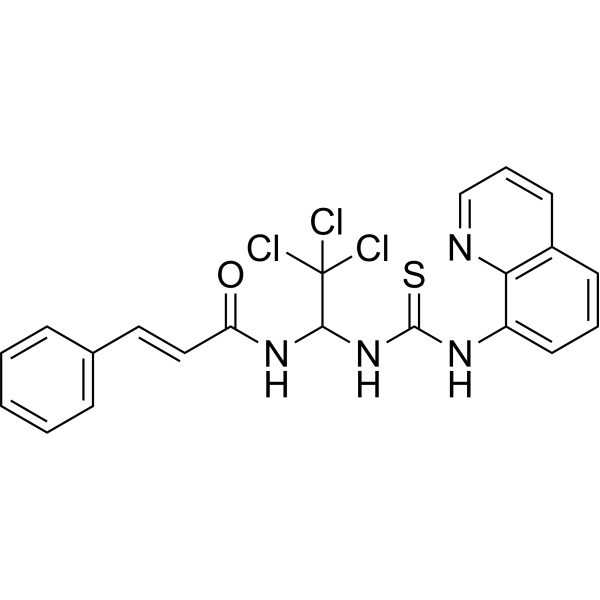
HY-15486
SalubrinaleIF2α Dephosphorylation Inhibitor -
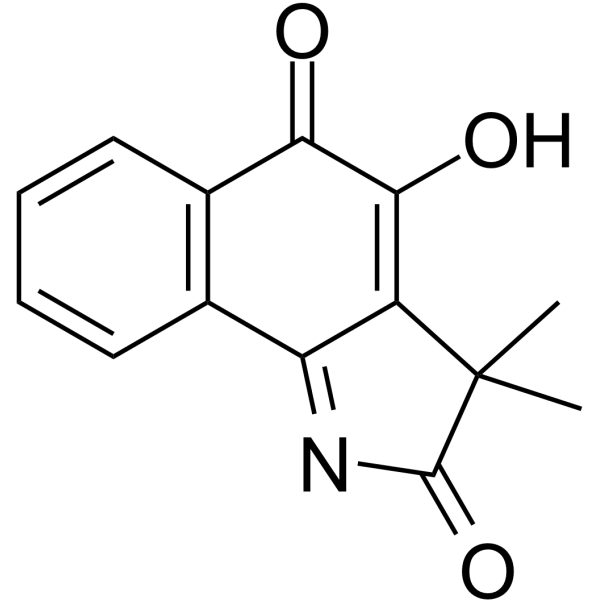
HY-100625
BVT948PTP Inhibitor -
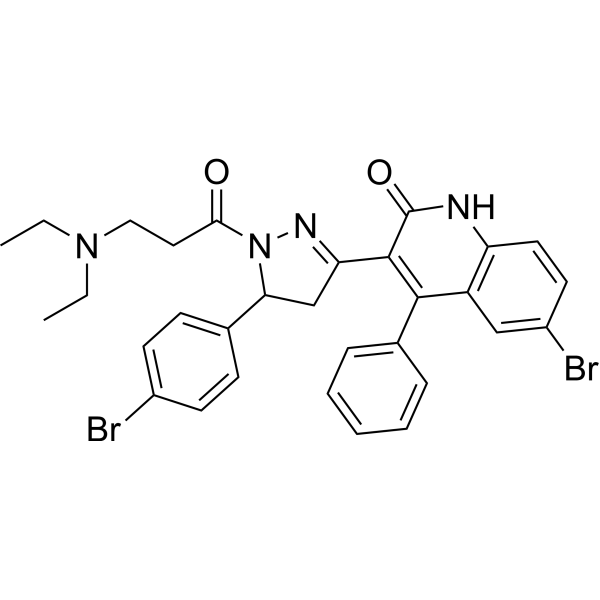
HY-119240
CCT020312EIF2AK3/PERK Activator -
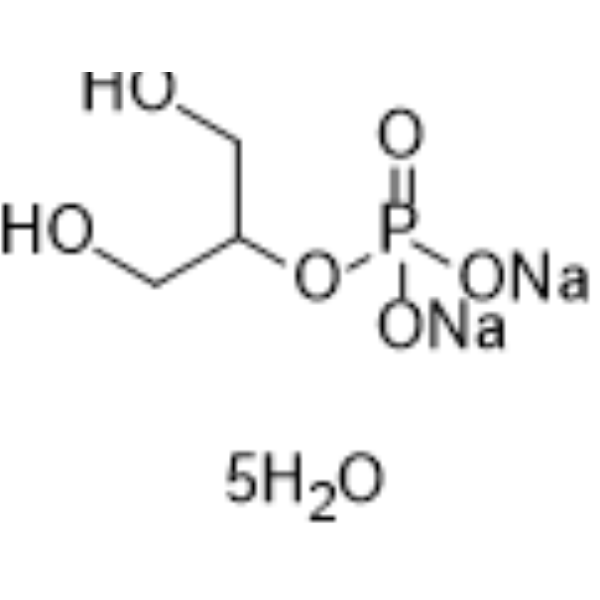
HY-D0886
β-Glycerophosphate disodium salt pentahydratePhosphatase Inhibitor -
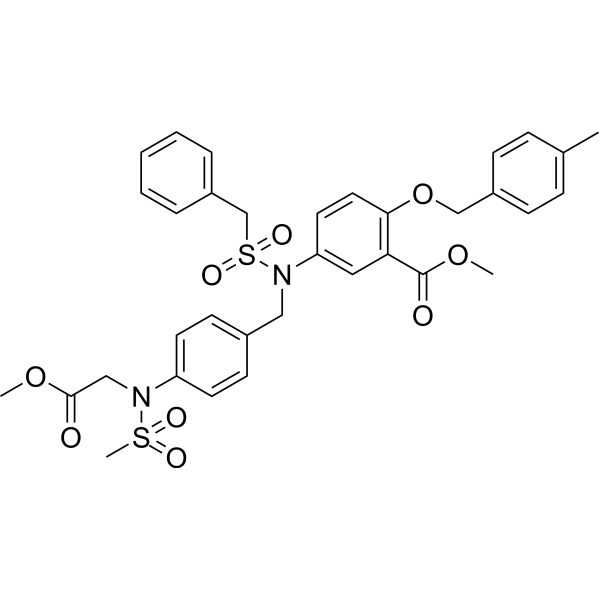
HY-100462
PTP1B-IN-2PTP1B Inhibitor -
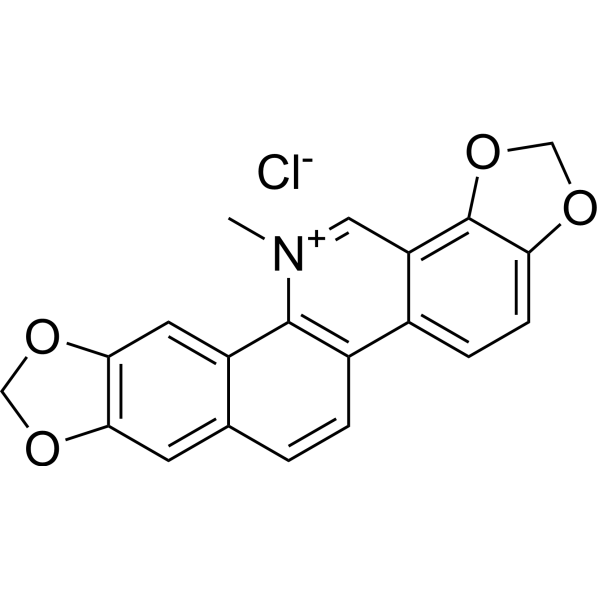
HY-N0052A
Sanguinarine chlorideApoptosis Inducer -
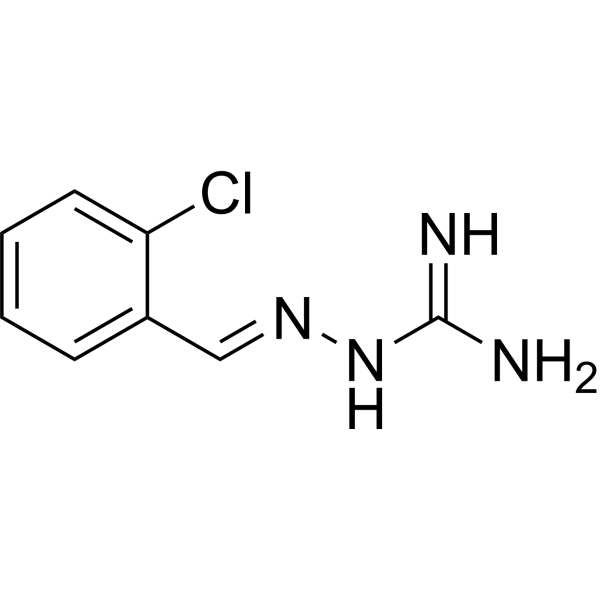
HY-111022
IcerguastatPPP1R15A Inhibitor -
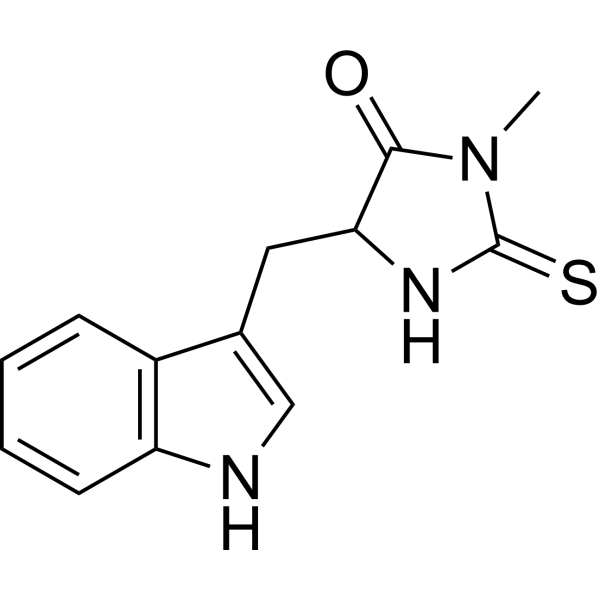
HY-15760
Necrostatin-1RIPK1 Inhibitor
Publications Citing Use of MedChemExpress (MCE) Sal003
More

Biological Activity
Description
IC50 & Target
eIF2α phosphatase[1]
In Vitro
Sal003 (20 μM; 1-12 hours) sharply increases eIF2α phosphorylation in mouse embryonic fibroblasts (MEFs)[2].
?
Eukaryotic translation initiation factor 2α (eIF2α) phosphorylation by Sal003 (10 μM; 1 hour) enhances subtilase cytotoxin (SubAB)-induced apoptotic signaling[1].
?
Sal003 promotes eIF2α phosphorylation leads to impairment of synaptic plasticity and memory[1].
MedChemExpress (MCE) has not independently confirmed the accuracy of these methods. They are for reference only.
-
Cell Line:HeLa cells
-
Concentration:10 μM
-
Incubation Time:1 hour
-
Result:Phosphorylated eIF2α and thus enhanced SubAB-induced apoptotic signaling.
-
Cell Line:Mouse embryonic fibroblasts (MEFs)
-
Concentration:20 μM
-
Incubation Time:1 hour, 3 hours, 6 hours, 12 hours
-
Result:Sharply increased eIF2α phosphorylation in mouse MEFs.
In Vivo
MedChemExpress (MCE) has not independently confirmed the accuracy of these methods. They are for reference only.
-
Animal Model:Rats (300-325g)[1]
-
Dosage:20 μM
-
Administration:Intrahippocampal injection; 8 minutes
-
Result:Impaired contextual memory.
Clinical Trial
| NCT Number | Sponsor | Condition | Start Date |
Phase

|
|---|---|---|---|---|
| NCT01329991 | Plexxikon| | 2011-05 | PHASE1 |


Chemical Information
-
CAS No. 1164470-53-4
-
Appearance Solid
-
Molecular Weight 463.21
-
Formula C18H15Cl4N3OS
-
Color White to off-white
-
SMILES
O=C(NC(NC(NC1=CC=C(Cl)C=C1)=S)C(Cl)(Cl)Cl)/C=C/C2=CC=CC=C2
-
Shipping
Room temperature in continental US; may vary elsewhere.
-
Storage
Powder -20°C 3 years 4°C 2 years In solvent -80°C 2 years -20°C 1 year


Publications (5)
-
Journal Impact Factor
-
Most Recent
-
Nature
2023 Sep;621(7977):188-195. PMID: 37648854 -
Sci Adv
Mitochondrial profiling across macrophage states reveals inhibition of IL-4/IL-13 reprogramming by the integrated stress response. [Abstract]2026 Aug 21;12(34):eaed6318. PMID: 42616903 -
J Hazard Mater
Excessive mitochondrial stress response triggers neuronal injury through the persistent eIF2α phosphorylation in mice exposed to manganese. [Abstract]2025 Sep 15:496:139407. PMID: 40763529 -
Theriogenology
Protegrin-1 inhibits porcine ovarian granulosa cell apoptosis from H2O2-induced oxidative stress via the PERK/eIF2α/CHOP signaling pathway in vitro. [Abstract]2022 Feb:179:117-127. PMID: 34864562 -
bioRxiv
The Integrated Stress Response Pathway Improves Aged Murine Muscle Stem Cell Activation and in vivo Regeneration. [Abstract]2025 Sep 29:2025.09.26.678822. PMID: 41256688


Solvent & Solubility
In Vitro:
DMSO : ≥ 100 mg/mL (215.88 mM; Hygroscopic DMSO has a significant impact on the solubility of product, please use newly opened DMSO)
* "≥" means soluble, but saturation unknown.
Please refer to the solubility information to select the appropriate solvent. Once prepared, please aliquot and store the solution to prevent product inactivation from repeated freeze-thaw cycles.
Storage method and period of stock solution: -80°C, 2 years; -20°C, 1 year. When stored at -80°C, please use it within 2 years. When stored at -20°C, please use it within 1 year.
Please refer to the solubility information to select the appropriate solvent. Once prepared, please aliquot and store the solution to prevent product inactivation from repeated freeze-thaw cycles.
Storage method and period of stock solution: -80°C, 2 years; -20°C, 1 year. When stored at -80°C, please use it within 2 years. When stored at -20°C, please use it within 1 year.
Concentration (start) × Volume (start) = Concentration (final) × Volume (final)
In Vivo:
Select the appropriate dissolution method based on your experimental animal and administration route.
- For the following dissolution methods, please ensure to first prepare a clear stock solution using an In Vitro approach and then sequentially add co-solvents:
- To ensure reliable experimental results, the clarified stock solution can be appropriately stored based on storage conditions. As for the working solution for In Vivo experiments, it is recommended to prepare freshly and use it on the same day.
- The percentages shown for the solvents indicate their volumetric ratio in the final prepared solution. If precipitation or phase separation occurs during preparation, heat and/or sonication can be used to aid dissolution.
Add each solvent one by one: 10% DMSO 40% PEG300 5% Tween-80 45% Saline
Solubility: 2.5 mg/mL (5.40 mM); Suspended solution; Need ultrasonic
This protocol yields a suspended solution of 2.5 mg/mL. Suspended solution can be used for oral and intraperitoneal injection.
Taking 1 mL working solution as an example, add 100 μL DMSO stock solution (25.0 mg/mL) to 400 μL PEG300, and mix evenly; then add 50 μL Tween-80 and mix evenly; then add 450 μL Saline to adjust the volume to 1 mL.
Preparation of Saline: Dissolve 0.9 g sodium chloride in ddH₂O and dilute to 100 mL to obtain a clear Saline solution.
In Vivo Dissolution Calculator
Please enter the basic information of animal experiments:
-
-
-
-
Recommended: Prepare an additional quantity of animals to account for potential losses during experiments.
Please enter your animal formula composition:
-
%DMSO +
Recommended: Keep the proportion of DMSO in working solution below 2% if your animal is weak.
-
%+
-
+%Tween-80 + +
-
%Saline +
The co-solvents required include: DMSO, . All of co-solvents are available by MedChemExpress (MCE). , Tween 80. All of co-solvents are available by MedChemExpress (MCE).
Working solution concentration: 0.22 mg/mL
Method for preparing stock solution: mg drug dissolved in μL DMSO. Stock solution concentration: mg/mL.
1. Take μL DMSO stock solution;
2. Add μL .
μL , mix evenly;
3. Then add μL Tween 80, mix evenly;
4. Then add μL
Please ensure that the stock solution in the first step is dissolved to a clear state, and add co-solvents in sequence. You can use ultrasonic heating (ultrasonic cleaner, recommended frequency 20-40 kHz), vortexing, etc. to assist dissolution.


Purity & Documentation
-
Data Sheet (276 KB)
-
SDS (459 KB)
- English - EN (459 KB)
- Français - FR (459 KB)
- Deutsch - DE (459 KB)
- Norwegian - NO (459 KB)
- Español - ES (459 KB)
- Swedish - SV (459 KB)
- Italian - IT (459 KB)
- Korean - KR (459 KB)
- Portuguese - PT (459 KB)
-
Handling Instructions (2659 KB)
References
[1]. Costa-Mattioli M, et al. eIF2alpha phosphorylation bidirectionally regulates the switch from short- to long-term synaptic plasticity and memory. Cell. 2007 Apr 6;129(1):195-206. [Content Brief]
[2]. Yahiro K, et al. Regulation of subtilase cytotoxin-induced cell death by an RNA-dependent protein kinase-like endoplasmic reticulum kinase-dependent proteasome pathway in HeLa cells. Infect Immun. 2012 May;80(5):1803-14. [Content Brief]


Complete Stock Solution Preparation Table
Please refer to the solubility information to select the appropriate solvent. Once prepared, please aliquot and store the solution to prevent product inactivation from repeated freeze-thaw cycles.
Storage method and period of stock solution: -80°C, 2 years; -20°C, 1 year. When stored at -80°C, please use it within 2 years. When stored at -20°C, please use it within 1 year.
| Optional Solvent | Concentration Solvent Mass | 1 mg | 5 mg | 10 mg | 25 mg |
|---|---|---|---|---|---|
| DMSO | 1 mM | 2.1588 mL | 10.7942 mL | 21.5885 mL | 53.9712 mL |
| 5 mM | 0.4318 mL | 2.1588 mL | 4.3177 mL | 10.7942 mL | |
| 10 mM | 0.2159 mL | 1.0794 mL | 2.1588 mL | 5.3971 mL | |
| 15 mM | 0.1439 mL | 0.7196 mL | 1.4392 mL | 3.5981 mL | |
| 20 mM | 0.1079 mL | 0.5397 mL | 1.0794 mL | 2.6986 mL | |
| 25 mM | 0.0864 mL | 0.4318 mL | 0.8635 mL | 2.1588 mL | |
| 30 mM | 0.0720 mL | 0.3598 mL | 0.7196 mL | 1.7990 mL | |
| 40 mM | 0.0540 mL | 0.2699 mL | 0.5397 mL | 1.3493 mL | |
| 50 mM | 0.0432 mL | 0.2159 mL | 0.4318 mL | 1.0794 mL | |
| 60 mM | 0.0360 mL | 0.1799 mL | 0.3598 mL | 0.8995 mL | |
| 80 mM | 0.0270 mL | 0.1349 mL | 0.2699 mL | 0.6746 mL | |
| 100 mM | 0.0216 mL | 0.1079 mL | 0.2159 mL | 0.5397 mL |


Sal003 Related Classifications
HY-15969 Related Classifications
 Powered by Bioz