



Phospho-PERK (Thr980) Antibody
(Synonyms: p-PERK(Thr980); PERK(Phospho Thr980); PERK(Phospho T980); mo(Thr980)/hu (Thr982)/rat (Thr974); HRI; HsPEK; Pancreatic eIF2-alpha kinase; PEK; PRKR like endoplasmic reticulum kinase; WRS; DKFZp781H1925; EC 2.7.11.1; EIF2AK3; Eukaryotic translation initiation factor 2 alpha kinase 3; Heme regulated EIF2 alpha kinase.)Based on 2 publication(s) in Google Scholar
Phospho-PERK (Thr980) Antibody is a Rabbit-derived and non-conjugated IgG polyclonal antibody, targeting to Phospho-PERK (Thr980).
-
Host:
Rabbit
-
Isotype:
IgG
-
Application:
WB, IHC-P, IHC-F, ICC/IF, FC
-
Reactivity :
Human, Mouse, Rat
-
Formulation:
1.Supplied in 0.01M TBS(pH7.4) with 1% BSA, 0.03% Proclin300 and 50% Glycerol.
2.Supplied in 0.01M TBS(pH7.4) with 1% BSA, 0.02% Proclin300 and 50% Glycerol.
Please refer to the lot-specific COA for specific buffer information.
-
Conjugation:
Non-conjugated


To place orders, for customer services and technical support, please contact: MedChemExpress USA
Tel: 609-228-6898 E-mail: [email protected] [email protected]



-

HY-P80781
PERK Antibody (YA233) -
HY-P80828
Phospho-IRE1 (Ser724) Antibody (YA182) -
HY-P80811
Phospho-EIF2S1 (Ser51) Antibody (YA203) -
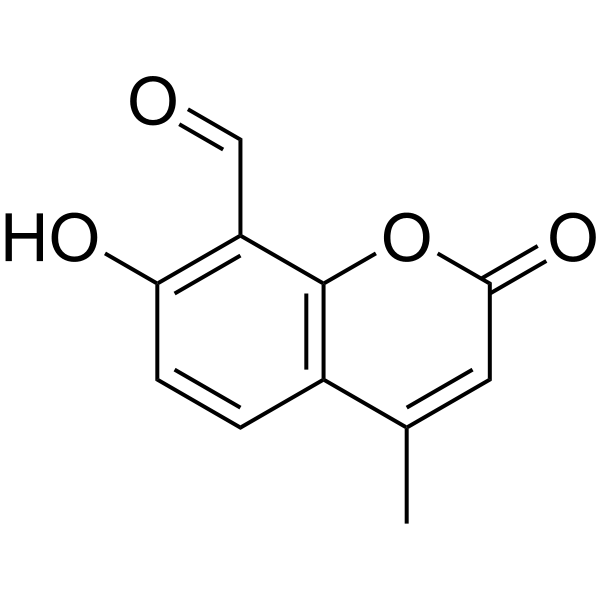
HY-19707
4μ8C -
HY-P86330
IRE1 alpha Antibody (YA6022) -
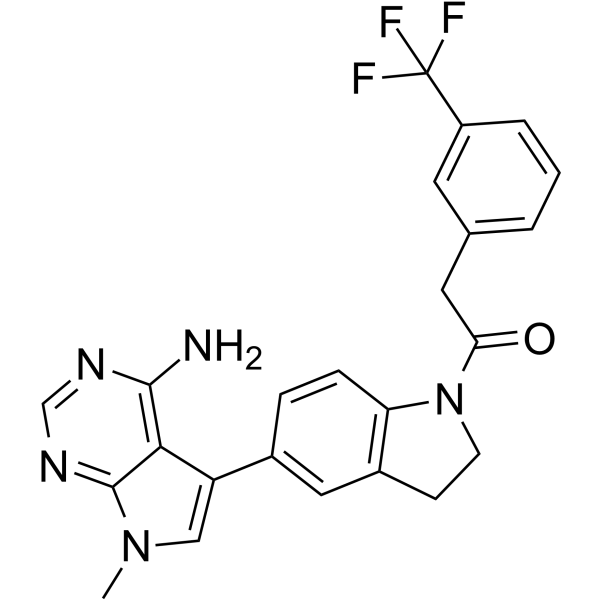
HY-18072
GSK2606414 -
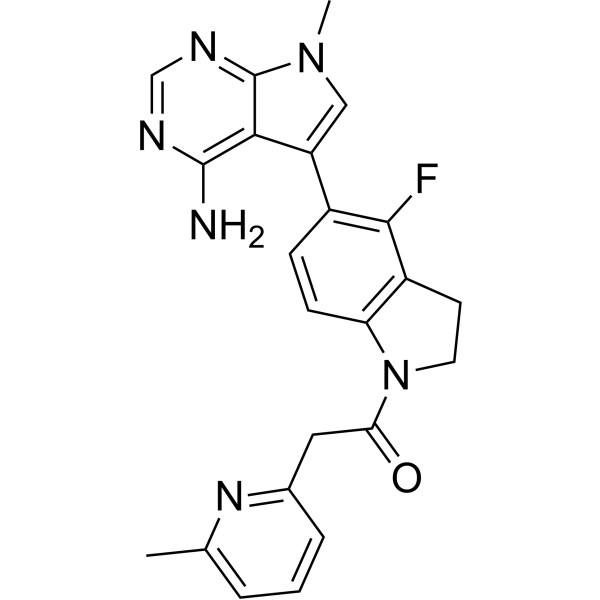
HY-13820
GSK2656157 -
HY-P8001
HRP-conjugated Goat Anti-Rabbit IgG H&L -
HY-P80379
ATF6 Antibody (YA831) -
HY-P80553
ATF4 Antibody -
HY-P80492
EIF2A Antibody (YA465) -
HY-P81233
DDIT3 Antibody (YA3507)
Publications Citing Use of MedChemExpress (MCE) Phospho-PERK (Thr980) Antibody
More
 2 Publications Citing Use of MCE Phospho-PERK (Thr980) Antibody (1)
-
WB


Applications
| Application |
WB

WB: Western Blot
|
IHC-P
IHC-P: Immunohistochemistry-Paraffin
|
IHC-F
IHC-F: Immunohistochemistry-Frozen
|
FC
FC: Flow Cytometry
|
ICC/IF
ICC/IF: Immunocytochemistry/
Immunofluorescence |
|---|---|---|---|---|---|
| Dilution Ratio | 1:500-2000 | 1:100-500 | 1:100-500 | 2ug:Test | 1:100-500 |


Product Details
Phospho-PERK (Thr980) Antibody is a Rabbit-derived and non-conjugated IgG polyclonal antibody, targeting to Phospho-PERK (Thr980).
-
Host Rabbit

-
Clonality Polyclonal

-
Species ReactivityHuman, Mouse, Rat Predicted Reactivity: Dog,Pig,Cow,Rabbit
Note: The predicted reactivity is for reference only and should not be considered a guarantee of product performance.
-
Observed Molecular WeightObserved band size: 120 kDa
Note: Due to possible protein modifications or aggregation, the molecular weight should be confirmed by actual measurement, and the predicted value is for reference only.

-
Calculated Molecular Weight Predicted band size: 119 kDa

Entrez Gene: 9451 Human ; 13666 Mouse ; 29702 Rat
SwissProt: Q9NZJ5 Human ; Q9Z2B5 Mouse ; Q9Z1Z1 Rat
OMIM: 226980 Human
KLH conjugated synthesised phosphopeptide derived from mouse PERK around the phosphorylation site of Thr980: H(p-T)GQ
Endogenous
affinity purified
Non-conjugated
Phosphorylated
IgG


Product Properties
-
Appearance
Solution
-
Formulation
1.Supplied in 0.01M TBS(pH7.4) with 1% BSA, 0.03% Proclin300 and 50% Glycerol.
2.Supplied in 0.01M TBS(pH7.4) with 1% BSA, 0.02% Proclin300 and 50% Glycerol.
Please refer to the lot-specific COA for specific buffer information. -
Concentration
Batch-dependent, Please check the COA for the concentration of each lot. Check Lot Concentration
-
Storage & Stability
Stored at -20°C for 1 year. Avoid repeated freeze / thaw cycles.
-
Shipping
Shipping with blue ice.


Publications (2)
-
Journal Impact Factor
-
Most Recent
-
Ecotoxicol Environ Saf
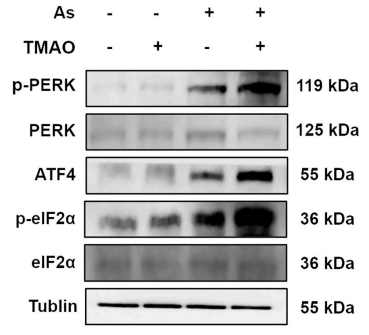
Involvement of TMAO in exacerbating arsenic-induced neurotoxicity by activating the PERK/eIF2α/ATF4 pathway. [Abstract]2025 Sep 1:302:118691. PMID: 40684638
Phospho-PERK (Thr980) Antibody purchased from MedChemExpress. Usage Cited in: Ecotoxicol Environ Saf. 2025 Sep 1:302:118691. [Abstract]
Expression and quantitative analysis of p-PERK (Phospho-PERK), PERK, p-eIF2α, eIF2α and ATF4 in ASTs.


Verification Images
-
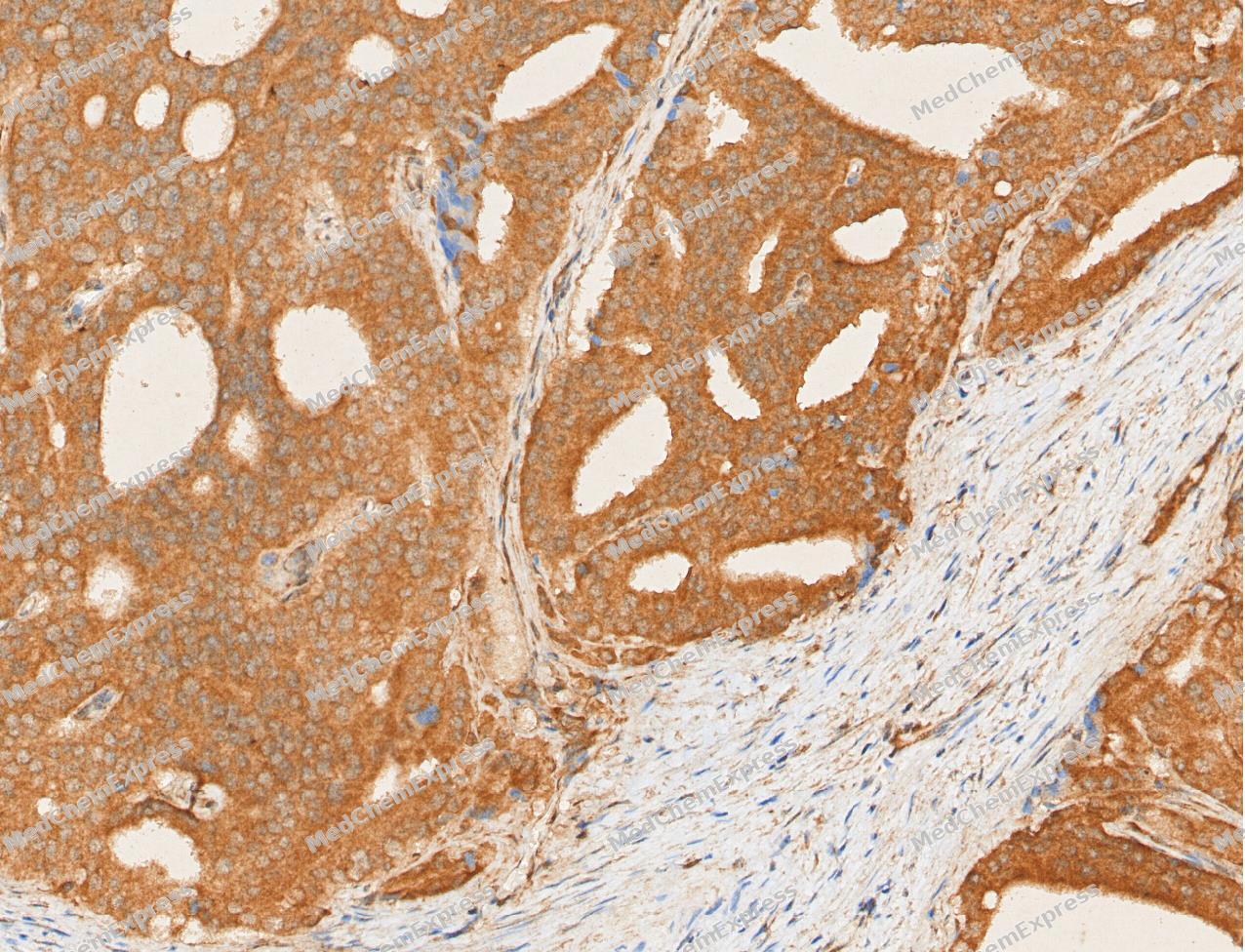 Immunohistochemical analysis of paraffin-embedded human Prostate Cancer tissue using Phospho-PERK (Thr980) antibody was performed. The section was pretreated using high-temperature and high-pressure mediated EDTA antigen retrieval buffer (pH 9.0), for 5 minutes. The tissues were incubated with primary antibody (HY-P81190, 1:100 dilution) at room temperature for 60 minutes. Detection was performed using an HRP conjugated compact polymer system. DAB was used as the chromogen. The tissues were counterstained with hematoxylin and mounted with neutral balsam mounting medium.
 -
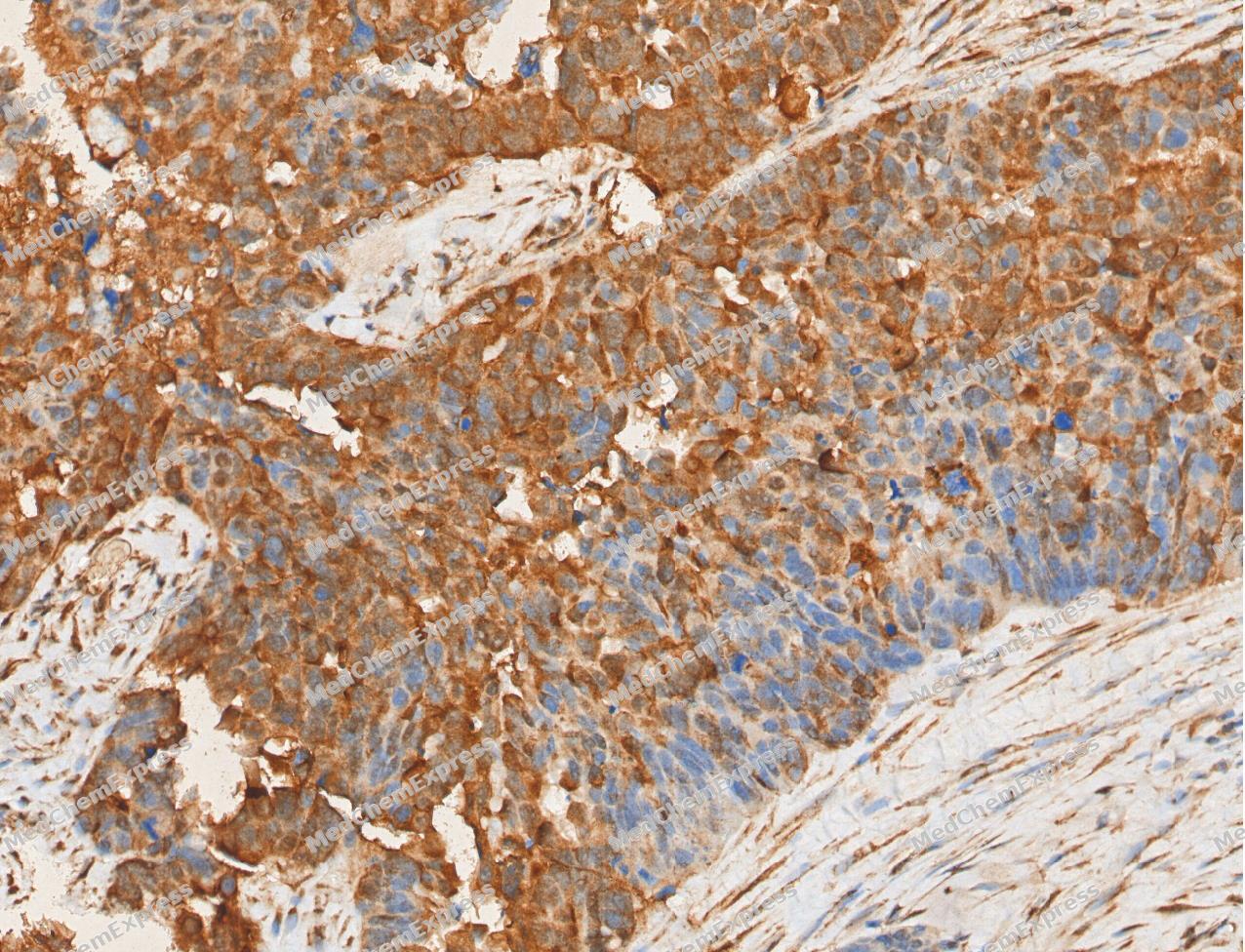 Immunohistochemical analysis of paraffin-embedded human Ovarian Cancer tissue using Phospho-PERK (Thr980) antibody was performed. The section was pretreated using high-temperature and high-pressure mediated EDTA antigen retrieval buffer (pH 9.0), for 5 minutes. The tissues were incubated with primary antibody (HY-P81190, 1:100 dilution) at room temperature for 60 minutes. Detection was performed using an HRP conjugated compact polymer system. DAB was used as the chromogen. The tissues were counterstained with hematoxylin and mounted with neutral balsam mounting medium.
 -
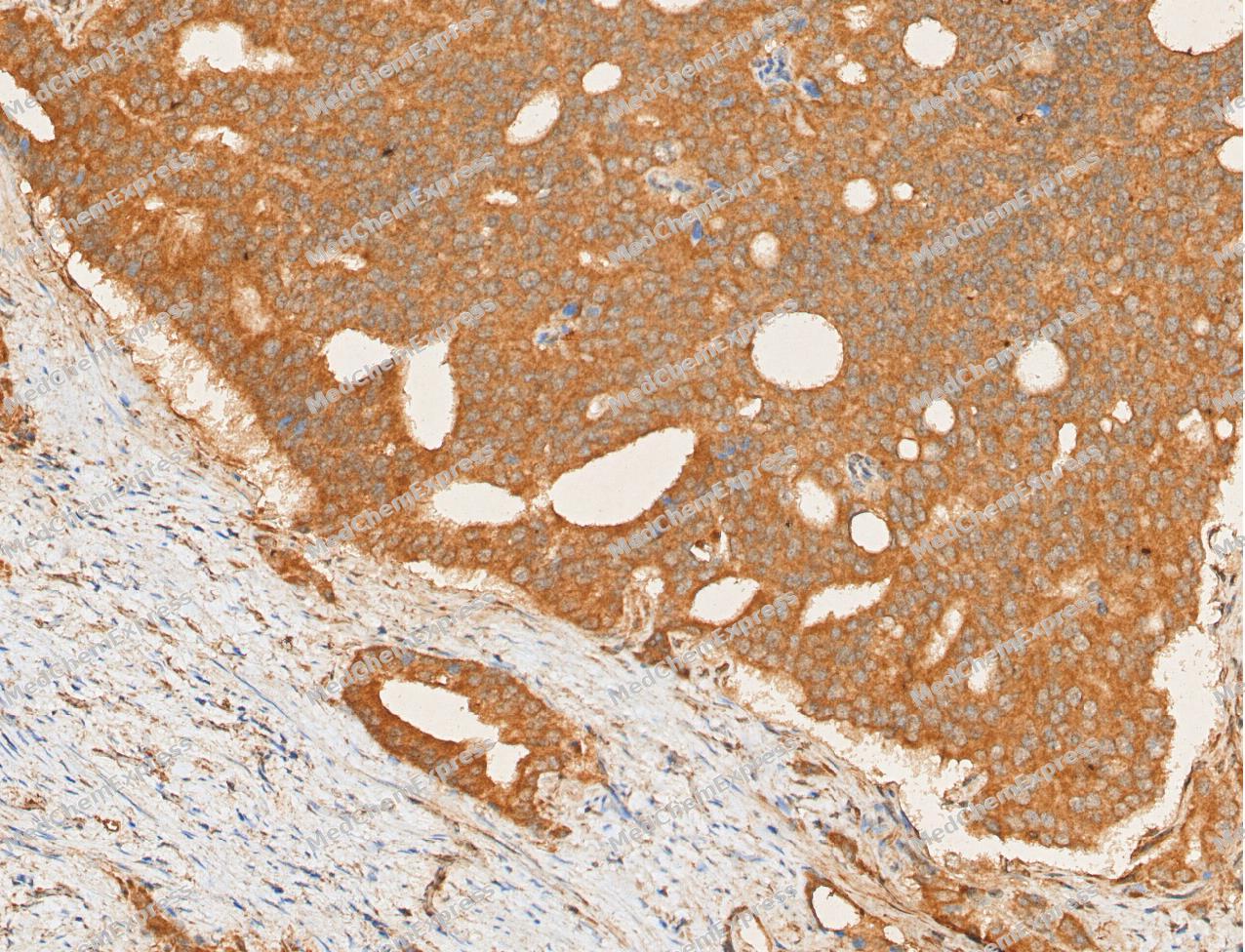 Immunohistochemical analysis of paraffin-embedded human Prostate Cancer tissue using Phospho-PERK (Thr980) antibody was performed. The section was pretreated using high-temperature and high-pressure mediated EDTA antigen retrieval buffer (pH 9.0), for 5 minutes. The tissues were incubated with primary antibody (HY-P81190, 1:100 dilution) at room temperature for 60 minutes. Detection was performed using an HRP conjugated compact polymer system. DAB was used as the chromogen. The tissues were counterstained with hematoxylin and mounted with neutral balsam mounting medium.
 -
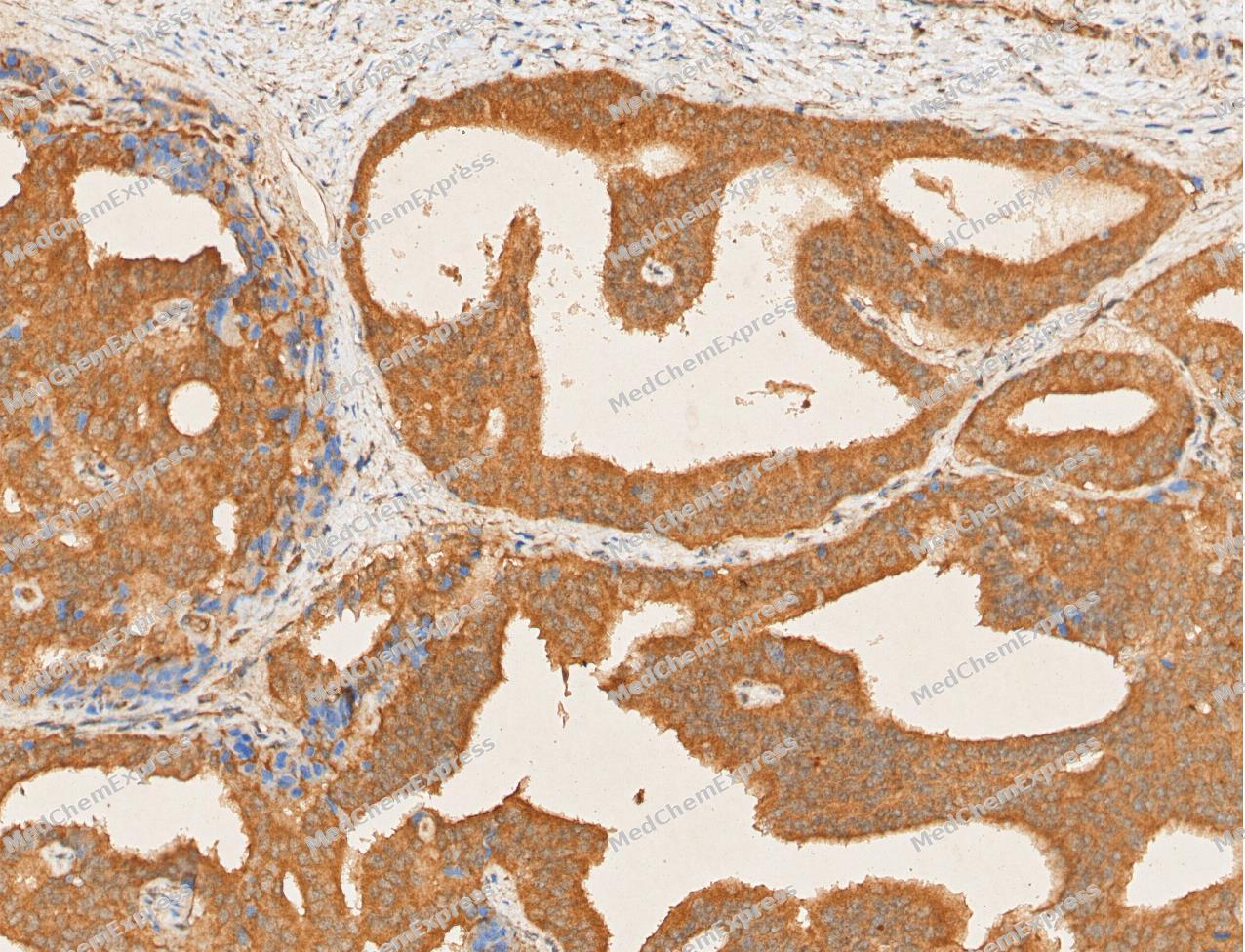 Immunohistochemical analysis of paraffin-embedded human Prostate Cancer tissue using Phospho-PERK (Thr980) antibody was performed. The section was pretreated using high-temperature and high-pressure mediated EDTA antigen retrieval buffer (pH 9.0), for 5 minutes. The tissues were incubated with primary antibody (HY-P81190, 1:100 dilution) at room temperature for 60 minutes. Detection was performed using an HRP conjugated compact polymer system. DAB was used as the chromogen. The tissues were counterstained with hematoxylin and mounted with neutral balsam mounting medium.
 -
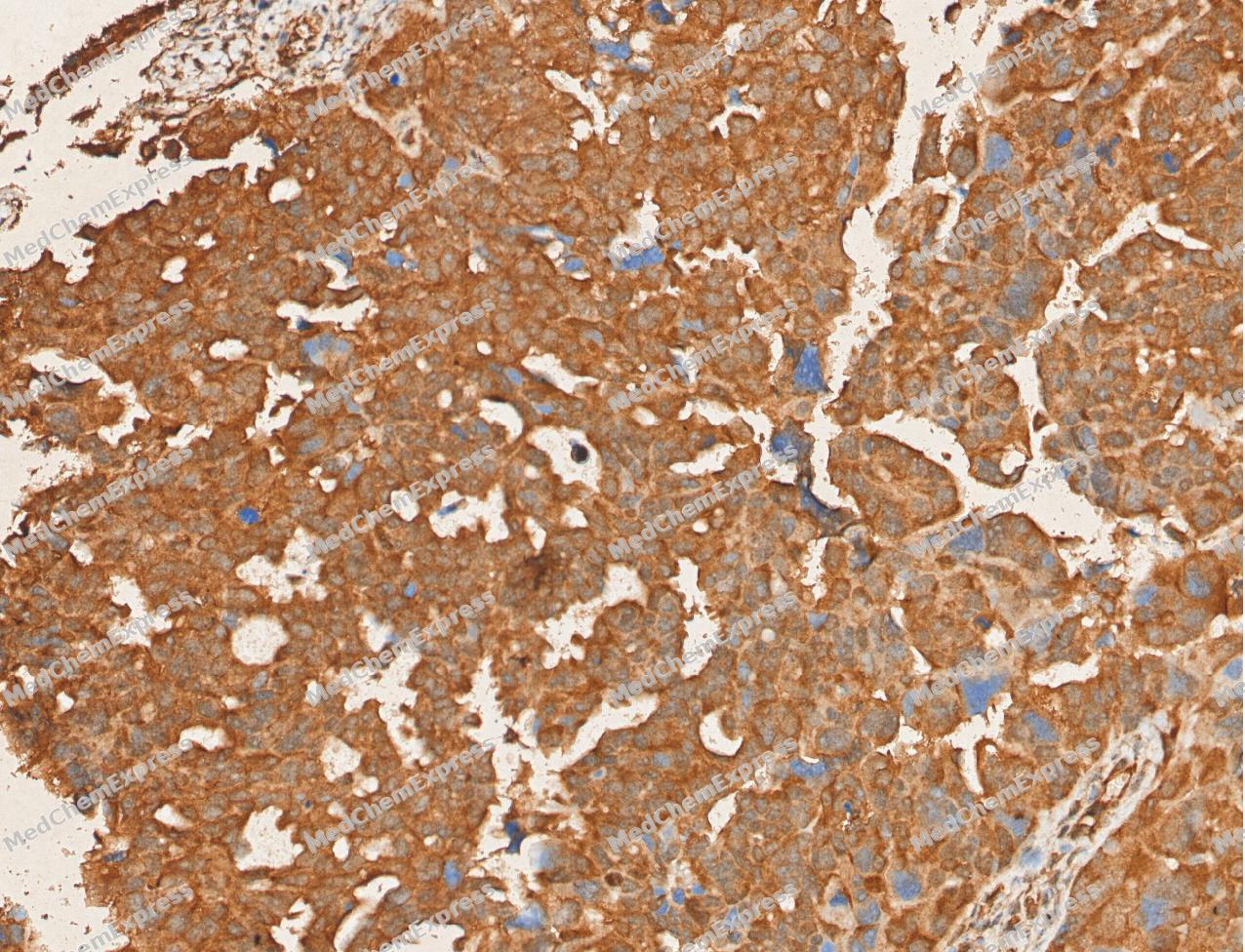 Immunohistochemical analysis of paraffin-embedded human Ovarian Cancer tissue using Phospho-PERK (Thr980) antibody was performed. The section was pretreated using high-temperature and high-pressure mediated EDTA antigen retrieval buffer (pH 9.0), for 5 minutes. The tissues were incubated with primary antibody (HY-P81190, 1:100 dilution) at room temperature for 60 minutes. Detection was performed using an HRP conjugated compact polymer system. DAB was used as the chromogen. The tissues were counterstained with hematoxylin and mounted with neutral balsam mounting medium.
 -
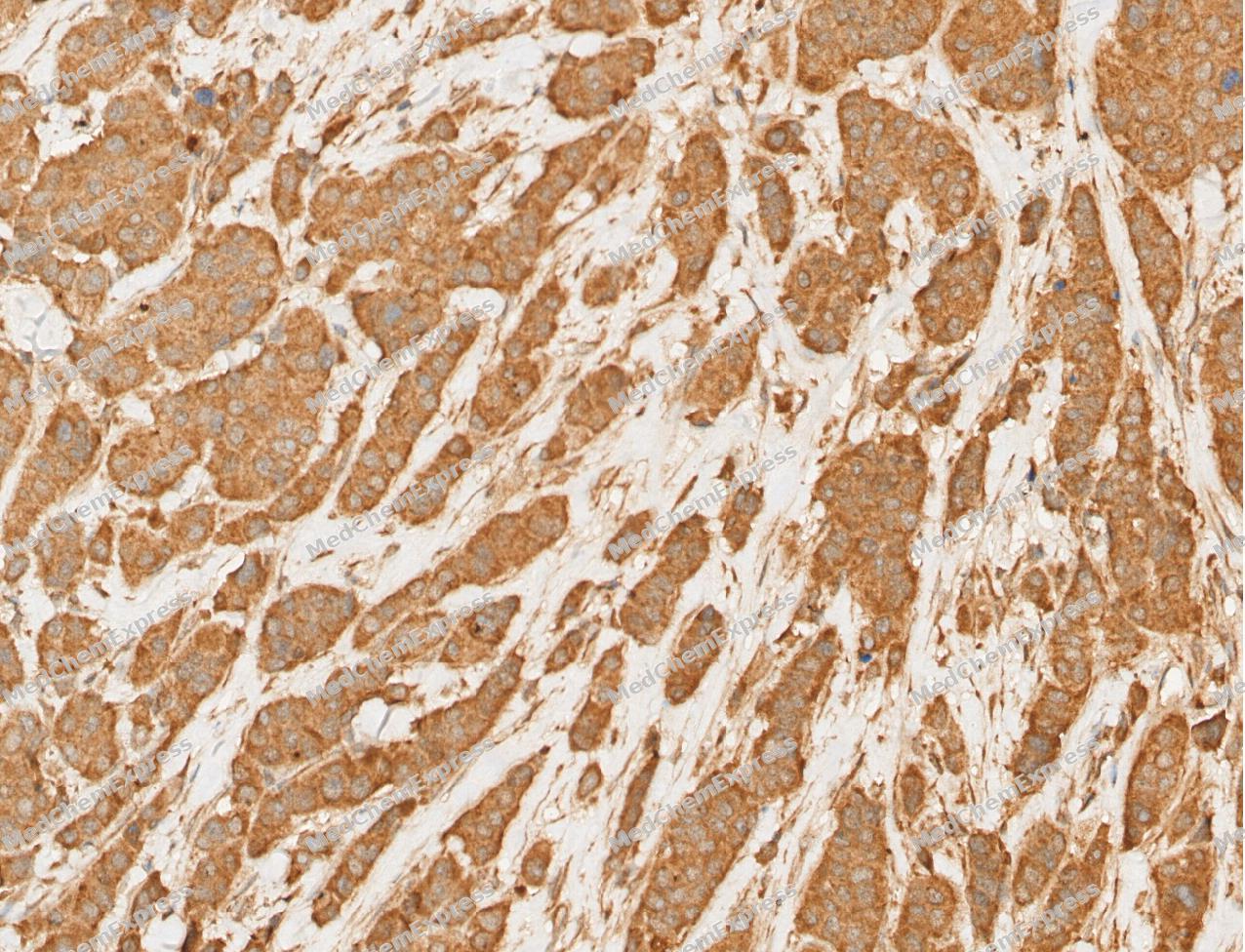 Immunohistochemical analysis of paraffin-embedded human Breast Cancer tissue using Phospho-PERK (Thr980) antibody was performed. The section was pretreated using high-temperature and high-pressure mediated EDTA antigen retrieval buffer (pH 9.0), for 5 minutes. The tissues were incubated with primary antibody (HY-P81190, 1:100 dilution) at room temperature for 60 minutes. Detection was performed using an HRP conjugated compact polymer system. DAB was used as the chromogen. The tissues were counterstained with hematoxylin and mounted with neutral balsam mounting medium.
 -
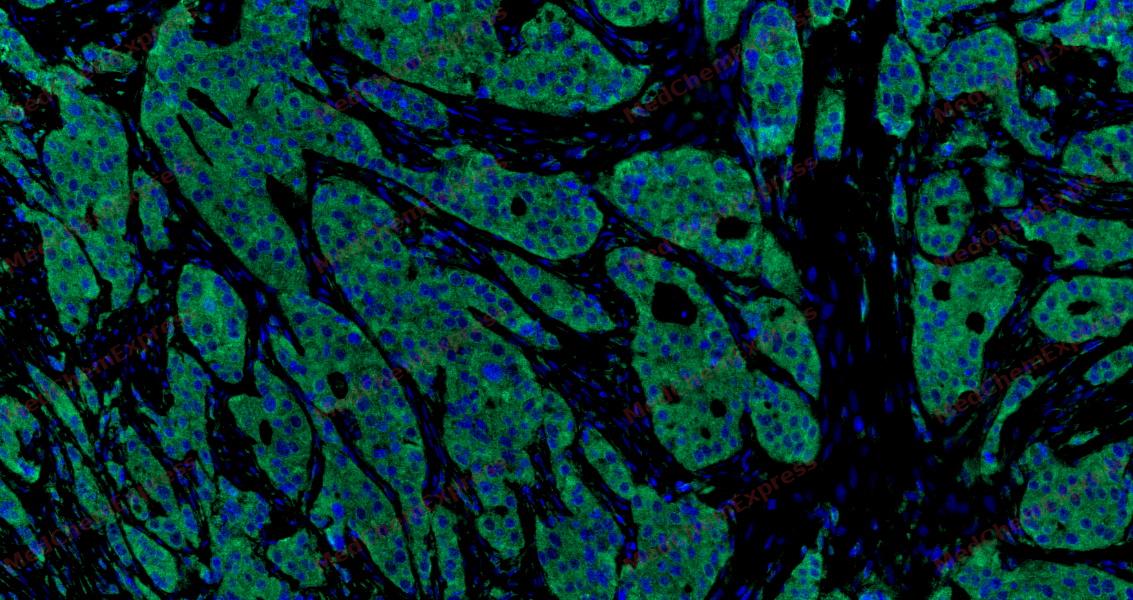 Tyramide signaling amplification based immunofluorescence was performed on paraffin-embedded human Breast Cancer tissue using Phospho-PERK (Thr980) antibody. Antigen retrieval was performed in EDTA buffer pH 9.0 (95 °C, 20 min) followed by cooling to RT. Then incubated with primary antibody (HY-P81190, 1:200 dilution) at room temperature for 60 minutes and HRP conjugated secondary antibody for 10 minutes. Fluorescence was then developed with Vari Fluor 532 TSA (200×)(HY-D1832). The tissues were counterstained with DAPI and mounted with Anti-fade mounting medium.
 -
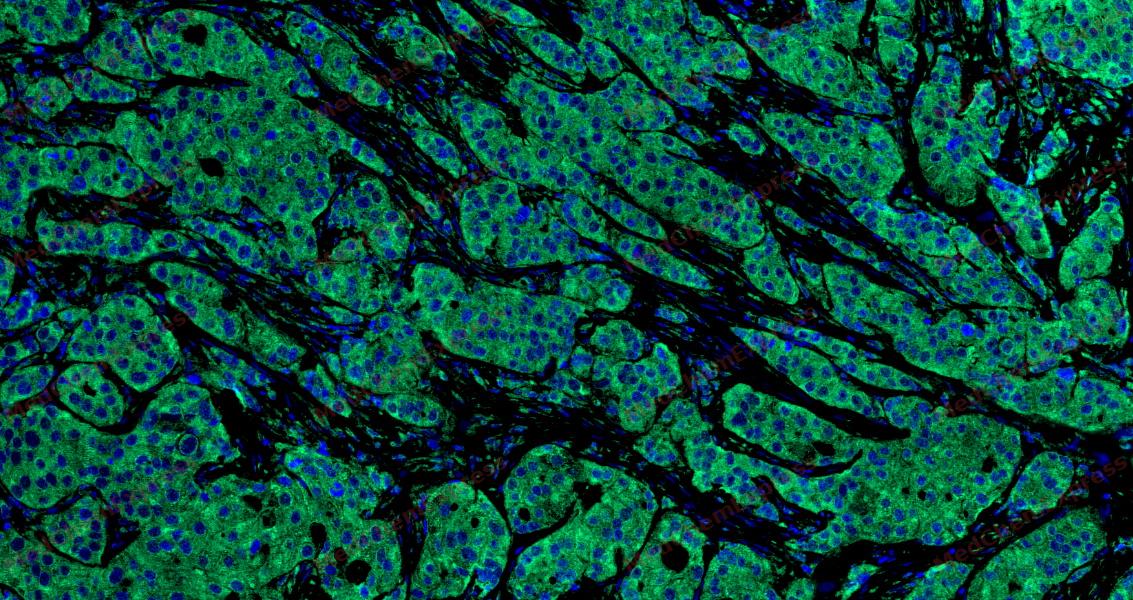 Tyramide signaling amplification based immunofluorescence was performed on paraffin-embedded human Breast Cancer tissue using Phospho-PERK (Thr980) antibody. Antigen retrieval was performed in EDTA buffer pH 9.0 (95 °C, 20 min) followed by cooling to RT. Then incubated with primary antibody (HY-P81190, 1:200 dilution) at room temperature for 60 minutes and HRP conjugated secondary antibody for 10 minutes. Fluorescence was then developed with Vari Fluor 532 TSA (200×)(HY-D1832). The tissues were counterstained with DAPI and mounted with Anti-fade mounting medium.
 -
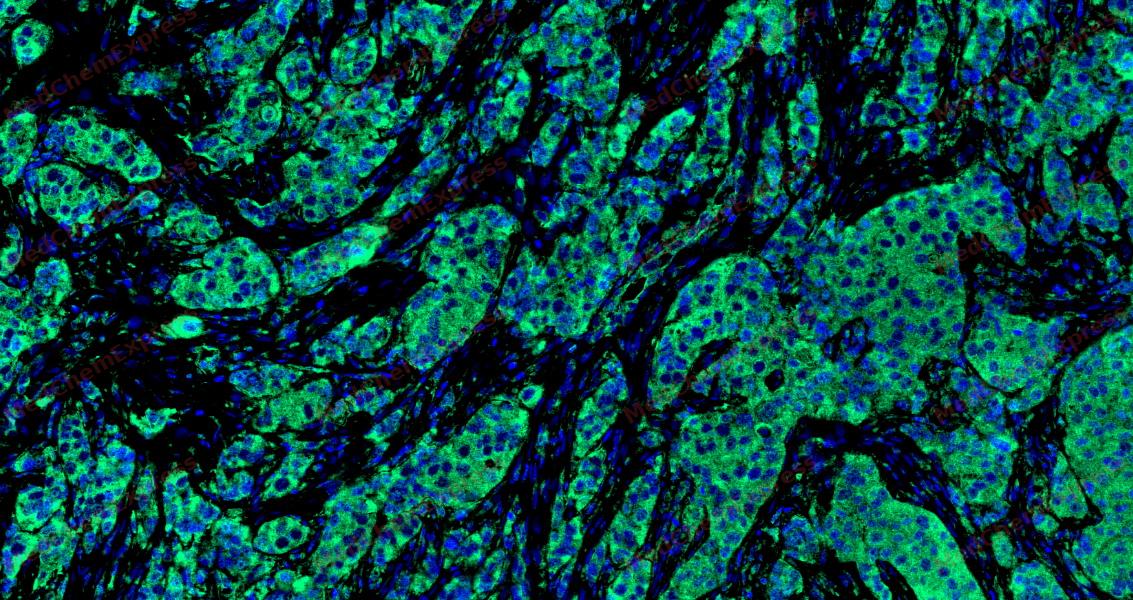 Tyramide signaling amplification based immunofluorescence was performed on paraffin-embedded human Breast Cancer tissue using Phospho-PERK (Thr980) antibody. Antigen retrieval was performed in EDTA buffer pH 9.0 (95 °C, 20 min) followed by cooling to RT. Then incubated with primary antibody (HY-P81190, 1:200 dilution) at room temperature for 60 minutes and HRP conjugated secondary antibody for 10 minutes. Fluorescence was then developed with Vari Fluor 532 TSA (200×)(HY-D1832). The tissues were counterstained with DAPI and mounted with Anti-fade mounting medium.
 -
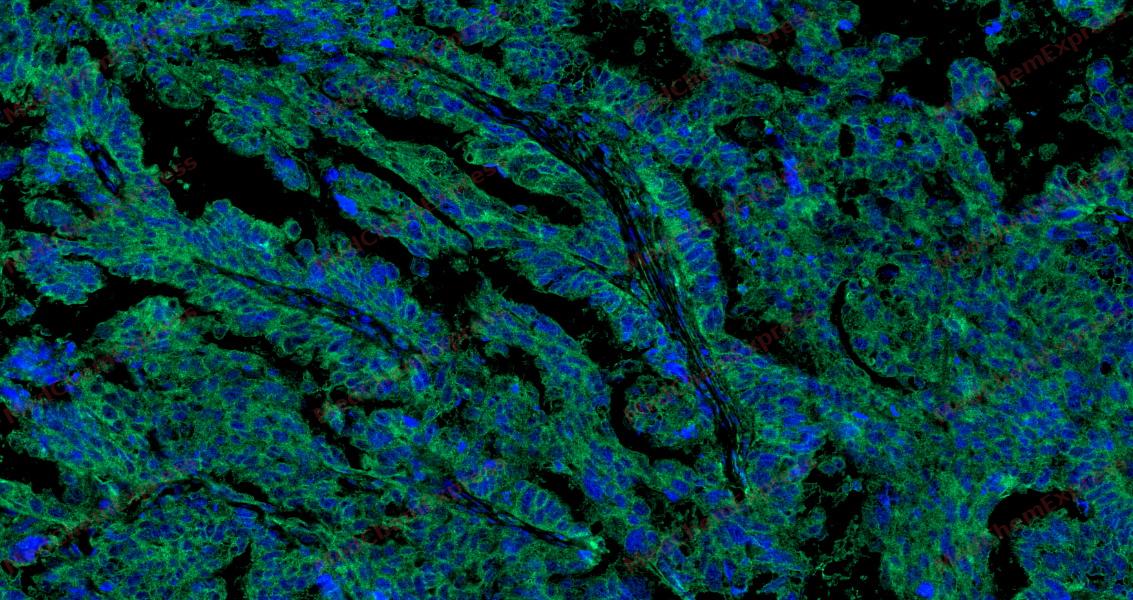 Tyramide signaling amplification based immunofluorescence was performed on paraffin-embedded human ovarian carcinoma tissue using Phospho-PERK (Thr980) antibody. Antigen retrieval was performed in EDTA buffer pH 9.0 (95 °C, 20 min) followed by cooling to RT. Then incubated with primary antibody (HY-P81190, 1:200 dilution) at room temperature for 60 minutes and HRP conjugated secondary antibody for 10 minutes. Fluorescence was then developed with Vari Fluor 532 TSA (200×)(HY-D1832). The tissues were counterstained with DAPI and mounted with Anti-fade mounting medium.
 -
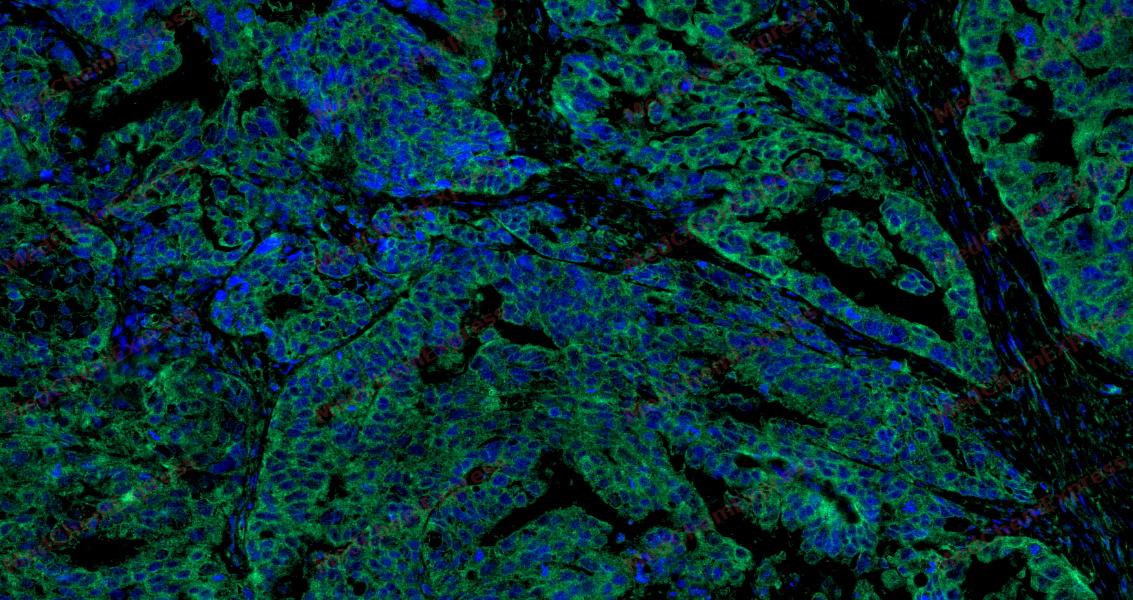 Tyramide signaling amplification based immunofluorescence was performed on paraffin-embedded human ovarian carcinoma tissue using Phospho-PERK (Thr980) antibody. Antigen retrieval was performed in EDTA buffer pH 9.0 (95 °C, 20 min) followed by cooling to RT. Then incubated with primary antibody (HY-P81190, 1:200 dilution) at room temperature for 60 minutes and HRP conjugated secondary antibody for 10 minutes. Fluorescence was then developed with Vari Fluor 532 TSA (200×)(HY-D1832). The tissues were counterstained with DAPI and mounted with Anti-fade mounting medium.
 -
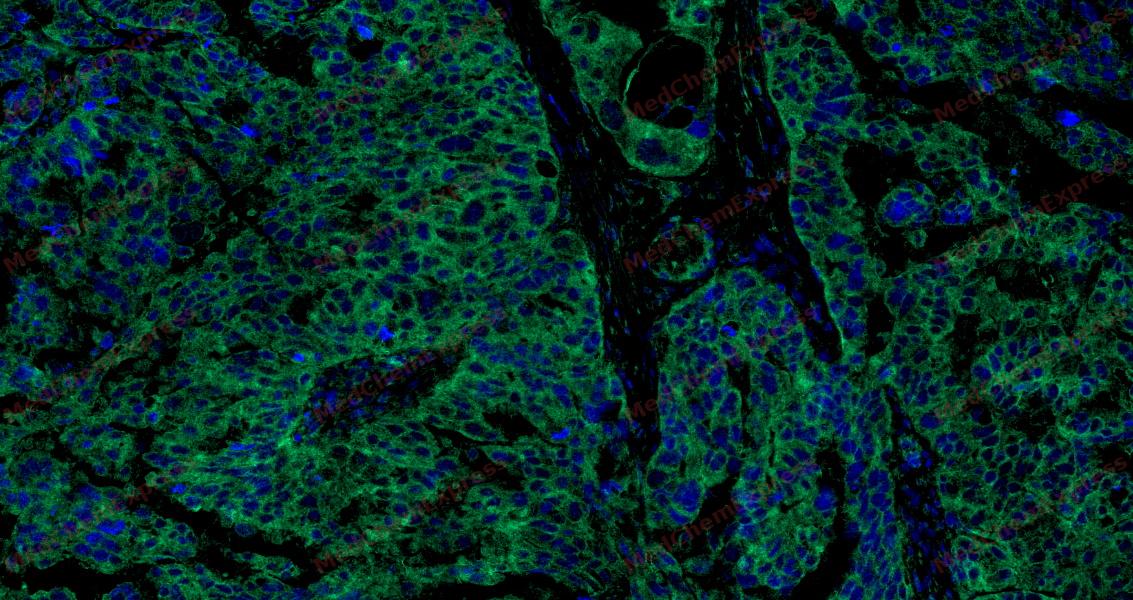 Tyramide signaling amplification based immunofluorescence was performed on paraffin-embedded human ovarian carcinoma tissue using Phospho-PERK (Thr980) antibody. Antigen retrieval was performed in EDTA buffer pH 9.0 (95 °C, 20 min) followed by cooling to RT. Then incubated with primary antibody (HY-P81190, 1:200 dilution) at room temperature for 60 minutes and HRP conjugated secondary antibody for 10 minutes. Fluorescence was then developed with Vari Fluor 532 TSA (200×)(HY-D1832). The tissues were counterstained with DAPI and mounted with Anti-fade mounting medium.


Background
-
Function
Protein kinase R (PKR) -like endoplasmic reticulum kinase (PERK) is one of four known kinases that respond to cellular stress by deactivating the eukaryotic initiation factor 2 α (eIF2α) or other signal transduction cascades. PERK is highly expressed in pancreatic beta-cells and is essential in the beta-cell's development, differentiation and function.
PERK is a type I ER membrane protein containing a stress-sensing domain facing the ER lumen, a transmembrane segment, and a cytosolic kinase domain. Increase in unfolded proteins in the ER causes release of ER chaperones from the stress-sensing domain of PERK, which results in its activation via oligomerization and autophosphorylation at multiple serine, threonine, and tyrosine residues. Upon activation, PERK phosphorylates eIF2α at serine 51, rendering it an inhibitor of the ribosome translation initiation complex, consequently reducing overall protein synthesis. The reduction in translation reduces the ER burden, providing time for the cell to process or degrade the accumulated unfolded proteins to restore ER homeostasis. Although global protein synthesis is decreased, there is specific increased translation of certain mRNAs, such as ATF4, which modulate cellular survival pathways and enhance UPR function. Interfering with PERK function in cancer cells may limit their ability to thrive under hypoxia or nutrient deprived conditions and lead to apoptosis or tumor growth inhibition.
-
Subcellular Localization
Endoplasmic reticulum membrane; Single-pass type I membrane protein
-
Expression
Tissue_specificity:Ubiquitous (PubMed:9930704) . Highly expressed in mouse pancreas, an organ active in protein secretion (at protein level) (PubMed:11430819) .
Induction:By ER stress -
Subunit
Forms dimers with HSPA5/BIP in resting cells (PubMed:21543844). Homotetramerizes in response to endoplasmic reticulum (ER) stress, leading to its activation (PubMed:10854322, PubMed:14978030). Interacts with HSP90B1/GRP94 (By similarity). Interacts with DNAJC3; inhibiting EIF2AK3/PERK activity (PubMed:12446838). Interacts with ATAD3A; ATAD3A and EIF2S1/eIF-2-alpha occupy a common binding site within the cytoplasmic loop of EIF2AK3/PERK, leading to prevent EIF2AK3/PERK association with its substrate EIF2S1/eIF-2-alpha (By similarity). Interacts with MFN2 (PubMed:23921556). Interacts with TMEM33 (By similarity). Interacts with PDIA6 (By similarity). Interacts with LACC1 (By similarity)
-
SwissProt ID
-
Synonyms
p-PERK(Thr980); PERK(Phospho Thr980); PERK(Phospho T980); mo(Thr980)/hu (Thr982)/rat (Thr974); HRI; HsPEK; Pancreatic eIF2-alpha kinase; PEK; PRKR like endoplasmic reticulum kinase; WRS; DKFZp781H1925; EC 2.7.11.1; EIF2AK3; Eukaryotic translation initiation factor 2 alpha kinase 3; Heme regulated EIF2 alpha kinase.
Documentation
-
Data Sheet (235 KB)
-
SDS (252 KB)
- English - EN (252 KB)
- Français - FR (252 KB)
- Deutsch - DE (252 KB)
- Norwegian - NO (252 KB)
- Español - ES (252 KB)
- Swedish - SV (252 KB)
- Italian - IT (252 KB)
- Korean - KR (252 KB)
- Portuguese - PT (252 KB)
-
User Guide for Antibodies (1077 KB)

 Powered by Bioz
