

Search Result
Results for "
amino acid amide
" in MedChemExpress (MCE) Product Catalog:
65
Biochemical Assay Reagents
9
Isotope-Labeled Compounds
| Cat. No. |
Product Name |
Target |
Research Areas |
Chemical Structure |
-
- HY-N0390
-
-
-
- HY-15121
-
|
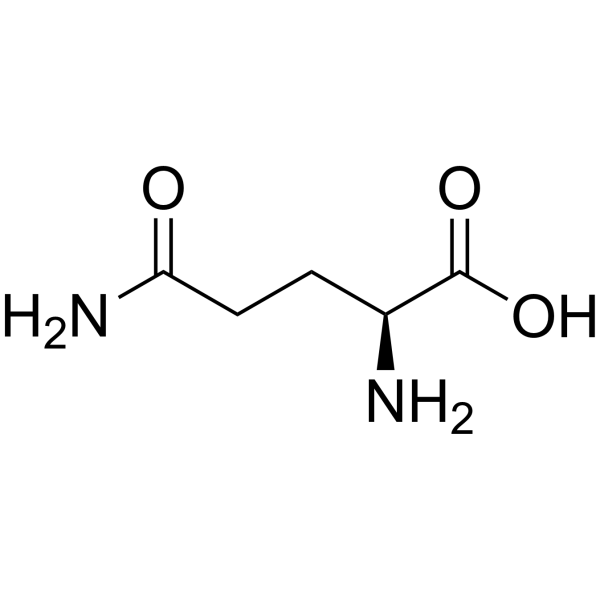
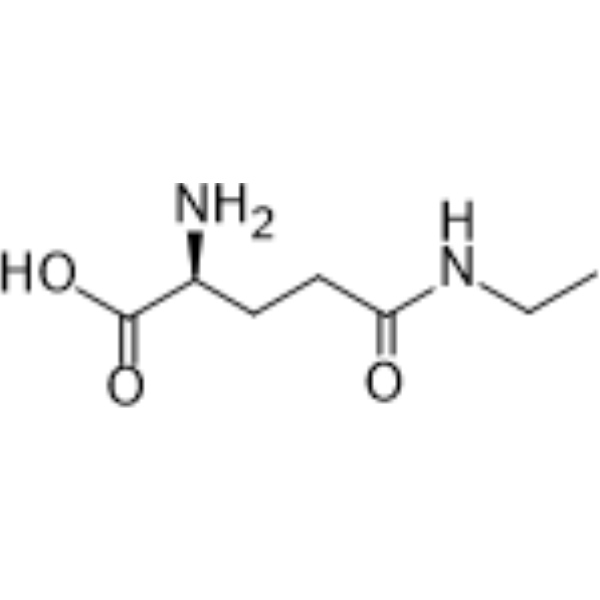
L-Glutamic acid γ-ethyl amide; Nγ-Ethyl-L-glutamine
|
Apoptosis
Endogenous Metabolite
Reactive Oxygen Species (ROS)
|
Neurological Disease
Cancer
|
|
L-Theanine (L-Glutamic Acid γ-ethyl amide) is a non-protein amino acid contained in green tea leaves, which blocks the binding of L-glutamic acid to glutamate receptors in the brain, and with neuroprotective, anticancer and anti-oxidative activities. L-Theanine can pass through the blood–brain barrier and is orally active .
|
-
-
- HY-79647
-
|
N-(Fmoc-oxy)succinimide
|
Biochemical Assay Reagents
|
Others
|
|
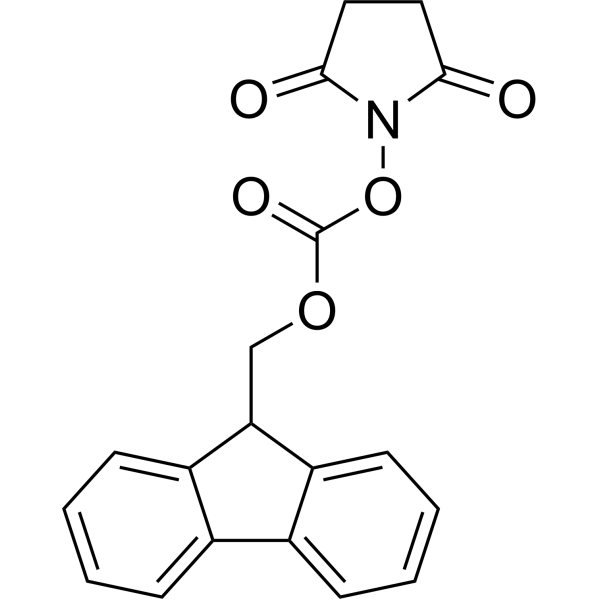
Fmoc-OSu (N-(Fmoc-oxy)succinimide) is an acylating agent that targets amino groups (-NH2). It can selectively protect the amino groups of amino acids by covalently binding with primary or secondary amines through nucleophilic substitution reactions. Fmoc-OSu forms a stable amide bond with the amino group to avoid side reactions of the amino group in peptide synthesis. It can also be used as a fluorescent labeling reagent to react with glycosylamines for efficient labeling of N-sugar chains. Fmoc-OSu can be used as an Fmoc protection strategy in peptide synthesis, and as a fluorescent labeling and analysis method for N-sugar chains .
|
-
-
- HY-P1070A
-
|
DAP amide, human TFA
|
Amylin Receptor
|
Metabolic Disease
|
|
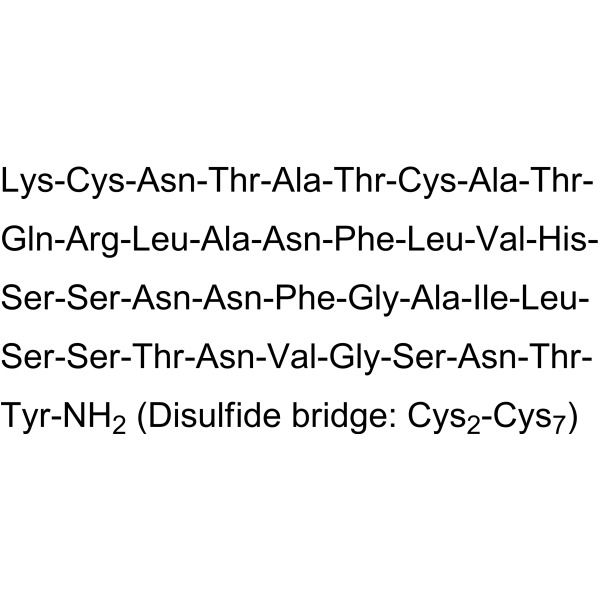
Amylin, amide, human TFA, a 37-amino acid polypeptide, is a pancreatic hormone cosecreted with insulin that exerts unique roles in metabolism and glucose homeostasis. Amylin, amide, human TFA inhibits glucagon secretion, delays gastric emptying, and acts as a satiety agent .
|
-
-
- HY-16969
-
|
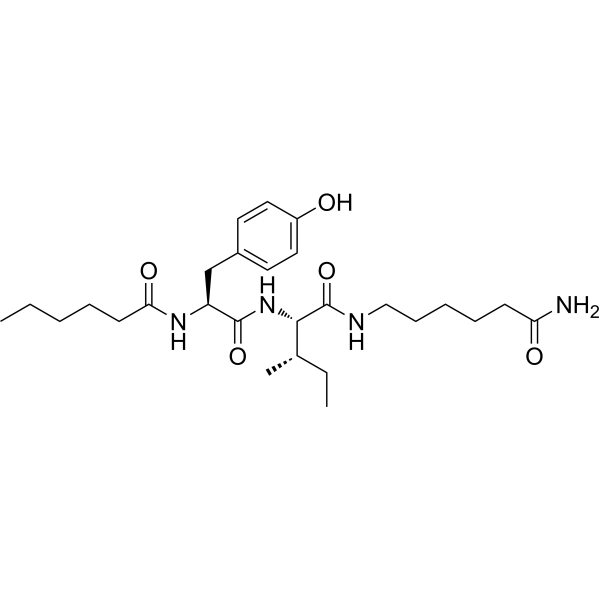
PNB-0408; N-hexanoic-Try-Ile-(6)-amino hexanoic amide; Hexanoyl-Tyr-Ile-Ahx-NH2
|
c-Met/HGFR
|
Neurological Disease
|
|
Dihexa, an oligopeptide drug, is an orally active and blood-brain barrier-permeable angiotensin IV analog. Dihexa binds to hepatocyte growth factor (HGF) with high affinity (Kd=65 pM) and potentiates its activity at its receptor, c-Met. Dihexa exhibits excellent antidementia activity and improves cognitive function in animal models. Dihexa may have therapeutic potential as a treatment Alzheimer’s disease .
|
-
-
- HY-P1070
-
|
DAP amide, human
|
Amylin Receptor
|
Metabolic Disease
|
|
Amylin, amide, human, a 37-amino acid polypeptide, is a pancreatic hormone cosecreted with insulin that exerts unique roles in metabolism and glucose homeostasis. Amylin, amide, human inhibits glucagon secretion, delays gastric emptying, and acts as a satiety agent .
|
-
-
- HY-Y0973
-
|
|
Biochemical Assay Reagents
Drug Intermediate
|
Others
|
|
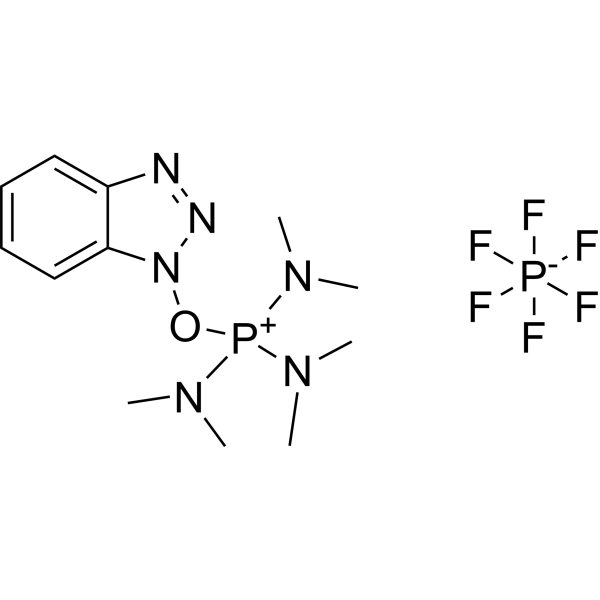
BOP hexafluorophosphate is a phosphonium-type condensing agent. BOP hexafluorophosphate activates the carboxylic acid component to form a highly reactive O-benzotriazole ester (active ester) intermediate, which then reacts with the amino component to form an amide bond (peptide bond). BOP hexafluorophosphate is applicable to solid-phase polypeptide synthesis and nucleoside modification .
|
-
-
- HY-B0137
-
-
-
- HY-W088929
-
|
|
Amino Acid Derivatives
|
Others
|
|
H-Glu(OtBu)-NH2 hydrochloride is a specialized amino acid derivative that is crucial for the synthesis of peptides bearing a C-terminal glutamine amide.
|
-
-
- HY-D1085
-
|
|
Fluorescent Dye
|
Others
|
|
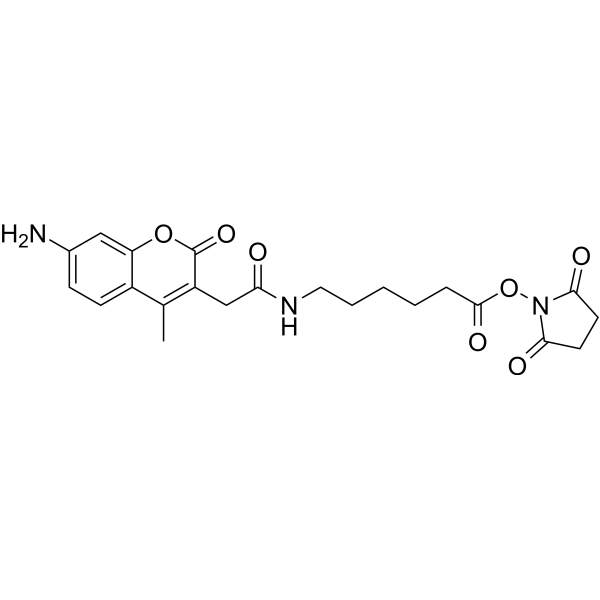
AMCA-X-SE is a coumarin derivative that generates fixed blue fluorescence and an NHS-activated ester that forms stable amide bonds with primary amine groups. It is used as a reactive dye for labeling amino groups of peptides, proteins, and oligonucleotides. Maximum excitation/emission wavelength: 354/442 nm .
|
-
-
- HY-120957
-
|
AMC-AA; 7-amino-4-methyl coumarin-arachidonamide
|
Endogenous Metabolite
|
Metabolic Disease
|
|
AMC arachidonoyl amide (AMC-AA) is one of several fatty acid amides which can be used to measure fatty acid amide hydrolase (FAAH) activity.1 FAAH is a relatively unselective enzyme in that it accepts a variety of amide head groups other than the ethanolamine of its nominal endogenous substrate anandamide.2 Exposure of AMC-AA to FAAH activity results in the release of the fluorescent aminomethyl coumarin that absorbs at 360 nm and emits at 465 nm. This allows the fast and convenient measurement of FAAH activity using a simple cuvette or microplate fluorometer.
|
-
-
- HY-W008559
-
-
-
- HY-P1531
-
-
-
- HY-174921A
-
|
|
Biochemical Assay Reagents
|
Others
|
|
Maleimide-PEG2000-COOH is a PEG derivative composed of Maleimide (HY-W007324), PEG units and carboxyl (-COOH). Carboxyl can easily form a stable amide bond with amino groups or an ester bond with hydroxyl groups. Maleimide forms a stable thioether bond with sulfhydryl (-SH) .
|
-
-
- HY-157745
-
|
mPEG40000-SC; mPEG40000-Succinimidyl ester
|
Biochemical Assay Reagents
|
Others
|
|
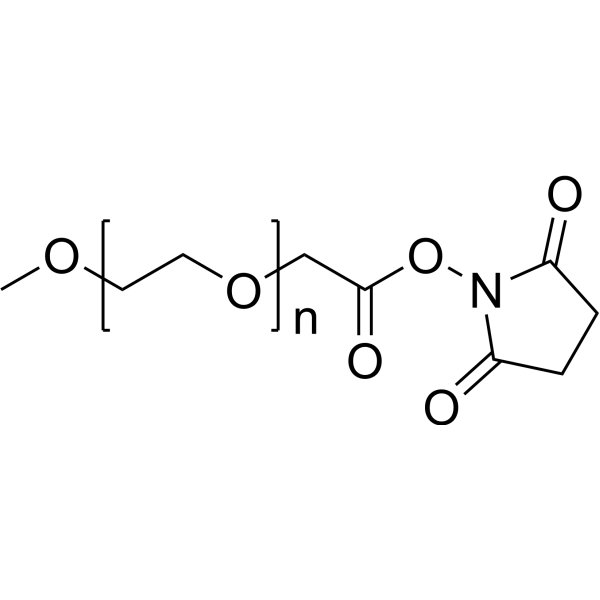
m-PEG-NHS ester (mPEG-SC; mPEG-Succinimidyl ester) (MW 40000) is a polyethylene glycol derivative. m-PEG-NHS ester serves as a modifying agent that reacts with free amino groups on the surface of protein or polypeptide molecules to form stable amide bonds, thereby covalently linking PEG chains to biomacromolecules, improving their antigenicity and immunogenicity, and facilitating the preparation of injectable formulations .
|
-
-
- HY-169794
-
|
|
DNA/RNA Synthesis
|
Others
|
|
N-Palmitoyl-phenylalanine is an N-acyl amide that contains the long-chain saturated fatty acid Palmitic acid (HY-N0830) conjugated via an amide bond to the essential amino acid L-Phenylalanine (HY-N0215). N-Palmitoyl-phenylalanine inhibits pre-mRNA splicing in HeLa cell nuclear lysates (IC50 > 400 μM) but has no splicing activity in intact HeLa cells .
|
-
-
- HY-W041856
-
|
Boc-8-aminooctanoic acid
|
PROTAC Linkers
|
Cancer
|
|
N-Boc-8-amino-octanoic acid (Boc-8-aminooctanoic acid) can be used as a PROTAC linker in the synthesis of PROTACs. N-Boc-8-amino-octanoic acid is an alkane chain with terminal carboxlic acid and Boc-protected amino groups. The terminal carboxylic acid can react with primary amine groups in the presence of activators (e.g. EDC, or HATU) to form a stable amide bond. The Boc group can be deprotected under mild acidic conditions to form the free amine.
|
-
-
- HY-W1048918A
-
|
mPEG5000-COOH
|
Biochemical Assay Reagents
|
Others
|
|
mPEG5000-CM (mPEG5000-COOH) has a reactive carboxyl group (-COOH) attached to the terminal site of the structure, which can form a stable amide bond with the amino group or an ester bond with the hydroxyl group. mPEG5000-CM can be used for drug delivery .
|
-
-
- HY-W1123939C
-
|
|
Biochemical Assay Reagents
|
Others
|
|
Silane-PEG5000-COOH can be used to modify proteins, peptides and other materials with active groups. The carboxyl group (-COOH) can easily form a stable amide bond with the amino group, and can also form an ester bond with the hydroxyl group. Silane-functionalized PEG (Silane-PEG-X) can be used to modify glass, silicon, etc .
|
-
-
- HY-W1048525
-
|
8-Arm PEG5000-Amine
|
Biochemical Assay Reagents
|
Others
|
|
8-Arm PEG5000-NH2 (8-Arm PEG5000-Amine) is a multi-arm PEG derivative with amino groups at each end of the eight arms. The reactive primary amine or NH2 groups can react rapidly with activated carboxylic acids such as NHS esters to form stable amide bonds .
|
-
-
- HY-140249
-
|
|
PROTAC Linkers
|
Cancer
|
|
Tri(Amino-PEG3-amide)-amine is a PEG-based PROTAC linker that can be used in the synthesis of PROTACs .
|
-
-
- HY-P2736
-
|
|
Endogenous Metabolite
|
Metabolic Disease
|
|
Amidases, a member of nitrilase superfamily, catalyzes the hydrolysis of an amide, leading to the formation of carboxylic acid and ammonia. Amidases contain a conserved stretch of approximately 130 amino acids known as the AS sequence, and play a role in important metabolic processes .
|
-
-
- HY-W005828
-
|
|
PROTAC Linkers
|
Cancer
|
|
9-(Boc-amino)nonanoic Acid is an alkane chain with terminal carboxlic acid and Boc-protected amino groups. 9-(Boc-amino)nonanoic acid can be used as a PROTAC linker in the synthesis of PROTACs. The terminal carboxylic acid can react with primary amine groups in the presence of activators (e.g. EDC, or HATU) to form a stable amide bond. The Boc group can be deprotected under mild acidic conditions to form the free amine.
|
-
-
- HY-W009056
-
|
|
PROTAC Linkers
|
Cancer
|
|
Fmoc-7-amino-heptanoic acid is an alkane chain with terminal Fmoc-protected amine and carboxylic acid groups. Fmoc-7-amino-heptanoic acid can be used as a PROTAC linker in the synthesis of PROTACs. The Fmoc group can be deprotected under basic condition to obtain the free amine which can be used for further conjugations. The terminal carboxylic acid can react with primary amine groups in the presence of activators (e.g. EDC, or HATU) to form a stable amide bond.
|
-
-
- HY-15121S1
-
|
L-Glutamic acid γ-ethyl amide-13C2,15N2; Nγ-Ethyl-L-glutamine-13C2,15N2
|
DNA/RNA Synthesis
|
Others
|
|
L-Theanine- 13C2, 15N2 (L-Glutamic Acid γ-ethyl amide- 13C2, 15N2) is the 13C- and 15N-labeled L-Theanine (HY-15121). L-Theanine (L-Glutamic Acid γ-ethyl amide) is a non-protein amino acid contained in green tea leaves, which blocks the binding of L-glutamic acid to glutamate receptors in the brain, and with neuroprotective, anticancer and anti-oxidative activities. L-Theanine can pass through the blood–brain barrier and is orally active.
|
-
-
- HY-W105727
-
|
|
PROTAC Linkers
|
Cancer
|
|
9-Aminononanoic acid can be used as a PROTAC linker and other conjugation in the synthesis of PROTACs. 9-Aminononanoic acid is an alkane chain with terminal carboxlic acid and amine groups. The amino group (NH2) is reactive with carboxylic acids, activated NHS esters, carbonyls (ketone, aldehyde) etc. The terminal carboxylic acid can react with primary amine groups of activated NHS ester to form a stable amide bond.
|
-
-
- HY-140251
-
|
|
PROTAC Linkers
|
Cancer
|
|
Tri(Amino-PEG5-amide)-amine is a PEG-based PROTAC linker that can be used in the synthesis of PROTACs .
|
-
-
- HY-P4332
-
|
|
Fluorescent Dye
Ser/Thr Protease
|
Cardiovascular Disease
|
|
Boc-Glu(OBzl)-Ala-Arg-AMC is a fluorogenic substrate for coagulation factor XIa and trypsin. The cleavage of the amide bond between arginine and the methylcoumarin amide group releases fluorescent 7-Amino-4-methylcoumarin (HY-D0027) .
|
-
-
- HY-B0137A
-
-
-
- HY-N0390S10
-
-
-
- HY-130695
-
|
|
ADC Linker
|
Cancer
|
|
N-(Amino-PEG5)-N-bis(PEG4-acid) is a PEG derivative containing an amino group with two terminal carboxylic acids. The amino group is reactive with carboxylic acids, activated NHS esters. The terminal carboxylic acids can react with primary amine groups in the presence of activators to form a stable amide bond. N-(Amino-PEG5)-N-bis(PEG4-acid) can be useful in the development of antibody drug conjugates (ADCs) .
|
-
-
- HY-W011118
-
|
|
Radionuclide-Drug Conjugates (RDCs)
|
Cancer
|
|
DTPA anhydride is a bifunctional chelator whose anhydride can react with amino groups in proteins (such as lysine residues) to form stable amide bonds. DTPA anhydride can also bind to radionuclides to synthesize radionuclide-labeled drug conjugates (RDCs). RDCs have the ability to specifically target biomolecules and can be used in medical imaging or therapy.
|
-
-
- HY-N0390S15
-
-
-
- HY-140250
-
|
|
PROTAC Linkers
|
Cancer
|
|
Tri(Amino-PEG4-amide)-amine is a PEG-based PROTAC linker that can be used in the synthesis of PROTACs .
|
-
-
- HY-133883
-
|
|
Fluorescent Dye
|
Others
|
|
Cyanine7.5 amine is a near-infrared Cy7.5-based dye and also a substrate for amide bond coupling (Ex/Em = 788 nm/808 nm). Cyanine7.5 amine contains a free amino group and can be used for coupling with activated carboxylic acid derivatives .
|
-
-
- HY-140250A
-
|
|
PROTAC Linkers
|
Cancer
|
|
Tri(Amino-PEG4-amide)-amine TFA is a PEG-based PROTAC linker that can be used in the synthesis of PROTACs .
|
-
-
- HY-140249A
-
|
|
PROTAC Linkers
|
Cancer
|
|
Tri(Amino-PEG3-amide)-amine TFA is a PEG-based PROTAC linker that can be used in the synthesis of PROTACs .
|
-
-
- HY-P4333
-
|
|
Fluorescent Dye
|
Cardiovascular Disease
|
|
Boc-Glu(OBzl)-Gly-Arg-AMC is a fluorogenic substrate for factors IXa and XIIa. The cleavage of the amide bond between arginine and the methylcoumarin amide group releases fluorescent 7-Amino-4-methylcoumarin (HY-D0027) .
|
-
-
- HY-B0137B
-
-
-
- HY-W097355
-
|
D-Phenylalanine amide; H-D-Phe-NH2
|
Amino Acid Derivatives
Drug Intermediate
|
Cancer
|
|
(R)-2-Amino-3-phenylpropanamide (D-Phenylalanine amide) is a non-natural D-α-amino acid derivative and chiral amino acid amide. (R)-2-Amino-3-phenylpropanamide can be converted into D-Phenylalanine (HY-Y0079), which is applicable to the construction of all-D antimicrobial peptides and the synthesis of anti-HIV reagents. (R)-2-Amino-3-phenylpropanamide serves as a reagent for synthesizing benzoxaborole derivative 6, a dual covalent binder of Pseudomonas aeruginosa PBP3. (R)-2-Amino-3-phenylpropanamide is used in colon cancer-related research .
|
-
-
- HY-157921
-
|
20-(9-Mercaptononyl)-3,6,9,12,15,18-hexaoxaeicosane-1-amine, hydrochloride
|
Biochemical Assay Reagents
|
Others
|
|
Amino-EG6-undecanethiol hydrochloride is a biochemical assay reagent, and can be used as a linker through amide coupling .
|
-
-
- HY-B0137AS
-
-
-
- HY-135717
-
|
|
Biochemical Assay Reagents
|
Cancer
|
|
Norbiotinamine is an alternative to biotin. Norbiotinamine can be coupled with a carboxylic group of amino acids to give inverse peptides, having the amide linkage oriented in the opposite direction .
|
-
-
- HY-135717A
-
|
|
Biochemical Assay Reagents
|
Cancer
|
|
Norbiotinamine hydrochloride is an alternative to biotin. Norbiotinamine can be coupled with a carboxylic group of amino acids to give inverse peptides, having the amide linkage oriented in the opposite direction .
|
-
-
- HY-N0390S11
-
-
-
- HY-B0137R
-
|
|
Reference Standards
Na+/K+ ATPase
|
Neurological Disease
|
|
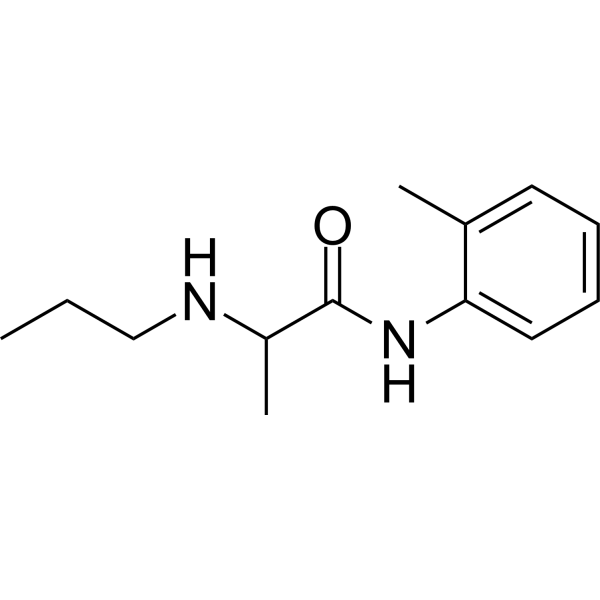
Prilocaine (Standard) is the analytical standard of Prilocaine. This product is intended for research and analytical applications. Prilocaine, an amino amide, is a Na/K-ATPase inhibitor. Prilocaine has neurotoxic effects .
|
-
-
- HY-B0137AR
-
|
|
Reference Standards
Na+/K+ ATPase
|
Neurological Disease
|
|
Prilocaine (hydrochloride) (Standard) is the analytical standard of Prilocaine (hydrochloride). This product is intended for research and analytical applications. Prilocaine hydrochloride, an amino amide, is a Na/K-ATPase inhibitor. Prilocaine has neurotoxic effects .
|
-
-
- HY-100801R
-
|
|
EAAT
Reference Standards
|
Neurological Disease
|
|
Prilocaine (hydrochloride) (Standard) is the analytical standard of Prilocaine (hydrochloride). This product is intended for research and analytical applications. Prilocaine hydrochloride, an amino amide, is a Na/K-ATPase inhibitor. Prilocaine has neurotoxic effects .
|
-
-
- HY-P5483
-
|
|
Bacterial
|
Others
|
|
Retro-indolicidin is a biological active peptide. (Reverse peptide of indolicidin (Rev4) is a 13-amino acid residue peptide based on the sequence of indolicidin. Indolicidin, a member of the cathelicidin protein family, is a 13-amino acid residue cationic, antimicrobial peptide-amide isolated from the cytoplasmic granules of bovine neutrophils. The synthetic peptide Rev4 has been shown to possess strong antimicrobial as well as protease inhibitory activities in vitro.)
|
-
-
- HY-49053
-
|
|
Microtubule/Tubulin
Mitosis
|
Cancer
|
|
N-Boc-dolaproine-amide-Me-Phe is the amino acid residue of the pentapeptide Dolastatin 10 (HY-15580). Dolastatin 10 inhibits tubulin polymerization and mitosis and has anticancer activity .
|
-
- HY-W704786
-
-
- HY-W766574
-
-
- HY-P7060
-
|
TPPT
|
iGluR
|
Neurological Disease
|
|
NT 13 (TPPT) is a tetrapeptide having the amino acid sequence L-threonyl-L-prolyl-L-prolyl-L-threonine amide. NT 13 is a partial N-methyl-D-aspartate receptor (NMDAR) agonist used in the study of depression, anxiety, and other related diseases.
|
-
- HY-P1169A
-
|
|
Caspase
|
Others
|
|
Ac-IETD-AFC TFA is a synthetic fluorogenic substrate that can be used to specifically detect caspase-8 activity. INDO 1 pentasodium is imbued with the fluorophore AFC (7-amino-4-trifluoromethylcoumarin). When caspase-8 recognizes and cleaves the amide bond following the IETD sequence in this substrate, AFC is released and emits fluorescence (Ex = ~400 nm; Em = ~505 nm) .
|
-
- HY-172270D
-
|
|
Liposome
|
Cancer
|
|
DSPE-PEG1000-PTP is synthesised by conjugating the amino group of plectin-1 peptide (PTP) with DSPE-PEG-NHS ester via amide bonds. DSPE-PEG1000-PTP can be used to construct drug delivery vectors .
|
-
- HY-172270
-
|
|
Liposome
|
Cancer
|
|
DSPE-PEG1000-PTP is synthesised by conjugating the amino group of plectin-1 peptide (PTP) with DSPE-PEG-NHS ester via amide bonds. DSPE-PEG1000-PTP can be used to construct drug delivery vectors .
|
-
- HY-172270A
-
|
|
Liposome
|
Cancer
|
|
DSPE-PEG1000-PTP is synthesised by conjugating the amino group of plectin-1 peptide (PTP) with DSPE-PEG-NHS ester via amide bonds. DSPE-PEG1000-PTP can be used to construct drug delivery vectors .
|
-
- HY-W591968
-
|
|
PROTAC Linkers
|
Cancer
|
|
14-(Fmoc-amino)-tetradecanoic acid can be used as a PROTAC linker in the synthesis of PROTACs. 14-(Fmoc-amino)-tetradecanoic acid is an alkane chain with terminal Fmoc-protected amine and carboxylic acid groups. The Fmoc group can be deprotected under basic condition to obtain the free amine which can be used for further conjugations. The terminal carboxylic acid can react with primary amine groups in the presence of activators (e.g. EDC, or HATU) to form a stable amide bond.
|
-
- HY-W286613
-
|
|
Biochemical Assay Reagents
|
Others
|
|
N-Boc-Biocytin is a biotin PEG linker containing a carboxylic group and Boc-protected amine. Reaction of carboxylic with primary amino (-NH2) forms stable, irreversible amide bonds. The Boc group can be deprotected under acidic condition to obtain the free amine which can be used for further conjugations.
|
-
- HY-174921B
-
|
|
Biochemical Assay Reagents
|
Others
|
|
Maleimide-PEG3400-COOH is a PEG derivative composed of Maleimide (HY-W007324), PEG units and carboxyl (-COOH). Carboxyl can easily form a stable amide bond with amino groups or an ester bond with hydroxyl groups. Maleimide forms a stable thioether bond with sulfhydryl (-SH) .
|
-
- HY-174921C
-
|
|
Biochemical Assay Reagents
|
Others
|
|
Maleimide-PEG5000-COOH is a PEG derivative composed of Maleimide (HY-W007324), PEG units and carboxyl (-COOH). Carboxyl can easily form a stable amide bond with amino groups or an ester bond with hydroxyl groups. Maleimide forms a stable thioether bond with sulfhydryl (-SH) .
|
-
- HY-174921
-
|
|
Biochemical Assay Reagents
|
Others
|
|
Maleimide-PEG1000-COOH is a PEG derivative composed of Maleimide (HY-W007324), PEG units and carboxyl (-COOH). Carboxyl can easily form a stable amide bond with amino groups or an ester bond with hydroxyl groups. Maleimide forms a stable thioether bond with sulfhydryl (-SH) .
|
-
- HY-W1048918
-
|
mPEG1000-COOH
|
Biochemical Assay Reagents
|
Others
|
|
mPEG1000-CM (mPEG1000-COOH) has a reactive carboxyl group (-COOH) attached to the terminal site of the structure, which can form a stable amide bond with the amino group or an ester bond with the hydroxyl group. mPEG1000-CM can be used for drug delivery .
|
-
- HY-P5484
-
|
|
Bacterial
|
Others
|
|
SMAP-18 is a biological active peptide. (SMAP-18 is a 18-amino acid residue peptide amide which is a truncated form of SMAP-29. Sheep myeloid antimicrobial peptide-29 (SMAP-29) displays extremely high antimicrobial activity against Pseudomonas strains, other Gram-negative bacteria, and multidrug-resistant pathogens. SMAP-18 displays much higher cell selectivity as compared to parental SMAP-29 because of its decreased hemolytic activity and retained antimicrobial activity.)
|
-
- HY-W190958
-
|
|
Biochemical Assay Reagents
|
Others
|
|
Boc-NH-Tri-(carbonylethoxymethyl)-methane is a branched PEG linker with a Boc-protected amino and three terminal carboxilic acid groups. The Boc group can be deprotected under mild acidic conditions to form the free amine. The terminal carboxylic acid groups can react with primary amine groups in the presence of activators (e.g. EDC, or HATU) to form a stable amide bond.
|
-
- HY-23629
-
|
|
PROTAC Linkers
|
Cancer
|
|
16-Aminohexadecanoic acid is an alkane chain with terminal carboxlic acid and amine groups. 16-Aminohexadecanoic acid can be used as a PROTAC linker in the synthesis of PROTACs. The amino group (NH2) is reactive with carboxylic acids, activated NHS esters, carbonyls (ketone, aldehyde) etc. The terminal carboxylic acid can react with primary amine groups of activated NHS ester to form a stable amide bond.
|
-
- HY-W1123939
-
|
|
Biochemical Assay Reagents
|
Others
|
|
Silane-PEG-COOH (MW 1000) can be used to modify proteins, peptides and other materials with active groups. The carboxyl group (-COOH) can easily form a stable amide bond with the amino group, and can also form an ester bond with the hydroxyl group. Silane-functionalized PEG (Silane-PEG-X) can be used to modify glass, silicon, etc .
|
-
- HY-W401143
-
|
|
PROTAC Linkers
|
Cancer
|
|
15-Aminopentadecanoic Acid can be used as a PROTAC linker in the synthesis of PROTACs. 15-Aminopentadecanoic Acid is an alkane chain with terminal carboxlic acid and amine groups. The amino group (NH2) is reactive with carboxylic acids, activated NHS esters, carbonyls (ketone, aldehyde) etc. The terminal carboxylic acid can react with primary amine groups of activated NHS ester to form a stable amide bond.
|
-
- HY-W1048525B
-
|
8-Arm PEG40000-Amine
|
Biochemical Assay Reagents
|
Others
|
|
8-Arm PEG40000-NH2 (8-Arm PEG40000-Amine) is a multi-arm PEG derivative with amino groups at each end of the eight arms. The reactive primary amine or NH2 groups can react rapidly with activated carboxylic acids such as NHS esters to form stable amide bonds .
|
-
- HY-W1048526
-
|
8-Arm PEG5000-amine HCL salt
|
Biochemical Assay Reagents
|
Others
|
|
8-Arm PEG5000-NH2 (8-Arm PEG5000-amine) HCL is a multi-arm PEG derivative with amino groups at each end of the eight arms. The reactive primary amine or NH2 groups can react rapidly with activated carboxylic acids such as NHS esters to form stable amide bonds .
|
-
- HY-W1048526A
-
|
8-Arm PEG20000-amine HCL salt
|
Biochemical Assay Reagents
|
Others
|
|
8-Arm PEG20000-NH2 (8-Arm PEG20000-amine) HCL is a multi-arm PEG derivative with amino groups at each end of the eight arms. The reactive primary amine or NH2 groups can react rapidly with activated carboxylic acids such as NHS esters to form stable amide bonds .
|
-
- HY-D3389
-
|
|
Fluorescent Dye
Bacterial
|
Infection
|
|
sCy5DL-amide is an amidated fluorescent D-amino acid conjugated to Sulfo-Cyanine 5, and a peptidoglycan labeling agent. sCy5DL-amide incorporates into bacterial peptidoglycan cell wall via transpeptidase-mediated reactions, replacing the fourth or fifth D-amino acid of the peptidoglycan stem peptide for visualization of nascent peptidoglycan biosynthesis. sCy5DL-amide produces clear cell outline, septum labeling, and high localization density in Bacillus subtilis, including a 'V-shape' pattern at cell-cell contact areas. sCy5DL-amide exhibits robust incorporation into Gram-positive bacteria and mycobacteria, with reduced incorporation into Gram-negative bacteria (Ex/Em = 646/666 nm) .
|
-
- HY-P11605
-
-
- HY-172270C
-
|
|
Liposome
|
Cancer
|
|
DSPE-PEG1000-PTP is synthesised by conjugating the amino group of plectin-1 peptide (PTP) with DSPE-PEG-NHS ester via amide bonds. DSPE-PEG1000-PTP can be used to construct drug delivery vectors .
|
-
- HY-W1048918B
-
|
mPEG10000-COOH
|
Biochemical Assay Reagents
|
Others
|
|
mPEG10000-CM (mPEG10000-COOH) has a reactive carboxyl group (-COOH) attached to the terminal site of the structure, which can form a stable amide bond with the amino group or an ester bond with the hydroxyl group. mPEG10000-CM can be used for drug delivery .
|
-
- HY-174904
-
|
|
Biochemical Assay Reagents
|
Others
|
|
Dde Biotin-PEG4-COOH is a PEG derivative composed of Biotin, 5 PEG units, and a carboxyl group (-COOH). Biotin can form a stable non-covalent bond with streptavidin. The carboxyl group can easily form a stable amide bond with the amino group, and can also form an ester bond with the hydroxyl group.
|
-
- HY-D3049
-
|
|
Fluorescent Dye
|
Others
|
|
5(6)-carbonylated rhodamine 110 NHS ester is a reactive ester fluorescent reagent based on 5(6)-carbonylated rhodamine 110. NHS ester is a highly reactive ester capable of covalently coupling with primary amine groups in molecules such as proteins, peptides, amino sugars, and nucleic acids to form stable amide bonds (Ex/Em = 502/527 nm).
|
-
- HY-W1048918D
-
|
mPEG40000-COOH
|
Biochemical Assay Reagents
|
Others
|
|
mPEG40000-CM (mPEG40000-COOH) has a reactive carboxyl group (-COOH) attached to the terminal site of the structure, which can form a stable amide bond with the amino group or an ester bond with the hydroxyl group. mPEG40000-CM can be used for drug delivery .
|
-
- HY-W1048918C
-
|
mPEG20000-COOH
|
Biochemical Assay Reagents
|
Others
|
|
mPEG20000-CM (mPEG20000-COOH) has a reactive carboxyl group (-COOH) attached to the terminal site of the structure, which can form a stable amide bond with the amino group or an ester bond with the hydroxyl group. mPEG20000-CM can be used for drug delivery .
|
-
- HY-W1048918E
-
|
mPEG3400-COOH
|
Biochemical Assay Reagents
|
Others
|
|
mPEG3400-CM (mPEG3400-COOH) has a reactive carboxyl group (-COOH) attached to the terminal site of the structure, which can form a stable amide bond with the amino group or an ester bond with the hydroxyl group. mPEG3400-CM can be used for drug delivery .
|
-
- HY-D3050
-
|
|
Fluorescent Dye
|
Others
|
|
5(6)-carbonylated rhodamine 110 X NHS ester is a reactive ester fluorescent reagent based on 5(6)-carbonylated rhodamine 110 X. NHS ester is a highly reactive ester capable of covalently coupling with primary amine groups in molecules such as proteins, peptides, amino sugars, and nucleic acids to form stable amide bonds (Ex/Em = 496/522 nm).
|
-
- HY-W190916
-
|
|
Biochemical Assay Reagents
|
Others
|
|
3-[[2-[(4-azidobenzoyl)amino]ethyl]dithio]propanoicacid contains an aryl azide, a cleavable disulfide bond, and a carboxylic acid. The aryl azide can be photo-activated with UV light (250 to 350 nm) for conjugation with biomolecules. The carboxylic acid can be reacted with amines in the presence of an activator to form an amide bond. The disulfide bond can be cleaved via reducing agents.
|
-
- HY-D3053
-
|
|
Fluorescent Dye
|
Others
|
|
5(6)-Rhodamine 6G NHS ester is a reactive ester fluorescent reagent based on Rhodamine 6G (HY-D0309). NHS ester is a highly reactive ester capable of covalently coupling with primary amine groups in molecules such as proteins, peptides, amino sugars, and nucleic acids to form stable amide bonds (Ex/Em = 526/547 nm).
|
-
- HY-W1123939B
-
|
|
Biochemical Assay Reagents
|
Others
|
|
Silane-PEG3400-COOH can be used to modify proteins, peptides and other materials with active groups. The carboxyl group (-COOH) can easily form a stable amide bond with the amino group, and can also form an ester bond with the hydroxyl group. Silane-functionalized PEG (Silane-PEG-X) can be used to modify glass, silicon, etc .
|
-
- HY-182833A
-
|
|
Biochemical Assay Reagents
|
Others
|
|
DPPE-PEG2000-NHS is a conjugate composed of DPPE, PEG chains, and terminal active esters (NHS). The NHS ester in DMPE-PEG2000-NHS can rapidly covalently react with molecules containing primary amines (such as proteins, peptides, and small molecules modified with amino groups) to form stable amide bonds, enabling targeted modification of liposomes/nanoparticles.
|
-
- HY-183104D
-
|
|
Biochemical Assay Reagents
|
Others
|
|
DSG-PEG10000-NHS is a conjugate composed of DSG, PEG chains, and terminal active esters (NHS). The NHS ester in DSG-PEG10000-NHS can rapidly covalently react with molecules containing primary amines (such as proteins, peptides, and small molecules modified with amino groups) to form stable amide bonds, enabling targeted modification of liposomes/nanoparticles.
|
-
- HY-183104
-
|
|
Biochemical Assay Reagents
|
Others
|
|
DSG-PEG1000-NHS is a conjugate composed of DSG, PEG chains, and terminal active esters (NHS). The NHS ester in DSG-PEG1000-NHS can rapidly covalently react with molecules containing primary amines (such as proteins, peptides, and small molecules modified with amino groups) to form stable amide bonds, enabling targeted modification of liposomes/nanoparticles.
|
-
- HY-183016
-
|
|
Biochemical Assay Reagents
|
Others
|
|
DMPE-PEG1000-NHS is a conjugate composed of DMPE, PEG chains, and terminal active esters (NHS). The NHS ester in DMPE-PEG1000-NHS can rapidly covalently react with molecules containing primary amines (such as proteins, peptides, and small molecules modified with amino groups) to form stable amide bonds, enabling targeted modification of liposomes/nanoparticles.
|
-
- HY-183104B
-
|
|
Biochemical Assay Reagents
|
Others
|
|
DSG-PEG3400-NHS is a conjugate composed of DSG, PEG chains, and terminal active esters (NHS). The NHS ester in DSG-PEG3400-NHS can rapidly covalently react with molecules containing primary amines (such as proteins, peptides, and small molecules modified with amino groups) to form stable amide bonds, enabling targeted modification of liposomes/nanoparticles.
|
-
- HY-183104A
-
|
|
Biochemical Assay Reagents
|
Others
|
|
DSG-PEG2000-NHS is a conjugate composed of DSG, PEG chains, and terminal active esters (NHS). The NHS ester in DSG-PEG2000-NHS can rapidly covalently react with molecules containing primary amines (such as proteins, peptides, and small molecules modified with amino groups) to form stable amide bonds, enabling targeted modification of liposomes/nanoparticles.
|
-
- HY-W1048526C
-
|
8-Arm PEG10000-amine HCL salt
|
Biochemical Assay Reagents
|
Others
|
|
8-Arm PEG10000-NH2 (8-Arm PEG10000-amine) HCL is a multi-arm PEG derivative with amino groups at each end of the eight arms. The reactive primary amine or NH2 groups can react rapidly with activated carboxylic acids such as NHS esters to form stable amide bonds .
|
-
- HY-W1048525C
-
|
8-Arm PEG10000-Amine
|
Biochemical Assay Reagents
|
Others
|
|
8-Arm PEG10000-NH2 (8-Arm PEG10000-Amine) is a multi-arm PEG derivative with amino groups at each end of the eight arms. The reactive primary amine or NH2 groups can react rapidly with activated carboxylic acids such as NHS esters to form stable amide bonds .
|
-
- HY-W1048526B
-
|
8-Arm PEG40000-amine HCL salt
|
Biochemical Assay Reagents
|
Others
|
|
8-Arm PEG40000-NH2 (8-Arm PEG40000-amine) HCL is a multi-arm PEG derivative with amino groups at each end of the eight arms. The reactive primary amine or NH2 groups can react rapidly with activated carboxylic acids such as NHS esters to form stable amide bonds .
|
-
- HY-183016C
-
|
|
Biochemical Assay Reagents
|
Others
|
|
DMPE-PEG5000-NHS is a conjugate composed of DMPE, PEG chains, and terminal active esters (NHS). The NHS ester in DMPE-PEG5000-NHS can rapidly covalently react with molecules containing primary amines (such as proteins, peptides, and small molecules modified with amino groups) to form stable amide bonds, enabling targeted modification of liposomes/nanoparticles.
|
-
- HY-183016B
-
|
|
Biochemical Assay Reagents
|
Others
|
|
DMPE-PEG3400-NHS is a conjugate composed of DMPE, PEG chains, and terminal active esters (NHS). The NHS ester in DMPE-PEG3400-NHS can rapidly covalently react with molecules containing primary amines (such as proteins, peptides, and small molecules modified with amino groups) to form stable amide bonds, enabling targeted modification of liposomes/nanoparticles.
|
-
- HY-182833D
-
|
|
Biochemical Assay Reagents
|
Others
|
|
DPPE-PEG10000-NHS is a conjugate composed of DPPE, PEG chains, and terminal active esters (NHS). The NHS ester in DMPE-PEG10000-NHS can rapidly covalently react with molecules containing primary amines (such as proteins, peptides, and small molecules modified with amino groups) to form stable amide bonds, enabling targeted modification of liposomes/nanoparticles.
|
-
- HY-182833B
-
|
|
Biochemical Assay Reagents
|
Others
|
|
DPPE-PEG3400-NHS is a conjugate composed of DPPE, PEG chains, and terminal active esters (NHS). The NHS ester in DMPE-PEG3400-NHS can rapidly covalently react with molecules containing primary amines (such as proteins, peptides, and small molecules modified with amino groups) to form stable amide bonds, enabling targeted modification of liposomes/nanoparticles.
|
-
- HY-182833
-
|
|
Biochemical Assay Reagents
|
Others
|
|
DPPE-PEG1000-NHS is a conjugate composed of DPPE, PEG chains, and terminal active esters (NHS). The NHS ester in DMPE-PEG1000-NHS can rapidly covalently react with molecules containing primary amines (such as proteins, peptides, and small molecules modified with amino groups) to form stable amide bonds, enabling targeted modification of liposomes/nanoparticles.
|
-
- HY-183104C
-
|
|
Biochemical Assay Reagents
|
Others
|
|
DSG-PEG5000-NHS is a conjugate composed of DSG, PEG chains, and terminal active esters (NHS). The NHS ester in DSG-PEG5000-NHS can rapidly covalently react with molecules containing primary amines (such as proteins, peptides, and small molecules modified with amino groups) to form stable amide bonds, enabling targeted modification of liposomes/nanoparticles.
|
-
- HY-W1048525A
-
|
8-Arm PEG20000-Amine
|
Biochemical Assay Reagents
|
Others
|
|
8-Arm PEG20000-NH2 (8-Arm PEG20000-Amine) is a multi-arm PEG derivative with amino groups at each end of the eight arms. The reactive primary amine or NH2 groups can react rapidly with activated carboxylic acids such as NHS esters to form stable amide bonds .
|
-
- HY-182833C
-
|
|
Biochemical Assay Reagents
|
Others
|
|
DPPE-PEG5000-NHS is a conjugate composed of DPPE, PEG chains, and terminal active esters (NHS). The NHS ester in DMPE-PEG5000-NHS can rapidly covalently react with molecules containing primary amines (such as proteins, peptides, and small molecules modified with amino groups) to form stable amide bonds, enabling targeted modification of liposomes/nanoparticles.
|
-
- HY-183016A
-
|
|
Biochemical Assay Reagents
|
Others
|
|
DMPE-PEG2000-NHS is a conjugate composed of DMPE, PEG chains, and terminal active esters (NHS). The NHS ester in DMPE-PEG2000-NHS can rapidly covalently react with molecules containing primary amines (such as proteins, peptides, and small molecules modified with amino groups) to form stable amide bonds, enabling targeted modification of liposomes/nanoparticles.
|
-
- HY-183016D
-
|
|
Biochemical Assay Reagents
|
Others
|
|
DMPE-PEG10000-NHS is a conjugate composed of DMPE, PEG chains, and terminal active esters (NHS). The NHS ester in DMPE-PEG10000-NHS can rapidly covalently react with molecules containing primary amines (such as proteins, peptides, and small molecules modified with amino groups) to form stable amide bonds, enabling targeted modification of liposomes/nanoparticles.
|
-
- HY-W105744
-
|
|
PROTAC Linkers
|
Cancer
|
|
10-Aminodecanoic acid is an alkane chain with terminal carboxlic acid and amine groups. 10-Aminodecanoic acid can be used as a PROTAC linker in the synthesis of PROTACs and other conjugation applications. The amino group (NH2) is reactive with carboxylic acids, activated NHS esters, carbonyls (ketone, aldehyde) etc. The terminal carboxylic acid can react with primary amine groups of activated NHS ester to form a stable amide bond.
|
-
- HY-P1922
-
|
|
Melanocortin Receptor
|
Endocrinology
|
|
γ-2-MSH (41-58), amide is derived from γ-2-MSH. γ-2-MSH is a twelve amino acid peptide that is derived from the N-terminal fragment of proopiomelanocortin (POMC) and contains the His-Phe-Arg-Trp motif common to all melanocortin endogenous agonist ligands .
|
-
- HY-Y0623
-
|
HOSu; 1-Hydroxy-2,5-pyrrolidinedione
|
Biochemical Assay Reagents
|
Others
|
|
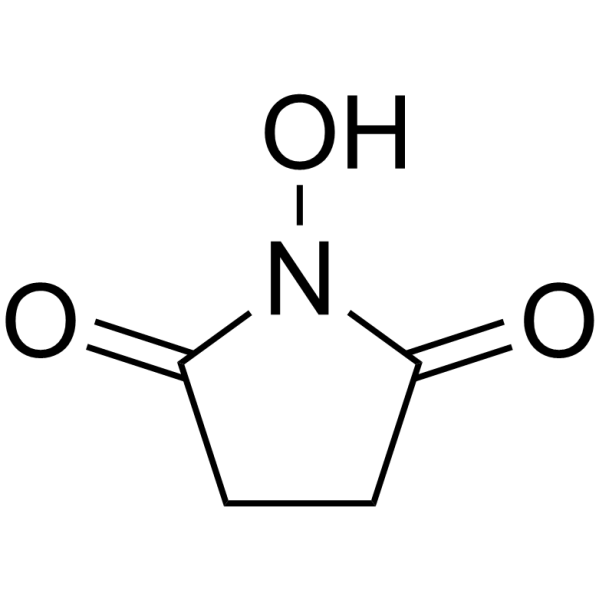
N-Hydroxysuccinimide (HOSu; 1-Hydroxy-2,5-pyrrolidinedione) is a covalent crosslinker commonly used in bioconjugation technology with a primary amine group. N-Hydroxysuccinimide reacts with amino groups (-NH2) to form a stable amide bond, which can modify amino-containing biomolecules. N-Hydroxysuccinimide can be used, for example, for protein labeling with fluorescent dyes and enzymes, surface activation of chromatography supports, microbeads, nanoparticles and microarray slides, and chemical synthesis of peptides. N-Hydroxysuccinimide has a wide range of applications in biomaterial synthesis (such as collagen, chitosan crosslinking), drug delivery systems (such as hydrogel preparation) and tissue engineering .
|
-
- HY-W190877
-
|
SH-PEG1-COOH
|
Biochemical Assay Reagents
|
Others
|
|
Thiol-PEG1-acid (SH-PEG1-COOH) is a PEG derivative consisting of a thiol (-SH), 1 PEG unit, and a carboxyl (-COOH). The thiol is a highly reactive chemical group that can react specifically with a variety of molecules to form stable covalent bonds. The carboxyl group can easily form stable amide bonds with amino groups, and can also form ester bonds with hydroxyl groups.
|
-
- HY-183162A
-
|
|
Biochemical Assay Reagents
|
Others
|
|
Glucose-PEG2000-NHS is a conjugate composed of glucose, PEG chains, and an active ester (NHS). Glucose-PEG2000-NHS combines the targeted recognition capabilities of glucose with the ability to rapidly covalently react with molecules containing primary amines (such as proteins, peptides, and amino-modified small molecules) to form stable amide bonds in an NHS ester. This allows for applications such as constructing targeted drug delivery systems and modifying nanoparticles.
|
-
- HY-W888710C
-
|
Folate-PEG1000-COOH
|
Biochemical Assay Reagents
|
Others
|
|
FA-PEG1000-COOH (Folate-PEG1000-COOH) is a Folic acid (HY-16637)-modified PEG derivative containing a carboxyl group (-COOH). The carboxyl group can easily form a stable amide bond with an amino group, or an ester bond with a hydroxyl group. Folic acid (-FA) has a high affinity for the folate receptor and can be used to target cell membrane receptors for drug delivery .
|
-
- HY-15121S
-
|
L-Glutamic acid γ-ethyl amide-d5; Nγ-Ethyl-L-glutamine-d5
|
Apoptosis
Endogenous Metabolite
|
Neurological Disease
|
|
L-Theanine-d5 is the deuterium labeled L-Theanine. L-Theanine (L-Glutamic Acid γ-ethyl amide)is a non-protein amino acid contained in green tea leaves, which blocks the binding of L-glutamic acid to glutamate receptors in the brain, and with neuroprotective and anti-oxidative activities. L-Theanine causes anti-stress effects via the inhibition of cortical neuron excitation by oral intake .
|
-
- HY-183162D
-
|
|
Biochemical Assay Reagents
|
Others
|
|
Glucose-PEG10000-NHS is a conjugate composed of glucose, PEG chains, and an active ester (NHS). Glucose-PEG10000-NHS combines the targeted recognition capabilities of glucose with the ability to rapidly covalently react with molecules containing primary amines (such as proteins, peptides, and amino-modified small molecules) to form stable amide bonds in an NHS ester. This allows for applications such as constructing targeted drug delivery systems and modifying nanoparticles.
|
-
- HY-D2895E
-
|
Rhodamine B-PEG5000-NH2
|
Fluorescent Dye
|
Others
|
|
RB-PEG5000-NH2 (Rhodamine B-PEG5000-NH2) is a fluorescent dye composed of Rhodamine B (HY-Y0016), PEG and an amino group. The reactive primary amine or NH2 groups can react rapidly with activated carboxylic acids such as NHS esters to form stable amide bonds (Ex/Em=546/610 nm) .
|
-
- HY-D2895A
-
|
Rhodamine B-PEG600-NH2
|
Fluorescent Dye
|
Others
|
|
RB-PEG600-NH2 (Rhodamine B-PEG600-NH2) is a fluorescent dye composed of Rhodamine B (HY-Y0016), PEG and an amino group. The reactive primary amine or NH2 groups can react rapidly with activated carboxylic acids such as NHS esters to form stable amide bonds (Ex/Em=546/610 nm) .
|
-
- HY-W888710I
-
|
Folate-PEG10000-COOH
|
Biochemical Assay Reagents
|
Others
|
|
FA-PEG10000-COOH (Folate-PEG10000-COOH) is a Folic acid (HY-16637)-modified PEG derivative containing a carboxyl group (-COOH). The carboxyl group can easily form a stable amide bond with an amino group, or an ester bond with a hydroxyl group. Folic acid (-FA) has a high affinity for the folate receptor and can be used to target cell membrane receptors for drug delivery .
|
-
- HY-183162
-
|
|
Biochemical Assay Reagents
|
Others
|
|
Glucose-PEG1000-NHS is a conjugate composed of glucose, PEG chains, and an active ester (NHS). Glucose-PEG1000-NHS combines the targeted recognition capabilities of glucose with the ability to rapidly covalently react with molecules containing primary amines (such as proteins, peptides, and amino-modified small molecules) to form stable amide bonds in an NHS ester. This allows for applications such as constructing targeted drug delivery systems and modifying nanoparticles.
|
-
- HY-183162B
-
|
|
Biochemical Assay Reagents
|
Others
|
|
Glucose-PEG3400-NHS is a conjugate composed of glucose, PEG chains, and an active ester (NHS). Glucose-PEG3400-NHS combines the targeted recognition capabilities of glucose with the ability to rapidly covalently react with molecules containing primary amines (such as proteins, peptides, and amino-modified small molecules) to form stable amide bonds in an NHS ester. This allows for applications such as constructing targeted drug delivery systems and modifying nanoparticles.
|
-
- HY-W888710H
-
|
Folate-PEG5000-COOH
|
Biochemical Assay Reagents
|
Others
|
|
FA-PEG5000-COOH (Folate-PEG5000-COOH) is a Folic acid (HY-16637)-modified PEG derivative containing a carboxyl group (-COOH). The carboxyl group can easily form a stable amide bond with an amino group, or an ester bond with a hydroxyl group. Folic acid (-FA) has a high affinity for the folate receptor and can be used to target cell membrane receptors for drug delivery .
|
-
- HY-15121R
-
|
L-Glutamic acid γ-ethyl amide (Standard); Nγ-Ethyl-L-glutamine (Standard)
|
Reference Standards
Apoptosis
Endogenous Metabolite
Reactive Oxygen Species (ROS)
|
Neurological Disease
Cancer
|
|
L-Theanine (Standard) is the analytical standard of L-Theanine. This product is intended for research and analytical applications. L-Theanine (L-Glutamic Acid γ-ethyl amide) is a non-protein amino acid contained in green tea leaves, which blocks the binding of L-glutamic acid to glutamate receptors in the brain, and with neuroprotective, anticancer and anti-oxidative activities. L-Theanine can pass through the blood–brain barrier and is orally active .
|
-
- HY-W888710A
-
|
Folate-PEG400-COOH
|
Biochemical Assay Reagents
|
Others
|
|
FA-PEG400-COOH (Folate-PEG400-COOH) is a Folic acid (HY-16637)-modified PEG derivative containing a carboxyl group (-COOH). The carboxyl group can easily form a stable amide bond with an amino group, or an ester bond with a hydroxyl group. Folic acid (-FA) has a high affinity for the folate receptor and can be used to target cell membrane receptors for drug delivery .
|
-
- HY-W888710D
-
|
Folate-PEG2000-COOH
|
Biochemical Assay Reagents
|
Others
|
|
FA-PEG2000-COOH (Folate-PEG2000-COOH) is a Folic acid (HY-16637)-modified PEG derivative containing a carboxyl group (-COOH). The carboxyl group can easily form a stable amide bond with an amino group, or an ester bond with a hydroxyl group. Folic acid (-FA) has a high affinity for the folate receptor and can be used to target cell membrane receptors for drug delivery .
|
-
- HY-183162C
-
|
|
Biochemical Assay Reagents
|
Others
|
|
Glucose-PEG5000-NHS is a conjugate composed of glucose, PEG chains, and an active ester (NHS). Glucose-PEG5000-NHS combines the targeted recognition capabilities of glucose with the ability to rapidly covalently react with molecules containing primary amines (such as proteins, peptides, and amino-modified small molecules) to form stable amide bonds in an NHS ester. This allows for applications such as constructing targeted drug delivery systems and modifying nanoparticles.
|
-
- HY-W888710E
-
|
Folate-PEG3400-COOH
|
Biochemical Assay Reagents
|
Others
|
|
FA-PEG3400-COOH (Folate-PEG3400-COOH) is a Folic acid (HY-16637)-modified PEG derivative containing a carboxyl group (-COOH). The carboxyl group can easily form a stable amide bond with an amino group, or an ester bond with a hydroxyl group. Folic acid (-FA) has a high affinity for the folate receptor and can be used to target cell membrane receptors for drug delivery .
|
-
- HY-W888710B
-
|
Folate-PEG600-COOH
|
Biochemical Assay Reagents
|
Others
|
|
FA-PEG600-COOH (Folate-PEG600-COOH) is a Folic acid (HY-16637)-modified PEG derivative containing a carboxyl group (-COOH). The carboxyl group can easily form a stable amide bond with an amino group, or an ester bond with a hydroxyl group. Folic acid (-FA) has a high affinity for the folate receptor and can be used to target cell membrane receptors for drug delivery .
|
-
- HY-W800813
-
|
|
Biochemical Assay Reagents
|
Others
|
|
Carboxy-Amido-PEG5-N-Boc is a PEG linker containing a terminal carboxylic acid and Boc-protected amino group. The hydrophilic PEG spacer increases solubility in aqueous media. The terminal carboxylic acid can react with primary amine groups in the presence of activators (e.g. EDC, HATU) to form a stable amide bond. The Boc group can be deprotected under mild acidic conditions to form the free amine.
|
-
- HY-D2895C
-
|
Rhodamine B-PEG2000-NH2
|
Fluorescent Dye
|
Others
|
|
RB-PEG2000-NH2 (Rhodamine B-PEG2000-NH2) is a fluorescent dye composed of Rhodamine B (HY-Y0016), PEG and an amino group. The reactive primary amine or NH2 groups can react rapidly with activated carboxylic acids such as NHS esters to form stable amide bonds (Ex/Em=546/610 nm) .
|
-
- HY-D2895H
-
|
Rhodamine B-PEG10000-NH2
|
Fluorescent Dye
|
Others
|
|
RB-PEG10000-NH2 (Rhodamine B-PEG10000-NH2) is a fluorescent dye composed of Rhodamine B (HY-Y0016), PEG and an amino group. The reactive primary amine or NH2 groups can react rapidly with activated carboxylic acids such as NHS esters to form stable amide bonds (Ex/Em=546/610 nm) .
|
-
- HY-D2895D
-
|
Rhodamine B-PEG3400-NH2
|
Fluorescent Dye
|
Others
|
|
RB-PEG3400-NH2 (Rhodamine B-PEG3400-NH2) is a fluorescent dye composed of Rhodamine B (HY-Y0016), PEG and an amino group. The reactive primary amine or NH2 groups can react rapidly with activated carboxylic acids such as NHS esters to form stable amide bonds (Ex/Em=546/610 nm) .
|
-
- HY-D2895B
-
|
Rhodamine B-PEG1000-NH2
|
Fluorescent Dye
|
Others
|
|
RB-PEG1000-NH2 (Rhodamine B-PEG1000-NH2) is a fluorescent dye composed of Rhodamine B (HY-Y0016), PEG and an amino group. The reactive primary amine or NH2 groups can react rapidly with activated carboxylic acids such as NHS esters to form stable amide bonds (Ex/Em=546/610 nm) .
|
-
- HY-D2895
-
|
Rhodamine B-PEG400-NH2
|
Fluorescent Dye
|
Others
|
|
RB-PEG400-NH2 (Rhodamine B-PEG400-NH2) is a fluorescent dye composed of Rhodamine B (HY-Y0016), PEG and an amino group. The reactive primary amine or NH2 groups can react rapidly with activated carboxylic acids such as NHS esters to form stable amide bonds (Ex/Em=546/610 nm) .
|
-
- HY-W591982
-
|
|
Biochemical Assay Reagents
|
Others
|
|
t-Boc-N-amido-PEG12-acid is a PEG linker containing a terminal carboxylic acid and Boc-protected amino group. The hydrophilic PEG spacer increases solubility in aqueous media. The terminal carboxylic acid can react with primary amine groups in the presence of activators (e.g. EDC, or HATU) to form a stable amide bond. The Boc group can be deprotected under mild acidic conditions to form the free amine.
|
-
- HY-W591967
-
|
|
PROTAC Linkers
|
Cancer
|
|
N-Boc-15-aminopentadecanoic acid is an alkane chain with terminal carboxlic acid and Boc-protected amino groups. N-Boc-15-aminopentadecanoic acid can be used as a PROTAC linker in the synthesis of PROTACs. The terminal carboxylic acid can react with primary amine groups in the presence of activators (e.g. EDC, or HATU) to form a stable amide bond. The Boc group can be deprotected under mild acidic conditions to form the free amine.
|
-
- HY-203300D
-
|
|
Biochemical Assay Reagents
|
Others
|
|
DOPE-PEG1000-NHS is a conjugate composed of DOPE, PEG chains, and terminal active ester (NHS). The NHS ester in DOPE-PEG1000-NHS can rapidly covalently react with molecules containing primary amines (such as proteins, peptide chains, and small molecules modified with amino groups) to form stable amide bonds, suitable for the construction of carriers requiring membrane fusion properties or pH-sensitive release (such as gene delivery systems).
|
-
- HY-203300B
-
|
|
Biochemical Assay Reagents
|
Others
|
|
DOPE-PEG3400-NHS is a conjugate composed of DOPE, PEG chains, and terminal active ester (NHS). The NHS ester in DOPE-PEG3400-NHS can rapidly covalently react with molecules containing primary amines (such as proteins, peptide chains, and small molecules modified with amino groups) to form stable amide bonds, suitable for the construction of carriers requiring membrane fusion properties or pH-sensitive release (such as gene delivery systems).
|
-
- HY-W089232
-
|
|
PROTAC Linkers
|
Cancer
|
|
Boc-10-Aminodecanoic acid can be used as a PROTAC linker in the synthesis of PROTACs and other conjugation applications. Boc-10-Aminodecanoic acid is an alkane chain with terminal carboxlic acid and Boc-protected amino groups. The terminal carboxylic acid can react with primary amine groups in the presence of activators (e.g. EDC, or HATU) to form a stable amide bond. The Boc group can be deprotected under mild acidic conditions to form the free amine.
|
-
- HY-203300A
-
|
|
Biochemical Assay Reagents
|
Others
|
|
DOPE-PEG1000-NHS is a conjugate composed of DOPE, PEG chains, and terminal active ester (NHS). The NHS ester in DOPE-PEG1000-NHS can rapidly covalently react with molecules containing primary amines (such as proteins, peptide chains, and small molecules modified with amino groups) to form stable amide bonds, suitable for the construction of carriers requiring membrane fusion properties or pH-sensitive release (such as gene delivery systems).
|
-
- HY-P1883
-
|
|
Fluorescent Dye
|
Infection
|
|
Bacterial Sortase Substrate III, Abz/DNP is a fluorescent peptide substrate. Bacterial Sortase Substrate III, Abz/DNP undergoes cleavage catalyzed by Staphylococcus aureus sortase A (SrtAΔN24) and Streptococcus pyogenes sortase A (SrtAΔN81), and catalyzes the formation of an amide bond between the carboxyl group of threonine and the amino group of the cell wall cross-bridge. Cleavage of this substrate can be detected at Ex/Em=320 nm/420 nm .
|
-
- HY-W101723
-
|
|
PROTAC Linkers
|
Cancer
|
|
Boc-12-Ado-OH can be used as a PROTAC linker in the synthesis of PROTACs. Boc-12-Ado-OH is an alkane chain with terminal carboxlic acid and Boc-protected amino groups. The terminal carboxylic acid can react with primary amine groups in the presence of activators (e.g. EDC, or HATU) to form a stable amide bond. The Boc group can be deprotected under mild acidic conditions to form the free amine.
|
-
- HY-W012001
-
|
|
PROTAC Linkers
|
Cancer
|
|
Boc-7-Aminoheptanoic acid can be used as a PROTAC linker in the synthesis of PROTACs and other conjugation applications. Boc-7-Aminoheptanoic acid is an alkane chain with terminal carboxlic acid and Boc-protected amino groups. The terminal carboxylic acid can react with primary amine groups in the presence of activators (e.g. EDC, or HATU) to form a stable amide bond. The Boc group can be deprotected under mild acidic conditions to form the free amine.
|
-
- HY-400361
-
|
|
Biochemical Assay Reagents
|
Others
|
|
BocNH-PEG2-CH2COONHS ester is a PEG linker containing a terminal carboxylic acid and Boc-protected amino group. The hydrophilic PEG spacer increases solubility in aqueous media. The terminal carboxylic acid can react with primary amine groups in the presence of activators (e.g. EDC, HATU) to form a stable amide bond. The Boc group can be deprotected under mild acidic conditions to form the free amine.
|
-
- HY-203300C
-
|
|
Biochemical Assay Reagents
|
Others
|
|
DOPE-PEG5000-NHS is a conjugate composed of DOPE, PEG chains, and terminal active ester (NHS). The NHS ester in DOPE-PEG5000-NHS can rapidly covalently react with molecules containing primary amines (such as proteins, peptide chains, and small molecules modified with amino groups) to form stable amide bonds, suitable for the construction of carriers requiring membrane fusion properties or pH-sensitive release (such as gene delivery systems).
|
-
- HY-203300
-
|
|
Biochemical Assay Reagents
|
Others
|
|
DOPE-PEG2000-NHS is a conjugate composed of DOPE, PEG chains, and terminal active ester (NHS). The NHS ester in DOPE-PEG2000-NHS can rapidly covalently react with molecules containing primary amines (such as proteins, peptide chains, and small molecules modified with amino groups) to form stable amide bonds, suitable for the construction of carriers requiring membrane fusion properties or pH-sensitive release (such as gene delivery systems).
|
-
- HY-Y1703
-
|
|
Biochemical Assay Reagents
|
Others
|
|
HATU is a third-generation uronium salt peptide coupling reagent. HATU increases the rate of peptide coupling reactions, activates amino acids, promotes peptide bond formation in both solution-phase and solid-phase synthesis, and also facilitates peptide assembly, fragment coupling, and linear peptide cyclization. HATU can promote the N-acylation of chitosan to generate amide-linked cationic derivatives with a controllable degree of substitution. HATU is commonly used in amine acylation reactions .
|
-
- HY-W451406C
-
|
|
PROTAC Linkers
|
Others
|
|
NH2-PEG2000-NH2 is a polyethylene glycol derivative containing two primary amine groups. The amino group can react quickly with activated carboxylic acid or carboxyl groups such as NHS esters to form stable amide bonds. The PEGylation of NH2-PEG-NH2 can increase solubility and stability, and reduce the immunogenicity of peptides and proteins, so it is mostly used to modify proteins, peptides and other substances.
|
-
- HY-P1883A
-
|
|
Fluorescent Dye
|
Infection
|
|
Bacterial Sortase Substrate III, Abz/DNP TFA is a fluorescent peptide substrate. Bacterial Sortase Substrate III, Abz/DNP TFA undergoes cleavage catalyzed by Staphylococcus aureus sortase A (SrtAΔN24) and Streptococcus pyogenes sortase A (SrtAΔN81), and catalyzes the formation of an amide bond between the carboxyl group of threonine and the amino group of the cell wall cross-bridge. Cleavage of this substrate can be detected at Ex/Em=320 nm/420 nm .
|
-
- HY-W451406D
-
|
|
PROTAC Linkers
|
Others
|
|
NH2-PEG10000-NH2 is a polyethylene glycol derivative containing two primary amine groups. The amino group can react quickly with activated carboxylic acid or carboxyl groups such as NHS esters to form stable amide bonds. The PEGylation of NH2-PEG-NH2 can increase solubility and stability, and reduce the immunogenicity of peptides and proteins, so it is mostly used to modify proteins, peptides and other substances.
|
-
- HY-W451406A
-
|
|
PROTAC Linkers
|
Others
|
|
NH2-PEG5000-NH2 is a polyethylene glycol derivative containing two primary amine groups. The amino group can react quickly with activated carboxylic acid or carboxyl groups such as NHS esters to form stable amide bonds. The PEGylation of NH2-PEG-NH2 can increase solubility and stability, and reduce the immunogenicity of peptides and proteins, so it is mostly used to modify proteins, peptides and other substances.
|
-
- HY-W1048555A
-
|
|
Biochemical Assay Reagents
|
Others
|
|
Mal-PEG2000-SCM is a heterobifunctional PEG crosslinker bearing maleimide and succinimidyl carboxymethyl ester functional groups. MMal-PEG2000-SCM conjugates the F3 peptide to nanoparticles: the SCM group reacts with amino groups on the nanoparticle surface to form amide groups, while the MAL group reacts with thiol groups of the F3 peptide to form carbon-sulfur bonds. Mal-PEG-SCM enables unidirectional addition of linkers, ensuring that appropriate functional groups are available for RGD incorporation. Mal-PEG2000-SCM can be used in the development of nanoparticles targeting specific tumor cells .
|
-
- HY-W1048558A
-
|
mPEG2000-COOH
|
Biochemical Assay Reagents
|
Others
|
|
mPEG2000-CM (mPEG2000-COOH) is a carboxyl-terminated monomethoxy polyethylene glycol. mPEG2000-CM bears a reactive carboxyl group (-COOH) at its structural terminal site, which can form stable amide bonds with amino groups and ester bonds with hydroxyl groups. mPEG2000-CM binds to PCA-g-PCL copolymers via electrostatic interaction to form polyion complex micelles with a hydrophilic PEG surface, which enhances the stability of micelles in aqueous media. mPEG2000-CM can be used for drug delivery .
|
-
- HY-W243460
-
|
|
Biochemical Assay Reagents
|
Others
|
|
EDTA copper (II) disodium salt, 97% is a negatively charged copper (II)-ethylenediaminetetraacetic acid chelate and also an adsorption substrate. EDTA copper (II) disodium salt, 97% forms amide bonds with chitosan amino groups in weakly acidic (pH 3-5) solutions, while it forms the CuEDTA (OH) 3− hydroxyl complex in strongly alkaline (pH > 12) solutions. EDTA copper (II) disodium salt, 97% can be adsorbed onto granular activated carbon, with electrostatic interactions dominating its pH-dependent adsorption behavior. EDTA copper (II) disodium salt, 97% can be used to eliminate the inhibition of enzyme-catalyzed reactions caused by trace heavy metals .
|
-
- HY-W017443S1
-
|
|
Isotope-Labeled Compounds
Endogenous Metabolite
Apoptosis
DNA/RNA Synthesis
|
Neurological Disease
Metabolic Disease
Inflammation/Immunology
Cancer
|
|
L-Asparagine-amide- 15N monohydrate is the 15N-labeled L-Asparagine monohydrate (HY-W017443). L-Asparagine monohydrate is an essential amino acid for leukemic cells and a substrate for L-Asparaginase. L-Asparaginase is a potent anti-leukemic enzyme that promotes asparagine (Asn) and glutamine (Gln) depletion and inhibits protein biosynthesis in lymphoblasts. Removal of L-asparagine from plasma by L-Asparaginase results in inhibition of RNA and DNA synthesis and subsequent apoptosis. L-Asparaginase has cell-killing ability in vitro and in vivo, and selectively inhibits the growth of cancer cells with low asparagine synthetase (AASNS) expression. L-Asparagine monohydrate can be used as a biomarker and sensor for the study of childhood acute lymphoblastic leukemia .
|
-
- HY-126720
-
|
|
Endogenous Metabolite
|
Metabolic Disease
|
|
N-Lignoceroyl Taurine is an arachidonoyl amino acid and taurine conjugate with a fatty acid that can be isolated from bovine brain. N-Lignoceroyl Taurine is one of several novel taurine-conjugated fatty acids discovered during mass spectrometry lipidomic analysis of the brain and spinal cord of wild-type and fatty acid amide hydrolase (FAAH) knockout mice. N-Lignoceroyl Taurine levels were 23-26-fold higher in FAAH -/- mice compared to wild-type mice, suggesting that FAAH utilizes N-Lignoceroyl Taurine as a substrate. However, in vitro experiments with purified FAAH showed that N-Lignoceroyl Taurine was hydrolyzed 2,000-fold slower in FAAH compared to oleoylethanolamide. N-Acyl Taurines with polyunsaturated acyl chains can activate members of the transient receptor potential (TRP) calcium channel family, including TRPV1 and TRPV4.
|
-
-
-
HY-L907
-
|
|
12,412 compounds
|
|
The most prominent mechanism of action of kinase inhibitors is their competition with ATP by binding to the hinge region of the kinase protein. Once the kinase is blocked by an inhibitor, it loses the ability to transfer phosphate groups from ATP to other molecules, resulting in the loss of kinase activity.
The hinge-binding region of kinase inhibitors mimics the interaction pattern between the ATP nucleobase and the kinase. MCE extracted thousands of kinase inhibitors from the ChEMBL database and isolated their molecular fragments. In certain cases, the amino and amide groups on the molecular fragments are crucial for binding in the hinge region. Therefore, we enhanced the diversity of the collected results by adding these two groups to unoccupied positions on the ring system. Subsequently, the fragments were assessed for their hinge region binding ability via docking at distinct kinases, we also applied pharmacophore constraints to ensure interactions with key amino acids in the kinase hinge region, ultimately obtaining kinase-related molecular fragments.
MCE provides over 12,412 kinase fragment molecules that meet the above requirements and are available off the shelf, serving as an effective tool for screening and developing drugs targeting kinases.
|
| Cat. No. |
Product Name |
Type |
-
- HY-D1085
-
|
|
Fluorescent Dyes
|
|
AMCA-X-SE is a coumarin derivative that generates fixed blue fluorescence and an NHS-activated ester that forms stable amide bonds with primary amine groups. It is used as a reactive dye for labeling amino groups of peptides, proteins, and oligonucleotides. Maximum excitation/emission wavelength: 354/442 nm .
|
-
- HY-133883
-
|
|
Fluorescent Dyes
|
|
Cyanine7.5 amine is a near-infrared Cy7.5-based dye and also a substrate for amide bond coupling (Ex/Em = 788 nm/808 nm). Cyanine7.5 amine contains a free amino group and can be used for coupling with activated carboxylic acid derivatives .
|
-
- HY-D2895A
-
|
Rhodamine B-PEG600-NH2
|
Fluorescent Dyes
|
|
RB-PEG600-NH2 (Rhodamine B-PEG600-NH2) is a fluorescent dye composed of Rhodamine B (HY-Y0016), PEG and an amino group. The reactive primary amine or NH2 groups can react rapidly with activated carboxylic acids such as NHS esters to form stable amide bonds (Ex/Em=546/610 nm) .
|
-
- HY-D2895H
-
|
Rhodamine B-PEG10000-NH2
|
Fluorescent Dyes
|
|
RB-PEG10000-NH2 (Rhodamine B-PEG10000-NH2) is a fluorescent dye composed of Rhodamine B (HY-Y0016), PEG and an amino group. The reactive primary amine or NH2 groups can react rapidly with activated carboxylic acids such as NHS esters to form stable amide bonds (Ex/Em=546/610 nm) .
|
-
- HY-D2895D
-
|
Rhodamine B-PEG3400-NH2
|
Fluorescent Dyes
|
|
RB-PEG3400-NH2 (Rhodamine B-PEG3400-NH2) is a fluorescent dye composed of Rhodamine B (HY-Y0016), PEG and an amino group. The reactive primary amine or NH2 groups can react rapidly with activated carboxylic acids such as NHS esters to form stable amide bonds (Ex/Em=546/610 nm) .
|
-
- HY-D2895B
-
|
Rhodamine B-PEG1000-NH2
|
Fluorescent Dyes
|
|
RB-PEG1000-NH2 (Rhodamine B-PEG1000-NH2) is a fluorescent dye composed of Rhodamine B (HY-Y0016), PEG and an amino group. The reactive primary amine or NH2 groups can react rapidly with activated carboxylic acids such as NHS esters to form stable amide bonds (Ex/Em=546/610 nm) .
|
-
- HY-D2895
-
|
Rhodamine B-PEG400-NH2
|
Fluorescent Dyes
|
|
RB-PEG400-NH2 (Rhodamine B-PEG400-NH2) is a fluorescent dye composed of Rhodamine B (HY-Y0016), PEG and an amino group. The reactive primary amine or NH2 groups can react rapidly with activated carboxylic acids such as NHS esters to form stable amide bonds (Ex/Em=546/610 nm) .
|
-
- HY-D3389
-
|
|
Fluorescent Dyes
|
|
sCy5DL-amide is an amidated fluorescent D-amino acid conjugated to Sulfo-Cyanine 5, and a peptidoglycan labeling agent. sCy5DL-amide incorporates into bacterial peptidoglycan cell wall via transpeptidase-mediated reactions, replacing the fourth or fifth D-amino acid of the peptidoglycan stem peptide for visualization of nascent peptidoglycan biosynthesis. sCy5DL-amide produces clear cell outline, septum labeling, and high localization density in Bacillus subtilis, including a 'V-shape' pattern at cell-cell contact areas. sCy5DL-amide exhibits robust incorporation into Gram-positive bacteria and mycobacteria, with reduced incorporation into Gram-negative bacteria (Ex/Em = 646/666 nm) .
|
-
- HY-D3049
-
|
|
Fluorescent Dyes
|
|
5(6)-carbonylated rhodamine 110 NHS ester is a reactive ester fluorescent reagent based on 5(6)-carbonylated rhodamine 110. NHS ester is a highly reactive ester capable of covalently coupling with primary amine groups in molecules such as proteins, peptides, amino sugars, and nucleic acids to form stable amide bonds (Ex/Em = 502/527 nm).
|
-
- HY-D3050
-
|
|
Fluorescent Dyes
|
|
5(6)-carbonylated rhodamine 110 X NHS ester is a reactive ester fluorescent reagent based on 5(6)-carbonylated rhodamine 110 X. NHS ester is a highly reactive ester capable of covalently coupling with primary amine groups in molecules such as proteins, peptides, amino sugars, and nucleic acids to form stable amide bonds (Ex/Em = 496/522 nm).
|
-
- HY-D3053
-
|
|
Fluorescent Dyes
|
|
5(6)-Rhodamine 6G NHS ester is a reactive ester fluorescent reagent based on Rhodamine 6G (HY-D0309). NHS ester is a highly reactive ester capable of covalently coupling with primary amine groups in molecules such as proteins, peptides, amino sugars, and nucleic acids to form stable amide bonds (Ex/Em = 526/547 nm).
|
-
- HY-D2895E
-
|
Rhodamine B-PEG5000-NH2
|
Fluorescent Dyes
|
|
RB-PEG5000-NH2 (Rhodamine B-PEG5000-NH2) is a fluorescent dye composed of Rhodamine B (HY-Y0016), PEG and an amino group. The reactive primary amine or NH2 groups can react rapidly with activated carboxylic acids such as NHS esters to form stable amide bonds (Ex/Em=546/610 nm) .
|
-
- HY-D2895C
-
|
Rhodamine B-PEG2000-NH2
|
Fluorescent Dyes
|
|
RB-PEG2000-NH2 (Rhodamine B-PEG2000-NH2) is a fluorescent dye composed of Rhodamine B (HY-Y0016), PEG and an amino group. The reactive primary amine or NH2 groups can react rapidly with activated carboxylic acids such as NHS esters to form stable amide bonds (Ex/Em=546/610 nm) .
|
| Cat. No. |
Product Name |
Type |
-
- HY-Y0623
-
|
HOSu; 1-Hydroxy-2,5-pyrrolidinedione
|
Biochemical Assay Reagents
|
|
N-Hydroxysuccinimide (HOSu; 1-Hydroxy-2,5-pyrrolidinedione) is a covalent crosslinker commonly used in bioconjugation technology with a primary amine group. N-Hydroxysuccinimide reacts with amino groups (-NH2) to form a stable amide bond, which can modify amino-containing biomolecules. N-Hydroxysuccinimide can be used, for example, for protein labeling with fluorescent dyes and enzymes, surface activation of chromatography supports, microbeads, nanoparticles and microarray slides, and chemical synthesis of peptides. N-Hydroxysuccinimide has a wide range of applications in biomaterial synthesis (such as collagen, chitosan crosslinking), drug delivery systems (such as hydrogel preparation) and tissue engineering .
|
-
- HY-79647
-
|
N-(Fmoc-oxy)succinimide
|
Biochemical Assay Reagents
|
|
Fmoc-OSu (N-(Fmoc-oxy)succinimide) is an acylating agent that targets amino groups (-NH2). It can selectively protect the amino groups of amino acids by covalently binding with primary or secondary amines through nucleophilic substitution reactions. Fmoc-OSu forms a stable amide bond with the amino group to avoid side reactions of the amino group in peptide synthesis. It can also be used as a fluorescent labeling reagent to react with glycosylamines for efficient labeling of N-sugar chains. Fmoc-OSu can be used as an Fmoc protection strategy in peptide synthesis, and as a fluorescent labeling and analysis method for N-sugar chains .
|
-
- HY-Y0973
-
|
|
Biochemical Assay Reagents
|
|
BOP hexafluorophosphate is a phosphonium-type condensing agent. BOP hexafluorophosphate activates the carboxylic acid component to form a highly reactive O-benzotriazole ester (active ester) intermediate, which then reacts with the amino component to form an amide bond (peptide bond). BOP hexafluorophosphate is applicable to solid-phase polypeptide synthesis and nucleoside modification .
|
-
- HY-W1048558A
-
|
mPEG2000-COOH
|
Biochemical Assay Reagents
|
|
mPEG2000-CM (mPEG2000-COOH) is a carboxyl-terminated monomethoxy polyethylene glycol. mPEG2000-CM bears a reactive carboxyl group (-COOH) at its structural terminal site, which can form stable amide bonds with amino groups and ester bonds with hydroxyl groups. mPEG2000-CM binds to PCA-g-PCL copolymers via electrostatic interaction to form polyion complex micelles with a hydrophilic PEG surface, which enhances the stability of micelles in aqueous media. mPEG2000-CM can be used for drug delivery .
|
-
- HY-174921A
-
|
|
Biochemical Assay Reagents
|
|
Maleimide-PEG2000-COOH is a PEG derivative composed of Maleimide (HY-W007324), PEG units and carboxyl (-COOH). Carboxyl can easily form a stable amide bond with amino groups or an ester bond with hydroxyl groups. Maleimide forms a stable thioether bond with sulfhydryl (-SH) .
|
-
- HY-W1048918A
-
|
mPEG5000-COOH
|
Biochemical Assay Reagents
|
|
mPEG5000-CM (mPEG5000-COOH) has a reactive carboxyl group (-COOH) attached to the terminal site of the structure, which can form a stable amide bond with the amino group or an ester bond with the hydroxyl group. mPEG5000-CM can be used for drug delivery .
|
-
- HY-W1123939C
-
|
|
Biochemical Assay Reagents
|
|
Silane-PEG5000-COOH can be used to modify proteins, peptides and other materials with active groups. The carboxyl group (-COOH) can easily form a stable amide bond with the amino group, and can also form an ester bond with the hydroxyl group. Silane-functionalized PEG (Silane-PEG-X) can be used to modify glass, silicon, etc .
|
-
- HY-W1048525
-
|
8-Arm PEG5000-Amine
|
Biochemical Assay Reagents
|
|
8-Arm PEG5000-NH2 (8-Arm PEG5000-Amine) is a multi-arm PEG derivative with amino groups at each end of the eight arms. The reactive primary amine or NH2 groups can react rapidly with activated carboxylic acids such as NHS esters to form stable amide bonds .
|
-
- HY-W1048555A
-
|
|
Biochemical Assay Reagents
|
|
Mal-PEG2000-SCM is a heterobifunctional PEG crosslinker bearing maleimide and succinimidyl carboxymethyl ester functional groups. MMal-PEG2000-SCM conjugates the F3 peptide to nanoparticles: the SCM group reacts with amino groups on the nanoparticle surface to form amide groups, while the MAL group reacts with thiol groups of the F3 peptide to form carbon-sulfur bonds. Mal-PEG-SCM enables unidirectional addition of linkers, ensuring that appropriate functional groups are available for RGD incorporation. Mal-PEG2000-SCM can be used in the development of nanoparticles targeting specific tumor cells .
|
-
- HY-W190877
-
|
SH-PEG1-COOH
|
Biochemical Assay Reagents
|
|
Thiol-PEG1-acid (SH-PEG1-COOH) is a PEG derivative consisting of a thiol (-SH), 1 PEG unit, and a carboxyl (-COOH). The thiol is a highly reactive chemical group that can react specifically with a variety of molecules to form stable covalent bonds. The carboxyl group can easily form stable amide bonds with amino groups, and can also form ester bonds with hydroxyl groups.
|
-
- HY-157921
-
|
20-(9-Mercaptononyl)-3,6,9,12,15,18-hexaoxaeicosane-1-amine, hydrochloride
|
Biochemical Assay Reagents
|
|
Amino-EG6-undecanethiol hydrochloride is a biochemical assay reagent, and can be used as a linker through amide coupling .
|
-
- HY-172270D
-
|
|
Biochemical Assay Reagents
|
|
DSPE-PEG1000-PTP is synthesised by conjugating the amino group of plectin-1 peptide (PTP) with DSPE-PEG-NHS ester via amide bonds. DSPE-PEG1000-PTP can be used to construct drug delivery vectors .
|
-
- HY-172270
-
|
|
Biochemical Assay Reagents
|
|
DSPE-PEG1000-PTP is synthesised by conjugating the amino group of plectin-1 peptide (PTP) with DSPE-PEG-NHS ester via amide bonds. DSPE-PEG1000-PTP can be used to construct drug delivery vectors .
|
-
- HY-172270A
-
|
|
Biochemical Assay Reagents
|
|
DSPE-PEG1000-PTP is synthesised by conjugating the amino group of plectin-1 peptide (PTP) with DSPE-PEG-NHS ester via amide bonds. DSPE-PEG1000-PTP can be used to construct drug delivery vectors .
|
-
- HY-174921B
-
|
|
Biochemical Assay Reagents
|
|
Maleimide-PEG3400-COOH is a PEG derivative composed of Maleimide (HY-W007324), PEG units and carboxyl (-COOH). Carboxyl can easily form a stable amide bond with amino groups or an ester bond with hydroxyl groups. Maleimide forms a stable thioether bond with sulfhydryl (-SH) .
|
-
- HY-174921C
-
|
|
Biochemical Assay Reagents
|
|
Maleimide-PEG5000-COOH is a PEG derivative composed of Maleimide (HY-W007324), PEG units and carboxyl (-COOH). Carboxyl can easily form a stable amide bond with amino groups or an ester bond with hydroxyl groups. Maleimide forms a stable thioether bond with sulfhydryl (-SH) .
|
-
- HY-174921
-
|
|
Biochemical Assay Reagents
|
|
Maleimide-PEG1000-COOH is a PEG derivative composed of Maleimide (HY-W007324), PEG units and carboxyl (-COOH). Carboxyl can easily form a stable amide bond with amino groups or an ester bond with hydroxyl groups. Maleimide forms a stable thioether bond with sulfhydryl (-SH) .
|
-
- HY-W1048918
-
|
mPEG1000-COOH
|
Biochemical Assay Reagents
|
|
mPEG1000-CM (mPEG1000-COOH) has a reactive carboxyl group (-COOH) attached to the terminal site of the structure, which can form a stable amide bond with the amino group or an ester bond with the hydroxyl group. mPEG1000-CM can be used for drug delivery .
|
-
- HY-W1123939
-
|
|
Biochemical Assay Reagents
|
|
Silane-PEG-COOH (MW 1000) can be used to modify proteins, peptides and other materials with active groups. The carboxyl group (-COOH) can easily form a stable amide bond with the amino group, and can also form an ester bond with the hydroxyl group. Silane-functionalized PEG (Silane-PEG-X) can be used to modify glass, silicon, etc .
|
-
- HY-W1048525B
-
|
8-Arm PEG40000-Amine
|
Biochemical Assay Reagents
|
|
8-Arm PEG40000-NH2 (8-Arm PEG40000-Amine) is a multi-arm PEG derivative with amino groups at each end of the eight arms. The reactive primary amine or NH2 groups can react rapidly with activated carboxylic acids such as NHS esters to form stable amide bonds .
|
-
- HY-W1048526
-
|
8-Arm PEG5000-amine HCL salt
|
Biochemical Assay Reagents
|
|
8-Arm PEG5000-NH2 (8-Arm PEG5000-amine) HCL is a multi-arm PEG derivative with amino groups at each end of the eight arms. The reactive primary amine or NH2 groups can react rapidly with activated carboxylic acids such as NHS esters to form stable amide bonds .
|
-
- HY-W1048526A
-
|
8-Arm PEG20000-amine HCL salt
|
Biochemical Assay Reagents
|
|
8-Arm PEG20000-NH2 (8-Arm PEG20000-amine) HCL is a multi-arm PEG derivative with amino groups at each end of the eight arms. The reactive primary amine or NH2 groups can react rapidly with activated carboxylic acids such as NHS esters to form stable amide bonds .
|
-
- HY-W888710D
-
|
Folate-PEG2000-COOH
|
Biochemical Assay Reagents
|
|
FA-PEG2000-COOH (Folate-PEG2000-COOH) is a Folic acid (HY-16637)-modified PEG derivative containing a carboxyl group (-COOH). The carboxyl group can easily form a stable amide bond with an amino group, or an ester bond with a hydroxyl group. Folic acid (-FA) has a high affinity for the folate receptor and can be used to target cell membrane receptors for drug delivery .
|
-
- HY-W888710E
-
|
Folate-PEG3400-COOH
|
Biochemical Assay Reagents
|
|
FA-PEG3400-COOH (Folate-PEG3400-COOH) is a Folic acid (HY-16637)-modified PEG derivative containing a carboxyl group (-COOH). The carboxyl group can easily form a stable amide bond with an amino group, or an ester bond with a hydroxyl group. Folic acid (-FA) has a high affinity for the folate receptor and can be used to target cell membrane receptors for drug delivery .
|
-
- HY-172270C
-
|
|
Biochemical Assay Reagents
|
|
DSPE-PEG1000-PTP is synthesised by conjugating the amino group of plectin-1 peptide (PTP) with DSPE-PEG-NHS ester via amide bonds. DSPE-PEG1000-PTP can be used to construct drug delivery vectors .
|
-
- HY-W1048918B
-
|
mPEG10000-COOH
|
Biochemical Assay Reagents
|
|
mPEG10000-CM (mPEG10000-COOH) has a reactive carboxyl group (-COOH) attached to the terminal site of the structure, which can form a stable amide bond with the amino group or an ester bond with the hydroxyl group. mPEG10000-CM can be used for drug delivery .
|
-
- HY-174904
-
|
|
Biochemical Assay Reagents
|
|
Dde Biotin-PEG4-COOH is a PEG derivative composed of Biotin, 5 PEG units, and a carboxyl group (-COOH). Biotin can form a stable non-covalent bond with streptavidin. The carboxyl group can easily form a stable amide bond with the amino group, and can also form an ester bond with the hydroxyl group.
|
-
- HY-W1048918D
-
|
mPEG40000-COOH
|
Biochemical Assay Reagents
|
|
mPEG40000-CM (mPEG40000-COOH) has a reactive carboxyl group (-COOH) attached to the terminal site of the structure, which can form a stable amide bond with the amino group or an ester bond with the hydroxyl group. mPEG40000-CM can be used for drug delivery .
|
-
- HY-W1048918C
-
|
mPEG20000-COOH
|
Biochemical Assay Reagents
|
|
mPEG20000-CM (mPEG20000-COOH) has a reactive carboxyl group (-COOH) attached to the terminal site of the structure, which can form a stable amide bond with the amino group or an ester bond with the hydroxyl group. mPEG20000-CM can be used for drug delivery .
|
-
- HY-W1048918E
-
|
mPEG3400-COOH
|
Biochemical Assay Reagents
|
|
mPEG3400-CM (mPEG3400-COOH) has a reactive carboxyl group (-COOH) attached to the terminal site of the structure, which can form a stable amide bond with the amino group or an ester bond with the hydroxyl group. mPEG3400-CM can be used for drug delivery .
|
-
- HY-W1123939B
-
|
|
Biochemical Assay Reagents
|
|
Silane-PEG3400-COOH can be used to modify proteins, peptides and other materials with active groups. The carboxyl group (-COOH) can easily form a stable amide bond with the amino group, and can also form an ester bond with the hydroxyl group. Silane-functionalized PEG (Silane-PEG-X) can be used to modify glass, silicon, etc .
|
-
- HY-182833A
-
|
|
Biochemical Assay Reagents
|
|
DPPE-PEG2000-NHS is a conjugate composed of DPPE, PEG chains, and terminal active esters (NHS). The NHS ester in DMPE-PEG2000-NHS can rapidly covalently react with molecules containing primary amines (such as proteins, peptides, and small molecules modified with amino groups) to form stable amide bonds, enabling targeted modification of liposomes/nanoparticles.
|
-
- HY-183104D
-
|
|
Biochemical Assay Reagents
|
|
DSG-PEG10000-NHS is a conjugate composed of DSG, PEG chains, and terminal active esters (NHS). The NHS ester in DSG-PEG10000-NHS can rapidly covalently react with molecules containing primary amines (such as proteins, peptides, and small molecules modified with amino groups) to form stable amide bonds, enabling targeted modification of liposomes/nanoparticles.
|
-
- HY-183104
-
|
|
Biochemical Assay Reagents
|
|
DSG-PEG1000-NHS is a conjugate composed of DSG, PEG chains, and terminal active esters (NHS). The NHS ester in DSG-PEG1000-NHS can rapidly covalently react with molecules containing primary amines (such as proteins, peptides, and small molecules modified with amino groups) to form stable amide bonds, enabling targeted modification of liposomes/nanoparticles.
|
-
- HY-183016
-
|
|
Biochemical Assay Reagents
|
|
DMPE-PEG1000-NHS is a conjugate composed of DMPE, PEG chains, and terminal active esters (NHS). The NHS ester in DMPE-PEG1000-NHS can rapidly covalently react with molecules containing primary amines (such as proteins, peptides, and small molecules modified with amino groups) to form stable amide bonds, enabling targeted modification of liposomes/nanoparticles.
|
-
- HY-183104B
-
|
|
Biochemical Assay Reagents
|
|
DSG-PEG3400-NHS is a conjugate composed of DSG, PEG chains, and terminal active esters (NHS). The NHS ester in DSG-PEG3400-NHS can rapidly covalently react with molecules containing primary amines (such as proteins, peptides, and small molecules modified with amino groups) to form stable amide bonds, enabling targeted modification of liposomes/nanoparticles.
|
-
- HY-183104A
-
|
|
Biochemical Assay Reagents
|
|
DSG-PEG2000-NHS is a conjugate composed of DSG, PEG chains, and terminal active esters (NHS). The NHS ester in DSG-PEG2000-NHS can rapidly covalently react with molecules containing primary amines (such as proteins, peptides, and small molecules modified with amino groups) to form stable amide bonds, enabling targeted modification of liposomes/nanoparticles.
|
-
- HY-W1048526C
-
|
8-Arm PEG10000-amine HCL salt
|
Biochemical Assay Reagents
|
|
8-Arm PEG10000-NH2 (8-Arm PEG10000-amine) HCL is a multi-arm PEG derivative with amino groups at each end of the eight arms. The reactive primary amine or NH2 groups can react rapidly with activated carboxylic acids such as NHS esters to form stable amide bonds .
|
-
- HY-W1048525C
-
|
8-Arm PEG10000-Amine
|
Biochemical Assay Reagents
|
|
8-Arm PEG10000-NH2 (8-Arm PEG10000-Amine) is a multi-arm PEG derivative with amino groups at each end of the eight arms. The reactive primary amine or NH2 groups can react rapidly with activated carboxylic acids such as NHS esters to form stable amide bonds .
|
-
- HY-W1048526B
-
|
8-Arm PEG40000-amine HCL salt
|
Biochemical Assay Reagents
|
|
8-Arm PEG40000-NH2 (8-Arm PEG40000-amine) HCL is a multi-arm PEG derivative with amino groups at each end of the eight arms. The reactive primary amine or NH2 groups can react rapidly with activated carboxylic acids such as NHS esters to form stable amide bonds .
|
-
- HY-183016C
-
|
|
Biochemical Assay Reagents
|
|
DMPE-PEG5000-NHS is a conjugate composed of DMPE, PEG chains, and terminal active esters (NHS). The NHS ester in DMPE-PEG5000-NHS can rapidly covalently react with molecules containing primary amines (such as proteins, peptides, and small molecules modified with amino groups) to form stable amide bonds, enabling targeted modification of liposomes/nanoparticles.
|
-
- HY-183016B
-
|
|
Biochemical Assay Reagents
|
|
DMPE-PEG3400-NHS is a conjugate composed of DMPE, PEG chains, and terminal active esters (NHS). The NHS ester in DMPE-PEG3400-NHS can rapidly covalently react with molecules containing primary amines (such as proteins, peptides, and small molecules modified with amino groups) to form stable amide bonds, enabling targeted modification of liposomes/nanoparticles.
|
-
- HY-182833D
-
|
|
Biochemical Assay Reagents
|
|
DPPE-PEG10000-NHS is a conjugate composed of DPPE, PEG chains, and terminal active esters (NHS). The NHS ester in DMPE-PEG10000-NHS can rapidly covalently react with molecules containing primary amines (such as proteins, peptides, and small molecules modified with amino groups) to form stable amide bonds, enabling targeted modification of liposomes/nanoparticles.
|
-
- HY-182833B
-
|
|
Biochemical Assay Reagents
|
|
DPPE-PEG3400-NHS is a conjugate composed of DPPE, PEG chains, and terminal active esters (NHS). The NHS ester in DMPE-PEG3400-NHS can rapidly covalently react with molecules containing primary amines (such as proteins, peptides, and small molecules modified with amino groups) to form stable amide bonds, enabling targeted modification of liposomes/nanoparticles.
|
-
- HY-182833
-
|
|
Biochemical Assay Reagents
|
|
DPPE-PEG1000-NHS is a conjugate composed of DPPE, PEG chains, and terminal active esters (NHS). The NHS ester in DMPE-PEG1000-NHS can rapidly covalently react with molecules containing primary amines (such as proteins, peptides, and small molecules modified with amino groups) to form stable amide bonds, enabling targeted modification of liposomes/nanoparticles.
|
-
- HY-183104C
-
|
|
Biochemical Assay Reagents
|
|
DSG-PEG5000-NHS is a conjugate composed of DSG, PEG chains, and terminal active esters (NHS). The NHS ester in DSG-PEG5000-NHS can rapidly covalently react with molecules containing primary amines (such as proteins, peptides, and small molecules modified with amino groups) to form stable amide bonds, enabling targeted modification of liposomes/nanoparticles.
|
-
- HY-W1048525A
-
|
8-Arm PEG20000-Amine
|
Biochemical Assay Reagents
|
|
8-Arm PEG20000-NH2 (8-Arm PEG20000-Amine) is a multi-arm PEG derivative with amino groups at each end of the eight arms. The reactive primary amine or NH2 groups can react rapidly with activated carboxylic acids such as NHS esters to form stable amide bonds .
|
-
- HY-182833C
-
|
|
Biochemical Assay Reagents
|
|
DPPE-PEG5000-NHS is a conjugate composed of DPPE, PEG chains, and terminal active esters (NHS). The NHS ester in DMPE-PEG5000-NHS can rapidly covalently react with molecules containing primary amines (such as proteins, peptides, and small molecules modified with amino groups) to form stable amide bonds, enabling targeted modification of liposomes/nanoparticles.
|
-
- HY-183016A
-
|
|
Biochemical Assay Reagents
|
|
DMPE-PEG2000-NHS is a conjugate composed of DMPE, PEG chains, and terminal active esters (NHS). The NHS ester in DMPE-PEG2000-NHS can rapidly covalently react with molecules containing primary amines (such as proteins, peptides, and small molecules modified with amino groups) to form stable amide bonds, enabling targeted modification of liposomes/nanoparticles.
|
-
- HY-183016D
-
|
|
Biochemical Assay Reagents
|
|
DMPE-PEG10000-NHS is a conjugate composed of DMPE, PEG chains, and terminal active esters (NHS). The NHS ester in DMPE-PEG10000-NHS can rapidly covalently react with molecules containing primary amines (such as proteins, peptides, and small molecules modified with amino groups) to form stable amide bonds, enabling targeted modification of liposomes/nanoparticles.
|
- HY-183162A
-
|
|
Biochemical Assay Reagents
|
|
Glucose-PEG2000-NHS is a conjugate composed of glucose, PEG chains, and an active ester (NHS). Glucose-PEG2000-NHS combines the targeted recognition capabilities of glucose with the ability to rapidly covalently react with molecules containing primary amines (such as proteins, peptides, and amino-modified small molecules) to form stable amide bonds in an NHS ester. This allows for applications such as constructing targeted drug delivery systems and modifying nanoparticles.
|
- HY-W888710C
-
|
Folate-PEG1000-COOH
|
Biochemical Assay Reagents
|
|
FA-PEG1000-COOH (Folate-PEG1000-COOH) is a Folic acid (HY-16637)-modified PEG derivative containing a carboxyl group (-COOH). The carboxyl group can easily form a stable amide bond with an amino group, or an ester bond with a hydroxyl group. Folic acid (-FA) has a high affinity for the folate receptor and can be used to target cell membrane receptors for drug delivery .
|
- HY-183162D
-
|
|
Biochemical Assay Reagents
|
|
Glucose-PEG10000-NHS is a conjugate composed of glucose, PEG chains, and an active ester (NHS). Glucose-PEG10000-NHS combines the targeted recognition capabilities of glucose with the ability to rapidly covalently react with molecules containing primary amines (such as proteins, peptides, and amino-modified small molecules) to form stable amide bonds in an NHS ester. This allows for applications such as constructing targeted drug delivery systems and modifying nanoparticles.
|
- HY-W888710I
-
|
Folate-PEG10000-COOH
|
Biochemical Assay Reagents
|
|
FA-PEG10000-COOH (Folate-PEG10000-COOH) is a Folic acid (HY-16637)-modified PEG derivative containing a carboxyl group (-COOH). The carboxyl group can easily form a stable amide bond with an amino group, or an ester bond with a hydroxyl group. Folic acid (-FA) has a high affinity for the folate receptor and can be used to target cell membrane receptors for drug delivery .
|
- HY-183162
-
|
|
Biochemical Assay Reagents
|
|
Glucose-PEG1000-NHS is a conjugate composed of glucose, PEG chains, and an active ester (NHS). Glucose-PEG1000-NHS combines the targeted recognition capabilities of glucose with the ability to rapidly covalently react with molecules containing primary amines (such as proteins, peptides, and amino-modified small molecules) to form stable amide bonds in an NHS ester. This allows for applications such as constructing targeted drug delivery systems and modifying nanoparticles.
|
- HY-183162B
-
|
|
Biochemical Assay Reagents
|
|
Glucose-PEG3400-NHS is a conjugate composed of glucose, PEG chains, and an active ester (NHS). Glucose-PEG3400-NHS combines the targeted recognition capabilities of glucose with the ability to rapidly covalently react with molecules containing primary amines (such as proteins, peptides, and amino-modified small molecules) to form stable amide bonds in an NHS ester. This allows for applications such as constructing targeted drug delivery systems and modifying nanoparticles.
|
- HY-W888710H
-
|
Folate-PEG5000-COOH
|
Biochemical Assay Reagents
|
|
FA-PEG5000-COOH (Folate-PEG5000-COOH) is a Folic acid (HY-16637)-modified PEG derivative containing a carboxyl group (-COOH). The carboxyl group can easily form a stable amide bond with an amino group, or an ester bond with a hydroxyl group. Folic acid (-FA) has a high affinity for the folate receptor and can be used to target cell membrane receptors for drug delivery .
|
- HY-W888710A
-
|
Folate-PEG400-COOH
|
Biochemical Assay Reagents
|
|
FA-PEG400-COOH (Folate-PEG400-COOH) is a Folic acid (HY-16637)-modified PEG derivative containing a carboxyl group (-COOH). The carboxyl group can easily form a stable amide bond with an amino group, or an ester bond with a hydroxyl group. Folic acid (-FA) has a high affinity for the folate receptor and can be used to target cell membrane receptors for drug delivery .
|
- HY-183162C
-
|
|
Biochemical Assay Reagents
|
|
Glucose-PEG5000-NHS is a conjugate composed of glucose, PEG chains, and an active ester (NHS). Glucose-PEG5000-NHS combines the targeted recognition capabilities of glucose with the ability to rapidly covalently react with molecules containing primary amines (such as proteins, peptides, and amino-modified small molecules) to form stable amide bonds in an NHS ester. This allows for applications such as constructing targeted drug delivery systems and modifying nanoparticles.
|
- HY-W888710B
-
|
Folate-PEG600-COOH
|
Biochemical Assay Reagents
|
|
FA-PEG600-COOH (Folate-PEG600-COOH) is a Folic acid (HY-16637)-modified PEG derivative containing a carboxyl group (-COOH). The carboxyl group can easily form a stable amide bond with an amino group, or an ester bond with a hydroxyl group. Folic acid (-FA) has a high affinity for the folate receptor and can be used to target cell membrane receptors for drug delivery .
|
- HY-203300D
-
|
|
Biochemical Assay Reagents
|
|
DOPE-PEG1000-NHS is a conjugate composed of DOPE, PEG chains, and terminal active ester (NHS). The NHS ester in DOPE-PEG1000-NHS can rapidly covalently react with molecules containing primary amines (such as proteins, peptide chains, and small molecules modified with amino groups) to form stable amide bonds, suitable for the construction of carriers requiring membrane fusion properties or pH-sensitive release (such as gene delivery systems).
|
- HY-203300B
-
|
|
Biochemical Assay Reagents
|
|
DOPE-PEG3400-NHS is a conjugate composed of DOPE, PEG chains, and terminal active ester (NHS). The NHS ester in DOPE-PEG3400-NHS can rapidly covalently react with molecules containing primary amines (such as proteins, peptide chains, and small molecules modified with amino groups) to form stable amide bonds, suitable for the construction of carriers requiring membrane fusion properties or pH-sensitive release (such as gene delivery systems).
|
- HY-203300A
-
|
|
Biochemical Assay Reagents
|
|
DOPE-PEG1000-NHS is a conjugate composed of DOPE, PEG chains, and terminal active ester (NHS). The NHS ester in DOPE-PEG1000-NHS can rapidly covalently react with molecules containing primary amines (such as proteins, peptide chains, and small molecules modified with amino groups) to form stable amide bonds, suitable for the construction of carriers requiring membrane fusion properties or pH-sensitive release (such as gene delivery systems).
|
- HY-203300C
-
|
|
Biochemical Assay Reagents
|
|
DOPE-PEG5000-NHS is a conjugate composed of DOPE, PEG chains, and terminal active ester (NHS). The NHS ester in DOPE-PEG5000-NHS can rapidly covalently react with molecules containing primary amines (such as proteins, peptide chains, and small molecules modified with amino groups) to form stable amide bonds, suitable for the construction of carriers requiring membrane fusion properties or pH-sensitive release (such as gene delivery systems).
|
- HY-203300
-
|
|
Biochemical Assay Reagents
|
|
DOPE-PEG2000-NHS is a conjugate composed of DOPE, PEG chains, and terminal active ester (NHS). The NHS ester in DOPE-PEG2000-NHS can rapidly covalently react with molecules containing primary amines (such as proteins, peptide chains, and small molecules modified with amino groups) to form stable amide bonds, suitable for the construction of carriers requiring membrane fusion properties or pH-sensitive release (such as gene delivery systems).
|
| Cat. No. |
Product Name |
Target |
Research Area |
-
- HY-P1070A
-
|
DAP amide, human TFA
|
Amylin Receptor
|
Metabolic Disease
|
|
Amylin, amide, human TFA, a 37-amino acid polypeptide, is a pancreatic hormone cosecreted with insulin that exerts unique roles in metabolism and glucose homeostasis. Amylin, amide, human TFA inhibits glucagon secretion, delays gastric emptying, and acts as a satiety agent .
|
-
- HY-P1070
-
|
DAP amide, human
|
Amylin Receptor
|
Metabolic Disease
|
|
Amylin, amide, human, a 37-amino acid polypeptide, is a pancreatic hormone cosecreted with insulin that exerts unique roles in metabolism and glucose homeostasis. Amylin, amide, human inhibits glucagon secretion, delays gastric emptying, and acts as a satiety agent .
|
-
- HY-P1883A
-
|
|
Fluorescent Dye
|
Infection
|
|
Bacterial Sortase Substrate III, Abz/DNP TFA is a fluorescent peptide substrate. Bacterial Sortase Substrate III, Abz/DNP TFA undergoes cleavage catalyzed by Staphylococcus aureus sortase A (SrtAΔN24) and Streptococcus pyogenes sortase A (SrtAΔN81), and catalyzes the formation of an amide bond between the carboxyl group of threonine and the amino group of the cell wall cross-bridge. Cleavage of this substrate can be detected at Ex/Em=320 nm/420 nm .
|
-
- HY-P2193
-
|
|
Peptides
|
Infection
|
|
TAT-amide is a cell penetrating peptide. Cell-penetrating peptides (CPPs) are short amino acid sequences able to enter different cells .
|
-
- HY-W008559
-
-
- HY-P1531
-
-
- HY-P5481
-
|
|
Peptides
|
Others
|
|
DABCYL-LPETG-EDANS is a biological active peptide. (This 5-amino acid peptide is a sortase substrate, C-terminal sorting signal. Sortase cleaves surface proteins at the LPXTG motif and catalyzes the formation of an amide bond between the carboxyl group of threonine and the amino group of cell-wall crossbridges. Sortases are a family of Gram-positive transpeptidases responsible for anchoring surface protein virulence factors to the peptidoglycan cell wall layer. Cleavage of this FRET substrate by sortase reveals the fluorescent signal, Abs/Em = 340/490 nm.)
|
-
- HY-P1922
-
|
|
Melanocortin Receptor
|
Endocrinology
|
|
γ-2-MSH (41-58), amide is derived from γ-2-MSH. γ-2-MSH is a twelve amino acid peptide that is derived from the N-terminal fragment of proopiomelanocortin (POMC) and contains the His-Phe-Arg-Trp motif common to all melanocortin endogenous agonist ligands .
|
-
- HY-P4332
-
|
|
Fluorescent Dye
Ser/Thr Protease
|
Cardiovascular Disease
|
|
Boc-Glu(OBzl)-Ala-Arg-AMC is a fluorogenic substrate for coagulation factor XIa and trypsin. The cleavage of the amide bond between arginine and the methylcoumarin amide group releases fluorescent 7-Amino-4-methylcoumarin (HY-D0027) .
|
-
- HY-P1883
-
|
|
Fluorescent Dye
|
Infection
|
|
Bacterial Sortase Substrate III, Abz/DNP is a fluorescent peptide substrate. Bacterial Sortase Substrate III, Abz/DNP undergoes cleavage catalyzed by Staphylococcus aureus sortase A (SrtAΔN24) and Streptococcus pyogenes sortase A (SrtAΔN81), and catalyzes the formation of an amide bond between the carboxyl group of threonine and the amino group of the cell wall cross-bridge. Cleavage of this substrate can be detected at Ex/Em=320 nm/420 nm .
|
-
- HY-P4333
-
|
|
Fluorescent Dye
|
Cardiovascular Disease
|
|
Boc-Glu(OBzl)-Gly-Arg-AMC is a fluorogenic substrate for factors IXa and XIIa. The cleavage of the amide bond between arginine and the methylcoumarin amide group releases fluorescent 7-Amino-4-methylcoumarin (HY-D0027) .
|
-
- HY-P2193A
-
|
|
Peptides
|
Infection
|
|
TAT-amide TFA is a cell penetrating peptide. Cell-penetrating peptides (CPPs) are short amino acid sequences able to enter different cells .
|
-
- HY-P5483
-
|
|
Bacterial
|
Others
|
|
Retro-indolicidin is a biological active peptide. (Reverse peptide of indolicidin (Rev4) is a 13-amino acid residue peptide based on the sequence of indolicidin. Indolicidin, a member of the cathelicidin protein family, is a 13-amino acid residue cationic, antimicrobial peptide-amide isolated from the cytoplasmic granules of bovine neutrophils. The synthetic peptide Rev4 has been shown to possess strong antimicrobial as well as protease inhibitory activities in vitro.)
|
-
- HY-P7060
-
|
TPPT
|
iGluR
|
Neurological Disease
|
|
NT 13 (TPPT) is a tetrapeptide having the amino acid sequence L-threonyl-L-prolyl-L-prolyl-L-threonine amide. NT 13 is a partial N-methyl-D-aspartate receptor (NMDAR) agonist used in the study of depression, anxiety, and other related diseases.
|
-
- HY-P3284
-
|
|
Peptides
|
Cancer
|
|
Mastoparan M tetraacetate is a tetrapeptide amide isolated from the Chinese giant hornet (Vespa mandarinia). The amino acid sequence of Mastoparan M tetraacetate shares some structural homology with Mastoparan X, a wasp venom isolated from the Chinese giant hornet as well .
|
-
- HY-P1169A
-
|
|
Caspase
|
Others
|
|
Ac-IETD-AFC TFA is a synthetic fluorogenic substrate that can be used to specifically detect caspase-8 activity. INDO 1 pentasodium is imbued with the fluorophore AFC (7-amino-4-trifluoromethylcoumarin). When caspase-8 recognizes and cleaves the amide bond following the IETD sequence in this substrate, AFC is released and emits fluorescence (Ex = ~400 nm; Em = ~505 nm) .
|
-
- HY-P5484
-
|
|
Bacterial
|
Others
|
|
SMAP-18 is a biological active peptide. (SMAP-18 is a 18-amino acid residue peptide amide which is a truncated form of SMAP-29. Sheep myeloid antimicrobial peptide-29 (SMAP-29) displays extremely high antimicrobial activity against Pseudomonas strains, other Gram-negative bacteria, and multidrug-resistant pathogens. SMAP-18 displays much higher cell selectivity as compared to parental SMAP-29 because of its decreased hemolytic activity and retained antimicrobial activity.)
|
-
- HY-P5514
-
|
Amylin (22-27) [NMeG24, NMeI26], human (IAPP)
|
Peptides
|
Others
|
|
NF(N-Me)GA(N-Me)IL is a biological active peptide. (This amino acids 22 to 27 fragment is a modification of the human islet amyloid polypeptide hIAPP (NFGAIL) with N-methylation of the amide bonds at G24 and I26. The introduction of two N-methyl rests in the amyloid-core-containing sequence NFGAIL converts this amyloidogenic and cytotoxic sequence into non-amyloidogenic and non-cytotoxic peptide. The peptide is able to bind with high-affinity full-length hIAPP and to inhibit its fibrillogenesis.)
|
-
- HY-P11605
-
| Cat. No. |
Product Name |
Category |
Target |
Chemical Structure |
| Cat. No. |
Product Name |
Chemical Structure |
-
- HY-15121S
-
|
|
|
L-Theanine-d5 is the deuterium labeled L-Theanine. L-Theanine (L-Glutamic Acid γ-ethyl amide)is a non-protein amino acid contained in green tea leaves, which blocks the binding of L-glutamic acid to glutamate receptors in the brain, and with neuroprotective and anti-oxidative activities. L-Theanine causes anti-stress effects via the inhibition of cortical neuron excitation by oral intake .
|
-
-
- HY-15121S1
-
|
|
|
L-Theanine- 13C2, 15N2 (L-Glutamic Acid γ-ethyl amide- 13C2, 15N2) is the 13C- and 15N-labeled L-Theanine (HY-15121). L-Theanine (L-Glutamic Acid γ-ethyl amide) is a non-protein amino acid contained in green tea leaves, which blocks the binding of L-glutamic acid to glutamate receptors in the brain, and with neuroprotective, anticancer and anti-oxidative activities. L-Theanine can pass through the blood–brain barrier and is orally active.
|
-
-
- HY-N0390S10
-
|
|
|
L-Glutamine-1,2- 13C2 is the 13C-labeled L-Glutamine. L-Glutamine (L-Glutamic acid 5-amide) is a non-essential amino acid present abundantly throughout the body and involved in many metabolic processes. L-Glutamine provides a source of carbons for oxidation in some cells .
|
-
-
- HY-N0390S15
-
|
|
|
L-Glutamine-d4 (L-Glutamic acid 5-amide-d4) is the deuterium labeled L-Glutamine (HY-N0390). L-Glutamine is a non-essential amino acid present abundantly throughout the body and involved in many metabolic processes. L-Glutamine provides a source of carbons for oxidation in some cells .
|
-
-
- HY-W017443S1
-
|
|
|
L-Asparagine-amide- 15N monohydrate is the 15N-labeled L-Asparagine monohydrate (HY-W017443). L-Asparagine monohydrate is an essential amino acid for leukemic cells and a substrate for L-Asparaginase. L-Asparaginase is a potent anti-leukemic enzyme that promotes asparagine (Asn) and glutamine (Gln) depletion and inhibits protein biosynthesis in lymphoblasts. Removal of L-asparagine from plasma by L-Asparaginase results in inhibition of RNA and DNA synthesis and subsequent apoptosis. L-Asparaginase has cell-killing ability in vitro and in vivo, and selectively inhibits the growth of cancer cells with low asparagine synthetase (AASNS) expression. L-Asparagine monohydrate can be used as a biomarker and sensor for the study of childhood acute lymphoblastic leukemia .
|
-
-
- HY-B0137AS
-
|
|
|
Prilocaine-d7 (hydrochloride) is deuterium labeled Prilocaine (hydrochloride). Prilocaine hydrochloride, an amino amide, is a Na, K-ATPase inhibitor. Prilocaine has neurotoxic effects .
|
-
-
- HY-N0390S11
-
|
|
|
L-Glutamine-2- 13C is the 13C-labeled L-Glutamine. L-Glutamine (L-Glutamic acid 5-amide) is a non-essential amino acid present abundantly throughout the body and involved in many metabolic processes. L-Glutamine provides a source of carbons for oxidation in some cells .
|
-
-
- HY-W704786
-
|
|
|
Prilocaine Hydrochloride-d7 is the deuterium labeled Prilocaine hydrochloride (HY-B0137A). Prilocaine hydrochloride, an amino amide, is a Na/K-ATPase inhibitor. Prilocaine has neurotoxic effects .
|
-
-
- HY-W766574
-
|
|
|
L-Glutamine-5- 13C Hydrochloride is the 13C-labeled L-Glutamine (HY-N0390). L-Glutamine (L-Glutamic acid 5-amide) is a non-essential amino acid present abundantly throughout the body and involved in many metabolic processes. L-Glutamine provides a source of carbons for oxidation in some cells .
|
-
| Cat. No. |
Product Name |
|
Classification |
-
- HY-157745
-
|
mPEG40000-SC; mPEG40000-Succinimidyl ester
|
|
Polymers
|
|
m-PEG-NHS ester (mPEG-SC; mPEG-Succinimidyl ester) (MW 40000) is a polyethylene glycol derivative. m-PEG-NHS ester serves as a modifying agent that reacts with free amino groups on the surface of protein or polypeptide molecules to form stable amide bonds, thereby covalently linking PEG chains to biomacromolecules, improving their antigenicity and immunogenicity, and facilitating the preparation of injectable formulations .
|
-
- HY-169794
-
|
|
|
Cationic Lipids
|
|
N-Palmitoyl-phenylalanine is an N-acyl amide that contains the long-chain saturated fatty acid Palmitic acid (HY-N0830) conjugated via an amide bond to the essential amino acid L-Phenylalanine (HY-N0215). N-Palmitoyl-phenylalanine inhibits pre-mRNA splicing in HeLa cell nuclear lysates (IC50 > 400 μM) but has no splicing activity in intact HeLa cells .
|
-
- HY-172270D
-
|
|
|
Pegylated Lipids
|
|
DSPE-PEG1000-PTP is synthesised by conjugating the amino group of plectin-1 peptide (PTP) with DSPE-PEG-NHS ester via amide bonds. DSPE-PEG1000-PTP can be used to construct drug delivery vectors .
|
-
- HY-172270
-
|
|
|
Pegylated Lipids
|
|
DSPE-PEG1000-PTP is synthesised by conjugating the amino group of plectin-1 peptide (PTP) with DSPE-PEG-NHS ester via amide bonds. DSPE-PEG1000-PTP can be used to construct drug delivery vectors .
|
-
- HY-172270A
-
|
|
|
Pegylated Lipids
|
|
DSPE-PEG1000-PTP is synthesised by conjugating the amino group of plectin-1 peptide (PTP) with DSPE-PEG-NHS ester via amide bonds. DSPE-PEG1000-PTP can be used to construct drug delivery vectors .
|
-
- HY-172270C
-
|
|
|
Pegylated Lipids
|
|
DSPE-PEG1000-PTP is synthesised by conjugating the amino group of plectin-1 peptide (PTP) with DSPE-PEG-NHS ester via amide bonds. DSPE-PEG1000-PTP can be used to construct drug delivery vectors .
|
Your information is safe with us. * Required Fields.
Inquiry Information
- Product Name:
- Cat. No.:
- Quantity:
- MCE Japan Authorized Agent:

