From 11:00 pm to 12:00 pm EST ( 8:00 pm to 9:00 pm PST ) on January 6th, the website will be under maintenance. We are sorry for the inconvenience. Please arrange your schedule properly.
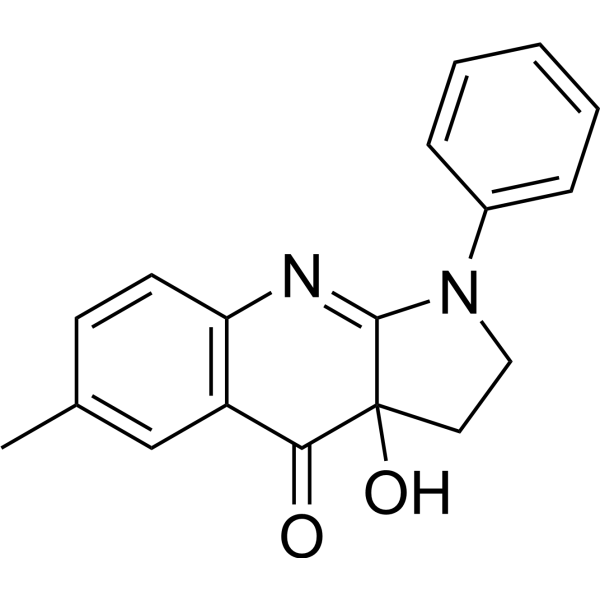
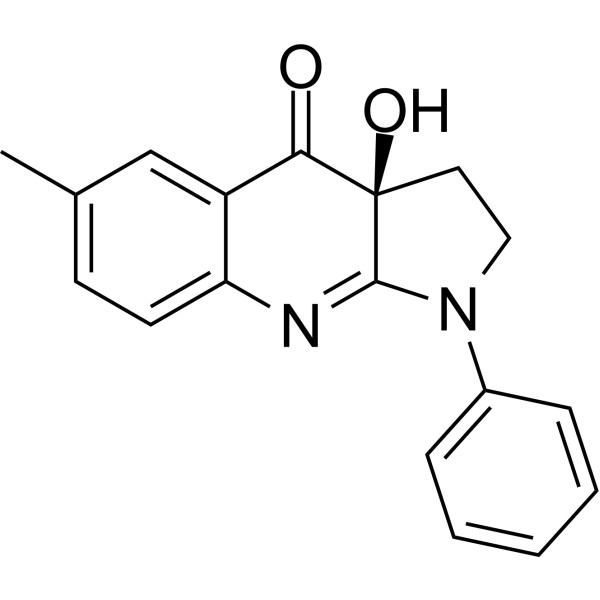
Blebbistatin is a selective non-musclemyosin II (NMII) inhibitor, promotes directional migration of corneal endothelial cells (CECs) and accelerates wound healing, and better preserves cell junctional integrity and barrier function. Blebbistatin blocks cell migration .
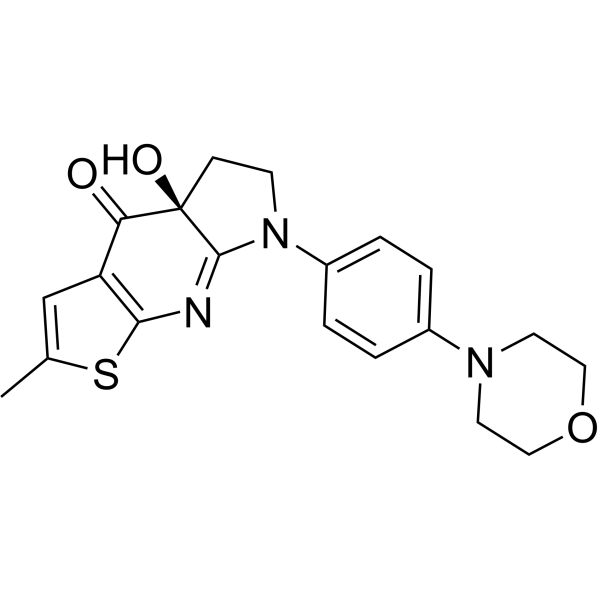
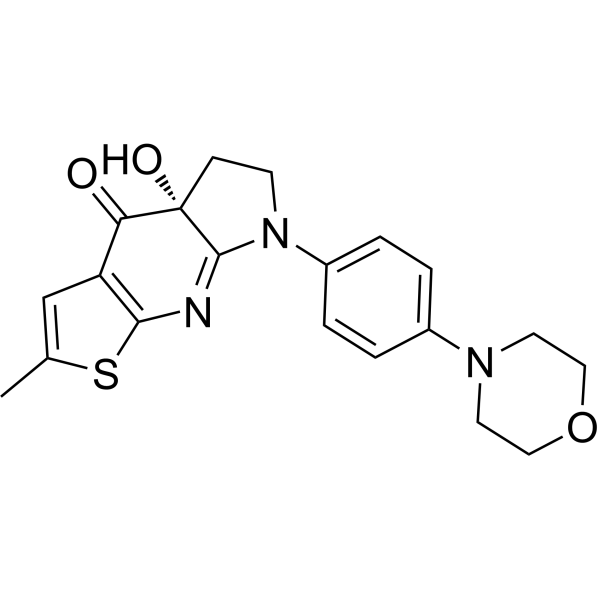
Sevasemten is an orally active, selective allosteric inhibitor of skeletal musclemyosin that protects skeletal muscle from contraction-induced injury. Sevasemten decreases muscle damage biomarkers and fibrosis while increasing muscle strength and activity in in Duchenne muscular dystrophy disease models .
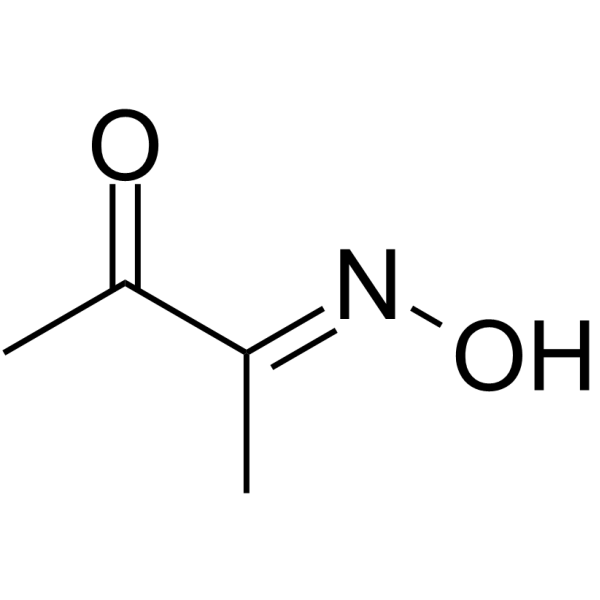
Biacetyl monoxime (Diacetyl monoxime), a myosin ATPase inhibitor, is a skeletal and cardiac muscle contraction inhibitor. Biacetyl monoxime is also a well-characterized non-competitive inhibitor of chemical and motile activity of skeletal musclemyosin-II. Biacetyl monoxime induces sarcoplasmic reticulum Ca 2+ release .
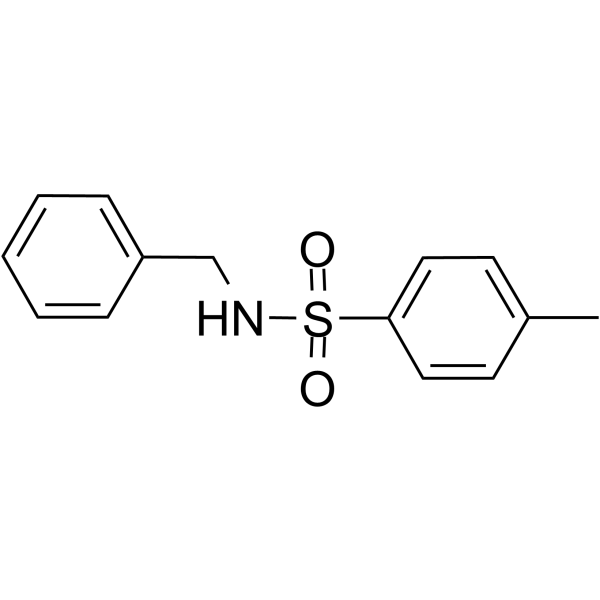
BTS (N-Benzyl-p-toluenesulfonamide) is a potent and selective inhibitor of skeletal musclemyosin II subfragment 1 (S1) ATPase activity, with an IC50s of ~5 µM for actin- and Ca 2+-stimulated myosin S1 ATPase. BTS specifically inhibits the contraction of fast skeletal muscle fibers .
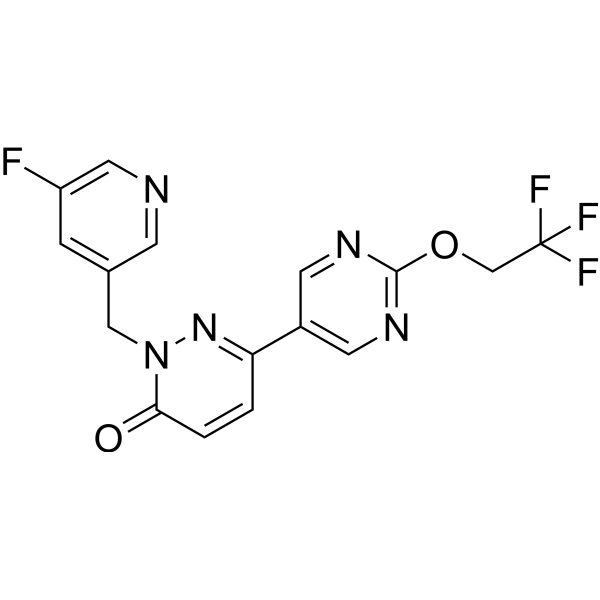
MPH-220 is a selective and orally active inhibitor of skeletal musclemyosin-2. MPH-220 enables muscle relaxation. MPH-220 is anti-spastic agent that can be used in the research of spasticity and muscle stiffness .
MT-125 is a specific and well-tolerated inhibitor of non-musclemyosin IIA (Ki,NMIIA = 2.7 μM) and IIB (EC50 = 1.7 μM). MT-125 can pass through the blood-brain barrier. MT-125 induces ferroptosis and DNA damage by increasing the levels of reactive oxygen species (ROS) within tumor cells. MT-125 can enhance the PDGFR signaling pathway. MT-125 can be used for research on glioblastoma.
MT-110 (BPN-0027490) is a non-musclemyosinNMIIB-selective inhibitor with high brain penetration and favorable safety profile. MT-110 specifically disrupts NMIIB-dependent actin dynamics in dendritic spines, while it exerts no significant adverse effects on cardiac myosin II and cardiac functions (such as cardiac output and heart rate) at tested concentrations. A single administration of MT-110 produces long-lasting (sustained for several weeks) blockade of methamphetamine motivation associated with environmental cues. MT-110 exhibits extremely high specificity, with no interference with cocaine motivation, hippocampus-dependent memory, fear memory, or locomotor and anxiety-like behaviors. MT-110 serves as a valuable tool compound for investigating the mechanisms of methamphetamine use disorder .
MT-228 (BPN-0026709) is a selective and blood-brain barrier permeable non-musclemyosin II inhibitor. MT-228 markedly improves tolerability by selectively targeting NMIIB (KI= 1.5 μM) over CMII (KI = 17 μM), and the sequence of SmMll MD is 83.6% identical to that of NMllB. MT-228 shows long-lasting efficacy in animal models of stimulant use disorder .
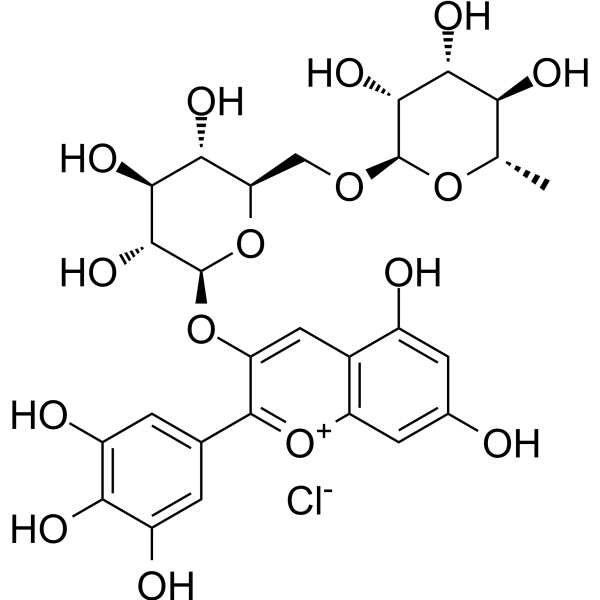
Delphinidin 3-rutinoside chloride is an anthocyanin component. Delphinidin 3-rutinoside chloride is isolable from the fruits of blackcurrant Ribes nigrum L. Delphinidin 3-rutinoside chloride activates the ETB receptor and stimulates the NO/cGMP pathway. Delphinidin 3-rutinoside chloride increases cyclic guanosine monophosphate production and reduces the phosphorylation level of Myosin regulatory light chain. Delphinidin 3-rutinoside chloride stimulates GLP-1 secretion. It significantly induces relaxation of bovine ciliary muscle strips contracted by ET-1 and inhibits ET-1-induced contraction of bovine ciliary muscle strips. Delphinidin 3-rutinoside chloride is applicable to research related to type 2 diabetes .
MT-125 free base is a specific and well-tolerated inhibitor of non-musclemyosin IIA (Ki,NMIIA = 2.7 μM) and IIB (EC50 = 1.7 μM). MT-125 free base can pass through the blood-brain barrier. MT-125 free base induces ferroptosis and DNA damage by increasing the levels of reactive oxygen species (ROS) within tumor cells. MT-125 free base can enhance the PDGFR signaling pathway. MT-125 free base can be used for research on glioblastoma.
Decamethonium Bromide is an acetylcholine receptor inhibitor and muscle relaxant. Decamethonium Bromide first induces depolarization of skeletal muscles, and then binds to postsynaptic acetylcholine receptors to induce persistent paralysis .\n
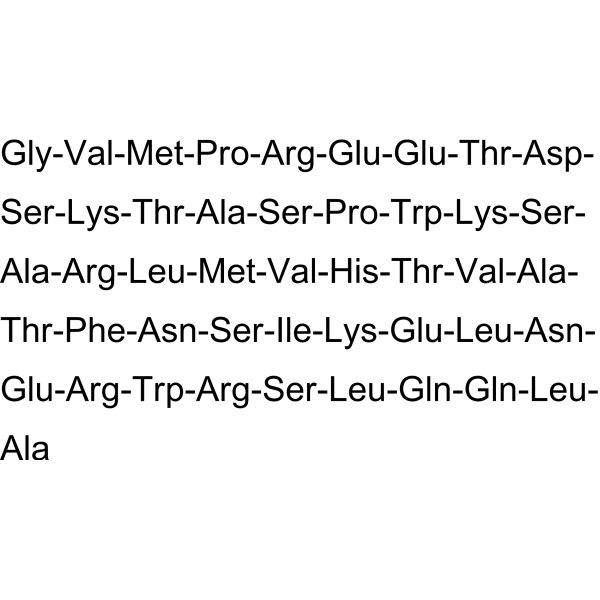
Calmodulin Binding Peptide 1 is a high-affinity (pM) CaM-binding peptide derived from smooth musclemyosin light chain kinase (MLCK peptide). The interface of the complex formed by Calmodulin Binding Peptide 1 and Ca 2+-CaM can be specifically bound by small-molecule inhibitors, serving as a key target for selective regulation of smooth muscle contraction and development of anti-CaM drugs .
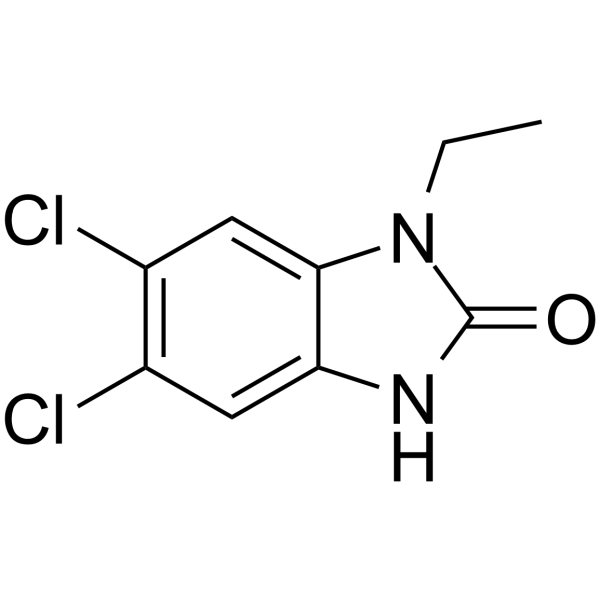
DCEBIO is a small/medium conductance calcium-activated potassium (SKCa/IKCa) channel opener and primary neuron signal blocker. It hyperpolarizes the membrane potential of C2C12 myoblasts by activating IKCa channels, thereby promoting myogenic differentiation. The specific biological activity of DCEBIO is manifested in increased myotube formation, enhanced myosin heavy chain II protein levels and myogenin mRNA levels. DCEBIO can be applied in the field of muscle research, especially in muscle-related degenerative diseases such as sarcopenia .
JB061 is a nonmuscle myosin inhibitor with IC50s of 4.4 μM (Cardiac musclemyosin), 9.1 μM (Skeletal musclemyosin), and >100 μM (Smooth musclemyosin II), respectively. JB061 poorly decreases ATPase activity (IC50>200 μM). JB061 shows cytotoxicity against COS-7 cells with an IC50 value of 39 μM .
(R)-MPH-220 is the R isomer of MPH-220 (HY-148516). MPH-220 is a selective and orally active inhibitor of skeletal musclemyosin-2. MPH-220 enables muscle relaxation. MPH-220 is anti-spastic agent that can be used in the research of spasticity and muscle stiffness .
S-(-)-7-Desmethyl-8-nitro blebbistatin (compound 12) is an analog of (-)-Blebbistatin (HY-13441). (-)-Blebbistatin is a selective non-musclemyosin II inhibitor .
(-)-Blebbistatin (GMP) is (-)-Blebbistatin (HY-13441) produced by using GMP guidelines. (-)-Blebbistatin (GMP) is a selective inhibitor of the ATPase activity of non-musclemyosin II .
AI-4-57 is an allosteric inhibitor for CBFβ SMMHC-RUNX1 (core binding factor β and the smooth-musclemyosin heavy chain) interaction with an IC50 of 22 μM .
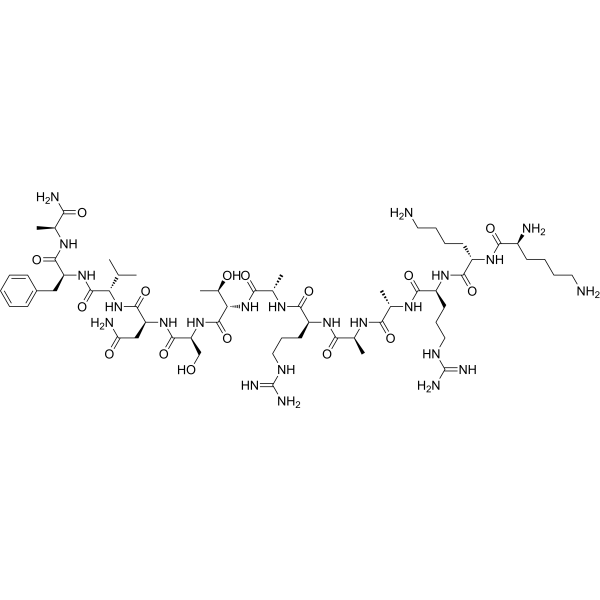
smMLCK peptide is a specific inhibitor of smooth musclemyosin light chain kinase (smMLCK). The smMLCK peptide mimics the substrate and competitively inhibits the binding of the actual substrate to the enzyme, thereby inhibiting the kinase activity. This inhibition prevents the phosphorylation of the myosin light chain, thus inhibiting muscle contraction .
Blebbistatin (Standard) is the analytical standard of Blebbistatin. This product is intended for research and analytical applications. Blebbistatin is a selective non-musclemyosin II (NMII) inhibitor, promotes directional migration of corneal endothelial cells (CECs) and accelerates wound healing, and better preserves cell junctional integrity and barrier function. Blebbistatin blocks cell migration .
Chrysosplenol C is a type of flavonoid compound. Chrysosplenol C selectively activates cardiac myosin ATPase, with its EC50 being 45 µM. Chrysosplenol C enhances the release of intracellular calcium ions by activating protein kinase C (PKC), thereby increasing the contractility of rat ventricular muscle cells. Chrysosplenol C can be used in the research of heart failure .
JB002 is a myosin II inhibitor, with an IC50 of ≤10 μM. JB002 can be used for the research of muscle spasticity, chronic musculoskeletal pain, and hypertrophic cardiomyopathy .
JB062 is a nonmuscle myosin inhibitor with IC50 values of 1.6, 5.4, and >100 μM for Skeletal musclemyosin, Cardiac musclemyosin, and Smooth musclemyosin II, respectively. JB062 has cytotoxic to human cancer cells but not normal cells. JB062 can be used in research of muscle spasticity, chronic musculoskeletal pain, and hypertrophic cardiomyopathy .
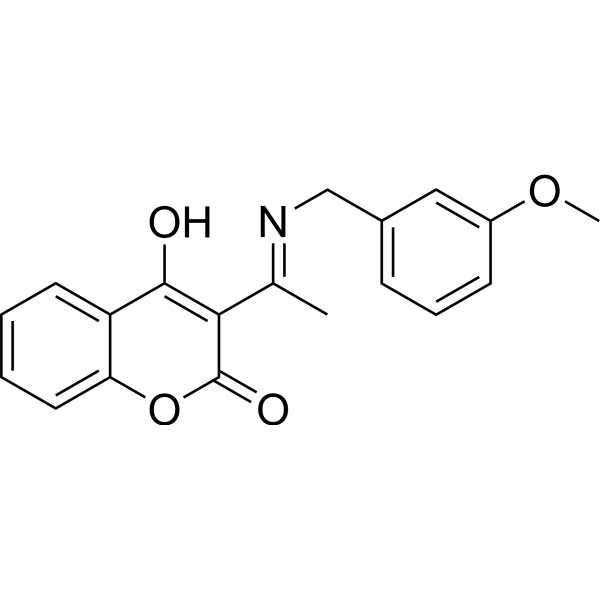
NA0359 is a derivative of SF2370 (HY-N6732). NA0359 inhibits the actin-myosin-ATP interaction in native smooth muscle actomyosin and myosin light chain phosphorylation .
CK-571 is a potent and selective inhibitor of smooth musclemyosin-2 (SMM), with an IC50 value of 86 nM. CK-571 exhibits IC50 values for cardiac musclemyosin (CMM), skeletal musclemyosin (SKM), and non-musclemyosin-2A (NMM-2A) of 2.3, 42, and 0.58 μM, respectively. CK-571 can be used for research on asthma, chronic obstructive pulmonary disease, and other smooth muscle-related diseases .
Stellettamide A TFA is a marine toxin found in a marine sponge. Stellettamide A TFA is a calmodulin inhibitor. Stellettamide A TFA can inhibit Ca 2+/Mg 2+ ATPase, phosphodiesterase, myosin light chain , and Mg 2+-ATPase. Stellettamide A TFA inhibits high K +- and Ca 2+-induced contraction in permeabilized smooth muscle. Stellettamide A TFA exhibits antifungal activity against Mortierella remannianus. Stellettamide A TFA can be used for the research of fungal infection .
Tubercidin 5'-triphosphate (7-Deazaadenosine 5'-triphosphate) (Compound II) is an ATP (HY-B2176) analogue. Tubercidin 5'-triphosphate is hydrolyzable by Myosin B. Tubercidin 5'-triphosphate induces weak contraction of rabbit psoas myofibrils .
DCEBIO (Standard) is the analytical standard of DCEBIO (HY-102052). This product is intended for research and analytical applications. DCEBIO is a small/medium conductance calcium-activated potassium (SKCa/IKCa) channel opener and primary neuron signal blocker. It hyperpolarizes the membrane potential of C2C12 myoblasts by activating IKCa channels, thereby promoting myogenic differentiation. The specific biological activity of DCEBIO is manifested in increased myotube formation, enhanced myosin heavy chain II protein levels and myogenin mRNA levels. DCEBIO can be applied in the field of muscle research, especially in muscle-related degenerative diseases such as sarcopenia .
(R)-(+)-Blebbistatin O-Benzoate is a non-musclemyosin II selective inhibitor. (R)-(+)-Blebbistatin O-Benzoate is a derivative of Blebbistatin (HY-13813). (R)-(+)-Blebbistatin O-Benzoate blocks cell membrane bubbling and interferes with directed migration and cytokinesis in vertebrate cells. (R)-(+)-Blebbistatin O-Benzoate inhibits the contraction of mitotic grooves. (R)-(+)-Blebbistatin O-Benzoate can be used as a negative control for (S)-(-)-Blebblastatin .
NAMPT activator-9 (Compound DIPM) is an allosteric, non-competitive NAMPT activator, with an EC50 of 3.366 μM against hNAMPT. NAMPT activator-9 enhances the enzymatic activity of NAMPT via an allosteric, non-competitive mechanism. NAMPT activator-9 increases intracellular NAD + levels. NAMPT activator-9 restores myotube diameter and reduces the expression of atrophy markers Atrogin-1 and MuRF1. NAMPT activator-9 is applicable to research related to muscle atrophy .
S-(-)-7-Desmethyl-8-nitro blebbistatin (compound 12) is an analog of (-)-Blebbistatin (HY-13441). (-)-Blebbistatin is a selective non-musclemyosin II inhibitor .
(-)-Blebbistatin (GMP) is (-)-Blebbistatin (HY-13441) produced by using GMP guidelines. (-)-Blebbistatin (GMP) is a selective inhibitor of the ATPase activity of non-musclemyosin II .
Calmodulin Binding Peptide 1 is a high-affinity (pM) CaM-binding peptide derived from smooth musclemyosin light chain kinase (MLCK peptide). The interface of the complex formed by Calmodulin Binding Peptide 1 and Ca 2+-CaM can be specifically bound by small-molecule inhibitors, serving as a key target for selective regulation of smooth muscle contraction and development of anti-CaM drugs .
smMLCK peptide is a specific inhibitor of smooth musclemyosin light chain kinase (smMLCK). The smMLCK peptide mimics the substrate and competitively inhibits the binding of the actual substrate to the enzyme, thereby inhibiting the kinase activity. This inhibition prevents the phosphorylation of the myosin light chain, thus inhibiting muscle contraction .
Delphinidin 3-rutinoside chloride is an anthocyanin component. Delphinidin 3-rutinoside chloride is isolable from the fruits of blackcurrant Ribes nigrum L. Delphinidin 3-rutinoside chloride activates the ETB receptor and stimulates the NO/cGMP pathway. Delphinidin 3-rutinoside chloride increases cyclic guanosine monophosphate production and reduces the phosphorylation level of Myosin regulatory light chain. Delphinidin 3-rutinoside chloride stimulates GLP-1 secretion. It significantly induces relaxation of bovine ciliary muscle strips contracted by ET-1 and inhibits ET-1-induced contraction of bovine ciliary muscle strips. Delphinidin 3-rutinoside chloride is applicable to research related to type 2 diabetes .
Chrysosplenol C is a type of flavonoid compound. Chrysosplenol C selectively activates cardiac myosin ATPase, with its EC50 being 45 µM. Chrysosplenol C enhances the release of intracellular calcium ions by activating protein kinase C (PKC), thereby increasing the contractility of rat ventricular muscle cells. Chrysosplenol C can be used in the research of heart failure .
Stellettamide A TFA is a marine toxin found in a marine sponge. Stellettamide A TFA is a calmodulin inhibitor. Stellettamide A TFA can inhibit Ca 2+/Mg 2+ ATPase, phosphodiesterase, myosin light chain , and Mg 2+-ATPase. Stellettamide A TFA inhibits high K +- and Ca 2+-induced contraction in permeabilized smooth muscle. Stellettamide A TFA exhibits antifungal activity against Mortierella remannianus. Stellettamide A TFA can be used for the research of fungal infection .
C protein cardiac muscle isoform; C-protein; cardiac muscle isoform; Cardiac MyBP C; Cardiac MyBP-C; Cardiac myosin binding protein C ; cardiac-type; CMH4; FHC; MYBP C; MYBPC; MYBPC3; myosin binding protein C cardiac; myosin binding protein C cardiac-type; myosin-binding protein C; myosin-binding protein C cardiac type; MYPC3_HUMAN
MYBPC3 Protein, positioned in the crossbridge region of vertebrate striated muscle A bands, binds to myosin heavy chain (MHC), F-actin, and native thin filaments, influencing actin-activated myosin ATPase. Its presence suggests potential modulation of muscle contraction, indicating a functional impact on the contractile apparatus, or a structural role in muscle fibers. MYBPC3 Protein, Human (His-SUMO) is the recombinant human-derived MYBPC3 protein, expressed by E. coli , with N-SUMO, N-6*His labeled tag.
C protein cardiac muscle isoform; C-protein; cardiac muscle isoform; Cardiac MyBP C; Cardiac MyBP-C; Cardiac myosin binding protein C ; cardiac-type; CMH4; FHC; MYBP C; MYBPC; MYBPC3; myosin binding protein C cardiac; myosin binding protein C cardiac-type; myosin-binding protein C; myosin-binding protein C cardiac type; MYPC3_HUMAN
MYBPC3 Protein, positioned in the crossbridge region of vertebrate striated muscle A bands, binds to myosin heavy chain (MHC), F-actin, and native thin filaments, influencing actin-activated myosin ATPase. Its presence suggests potential modulation of muscle contraction, indicating a functional impact on the contractile apparatus, or a structural role in muscle fibers. MYBPC3 Protein, Human (HEK293, His) is the recombinant human-derived MYBPC3 protein, expressed by HEK293 , with C-6*His labeled tag.
myosin-11; myosin heavy chain 11; myosin heavy chain, smooth muscle isoform; SMMHC;
IHC-P, WB, ICC/IF, ELISA
Human, Mouse, Rat
Myosin Heavy Chain Smooth Muscle Antibody (YA5655) is a Mouse-derived and non-conjugated IgG1 monoclonal antibody, targeting to Myosin Heavy Chain Smooth Muscle.
myosin-11; myosin heavy chain 11; myosin heavy chain, smooth muscle isoform; SMMHC;
IHC-P, ICC/IF, ELISA
Human, Mouse, Rat
Myosin Heavy Chain Smooth Muscle Antibody (YA5735) is a Mouse-derived and non-conjugated IgG1 monoclonal antibody, targeting to Myosin Heavy Chain Smooth Muscle.
AAT4; FAA4; MYH11; myosin 11; myosin heavy chain 11; myosin heavy chain smooth muscle isoform; myosin heavy polypeptide 11 smooth muscle; SMHC; SMMHC
WB, IHC-P
Human, Mouse
Myosin Heavy Chain Smooth Muscle Antibody (YA1620) is a Rabbit-derived and non-conjugated IgG monoclonal antibody, targeting to Myosin Heavy Chain Smooth Muscle.
Myosin light chain kinase/MLCK Antibody (YA3133) is a Rabbit-derived and non-conjugated IgG monoclonal antibody, targeting to Myosin light chain kinase/MLCK.
Slow Skeletal Myosin Heavy chain Antibody (YA6787) is a Rabbit-derived and non-conjugated IgG monoclonal antibody, targeting to Slow Skeletal Myosin Heavy chain.
adult 1 antibody;
MYH1 antibody;
MYH1_HUMAN antibody;
MyHC-2x antibody;
MyHC-IIx/d antibody;
myosin heavy chain 1 antibody;
myosin heavy chain 2x antibody;
myosin heavy chain antibody;
myosin heavy chain IIx/d antibody;
myosin-1 antibody;
skeletal muscle antibody
IHC-P, IF-Tissue
Human, Mouse, Rat
Fast Myosin Skeletal Heavy chain Antibody(YA3479) is a Rabbit-derived and non-conjugated IgG monoclonal antibody, targeting to Fast Myosin Skeletal Heavy chain.
Western blot analysis of extracts from THP-1(lane 2(20μg), Jurkat (lane 3(20μg) and NIH3T3(lane 4(20μg) using FOXO1A (HY-P80132) Rabbit mAb. Proteins were transferred
to a PVDF membrane and blocked with 5% non-fat milk in TBST for 2 hour at room temperature. The primary antibody (1/1000) and Loading control antibody (Beta Actin, HY-P80438, 1/10000) was
used in 5% non-fat milk in TBST at 4°C overnight. Goat Anti-Mouse/Rabbit IgG-HRP Secondary Antibody (1/10000) was used for 1 hour at room temperature.
Western blot analysis of extracts from THP-1(lane 2(20μg), Jurkat (lane 3(20μg) and NIH3T3(lane 4(20μg) using FOXO1A (HY-P80132) Rabbit mAb. Proteins were transferred
to a PVDF membrane and blocked with 5% non-fat milk in TBST for 2 hour at room temperature. The primary antibody (1/1000) and Loading control antibody (Beta Actin, HY-P80438, 1/10000) was
used in 5% non-fat milk in TBST at 4°C overnight. Goat Anti-Mouse/Rabbit IgG-HRP Secondary Antibody (1/10000) was used for 1 hour at room temperature.
Western blot analysis of extracts from THP-1(lane 2(20μg), Jurkat (lane 3(20μg) and NIH3T3(lane 4(20μg) using FOXO1A (HY-P80132) Rabbit mAb. Proteins were transferred
to a PVDF membrane and blocked with 5% non-fat milk in TBST for 2 hour at room temperature. The primary antibody (1/1000) and Loading control antibody (Beta Actin, HY-P80438, 1/10000) was
used in 5% non-fat milk in TBST at 4°C overnight. Goat Anti-Mouse/Rabbit IgG-HRP Secondary Antibody (1/10000) was used for 1 hour at room temperature.
Western blot analysis of extracts from THP-1(lane 2(20μg), Jurkat (lane 3(20μg) and NIH3T3(lane 4(20μg) using FOXO1A (HY-P80132) Rabbit mAb. Proteins were transferred
to a PVDF membrane and blocked with 5% non-fat milk in TBST for 2 hour at room temperature. The primary antibody (1/1000) and Loading control antibody (Beta Actin, HY-P80438, 1/10000) was
MedchemExpress Validation 03
Western blot analysis of extracts from THP-1(lane 2(20μg), Jurkat (lane 3(20μg) and NIH3T3(lane 4(20μg) using FOXO1A (HY-P80132) Rabbit mAb. Proteins were transferred
MedchemExpress Validation 04
Western blot analysis of extracts from THP-1(lane 2(20μg), Jurkat (lane 3(20μg) and NIH3T3(lane 4(20μg) using FOXO1A (HY-P80132) Rabbit mAb. Proteins were transferred
to a PVDF membrane and blocked with 5% non-fat milk in TBST for 2 hour at room temperature. The primary antibody (1/1000) and Loading control antibody (Beta Actin, HY-P80438, 1/10000) was
used in 5% non-fat milk in TBST at 4°C overnight. Goat Anti-Mouse/Rabbit IgG-HRP Secondary Antibody (1/10000) was used for 1 hour at room temperature.
MedchemExpress Validation
Western blot analysis of extracts from THP-1(lane 2(20μg), Jurkat (lane 3(20μg) and NIH3T3(lane 4(20μg) using FOXO1A (HY-P80132) Rabbit mAb. Proteins were transferred
to a PVDF membrane and blocked with 5% non-fat milk in TBST for 2 hour at room temperature. The primary antibody (1/1000) and Loading control antibody (Beta Actin, HY-P80438, 1/10000) was
used in 5% non-fat milk in TBST at 4°C overnight. Goat Anti-Mouse/Rabbit IgG-HRP Secondary Antibody (1/10000) was used for 1 hour at room temperature.
Western blot analysis of extracts from THP-1(lane 2(20μg), Jurkat (lane 3(20μg) and NIH3T3(lane 4(20μg) using FOXO1A (HY-P80132) Rabbit mAb. Proteins were transferred
to a PVDF membrane and blocked with 5% non-fat milk in TBST for 2 hour at room temperature. The primary antibody (1/1000) and Loading control antibody (Beta Actin, HY-P80438, 1/10000) was
used in 5% non-fat milk in TBST at 4°C overnight. Goat Anti-Mouse/Rabbit IgG-HRP Secondary Antibody (1/10000) was used for 1 hour at room temperature.
MedchemExpress Validation
Western blot analysis of extracts from THP-1(lane 2(20μg), Jurkat (lane 3(20μg) and NIH3T3(lane 4(20μg) using FOXO1A (HY-P80132) Rabbit mAb. Proteins were transferred
to a PVDF membrane and blocked with 5% non-fat milk in TBST for 2 hour at room temperature. The primary antibody (1/1000) and Loading control antibody (Beta Actin, HY-P80438, 1/10000) was
used in 5% non-fat milk in TBST at 4°C overnight. Goat Anti-Mouse/Rabbit IgG-HRP Secondary Antibody (1/10000) was used for 1 hour at room temperature.
MedchemExpress Validation
Western blot analysis of extracts from THP-1(lane 2(20μg), Jurkat (lane 3(20μg) and NIH3T3(lane 4(20μg) using FOXO1A (HY-P80132) Rabbit mAb. Proteins were transferred
to a PVDF membrane and blocked with 5% non-fat milk in TBST for 2 hour at room temperature. The primary antibody (1/1000) and Loading control antibody (Beta Actin, HY-P80438, 1/10000) was
used in 5% non-fat milk in TBST at 4°C overnight. Goat Anti-Mouse/Rabbit IgG-HRP Secondary Antibody (1/10000) was used for 1 hour at room temperature.
MedchemExpress Validation
Western blot analysis of extracts from THP-1(lane 2(20μg), Jurkat (lane 3(20μg) and NIH3T3(lane 4(20μg) using FOXO1A (HY-P80132) Rabbit mAb. Proteins were transferred
to a PVDF membrane and blocked with 5% non-fat milk in TBST for 2 hour at room temperature. The primary antibody (1/1000) and Loading control antibody (Beta Actin, HY-P80438, 1/10000) was
used in 5% non-fat milk in TBST at 4°C overnight. Goat Anti-Mouse/Rabbit IgG-HRP Secondary Antibody (1/10000) was used for 1 hour at room temperature.
MedchemExpress Validation
Western blot analysis of extracts from THP-1(lane 2(20μg), Jurkat (lane 3(20μg) and NIH3T3(lane 4(20μg) using FOXO1A (HY-P80132) Rabbit mAb. Proteins were transferred
to a PVDF membrane and blocked with 5% non-fat milk in TBST for 2 hour at room temperature. The primary antibody (1/1000) and Loading control antibody (Beta Actin, HY-P80438, 1/10000) was
used in 5% non-fat milk in TBST at 4°C overnight. Goat Anti-Mouse/Rabbit IgG-HRP Secondary Antibody (1/10000) was used for 1 hour at room temperature.
MedchemExpress Validation
Western blot analysis of extracts from THP-1(lane 2(20μg), Jurkat (lane 3(20μg) and NIH3T3(lane 4(20μg) using FOXO1A (HY-P80132) Rabbit mAb. Proteins were transferred
to a PVDF membrane and blocked with 5% non-fat milk in TBST for 2 hour at room temperature. The primary antibody (1/1000) and Loading control antibody (Beta Actin, HY-P80438, 1/10000) was
used in 5% non-fat milk in TBST at 4°C overnight. Goat Anti-Mouse/Rabbit IgG-HRP Secondary Antibody (1/10000) was used for 1 hour at room temperature.
MedchemExpress Validation
Western blot analysis of extracts from THP-1(lane 2(20μg), Jurkat (lane 3(20μg) and NIH3T3(lane 4(20μg) using FOXO1A (HY-P80132) Rabbit mAb. Proteins were transferred
to a PVDF membrane and blocked with 5% non-fat milk in TBST for 2 hour at room temperature. The primary antibody (1/1000) and Loading control antibody (Beta Actin, HY-P80438, 1/10000) was
used in 5% non-fat milk in TBST at 4°C overnight. Goat Anti-Mouse/Rabbit IgG-HRP Secondary Antibody (1/10000) was used for 1 hour at room temperature.
MedChemExpress values your privacy and your trust is important to us. We use cookies to enhance your website experience. Some cookies are necessary to run the website.
Privacy and Cookie Policy

