Search Result
Results for "
Methylene phosphate
" in MedChemExpress (MCE) Product Catalog:
8
Biochemical Assay Reagents
5
Isotope-Labeled Compounds
| Cat. No. |
Product Name |
Target |
Research Areas |
Chemical Structure |
-
- HY-14536
-
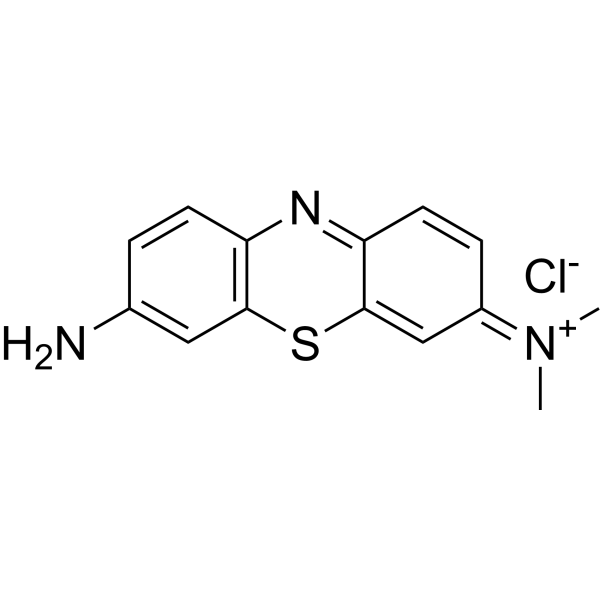
Methylene Blue
Maximum Cited Publications
28 Publications Verification
Basic Blue 9; CI-52015; Methylthioninium chloride
|
Environmental Pollutants
Monoamine Oxidase
Guanylate Cyclase
Microtubule/Tubulin
NO Synthase
|
Infection
Neurological Disease
Cancer
|
|
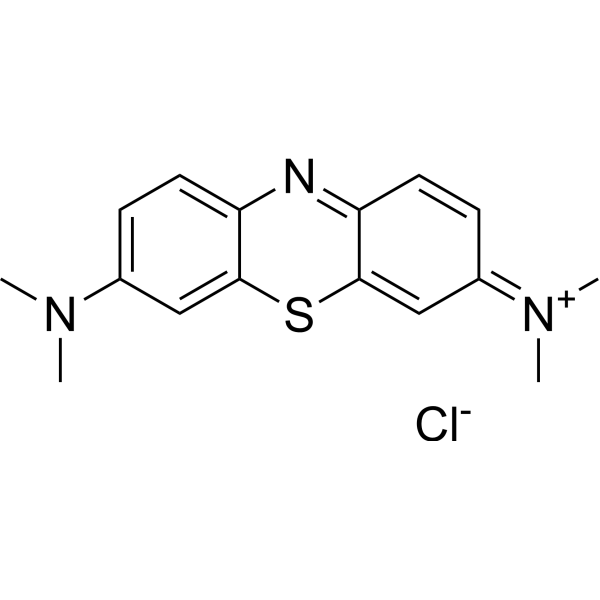
Methylene blue (Basic Blue 9) is a guanylyl cyclase (sGC), monoamine oxidase A (MAO-A) and NO synthase (NOS) inhibitor. Methylene blue is a vasopressor and is often used as a dye in several medical procedures. Methylene blue through the nitric oxide syntase/guanylate cyclase signalling pathway to reduce prepulse inhibition. Methylene blue is a REDOX cycling compound and able to cross the blood-brain barrier. Methylene blue is a Tau aggregation inhibitor. Methylene Blue is a photosensitizer and redox agent. Methylene blue reduces cerebral edema, attenuated microglial activation and reduced neuroinflammation .
|
-
-
- HY-W751238
-
|
DMMB
|
Fluorescent Dye
|
Others
|
|
Dimethyl methylene blue zinc chloride double salt (DMMB) is a cationic dye. Dimethyl methylene blue zinc chloride double salt competitively binds to the active site of the PANI-Benz-Ag nanocomposite with endotoxin, releasing DMMB and increasing the fluorescence intensity. Dimethyl methylene blue zinc chloride double salt can be used as a fluorescent probe for the detection of bacteria (such as E. Coli) endotoxin . Dimethyl methylene blue zinc chloride double salt can be used for the quantification of sulfated glycosaminoglycans .
|
-

-
- HY-D0034
-
|
ABMDMA
|
Fluorescent Dye
MOFs
|
Cancer
|
|
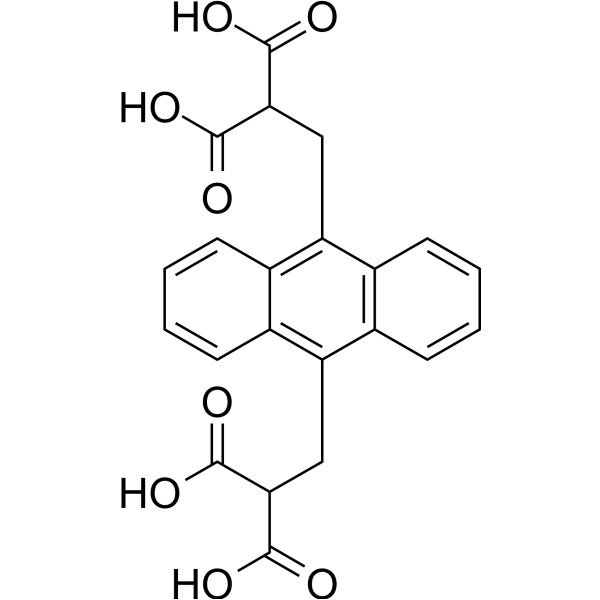
9,10-Anthracenediyl-bis(methylene)dimalonic acid (ABMDMA) is a biological dye and indicator used to detect singlet oxygen generation (SOG). 9,10-Anthracenediyl-bis(methylene)dimalonic acid is water-soluble derivative of anthracene. 9,10-Anthracenediyl-bis(methylene)dimalonic acid can be photobleached by singlet oxygen to its corresponding endoperoxide. This reaction can be monitored spectrophotometrically by recording the decrease of absorbance at 400 nm .
|
-
-
- HY-B1359
-
|
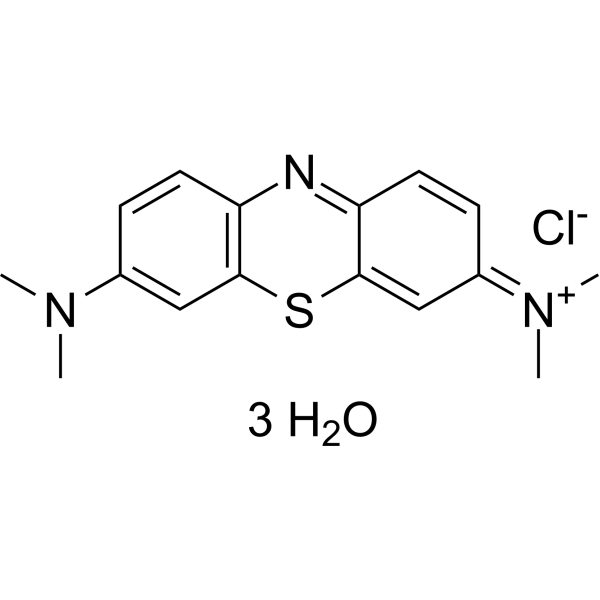
C.I. Basic Blue 9 trihydrate
|
Guanylate Cyclase
Monoamine Oxidase
NO Synthase
Parasite
|
Infection
Neurological Disease
Cancer
|
|
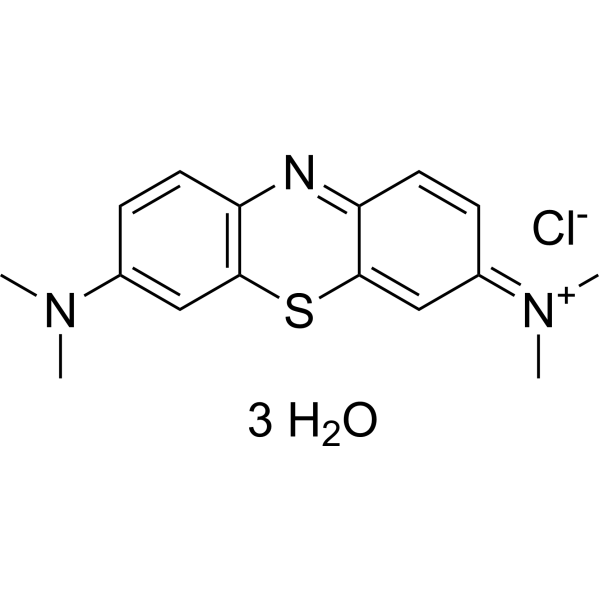
Methylene blue trihydrate (C.I. Basic Blue 9 trihydrate) is a guanylyl cyclase (sGC), monoamine oxidase A (MAO-A) and NO synthase (NOS) inhibitor. Methylene blue trihydrate is a vasopressor and is often used as a dye in several medical procedures. Methylene blue trihydrate has antinociception, antimalarial, antidepressant and anxiolytic activity effects. Methylene Blue trihydrate has the potential for methemoglobinemias, neurodegenerative disorders and ifosfamide-induced encephalopathytreatment .
|
-
-
- HY-108652
-
|
|
P2X Receptor
|
Inflammation/Immunology
|
|
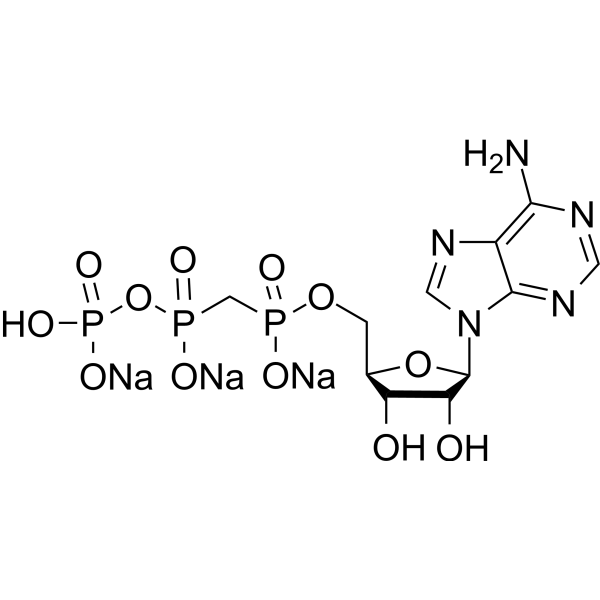
α,β-Methylene-ATP trisodium is an agonist of P2X1 and P2X3 receptors and can cross the blood-brain barrier. α,β-Methylene-ATP trisodium can trigger a reflex pressor response by activating P2X receptors in peripheral muscles and the central locus coeruleus (LC); this effect can be blocked by the P2X antagonist PPADS (HY-108960). α,β-Methylene-ATP trisodium also activates noradrenergic neurons in the central locus coeruleus, mediating antinociceptive effects; this effect can be attenuated by the locus coeruleus damaging agent DSP-4 (HY-103210/HY-121602). α,β-Methylene-ATP trisodium can be used to study the pathological mechanisms of neuropathic pain, cardiovascular reflex regulation, and antinociceptive effects of the central nervous system .
|
-
-
- HY-B1359A
-
|
|
Biochemical Assay Reagents
|
Others
|
|
Methylene blue indicator is a biochemical reagent that can be used as a biological material or organic compound for life science related research.
|
-
-
- HY-19948
-
|
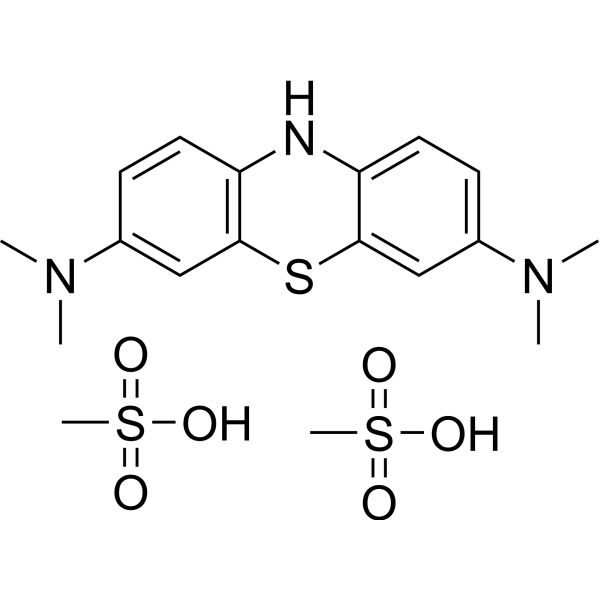
TRx0237 mesylate; Methylene blue leuco base mesylate
|
Tau Protein
|
Neurological Disease
|
|
Leucomethylene blue (TRx0237) mesylate, an orally active second-generation tau protein aggregation inhibitor (Ki of 0.12 μM), could be used for the study of Alzheimer's Disease. Leucomethylene blue mesylate is a common reduced form of Methylene Blue, Methylene Blue is a member of the thiazine class of dyes .
|
-
-
- HY-D0958
-
|
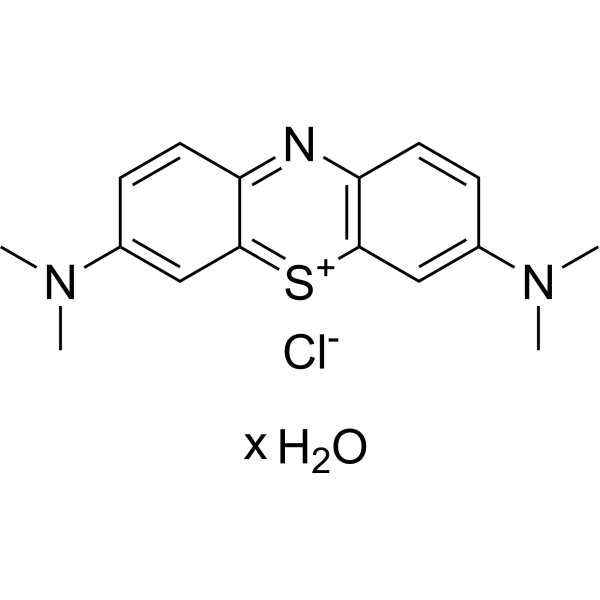
Basic Blue 9 hydrate; CI-52015 hydrate; Methylthioninium chloride hydrate
|
Guanylate Cyclase
Monoamine Oxidase
NO Synthase
Microtubule/Tubulin
|
Infection
Inflammation/Immunology
Cancer
|
|
Methylene blue (Basic Blue 9) hydrate is a guanylyl cyclase (sGC), monoamine oxidase A (MAO-A) and NO synthase (NOS) inhibitor. Methylene blue is a vasopressor and is often used as a dye in several medical procedures. Methylene blue hydrate through the nitric oxide syntase/guanylate cyclase signalling pathway to reduce prepulse inhibition. Methylene blue hydrate is a REDOX cycling compound and able to cross the blood-brain barrier. Methylene blue hydrate is a Tau aggregation inhibitor. Methylene blue hydrate reduces cerebral edema, attenuated microglial activation and reduced neuroinflammation .
|
-
-
- HY-14536A
-
|
Basic Blue 9 (purity≥70%); CI-52015 (purity≥70%); Methylthioninium chloride (purity≥70%)
|
Environmental Pollutants
Monoamine Oxidase
Guanylate Cyclase
Microtubule/Tubulin
NO Synthase
|
Infection
Neurological Disease
Cancer
|
|
Methylene blue (purity≥70%) is a guanylyl cyclase (sGC), monoamine oxidase A (MAO-A) and NO synthase (NOS) inhibitor. Methylene blue (purity≥70%) is a vasopressor and is often used as a dye in several medical procedures. Methylene blue (purity≥70%) through the nitric oxide syntase/guanylate cyclase signalling pathway to reduce prepulse inhibition. Methylene blue (purity≥70%) is a REDOX cycling compound and able to cross the blood-brain barrier. Methylene blue (purity≥70%) is a Tau aggregation inhibitor. Methylene blue reduces cerebral edema, attenuated microglial activation and reduced neuroinflammation .
|
-

-
- HY-147090
-
-
-
- HY-W130236
-
|
|
Cholinesterase (ChE)
|
Cancer
|
|
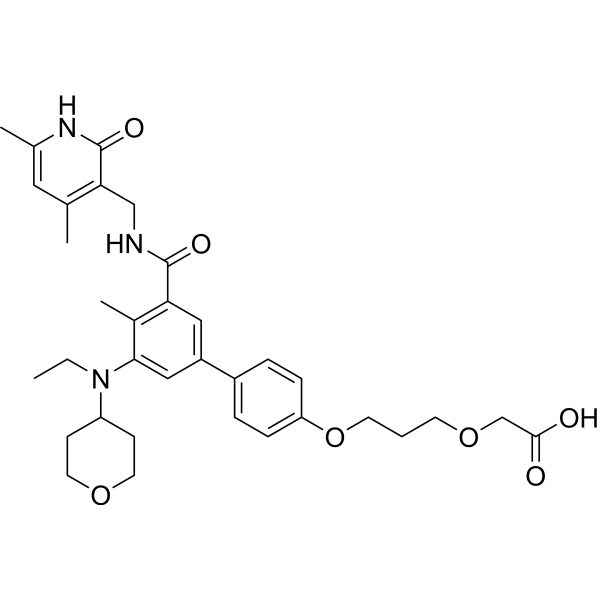
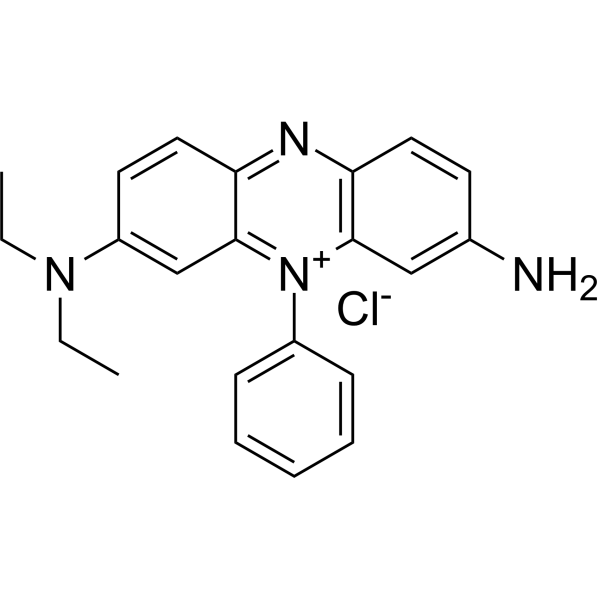
Methylene Violet 3RAX is a phenazine dye to stain the mitochondria of cells. Methylene Violet 3RAX can change the molecular structure of DNA, undermine the module of DNA, and induce the generation of the reactive singlet oxygen. Methylene Violet 3RAX shows inhibition for human erythrocyte AChE and human plasma BChE with an Kis of 1.58, 0.51 μM, respectively. Methylene Violet 3RAX has the potential for the research of potential photosensitizers for mitochondrial targeting action in PDT (photodynamic therapy) .
|
-
-
- HY-134440A
-
|
|
P2X Receptor
|
Inflammation/Immunology
|
|
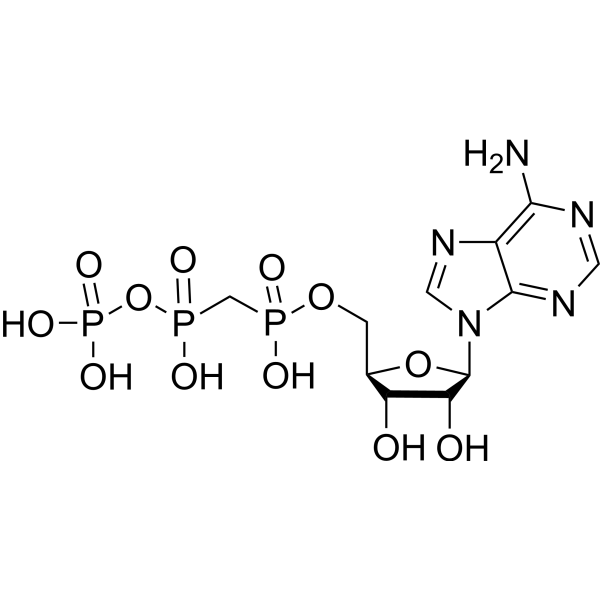
α,β-Methylene-ATP is an agonist of P2X1 and P2X3 receptors and can cross the blood-brain barrier. α,β-Methylene-ATP can trigger a reflex pressor response by activating P2X receptors in peripheral muscles and the central locus coeruleus (LC); this effect can be blocked by the P2X antagonist PPADS (HY-108960). α,β-Methylene-ATP also activates noradrenergic neurons in the central locus coeruleus, mediating antinociceptive effects; this effect can be attenuated by the locus coeruleus damaging agent DSP-4 (HY-103210/HY-121602). α,β-Methylene-ATP can be used to study the pathological mechanisms of neuropathic pain, cardiovascular reflex regulation, and antinociceptive effects of the central nervous system .
|
-
-
- HY-W019306
-
-
![N-[(3-(Anilinomethylene)-2-chloro-1-cyclohexen-1-yl)methylene]aniline (hydrochloride)](//file.medchemexpress.com/product_pic/hy-w019306.gif)
-
- HY-14536R
-
|
Basic Blue 9 (Standard); CI-52015 (Standard); Methylthioninium chloride (Standard)
|
Reference Standards
Guanylate Cyclase
Monoamine Oxidase
NO Synthase
Microtubule/Tubulin
|
Infection
Neurological Disease
Cancer
|
|
Methylene Blue (Standard) is the analytical standard of Methylene Blue. This product is intended for research and analytical applications. Methylene blue (Basic Blue 9) is a guanylyl cyclase (sGC), monoamine oxidase A (MAO-A) and NO synthase (NOS) inhibitor. Methylene blue is a vasopressor and is often used as a dye in several medical procedures. Methylene blue through the nitric oxide syntase/guanylate cyclase signalling pathway to reduce prepulse inhibition. Methylene blue is a REDOX cycling compound and able to cross the blood-brain barrier. Methylene blue is a Tau aggregation inhibitor. Methylene blue reduces cerebral edema, attenuated microglial activation and reduced neuroinflammation .
|
-

-
- HY-112502B
-
|
Adenosine 5'-(α,β-Methylene)diphosphate sodium
|
CD73
|
Cancer
|
|
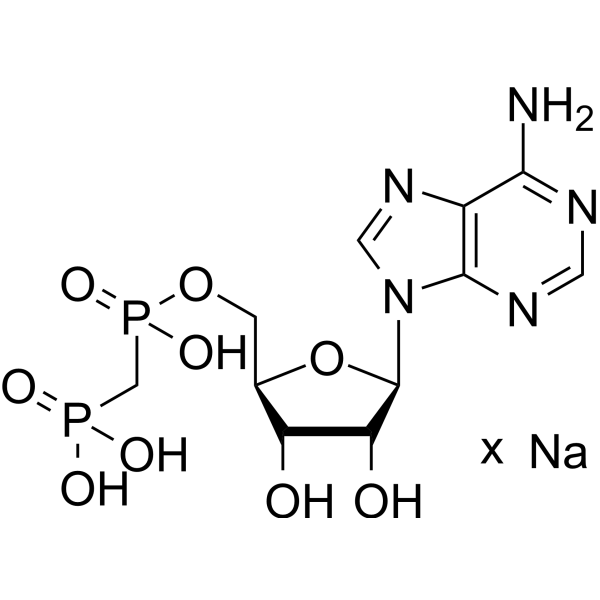
MethADP (sodium salt) (Adenosine 5'-(α,β-methylene)diphosphate (sodium)) is a specific CD73 inhibitor.
|
-
-
- HY-78855
-
|
|
Drug Intermediate
|
Others
|
|
2-(Hydroxy(4-phenoxyphenyl)methylene)malononitrile is a drug intermediate for synthesis of various active compounds.
|
-

-
- HY-12613
-
|
NSC 45109
|
Drug Derivative
Fungal
|
Others
|
|
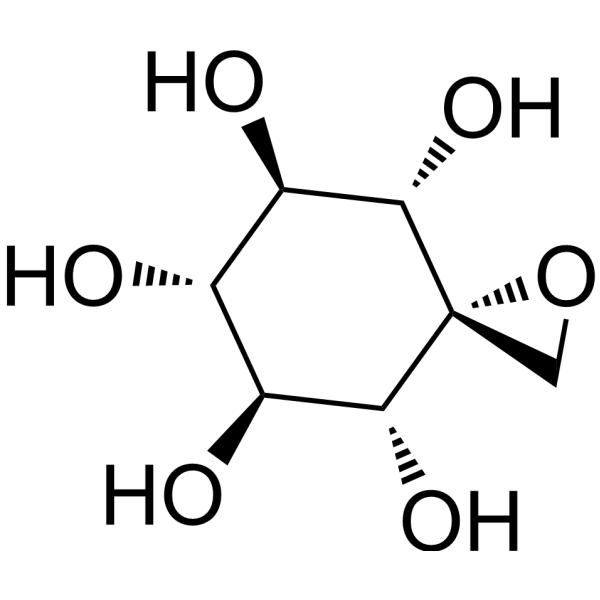
2-C-methylene-myo-inositol oxide (NSC 45109), an inositol derivative, induces pseudohyphae formation in Saccharomyces spp .
|
-
-
- HY-112502C
-
|
Adenosine 5'-(α,β-Methylene)diphosphate triammonium
|
CD73
|
Cancer
|
|
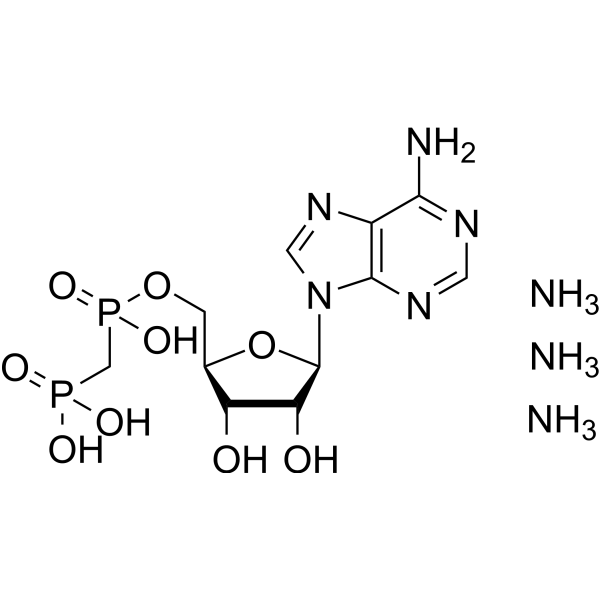
MethADP (Adenosine 5'-(α,β-methylene)diphosphate) triammonium is a CD73 inhibitor. MethADP can be used for the research of ATP-adenosine pathway .
|
-
-
- HY-D0958R
-
|
Basic Blue 9 hydrate (Standard); CI-52015 hydrate (Standard); Methylthioninium chloride hydrate (Standard)
|
Reference Standards
Guanylate Cyclase
Monoamine Oxidase
NO Synthase
Microtubule/Tubulin
|
Infection
Inflammation/Immunology
Cancer
|
|
Methylene blue (hydrate) (Standard) is the analytical standard of Methylene blue (hydrate). This product is intended for research and analytical applications. Methylene blue (Basic Blue 9) hydrate is a guanylyl cyclase (sGC), monoamine oxidase A (MAO-A) and NO synthase (NOS) inhibitor. Methylene blue is a vasopressor and is often used as a dye in several medical procedures. Methylene blue hydrate through the nitric oxide syntase/guanylate cyclase signalling pathway to reduce prepulse inhibition. Methylene blue hydrate is a REDOX cycling compound and able to cross the blood-brain barrier. Methylene blue hydrate is a Tau aggregation inhibitor. Methylene blue hydrate reduces cerebral edema, attenuated microglial activation and reduced neuroinflammation .
|
-

-
- HY-157352
-
-

-
- HY-134440
-
|
|
P2X Receptor
|
Inflammation/Immunology
|
|
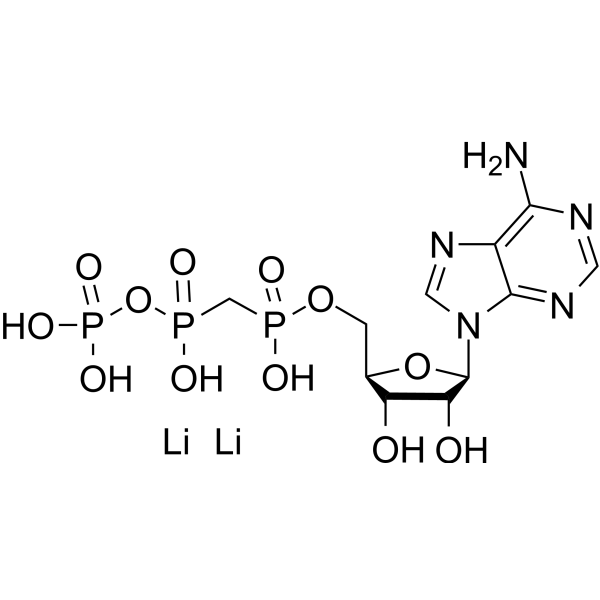
α,β-Methylene-ATP dilithium is an agonist of P2X1 and P2X3 receptors and can cross the blood-brain barrier. α,β-Methylene-ATP dilithium can trigger a reflex pressor response by activating P2X receptors in peripheral muscles and the central locus coeruleus (LC); this effect can be blocked by the P2X antagonist PPADS (HY-108960). α,β-Methylene-ATP dilithium also activates noradrenergic neurons in the central locus coeruleus, mediating antinociceptive effects; this effect can be attenuated by the locus coeruleus damaging agent DSP-4 (HY-103210/HY-121602). α,β-Methylene-ATP dilithium can be used to study the pathological mechanisms of neuropathic pain, cardiovascular reflex regulation, and antinociceptive effects of the central nervous system .
|
-
-
- HY-111638
-
-
-
- HY-114947
-
|
9-Deoxy-9-Methylene PGE2
|
Prostaglandin Receptor
|
Cardiovascular Disease
Metabolic Disease
|
|
9-deoxy-9-methylene Prostaglandin E2 (9-deoxy-9-methylene PGE2) is a stable, isosteric analog of PGE2. 9-deoxy-9-methylene PGE2 retains the biological profile of PGE2 with fewer side effects. In the rat 9-deoxy-9-methylene PGE2 is equipotent to PGE2 in decreasing blood pressure. It also stimulates the gerbil colon and primate uterus at the same potency as PGE2.
|
-

-
- HY-112533
-
|
11d-11m-PGD2; 11-Deoxy-11-Methylene prostaglandin D2
|
Prostaglandin Receptor
|
Endocrinology
|
|
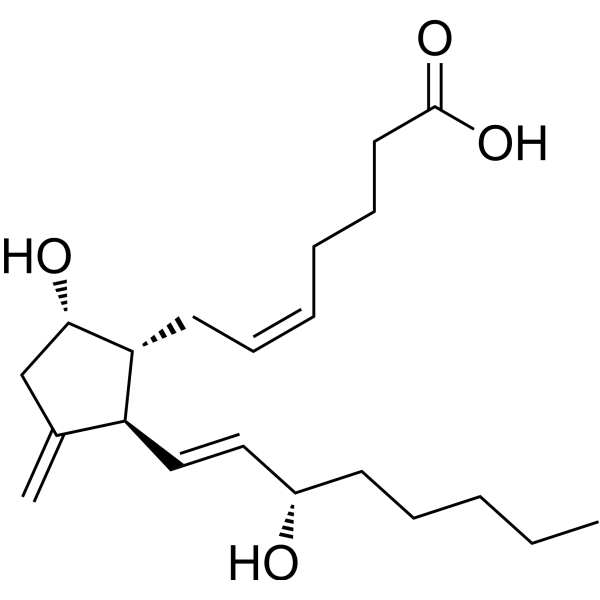
11-Deoxy-11-methylene PGD2 (11d-11m-PGD2) is a chemically stable, isosteric analogue of Prostaglandin 2 in which the 11-keto group is replaced by an exocyclic methylene. 11-Deoxy-11-methylene PGD2 is significantly stimulating the storage of fats suppressed in the presence of Indomethacin .
|
-
-
- HY-W009819R
-
|
Dibenzyl ether (Standard)
|
Reference Standards
|
|
|
(Oxybis(methylene))dibenzene (Standard) is the analytical standard of (Oxybis(methylene))dibenzene. This product is intended for research and analytical applications.
|
-

-
- HY-W751874
-
|
|
Mitochondrial Metabolism
|
Neurological Disease
|
|
Acetyl methylene blue can be used to synthesize mitochondrial development stimulators, which can be used for eye diseases related to insufficient mitochondrial function in nerve cells .
|
-

-
- HY-157364
-
|
Levine EMB Agar
|
Biochemical Assay Reagents
|
Others
|
|
Levine Eosin-Methylene Blue Agar Medium (Levine EMB Agar) is a weakly selective medium for the isolation of intestinal pathogens, especially E. coli. The composition of 1 liter of Levine Eosin-Methylene Blue Agar Medium: 10.0 g Peptone, 10.0 g lactose, 2.0 g dipotassium hydrogen phosphate, 15.0 g agar, 0.4 g eosin, 0.065 g methylene blue .
|
-

-
- HY-165927
-
-

-
- HY-131044
-
|
|
Bacterial
Fungal
|
Infection
|
|
5-[(2-Nitrophenyl)methylene]-2,4-thiazolidinedione (Compound 4) has antimicrobial, anti-diabetic and antioxidant activities. 5-[(2-Nitrophenyl)methylene]-2,4-thiazolidinedione inhibits B. subtilis, S. aureus, K. pneumonia, E. coli, and S. typhi with MICs of 4.5-9.9 μΜ/mL, and inhibits A. niger and C. albicans with MICs of 4.99 μΜ/mL .
|
-
![5-[(2-Nitrophenyl)methylene]-2,4-thiazolidinedione](//file.medchemexpress.com/product_pic/hy-131044.gif)
-
- HY-112502D
-
|
Adenosine 5'-(α,β-Methylene)diphosphate trisodium
|
CD73
|
Cancer
|
|
MethADP (Adenosine 5'-(α,β-methylene)diphosphate) trisodium is a CD73 inhibitor. MethADP trisodium can be used for the research of ATP-adenosine pathway .
|
-

-
- HY-110369
-
|
a,β-Methylene-2-thio-UDP trisodium
|
P2Y Receptor
|
Inflammation/Immunology
|
|
MRS2905 (α,β-Methylene-2-thio-UDP) trisodium is a selective P2Y14R agonist with an EC50 of 0.92 nM. MRS2905 trisodium is inactive at the UDP-activated P2Y6 receptor, and at other P2Y receptors .
|
-

-
- HY-W342932S
-
|
N,N'-Bis(4-ethoxycarboxylphenyl)-N-benzylformamidine-d5
|
Isotope-Labeled Compounds
|
Others
|
|
Ethyl 4-(((benzyl(4-(ethoxycarbonyl)phenyl)amino)methylene)amino)benzoate-d5 (N,N'-Bis(4-ethoxycarboxylphenyl)-N-benzylformamidine-d5) is deuterium labeled Ethyl 4-(((benzyl(4-(ethoxycarbonyl)phenyl)amino)methylene)amino)benzoate .
|
-

-
- HY-W354410
-
|
|
Biochemical Assay Reagents
|
Others
|
|
2-Deoxy-2-[[(4-methoxyphenyl)methylene]amino]-β-D-glucopyranose is a class of biochemical reagents used in glycobiology research. Glycobiology studies the structure, synthesis, biology, and evolution of sugars. It involves carbohydrate chemistry, enzymology of glycan formation and degradation, protein-glycan recognition, and the role of glycans in biological systems. This field is closely related to basic research, biomedicine, and biotechnology .
|
-
![2-Deoxy-2-[[(4-methoxyphenyl)methylene]amino]-β-D-glucopyranose](//file.medchemexpress.com/product_pic/hy-w354410.gif)
-
- HY-W059361
-
|
|
PROTAC Linkers
|
Cancer
|
|
tert-Butyl 4-((4,4,5,5-tetramethyl-1,3,2-dioxaborolan-2-yl)methylene)piperidine-1-carboxylate is a PROTAC linker that can be used in the synthesis of PROTACs.
|
-

-
- HY-180009
-
-

-
- HY-CE01613
-
-

-
- HY-CE00709
-
|
2,6-Dimethyl-5-Methylene-3-oxo-heptanoyl-coenzyme A
|
Biochemical Assay Reagents
|
Metabolic Disease
|
|
2,6-Dimethyl-5-methylene-3-oxo-heptanoyl-CoA (2,6-Dimethyl-5-methylene-3-oxo-heptanoyl-coenzyme A) is a coenzyme A derivative.
|
-

-
- HY-W456505
-
|
|
MOFs
|
Others
|
|
4,4'-(Azanediylbis(methylene))dibenzoic acid is a metal-organic framework (MOF).
|
-

-
- HY-W112237
-
|
|
MOFs
|
Others
|
|
5,5'-Methylene-bis(oxy)diisophthalic acid is a metal-organic framework (MOF).
|
-

-
- HY-W113001
-
|
5,5′-Phenylenebis(Methylene)-1,1′-3,3′-(benzene-tetracarboxylic acid)
|
MOFs
|
Others
|
|
5,5'-((1,4-Phenylenebis(methylene))bis(oxy))diisophthalicacid (5,5′-Phenylenebis(methylene)-1,1′-3,3′-(benzene-tetracarboxylic acid)) is a metal-organic framework (MOF).
|
-

-
- HY-CE00857
-
|
3-Hydroxy-2,6-dimethyl-5-Methylene-heptanoyl-coenzyme A
|
Biochemical Assay Reagents
|
Metabolic Disease
|
|
3-Hydroxy-2,6-dimethyl-5-methylene-heptanoyl-CoA (3-Hydroxy-2,6-dimethyl-5-methylene-heptanoyl-coenzyme A) is a coenzyme A derivative.
|
-

-
- HY-W1049782
-
|
|
MOFs
|
Others
|
|
Anthracene-9,10-diylbis(methylene) diisonicotinate is a metal-organic framework (MOF).
|
-

-
- HY-108652R
-
|
|
Reference Standards
P2X Receptor
|
Inflammation/Immunology
|
|
α,β-Methylene-ATP trisodium (Standard) is the analytical standard of α,β-Methylene-ATP (trisodium) (HY-108652). This product is intended for research and analytical applications. α,β-Methylene-ATP trisodium is an agonist of P2X1 and P2X3 receptors and can cross the blood-brain barrier. α,β-Methylene-ATP trisodium can trigger a reflex pressor response by activating P2X receptors in peripheral muscles and the central locus coeruleus (LC); this effect can be blocked by the P2X antagonist PPADS (HY-108960). α,β-Methylene-ATP trisodium also activates noradrenergic neurons in the central locus coeruleus, mediating antinociceptive effects; this effect can be attenuated by the locus coeruleus damaging agent DSP-4 (HY-103210/HY-121602). α,β-Methylene-ATP trisodium can be used to study the pathological mechanisms of neuropathic pain, cardiovascular reflex regulation, and antinociceptive effects of the central nervous system .
|
-

-
- HY-78856
-
|
|
Drug Intermediate
|
Others
|
|
2-(Methoxy(4-phenoxyphenyl)methylene)malononitrile is a drug intermediate for synthesis of various active compounds.
|
-

-
- HY-W543742
-
|
|
MOFs
|
Others
|
|
(Piperazine-1,4-diylbis(methylene))bis(phosphonicacid) is a metal-organic framework (MOF).
|
-

-
- HY-W856194
-
|
|
MOFs
|
Others
|
|
N,N'-(1,4-Phenylenebis(methylene))diisonicotinamide is a metal-organic framework (MOF).
|
-

-
- HY-Z6655
-
|
Acyclovir N-Methylene dimer
|
Drug Intermediate
|
Others
|
|
Acyclovir impurity 3 (Acyclovir N-methylene dimer) is an impurity of Acyclovir.
|
-

-
- HY-W586967
-
|
|
MOFs
|
Others
|
|
4,4′,4′′-[Nitrilotris(methylene)]tris[benzoic acid] is a metal-organic framework (MOF).
|
-
![4,4′,4′′-[Nitrilotris(methylene)]tris[benzoic acid]](//file.medchemexpress.com/product_pic/hy-w586967.gif)
-
- HY-W456364
-
|
|
MOFs
|
Others
|
|
4,4'-(((4-Sulfophenyl)azanediyl)bis(methylene))dibenzoic acid is a metal-organic framework (MOF).
|
-

-
- HY-W248997
-
|
|
MOFs
|
Others
|
|
(Benzene-1,2,4,5-tetrayltetrakis(methylene))tetraphosphonic acid is a metal-organic framework (MOF).
|
-

- HY-W250457R
-
|
|
Reference Standards
|
|
|
9-Methyl-3-methylene-2,3-dihydro-1H-carbazol-4(9H)-one (Standard) is the analytical standard of 9-Methyl-3-methylene-2,3-dihydro-1H-carbazol-4(9H)-one. This product is intended for research and analytical applications.
|
-

- HY-W075005
-
|
o-Xylylenediphosphonic Acid
|
MOFs
|
Others
|
|
(1,2-Phenylenebis(methylene))bis(phosphonic acid) (o-Xylylenediphosphonic Acid) is a metal-organic framework (MOF).
|
-

- HY-W124435
-
|
|
MOFs
|
Others
|
|
(Benzene-1,3,5-triyltris(methylene))tris(phosphonic acid) is a metal-organic framework (MOF).
|
-

- HY-W112383
-
|
|
MOFs
|
Others
|
|
4,4′-{[1,4-phenylenebis(methylene)]bis(oxy)}dibenzoic acid is a metal-organic framework (MOF).
|
-
![4,4′-{[1,4-phenylenebis(methylene)]bis(oxy)}dibenzoic acid](//file.medchemexpress.com/product_pic/hy-w112383.gif)
- HY-W1049882
-
|
|
MOFs
|
Others
|
|
5,5'-(((3,5-Dicarboxyphenyl)azanediyl)bis(methylene))diisophthalic acid is a metal-organic framework (MOF).
|
-

- HY-W112267
-
|
|
MOFs
|
Others
|
|
5,5'-(1,3-Phenylenebis(methylene))bis(oxy)diisophthalic acid is a metal-organic framework (MOF).
|
-

- HY-W075004
-
|
[Benzyl(phosphonomethyl)amino]methylphosphonic acid
|
MOFs
|
Others
|
|
((Benzylazanediyl)bis(methylene))bis(phosphonic acid) ([Benzyl(phosphonomethyl)amino]methylphosphonic acid) is a metal-organic framework (MOF).
|
-

- HY-W112457
-
|
|
MOFs
|
Others
|
|
4,4'-((9H-Fluoren-9-ylidene)methylene)dibenzoic acid is a metal-organic framework (MOF).
|
-

- HY-W586874
-
|
|
MOFs
|
Others
|
|
4,4′-[[(4-Carboxyphenyl)imino]bis(methylene)]bis[benzoic acid] is a metal-organic framework (MOF).
|
-
![4,4′-[[(4-Carboxyphenyl)imino]bis(methylene)]bis[benzoic acid]](//file.medchemexpress.com/product_pic/hy-w586874.gif)
- HY-W586904
-
|
|
MOFs
|
Others
|
|
Bis-5,5'-((anthracene-9,10-diylbis(methylene))(azanediyl))diisophthalic acid is a metal-organic framework (MOF).
|
-

- HY-W711197
-
|
|
Isotope-Labeled Compounds
|
Others
|
|
2,2'-Methylene Bis[Ranitidine]-d12 is the deuterium labeled (1Z,4Z)-N1,N5-Bis(2-(((5-((dimethylamino)methyl)furan-2-yl)methyl)thio)ethyl)-N1,N5-dimethyl-2,4-dinitropenta-1,4-diene-1,1,5,5-tetraamine (Ranitidine Impurity) (HY-Z8387).
|
-
![2,2'-Methylene Bis[Ranitidine]-d12](//file.medchemexpress.com/product_pic/hy-w711197.gif)
- HY-W855944
-
|
|
MOFs
|
Others
|
|
((2,5-Dioxopiperazine-1,4-diyl)bis(methylene))bis(phosphonic acid) is a metal-organic framework (MOF).
|
-

- HY-W841708
-
|
|
Dengue Virus
Virus Protease
Thrombin
|
Infection
|
|
5-((1H-Indol-3-yl)methylene)imidazolidine-2,4-dione is an inhibitor of dengue virus NS2B-NS3 protease and thrombin. 5-((1H-Indol-3-yl)methylene)imidazolidine-2,4-dione can be used in the research of infectious diseases .
|
-

- HY-21594
-
|
|
MOFs
|
Others
|
|
1,1'-[1,4-Phenylenebis(methylene)]bis(4,4'-bipyridinium) dibromide is a metal-organic framework (MOF).
|
-
![1,1'-[1,4-Phenylenebis(methylene)]bis(4,4'-bipyridinium) dibromide](//file.medchemexpress.com/product_pic/hy-21594.gif)
- HY-W333530
-
|
1,1'-[Biphenyl-4,4'-diylbis(Methylene)]bis(4,4'-bipyridinium) bishexafluorophosphate
|
MOFs
|
Others
|
|
1,1''-([1,1'-Biphenyl]-4,4'-diylbis(methylene))bis(([4,4'-bipyridin]-1-ium)) hexafluorophosphate(V)(1,1'-[Biphenyl-4,4'-diylbis(methylene)]bis(4,4'-bipyridinium) bis(hexafluorophosphate)) is a metal-organic framework (MOF).
|
-
![1,1''-([1,1'-Biphenyl]-4,4'-diylbis(methylene))bis(([4,4'-bipyridin]-1-ium)) hexafluorophosphate(V)](//file.medchemexpress.com/product_pic/hy-w333530.gif)
- HY-W1116212
-
|
|
MOFs
|
Others
|
|
9,10-Bis(di(pyridin-4-yl)methylene)-9,10-dihydroanthracene is a metal-organic framework (MOF).
|
-

- HY-W456365
-
|
|
MOFs
|
Others
|
|
1,1'-(1,4-Phenylenebis(methylene))bis(4-carboxypyridin-1-ium) (chloride) is a metal-organic framework (MOF).
|
-

- HY-W539814
-
|
|
MOFs
|
Others
|
|
1,1'-[1,4-Phenylenebis(methylene)]bis(4,4'-bipyridinium) Bis (hexafluorophosphate) is a metal-organic framework (MOF).
|
-
![1,1'-[1,4-Phenylenebis(methylene)]bis(4,4'-bipyridinium) Bis hexafluorophosphate](//file.medchemexpress.com/product_pic/hy-w539814.gif)
- HY-W112795
-
|
|
MOFs
|
Others
|
|
1,1′,1′′-[1,3,5-Benzenetriyltris(methylene)]tris-1H-Benzimidazole is a metal-organic framework (MOF).
|
-
![1,1′,1′′-[1,3,5-Benzenetriyltris(methylene)]tris-1H-Benzimidazole](//file.medchemexpress.com/product_pic/hy-w112795.gif)
- HY-W099116S
-
|
Ultraviolet absorbent UV-1-d3
|
Isotope-Labeled Compounds
|
Others
|
|
Ethyl 4-(((methyl(phenyl)amino)methylene)amino)benzoate-d3 (Ultraviolet absorbent UV-1-d3) is deuterium labeled Ethyl 4-(((methyl(phenyl)amino)methylene)amino)benzoate .
|
-

- HY-W124434
-
|
|
MOFs
|
Others
|
|
((2,4,6-Trimethylbenzene-1,3,5-triyl)tris(methylene))tris(phosphonic acid) is a metal-organic framework (MOF).
|
-

- HY-W586865
-
|
|
MOFs
|
Others
|
|
Pyridinium, 1,1′-[1,4-phenylenebis(methylene)]bis[4-carboxy-, bromide (1:2) is a metal-organic framework (MOF).
|
-
![Pyridinium, 1,1′-[1,4-phenylenebis(methylene)]bis[4-carboxy-, bromide (1:2)](//file.medchemexpress.com/product_pic/hy-w586865.gif)
- HY-W1049903
-
|
|
MOFs
|
Others
|
|
4,4'-([4,4'-Bipyridine]-1,1'-diium-1,1'-diylbis(methylene))dibenzoate is a metal-organic framework (MOF).
|
-
![4,4'-([4,4'-Bipyridine]-1,1'-diium-1,1'-diylbis(methylene))dibenzoate](//file.medchemexpress.com/product_pic/hy-w1049903.gif)
- HY-W543751
-
|
|
MOFs
|
Others
|
|
9,9'-(1,4-Phenylenebis(methylene))bis(9H-carbazole-3,6-dicarboxylicacid) is a metal-organic framework (MOF).
|
-

- HY-W124430
-
|
Toluene,p,p'-Methylenedi
|
MOFs
|
Others
|
|
([1,1'-Biphenyl]-4,4'-diylbis(methylene))bis(phosphonic acid) (Toluene,p,p'-methylenedi) is a metal-organic framework (MOF).
|
-
![([1,1'-Biphenyl]-4,4'-diylbis(methylene))bis(phosphonic acid)](//file.medchemexpress.com/product_pic/hy-w124430.gif)
- HY-W112248
-
|
|
MOFs
|
Others
|
|
5,5',5'',5'''-((Benzene-1,2,4,5-tetrayltetrakis(methylene))tetrakis(oxy))tetraisophthalic acid is a metal-organic framework (MOF).
|
-

- HY-W456541
-
|
|
MOFs
|
Others
|
|
4,4',4'',4'''-((Benzene-1,2,4,5-tetrayltetrakis(methylene))tetrakis(oxy))tetrabenzoic acid is a metal-organic framework (MOF).
|
-

- HY-W456598
-
|
5,5',5''-((Nitrilotris(Methylene))tris(1H-1,2,3-triazole-4,1-diyl))triisophthalic acid
|
MOFs
|
Others
|
|
5,5',5''-(4,4',4''-(Nitrilotris(methylene))tris(1H-1,2,3-triazole-4,1-diyl))triisophthalic acid (5,5',5''-((Nitrilotris(methylene))tris(1H-1,2,3-triazole-4,1-diyl))triisophthalic acid) is a metal-organic framework (MOF).
|
-

- HY-W112118
-
|
|
MOFs
|
Others
|
|
N1,N4-Bis((pyridin-4-yl)-methylene)benzene-1,4-diamine is a metal-organic framework (MOF).
|
-

- HY-W456451
-
|
|
MOFs
|
Others
|
|
1,1'-((2,5-Dibromo-1,4-phenylene)bis(methylene))bis(1H-imidazole) is a metal-organic framework (MOF).
|
-

- HY-W586958
-
|
|
MOFs
|
Others
|
|
1,1′-[(2,5-Dimethoxy-1,4-phenylene)bis(methylene)]bis[1H-imidazole] is a metal-organic framework (MOF).
|
-
![1,1′-[(2,5-Dimethoxy-1,4-phenylene)bis(methylene)]bis[1H-imidazole]](//file.medchemexpress.com/product_pic/hy-w586958.gif)
- HY-W586957
-
|
|
MOFs
|
Others
|
|
1,1′-[(2,5-Dimethyl-1,4-phenylene)bis(methylene)]bis[1H-imidazole] is a metal-organic framework (MOF).
|
-
![1,1′-[(2,5-Dimethyl-1,4-phenylene)bis(methylene)]bis[1H-imidazole]](//file.medchemexpress.com/product_pic/hy-w586957.gif)
- HY-W586986
-
|
|
MOFs
|
Others
|
|
5,5'-(((2,3,5,6-Tetramethyl-1,4-phenylene)bis(methylene))bis(azanediyl))diisophthalic acid is a metal-organic framework (MOF).
|
-

- HY-W1049913
-
|
|
MOFs
|
Others
|
|
1,1'-([1,1'-Biphenyl]-4,4'-diylbis(methylene))bis(4-carboxypyridin-1-ium) (chloride) is a metal-organic framework (MOF).
|
-
![1,1'-([1,1'-Biphenyl]-4,4'-diylbis(methylene))bis(4-carboxypyridin-1-ium) chloride](//file.medchemexpress.com/product_pic/hy-w1049913.gif)
- HY-W249353
-
|
|
MOFs
|
Others
|
|
(1E,2E)-1,2-Bis((1H-imidazol-5-yl)methylene)hydrazine is a metal-organic framework (MOF).
|
-

- HY-W074651
-
|
|
MOFs
|
Others
|
|
5,5',5''-(((2,4,6-Trimethylbenzene-1,3,5-triyl)tris(methylene))tris(oxy))triisophthalic acid is a metal-organic framework (MOF).
|
-

- HY-W1049926
-
|
|
MOFs
|
Others
|
|
1,1',1''-(Benzene-1,3,5-triyltris(methylene))tris(4-carboxypyridin-1-ium) (bromide) is a metal-organic framework (MOF).
|
-

- HY-W175598
-
|
N,N'-Methylene-bis-morpholine
|
Environmental Pollutants
Fungal
|
Infection
|
|
Bis(4-morpholinyl)methane (N,N'-Methylene-bis-morpholine) is a broad-spectrum, slow-release formaldehyde-based fungicide. Bis(4-morpholinyl)methane inhibits the growth and reproduction of microorganisms, and prevents spoilage and odor generation in humid environments. Bis(4-morpholinyl)methane serves as a preservative for natural rubber latex .
|
-

- HY-W112858
-
|
|
MOFs
|
Others
|
|
1,1'-((2,3,5,6-Tetramethyl-1,4-phenylene)bis(methylene))bis(1H-imidazole) is a metal-organic framework (MOF).
|
-

- HY-W112392
-
|
|
MOFs
|
Others
|
|
4,4',4'',4'''-((1,4,8,11-Tetraazacyclotetradecane-1,4,8,11-tetrayl)tetrakis(methylene))tetrabenzoic acid is a metal-organic framework (MOF).
|
-

- HY-W586914
-
|
|
MOFs
|
Others
|
|
4,4′,4′′,4′′′-[1,4,7,10-Tetraazacyclododecane-1,4,7,10-tetrayltetrakis(methylene)]tetrakis[benzoic acid] is a metal-organic framework (MOF).
|
-
![4,4′,4′′,4′′′-[1,4,7,10-Tetraazacyclododecane-1,4,7,10-tetrayltetrakis(methylene)]tetrakis[benzoic acid]](//file.medchemexpress.com/product_pic/hy-w586914.gif)
- HY-W543657
-
|
|
MOFs
|
Others
|
|
1,1',1''-((2,4,6-Triethylbenzene-1,3,5-triyl)tris(methylene))tris(1H-imidazole) is a metal-organic framework (MOF).
|
-

- HY-W112851
-
|
|
MOFs
|
Others
|
|
1,1',1"-((2,4,6-Trimethylbenzene-1,3,5-triyl)tris(methylene))tris(1H-pyrazole) is a metal-organic framework (MOF).
|
-

- HY-W543655
-
|
|
MOFs
|
Others
|
|
(2E,2'E)-N,N'-(1,4-Phenylenebis(methylene))bis(3-(pyridin-4-yl)acrylamide) is a metal-organic framework (MOF).
|
-

- HY-W586954
-
|
|
MOFs
|
Others
|
|
1,1'-((5-(1H-Imidazol-1-yl)-1,3-phenylene)bis(methylene))bis(1H-imidazole) is a metal-organic framework (MOF).
|
-

- HY-W1126881
-
|
|
DNA/RNA Synthesis
Phosphoramidites
|
Others
|
|
(2R,3R,4R,5R)-2-((Bis(4-methoxyphenyl)(phenyl)methoxy)methyl)-5-(2-(((E)-(dimethylamino)methylene)amino)-6-oxo-3,6-dihydro-9H-purin-9-yl)-4-fluorotetrahydrofuran-3-yl (2-cyanoethyl) diisopropylphosphoramidite is a phosphoramidite that can be used in the synthesis of oligonucleotides.
|
-

- HY-W543672
-
|
|
MOFs
|
Others
|
|
1,1',1''-((2,4,6-Trimethylbenzene-1,3,5-triyl)tris(methylene))tris(1H-benzo[d]imidazole) is a metal-organic framework (MOF).
|
-
![1,1',1''-((2,4,6-Trimethylbenzene-1,3,5-triyl)tris(methylene))tris(1H-benzo[d]imidazole)](//file.medchemexpress.com/product_pic/hy-w543672.gif)
- HY-W543679
-
|
|
MOFs
|
Others
|
|
1,1',1''-((2,4,6-Triethylbenzene-1,3,5-triyl)tris(methylene))tris(1H-benzo[d]imidazole) is a metal-organic framework (MOF).
|
-
![1,1',1''-((2,4,6-Triethylbenzene-1,3,5-triyl)tris(methylene))tris(1H-benzo[d]imidazole)](//file.medchemexpress.com/product_pic/hy-w543679.gif)
- HY-W075646
-
|
N,N'-Di-4-pyridinyl-1,4-Benzenedimethanamine
|
MOFs
|
Others
|
|
N,N'-(1,4-Phenylenebis(methylene))bis(pyridin-4-amine) (N,N'-Di-4-pyridinyl-1,4-Benzenedimethanamine) is a metal-organic framework (MOF).
|
-

- HY-W112857
-
|
|
MOFs
|
Others
|
|
1,1'-((2,3,5,6-Tetramethyl-1,4-phenylene)bis(methylene))bis(3,5-dimethyl-1H-pyrazole) is a metal-organic framework (MOF).
|
-

- HY-W456603
-
|
|
MOFs
|
Others
|
|
1,1',1''-((2,4,6-Trimethylbenzene-1,3,5-triyl)tris(methylene))tris(4-carboxypyridin-1-ium) bromide is a metal-organic framework (MOF).
|
-

- HY-W543678
-
|
|
MOFs
|
Others
|
|
1,1',1''-((2,4,6-Triethylbenzene-1,3,5-triyl)tris(methylene))tris(3,5-dimethyl-1H-pyrazole) is a metal-organic framework (MOF).
|
-

- HY-W112850
-
|
|
MOFs
|
Others
|
|
1,1',1"-((2,4,6-Trimethylbenzene-1,3,5-triyl)tris(methylene))tris(3,5-dimethyl-1H-pyrazole) is a metal-organic framework (MOF).
|
-

- HY-W112714
-
|
1,1'-[9,10-Anthracenediylbis (Methylene)]bis-1h-imidazole
|
MOFs
|
Others
|
|
9,10-Bis((1H-imidazol-1-yl)methyl)anthracene(1,1'-[9,10-Anthracenediylbis (methylene)]bis-1h-imidazole) is a metal-organic framework (MOF).
|
-

- HY-152547
-
|
|
Nucleoside Antimetabolite/Analog
|
Cancer
|
|
N2-[(N,N-Dimethyl amino]methylene-N1-methyl-2’-O-methylguanosine is a guanosine analog. Some guanosine analogs have immunostimulatory activity. In some animal models, they also induce type I interferons, producing antiviral effects. Studies have shown that the functional activity of guanosine analogs is dependent on the activation of Toll-like receptor 7 (TLR7) .
|
-
![N2-[(N,N-Dimethyl amino]methylene-N1-methyl-2’-O-methylguanosine](//file.medchemexpress.com/product_pic/hy-152547.gif)
- HY-W543673
-
|
|
MOFs
|
Others
|
|
1,1',1''-((2,4,6-Trimethylbenzene-1,3,5-triyl)tris(methylene))tris(5,6-dimethyl-1H-benzo[d]imidazole) is a metal-organic framework (MOF).
|
-
![1,1',1''-((2,4,6-Trimethylbenzene-1,3,5-triyl)tris(methylene))tris(5,6-dimethyl-1H-benzo[d]imidazole)](//file.medchemexpress.com/product_pic/hy-w543673.gif)
- HY-W017667
-
|
2,2'-[2,2-Propanediylbis(4,1-phenyleneMethylene)]dioxirane
|
MOFs
|
Others
|
|
2,2'-((Propane-2,2-diylbis(4,1-phenylene))bis(methylene))bis(oxirane) (2,2'-[2,2-Propanediylbis(4,1-phenylenemethylene)]dioxirane) is a metal-organic framework (MOF).
|
-

- HY-W112950
-
|
3,5-Bis(1-methoxy-3,5-benzene dicarboxylicacid)benzoic acid
|
MOFs
|
Others
|
|
5,5'-(((5-Carboxy-1,3-phenylene)bis(methylene))bis(oxy))diisophthalicacid (3,5-Bis(1-methoxy-3,5-benzene dicarboxylicacid)benzoic acid) is a metal-organic framework (MOF).
|
-

- HY-W074653
-
|
2,4,6-Tris[1-(3-carboxyphenoxy)methyl]mesitylene
|
MOFs
|
Others
|
|
3,3',3''-(((2,4,6-Trimethylbenzene-1,3,5-triyl)tris(methylene))tris(oxy))tribenzoic acid (2,4,6-Tris[1-(3-carboxyphenoxy)methyl]mesitylene) is a metal-organic framework (MOF).
|
-

- HY-W112716
-
|
1,1'-[1,4-Phenylenebis(Methylene)]bis(2-methyl-1H-imidazole)
|
MOFs
|
Others
|
|
1,4-Bis((2-methyl-1H-imidazol-1-yl)methyl)benzene (1,1'-[1,4-Phenylenebis(methylene)]bis(2-methyl-1H-imidazole)) is a metal-organic framework (MOF).
|
-

- HY-D1402
-
|
|
Fluorescent Dye
|
Others
|
|
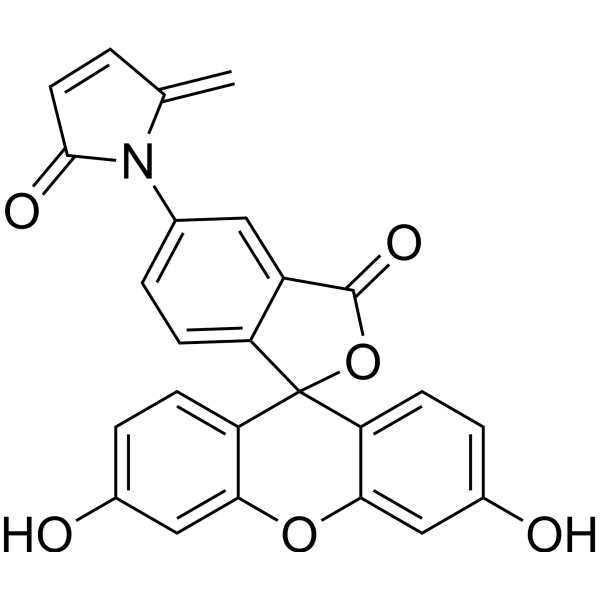
5MP-Fluorescein (compound 3e) is a fluorescein dye base on 5-Methylene pyrrolone (5MP).5-Methylene pyrrolones are highly thiol-specific and tracelessly removable bioconjugation tools .
|
-
- HY-W456566
-
|
|
MOFs
|
Others
|
|
Mono(3,3'-((4,4''-diformyl-[1,1':4',1''-terphenyl]-2',5'-diyl)bis(methylene))bis(1-propyl-1H-imidazol-3-ium)) monoiodide is a metal-organic framework (MOF).
|
-
![Mono(3,3'-((4,4''-diformyl-[1,1':4',1''-terphenyl]-2',5'-diyl)bis(methylene))bis(1-propyl-1H-imidazol-3-ium)) monoiodide](//file.medchemexpress.com/product_pic/hy-w456566.gif)
- HY-D1403
-
|
|
Fluorescent Dye
|
Cancer
|
|
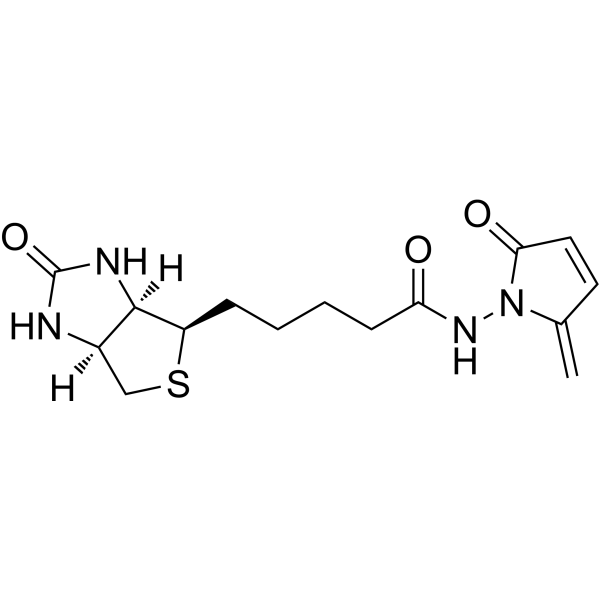
L-Biotin-NH-5MP is a biotin-conjugated 5-Methylene pyrrolone (5MP). 5-Methylene pyrrolones (5MPs) are thiol-specific, reversible bioconjugation reagents for cysteine-specific protein modification, that are commonly used for protein bioconjugation .
|
-
- HY-D1406
-
|
|
Fluorescent Dye
|
Others
|
|
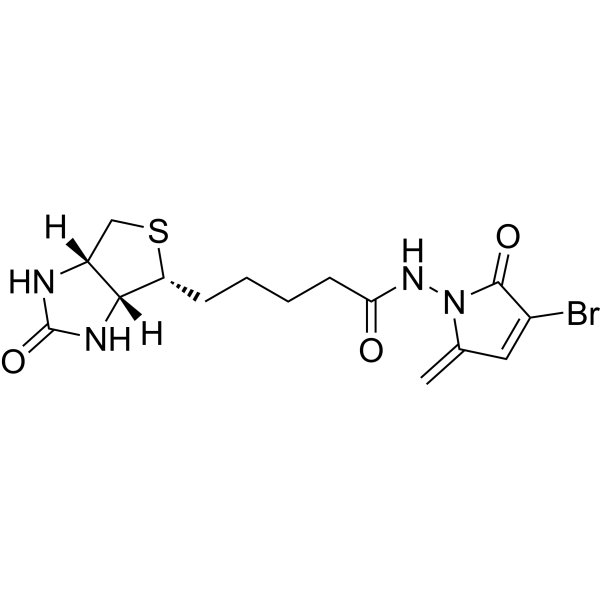
L-Biotin-NH-5MP-Br is a biotin-conjugated 5-Methylene pyrrolone (5MP). 5-Methylene pyrrolones (5MPs) are thiol-specific, reversible bioconjugation reagents for cysteine-specific protein modification, that are commonly used for protein bioconjugation .
|
-
- HY-N10906
-
(4R,4aS,5aS,6aR,6bS,7aR)-4-Hydroxy-3,6b-dimethyl-5-methylene-4,4a,5,5a,6,6a,7,7a-octahydrocyclopropa[2,3]indeno[5,6-b]furan-2(6bH)-one
|
Others
|
Others
|
|
(4R,4aS,5aS,6aR,6bS,7aR)-4-Hydroxy-3,6b-dimethyl-5-methylene-4,4a,5,5a,6,6a,7,7a-octahydrocyclopropa[2,3]indeno[5,6-b]furan-2(6bH)-one is a sesquiterpene lactone .
|
-
![(4R,4aS,5aS,6aR,6bS,7aR)-4-Hydroxy-3,6b-dimethyl-5-methylene-4,4a,5,5a,6,6a,7,7a-octahydrocyclopropa[2,3]indeno[5,6-b]furan-2(6bH)-one](//file.medchemexpress.com/product_pic/hy-n10906.gif)
- HY-W075072
-
|
1,3,5-Tris(imidazol-1-ylmethyl)-2,4,6-trimethylbenzene
|
MOFs
|
Others
|
|
1,1',1''-((2,4,6-Trimethylbenzene-1,3,5-triyl)tris(methylene))tris(1H-imidazole) (1,3,5-Tris(imidazol-1-ylmethyl)-2,4,6-trimethylbenzene) is a metal-organic framework (MOF).
|
-

- HY-W074650
-
|
4,4',4''-[(2,4,6-Trimethylbenzene-1,3,5-triyl)tris(Methyleneoxy)]tribenzoic acid
|
MOFs
|
Others
|
|
4,4',4''-(((2,4,6-Trimethylbenzene-1,3,5-triyl)tris(methylene))tris(oxy))tribenzoic acid (4,4',4''-[(2,4,6-Trimethylbenzene-1,3,5-triyl)tris(methyleneoxy)]tribenzoic acid) is a metal-organic framework (MOF).
|
-

- HY-W456298
-
|
N,N,N',N'-Tetrakis(2-pyridylmethyl)-2,6-bis(aminomethyl)pyridine
|
MOFs
|
Others
|
|
N,N'-(Pyridine-2,6-diylbis(methylene))bis(1-(pyridin-2-yl)-N-(pyridin-2-ylmethyl)methanamine) (N,N,N',N'-Tetrakis(2-pyridylmethyl)-2,6-bis(aminomethyl)pyridine) is a metal-organic framework (MOF).
|
-

- HY-D1404
-
|
|
Fluorescent Dye
|
Others
|
|
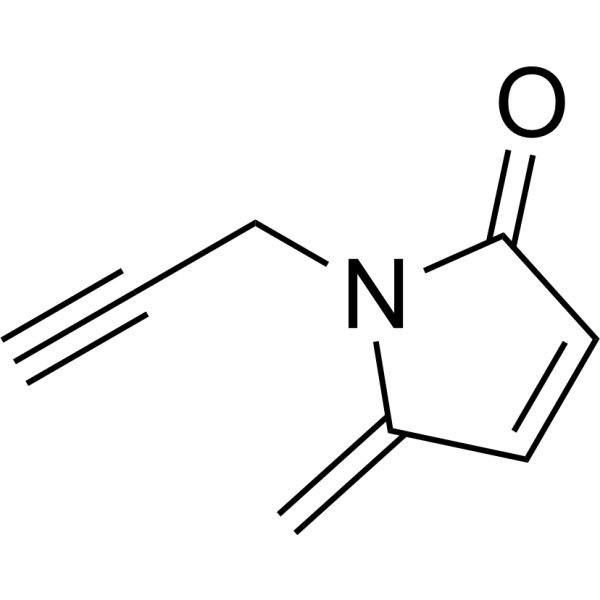
5MP-Propargyl is the derivative of 5-Methylene pyrrolone (5MP). 5-Methylene pyrrolones (5MPs) are thiol-specific, reversible bioconjugation reagents for cysteine-specific protein modification, that are commonly used for protein bioconjugation . 5MP-Propargyl is a click chemistry reagent, it contains an Alkyne group and can undergo copper-catalyzed azide-alkyne cycloaddition (CuAAc) with molecules containing Azide groups.
|
-
- HY-D1407
-
|
|
Fluorescent Dye
|
Others
|
|
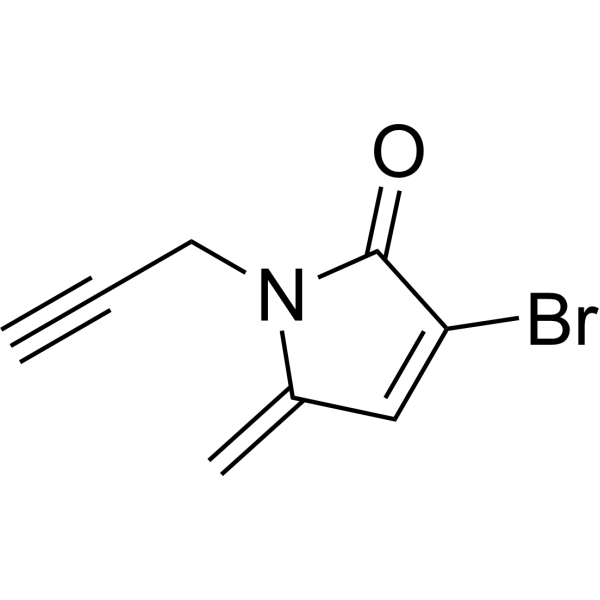
Br-5MP-Propargyl is the derivative of 5-Methylene pyrrolone (5MP). 5-Methylene pyrrolones (5MPs) are thiol-specific, reversible bioconjugation reagents for cysteine-specific protein modification, that are commonly used for protein bioconjugation . Br-5MP-Propargyl is a click chemistry reagent, it contains an Alkyne group and can undergo copper-catalyzed azide-alkyne cycloaddition (CuAAc) with molecules containing Azide groups.
|
-
- HY-D0929
-
|
α-Naphthol Orange
|
Fluorescent Dye
|
Others
|
|
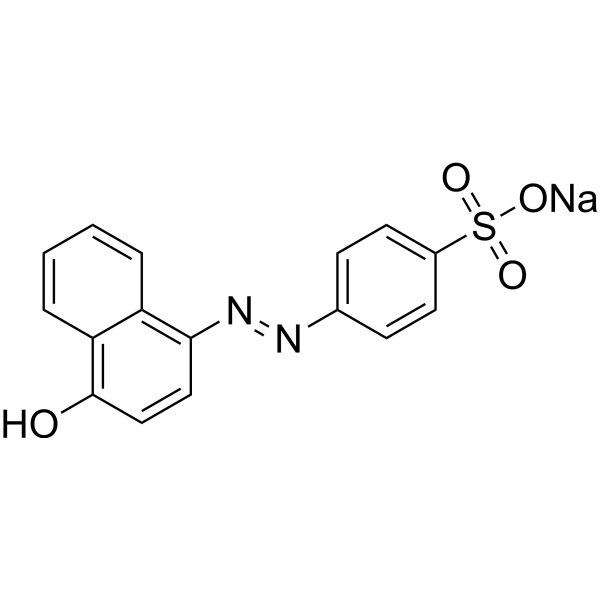
Orange I (α-Naphthol Orange) is an anionic azo dye that can form a complex with Methylene blue (HY-14536) and cause fluorescence quenching. The equilibrium constant of the complex of Orange I and Methylene blue is 79900 mol -1·dm 3. Orange I can change the absorption spectrum of itself and Methylene blue .
|
-
- HY-W248992
-
|
4-Pyridin-4-yl-1-[[4-[(4-pyridin-4-ylpyridin-1-ium-1-yl)methyl]phenyl]methyl]pyridin-1-ium
|
MOFs
|
Others
|
|
1,1''-(1,4-Phenylenebis(methylene))bis(([4,4'-bipyridin]-1-ium)) (4-Pyridin-4-yl-1-[[4-[(4-pyridin-4-ylpyridin-1-ium-1-yl)methyl]phenyl]methyl]pyridin-1-ium) is a metal-organic framework (MOF).
|
-
![1,1''-(1,4-Phenylenebis(methylene))bis(([4,4'-bipyridin]-1-ium))](//file.medchemexpress.com/product_pic/hy-w248992.gif)
- HY-D0944
-
|
|
Fluorescent Dye
|
Others
|
|
Giemsa stain is a composite dye composed of methylene azure, methylene blue, eosin and other components. Giemsa stain stains chromatin, nuclear membranes, specific cytoplasmic components and microorganisms. Giemsa stain is used in research on cytological and parasitological staining .
|
-
- HY-N1605
-
|
|
Others
|
Others
|
|
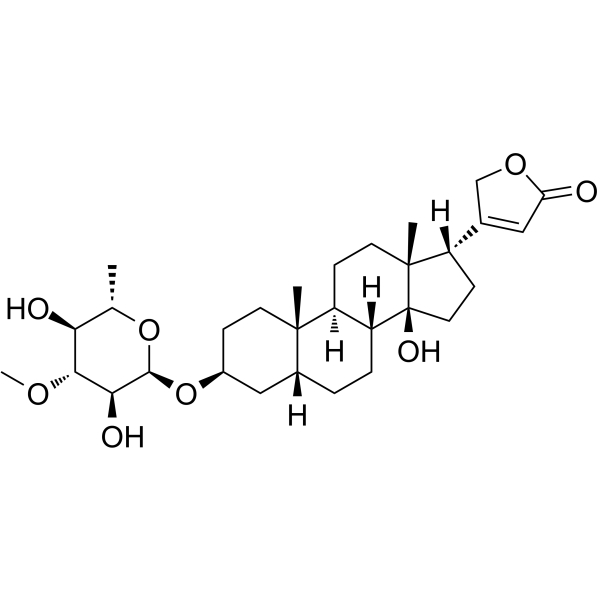
17α-Neriifolin is a compound isolated from a methylene chloride extract of the seeds of Cerbera odollam .
|
-
- HY-154508
-
|
2’-Deoxy-5-Fluorouridine 5’-phosphate triethylammonium
|
Nucleoside Antimetabolite/Analog
Thymidylate Synthase
|
Cancer
|
|
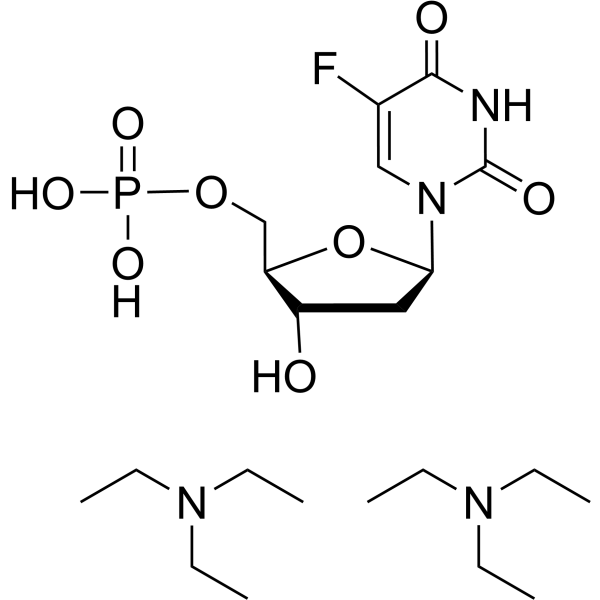
FdUMP triethylammonium is the intracellular active form of 5-fluorouracil (5-FU). 5-FU is converted to FdUMP after being transported into the cell by various enzymes. FdUMP forms a ternary complex with thymidylate synthase and its cofactor 5,10-methylene tetrahydrofolate, inhibiting the activity of thymidylate synthase, which in turn leads to the suppression of DNA synthesis.
|
-
- HY-17615
-
-
- HY-W015878
-
-
- HY-Z0013R
-
|
|
Reference Standards
|
|
|
(Z)-Methyl 3-(((4-(methylamino)phenyl)amino)(phenyl)methylene)-2-oxoindoline-6-carboxylate (Nintedanib Impurity) (Standard) is the analytical standard of (Z)-Methyl 3-(((4-(methylamino)phenyl)amino)(phenyl)methylene)-2-oxoindoline-6-carboxylate (Nintedanib Impurity). This product is intended for research and analytical applications.
|
-

- HY-111494
-
|
|
TRP Channel
|
Neurological Disease
|
|
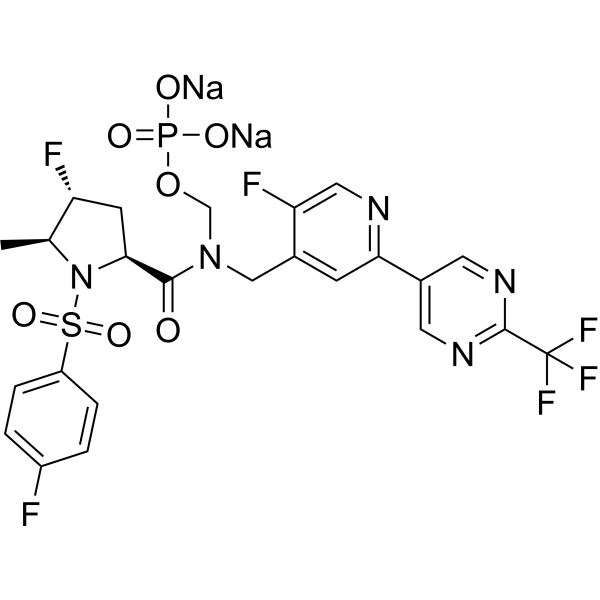
TRPA1 Antagonist 1 is a methylene phosphate proagent which converts to its active parent agent, a TRPA1 antagonist with an IC50 of 8 nM.
|
-
- HY-W739486
-
|
|
Biochemical Assay Reagents
|
Others
|
|
10,12-Octadecadienoic acid is a mixture of geometric and positional isomers of Octadecadienoic Acid in which the double bonds are conjugated instead of being methylene separated as they are in Linoleic Acid.
|
-

- HY-112502
-
|
Adenosine 5'-(α,β-Methylene)diphosphate
|
CD73
|
Cancer
|
|
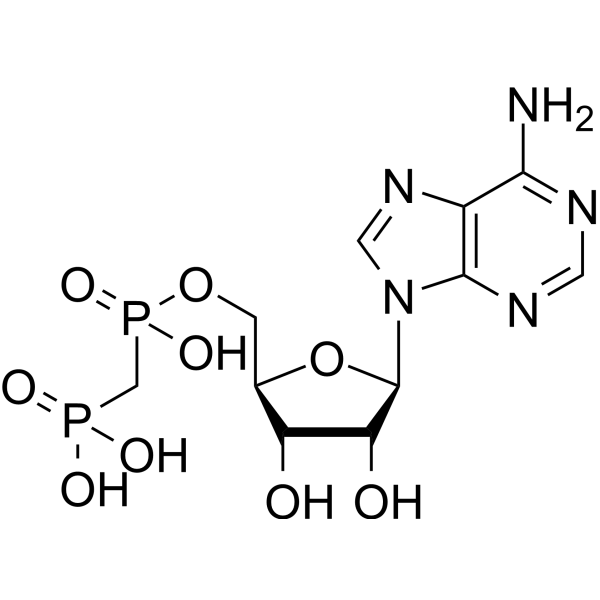
MethADP is a specific CD73 inhibitor.
|
-
- HY-W011331
-
|
|
Biochemical Assay Reagents
|
Others
|
|
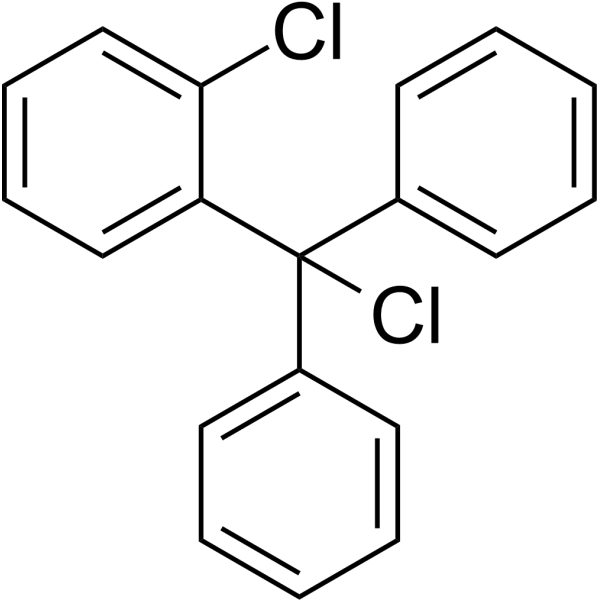
(Chloro(2-chlorophenyl)methylene)dibenzene is a biochemical reagent that can be used as a biological material or organic compound for life science related research.
|
-
- HY-I0296R
-
|
|
Reference Standards
|
|
|
2,2'-((6-Chloro-2,4-dioxopyrimidine-1,3(2H,4H)-diyl)bis(methylene))dibenzonitrile (Standard) is the analytical standard of 2,2'-((6-Chloro-2,4-dioxopyrimidine-1,3(2H,4H)-diyl)bis(methylene))dibenzonitrile. This product is intended for research and analytical applications.
|
-

- HY-179379
-
|
|
Drug Derivative
|
Inflammation/Immunology
|
|
EP4 receptor agonist 3 prodrug (Compound 9) is a prodrug of EP4 receptor agonist (Compound 1a). EP4 receptor agonist 3 prodrug itself has no agonistic activity on the EP4 receptor and needs to be specifically hydrolyzed by intestinal alkaline phosphatase (IAP) in the intestine to release the active molecule, which then exerts the EP4 receptor agonistic effect locally in the intestine. EP4 receptor agonist 3 prodrug has colonic targeting properties and significantly alleviates colitis in mice .
|
-

- HY-155600
-
|
β,γ-Methylene-GTP sodium
|
Nucleoside Antimetabolite/Analog
|
Others
|
|
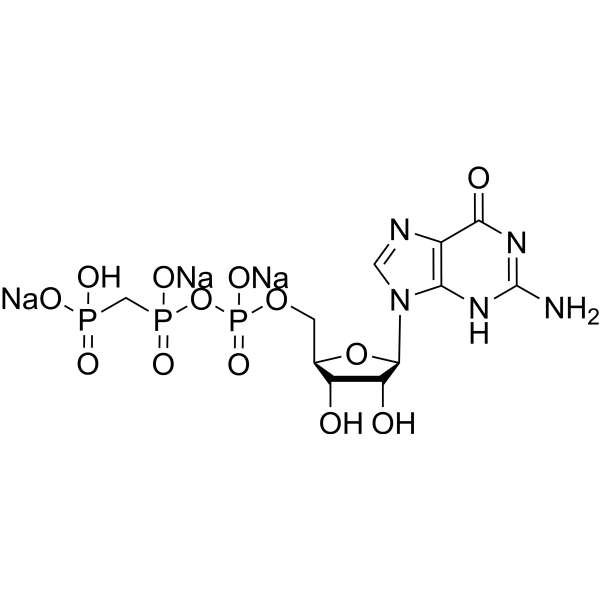
5′-Guanylyl methylenediphosphonate (sodium) is a GTP analogue and a specific, competitive inhibitor of the GTP reaction in protein synthesis .
|
-
- HY-W005088R
-
|
2-Methylene-3-phenylpropionic acid (Standard)
|
Reference Standards
|
|
|
2-Benzylacrylic acid (Standard) is the analytical standard of 2-Benzylacrylic acid. This product is intended for research and analytical applications.
|
-

- HY-145528
-
|
|
Endogenous Metabolite
|
Metabolic Disease
|
|
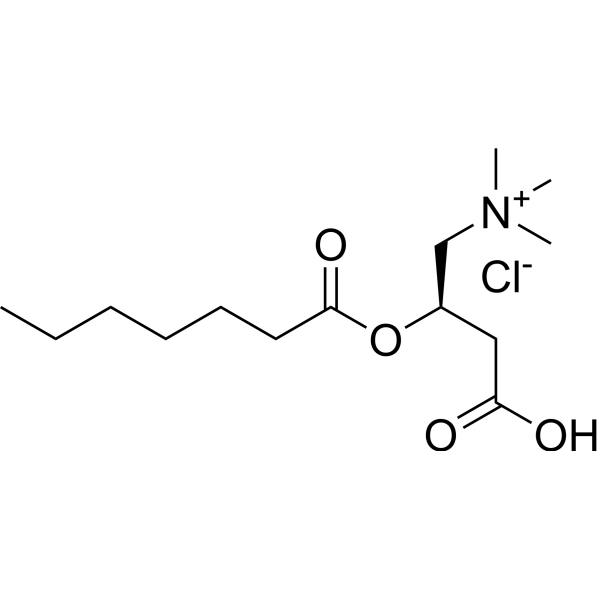
Heptanoyl-L-carnitine chloride (trans-3,4-methylene-heptanoylcarnitine) is an acylcarnitine. Heptanoyl-L-carnitine chloride causes exercise-induced alterations in the human metabolome in plasma and skeletal muscle tissue .
|
-
- HY-101943
-
-
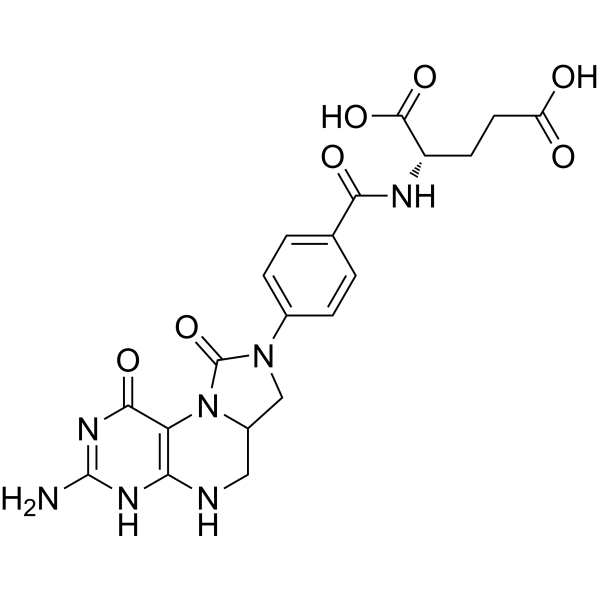
- HY-112502A
-
|
Adenosine 5'-(α,β-Methylene)diphosphate disodium
|
CD73
|
Cancer
|
|
MethADP disodium is a specific CD73 inhibitor.
|
-

- HY-133206A
-
|
Pronetupitant chloride monohydrochloride
|
Neurokinin Receptor
|
Cancer
|
|
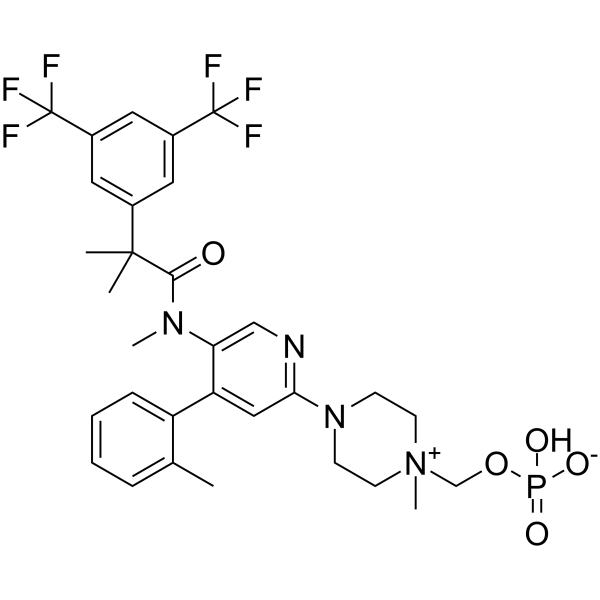
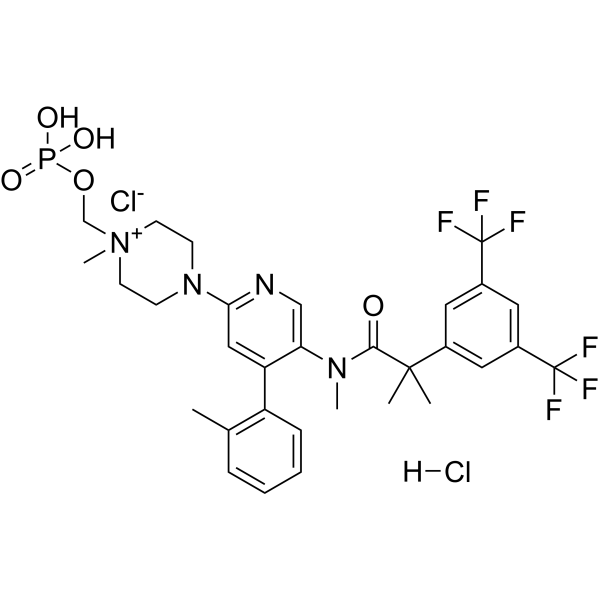
Fosnetupitant chloride monohydrochloride (Pronetupitant chloride monohydrochloride) is an NK1 antagonist with pKi values of 9.5, 6.1 for human NK1 and NK3 receptor, respectively. Fosnetupitant chloride monohydrochloride is a methylene phosphate prodrug of Netupitant .
|
-
- HY-W015878R
-
-

- HY-139371
-
|
|
Drug Derivative
|
Others
|
|
3-Desoxy-3,4-methylenedioxy pyrovalerone hydrochloride is an analog of 3,4-MDPV in which the heterocyclic 3-position oxygen from the 3,4-methylenedioxy ring has been replaced by a methylene bridge.
|
-

- HY-N2185
-
|
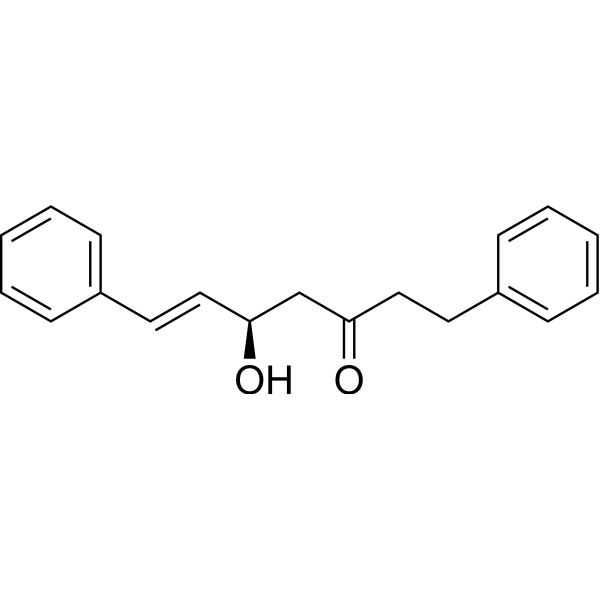
(5R)-trans-1,7-diphenyl-5-hydroxy-6-hepten-3-one
|
Others
|
Inflammation/Immunology
|
|
(5R,6E)-5-Hydroxy-1,7-diphenyl-6-hepten-3-one is the methylene chloride extract of Alpinia nutans, has antioxidant activity .
|
-
- HY-176088
-
|
|
Others
|
Others
|
|
(S)-(-)-Eicosapentaenyl-1'-hydroxy-2'-propylamide is a homologue of EPEA. (S)-(-)-Eicosapentaenyl-1'-hydroxy-2'-propylamide consists of an (S)-α-methyl group attached to the methylene carbon adjacent to the amide nitrogen atom.
|
-

- HY-W854192
-
|
|
DNA/RNA Synthesis
Phosphoramidites
|
Others
|
|
Guanosine, 5'-O-[bis(4-methoxyphenyl)phenylmethyl]-3'-deoxy-N-[(dimethylamino)methylene]-, 2'-[2-cyanoethyl N,N-bis(1-methylethyl)phosphoramidite] is a phosphoramidite that can be used in the synthesis of oligonucleotides.
|
-

- HY-W800446
-
|
Lna-g amidite
|
Biochemical Assay Reagents
Phosphoramidites
|
Others
|
|
LNA-Guanosine 3'-CE phosphoramidite (Lna-g amidite) is an essential building block to Locked Nucleic Acid (LNA) oligonucleotide synthesis, which includes a ribonucleoside linked by a methylene unit between the 2’-oxygen and 4’-carbon atoms, paralleling DNA polymer assembly.
|
-

- HY-W747533
-
|
C8 Ceramine; Ceramine (d18:1/8:0)
|
Drug Derivative
|
Others
|
|
C8 Ceramine is an analog of ceramide in which the carbonyl group of the ceramide is replaced by a methylene group. At a concentration of 10 μM, C8 ceramine induces maximal DNA fragmentation in U937 cells after 6 hours of incubation, compared to 12 hours for C8 ceramide.
|
-

- HY-157618
-
|
|
Bacterial
|
Others
|
|
18:0-18:1 PG sodium is a hydrogenated phospholipid that contributes to the stability of photosystem I and II protein complexes and plays a role in bacterial defense mechanisms, featuring two extra methylene groups in its saturated sn-1 chain, and is present in the thylakoid membranes of higher plants and cyanobacteria.
|
-

- HY-108671
-
|
|
P2X Receptor
|
Neurological Disease
|
|
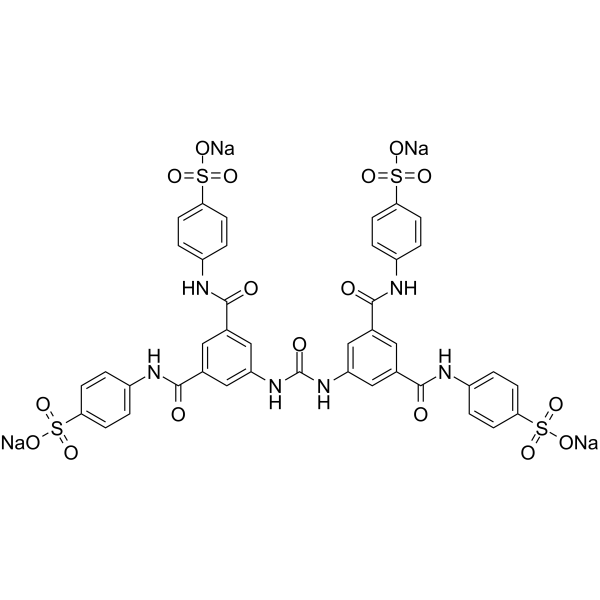
NF110 is a P2X3 receptor antagonist (Ki = 36 nM) and inactive toward P2Y receptors stably expressed (IC50s > 10 M). NF110 blocks alphabeta-methylene-ATP-induced currents (IC50 = 527 nM) in rat dorsal root ganglia neurons .
|
-
- HY-101943R
-
|
|
Reference Standards
Methylenetetrahydrofolate Dehydrogenase (MTHFD)
|
Cancer
|
|
LY 345899 (Standard) is the analytical standard of LY 345899 (HY-101943). This product is intended for research and analytical applications. LY 345899 is a Folate analog and is a methylene tetrahydrofolate dehydrogenase (MTHFD1; DC301) and MTHFD2 inbhibitor with IC50 values of 96 nM and 663 nM, respectively and a Ki of 18 nM for MTHFD1 .
|
-

- HY-W075836
-
|
|
Biochemical Assay Reagents
|
Others
|
|
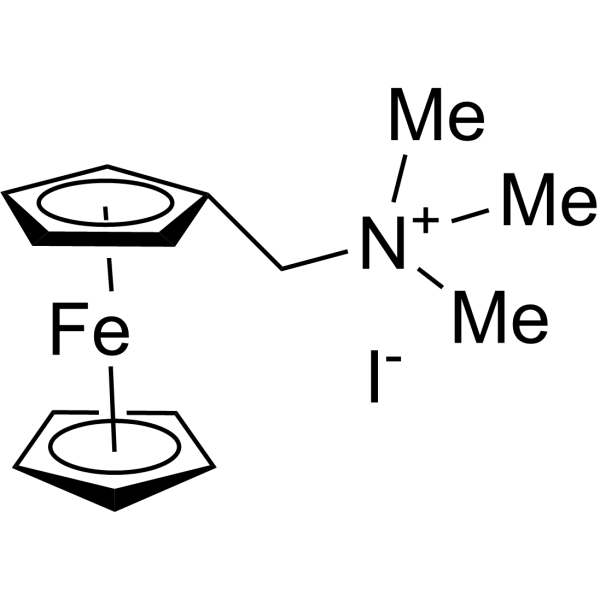
Ferrocenylmethyltrimethylammonium (iodide) is an organometallic salt consisting of a ferrocenyl group attached to a quaternary ammonium cation via a methylene bridge. Ferrocenylmethyltrimethylammonium (iodide) has been used as a catalyst and reagent in various organic reactions, including oxidation, reduction, and CH bond activation. In addition, it is also used as a precursor for the synthesis of other organometallic compounds and as a potential material for electrochemical applications.
|
-
- HY-178115
-
-

- HY-108309R
-
|
Methylenediphosphonic acid (Standard)
|
Biochemical Assay Reagents
Reference Standards
|
Others
|
|
Medronic acid (Standard) is the analytical standard of Medronic acid. This product is intended for research and analytical applications. Medronic acid (Methylenediphosphonic acid) is a methylene-substituted bisphosphonate. Medronic acid has affinity for and adheres to the surface of hydroxyapatite crystals in the bone matrix. Medronic acid can be used in bone imaging, while being complexed with radioisotopes. Due to its strong metal-chelating ability, Medronic acid can also be used as a water treatment chemical .
|
-

- HY-118462A
-
|
Coelenterazine 400a hydrochloride; Bisdeoxycoelenterazine hydrochloride
|
Fluorescent Dye
|
Others
|
|
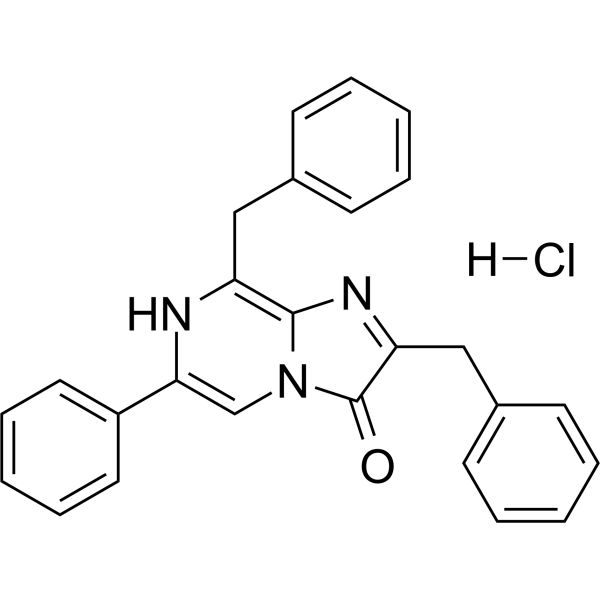
Coelenteramine (Coelenterazine) 400a hydrochloride, a derivative of Coelenterazine, is a Renilla luciferase (RLuc) substrate. In the presence of Coelenteramine 400a hydrochloride, RLuc can emit blue light at 395 nm . Coelenteramine 400a hydrochloride will causes color change in the bioluminescence reaction of Rluc by replacing the sulfur and oxygen heteroatoms of the methylene bridge. Coelenteramine 400a hydrochloride provides higher signal resolution and can be used in the research of bioluminescence resonance energy transfer (BRET) .
|
-
- HY-D0004
-
|
Azure B chloride
|
Monoamine Oxidase
|
Neurological Disease
|
|
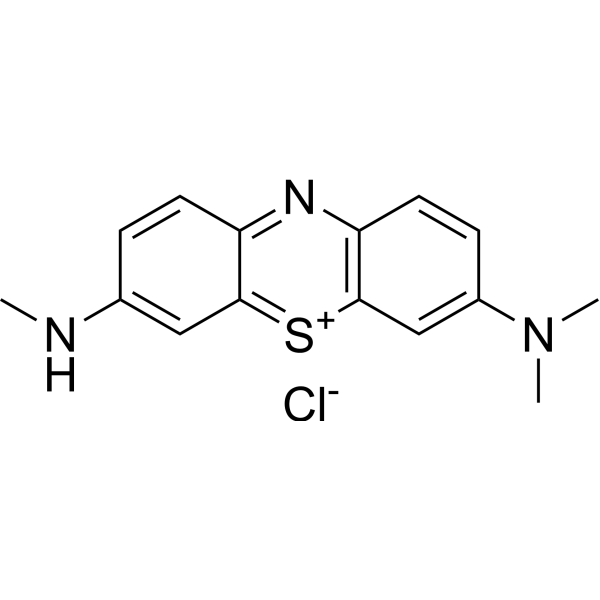
Azure B is a cationic dye and the major metabolite of Methylene blue. Azure B is used in making Azure eosin stains for blood smear staining. Azure B is a high-potency, selective and reversible inhibitor of monoamine oxidases (MAO)-A, with IC50s of 11 and 968 nM for recombinant human MAO-A and MAO-B, respectively. Azure B possesses significant antidepressant-like effects .
|
-
- HY-115428A
-
|
|
Others
|
Others
|
|
(S)-(-)-Linoleyl-1'-Hydroxy-2'-Propylamide is a homologue of linoleylethanolamide (LOEA). (S)-(-)-Linoleyl-1'-Hydroxy-2'-Propylamide is a derivative of linoleylethanolamide (LOEA). (S)-(-)-Linoleyl-1'-Hydroxy-2'-Propylamide has an (S)-α-methyl group added to the methylene carbon adjacent to the amide nitrogen .
|
-

- HY-118462
-
|
Coelenterazine 400a; Bisdeoxycoelenterazine
|
Fluorescent Dye
|
Others
|
|
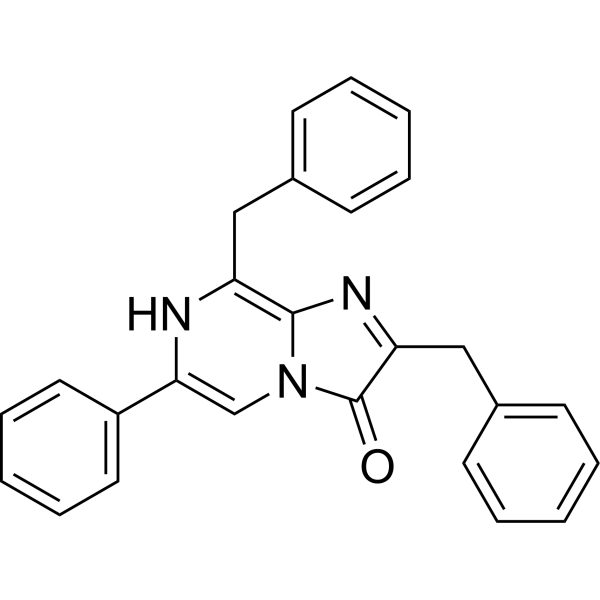
Coelenteramine 400a (Coelenterazine 400a), a derivative of Coelenterazine, is a Renilla luciferase (RLuc) substrate. In the presence of Coelenteramine 400a, RLuc can emit blue light at 395 nm . Coelenterazine 400a will causes color change in the bioluminescence reaction of Rluc by replacing the sulfur and oxygen heteroatoms of the methylene bridge. Coelenterazine 400a provides higher signal resolution and can be used in the research of bioluminescence resonance energy transfer (BRET) .
|
-
- HY-108309
-
|
Methylenediphosphonic acid
|
Biochemical Assay Reagents
|
Others
|
|
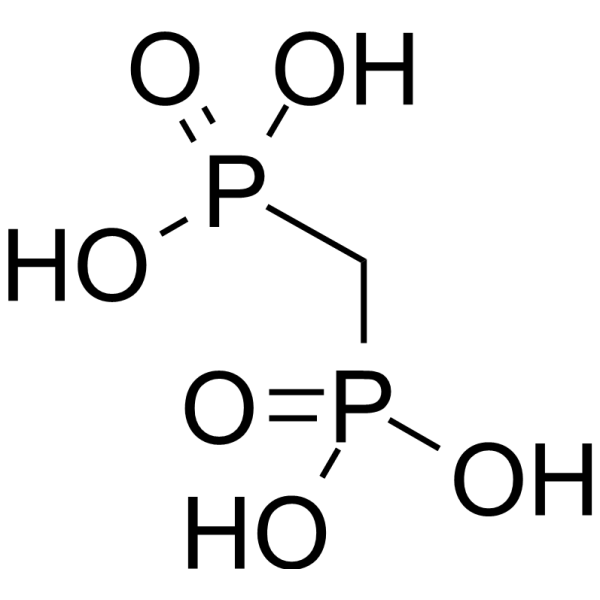
Medronic acid (Methylenediphosphonic acid) is a methylene-substituted bisphosphonate. Medronic acid has an affinity for the surface of hydroxyapatite crystals in the bone matrix and adheres to them. Medronic acid can be used in complex with radioisotopes in bone imaging. Due to its strong metal chelating ability, medronic acid is also used as a water treatment chemical. In addition, medronic acid is used as a solvent additive to improve peak shape and signal of metal-sensitive metabolites in LC/MS analysis .
|
-
- HY-156327S
-
-
- HY-D3140
-
|
|
Fluorescent Dye
Tyrosinase
|
Cancer
|
|
MB-m-borate is a double-locked near-infrared fluorescence-activated probe (Ex/Em ≈ 647 nm/684 nm). MB-m-borate undergoes cascade activation by hydrogen peroxide and tyrosinase to release the fluorophore methylene blue, thereby generating a fluorescence activation response. MB-m-borate enables precise detection of melanoma in melanoma cells and mouse models. MB-m-borate can be used for melanoma research .
|
-

- HY-W725767
-
|
|
DNA/RNA Synthesis
Phosphoramidites
|
Others
|
|
(2R,3S,5R)-2-((Bis(4-methoxyphenyl)(phenyl)methoxy)methyl)-5-(2-(((dimethylamino)methylene)amino)-9H-purin-9-yl)tetrahydrofuran-3-yl (2-cyanoethyl) diisopropylphosphoramidite is a phosphoramidite that can be used in the synthesis of oligonucleotides.
|
-

- HY-109116
-
|
LeukoMethylene blue
|
Biochemical Assay Reagents
|
Others
|
|
Hydromethylthionine (Leukomethylene blue) has a very active photochemically active reagent, especially in its interaction with dissolved oxygen. The photochemical activity of Hydromethylthionine is mainly regulated by the reaction of its triplet state with dissolved oxygen, which reacts with dissolved oxygen to form Methylene Blue (HY-14536) and hydronium ions under ultraviolet light. Hydromethylthionine can be used for the photodegradation of model pollutants in semiconductor photocatalysis and for the study of indicators in chemical analysis .
|
-

- HY-N1773
-
|
|
Others
|
Cancer
|
|
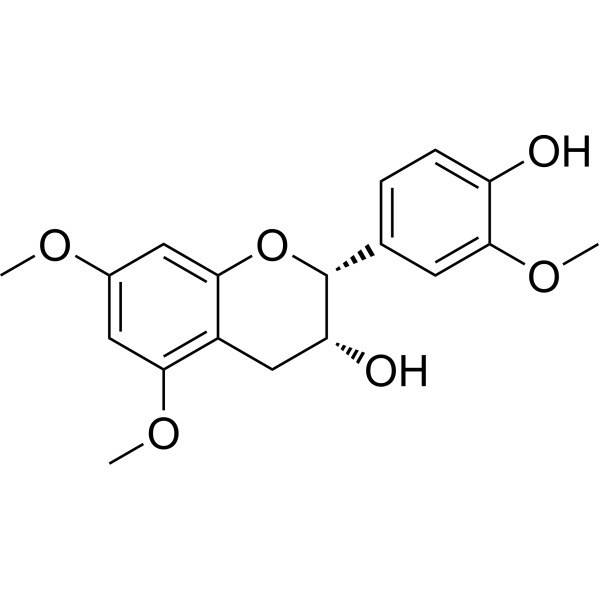
5,7,3' -tri-O-Methyl (-)-epicatechin (Compound 13) is a phospholipase Cγ1 (PLCγ1) inhibitor. 5,7,3' -tri-o-methyl (-)-epicatechin has a methylene dioxy benzene ring and can express inhibitory activity against PLCγ1. 5,7,3' -tri-O-Methyl (-)-epicatechin can be used in the study of chemotherapy and chemopexic agents for cancer .
|
-
- HY-181517
-
|
|
Bacterial
|
Infection
Cancer
|
|
Antitumor agent-212 is a α-exo-methylene-selenolactone derivative with prominent selective antitumor activity. Antitumor agent-212 exhibits an MIC value of 128 μg/mL against Gram-positive bacteria. Antitumor agent-212 exhibits significant antitumor effects in the U87 human glioma xenograft model. Antitumor agent-212 can be used for the study of glioma, breast cancer and non-small cell lung cancer, and antibacterial study .
|
-

- HY-D0004R
-
|
Azure B chloride (Standard)
|
Reference Standards
Monoamine Oxidase
|
Neurological Disease
|
|
Azure B (Standard) is the analytical standard of Azure B. This product is intended for research and analytical applications. Azure B is a cationic dye and the major metabolite of Methylene blue. Azure B is used in making Azure eosin stains for blood smear staining. Azure B is a high-potency, selective and reversible inhibitor of monoamine oxidases (MAO)-A, with IC50s of 11 and 968 nM for recombinant human MAO-A and MAO-B, respectively. Azure B possesses significant antidepressant-like effects .
|
-

- HY-W714944
-
|
|
DNA/RNA Synthesis
Phosphoramidites
|
Others
|
|
(2R,3S,5R)-2-((Bis(4-methoxyphenyl)(phenyl)methoxy)methyl)-5-(5-(3-(((E)-(dimethylamino)methylene)amino)phenyl)-2,4-dioxo-3,4-dihydropyrimidin-1(2H)-yl)tetrahydrofuran-3-yl (2-cyanoethyl) diisopropylphosphoramidite is a phosphoramidite that can be used in the synthesis of oligonucleotides.
|
-

- HY-W715208
-
|
|
DNA/RNA Synthesis
Phosphoramidites
|
Others
|
|
(2R,3R,4R,5R)-2-((Bis(4-methoxyphenyl)(phenyl)methoxy)methyl)-5-(2-(((E)-(dimethylamino)methylene)amino)-9H-purin-9-yl)-4-methoxytetrahydrofuran-3-yl (2-cyanoethyl) diisopropylphosphoramidite is a phosphoramidite that can be used in the synthesis of oligonucleotides.
|
-

- HY-104086
-
|
CB7; Carrier CB7
|
Biochemical Assay Reagents
|
Others
|
|
Cucurbit[7]uril is a cyclic organic molecule consisting of seven glycoluril units linked by methylene bridges. It has a rigid barrel-like structure with two identical inlets at both ends to selectively encapsulate guest molecules of appropriate size, shape, and polarity. Cucurbit[7]uril is known for its high binding affinity for a variety of organic and inorganic guests, including drugs, amino acids, peptides, and metal ions. This property makes them promising candidates for various applications in areas such as drug delivery, catalysis, and sensing.
|
-
![Cucurbit[7]uril](//file.medchemexpress.com/product_pic/hy-104086.gif)
- HY-134833
-
|
|
DNA/RNA Synthesis
Phosphoramidites
|
Others
|
|
(2R,3R,4S,5R)-2-((Bis(4-methoxyphenyl)(phenyl)methoxy)methyl)-4-((tert-butyldimethylsilyl)oxy)-5-(4-(((E)-(diisobutylamino)methylene)amino)thieno[3,4-d]pyrimidin-7-yl)tetrahydrofuran-3-yl (2-cyanoethyl) diisopropylphosphoramidite is a phosphoramidite that can be used in the synthesis of oligonucleotides.
|
-

- HY-W040267
-
|
|
Biochemical Assay Reagents
|
Others
|
|
Dichlorotetrakis(2-(2-pyridinyl)phenyl)diiridium(III) is a precursor for certain OLED Iridium compounds. Dichlorotetrakis(2-(2-pyridinyl)phenyl)diiridium(III) can be used as a catalyst. Dichlorotetrakis(2-(2-pyridinyl)phenyl)diiridium(III) can also be used in the synthesis of 3,3′-([2,2′-bipyridine]-5,5′-diylbis(methylene))bis(1-ethyl-1H-imidazol-3-ium) functionalized receptor Ir-1 .
|
-

- HY-43066
-
|
|
DNA/RNA Synthesis
Phosphoramidites
|
Others
|
|
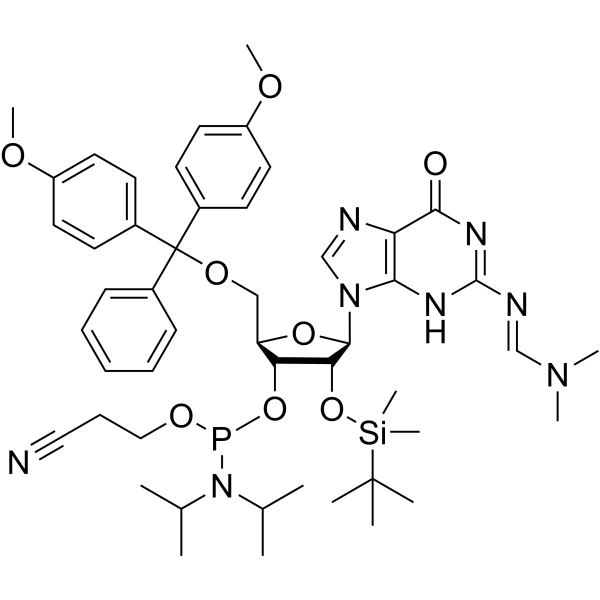
(2R,3R,4R,5R)-2-((Bis(4-methoxyphenyl)(phenyl)methoxy)methyl)-4-((tert-butyldimethylsilyl)oxy)-5-(2-(((E)-(dimethylamino)methylene)amino)-6-oxo-1,6-dihydro-9H-purin-9-yl)tetrahydrofuran-3-yl (2-cyanoethyl) diisopropylphosphoramidite is a phosphoramidite that can be used in the synthesis of oligonucleotides.
|
-
- HY-W714978
-
|
|
DNA/RNA Synthesis
Phosphoramidites
|
Others
|
|
(2R,3S,5R)-2-((Bis(4-methoxyphenyl)(phenyl)methoxy)methyl)-5-(2-(((E)-(dimethylamino)methylene)amino)-5-methyl-4-oxo-3,4-dihydro-7H-pyrrolo[2,3-d]pyrimidin-7-yl)tetrahydrofuran-3-yl (2-cyanoethyl) diisopropylphosphoramidite is a phosphoramidite that can be used in the synthesis of oligonucleotides.
|
-

- HY-78035
-
|
Methylmaleic anhydride
|
Biochemical Assay Reagents
|
Others
|
|
Citraconic anhydride (Methylmaleic anhydride) is a derivative of maleic anhydride (HY-Z0060) and novel antigen retrieval solution. Citraconic anhydride reversibly blocks protein amino groups, stabilizing specific enzymes and improving their catalytic performance. Citraconic anhydride reacts with free amino groups on proteins (especially lysine residues), converting positively charged NH3 + into carboxyl groups, thereby disrupting methylene bridge crosslinks caused by Formaldehyde during antigen retrieval. Citraconic anhydride functionalizes Isotactic polypropylene. Citraconic anhydride precisely responds to pH changes to achieve reversible modification. Citraconic anhydride is irritating to skin and eyes .
|
-

- HY-W784553
-
|
|
DNA/RNA Synthesis
Phosphoramidites
|
Others
|
|
(2R,3S,5R)-2-((Bis(4-methoxyphenyl)(phenyl)methoxy)methyl)-5-(4-(((dimethylamino)methylene)amino)-2-oxo-5-(3-oxo-3-((6-(2,2,2-trifluoroacetamido)hexyl)amino)prop-1-en-1-yl)pyrimidin-1(2H)-yl)tetrahydrofuran-3-yl (2-cyanoethyl) diisopropylphosphoramidite is a phosphoramidite that can be used in the synthesis of oligonucleotides.
|
-

- HY-W714797
-
|
|
Isotope-Labeled Compounds
|
Others
|
|
Nintedanib demethyl-O-glucuronic acid-d3 is the deuterium labeled (2R,3R,4R,5S,6S)-3,4,5-Trihydroxy-6-(((Z)-3-(((4-(N-methyl-2-(4-methylpiperazin-1-yl)acetamido)phenyl)amino)(phenyl)methylene)-2-oxoindoline-6-carbonyl)oxy)tetrahydro-2H-pyran-2-carboxylic acid (HY-W712456).
|
-

- HY-W143216
-
|
Monomethylthionine
|
Amyloid-β
Tau Protein
|
Neurological Disease
|
|
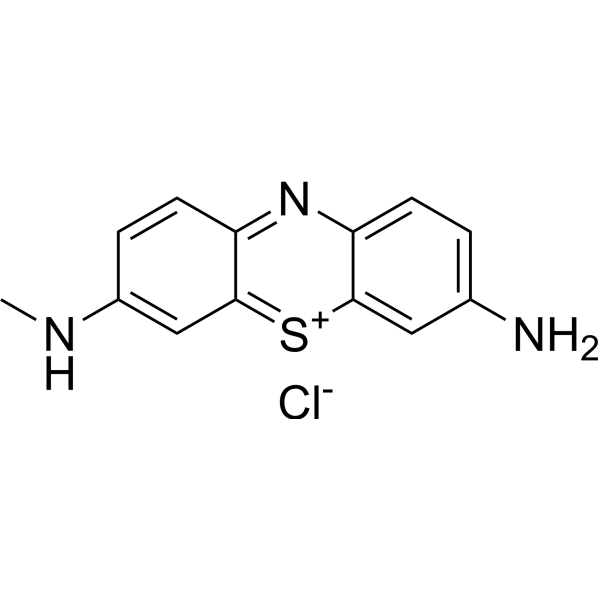
Azure C acts as a tau oligomer modulator and Aβ42 oligomerization inhibitor. It regulates hsp70 ATPase activity, thereby mediating the clearance of tau protein. Azure C reduces the levels of toxic tau oligomers by promoting the formation of non-toxic tau aggregates, rescues neuroblastoma cells from tau oligomer-induced toxicity, and binds to and inhibits Aβ42 oligomerization without suppressing its fibrillization. Azure C is generated via sequential oxidation of methylene blue or Azure B through a horseradish peroxidase-mediated reaction, and accumulates in HRP reaction media. Azure C can be used in studies related to tauopathies, including Alzheimer's disease .
|
-
- HY-Y1078
-
|
N-Dimethoxymethyl-N,N-dimethylamine
|
Biochemical Assay Reagents
|
Others
|
|
DMF-DMA (N-Dimethoxymethyl-N,N-dimethylamine) is a reagent with both condensation and alkylation functions. DMF-DMA can undergo condensation reactions with active methylene groups or amino groups to generate enamine and imino derivatives, and can also act as an alkylating agent to methylate nitrogen and oxygen atoms in heterocyclic structures. DMF-DMA is widely used in the synthesis of enaminones and dimethylamino imine intermediates, as well as in the construction of heterocyclic backbones such as pyridine, pyrimidine and pyrazole. DMF-DMA can also serve as a polar aprotic co-solvent; although DMF-DMA cannot dissolve cellulose alone, it can form an efficient cellulose dissolution system with diallylimidazolium methoxyacetate .
|
-

- HY-W088068
-
|
|
Fluorescent Dye
|
Others
|
|
Wright's stain is a composite cell stain that mainly binds to intracellular nucleic acids, proteins and other components through thiazine dyes (such as methylene blue) and eosin. Wright's stain is pH-dependent (optimal pH 6.4-6.7) and achieves cell morphology resolution by differentially staining the cytoplasm and nucleus. Under alkaline conditions, thiazine dyes bind to nucleic acids to form purple, and acidic eosin binds to cytoplasmic proteins to form red, which can form contrasting cell morphological features. Wright's stain can clearly display the fine structures of blood cells and bone marrow cells (such as nuclear chromatin and granules) and quickly evaluate cell morphological abnormalities .
|
-

- HY-N2185R
-
|
(5R)-trans-1,7-diphenyl-5-hydroxy-6-hepten-3-one (Standard)
|
Reference Standards
Others
|
Inflammation/Immunology
|
|
(5R,6E)-5-Hydroxy-1,7-diphenyl-6-hepten-3-one (Standard) is the analytical standard of (5R,6E)-5-Hydroxy-1,7-diphenyl-6-hepten-3-one. This product is intended for research and analytical applications. (5R,6E)-5-Hydroxy-1,7-diphenyl-6-hepten-3-one is the methylene chloride extract of Alpinia nutans, has antioxidant activity .
|
-

- HY-150087
-
|
|
Fluorescent Dye
|
Others
|
|
Ctrl-CF4-S2 is a chemically modified control probe of the copper probe Copper Fluor-4 (CF4, HY-150086), in which two of the four thioether ligands in CF4 (HY-150086) are replaced with methylene groups. CF4 (HY-150086) is a fluorescent probe used for detecting the presence and distribution of copper ions, whereas Ctrl-CF4-S2 does not respond to copper ions. This allows it to eliminate background signals from copper, thereby helping to determine whether the signals from CF4 (HY-150086) accurately reflect the dynamic changes of copper ions in biological systems
|
-

- HY-122575
-
|
|
P2X Receptor
Influenza Virus
Topoisomerase
MicroRNA
Apoptosis
|
Infection
Neurological Disease
Inflammation/Immunology
|
|
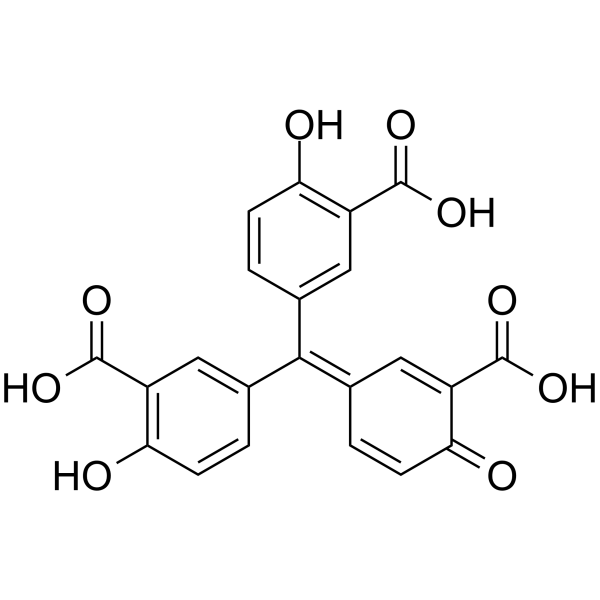
Aurintricarboxylic acid is a nanomolar-potency, allosteric antagonist with selectivity towards αβ-methylene-ATP-sensitive P2X1Rs and P2X3Rs, with IC50s of 8.6 nM and 72.9 nM for rP2X1R and rP2X3R, respectively . Aurintricarboxylic acid is a potent anti-influenza agent by directly inhibiting the neuraminidase . Aurintricarboxylic acid is an inhibitor of topoisomerase II and apoptosis . Aurintricarboxylic acid is a selective inhibitor of the TWEAK-Fn14 signaling pathway . Aurintricarboxylic acid also acts as a cystathionine-lyase (CSE) inhibitor with an IC50 of 0.6 μM . Aurintricarboxylic acid is a modifier of miRNAs that regulate miRNA function, with an IC50 of 0.47 µM .
|
-
- HY-169798
-
|
|
Fluorescent Dye
VSV
|
Infection
|
1,9-Dimethylmethylene blue is a photosensitizer, virus inactivator and hemoglobin oxidant derived from methylene blue. When activated, 1,9-Dimethylmethylene blue generates reactive oxygen species including singlet oxygen, and acts as a metachromatic dye. When activated in monomeric or dimeric form, 1,9-Dimethylmethylene blue induces photoinactivation of R17 phage and vesicular stomatitis virus and oxidizes hemoglobin via non-singlet oxygen reactive oxygen species or singlet oxygen-mediated pathways, respectively. The monomeric form, with higher nucleic acid affinity, achieves virus inactivation under specific conditions without forming methemoglobin. 1,9-Dimethylmethylene blue binds to substances such as glycosaminoglycans to produce color changes. Although it is susceptible to interference from non-glycosaminoglycan components in urine, it is still applicable to spectrophotometric analysis for glycosaminoglycan quantification. With these unique photochemical and binding properties, 1,9-Dimethylmethylene blue is widely used in studies of viral infections and related biochemical analyses .
|
-

- HY-W456562
-
|
Mono(4,4'-(thiazolo[5,4-d]thiazole-2,5-diyl)bis(1-(3,5-dicarboxybenzyl)pyridin-1-ium)) monochloride; 5,5'-((thiazolo[5,4-d]thiazole-2,5-diylbis(pyridine-1-ium-4,1-diyl))bis(Methylene))bis(3-carboxybenzoate) dihydrochloride
|
MOFs
|
Others
|
|
Mono(4,4'-(thiazolo[5,4-d]thiazole-2,5-diyl)bis(1-(3,5-dicarboxybenzyl)pyridin-1-ium)) monochloride (Mono(4,4'-(thiazolo[5,4-d]thiazole-2,5-diyl)bis(1-(3,5-dicarboxybenzyl)pyridin-1-ium)) monochloride) is a metal-organic framework (MOF).
|
-
![Mono(4,4'-(thiazolo[5,4-d]thiazole-2,5-diyl)bis(1-(3,5-dicarboxybenzyl)pyridin-1-ium)) monochloride](//file.medchemexpress.com/product_pic/hy-w456562.gif)
| Cat. No. |
Product Name |
Type |
-
- HY-14536
-
Methylene Blue
Maximum Cited Publications
28 Publications Verification
Basic Blue 9; CI-52015; Methylthioninium chloride
|
Fluorescent Dyes
|
|
Methylene blue (Basic Blue 9) is a guanylyl cyclase (sGC), monoamine oxidase A (MAO-A) and NO synthase (NOS) inhibitor. Methylene blue is a vasopressor and is often used as a dye in several medical procedures. Methylene blue through the nitric oxide syntase/guanylate cyclase signalling pathway to reduce prepulse inhibition. Methylene blue is a REDOX cycling compound and able to cross the blood-brain barrier. Methylene blue is a Tau aggregation inhibitor. Methylene Blue is a photosensitizer and redox agent. Methylene blue reduces cerebral edema, attenuated microglial activation and reduced neuroinflammation .
|
-
- HY-W751238
-
|
DMMB
|
Fluorescent Dyes
|
|
Dimethyl methylene blue zinc chloride double salt (DMMB) is a cationic dye. Dimethyl methylene blue zinc chloride double salt competitively binds to the active site of the PANI-Benz-Ag nanocomposite with endotoxin, releasing DMMB and increasing the fluorescence intensity. Dimethyl methylene blue zinc chloride double salt can be used as a fluorescent probe for the detection of bacteria (such as E. Coli) endotoxin . Dimethyl methylene blue zinc chloride double salt can be used for the quantification of sulfated glycosaminoglycans .
|
-
- HY-118462
-
|
Coelenterazine 400a; Bisdeoxycoelenterazine
|
Fluorescent Dyes
|
|
Coelenteramine 400a (Coelenterazine 400a), a derivative of Coelenterazine, is a Renilla luciferase (RLuc) substrate. In the presence of Coelenteramine 400a, RLuc can emit blue light at 395 nm . Coelenterazine 400a will causes color change in the bioluminescence reaction of Rluc by replacing the sulfur and oxygen heteroatoms of the methylene bridge. Coelenterazine 400a provides higher signal resolution and can be used in the research of bioluminescence resonance energy transfer (BRET) .
|
-
- HY-D0034
-
|
ABMDMA
|
Fluorescent Dyes
|
|
9,10-Anthracenediyl-bis(methylene)dimalonic acid (ABMDMA) is a biological dye and indicator used to detect singlet oxygen generation (SOG). 9,10-Anthracenediyl-bis(methylene)dimalonic acid is water-soluble derivative of anthracene. 9,10-Anthracenediyl-bis(methylene)dimalonic acid can be photobleached by singlet oxygen to its corresponding endoperoxide. This reaction can be monitored spectrophotometrically by recording the decrease of absorbance at 400 nm .
|
-
- HY-D0944
-
|
|
Fluorescent Dyes
|
|
Giemsa stain is a composite dye composed of methylene azure, methylene blue, eosin and other components. Giemsa stain stains chromatin, nuclear membranes, specific cytoplasmic components and microorganisms. Giemsa stain is used in research on cytological and parasitological staining .
|
-
- HY-D0004
-
|
Azure B chloride
|
Fluorescent Dyes
|
|
Azure B is a cationic dye and the major metabolite of Methylene blue. Azure B is used in making Azure eosin stains for blood smear staining. Azure B is a high-potency, selective and reversible inhibitor of monoamine oxidases (MAO)-A, with IC50s of 11 and 968 nM for recombinant human MAO-A and MAO-B, respectively. Azure B possesses significant antidepressant-like effects .
|
-
- HY-19948
-
|
TRx0237 mesylate; Methylene blue leuco base mesylate
|
Fluorescent Dyes
|
|
Leucomethylene blue (TRx0237) mesylate, an orally active second-generation tau protein aggregation inhibitor (Ki of 0.12 μM), could be used for the study of Alzheimer's Disease. Leucomethylene blue mesylate is a common reduced form of Methylene Blue, Methylene Blue is a member of the thiazine class of dyes .
|
-
- HY-14536A
-
|
Basic Blue 9 (purity≥70%); CI-52015 (purity≥70%); Methylthioninium chloride (purity≥70%)
|
Fluorescent Dyes
|
|
Methylene blue (purity≥70%) is a guanylyl cyclase (sGC), monoamine oxidase A (MAO-A) and NO synthase (NOS) inhibitor. Methylene blue (purity≥70%) is a vasopressor and is often used as a dye in several medical procedures. Methylene blue (purity≥70%) through the nitric oxide syntase/guanylate cyclase signalling pathway to reduce prepulse inhibition. Methylene blue (purity≥70%) is a REDOX cycling compound and able to cross the blood-brain barrier. Methylene blue (purity≥70%) is a Tau aggregation inhibitor. Methylene blue reduces cerebral edema, attenuated microglial activation and reduced neuroinflammation .
|
-
- HY-W088068
-
|
|
Fluorescent Dyes
|
|
Wright's stain is a composite cell stain that mainly binds to intracellular nucleic acids, proteins and other components through thiazine dyes (such as methylene blue) and eosin. Wright's stain is pH-dependent (optimal pH 6.4-6.7) and achieves cell morphology resolution by differentially staining the cytoplasm and nucleus. Under alkaline conditions, thiazine dyes bind to nucleic acids to form purple, and acidic eosin binds to cytoplasmic proteins to form red, which can form contrasting cell morphological features. Wright's stain can clearly display the fine structures of blood cells and bone marrow cells (such as nuclear chromatin and granules) and quickly evaluate cell morphological abnormalities .
|
-
- HY-109116
-
|
LeukoMethylene blue
|
Fluorescent Dyes
|
|
Hydromethylthionine (Leukomethylene blue) has a very active photochemically active reagent, especially in its interaction with dissolved oxygen. The photochemical activity of Hydromethylthionine is mainly regulated by the reaction of its triplet state with dissolved oxygen, which reacts with dissolved oxygen to form Methylene Blue (HY-14536) and hydronium ions under ultraviolet light. Hydromethylthionine can be used for the photodegradation of model pollutants in semiconductor photocatalysis and for the study of indicators in chemical analysis .
|
-
- HY-14536R
-
|
Basic Blue 9 (Standard); CI-52015 (Standard); Methylthioninium chloride (Standard)
|
Fluorescent Dyes
|
|
Methylene Blue (Standard) is the analytical standard of Methylene Blue. This product is intended for research and analytical applications. Methylene blue (Basic Blue 9) is a guanylyl cyclase (sGC), monoamine oxidase A (MAO-A) and NO synthase (NOS) inhibitor. Methylene blue is a vasopressor and is often used as a dye in several medical procedures. Methylene blue through the nitric oxide syntase/guanylate cyclase signalling pathway to reduce prepulse inhibition. Methylene blue is a REDOX cycling compound and able to cross the blood-brain barrier. Methylene blue is a Tau aggregation inhibitor. Methylene blue reduces cerebral edema, attenuated microglial activation and reduced neuroinflammation .
|
-
- HY-150087
-
|
|
Fluorescent Dyes
|
|
Ctrl-CF4-S2 is a chemically modified control probe of the copper probe Copper Fluor-4 (CF4, HY-150086), in which two of the four thioether ligands in CF4 (HY-150086) are replaced with methylene groups. CF4 (HY-150086) is a fluorescent probe used for detecting the presence and distribution of copper ions, whereas Ctrl-CF4-S2 does not respond to copper ions. This allows it to eliminate background signals from copper, thereby helping to determine whether the signals from CF4 (HY-150086) accurately reflect the dynamic changes of copper ions in biological systems
|
-
- HY-D1406
-
|
|
Fluorescent Dyes
|
|
L-Biotin-NH-5MP-Br is a biotin-conjugated 5-Methylene pyrrolone (5MP). 5-Methylene pyrrolones (5MPs) are thiol-specific, reversible bioconjugation reagents for cysteine-specific protein modification, that are commonly used for protein bioconjugation .
|
-
- HY-D0004R
-
|
Azure B chloride (Standard)
|
Fluorescent Dyes
|
|
Azure B (Standard) is the analytical standard of Azure B. This product is intended for research and analytical applications. Azure B is a cationic dye and the major metabolite of Methylene blue. Azure B is used in making Azure eosin stains for blood smear staining. Azure B is a high-potency, selective and reversible inhibitor of monoamine oxidases (MAO)-A, with IC50s of 11 and 968 nM for recombinant human MAO-A and MAO-B, respectively. Azure B possesses significant antidepressant-like effects .
|
-
- HY-W751874
-
|
|
Fluorescent Dyes
|
|
Acetyl methylene blue can be used to synthesize mitochondrial development stimulators, which can be used for eye diseases related to insufficient mitochondrial function in nerve cells .
|
-
- HY-D1402
-
|
|
Fluorescent Dyes
|
|
5MP-Fluorescein (compound 3e) is a fluorescein dye base on 5-Methylene pyrrolone (5MP).5-Methylene pyrrolones are highly thiol-specific and tracelessly removable bioconjugation tools .
|
-
- HY-D1403
-
|
|
Fluorescent Dyes
|
|
L-Biotin-NH-5MP is a biotin-conjugated 5-Methylene pyrrolone (5MP). 5-Methylene pyrrolones (5MPs) are thiol-specific, reversible bioconjugation reagents for cysteine-specific protein modification, that are commonly used for protein bioconjugation .
|
-
- HY-D1404
-
|
|
Fluorescent Dyes
|
|
5MP-Propargyl is the derivative of 5-Methylene pyrrolone (5MP). 5-Methylene pyrrolones (5MPs) are thiol-specific, reversible bioconjugation reagents for cysteine-specific protein modification, that are commonly used for protein bioconjugation . 5MP-Propargyl is a click chemistry reagent, it contains an Alkyne group and can undergo copper-catalyzed azide-alkyne cycloaddition (CuAAc) with molecules containing Azide groups.
|
-
- HY-D1407
-
|
|
Fluorescent Dyes
|
|
Br-5MP-Propargyl is the derivative of 5-Methylene pyrrolone (5MP). 5-Methylene pyrrolones (5MPs) are thiol-specific, reversible bioconjugation reagents for cysteine-specific protein modification, that are commonly used for protein bioconjugation . Br-5MP-Propargyl is a click chemistry reagent, it contains an Alkyne group and can undergo copper-catalyzed azide-alkyne cycloaddition (CuAAc) with molecules containing Azide groups.
|
-
- HY-D3140
-
|
|
Fluorescent Dyes
|
|
MB-m-borate is a double-locked near-infrared fluorescence-activated probe (Ex/Em ≈ 647 nm/684 nm). MB-m-borate undergoes cascade activation by hydrogen peroxide and tyrosinase to release the fluorophore methylene blue, thereby generating a fluorescence activation response. MB-m-borate enables precise detection of melanoma in melanoma cells and mouse models. MB-m-borate can be used for melanoma research .
|
| Cat. No. |
Product Name |
Type |
-
- HY-104086
-
|
CB7; Carrier CB7
|
Biochemical Assay Reagents
|
|
Cucurbit[7]uril is a cyclic organic molecule consisting of seven glycoluril units linked by methylene bridges. It has a rigid barrel-like structure with two identical inlets at both ends to selectively encapsulate guest molecules of appropriate size, shape, and polarity. Cucurbit[7]uril is known for its high binding affinity for a variety of organic and inorganic guests, including drugs, amino acids, peptides, and metal ions. This property makes them promising candidates for various applications in areas such as drug delivery, catalysis, and sensing.
|
-
- HY-B1359A
-
|
|
Biochemical Assay Reagents
|
|
Methylene blue indicator is a biochemical reagent that can be used as a biological material or organic compound for life science related research.
|
-
- HY-78035
-
|
Methylmaleic anhydride
|
Biochemical Assay Reagents
|
|
Citraconic anhydride (Methylmaleic anhydride) is a derivative of maleic anhydride (HY-Z0060) and novel antigen retrieval solution. Citraconic anhydride reversibly blocks protein amino groups, stabilizing specific enzymes and improving their catalytic performance. Citraconic anhydride reacts with free amino groups on proteins (especially lysine residues), converting positively charged NH3 + into carboxyl groups, thereby disrupting methylene bridge crosslinks caused by Formaldehyde during antigen retrieval. Citraconic anhydride functionalizes Isotactic polypropylene. Citraconic anhydride precisely responds to pH changes to achieve reversible modification. Citraconic anhydride is irritating to skin and eyes .
|
-
- HY-W011331
-
|
|
Biochemical Assay Reagents
|
|
(Chloro(2-chlorophenyl)methylene)dibenzene is a biochemical reagent that can be used as a biological material or organic compound for life science related research.
|
-
- HY-157352
-
|
EMB Agar
|
Biochemical Assay Reagents
|
|
Eosin-Methylene Blue Agar (EMB Agar) is a biochemical reagent that can be used for microbial culture .
|
-
- HY-157364
-
|
Levine EMB Agar
|
Biochemical Assay Reagents
|
|
Levine Eosin-Methylene Blue Agar Medium (Levine EMB Agar) is a weakly selective medium for the isolation of intestinal pathogens, especially E. coli. The composition of 1 liter of Levine Eosin-Methylene Blue Agar Medium: 10.0 g Peptone, 10.0 g lactose, 2.0 g dipotassium hydrogen phosphate, 15.0 g agar, 0.4 g eosin, 0.065 g methylene blue .
|
-
- HY-W354410
-
|
|
Biochemical Assay Reagents
|
|
2-Deoxy-2-[[(4-methoxyphenyl)methylene]amino]-β-D-glucopyranose is a class of biochemical reagents used in glycobiology research. Glycobiology studies the structure, synthesis, biology, and evolution of sugars. It involves carbohydrate chemistry, enzymology of glycan formation and degradation, protein-glycan recognition, and the role of glycans in biological systems. This field is closely related to basic research, biomedicine, and biotechnology .
|
-
- HY-W075836
-
|
|
Biochemical Assay Reagents
|
|
Ferrocenylmethyltrimethylammonium (iodide) is an organometallic salt consisting of a ferrocenyl group attached to a quaternary ammonium cation via a methylene bridge. Ferrocenylmethyltrimethylammonium (iodide) has been used as a catalyst and reagent in various organic reactions, including oxidation, reduction, and CH bond activation. In addition, it is also used as a precursor for the synthesis of other organometallic compounds and as a potential material for electrochemical applications.
|
| Cat. No. |
Product Name |
Category |
Target |
Chemical Structure |
-
- HY-W015878
-
-
-
- HY-N1773
-
-
-
- HY-N2185
-
-
-
- HY-W009819R
-
-
-
- HY-N10906
-
(4R,4aS,5aS,6aR,6bS,7aR)-4-Hydroxy-3,6b-dimethyl-5-methylene-4,4a,5,5a,6,6a,7,7a-octahydrocyclopropa[2,3]indeno[5,6-b]furan-2(6bH)-one
|
Terpenoids
Sesquiterpenes
Plants
Lauraceae
Lindera aggregata (Sims) Kosterm.
Source Classification
|
Others
|
|
(4R,4aS,5aS,6aR,6bS,7aR)-4-Hydroxy-3,6b-dimethyl-5-methylene-4,4a,5,5a,6,6a,7,7a-octahydrocyclopropa[2,3]indeno[5,6-b]furan-2(6bH)-one is a sesquiterpene lactone .
|
-
-
- HY-W015878R
-
-
-
- HY-N2185R
-
-
| Cat. No. |
Product Name |
Chemical Structure |
-
- HY-W342932S
-
|
|
|
Ethyl 4-(((benzyl(4-(ethoxycarbonyl)phenyl)amino)methylene)amino)benzoate-d5 (N,N'-Bis(4-ethoxycarboxylphenyl)-N-benzylformamidine-d5) is deuterium labeled Ethyl 4-(((benzyl(4-(ethoxycarbonyl)phenyl)amino)methylene)amino)benzoate .
|
-
-
- HY-156327S
-
|
|
|
2-Hexylcinnamyl-alcohol-d5 is deuterated labeled 2-Hexylcinnamyl-alcohol.
|
-
-
- HY-W714797
-
|
|
|
Nintedanib demethyl-O-glucuronic acid-d3 is the deuterium labeled (2R,3R,4R,5S,6S)-3,4,5-Trihydroxy-6-(((Z)-3-(((4-(N-methyl-2-(4-methylpiperazin-1-yl)acetamido)phenyl)amino)(phenyl)methylene)-2-oxoindoline-6-carbonyl)oxy)tetrahydro-2H-pyran-2-carboxylic acid (HY-W712456).
|
-
-
- HY-W711197
-
|
|
|
2,2'-Methylene Bis[Ranitidine]-d12 is the deuterium labeled (1Z,4Z)-N1,N5-Bis(2-(((5-((dimethylamino)methyl)furan-2-yl)methyl)thio)ethyl)-N1,N5-dimethyl-2,4-dinitropenta-1,4-diene-1,1,5,5-tetraamine (Ranitidine Impurity) (HY-Z8387).
|
-
-
- HY-W099116S
-
|
|
|
Ethyl 4-(((methyl(phenyl)amino)methylene)amino)benzoate-d3 (Ultraviolet absorbent UV-1-d3) is deuterium labeled Ethyl 4-(((methyl(phenyl)amino)methylene)amino)benzoate .
|
-
| Cat. No. |
Product Name |
|
Classification |
-
- HY-D1404
-
|
|
|
Alkynes
|
|
5MP-Propargyl is the derivative of 5-Methylene pyrrolone (5MP). 5-Methylene pyrrolones (5MPs) are thiol-specific, reversible bioconjugation reagents for cysteine-specific protein modification, that are commonly used for protein bioconjugation . 5MP-Propargyl is a click chemistry reagent, it contains an Alkyne group and can undergo copper-catalyzed azide-alkyne cycloaddition (CuAAc) with molecules containing Azide groups.
|
-
- HY-D1407
-
|
|
|
Alkynes
|
|
Br-5MP-Propargyl is the derivative of 5-Methylene pyrrolone (5MP). 5-Methylene pyrrolones (5MPs) are thiol-specific, reversible bioconjugation reagents for cysteine-specific protein modification, that are commonly used for protein bioconjugation . Br-5MP-Propargyl is a click chemistry reagent, it contains an Alkyne group and can undergo copper-catalyzed azide-alkyne cycloaddition (CuAAc) with molecules containing Azide groups.
|
| Cat. No. |
Product Name |
|
Classification |
-
- HY-154508
-
|
2’-Deoxy-5-Fluorouridine 5’-phosphate triethylammonium
|
|
Nucleoside Analogs
Uridine
|
|
FdUMP triethylammonium is the intracellular active form of 5-fluorouracil (5-FU). 5-FU is converted to FdUMP after being transported into the cell by various enzymes. FdUMP forms a ternary complex with thymidylate synthase and its cofactor 5,10-methylene tetrahydrofolate, inhibiting the activity of thymidylate synthase, which in turn leads to the suppression of DNA synthesis.
|
-
- HY-152547
-
|
|
|
Nucleoside Analogs
Guanosine
|
|
N2-[(N,N-Dimethyl amino]methylene-N1-methyl-2’-O-methylguanosine is a guanosine analog. Some guanosine analogs have immunostimulatory activity. In some animal models, they also induce type I interferons, producing antiviral effects. Studies have shown that the functional activity of guanosine analogs is dependent on the activation of Toll-like receptor 7 (TLR7) .
|
-
- HY-157618
-
|
|
|
Phospholipids
|
|
18:0-18:1 PG sodium is a hydrogenated phospholipid that contributes to the stability of photosystem I and II protein complexes and plays a role in bacterial defense mechanisms, featuring two extra methylene groups in its saturated sn-1 chain, and is present in the thylakoid membranes of higher plants and cyanobacteria.
|
-
- HY-43066
-
|
|
|
Phosphoramidites
Guanine
|
|
(2R,3R,4R,5R)-2-((Bis(4-methoxyphenyl)(phenyl)methoxy)methyl)-4-((tert-butyldimethylsilyl)oxy)-5-(2-(((E)-(dimethylamino)methylene)amino)-6-oxo-1,6-dihydro-9H-purin-9-yl)tetrahydrofuran-3-yl (2-cyanoethyl) diisopropylphosphoramidite is a phosphoramidite that can be used in the synthesis of oligonucleotides.
|
-
- HY-111638
-
-
- HY-W800446
-
|
Lna-g amidite
|
|
Phosphoramidites
Guanine
|
|
LNA-Guanosine 3'-CE phosphoramidite (Lna-g amidite) is an essential building block to Locked Nucleic Acid (LNA) oligonucleotide synthesis, which includes a ribonucleoside linked by a methylene unit between the 2’-oxygen and 4’-carbon atoms, paralleling DNA polymer assembly.
|
-
- HY-W1126881
-
|
|
|
Phosphoramidites
Guanine
|
|
(2R,3R,4R,5R)-2-((Bis(4-methoxyphenyl)(phenyl)methoxy)methyl)-5-(2-(((E)-(dimethylamino)methylene)amino)-6-oxo-3,6-dihydro-9H-purin-9-yl)-4-fluorotetrahydrofuran-3-yl (2-cyanoethyl) diisopropylphosphoramidite is a phosphoramidite that can be used in the synthesis of oligonucleotides.
|
-
- HY-W854192
-
|
|
|
Phosphoramidites
Guanine
|
|
Guanosine, 5'-O-[bis(4-methoxyphenyl)phenylmethyl]-3'-deoxy-N-[(dimethylamino)methylene]-, 2'-[2-cyanoethyl N,N-bis(1-methylethyl)phosphoramidite] is a phosphoramidite that can be used in the synthesis of oligonucleotides.
|
-
- HY-W725767
-
|
|
|
Phosphoramidites
Guanine
|
|
(2R,3S,5R)-2-((Bis(4-methoxyphenyl)(phenyl)methoxy)methyl)-5-(2-(((dimethylamino)methylene)amino)-9H-purin-9-yl)tetrahydrofuran-3-yl (2-cyanoethyl) diisopropylphosphoramidite is a phosphoramidite that can be used in the synthesis of oligonucleotides.
|
-
- HY-W714944
-
|
|
|
Phosphoramidites
Uracil
|
|
(2R,3S,5R)-2-((Bis(4-methoxyphenyl)(phenyl)methoxy)methyl)-5-(5-(3-(((E)-(dimethylamino)methylene)amino)phenyl)-2,4-dioxo-3,4-dihydropyrimidin-1(2H)-yl)tetrahydrofuran-3-yl (2-cyanoethyl) diisopropylphosphoramidite is a phosphoramidite that can be used in the synthesis of oligonucleotides.
|
-
- HY-W715208
-
|
|
|
Phosphoramidites
Guanine
|
|
(2R,3R,4R,5R)-2-((Bis(4-methoxyphenyl)(phenyl)methoxy)methyl)-5-(2-(((E)-(dimethylamino)methylene)amino)-9H-purin-9-yl)-4-methoxytetrahydrofuran-3-yl (2-cyanoethyl) diisopropylphosphoramidite is a phosphoramidite that can be used in the synthesis of oligonucleotides.
|
-
- HY-134833
-
|
|
|
Phosphoramidites
Adenine
|
|
(2R,3R,4S,5R)-2-((Bis(4-methoxyphenyl)(phenyl)methoxy)methyl)-4-((tert-butyldimethylsilyl)oxy)-5-(4-(((E)-(diisobutylamino)methylene)amino)thieno[3,4-d]pyrimidin-7-yl)tetrahydrofuran-3-yl (2-cyanoethyl) diisopropylphosphoramidite is a phosphoramidite that can be used in the synthesis of oligonucleotides.
|
-
- HY-W714978
-
|
|
|
Phosphoramidites
Guanine
|
|
(2R,3S,5R)-2-((Bis(4-methoxyphenyl)(phenyl)methoxy)methyl)-5-(2-(((E)-(dimethylamino)methylene)amino)-5-methyl-4-oxo-3,4-dihydro-7H-pyrrolo[2,3-d]pyrimidin-7-yl)tetrahydrofuran-3-yl (2-cyanoethyl) diisopropylphosphoramidite is a phosphoramidite that can be used in the synthesis of oligonucleotides.
|
-
- HY-W784553
-
|
|
|
Phosphoramidites
Thymine
|
|
(2R,3S,5R)-2-((Bis(4-methoxyphenyl)(phenyl)methoxy)methyl)-5-(4-(((dimethylamino)methylene)amino)-2-oxo-5-(3-oxo-3-((6-(2,2,2-trifluoroacetamido)hexyl)amino)prop-1-en-1-yl)pyrimidin-1(2H)-yl)tetrahydrofuran-3-yl (2-cyanoethyl) diisopropylphosphoramidite is a phosphoramidite that can be used in the synthesis of oligonucleotides.
|
Your information is safe with us. * Required Fields.
Inquiry Information
- Product Name:
- Cat. No.:
- Quantity:
- MCE Japan Authorized Agent:





![N-[(3-(Anilinomethylene)-2-chloro-1-cyclohexen-1-yl)methylene]aniline (hydrochloride)](http://file.medchemexpress.com/product_pic/hy-w019306.gif)


![5-[(2-Nitrophenyl)methylene]-2,4-thiazolidinedione](http://file.medchemexpress.com/product_pic/hy-131044.gif)


![2-Deoxy-2-[[(4-methoxyphenyl)methylene]amino]-β-D-glucopyranose](http://file.medchemexpress.com/product_pic/hy-w354410.gif)


![4,4′,4′′-[Nitrilotris(methylene)]tris[benzoic acid]](http://file.medchemexpress.com/product_pic/hy-w586967.gif)


![4,4′-{[1,4-phenylenebis(methylene)]bis(oxy)}dibenzoic acid](http://file.medchemexpress.com/product_pic/hy-w112383.gif)


![4,4′-[[(4-Carboxyphenyl)imino]bis(methylene)]bis[benzoic acid]](http://file.medchemexpress.com/product_pic/hy-w586874.gif)

![2,2'-Methylene Bis[Ranitidine]-d12](http://file.medchemexpress.com/product_pic/hy-w711197.gif)


![1,1'-[1,4-Phenylenebis(methylene)]bis(4,4'-bipyridinium) dibromide](http://file.medchemexpress.com/product_pic/hy-21594.gif)
![1,1''-([1,1'-Biphenyl]-4,4'-diylbis(methylene))bis(([4,4'-bipyridin]-1-ium)) hexafluorophosphate(V)](http://file.medchemexpress.com/product_pic/hy-w333530.gif)


![1,1'-[1,4-Phenylenebis(methylene)]bis(4,4'-bipyridinium) Bis hexafluorophosphate](http://file.medchemexpress.com/product_pic/hy-w539814.gif)
![1,1′,1′′-[1,3,5-Benzenetriyltris(methylene)]tris-1H-Benzimidazole](http://file.medchemexpress.com/product_pic/hy-w112795.gif)


![Pyridinium, 1,1′-[1,4-phenylenebis(methylene)]bis[4-carboxy-, bromide (1:2)](http://file.medchemexpress.com/product_pic/hy-w586865.gif)
![4,4'-([4,4'-Bipyridine]-1,1'-diium-1,1'-diylbis(methylene))dibenzoate](http://file.medchemexpress.com/product_pic/hy-w1049903.gif)

![([1,1'-Biphenyl]-4,4'-diylbis(methylene))bis(phosphonic acid)](http://file.medchemexpress.com/product_pic/hy-w124430.gif)


![1,1′-[(2,5-Dimethoxy-1,4-phenylene)bis(methylene)]bis[1H-imidazole]](http://file.medchemexpress.com/product_pic/hy-w586958.gif)
![1,1′-[(2,5-Dimethyl-1,4-phenylene)bis(methylene)]bis[1H-imidazole]](http://file.medchemexpress.com/product_pic/hy-w586957.gif)

![1,1'-([1,1'-Biphenyl]-4,4'-diylbis(methylene))bis(4-carboxypyridin-1-ium) chloride](http://file.medchemexpress.com/product_pic/hy-w1049913.gif)


![4,4′,4′′,4′′′-[1,4,7,10-Tetraazacyclododecane-1,4,7,10-tetrayltetrakis(methylene)]tetrakis[benzoic acid]](http://file.medchemexpress.com/product_pic/hy-w586914.gif)


![1,1',1''-((2,4,6-Trimethylbenzene-1,3,5-triyl)tris(methylene))tris(1H-benzo[d]imidazole)](http://file.medchemexpress.com/product_pic/hy-w543672.gif)
![1,1',1''-((2,4,6-Triethylbenzene-1,3,5-triyl)tris(methylene))tris(1H-benzo[d]imidazole)](http://file.medchemexpress.com/product_pic/hy-w543679.gif)


![N2-[(N,N-Dimethyl amino]methylene-N1-methyl-2’-O-methylguanosine](http://file.medchemexpress.com/product_pic/hy-152547.gif)
![1,1',1''-((2,4,6-Trimethylbenzene-1,3,5-triyl)tris(methylene))tris(5,6-dimethyl-1H-benzo[d]imidazole)](http://file.medchemexpress.com/product_pic/hy-w543673.gif)


![Mono(3,3'-((4,4''-diformyl-[1,1':4',1''-terphenyl]-2',5'-diyl)bis(methylene))bis(1-propyl-1H-imidazol-3-ium)) monoiodide](http://file.medchemexpress.com/product_pic/hy-w456566.gif)
![(4R,4aS,5aS,6aR,6bS,7aR)-4-Hydroxy-3,6b-dimethyl-5-methylene-4,4a,5,5a,6,6a,7,7a-octahydrocyclopropa[2,3]indeno[5,6-b]furan-2(6bH)-one](http://file.medchemexpress.com/product_pic/hy-n10906.gif)


![1,1''-(1,4-Phenylenebis(methylene))bis(([4,4'-bipyridin]-1-ium))](http://file.medchemexpress.com/product_pic/hy-w248992.gif)


![Cucurbit[7]uril](http://file.medchemexpress.com/product_pic/hy-104086.gif)


![Mono(4,4'-(thiazolo[5,4-d]thiazole-2,5-diyl)bis(1-(3,5-dicarboxybenzyl)pyridin-1-ium)) monochloride](http://file.medchemexpress.com/product_pic/hy-w456562.gif)





