


Search Result
Results for "
SARS-CoV-2-IN-1
" in MedChemExpress (MCE) Product Catalog:
4
Isotope-Labeled Compounds
| Cat. No. |
Product Name |
Target |
Research Areas |
Chemical Structure |
-
- HY-P99340
-
|
VIR 7831; GSK-4182136
|
SARS-CoV
|
Infection
Cancer
|
|
Sotrovimab (VIR 7831) is a human IgG1κ pan-sarbecovirus monoclonal antibody (mAb), neutralizes SARS-CoV-2, SARS-CoV-1, and multiple other sarbecoviruses. Sotrovimab is developed based on S309, exhibits a long half-life and great bioavailability in the respiratory mucosa. Sotrovimab could result in immune-mediated viral clearance and prevent progression of Covid-19 early in the course of disease .
|
-
-
- HY-117626
-
|
|
AAK1
Cyclin G-associated Kinase (GAK)
SARS-CoV
|
Infection
Neurological Disease
Inflammation/Immunology
|
|
LP-935509 is an orally active, potent, selective, ATP-competitive and brain-penetrant inhibitor of adaptor protein-2 associated kinase 1 (AAK1) with an IC50 of 3.3 nM and a Ki of 0.9 nM, respectively. LP-935509 is also a potent inhibitor of BIKE (IC50=14 nM) and a modest inhibitor of GAK (IC50=320 nM). LP-935509 shows antinociceptive activity. LP-935509 can be used for neuropathic pain and SARS-CoV-2 research .
|
-
-
- HY-P99604
-
|
AZD-1061; CoV2-2130
|
SARS-CoV
|
Infection
|
|
Cilgavimab (AZD-1061; COV2-2130) is a human SARS-CoV-2-neutralizing monoclonal antibody, can compose monoclonal-antibody combination AZD7442 with Tixagevimab (HY-P99556). Cilgavimab shows protective action on mouse models of SARS-CoV-2 infection .
|
-
-
- HY-113478S
-
|
Ursodeoxycholate-d4; Ursodiol-d4; UDCA-d4
|
Isotope-Labeled Compounds
|
Infection
Metabolic Disease
|
|
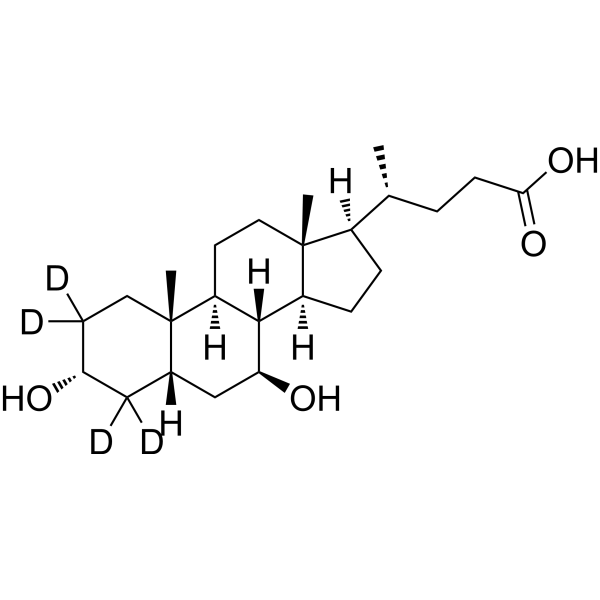
Ursodeoxycholic acid-2,2,4,4-d4 is the deuterium labeled Ursodeoxycholic acid (HY-13771). Ursodeoxycholic acid is a secondary bile acid issued from the transformation of (cheno)deoxycholic acid by intestinal bacteria, acting as a key regulator of the intestinal barrier integrity and essential for lipid metabolism. Ursodeoxycholic acid acts as signaling molecule, exerting its effects by interacting with bile acid activated receptors, including G-protein coupled bile acid receptor 5 (TGR5, GPCR19) and the farnesoid X receptor (FXR). Ursodeoxycholic acid can be used for the research of a variety of hepatic and gastrointestinal diseases. Ursodeoxycholic acid also reduces ACE2 expression and is beneficial for reducing SARS-CoV-2 infection .
|
-
-
- HY-126085
-
|
(±)-L-AlliIN
|
SARS-CoV
|
Infection
|
|
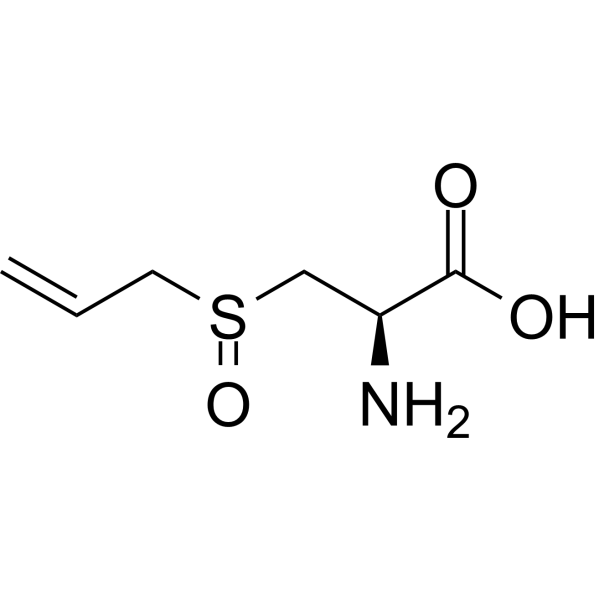
(±)-Alliin is the main active component of garlic. (±)-Alliin is a putative inhibitor of the main protease of SARS-CoV-2 (Mpro) .
|
-
-
- HY-145994
-
|
ATV006
|
SARS-CoV
|
Infection
|
|
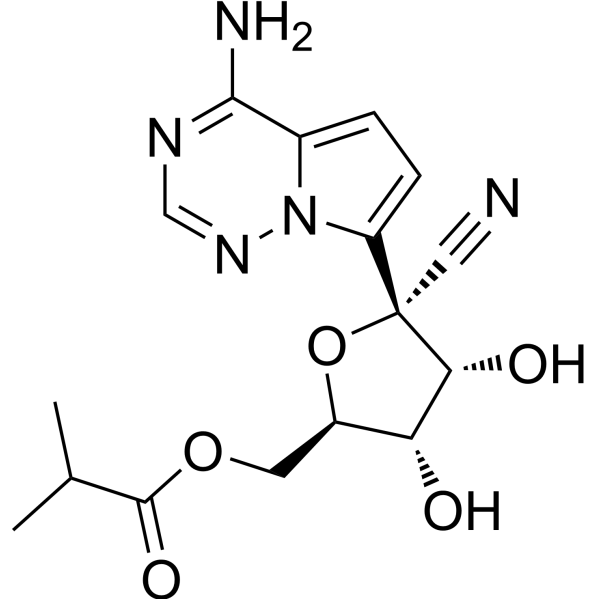
Obeldesivir (ATV006) is a potent, orally active antiviral agent and ester proagents of GS-441524. Obeldesivir inhibits the replication of SARS-CoV-2 and its variants. Obeldesivir can be used for SARS-CoV-2 research .
|
-
-
- HY-146248B
-
|
|
Poly(ADP-ribose) Glycohydrolase (PARG)
SARS-CoV
Protease Activated Receptor (PAR)
|
Metabolic Disease
|
|
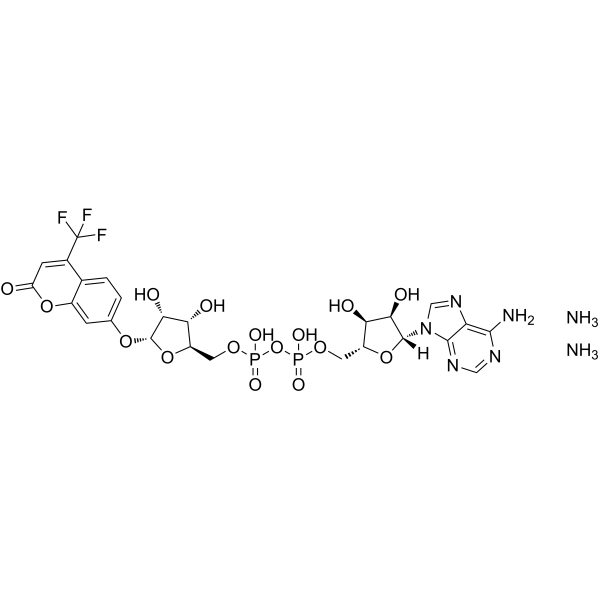
TFMU-ADPr diammonium is a selective reporter substrate of SARS-CoV-2 Macro1 (IC50=0.59 μM), with an excitation wavelength (λEx) of 385 nm, and an emission wavelength (λEm) of 502 nm (or 495 nm). TFMU-ADPr diammonium can also undergo enzymatic hydrolysis with Poly(ADP-ribose) Glycohydrolase (PARG) sourced from human, Tetrahymena thermophila and ADP-ribosylhydrolase 3 from human to release fluorophores, thereby directly reporting total poly (ADP-ribose) hydrolase activity. TFMU-ADPr diammonium binds to the ADPr-binding site of SARS-CoV-2 Macro1, and its TFMU moiety inserts into the narrow hydrophobic groove of this protein. TFMU-ADPr diammonium can thus be used to evaluate small-molecule inhibitors targeting PAR hydrolases under in vitro conditions, to investigate the regulatory mechanisms of ADP-ribosyl catabolic enzymes, or to detect PAR hydrolase activity in whole-cell lysate assays. TFMU-ADPr diammonium is also applicable to COVID-19-related research .
|
-
-
- HY-138113
-
-
-
- HY-150784
-
|
|
SARS-CoV
|
Infection
|
|
XR8-89 is a potent papain-like protease (PL pro) inhibitor with an IC50 value of 0.1 μM. XR8-89 induces conformational changes in SARS-COV-2 papain-like protease, inhibiting SARS-CoV-2 replication. XR8-89 can be used for SARS-CoV-2 research .
|
-
-
- HY-131603
-
|
3TCTP
|
Reverse Transcriptase
HCV
HBV
SARS-CoV
Drug Derivative
|
Infection
|
|
Lamivudine triphosphate (3TCTP) is a phosphorylated Lamivudine (HY-B0250) (a nucleoside analogue). Lamivudine triphosphate inhibits the reverse transcriptase of HIV or HBV viruses to block viral replication by chain termination. Lamivudine triphosphate is also an inhibitor of the RdRp activity of the NS5B subunit of the HCV. Lamivudine triphosphate can be incorporated into the nascent RNA by the SARS-CoV-2 RdRp, thus halting mutations in the nascent SARS-CoV-2 RNA .
|
-
-
- HY-146248
-
|
|
SARS-CoV
Poly(ADP-ribose) Glycohydrolase (PARG)
Protease Activated Receptor (PAR)
|
Infection
|
|
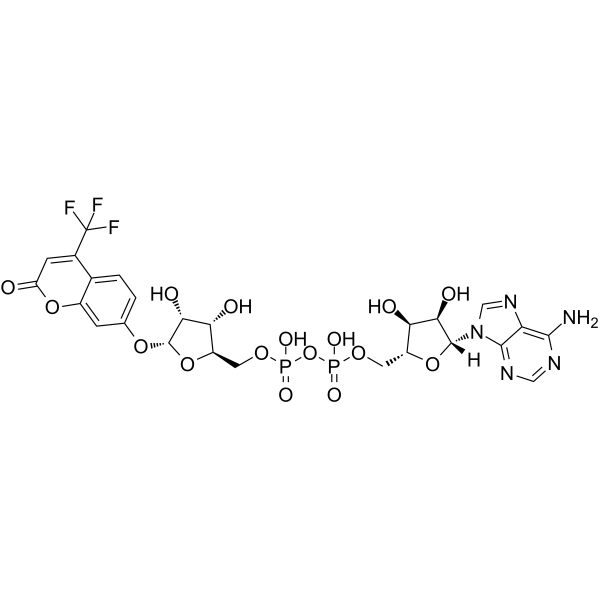
TFMU-ADPr is a selective reporter substrate of SARS-CoV-2 Macro1 (IC50=0.59 μM), with an excitation wavelength (λEx) of 385 nm, and an emission wavelength (λEm) of 502 nm (or 495 nm). TFMU-ADPr can also undergo enzymatic hydrolysis with Poly(ADP-ribose) Glycohydrolase (PARG) sourced from human, Tetrahymena thermophila and ADP-ribosylhydrolase 3 from human to release fluorophores, thereby directly reporting total poly (ADP-ribose) hydrolase activity. TFMU-ADPr binds to the ADPr-binding site of SARS-CoV-2 Macro1, and its TFMU moiety inserts into the narrow hydrophobic groove of this protein. TFMU-ADPr can thus be used to evaluate small-molecule inhibitors targeting PAR hydrolases under in vitro conditions, to investigate the regulatory mechanisms of ADP-ribosyl catabolic enzymes, or to detect PAR hydrolase activity in whole-cell lysate assays. TFMU-ADPr is also applicable to COVID-19-related research .
|
-
-
- HY-W196368
-
|
|
COX
SARS-CoV
|
Infection
Inflammation/Immunology
Cancer
|
|
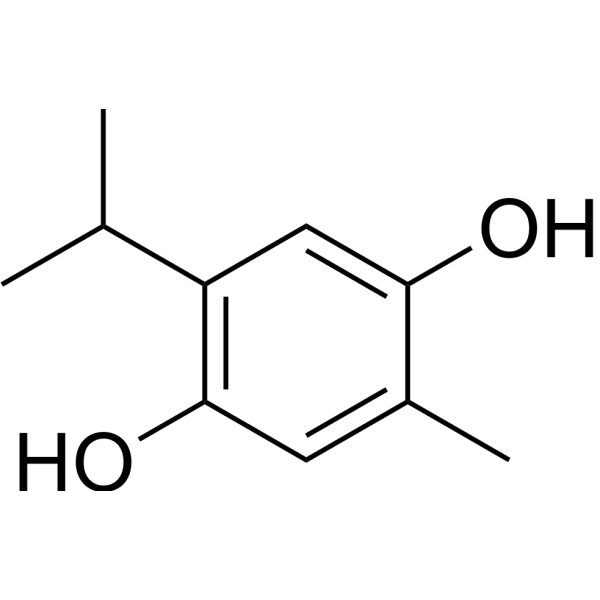
Thymohydroquinone is a COX-2 inhibitor and anti-SARS-CoV-2 agent that induces cytotoxicity, antiproliferative effects and inhibits tumor growth. Thymohydroquinone cannot scavenge superoxide radicals via σ (hydrogen atom transfer) and π-π attacks with superoxide anions. Thymohydroquinone can be used in research related to squamous cell carcinoma, fibrosarcoma and coronavirus disease 2019 (SARS-CoV-2 infection) .
|
-
-
- HY-N3389
-
|
|
SARS-CoV
Sirtuin
CDK
Apoptosis
|
Infection
Metabolic Disease
Cancer
|
|
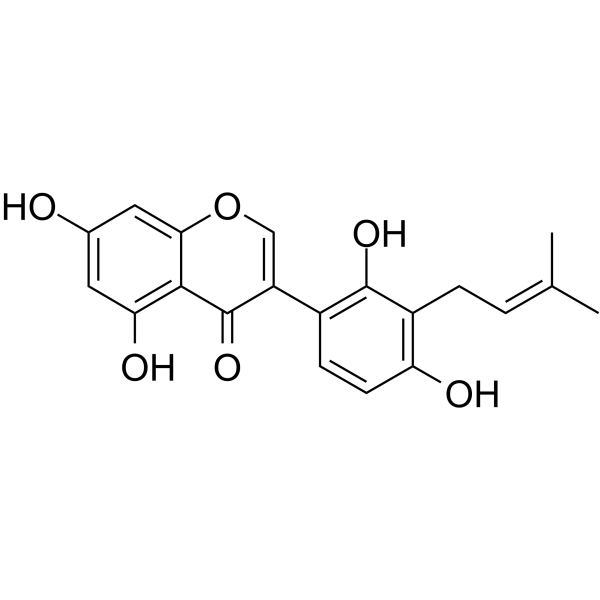
Licoisoflavone A is an orally active isoflavone. Licoisoflavone A inhibits proliferation, induces apoptosis, and causes G1/S phase arrest in colorectal cancer (CRC) cells. Licoisoflavone A inhibits the CDK2-Cyclin E1 axis. Licoisoflavone A inhibits lipid peroxidation with an IC50 of 7.2 μM. Licoisoflavone A shows a dose-dependent inhibition effect on SARS-CoV-2 infection. Licoisoflavone A exhibits significant anti-tumor efficacy in mice bearing CT26 cell subcutaneous xenografts. Licoisoflavone A can be used for the study of colorectal cancer and SARS-CoV-2 infection .
|
-
-
- HY-135860
-
|
|
Virus Protease
SARS-CoV
|
Infection
|
|
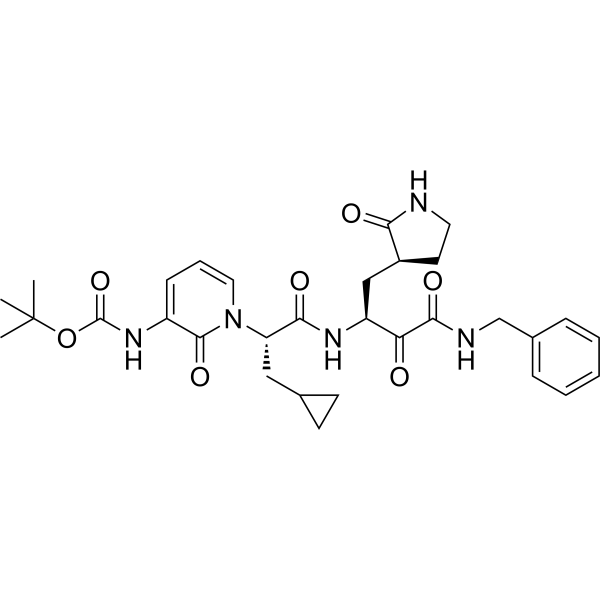
SARS-CoV-2-IN-1 is a potent Mpro inhibitor. SARS-CoV-2-IN-1 inhibits the purified recombinant SARS-CoV-2 Mpro, SARS-CoV Mpro and MERS-CoV Mpro with IC50s of 0.67, 0.90 and 0.58 μM, respectively .
|
-
-
- HY-155488
-
|
ATV014
|
SARS-CoV
|
Infection
|
|
SHEN26 (ATY014) is a potent and orally active RdRp inhibitor, with an IC50 for SARS-CoV-2 is 1.36 μM. SHEN26 is a 5’-cyclohexanecarboxylate derivative of GS-441524 (HY-103586). SHEN26 inhibits viral nucleic acid synthesis to achieve antiviral effects. SHEN26 can be used for the research of
coronavirus disease 2019 (COVID-19) .
|
-
-
- HY-P5522A
-
|
L-Ala-γ-D-Glu-meso-diamINopimelic acid dihydrochloride
|
NOD-like Receptor (NLR)
NF-κB
MAP3K
MEK
ERK
p38 MAPK
Interleukin Related
SARS-CoV
|
Infection
Inflammation/Immunology
|
|
TriDAP dihydrochloride (L-Ala-γ-D-Glu-meso-diaminopimelic acid dihydrochloride) is a NOD1 agonist with a Kd value of 34.5 μM. TriDAP dihydrochloride enhances the binding of NOD1-RICK, promotes RICK phosphorylation, and activates the NF-κB, TAK1, MEK/ERK, p38 and interferon response pathways. TriDAP dihydrochloride downregulates Runx2 via increasing ubiquitination and reduces trabecular bone parameters. TriDAP dihydrochloride decreases IκBα levels and increases p65 levels. TriDAP dihydrochloride induces the secretion of proinflammatory mediators IL-8 and prostaglandins, triggers tissue inflammation and innate immune activation, and inhibits SARS-CoV-2 replication in lung epithelial cells. TriDAP dihydrochloride increases the RANKL/OPG ratio in mice, reduces bone mass and enhances osteoclast activity, and inhibits new bone formation by decreasing the mineralization deposition rate in mice. TriDAP dihydrochloride can be used in research related to pulpitis, chronic ulcerative colitis, Crohn's disease and SARS-CoV-2 infection .
|
-
-
- HY-153533A
-
|
|
SARS-CoV
|
Infection
|
|
GRL-1720 TFA is a potent inhibitor of SARS-CoV-2 Mpro with an EC50 value of 15 μM. GRL-1720 TFA shows anti-SARS-CoV2 activity .
|
-
-
- HY-155813
-
|
|
SARS-CoV
|
Infection
|
|
MPI60 is a potent SARS-CoV-2 M Pro inhibitor with high antiviral potency, low cellular cytotoxicity, and high in vitro metabolic stability. MPI60 can be used for SARS-CoV-2 research .
|
-
-
- HY-P99435
-
|
BRII-196
|
SARS-CoV
|
Infection
|
Amubarvimab (BRII-196) is a human IgG1 mAb that bind to non-competing epitopes on the receptor binding domain (RBD) of spike protein, with a KD of 5.88 nM. Amubarvimab can effectively neutralize SARS-CoV-2 variants .
|
-
-
- HY-124304
-
|
LOE-908
|
TRP Channel
SARS-CoV
|
Neurological Disease
|
|
Pinokalant is a broad-spectrum and non-selectivecation channel inhibitor. Pinokalant significantly reduces cortical infarct volume. Pinokalant o improves the metabolic and electrophysiologic status of the ischemic penumbra. Pinokalant reduces lesion size on magnetic resonance images in the acute phase following middle cerebral artery occlusion in rats. Pinokalant has the potential for the research of stroke. Pinokalant also shows anti-SARS-CoV-2 activity .
|
-
-
- HY-162484
-
|
|
SARS-CoV
Virus Protease
|
Infection
|
|
GZNL-P36 is an orally active inhibitor for SARS-CoV-2 papain-like protease (PL pro), with an IC50 of 6.45 nM. GZNL-P36 inhibits SARS-CoV and its variants with EC50 range from 58.2 nM to 2.66 μM. GZNL-P36 exhibits a peak plasma concentration Cmax of 549 ng/mL, a half-life T1/2 of 1.45 h and a bioavailability of 74.7% in CD-1 mouse. GZNL-P36 exhibits antiviral activity in SARS-CoV-2 XXB.1 infection in mouse .
|
-
-
- HY-139165
-
|
|
SARS-CoV
|
Infection
|
|
AT-9010, a triphosphate active metabolite of AT-527, is a potent inhibitor of NiRAN (a function essential for viral replication). AT-9010 can inhibit SARS-CoV-2 replication .
|
-
-
- HY-139165A
-
|
|
SARS-CoV
|
Infection
|
|
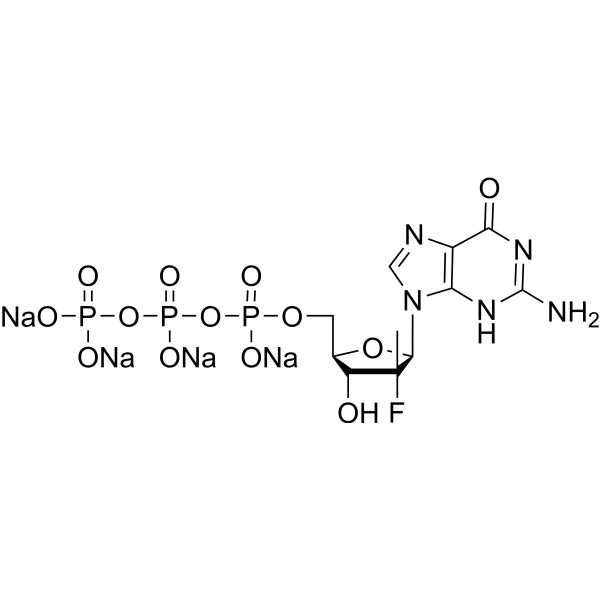
AT-9010 tetrasodium, a triphosphate active metabolite of AT-527, is a potent inhibitor of NiRAN (a function essential for viral replication). AT-9010 tetrasodium can inhibit SARS-CoV-2 replication .
|
-
-
- HY-P9801
-
|
SARS-CoV-2 (2019-nCoV) Spike RBD Antibody
|
SARS-CoV
|
Infection
|
|
Anti-Spike-RBD mAb is a CHO cell derived human monoclonal IgG1 antibody. Blocking the interaction of Spike protein and ACE2. Anti-Spike-RBD mAb is a potential therapeutic approach for SARS-CoV-2 treatment .
|
-
-
- HY-179088
-
|
|
SARS-CoV
|
Infection
|
|
AVI-6451 is a novel orally effective SARS-CoV-2 Mac1 (IC50 = 28 nM) inhibitor. AVI-6451 can reduce viral load. AVI-6451 can be used for research on viral infections .
|
-
-
- HY-146248A
-
|
|
Poly(ADP-ribose) Glycohydrolase (PARG)
SARS-CoV
Protease Activated Receptor (PAR)
|
Others
|
|
TFMU-ADPr triethylamine is a selective reporter substrate of SARS-CoV-2 Macro1 (IC50=0.59 μM), with an excitation wavelength (λEx) of 385 nm, and an emission wavelength (λEm) of 502 nm (or 495 nm). TFMU-ADPr triethylamine can also undergo enzymatic hydrolysis with Poly(ADP-ribose) Glycohydrolase (PARG) sourced from human, Tetrahymena thermophila and ADP-ribosylhydrolase 3 from human to release fluorophores, thereby directly reporting total poly (ADP-ribose) hydrolase activity. TFMU-ADPr triethylamine binds to the ADPr-binding site of SARS-CoV-2 Macro1, and its TFMU moiety inserts into the narrow hydrophobic groove of this protein. TFMU-ADPr triethylamine can thus be used to evaluate small-molecule inhibitors targeting PAR hydrolases under in vitro conditions, to investigate the regulatory mechanisms of ADP-ribosyl catabolic enzymes, or to detect PAR hydrolase activity in whole-cell lysate assays. TFMU-ADPr triethylamine is also applicable to COVID-19-related research .
|
-
-
- HY-P11012
-
|
|
SARS-CoV
|
Infection
|
|
EK1 is a peptide-based fusion inhibitor of coronaviruses (CoVs) with broad spectrum inhibition to a number of CoV species. EK1 shows substantially improved pan-CoV fusion inhibitory activity. EK1 potently inhibits SARS-CoV-2. EK1 can form a stable six-helix bundle (6HB) structure with both short α-hCoV and long β-hCoV N-terminal heptad repeats .
|
-
-
- HY-P5522
-
|
L-Ala-γ-D-Glu-meso-diamINopimelic acid
|
NOD-like Receptor (NLR)
NF-κB
MAP3K
MEK
ERK
p38 MAPK
Interleukin Related
SARS-CoV
|
Infection
Inflammation/Immunology
|
|
TriDAP (L-Ala-γ-D-Glu-meso-diaminopimelic acid) is a NOD1 agonist with a Kd value of 34.5 μM. TriDAP enhances the binding of NOD1-RICK, promotes RICK phosphorylation, and activates the NF-κB, TAK1, MEK/ERK, p38 and interferon response pathways. TriDAP downregulates Runx2 via increasing ubiquitination and reduces trabecular bone parameters. TriDAP decreases IκBα levels and increases p65 levels. TriDAP induces the secretion of proinflammatory mediators IL-8 and prostaglandins, triggers tissue inflammation and innate immune activation, and inhibits SARS-CoV-2 replication in lung epithelial cells. TriDAP increases the RANKL/OPG ratio in mice, reduces bone mass and enhances osteoclast activity, and inhibits new bone formation by decreasing the mineralization deposition rate in mice. TriDAP can be used in research related to pulpitis, chronic ulcerative colitis, Crohn's disease and SARS-CoV-2 infection .
|
-
-
- HY-157477
-
|
|
SARS-CoV
Cathepsin
|
Infection
|
|
SARS-CoV-2 3CLpro-IN-22 (Compound 17) is a cathepsin L (CTSL ) inhibitor with an IC50 value of 32.5 nM. SARS-CoV-2 3CLpro-IN-22 can be used for the study of SARS-CoV-2 virus .
|
-
-
- HY-P5168S
-
|
|
Isotope-Labeled Compounds
SARS-CoV
|
Infection
|
|
GPSVFPLAPSSK- 13C6, 15N2 is the 13C- and 15N-labeled GPSVFPLAPSSK. GPSVFPLAPSSK is an IgG1 signature peptide of anti-SARS-CoV-2 antibodies. GPSVFPLAPSSK can be used for the quantification of the specific isolation of anti-SARS-CoV-2 antibodies .
|
-
-
- HY-175461
-
|
|
SARS-CoV
|
Infection
|
|
AVI-4206 is a selective Mac1 inhibitor with an lC50 of 64 nM. AVI-4206 reduces viral replication, restores an interferon response, and leads to a survival benefit in an animal model of SARS-CoV-2 infection. AVI-4206 can be used the study of SARS-CoV-2 infection .
|
-
-
- HY-169171
-
|
|
Cathepsin
|
Infection
|
|
Cathepsin L-IN-5 (D6-3) is a potent Cathepsin L (CatL) inhibitor with an IC50 of 0.27 nM. Cathepsin L-IN-5 effectively blocks the CatL function and substantially hinders the entry of the SARS-CoV-2 pseudovirus to cells by inhibiting the cleavage of the spike protein. Cathepsin L-IN-5 can be utilized in SARS-CoV-2 research .
|
-
-
- HY-163029
-
|
|
Cathepsin
SARS-CoV
|
Infection
|
|
CTSLCTSB-IN-1 (compound 212-148) is a bispecific inhibitor of host viral spike cleaver proteins CTSL/CTSB and TMPRSS2 with IC50s of 2.13/64.07 nM and 1.38 μM, respectively. CTSLCTSB-IN-1 blocks two relevant SARS-CoV-2 viral entry pathways by inhibiting the viral spike cleavage and can be applied to anti-SARS-CoV-2 research .
|
-
-
- HY-173148
-
|
|
SARS-CoV
|
Infection
|
|
TKB272 is an orally active and selective antiviral agent targeting the main protease (Mpro) of SARS-CoV-2. It effectively blocks the infection and replication of various SARS-CoV-2 strains, including Omicron variants such as XBB.1.5 and EG.5.1. The enzymatic inhibitory activity of TKB272 shows an IC50 of 0.7 µM (against SARS-CoV-2WK-521 Mpro), and its antiviral activity at the cellular level reaches an EC50 as low as 2.6 nM (against BQ.1.1 strain in HeLahACE2-TMPRSS2 cells), with a cytotoxicity CC50 of 98 µM, indicating no apparent toxicity. In addition, TKB272 significantly suppresses the replication of SARS-CoV-2XBB.1.5 in B6.Cg-Tg(K18-hACE2)2-Prlmn/J transgenic mouse models. TKB272 holds promise for research in the field of SARS-CoV-2 infection .
|
-
-
- HY-131603B
-
|
3TCTP TEA
|
Reverse Transcriptase
HCV
HBV
SARS-CoV
Drug Derivative
|
Infection
|
|
Lamivudine triphosphate (3TCTP) TEA is a phosphorylated Lamivudine (HY-B0250) (a nucleoside analogue). Lamivudine triphosphate TEA inhibits the reverse transcriptase of HIV or HBV viruses to block viral replication by chain termination. Lamivudine triphosphate TEA is also an inhibitor of the RdRp activity of the NS5B subunit of the HCV. Lamivudine triphosphate TEA can be incorporated into the nascent RNA by the SARS-CoV-2 RdRp, thus halting mutations in the nascent SARS-CoV-2 RNA .
|
-
-
- HY-150062
-
|
|
SARS-CoV
|
Infection
|
|
SARS-CoV-2 nsp3-IN-1 (Compound 15c) is a Mac1 (SARS-CoV-2 nsp3 macrodomain) inhibitor with the IC50 value of 6.1 μM. SARS-CoV-2 nsp3-IN-1 can inhibit Mac1 ADP-ribosylhydrolase activity. SARS-CoV-2 nsp3-IN-1 demonstrates notable selectivity for coronavirus macrodomains, especially towards SARS-CoV-2 Mac1 .
|
-
-
- HY-175344
-
|
|
SARS-CoV
Virus Protease
Ser/Thr Protease
|
Infection
Inflammation/Immunology
|
|
TMP1 is an orally active bispecific inhibitor of M pro (IC50 = 312.5 nM)/TMPRSS2 (IC50 = 1.28 μM, KD = 10.10 μM). TMP1 exhibits broad protection against different SARS-CoV-2 variants in vitro. TMP1 cross-protects against highly pathogenic coronaviruses (SARS-CoV-1, SARS-CoV-2, and MERS-CoV) in vivo and effectively blocks the transmission of SARS-CoV-2. TMP1 can inhibit infection by SARS-CoV-2 escape mutants that are resistant to Nivolumab (HY-P9903). TMP1 can be used in coronavirus research .
|
-
-
- HY-161114
-
|
|
SARS-CoV
|
Infection
|
|
MDOLL-0229 (compound 27) is an antiviral agent that targets SARS-CoV-2 Mac1 and repress coronavirus replication. MDOLL-0229 inhibits SARS-CoV-2 Mac1 with an IC50 of 2.1 µM .
|
-
-
- HY-151113
-
|
|
SARS-CoV
|
Infection
|
|
ZINC000104379474 is a compound that targets SARS-CoV-2 endoribonuclease .
|
-
-
- HY-N10604
-
-
-
- HY-173134
-
|
|
SARS-CoV
|
Infection
|
|
SARS-CoV-2 RdRp-IN-1 (Compound PAP-2) is a potent SARS-CoV-2 RdRp inhibitor, with an EC50 of 1.11 μM. SARS-CoV-2 RdRp-IN-1 can bind directly to SARS-CoV-2 RdRp, fully resistance to the exoribonuclease (ExoN) and exhibit broad spectrum anti-CoV activities .
|
-
-
- HY-169200
-
|
|
SARS-CoV
|
Cancer
|
|
SARS-CoV-2 Mpro-IN-26 (compund 13) is a covalent inhibitor of SARS-CoV-2 Mpro .
|
-
-
- HY-155057
-
|
|
SARS-CoV
|
Infection
|
|
SARS-CoV-2 Mpro-IN-8 (compound 6b) is an antiviral agent with anti-SARS-CoV-2 properties .
|
-
-
- HY-163912
-
|
|
SARS-CoV
|
Infection
|
|
JZD-07 is a potent SARS-CoV 3CLpro inhibitor. JZD-07 can be used in the study of SARS-CoV-2 infection .
|
-
-
- HY-160943A
-
|
|
SARS-CoV
|
Infection
|
|
F594-1001 (compound 6) hydrochloride is a potent and highly selective SARS-CoV-2 Mac1-ADP-ribose inhibitor with IC50s of 8.5 μM, 68 μM and 45 μM for SARS-CoV-2 in AS, FP, and FRET assays, respectively. F594-1001 hydrochloride directly binds to SARS-CoV-2 Mac1 and exhibits a dose-dependent inhibition of Mac1 ADP-ribosylhydrolase activity .
|
-
-
- HY-160943
-
|
|
SARS-CoV
|
Infection
|
|
F594-1001 (compound 6) is a potent and highly selective SARS-CoV-2 Mac1-ADP-ribose inhibitor with IC50s of 8.5 μM, 68 μM and 45 μM for SARS-CoV-2 in AS, FP, and FRET assays, respectively. F594-1001 directly binds to SARS-CoV-2 Mac1 and exhibits a dose-dependent inhibition of Mac1 ADP-ribosylhydrolase activity .
|
-
-
- HY-162598
-
|
|
SARS-CoV
|
Infection
|
|
CET-1 is an antiviral agent that inhibits SARS-CoV-2. CET-1 significantly prevents pseudovirus from entering ACE2 h cells .
|
-
-
- HY-158905
-
|
MTDB-Alk
|
SARS-CoV
|
Infection
|
|
MTDB-Alkyne is an alkyne-containing click chemistry reagent. MTDB-Alkyne can be used to synthesize Proximity-Induced Nucleic Acid Degrader (PINAD) for the degradation of SARS-CoV-2 RNA .
|
-
-
- HY-153533
-
|
|
SARS-CoV
|
Infection
|
|
GRL-1720 is a potent SARS-CoV-2 Mpro inhibitor with an EC50 value of 15 µM. GRL-1720 shows anti-SARS-CoV2 activity .
|
-
-
- HY-126085R
-
|
(±)-L-AlliIN (Standard)
|
Reference Standards
SARS-CoV
|
Infection
|
|
(±)-Alliin (Standard) is the analytical standard of (±)-Alliin. This product is intended for research and analytical applications. (±)-Alliin is the main active component of garlic. (±)-Alliin is a putative inhibitor of the main protease of SARS-CoV-2 (Mpro) .
|
-
- HY-144464
-
|
|
SARS-CoV
|
Infection
|
|
SARS-CoV-2 Mpro-IN-1 (compound 16b-3) is a potent, selective and irreversible inhibitor of SARS-CoV-2 main protease (Mpro), with an IC50 of 116 nM .
|
-
- HY-139165B
-
|
|
SARS-CoV
|
Infection
|
|
AT-9010 triethylamine,a triphosphate active metabolite of AT-527,is a potent inhibitor of NiRAN (a function essential for viral replication). AT-9010 triethylamine can inhibit SARS-CoV-2 replication .
|
-
- HY-170545
-
|
|
SARS-CoV
|
Infection
|
|
SARS-CoV-2 Mpro-IN-35 (compound 14) is a SARS-CoV-2 Mpro inhibitor. SARS-CoV-2 Mpro-IN-35 can be used for the research of SARS-CoV-2 virus .
|
-
- HY-146998
-
|
|
SARS-CoV
|
Infection
|
|
SARS-CoV-2 3CLpro-IN-2 (Compound 1) is a potent inhibitor of 3CL protease. SARS-CoV-2 3CLpro-IN-2 has the potential for the research of SARS-CoV-2 diseases .
|
-
- HY-112894
-
|
|
JNK
SARS-CoV
|
Inflammation/Immunology
|
|
ZG-10 (JNK-IN-2) is a JNK inhibitor, with IC50 values of 809 nM, 1140 nM and 709 nM for JNK1, JNK2, and JNK3, respectively. ZG-10 (JNK-IN-2) is a potential anti-SARS-CoV-2 agent .
|
-
- HY-158687
-
|
|
SARS-CoV
|
Infection
|
|
SARS-CoV-2 Mpro-IN-18 (compound 84) is a potent SARS-CoV-2 Mpro inhibitor with the IC50 of 3.23 nM. SARS-CoV-2 Mpro-IN-18 can be used for study of anti-SARS-CoV-2 agent .
|
-
- HY-155654
-
|
|
SARS-CoV
Virus Protease
|
Infection
|
|
SARS-CoV-2 Mpro-IN-10 (27h) is a potent M pro inhibitor with IC50 value and EC50 values of 10.9 nM and 43.6 nM, respectively. SARS-CoV-2 Mpro-IN-10 can be used for the research of SARS-CoV-2 virus .
|
-
- HY-162550
-
|
|
SARS-CoV
|
Infection
|
|
Jobosic acid, a saturated fatty acid, is a selective SARS-CoV-2 inhibitor. Jobosic acid inhibits Mpro and spike-RBD/ACE-2 interaction with IC50 values of 7.5 μg/mL and 3 μg/mL, respectively. Jobosic acid shows viral entry inhibition for the omicron SARS-CoV-2 variant .
|
-
- HY-P5168AS
-
|
|
Isotope-Labeled Compounds
SARS-CoV
|
Infection
|
|
GPSVFPLAPSSK- 13C6, 15N2 TFA is the 13C- and 15N-labeled GPSVFPLAPSSK. GPSVFPLAPSSK is an IgG1 signature peptide of anti-SARS-CoV-2 antibodies. GPSVFPLAPSSK can be used for the quantification of the specific isolation of anti-SARS-CoV-2 antibodies .
|
-
- HY-149304
-
|
|
SARS-CoV
|
Infection
|
|
SARS-CoV-2-IN-40 (Compound 19) is a SARS-CoV-2 inhibitor. SARS-CoV-2-IN-40 inhibits SARS-CoV-2 BA.1 and BA.5 variant infection of Calu3 lung cells, with IC50s of 100 nM and 160 nM respectively .
|
-
- HY-150786
-
|
|
SARS-CoV
|
Infection
|
|
PLP_Snyder530 is a potent papain-like protease (PL pro) inhibitor with an IC50 value of 6.4 μM. PLP_Snyder530 induces conformational changes in SARS-COV-2 papain-like protease, inhibiting SARS-CoV-2 replication. PLP_Snyder530 can be used for SARS-CoV-2 research .
|
-
- HY-32717
-
|
6-AmINo-4-[(3-chloro-4-fluorophenyl)amINo]-7-ethoxyquINolINe-3-carbonitrile
|
Ligands for Target Protein for PROTAC
|
Infection
|
|
DH03 (6-Amino-4-[(3-chloro-4-fluorophenyl)amino]-7-ethoxyquinoline-3-carbonitrile) is a SARS-CoV-2 M Pro ligand. DH03 can be used as a Ligand for Target Protein for PROTAC synthesis, such as PROTAC SARS-CoV-2 Degrader-1 (HY-174233) .
|
-
- HY-150783
-
|
|
SARS-CoV
|
Infection
|
|
SARS-CoV-2-IN-24 (compound 7) is a potent papain-like protease (PL pro) inhibitor. SARS-CoV-2-IN-24 induces conformational changes in SARS-COV-2 papain-like protease, inhibiting SARS-CoV-2 replication. SARS-CoV-2-IN-24 can be used for SARS-CoV-2 research .
|
-
- HY-134222AS
-
|
|
Isotope-Labeled Compounds
Endogenous Metabolite
|
Infection
|
|
N-Acetylserine-d3 is the deuterium labeled N-Acetylserine (HY-134222A). N-Acetylserine (N-Acetyl-L-serine) is a physiological inducer of cysteine biosynthesis and activator of CysB. N-Acetylserine can bind to the CysB apoprotein. N-Acetylserine stimulates cysJIH transcription in vitro. N-Acetylserine can be used in the research of SARS-CoV-2 infection .
|
-
- HY-178435
-
|
|
SARS-CoV
|
Infection
|
|
SARS-CoV-2 Mpro-IN-48 is a potent SARS-CoV-2 main protease inhibitor with an IC50 of 21.1 nM. SARS-CoV-2 Mpro-IN-48 exhibits potent antiviral activity against the SARS-CoV-2 JN.1 variant. SARS-CoV-2 Mpro-IN-48 can be used for the research of infection, such as COVID-19 .
|
-
- HY-155416
-
|
|
SARS-CoV
|
Infection
|
|
M56-S2 iodide is a SARS-CoV-2 M pro inhibitor (IC50=4.0 μM). M56-S2 iodide showed good oral bioavailability and low toxicity in ADMET prediction. M56-S2 iodide has good drug potential and can be used in antiviral (such as SARS-CoV-2) research .
|
-
- HY-162507
-
|
|
DNA/RNA Synthesis
|
Infection
|
|
2'-RIBOTAC-U recruiter-linker (Compound 9) consists of RNase L recruiter and linker. 2'-RIBOTAC-U recruiter-linker is reacted separately with 2’-azido-uridine or 5’-azidomethyl-uridine via copper-catalyzed click chemistry, resulting in the formation of 2’-RIBOTAC-U and 5’-RIBOTAC-U, respectively. 2’-RIBOTAC-U has anti-SARS-CoV-2 activity .
|
-
- HY-174235
-
|
|
E3 Ligase Ligand-Linker Conjugates
|
Infection
|
|
Thalidomide-OCH2-amide-PEG2-C2-Boc is an E3 ligase ligand-linker conjugate containing a cereblon (CRBN) ligand for E3 ubiquitin ligase and a linker. Thalidomide-OCH2-amide-PEG2-C2-Boc can be used to synthesize PROTAC SARS-CoV-2 Degrader-1 (HY-174233) .
|
-
- HY-173575
-
|
|
SARS-CoV
Virus Protease
|
Infection
|
|
SARS-CoV-2 3CLpro-IN-31 (Compound 13c) is a potent SARS-CoV-2 3CL protease (3CLpro) inhibitor of with an IC50 value of 37.33 nM. SARS-CoV-2 3CLpro-IN-31 blocks viral polyprotein cleavage and inhibits SARS-CoV-2 replication. SARS-CoV-2 3CLpro-IN-31 is promising for research of SARS-CoV-2 infection .
|
-
- HY-161261
-
|
|
AAK1
SARS-CoV
|
Infection
|
|
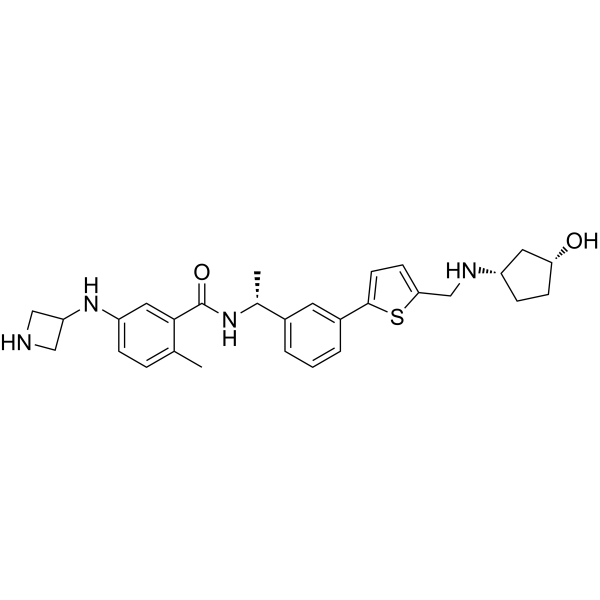
SARS-CoV-2-IN-81 (compound 12e) is a potent AAK1 inhibitor with an IC50 value of 9.38 nM. SARS-CoV-2-IN-81 shows anti-viral property against SARS-CoV-2. SARS-CoV-2-IN-81 attenuates AAK1-induced phosphorylation of AP2M1 threonine 156 and disrupts the direct interaction between AP2M1 and ACE2, ultimately inhibiting SARS-CoV-2 infection .
|
-
- HY-P990816
-
|
|
SARS-CoV
|
Infection
|
|
Anti-SARS-CoV-2 S protein Antibody (NTD, SARS2-29) is a mouse-derived IgG1 κ type antibody inhibitor, targeting to SARS-CoV-2 S protein. Anti-SARS-CoV-2 S protein Antibody (NTD, SARS2-29) reacts with the N-terminal domain (NTD) in the spike (S) protein of SARS-CoV-2 (Severe Acute Respiratory Syndrome Coronavirus 2). Anti-SARS-CoV-2 S protein Antibody (NTD, SARS2-29) can be used for the detections of flow cytometry and ELISA in SARS-CoV-2 infection .
|
-
- HY-172965
-
|
|
SARS-CoV
Virus Protease
|
Infection
Inflammation/Immunology
|
|
SARS-CoV-2 Mpro-IN-43 (Compound 1) is a coronavirus main protease (Mpro) inhibitor (IC50: 72 μM). SARS-CoV-2 Mpro-IN-43 interacts with key residues in the active site of Mpro via non-covalent binding, exerting its anti-coronavirus effect. SARS-CoV-2 Mpro-IN-43 exhibits moderate to low cytotoxicity, with CC50 values of 13.24, 41.02, and 42.26 µM in HaCaT, HEK293T, and HepG2 cells, respectively. SARS-CoV-2 Mpro-IN-43 can be used in anti-SARS-CoV-2 research .
|
-
- HY-P990815
-
|
|
SARS-CoV
|
Infection
|
|
Anti-SARS-CoV-2 S protein Antibody (RBD epitope A, SARS2-01) is a mouse-derived IgG1 κ type antibody inhibitor, targeting to SARS-CoV-2 S protein. Anti-SARS-CoV-2 S protein Antibody (RBD epitope A, SARS2-01) reacts with the receptor binding domain (RBD) epitope A in the spike (S) protein of SARS-CoV-2 (Severe Acute Respiratory Syndrome Coronavirus 2). Anti-SARS-CoV-2 S protein Antibody (RBD epitope A, SARS2-01) can block the binding of the SARS-CoV-2 S protein to angiotensin-converting enzyme 2 (ACE2). Anti-SARS-CoV-2 S protein Antibody (RBD epitope A, SARS2-01) can be used for the research of SARS-CoV-2 infection .
|
-
- HY-P990814
-
|
|
SARS-CoV
|
Infection
|
|
Anti-SARS-CoV-2 S protein Antibody (RBD epitope B, SARS2-34) is a mouse-derived IgG1 κ type antibody inhibitor, targeting to SARS-CoV-2 S protein. Anti-SARS-CoV-2 S protein Antibody (RBD epitope B, SARS2-34) reacts with the receptor binding domain (RBD) epitope B in the spike (S) protein of SARS-CoV-2 (Severe Acute Respiratory Syndrome Coronavirus 2). Anti-SARS-CoV-2 S protein Antibody (RBD epitope B, SARS2-34) can block the binding of the SARS-CoV-2 S protein to angiotensin-converting enzyme 2 (ACE2). Anti-SARS-CoV-2 S protein Antibody (RBD epitope B, SARS2-34) can be used for the research of SARS-CoV-2 infection .
|
-
- HY-170399
-
|
|
SARS-CoV
Virus Protease
|
Infection
Cancer
|
|
SARS-CoV-2 PLpro-IN-1 (Compound 85) is a non-covalent and competitive inhibitor of SARS-CoV-2 PLpro with an IC50 of 15.06 μM and a Ki of 22.93 μM. SARS-CoV-2 PLpro-IN-1 inhibits the proliferation of Vero cell with an IC50 of 7.47 μM .
|
-
- HY-105026
-
|
|
SARS-CoV
|
Inflammation/Immunology
|
|
Cistinexine is a new expectorant agent. Cistinexine interacts with the complex form of RdRp. Cistinexine can be used in the study of chronic bronchitis. RdRp is involved in the replication and transcription of the SARS-CoV-2 genome .
|
-
- HY-P992281
-
|
|
SARS-CoV
|
Infection
|
|
Anti-Nucleocapsid Antibody (N-18) is an antibody targeting Nucleocapsid, a structural protein of coronaviruses. Anti-Nucleocapsid Antibody (N-18) is applicable to studies on SARS-CoV-2 infection .
|
-
- HY-P992282
-
|
|
SARS-CoV
|
Infection
|
|
Anti-Nucleocapsid Antibody (N-P10) is a highly specific SARS-CoV-2 Nucleocapsid (N) protein-targeted recombinant monoclonal antibody. Anti-Nucleocapsid Antibody (N-P10) can be used for research on SARS-CoV-2 infection .
|
-
- HY-P992283
-
|
|
SARS-CoV
|
Infection
|
|
Anti-Nucleocapsid Antibody (N-P11) is a highly specific SARS-CoV-2 Nucleocapsid (N) protein-targeted recombinant monoclonal antibody. Anti-Nucleocapsid Antibody (N-P11) can be used for research on SARS-CoV-2 infection .
|
-
- HY-179269
-
|
|
SARS-CoV
|
Infection
|
|
SARS-CoV-2 nsp14-IN-9 (Compound 4P) is a selective nsp14 inhibitor with an IC50 of 0.20 μM. SARS-CoV-2 nsp14-IN-9 inhibits both mouse hepatitis virus and SARS-CoV-2 replication .
|
-
- HY-181033
-
|
|
Virus Protease
SARS-CoV
|
Infection
|
|
(M)-AVI-4773 is an orally active, blood-brain barrier permeable coronaviruses M Pro inhibitor with an IC50 of 2.5 nM aginst SARS-CoV-2 M Pro. (M)-AVI-4773 produces a rapid onset antiviral effect in mouse models of MERS-CoV and SARS-CoV-2 infection .
|
-
- HY-182428
-
|
|
SARS-CoV
|
Infection
|
|
UAWJ248 is a SARS-CoV-2 main protease (M pro) inhibitor with an IC50 of 0.012 μM. UAWJ248 inhibits activity via initial reversible binding followed by irreversible inactivation. UAWJ248 inhibits SARS-CoV-2 replication and can be used for the research of SARS-CoV-2 infection .
|
-
- HY-134222AR
-
|
N-Acetyl-L-serINe (Standard)
|
Reference Standards
Endogenous Metabolite
|
Infection
|
|
N-Acetylserine (Standard) is the analytical standard of N-Acetylserine (HY-134222A). This product is intended for research and analytical applications. N-Acetylserine (N-Acetyl-L-serine) is a physiological inducer of cysteine biosynthesis and activator of CysB. N-Acetylserine can bind to the CysB apoprotein. N-Acetylserine stimulates cysJIH transcription in vitro. N-Acetylserine can be used in the research of SARS-CoV-2 infection .
|
-
- HY-180126
-
|
|
SARS-CoV
|
Infection
|
|
SARS-CoV-2 nsp14-IN-11 (Compound 13) is a NSP14 exonuclease inhibitor (pIC50 = 4.4). SARS-CoV-2 nsp14-IN-11 shows robust and complete NSP14 exonuclease inhibition. SARS-CoV-2 nsp14-IN-11 can be used in the research of SARS-CoV-2 infection .
|
-
- HY-P11464
-
|
|
SARS-CoV
Angiotensin-converting Enzyme (ACE)
|
Infection
|
|
SARS-CoV-2 Spike receptor binding domain, RBD (371-394) is a peptide from SARS-CoV-2 spike receptor-binding domain. SARS-CoV-2 spike protein receptor-binding domain binds to ACE2. SARS-CoV-2 Spike receptor binding domain, RBD (371-394) can be used in the research of SARS-CoV-2 infection .
|
-
- HY-179283
-
|
|
PROTACs
SARS-CoV
|
Infection
|
|
PROTAC SARS-CoV-2 RdRp Degrader-1 (PROTAC 10) is a SARS-CoV-2 RdRp PROTAC degrader, with a DC50 of 1.97 μM (in infected cells). PROTAC SARS-CoV-2 RdRp Degrader-1 promotes the ubiquitination and degradation of SARS-CoV-2 RdRp. PROTAC SARS-CoV-2 RdRp Degrader-1 can be used in the research of SARS-CoV-2 infection .
|
-
- HY-182894
-
|
|
Virus Protease
SARS-CoV
|
Infection
|
|
MR1-114 is an orally active SARS-CoV-2 papain-like protease (PLpro) inhibitor with an IC50 of 0.037 μM. As a broad-spectrum inhibitor, MR1-114 maintains submicromolar activity against SARS-CoV-2 Delta, Omicron B.1.1.529 and Omicron BA.5 variants, with EC50 values of 0.18 μM, 0.39 μM and 0.20 μM, respectively. MR1-114 can be used for the research of coronavirus disease 2019 (SARS-CoV-2 infection) .
|
-
- HY-181778
-
|
|
SARS-CoV
DNA/RNA Synthesis
|
Infection
|
|
RdRP-IN-10 is a SARS-CoV-2 RNA-dependent RNA polymerase (RdRp) inhibitor with an IC50 value of 5.78 μM. RdRP-IN-10 forms covalent binds with SARS-CoV-2 nsp8 Cys114, disrupts nsp8-nsp12 stabilizing interactions. RdRP-IN-10 inhibits SARS-CoV-2 RdRp-mediated RNA polymerization without interfering with RNA-RdRp complex binding. RdRP-IN-10 exerts antiviral effects in cellular models. RdRP-IN-10 can be used for the research of SARS-CoV-2 infection .
|
-
- HY-181661
-
|
|
SARS-CoV
Virus Protease
|
Infection
|
|
YL1004 is a potent, selective and orally active noncovalent inhibitor of SARS-CoV-2 papain-like protease (PL pro). YL1004 shows an IC50 of 17.5 nM and a Ki of 2.3 nM against PL pro, with an in vitro anti-SARS-CoV-2 EC50 of 0.08 μM-1.37 μM. YL1004 suppresses the proteolytic activity of PL pro and blocks its deubiquitinating and deISGylating effects to restore host innate antiviral immune signaling. YL1004 inhibits the replication of wild-type, Delta, Omicron variants and nirmatrelvir-resistant strains of SARS-CoV-2. YL1004 can be used for the research of COVID-19 (SARS-CoV-2 infection) .
|
-
- HY-P10466A
-
|
|
Sec61
SARS-CoV
Interleukin Related
TNF Receptor
IFNAR
|
Infection
Inflammation/Immunology
|
|
KZR-8445 TFA, a cyclic depsipeptide, is a client-selective Sec61 inhibitor. KZR-8445 TFA binds to the fully opened Sec61 lateral gate, blocks lumenal plug domain access, stabilizes lateral gate helices, traps select signal peptides, and disrupts secretory and membrane protein biogenesis. KZR-8445 TFA inhibits pro-inflammatory cytokine secretion in primary immune cells. KZR-8445 TFA inhibits SARS-CoV-2 replication, virus-induced cytotoxicity, and spike protein biogenesis. KZR-8445 TFA blocks disease progression in a mouse model of rheumatoid arthritis. KZR-8445 TFA can be used for the researches of rheumatoid arthritis and SARS-CoV-2 infection .
|
-
- HY-P10466
-
|
|
Sec61
SARS-CoV
Interleukin Related
TNF Receptor
IFNAR
|
Infection
Inflammation/Immunology
|
|
KZR-8445, a cyclic depsipeptide, is a client-selective Sec61 inhibitor. KZR-8445 binds to the fully opened Sec61 lateral gate, blocks lumenal plug domain access, stabilizes lateral gate helices, traps select signal peptides, and disrupts secretory and membrane protein biogenesis. KZR-8445 inhibits pro-inflammatory cytokine secretion in primary immune cells. KZR-8445 inhibits SARS-CoV-2 replication, virus-induced cytotoxicity, and spike protein biogenesis. KZR-8445 blocks disease progression in a mouse model of rheumatoid arthritis. KZR-8445 can be used for the researches of rheumatoid arthritis and SARS-CoV-2 infection .
|
-
- HY-182024
-
|
|
SARS-CoV
Virus Protease
|
Infection
|
|
SARS-CoV-2 3CLpro-IN-36 is a SARS-CoV-2 3CLpro inhibitor and antiviral agent with a human sub-micromolar IC50 against SARS-CoV-2 3CLpro.SARS-CoV-2 3CLpro-IN-36 forms a covalent bond with catalytic Cys145 of SARS-CoV-2 3CLpro; its tetrazole core occupies the S1 pocket and interacts with His163, while its chloroacetamide carbonyl forms hydrogen bonds with the backbone amides of Gly143 and Ser144 in the oxyanion hole.SARS-CoV-2 3CLpro-IN-36 reduces SARS-CoV-2 replication in infected cells.SARS-CoV-2 3CLpro-IN-36 can be used for the research of SARS-CoV-2 infection .
|
-
- HY-179612
-
|
|
SARS-CoV
Cathepsin
Proteasome
|
Infection
|
|
SARS-CoV-2 3CLpro-IN-34 (Compound 55) is a highly efficient non-covalent inhibitor of the SARS-CoV-2 3CL pro protease (b. SARS-CoV-2 3CL pro protease) with an IC50 of 1.9 μM. SARS-CoV-2 3CLpro-IN-34 can inhibit the 3CL pro protein of SARS-CoV-1, with its IC50 being 3.2 μM, and it shows high selectivity towards host cysteine proteases (such as cathepsins L/K and calpain). SARS-CoV-2 3CLpro-IN-34 exhibits antiviral activity in cells infected with SARS-CoV-2, with its EC50 being 25 μM, and it is not affected by P-gp inhibitors and shows no significant cytotoxicity. SARS-CoV-2 3CLpro-IN-34 can be used for research on SARS-CoV-2 infection .
|
-
| Cat. No. |
Product Name |
Type |
-
- HY-146248
-
|
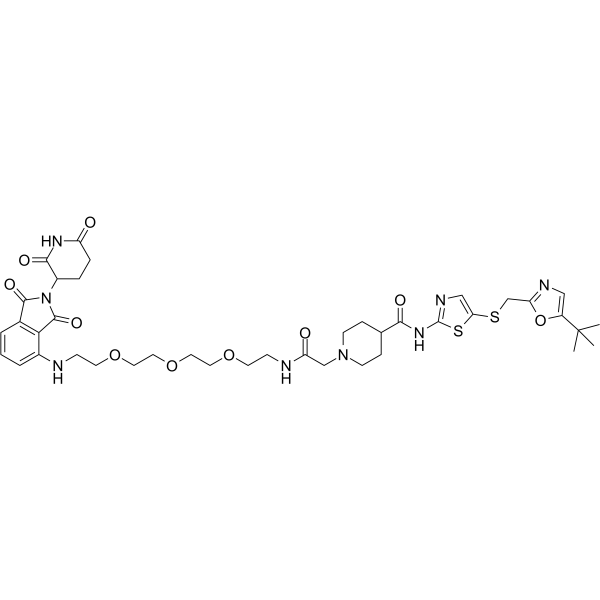
|
Fluorescent Dyes
|
|
TFMU-ADPr is a selective reporter substrate of SARS-CoV-2 Macro1 (IC50=0.59 μM), with an excitation wavelength (λEx) of 385 nm, and an emission wavelength (λEm) of 502 nm (or 495 nm). TFMU-ADPr can also undergo enzymatic hydrolysis with Poly(ADP-ribose) Glycohydrolase (PARG) sourced from human, Tetrahymena thermophila and ADP-ribosylhydrolase 3 from human to release fluorophores, thereby directly reporting total poly (ADP-ribose) hydrolase activity. TFMU-ADPr binds to the ADPr-binding site of SARS-CoV-2 Macro1, and its TFMU moiety inserts into the narrow hydrophobic groove of this protein. TFMU-ADPr can thus be used to evaluate small-molecule inhibitors targeting PAR hydrolases under in vitro conditions, to investigate the regulatory mechanisms of ADP-ribosyl catabolic enzymes, or to detect PAR hydrolase activity in whole-cell lysate assays. TFMU-ADPr is also applicable to COVID-19-related research .
|
| Cat. No. |
Product Name |
Target |
Research Area |
-
- HY-P5522A
-
|
L-Ala-γ-D-Glu-meso-diamINopimelic acid dihydrochloride
|
NOD-like Receptor (NLR)
NF-κB
MAP3K
MEK
ERK
p38 MAPK
Interleukin Related
SARS-CoV
|
Infection
Inflammation/Immunology
|
|
TriDAP dihydrochloride (L-Ala-γ-D-Glu-meso-diaminopimelic acid dihydrochloride) is a NOD1 agonist with a Kd value of 34.5 μM. TriDAP dihydrochloride enhances the binding of NOD1-RICK, promotes RICK phosphorylation, and activates the NF-κB, TAK1, MEK/ERK, p38 and interferon response pathways. TriDAP dihydrochloride downregulates Runx2 via increasing ubiquitination and reduces trabecular bone parameters. TriDAP dihydrochloride decreases IκBα levels and increases p65 levels. TriDAP dihydrochloride induces the secretion of proinflammatory mediators IL-8 and prostaglandins, triggers tissue inflammation and innate immune activation, and inhibits SARS-CoV-2 replication in lung epithelial cells. TriDAP dihydrochloride increases the RANKL/OPG ratio in mice, reduces bone mass and enhances osteoclast activity, and inhibits new bone formation by decreasing the mineralization deposition rate in mice. TriDAP dihydrochloride can be used in research related to pulpitis, chronic ulcerative colitis, Crohn's disease and SARS-CoV-2 infection .
|
-
- HY-P11012
-
|
|
SARS-CoV
|
Infection
|
|
EK1 is a peptide-based fusion inhibitor of coronaviruses (CoVs) with broad spectrum inhibition to a number of CoV species. EK1 shows substantially improved pan-CoV fusion inhibitory activity. EK1 potently inhibits SARS-CoV-2. EK1 can form a stable six-helix bundle (6HB) structure with both short α-hCoV and long β-hCoV N-terminal heptad repeats .
|
-
- HY-P5522
-
|
L-Ala-γ-D-Glu-meso-diamINopimelic acid
|
NOD-like Receptor (NLR)
NF-κB
MAP3K
MEK
ERK
p38 MAPK
Interleukin Related
SARS-CoV
|
Infection
Inflammation/Immunology
|
|
TriDAP (L-Ala-γ-D-Glu-meso-diaminopimelic acid) is a NOD1 agonist with a Kd value of 34.5 μM. TriDAP enhances the binding of NOD1-RICK, promotes RICK phosphorylation, and activates the NF-κB, TAK1, MEK/ERK, p38 and interferon response pathways. TriDAP downregulates Runx2 via increasing ubiquitination and reduces trabecular bone parameters. TriDAP decreases IκBα levels and increases p65 levels. TriDAP induces the secretion of proinflammatory mediators IL-8 and prostaglandins, triggers tissue inflammation and innate immune activation, and inhibits SARS-CoV-2 replication in lung epithelial cells. TriDAP increases the RANKL/OPG ratio in mice, reduces bone mass and enhances osteoclast activity, and inhibits new bone formation by decreasing the mineralization deposition rate in mice. TriDAP can be used in research related to pulpitis, chronic ulcerative colitis, Crohn's disease and SARS-CoV-2 infection .
|
-
- HY-P5168S
-
|
|
Isotope-Labeled Compounds
SARS-CoV
|
Infection
|
|
GPSVFPLAPSSK- 13C6, 15N2 is the 13C- and 15N-labeled GPSVFPLAPSSK. GPSVFPLAPSSK is an IgG1 signature peptide of anti-SARS-CoV-2 antibodies. GPSVFPLAPSSK can be used for the quantification of the specific isolation of anti-SARS-CoV-2 antibodies .
|
-
- HY-P5168AS
-
|
|
Isotope-Labeled Compounds
SARS-CoV
|
Infection
|
|
GPSVFPLAPSSK- 13C6, 15N2 TFA is the 13C- and 15N-labeled GPSVFPLAPSSK. GPSVFPLAPSSK is an IgG1 signature peptide of anti-SARS-CoV-2 antibodies. GPSVFPLAPSSK can be used for the quantification of the specific isolation of anti-SARS-CoV-2 antibodies .
|
-
- HY-P11464
-
|
|
SARS-CoV
Angiotensin-converting Enzyme (ACE)
|
Infection
|
|
SARS-CoV-2 Spike receptor binding domain, RBD (371-394) is a peptide from SARS-CoV-2 spike receptor-binding domain. SARS-CoV-2 spike protein receptor-binding domain binds to ACE2. SARS-CoV-2 Spike receptor binding domain, RBD (371-394) can be used in the research of SARS-CoV-2 infection .
|
-
- HY-P10466A
-
|
|
Sec61
SARS-CoV
Interleukin Related
TNF Receptor
IFNAR
|
Infection
Inflammation/Immunology
|
|
KZR-8445 TFA, a cyclic depsipeptide, is a client-selective Sec61 inhibitor. KZR-8445 TFA binds to the fully opened Sec61 lateral gate, blocks lumenal plug domain access, stabilizes lateral gate helices, traps select signal peptides, and disrupts secretory and membrane protein biogenesis. KZR-8445 TFA inhibits pro-inflammatory cytokine secretion in primary immune cells. KZR-8445 TFA inhibits SARS-CoV-2 replication, virus-induced cytotoxicity, and spike protein biogenesis. KZR-8445 TFA blocks disease progression in a mouse model of rheumatoid arthritis. KZR-8445 TFA can be used for the researches of rheumatoid arthritis and SARS-CoV-2 infection .
|
-
- HY-P10466
-
|
|
Sec61
SARS-CoV
Interleukin Related
TNF Receptor
IFNAR
|
Infection
Inflammation/Immunology
|
|
KZR-8445, a cyclic depsipeptide, is a client-selective Sec61 inhibitor. KZR-8445 binds to the fully opened Sec61 lateral gate, blocks lumenal plug domain access, stabilizes lateral gate helices, traps select signal peptides, and disrupts secretory and membrane protein biogenesis. KZR-8445 inhibits pro-inflammatory cytokine secretion in primary immune cells. KZR-8445 inhibits SARS-CoV-2 replication, virus-induced cytotoxicity, and spike protein biogenesis. KZR-8445 blocks disease progression in a mouse model of rheumatoid arthritis. KZR-8445 can be used for the researches of rheumatoid arthritis and SARS-CoV-2 infection .
|
| Cat. No. |
Product Name |
Target |
Research Area |
Image |
-
- HY-P99340
-
|
VIR 7831; GSK-4182136
|
SARS-CoV
|
Infection
Cancer
|
|
Sotrovimab (VIR 7831) is a human IgG1κ pan-sarbecovirus monoclonal antibody (mAb), neutralizes SARS-CoV-2, SARS-CoV-1, and multiple other sarbecoviruses. Sotrovimab is developed based on S309, exhibits a long half-life and great bioavailability in the respiratory mucosa. Sotrovimab could result in immune-mediated viral clearance and prevent progression of Covid-19 early in the course of disease .
|
-
(5)
-
- HY-P99604
-
|
AZD-1061; CoV2-2130
|
SARS-CoV
|
Infection
|
|
Cilgavimab (AZD-1061; COV2-2130) is a human SARS-CoV-2-neutralizing monoclonal antibody, can compose monoclonal-antibody combination AZD7442 with Tixagevimab (HY-P99556). Cilgavimab shows protective action on mouse models of SARS-CoV-2 infection .
|
-
(5)
-
- HY-P99435
-
|
BRII-196
|
SARS-CoV
|
Infection
|
Amubarvimab (BRII-196) is a human IgG1 mAb that bind to non-competing epitopes on the receptor binding domain (RBD) of spike protein, with a KD of 5.88 nM. Amubarvimab can effectively neutralize SARS-CoV-2 variants .
|
-
(5)
-
- HY-P9801
-
|
SARS-CoV-2 (2019-nCoV) Spike RBD Antibody
|
SARS-CoV
|
Infection
|
|
Anti-Spike-RBD mAb is a CHO cell derived human monoclonal IgG1 antibody. Blocking the interaction of Spike protein and ACE2. Anti-Spike-RBD mAb is a potential therapeutic approach for SARS-CoV-2 treatment .
|
-
(5)
-
- HY-P990816
-
|
|
SARS-CoV
|
Infection
|
|
Anti-SARS-CoV-2 S protein Antibody (NTD, SARS2-29) is a mouse-derived IgG1 κ type antibody inhibitor, targeting to SARS-CoV-2 S protein. Anti-SARS-CoV-2 S protein Antibody (NTD, SARS2-29) reacts with the N-terminal domain (NTD) in the spike (S) protein of SARS-CoV-2 (Severe Acute Respiratory Syndrome Coronavirus 2). Anti-SARS-CoV-2 S protein Antibody (NTD, SARS2-29) can be used for the detections of flow cytometry and ELISA in SARS-CoV-2 infection .
|
-
(5)
-
- HY-P990815
-
|
|
SARS-CoV
|
Infection
|
|
Anti-SARS-CoV-2 S protein Antibody (RBD epitope A, SARS2-01) is a mouse-derived IgG1 κ type antibody inhibitor, targeting to SARS-CoV-2 S protein. Anti-SARS-CoV-2 S protein Antibody (RBD epitope A, SARS2-01) reacts with the receptor binding domain (RBD) epitope A in the spike (S) protein of SARS-CoV-2 (Severe Acute Respiratory Syndrome Coronavirus 2). Anti-SARS-CoV-2 S protein Antibody (RBD epitope A, SARS2-01) can block the binding of the SARS-CoV-2 S protein to angiotensin-converting enzyme 2 (ACE2). Anti-SARS-CoV-2 S protein Antibody (RBD epitope A, SARS2-01) can be used for the research of SARS-CoV-2 infection .
|
-
(5)
-
- HY-P990814
-
|
|
SARS-CoV
|
Infection
|
|
Anti-SARS-CoV-2 S protein Antibody (RBD epitope B, SARS2-34) is a mouse-derived IgG1 κ type antibody inhibitor, targeting to SARS-CoV-2 S protein. Anti-SARS-CoV-2 S protein Antibody (RBD epitope B, SARS2-34) reacts with the receptor binding domain (RBD) epitope B in the spike (S) protein of SARS-CoV-2 (Severe Acute Respiratory Syndrome Coronavirus 2). Anti-SARS-CoV-2 S protein Antibody (RBD epitope B, SARS2-34) can block the binding of the SARS-CoV-2 S protein to angiotensin-converting enzyme 2 (ACE2). Anti-SARS-CoV-2 S protein Antibody (RBD epitope B, SARS2-34) can be used for the research of SARS-CoV-2 infection .
|
-
(5)
-
- HY-P992281
-
|
|
SARS-CoV
|
Infection
|
|
Anti-Nucleocapsid Antibody (N-18) is an antibody targeting Nucleocapsid, a structural protein of coronaviruses. Anti-Nucleocapsid Antibody (N-18) is applicable to studies on SARS-CoV-2 infection .
|
-
(5)
-
- HY-P992282
-
|
|
SARS-CoV
|
Infection
|
|
Anti-Nucleocapsid Antibody (N-P10) is a highly specific SARS-CoV-2 Nucleocapsid (N) protein-targeted recombinant monoclonal antibody. Anti-Nucleocapsid Antibody (N-P10) can be used for research on SARS-CoV-2 infection .
|
-
(5)
-
- HY-P992283
-
|
|
SARS-CoV
|
Infection
|
|
Anti-Nucleocapsid Antibody (N-P11) is a highly specific SARS-CoV-2 Nucleocapsid (N) protein-targeted recombinant monoclonal antibody. Anti-Nucleocapsid Antibody (N-P11) can be used for research on SARS-CoV-2 infection .
|
-
(5)
| Cat. No. |
Product Name |
Category |
Target |
Chemical Structure |
| Cat. No. |
Product Name |
Chemical Structure |
-
- HY-113478S
-
|
|
|
Ursodeoxycholic acid-2,2,4,4-d4 is the deuterium labeled Ursodeoxycholic acid (HY-13771). Ursodeoxycholic acid is a secondary bile acid issued from the transformation of (cheno)deoxycholic acid by intestinal bacteria, acting as a key regulator of the intestinal barrier integrity and essential for lipid metabolism. Ursodeoxycholic acid acts as signaling molecule, exerting its effects by interacting with bile acid activated receptors, including G-protein coupled bile acid receptor 5 (TGR5, GPCR19) and the farnesoid X receptor (FXR). Ursodeoxycholic acid can be used for the research of a variety of hepatic and gastrointestinal diseases. Ursodeoxycholic acid also reduces ACE2 expression and is beneficial for reducing SARS-CoV-2 infection .
|
-
-
- HY-P5168S
-
|
|
|
GPSVFPLAPSSK- 13C6, 15N2 is the 13C- and 15N-labeled GPSVFPLAPSSK. GPSVFPLAPSSK is an IgG1 signature peptide of anti-SARS-CoV-2 antibodies. GPSVFPLAPSSK can be used for the quantification of the specific isolation of anti-SARS-CoV-2 antibodies .
|
-
-
- HY-P5168AS
-
|
|
|
GPSVFPLAPSSK- 13C6, 15N2 TFA is the 13C- and 15N-labeled GPSVFPLAPSSK. GPSVFPLAPSSK is an IgG1 signature peptide of anti-SARS-CoV-2 antibodies. GPSVFPLAPSSK can be used for the quantification of the specific isolation of anti-SARS-CoV-2 antibodies .
|
-
-
- HY-134222AS
-
|
|
|
N-Acetylserine-d3 is the deuterium labeled N-Acetylserine (HY-134222A). N-Acetylserine (N-Acetyl-L-serine) is a physiological inducer of cysteine biosynthesis and activator of CysB. N-Acetylserine can bind to the CysB apoprotein. N-Acetylserine stimulates cysJIH transcription in vitro. N-Acetylserine can be used in the research of SARS-CoV-2 infection .
|
-
| Cat. No. |
Product Name |
|
Classification |
-
- HY-158905
-
|
MTDB-Alk
|
|
Alkynes
|
|
MTDB-Alkyne is an alkyne-containing click chemistry reagent. MTDB-Alkyne can be used to synthesize Proximity-Induced Nucleic Acid Degrader (PINAD) for the degradation of SARS-CoV-2 RNA .
|
-
- HY-162507
-
|
|
|
Alkynes
|
|
2'-RIBOTAC-U recruiter-linker (Compound 9) consists of RNase L recruiter and linker. 2'-RIBOTAC-U recruiter-linker is reacted separately with 2’-azido-uridine or 5’-azidomethyl-uridine via copper-catalyzed click chemistry, resulting in the formation of 2’-RIBOTAC-U and 5’-RIBOTAC-U, respectively. 2’-RIBOTAC-U has anti-SARS-CoV-2 activity .
|
-
- HY-181033
-
|
|
|
Alkynes
|
|
(M)-AVI-4773 is an orally active, blood-brain barrier permeable coronaviruses M Pro inhibitor with an IC50 of 2.5 nM aginst SARS-CoV-2 M Pro. (M)-AVI-4773 produces a rapid onset antiviral effect in mouse models of MERS-CoV and SARS-CoV-2 infection .
|
Your information is safe with us. * Required Fields.
Inquiry Information
- Product Name:
- Cat. No.:
- Quantity:
- MCE Japan Authorized Agent:

