1. Search Result
Search Result
Results for "

platelet aggregation induced by ADP

" in MedChemExpress (MCE) Product Catalog:

80

Inhibitors & Agonists

2

Biochemical Assay Reagents

3

Peptides

20

Natural
Products

7

Isotope-Labeled Compounds

3

Oligonucleotides

Cat. No. Product Name Target Research Areas Chemical Structure
  • HY-111557
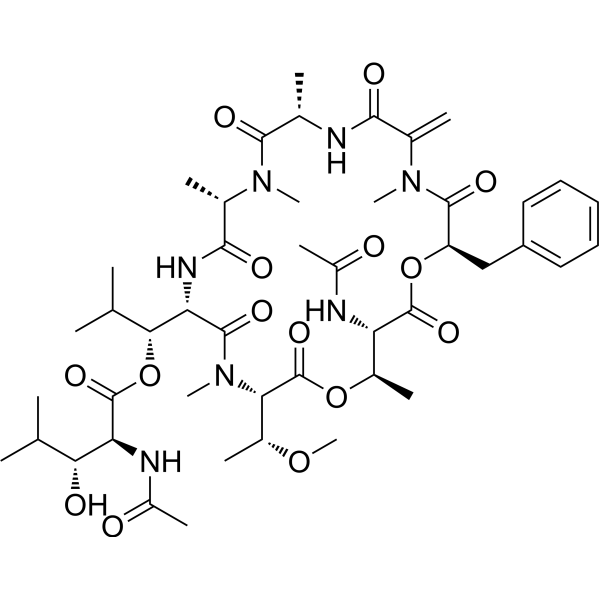
    YM-254890
    Maximum Cited Publications
    17 Publications Verification

    P2Y Receptor Cardiovascular Disease
    YM-254890 is a selective Gαq/11 protein inhibitor isolated from Chromobacterium sp. YM-254890 shows no inhibition of other G protein subtypes. YM-254890 inhibits platelet aggregation induced by ADP by blocking the P2Y1 signal transduction pathway, with an IC50 value below 0.6 μM .
    YM-254890
  • HY-19638A
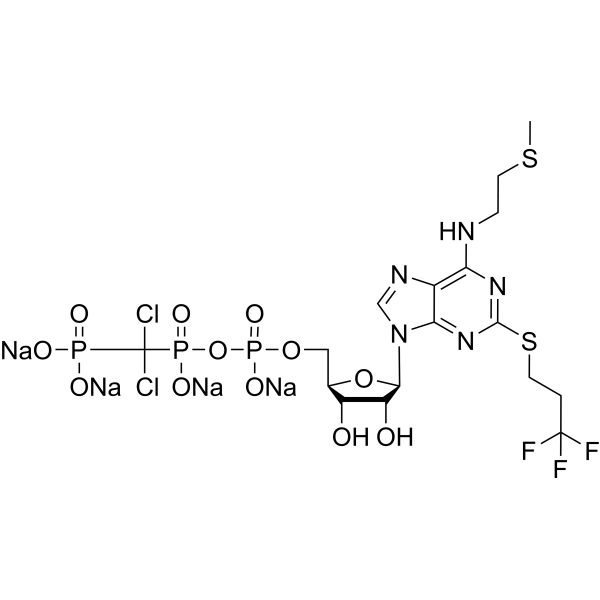
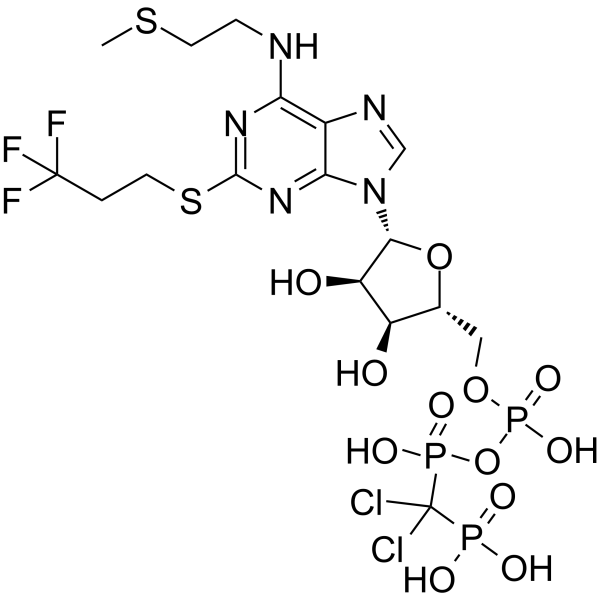
    Cangrelor tetrasodium
    4 Publications Verification

    AR-C69931MX tetrasodium

    P2Y Receptor Cardiovascular Disease Inflammation/Immunology
    Cangrelor tetrasodium, an adenosine triphosphate analogue, is a reversible and selective platelet P2Y12 antagonist, with prompt and potent antiplatelet effects. Cangrelor tetrasodium directly blocks adenosine diphosphate (ADP)-induced activation and aggregation of platelets. Cangrelor tetrasodium is also a nonspecific GPR17 antagonist .
    Cangrelor tetrasodium
  • HY-17459
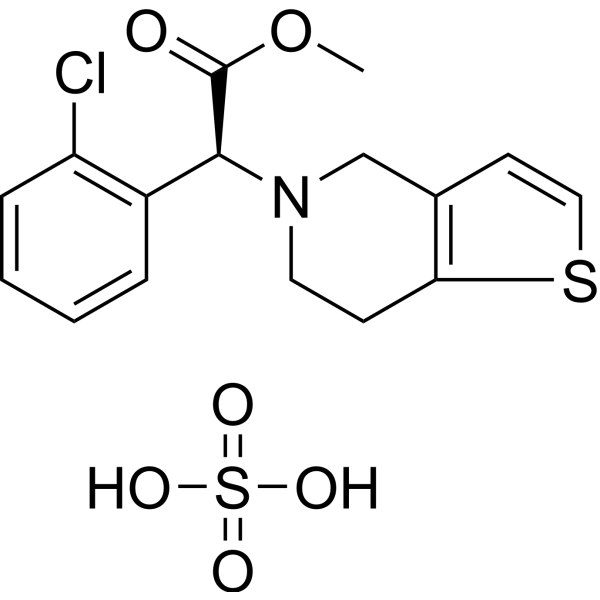
    Clopidogrel hydrogen sulfate
    Maximum Cited Publications
    30 Publications Verification

    (S)-(+)-Clopidogrel bisulfate; (S)-(+)-Clopidogrel hydrogen sulfate

    Cytochrome P450 P2Y Receptor Cardiovascular Disease Cancer
    Clopidogrel hydrogen sulfate is an antiplatelet agent to prevent blood clots. Clopidogrel hydrogen sulfate inhibits CYP2B6 and CYP2C19 with IC50s of 18.2 nM and 524 nM, respectively . Clopidogrel hydrogen sulfate is a potent antithrombotic agent that inhibits ADP-induced platelet aggregation .Clopidogrel hydrogen sulfate also is an orally active P2Y(12) inhibitor .
    Clopidogrel hydrogen sulfate
  • HY-15284
    Prasugrel
    1 Publications Verification

    PCR 4099

    P2Y Receptor Cardiovascular Disease
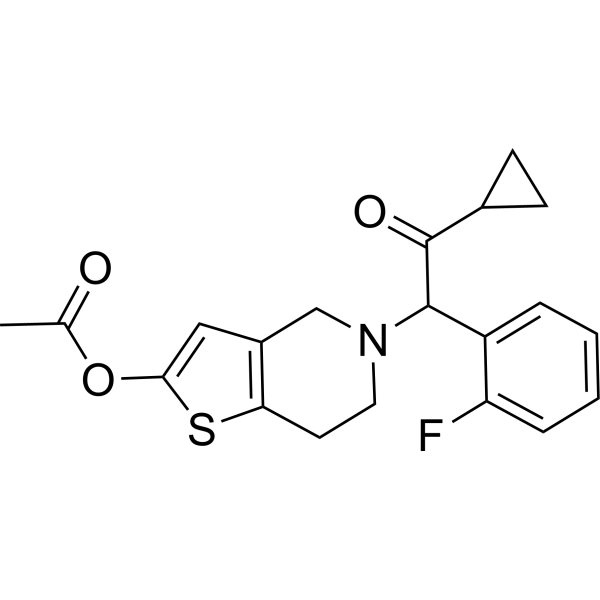
    Prasugrel (PCR 4099), a thienopyridine and proagent, inhibits platelet function. Prasugrel is an orally active and potent P2Y12 receptor antagonist, and inhibits ADP-induced platelet aggregation .
    Prasugrel
  • HY-15284A
    Prasugrel hydrochloride
    1 Publications Verification

    PCR 4099 hydrochloride

    P2Y Receptor Cardiovascular Disease
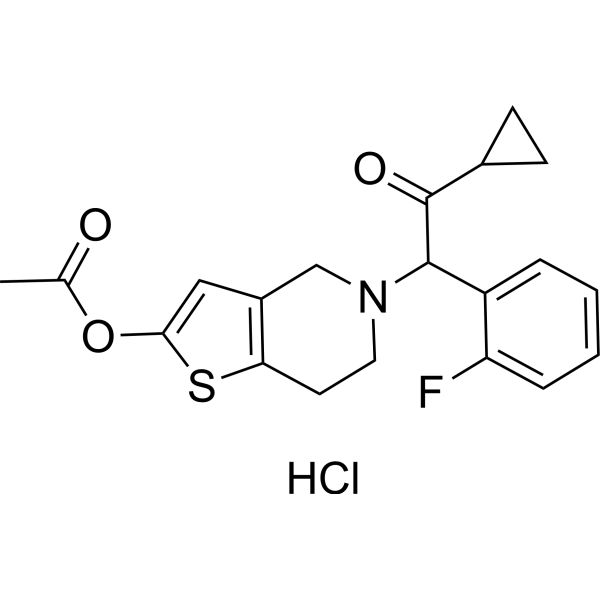
    Prasugrel hydrochloride (PCR 4099 hydrochloride), a thienopyridine and proagent, inhibits platelet function. Prasugrel hydrochloride is an orally active and potent P2Y12 receptor antagonist, and inhibits ADP-induced platelet aggregation .
    Prasugrel hydrochloride
  • HY-134216
    MAHMA NONOate
    1 Publications Verification

    Endogenous Metabolite NO Synthase Cardiovascular Disease
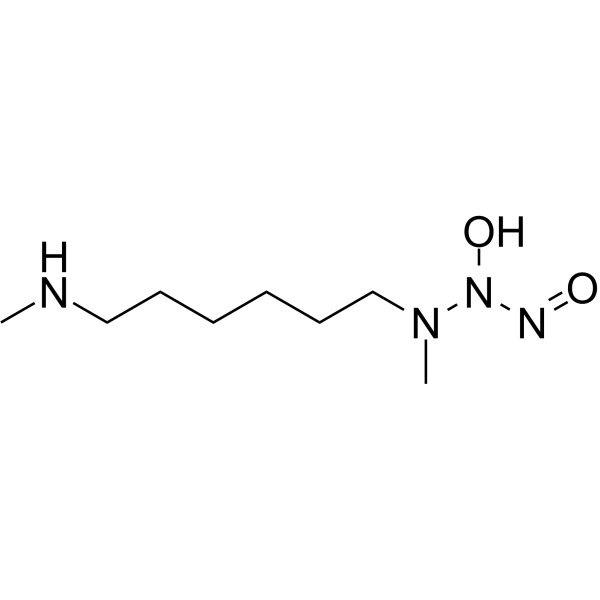
    MAHMA NONOate is a NO donor. MAHMA NONOate effectively inhibits platelet aggregation induced by either collagen or ADP .
    MAHMA NONOate
  • HY-W009276

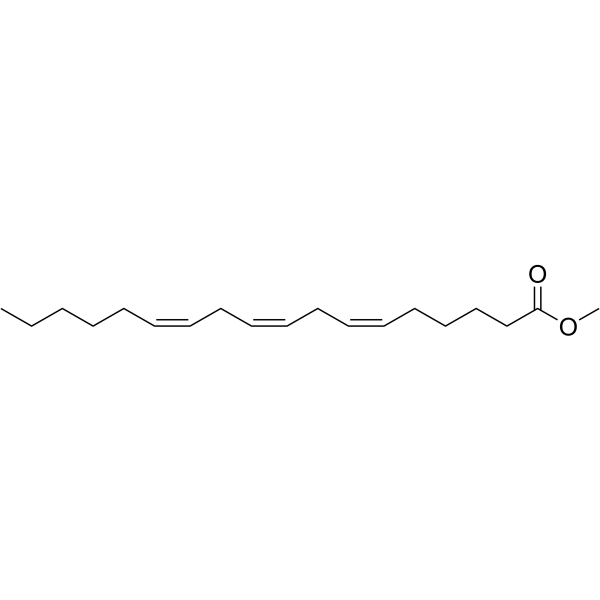
    Methyl GLA

    Apoptosis Cancer
    γ-Linolenic Acid methyl ester (Methyl GLA) is an esterified version of γ-Linolenic Acid (GLA), which is an ω-6 fatty acid, serves as melanoma cell proliferation inhibitors. γ-Linolenic Acid methyl ester inhibits ADP-induced blood platelet aggregation and induces apoptosis .
    γ-Linolenic Acid methyl ester
  • HY-108658

    P2Y Receptor Cardiovascular Disease
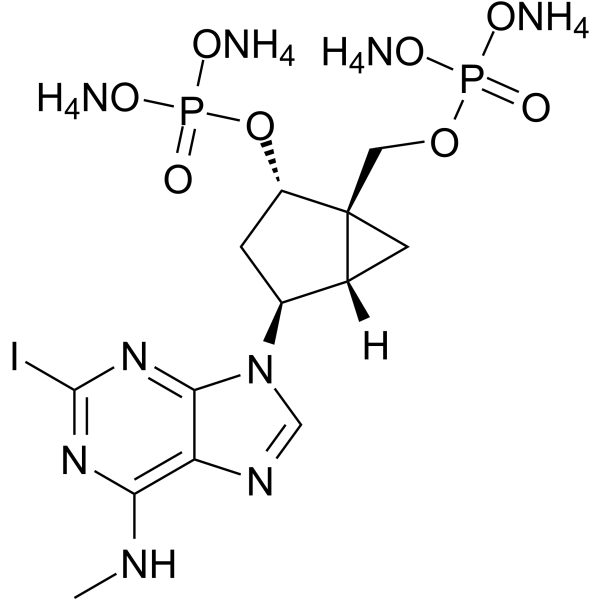
    MRS2500 tetraammonium is a potent, selective and stable antagonist of the P2Y1 receptor (Ki=0.78 nM for recombinant human P2Y1 receptor). MRS2500 tetraammonium inhibits the ADP-induced aggregation of human platelets with an IC50 value of 0.95 nM. Antithrombotic activity .
    MRS2500 tetraammonium
  • HY-W250153

    P2Y Receptor Cardiovascular Disease
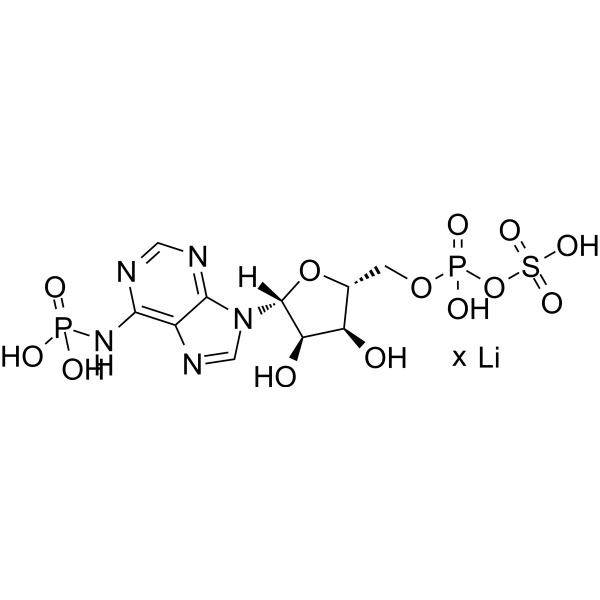
    Adenosine 3'-phosphate 5'-phosphosulfate lithium, an adenine nucleotide derivative, is a selective P2Y1 antagonist with no effect on P2Y2, P2Y4, or P2Y6 receptors. Adenosine 3'-phosphate 5'-phosphosulfate lithium can competitive inhibit ADP-induced platelet aggregation, as well as the ability of ADP to cause shape change and increases in Ca 2+ in platelets, but had no effect on the inhibition of stimulated adenylate cyclase by ADP. Adenosine 3'-phosphate 5'-phosphosulfate lithium is a co-substrate used for the sulfonation of glycans. Adenosine 3'-phosphate 5'-phosphosulfate lithium can be used for Golgi-resident PAP-specific 3'-phosphatase-coupled sulfotransferase assays, which as donor substrate to transfer a sulfonate group .
    Adenosine 3'-phosphate 5'-phosphosulfate lithium
  • HY-78263
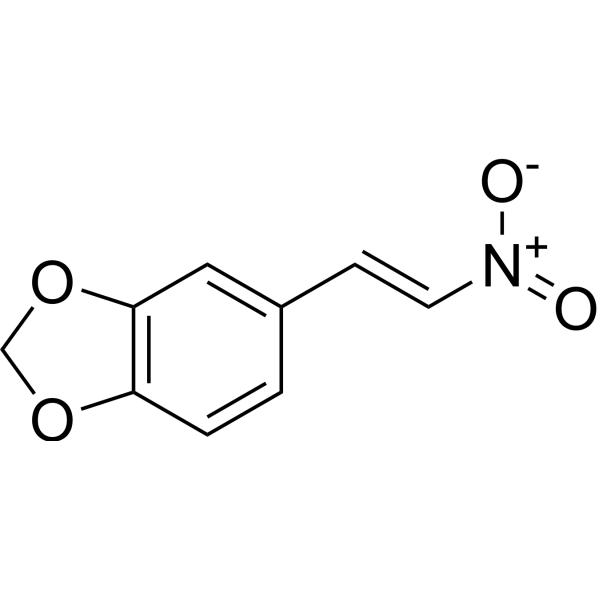
    MNS
    3 Publications Verification

    NSC 170724; 5-(2-Nitrovinyl)benzodioxole

    Src Syk NOD-like Receptor (NLR) Integrin PANoptosis Neurological Disease Inflammation/Immunology Cancer
    MNS (NSC 170724), the beta-nitrostyrene derivative, is an orally active tyrosine kinase inhibitor, a broad-spectrum antiplatelet agent, and a PANoptosis inhibitor. MNS inhibits Src, Syk, and FAK with IC50 of 27.3, 2.8, and 97.6 μM, respectively. MNS inhibits NLRP3 inflammasome and β1 integrin. MNS completely inhibits U46619, ADP-, arachidonic acid-, collagen-, and thrombin-induced platelet aggregation with IC50 values of 2.1, 4.1, 5.8, 7.0, and 12.7 μM, respectively. MNS is cytotoxic to a variety of cells .
    MNS
  • HY-123669A

    P2Y Receptor Cardiovascular Disease
    Trans-R-138727 is the trans isomer of R-138727 (HY-123669). R-138727 is the active metabolite of the antiplatelet agent Prasugrel (HY-15284). R-138727 is an irreversible inhibitor for the platelet receptor P2Y12, and inhibits ADP-induced platelet activation and aggregation .
    trans-R-138727
  • HY-19638

    AR-C69931MX

    P2Y Receptor Cardiovascular Disease Inflammation/Immunology
    Cangrelor (AR-C69931MX), an adenosine triphosphate analogue, is an intravenous, reversible and selective platelet P2Y12 antagonist, with prompt and potent antiplatelet effects. Cangrelor directly blocks adenosine diphosphate (ADP)-induced activation and aggregation of platelets. Cangrelor is also a nonspecific GPR17 antagonist .
    Cangrelor
  • HY-N5021

    AHSYB

    Others Neurological Disease
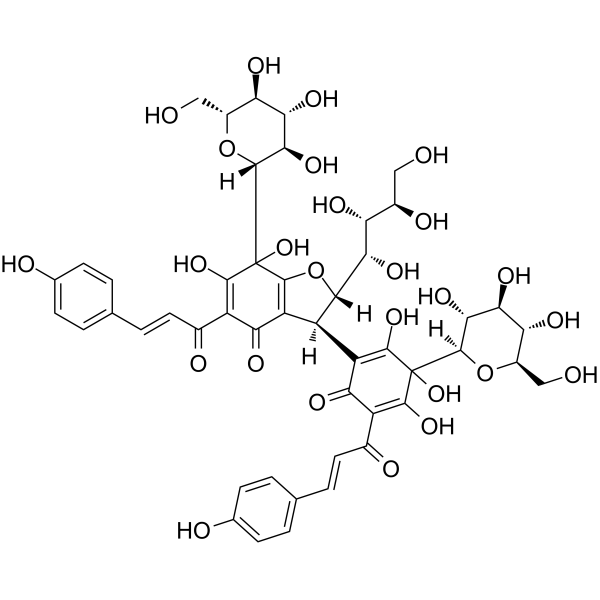
    Anhydrosafflor yellow B (AHSYB) is a quinochalcone C-glycoside isolated from Carthamus tinctorius. Anhydrosafflor yellow B inhibits ADP-induced platelet aggregation, exhibits significant anti-oxidative effects in vitro, and possesses certain activity against H2O2-induced cytotoxicity in cultured PC12 cells and primary neuronal cells .
    Anhydrosafflor yellow B
  • HY-164090

    P2Y Receptor Cardiovascular Disease
    Adenosine 3'-phosphate 5'-phosphosulfate, an adenine nucleotide derivative, is a selective P2Y1 antagonist with no effect on P2Y2, P2Y4, or P2Y6 receptors. Adenosine 3'-phosphate 5'-phosphosulfate can competitive inhibit ADP-induced platelet aggregation, as well as the ability of ADP to cause shape change and increases in Ca 2+ in platelets, but had no effect on the inhibition of stimulated adenylate cyclase by ADP. Adenosine 3'-phosphate 5'-phosphosulfate is a co-substrate used for the sulfonation of glycans. Adenosine 3'-phosphate 5'-phosphosulfate can be used for Golgi-resident PAP-specific 3'-phosphatase-coupled sulfotransferase assays, which as donor substrate to transfer a sulfonate group .
    Adenosine 3'-phosphate 5'-phosphosulfate
  • HY-149454
    P2Y1/P2Y12 antagonist-1
    1 Publications Verification

    P2Y Receptor Cancer
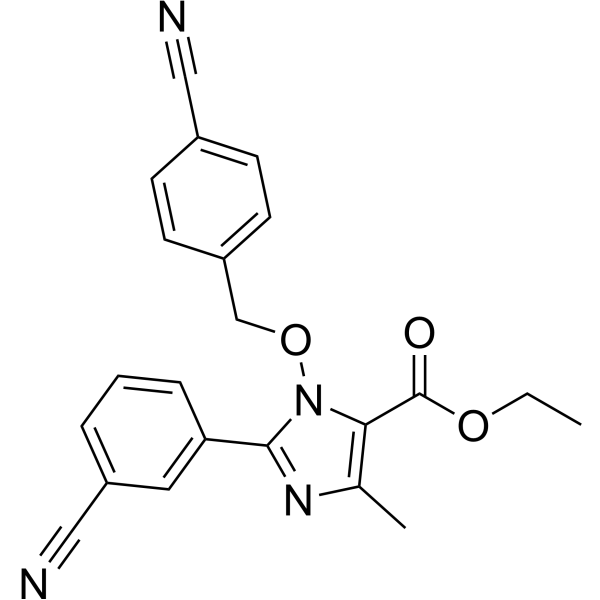
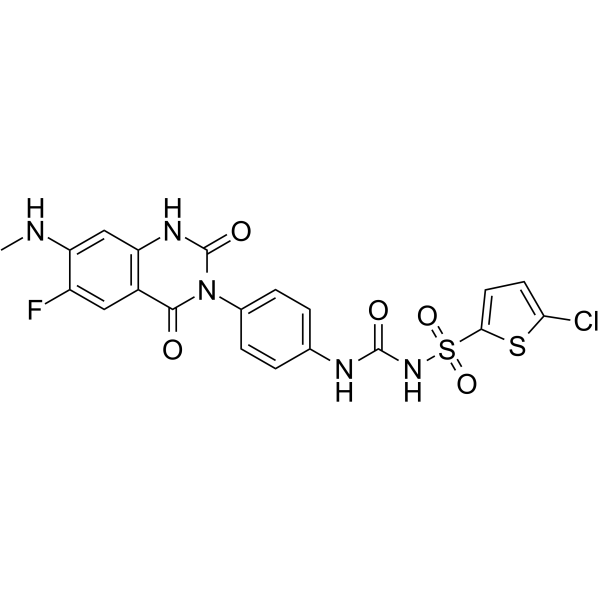
    P2Y1/P2Y12 antagonist-1 (compound 24w) is an orally available dual inhibitor of P2Y1 and P2Y12 with antiplatelet activity. P2Y1/P2Y12 antagonist-1 inhibits ADP-induced platelet aggregation in rabbit plasma with an IC50 of 4.23 μM. P2Y1/P2Y12 antagonist-1 exhibits potent inhibitory effects in rat thrombosis model.
    P2Y1/P2Y12 antagonist-1
  • HY-W010918R

    Adenosine diphosphate (Standard); ADP (Standard)

    Reference Standards Endogenous Metabolite Others
    Adenosine 5'-diphosphate (Standard) is the analytical standard of Adenosine 5'-diphosphate. This product is intended for research and analytical applications. Adenosine 5'-diphosphate (Adenosine diphosphate) is a nucleoside diphosphate. Adenosine 5'-diphosphate is the product of ATP dephosphorylation by ATPases. Adenosine 5'-diphosphate induces human platelet aggregation and inhibits stimulated adenylate cyclase by an action at P2T-purinoceptors. In Vitro: Adenosine 5'-diphosphate consists of the pyrophosphate group, the pentose sugar ribose, and the nucleobase adenine. Adenosine 5'-diphosphate is the product of ATP dephosphorylation by ATPases. ADP is converted back to ATP by ATP synthases. ATP is an important energy transfer molecule in cells. Adenosine 5'-diphosphate is utilized in a wide number of cellular processes, including respiration, biosynthetic reactions, motility, and cell division.
    Adenosine 5'-diphosphate (Standard)
  • HY-15284S2

    PCR 4099-d4

    P2Y Receptor Cardiovascular Disease
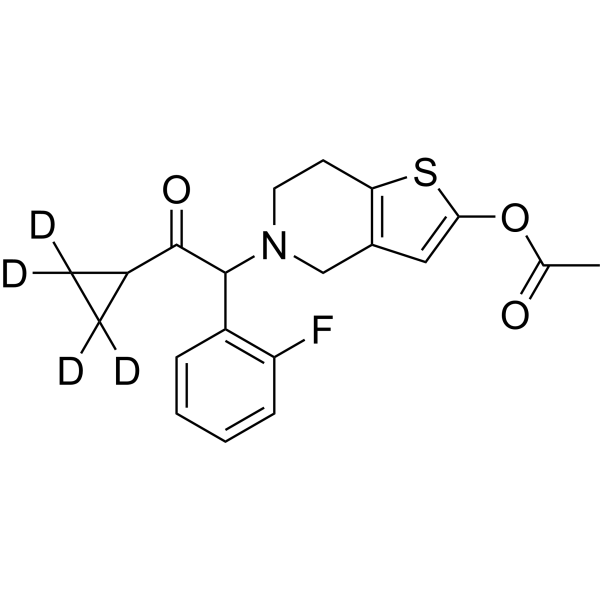
    Prasugrel-d4 is the deuterium labeled Prasugrel . Prasugrel (PCR 4099), a thienopyridine and proagent, inhibits platelet function. Prasugrel is an orally active and potent P2Y12 receptor antagonist, and inhibits ADP-induced platelet aggregation .
    Prasugrel-d4
  • HY-N7614
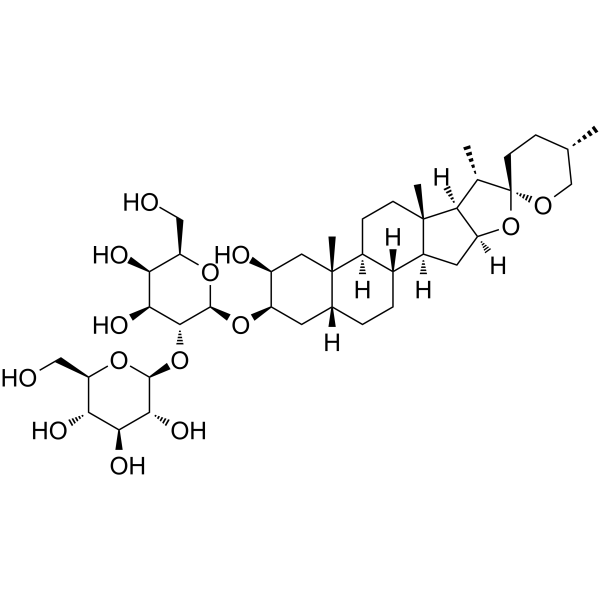
    Anemarrhenasaponin A2
    1 Publications Verification

    Schidigerasaponin F2; Timosaponin AII

    Others Cardiovascular Disease
    Anemarrhenasaponin A2 (Schidigerasaponin F2) is a steroidal saponin isolated from the rhizomes of Anemarrhena asphodeloides. Anemarrhenasaponin A2 inhibits ADP-induced platelet aggregation .
    Anemarrhenasaponin A2
  • HY-119860

    ONO 41483

    Drug Derivative Cardiovascular Disease
    Ataprost (ONO 41483) is an orally active Carboprostacyclin (HY-112322) analogue. Ataprost exhibits 2.6 times more active than Carboprostacyclin in inhibiting ADP-induced platelet aggregation in vitro. Ataprost has the ability to relieve coronary spasm .
    Ataprost
  • HY-Y1094

    Chloro(1,5-cyclooctadiene)rhodium(I) dimer

    Biochemical Assay Reagents Cardiovascular Disease
    [Rh(cod)Cl]2 (Chloro(1,5-cyclooctadiene)rhodium(I) dimer) is a rhodium (I) organometallic dimer complex. [Rh(cod)Cl]2 can inhibit platelet-activating factor-mediated platelet aggregation with IC50 values of 5.2 and 43.3 μM in washed rabbit platelets and human platelet-rich plasmas. [Rh(cod)Cl]2 also can inhibit thrombin-, ADP (HY-W010918)- and collagen-induced aggregation with IC50 values of 16.7, 162 and 69.8 μM. [Rh(cod)Cl]2 can be used for the research of cardiovascular disease, such as thrombosis .
    [Rh(cod)Cl]2
  • HY-N9422

    P2Y Receptor Cardiovascular Disease
    Adenosine 3'-phosphate 5'-phosphosulfate triethylamine, an adenine nucleotide derivative, is a selective P2Y1 antagonist with no effect on P2Y2, P2Y4, or P2Y6 receptors. Adenosine 3'-phosphate 5'-phosphosulfate triethylamine can competitive inhibit ADP-induced platelet aggregation, as well as the ability of ADP to cause shape change and increases in Ca 2+ in platelets, but had no effect on the inhibition of stimulated adenylate cyclase by ADP. Adenosine 3'-phosphate 5'-phosphosulfate triethylamine is a co-substrate used for the sulfonation of glycans. Adenosine 3'-phosphate 5'-phosphosulfate triethylamine can be used for Golgi-resident PAP-specific 3'-phosphatase-coupled sulfotransferase assays, which as donor substrate to transfer a sulfonate group .
    Adenosine 3'-phosphate 5'-phosphosulfate triethylamine
  • HY-N1717

    Platelet-activating Factor Receptor (PAFR) Cardiovascular Disease
    2-Acetylbenzoic acid, a Benzoic acid (HY-N0216) derivative, is a weak platelet aggregation inhibitor. 2-Acetylbenzoic acid inhibits Adenosine 5'-diphosphate (ADP, HY-W010918)-induced platelet aggregation .
    2-Acetylbenzoic acid
  • HY-108633

    PARP Cancer
    AR-C66096 (FPL 66096) tetrasodium is a selective platelet P2YT receptor antagonist. AR-C66096 tetrasodium effectively blocks ADP-induced platelet aggregation. AR-C66096 tetrasodium can be used in the research of thromboembolism .
    BYK 49187
  • HY-113096

    PGD1

    Endogenous Metabolite Metabolic Disease
    Prostaglandin D1 is a prostanoid which causes contractile and relaxant on isolated human pial arteries, it is also an inhibitor of ADP-induced platelet aggregation with an IC50 value of 320 ng/ml. Prostaglandin D1 can be used for metabolic research .
    Prostaglandin D1
  • HY-134556

    Apoptosis Inflammation/Immunology Cancer
    2'-Hydroxyflavanone is a flavanone that can inhibit cancer cell proliferation, induce apoptosis, and reduce inflammation. 2'-Hydroxyflavanone shows inhibitory effect on platelet aggregation caused by two inducers with IC50s 47.8 μM arachidonic acid (AA) and 147.2 μM aenosine diphosphate (ADP) .
    2'-Hydroxyflavanone
  • HY-19638AR

    AR-C69931MX tetrasodium (Standard)

    P2Y Receptor Reference Standards Cardiovascular Disease Inflammation/Immunology
    Cangrelor (tetrasodium) (Standard) is the analytical standard of Cangrelor (tetrasodium). This product is intended for research and analytical applications. Cangrelor tetrasodium, an adenosine triphosphate analogue, is a reversible and selective platelet P2Y12 antagonist, with prompt and potent antiplatelet effects. Cangrelor tetrasodium directly blocks adenosine diphosphate (ADP)-induced activation and aggregation of platelets. Cangrelor tetrasodium is also a nonspecific GPR17 antagonist .
    Cangrelor tetrasodium (Standard)
  • HY-148300

    P2Y Receptor Cardiovascular Disease
    AR-C66096 is a potent and selective antagonist of the Gi-coupled P2Y12 receptor. AR-C66096 suppresses platelet thrombus stability under physiological flow conditions. AR-C66096 inhibits ADP-induced aggregation in whole blood aggregometry. AR-C66096 can be used for antithrombotic research .
    AR-C66096
  • HY-W250153A

    P2Y Receptor Cardiovascular Disease
    Adenosine 3'-phosphate 5'-phosphosulfate lithium hydrate, an adenine nucleotide derivative, is a selective P2Y1 antagonist with no effect on P2Y2, P2Y4, or P2Y6 receptors. Adenosine 3'-phosphate 5'-phosphosulfate lithium hydrate can competitive inhibit ADP-induced platelet aggregation, as well as the ability of ADP to cause shape change and increases in Ca 2+ in platelets, but had no effect on the inhibition of stimulated adenylate cyclase by ADP. Adenosine 3'-phosphate 5'-phosphosulfate lithium hydrate is a co-substrate used for the sulfonation of glycans. Adenosine 3'-phosphate 5'-phosphosulfate lithium hydrate can be used for Golgi-resident PAP-specific 3'-phosphatase-coupled sulfotransferase assays, which as donor substrate to transfer a sulfonate group .
    Adenosine 3'-phosphate 5'-phosphosulfate lithium, hydrate
  • HY-175675

    P2Y Receptor Keap1-Nrf2 Cardiovascular Disease Neurological Disease
    P2Y1 antagonist 4 is a selective P2Y1 receptor antagonist with excellent blood-brain barrier (BBB) penetration. P2Y1 antagonist 4 inhibits P2Y1 receptor-mediated cytosolic Ca 2+ increase (IC50 = 1.95 μM) and platelet aggregation (IC50 = 3.24 μM) induced by ADP in rabbit washed platelets. P2Y1 antagonist 4 significantly upregulates the level of nuclear Nrf2 protein in H2O2-treated HT22 cells. P2Y1 antagonist 4 reduces myocardial infarct size in a mouse acute myocardial infarction (MI) model. P2Y1 antagonist 4 can be used for the study of ischemic stroke and myocardial infarction .
    P2Y1 antagonist 4
  • HY-175986

    Prostaglandin Receptor Inflammation/Immunology
    IP receptor agonist 1 (compound 6c-14S) is an orally active I prostanoid receptor agonist, with an IC50 of 0.15 μM for inhibiting platelet aggregation induced by ADP (HY-W010918,300 μM) in rabbit platelet-rich plasma. IP receptor agonist 1 can be used for study of Pulmonary arterial hypertension .
    IP receptor agonist 1
  • HY-P1702

    Integrin Others
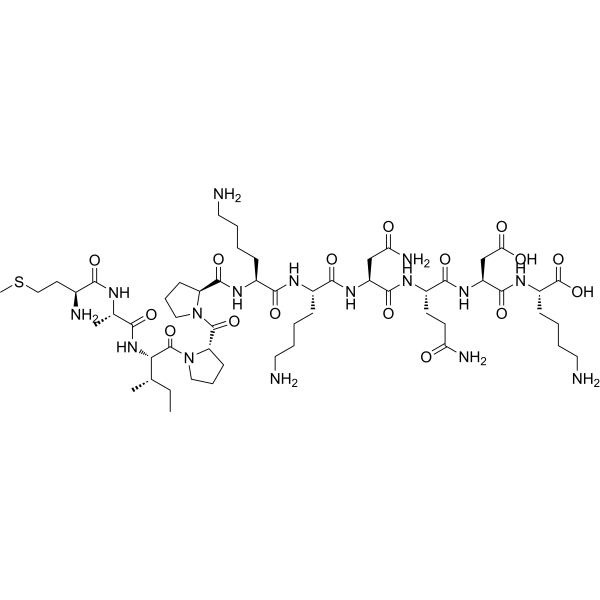
    GR83895 is a RGD based peptide, and inhibits ADP-induced platelet aggregation of human gel-filtered platelets (IC50= 0.9 μM) .
    GR83895
  • HY-N14932

    Platelet-activating Factor Receptor (PAFR) Cardiovascular Disease
    Aggreceride A is a platelet aggregation inhibitor. Aggreceride A shows an inhibitory activity against aggregation induced by Adenosine 5'-diphosphate (ADP) (HY-W010918), Arachidonic acid (HY-109590) and PAF (platelet activating factor), but was less active against aggregation induced by collagen .
    Aggreceride A
  • HY-N14933

    Platelet-activating Factor Receptor (PAFR) Cardiovascular Disease
    Aggreceride B is a platelet aggregation inhibitor. Aggreceride B shows an inhibitory activity against aggregation induced by Adenosine 5'-diphosphate (ADP) (HY-W010918), Arachidonic acid (HY-109590) and PAF (platelet activating factor), but was less active against aggregation induced by collagen .
    Aggreceride B
  • HY-N14934

    Platelet-activating Factor Receptor (PAFR) Cardiovascular Disease
    Aggreceride C is a platelet aggregation inhibitor. Aggreceride C shows an inhibitory activity against aggregation induced by Adenosine 5'-diphosphate (ADP) (HY-W010918), Arachidonic acid (HY-109590) and PAF (platelet activating factor), but was less active against aggregation induced by collagen .
    Aggreceride C
  • HY-116850

    EG626; Phthalazinol; SC-32840

    Phosphodiesterase (PDE) Neurological Disease
    Oxagrelate is a specific inhibitor of cyclic adenosine monophosphate phosphodiesterase and exhibits concentration-dependent inhibition of collagen- and ADP-induced platelet aggregation in vitro .
    Oxagrelate
  • HY-15284B

    PCR 4099 (Maleic acid)

    P2Y Receptor Cardiovascular Disease
    Prasugrel (PCR 4099) Maleic acid is a thienopyridine and proagent, inhibits platelet function. Prasugrel Maleic acid is an orally active and potent P2Y12 receptor antagonist, and inhibits ADP-induced platelet aggregation .
    Prasugrel (Maleic acid)
  • HY-176060

    Histamine Receptor Adrenergic Receptor 5-HT Receptor Cardiovascular Disease Cancer
    Platelet aggregation-IN-3 (Compound 5) is a ligand for H2 histamine receptors, α2(A,C)-adrenergic receptors (α2-AR), and 5-HT2(B,C) serotonin receptors. Platelet aggregation-IN-3 can inhibit platelet aggregation induced by ADP and collagen and can also modulate tumour cell-induced platelet aggregation (TCIPA). Platelet aggregation-IN-3 is promising for research of antiplatelet therapy in cardiovascular diseases and the prevention of cancer-related thrombosis and tumour metastasis .
    Platelet aggregation-IN-3
  • HY-W419570

    P2Y Receptor Cardiovascular Disease
    (Rac)-BX 048 is a BX 048 racemate. BX 048 is a P2Y12 receptor antagonist. BX 048 inhibits ADP-induced platelet aggregation in human, dog and rat whole blood. BX 048 also inhibits Arachidonic acid (HY-109590) induced platelet aggregation (IC50 of 15 μM) .
    (Rac)-BX 048
  • HY-N13135

    Others Cardiovascular Disease
    Kadsutherin G (compound 3) is a lignin isolated from Kadsura. Kadsutherin G inhibits adenosine diphosphate (ADP)-induced platelet aggregation by 33.1 % .
    Kadsutherin G
  • HY-113113

    13,14-Dihydroprostaglandin E1

    Endogenous Metabolite Metabolic Disease
    13,14-Dihydro PGE1 is a metabolite of PGE1 (Prostaglandin E1) which inhibits the ADP-induced platelet aggregation (ID50 = 10.8 ng/mL platelet rich plasma) .
    13,14-Dihydro PGE1
  • HY-173207

    Thrombin Cardiovascular Disease
    Antiplatelet agent 3 (Compound K-10) is a compound with anti-platelet aggregation activity. The IC50 values for platelet aggregation induced by ADP, AA and COL are 2.55, 3.22 and 2.09 mg/mL, respectively. Antiplatelet agent 3 is expected to be used in the research of cardiovascular diseases .
    Antiplatelet agent 3
  • HY-167686

    Homopisatin

    Integrin Cardiovascular Disease
    Variabilin (Homopisatin) is a potent RGD-containing antagonist of glycoprotein IIb-IIIa and platelet aggregation inhibitor from the hard tick Dermacentor variabilis. Variabilin potently inhibits platelet aggregation induced by the platelet agonists ADP, collagen, and thrombin receptor peptide SFLLRNP. Variabilin also blocks platelet adhesion to immobilized Fg. In addition, Variabilin inhibits binding of purified human GPIIb-IIIa to immobilized Fg .
    Variabilin
  • HY-15284S1

    PCR 4099-d3

    P2Y Receptor Cardiovascular Disease
    Prasugrel-d3 is the deuterium labeled Prasugrel. Prasugrel (PCR 4099), a thienopyridine and proagent, inhibits platelet function. Prasugrel is an orally active and potent P2Y12 receptor antagonist, and inhibits ADP-induced platelet aggregation .
    Prasugrel-d3
  • HY-15284S

    PCR 4099-d5

    Isotope-Labeled Compounds P2Y Receptor Cardiovascular Disease
    Prasugrel-d5 is deuterium labeled Prasugrel. Prasugrel (PCR 4099), a thienopyridine and prodrug, inhibits platelet function. Prasugrel is an orally active and potent P2Y12 receptor antagonist, and inhibits ADP-induced platelet aggregation .
    Prasugrel-d5
  • HY-122048

    AR-C67085MX; PSB 0413; FPL 67085

    P2Y Receptor Cardiovascular Disease
    AR-C67085 (PSB 0413; FPL 67085) is a potent platelet P2T receptor antagonist with an pIC50 value of 8.60. AR-C67085 inhibits ADP-induced platelet aggregation .
    AR-C67085
  • HY-N13134

    Others Cardiovascular Disease
    Kadsutherin F (compound 2) is a lignin that can be isolated from Kadsura. Kadsutherin F has an inhibitory effect on adenosine diphosphate (ADP)-induced platelet aggregation with an inhibition rate of 49.47% .
    Kadsutherin F
  • HY-113723

    P2Y Receptor Cardiovascular Disease
    MRS2298? is a potent acyclic P2Y1 receptor antagonist with a Ki of 29.6 nM. MRS2298 inhibits the ADP-induced aggregation of human platelets with an IC50 of 62.8 nM. MRS2298 inhibits Ca 2+ rise in platelets with an IC50 of 810 nM .
    MRS2298
  • HY-131776A

    2-Chloroadenosine 5′-diphosphate sodium

    Adenylate Cyclase HSP Cardiovascular Disease
    2-Chloro-ADP (2-Chloroadenosine 5′-diphosphate) sodium is a Adenosine 5'-diphosphate (ADP; HY-W010918) derivative that induces human platelet aggregation and inhibits stimulated adenylate cyclase . 2-Chloro-ADP sodium inhibits mortalin nucleotide-binding domain (NBD) with a Ki of 45.05 μM .
    2-Chloro-ADP sodium
  • HY-112658

    Adrenergic Receptor Adenosine Receptor Endocrinology
    p-Iodoclonidine hydrochloride is a partial agonist of α2-adrenergic receptor. p-Iodoclonidine hydrochloride also has minimal agonist activity in inhibiting adenylate cyclase in platelet membranes, and potentiates ADP induced platelet aggregation with an EC50 of 1.5 μM .
    p-Iodoclonidine hydrochloride
  • HY-15284AR

    PCR 4099 hydrochloride (Standard)

    Reference Standards P2Y Receptor Cardiovascular Disease
    Prasugrel (hydrochloride) (Standard) is the analytical standard of Prasugrel (hydrochloride). This product is intended for research and analytical applications. Prasugrel hydrochloride (PCR 4099 hydrochloride), a thienopyridine and proagent, inhibits platelet function. Prasugrel hydrochloride is an orally active and potent P2Y12 receptor antagonist, and inhibits ADP-induced platelet aggregation .
    Prasugrel hydrochloride (Standard)

Inquiry Online

Your information is safe with us. * Required Fields.

Salutation


Country or Region *

Applicant Name *


Organization Name *

Department *


Email Address *


Product Name *

Cat. No.


Requested quantity *

Phone Number *


Remarks

Inquiry Online

Inquiry Information

Product Name:
Cat. No.:
Quantity:
MCE Japan Authorized Agent:

