From 11:00 pm to 12:00 pm EST ( 8:00 pm to 9:00 pm PST ) on January 6th, the website will be under maintenance. We are sorry for the inconvenience. Please arrange your schedule properly.
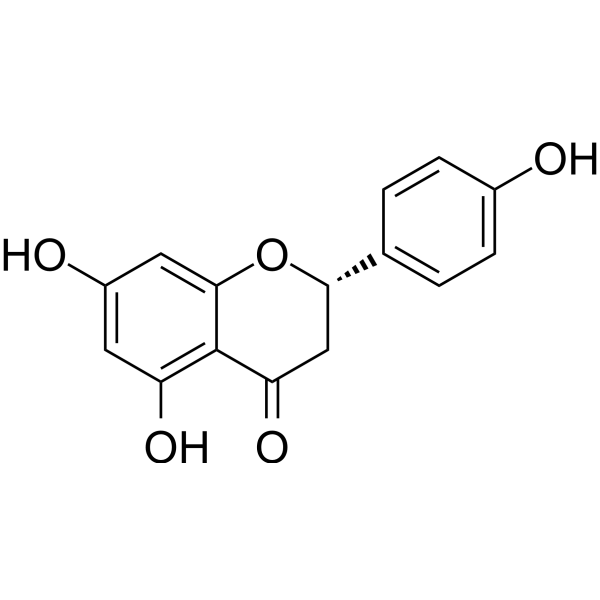
Naringenin is the predominant flavanone in Citrus reticulata Blanco; displays strong anti-inflammatory and antioxidant activities. Naringenin has anti-denguevirus(DENV) activity.
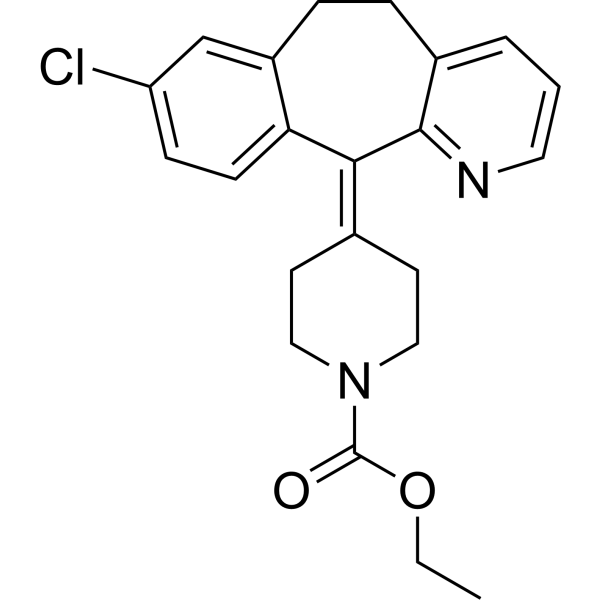
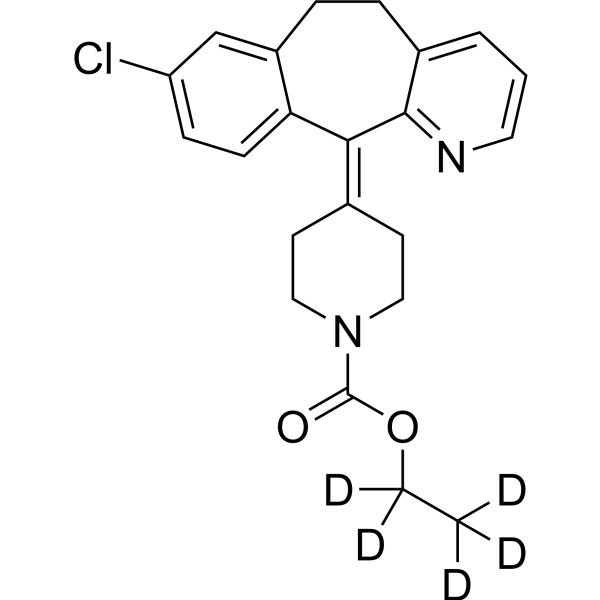
Loratadine (SCH-29851) is a selective inverse peripheral histamine H1-receptor agonist with an IC50 of >32 μM. Loratadine has anti-dengue-virus(DENV) activity. Loratadine can inhibit immunologic release of inflammatory mediators.
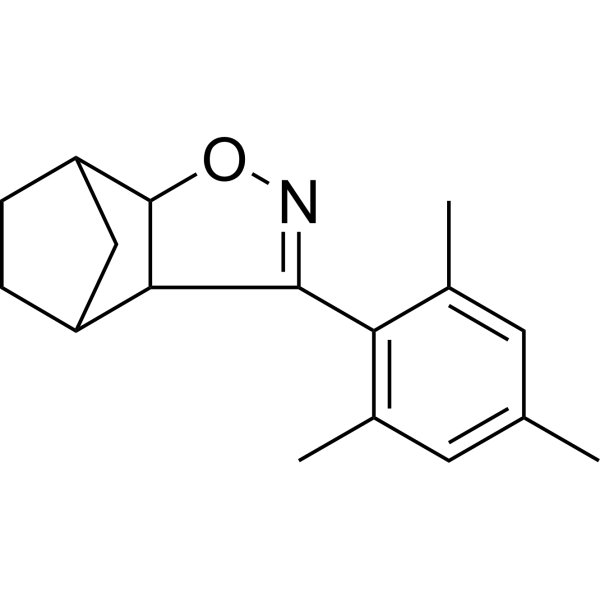
ML-SA1, as a selective TRPML agonist, inhibits Denguevirus 2 (DENV2) and Zika virus (ZIKV) by promoting lysosomal acidification and protease activity. The IC50 value of ML-SA1 against DENV2 RNA and ZIKV RNA is 8.3 μM and 52.99 μM, respectively. ML-SA1 induces autophagy. ML-SA1 can be used for the research of broad-spectrum antiviral .
Prochlorperazine dimaleate is an orally active phenothiazine-type dopamine D2 receptor (D2R) antagonist. Prochlorperazine exhibits anti-cancer activity in vitro against various cancer cell lines. Prochlorperazine dimaleate exhibits IC50 values of 6.4 μM, 4.5 μM and 2.3 μM for NOX1, NOX2 and NOX5, respectively. Prochlorperazine dimaleate has antedesmosidic activity against denguevirus (DENV). Prochlorperazine dimaleate can be used for research on nausea, vomiting, migraine, and schizophrenia .
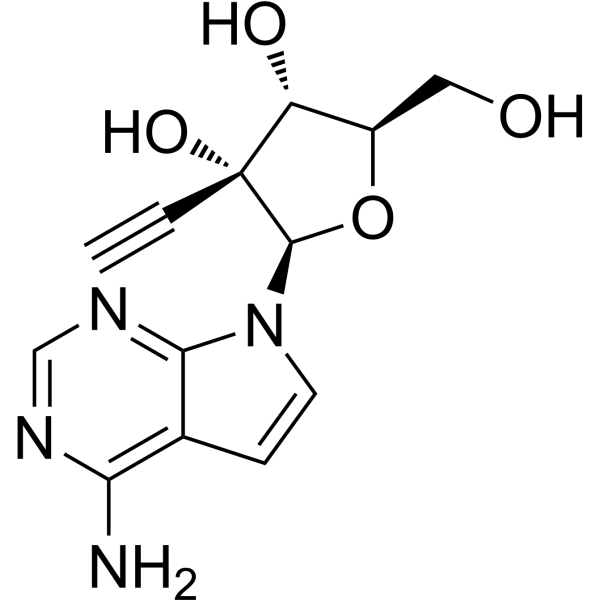
NITD008 is a potent and selective flaviviruse inhibitor which can inhibit DengueVirus Type 2 (DENV-2) with an EC50 of 0.64 μM. NITD008 is a click chemistry reagent, it contains an Alkyne group and can undergo copper-catalyzed azide-alkyne cycloaddition (CuAAc) with molecules containing Azide groups.
Mosnodenvir (JNJ-1802) is an orally active pan serotype denguevirus(DENV) inhibitor, with EC50 values ranging from 0.057 to 11 nM for four denguevirus(DENV) serotypes. Mosnodenvir blocks viral replication by inhibiting the formation of complexes between two viral proteins, nonstructural protein 3 (NS3) and NS4B, thereby preventing the formation of new viral RNA. Mosnodenvir exhibits picomolar to nanomolar antiviral activity in vitro and has antiviral efficacy in mice and non-human primates .
SN 2 is a potent activator of TRPML3 ion channel with an EC50 of 1.8 μM .
SN 2 also acts as a potent inhibitor of Denguevirus 2 (DENV2) and Zika virus (ZIKV) .
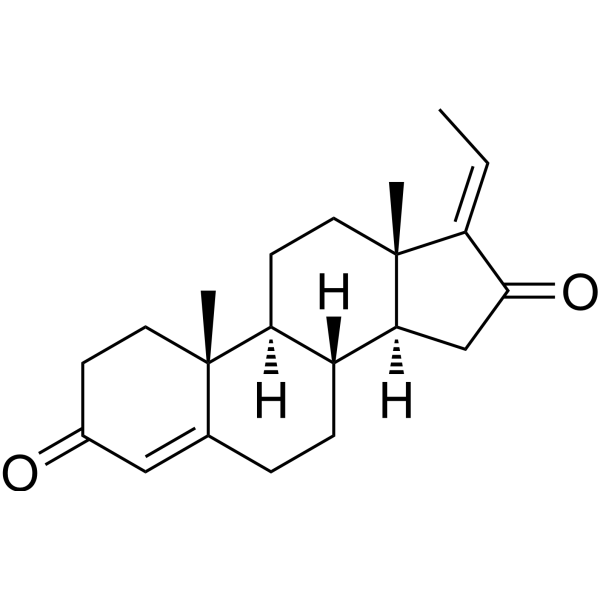
(-)-(E)-Guggulsterone ((E)-Guggulsterone) is an orally active natural stereoisomer of Guggulsterone (HY-107738). (-)-(E)-Guggulsterone is an antagonist for the Farnesoid X Receptor (FXR) with an IC50 of 24.06 μM and possesses potent hypolipidemic properties. (-)-(E)-Guggulsterone suppresses denguevirus (DENV) replication by upregulating antiviral interferon responses by inducing HO-1 expression via Nrf2 activation. (-)-(E)-Guggulsterone exhibits antibacterial activities against Bacillus subtilis, Staphylococcus aureus and Pseudomonas aeruginosa. (-)-(E)-Guggulsterone has cardiac protective and antioxidant activities in rats .
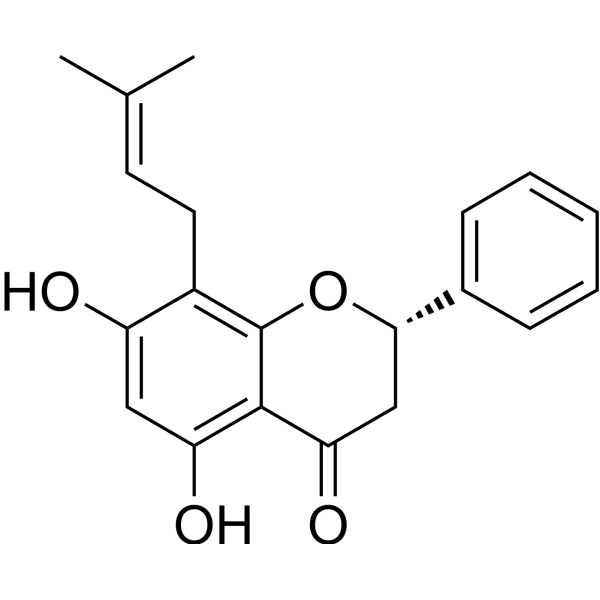
Glabranine, an flavonoid, is isolated from Tephrosia s.p, exerts a inhibitory effect in vitro on the denguevirus .
Glabranine forms interaction with the soluble ectodomain of DENV type 2 (DENV2) E protein .
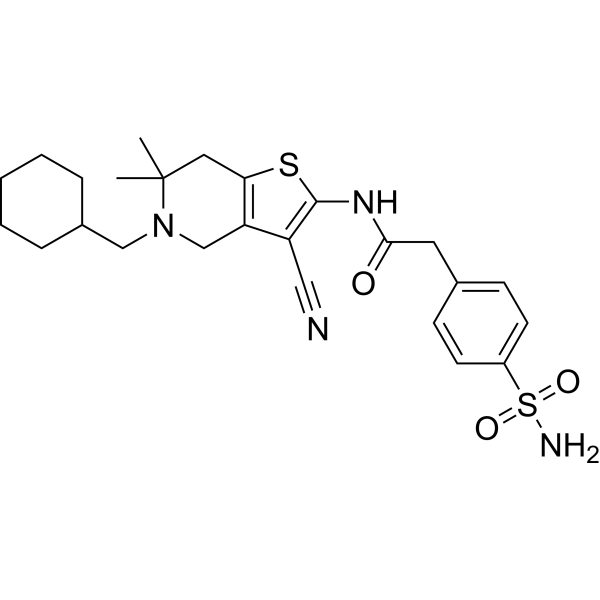
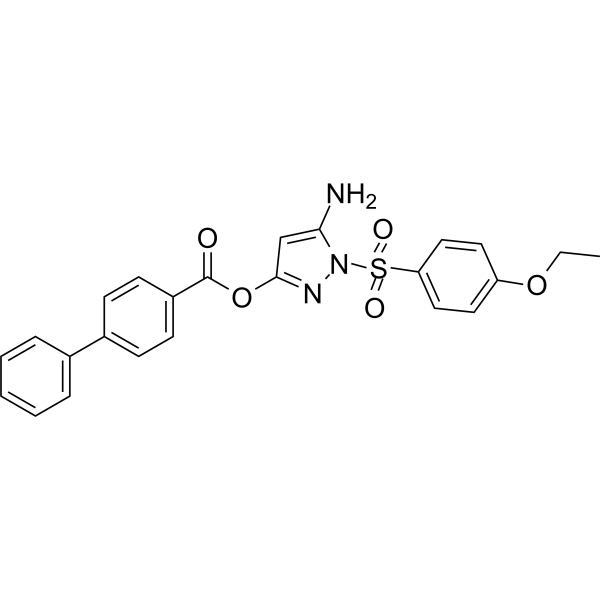
BP13944 is a potential small molecule inhibitor discovered by high-throughput screening. It can effectively inhibit the expression of denguevirus (DENV) replicons with an EC50 value of 1.03±0.09 μM. BP13944 can inhibit the replication or viral RNA synthesis of all four serotypes of DENV, but is ineffective against Japanese encephalitis virus. BP13944 may target the DENV NS3 protease, and the E66G amino acid substitution in the NS3 protease region will cause the virus to become resistant to BP13944. BP13944 has no obvious cytotoxicity. As there is currently no effective dengue vaccine and treatment, BP13944, as an effective small molecule inhibitor, may become a potential agent for the treatment of dengue in the future.
SP-471P is a potent denguevirus (DENV) protease inhibitor with EC50s of 5.9 μM, 1.4 μM, 5.1 μM and 1.7 μM for DENV1, DENV2, DENV3 and DENV4, respectively and CC50 value over 100 μM. SP-471P can reduce DENV viral RNA synthesis .
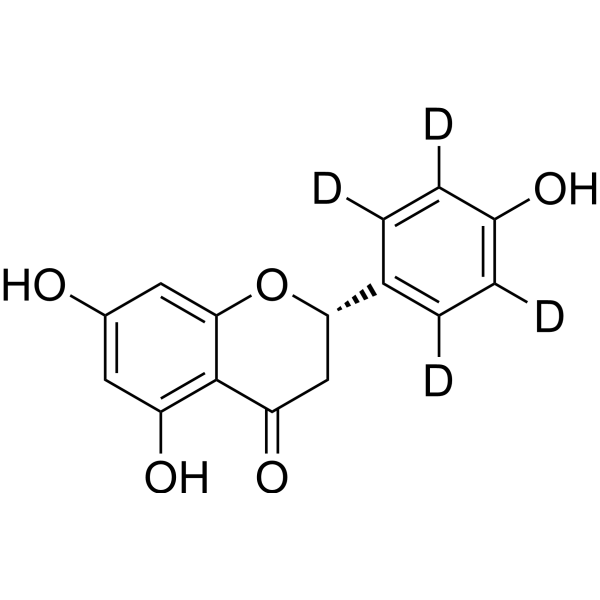
Naringenin-d4 is the deuterated version of Naringenin (HY-N0100). Naringenin shows strong anti-inflammatory and antioxidant activities. Naringenin has anti-denguevirus (DENV) activity .
Loratadine-d5 is the deuterium labeled Loratadine. Loratadine (SCH-29851) is a selective inverse peripheral histamine H1-receptor agonist with an IC50 of >32 μM. Loratadine has anti-dengue-virus (DENV) activity. Loratadine can inhibit immunologic release of inflammatory mediators.
NS2B/NS3-IN-2 is a potent denguevirus(DENV)NS2B/NS3 covalent inhibitor with an IC50 of 6.0 nM and Ki of 0.66 µM. NS2B/NS3-IN-2 shows no cytotoxicity and markedly increases the cell survival rate .
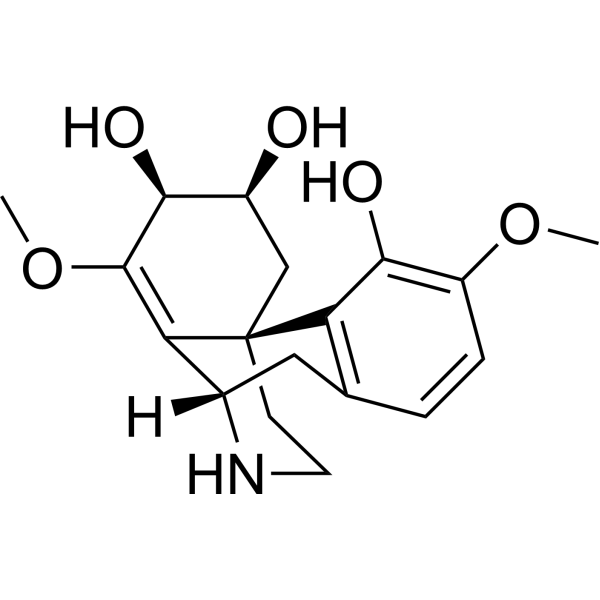
Sinococuline is a potent anti-dengue agent that is effective against all four serotypes of denguevirus (DENV). Sinococuline is also an effective tumor cell growth inhibitor .
DV-B-120 is a competitive inhibitor for denguevirus(DENV) with IC50s of 5.35, 7.39, 10.49 and 8.58 μM, for DENV-1, DENV-2, DENV-3 and DENV-4, respectively, by inhibiting NS2B-NS3 protease. DV-B-120 exhibits antiviral activity through inhibition of DENV replication .
ZINC03129319 is a denguevirus(DENV)NS2B-NS3 protease inhibitor extracted from patent US20150141521A1, has inhibition constants (Ki1) of 92 μM and Ki3 of 20 μM.
Loratadine (Standard) is the analytical standard of Loratadine. This product is intended for research and analytical applications. Loratadine (SCH-29851) is a selective inverse peripheral histamine H1-receptor agonist with an IC50 of >32 μM. Loratadine has anti-dengue-virus(DENV) activity. Loratadine can inhibit immunologic release of inflammatory mediators.
Lucidone, an anti-inflammatory agent that can be isolated from the fruit of Lindera erythrocarpa Makino. Lucidone inhibits LPS-induced NO and PGE2 production in RAW 264.7 mouse macrophages. Lucidone also decreases TNF-α secretion, iNOS and COX-2 expression. Lucidone prevents NF-κB translocation and inhibits JNK and p38MAPK signals. Lucidone also has inhibitory activity against Denguevirus(DENV) (EC50=25 μM) .
DENV-IN-7, a flavone analog, is a denguevirus(DENV) inhibitor with an EC50 value of 70 nM. DENV-IN-7 has low toxicity against normal cell and anti-dengue activity .
IHVR-19029 is a potent endoplasmic reticulum (ER) α-glucosidases I and II inhibitor, with an IC50 of 0.48 μM for ER a-glucosidase I. IHVR-19029 efficiently blocks the replication of several hemorrhagic fever viruses, such as Denguevirus (DENV), Ebola virus (EBOV) and Rift Valley fever virus. The combination of IHVR-19029 with Favipiravir (HY-14768) improves the antiviral efficacy .
Anti-West Nile/denguevirus E protein Antibody (E60) is mouse-derived IgG2a κ type antibody inhibitor, targeting to West Nile/denguevirus E protein. Anti-West Nile/denguevirus E protein Antibody (E60) can cross-neutralize West Nile virus (WNV) and denguevirus (DENV) envelope (E) protein. Anti-West Nile/denguevirus E protein Antibody (E60) can be used for the researches of WNV and DENV infection .
DENV-IN-5 (Compound 4b) is a denguevirus(DENV) inhibitor with EC50s of 1.47, 9.23, 7.08 and 8.91 μM against DENV-I ∼ IV replication, respectively. DENV-IN-5 also inhibits HIV-1IIIB strain with an EC50 of 0.1512 μM .
NS2B/NS3-IN-9 (Compound 73) is a broad-spectrum, non-competitive anti-Orthoflavivirus lipopeptide inhibitor targeting the NS2B-NS3 protease. NS2B/NS3-IN-9 exhibits IC50 values for DenguevirusDENV2 NS2B-NS3, West Nile virusWNV NS2B-NS3, and Zika virusZIKV NS2B-NS3 of 2.4, 7.2, and 1.9 μM, respectively. NS2B/NS3-IN-9 also exhibits antiviral activity at the cellular level against DENV2, WNV, and ZIKV, with EC50 values of 4.1, 4.9, and 5.0 μM, respectively. NS2B/NS3-IN-9 has no significant toxicity to cells. NS2B/NS3-IN-9 can be used for the study of anti-Orthoflavivirus .
Anti-Denguevirus type 2 E protein DIII Antibody (DV2-96) reacts with sites along the lateral ridge of the DIII domain on the E protein of denguevirus serotype 2 (DENV-2). Anti-Denguevirus type 2 E protein DIII Antibody (DV2-96) against DENV-2 new Guinea C (NGC) infection in mice. Recommend Isotype Controls: Mouse IgG2c kappa, Isotype Control (HY-P99981) .
Anti-Denguevirus type 4 E protein DIII Antibody (DV4-E88) reacts with the DIII domain on the E protein of denguevirus serotype 4 (DENV-4). Anti-Denguevirus type 4 E protein DIII Antibody (DV4-E88) neutralizes 1036, TVP-376, and TVP-986 genotype II strains of DENV-4. Recommend Isotype Controls: Mouse IgG2c kappa, Isotype Control (HY-P99981) .
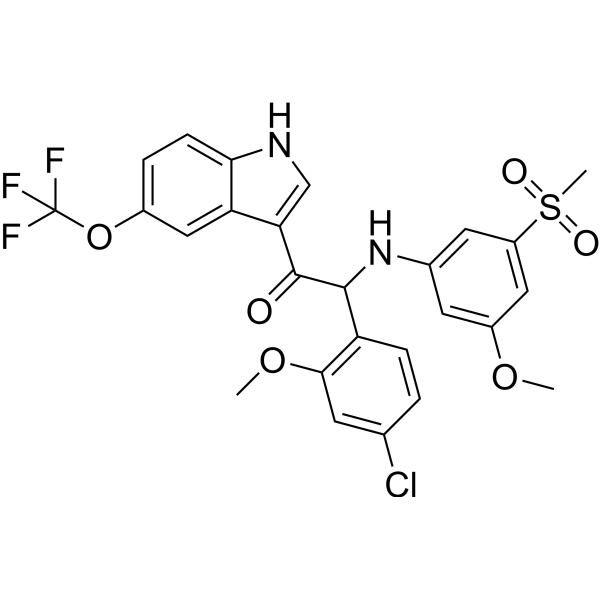
DENV-IN-14 (Compound 3c) is a thiazole hydrazone derivative with anti-denguevirus(DENV) activity with an EC50 of 0.01 μM and the selectivity index (SI) of 200. DENV-IN-14 exhibits rapid plasma clearance and its metabolic stability is limited. DENV-IN-14 can be used for research on dengue fever .
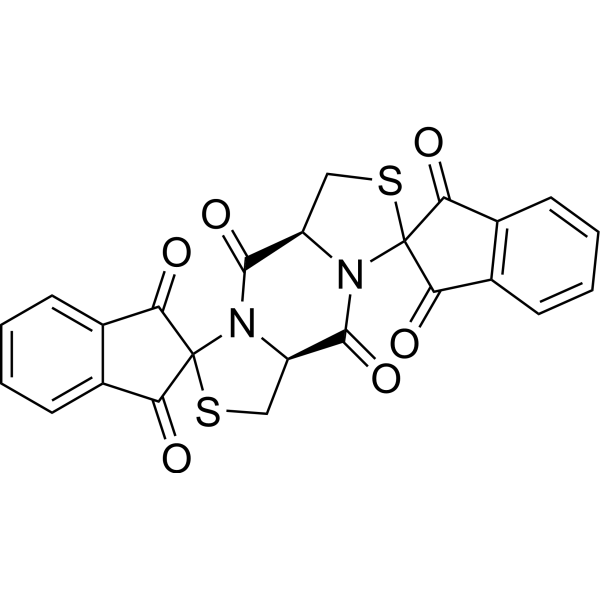
SP-471 is a potent denguevirus (DENV) protease inhibitor with IC50 value of 18 μM. SP-471 inhibits both intermolecular and intramolecular protease processes of DENV .
JMX0254 is an orally active and potent inhibitor of the denguevirus NS4B protein. JMX0254’s EC50 for DENV-1, DENV-2, and DENV-3 are 0.78 µM, 0.16 µM, and 0.035 µM, respectively. JMX0254 can be used for research on viral infections .
DENV-IN-2 is a potent dengue viral replication inhibitor extracted from patent WO2018215315A1, compound 6AB, has an EC50 of 0.016 nM. DENV-IN-2 shows high potent activity against all four serotypes of the Denguevirus with EC50s ranging from 0.013 to 0.029 nM .
SDM25N is a Denguevirus(DENV) inhibitor with an EC50 of 1.9 µM. SDM25N inhibits DENV in a cell type-specific manner. SDM25N restricts genomic RNA replication by targeting the viral NS4B protein. SDM25N can be used for DENV infection research .
GAK inhibitor 2 (Compound 14g) is a potent cyclin G-associated kinase (GAK) inhibitor with an IC50 of 0.024 μM. GAK inhibitor 2 shows antiviral activity with an EC50 of 1.049 μM against denguevirus (DENV) .
NSC-323241 is a potent STT3A-mediated mega protein complex assembly inhibitor. NSC-323241 disrupts he endoplasmic reticulum (ER) mega complex nucleated by STT3A during denguevirus (DENV) and Zika virus (ZIKV) infection. NSC-323241 targets the binding of STT3A subcomplex with viral nonstructural proteins (e.g., NS2B, NS3) and host translocon proteins, disrupting the formation of viral replication microenvironment. NSC-323241 is promising for research of flavivirus infection, such as dengue fever and Zika virus .
GNF-2-deg is a PROTAC degrader for denguevirus envelope protein (DENV E protein) with DC50 of 0.83 μM. GNF-2-deg prevents viral entry by inhibiting E-mediated membrane fusion, prevents virion production by protein degradation, and thereby exhibits antiviral activity against DENV 2 with EC90 of 3.5 μM. GNF-2-deg exhibits antiviral activity against ZIKV, JEV, WNV and YFV with EC90 of 1.96-7.79 μM. (Pink: ligand for target protein (HY-161805); Black: linker (HY-42149); Blue: ligand for E3 ligase (HY-23095))
Antiviral agent 36 (compound 27) is a potent dengue(DENV) and Zika (ZIKV) viruses inhibitor. Antiviral agent 36 inhibits replication of Zika and denguevirus with EC50s of 100 nM, 90 nM, 210 nM, and 120 nM for ZIKV-FLR, ZIKV-HN16, DENV-2, and DENV-3, respectively .
MLH40 is a peptide inhibitor with activity against Denguevirus(DENV) infection, which is found in the conserved ectodomain region of DENV membrane protein. MLH40 inhibits DENV through its N-terminal loop interaction with DENV envelope protein and altering the dimer conformation .
Naringenin (Standard) is the analytical standard of Naringenin. This product is intended for research and analytical applications. Naringenin is the predominant flavanone in Citrus reticulata Blanco; displays strong anti-inflammatory and antioxidant activities. Naringenin has anti-denguevirus (DENV) activity.
Loratadine-d4 is the deuterium labeled Loratadine. Loratadine (SCH-29851) is a selective inverse peripheral histamine H1-receptor agonist with an IC50 of >32 μM. Loratadine has anti-dengue-virus (DENV) activity. Loratadine can inhibit immunologic release of inflammatory mediators.
Loratadine-d5-1 is a deuterated labeled Loratadine (HY-17043). Loratadine (SCH-29851) is a selective inverse peripheral histamine H1-receptor agonist with an IC50 of >32 μM. Loratadine has anti-dengue-virus (DENV) activity. Loratadine can inhibit immunologic release of inflammatory mediators.
Loratadine-d4-1 (Loratidine-d4-1) is deuterium labeled Loratadine. Loratadine (SCH-29851) is a selective inverse peripheral histamine H1-receptor agonist with an IC50 of >32 μM. Loratadine has anti-dengue-virus(DENV) activity. Loratadine can inhibit immunologic release of inflammatory mediators .
Loratadine- 13C6 (SCH 29851- 13C6) is 13C labeled Loratadine. Loratadine (SCH-29851) is a selective inverse peripheral histamine H1-receptor agonist with an IC50 of >32 μM. Loratadine has anti-dengue-virus(DENV) activity. Loratadine can inhibit immunologic release of inflammatory mediators.
Amustaline (S-303) is a compound used for inactivating pathogens in blood components and belongs to the category of nucleic acid-targeted chemical decontaminants. Amustaline has the ability to inactivate viruses and is effective against mosquito-borne viruses such as Chikungunya virus (CHIKV), Denguevirus(DENV), and Zika virus (ZIKV). When combined with glutathione (Glutathione, GSH), which acts as a neutralizer to counteract adverse reactions, Amustaline ensures the stability of red blood cell membranes. Amustaline is mainly used for inactivating pathogens in red blood cell concentrates (RBCC) to reduce the risk of transfusion-transmitted infections (TTI) .
(-)-(E) -guggulsterone (Standard) is the analytical standard for (-)-(E) -guggulsterone ((E)-Guggulsterone) (HY-N7781). (-)-(E)-Guggulsterone is an orally active natural stereoisomer of Guggulsterone (HY-107738). (-)-(E)-Guggulsterone is an antagonist for the Farnesoid X Receptor (FXR) with an IC50 of 24.06 μM and possesses potent hypolipidemic properties. (-)-(E)-Guggulsterone suppresses denguevirus (DENV) replication by upregulating antiviral interferon responses by inducing HO-1 expression via Nrf2 activation. (-)-(E)-Guggulsterone exhibits antibacterial activities against Bacillus subtilis, Staphylococcus aureus and Pseudomonas aeruginosa. (-)-(E)-Guggulsterone has cardiac protective and antioxidant activities in rats.
Peridinin is a hydroxylated carotenoid ketone that exhibits inhibitory activity against DENV NS2B/NS3 protease and all denguevirus serotypes (DENV-1,DENV-2, DENV-3, DENV-4). Peridinin inhibits denguevirus production and reduces viral titers. Peridinin is applicable to research related to denguevirus infection .
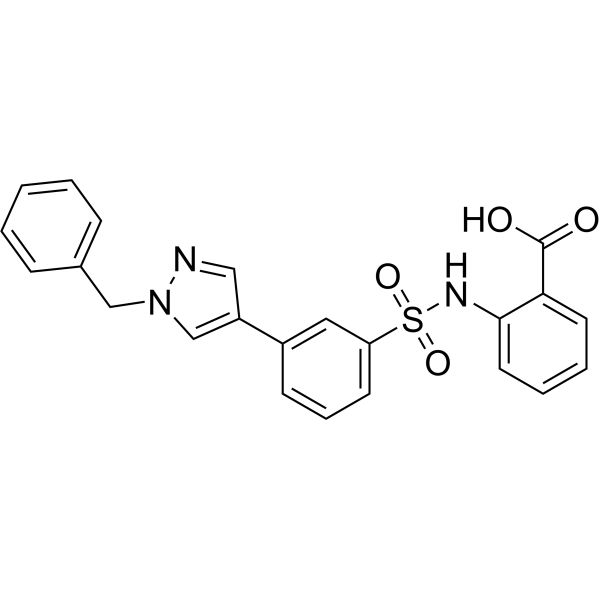
DENV-IN-15 is a sulfonyl anthranilic acid derivative and a pan-serotype anti-denguevirus(DENV) inhibitor with broad-spectrum anti-RNA virus activity. The EC50 value of DENV-IN-15 against DENV-2 in Huh-7 cells is 0.7 μM. DENV-IN-15 selectively regulates the translation of mRNAs encoding translation-related proteins and containing a 5'-oligopyrimidine tract. DENV-IN-15 reduces the expression of specific ribosomal proteins, thereby inhibiting viral replication. DENV-IN-15 exhibits enhanced membrane permeability, human plasma stability and human liver microsomal metabolic stability. DENV-IN-15 is applicable to research related to denguevirus infection .
(+)-Mosnodenvir is an isomer of Mosnodenvir (HY-153810). Mosnodenvir (JNJ-1802) is an orally active pan serotype denguevirus(DENV) inhibitor, with EC50 values ranging from 0.057 to 11 nM for four denguevirus (DENV) serotypes. Mosnodenvir blocks viral replication by inhibiting the formation of complexes between two viral proteins, nonstructural protein 3 (NS3) and NS4B, thereby preventing the formation of new viral RNA. Mosnodenvir exhibits picomolar to nanomolar antiviral activity in vitro and has antiviral efficacy in mice and non-human primates .
MTase-IN-2 (compound 32) is a potent NS5 methyltransferase inhibitor with IC50s of 2.14 μM and 2.01 μM against the Denguevirus (DENV3) MTase domain and Zika virus (ZIKV) NS5 MTase domain, respectively .
RPG-01-132 is a DENV capsid protein PROTAC degrader, with a DC50 of 2.4 μM. RPG-01-132 blocks viral assembly, eliminates viral particles, and interferes with the non-structural functions of capsid protein. RPG-01-132 exhibits significant antiviral activity against all four DENV serotypes and the ST148 (HY-121663)-resistant DENV2 mutant strain. RPG-01-132 is applicable to research related to denguevirus infection .
CN-716 dihydrochloride is a reversible covalent flavivirus NS2B·NS3 protease inhibitor with antiviral activity. CN-716 dihydrochloride effectively inhibits the replication of denguevirus(DENV2), West Nile virus (WNV) and Zika virus (ZIKV). The IC50 values of CN-716 dihydrochloride against the proteases of the above three viruses are 0.066 μM, 0.11 μM and 0.25 μM, respectively, while the Ki values against the same proteases are 0.051 μM, 0.082 μM and 0.04 μM, respectively. CN-716 dihydrochloride can be used to study the infection mechanisms of dengue fever, West Nile fever and Zika virus infection .
ML-SA1 (Standard) is the analytical standard of ML-SA1 (HY-108462). This product is intended for research and analytical applications. ML-SA1, as a selective TRPML agonist, inhibits Denguevirus 2 (DENV2) and Zika virus (ZIKV) by promoting lysosomal acidification and protease activity. The IC50 value of ML-SA1 against DENV2 RNA and ZIKV RNA is 8.3 μM and 52.99 μM, respectively. ML-SA1 induces autophagy. ML-SA1 can be used for the research of broad-spectrum antiviral .
ToP-DNJ is a selective endoplasmic reticulum α-glucosidase II (GluII) inhibitor with an IC50 value of 9.0 μM. ToP-DNJ selectively inhibits the two catalytic reactions of GluII, and exhibits stronger activity in the first step of converting di-glycosylated glycans to mono-glycosylated glycans. ToP-DNJ exhibits anti-DENV activity. ToP-DNJ can be used in studies related to denguevirus infection .
IRBM-Z-1 is a non-competitive inhibitor of Zika virus (ZIKV) NS2B-NS3 protease, with an IC50 of 1.8 μM. IRBM-Z-1 also exhibits inhibitory activity against the NS2B-NS3 proteases of T156I-mutated denguevirus 2 (DENV2) and West Nile virus (WNV), with IC50 values of 3.9 μM and 4.7 μM, respectively. IRBM-Z-1 inhibits ZIKV replication, attenuates virus-induced cytopathic effects. IRBM-Z-1 is applicable to research related to ZIKV infection .
IRBM-Z-2 is a non-competitive, orally active Zika virus (ZIKV) NS2B-NS3 protease inhibitor, with IC50 values of 0.04 μM and 3.1 μM against the wild-type and I156T mutant strains, respectively. IRBM-Z-2 exhibits broad-spectrum anti-flavivirus potential, with IC50 values of 2.1 μM and 0.09 μM against the NS2B-NS3 proteases of denguevirus 2 (DENV2) and West Nile virus (WNV), respectively. IRBM-Z-1 inhibits ZIKV replication and alleviates virus-induced cytopathic effects. IRBM-Z-1 can be used in studies related to ZIKV infection .
MLH40 is a peptide inhibitor with activity against Denguevirus(DENV) infection, which is found in the conserved ectodomain region of DENV membrane protein. MLH40 inhibits DENV through its N-terminal loop interaction with DENV envelope protein and altering the dimer conformation .
Anti-West Nile/denguevirus E protein Antibody (E60) is mouse-derived IgG2a κ type antibody inhibitor, targeting to West Nile/denguevirus E protein. Anti-West Nile/denguevirus E protein Antibody (E60) can cross-neutralize West Nile virus (WNV) and denguevirus (DENV) envelope (E) protein. Anti-West Nile/denguevirus E protein Antibody (E60) can be used for the researches of WNV and DENV infection .
Anti-Denguevirus type 2 E protein DIII Antibody (DV2-96) reacts with sites along the lateral ridge of the DIII domain on the E protein of denguevirus serotype 2 (DENV-2). Anti-Denguevirus type 2 E protein DIII Antibody (DV2-96) against DENV-2 new Guinea C (NGC) infection in mice. Recommend Isotype Controls: Mouse IgG2c kappa, Isotype Control (HY-P99981) .
Anti-Denguevirus type 4 E protein DIII Antibody (DV4-E88) reacts with the DIII domain on the E protein of denguevirus serotype 4 (DENV-4). Anti-Denguevirus type 4 E protein DIII Antibody (DV4-E88) neutralizes 1036, TVP-376, and TVP-986 genotype II strains of DENV-4. Recommend Isotype Controls: Mouse IgG2c kappa, Isotype Control (HY-P99981) .
Naringenin is the predominant flavanone in Citrus reticulata Blanco; displays strong anti-inflammatory and antioxidant activities. Naringenin has anti-denguevirus(DENV) activity.
(-)-(E)-Guggulsterone ((E)-Guggulsterone) is an orally active natural stereoisomer of Guggulsterone (HY-107738). (-)-(E)-Guggulsterone is an antagonist for the Farnesoid X Receptor (FXR) with an IC50 of 24.06 μM and possesses potent hypolipidemic properties. (-)-(E)-Guggulsterone suppresses denguevirus (DENV) replication by upregulating antiviral interferon responses by inducing HO-1 expression via Nrf2 activation. (-)-(E)-Guggulsterone exhibits antibacterial activities against Bacillus subtilis, Staphylococcus aureus and Pseudomonas aeruginosa. (-)-(E)-Guggulsterone has cardiac protective and antioxidant activities in rats .
Glabranine, an flavonoid, is isolated from Tephrosia s.p, exerts a inhibitory effect in vitro on the denguevirus .
Glabranine forms interaction with the soluble ectodomain of DENV type 2 (DENV2) E protein .
Sinococuline is a potent anti-dengue agent that is effective against all four serotypes of denguevirus (DENV). Sinococuline is also an effective tumor cell growth inhibitor .
Lucidone, an anti-inflammatory agent that can be isolated from the fruit of Lindera erythrocarpa Makino. Lucidone inhibits LPS-induced NO and PGE2 production in RAW 264.7 mouse macrophages. Lucidone also decreases TNF-α secretion, iNOS and COX-2 expression. Lucidone prevents NF-κB translocation and inhibits JNK and p38MAPK signals. Lucidone also has inhibitory activity against Denguevirus(DENV) (EC50=25 μM) .
Naringenin (Standard) is the analytical standard of Naringenin. This product is intended for research and analytical applications. Naringenin is the predominant flavanone in Citrus reticulata Blanco; displays strong anti-inflammatory and antioxidant activities. Naringenin has anti-denguevirus (DENV) activity.
(-)-(E) -guggulsterone (Standard) is the analytical standard for (-)-(E) -guggulsterone ((E)-Guggulsterone) (HY-N7781). (-)-(E)-Guggulsterone is an orally active natural stereoisomer of Guggulsterone (HY-107738). (-)-(E)-Guggulsterone is an antagonist for the Farnesoid X Receptor (FXR) with an IC50 of 24.06 μM and possesses potent hypolipidemic properties. (-)-(E)-Guggulsterone suppresses denguevirus (DENV) replication by upregulating antiviral interferon responses by inducing HO-1 expression via Nrf2 activation. (-)-(E)-Guggulsterone exhibits antibacterial activities against Bacillus subtilis, Staphylococcus aureus and Pseudomonas aeruginosa. (-)-(E)-Guggulsterone has cardiac protective and antioxidant activities in rats.
Peridinin is a hydroxylated carotenoid ketone that exhibits inhibitory activity against DENV NS2B/NS3 protease and all denguevirus serotypes (DENV-1,DENV-2, DENV-3, DENV-4). Peridinin inhibits denguevirus production and reduces viral titers. Peridinin is applicable to research related to denguevirus infection .
The NS1 protein plays a key role in viral budding, association with cell membranes, and facilitating the assembly of viral RNA into nucleocapsids to form mature viral particles.During entry, NS1 induces genome penetration into the host cytoplasm.NS1 Protein, Dengue virus 1 (HEK293, His) is the recombinant Virus-derived NS1 protein, expressed by HEK293 , with N-His labeled tag.
The NS1 protein plays a key role in viral budding, association with cell membranes, and facilitating the assembly of viral RNA into nucleocapsids to form mature viral particles. During entry, NS1 induces genome penetration into the host cytoplasm. NS1 Protein, Dengue virus 4 (HEK293, His) is the recombinant Virus-derived NS1 protein, expressed by HEK293 , with N-His labeled tag.
The NS1 protein plays a key role in viral budding, association with cell membranes, and facilitating the assembly of viral RNA into nucleocapsids to form mature viral particles. During entry, NS1 induces genome penetration into the host cytoplasm. NS1 Protein, Dengue virus 3 (HEK293, His) is the recombinant Virus-derived NS1 protein, expressed by HEK293 , with N-His labeled tag.
The NS1 protein plays a key role in viral budding, association with cell membranes, and facilitating the assembly of viral RNA into nucleocapsids to form mature viral particles. During entry, NS1 induces genome penetration into the host cytoplasm. NS1 Protein, Dengue virus 2 (HEK293, His) is the recombinant Virus-derived NS1 protein, expressed by HEK293 , with N-His labeled tag.
The NS1 protein plays a key role in viral budding, association with cell membranes, and facilitating the assembly of viral RNA into nucleocapsids to form mature viral particles. During entry, NS1 induces genome penetration into the host cytoplasm. NS1 Protein, Dengue virus 2 (HEK293, C-His) is the recombinant Virus-derived NS1 protein, expressed by HEK293 , with C-His labeled tag.
The NS1 protein plays a key role in viral budding, association with cell membranes, and facilitating the assembly of viral RNA into nucleocapsids to form mature viral particles.During entry, NS1 induces genome penetration into the host cytoplasm.E/Envelope Protein, Dengue virus 1 (101a.a, sf9, His) is the recombinant Virus-derived E/Envelope protein, expressed by Sf9 insect cells , with C-His labeled tag.
NS5 Protein is part of the flavivirus RNA replication complex (RC) composed of viral non-structural proteins and host-cell cofactors. NS5 is the largest flavivirus protein, the most conserved, which act as two domains, the RNA-dependent RNA polymerase (RdRp) and RNA methyltransferase enzyme (MTase). NS5 plays a fundamental role in flavivirus replication, viral RNA methylation, RNA polymerization, and host immune system evasion. NS5 Protein, Dengue virus 2 (His) is the recombinant Virus-derived NS5 protein, expressed by E. coli , with N-His labeled tag.
The NS1 protein plays a key role in viral budding, association with cell membranes, and facilitating the assembly of viral RNA into nucleocapsids to form mature viral particles.During entry, NS1 induces genome penetration into the host cytoplasm.E/Envelope Protein, Dengue virus 4 (395a.a, sf9, His) is the recombinant Virus-derived E/Envelope protein, expressed by Sf9 insect cells , with C-His labeled tag.
The NS1 protein plays a key role in viral budding, association with cell membranes, and facilitating the assembly of viral RNA into nucleocapsids to form mature viral particles.During entry, NS1 induces genome penetration into the host cytoplasm.E/Envelope Protein, Dengue virus 4 (101a.a, HEK293, His) is the recombinant Virus-derived E/Envelope protein, expressed by HEK293 , with C-His labeled tag.
E/Envelope Protein, Dengue virus 2 (102a.a, P.pastoris, His) is the recombinant Virus-derived E/Envelope protein, expressed by P. pastoris, with C-His labeled tag.
E/Envelope Protein, Dengue virus 2 (103a.a, P.pastoris, His) is the recombinant Virus-derived E/Envelope protein, expressed by P. pastoris, with C-His labeled tag.
The NS1 protein plays a key role in viral budding, association with cell membranes, and facilitating the assembly of viral RNA into nucleocapsids to form mature viral particles.During entry, NS1 induces genome penetration into the host cytoplasm.E/Envelope Protein, Dengue virus 1 (101a.a, HEK293, His) is the recombinant Virus-derived E/Envelope protein, expressed by HEK293 , with C-His labeled tag.
The NS1 protein plays a key role in viral budding, association with cell membranes, and facilitating the assembly of viral RNA into nucleocapsids to form mature viral particles. During entry, NS1 induces genome penetration into the host cytoplasm. E/Envelope Protein, Dengue virus 3 (429a.a, HEK293, His) is the recombinant Virus-derived E/Envelope protein, expressed by HEK293 , with C-His labeled tag.
Naringenin-d4 is the deuterated version of Naringenin (HY-N0100). Naringenin shows strong anti-inflammatory and antioxidant activities. Naringenin has anti-denguevirus (DENV) activity .
Loratadine-d5 is the deuterium labeled Loratadine. Loratadine (SCH-29851) is a selective inverse peripheral histamine H1-receptor agonist with an IC50 of >32 μM. Loratadine has anti-dengue-virus (DENV) activity. Loratadine can inhibit immunologic release of inflammatory mediators.
Loratadine-d4 is the deuterium labeled Loratadine. Loratadine (SCH-29851) is a selective inverse peripheral histamine H1-receptor agonist with an IC50 of >32 μM. Loratadine has anti-dengue-virus (DENV) activity. Loratadine can inhibit immunologic release of inflammatory mediators.
Loratadine-d5-1 is a deuterated labeled Loratadine (HY-17043). Loratadine (SCH-29851) is a selective inverse peripheral histamine H1-receptor agonist with an IC50 of >32 μM. Loratadine has anti-dengue-virus (DENV) activity. Loratadine can inhibit immunologic release of inflammatory mediators.
Loratadine-d4-1 (Loratidine-d4-1) is deuterium labeled Loratadine. Loratadine (SCH-29851) is a selective inverse peripheral histamine H1-receptor agonist with an IC50 of >32 μM. Loratadine has anti-dengue-virus(DENV) activity. Loratadine can inhibit immunologic release of inflammatory mediators .
Loratadine- 13C6 (SCH 29851- 13C6) is 13C labeled Loratadine. Loratadine (SCH-29851) is a selective inverse peripheral histamine H1-receptor agonist with an IC50 of >32 μM. Loratadine has anti-dengue-virus(DENV) activity. Loratadine can inhibit immunologic release of inflammatory mediators.
NITD008 is a potent and selective flaviviruse inhibitor which can inhibit DengueVirus Type 2 (DENV-2) with an EC50 of 0.64 μM. NITD008 is a click chemistry reagent, it contains an Alkyne group and can undergo copper-catalyzed azide-alkyne cycloaddition (CuAAc) with molecules containing Azide groups.
Inquiry Online
Your information is safe with us. * Required Fields.
Western blot analysis of extracts from THP-1(lane 2(20μg), Jurkat (lane 3(20μg) and NIH3T3(lane 4(20μg) using FOXO1A (HY-P80132) Rabbit mAb. Proteins were transferred
to a PVDF membrane and blocked with 5% non-fat milk in TBST for 2 hour at room temperature. The primary antibody (1/1000) and Loading control antibody (Beta Actin, HY-P80438, 1/10000) was
used in 5% non-fat milk in TBST at 4°C overnight. Goat Anti-Mouse/Rabbit IgG-HRP Secondary Antibody (1/10000) was used for 1 hour at room temperature.
Western blot analysis of extracts from THP-1(lane 2(20μg), Jurkat (lane 3(20μg) and NIH3T3(lane 4(20μg) using FOXO1A (HY-P80132) Rabbit mAb. Proteins were transferred
to a PVDF membrane and blocked with 5% non-fat milk in TBST for 2 hour at room temperature. The primary antibody (1/1000) and Loading control antibody (Beta Actin, HY-P80438, 1/10000) was
used in 5% non-fat milk in TBST at 4°C overnight. Goat Anti-Mouse/Rabbit IgG-HRP Secondary Antibody (1/10000) was used for 1 hour at room temperature.
Western blot analysis of extracts from THP-1(lane 2(20μg), Jurkat (lane 3(20μg) and NIH3T3(lane 4(20μg) using FOXO1A (HY-P80132) Rabbit mAb. Proteins were transferred
to a PVDF membrane and blocked with 5% non-fat milk in TBST for 2 hour at room temperature. The primary antibody (1/1000) and Loading control antibody (Beta Actin, HY-P80438, 1/10000) was
used in 5% non-fat milk in TBST at 4°C overnight. Goat Anti-Mouse/Rabbit IgG-HRP Secondary Antibody (1/10000) was used for 1 hour at room temperature.
Western blot analysis of extracts from THP-1(lane 2(20μg), Jurkat (lane 3(20μg) and NIH3T3(lane 4(20μg) using FOXO1A (HY-P80132) Rabbit mAb. Proteins were transferred
to a PVDF membrane and blocked with 5% non-fat milk in TBST for 2 hour at room temperature. The primary antibody (1/1000) and Loading control antibody (Beta Actin, HY-P80438, 1/10000) was
MedchemExpress Validation 03
Western blot analysis of extracts from THP-1(lane 2(20μg), Jurkat (lane 3(20μg) and NIH3T3(lane 4(20μg) using FOXO1A (HY-P80132) Rabbit mAb. Proteins were transferred
MedchemExpress Validation 04
Western blot analysis of extracts from THP-1(lane 2(20μg), Jurkat (lane 3(20μg) and NIH3T3(lane 4(20μg) using FOXO1A (HY-P80132) Rabbit mAb. Proteins were transferred
to a PVDF membrane and blocked with 5% non-fat milk in TBST for 2 hour at room temperature. The primary antibody (1/1000) and Loading control antibody (Beta Actin, HY-P80438, 1/10000) was
used in 5% non-fat milk in TBST at 4°C overnight. Goat Anti-Mouse/Rabbit IgG-HRP Secondary Antibody (1/10000) was used for 1 hour at room temperature.
MedchemExpress Validation
Western blot analysis of extracts from THP-1(lane 2(20μg), Jurkat (lane 3(20μg) and NIH3T3(lane 4(20μg) using FOXO1A (HY-P80132) Rabbit mAb. Proteins were transferred
to a PVDF membrane and blocked with 5% non-fat milk in TBST for 2 hour at room temperature. The primary antibody (1/1000) and Loading control antibody (Beta Actin, HY-P80438, 1/10000) was
used in 5% non-fat milk in TBST at 4°C overnight. Goat Anti-Mouse/Rabbit IgG-HRP Secondary Antibody (1/10000) was used for 1 hour at room temperature.
Western blot analysis of extracts from THP-1(lane 2(20μg), Jurkat (lane 3(20μg) and NIH3T3(lane 4(20μg) using FOXO1A (HY-P80132) Rabbit mAb. Proteins were transferred
to a PVDF membrane and blocked with 5% non-fat milk in TBST for 2 hour at room temperature. The primary antibody (1/1000) and Loading control antibody (Beta Actin, HY-P80438, 1/10000) was
used in 5% non-fat milk in TBST at 4°C overnight. Goat Anti-Mouse/Rabbit IgG-HRP Secondary Antibody (1/10000) was used for 1 hour at room temperature.
MedchemExpress Validation
Western blot analysis of extracts from THP-1(lane 2(20μg), Jurkat (lane 3(20μg) and NIH3T3(lane 4(20μg) using FOXO1A (HY-P80132) Rabbit mAb. Proteins were transferred
to a PVDF membrane and blocked with 5% non-fat milk in TBST for 2 hour at room temperature. The primary antibody (1/1000) and Loading control antibody (Beta Actin, HY-P80438, 1/10000) was
used in 5% non-fat milk in TBST at 4°C overnight. Goat Anti-Mouse/Rabbit IgG-HRP Secondary Antibody (1/10000) was used for 1 hour at room temperature.
MedchemExpress Validation
Western blot analysis of extracts from THP-1(lane 2(20μg), Jurkat (lane 3(20μg) and NIH3T3(lane 4(20μg) using FOXO1A (HY-P80132) Rabbit mAb. Proteins were transferred
to a PVDF membrane and blocked with 5% non-fat milk in TBST for 2 hour at room temperature. The primary antibody (1/1000) and Loading control antibody (Beta Actin, HY-P80438, 1/10000) was
used in 5% non-fat milk in TBST at 4°C overnight. Goat Anti-Mouse/Rabbit IgG-HRP Secondary Antibody (1/10000) was used for 1 hour at room temperature.
MedchemExpress Validation
Western blot analysis of extracts from THP-1(lane 2(20μg), Jurkat (lane 3(20μg) and NIH3T3(lane 4(20μg) using FOXO1A (HY-P80132) Rabbit mAb. Proteins were transferred
to a PVDF membrane and blocked with 5% non-fat milk in TBST for 2 hour at room temperature. The primary antibody (1/1000) and Loading control antibody (Beta Actin, HY-P80438, 1/10000) was
used in 5% non-fat milk in TBST at 4°C overnight. Goat Anti-Mouse/Rabbit IgG-HRP Secondary Antibody (1/10000) was used for 1 hour at room temperature.
MedchemExpress Validation
Western blot analysis of extracts from THP-1(lane 2(20μg), Jurkat (lane 3(20μg) and NIH3T3(lane 4(20μg) using FOXO1A (HY-P80132) Rabbit mAb. Proteins were transferred
to a PVDF membrane and blocked with 5% non-fat milk in TBST for 2 hour at room temperature. The primary antibody (1/1000) and Loading control antibody (Beta Actin, HY-P80438, 1/10000) was
used in 5% non-fat milk in TBST at 4°C overnight. Goat Anti-Mouse/Rabbit IgG-HRP Secondary Antibody (1/10000) was used for 1 hour at room temperature.
MedchemExpress Validation
Western blot analysis of extracts from THP-1(lane 2(20μg), Jurkat (lane 3(20μg) and NIH3T3(lane 4(20μg) using FOXO1A (HY-P80132) Rabbit mAb. Proteins were transferred
to a PVDF membrane and blocked with 5% non-fat milk in TBST for 2 hour at room temperature. The primary antibody (1/1000) and Loading control antibody (Beta Actin, HY-P80438, 1/10000) was
used in 5% non-fat milk in TBST at 4°C overnight. Goat Anti-Mouse/Rabbit IgG-HRP Secondary Antibody (1/10000) was used for 1 hour at room temperature.
MedchemExpress Validation
Western blot analysis of extracts from THP-1(lane 2(20μg), Jurkat (lane 3(20μg) and NIH3T3(lane 4(20μg) using FOXO1A (HY-P80132) Rabbit mAb. Proteins were transferred
to a PVDF membrane and blocked with 5% non-fat milk in TBST for 2 hour at room temperature. The primary antibody (1/1000) and Loading control antibody (Beta Actin, HY-P80438, 1/10000) was
used in 5% non-fat milk in TBST at 4°C overnight. Goat Anti-Mouse/Rabbit IgG-HRP Secondary Antibody (1/10000) was used for 1 hour at room temperature.
MedChemExpress values your privacy and your trust is important to us. We use cookies to enhance your website experience. Some cookies are necessary to run the website.
Privacy and Cookie Policy

