



Loratadine
Based on 14 publication(s) in Google Scholar
Loratadine (SCH-29851) is a selective inverse peripheral histamine H1-receptor agonist with an IC50 of >32 μM. Loratadine has anti-dengue-virus (DENV) activity. Loratadine can inhibit immunologic release of inflammatory mediators.
For research use only. We do not sell to patients.
- Purity : 99.98%
- CAS No.: 79794-75-5
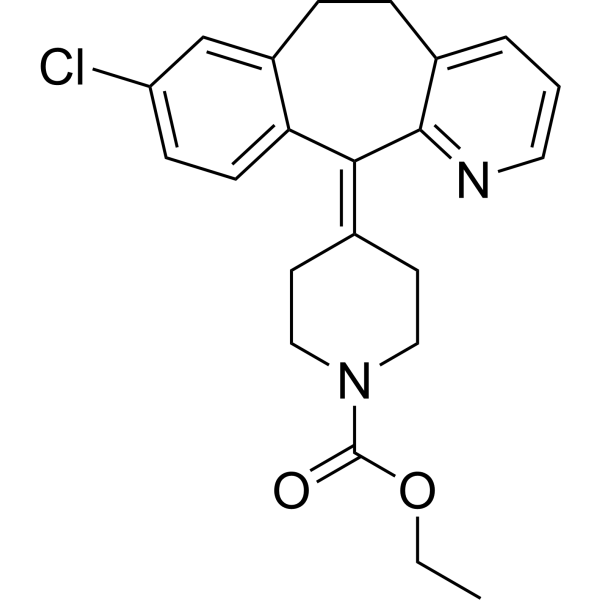
- Formula: C22H23ClN2O2
- Molecular Weight:382.88
-
Storage:Powder -20°C, 3 years , 4°C, 2 years ; In solvent -80°C, 2 years , -20°C, 1 year

To place orders, for customer services and technical support, please contact: MedChemExpress USA
Tel: 609-228-6898 E-mail: [email protected] [email protected]


-
 Biological Activity
-
Chemical Information
-
Solvent & Solubility
- Purity & Documentation
- References
-
 Help & FAQs


-
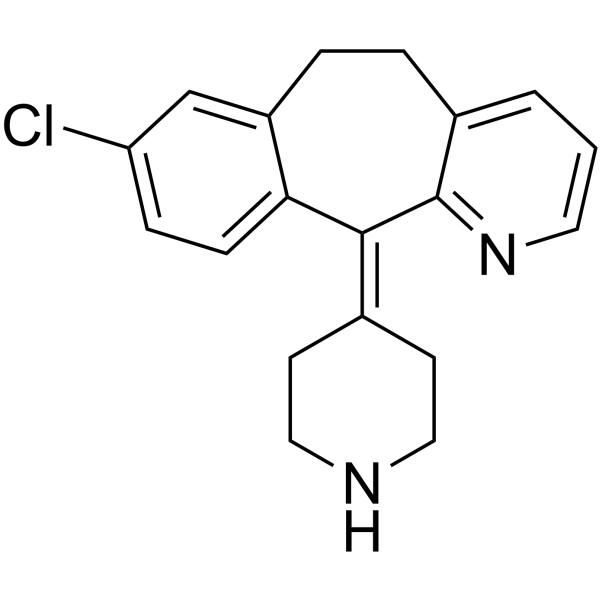
HY-B0539
DesloratadineH1-Receptor Antagonist -
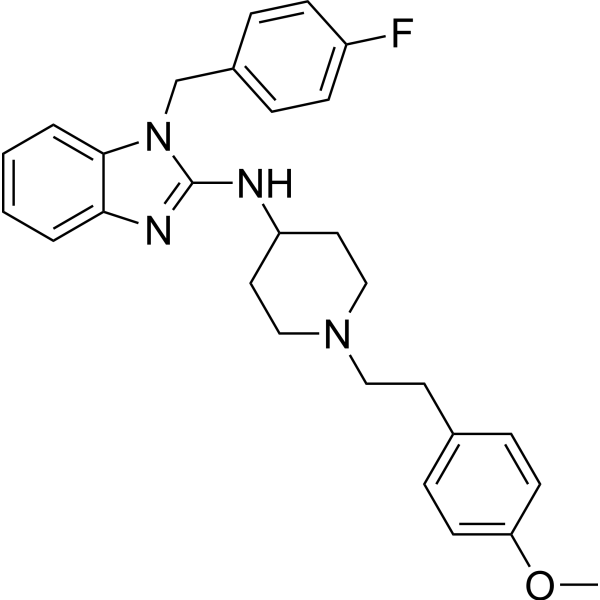
HY-12532
AstemizoleH1 Receptor Antagonist -
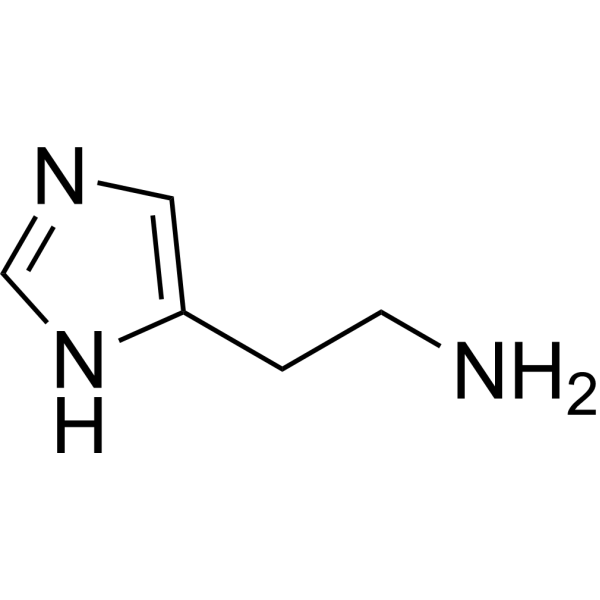
HY-B1204
HistamineNeurotransmitter -
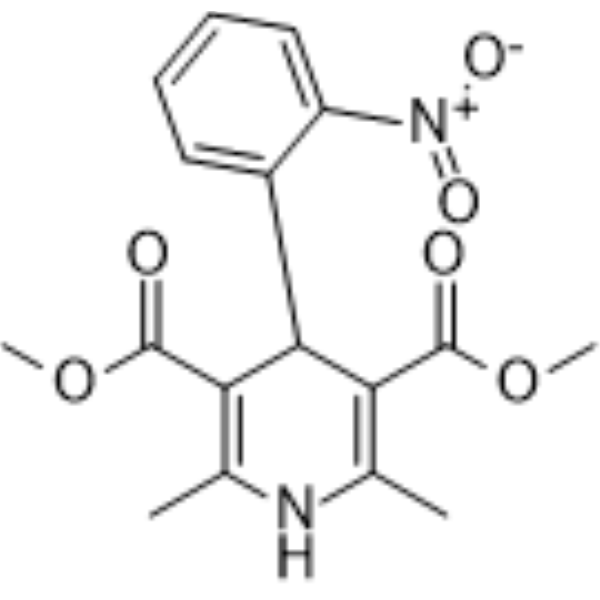
HY-B0284
NifedipineCalcium Channel Antagonist -
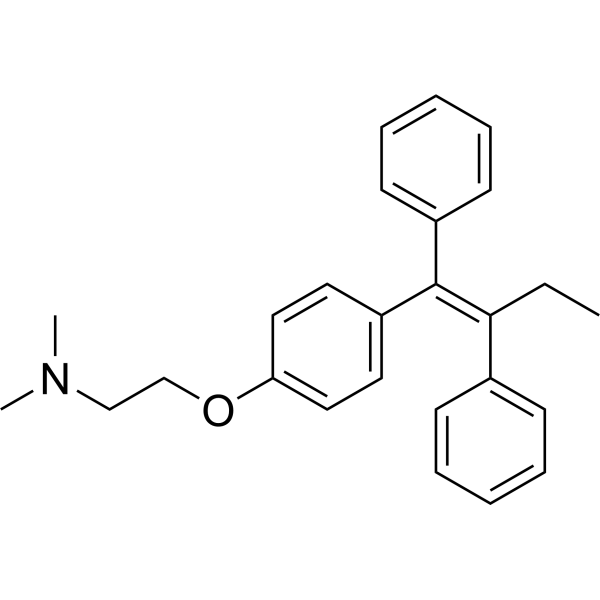
HY-13757A
TamoxifenEstrogen Receptor Modulator -
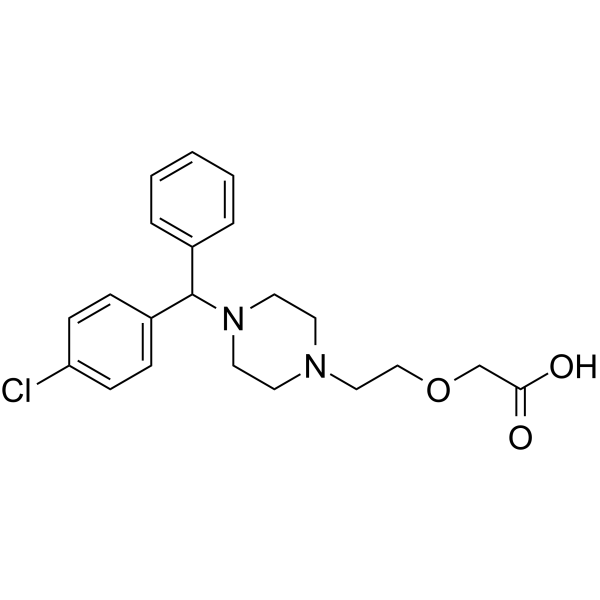
HY-17042
CetirizineH1-receptor Antagonist -
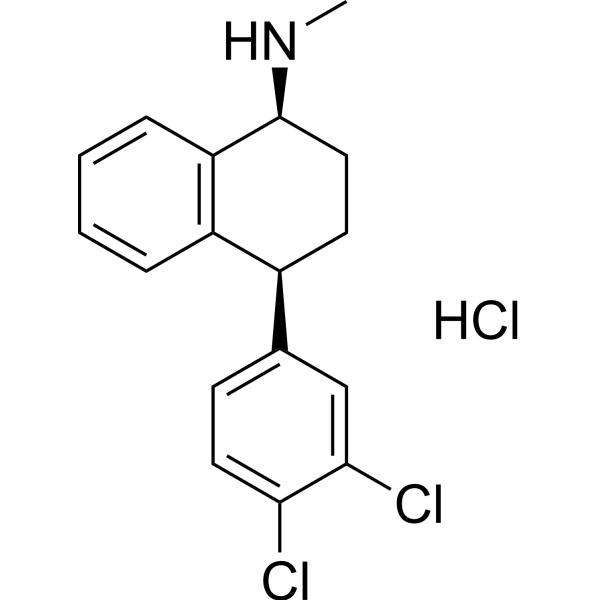
HY-B0176A
Sertraline hydrochlorideSSRI -
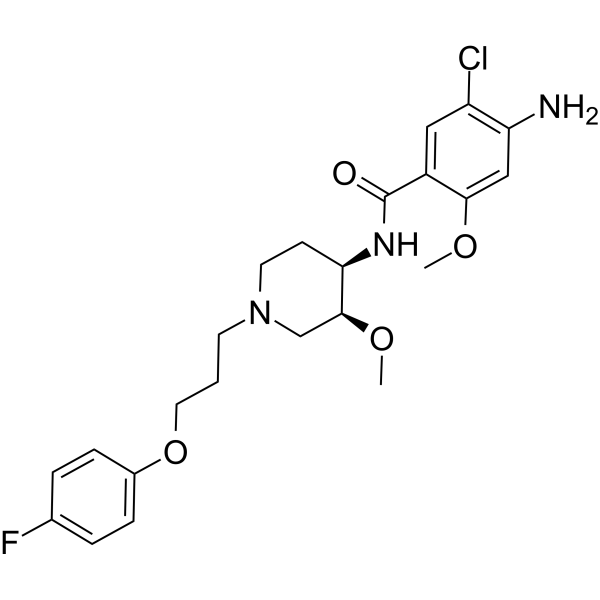
HY-14149
Cisapride5-HT4 Receptor Agonist/hERG Potassium Channel blocker -
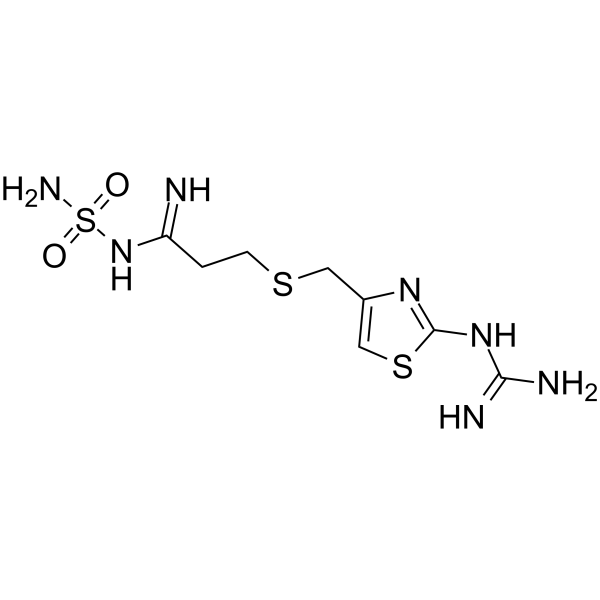
HY-B0377
FamotidineHistamine H2 Receptor Antagonist -
HY-13511
RupatadineDual PAF/H1 Antagonist -
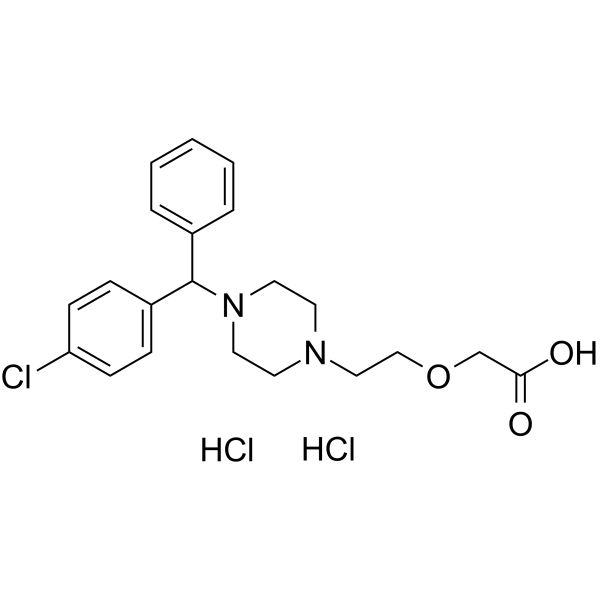
HY-17042A
Cetirizine dihydrochlorideH1-receptor Antagonist -
HY-B0814
LevocetirizineHistamine Receptor Antagonist
Publications Citing Use of MedChemExpress (MCE) Loratadine
More- Int J Biol Macromol. 2026 Jul:371:152865. [Abstract]
- Cell Rep Methods. 2023 Oct 23;3(10):100599. [Abstract]
- Eur J Pharmacol. 2023 Dec 5:960:176147. [Abstract]
- Int Immunopharmacol. 2025 Aug 28:161:115054. [Abstract]
- Front Pharmacol. 2025 May 21:16:1571819. [Abstract]
- Sci Rep. 2026 Jun 14. [Abstract]
- Sci Rep. 2021 Jul 22;11(1):14948. [Abstract]
- Neuropharmacology. 2025 Nov 1:278:110593. [Abstract]
- Neurochem Res. 2026 Sep 30;51(5):279.
- ACS Infect Dis. 2024 Aug 9;10(8):2961-2977. [Abstract]
- iScience. 2022 Jan 5;25(2):103731. [Abstract]
- Pharm Res. 2025 Aug;42(8):1315-1329. [Abstract]
- J Clin Psychopharmacol. 2022 Jul-Aug;42(4):422-424. [Abstract]
- Biochem Biophys Res Commun. 2025 Oct 30:786:152756. [Abstract]
 Customer Validation & Images

-
Cell Proliferation/Viability Assay
-
Cell Proliferation/Viability Assay
-
Flow Cytometry
-
In Vivo Efficacy Study
-
Bio/Physico-chemical Assay
All Histamine Receptor Isoforms
More

Biological Activity
Description
IC50 & Target
|
H1 Receptor |
Cellular Effect
|
Cell Line

|
Type | Value | Description | References |
|---|---|---|---|---|
| Caco-2 | CC50 |
28.33 μM
Compound: LORATADINE
|
Toxicity against Caco-2 cells determined at 48 hours by intracellular ATP concentration using the CellTiter-Glo Luminescent Cell Viability Assay
Toxicity against Caco-2 cells determined at 48 hours by intracellular ATP concentration using the CellTiter-Glo Luminescent Cell Viability Assay
|
10.21203/rs.3.rs-23951/v1 |
| Caco-2 | IC50 |
15.13 μM
Compound: LORATADINE
|
Determination of IC50 values for inhibition of SARS-CoV-2 induced cytotoxicity of Caco-2 cells after 48 hours by high content imaging
Determination of IC50 values for inhibition of SARS-CoV-2 induced cytotoxicity of Caco-2 cells after 48 hours by high content imaging
|
10.21203/rs.3.rs-23951/v1 |
| CHO | IC50 |
11.4 μM
Compound: loratadine
|
Inhibition of Cav1.2 current measured using QPatch automatic path clamp system in CHO cells expressing Cav1.2, beta-2 and alpha-2/delta-1 subunits
Inhibition of Cav1.2 current measured using QPatch automatic path clamp system in CHO cells expressing Cav1.2, beta-2 and alpha-2/delta-1 subunits
|
[PMID: 23812503] |
| HEK293 | IC50 |
4 μM
Compound: 1
|
Inhibition of eGFP-tagged human B0AT2 expressed in HEK293 cells measured within 10 mins by [3H]proline uptake assay
Inhibition of eGFP-tagged human B0AT2 expressed in HEK293 cells measured within 10 mins by [3H]proline uptake assay
|
[PMID: 25318072] |
| HEK293 | IC50 |
63.4 μM
Compound: 24
|
Inhibition of human TASK3 expressed in HEK293 cells by Ti+ flux assay
Inhibition of human TASK3 expressed in HEK293 cells by Ti+ flux assay
|
[PMID: 31260312] |
| HepG2 | EC50 |
10 μM
Compound: Loratadine
|
Activation of human PXR expressed in human HepG2 (DPX-2) cells after 24 hrs by luciferase reporter gene based luminescent analysis
Activation of human PXR expressed in human HepG2 (DPX-2) cells after 24 hrs by luciferase reporter gene based luminescent analysis
|
[PMID: 20966043] |
| HepG2 | EC50 |
12.6 μM
Compound: Loratadine
|
Activation of human PXR expressed in human HepG2 (DPX-2) cells assessed as induction of CYP3A4 after 24 hrs by luminescent analysis
Activation of human PXR expressed in human HepG2 (DPX-2) cells assessed as induction of CYP3A4 after 24 hrs by luminescent analysis
|
[PMID: 20966043] |
| HepG2 | EC50 |
3 μM
Compound: 8
|
Agonist activity at PXR (unknown origin) expressed in human HepG2 cells assessed as induction of CYP3A4 transactivation after 16 hrs by luciferase reporter gene assay
Agonist activity at PXR (unknown origin) expressed in human HepG2 cells assessed as induction of CYP3A4 transactivation after 16 hrs by luciferase reporter gene assay
|
[PMID: 23688559] |
| HT-29 | IC50 |
6.2 μM
Compound: 4
|
Antiproliferative activity against human HT-29 cells assessed as growth inhibition after 144 hrs by crystal violet staining method
Antiproliferative activity against human HT-29 cells assessed as growth inhibition after 144 hrs by crystal violet staining method
|
[PMID: 22450132] |
| HT-29 | IC50 |
6.2 μM
Compound: Loratadine
|
Cytotoxicity against human HT-29 cells after 72 hrs by crystal violet staining
Cytotoxicity against human HT-29 cells after 72 hrs by crystal violet staining
|
[PMID: 22959205] |
| MCF7 | IC50 |
7.5 μM
Compound: 4
|
Antiproliferative activity against human MCF7 cells assessed as growth inhibition after 144 hrs by crystal violet staining method
Antiproliferative activity against human MCF7 cells assessed as growth inhibition after 144 hrs by crystal violet staining method
|
[PMID: 22450132] |
| MCF7 | IC50 |
7.5 μM
Compound: Loratadine
|
Cytotoxicity against human MCF7 cells after 72 hrs by crystal violet staining
Cytotoxicity against human MCF7 cells after 72 hrs by crystal violet staining
|
[PMID: 22959205] |
| MDA-MB-231 | IC50 |
8.4 μM
Compound: 4
|
Antiproliferative activity against human MDA-MB-231 cells assessed as growth inhibition after 144 hrs by crystal violet staining method
Antiproliferative activity against human MDA-MB-231 cells assessed as growth inhibition after 144 hrs by crystal violet staining method
|
[PMID: 22450132] |
| MDA-MB-231 | IC50 |
8.4 μM
Compound: Loratadine
|
Cytotoxicity against human MDA-MB-231 cells after 72 hrs by crystal violet staining
Cytotoxicity against human MDA-MB-231 cells after 72 hrs by crystal violet staining
|
[PMID: 22959205] |
In Vitro
Clinical Trial
| NCT Number | Sponsor | Condition | Start Date |
Phase
|
|---|---|---|---|---|
| NCT01329991 | 2011-05 | PHASE1 |


Chemical Information
-
CAS No. 79794-75-5
-
Appearance Solid
-
Molecular Weight 382.88
-
Formula C22H23ClN2O2
-
Color White to off-white
-
SMILES
O=C(N1CC/C(CC1)=C2C3=CC=C(Cl)C=C3CCC4=CC=CN=C4\2)OCC
-
Synonyms
Loratidine; SCH 29851
-
Shipping
Room temperature in continental US; may vary elsewhere.
-
Storage
Powder -20°C 3 years 4°C 2 years In solvent -80°C 2 years -20°C 1 year


Publications (14)
-
Journal Impact Factor
-
Most Recent
-
Int J Biol Macromol
Purified polysaccharides of Tetrastigma hemsleyanum diels et gilg alleviate allergic rhinitis by regulating Th17 cell differentiation and suppressing pro-inflammatory cytokines. [Abstract]2026 Jul:371:152865. PMID: 42276478 -
Cell Rep Methods
RECOVER identifies synergistic drug combinations in vitro through sequential model optimization. [Abstract]2023 Oct 23;3(10):100599. PMID: 37797618 -
Eur J Pharmacol
2023 Dec 5:960:176147. PMID: 37871763
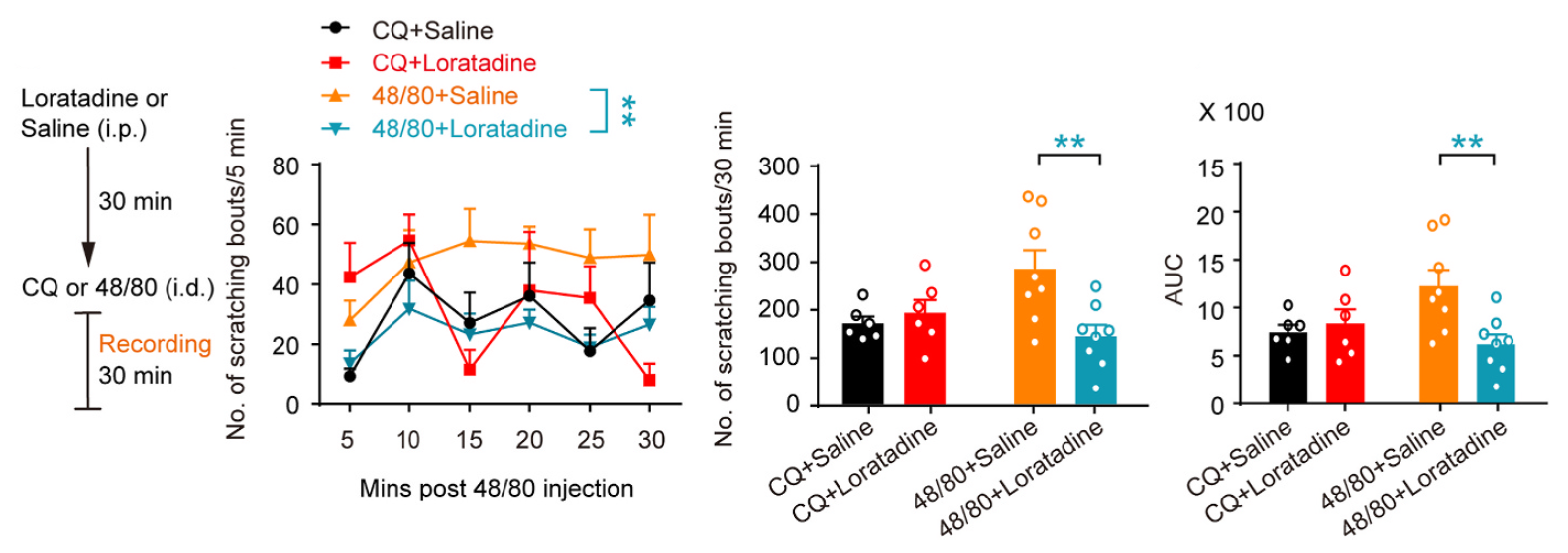
Loratadine purchased from MedChemExpress. Usage Cited in: Eur J Pharmacol. 2023 Dec 5:960:176147. [Abstract]
Loratadine (10 mg/kg; i.p.; 30 min) suppressed itch in compound 48/80-treated mice but not in CQ-treated mice.
-
Int Immunopharmacol
Melastoma dodecandrum polysaccharide alleviates allergic rhinitis in mice through modulating NLRP3 and IL-17 axis. [Abstract]2025 Aug 28:161:115054. PMID: 40489908 -
Front Pharmacol
Metabolomics combined with molecular docking and dynamics simulation to investigate the mechanism of action of Fibraurea recisa Pierre in the treatment of chronic urticaria. [Abstract]2025 May 21:16:1571819. PMID: 40469983 -
Sci Rep
Quercetin modulates mast cell activation and the IL-33/ST2/NF-κB axis in allergic rhinitis. [Abstract]2026 Jun 14. PMID: 42289577 -
Sci Rep
Cannabis constituents interact at the drug efflux pump BCRP to markedly increase plasma cannabidiolic acid concentrations. [Abstract]2021 Jul 22;11(1):14948. PMID: 34294753
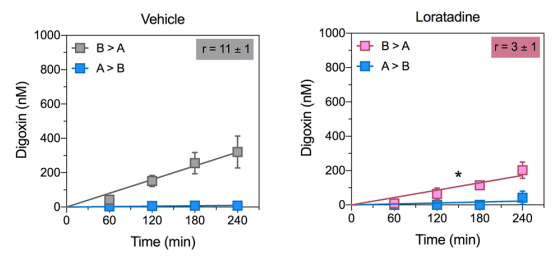
Loratadine purchased from MedChemExpress. Usage Cited in: Sci Rep. 2021 Jul 22;11(1):14948. [Abstract]
Concentration-time curves for prazosin in the presence of Loratadine (10 μM; 60-240 min) in the basolateral to apical (B > A) and apical to basolateral (A > B) directions in MDCKs expressing BCRP.
-
Neuropharmacology
2025 Nov 1:278:110593. PMID: 40683349 -
-
ACS Infect Dis
Loratadine Derivative Lo-7: A Weapon against Drug-Resistant Enterococcus and Streptococcal Infections. [Abstract]2024 Aug 9;10(8):2961-2977. PMID: 39066703
Loratadine purchased from MedChemExpress. Usage Cited in: ACS Infect Dis. 2024 Aug 9;10(8):2961-2977. [Abstract]
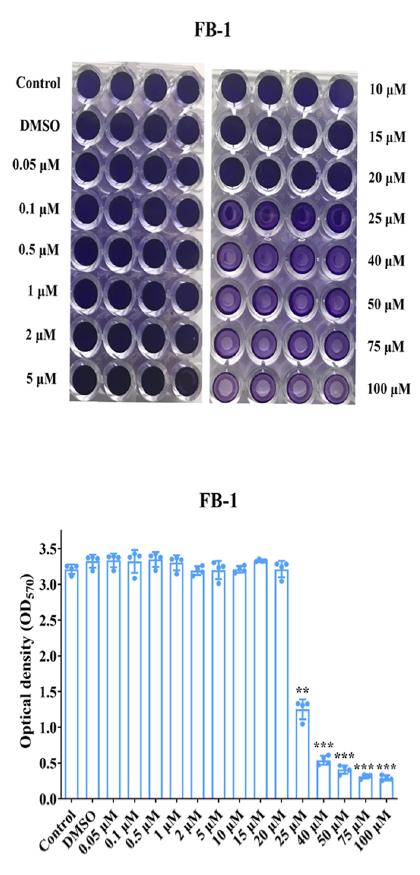
Loratadine (25−100 μM, 24 h) effectively impeded the formation of E. faecalis biofilms.
Loratadine purchased from MedChemExpress. Usage Cited in: ACS Infect Dis. 2024 Aug 9;10(8):2961-2977. [Abstract]
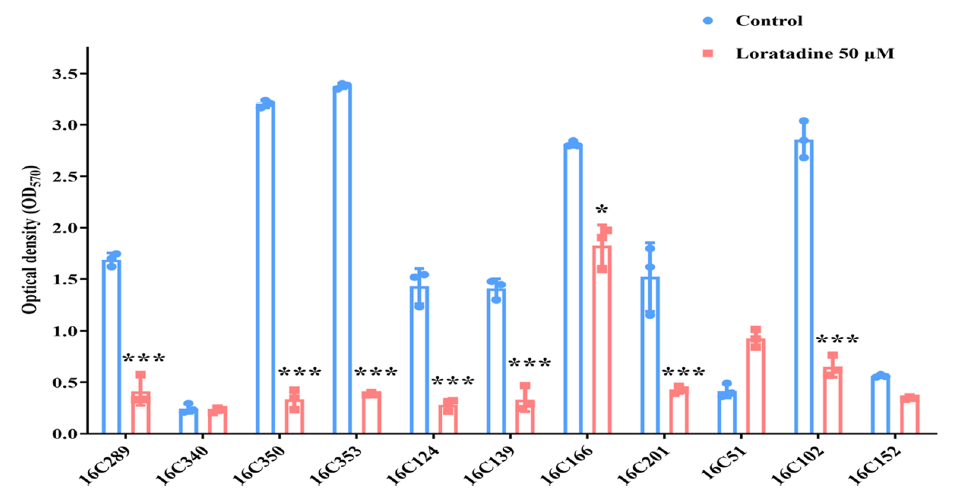
Loratadine (50 μM, 24 h) hindered the biofilm formation of 8 out of 11 clinical E. faecalis isolates.
Loratadine purchased from MedChemExpress. Usage Cited in: ACS Infect Dis. 2024 Aug 9;10(8):2961-2977. [Abstract]
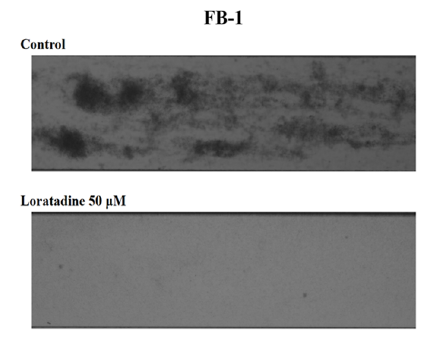
Loratadine (50 μM, 24 h) exhibited a significant inhibitory impact on the biofilm formation of the E. faecalis FB-1 strain.
-
iScience
2022 Jan 5;25(2):103731. PMID: 35098100 -
Pharm Res
Investigation of the Binding Characteristics of Agonists and Various Antagonists Targeting Histamine 1 Receptor. [Abstract]2025 Aug;42(8):1315-1329. PMID: 40760405 -
J Clin Psychopharmacol
A Potential Drug-Gene-Drug Interaction Between Cannabidiol, CYP2D6*4, and Fluoxetine: A Case Report. [Abstract]2022 Jul-Aug;42(4):422-424. PMID: 35652796 -
Biochem Biophys Res Commun
Dual-cardiotoxicity evaluation of torsadogenic risk drugs using human iPSC-derived cardiomyocytes. [Abstract]2025 Oct 30:786:152756. PMID: 41043280


Solvent & Solubility
In Vitro:
DMSO : 50 mg/mL (130.59 mM; Need ultrasonic; Hygroscopic DMSO has a significant impact on the solubility of product, please use newly opened DMSO)
Please refer to the solubility information to select the appropriate solvent. Once prepared, please aliquot and store the solution to prevent product inactivation from repeated freeze-thaw cycles.
Storage method and period of stock solution: -80°C, 2 years; -20°C, 1 year. When stored at -80°C, please use it within 2 years. When stored at -20°C, please use it within 1 year.
Please refer to the solubility information to select the appropriate solvent. Once prepared, please aliquot and store the solution to prevent product inactivation from repeated freeze-thaw cycles.
Storage method and period of stock solution: -80°C, 2 years; -20°C, 1 year. When stored at -80°C, please use it within 2 years. When stored at -20°C, please use it within 1 year.
Concentration (start) × Volume (start) = Concentration (final) × Volume (final)
In Vivo:
Select the appropriate dissolution method based on your experimental animal and administration route.
- For the following dissolution methods, please ensure to first prepare a clear stock solution using an In Vitro approach and then sequentially add co-solvents:
- To ensure reliable experimental results, the clarified stock solution can be appropriately stored based on storage conditions. As for the working solution for In Vivo experiments, it is recommended to prepare freshly and use it on the same day.
- The percentages shown for the solvents indicate their volumetric ratio in the final prepared solution. If precipitation or phase separation occurs during preparation, heat and/or sonication can be used to aid dissolution.
Add each solvent one by one: 10% DMSO 40% PEG300 5% Tween-80 45% Saline
Solubility: ≥ 2.5 mg/mL (6.53 mM); Clear solution
This protocol yields a clear solution of ≥ 2.5 mg/mL (saturation unknown).
Taking 1 mL working solution as an example, add 100 μL DMSO stock solution (25.0 mg/mL) to 400 μL PEG300, and mix evenly; then add 50 μL Tween-80 and mix evenly; then add 450 μL Saline to adjust the volume to 1 mL.
Preparation of Saline: Dissolve 0.9 g sodium chloride in ddH₂O and dilute to 100 mL to obtain a clear Saline solution.
Add each solvent one by one: 10% DMSO 90% (20% SBE-β-CD in Saline)
Solubility: ≥ 2.5 mg/mL (6.53 mM); Clear solution
This protocol yields a clear solution of ≥ 2.5 mg/mL (saturation unknown).
Taking 1 mL working solution as an example, add 100 μL DMSO stock solution (25.0 mg/mL) to 900 μL 20% SBE-β-CD in Saline, and mix evenly.
Preparation of 20% SBE-β-CD in Saline (4°C, storage for one week): 2 g SBE-β-CD powder is dissolved in 10 mL Saline, completely dissolve until clear.
In Vivo Dissolution Calculator
Please enter the basic information of animal experiments:
-
-
-
-
Recommended: Prepare an additional quantity of animals to account for potential losses during experiments.
Please enter your animal formula composition:
-
%DMSO +
Recommended: Keep the proportion of DMSO in working solution below 2% if your animal is weak.
-
%+
-
+%Tween-80 + +
-
%Saline +
The co-solvents required include: DMSO, . All of co-solvents are available by MedChemExpress (MCE). , Tween 80. All of co-solvents are available by MedChemExpress (MCE).
Working solution concentration: 0.22 mg/mL
Method for preparing stock solution: mg drug dissolved in μL DMSO. Stock solution concentration: mg/mL.
1. Take μL DMSO stock solution;
2. Add μL .
μL , mix evenly;
3. Then add μL Tween 80, mix evenly;
4. Then add μL
Please ensure that the stock solution in the first step is dissolved to a clear state, and add co-solvents in sequence. You can use ultrasonic heating (ultrasonic cleaner, recommended frequency 20-40 kHz), vortexing, etc. to assist dissolution.


Purity & Documentation
-
Data Sheet (279 KB)
-
SDS (458 KB)
- English - EN (458 KB)
- Français - FR (458 KB)
- Deutsch - DE (458 KB)
- Norwegian - NO (458 KB)
- Español - ES (458 KB)
- Swedish - SV (458 KB)
- Italian - IT (458 KB)
- Korean - KR (458 KB)
- Portuguese - PT (458 KB)
-
Handling Instructions (2659 KB)
References
[1]. Kay GG, Harris AG. Loratadine: a non-sedating antihistamine. Review of its effects on cognition, psychomotor performance, mood and sedation. Clin Exp Allergy. 1999 Jul;29 Suppl 3:147-50. [Content Brief]
[2]. Menardo JL, Horak F, Danzig MR, Czarlewski W. A review of loratadine in the treatment of patients with allergic bronchial asthma. Clin Ther. 1997 Nov-Dec;19(6):1278-93; discussion 1523-4. [Content Brief]
[3]. Monroe EW. Loratadine in the treatment of urticaria. Clin Ther. 1997 Mar-Apr;19(2):232-42. [Content Brief]
[4]. Haria M, Fitton A, Peters DH. Loratadine. A reappraisal of its pharmacological properties and therapeutic use in allergic disorders. Drugs. 1994 Oct;48(4):617-37. [Content Brief]
[5]. Roman IJ, Danzig MR. Loratadine. A review of recent findings in pharmacology, pharmacokinetics, efficacy, and safety, with a look at its use in combination with pseudoephedrine. Clin Rev Allergy. 1993 Spring;11(1):89-110. [Content Brief]
[6]. Shahen M, et al. Dengue virus causes changes of MicroRNA-genes regulatory network revealing potential targets for antiviral drugs. BMC Syst Biol. 2018 Jan 4;12(1):2. [Content Brief]
[7]. Kleine-Tebbe J, et al. Inhibition of IgE- and non-IgE-mediated histamine release from human basophil leukocytes in vitro by a histamine H1-antagonist, desethoxycarbonyl-loratadine. J Allergy Clin Immunol. 1994;93(2):494-500. [Content Brief]


Complete Stock Solution Preparation Table
Please refer to the solubility information to select the appropriate solvent. Once prepared, please aliquot and store the solution to prevent product inactivation from repeated freeze-thaw cycles.
Storage method and period of stock solution: -80°C, 2 years; -20°C, 1 year. When stored at -80°C, please use it within 2 years. When stored at -20°C, please use it within 1 year.
| Optional Solvent | Concentration Solvent Mass | 1 mg | 5 mg | 10 mg | 25 mg |
|---|---|---|---|---|---|
| DMSO | 1 mM | 2.6118 mL | 13.0589 mL | 26.1178 mL | 65.2946 mL |
| 5 mM | 0.5224 mL | 2.6118 mL | 5.2236 mL | 13.0589 mL | |
| 10 mM | 0.2612 mL | 1.3059 mL | 2.6118 mL | 6.5295 mL | |
| 15 mM | 0.1741 mL | 0.8706 mL | 1.7412 mL | 4.3530 mL | |
| 20 mM | 0.1306 mL | 0.6529 mL | 1.3059 mL | 3.2647 mL | |
| 25 mM | 0.1045 mL | 0.5224 mL | 1.0447 mL | 2.6118 mL | |
| 30 mM | 0.0871 mL | 0.4353 mL | 0.8706 mL | 2.1765 mL | |
| 40 mM | 0.0653 mL | 0.3265 mL | 0.6529 mL | 1.6324 mL | |
| 50 mM | 0.0522 mL | 0.2612 mL | 0.5224 mL | 1.3059 mL | |
| 60 mM | 0.0435 mL | 0.2176 mL | 0.4353 mL | 1.0882 mL | |
| 80 mM | 0.0326 mL | 0.1632 mL | 0.3265 mL | 0.8162 mL | |
| 100 mM | 0.0261 mL | 0.1306 mL | 0.2612 mL | 0.6529 mL |


Loratadine Related Classifications
HY-17043 Related Classifications
 Powered by Bioz