


From 11:00 pm to 12:00 pm EST ( 8:00 pm to 9:00 pm PST ) on January 6th, the website will be under maintenance. We are sorry for the inconvenience. Please arrange your schedule properly.
Invertase, baker's yeast (S. cerevisiae) is a major enzyme present in plants and microorganisms, is often used in biochemical studies. Invertase catalyzes the hydrolysis of the disaccharide sucrose into glucose and fructose .
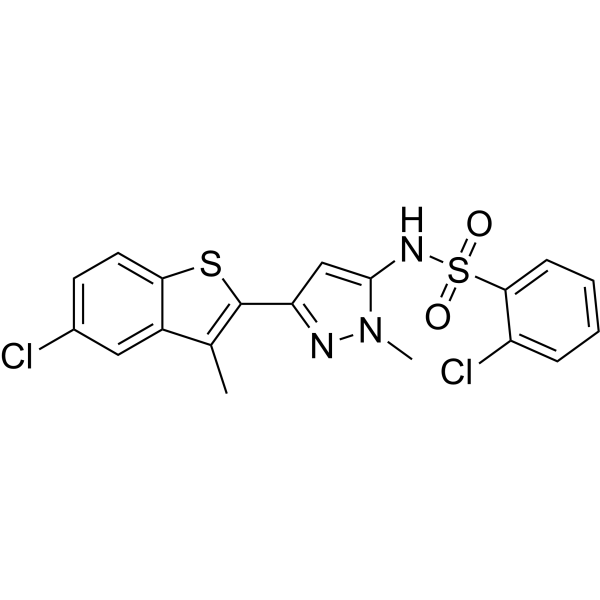
ML-60218 is a broad-spectrum RNA pol III inhibitor, with IC50s of 32 and 27 μM for Saccharomyces cerevisiae and human. ML-60218 disrupts already assembled viroplasms and to hamper the formation of new ones without the need for de novo transcription of cellular RNAs .
D-Xylulose 5-phosphate sodium is a pentose phosphate ester and an essential intermediate metabolite in the pentose phosphate pathway (PPP) and the non-oxidative phase of the pentose phosphate pathway. D-xylulose-5-phosphate sodium can be efficiently synthesized through the phosphorylation of D-xylulose catalyzed by D-xylulokinase (XKS1 from Saccharomyces cerevisiae), with ATP regeneration facilitated by the phosphoenolpyruvate (PEP)/pyruvate kinase (PK) system .
Cholesteryl acetate (Cholesterol 3-acetate) is a cholesterol ester that is exported from Saccharomyces cerevisiae via a Pry1-dependent mechanism. Cholesteryl acetate binds to the CAP superfamily protein Pry1 via interactions dependent on Pry1’s caveolin-binding motif .
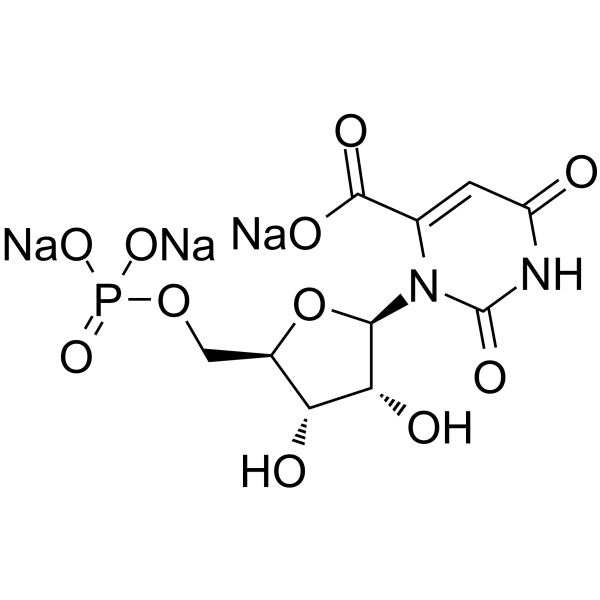
Orotidine 5'-monophosphate trisodium is a pyrimidine nucleotide. Orotidine 5'-monophosphate trisodium is synthesized via the de novo synthesis pathway for DNA synthesis in a large number of microorganisms including M. tuberculosis, S. cerevisiae, S. typhimurium and P. falciparum to name a few. The synthesis of orotidine 5'-monophosphate trisodium uses phosphoribosyl pyrophosphate (PRPP) and orotic acid (OA) as the substrates catalyzed by orotate phosphoribosyltransferase (OPRT) .
Enolase is a glycolytic enzyme present in the cell wall of S. cerevisiae. Enolase exhibits specific affinity to imported tRNA and can facilitate formation of preMsk1p-tRNA complex. Enolase can be overproduced in tumor cells where rate of glycolysis is increased. Enolase depletion can lead to tRNA inhibition in vivo .
Poacic Acid is a plant-derived stilbenoid with an antifungal activity. Poacic Acid localizes to the yeast cell wall and disrupts the production and assembly of β-1,3-glucan in the fungal cell walls. Poacic Acid exhibits fungicidal activity to Saccharomyces cerevisiae and plasma membrane-compromised Candida albicans mutants .
MTSEA-biotin is a biotin-conjugated 2-aminoethyl-methanethiosulfonate that can be used to specifically label modified nucleosides. MTSEA-biotin binds 4-thiouridine (s4U) to visualize newly transcribed tRNA in Saccharomyces cerevisiae cells .
Invertase, baker's yeast (S. cerevisiae), glucose/fructose/sucrose free is a major enzyme present in plants and microorganisms, is often used in biochemical studies. Invertase catalyzes the hydrolysis of the disaccharide sucrose into glucose and fructose .
4,6-dimethoxysalicylaldehyde is an antifungal agent. 4,6-dimethoxysalicylaldehyde has considerable activity against C. albicans and slight activity against S. cerevisiae .
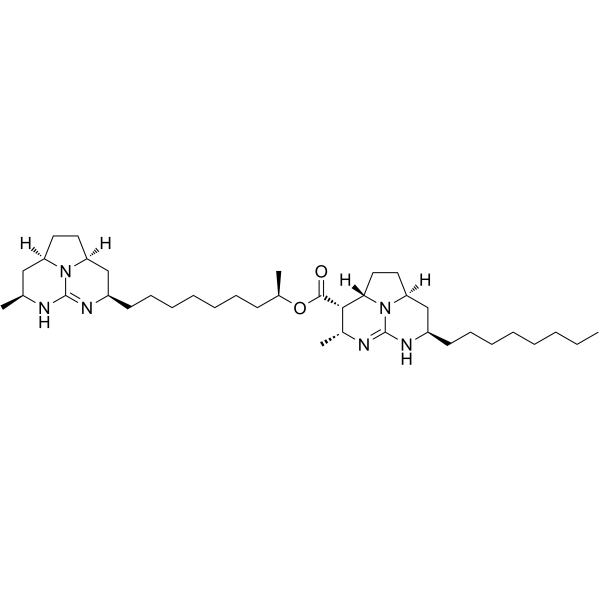
Norbatzelladine L (Compound 2) is an inhibitor of the catalytic and functional activity of Pdr5p transporter. Norbatzelladine L inhibits Pdr5p ATPase activity with an IC50 of 3.8 µM. Norbatzelladine L shows antifungal, antiparasitic, antiviral, antibacterial and antitumoral activities .
(6S)-Tetrahydrofolic acid is 1000-fold more active than the (6R) form at promoting the binding of fluorodeoxyuridylate to thymidylate synthase and 600-fold more active as a growth factor of P. cerevisiae. (6S)-Tetrahydrofolic acid also has a low affinity and high dissociation rate for folate-binding protein .
Pachybasin is a major metabolite from culture broth of endophytic coelomyceteous AFKR-18 fungus. Pachybasin showes antimicrobial activities against E. coli, B. subtilis, M. luteus, S. cerevisiae, C. albicans, A. niger, and A. flavus, with MIC values of 64.0 μg/mL, and against S. aureus and F. oxysporum with MIC values of 32.0 and 16.0 μg/mL respectively .
IKE16 is a fungi-selective eukaryotic topoisomerase II inhibitor, with an IC50 value of 13.68 μM. IKE16 suppresses both the DNA relaxation activity and the decatenation activity of yTOPOII selectively. IKE16 shows moderate activity against standard fungal strains (Candida albicans ATCC 10231, Saccharomyces cerevisiae ATCC 89763) with a minimum inhibitory concentration (MIC) of 2 μg/mL against S. cerevisiae ATCC 89763. IKE16 exhibits high cytotoxicity against human cells, with an EC50 of 0.07 μM in HepG2 and 0.045 μM in HEK-293. IKE16 can be used for the study of antifungal infection .
[BMIM]Cl (1-butyl-3-methylimidazolium chloride) is an alkyl-imidazolium chloride compound and a persistent aquatic pollutant. [BMIM]Cl exhibits antimicrobial activity against S. aureus (MIC = 25 mM), E. coli (MIC = 50 mM), and P. aeruginosa (MIC = 100 mM). It possesses moderate membrane permeability and cytotoxicity, directly affecting microorganisms and mammalian cells at high concentrations, but can inhibit the function of complex ecosystems (e.g., anaerobic digestion) even at environmentally relevant low concentrations by disrupting microbial community structures. [BMIM]Cl can be used in research related to bacterial infections .
Carboxypeptidase Y, Baker's yeast (S. cerevisiae) is a biocatalyst and a key enzyme in new biocatalyst technology. Enzyme engineering focuses on enhancing enzyme reaction kinetics, substrate selectivity, and activity under harsh conditions such as low or high pH. By introducing stimulus responsiveness to these enzyme modifications, dynamic control of activity is also possible .
10-Methyldodec-2-en-4-olide is a antibacterial agent and can be isolated from Streptomyces. 10-Methyldodec-2-en-4-olide shows antibacterial activity against B. cinerea, the yeast S. cerevisiae, bacteria S. aureus, and M. luteus .
Seabream hepcidin is an antimicrobial peptide with anti-bacterial (V.anguillarum), fungal(S.cerevisiae) and viral hemorrhagic septicemia virus activity .
Candicidin D (CndD) is an antibiotic, which exhibits antifungal activity through interaction with steroids in cell membranes. Candicidin D inhibits S. cerevisiae, Candida albicans and other Candida spp. with MIC of 0.25-1 μg/mL in RPMI-1640 medium.
lsocryptomerin is a membrane-active antifungal compound that can be isolated from Selaginella tamariscina. lsocryptomerin can depolarize fungal plasma membrane. lsocryptomerin also shows anticancer and antibacterial activities .
Cytarabine 5′-monophosphate is a metabolite of the nucleoside analog Cytarabine (HY-13605), catalyzed by deoxycytidine kinase. Cytarabine 5′-monophosphate is incorporated into DNA by DNA polymerase α, which reduces the rate of DNA synthesis. At a concentration of 15 mM, Cytarabine 5′-monophosphate inhibits nuclear and mitochondrial DNA replication in Saccharomyces cerevisiae(S.cerevisiae). Additionally, Cytarabine 5′-monophosphate (3.5-75.1 mg/kg) improves survival in leukemia mice (L1210 mice). Cytarabine 5′-monophosphate can be used in cancer research .
Propiconazole-d3 (nitrate) is the deuterium labeled Propiconazole nitrate. Propiconazole is a broad-spectrum triazole fungicide that inhibits the conversion of lanosterol to ergosterol, leading to fungal cell membrane disruption. Propiconazole inhibits S. cerevisiae, but not rat liver, microsomal cytochrome P450 (IC50s=0.04 and >200 µM, respectively). Propiconazole inhibits the growth of T. deformans and R. stolonifer (ED50s=0.073 and 4.6 µg/mL, respectively). Propiconazole increases production of reactive oxygen species (ROS).
Propiconazole-d7 is the deuterium labeled Propiconazole. Propiconazole is a broad-spectrum triazole fungicide that inhibits the conversion of lanosterol to ergosterol, leading to fungal cell membrane disruption. Propiconazole inhibits S. cerevisiae, but not rat liver, microsomal cytochrome P450 (IC50s=0.04 and >200 μM, respectively). Propiconazole inhibits the growth of T. deformans and R. stolonifer (ED50s=0.073 and 4.6 μg/mL, respectively). Propiconazole increases production of reactive oxygen species (ROS) .
8-Acetylverrucarin L (Verrucarin L acetate) is a mycotoxin, which exhibits antitumor and antimicrobial activities. 8-Acetylverrucarin L exhibits cytotoxicity to cancer cells HCT116 and A2780S, with IC100 of 9.77 and 9.77 ng/mL. 8-Acetylverrucarin L exhibits antifungal activity against Saccharomyces cerevisiae, Candida albicans and Geotrichum candidum .
ICMT-IN-54 (compound 7c) is an adamantyl analogue and an ICMT inhibitor (IC50=12.4 μM), which can inhibit ICMT Methylation. ICMT-in-54 inhibits BFC (N-biotinyl-(6-aminohexanoic)-S-farnesyl-L-cysteine) methylation in saccharomyces cerevisiae expressing ICMT, which is an indirect effect of inhibiting ICMT methylation .
Linearmycin A is a polyene antibiotic that has been found in Streptomyces. It is active against the bacteria S. aureus and E. coli (MICs=3.1 and 1.6 μg/disc, respectively), the fungi S. cerevisiae and C. albicans (MICs=0.1 and 1.6 μg/disc, respectively), and the plant pathogenic fungus A. niger in disc assays (MIC=0.2 μg/disc). Linearmycin A induces lysis and degradation of B. subtilis as a component of Streptomyces Mg1 extract.
Triosephosphate isomerase in Baker's yeast (S. cerevisiae) (EC 5.3.1.1) catalyzes the reversible interconversion between the triose phosphate isomers dihydroxyacetone phosphate and D-glyceraldehyde-3-phosphate. Triosephosphate isomerase in Baker's yeast (S. cerevisiae) (EC 5.3.1.1) plays a crucial role in glycolysis and is essential for efficient energy production.
S-Acetyl-coenzyme A synthetase, Baker's yeast (S. cerevisiae) (EC 6.2.1.1), catalyzes the production of acetyl-CoA and participates in the acetylation of histones in the cell nucleus.
Transaldolase, Baker's yeast (S. cerevisiae) (EC 2.2.1.2) is an enzyme of the non-oxidative phase of the pentose phosphate pathway. The following chemical reaction is catalyzed by transaldolase:sedoheptulose 7-phosphate + glyceraldehyde 3-phosphate? erythrose 4-phosphate + fructose 6-phosphate.
Proteinase A, from baker's yeast (S. cerevisiae) (EC 3.4.23.25), hydrolyzes proteins and exhibits broad specificity for peptide bonds. Proteinase A can cleave the leucine-leucine-valine-tyrosine bonds in synthetic substrates.
3-Phosphoglyceric Phosphokinase, Baker's yeast (S. cerevisiae) (EC 2.7.2.3) is an enzyme that catalyzes the reversible transfer of a phosphate group from 1,3-bisphosphoglyceRate (1,3-BPG) to ADP producing 3-phosphoglyceRate (3-PG) and ATP. 3-Phosphoglyceric Phosphokinase, Baker's yeast (S. cerevisiae) (EC 2.7.2.3) is a transferase. 3-Phosphoglyceric Phosphokinase is a major enzyme used in glycolysis, in the first ATP-geneRating step of the glycolytic pathway. In gluconeogenesis, the reaction catalyzed by 3-Phosphoglyceric Phosphokinase proceeds in the opposite direction, geneRating ADP and 1,3-BPG.
D-Ribulose-5-phosphate 3-Epimerase, Baker's yeast (S. cerevisiae) (EC 5.1.3.1) is a metalloenzyme that primarily utilizes divalent zinc ions (Zn2+) for catalysis.
3-O-α-L-Arabinopyranosyl hederagenin 28-O-α-L-rhamnopyranosyl ester is an anti-fungal triterpene saponin. 3-O-α-L-Arabinopyranosyl hederagenin 28-O-α-L-rhamnopyranosyl ester can be isolated from the aerial parts of Clematis tangutica. 3-O-α-L-Arabinopyranosyl hederagenin 28-O-α-L-rhamnopyranosyl ester exhibits antifungal activity against fungal strains (P. avellaneum, C. glabrata, S. cerevisiae, T. beigelii), with the strongest activity against S. cerevisiae .
(2R,3S)-3-Isopropylmalic acid (Compound (2R,3S)-3-Isopropylmalate) is an intermediate of the leucine biosynthetic pathway. (2R,3S)-3-Isopropylmalic acid serves as the main endogenous substrate for the Saccharomyces cerevisiae Tmt1 methyltransferase.
Ac-BIM-acid bromide is a derivative of Acridine. Ac-BIM-acid bromide significantly inhibits amyloid fibrillation. Ac-BIM-acid bromide modulates the structure of N-terminal region of Saccharomyces cerevisiae Stm1 protein (Stm1_N 1-113) and the amyloid morphology of human Aβ42 protein, inhibiting theirs growth. Ac-BIM-acid bromide can be used for Alzheimer’s disease research .
LY214352 is an antifungal agent that targets dihydroorotate dehydrogenase (DHO-DH). LY214352 exhibits antifungal activity against Aspergillus nidulans and agriculturally important ascomycete fungi. LY214352 can be used in studies related to grape gray mold, apple scab, and fungal infections caused by ascomycetes .
Decyl gallate is an antifungal (fungal) agent. Decyl gallate downregulates the expression of the pro-apoptotic (apoptosis) protein Bak, upregulates the expression of the anti-apoptotic protein Bcl-2, and inhibits DNA damage. Decyl gallate disrupts ALG12-mediated N-glycosylation, overactivates the UPR pathway, and simultaneously reduces fungal cell wall enzyme activity, chitin levels, mitochondrial activity, budding ability, cell viability, and host cell adhesion capacity. Decyl gallate reduces inflammatory responses induced by fungal infection and disrupts fungal membrane structure. Decyl gallate can be used in studies related to paracoccidioidomycosis and invasive fungal infections .
Cyclopent-4-ene-1,3-dione is a potent antifungal inhibitor of chitin synthesis. Cyclopent-4-ene-1,3-dione is potently antifungal against human pathogenic Candida species (IC50 = 1-2 μM). Cyclopent-4-ene-1,3-dione is detected in feijoa cultivars with high antifungal bioactivity. Cyclopent-4-ene-1,3-dione can be used for the research of fungal infections .
Seabream hepcidin is an antimicrobial peptide with anti-bacterial (V.anguillarum), fungal(S.cerevisiae) and viral hemorrhagic septicemia virus activity .
Cholesteryl acetate (Cholesterol 3-acetate) is a cholesterol ester that is exported from Saccharomyces cerevisiae via a Pry1-dependent mechanism. Cholesteryl acetate binds to the CAP superfamily protein Pry1 via interactions dependent on Pry1’s caveolin-binding motif .
Orotidine 5'-monophosphate trisodium is a pyrimidine nucleotide. Orotidine 5'-monophosphate trisodium is synthesized via the de novo synthesis pathway for DNA synthesis in a large number of microorganisms including M. tuberculosis, S. cerevisiae, S. typhimurium and P. falciparum to name a few. The synthesis of orotidine 5'-monophosphate trisodium uses phosphoribosyl pyrophosphate (PRPP) and orotic acid (OA) as the substrates catalyzed by orotate phosphoribosyltransferase (OPRT) .
Norbatzelladine L (Compound 2) is an inhibitor of the catalytic and functional activity of Pdr5p transporter. Norbatzelladine L inhibits Pdr5p ATPase activity with an IC50 of 3.8 µM. Norbatzelladine L shows antifungal, antiparasitic, antiviral, antibacterial and antitumoral activities .
(6S)-Tetrahydrofolic acid is 1000-fold more active than the (6R) form at promoting the binding of fluorodeoxyuridylate to thymidylate synthase and 600-fold more active as a growth factor of P. cerevisiae. (6S)-Tetrahydrofolic acid also has a low affinity and high dissociation rate for folate-binding protein .
Pachybasin is a major metabolite from culture broth of endophytic coelomyceteous AFKR-18 fungus. Pachybasin showes antimicrobial activities against E. coli, B. subtilis, M. luteus, S. cerevisiae, C. albicans, A. niger, and A. flavus, with MIC values of 64.0 μg/mL, and against S. aureus and F. oxysporum with MIC values of 32.0 and 16.0 μg/mL respectively .
10-Methyldodec-2-en-4-olide is a antibacterial agent and can be isolated from Streptomyces. 10-Methyldodec-2-en-4-olide shows antibacterial activity against B. cinerea, the yeast S. cerevisiae, bacteria S. aureus, and M. luteus .
lsocryptomerin is a membrane-active antifungal compound that can be isolated from Selaginella tamariscina. lsocryptomerin can depolarize fungal plasma membrane. lsocryptomerin also shows anticancer and antibacterial activities .
8-Acetylverrucarin L (Verrucarin L acetate) is a mycotoxin, which exhibits antitumor and antimicrobial activities. 8-Acetylverrucarin L exhibits cytotoxicity to cancer cells HCT116 and A2780S, with IC100 of 9.77 and 9.77 ng/mL. 8-Acetylverrucarin L exhibits antifungal activity against Saccharomyces cerevisiae, Candida albicans and Geotrichum candidum .
Linearmycin A is a polyene antibiotic that has been found in Streptomyces. It is active against the bacteria S. aureus and E. coli (MICs=3.1 and 1.6 μg/disc, respectively), the fungi S. cerevisiae and C. albicans (MICs=0.1 and 1.6 μg/disc, respectively), and the plant pathogenic fungus A. niger in disc assays (MIC=0.2 μg/disc). Linearmycin A induces lysis and degradation of B. subtilis as a component of Streptomyces Mg1 extract.
3-O-α-L-Arabinopyranosyl hederagenin 28-O-α-L-rhamnopyranosyl ester is an anti-fungal triterpene saponin. 3-O-α-L-Arabinopyranosyl hederagenin 28-O-α-L-rhamnopyranosyl ester can be isolated from the aerial parts of Clematis tangutica. 3-O-α-L-Arabinopyranosyl hederagenin 28-O-α-L-rhamnopyranosyl ester exhibits antifungal activity against fungal strains (P. avellaneum, C. glabrata, S. cerevisiae, T. beigelii), with the strongest activity against S. cerevisiae .
(2R,3S)-3-Isopropylmalic acid (Compound (2R,3S)-3-Isopropylmalate) is an intermediate of the leucine biosynthetic pathway. (2R,3S)-3-Isopropylmalic acid serves as the main endogenous substrate for the Saccharomyces cerevisiae Tmt1 methyltransferase.
Cyclopent-4-ene-1,3-dione is a potent antifungal inhibitor of chitin synthesis. Cyclopent-4-ene-1,3-dione is potently antifungal against human pathogenic Candida species (IC50 = 1-2 μM). Cyclopent-4-ene-1,3-dione is detected in feijoa cultivars with high antifungal bioactivity. Cyclopent-4-ene-1,3-dione can be used for the research of fungal infections .
The PPA1 protein is an important member of the PPase family and plays an important role in cellular processes, especially dephosphorylation related to phosphate metabolism. PPA1 shares conserved features with related proteins and is involved in phosphatase activity. PPA1 Protein, S. cerevisiae (His) is the recombinant human-derived PPA1 protein, expressed by E. coli , with tag free.
TIM-16 protein is an important component of the PAM complex, which uses ATP to promote the transfer of transit peptide-containing proteins from the inner membrane to the mitochondrial matrix. TIM-16 Protein, S. cerevisiae is the recombinant TIM-16 protein, expressed by E. coli , with tag free.
The TIM-14 protein is an important component of the PAM complex and is required for the transport of transit peptide-containing proteins from the inner membrane to the mitochondrial matrix using ATP. TIM-14 Protein, S.cerevisiae is the recombinant TIM-14 protein, expressed by E. coli , with tag free.
Oma1 protein is an important metalloprotease in the inner mitochondrial membrane that is activated in response to stressors and cleaves targets such as OPA1, UQCC3, and DELE1. Under conditions of loss of membrane potential, Oma1 cleaves OPA1, thereby negatively regulating fusion. OMA1 Protein, Human (Cell-Free, His-SUMO) is the recombinant human-derived OMA1 protein, expressed by E. coli Cell-free , with N-His, N-SUMO labeled tag.
PAK4; p21 protein (Cdc42/Rac)-activated kinase 4; p21(CDKN1A) activated kinase 4; serine/threonine-protein kinase PAK 4; PAK-4; p21-activated kinase 4; p21(CDKN1A)-activated kinase 4; protein kinase related to S.cerevisiae STE20, effector for Cdc42Hs
PAK4 is an important serine/threonine kinase that affects cytoskeletal regulation, cell migration, growth, and survival through multiple pathways. Activation triggered by various effectors induces autophosphorylation, targeting proteins such as SSH1 and LIMK1 to regulate cofilin activity and stabilize actin filaments. PAK4 Protein, Human (His) is the recombinant human-derived PAK4, expressed by E. coli, with N-His labeled tag.
SIRT1 is an NAD-dependent protein deacetylase that integrates multiple cellular functions—cell cycle progression, DNA damage response, metabolism, apoptosis, and autophagy—by regulating the acetylation of various target proteins.SIRT1 responds to changes in the NAD(+)/NADH ratio caused by factors such as glucose deprivation, affecting chromatin remodeling through histone deacetylation, resulting in transcriptional regulation. SIRT1 Protein, Human (His) is the recombinant human-derived SIRT1 protein, expressed by E.coli , with N-6*His labeled tag.
TGS1 protein catalyzes the conversion of the 7-monomethylguanosine (m(7)G) cap of small nuclear RNA (snRNA) and small nucleolar RNA (snoRNA) into 2, 2,7-trimethylguanosine (m( 2,2,7)G) Cap structure. The enzyme shows specificity for guanine, with N7 methylation occurring before N2 methylation during the modification process. TGS1 Protein, Human (His-SUMO) is the recombinant human-derived TGS1 protein, expressed by E. coli , with N-His, N-SUMO labeled tag.
Propiconazole-d3 (nitrate) is the deuterium labeled Propiconazole nitrate. Propiconazole is a broad-spectrum triazole fungicide that inhibits the conversion of lanosterol to ergosterol, leading to fungal cell membrane disruption. Propiconazole inhibits S. cerevisiae, but not rat liver, microsomal cytochrome P450 (IC50s=0.04 and >200 µM, respectively). Propiconazole inhibits the growth of T. deformans and R. stolonifer (ED50s=0.073 and 4.6 µg/mL, respectively). Propiconazole increases production of reactive oxygen species (ROS).
Propiconazole-d7 is the deuterium labeled Propiconazole. Propiconazole is a broad-spectrum triazole fungicide that inhibits the conversion of lanosterol to ergosterol, leading to fungal cell membrane disruption. Propiconazole inhibits S. cerevisiae, but not rat liver, microsomal cytochrome P450 (IC50s=0.04 and >200 μM, respectively). Propiconazole inhibits the growth of T. deformans and R. stolonifer (ED50s=0.073 and 4.6 μg/mL, respectively). Propiconazole increases production of reactive oxygen species (ROS) .
FLJ35621; FLJ37491; NAD dependent deacetylase sirtuin 2; NAD-dependent deacetylase sirtuin-2; NAD-dependent protein deacetylase sirtuin-2; Regulatory protein SIR2 homolog 2; Silencing information regulator 2 like; Silent information regulator 2; Silent mating type information regulation 2; Silent mating type information regulation 2 homolog; SIR 2; SIR2; SIR2 like; SIR2 like protein 2; Sir2 related protein type 2; SIR2, S.cerevisiae, homolog-loke 2; SIR2-like protein 2; SIR2L; SIR2L2; SIRT 2; SIRT2; SIRT2_HUMAN; Sirtuin; silent mating type information regulation 2 homolog; 2; S.cerevisiae; Sirtuin 2; Sirtuin type 2; Sirtuin2.
WB, ICC/IF
Human, Mouse, Rat
SirT2 Antibody (YA5213) is a Mouse-derived and non-conjugated monoclonal antibody, targeting to SirT2.
FLJ35621; FLJ37491; NAD dependent deacetylase sirtuin 2; NAD-dependent deacetylase sirtuin-2; NAD-dependent protein deacetylase sirtuin-2; Regulatory protein SIR2 homolog 2; Silencing information regulator 2 like; Silent information regulator 2; Silent mating type information regulation 2; Silent mating type information regulation 2 homolog; SIR 2; SIR2; SIR2 like; SIR2 like protein 2; Sir2 related protein type 2; SIR2, S.cerevisiae, homolog-loke 2; SIR2-like protein 2; SIR2L; SIR2L2; SIRT 2; SIRT2; SIRT2_HUMAN; Sirtuin; silent mating type information regulation 2 homolog; 2; S.cerevisiae; Sirtuin 2; Sirtuin type 2; Sirtuin2.
WB, ICC/IF
Human, Mouse, Rat
SirT2 Antibody (YA5213) is a Mouse-derived and non-conjugated monoclonal antibody, targeting to SirT2.
NAD dependent deacetylase sirtuin 7 antibody; NAD dependent protein deacetylase sirtuin 7 antibody; NAD-dependent protein deacetylase sirtuin-7 antibody; Regulatory protein SIR2 homolog 7 antibody; Silent mating type information regulation 2 homolog antibody; Silent mating type information regulation 2 S.cerevisiae homolog 7 antibody; SIR2 L7 antibody; SIR2 like protein 7 antibody; Sir2 related protein type 7 antibody; SIR2, S.cerevisiae, HOMOLOG-LIKE 7 antibody
WB, ICC/IF, IHC-P, IP, ChIP
Human, Mouse, Rat
SIRT7 Antibody (YA6765) is a Rabbit-derived and non-conjugated IgG monoclonal antibody, targeting to SIRT7.
APG 5 antibody;
APG 5L antibody;
APG5 antibody;
APG5 autophagy 5 like antibody;
APG5 like antibody;
APG5-like antibody;
APG5L antibody;
Apoptosis specific protein antibody;
Apoptosis-specific protein antibody;
ASP antibody;
ATG 5 antibody;
Atg5 antibody;
ATG5 autophagy related 5 homolog antibody;
ATG5_HUMAN antibody;
Autophagy protein 5 antibody;
Autophagy related 5 antibody;
hAPG5 antibody;
Homolog of S cerevisiae autophagy 5 antibody;
OTTHUMP00000040507 antibody
WB, IHC-P, ICC/IF, IP, FC, IF-Tissue
Human, Rat, Mouse, Monkey
ATG5 Antibody (YA599) is a Rabbit-derived and non-conjugated IgG monoclonal antibody, targeting to ATG5.
Cholesteryl acetate (Cholesterol 3-acetate) is a cholesterol ester that is exported from Saccharomyces cerevisiae via a Pry1-dependent mechanism. Cholesteryl acetate binds to the CAP superfamily protein Pry1 via interactions dependent on Pry1’s caveolin-binding motif .
Consulta en línea
Your information is safe with us. * Required Fields.
Western blot analysis of extracts from THP-1(lane 2(20μg), Jurkat (lane 3(20μg) and NIH3T3(lane 4(20μg) using FOXO1A (HY-P80132) Rabbit mAb. Proteins were transferred
to a PVDF membrane and blocked with 5% non-fat milk in TBST for 2 hour at room temperature. The primary antibody (1/1000) and Loading control antibody (Beta Actin, HY-P80438, 1/10000) was
used in 5% non-fat milk in TBST at 4°C overnight. Goat Anti-Mouse/Rabbit IgG-HRP Secondary Antibody (1/10000) was used for 1 hour at room temperature.
Western blot analysis of extracts from THP-1(lane 2(20μg), Jurkat (lane 3(20μg) and NIH3T3(lane 4(20μg) using FOXO1A (HY-P80132) Rabbit mAb. Proteins were transferred
to a PVDF membrane and blocked with 5% non-fat milk in TBST for 2 hour at room temperature. The primary antibody (1/1000) and Loading control antibody (Beta Actin, HY-P80438, 1/10000) was
used in 5% non-fat milk in TBST at 4°C overnight. Goat Anti-Mouse/Rabbit IgG-HRP Secondary Antibody (1/10000) was used for 1 hour at room temperature.
Western blot analysis of extracts from THP-1(lane 2(20μg), Jurkat (lane 3(20μg) and NIH3T3(lane 4(20μg) using FOXO1A (HY-P80132) Rabbit mAb. Proteins were transferred
to a PVDF membrane and blocked with 5% non-fat milk in TBST for 2 hour at room temperature. The primary antibody (1/1000) and Loading control antibody (Beta Actin, HY-P80438, 1/10000) was
used in 5% non-fat milk in TBST at 4°C overnight. Goat Anti-Mouse/Rabbit IgG-HRP Secondary Antibody (1/10000) was used for 1 hour at room temperature.
Western blot analysis of extracts from THP-1(lane 2(20μg), Jurkat (lane 3(20μg) and NIH3T3(lane 4(20μg) using FOXO1A (HY-P80132) Rabbit mAb. Proteins were transferred
to a PVDF membrane and blocked with 5% non-fat milk in TBST for 2 hour at room temperature. The primary antibody (1/1000) and Loading control antibody (Beta Actin, HY-P80438, 1/10000) was
MedchemExpress Validation 03
Western blot analysis of extracts from THP-1(lane 2(20μg), Jurkat (lane 3(20μg) and NIH3T3(lane 4(20μg) using FOXO1A (HY-P80132) Rabbit mAb. Proteins were transferred
MedchemExpress Validation 04
Western blot analysis of extracts from THP-1(lane 2(20μg), Jurkat (lane 3(20μg) and NIH3T3(lane 4(20μg) using FOXO1A (HY-P80132) Rabbit mAb. Proteins were transferred
to a PVDF membrane and blocked with 5% non-fat milk in TBST for 2 hour at room temperature. The primary antibody (1/1000) and Loading control antibody (Beta Actin, HY-P80438, 1/10000) was
used in 5% non-fat milk in TBST at 4°C overnight. Goat Anti-Mouse/Rabbit IgG-HRP Secondary Antibody (1/10000) was used for 1 hour at room temperature.
MedchemExpress Validation
Western blot analysis of extracts from THP-1(lane 2(20μg), Jurkat (lane 3(20μg) and NIH3T3(lane 4(20μg) using FOXO1A (HY-P80132) Rabbit mAb. Proteins were transferred
to a PVDF membrane and blocked with 5% non-fat milk in TBST for 2 hour at room temperature. The primary antibody (1/1000) and Loading control antibody (Beta Actin, HY-P80438, 1/10000) was
used in 5% non-fat milk in TBST at 4°C overnight. Goat Anti-Mouse/Rabbit IgG-HRP Secondary Antibody (1/10000) was used for 1 hour at room temperature.
Western blot analysis of extracts from THP-1(lane 2(20μg), Jurkat (lane 3(20μg) and NIH3T3(lane 4(20μg) using FOXO1A (HY-P80132) Rabbit mAb. Proteins were transferred
to a PVDF membrane and blocked with 5% non-fat milk in TBST for 2 hour at room temperature. The primary antibody (1/1000) and Loading control antibody (Beta Actin, HY-P80438, 1/10000) was
used in 5% non-fat milk in TBST at 4°C overnight. Goat Anti-Mouse/Rabbit IgG-HRP Secondary Antibody (1/10000) was used for 1 hour at room temperature.
MedchemExpress Validation
Western blot analysis of extracts from THP-1(lane 2(20μg), Jurkat (lane 3(20μg) and NIH3T3(lane 4(20μg) using FOXO1A (HY-P80132) Rabbit mAb. Proteins were transferred
to a PVDF membrane and blocked with 5% non-fat milk in TBST for 2 hour at room temperature. The primary antibody (1/1000) and Loading control antibody (Beta Actin, HY-P80438, 1/10000) was
used in 5% non-fat milk in TBST at 4°C overnight. Goat Anti-Mouse/Rabbit IgG-HRP Secondary Antibody (1/10000) was used for 1 hour at room temperature.
MedchemExpress Validation
Western blot analysis of extracts from THP-1(lane 2(20μg), Jurkat (lane 3(20μg) and NIH3T3(lane 4(20μg) using FOXO1A (HY-P80132) Rabbit mAb. Proteins were transferred
to a PVDF membrane and blocked with 5% non-fat milk in TBST for 2 hour at room temperature. The primary antibody (1/1000) and Loading control antibody (Beta Actin, HY-P80438, 1/10000) was
used in 5% non-fat milk in TBST at 4°C overnight. Goat Anti-Mouse/Rabbit IgG-HRP Secondary Antibody (1/10000) was used for 1 hour at room temperature.
MedchemExpress Validation
Western blot analysis of extracts from THP-1(lane 2(20μg), Jurkat (lane 3(20μg) and NIH3T3(lane 4(20μg) using FOXO1A (HY-P80132) Rabbit mAb. Proteins were transferred
to a PVDF membrane and blocked with 5% non-fat milk in TBST for 2 hour at room temperature. The primary antibody (1/1000) and Loading control antibody (Beta Actin, HY-P80438, 1/10000) was
used in 5% non-fat milk in TBST at 4°C overnight. Goat Anti-Mouse/Rabbit IgG-HRP Secondary Antibody (1/10000) was used for 1 hour at room temperature.
MedchemExpress Validation
Western blot analysis of extracts from THP-1(lane 2(20μg), Jurkat (lane 3(20μg) and NIH3T3(lane 4(20μg) using FOXO1A (HY-P80132) Rabbit mAb. Proteins were transferred
to a PVDF membrane and blocked with 5% non-fat milk in TBST for 2 hour at room temperature. The primary antibody (1/1000) and Loading control antibody (Beta Actin, HY-P80438, 1/10000) was
used in 5% non-fat milk in TBST at 4°C overnight. Goat Anti-Mouse/Rabbit IgG-HRP Secondary Antibody (1/10000) was used for 1 hour at room temperature.
MedchemExpress Validation
Western blot analysis of extracts from THP-1(lane 2(20μg), Jurkat (lane 3(20μg) and NIH3T3(lane 4(20μg) using FOXO1A (HY-P80132) Rabbit mAb. Proteins were transferred
to a PVDF membrane and blocked with 5% non-fat milk in TBST for 2 hour at room temperature. The primary antibody (1/1000) and Loading control antibody (Beta Actin, HY-P80438, 1/10000) was
used in 5% non-fat milk in TBST at 4°C overnight. Goat Anti-Mouse/Rabbit IgG-HRP Secondary Antibody (1/10000) was used for 1 hour at room temperature.
MedchemExpress Validation
Western blot analysis of extracts from THP-1(lane 2(20μg), Jurkat (lane 3(20μg) and NIH3T3(lane 4(20μg) using FOXO1A (HY-P80132) Rabbit mAb. Proteins were transferred
to a PVDF membrane and blocked with 5% non-fat milk in TBST for 2 hour at room temperature. The primary antibody (1/1000) and Loading control antibody (Beta Actin, HY-P80438, 1/10000) was
used in 5% non-fat milk in TBST at 4°C overnight. Goat Anti-Mouse/Rabbit IgG-HRP Secondary Antibody (1/10000) was used for 1 hour at room temperature.
MedChemExpress values your privacy and your trust is important to us. We use cookies to enhance your website experience. Some cookies are necessary to run the website.
Privacy and Cookie Policy

