



ML-60218
Based on 15 publication(s) in Google Scholar
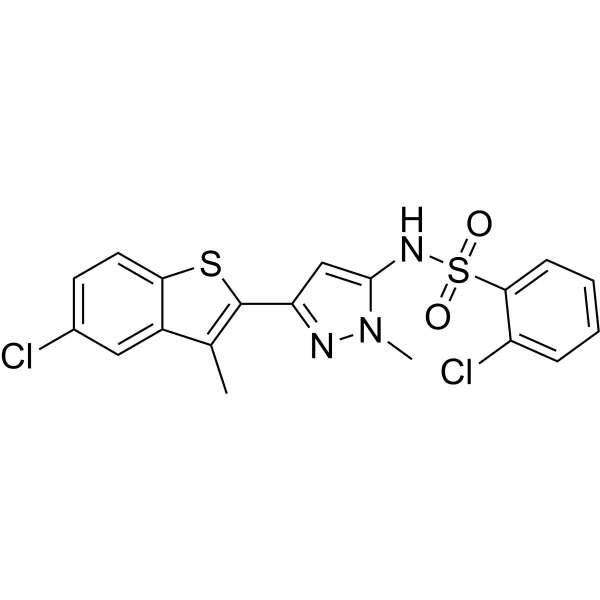
ML-60218 is a broad-spectrum RNA pol III inhibitor, with IC50s of 32 and 27 μM for Saccharomyces cerevisiae and human. ML-60218 disrupts already assembled viroplasms and to hamper the formation of new ones without the need for de novo transcription of cellular RNAs.
For research use only. We do not sell to patients.
- Purity : 99.69%
- CAS No.: 577784-91-9
- Formula: C19H15Cl2N3O2S2
- Molecular Weight:452.38
-
Storage:Powder -20°C, 3 years , 4°C, 2 years ; In solvent -80°C, 2 years , -20°C, 1 year

To place orders, for customer services and technical support, please contact: MedChemExpress USA
Tel: 609-228-6898 E-mail: [email protected] [email protected]


-
 Biological Activity
-
Chemical Information
-
Solvent & Solubility
- Purity & Documentation
- References
-
 Help & FAQs


-
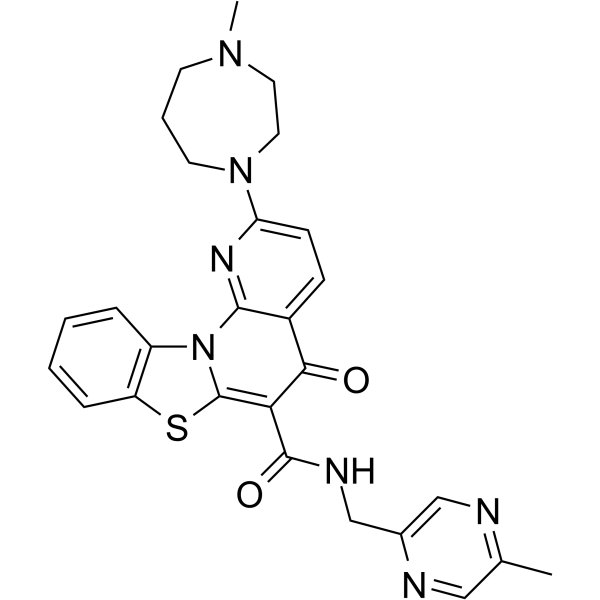
HY-13323
CX-5461RNA Polymerase I Inhibitor -
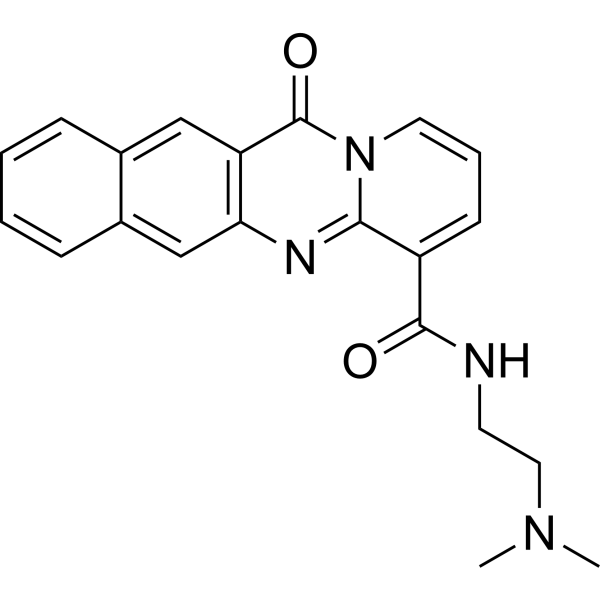
HY-12484
BMH-21DNA Intercalator/Pol I Elongation Inhibitor -
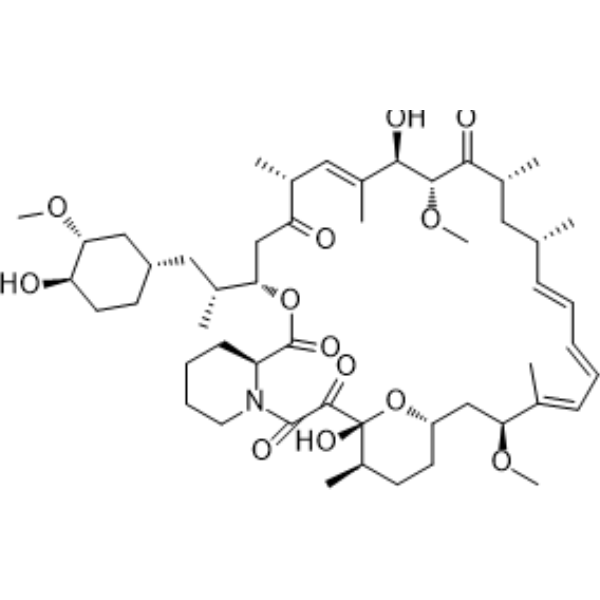
HY-10219
RapamycinmTOR Inhibitor -
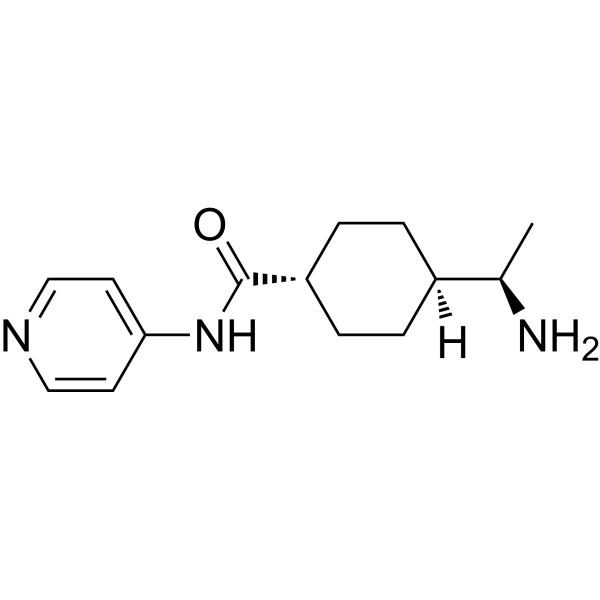
HY-10071
Y-27632ROCK Inhibitor -
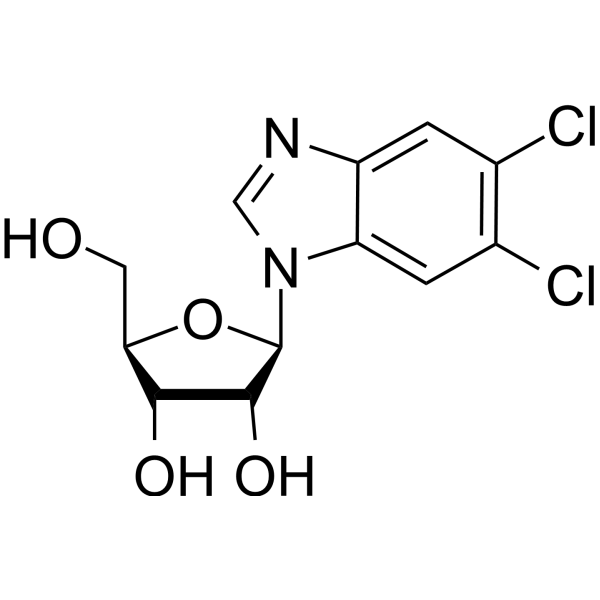
HY-14392
5,6-Dichlorobenzimidazole ribosideCDK Inhibitor -
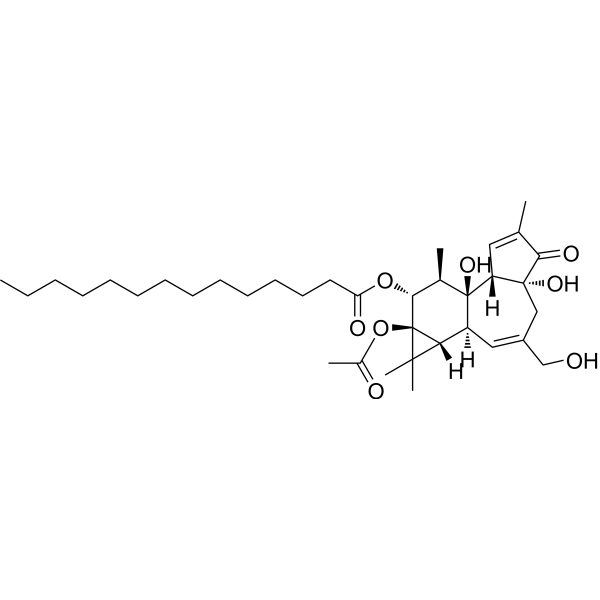
HY-18739
Phorbol 12-myristate 13-acetatePKC Activator -
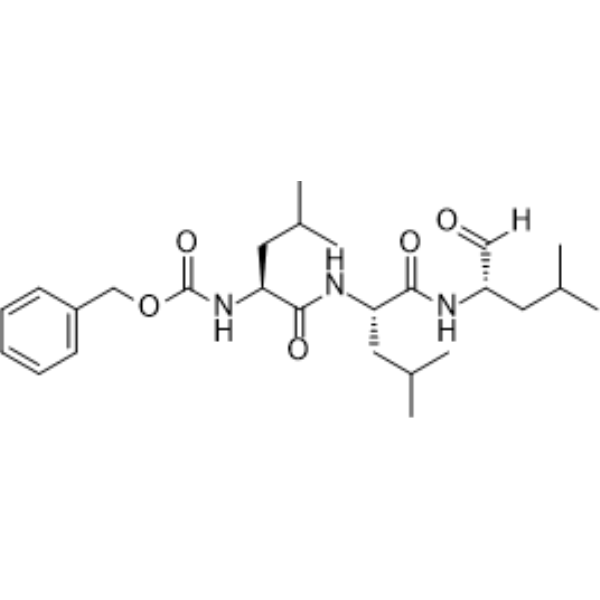
HY-13259
MG-132Proteasome Inhibitor -
HY-10964
VadimezanVascular Disrupting Agent -
HY-17031
SBE-β-CDExcipient -
HY-19610
α-AmanitinADC Toxin/RNA Pol II Inhibitor -
HY-112693
H-151STING Antagonist -
HY-13027
DAPTγ-secretase Inhibitor
Publications Citing Use of MedChemExpress (MCE) ML-60218
More- Mol Cell. 2025 Dec 18;85(24):4526-4544.e18. [Abstract]
- Nucleic Acids Res. 2025 Feb 8;53(4):gkaf062. [Abstract]
- Cell Death Differ. 2026 Aug 6.
- Cell Commun Signal. 2022 Sep 5;20(1):96. [Abstract]
- Cell Chem Biol. 2026 Jun 16:S2451-9456(26)00196-0. [Abstract]
- Cell Rep. 2023 Aug 8;42(8):112941. [Abstract]
- Mol Ther Nucleic Acids. 2026 Sep 23.
- PLoS Pathog. 2022 Jan 28;18(1):e1010270. [Abstract]
- SSRN. 2026 Jul 29.
- University of Texas Medical Branch. 2026 May.
- bioRxiv. 2026 May 29.
- bioRxiv. 2026 May 29.
- bioRxiv. 2026 Jan 7.
- bioRxiv. 2025 Nov 5.
- bioRxiv. 2024 Jun 9:2024.06.08.598009. [Abstract]
 Customer Validation & Images

-
WB
-
RT-PCR
-
Cell Proliferation/Viability Assay
-
RT-PCR
All DNA/RNA Synthesis Isoforms
More

Biological Activity
Description
In Vitro
Combination of SAHA and ML-60218 produces enhanced suppression of proliferation in human pancreatic adenocarcinoma by impairing cell cycle progression and inducing apoptosis. ML-60218 reverses SAHA-stimulated tRNA expression in PANC-1 and BxPC-3 cells. ML-60218 enhances the ability of HDAC inhibitors to induce apoptosis and cell cycle arrest[2].
In in vitro transcription assays with purified double-layered particles (DLPs), ML-60218 shows dose-dependent inhibitory activity, indicating the viral nature of its target. ML-60218 is found to interfere with the formation of higher-order structures of VP6, the protein forming the DLP outer layer, without compromising its ability to trimerize. Electron microscopy of ML-60218-treated DLPs shows dose-dependent structural damage. ML-60218-mediated (10 μM ) viroplasm disruption causes NSP5 dephosphorylation[3].
MedChemExpress (MCE) has not independently confirmed the accuracy of these methods. They are for reference only.


Chemical Information
-
CAS No. 577784-91-9
-
Appearance Solid
-
Molecular Weight 452.38
-
Formula C19H15Cl2N3O2S2
-
Color White to light yellow
-
SMILES
O=S(C1=CC=CC=C1Cl)(NC2=CC(C3=C(C)C4=CC(Cl)=CC=C4S3)=NN2C)=O
-
Shipping
Room temperature in continental US; may vary elsewhere.
-
Storage
Powder -20°C 3 years 4°C 2 years In solvent -80°C 2 years -20°C 1 year


Publications (15)
-
Journal Impact Factor
-
Most Recent
-
Mol Cell
NAT10 promotes cancer metastasis by modulating p300/CBP activity through chromatin-associated tRNA. [Abstract]2025 Dec 18;85(24):4526-4544.e18. PMID: 41344331
ML-60218 purchased from MedChemExpress. Usage Cited in: Mol Cell. 2025 Dec 18;85(24):4526-4544.e18. [Abstract]
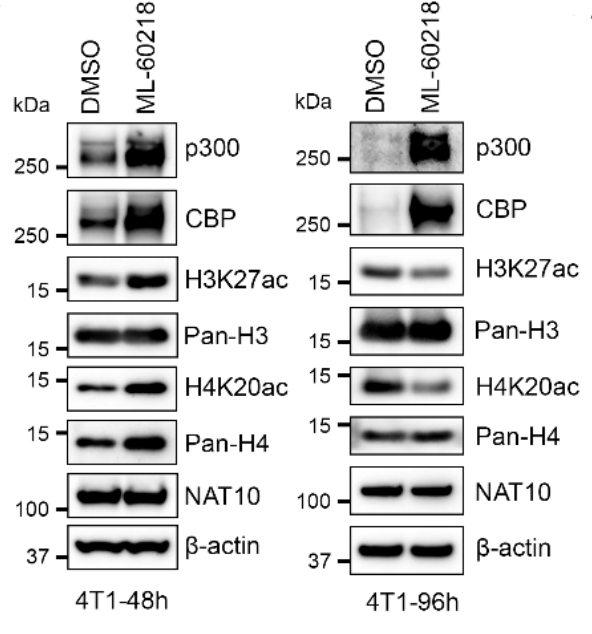
Western blot showing the level of p300, CBP, H3K27ac and H4K20ac in 4T1 cells treated with ML-60218 (25 μM) for 48 h (left) and 96 h (right). The results showed that after 48 hours of treatment with ML-60218, the levels of p300, CBP, H3K27ac, and H4K20ac increased.
ML-60218 purchased from MedChemExpress. Usage Cited in: Mol Cell. 2025 Dec 18;85(24):4526-4544.e18. [Abstract]
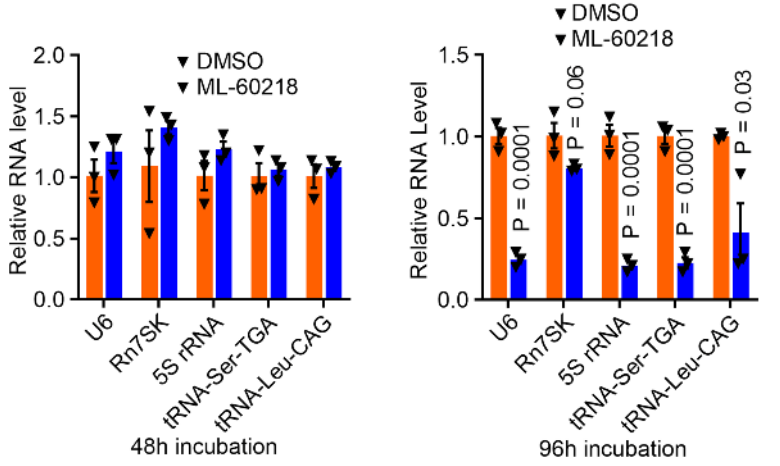
qRT-PCR analysis showing the levels of RNA polymerase III-transcribed genes in Pol III-inhibitor, ML-60218-treated (25 µM; 48 or 96 h) 4T1 cells at different time point.
-
Nucleic Acids Res
CRISPuRe-seq: pooled screening of barcoded ribonucleoprotein reporters reveals regulation of RNA polymerase III transcription by the integrated stress response via mTOR. [Abstract]2025 Feb 8;53(4):gkaf062. PMID: 39921565 -
-
Cell Commun Signal
Elevation of effective p53 expression sensitizes wild-type p53 breast cancer cells to CDK7 inhibitor THZ1. [Abstract]2022 Sep 5;20(1):96. PMID: 36058938
ML-60218 purchased from MedChemExpress. Usage Cited in: Cell Commun Signal. 2022 Sep 5;20(1):96. [Abstract]
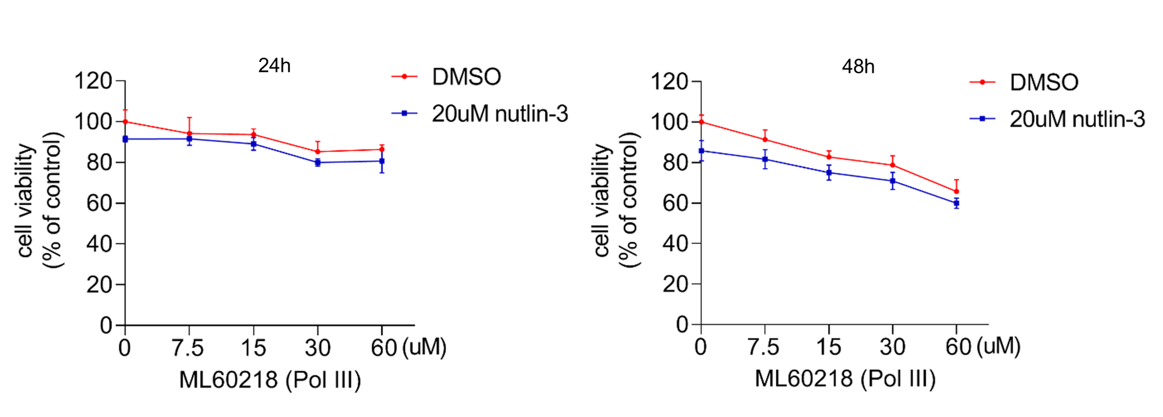
CCk8 assay was meant to detect MCF-7 cell viability under Pol III inhibitor ML-60218 (7.5-60 μM; 24-48 h) +/- nutlin-3.
-
Cell Chem Biol
2026 Jun 16:S2451-9456(26)00196-0. PMID: 42302779 -
Cell Rep
2023 Aug 8;42(8):112941. PMID: 37556328 -
-
PLoS Pathog
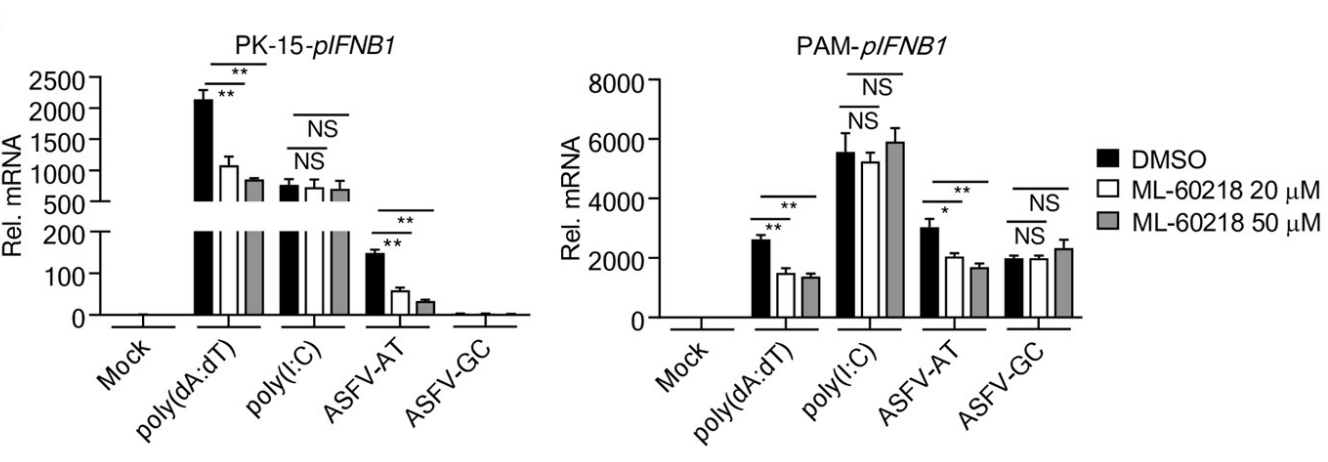
African swine fever virus I267L acts as an important virulence factor by inhibiting RNA polymerase III-RIG-I-mediated innate immunity. [Abstract]2022 Jan 28;18(1):e1010270. PMID: 35089988
ML-60218 purchased from MedChemExpress. Usage Cited in: PLoS Pathog. 2022 Jan 28;18(1):e1010270. [Abstract]
PK-15 cells or PAMs (1×10⁶) were pre-treated with the indicated concentrations of the RNA Pol-III inhibitor ML-60218 (20-50 μM) for 6 hours before transfection with poly(dA:dT), ASFV-AT, ASFV-GC or poly(I:C) (1 μg/mL) for 4 hours. The mRNA levels of IFNB1 were analyzed by RT-qPCR. The results showed that ML-60218, a inhibitor of RNA Pol‑III, markedly inhibited transcription of the IFNB1 gene induced by transfected poly(dA:dT) and ASFV/DNA‑AT, but not by poly(I:C) or ASFV/DNA‑GC, in porcine PK‑15 cells and PAMs, respectively.
-
-
-
-
-
-
-
bioRxiv
Evidence of RNA polymerase III recruitment and transcription at protein-coding gene promoters. [Abstract]2024 Jun 9:2024.06.08.598009. PMID: 38895345


Solvent & Solubility
In Vitro:
DMSO : 100 mg/mL (221.05 mM; Need ultrasonic; Hygroscopic DMSO has a significant impact on the solubility of product, please use newly opened DMSO)
Please refer to the solubility information to select the appropriate solvent. Once prepared, please aliquot and store the solution to prevent product inactivation from repeated freeze-thaw cycles.
Storage method and period of stock solution: -80°C, 2 years; -20°C, 1 year. When stored at -80°C, please use it within 2 years. When stored at -20°C, please use it within 1 year.
Please refer to the solubility information to select the appropriate solvent. Once prepared, please aliquot and store the solution to prevent product inactivation from repeated freeze-thaw cycles.
Storage method and period of stock solution: -80°C, 2 years; -20°C, 1 year. When stored at -80°C, please use it within 2 years. When stored at -20°C, please use it within 1 year.
Concentration (start) × Volume (start) = Concentration (final) × Volume (final)
In Vivo:
Select the appropriate dissolution method based on your experimental animal and administration route.
- For the following dissolution methods, please ensure to first prepare a clear stock solution using an In Vitro approach and then sequentially add co-solvents:
- To ensure reliable experimental results, the clarified stock solution can be appropriately stored based on storage conditions. As for the working solution for In Vivo experiments, it is recommended to prepare freshly and use it on the same day.
- The percentages shown for the solvents indicate their volumetric ratio in the final prepared solution. If precipitation or phase separation occurs during preparation, heat and/or sonication can be used to aid dissolution.
Add each solvent one by one: 10% DMSO 40% PEG300 5% Tween-80 45% Saline
Solubility: ≥ 2.5 mg/mL (5.53 mM); Clear solution
This protocol yields a clear solution of ≥ 2.5 mg/mL (saturation unknown).
Taking 1 mL working solution as an example, add 100 μL DMSO stock solution (25.0 mg/mL) to 400 μL PEG300, and mix evenly; then add 50 μL Tween-80 and mix evenly; then add 450 μL Saline to adjust the volume to 1 mL.
Preparation of Saline: Dissolve 0.9 g sodium chloride in ddH₂O and dilute to 100 mL to obtain a clear Saline solution.
In Vivo Dissolution Calculator
Please enter the basic information of animal experiments:
-
-
-
-
Recommended: Prepare an additional quantity of animals to account for potential losses during experiments.
Please enter your animal formula composition:
-
%DMSO +
Recommended: Keep the proportion of DMSO in working solution below 2% if your animal is weak.
-
%+
-
+%Tween-80 + +
-
%Saline +
The co-solvents required include: DMSO, . All of co-solvents are available by MedChemExpress (MCE). , Tween 80. All of co-solvents are available by MedChemExpress (MCE).
Working solution concentration: 0.22 mg/mL
Method for preparing stock solution: mg drug dissolved in μL DMSO. Stock solution concentration: mg/mL.
1. Take μL DMSO stock solution;
2. Add μL .
μL , mix evenly;
3. Then add μL Tween 80, mix evenly;
4. Then add μL
Please ensure that the stock solution in the first step is dissolved to a clear state, and add co-solvents in sequence. You can use ultrasonic heating (ultrasonic cleaner, recommended frequency 20-40 kHz), vortexing, etc. to assist dissolution.


Purity & Documentation
-
Data Sheet (276 KB)
-
SDS (251 KB)
- English - EN (251 KB)
- Français - FR (251 KB)
- Deutsch - DE (251 KB)
- Norwegian - NO (251 KB)
- Español - ES (251 KB)
- Swedish - SV (251 KB)
- Italian - IT (251 KB)
- Korean - KR (251 KB)
- Portuguese - PT (251 KB)
-
Handling Instructions (2659 KB)
References
[1]. Wu L, et al. Novel small-molecule inhibitors of RNA polymerase III. Eukaryot Cell. 2003;2(2):256-264. [Content Brief]
[2]. Yee NS, et al. Targeting developmental regulators of zebrafish exocrine pancreas as a therapeutic approach in human pancreatic cancer. Biol Open. 2012;1(4):295-307. [Content Brief]
[3]. Eichwald C, et al. Identification of a Small Molecule That Compromises the Structural Integrity of Viroplasms and Rotavirus Double-Layered Particles. J Virol. 2018;92(3):e01943-17. Published 2018 Jan 17. [Content Brief]


Complete Stock Solution Preparation Table
Please refer to the solubility information to select the appropriate solvent. Once prepared, please aliquot and store the solution to prevent product inactivation from repeated freeze-thaw cycles.
Storage method and period of stock solution: -80°C, 2 years; -20°C, 1 year. When stored at -80°C, please use it within 2 years. When stored at -20°C, please use it within 1 year.
| Optional Solvent | Concentration Solvent Mass | 1 mg | 5 mg | 10 mg | 25 mg |
|---|---|---|---|---|---|
| DMSO | 1 mM | 2.2105 mL | 11.0527 mL | 22.1053 mL | 55.2633 mL |
| 5 mM | 0.4421 mL | 2.2105 mL | 4.4211 mL | 11.0527 mL | |
| 10 mM | 0.2211 mL | 1.1053 mL | 2.2105 mL | 5.5263 mL | |
| 15 mM | 0.1474 mL | 0.7368 mL | 1.4737 mL | 3.6842 mL | |
| 20 mM | 0.1105 mL | 0.5526 mL | 1.1053 mL | 2.7632 mL | |
| 25 mM | 0.0884 mL | 0.4421 mL | 0.8842 mL | 2.2105 mL | |
| 30 mM | 0.0737 mL | 0.3684 mL | 0.7368 mL | 1.8421 mL | |
| 40 mM | 0.0553 mL | 0.2763 mL | 0.5526 mL | 1.3816 mL | |
| 50 mM | 0.0442 mL | 0.2211 mL | 0.4421 mL | 1.1053 mL | |
| 60 mM | 0.0368 mL | 0.1842 mL | 0.3684 mL | 0.9211 mL | |
| 80 mM | 0.0276 mL | 0.1382 mL | 0.2763 mL | 0.6908 mL | |
| 100 mM | 0.0221 mL | 0.1105 mL | 0.2211 mL | 0.5526 mL |


ML-60218 Related Classifications
HY-122122 Related Classifications
 Powered by Bioz