



D-Xylulose 5-phosphate sodium
Based on 1 publication(s) in Google Scholar
D-Xylulose 5-phosphate sodium is a pentose phosphate ester and an essential intermediate metabolite in the pentose phosphate pathway (PPP) and the non-oxidative phase of the pentose phosphate pathway. D-xylulose-5-phosphate sodium can be efficiently synthesized through the phosphorylation of D-xylulose catalyzed by D-xylulokinase (XKS1 from Saccharomyces cerevisiae), with ATP regeneration facilitated by the phosphoenolpyruvate (PEP)/pyruvate kinase (PK) system.
For research use only. We do not sell to patients.
- Purity : 90.0%
- CAS No.: 105931-44-0
- Formula: C5H10NaO8P
- Molecular Weight:252.09
-
Storage:
-20°C, sealed storage, away from moisture
* In solvent : -80°C, 6 months; -20°C, 1 month (sealed storage, away from moisture)


To place orders, for customer services and technical support, please contact: MedChemExpress USA
Tel: 609-228-6898 E-mail: [email protected] [email protected]


-
 Biological Activity
-
Chemical Information
-
Solvent & Solubility
- Protocols
- Purity & Documentation
- References
-
 Help & FAQs


-
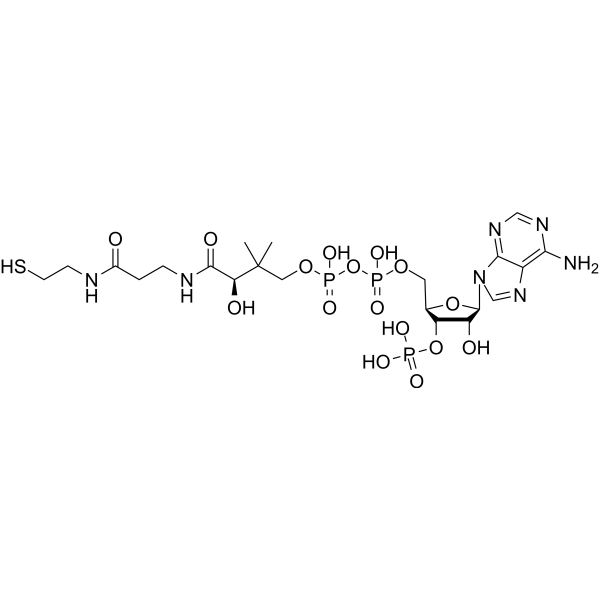
HY-128851
Coenzyme ACofactor -
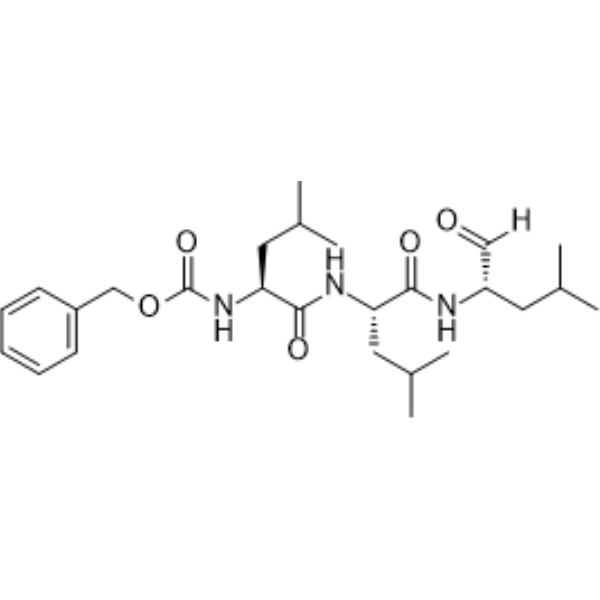
HY-13259
MG-132Proteasome Inhibitor -
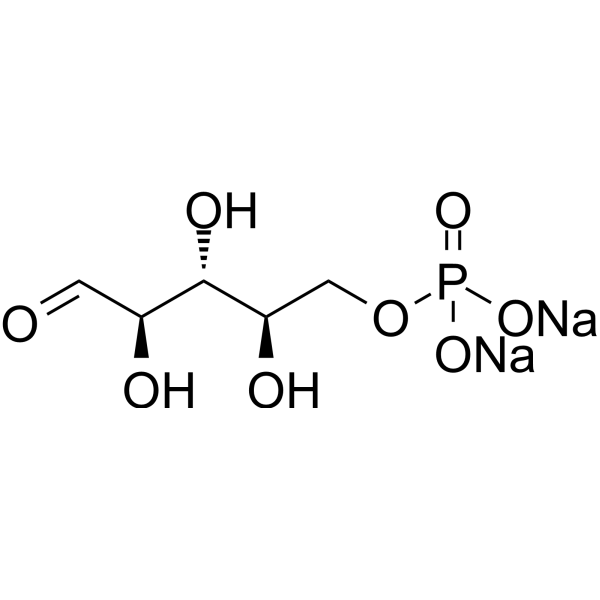
HY-W009371
D-Ribose 5-phosphate disodiumIntermediate of PPP -
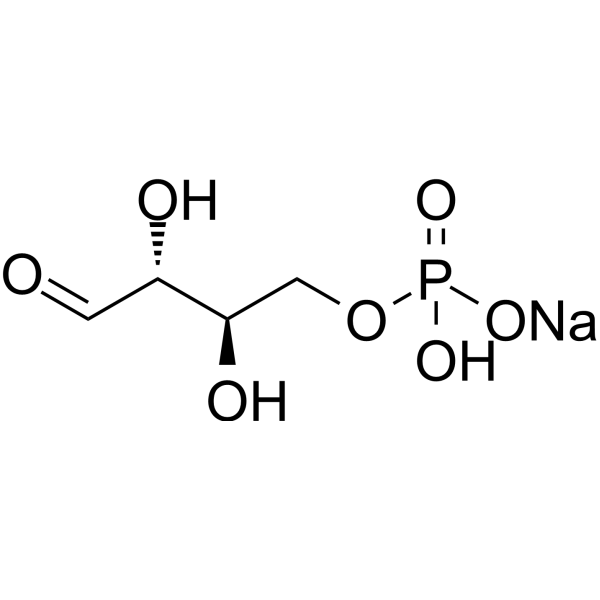
HY-N7386A
D-Erythrose 4-phosphate sodiumNatural Product -
HY-N11848
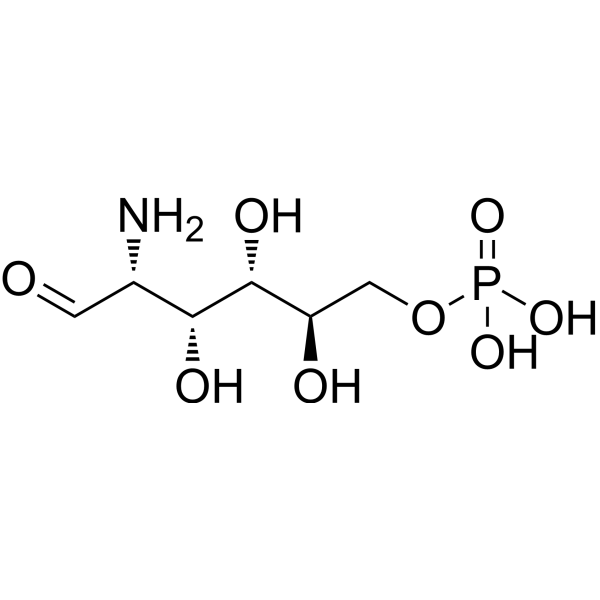
D-Glucosamine 6-phosphateEndogenous Metabolite -
HY-N8060A
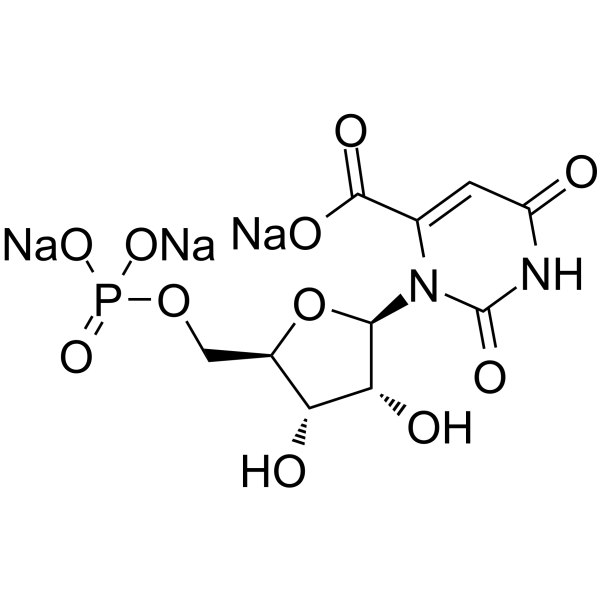
Orotidine 5′-monophosphate trisodiumPyrimidine Nucleotide
Publications Citing Use of MedChemExpress (MCE) D-Xylulose 5-phosphate sodium
More

Biological Activity
Description
In Vitro
D-Xylulose 5-phosphate sodium (up to 500 mM; 6 h) is stable at low pH but unstable under alkaline conditions at 25 °C, with degradation increasing with higher concentrations over 6 h[2].
D-Xylulose 5-phosphate sodium (5-100 mM GA3P or DHAP) is enzymatically synthesized from 5-100 mM GA3P or DHAP using cTK and TPI at 25 °C, with yield decreasing and initial production rate peaking at 80 mM as substrate concentration increases[2].
MedChemExpress (MCE) has not independently confirmed the accuracy of these methods. They are for reference only. Further protocols information, click here.


Chemical Information
-
CAS No. 105931-44-0
-
Appearance Solid
-
Molecular Weight 252.09
-
Formula C5H10NaO8P
-
Color Light yellow to yellow
-
SMILES
O=P(O)(O[Na])OC[C@@H](O)[C@H](O)C(CO)=O
-
Shipping
Room temperature in continental US; may vary elsewhere.
-
Storage
-20°C, sealed storage, away from moisture
* In solvent : -80°C, 6 months; -20°C, 1 month (sealed storage, away from moisture)


Publications (1)
-
Journal Impact Factor
-
Most Recent


Solvent & Solubility
In Vitro:
H2O : 25 mg/mL (99.17 mM; Need ultrasonic)
Please refer to the solubility information to select the appropriate solvent. Once prepared, please aliquot and store the solution to prevent product inactivation from repeated freeze-thaw cycles.
Storage method and period of stock solution: -80°C, 6 months; -20°C, 1 month (sealed storage, away from moisture). When stored at -80°C, please use it within 6 months. When stored at -20°C, please use it within 1 month.
* Note: If you choose water as the stock solution, please dilute it to the working solution, then filter and sterilize it with a 0.22 μm filter before use.
Please refer to the solubility information to select the appropriate solvent. Once prepared, please aliquot and store the solution to prevent product inactivation from repeated freeze-thaw cycles.
Storage method and period of stock solution: -80°C, 6 months; -20°C, 1 month (sealed storage, away from moisture). When stored at -80°C, please use it within 6 months. When stored at -20°C, please use it within 1 month.
* Note: If you choose water as the stock solution, please dilute it to the working solution, then filter and sterilize it with a 0.22 μm filter before use.
Concentration (start) × Volume (start) = Concentration (final) × Volume (final)

Protocols
-
Kinase activity and phosphorylation assays
Kinase activity assays measure the ability of kinases to transfer phosphate groups from ATP to specific substrates, while phosphorylation assays detect the presence and levels of phosphorylated proteins. Common methods include radiolabeled ATP incorporation (e. g. ,), ADP release detection via bioluminescence (e. g. ,[3]), enzyme-linked immunosorbent assays (ELISA) for phospho-specific epitopes (e. g. ,[6]), and microtiter-based formats for high-throughput screening (e. g. ,[8]). The ADP-Glo assay quantifies kinase activity by measuring ADP produced during phosphorylation using a luciferase-based system. Radiometric assays involve autoradiography or scintillation counting after incorporation of 32P-labeled ATP into substrate proteins. ELISA-based approaches rely on phospho-specific antibodies to detect activated kinases in cell lysates or purified samples.
-
Western Blot
Western blotting (WB) is a commonly used experimental method in molecular biology, biochemistry, and immunogenetics for identifying and quantifying target proteins. It combines gel electrophoresis with immunoassay, enabling researchers to analyze protein expression, post-translational modifications, and molecular weight.
-
Protocol for Kinase activity and phosphorylation assays
Kinase activity assays measure transfer of phosphate from ATP to a protein or peptide substrate, generating phosphorylated substrate, ADP, or incorporated radiolabeled phosphate as the readout; phosphorylation assays measure site-specific phosphorylation in cells or tissues as a proxy for kinase-pathway activation, inhibition, or substrate regulation. Phosphorylation can be detected by phospho-specific Western blot, immunoprecipitation kinase assay, phospho-immunofluorescence, phospho-flow cytometry, luminescent ADP detection, radiolabeled ATP incorporation, or reporter-based pathway assays, and these readouts can be applied to cancer cells, primary neurons, mouse tumors, organoids, inflammatory macrophages, ferroptosis studies, and mitophagy studies when the kinase target is biologically relevant.


Purity & Documentation
-
Data Sheet (271 KB)
-
SDS (418 KB)
- English - EN (418 KB)
- Français - FR (418 KB)
- Deutsch - DE (418 KB)
- Norwegian - NO (418 KB)
- Español - ES (418 KB)
- Swedish - SV (418 KB)
- Italian - IT (418 KB)
- Korean - KR (418 KB)
- Portuguese - PT (418 KB)
-
Handling Instructions (2659 KB)
References


Complete Stock Solution Preparation Table
Please refer to the solubility information to select the appropriate solvent. Once prepared, please aliquot and store the solution to prevent product inactivation from repeated freeze-thaw cycles.
Storage method and period of stock solution: -80°C, 6 months; -20°C, 1 month (sealed storage, away from moisture). When stored at -80°C, please use it within 6 months. When stored at -20°C, please use it within 1 month.
| Optional Solvent | Concentration Solvent Mass | 1 mg | 5 mg | 10 mg | 25 mg |
|---|---|---|---|---|---|
| H2O | 1 mM | 3.9668 mL | 19.8342 mL | 39.6684 mL | 99.1709 mL |
| 5 mM | 0.7934 mL | 3.9668 mL | 7.9337 mL | 19.8342 mL | |
| 10 mM | 0.3967 mL | 1.9834 mL | 3.9668 mL | 9.9171 mL | |
| 15 mM | 0.2645 mL | 1.3223 mL | 2.6446 mL | 6.6114 mL | |
| 20 mM | 0.1983 mL | 0.9917 mL | 1.9834 mL | 4.9585 mL | |
| 25 mM | 0.1587 mL | 0.7934 mL | 1.5867 mL | 3.9668 mL | |
| 30 mM | 0.1322 mL | 0.6611 mL | 1.3223 mL | 3.3057 mL | |
| 40 mM | 0.0992 mL | 0.4959 mL | 0.9917 mL | 2.4793 mL | |
| 50 mM | 0.0793 mL | 0.3967 mL | 0.7934 mL | 1.9834 mL | |
| 60 mM | 0.0661 mL | 0.3306 mL | 0.6611 mL | 1.6528 mL | |
| 80 mM | 0.0496 mL | 0.2479 mL | 0.4959 mL | 1.2396 mL |
* Note: If you choose water as the stock solution, please dilute it to the working solution, then filter and sterilize it with a 0.22 μm filter before use.


D-Xylulose 5-phosphate sodium Related Classifications
HY-W712327 Related Classifications
 Powered by Bioz