Search Result
Results for "
solani
" in MedChemExpress (MCE) Product Catalog:
1
Biochemical Assay Reagents
3
Isotope-Labeled Compounds
| Cat. No. |
Product Name |
Target |
Research Areas |
Chemical Structure |
-
- HY-N2524
-
|
|
EGFR
|
Cancer
|
|
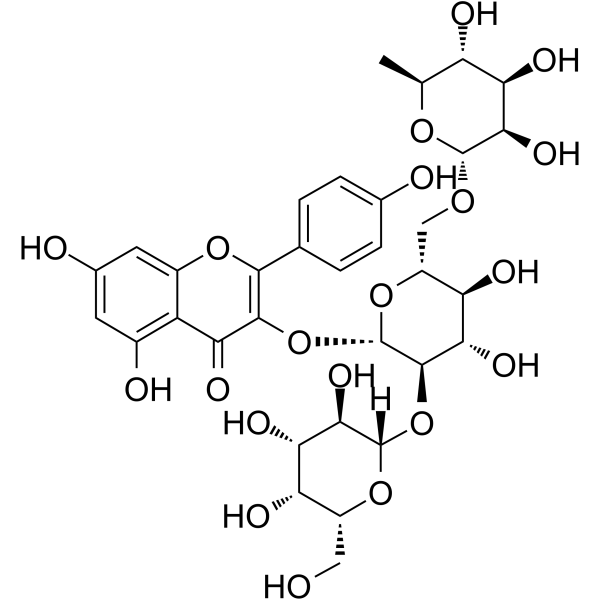
Camelliaside A is a phytochemical and also a HER2 ligand. Camelliaside A shows no inhibitory effect on mycelial growth of Rhizoctonia solani, indicating no antifungal activity against this pathogen. Camelliaside A is applicable to breast cancer-related research .
|
-
-
- HY-119459
-
-
-
- HY-W004263
-
|
Arachidyl alcohol
|
Environmental Pollutants
Fungal
|
Infection
|
|
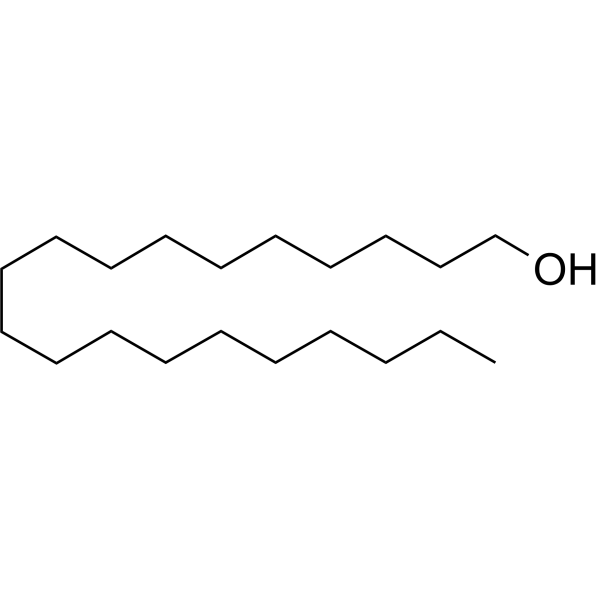
1-Eicosanol (Arachidyl alcohol) is a long-chain fatty alcohol and volatile organic compound that can be isolated from the leaves of Leea indica and produced by Bacillus velezensis ZJ1. 1-Eicosanol inhibits mycelial growth of Alternaria solani and Botrytis cinerea. 1-Eicosanol is applicable to research related to tomato early blight and tomato gray mold .
|
-
-
- HY-B0856
-
|
|
Fungal
Tyrosinase
Antibiotic
|
Infection
|
|
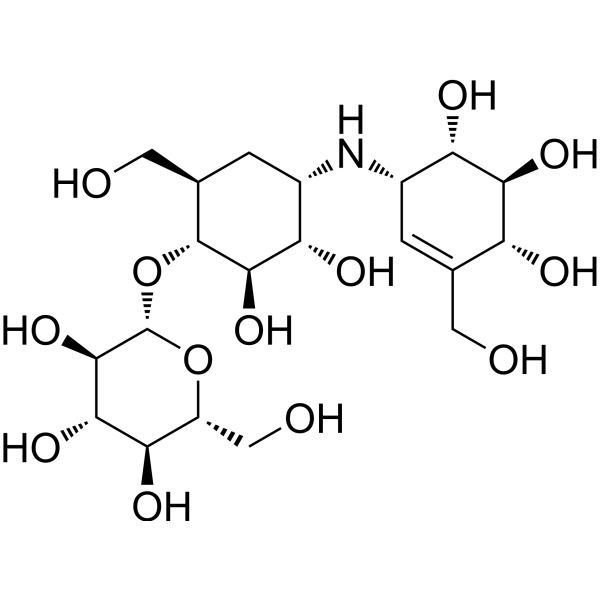
Validamycin A, a fungicidal, is an agricultural antibiotic. Validamycin A is originally isolated from Streptomyces hygroscopicus var. limoneus. Validamycin A inhibits the growth of A. flavus, with a MIC of 1?μg/mL . Validamycin A shows potent inhibitory activity against trehalase of Rhizoctonia solani, with an IC50 of 72 μM . Validamycin A is a reversible tyrosinase inhibitor, with a Ki of 5.893 mM .
|
-
-
- HY-17520
-
|
MTF-753
|
Environmental Pollutants
Fungal
|
Infection
|
|
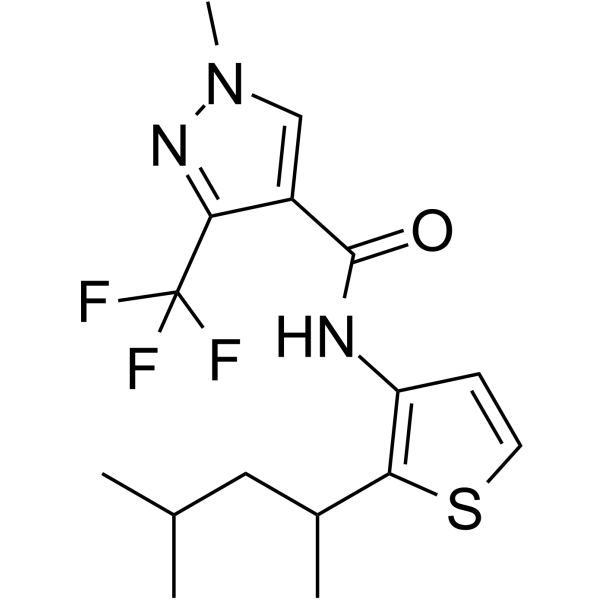
Penthiopyrad (MTF-753) is a carboxamide Fungicide. Penthiopyrad inhibits SDH. Penthiopyrad exhibits broad-spectrum antifungal activity, being effective not only against Basidiomycetes, but also against Ascomycetes and Deuteromycetes. Penthiopyrad inhibits the mycelial growth of Alternaria mali, Botrytis cinerea, Monilinia mali, Rhizoctonia solani and Sclerotinia sclerotiorum on PDA medium, with EC50 values ranging from <0.4 ppm to 0.34 ppm and MIC values ranging from 6.6 ppm to 47.9 ppm .
|
-
-
- HY-N1970
-
|
|
Keap1-Nrf2
Caspase
PARP
Fungal
|
Infection
Neurological Disease
Metabolic Disease
Inflammation/Immunology
Cancer
|
|
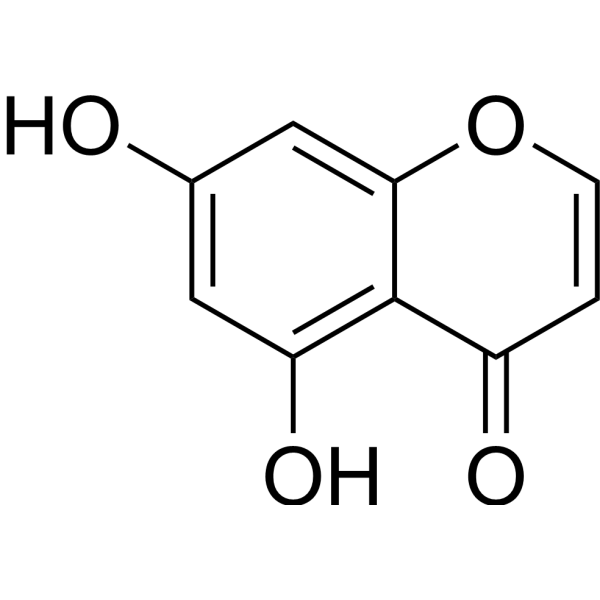
5,7-Dihydroxychromone is a flavonoid compound with antioxidant properties. 5,7-Dihydroxychromone induces Nrf2 nuclear translocation, increases Nrf2/ARE binding activity, and up-regulates Nrf2-dependent antioxidant genes HO-1, NQO1, GCLc. 5,7-Dihydroxychromone attenuates excessive ROS generation, inhibits activated caspase-3, caspase-9, cleaved PARP expression, and prevents neuronal apoptosis and cell death. 5,7-Dihydroxychromone increases LXRα and PPARγ mRNA expression, induces preadipocyte differentiation, and regulates blood glucose levels. 5,7-Dihydroxychromone inhibits radial growth of soil pathogenic fungi, radicle elongation of select seedlings, and transiently inhibits Bradyrhizobium sp. growth in high mannitol medium. 5,7-Dihydroxychromone can be used for the research of Parkinson’s disease, type 2 diabetes mellitus and pathogenic fungal infection .
|
-
-
- HY-B2011
-
|
|
Environmental Pollutants
Succinate Dehydrogenase
Fungal
Mitochondrial Metabolism
|
Infection
|
|
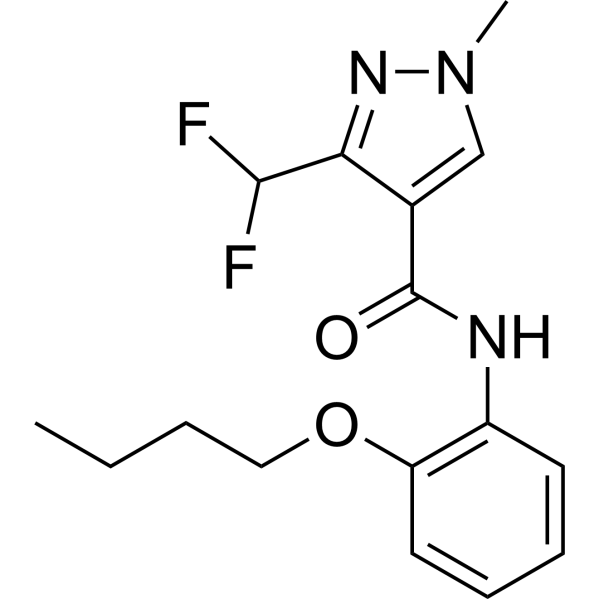
Flutolanil is a succinate dehydrogenase complex inhibitor and fungicide. Flutolanil blocks electron transfer between the redox center of succinate dehydrogenase and coenzyme Q, inhibits mycelial oxygen consumption, and suppresses mycelial growth. Flutolanil induces acute and sublethal toxicity in zebrafish at different life stages. Flutolanil can be used in studies on plant disease control .
|
-
-
- HY-W015343
-
|
m-Methoxyphenylacetic acid
|
Endogenous Metabolite
|
Others
|
|
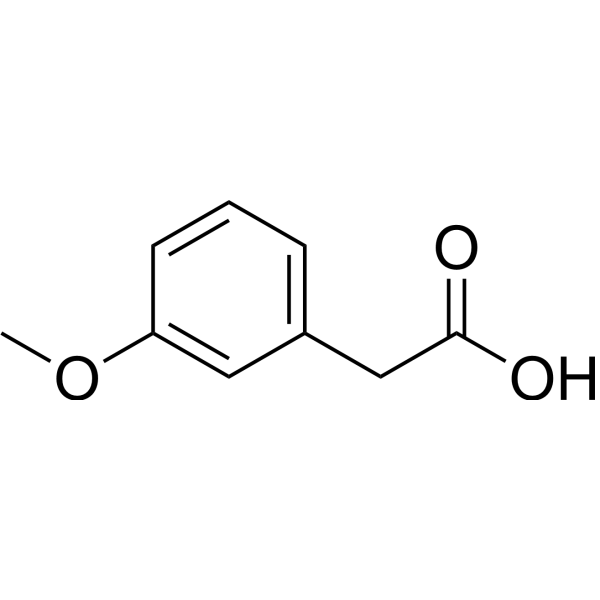
3-Methoxyphenylacetic acid (m-Methoxyphenylacetic acid), a m-hydroxyphenylacetic acid (m-OHPAA) derivative, is a phytotoxin in Rhizoctonia solani. 3-Methoxyphenylacetic acid is used to develop a toxin-mediated bioassay for resistance to rhizoctonia root rot .
|
-
-
- HY-119459R
-
|
|
Reference Standards
Succinate Dehydrogenase
Fungal
Parasite
Constitutive Androstane Receptor
Caspase
NF-κB
|
Infection
Cancer
|
|
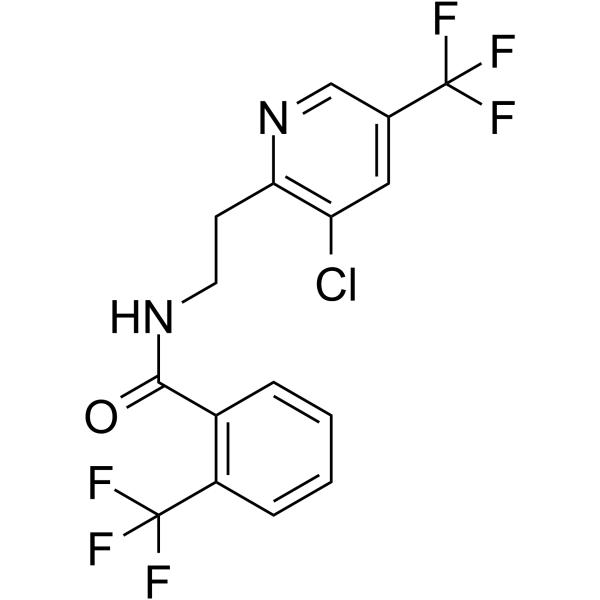
Fluopyram (Standard) is the analytical standard of Fluopyram (HY-119459). This product is intended for research and analytical applications. Fluopyram is an orally active succinate dehydrogenase inhibitor, antifungal and nematicide. Fluopyram inhibits succinate dehydrogenase activity, activates CAR/PXR nuclear receptors, and increases caspase-3, TNF-α and NF-κB. Fluopyram inhibits the growth of F. virguliforme, Botrytis cinerea and Alternaria solani with EC50 values of 3.35, 5.389 and 0.244 µg/mL, respectively. Fluopyram induces liver and thyroid tumor formation. Fluopyram is nephrotoxic and embryotoxic .
|
-
-
- HY-B2053
-
|
|
Fungal
|
Infection
|
|
Tolclofos-methyl is an organophosphorus fungicide. Tolclofos-methyl undergoes photoinduced oxidative degradation to form oxo-analog derivatives. Tolclofos-methyl inhibits spore division in fungi and oomycetes, induces cytoplasmic leakage, and interferes with flagellar movement. Tolclofos-methyl is rapidly metabolized and excreted in rodents. Tolclofos-methyl can be used in studies related to fungal infections .
|
-
-
- HY-123351
-
|
|
Fungal
|
Infection
Cancer
|
|
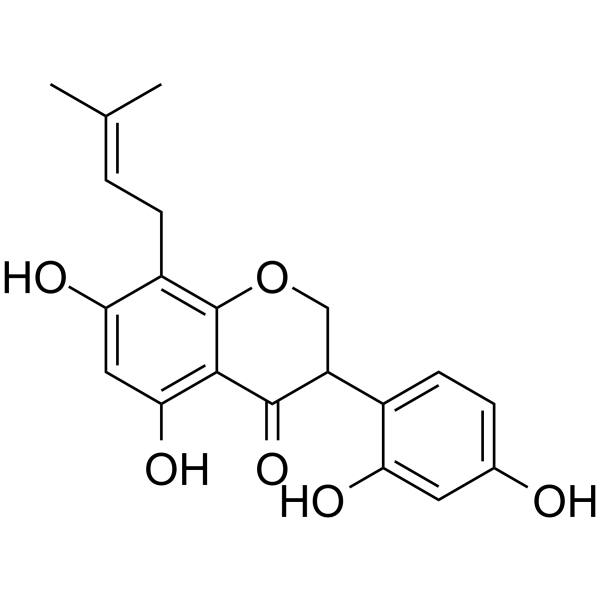
Kievitone, an isoflavanone, could be isolated from hypocotyls of Phaseolus vulgaris L. infected with Rhizoctonia solani Kühn. Kievitone has antifungal activity and antitumor activity .
|
-
-
- HY-133719
-
|
|
Fungal
|
Infection
|
|
Fenfuram is an antifungal agent with an EC50 of 6.18 mg/mL against R. solani. Fenfuram can be used in anti-infective research .
|
-
-
- HY-N6625S
-
|
|
Fungal
|
Inflammation/Immunology
|
|
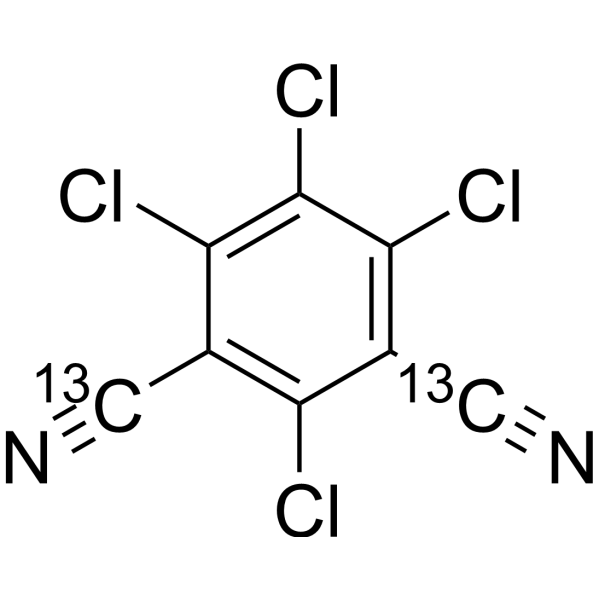
Chlorothalonil- 13C2 is the 13C-labeled Chlorothalonil. Chlorothalonil is a broad spectrum fungicide and is effective in protecting plants against fungal diseases caused mainly by Phytophthora infestans and Alternaria solani. Chlorothalonil is used for controlling of fungal foliar diseases of vegetables and crops .
|
-
-
- HY-169972
-
|
|
Succinate Dehydrogenase
|
Infection
|
|
Succinate dehydrogenase-IN-5 (Compound M8) is the inhibitor for succinate dehydrogenase. Succinate dehydrogenase-IN-5 interfers with the energy metabolism and growth of fungi, inhibits Rhizoctonia solani, Sclerotinia sclerotiorum, Botrytis cinerea and Fusarium graminearum with EC50 < 0.3 μg/mL .
|
-
-
- HY-149876
-
|
|
Fungal
|
Infection
|
|
SDH-IN-5 (compound 7d) is a potent succinate dehydrogenase (SDH) inhibitor, with an IC50 of 3.293 μM. SDH-IN-5 is also exhibits antifungal activity, with an EC50 of 0.046 μg/mL against R. solani. SDH-IN-5 could significantly inhibit the growth of R. solani in rice leaves with excellent protective and curative efficacies .
|
-
-
- HY-W150903
-
|
p-Oxybenzoesaureheptylester
|
Fungal
Bacterial
|
Infection
|
|
N-Heptyl 4-hydroxybenzoate (p-Oxybenzoesaureheptylester) is an antimicrobial agent that inhibits S. aureus with MIC of 12.5 μg/mL. N-Heptyl 4-hydroxybenzoate also against plant pathogenic fungi, such as Alternaria brassicicola, F. solani, C. dematium and C. acutatum .
|
-
-
- HY-N12167
-
|
|
Others
|
Others
|
|
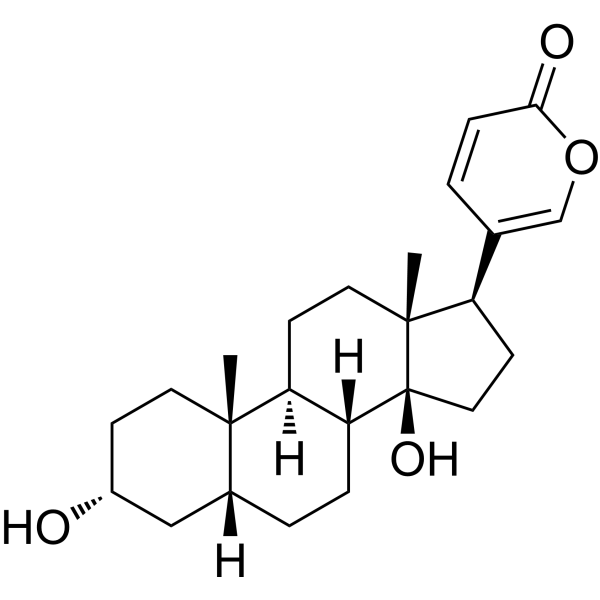
3-epi-Bufalin (compound 2a) is the microbial transformation product of bufadienolide .
|
-
-
- HY-129316
-
|
CGP 52547
|
Antibiotic
Fungal
Bacterial
|
Infection
|
|
(S)-Dihydroaeruginoic acid is an antibiotic originally isolated from P. fluorescens. It has antimicrobial activity in a disc assay against R. solani, P. ultimum, B. cinera, S. rolfsii, C. gloeosporioide, F. oxysporum, and S. tritici fungi as well as B. subtilis, E. herbicola, and S. albus bacteria when used at a concentration of 200 μg/disc.
|
-
-
- HY-168446
-
|
|
Pyruvate Kinase
Fungal
|
Infection
|
|
PKR-IN-1 (Compound 5s) is a pyruvate kinase (PK) inhibitor that has antifungal activity, with an EC50 of 0.21 μg/mL for R. solani .
|
-
-
- HY-178799
-
|
|
Succinate Dehydrogenase
Fungal
|
Infection
|
|
SDH-IN-37 (Compound A37) is a potent SDH inhibitor, with an IC50 value of 0.0263 μM. SDH-IN-37 is also an antifungal agent. SDH-IN-37 demonstrates antifungal activities against Rhizoctonia solani, S. sclerotiorum and F. graminearum, with EC50 values of 0.0144, 0.882 and 1.99 μg/mL, respectively .
|
-
-
- HY-142912
-
|
|
Fungal
|
Others
|
|
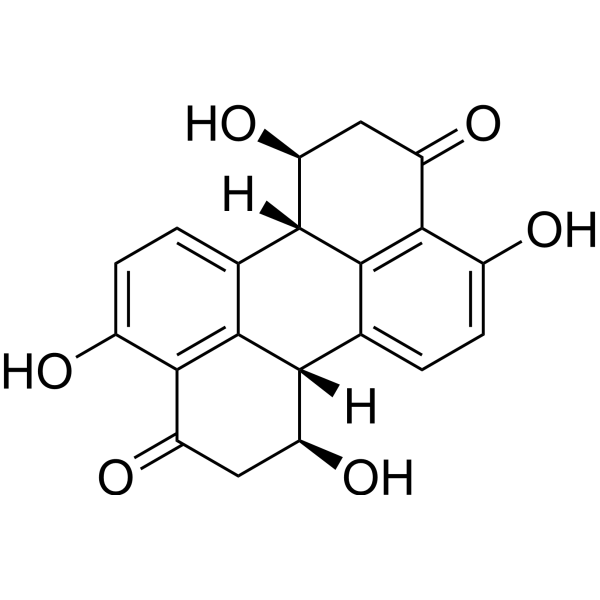
Stemphyperylenol displays a potent antifungal activity against the plant pathogen Alternaria solani with MIC of 1.57 μM.
|
-
-
- HY-163634
-
|
|
Fungal
|
Infection
|
|
YZK-C22, containing a 1,2,3-thiadiazol-[1,2,4]triazolo[3,4-b][1,3,4]thiadiazole skeleton, is a fungicide lead compound with broad-spectrum fungicidal activity .
|
-
-
- HY-W099582
-
-
-
- HY-149323
-
|
|
Fungal
|
Infection
|
|
SDH-IN-4 (compound B6) is a selective inhibitor against succinate dehydrogenase (SDH) with an IC50 value of 0.28 μg/mL. SDH-IN-4 has highly efficient and broad-spectrum antifungal activity, against R. solani with an EC50 value of 0.23 μg/mL .
|
-
-
- HY-178801
-
|
|
Succinate Dehydrogenase
Fungal
|
Infection
|
|
SDH-IN-39 (Compound A16) is a SDH inhibitor, with an IC50 value of 6.83 μg/mL. SDH-IN-39 is also an antifungal agent. SDH-IN-39 shows antifungal activity against Rhizoctonia solani (EC50 of 1.49 μg/mL), G. zeae, C. gloeosporioides, S. sclerotiorum and M. oryzae .
|
-
-
- HY-178778
-
|
|
Fungal
|
Infection
|
|
SDH-IN-38 (Compound IIIe) is a Succinate dehydrogenase inhibitor. SDH-IN-38 is an antifungal agent, with an EC50 value of 0.009 μg/mL against R. solani mycelia. SDH-IN-38 inhibits mycelial growth by affecting mycelial respiration. SDH-IN-38 induces cellular senescenc and reduces mitochondrial membrane potential in mycelia .
|
-
-
- HY-P11176
-
|
|
Fungal
HIV
|
Infection
|
|
Coccinin is an antifungal peptide. Coccinin can be purified from the seeds of large scarlet runner beans. Coccinin inhibits HIV-1 reverse transcriptase. Coccinin shows antifungal activity against M. arachidicola, F. oxysporum, P. piricola, B. cinerea, C. comatus and R. solani, with IC50s of 75, 81, 89, 109, 122 and 134 μM, respectively .
|
-
-
- HY-148054
-
|
|
Fungal
|
Infection
|
|
Antifungal agent 36 is a potent anti-fungal agent. Antifungal agent 36 shows anti-fungal activity for Basidiomycetes .
|
-
-
- HY-121178
-
|
|
Bacterial
Fungal
|
Infection
|
|
Deoxyviolacein is a bacterial metabolite and byproduct in the biosynthesis of the bisindole alkaloid violacein (HY-119809) that has anticancer, antibacterial, and antifungal properties. It inhibits proliferation of hepatocellular carcinoma cells when used at concentrations ranging from 0.1 to 1 μM. Deoxyviolacein (125 μg/mL) has antibacterial activity against Gram-positive bacteria, including S. aureus, B. subtilis, and B. megaterium. It also has antifungal activity against R. solani when used at a concentration of 2 mg/ml.
|
-
-
- HY-W150903S
-
|
p-Oxybenzoesaureheptylester [German]-d4
|
Isotope-Labeled Compounds
Fungal
Bacterial
|
Infection
|
|
N-Heptyl 4-hydroxybenzoate-d4 is the deuterium labeled N-Heptyl 4-hydroxybenzoate (HY-W150903) . N-Heptyl 4-hydroxybenzoate (p-Oxybenzoesaureheptylester) is an antimicrobial agent that inhibits S. aureus with MIC of 12.5 μg/mL. N-Heptyl 4-hydroxybenzoate also against plant pathogenic fungi, such as Alternaria brassicicola, F. solani, C. dematium and C. acutatum .
|
-
-
- HY-178162
-
|
|
Fungal
Cytochrome P450
|
Infection
|
|
CYP51-IN-27 is a sterol 14α-demethylase CYP51 inhibitor with an IC50 of 0.3434 μg/mL. CYP51-IN-27 exhibits antifungal activity and inhibits the production of fungal ergosterol. CYP51-IN-27 can be used for the research of infection, such as rice sheath blight .
|
-
-
- HY-158053
-
|
|
Fungal
|
Infection
|
|
Antifungal agent 94 (Compound 49) is a Flavonoid derivative, which exhibits antifungal activity with EC50 of 0.28 μM and a half-maximal effective concentration of 0.46 μg/mL against Rhizoctonia solani .
|
-
-
- HY-172363
-
|
|
Succinate Dehydrogenase
Fungal
|
Infection
|
|
Succinate dehydrogenase-IN-6 (Compound E23) is the inhibitor for succinate dehydrogenase that inhibits SDH in Rhizoctonia solani with an IC50 of 11.76 μM. Succinate dehydrogenase-IN-6 disrupts fungal cell membrane, exhibits board-spectrum antifungal activity that inhibits R. solani, V. dahliae, A. solani and C. gloeosporioides with EC50s of 0.41, 0.27, 1.15, 0.27 μg/mL, respectively. Succinate dehydrogenase-IN-6 exhibits no significant toxicity in rice and zebrafish (LC50 > 12.5 μg/mL) .
|
-
-
- HY-161010
-
|
|
Dihydrofolate reductase (DHFR)
|
Infection
|
|
DHFR-IN-13 (Compd Hit8) is an active R. solani DHFR inhibitor with an IC50 value of 10.2 μM. DHFR-IN-13 has selectivity of inhibition against human DHFR with an IC50 value of 227.7 μM. DHFR-IN-13 also is a fungicide. DHFR-IN-13 has high antifungal activity against R. solani with EC50 value of 38.2 mg/L .
|
-
-
- HY-172222
-
|
|
Fungal
|
Infection
|
|
Antifungal agent 127 (Compound 6c) is an antifungal agent. Antifungal agent 127 exhibits strong inhibitory activity against Botrytis cinerea, Rhizoctonia solani, and other fungi .
|
-
-
- HY-169069
-
|
|
Fungal
|
Infection
|
|
Antifungal agent 110 exhibits fungicidal activity toward Botrytis cinerea and Rhizoctonia solani. Antifungal agent 110 displays antifungal activity against R. solani with an EC50 value of 0.27 mg/L. Antifungal agent 110 is promising for research of plant diseases .
|
-
-
- HY-174456
-
|
|
Succinate Dehydrogenase
Fungal
|
Infection
|
|
Succinate dehydrogenase-IN-10 (Compound B5) is a RsSDH (Succinate dehydrogenase of R. solani) inhibitor with an IC50 of 0.12 μM. Succinate dehydrogenase-IN-10 exhibits antifungal activity against R. solani (EC50 of 0.002 μg/mL) and P. pachyrhizi .
|
-
-
- HY-175501
-
|
|
Fungal
Succinate Dehydrogenase
|
Infection
|
|
Succinate dehydrogenase-IN-11 (Compound A12) is a succinate dehydrogenase inhibitor with an IC50 value of 3.58 μM. Succinate dehydrogenase-IN-11 exhibits antifungal activity. Succinate dehydrogenase-IN-11 shows activity against fungi such as R. solani, B. cinerea, F. graminearum, and S. sclerotiorum in vitro. Succinate dehydrogenase-IN-11 also exerts a controlling effect on R. solani, P. pachyrhizi, and P. sorghi in vivo. Succinate dehydrogenase-IN-11 can be used in research related to antifungal applications .
|
-
-
- HY-N10289
-
|
|
Fungal
|
Infection
|
|
Cytosporone C is an antifungal metabolite from the Melia azedarach-Associated Fungus Diaporthe eucalyptorum. Cytosporone C exhibits antifungal activities against Alternaria solani .
|
-
-
- HY-158980
-
|
|
Fungal
Bacterial
|
Infection
|
|
Antifungal agent 103 (compound 7y) is a potent antifungal agent. Antifungal agent 103 inhibits R. solani with an EC50 of 0.47 μg/mL .
|
-
-
- HY-159486
-
|
|
Succinate Dehydrogenase
Fungal
|
Infection
|
|
SDH-IN-18 (Compound 3a) is an inhibitor for succinate dehydrogenase (SDH) with an IC50 of 8.70 mg/L. SDH-IN-18 destroys fungal morphology and reproduction, exhibits antifungal activity against Rhizoctonia solani and Sclerotinia sclerotiorum with EC50 of 0.48 and 1.4 mg/L .
|
-
-
- HY-163397
-
|
|
Fungal
|
Infection
|
|
Antibacterial agent 196 (compound 6b) is a coumarin derivative containing oxime ether structure, and shows antifungal activity, with the EC50 of 0.46 μg/mL against Rhizoctonia solani .
|
-
-
- HY-W164451
-
|
|
Fungal
|
Infection
|
|
N-(2-hydroxy-2-phenylethyl)acetamide is isolated from the solid rice cultures of the endophytic fungus Diaporthe eucalyptorum KY-9. N-(2-hydroxy-2-phenylethyl)acetamide exhibits antifungal activities against Alternaria solani .
|
-
-
- HY-155703
-
|
|
Fungal
|
Infection
|
|
LW3 is a potent antifungal agent. LW3 has antifungal activity with EC50 values of 0.54, 0.09, 1.52, and 2.65 mg/L against B. cinerea, R. solani, S. sclerotiorum, and F. graminearum, respectively .
|
-
-
- HY-163693
-
|
|
Fungal
|
Infection
|
|
Antifungal agent 104 (Compound 5e) exhibits antifungal activity against Sclerotinia sclerotiorum, Rhizoctonia solani and Botrytis cinerea, with EC50 of 1.52 μg/mL, 0.06 μg/mL and 15.69 μg/mL, respectively. Antifungal agent 104 exhibits low cytotoxicity to human renal cell 239A (6.28-100 mM) .
|
-
-
- HY-163890
-
|
|
Succinate Dehydrogenase
Parasite
|
Infection
|
|
Succinate dehydrogenase-IN-2 (Compound 12x) is an inhibitor for succinate dehydrogenase (SDH) with an IC50 of 1.22 mg/L. Succinate dehydrogenase-IN-2 exhibits antifungal activity, that inhibits S. sclerotiorum, V. mali, G. graminis, R. solani and B. cinerea with EC50 of 0.52-3.42 mg/L .
|
-
-
- HY-162559
-
|
|
Fungal
|
Infection
|
|
SDH-IN-16 (compound 5aa) is a potent inhibitor of Succinate Dehydrogenase, with the IC50 of 1.62 μM. SDH-IN-16 displays a broad spectrum of antifungal activity against F. graminearum, B. cinerea, S. sclerotiorum, and R. solani, with the corresponding EC50 values of 0.12, 4.48, 0.33, and 0.15 μg/mL, respectively .
|
-
-
- HY-172810
-
|
|
Succinate Dehydrogenase
Fungal
|
Infection
|
|
Succinate dehydrogenase-IN-8 (compound i19) is a potent succinate dehydrogenase (SDH) inhibitor. Succinate dehydrogenase-IN-8, an indene amino acid derivative, demonstrates potent in vitro antifungal activity against Rhizoctonia solani (EC50=0.1843 mg/L), Botrytis cinerea (EC50=0.4829 mg/L), and Sclerotinia sclerotiorum (EC50=0.1349 mg/L) .
|
-
-
- HY-N12475
-
|
|
Fungal
Cytochrome P450
|
Infection
|
|
Solavetivone is a Sesquiterpenoid phytoalexin and Antifungal agent. Solavetivone is isolated from stress-challenged potato plants. Solavetivone is hydroxylated by sesquiterpenoid phytoalexin hydroxylase (SPH/CYP76A2L). Solavetivone helps solanaceous plants defend against pathogens, damages plant cells after pathogen threat, and inhibits mycelial growth of Rhizoctonia solani. Solavetivone is applicable to studies related to Rhizoctonia solani infection .
|
-
-
- HY-162648
-
|
|
Fungal
|
Infection
|
|
Succinate dehydrogenase-IN-1 (Compound 34) is an inhibitor for succinate dehydrogenase (SDH) with an IC50 of 0.94 μM and a KD of 22.4 μM. Succinate dehydrogenase-IN-1 exhibits antifungal activity against Rhizoctonia solani, Sclerotinia sclerotiorum, Monilinia fructicola, and Botrytis cinerea, with EC50 of 0.04 μM, 1.13 μM, 1.61 μM and 1.21 μM, respectively .
|
-
- HY-159481
-
|
|
Succinate Dehydrogenase
Fungal
|
Infection
Inflammation/Immunology
|
|
SDH-IN-17 (compound C32), a hydrazide-containing flavonol derivative, is a potent succinate dehydrogenase (SDH) inhibitor with an IC50 of 8.42 μM. SDH-IN-17 can occupy the active site and form strong interactions with the key residues of SDH. SDH-IN-17 exhibits antifungal activity against Rhizoctonia solani (EC50=0.170 μg/mL). SDH-IN-17 disrupts the normal growth of hyphae by affecting the structural integrity of the cell membrane and cellular respiration. SDH-IN-17 has the potential for plant disease control research .
|
-
- HY-174831
-
|
|
Fungal
Succinate Dehydrogenase
|
Infection
|
|
SDH-IN-28 is a succinate dehydrogenase inhibitor with an IC50 value of 2.65 mg/L. SDH-IN-28 demonstrates broad-spectrum fungicidal efficacy, with EC50 values of 0.21 (Valsa mali), 0.95 (Botrytis cinerea), 0.64 (Rhizoctonia solani), 1.33 (Fusarium graminearum), and 0.66 mg/L (Gaeumannomyces graminis). SDH-IN-28 effectively prevents V. mali infection in apples .
|
-
- HY-N14474
-
|
|
Others
|
Others
|
|
Fusarubin is a metabolite of Fusarium solani .
|
-
- HY-N11528
-
|
7-Noreugenitin
|
Others
|
Infection
|
|
Eugenitol (Compound 3) is an antifungal metabolite isolated and purified from Diaporthe eucalyptorum. Eugenitol has inhibitory effect on four plant pathogenic fungi (Alternaria solani, Botrytis cinerea, Fusarium solani and Gibberella saubinettii) .
|
-
- HY-173283
-
|
|
Fungal
|
Infection
|
|
Antifungal agent 129 (Compound 4g) is an inhibitor targeting Rhizoctonia solani, with an EC50 value of 4.27 mg/L. It has a good control effect against rice sheath blight in in vitro and in vivo experiments. Preliminary exploration through scanning electron microscopy, molecular docking, enzyme activity determination, and cytotoxicity experiments has revealed that Antifungal agent 129 may exert its inhibitory activity by affecting the cell structure or physiological processes of Rhizoctonia solani. Antifungal agent 129 can be used in the research of plant diseases in the agricultural field, such as rice sheath blight, which are caused by Rhizoctonia solani .
|
-
- HY-N10288
-
-
- HY-100069
-
|
|
Fungal
|
Infection
|
|
Fluazinam impurity 1 is an impurity of Fluazinam with antifungal activity. Fluazinam impurity 1 is active against Sphaerotheca fuliginea, Pyricularia oryzae and Rhizoctonia solani .
|
-
- HY-163353
-
|
|
Bacterial
Fungal
|
Infection
|
|
Antibacterial agent 193 (Compound 2n) is A monobenzene derivative of spiromarone A, which has antibacterial activity against Rhizoctonia solani. with IC50 value of 5.25 μg/mL .
|
-
- HY-N10293
-
|
|
Fungal
Endogenous Metabolite
|
Infection
|
|
Monaschromone, a polyketide metabolite, significantly inhibits the growth of B. cinerea, A. solani, M. oryzae, and G. saubinettii, with the MIC values ranging from 6.25 to 12.5 μM .
|
-
- HY-125727
-
|
|
Fungal
|
Infection
Cancer
|
|
Globosuxanthone A is a dihydroxanthenone with obvious antifungal activity towards Fusarium graminearum, Fusarium solani, and Botrytis cinerea with MIC values of 4, 8, and 16 μg/mL, respectively. Anticancer activity .
|
-
- HY-163911
-
|
|
Fungal
Antibiotic
|
Infection
|
|
SDH-IN-19 (compound A13) is a fungicide, with an EC50 value of 0.83 μg/mL against Rhizoctonia solani. SDH-IN-19 can be used in antifungal research of crops .
|
-
- HY-132968
-
|
|
Fungal
|
Infection
|
|
Antifungal agent 20 exhibits remarkable antifungal activity against Colletotrichum gloeosprioides, Rhizoctonia solani, Phytophthora nicotianae var. nicotianae, Diplodia pinea, Colletotrichum acutatum, and Fusarium oxysporum f. sp. niveum.
|
-
- HY-106315
-
|
|
Cytochrome P450
|
Inflammation/Immunology
|
|
4-Ipomeanol is a pneumotoxin. 4-Ipomeanol can be produced by the common sweet potato, Ipomoea batatas, in the presence of Fusarium solani. 4-Ipomeanol can be bioactivated by CYP4B1 .
|
-
- HY-N10292
-
|
|
Fungal
Endogenous Metabolite
|
Infection
|
|
Chaetosemin J, an antifungal metabolite, exhibits inhibitory activity against plant pathogenic fungi Botrytis cinerea, Alternaria solani, Magnaporthe oryzae, and Gibberella saubinettii, with MIC values ranging from 12.5-25 μM .
|
-
- HY-178050
-
|
|
Fungal
Succinate Dehydrogenase
|
Infection
|
|
SDH-IN-30 (Compound 7m) is a Succinate dehydrogenase (SDH) inhibitor with an IC50 of 0.34 μM. SDH-IN-30 has potent antifungal activities against Rhizoctonia solani and Sclerotinia sclerotiorum with EC50 s of 0.004 and 0.028 μg/mL. SDH-IN-30 also has remarkable protective and curative efficacies against R. solani and significantly inhibits S. sclerotiorum growth on oilseed rape leaves by damaging the fungal cell structure. SDH-IN-30 can be used for fungal infections like rice sheath blight (RSB) and sclerotinia stem rot (SSR) research .
|
-
- HY-172804
-
|
|
Succinate Dehydrogenase
Fungal
Apoptosis
|
Infection
|
|
SDH-IN-26 (Compound C3) is a succinate dehydrogenase (SDH) inhibitor. SDH-IN-26 exhibits significant inhibitory activity against multiple phytopathogenic fungi, such as Rhizoctonia solani and Botrytis cinerea, with an EC50 value of 0.270 μg/mL against Rhizoctonia solani. SDH-IN-26 damages the integrity of the fungal cell membrane, increases membrane permeability, disrupts cell structure, and reduces the number of mitochondria, thus affecting the normal growth of mycelia. SDH-IN-26 leads to a decrease in mitochondrial membrane potential, and induces cell apoptosis. SDH-IN-26 is promising for research of plant diseases caused by fungi .
|
-
- HY-174388
-
|
|
Fungal
Herbicide
Reactive Oxygen Species (ROS)
|
Infection
|
|
Antifungal agent 134 (Compound B13) is an antifungal agent with EC50s of 3.24, 1.89, 1.70, 0.36, 4.27, and 1.50 μg/mL for Botrytis cinerea, Alternaria solani, Fusarium graminearum, Rhizoctonia solani, Colletotrichum orbiculare, and Alternaria alternata, respectively. Antifungal agent 134 can disrupt the cell membrane and mitochondria of the hyphae, leading to significant ROS accumulation. Antifungal agent 134 also has significant herbicidal activities against field weeds, such as Amaranthus retroflexus L and Abutilon theophrasti Medicus. Antifungal agent 134 can be used for crop diseases and field weeds research .
|
-
- HY-156251
-
|
|
Fungal
|
Infection
|
|
Antifungal agent 74 (compound 3c) is a potent antifungal agent that displays excellent fungicidal activity against C. arachidicola and R. solani. Antifungal agent 74 exerts its fungicidal activity by disrupting steroid biosynthesis and ribosome biogenesis in eukaryotes .
|
-
- HY-100069R
-
|
|
Reference Standards
Fungal
|
Infection
|
|
Fluazinam impurity 1 (Standard) is the analytical standard of Fluazinam impurity 1. This product is intended for research and analytical applications. Fluazinam impurity 1 is an impurity of Fluazinam with antifungal activity. Fluazinam impurity 1 is active against Sphaerotheca fuliginea, Pyricularia oryzae and Rhizoctonia solani .
|
-
- HY-115946
-
|
|
Mitochondrial Metabolism
Fungal
|
Infection
|
|
Complex III-IN-2 (Compd 4d-2) is a complex III inhibitor. Complex III-IN-2 shows antifungal activity with an EC50 of 29.98 mg/L and 29.31 mg/L against sclerotinia sclerotiorum and R. solani, respectively .
|
-
- HY-N8499
-
|
|
Fungal
|
Infection
|
|
Sporothriolide is a metabolite produced by Nodulisporium sp. A21. Sporothriolide has potently antifungal against R. solani and S. sclerotiorum, with EC50 values of 11.6 μM and 10.7 μM, respectively. Sporothriolide inhibits conidium germination of Magnaporthe oryzae in vitro and in vivo .
|
-
- HY-179287
-
|
|
Fungal
Mitochondrial Metabolism
Reactive Oxygen Species (ROS)
|
Infection
|
|
SDH-IN-42 (Compound D28) is a SDH (IC50: 5.38 μg/mL) inhibitor and antifungal agent. SDH-IN-42 exerts antifungal activity against R. solani by disrupting mycelial morphology, increasing cell membrane permeability, inducing the production and accumulation of ROS, and impairing mitochondrial function .
|
-
- HY-W741555
-
|
7-Dechlorogriseofulvin
|
Antibiotic
Fungal
|
Infection
|
|
Dechlorogriseofulvin (7-Dechlorogriseofulvin) is an antibiotic, and exhibits inhibitory activity against various plant pathogenic fungi. Dechlorogriseofulvin inhibits Botrytis cinerea, Rhizoctonia solani, Pythium ultimum, and Sclerotinia sclerotiorum with MIC of 40.0 µg/ml, 43.9 µg/ml, 81.7 µg/ml, and 28.5 µg/ml, respectively .
|
-
- HY-176552
-
|
|
Fungal
Microtubule/Tubulin
|
Infection
|
|
Tubulin polymerization-IN-83 (Compound A23) is a flavonol derivative. Tubulin polymerization-IN-83 exhibits antifungal activity against various phytopathogenic fungi, with an EC50 of 0.338 μg/mL against Botrytis cinerea. Tubulin polymerization-IN-83 exerts its effects by targeting β-tubulin, disrupting mycelial morphology, and increasing cell membrane permeability, with relatively low ecological and environmental risks .
|
-
- HY-N14111
-
|
|
Bacterial
Fungal
|
Infection
|
|
Cuevaene A can be isolated from the strain of gdmAI-disrupted Streptomyces sp. LZ35 and. Cuevaene A displays moderate activity against Gram-positive bacteria (e.g., Bacillus subtilis strain ATCC 11060) and modest activity against fungi (e.g., Fusarium verticillioides strain S68 and Rhizoctonia solani strain GXE4) .
|
-
- HY-N14112
-
|
|
Bacterial
Fungal
|
Infection
|
|
Cuevaene B can be isolated from the strain of gdmAI-disrupted Streptomyces sp. LZ35 and. Cuevaene B displays moderate activity against Gram-positive bacteria (e.g., Bacillus subtilis strain ATCC 11060) and modest activity against fungi (e.g., Fusarium verticillioides strain S68 and Rhizoctonia solani strain GXE4) .
|
-
- HY-N12497
-
|
|
Fungal
|
Infection
|
|
Moracin B is a phytoalexin with antifungal activity. Moracin B can be isolated from the cortex and phloem tissues of mulberry (Morus alba Linne) infected with Fusarium solani f. sp. mori. Moracin B can be used to study plant disease resistance mechanisms against microbial infections, particularly showing potential application value in the field of plant disease control .
|
-
- HY-174390
-
|
|
Fungal
Succinate Dehydrogenase
|
Infection
|
|
SDH-IN-29 (Compound A33) is a SDH inhibitor with an IC50 of 0.0709 μM. SDH-IN-29 has a broad spectrum of antifungal activities (EC50s of 0.356, 0.798 and 0.146 μg/mL for Fusarium graminearum, Sclerotinia sclerotiorum, and Rhizoctonia solani, respectively). SDH-IN-29 has moderate to significant protective effects against rice blast, wheat scab and cucumber powdery mildew .
|
-
- HY-W716702
-
|
Lexamine M-13-d6; MAPD-d6
|
Isotope-Labeled Compounds
Fungal
Bacterial
Antibiotic
Biochemical Assay Reagents
Insecticide
|
Inflammation/Immunology
|
|
Aldox-d6 (Lexamine M-13-d6; MAPD-d6) is the deuterium labeled Myristamidopropyl dimethylamine (HY-W099582). Myristamidopropyl dimethylamine (MAPD) is an antimicrobial agent (including against bacteria and fungi) and an insecticide, exhibiting inhibitory activity against Pseudomonas aeruginosa, Staphylococcus aureus, Candida albicans, Fusarium solani, and Acanthamoeba polyphaga. Myristamidopropyl dimethylamine can be used in research on microbial-induced keratitis .
|
-
- HY-B2011R
-
|
|
Reference Standards
Fungal
Mitochondrial Metabolism
Succinate Dehydrogenase
Environmental Pollutants
|
Infection
|
|
Flutolanil (Standard) is the analytical standard of Flutolanil (HY-B2011). This product is intended for research and analytical applications. Flutolanil is a succinate dehydrogenase complex inhibitor and fungicide. Flutolanil blocks electron transfer between the redox center of succinate dehydrogenase and coenzyme Q, inhibits mycelial oxygen consumption, and suppresses mycelial growth. Flutolanil induces acute and sublethal toxicity in zebrafish at different life stages. Flutolanil can be used in studies on plant disease control .
|
-
- HY-125511
-
|
|
Fungal
|
Infection
|
|
Chaetoviridin A exhibits antifungal activity against several plants pathogen, inhibits growth of Verticillium dahliae through cell necrosis and mycelial deformation, and thus improves sensitivity of V. dahliae to stress, increases the emergence rate and plant height of cotton .
|
-
- HY-181346
-
|
|
Fungal
Succinate Dehydrogenase
|
Infection
|
|
SDH-IN-44 is a succinate dehydrogenase (SDH) inhibitor with an IC50 of 12.5 μg/mL against Alternaria solani. SDH-IN-44 exhibits antifungal activity and inhibits fungal mycelial growth. SDH-IN-44 is applicable to research related to fungal infections .
|
-
- HY-W015343R
-
|
m-Methoxyphenylacetic acid (Standard)
|
Endogenous Metabolite
Reference Standards
|
Others
|
|
3-Methoxyphenylacetic acid (Standard) is the analytical standard of 3-Methoxyphenylacetic acid. This product is intended for research and analytical applications. 3-Methoxyphenylacetic acid (m-Methoxyphenylacetic acid), a m-hydroxyphenylacetic acid (m-OHPAA) derivative, is a phytotoxin in Rhizoctonia solani. 3-Methoxyphenylacetic acid is used to develop a toxin-mediated bioassay for resistance to rhizoctonia root rot[1].
|
-
- HY-182278
-
|
|
Fungal
Succinate Dehydrogenase
|
Infection
|
|
Flubeneteram is a succinate dehydrogenase inhibitor with an IC50 of 0.0484 μM. Flubeneteram disrupts succinate dehydrogenase activity. Flubeneteram demonstrates protective effects against Rhizoctonia solani and Sphaerotheca fuliginea in preclinical models. Flubeneteram can be used for research related to fungal infections .
|
-
- HY-183295
-
|
|
Fungal
Reactive Oxygen Species (ROS)
|
Infection
|
|
Antifungal agent 160 is a cytochrome bc1 complex inhibitor with activity against Alternaria solani, Gibberella zeae, Colletotrichum gloeosporioides, and Fusarium oxysporum f. sp. melonis. Antifungal agent 160 impairs ATP synthesis, suppresses ATPase activity, induces ROS bursts, compromises plasma membrane integrity, and suppresses fungal growth. Antifungal agent 160 can be used for the research of fungal infection .
|
-
- HY-W281071
-
|
|
Fungal
|
Infection
|
|
Antifungal agent 150 is an antifungal agent with activity against phytopathogenic fungi and in planta lesion suppression. Antifungal agent 150 inhibits ergosterol biosynthesis via targeted enzyme interaction. Antifungal agent 150 can be used for the research of plant diseases caused by Rhizoctonia solani, including banded leaf and sheath blight of maize .
|
-
- HY-183722
-
|
|
Fungal
Succinate Dehydrogenase
|
Infection
|
|
SDH-IN-46 is a succinate dehydrogenase (SDH) inhibitor with an IC50 of 1.21 μM. SDH-IN-46 disrupts fungal respiration via mitochondrial respiratory chain enzyme targeting and exhibits broad-spectrum antifungal activity. SDH-IN-46 exhibits substantial protective effects against S. sclerotiorum on oilseed rape leaves, Rhizoctonia solani on rice leaves, and Valsa mali on apple fruits .
|
-
- HY-170974
-
|
|
Fungal
|
Infection
|
|
SDH-IN-20 (compound A19) is an antifungal agent. SDH-IN-20 against Verticillium dahlia, R. solani with EC50s of less than 3.0 μg/mL, 2.87 μg/mL. SDH-IN-20 exerts its highly antifungal effects by acting as an effective succinate dehydrogenase (SDH) inhibitor with an IC50 of 29.33 μM. SDH-IN-20 adversely impacts the integrity of cell membranes and mycelial morphologies of R. solani .
|
-
- HY-183705
-
|
|
Fungal
Mitochondrial Metabolism
ATP Synthase
|
Infection
|
|
Antimicrobial agent-50 is an anti-oomycete and Fungicidal agent. Antimicrobial agent-50 inhibits the activity of Mitochondrial respiratory chain complex III with an IC50 of 6.05 mg/L. Antimicrobial agent-50 inhibits ATP synthesis. Antimicrobial agent-50 exhibits protective activity against Phytophthora capsici in vivo. Antimicrobial agent-50 potently inhibits mycelial growth of Gaeumannomyces graminis, Rhizoctonia solani and Phytophthora capsici, with EC50 values of 2.97 mg/L, 1.86 mg/L and 0.74 mg/L, respectively .
|
-
- HY-181002
-
|
|
Fungal
|
Infection
|
|
CDA-IN-5 (Compound M-09) is a Chitin deacetylase inhibitor with a Ki of 27.5 μM against PstCDA. CDA-IN-5 is an antifungal agent. CDA-IN-5 can inhibit infection by Rhizoctonia solani, Pyricularia oryzae, and Botrytis cinerea and exhibits moderate control efficacy against rice sheath blight .
|
-
- HY-181492
-
|
|
Fungal
|
Infection
Inflammation/Immunology
|
|
Antifungal agent 155 hydrochloride is an antifungal agent. Antifungal agent 155 hydrochloride induces bent, twisted, abnormally swollen hyphae, compromises fungal hyphal plasma membrane integrity, and triggers fungal cell death. Antifungal agent 155 hydrochloride can be used for the research of fusarium keratitis .
|
-
- HY-178346
-
|
|
Fungal
|
Infection
|
|
SDH-IN-33 (Compound I-9) is a succinate dehydrogenase inhibitor. SDH-IN-33 exhibits excellent fungicidal activity with an EC50 of 0.07 μg/mL. SDH-IN-33 inhibits R. solani succinate dehydrogenase (RsSDH) with an IC50 0.35 μg/mL. SDH-IN-33 can be used for the study of fungal infection .
|
-
- HY-180927
-
|
|
Bacterial
Fungal
|
Infection
|
|
Antibacterial agent 316 (Compound C1-15) is an antibacterial agent. Antibacterial agent 316 shows antibacterial activity against Xanthomonas oryzae pv oryzae, Xanthomonas axonopodis pv citri, Pseudomonas solanacearum with MICs ranging from 1.56 to 6.25 μg/mL. Antibacterial agent 316 shows antifungal activity against Rhizoctonia solani, Botrytis cinerea .
|
-
- HY-178177
-
|
|
Fungal
|
Infection
|
|
SDH-IN-31 is a succinate dehydrogenase (SDH) inhibitor with an IC50 of 1.11 μM. SDH-IN-31 exhibits anti-fungal activity. SDH-IN-31 can be used for the research of infection, such as infection, such as rice sheath blight .
|
-
- HY-183091
-
|
|
Fungal
|
Infection
|
|
Antifungal agent 159 is an antifungal agent with broad-spectrum activity against phytopathogenic fungi. Antifungal agent 159 binds tightly to the active sites of exo-β-(1,3)-glucanase, topoisomerase II-DNA-nucleotide, dihydrofolate reductase, sterol 14-α demethylase and chitin synthase. Antifungal agent 159 can be used in studies related to phytopathogenic fungal infections .
|
-
- HY-175647
-
|
|
Myosin
Fungal
|
Infection
|
|
Myosin-5-IN-2 (Compound G19) is a Myosin-5 inhibitor. Myosin-5-IN-2 has an antifungal activity against Fusarium graminearum (Fg), Botrytis cinerea and Rhizoctonia solani with an EC50 s of 0.326 μg/mL for Fg. Myosin-5-IN-2 has effective protective and curative control efficiency for wheat leaves. Myosin-5-IN-2 severely damages the surface integrity of mycelial cells and induces cytoplasmic leakage. Myosin-5-IN-2 can be used for fungal infections like fusarium head blight (FHB) research .
|
-
- HY-W988754
-
|
|
Herbicide
|
Others
|
|
O-(2,4-Dichlorophenyl) O-methyl isopropylphosphoramidothioate (Zytron) is a herbicide. At conventional application doses, Zytron exerts no adverse effects on molds, actinomycetes or soil bacteria in field plots or model systems. Zytron can be degraded by Aspergillus clavatus .
|
-
- HY-N19881
-
|
|
Fungal
|
Infection
|
|
Drimenal is a pimarane-type natural sesquiterpene with antifungal activity. Drimenal inhibits the growth of yeasts and dermatophytes. Drimenal can be used for the development of pesticide candidates and in research related to fungal infections .
|
-
- HY-178196
-
|
|
Fungal
MMP
Apoptosis
|
Infection
|
|
SDH-IN-32 is a succinate dehydrogenase (SDH) inhibitor with an IC50 of 2.74 μM. SDH-IN-32 exhibits excellent antifungal activity. SDH-IN-32 can destroy the cell membrane structure and increase the permeability of the cell membrane. SDH-IN-32 can decrease the mitochondrial membrane potential (MMP), thereby inducing cell apoptosis and inhibiting the normal growth of mycelia. SDH-IN-32 can be used for the research of infection .
|
-
- HY-W743904
-
|
|
Drug Derivative
Fungal
|
Infection
|
|
Quininone is a Quinine (HY-D0143) derivative that exhibits in vitro antifungal activity. Quininone can be used for antifungal research .
|
-
- HY-N14257
-
|
|
Bacterial
Antibiotic
Acetyl-CoA Carboxylase
|
Infection
|
|
Andrimid is a peptide Antibiotic and acetyl-CoA carboxylase inhibitor. Andrimid is produced by symbiotic bacteria of the genus *Enterobacter* residing in the brown planthopper Nilaparvata lugens. Andrimid exhibits strong specific activity against Xanthomonas campestris pv. oryzae. Andrimid shows no or only weak activity against Gram-positive and Gram-negative bacteria, including most plant pathogenic bacteria. Andrimid can be used in studies related to bacterial infections and rice bacterial blight .
|
-
- HY-W116336B
-
|
|
Biochemical Assay Reagents
Fungal
Bacterial
|
Infection
Cancer
|
|
Zinc oxide, 99.99% metals basis is a versatile wide-bandgap semiconductor with superior comprehensive properties. Zinc oxide, 99.99% metals basis serves as raw material for Schottky diodes, functional nanostructures, sensors, energy harvesters and photocatalysts for hydrogen production. Zinc oxide, 99.99% metals basis acts as a non-toxic antibacterial agent and selective cytotoxin against multiple bacteria, fungi and spores. Zinc oxide, 99.99% metals basis induces cancer cell death. Zinc oxide, 99.99% metals basis is applicable to drug delivery, biosensing, bioimaging and researches on cancer, microbial infections and skin diseases .
|
-
| Cat. No. |
Product Name |
Type |
-
- HY-W116336B
-
|
|
Biochemical Assay Reagents
|
|
Zinc oxide, 99.99% metals basis is a versatile wide-bandgap semiconductor with superior comprehensive properties. Zinc oxide, 99.99% metals basis serves as raw material for Schottky diodes, functional nanostructures, sensors, energy harvesters and photocatalysts for hydrogen production. Zinc oxide, 99.99% metals basis acts as a non-toxic antibacterial agent and selective cytotoxin against multiple bacteria, fungi and spores. Zinc oxide, 99.99% metals basis induces cancer cell death. Zinc oxide, 99.99% metals basis is applicable to drug delivery, biosensing, bioimaging and researches on cancer, microbial infections and skin diseases .
|
| Cat. No. |
Product Name |
Target |
Research Area |
-
- HY-P11176
-
|
|
Fungal
HIV
|
Infection
|
|
Coccinin is an antifungal peptide. Coccinin can be purified from the seeds of large scarlet runner beans. Coccinin inhibits HIV-1 reverse transcriptase. Coccinin shows antifungal activity against M. arachidicola, F. oxysporum, P. piricola, B. cinerea, C. comatus and R. solani, with IC50s of 75, 81, 89, 109, 122 and 134 μM, respectively .
|
| Cat. No. |
Product Name |
Category |
Target |
Chemical Structure |
-
- HY-N2524
-
-
-
- HY-W004263
-
-
-
- HY-B0856
-
-
-
- HY-N1970
-
|
|
Structural Classification
Flavonoids
other families
Phenols
Polyphenols
Plants
Isoflavones
Source Classification
|
Keap1-Nrf2
Caspase
PARP
Fungal
|
|
5,7-Dihydroxychromone is a flavonoid compound with antioxidant properties. 5,7-Dihydroxychromone induces Nrf2 nuclear translocation, increases Nrf2/ARE binding activity, and up-regulates Nrf2-dependent antioxidant genes HO-1, NQO1, GCLc. 5,7-Dihydroxychromone attenuates excessive ROS generation, inhibits activated caspase-3, caspase-9, cleaved PARP expression, and prevents neuronal apoptosis and cell death. 5,7-Dihydroxychromone increases LXRα and PPARγ mRNA expression, induces preadipocyte differentiation, and regulates blood glucose levels. 5,7-Dihydroxychromone inhibits radial growth of soil pathogenic fungi, radicle elongation of select seedlings, and transiently inhibits Bradyrhizobium sp. growth in high mannitol medium. 5,7-Dihydroxychromone can be used for the research of Parkinson’s disease, type 2 diabetes mellitus and pathogenic fungal infection .
|
-
-
- HY-W015343
-
-
-
- HY-N14257
-
|
|
Structural Classification
Natural Products
Microorganisms
Source Classification
|
Bacterial
Antibiotic
Acetyl-CoA Carboxylase
|
|
Andrimid is a peptide Antibiotic and acetyl-CoA carboxylase inhibitor. Andrimid is produced by symbiotic bacteria of the genus *Enterobacter* residing in the brown planthopper Nilaparvata lugens. Andrimid exhibits strong specific activity against Xanthomonas campestris pv. oryzae. Andrimid shows no or only weak activity against Gram-positive and Gram-negative bacteria, including most plant pathogenic bacteria. Andrimid can be used in studies related to bacterial infections and rice bacterial blight .
|
-
-
- HY-123351
-
-
-
- HY-N12167
-
-
-
- HY-N10289
-
-
-
- HY-W164451
-
-
-
- HY-N12475
-
-
-
- HY-N14474
-
-
-
- HY-N11528
-
|
7-Noreugenitin
|
Natural Products
Microorganisms
Source Classification
|
Others
|
|
Eugenitol (Compound 3) is an antifungal metabolite isolated and purified from Diaporthe eucalyptorum. Eugenitol has inhibitory effect on four plant pathogenic fungi (Alternaria solani, Botrytis cinerea, Fusarium solani and Gibberella saubinettii) .
|
-
-
- HY-N10288
-
-
-
- HY-N10293
-
-
-
- HY-125727
-
-
-
- HY-N10292
-
-
-
- HY-N8499
-
|
|
Natural Products
Microorganisms
Source Classification
|
Fungal
|
|
Sporothriolide is a metabolite produced by Nodulisporium sp. A21. Sporothriolide has potently antifungal against R. solani and S. sclerotiorum, with EC50 values of 11.6 μM and 10.7 μM, respectively. Sporothriolide inhibits conidium germination of Magnaporthe oryzae in vitro and in vivo .
|
-
-
- HY-N14111
-
|
|
Microorganisms
Antibiotics
Other Antibiotics
Source Classification
|
Bacterial
Fungal
|
|
Cuevaene A can be isolated from the strain of gdmAI-disrupted Streptomyces sp. LZ35 and. Cuevaene A displays moderate activity against Gram-positive bacteria (e.g., Bacillus subtilis strain ATCC 11060) and modest activity against fungi (e.g., Fusarium verticillioides strain S68 and Rhizoctonia solani strain GXE4) .
|
-
-
- HY-N14112
-
|
|
Microorganisms
Antibiotics
Other Antibiotics
Source Classification
|
Bacterial
Fungal
|
|
Cuevaene B can be isolated from the strain of gdmAI-disrupted Streptomyces sp. LZ35 and. Cuevaene B displays moderate activity against Gram-positive bacteria (e.g., Bacillus subtilis strain ATCC 11060) and modest activity against fungi (e.g., Fusarium verticillioides strain S68 and Rhizoctonia solani strain GXE4) .
|
-
-
- HY-N12497
-
|
|
Phenols
Polyphenols
Morus alba L.
Plants
Moraceae
Source Classification
|
Fungal
|
|
Moracin B is a phytoalexin with antifungal activity. Moracin B can be isolated from the cortex and phloem tissues of mulberry (Morus alba Linne) infected with Fusarium solani f. sp. mori. Moracin B can be used to study plant disease resistance mechanisms against microbial infections, particularly showing potential application value in the field of plant disease control .
|
-
-
- HY-125511
-
|
|
Natural Products
Microorganisms
Source Classification
|
Fungal
|
|
Chaetoviridin A exhibits antifungal activity against several plants pathogen, inhibits growth of Verticillium dahliae through cell necrosis and mycelial deformation, and thus improves sensitivity of V. dahliae to stress, increases the emergence rate and plant height of cotton .
|
-
-
- HY-W015343R
-
-
-
- HY-N19881
-
-
-
- HY-W743904
-
-
| Cat. No. |
Product Name |
Chemical Structure |
-
- HY-N6625S
-
|
|
|
Chlorothalonil- 13C2 is the 13C-labeled Chlorothalonil. Chlorothalonil is a broad spectrum fungicide and is effective in protecting plants against fungal diseases caused mainly by Phytophthora infestans and Alternaria solani. Chlorothalonil is used for controlling of fungal foliar diseases of vegetables and crops .
|
-
-
- HY-W150903S
-
|
|
|
N-Heptyl 4-hydroxybenzoate-d4 is the deuterium labeled N-Heptyl 4-hydroxybenzoate (HY-W150903) . N-Heptyl 4-hydroxybenzoate (p-Oxybenzoesaureheptylester) is an antimicrobial agent that inhibits S. aureus with MIC of 12.5 μg/mL. N-Heptyl 4-hydroxybenzoate also against plant pathogenic fungi, such as Alternaria brassicicola, F. solani, C. dematium and C. acutatum .
|
-
-
- HY-W716702
-
|
|
|
Aldox-d6 (Lexamine M-13-d6; MAPD-d6) is the deuterium labeled Myristamidopropyl dimethylamine (HY-W099582). Myristamidopropyl dimethylamine (MAPD) is an antimicrobial agent (including against bacteria and fungi) and an insecticide, exhibiting inhibitory activity against Pseudomonas aeruginosa, Staphylococcus aureus, Candida albicans, Fusarium solani, and Acanthamoeba polyphaga. Myristamidopropyl dimethylamine can be used in research on microbial-induced keratitis .
|
-
Your information is safe with us. * Required Fields.
Inquiry Information
- Product Name:
- Cat. No.:
- Quantity:
- MCE Japan Authorized Agent:

