



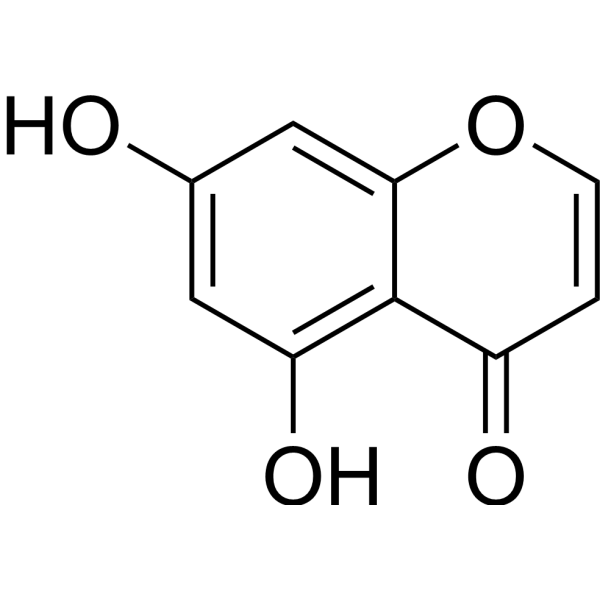
5,7-Dihydroxychromone
Based on 2 publication(s) in Google Scholar
5,7-Dihydroxychromone is a flavonoid compound with antioxidant properties. 5,7-Dihydroxychromone induces Nrf2 nuclear translocation, increases Nrf2/ARE binding activity, and up-regulates Nrf2-dependent antioxidant genes HO-1, NQO1, GCLc. 5,7-Dihydroxychromone attenuates excessive ROS generation, inhibits activated caspase-3, caspase-9, cleaved PARP expression, and prevents neuronal apoptosis and cell death. 5,7-Dihydroxychromone increases LXRα and PPARγ mRNA expression, induces preadipocyte differentiation, and regulates blood glucose levels. 5,7-Dihydroxychromone inhibits radial growth of soil pathogenic fungi, radicle elongation of select seedlings, and transiently inhibits Bradyrhizobium sp. growth in high mannitol medium. 5,7-Dihydroxychromone can be used for the research of Parkinson’s disease, type 2 diabetes mellitus and pathogenic fungal infection.
For research use only. We do not sell to patients.
- Purity : 99.94%
- CAS No.: 31721-94-5
- Formula: C9H6O4
- Molecular Weight:178.14
-
Storage:
4°C, protect from light
* In solvent : -80°C, 6 months; -20°C, 1 month (protect from light)

To place orders, for customer services and technical support, please contact: MedChemExpress USA
Tel: 609-228-6898 E-mail: [email protected] [email protected]


-
 Biological Activity
-
Chemical Information
-
Solvent & Solubility
- Protocols
- Purity & Documentation
- References
-
 Help & FAQs


-
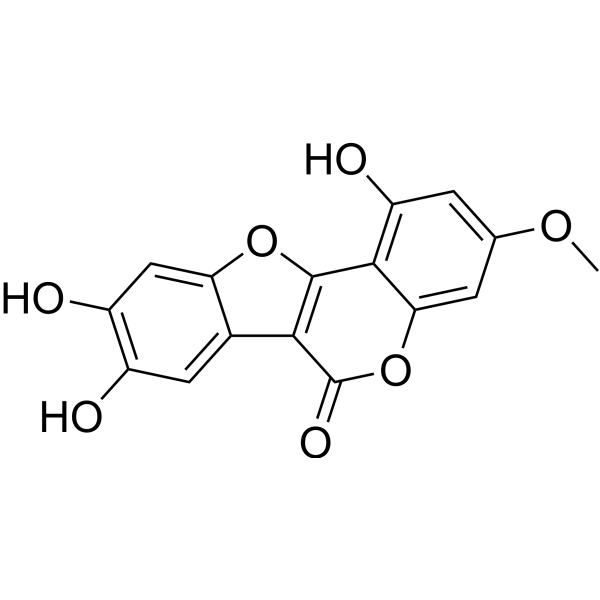
HY-N0551
WedelolactoneCaspase-11 And 5-Lox Inhibitor -
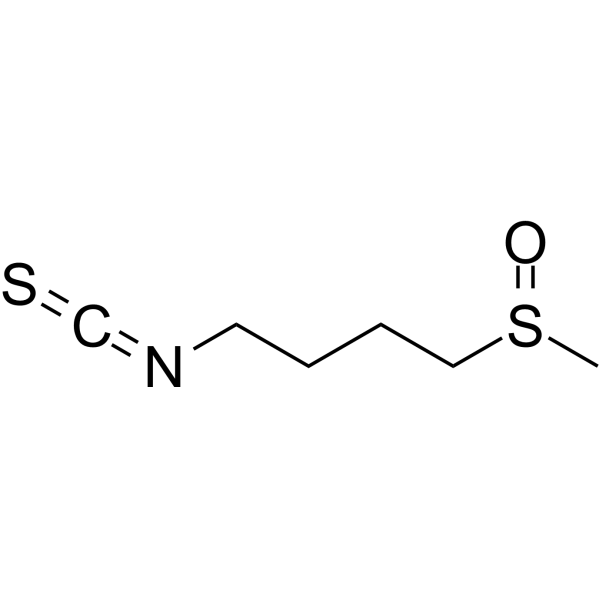
HY-13755
SulforaphaneKeap1/Nrf2/ARE Inducer -
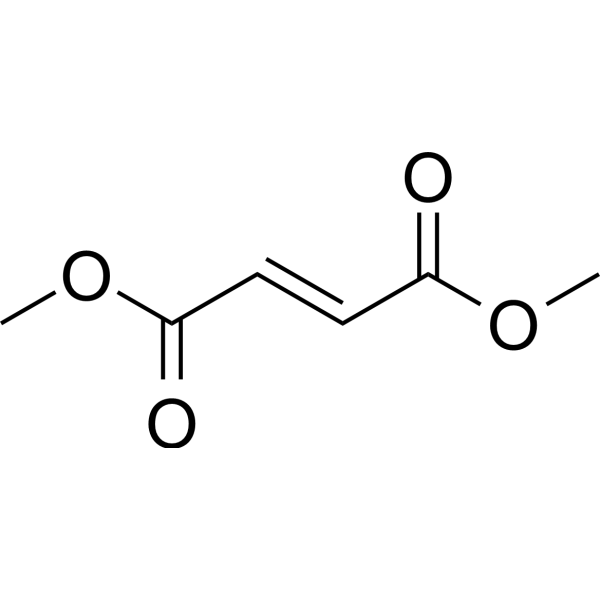
HY-17363
Dimethyl fumarateNrf2 Activator -
HY-12212
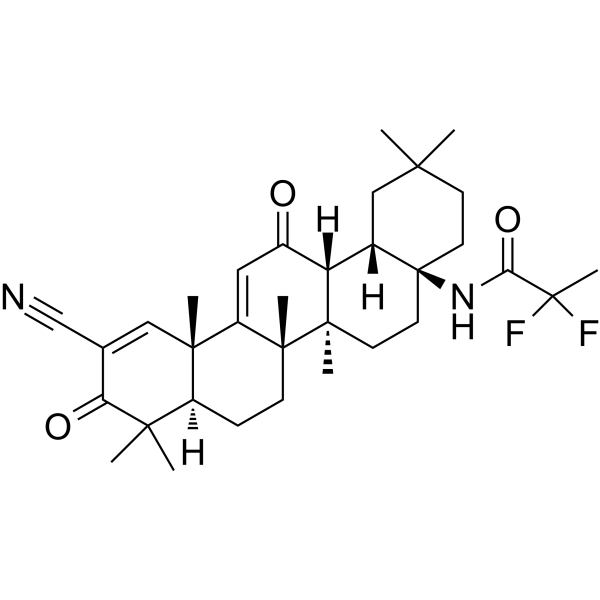
OmaveloxoloneNrf2 Activator -
HY-14909
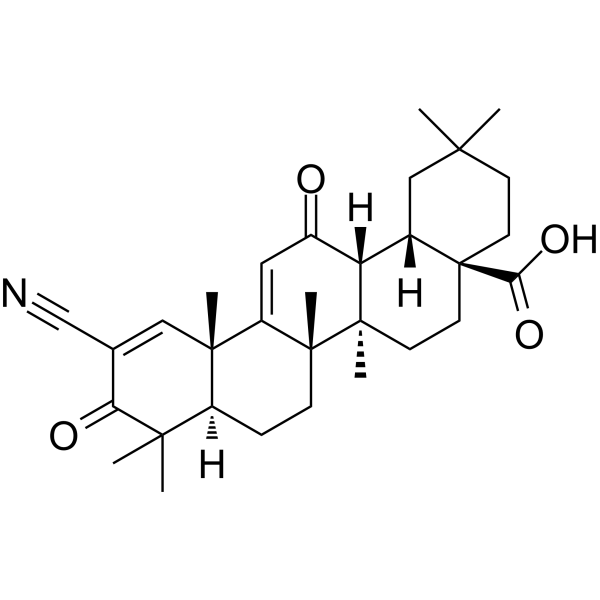
BardoxoloneNrf2 Activator -
HY-N0290
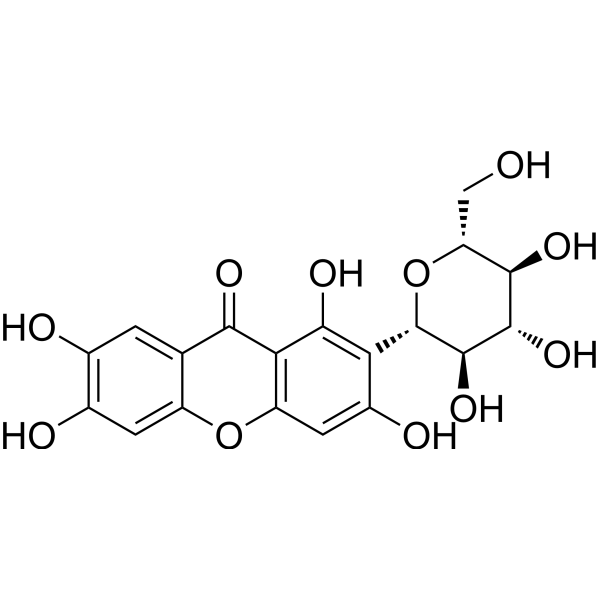
MangiferinNrf2 Activator -

HY-N1970R
5,7-Dihydroxychromone (Standard)Analytical Standard -
HY-112675
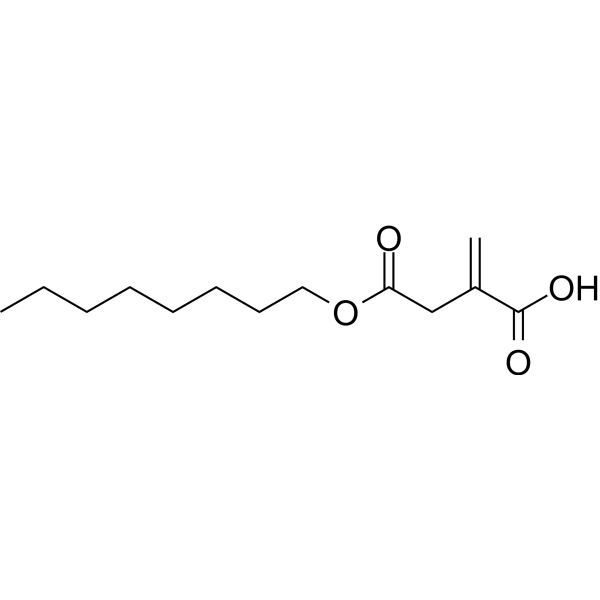
4-Octyl itaconateNrf2 Activator -
HY-19734
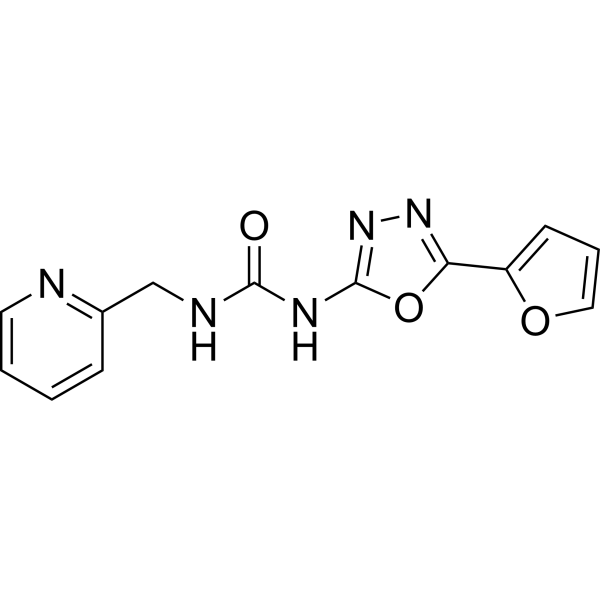
NK-252Nrf2 Activator -
HY-10221
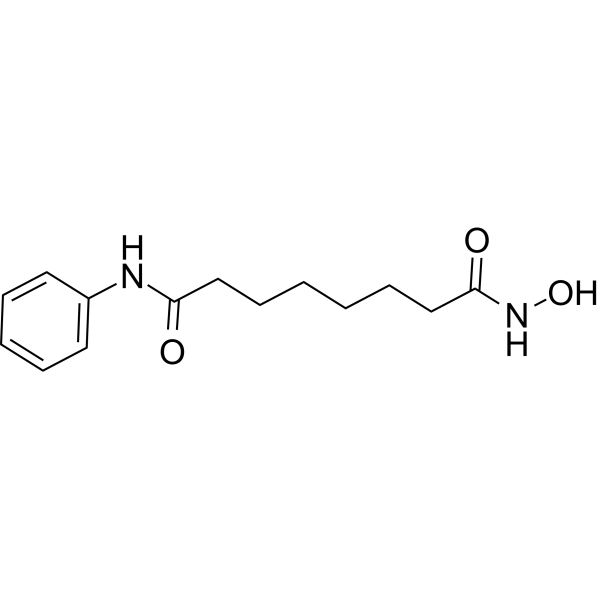
VorinostatHDAC Inhibitor -
HY-100489
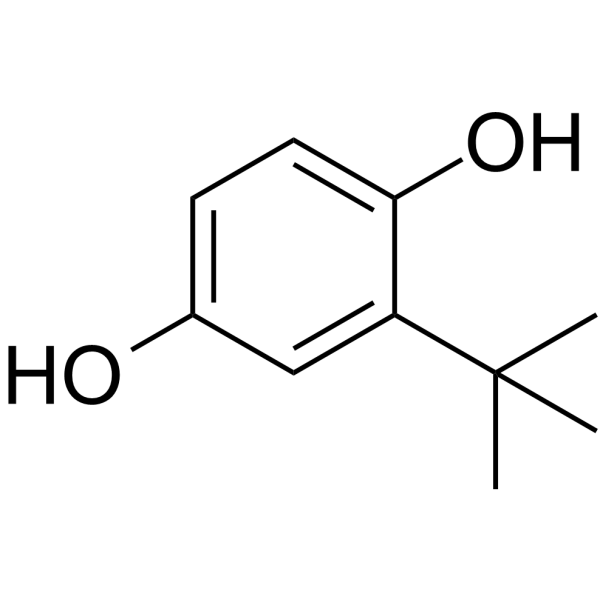
TBHQNrf2 Activator -

HY-N0290R
Mangiferin (Standard)Nrf2 Activator
Publications Citing Use of MedChemExpress (MCE) 5,7-Dihydroxychromone
MoreAll Caspase Isoforms
More

Biological Activity
Description
IC50 & Target
|
Caspase-3 |
Caspase-9 |
PARP |
Cellular Effect
|
Cell Line

|
Type | Value | Description | References |
|---|---|---|---|---|
| SH-SY5Y | EC50 |
1.9 μM
Compound: 24
|
Neuroprotective activity in human SH-SY5Y cells assessed as reduction in 6-OHDA-induced cell death measured after 24 hrs by MTT assay
Neuroprotective activity in human SH-SY5Y cells assessed as reduction in 6-OHDA-induced cell death measured after 24 hrs by MTT assay
|
[PMID: 27420919] |
In Vitro
5,7-Dihydroxychromone (DHC) (0.4-10 μM; 24 h pre-incubation) dose-dependently protects SH-SY5Y cells from 6-OHDA (HY-B1081)-induced cell death, and this effect is eliminated by Nrf2 siRNA transfection (48 h pre-transfection)[1].
5,7-Dihydroxychromone (DHC) (0.4-10 μM; 24 h pre-incubation) dose-dependently inhibits 6-OHDA-induced intracellular ROS generation in SH-SY5Y cells, with 10 μM DHC reducing ROS levels to ~2-fold above the vehicle control, and this effect is eliminated by Nrf2 siRNA transfection (48 h pre-transfection)[1].
5,7-Dihydroxychromone (DHC) (2 μM; 1-12 h) time- and (0.08-10 μM; 6 h) dose-dependently induces Nrf2 nuclear translocation in SH-SY5Y cells, with 2 μM DHC producing a peak effect at 6 h and 0.08 to 10 μM DHC increasing nuclear Nrf2 levels in a dose-dependent manner at 6 h[1].
5,7-Dihydroxychromone (DHC) (2 μM; 1-12 h) increases Nrf2/ARE binding activity in SH-SY5Y cells, with 2 μM DHC producing maximum binding activity at 12 h[1].
5,7-Dihydroxychromone (DHC) (2 μM; 1-24 h) time- and (0.08-10 μM; 24 h) dose-dependently increases protein expression of the Nrf2-dependent antioxidant enzymes HO-1, NQO1, and GCLc in SH-SY5Y cells, and this effect is eliminated by Nrf2 siRNA transfection (48 h pre-transfection)[1].
5,7-Dihydroxychromone (DHC) (0.08-10 μM; 24 h pre-incubation) dose-dependently inhibits 6-OHDA-induced expression of cleaved caspase-3, cleaved caspase-9, and cleaved PARP in SH-SY5Y cells[1].
5,7-Dihydroxychromone (1-10 μg/mL; 9 d) potently induces differentiation of mouse 3T3-L1 preadipocytes in a concentration-dependent manner, with 10 μg/mL driving differentiation to 185% of control[2].
5,7-Dihydroxychromone (1-10 μg/mL) increases PPARγ and LXRα mRNA expression in mouse 3T3-L1 preadipocytes in vitro in a concentration-dependent manner, with 10 μg/mL driving 30-fold and 22-fold increases respectively[2].
5,7-Dihydroxychromone (5-100 μM; until maximum radial growth reached) inhibits radial growth of Rhizoctonia solani (IC50 = 18 μM) and Sclerotium rolfsii (IC50 = 26 μM), with fungicidal activity at 100 μM[3].
5,7-Dihydroxychromone (10-7-10-3 M; 48 hr) inhibits radicle elongation of velvetleaf (IC50 = 30 μM), corn (cv. DeKalb IL 645-786; IC50 = 50 μM), peanut (cv. Red Tennessee; IC50 = 65 μM), and wheat (cv. Cardinal; IC50 = 200 μM) after 48 hr of incubation[3].
MedChemExpress (MCE) has not independently confirmed the accuracy of these methods. They are for reference only.
-
Cell Line:human neuroblastoma SH-SY5Y cells
-
Concentration:0.4 μM, 2 μM, 10 μM; 10 μM (with Nrf2 siRNA pre-transfection)
-
Incubation Time:24 h (pre-incubation); 48 h (Nrf2 siRNA pre-transfection)
-
Result:Reduced 6-OHDA-induced cell death in a dose-dependent manner.
Decreased the percentage of PI-positive dead cells from 44.5% (6-OHDA-only group) to 13.8% at 10 μM.
Abolished the protective effect when Nrf2 siRNA was transfected, increasing the percentage of PI-positive cells to 50.1% in the 10 μM DHC + 6-OHDA group.
-
Cell Line:human neuroblastoma SH-SY5Y cells
-
Concentration:2 μM (time-course); 0.08-10 μM (dose-response)
-
Incubation Time:1-12 h (2 μM); 6 h (0.08-10 μM)
-
Result:Increased nuclear Nrf2 levels in a time-dependent manner at 2 μM, with a peak effect at 6 h.
Increased nuclear Nrf2 levels in a dose-dependent manner after 6 h treatment with 0.08-10 μM.
Showed increased nuclear Nrf2 fluorescence via immunocytochemical staining.
-
Cell Line:human neuroblastoma SH-SY5Y cells
-
Concentration:0.08-10 μM
-
Incubation Time:24 h (pre-incubation)
-
Result:Inhibited 6-OHDA-induced expression of cleaved caspase-3, cleaved caspase-9, and cleaved PARP in a dose-dependent manner.
In Vivo
(DME), dose-dependently reduces serum glucose, total cholesterol, and triacylglycerol levels, and increases liver PPARγ and LXRα mRNA expression, in streptozotocin-/high-fat diet-induced type 2 diabetic ICR mice[2].
MedChemExpress (MCE) has not independently confirmed the accuracy of these methods. They are for reference only.
- RT-PCR
- RNA extraction experimental
- Research Protocol for Infectious Diseases
- Mammalian live/dead viability and cytotoxicity staining
- Annexin V plus membrane-impermeant dye apoptosis staining
- ROS/oxidative-stress fluorescent staining
- Research Protocol for Metabolic Diseases
- Real Time qPCR (Q-PCR)
- Cytoplasmic-Nuclear Fractionated Protein Extraction
- 3T3-L1 preadipocyte-to-adipocyte differentiation
- Detection of Apoptosis
- TUNEL staining for apoptotic DNA fragmentation
- Cell Cytotoxicity Assay
- Apoptosis Solutions


Chemical Information
-
CAS No. 31721-94-5
-
Appearance Solid
-
Molecular Weight 178.14
-
Formula C9H6O4
-
Color White to light yellow
-
SMILES
O=C1C=COC2=CC(O)=CC(O)=C12
-
Structure Classification
-
Initial Source
-
Shipping
Room temperature in continental US; may vary elsewhere.
-
Storage
4°C, protect from light
* In solvent : -80°C, 6 months; -20°C, 1 month (protect from light)


Publications (2)
-
Journal Impact Factor
-
Most Recent
-
Vet Microbiol
The Chinese medicine monomer Schisandrin C inhibits PRRSV infection by regulating the OGT-PI3K/AKT/mTOR signaling pathway. [Abstract]2026 May:316:110992. PMID: 41865607 -


Solvent & Solubility
In Vitro:
DMSO : 100 mg/mL (561.36 mM; Need ultrasonic; Hygroscopic DMSO has a significant impact on the solubility of product, please use newly opened DMSO)
Please refer to the solubility information to select the appropriate solvent. Once prepared, please aliquot and store the solution to prevent product inactivation from repeated freeze-thaw cycles.
Storage method and period of stock solution: -80°C, 6 months; -20°C, 1 month (protect from light). When stored at -80°C, please use it within 6 months. When stored at -20°C, please use it within 1 month.
Please refer to the solubility information to select the appropriate solvent. Once prepared, please aliquot and store the solution to prevent product inactivation from repeated freeze-thaw cycles.
Storage method and period of stock solution: -80°C, 6 months; -20°C, 1 month (protect from light). When stored at -80°C, please use it within 6 months. When stored at -20°C, please use it within 1 month.
Concentration (start) × Volume (start) = Concentration (final) × Volume (final)
In Vivo:
Select the appropriate dissolution method based on your experimental animal and administration route.
- For the following dissolution methods, please ensure to first prepare a clear stock solution using an In Vitro approach and then sequentially add co-solvents:
- To ensure reliable experimental results, the clarified stock solution can be appropriately stored based on storage conditions. As for the working solution for In Vivo experiments, it is recommended to prepare freshly and use it on the same day.
- The percentages shown for the solvents indicate their volumetric ratio in the final prepared solution. If precipitation or phase separation occurs during preparation, heat and/or sonication can be used to aid dissolution.
Add each solvent one by one: 10% DMSO 40% PEG300 5% Tween-80 45% Saline
Solubility: ≥ 2.5 mg/mL (14.03 mM); Clear solution
This protocol yields a clear solution of ≥ 2.5 mg/mL (saturation unknown).
Taking 1 mL working solution as an example, add 100 μL DMSO stock solution (25.0 mg/mL) to 400 μL PEG300, and mix evenly; then add 50 μL Tween-80 and mix evenly; then add 450 μL Saline to adjust the volume to 1 mL.
Preparation of Saline: Dissolve 0.9 g sodium chloride in ddH₂O and dilute to 100 mL to obtain a clear Saline solution.
In Vivo Dissolution Calculator
Please enter the basic information of animal experiments:
-
-
-
-
Recommended: Prepare an additional quantity of animals to account for potential losses during experiments.
Please enter your animal formula composition:
-
%DMSO +
Recommended: Keep the proportion of DMSO in working solution below 2% if your animal is weak.
-
%+
-
+%Tween-80 + +
-
%Saline +
The co-solvents required include: DMSO, . All of co-solvents are available by MedChemExpress (MCE). , Tween 80. All of co-solvents are available by MedChemExpress (MCE).
Working solution concentration: 0.22 mg/mL
Method for preparing stock solution: mg drug dissolved in μL DMSO. Stock solution concentration: mg/mL. * In solvent : -80°C, 6 months; -20°C, 1 month (protect from light)
1. Take μL DMSO stock solution;
2. Add μL .
μL , mix evenly;
3. Then add μL Tween 80, mix evenly;
4. Then add μL
Please ensure that the stock solution in the first step is dissolved to a clear state, and add co-solvents in sequence. You can use ultrasonic heating (ultrasonic cleaner, recommended frequency 20-40 kHz), vortexing, etc. to assist dissolution.


Purity & Documentation
-
Data Sheet (284 KB)
-
SDS (393 KB)
- English - EN (393 KB)
- Français - FR (393 KB)
- Deutsch - DE (393 KB)
- Norwegian - NO (393 KB)
- Español - ES (393 KB)
- Swedish - SV (393 KB)
- Italian - IT (393 KB)
- Korean - KR (393 KB)
- Portuguese - PT (393 KB)
-
Handling Instructions (2659 KB)
References
[1]. Kim DW, et al. Neuroprotection against 6-OHDA-induced oxidative stress and apoptosis in SH-SY5Y cells by 5,7-Dihydroxychromone: Activation of the Nrf2/ARE pathway. Life Sci. 2015;130:25-30. [Content Brief]
[2]. Koo HJ, et al. Anti-diabetic properties of Daphniphyllum macropodum fruit and its active compound. Biosci Biotechnol Biochem. 2014;78(8):1392-401. [Content Brief]
[3]. Vaughn SF, et al. Phytotoxic and antimicrobial activity of 5,7-dihydroxychromone from peanut shells. J Chem Ecol. 1995;21(2):107-115. [Content Brief]


Complete Stock Solution Preparation Table
Please refer to the solubility information to select the appropriate solvent. Once prepared, please aliquot and store the solution to prevent product inactivation from repeated freeze-thaw cycles.
Storage method and period of stock solution: -80°C, 6 months; -20°C, 1 month (protect from light). When stored at -80°C, please use it within 6 months. When stored at -20°C, please use it within 1 month.
| Optional Solvent | Concentration Solvent Mass | 1 mg | 5 mg | 10 mg | 25 mg |
|---|---|---|---|---|---|
| DMSO | 1 mM | 5.6136 mL | 28.0678 mL | 56.1356 mL | 140.3391 mL |
| 5 mM | 1.1227 mL | 5.6136 mL | 11.2271 mL | 28.0678 mL | |
| 10 mM | 0.5614 mL | 2.8068 mL | 5.6136 mL | 14.0339 mL | |
| 15 mM | 0.3742 mL | 1.8712 mL | 3.7424 mL | 9.3559 mL | |
| 20 mM | 0.2807 mL | 1.4034 mL | 2.8068 mL | 7.0170 mL | |
| 25 mM | 0.2245 mL | 1.1227 mL | 2.2454 mL | 5.6136 mL | |
| 30 mM | 0.1871 mL | 0.9356 mL | 1.8712 mL | 4.6780 mL | |
| 40 mM | 0.1403 mL | 0.7017 mL | 1.4034 mL | 3.5085 mL | |
| 50 mM | 0.1123 mL | 0.5614 mL | 1.1227 mL | 2.8068 mL | |
| 60 mM | 0.0936 mL | 0.4678 mL | 0.9356 mL | 2.3390 mL | |
| 80 mM | 0.0702 mL | 0.3508 mL | 0.7017 mL | 1.7542 mL | |
| 100 mM | 0.0561 mL | 0.2807 mL | 0.5614 mL | 1.4034 mL |


5,7-Dihydroxychromone Related Classifications
HY-N1970 Related Classifications
 Powered by Bioz