



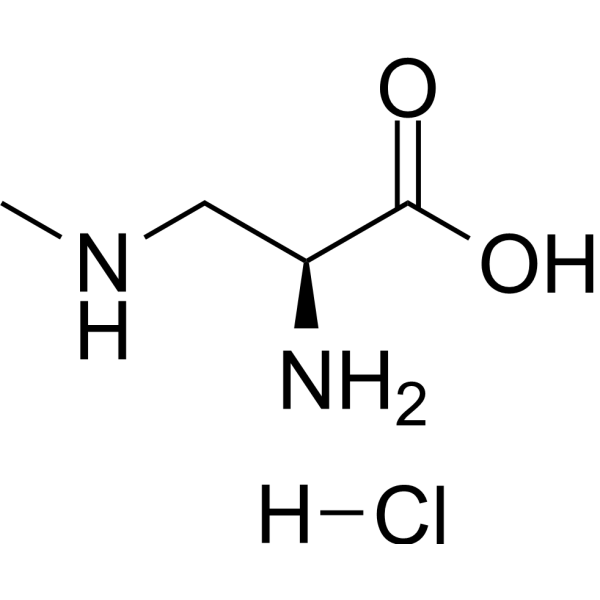
β-N-methylamino-L-alanine hydrochloride
Based on 3 publication(s) in Google Scholar
β-N-methylamino-L-alanine hydrochloride (BMAA hydrochloride) is a neurotoxin produced by cyanobacteria. β-N-methylamino-L-alanine hydrochloride activates mGluR3 and inhibits PKC. β-N-methylamino-L-alanine hydrochloride can be used in the research of neurodegenerative diseases and immune diseases.
For research use only. We do not sell to patients.
- Purity : 98.0%
- CAS No.: 16012-55-8
- Formula: C4H11ClN2O2
- Molecular Weight:154.60
-
Storage:
-20°C, sealed storage, away from moisture
* In solvent : -80°C, 6 months; -20°C, 1 month (sealed storage, away from moisture)

To place orders, for customer services and technical support, please contact: MedChemExpress USA
Tel: 609-228-6898 E-mail: [email protected] [email protected]


-
 Biological Activity
-
Chemical Information
-
Solvent & Solubility
- Purity & Documentation
- References
-
 Help & FAQs


-
HY-N2309
Kainic acidNeuroexcitatory Amino Acid Agonist -
HY-100410
FCCPOXPHOS Uncoupler -
HY-N2311
Ibotenic acidiGluR Agonist -
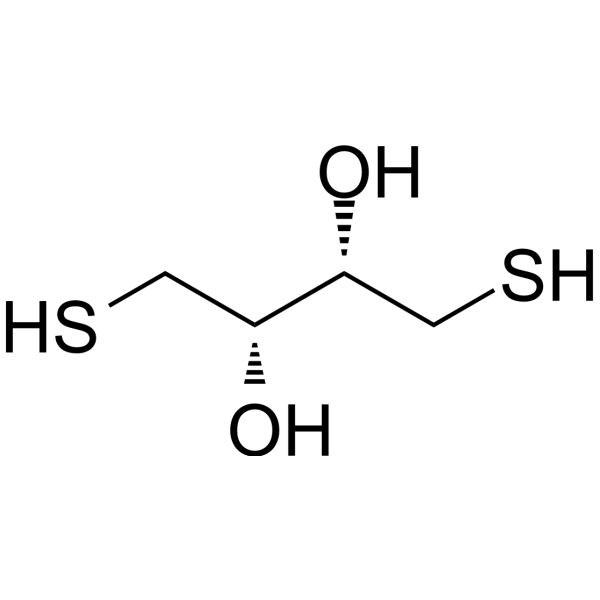
HY-15917
DL-DithiothreitolReducing Agent -
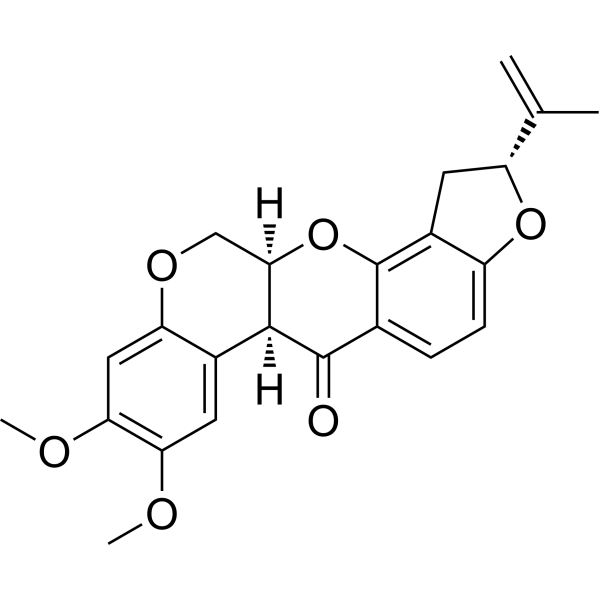
HY-B1756
RotenoneMitochondrial Complex I Inhibitor -

HY-W015546R
β-N-methylamino-L-alanine hydrochloride (Standard)Neurotoxin -

HY-N2311R
Ibotenic acid (Standard)iGluR Agonist -
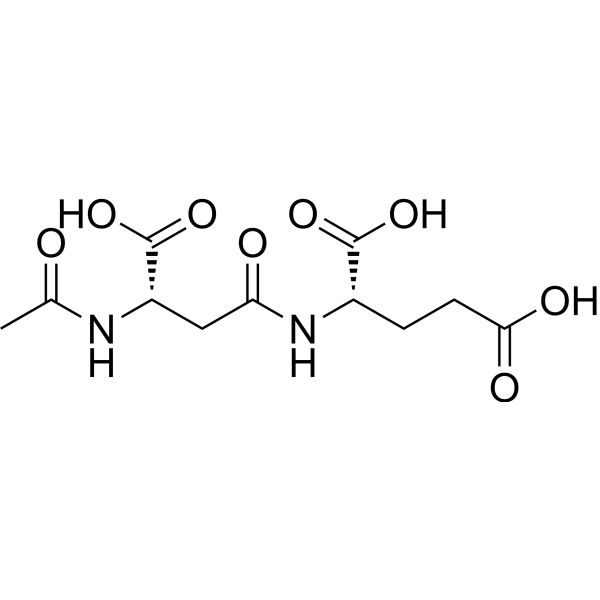
HY-130553
β-Spaglumic acidNAAG Peptidase Inhibitor -
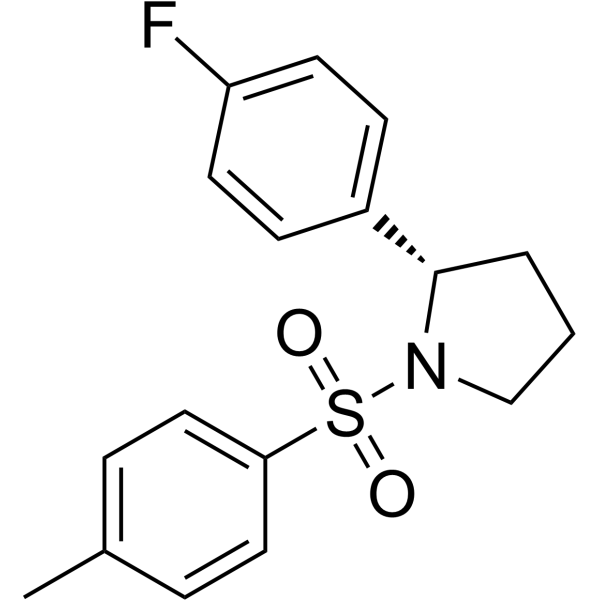
HY-100403
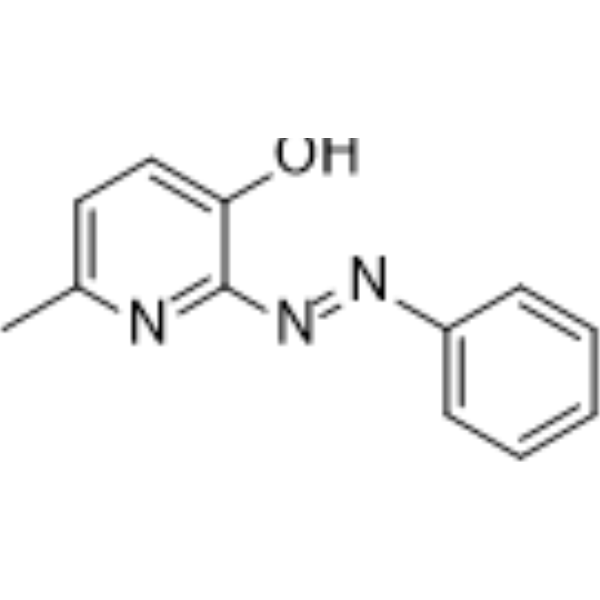
Ro 67-7476mGluR1 PAM -
HY-102095
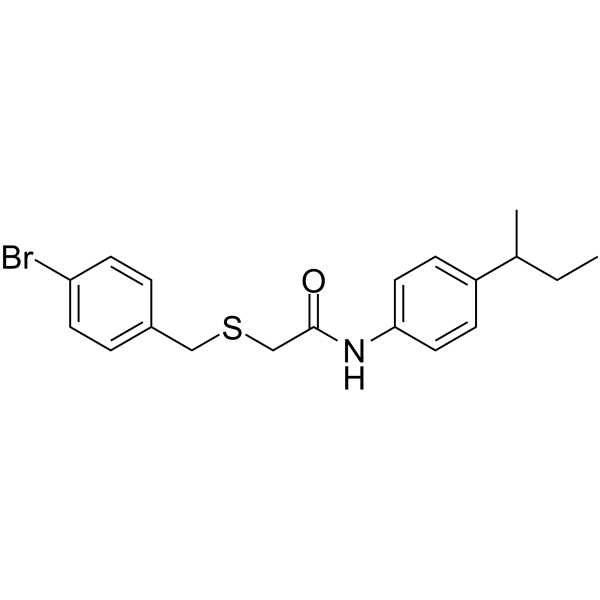
SIB-1757mGluR5 antagonist -
HY-110122
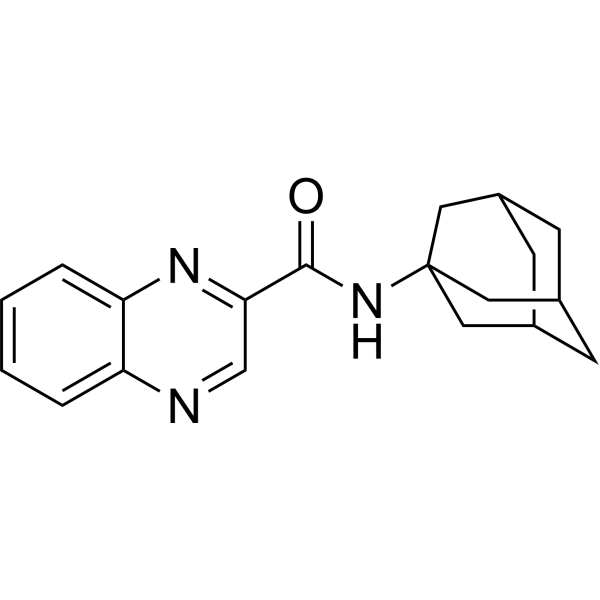
AZ 12216052mGluR8 PAM -
HY-11095
NPS 2390CaSR/mGluR1/5 Allosteric Antagonist
Publications Citing Use of MedChemExpress (MCE) β-N-methylamino-L-alanine hydrochloride
More

Biological Activity
Description
IC50 & Target
[4]|
mGluR3 |
In Vitro
β-N-methylamino-L-alanine hydrochloride (0.05-3 mM, 24 h) inhibits melatonin synthesis by mGluR3 activation and PKC inhibitions in primary pinealocytes[4].
β-N-Methylamino-L-Alanine (500 μM, 21 days) hydrochloride shows toxicity in PC12 cells[7].
β-N-methylamino-L-alanine (1-3 mM, 48 h) hydrochloride suppresses cell cycle progression at the G1/S checkpoint and proliferation in non-neuronal cells NIH3T3[9].
β-N-methylamino-L-alanine (50-1000 µM, 24 h) hydrochloride perturbs alanine, aspartate and glutamate metabolism pathways in human neuroblastoma cells[10].
β-N-methylamino-L-alanine (1.5-2.0 mM, 24 h) hydrochloride alters morphology, ATP levels and reduces proliferation of fish immune cells (CLC)[11].
MedChemExpress (MCE) has not independently confirmed the accuracy of these methods. They are for reference only. .
-
Cell Line:NIH3T3, HEK293T
-
Concentration:1, 3 mM
-
Incubation Time:48 h
-
Result:Suppressed the proliferation of NIH3T3 cells and HEK293T cells.
In Vivo
β-N-methylamino-L-alanine (BMAA-HCl, 400 mg kg, s.c.) hydrochloride induces developmental neurotoxicity in a rat model[5].
β-N-methylamino-L-alanine (100-350 mg/kg, i.p., 5 consecutive days) hydrochloride causes neurological and pathological phenotypes mimicking Amyotrophic Lateral Sclerosis (ALS) in male rats[6].
β-N-methylamino-L-alanine (5-10 nmol, intravitreal injections) hydrochloride induces in vivo retinal cell death in mice[8].
β-N-methylamino-L-alanine (250 mg/kg, i.p., 5 consecutive days) hydrochloride produces oxidative damage in liver and kidney of rats, with the significant increase of lipid peroxidation and high catalase activity[12].
β-N-methylamino-L-alanine (40-460 mg/kg, s.c., 2 days) hydrochloride perturbs the intermediary metabolism in neonatal rats, with impairments in learning and memory function[13].
MedChemExpress (MCE) has not independently confirmed the accuracy of these methods. They are for reference only.
Induced Disease Models
Note:
Please do not refer to only one article to determine the experimental conditions. It is recommended to determine the optimal experimental conditions (animal strain, age, dosage, frequency and cycle, detection time and indicators, etc.) through preliminary experiments before the formal experiment.
β-N-methylamino-L-alanine hydrochloride can be used to induce amyotrophic lateral sclerosis (ALS) models[6].
Administration: 200-350 mg/kg • i.p. • once a day for 5 days
Histological Analysis: The endoplasmic reticulum of lumbar spinal cord motor neurons is fragmented, ribosomes dissociate, and mitochondria swell, vacuolate, or even degenerate; oligodendrocytes exhibit apoptosis-characteristic nuclear morphology.
Molecular changes: Increased caspase-3 expression in the perinuclear region of motor neurons; elevated total protein and phosphorylated form (P-Ser9-GSK3β) of GSK3β in the lumbar spinal cord and motor cortex, and increased content of high molecular weight TDP-43 aggregates; decreased NAA content, and significantly reduced NAA/Cr, NAA/Cho, and NAA/(Cho+Cr) ratios.
MedChemExpress (MCE) has not independently confirmed the accuracy of these methods. They are for reference only.


Chemical Information
-
CAS No. 16012-55-8
-
Appearance Solid
-
Molecular Weight 154.60
-
Formula C4H11ClN2O2
-
Color White to yellow
-
SMILES
N[C@@H](CNC)C(O)=O.[H]Cl
-
Synonyms
BMAA hydrochloride
-
Structure Classification
-
Initial Source
cyanobacteria
-
Shipping
Room temperature in continental US; may vary elsewhere.
-
Storage
-20°C, sealed storage, away from moisture
* In solvent : -80°C, 6 months; -20°C, 1 month (sealed storage, away from moisture)


Publications (3)
-
Journal Impact Factor
-
Most Recent
-
J Hazard Mater
L-BMAA induces neurotoxicity through AMPK/Akt-TSC1/2-mTOR-mediated mitophagy dysregulation and apoptosis. [Abstract]2026 May 15:509:142074. PMID: 41985289 -
Ecotoxicol Environ Saf
The role of neutrophil extracellular traps in β-methylamino L-alanine-induced liver injury in mice. [Abstract]2024 Aug:281:116678. PMID: 38964067 -


Solvent & Solubility
In Vitro:
H2O : 31.25 mg/mL (202.13 mM; ultrasonic and warming and heat to 60°C)
Please refer to the solubility information to select the appropriate solvent. Once prepared, please aliquot and store the solution to prevent product inactivation from repeated freeze-thaw cycles.
Storage method and period of stock solution: -80°C, 6 months; -20°C, 1 month (sealed storage, away from moisture). When stored at -80°C, please use it within 6 months. When stored at -20°C, please use it within 1 month.
* Note: If you choose water as the stock solution, please dilute it to the working solution, then filter and sterilize it with a 0.22 μm filter before use.
Please refer to the solubility information to select the appropriate solvent. Once prepared, please aliquot and store the solution to prevent product inactivation from repeated freeze-thaw cycles.
Storage method and period of stock solution: -80°C, 6 months; -20°C, 1 month (sealed storage, away from moisture). When stored at -80°C, please use it within 6 months. When stored at -20°C, please use it within 1 month.
* Note: If you choose water as the stock solution, please dilute it to the working solution, then filter and sterilize it with a 0.22 μm filter before use.
Concentration (start) × Volume (start) = Concentration (final) × Volume (final)
In Vivo:
For the following dissolution methods, please prepare the working solution directly:
It is recommended to prepare fresh solutions and use them promptly within a short period of time.
The percentages shown for the solvents indicate their volumetric ratio in the final prepared solution. If precipitation or phase separation occurs during preparation, heat and/or sonication can be used to aid dissolution.
Add each solvent one by one: PBS
Solubility: 25 mg/mL (161.71 mM); Clear solution; Need ultrasonic


Purity & Documentation
-
Data Sheet (295 KB)
-
SDS (393 KB)
- English - EN (393 KB)
- Français - FR (393 KB)
- Deutsch - DE (393 KB)
- Norwegian - NO (393 KB)
- Español - ES (393 KB)
- Swedish - SV (393 KB)
- Italian - IT (393 KB)
- Korean - KR (393 KB)
- Portuguese - PT (393 KB)
-
Handling Instructions (2659 KB)
References
[1]. Caller T, et, al. The Potential Role of BMAA in Neurodegeneration. Neurotox Res. 2018 Jan; 33(1): 222-226. [Content Brief]
[2]. Cox PA, et, al. BMAA and Neurodegenerative Illness. Neurotox Res. 2018 Jan; 33(1): 178-183. [Content Brief]
[3]. Okamoto S, et, al. β-N-methylamino-L-alanine (BMAA) suppresses cell cycle progression of non-neuronal cells. Sci Rep. 2018 Dec 20; 8(1): 17995. [Content Brief]
[4]. Pierozan P, et al. The environmental neurotoxin β-N-methylamino-L-alanine inhibits melatonin synthesis in primary pinealocytes and a rat model. J Pineal Res. 2018 Aug;65(1):e12488. [Content Brief]
[5]. van Onselen R, et al. Evaluating amino acids as protectants against β-N-methylamino-l-alanine-induced developmental neurotoxicity in a rat model. Toxicol Appl Pharmacol. 2020 Sep 15;403:115140. [Content Brief]
[6]. de Munck E, et al. β-N-methylamino-l-alanine causes neurological and pathological phenotypes mimicking Amyotrophic Lateral Sclerosis (ALS): the first step towards an experimental model for sporadic ALS. Environ Toxicol Pharmacol. 2013 Sep;36(2):243-255. [Content Brief]
[7]. van Onselen R, et al. β-N-Methylamino-L-Alanine Toxicity in PC12: Excitotoxicity vs. Misincorporation. Neurotox Res. 2018 Jan;33(1):15-23. [Content Brief]
[8]. Santucci S, et al. beta-N-methylamino-L-alanine induced in vivo retinal cell death. J Neurochem. 2009 May;109(3):819-25. [Content Brief]
[9]. Okamoto S, et al. β-N-methylamino-L-alanine (BMAA) suppresses cell cycle progression of non-neuronal cells. Sci Rep. 2018 Dec 20;8(1):17995. [Content Brief]
[10]. Engskog MK, et al. β-N-Methylamino-L-alanine (BMAA) perturbs alanine, aspartate and glutamate metabolism pathways in human neuroblastoma cells as determined by metabolic profiling. Amino Acids. 2017 May;49(5):905-919. [Content Brief]
[11]. Sieroslawska A, et al. Assessment of the cytotoxic impact of cyanotoxin beta-N-methylamino-L-alanine on a fish immune cell line. Aquat Toxicol. 2019 Jul;212:214-221. [Content Brief]
[12]. de Munck E, et al. Effect of β-N-methylamino-L-alanine on oxidative stress of liver and kidney in rat. Environ Toxicol Pharmacol. 2013 Mar;35(2):193-9. [Content Brief]
[13]. Engskog MK, et al. The cyanobacterial amino acid β-N-methylamino-l-alanine perturbs the intermediary metabolism in neonatal rats. Toxicology. 2013 Oct 4;312:6-11. [Content Brief]


Complete Stock Solution Preparation Table
Please refer to the solubility information to select the appropriate solvent. Once prepared, please aliquot and store the solution to prevent product inactivation from repeated freeze-thaw cycles.
Storage method and period of stock solution: -80°C, 6 months; -20°C, 1 month (sealed storage, away from moisture). When stored at -80°C, please use it within 6 months. When stored at -20°C, please use it within 1 month.
| Optional Solvent | Concentration Solvent Mass | 1 mg | 5 mg | 10 mg | 25 mg |
|---|---|---|---|---|---|
| H2O | 1 mM | 6.4683 mL | 32.3415 mL | 64.6831 mL | 161.7076 mL |
| 5 mM | 1.2937 mL | 6.4683 mL | 12.9366 mL | 32.3415 mL | |
| 10 mM | 0.6468 mL | 3.2342 mL | 6.4683 mL | 16.1708 mL | |
| 15 mM | 0.4312 mL | 2.1561 mL | 4.3122 mL | 10.7805 mL | |
| 20 mM | 0.3234 mL | 1.6171 mL | 3.2342 mL | 8.0854 mL | |
| 25 mM | 0.2587 mL | 1.2937 mL | 2.5873 mL | 6.4683 mL | |
| 30 mM | 0.2156 mL | 1.0781 mL | 2.1561 mL | 5.3903 mL | |
| 40 mM | 0.1617 mL | 0.8085 mL | 1.6171 mL | 4.0427 mL | |
| 50 mM | 0.1294 mL | 0.6468 mL | 1.2937 mL | 3.2342 mL | |
| 60 mM | 0.1078 mL | 0.5390 mL | 1.0781 mL | 2.6951 mL | |
| 80 mM | 0.0809 mL | 0.4043 mL | 0.8085 mL | 2.0213 mL | |
| 100 mM | 0.0647 mL | 0.3234 mL | 0.6468 mL | 1.6171 mL |
* Note: If you choose water as the stock solution, please dilute it to the working solution, then filter and sterilize it with a 0.22 μm filter before use.


β-N-methylamino-L-alanine hydrochloride Related Classifications
HY-W015546 Related Classifications
 Powered by Bioz