Search Result
Results for "
insecticidal+activity
" in MedChemExpress (MCE) Product Catalog:
6
Isotope-Labeled Compounds
| Cat. No. |
Product Name |
Target |
Research Areas |
Chemical Structure |
-
- HY-126741
-
|
|
Environmental Pollutants
Parasite
Caspase
NF-κB
Apoptosis
Bcl-2 Family
|
Infection
Inflammation/Immunology
Cancer
|
|
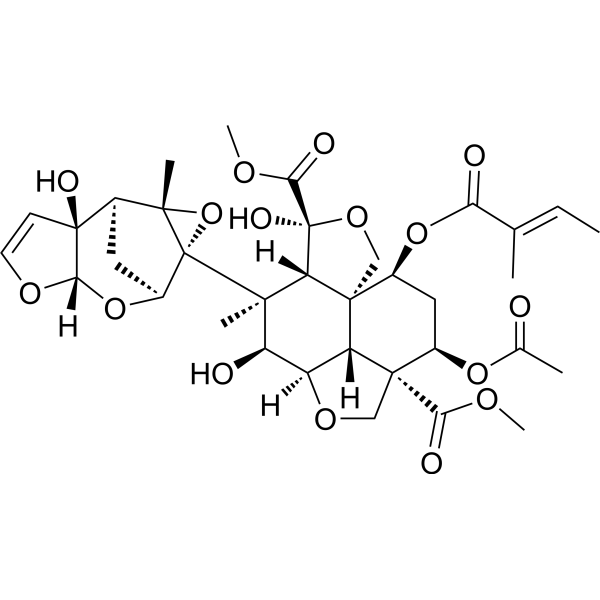
Azadirachtin is an oral active triterpenoid compound with anticancer, antimalarial, anti-inflammatory, and insecticidal activities. Azadirachtin induces cell apoptosis through the mitochondrial pathway (by inhibiting Bcl-2/Bax ratio or activating Apaf-1 and caspase-3) or through death receptors (by inhibiting TNFR activation). Additionally, Azadirachtin exerts its anti-inflammatory effects by inhibiting NF-кB signaling pathway activation, and it exhibits insecticidal activity by inducing apoptosis in insect cells .
|
-
-
- HY-114936
-
|
AR-054
|
Bacterial
ADC Payload
Antibiotic
Mitochondrial Metabolism
|
Infection
Neurological Disease
Cancer
|
|
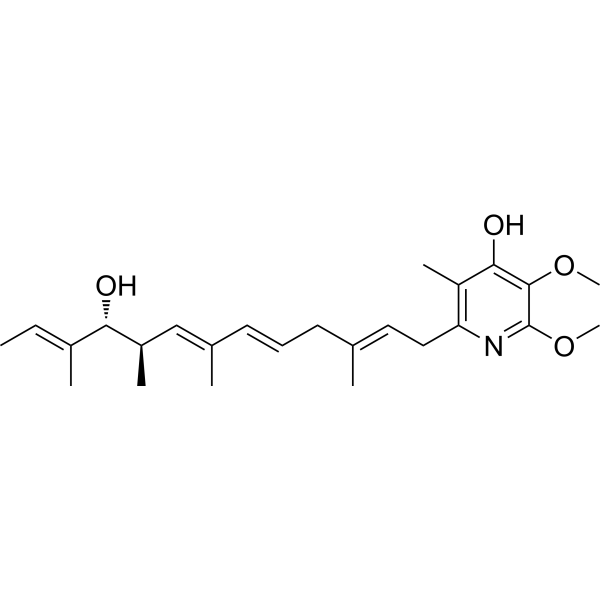
Piericidin A (AR-054) is a natural mitochondrial NADH-ubiquinone oxidoreductase (complex I) inhibitor. Piericidin A is a potent neurotoxin and inhibits mitochondrial respiration by disrupting the electron transport system through its action on NADH-ubiquinone reductase. Piericidin A is also a potential quorum-sensing inhibitor that suppresses the expression of the virulence genes of Erwinia carotovora subsp. atroseptica (Eca). Piericidin A is an ADC cytotoxin and has anti-bacterial, anticancer, insecticidal activity .
|
-
-
- HY-17530
-
-
-
- HY-117386
-
|
|
Environmental Pollutants
Insecticide
|
Infection
|
|
Methoxyfenozide is an orally active insecticide belonging to the diacylhydrazine and non-steroidal ecdysone agonist classes, which can interfere with the growth and development of insects. Methoxyfenozide has ovicidal and insecticidal activities against phytophagous pests .
|
-
-
- HY-107577
-
|
|
HSP
|
Infection
Inflammation/Immunology
Cancer
|
|
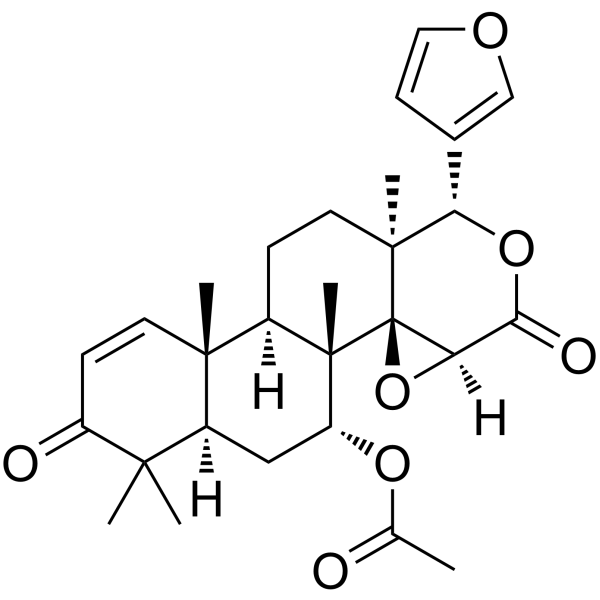
Gedunin is a limonoid with anti-cancer, anti-viral, anti-inflammatory and insecticidal activities. Gedunin acts as a potent Hsp90 inhibitor and induces the degradation of Hsp90-dependent client proteins. Geduni may obstructs the entry of SARS-CoV-2 virus into human host cells and can be used for COVID-19 research .
|
-
-
- HY-W006957
-
-
-
- HY-111664
-
|
(+)-Citronellal
|
Bacterial
Fungal
Insecticide
Taste Receptor
Opioid Receptor
|
Infection
Neurological Disease
Inflammation/Immunology
|
|
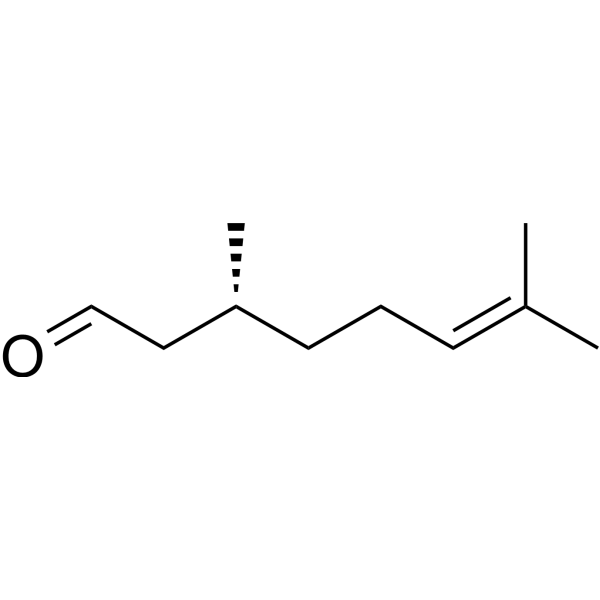
(R)-(+)-Citronellal ((+)-Citronellal) is a monoterpenoid compound and is one of the main components of essential oils from plants such as lemon grass. (R)-(+)-Citronellal has antibacterial, antifungal, and insecticidal activities. (R)-(+)-Citronellal alleviates the bitterness of caffeine by antagonizing the bitter taste receptors Tas2r43 (IC50 = 84 μM) and Tas2R46. (R)-(+)-Citronellal generates analgesic activity by activating the opioid receptor (broad-spectrum opioid receptor) pathway, and its effect is particularly significant for inflammatory pain .
|
-
-
- HY-164322
-
|
|
Insecticide
|
Others
|
|
Cyproflanilide is a meta-diamide insecticide. Cyproflanilide exhibits potent insecticidal activity against third Chilo suppressalis and Spodoptera frugiperda larvae. Cyproflanilide can be used for the research of insect pests .
|
-

-
- HY-B0834
-
|
(RS)-Indoxacarb; DPX-JW062
|
Environmental Pollutants
Sodium Channel
|
Neurological Disease
|
|
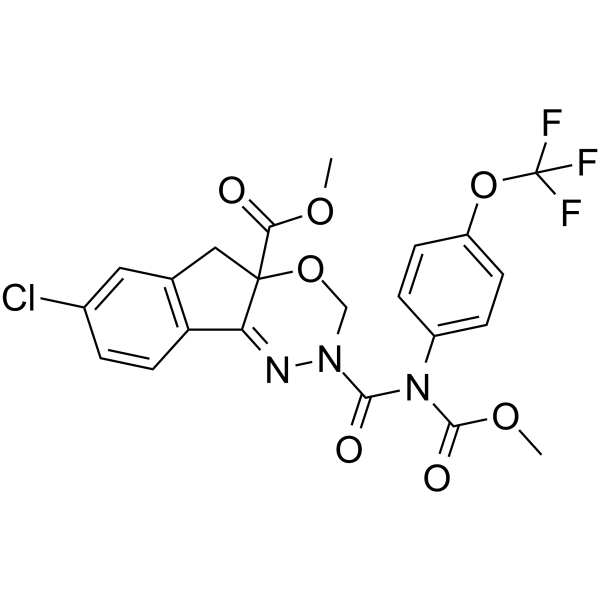
Indoxacarb ((±)-Indoxacarb; DPX-JW062) is a broad-spectrum oxadiazine insecticide with high insecticidal activity and low mammalian toxicity. Indoxacarb blocks insect sodium channels in nerve preparations and isolated neurons .
|
-
-
- HY-B1858
-
|
|
Environmental Pollutants
Parasite
Fungal
Interleukin Related
|
Infection
Metabolic Disease
Inflammation/Immunology
|
|
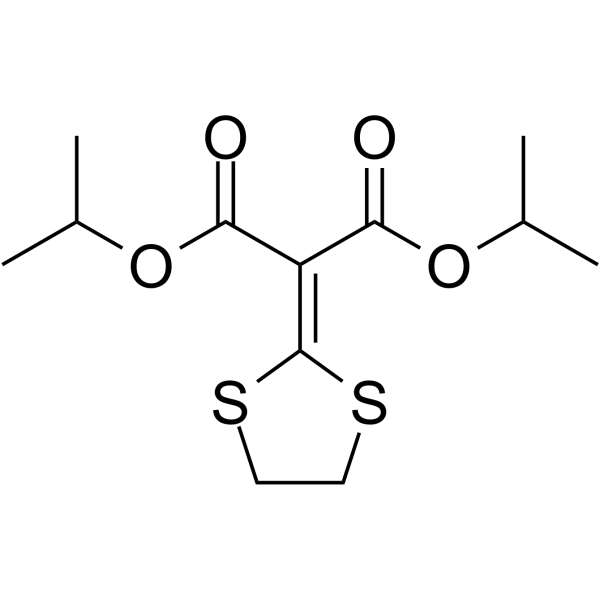
Isoprothiolane is a blast fungicide with antifungal, anti-inflammatory and insecticidal activities. Isoprothiolane primarily acts on fungi during the penetration and growth stages of infecting hyphae. Isoprothiolane can be used as an insecticide, pesticide, etc. In addition, Isoprothiolane can reduce serum phospholipid and total lipid concentrations, regulating lipid metabolism. Isoprothiolane is also used in the research of fatty liver .
|
-
-
- HY-N4202
-
|
|
Environmental Pollutants
Insecticide
Apoptosis
p38 MAPK
|
Neurological Disease
Inflammation/Immunology
Cancer
|
|
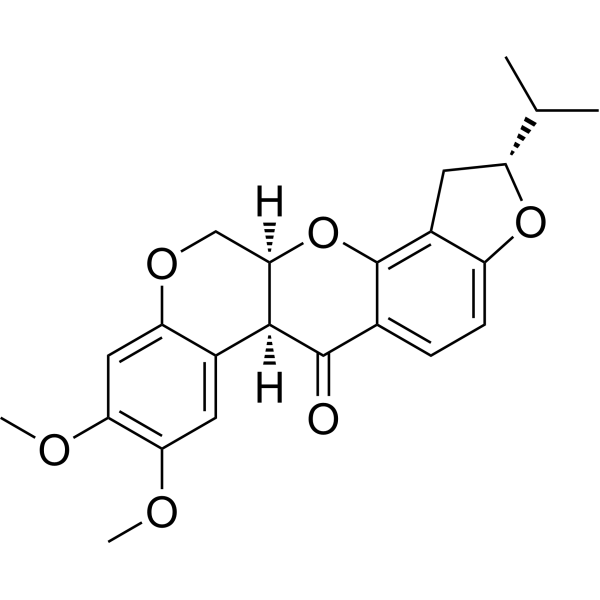
Dihydrorotenone is an insecticide and irreversible inhibitor of mitochondrial complex I. Dihydrorotenone may induce Parkinson's disease. Dihydrorotenone induces apoptosis in human plasma cells by triggering endoplasmic reticulum stress and activating the p38 signaling pathway. The oral LD50 of dihydrorotenone in rats is approximately 2.5 g/kg. Dihydrorotenone exhibits insecticide activity and cytotoxicity to plasma cells. Dihydrorotenone can be used to establish animal models of Parkinson's disease, safety assessment of natural pesticides, and potential cancer chemoprevention studies .
|
-
-
- HY-136330
-
|
|
Insecticide
Parasite
Sodium Channel
|
Infection
|
|
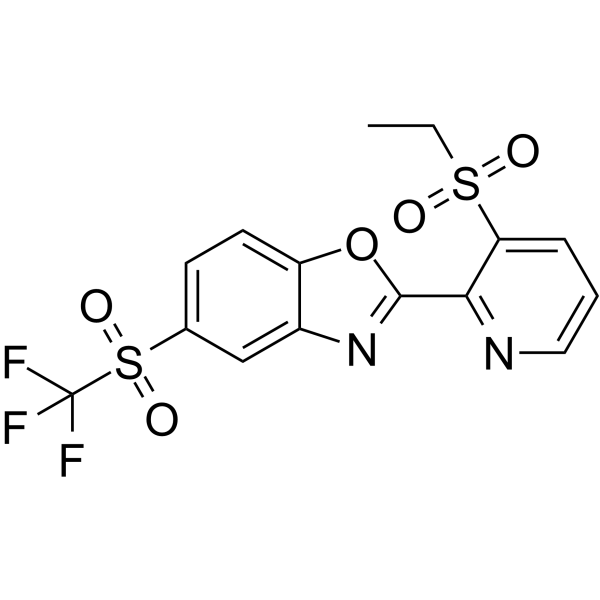
Oxazosulfyl is a sulfyl insecticide with potent and cross-spectrum insecticidal activity. Oxazosulfyl inhibits sodium currents by binding to and stabilizing the slow-inactivated state of voltage-gated sodium channels, leading to insect paralysis. Oxazosulfyl's ability to block sodium channels is correlated with its insecticidal activity .
|
-
-
- HY-133721
-
|
|
HBV
|
Infection
Inflammation/Immunology
|
|
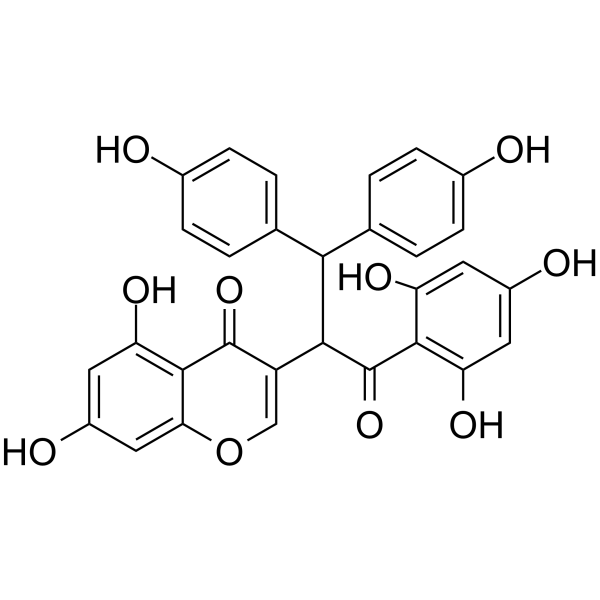
Chamaechromone is a biflavonoid ingredient isolated from the roots of Stellera chamaejasme L. (Thymelaeaceae). Chamaechromone possesses anti-hepatitis B virus (HBV) effects against the surface antigen of HBV (HBsAg) secretion and has insecticidal activities .
|
-
-
- HY-B2015
-
|
|
Environmental Pollutants
Insecticide
Parasite
Cholinesterase (ChE)
|
Infection
|
|
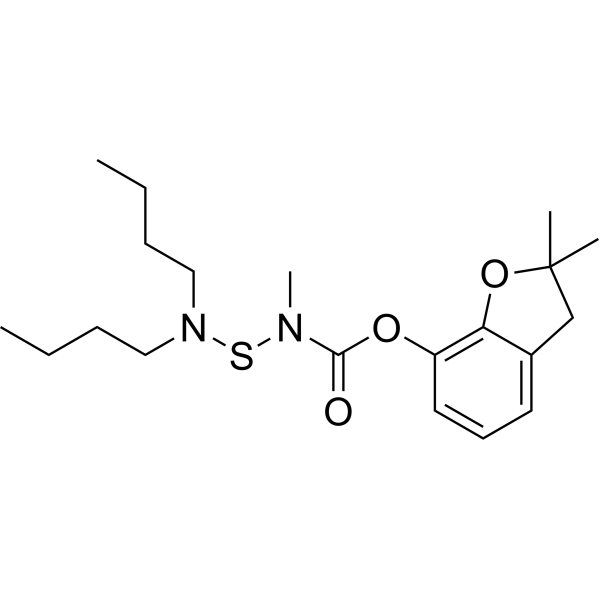
Carbosulfan is an orally active AChE inhibitor that hydrolyzes to Carbofuran in organisms to exert insecticidal effects. Carbosulfan exhibits broad-spectrum insecticidal activity, and it also induces severe oxidative stress by enhancing lipid peroxidation and impairing the antioxidant defense system. Carbosulfan causes reproductive toxicity in male rats and developmental disorders in their offspring. Carbosulfan shows persistence in paddy field environments and potential hazards to non-target organisms, and it is commonly used in studies related to reproductive toxicity and environmental risk assessment .
|
-
-
- HY-N9496
-
|
|
Insecticide
|
Infection
|
|
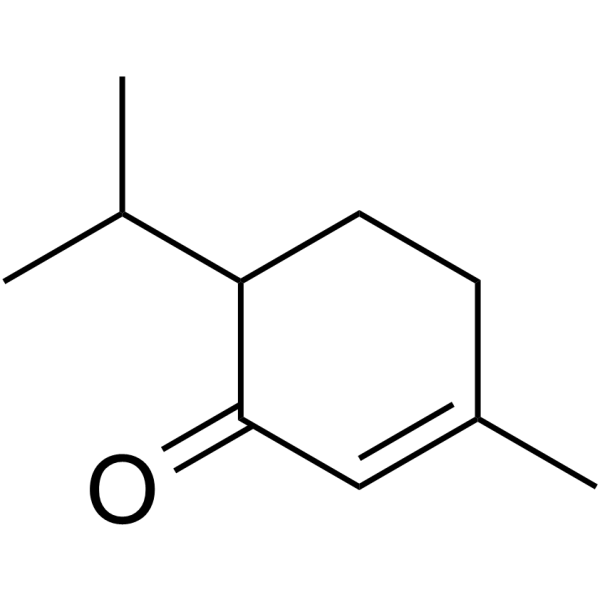
Piperitone is as a powerful repellent and antiappetent agent. Piperitone is very toxic to Cymbopogon schoenanthus (C. schoenanthus) adults, newly laid eggs and to neonate larvae. Insecticidal activity .
|
-
-
- HY-N16433
-
|
|
Parasite
Insecticide
|
Infection
|
|
Nodulisporic acid A (Compound 1a) is an insecticidal agent. Nodulisporic acid A can isolated from fermentations of Nodulisporium sp. Nodulisporic acid A has a potent insecticidal activity against the larvae of the blowfly and mosquito with LC50s of 0.5 and 0.3 ppm against A. aegypti and L. seracata, respectively. Nodulisporic acid A can be used for the development of insecticide .
|
-

-
- HY-130423
-
|
|
Insecticide
|
Infection
|
|
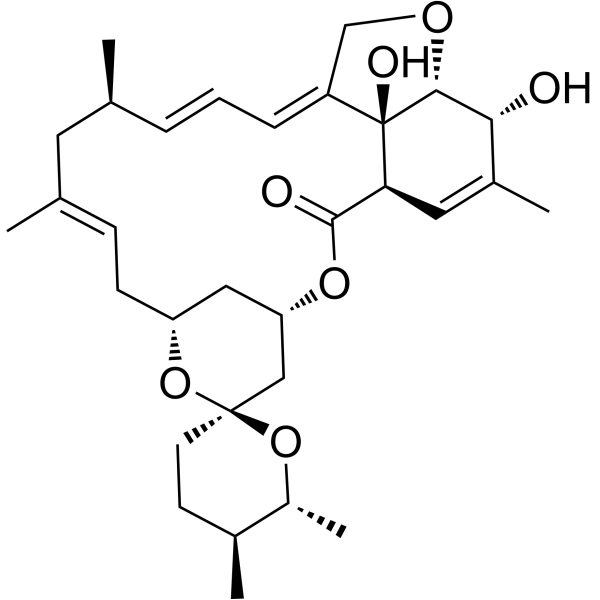
Milbemycin A3 is a 16-membered macrocyclic lactone compound found in the soil bacterium Saccharopolyspora hygroscopicus subsp. aureolacrimosus. Milbemycin A3 enhances the opening of glutamate- and GABA-gated chloride channels and exhibits insecticidal activity. Milbemycin A3 can be used in insect resistance-related research .
|
-
-
- HY-N1418
-
|
(-)-Canadine; (S)-(-)-Canadine
|
Others
|
Inflammation/Immunology
|
|
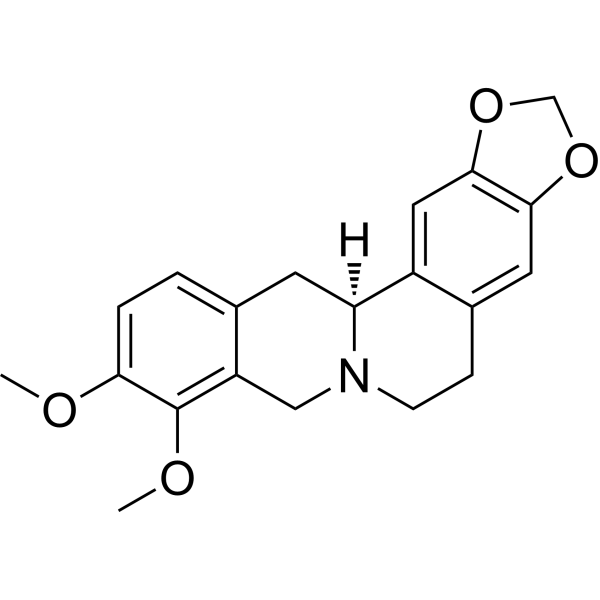
(S)-(-)-Tetrahydroberberine is an alkaloid and intermediate in the biosynthesis of berberine with insecticidal activity .
|
-
-
- HY-N12093
-
-
-
- HY-N4250
-
|
|
Others
|
Infection
|
|
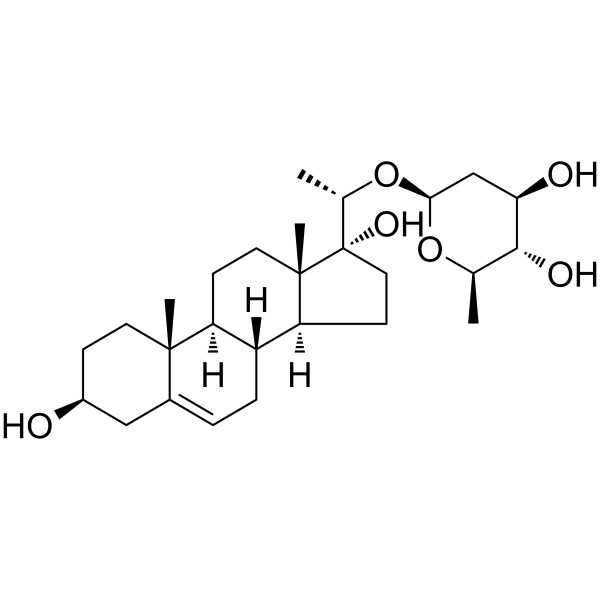
Periplocoside N, a pregnane glycoside isolated from root powder of Periploca sepium, possesses insecticidal activities against the red imported fire ant .
|
-
-
- HY-W698871
-
|
|
Isotope-Labeled Compounds
Endogenous Metabolite
|
Others
|
|
(±) Anabasine-d4 is the deuterium labeled (±) Anabasine (HY-W052144). (±) Anabasine is the racemate of Anabasine (HY-B1532). Anabasine is an agonist of α7nAChR and exhibits anti-inflammatory and insecticidal activities .
|
-

-
- HY-N9496R
-
|
|
Insecticide
Reference Standards
|
Infection
|
|
Piperitone (Standard) is the analytical standard of Piperitone. This product is intended for research and analytical applications. Piperitone is as a powerful repellent and antiappetent agent. Piperitone is very toxic to Cymbopogon schoenanthus (C. schoenanthus) adults, newly laid eggs and to neonate larvae. Insecticidal activity .
|
-

-
- HY-W024365
-
|
|
PROTAC Linkers
|
Cancer
|
|
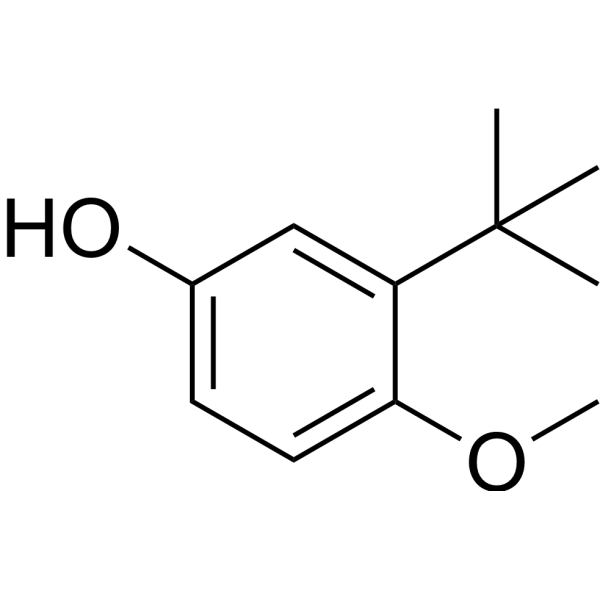
3-tert-Butyl-4-methoxyphenol is a PROTAC linker, belongs to alkyl/ether class, with insecticidal activity. 3-tert-Butyl-4-methoxyphenol also induced increased activities of glutathione (GSH) S-transferase and epoxide hydrolase in the liver and forestomach tissues of A/HeJ mice, regulating the carcinogen metabolism system .
|
-
-
- HY-162935
-
|
|
Proton Pump
|
Others
|
|
V-ATPase-IN-1 (Compound 3b-03) is a Vacuolar-type H +-ATPases (V-ATPase) inhibitor (IC50 = 194.80 μM) that can effectively target the V-ATPase subunit A (Kd = 0.803 μM). V-ATPase-IN-1 exhibits insecticidal activity against M. separata (LC50 = 2.64 mM) and contributes to research in the development of chemical insecticides .
|
-

-
- HY-W011035
-
|
|
Parasite
|
Infection
|
|
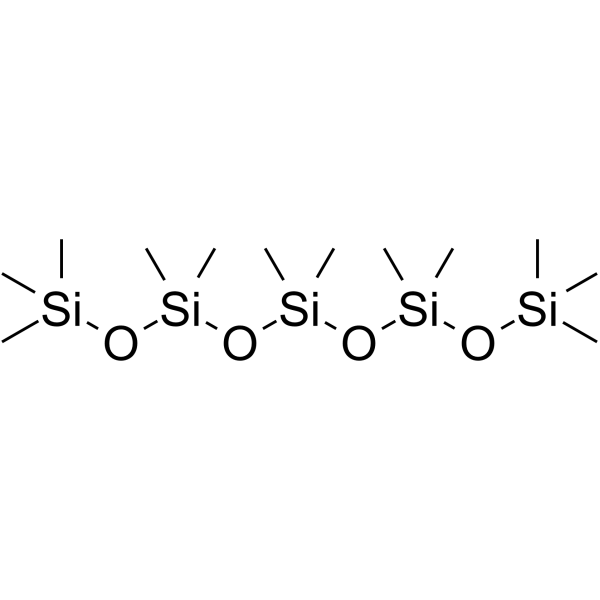
Dodecamethylpentasiloxane is a component of siloxanes and can be used as silicone oil. Dodecamethylpentasiloxane exhibits insecticidal activity against bed bug .
|
-
-
- HY-117386S
-
|
|
Isotope-Labeled Compounds
Insecticide
|
Infection
|
|
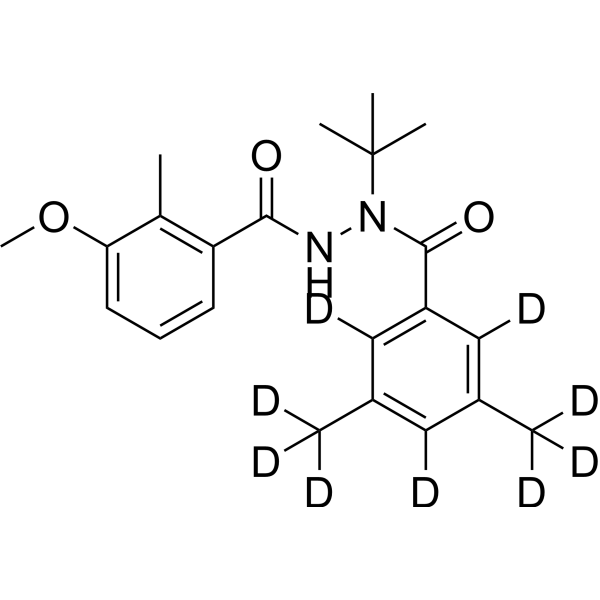
Methoxyfenozide-d9 is the deuterium labeled Methoxyfenozide (HY-117386). Methoxyfenozide is an orally active insecticide belonging to the diacylhydrazine and non-steroidal ecdysone agonist classes, which can interfere with the growth and development of insects. Methoxyfenozide has ovicidal and insecticidal activities against phytophagous pests .
|
-
-
- HY-178040
-
|
|
Acetyl-CoA Carboxylase
Pyruvate Carboxylase (PC)
Parasite
Insecticide
|
Infection
|
|
Insecticidal agent 26 (Compound A11), a spiro insecticidal agent, is a dual-functional inhibitor of pest Acetyl-CoA carboxylase (ACC) and Pyruvate carboxylase (PC). Insecticidal agent 26 has potent insecticidal activity against Sogatella furcifera with a LC50 of 11.0 μg/mL, with significant biosafety to bees. Insecticidal agent 26 can be used for management of white-backed planthoppers (WBPs) .
|
-

-
- HY-W052144
-
|
|
Endogenous Metabolite
|
Others
|
|
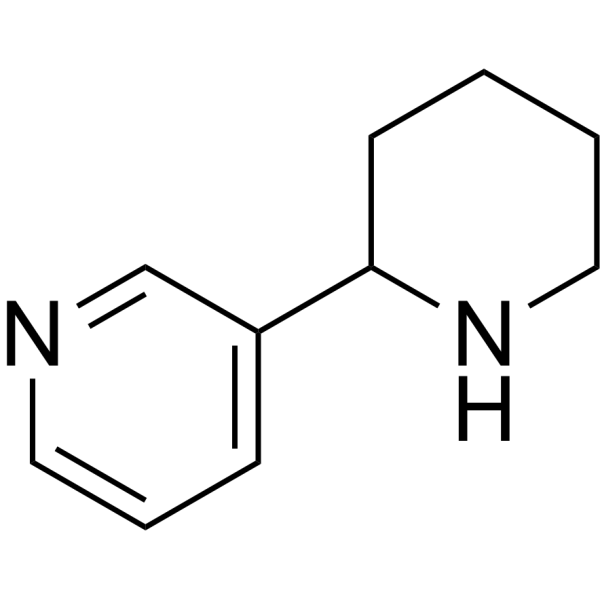
(±) Anabasine is the racemate of Anabasine (HY-B1532). Anabasine is an agonist of α7nAChR and exhibits anti-inflammatory and insecticidal activities .
|
-
-
- HY-N3068
-
|
Nigakilactone I; Simalikalactone B
|
Others
|
Others
|
|
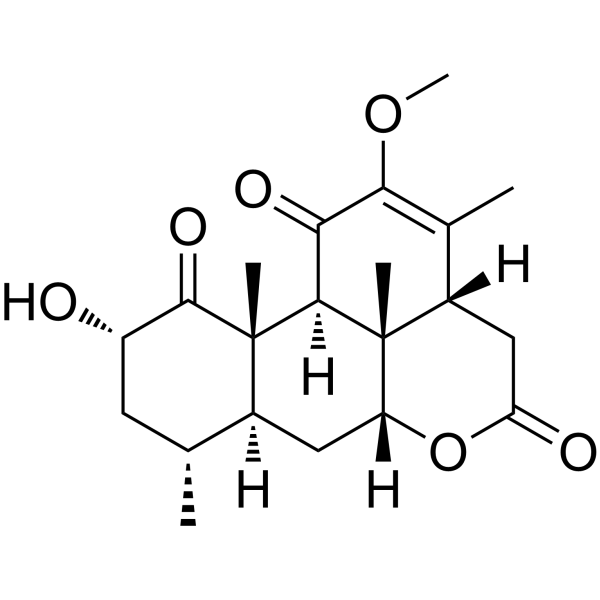
Picrasin B (Nigakilactone I) can be isolated from the bark of Picrasma quassioides. Picrasin B shows antifeedant and insecticidal activity against Diamondback Moth .
|
-
-
- HY-I0144
-
|
|
Drug Intermediate
|
Others
|
|
Thiazolidine is a five-membered heterocyclic compound containing sulfur and nitrogen heteroatoms. Thiazolidine is an important intermediate in organic synthesis. Thiazolidine derivatives possess diverse bioactivities, such as anti-tumor, antibacterial and insecticidal activities, and the capacity to reduce blood glucose levels .
|
-

-
- HY-W007980
-
|
|
Fungal
|
Infection
|
|
Antifungal agent 98 (compound 2) is an antifungal agent. Antifungal agent 98 (100 μg/mL) shows insecticidal activity against Bipolaris sorokinianum, Fusarium oxysporium f. sp.vasinfectum, Pyricularia oryzae, Alternaria
Brassicae and Alternaria alternata with a death rate of 41.5%, 40.0%, 23.4, 36.8%, and 35.0% .
|
-

-
- HY-N8472
-
|
|
GABA Receptor
|
Infection
|
|
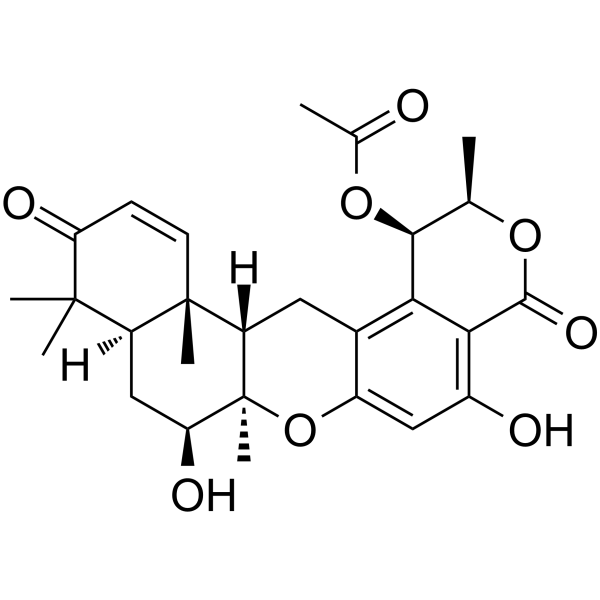
Chrodrimanin B, a metabolite of a fungal, is a potent, non-open-channel-blocking antagonist on?B.?mori GABAR RDL with an IC50?of 1.13 nM. Chrodrimanin B attenuates the peak current amplitude of the GABA response of RDL with an IC50?of 1.66 nM.?Chrodrimanin B, a meroterpenoid, shows insecticidal activity .
|
-
-
- HY-158721
-
|
Marinamide
|
Endogenous Metabolite
Parasite
|
Infection
Cancer
|
|
Penicinoline (Marinamide) (Compound 1), a pyrrolyl 4-quinolinone alkaloid, is a microbial secondary metabolite. Penicinoline can be isolated from endophytic fungus Penicillium sp. Penicinoline has antimalarial activity against Chloroquine (HY-17589A) sensitive strain (pf3d7) and against Chloroquine resistant strain (pfDd2) of plasmodium falciparum. Penicinoline also has strong insecticidal activity against Aphis gossypii and selective anticancer effect with significant cytotoxicity for 95-D and HepG2 cells .
|
-

-
- HY-118428
-
|
M2060; TH 367-1
|
Insecticide
|
Others
|
|
Fluenetil (M2060) is a compound with insecticidal activity.
|
-

-
- HY-N3156
-
|
Dehydroodoratol
|
Parasite
|
Others
|
|
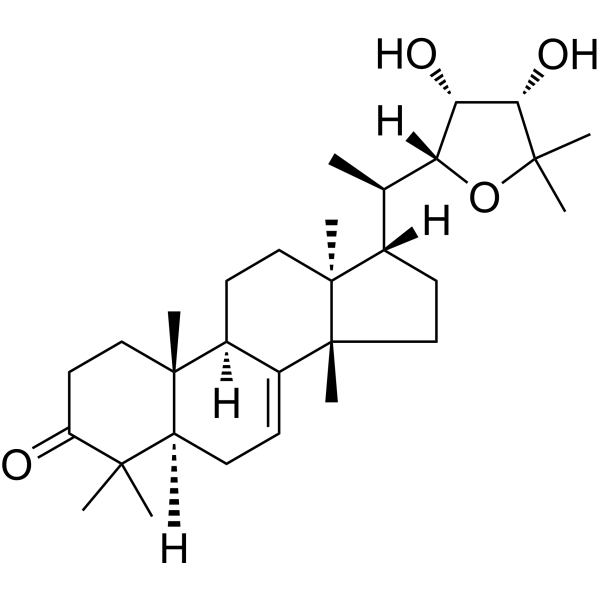
Odoratone (Dehydroodoratol) has insecticidal activity (LC50: 154 ppm) .
|
-
-
- HY-142916
-
|
|
Insecticide
|
Others
|
|
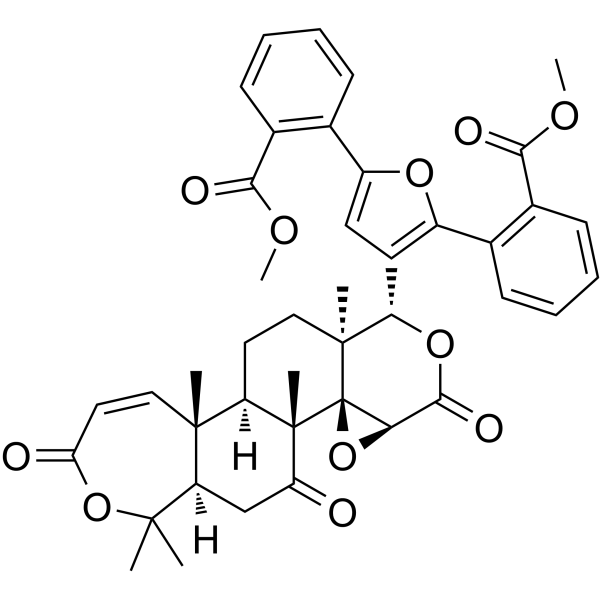
Insecticidal agent 1 displays more potent insecticidal activity than obacunone and toosendanin.
|
-
-
- HY-P10390
-
|
|
Parasite
|
Infection
|
|
Insecticidal agent 11 (compound Q6) is a potent insect growth regulator (IGR)-based insecticide. Insecticidal agent 11 shows high insecticidal activity against Diploptera punctata by inhibiting juvenile hormone (JH) biosynthesis. Insecticidal agent 11 also exhibits insecticidal activity against Plutella xylostella .
|
-

-
- HY-134625
-
|
|
Insecticide
|
Others
|
|
Kalecide is an isobutylamide found in Piper guineense. Kalecide shows insecticidal activity and can be used for insecticide .
|
-

-
- HY-N14917
-
|
|
Insecticide
|
Infection
|
|
Destruxins C is found in the strain of Hyphomycetes and Metarrhiziurn anosopliae. Destruxins C has insecticidal activity .
|
-

-
- HY-N3507
-
|
|
Others
|
Others
|
|
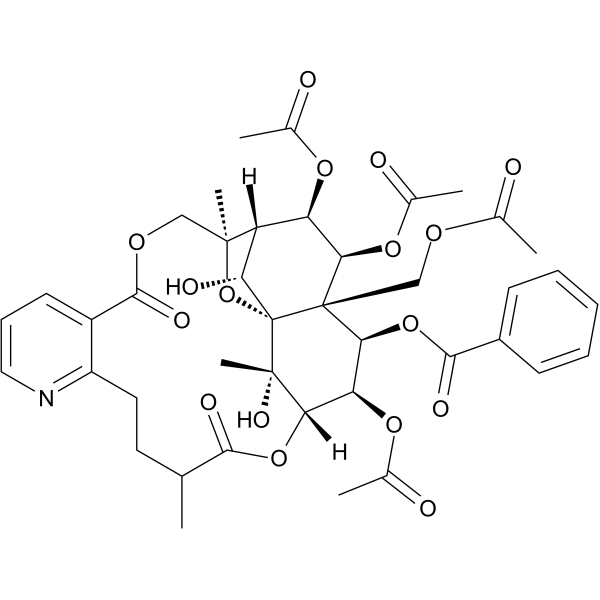
Euojaponine D is a sesquiterpene alkaloids from Euonymus japonica (Celastraceae). Celastraceae has potent insecticidal activity .
|
-
-
- HY-N1520
-
|
|
Others
|
Infection
|
|
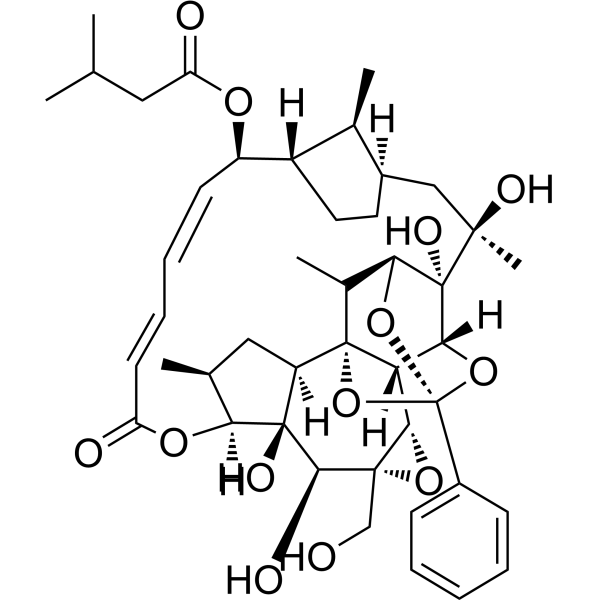
Rediocide A is a highly modified daphnane with potent insecticidal activity. Rediocide A can be isolated from Trigonostemon reidioides .
|
-
-
- HY-N12548
-
|
|
Others
|
Others
|
|
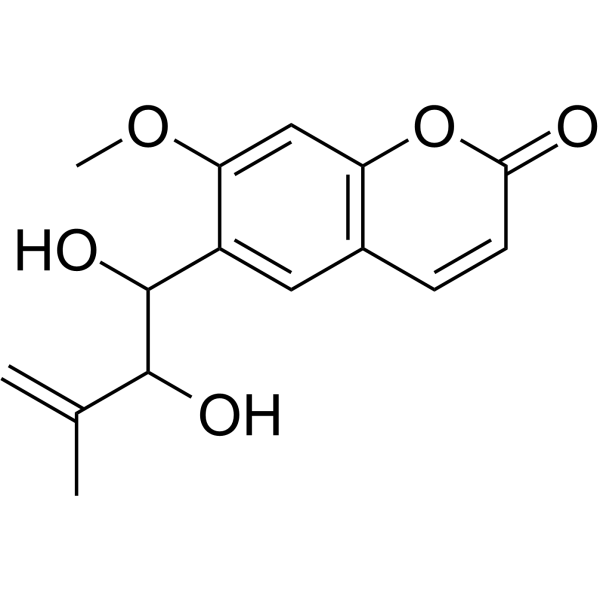
Thamnosmonin is a coumarin that can be isolated from Sida acuta and Sida rhombifolia. Thamnosmonin has insecticidal activity .
|
-
-
- HY-116631
-
|
Asaricin
|
Fungal
Insecticide
|
Infection
|
|
Sarisan (Asaricin) is a phenolic derivative with antifungal and insecticidal activity. Sarisan can be found in the stem bark of Ocotea opifera Mart. .
|
-

-
- HY-122401
-
|
|
Insecticide
|
Infection
|
|
Daigremontianin is an insecticidal bufadienolide that can be isolated from K. daigremontiana x tubiflora. Daigremontianin shows insecticidal activity for silkworm .
|
-

-
- HY-156256
-
|
|
Bacterial
|
Infection
|
|
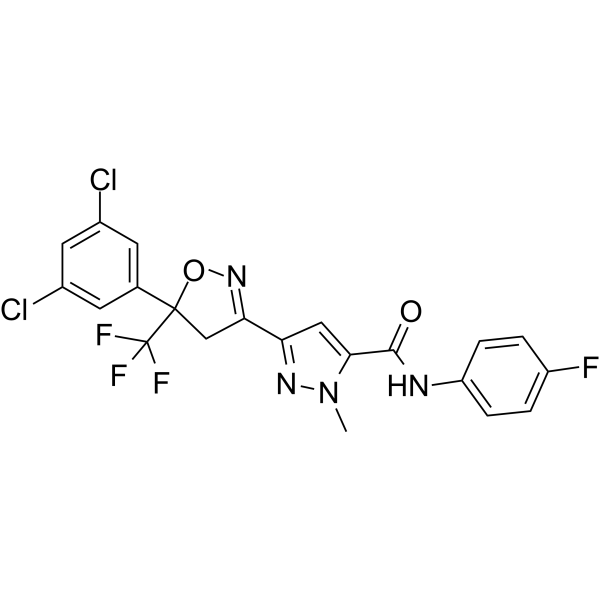
Insecticidal agent 4 (compound IA-8) is an aryl isoxazoline derivative with insecticidal activity against M. separate .
|
-
-
- HY-114720
-
|
|
Insecticide
|
Others
|
|
Laureatin is an active product that can be isolated from the marine algae Laurencia nipponica. Laureatin exhibits potent insecticidal activity against mosquitos .
|
-

-
- HY-P1991
-
|
|
Parasite
|
Infection
|
|
Isariin D is a cyclodepsipeptide isolated from the fungus Isaria felina, which exhibits significant insecticidal activity against Galleria mellonella larvae .
|
-

-
- HY-W052144R
-
-

-
- HY-N8668
-
|
|
Others
|
Others
|
|
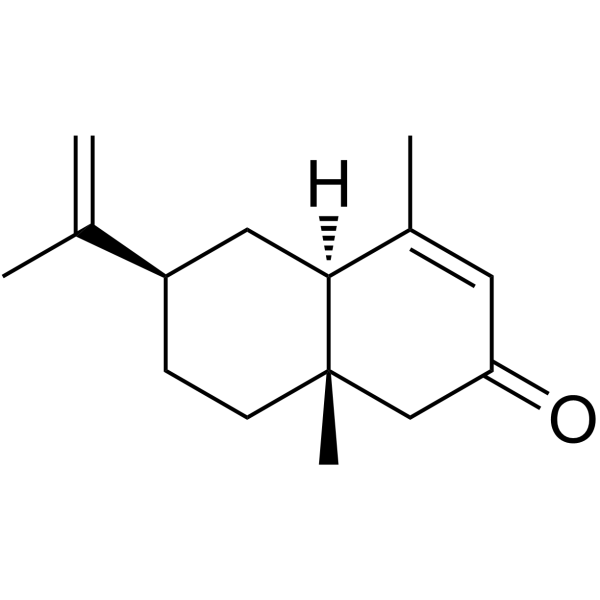
Eudesmane K exhibits insecticidal activity against main pests to crops Lipaphis erysimi, Sitobion avenae, Rhopalosiphum padi, and Aphis craccivora .
|
-
-
- HY-N8355
-
|
|
Endogenous Metabolite
|
Infection
|
|
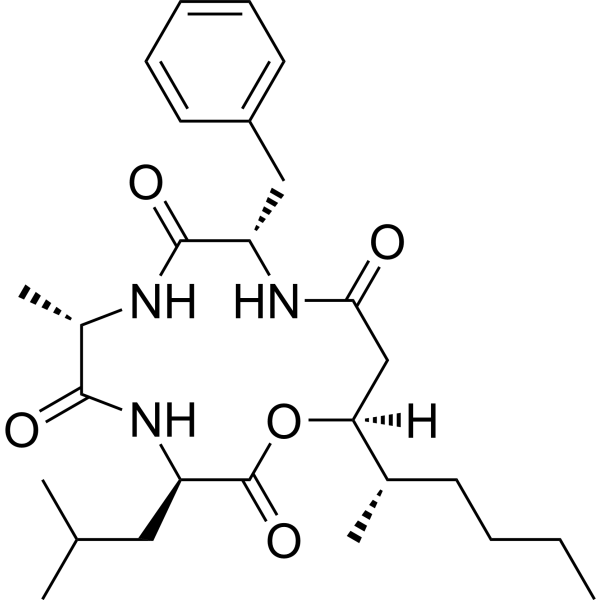
Beauveriolide I is the metabolite of Entomopathogenic Fungi Beauveria sp.. Beauveriolide I (1) exhibits moderate insecticidal activities against Spodoptera litura and Callosobruchus chinensis .
|
-
- HY-W052144S
-
|
|
Isotope-Labeled Compounds
Endogenous Metabolite
|
Others
|
|
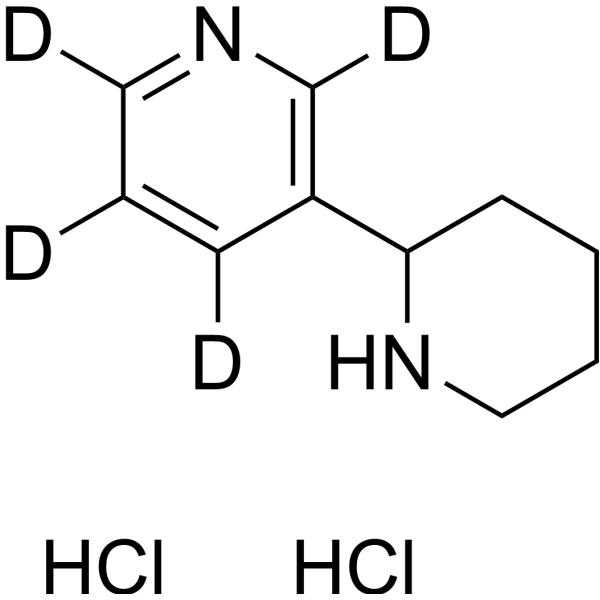
(±) Anabasine-d4 dihydrochloride is deuterium labeled (±) Anabasine dihydrochloride. (±) Anabasine dihydrochloride is the racemate of Anabasine dihydrochloride. Anabasine dihydrochloride is an agonist of α7nAChR and exhibits anti-inflammatory and insecticidal activities .
|
-
- HY-N1418A
-
|
(+)-Canadine; (R)-(+)-Canadine
|
Others
|
Inflammation/Immunology
|
|
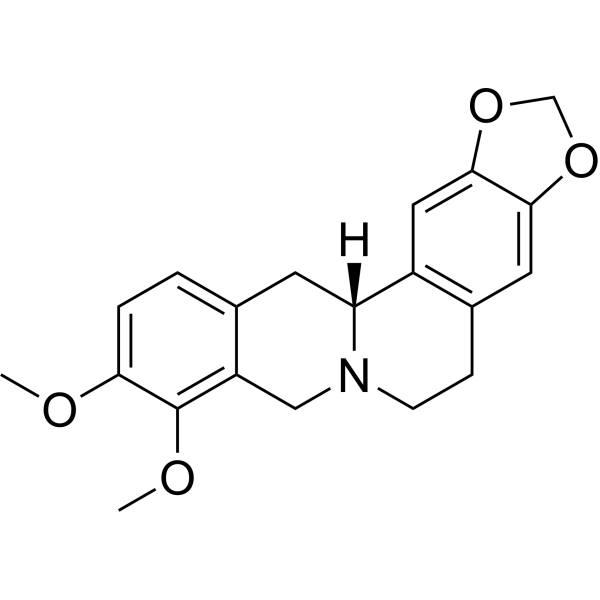
(R)-(+)-Tetrahydroberberine is the isomer of (S)-(-)-Tetrahydroberberine (HY-N1418), and can be used as an experimental control. (S)-(-)-Tetrahydroberberine is an alkaloid and intermediate in the biosynthesis of berberine with insecticidal activity .
|
-
- HY-175506
-
|
|
Parasite
Calcium Channel
|
Infection
|
|
RyRs activator 6 (compound C3) is a ryanodine receptor (RyRs) activator that activates calcium release in insect neurons. RyRs activator 6 has insecticidal activity .
|
-

- HY-N7939
-
|
|
Insecticide
|
Others
|
|
Celangulin XIX is a insecticidal that can be isolated from Celastrus angulatu. Celangulin XIX has strong insecticidal activity against Mythimna separate with an ED50 of 73.3 μg/g .
|
-
- HY-N16476
-
|
|
GABA Receptor
nAChR
|
Infection
|
|
Spinosyn J is a non-competitive insect nicotinic acetylcholine receptor (nAChR) and γ-aminobutyric acid (GABA) receptor modulator with insecticidal activity. Spinosyn J is promising for research of agricultural pests .
|
-

- HY-167244
-
|
|
Insecticide
|
Others
|
|
AI 3-23445 is a compound with environmental toxicity and insecticidal activity, capable of inducing avoidance behavior in Peromyscus maniculatus and Mus musculus. AI 3-23445 can be utilized in agricultural research .
|
-

- HY-126744
-
|
|
Parasite
|
Others
|
|
Juncin E is a diterpenoid found in the soft coral Junceella juncea that exhibits significant insecticidal activity against the larvae of two important agricultural pests: southern corn rootworm and tobacco armyworm [2].
|
-

- HY-169999
-
|
|
Parasite
|
Infection
|
|
AAP4 is a potent OfChi-h and OfHex1 inhibitor with Ki values of 29.3 nM and 4.9 μM, respectively. AAP4 shows insecticidal activity for lepidopteran pests Ostrinia furnacalis .
|
-

- HY-W011035R
-
|
|
Reference Standards
Parasite
|
Infection
|
|
Dodecamethylpentasiloxane (Standard) is the analytical standard of Dodecamethylpentasiloxane. This product is intended for research and analytical applications. Dodecamethylpentasiloxane is a component of siloxanes and can be used as silicone oil. Dodecamethylpentasiloxane exhibits insecticidal activity against bed bug .
|
-

- HY-169068
-
|
|
Carboxylesterase (CES)
|
Infection
|
|
Antifeedant agent 1 is a carboxylesterase inhibitor that exerts insecticidal activity by inhibiting insect feeding, with an EC50 value of 0.038 mg/mL. Antifeedant agent 1 can be used in research related to pest control .
|
-

- HY-W488109
-
|
|
Insecticide
|
|
|
Genite is a highly effective pesticide with strong insecticidal activity. Genite can effectively control the number of various pests and is widely used in agricultural production. The use of Genite can significantly increase the yield and quality of crops.
|
-

- HY-N12130
-
|
|
Insecticide
|
Others
|
|
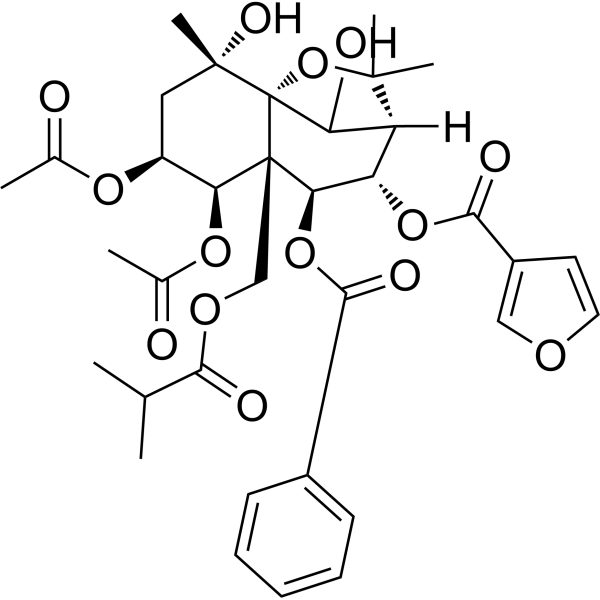
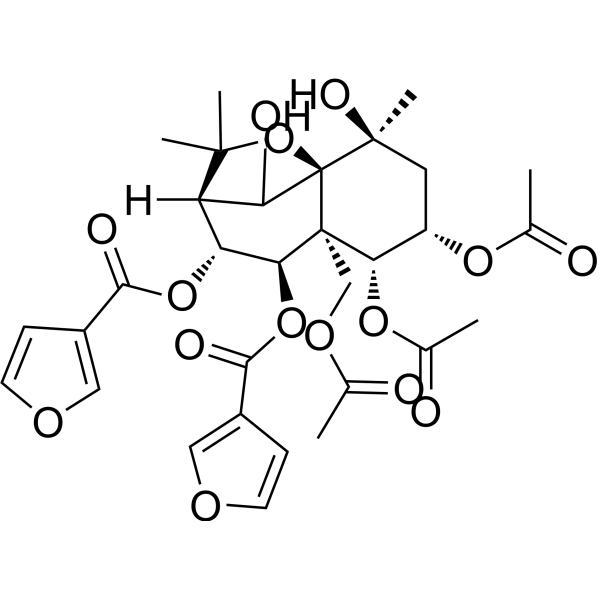
Celangulatin D (Compound 2) is an insecticidal sesquiterpene polyol ester isolated from the root bark of the natural Celastrus angulatus. Celangulatin D has insecticidal activity against armyworms. Celangulatin D can be used for insecticidal and anti-tumor research .
|
-
- HY-17530R
-
|
|
Reference Standards
Cholinesterase (ChE)
Parasite
Drug Metabolite
|
Infection
|
|
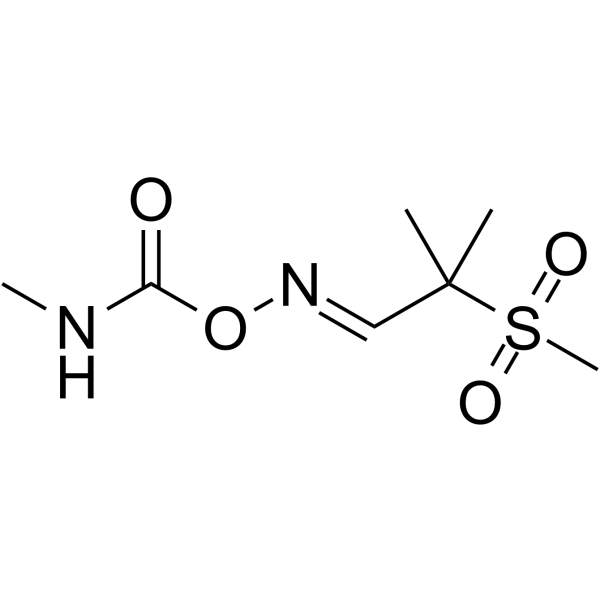
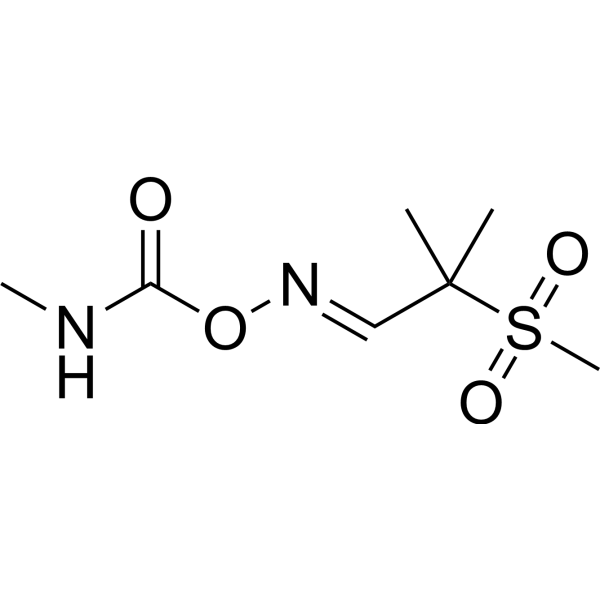
Aldicarb sulfone (Standard) is the analytical standard of Aldicarb sulfone (HY-17530). This product is intended for research and analytical applications. Aldicarb sulfone is one of the metabolites of the carbamate pesticide Aldicarb and has insecticidal activity. Aldicarb sulfone is also an inhibitor of cholinesterase.
|
-
- HY-151470
-
|
|
Parasite
|
Others
|
|
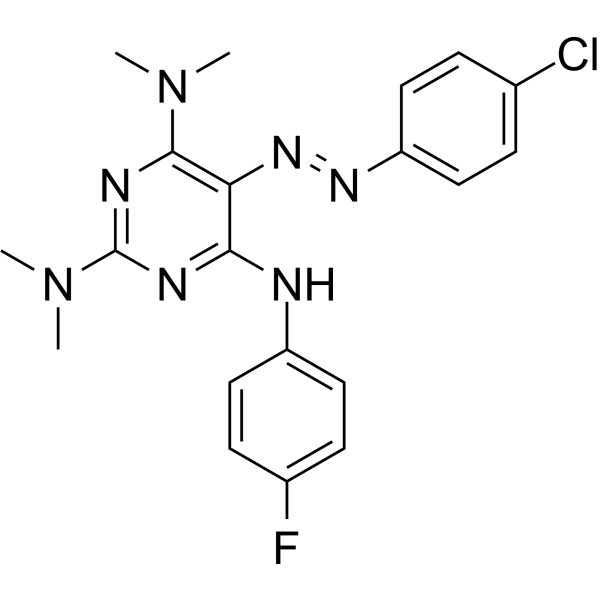
Chitinase-IN-5 (8i) is a potent chitinase OfChi-h inhibitor with an IC50 value of 0.051 μM. Chitinase-IN-5 shows good insecticidal activity, it can be used for the research of green pest control and management .
|
-
- HY-168570
-
|
|
Parasite
|
Infection
|
|
Insecticidal agent 16 (compound A21) is a potent insecticidal agent. Insecticidal agent 16 shows insecticidal activities against Plutella xylostella and Spodoptera frugiperda with LC50 values of 1.2 and 13.2 µg/mL, respectively .
|
-

- HY-B0834R
-
|
(RS)-Indoxacarb (Standard); DPX-JW062 (Standard)
|
Reference Standards
Sodium Channel
|
Neurological Disease
|
|
(±)-Indoxacarb (Standard) is the analytical standard of Indoxacarb. This product is intended for research and analytical applications. Indoxacarb ((±)-Indoxacarb; DPX-JW062) is a broad-spectrum oxadiazine insecticide with high insecticidal activity and low mammalian toxicity. Indoxacarb blocks insect sodium channels in nerve preparations and isolated neurons .
|
-

- HY-149697
-
|
|
Parasite
|
Others
|
|
Insecticidal agent 6 (Compound Im) is an insect ryanodine receptors (RyRs) inhibitor, with an EC50 value of 0.6308 µM against S. frugiperda RyRs. Insecticidal agent 6 has excellent insecticidal activity against lepidopteran pests and can be used for research on pests and diseases .
|
-
- HY-169169
-
|
|
Parasite
|
Infection
|
|
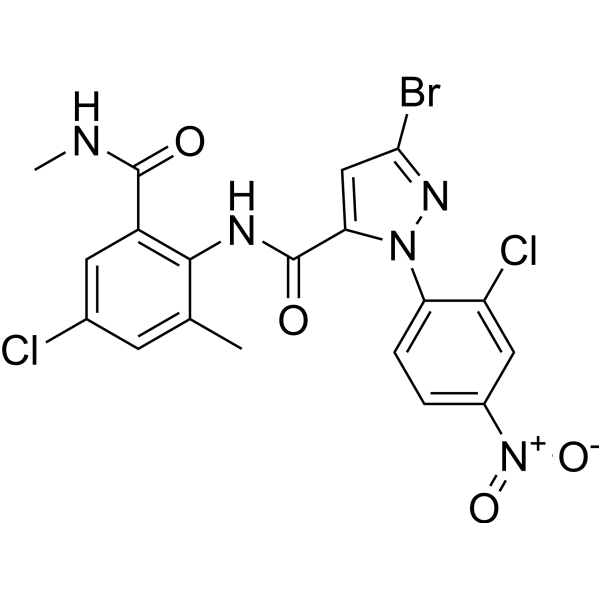
Insecticidal agent 14 (compound 8a) shows potent insecticidal activity against Plutella xylostella and Mythimna separata, with LC50 values of 0.79 and 9.17 mg/L against P. xylostella, respectively, and 3.58 and 83.09 mg/L against M. separata, respectively .
|
-

- HY-17530S
-
-
- HY-151469
-
|
|
Parasite
|
Others
|
|
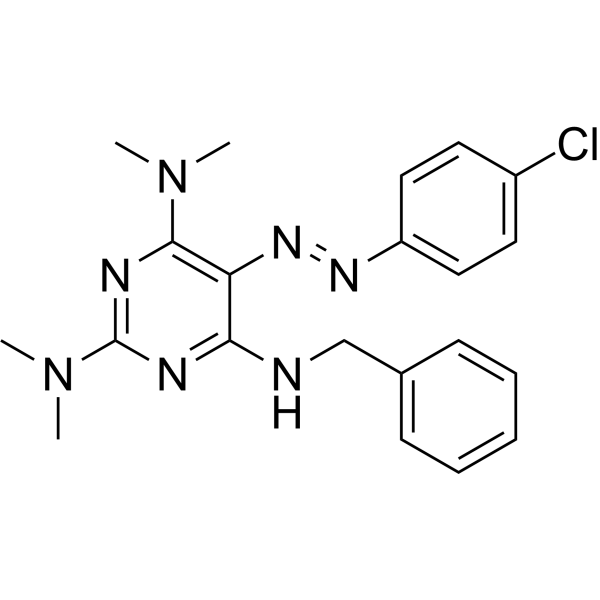
Chitinase-IN-4 (compound 8f), an azo-aminopyrimidine derivative, is a potent, selective OfChi-h inhibitor with an IC50 value of 0.1 μM. Chitinase-IN-4 has good insecticidal activity. Chitinase-IN-4 can be used in research of green pest control and management .
|
-
- HY-117386R
-
|
|
Reference Standards
Insecticide
|
Infection
|
|
Methoxyfenozide (Standard) is the analytical standard of Methoxyfenozide (HY-117386). This product is intended for research and analytical applications. Methoxyfenozide is an orally active insecticide belonging to the diacylhydrazine and non-steroidal ecdysone agonist classes, which can interfere with the growth and development of insects. Methoxyfenozide has ovicidal and insecticidal activities against phytophagous pests.
|
-

- HY-W774937
-
|
GH414; NK-8116
|
Insecticide
|
Others
|
|
Cycloprothrin (GH414; NK-8116) is an insecticide pesticide that contains two isomers, (1R, alphaR)-Cycloprothrin and (R)-Cycloprothrin. The insecticidal activity of (1R, alphaR)-Cycloprothrin against Mythimaseparata and Aphismedicagini larvae is about 6 times and 4 times higher than that of (R)-Cycloprothrin, respectively .
|
-

- HY-118839
-
|
|
Endogenous Metabolite
|
Infection
|
|
Trans-Phenothrin is a synthetic pyrethroid with activity against adult fleas and ticks. Trans-Phenothrin has shown significant differences in biological activity between its different enantiomers in comparison with fenvalerate and d-trans-phenothrin. Trans-Phenothrin is used in agriculture for its potential insecticide activity against pests such as Plutella xylostella .
|
-

- HY-149864
-
|
|
Insecticide
|
Others
|
|
Insecticidal agent 3 is a multichitinase inhibitors, belongs to insect growth regulators (IGRs),with Kis of 0.8μM, 11.9 μM, and 2.3 μM for Of ChtI, Of ChtII, and Of Chi-h, respectively. Insecticidal agent 3 exhibits insecticidal activity against two lepidopteran pests by interfering with normal insect growth and molting .
|
-
- HY-170513
-
|
|
Insecticide
|
Infection
Cancer
|
|
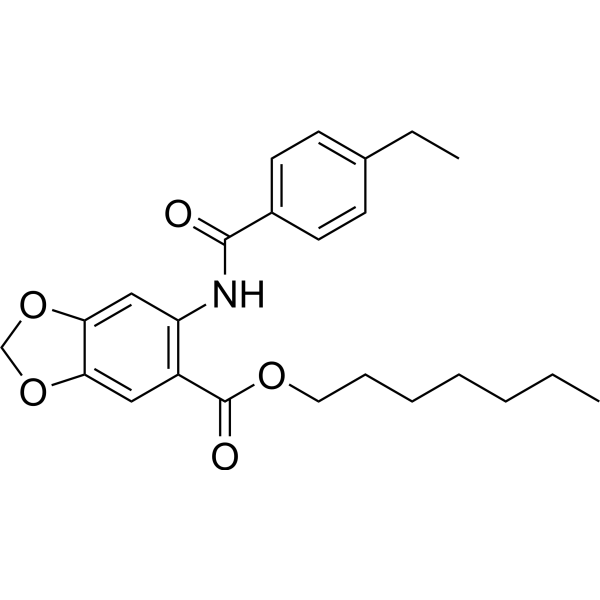
3'-Ethoxy-5,6-dihydrospinosyn J 17-pseudoaglycone is a Spinosyn derivative with potent insecticidal activity. 3'-Ethoxy-5,6-dihydrospinosyn J 17-pseudoaglycone (500mg/L) achieves a 100% mortality rate against Mythimna separata, aphids, and red spiders .
|
-

- HY-157016
-
|
|
Insecticide
|
Others
|
|
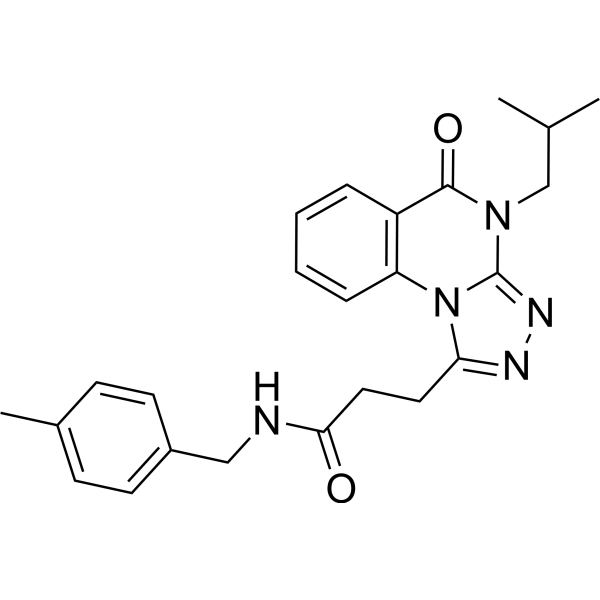
OfChi-h-IN-1 is a potent OfChi-h inhibitor with a Ki value of 0.33 μM. OfChi-h-IN-1 dramatically inhibit the growth and development of Ostrinia nubilalis larvae, and it shows higher insecticidal activity than Hexaflumuron (HY-B1848). OfChi-h-IN-1 serves as novel candidates for insect growth regulator .
|
-
- HY-B0827A
-
|
(R)-MTI-446
|
nAChR
Parasite
|
Infection
|
|
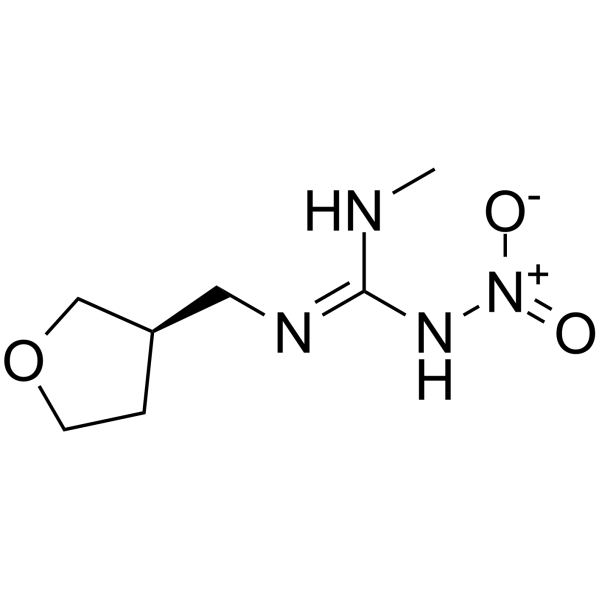
(R)-Dinotefuran ((R)-MTI-446), a neonicotinoid pesticide, exhibits comparative insecticidal activities (1.7-2.4 times) to typical sucking pests Aphis gossypii and Apolygus lucorum compared to racemic mixtures by inhibiting nicotinic acetylcholine receptors. (R)-Dinotefuran has a good efficacy in controlling target pests while minimizing hazard to honeybees .
|
-
- HY-155331
-
|
|
Fungal
|
Infection
|
|
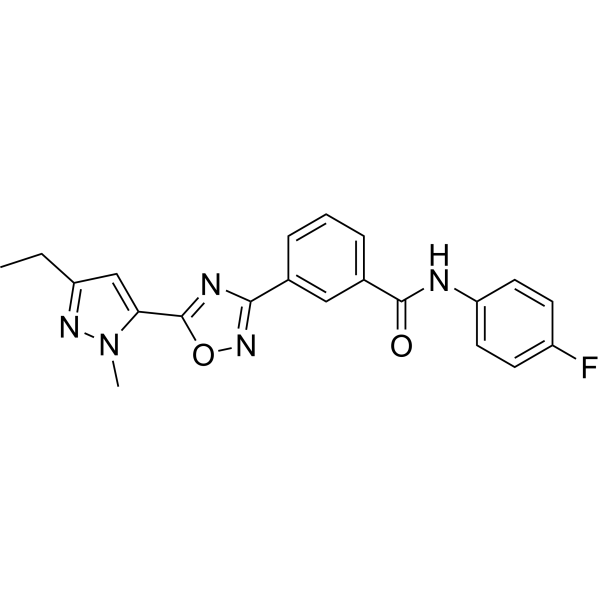
Antifungal agent 77 (Compound 13h) is an antifungal agent. Antifungal agent 77 (500 μg/mL) also shows good insecticidal activity against Mythimna separate, Helicoverpa armigera, Ostrinia nubilalis, and Spodoptera frugiperda with a death rate of 30%, 25%, 40%, and 25%. Antifungal agent 77 shows toxicity in zebrafish embryo with a LC50 of 2.43 μg/mL .
|
-
- HY-N3497
-
|
|
NF-κB
DNA/RNA Synthesis
Parasite
Apoptosis
|
Infection
Cancer
|
|
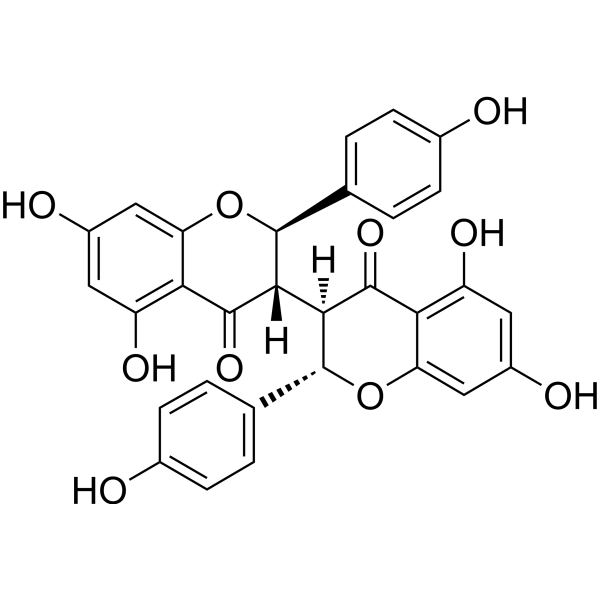
Isochamaejasmin is a biflavonoid with anti-cancer, antiplasmodial and insecticidal activities. Isochamaejasmin displays a potent NF-κB (NF-κB) activation activity. Isochamaejasmin could cause DNA damage and induce apoptosis via the mitochondrial pathway in AW1 cells . Isochamaejasmin also has a moderate antiplasmodial activity (IC50 of 7.3 μM for P. falciparum) and relatively low cytotoxicity (CC50 of 29.0 μM) .
|
-
- HY-B1858S
-
|
|
Isotope-Labeled Compounds
Fungal
Interleukin Related
Parasite
|
Infection
Metabolic Disease
Inflammation/Immunology
|
|
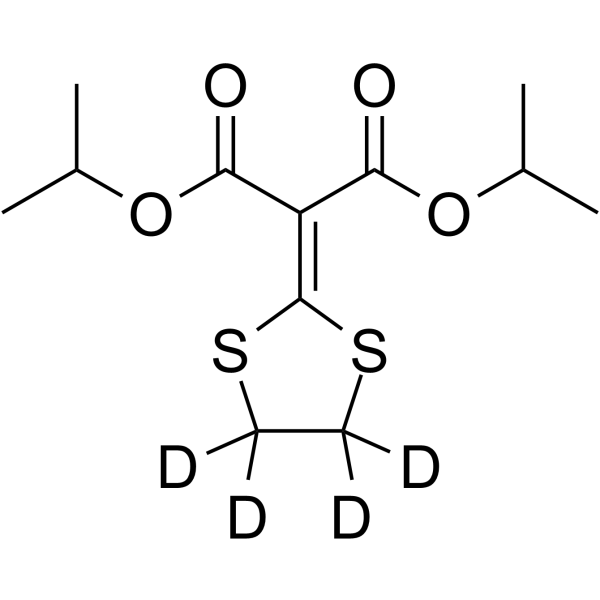
Isoprothiolane-d4 is the deuterium labeled Isoprothiolane (HY-B1858). Isoprothiolane is a blast fungicide with antifungal, anti-inflammatory and insecticidal activities. Isoprothiolane primarily acts on fungi during the penetration and growth stages of infecting hyphae. Isoprothiolane can be used as an insecticide, pesticide, etc. In addition, Isoprothiolane can reduce serum phospholipid and total lipid concentrations, regulating lipid metabolism. Isoprothiolane is also used in the research of fatty liver .
|
-
- HY-130423R
-
|
|
Insecticide
Reference Standards
|
Infection
|
|
Milbemycin A3 (Standard) is the analytical standard of Milbemycin A3 (HY-130423). This product is intended for research and analytical applications. Milbemycin A3 is a 16-membered macrocyclic lactone compound found in the soil bacterium Saccharopolyspora hygroscopicus subsp. aureolacrimosus. Milbemycin A3 enhances the opening of glutamate- and GABA-gated chloride channels and exhibits insecticidal activity. Milbemycin A3 can be used in insect resistance-related research .
|
-

- HY-B1858R
-
|
|
Reference Standards
Fungal
Interleukin Related
Parasite
|
Infection
Metabolic Disease
Inflammation/Immunology
|
|
Isoprothiolane (Standard) is the analytical standard of Isoprothiolane (HY-B1858). This product is intended for research and analytical applications. Isoprothiolane is a blast fungicide with antifungal, anti-inflammatory and insecticidal activities. Isoprothiolane primarily acts on fungi during the penetration and growth stages of infecting hyphae. Isoprothiolane can be used as an insecticide, pesticide, etc. In addition, Isoprothiolane can reduce serum phospholipid and total lipid concentrations, regulating lipid metabolism. Isoprothiolane is also used in the research of fatty liver .
|
-

- HY-175190
-
|
|
GABA Receptor
|
Others
|
|
GABA receptor antagonist 2 (Compound IId) is a GABA receptor antagonist with a LC50 of 0.0735 μg/mL for Plutella xylostella (P. xylostella). GABA receptor antagonist 2 has significant insecticidal activities against P. xylostella and its resistant strain, and Spodoptera frugiperda, and Chilo suppressalis. GABA receptor antagonist 2 binds the GABA receptor at the site of Drosophila Rdl G335. GABA receptor antagonist 2 can be used to manage resistant pest populations .
|
-

- HY-N18035
-
|
|
Insecticide
|
Infection
|
|
Spinosyn K is an insecticide found in the actinomycete Saccharopolyspora spinosa. Spinosyn K shows strong insecticidal activity .
|
-

- HY-125040
-
-

- HY-W209279
-
|
|
Endogenous Metabolite
|
Others
|
|
(±) Anabasine hydrochloride is the racemate of Anabasine (HY-B1532). Anabasine hydrochloride is an agonist of α7nAChR and exhibits anti-inflammatory and insecticidal activities .
|
-

- HY-162497
-
|
|
nAChR
|
Others
|
|
Insecticidal agent 12 (Compound F45) has insecticidal activity (LC50: 2.94 μg/mL). Insecticidal agent 12 is an nAChR inhibitor .
|
-

- HY-W753728
-
|
|
Insecticide
|
Infection
|
|
Xiaochongliulin is a organophosphate insecticide. Xiaochongliulin shows insecticidal activity against citrus red mite, citrus scales, cotton bollworm, diamondback moth, and rice planthopper. Xiaochongliulin has low acute oral toxicity in rats .
|
-

- HY-W587734
-
|
|
Insecticide
Acetyl-CoA Carboxylase
|
Infection
|
|
Spirotetramat-enol, Spirotetramat (HY-120253) metabolite, is an insecticide. Spirotetramat-enol shows inhibitory activity against acetyl-CoA carboxylase. Spirotetramat-enol exerts insecticidal activity against Aphis craccivora Koch .
|
-

- HY-183066
-
|
|
Insecticide
Cholinesterase (ChE)
|
Infection
|
|
AChE-IN-115 is an acetylcholinesterase (AChE) inhibitor. AChE-IN-115 forms stable complexes with AChE from Spodoptera litura (tobacco cutworm) and Tribolium castaneum (red flour beetle). AChE-IN-115 exhibits insecticidal activity .
|
-

- HY-173073
-
|
|
Insecticide
nAChR
|
Infection
|
|
Insecticidal agent 20 (Compound 17) is an insecticide that can bind to AChBP. Insecticidal agent 20 exhibits good insecticidal activity against the larvae (LC50: 1.57 ppm) and pupae (LC50: 4.17 ppm) of Culex pipiens .
|
-

- HY-181706
-
|
|
Insecticide
|
Infection
|
|
Insecticidal agent 29 is a pyrethroid incorporating a pyridine heterocycle and insecticide. Insecticidal agent 29 exhibits insecticidal activity against Culex pipiens Pallens larvae, Aphis laburni Kaltenbach, and aphids. Insecticidal agent 29 shows inactivity against Tetranychus cinnabarinus Boisduval .
|
-

- HY-W436478
-
|
|
Drug Derivative
|
Others
|
|
(+)-2,5-epi-Goniothalesdiol is an analogue of Goniothalesdiol, which exhibits significant cytotoxicity against P388 mouse leukemia cells and has insecticidal activity. (+)-2,5-epi-Goniothalesdiol can be synthesized starting from D-mannitol (HY-N0378) .
|
-

- HY-182041
-
|
|
Insecticide
GABA Receptor
|
Infection
|
|
Insecticidal agent 31 is an insecticide targeting the γ-aminobutyric acid receptor (GABAR). Insecticidal agent 31 exhibits insecticidal activity against Plutella xylostella, Spodoptera frugiperda and Spodoptera exigua. Insecticidal agent 31 can serve as a lead compound for the design and synthesis of novel isoxazole-based insecticides .
|
-

- HY-W719559
-
|
|
Insecticide
|
Infection
|
|
Cyclaniliprole is an insecticide and insect ryanodine receptor modulator with higher selectivity for insect ryanodine receptors than for mammalian ones. Cyclaniliprole exerts lethal effects on larvae and adults of various agricultural pests. Cyclaniliprole exhibits broad-spectrum insecticidal activity against pests of the orders Lepidoptera, Thysanoptera, Diptera, Hemiptera and Coleoptera .
|
-

- HY-181985
-
|
|
Insecticide
|
Infection
|
|
Insecticidal agent 30 is an orally active insecticidal agent. Insecticidal agent 30 induces rapid contact mortality in adult Brassicogethes aeneus, achieves 100% 24-hour contact mortality against Brassicogethes aeneus, and exhibits moderate insecticidal activity against Drosophila melanogaster. Insecticidal agent 30 can be used for the research of pollen beetle (brassicogethes aeneus) infestation .
|
-

- HY-W727481
-
|
|
Parasite
Insecticide
|
Infection
|
|
Cyetpyrafen is a pyrazole insecticide/acaricide with broad-spectrum insecticidal activity. Cyetpyrafen binds to DhelOBP4 (Ki = 4.95 μM) and DhelOBP21 (Ki = 5.51 μM) to mediate olfactory recognition in *Cryptolaemus montrouzieri*. Cyetpyrafen induces dose-dependent electroantennogram responses in *Cryptolaemus montrouzieri* and exhibits repellent effects on the species. Cyetpyrafen has bioaccumulative properties, is rapidly and passively absorbed by the roots of lettuce and rice, reaches a steady state within 24 h, preferentially accumulates in roots, and shows limited xylem/phloem translocation .
|
-

- HY-180460
-
|
|
Insecticide
|
Others
|
|
SCPI-1 is a potent and competitive mosquito sterol carrier protein-2 (SCP-2) inhibitor (AeSCP-2 IC50 = 0.347 µM; AeSCP-x IC50 = 0.527 µM). SCPI-1 exhibits physiological effects on cholesterol metabolism in cultured insect cells (IC50 of 5.53 µM in Aag-2 cells). SCPI-1 shows insecticidal activity against Aedes aegypti with a LD50 of 4.8 µM .
|
-

- HY-180500
-
|
|
Insecticide
|
Others
|
|
SCPI-3 is a potent and competitive mosquito sterol carrier protein-2 (SCP-2) inhibitor (AeSCP-2 IC50 = 0.159 µM; AeSCP-x IC50 = 0.285 µM). SCPI-3 exhibits physiological effects on cholesterol metabolism in cultured insect cells (IC50 of 3.09 µM in Aag-2 cells). SCPI-3 shows insecticidal activity against Aedes aegypti with a LD50 of 12.3 µM .
|
-

- HY-N15141
-
|
|
Insecticide
Fungal
|
Infection
Cancer
|
|
γ-Thujaplicin is a Hinokitiol (HY-B2230)-related compound that can be isolated from the wood of Thujopsis dolabrata. γ-Thujaplicin shows strong cytotoxic activities against human stomach cancer cell lines KATO-III and Ehrlich’s ascites carcinoma. γ-Thujaplicin exhibits potent and broad-spectrum antifungal activity on wood-rotting fungi, and insecticidal activity on the noxious insects. γ-Thujaplicin can be used for cancer and infection research and pest management .
|
-

- HY-156339
-
|
|
GABA Receptor
|
Others
|
|
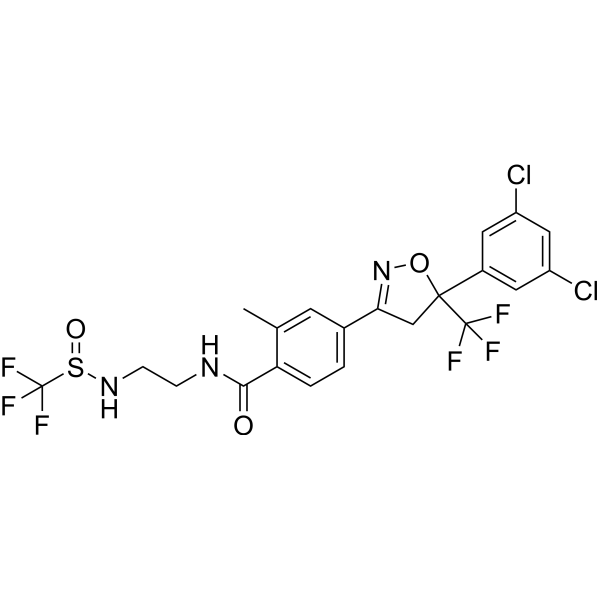
GABA receptor Antagonist 1 (compound 7w) inhibits Px RDL1 GABAR with an IC50 value of 7.08 nmol/L. GABA receptor Antagonist 1 shows insecticide activity against P. xylostella, S. frugiperda, S. exigua, and S. litura, with LC50 of 0.09, 0.84, 0.87, and 0.68 mg/L respectively. GABA receptor Antagonist 1 shows a medium toxicity to honeybee (48 h, ID50 = 2.22 μg/adult), and low toxicity to zebrafish (LC50: 42.4 mg/L) .
|
-
- HY-17516R
-
|
|
Reference Standards
Insecticide
Bacterial
Mitochondrial Metabolism
|
Infection
|
|
Tolfenpyrad (Standard) is the analytical standard of Tolfenpyrad (HY-17516). This product is intended for research and analytical applications. Tolfenpyrad is an orally active insecticide, acaricide and antibacterial agent. Tolfenpyrad inhibits Complex I in the mitochondrial respiratory electron transport chain, interfering with the cell respiration process. Tolfenpyrad has significant insecticidal activity against a variety of insect pests such as H. contortus, Coccinella septempunctata. Tolfenpyrad has antibacterial activity against Francisella novicida, with an IC50 of 1.2 µM or 1.5 µM .
|
-

- HY-W024365R
-
|
|
PROTAC Linkers
Reference Standards
|
Cancer
|
|
3-tert-Butyl-4-methoxyphenol (Standard) is the analytical standard of 3-tert-Butyl-4-methoxyphenol. This product is intended for research and analytical applications. 3-tert-Butyl-4-methoxyphenol is a PROTAC linker, belongs to alkyl/ether class, with insecticidal activity. 3-tert-Butyl-4-methoxyphenol also induced increased activities of glutathione (GSH) S-transferase and epoxide hydrolase in the liver and forestomach tissues of A/HeJ mice, regulating the carcinogen metabolism system .
|
-

- HY-B2015S
-
|
|
Isotope-Labeled Compounds
Parasite
Insecticide
Cholinesterase (ChE)
|
Infection
|
|
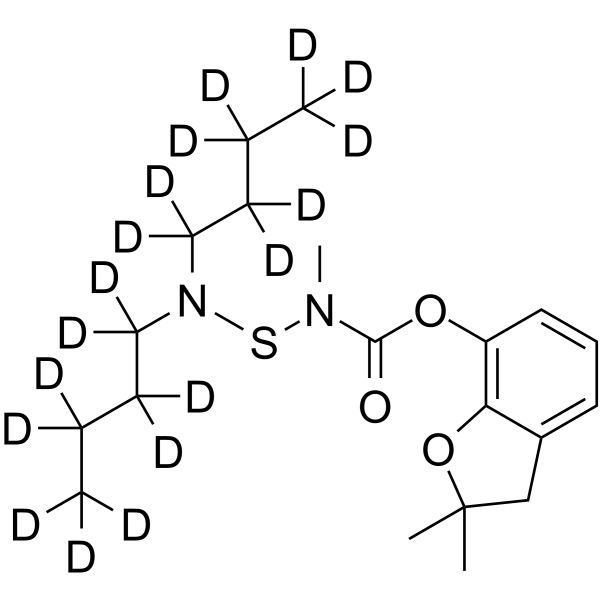
Carbosulfan-d18 is the deuterium labeled Carbosulfan. Carbosulfan is an orally active AChE inhibitor that hydrolyzes to Carbofuran in organisms to exert insecticidal effects. Carbosulfan exhibits broad-spectrum insecticidal activity, and it also induces severe oxidative stress by enhancing lipid peroxidation and impairing the antioxidant defense system. Carbosulfan causes reproductive toxicity in male rats and developmental disorders in their offspring. Carbosulfan shows persistence in paddy field environments and potential hazards to non-target organisms, and it is commonly used in studies related to reproductive toxicity and environmental risk assessment .
|
-
- HY-121615
-
|
alpha-Phellandrene
|
Environmental Pollutants
Insecticide
NO Synthase
Apoptosis
Autophagy
|
Infection
Neurological Disease
Inflammation/Immunology
Cancer
|
|
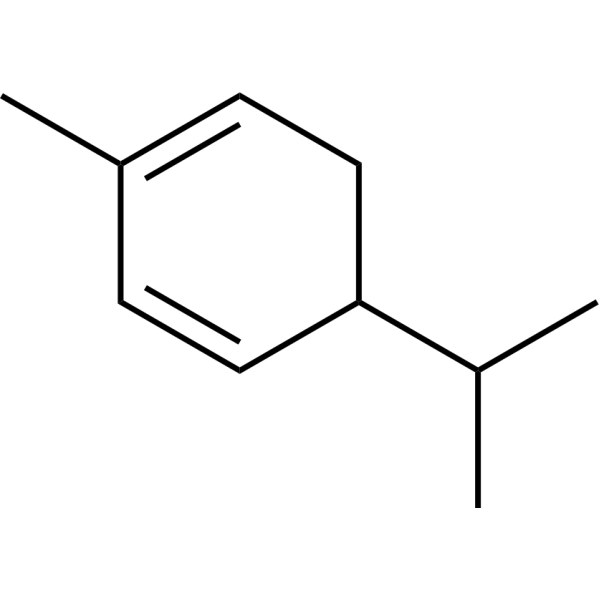
α-Phellandrene (alpha-Phellandrene) is an orally active monoterpenoid and insecticide. α-Phellandrene can be isolated from plant essential oils. α-Phellandrene induces Apoptosis and Autophagy. α-Phellandrene promotes cAMP signaling pathway and increases NO production. α-Phellandrene has anti-inflammatory and anticancer (sarcoma) activities. α-Phellandrene shows insecticidal activity against Lucilia cuprina L3. α-Phellandrene reduces mechanical hyperalgesia .
|
-
- HY-B2015R
-
|
|
Reference Standards
Parasite
Insecticide
Cholinesterase (ChE)
|
Infection
|
|
Carbosulfan (Standard) is the analytical standard of Carbosulfan. This product is intended for research and analytical applications. Carbosulfan is an orally active AChE inhibitor that hydrolyzes to Carbofuran in organisms to exert insecticidal effects. Carbosulfan exhibits broad-spectrum insecticidal activity, and it also induces severe oxidative stress by enhancing lipid peroxidation and impairing the antioxidant defense system. Carbosulfan causes reproductive toxicity in male rats and developmental disorders in their offspring. Carbosulfan shows persistence in paddy field environments and potential hazards to non-target organisms, and it is commonly used in studies related to reproductive toxicity and environmental risk assessment .
|
-

- HY-158327
-
|
|
Insecticide
|
Others
|
|
Insecticidal agent 9 (Compound I-17) is an insecticide with good insecticidal activity. Insecticidal agent 9 has LC50 values of 93.32 mg/L and 114.79 mg/L against Plutella xylostella and Ostrinia furnacalis respectively, and exhibits a mortality rate of up to 86.1% against Spodoptera frugiperda at a concentration of 500 mg/L. Insecticidal agent 9 can act simultaneously on the ecdysone receptor (EcR) and three chitinases (OfChtI, OfChtII, and OfChi-h), demonstrating good binding activity (to EcR) and inhibitory rates (to the three chitinases). Insecticidal agent 9 can be used in research for pest management .
|
-

- HY-N18080
-
|
|
Parasite
DNA Alkylator/Crosslinker
Bacterial
|
Infection
Inflammation/Immunology
Cancer
|
|
Parthenin is a pseudoguaianolide-type sesquiterpene lactone present in Parthenium hysterophorus L. Parthenin induces chromosomal aberrations, mainly chromatid breaks, in human peripheral blood lymphocytes. Parthenin exhibits toxicity against Salmonella typhimurium and Escherichia coli strains, with reduced toxicity in the presence of a metabolic activation system (S9). Parthenin acts as an antifeedant against the 6th instar larvae of the tobacco cutworm (Spodoptera litura). Parthenin shows insecticidal activity against adult cowpea weevils (Callosobruchus maculatus). Parthenin inhibits seed germination and seedling growth of sicklepod (Cassia tora). Parthenin possesses nematicidal activity against the 2nd instar larvae of the southern root-knot nematode (Meloidogyne incognita). Parthenin serves as a research agent for studies related to cancer, malaria, amoebiasis, inflammatory diseases, and bacterial infections .
|
-

| Cat. No. |
Product Name |
Target |
Research Area |
-
- HY-P10390
-
|
|
Parasite
|
Infection
|
|
Insecticidal agent 11 (compound Q6) is a potent insect growth regulator (IGR)-based insecticide. Insecticidal agent 11 shows high insecticidal activity against Diploptera punctata by inhibiting juvenile hormone (JH) biosynthesis. Insecticidal agent 11 also exhibits insecticidal activity against Plutella xylostella .
|
-
- HY-P1991
-
|
|
Parasite
|
Infection
|
|
Isariin D is a cyclodepsipeptide isolated from the fungus Isaria felina, which exhibits significant insecticidal activity against Galleria mellonella larvae .
|
-
- HY-125040
-
| Cat. No. |
Product Name |
Category |
Target |
Chemical Structure |
-
- HY-126741
-
-
-
- HY-114936
-
-
-
- HY-107577
-
-
-
- HY-111664
-
-
-
- HY-121615
-
-
-
- HY-N4202
-
-
-
- HY-133721
-
-
-
- HY-N9496
-
-
-
- HY-N16433
-
|
|
Microorganisms
Ketones, Aldehydes, Acids
Source Classification
|
Parasite
Insecticide
|
|
Nodulisporic acid A (Compound 1a) is an insecticidal agent. Nodulisporic acid A can isolated from fermentations of Nodulisporium sp. Nodulisporic acid A has a potent insecticidal activity against the larvae of the blowfly and mosquito with LC50s of 0.5 and 0.3 ppm against A. aegypti and L. seracata, respectively. Nodulisporic acid A can be used for the development of insecticide .
|
-
-
- HY-N1418
-
-
-
- HY-N12093
-
-
-
- HY-N4250
-
-
-
- HY-N9496R
-
-
-
- HY-W024365
-
-
-
- HY-W052144
-
-
-
- HY-N3068
-
-
-
- HY-N8472
-
-
-
- HY-158721
-
|
Marinamide
|
Structural Classification
Alkaloids
Microorganisms
Indole Alkaloids
Source Classification
|
Endogenous Metabolite
Parasite
|
|
Penicinoline (Marinamide) (Compound 1), a pyrrolyl 4-quinolinone alkaloid, is a microbial secondary metabolite. Penicinoline can be isolated from endophytic fungus Penicillium sp. Penicinoline has antimalarial activity against Chloroquine (HY-17589A) sensitive strain (pf3d7) and against Chloroquine resistant strain (pfDd2) of plasmodium falciparum. Penicinoline also has strong insecticidal activity against Aphis gossypii and selective anticancer effect with significant cytotoxicity for 95-D and HepG2 cells .
|
-
-
- HY-N3156
-
-
-
- HY-134625
-
-
-
- HY-N14917
-
-
-
- HY-N3507
-
-
-
- HY-N1520
-
-
-
- HY-N12548
-
-
-
- HY-116631
-
-
-
- HY-114720
-
-
-
- HY-P1991
-
-
-
- HY-W052144R
-
-
-
- HY-N8668
-
-
-
- HY-N8355
-
-
-
- HY-N1418A
-
-
-
- HY-N7939
-
-
-
- HY-N16476
-
-
-
- HY-126744
-
-
-
- HY-N12130
-
-
-
- HY-N3497
-
-
-
- HY-W024365R
-
|
|
Monophenols
Jatropha curcas Linn.
Phenols
Euphorbiaceae
Plants
Source Classification
|
PROTAC Linkers
Reference Standards
|
|
3-tert-Butyl-4-methoxyphenol (Standard) is the analytical standard of 3-tert-Butyl-4-methoxyphenol. This product is intended for research and analytical applications. 3-tert-Butyl-4-methoxyphenol is a PROTAC linker, belongs to alkyl/ether class, with insecticidal activity. 3-tert-Butyl-4-methoxyphenol also induced increased activities of glutathione (GSH) S-transferase and epoxide hydrolase in the liver and forestomach tissues of A/HeJ mice, regulating the carcinogen metabolism system .
|
-
-
- HY-N18035
-
-
-
- HY-N15141
-
-
-
- HY-N18080
-
|
|
Structural Classification
Terpenoids
Sesquiterpenes
Antheroporum pierrei Gagnep.
Plants
Compositae
Source Classification
|
Parasite
DNA Alkylator/Crosslinker
Bacterial
|
|
Parthenin is a pseudoguaianolide-type sesquiterpene lactone present in Parthenium hysterophorus L. Parthenin induces chromosomal aberrations, mainly chromatid breaks, in human peripheral blood lymphocytes. Parthenin exhibits toxicity against Salmonella typhimurium and Escherichia coli strains, with reduced toxicity in the presence of a metabolic activation system (S9). Parthenin acts as an antifeedant against the 6th instar larvae of the tobacco cutworm (Spodoptera litura). Parthenin shows insecticidal activity against adult cowpea weevils (Callosobruchus maculatus). Parthenin inhibits seed germination and seedling growth of sicklepod (Cassia tora). Parthenin possesses nematicidal activity against the 2nd instar larvae of the southern root-knot nematode (Meloidogyne incognita). Parthenin serves as a research agent for studies related to cancer, malaria, amoebiasis, inflammatory diseases, and bacterial infections .
|
-
| Cat. No. |
Product Name |
Chemical Structure |
-
- HY-W698871
-
|
|
|
(±) Anabasine-d4 is the deuterium labeled (±) Anabasine (HY-W052144). (±) Anabasine is the racemate of Anabasine (HY-B1532). Anabasine is an agonist of α7nAChR and exhibits anti-inflammatory and insecticidal activities .
|
-
-
- HY-117386S
-
|
|
|
Methoxyfenozide-d9 is the deuterium labeled Methoxyfenozide (HY-117386). Methoxyfenozide is an orally active insecticide belonging to the diacylhydrazine and non-steroidal ecdysone agonist classes, which can interfere with the growth and development of insects. Methoxyfenozide has ovicidal and insecticidal activities against phytophagous pests .
|
-
-
- HY-W052144S
-
|
|
|
(±) Anabasine-d4 dihydrochloride is deuterium labeled (±) Anabasine dihydrochloride. (±) Anabasine dihydrochloride is the racemate of Anabasine dihydrochloride. Anabasine dihydrochloride is an agonist of α7nAChR and exhibits anti-inflammatory and insecticidal activities .
|
-
-
- HY-17530S
-
|
|
|
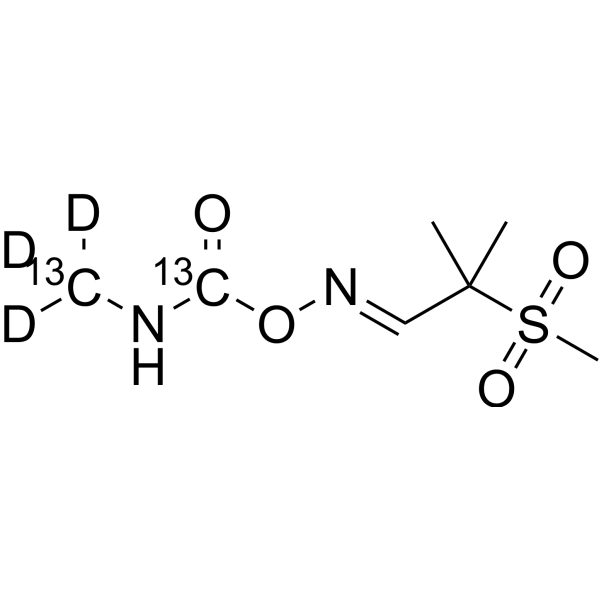
Aldicarb sulfone- 13C2,d3 is the deuterium and 13C labeled Aldicarb sulfone (HY-17530). Aldicarb sulfone is one of the metabolites of the carbamate pesticide Aldicarb and has insecticidal activity. Aldicarb sulfone is also an inhibitor of cholinesterase .
|
-
-
- HY-B1858S
-
|
|
|
Isoprothiolane-d4 is the deuterium labeled Isoprothiolane (HY-B1858). Isoprothiolane is a blast fungicide with antifungal, anti-inflammatory and insecticidal activities. Isoprothiolane primarily acts on fungi during the penetration and growth stages of infecting hyphae. Isoprothiolane can be used as an insecticide, pesticide, etc. In addition, Isoprothiolane can reduce serum phospholipid and total lipid concentrations, regulating lipid metabolism. Isoprothiolane is also used in the research of fatty liver .
|
-
-
- HY-B2015S
-
|
|
|
Carbosulfan-d18 is the deuterium labeled Carbosulfan. Carbosulfan is an orally active AChE inhibitor that hydrolyzes to Carbofuran in organisms to exert insecticidal effects. Carbosulfan exhibits broad-spectrum insecticidal activity, and it also induces severe oxidative stress by enhancing lipid peroxidation and impairing the antioxidant defense system. Carbosulfan causes reproductive toxicity in male rats and developmental disorders in their offspring. Carbosulfan shows persistence in paddy field environments and potential hazards to non-target organisms, and it is commonly used in studies related to reproductive toxicity and environmental risk assessment .
|
-
Your information is safe with us. * Required Fields.
Inquiry Information
- Product Name:
- Cat. No.:
- Quantity:
- MCE Japan Authorized Agent:








