



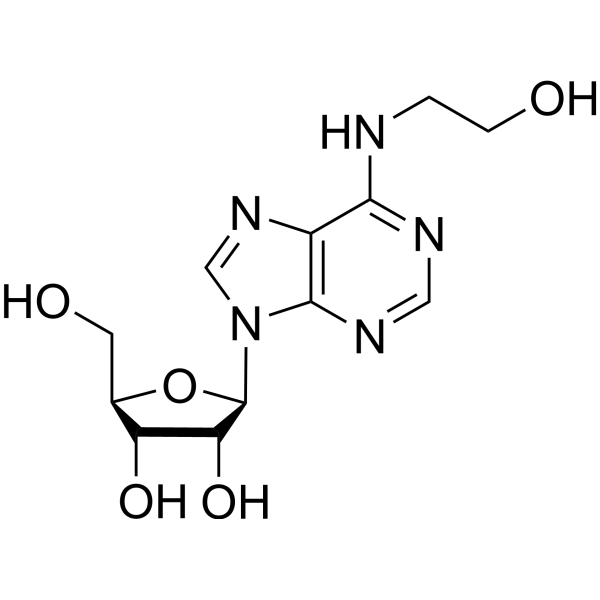
N6-(2-Hydroxyethyl)adenosine
Based on 1 publication(s) in Google Scholar
N6-(2-Hydroxyethyl)adenosine is a purine nucleoside analog. N6-(2-Hydroxyethyl)adenosine inhibits NF-κB/Smad signaling pathway, exhibits anti-hyperglycemia, antioxidant, antitumor and anti-inflammatory and insecticidal activities. N6-(2-Hydroxyethyl)adenosine is orally active.
For research use only. We do not sell to patients.
- Purity : 99.78%
- CAS No.: 4338-48-1
- Formula: C12H17N5O5
- Molecular Weight:311.30
-
Storage:
4°C, protect from light
* In solvent : -80°C, 6 months; -20°C, 1 month (protect from light)

To place orders, for customer services and technical support, please contact: MedChemExpress USA
Tel: 609-228-6898 E-mail: [email protected] [email protected]


-
 Biological Activity
-
Chemical Information
-
Solvent & Solubility
- Protocols
- Purity & Documentation
- References
-
 Help & FAQs


-
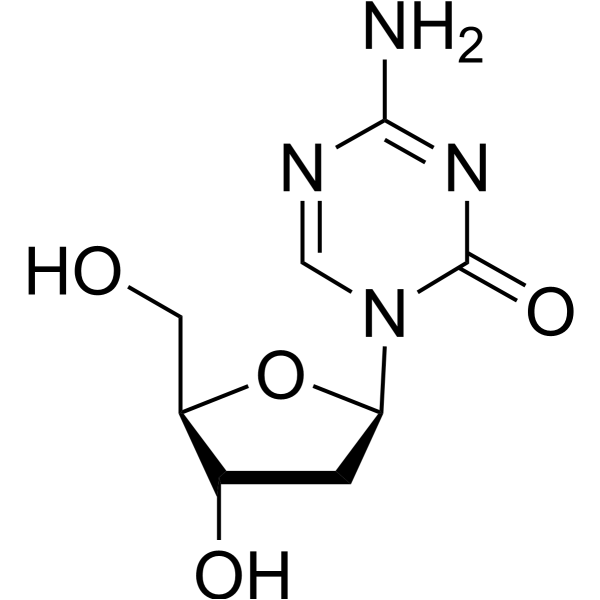
HY-A0004
DecitabineDNMT Inhibitor -
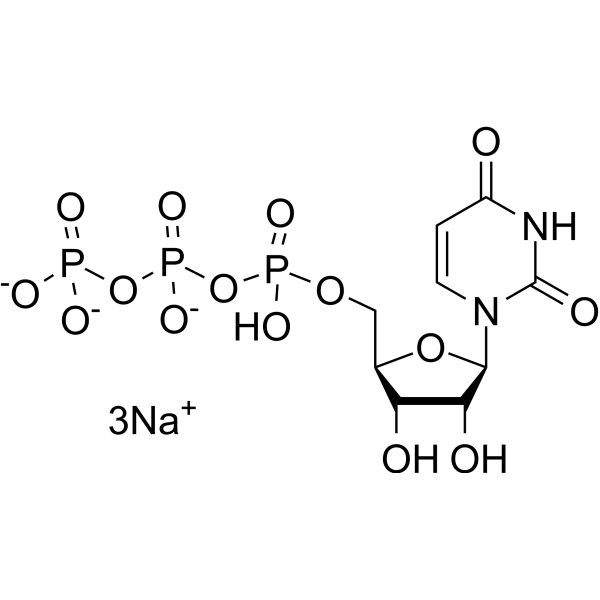
HY-W013093
Uridine triphosphate trisodium saltUTP -
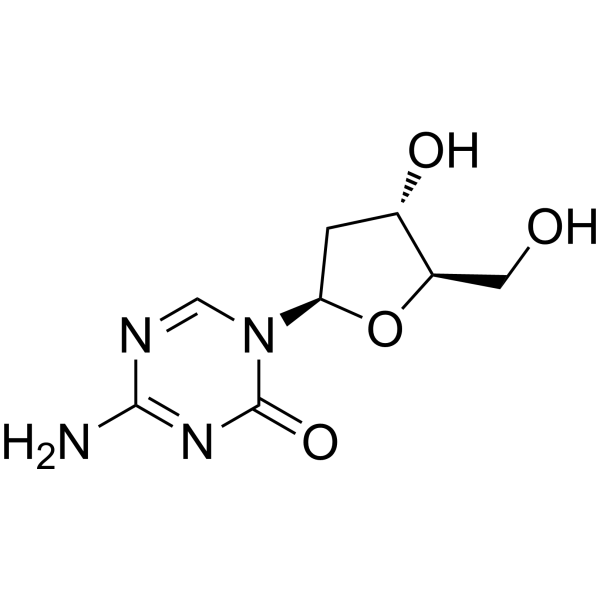
HY-A0004R
Decitabine (Standard)DNMT Inhibitor -
HY-111826
γ-Glutamyl-S-1-propenyl cysteineNatural Product -

HY-107372H
UTP trisodium salt, 100 mM Solution, PCR GradeUTP -
HY-W009538
5'-Deoxy-5-fluorocytidineMetabolite Of Capecitabine -

HY-W009538R
5'-Deoxy-5-fluorocytidine (Standard)Standard Of 5'-Deoxy-5-fluorocytidine -

HY-W013093R
Uridine triphosphate trisodium salt (Standard)UTP
Publications Citing Use of MedChemExpress (MCE) N6-(2-Hydroxyethyl)adenosine
More

Biological Activity
Description
In Vitro
N6-(2-Hydroxyethyl)adenosine (5-20 µg/mL, 24 h) reduces the expression of LPS (HY0D1056)-induced TNF-α and IL-1β, increases the IL-10 secretion in RAW 264.7 cell[3].
N6-(2-Hydroxyethyl)adenosine (5-20 µg/mL, 24 h) reduces TGF-β1-induced expression of collagen I, α-SMA and fibronectin in NRK-49F cell, exhibits anti-fibrosis effect[3].
N6-(2-Hydroxyethyl)adenosine (0-300 µM, 24-72 h) induces the generation of ROS, decreases mitochondrial membrane potential, exhibits cytotoxicity in cancer cells SGC-7901 and AGS, and induces apoptosis and autophagy[4].
N6-(2-Hydroxyethyl)adenosine (1 mg/mL, 60 h) exhibits insecticidal activity against Plutella xylostella[5].
MedChemExpress (MCE) has not independently confirmed the accuracy of these methods. They are for reference only.
-
Cell Line:SGC-7901 and AGS
-
Concentration:0-300 µM
-
Incubation Time:72 h
-
Result:Inhibited cell viability.
-
Cell Line:SGC-7901 and AGS
-
Concentration:0-150 µM
-
Incubation Time:48 h
-
Result:Induced apoptosis.
-
Cell Line:RAW 264.7 and NRK-49F
-
Concentration:5-20 µg/mL
-
Incubation Time:24 h
-
Result:Inhibited the expression of TNF-α, IL-1β, collagen I, α-SMA and fibronectin.
Increased the expression of IL-10.
In Vivo
N6-(2-Hydroxyethyl)adenosine (75-150 mg/kg, po, once daily for 19 days) exhibits antitumor effect in SGC-7901 xenograft mouse models[4].
MedChemExpress (MCE) has not independently confirmed the accuracy of these methods. They are for reference only.
-
Animal Model:Alloxan-induced diabetes in rats models[2]
-
Dosage:20-40 mg/kg
-
Administration:ip, once daily for 6 weeks
-
Result:Reduced the levels of blood glucose, serum creatinine (Scr), blood urea nitrogen (BUN) and urine protein.
Reduced the levels of TNF-α, IL-1β, IL-6, TGF-β1 and NF-κB in kidney tissue.
Alleviated the damage of glomeruli and renal tubules.
-
Animal Model:SGC-7901 xenograft mouse models[4]
-
Dosage:75-150 mg/kg
-
Administration:po, once daily for 19 days
-
Result:Reduced tumor volume and weight.


Chemical Information
-
CAS No. 4338-48-1
-
Appearance Solid
-
Molecular Weight 311.30
-
Formula C12H17N5O5
-
Color White to off-white
-
SMILES
OCCNC1=NC=NC2=C1N=CN2[C@H]3[C@H](O)[C@H](O)[C@@H](CO)O3
-
Shipping
Room temperature in continental US; may vary elsewhere.
-
Storage
4°C, protect from light
* In solvent : -80°C, 6 months; -20°C, 1 month (protect from light)


Publications (1)
-
Journal Impact Factor
-
Most Recent
-
Clin Transl Med
HSF4/COIL complex-dependent R-loop mediates ultraviolet-induced inflammatory skin injury. [Abstract]2023 Jul;13(7):e1336. PMID: 37461263


Solvent & Solubility
In Vitro:
DMSO : 100 mg/mL (321.24 mM; Need ultrasonic; Hygroscopic DMSO has a significant impact on the solubility of product, please use newly opened DMSO)
Please refer to the solubility information to select the appropriate solvent. Once prepared, please aliquot and store the solution to prevent product inactivation from repeated freeze-thaw cycles.
Storage method and period of stock solution: -80°C, 6 months; -20°C, 1 month (protect from light). When stored at -80°C, please use it within 6 months. When stored at -20°C, please use it within 1 month.
Please refer to the solubility information to select the appropriate solvent. Once prepared, please aliquot and store the solution to prevent product inactivation from repeated freeze-thaw cycles.
Storage method and period of stock solution: -80°C, 6 months; -20°C, 1 month (protect from light). When stored at -80°C, please use it within 6 months. When stored at -20°C, please use it within 1 month.
Concentration (start) × Volume (start) = Concentration (final) × Volume (final)
In Vivo:
Select the appropriate dissolution method based on your experimental animal and administration route.
- For the following dissolution methods, please ensure to first prepare a clear stock solution using an In Vitro approach and then sequentially add co-solvents:
- To ensure reliable experimental results, the clarified stock solution can be appropriately stored based on storage conditions. As for the working solution for In Vivo experiments, it is recommended to prepare freshly and use it on the same day.
- The percentages shown for the solvents indicate their volumetric ratio in the final prepared solution. If precipitation or phase separation occurs during preparation, heat and/or sonication can be used to aid dissolution.
Add each solvent one by one: 10% DMSO 40% PEG300 5% Tween-80 45% Saline
Solubility: ≥ 2.5 mg/mL (8.03 mM); Clear solution
This protocol yields a clear solution of ≥ 2.5 mg/mL (saturation unknown).
Taking 1 mL working solution as an example, add 100 μL DMSO stock solution (25.0 mg/mL) to 400 μL PEG300, and mix evenly; then add 50 μL Tween-80 and mix evenly; then add 450 μL Saline to adjust the volume to 1 mL.
Preparation of Saline: Dissolve 0.9 g sodium chloride in ddH₂O and dilute to 100 mL to obtain a clear Saline solution.
Add each solvent one by one: 10% DMSO 90% (20% SBE-β-CD in Saline)
Solubility: ≥ 2.5 mg/mL (8.03 mM); Clear solution
This protocol yields a clear solution of ≥ 2.5 mg/mL (saturation unknown).
Taking 1 mL working solution as an example, add 100 μL DMSO stock solution (25.0 mg/mL) to 900 μL 20% SBE-β-CD in Saline, and mix evenly.
Preparation of 20% SBE-β-CD in Saline (4°C, storage for one week): 2 g SBE-β-CD powder is dissolved in 10 mL Saline, completely dissolve until clear.
In Vivo Dissolution Calculator
Please enter the basic information of animal experiments:
-
-
-
-
Recommended: Prepare an additional quantity of animals to account for potential losses during experiments.
Please enter your animal formula composition:
-
%DMSO +
Recommended: Keep the proportion of DMSO in working solution below 2% if your animal is weak.
-
%+
-
+%Tween-80 + +
-
%Saline +
The co-solvents required include: DMSO, . All of co-solvents are available by MedChemExpress (MCE). , Tween 80. All of co-solvents are available by MedChemExpress (MCE).
Working solution concentration: 0.22 mg/mL
Method for preparing stock solution: mg drug dissolved in μL DMSO. Stock solution concentration: mg/mL. * In solvent : -80°C, 6 months; -20°C, 1 month (protect from light)
1. Take μL DMSO stock solution;
2. Add μL .
μL , mix evenly;
3. Then add μL Tween 80, mix evenly;
4. Then add μL
Please ensure that the stock solution in the first step is dissolved to a clear state, and add co-solvents in sequence. You can use ultrasonic heating (ultrasonic cleaner, recommended frequency 20-40 kHz), vortexing, etc. to assist dissolution.


Purity & Documentation
-
Data Sheet (282 KB)
-
SDS (393 KB)
- English - EN (393 KB)
- Français - FR (393 KB)
- Deutsch - DE (393 KB)
- Norwegian - NO (393 KB)
- Español - ES (393 KB)
- Swedish - SV (393 KB)
- Italian - IT (393 KB)
- Korean - KR (393 KB)
- Portuguese - PT (393 KB)
-
Handling Instructions (2659 KB)
References
[1]. Man S, et al. Potential and promising anticancer drugs from adenosine and its analogs. Drug Discov Today. 2021 Jun;26(6):1490-1500. [Content Brief]
[2]. Wang X, et al., N6 -(2-hydroxyethyl)-adenosine from Cordyceps cicadae protects against diabetic kidney disease via alleviation of oxidative stress and inflammation. J Food Biochem. 2019 Feb;43(2):e12727. [Content Brief]
[3]. Zheng R, et al., N6-(2-Hydroxyethyl) Adenosine From Cordyceps cicadae Ameliorates Renal Interstitial Fibrosis and Prevents Inflammation via TGF-β1/Smad and NF-κB Signaling Pathway. Front Physiol. 2018 Sep 4;9:1229. [Content Brief]
[4]. Xie H, et al., N6-(2-hydroxyethyl)-Adenosine Induces Apoptosis via ER Stress and Autophagy of Gastric Carcinoma Cells In Vitro and In Vivo. Int J Mol Sci. 2020 Aug 13;21(16):5815. [Content Brief]
[5]. Fang M, et al., N6-(2-Hydroxyethyl)-Adenosine Exhibits Insecticidal Activity against Plutella xylostella via Adenosine Receptors. PLoS One. 2016 Sep 26;11(9):e0162859. [Content Brief]


Complete Stock Solution Preparation Table
Please refer to the solubility information to select the appropriate solvent. Once prepared, please aliquot and store the solution to prevent product inactivation from repeated freeze-thaw cycles.
Storage method and period of stock solution: -80°C, 6 months; -20°C, 1 month (protect from light). When stored at -80°C, please use it within 6 months. When stored at -20°C, please use it within 1 month.
| Optional Solvent | Concentration Solvent Mass | 1 mg | 5 mg | 10 mg | 25 mg |
|---|---|---|---|---|---|
| DMSO | 1 mM | 3.2124 mL | 16.0618 mL | 32.1236 mL | 80.3089 mL |
| 5 mM | 0.6425 mL | 3.2124 mL | 6.4247 mL | 16.0618 mL | |
| 10 mM | 0.3212 mL | 1.6062 mL | 3.2124 mL | 8.0309 mL | |
| 15 mM | 0.2142 mL | 1.0708 mL | 2.1416 mL | 5.3539 mL | |
| 20 mM | 0.1606 mL | 0.8031 mL | 1.6062 mL | 4.0154 mL | |
| 25 mM | 0.1285 mL | 0.6425 mL | 1.2849 mL | 3.2124 mL | |
| 30 mM | 0.1071 mL | 0.5354 mL | 1.0708 mL | 2.6770 mL | |
| 40 mM | 0.0803 mL | 0.4015 mL | 0.8031 mL | 2.0077 mL | |
| 50 mM | 0.0642 mL | 0.3212 mL | 0.6425 mL | 1.6062 mL | |
| 60 mM | 0.0535 mL | 0.2677 mL | 0.5354 mL | 1.3385 mL | |
| 80 mM | 0.0402 mL | 0.2008 mL | 0.4015 mL | 1.0039 mL | |
| 100 mM | 0.0321 mL | 0.1606 mL | 0.3212 mL | 0.8031 mL |


N6-(2-Hydroxyethyl)adenosine Related Classifications
HY-W006957 Related Classifications
 Powered by Bioz