



Azadirachtin
Based on 3 publication(s) in Google Scholar
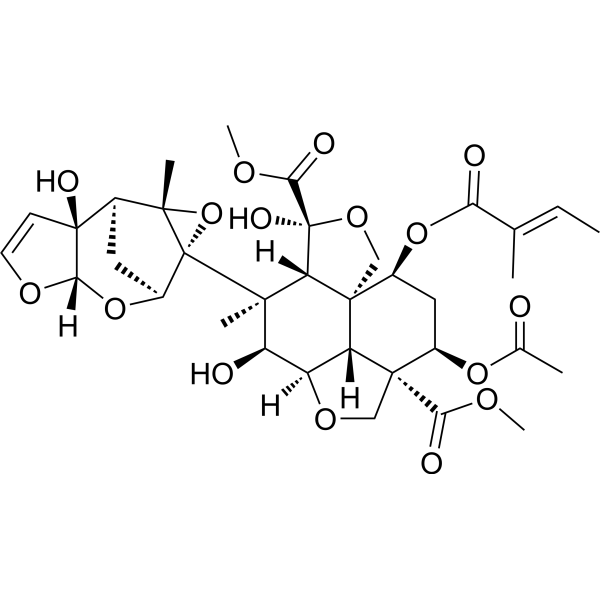
Azadirachtin is an oral active triterpenoid compound with anticancer, antimalarial, anti-inflammatory, and insecticidal activities. Azadirachtin induces cell apoptosis through the mitochondrial pathway (by inhibiting Bcl-2/Bax ratio or activating Apaf-1 and caspase-3) or through death receptors (by inhibiting TNFR activation). Additionally, Azadirachtin exerts its anti-inflammatory effects by inhibiting NF-кB signaling pathway activation, and it exhibits insecticidal activity by inducing apoptosis in insect cells.
For research use only. We do not sell to patients.
- Purity : 99.06%
- CAS No.: 11141-17-6
- Formula: C35H44O16
- Molecular Weight:720.71
-
Storage:
-20°C, protect from light
* In solvent : -80°C, 6 months; -20°C, 1 month (protect from light)

To place orders, for customer services and technical support, please contact: MedChemExpress USA
Tel: 609-228-6898 E-mail: [email protected] [email protected]


-
 Biological Activity
-
Chemical Information
-
Solvent & Solubility
- Protocols
- Purity & Documentation
- References
-
 Help & FAQs


-
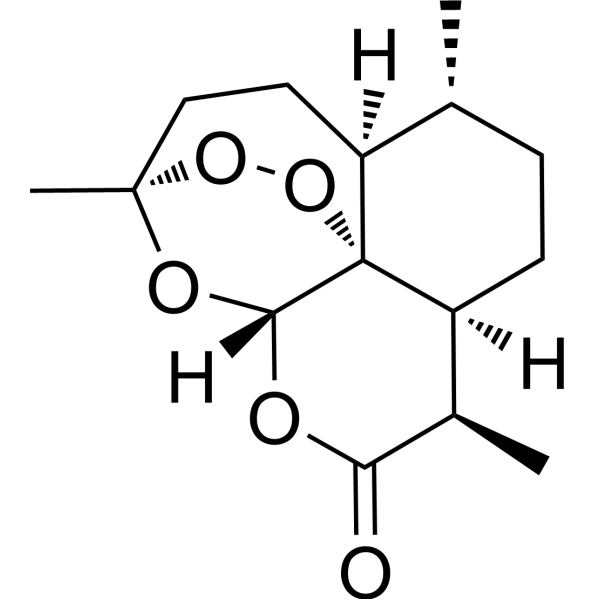
HY-B0094
ArtemisininParasite Inhibitor -
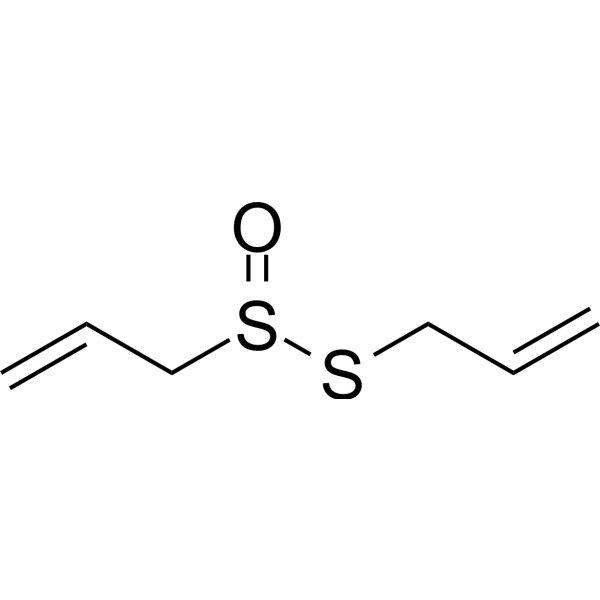
HY-N0315
AllicinBacterial Inhibitor -
HY-K1090
Cytotoxicity LDH Assay Kit -
HY-13861
GW7647PPAR Agonist -

HY-126741R
Azadirachtin (Standard)Insecticide -
HY-13992
AP20187FKBP Dimerizer -
HY-106244
DOTATATEDOTA-Conjugated Peptide -
HY-117040
nor-Binaltorphimineκ-opioid receptor Antagonist -
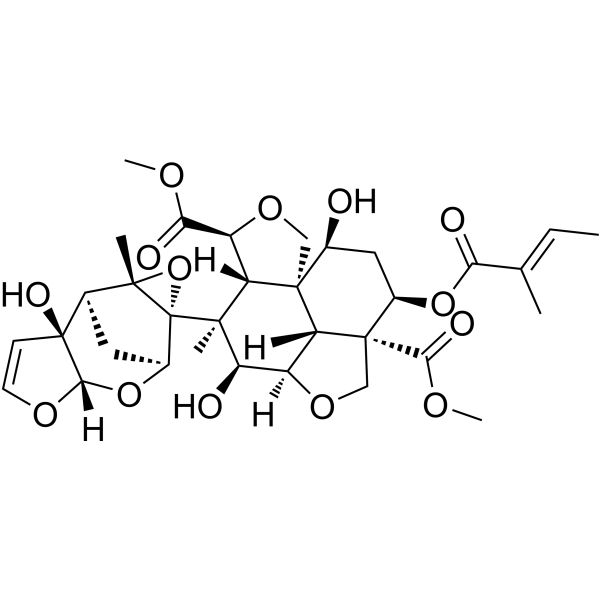
HY-133108
Azadirachtin BEBV-EA Inhibitor -
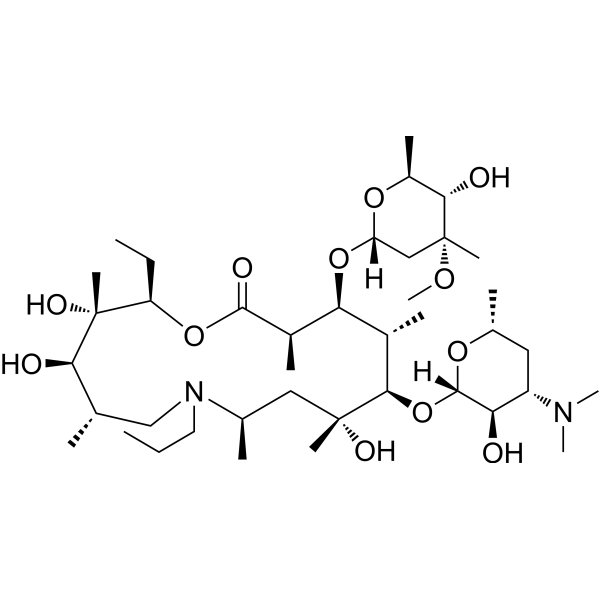
HY-108365
GamithromycinAntimicrobial Agent -
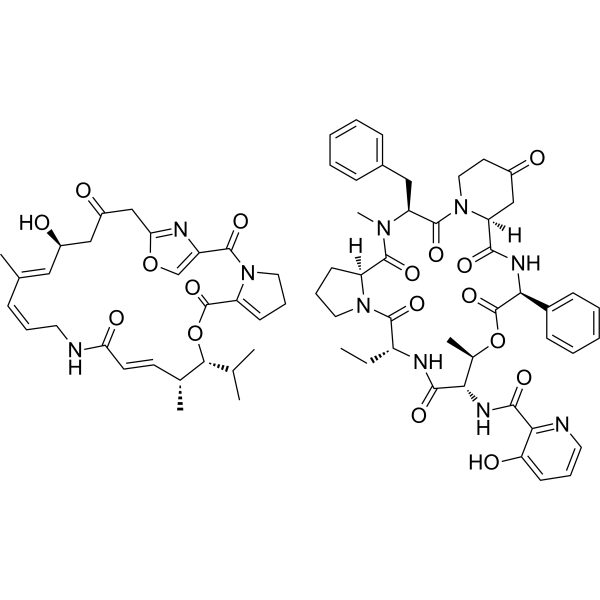
HY-112665
Virginiamycin ComplexAntibiotic -
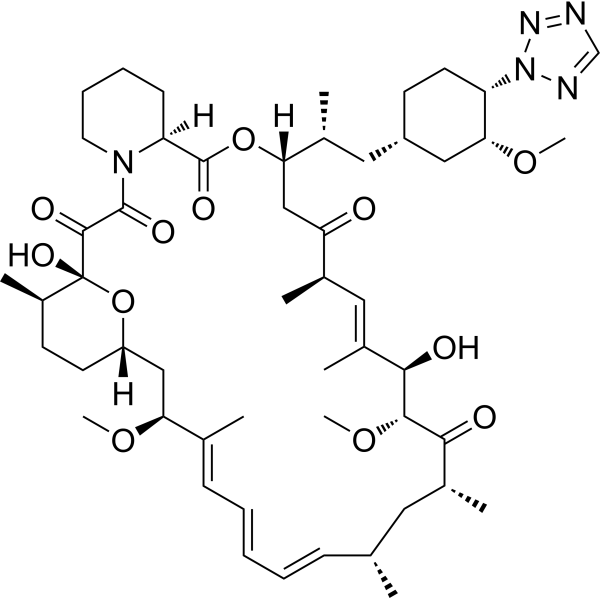
HY-12424A
42-(2-Tetrazolyl)rapamycinRapamycin Analog Prodrug
Publications Citing Use of MedChemExpress (MCE) Azadirachtin
MoreAll Caspase Isoforms
MoreAll Parasite Isoforms
More

Biological Activity
Description
IC50 & Target
|
Caspase 3 |
In Vitro
Azadirachtin (3-24 μM, 6 h) exerts its anti-inflammatory effects in Retinoic acid (HY-14649)-induced A549 (lung carcinoma) cells by inhibiting the NF-κB signaling pathway[3]. Azadirachtin (135 μM, 24 h) induces cell cycle arrest and mitochondria-mediated apoptosis in human cervical cancer (HeLa) cells[5]. Azadirachtin (50 μg/mL, 22-24 h) inhibits the early sporogonic development of Plasmodium berghei and blocks its transmission effect[6].
MedChemExpress (MCE) has not independently confirmed the accuracy of these methods. They are for reference only. Further protocols information, click here.
-
Cell Line:Retinoic acid (HY-14649) -induced human lung carcinoma (A549) cells
-
Concentration:0, 3, 6, 12, 24 μM
-
Incubation Time:6 h
-
Result:Inhibited Retinoic acid (HY-14649)-induced NF-κB-dependent gene (ICAM1 (intercellular adhesion molecule 1) and cox2) expression
In Vivo
MedChemExpress (MCE) has not independently confirmed the accuracy of these methods. They are for reference only.
-
Animal Model:DMBA (HY-W011845)-induced hamster buccal pouch (HBP) carcinoma model[4]
-
Dosage:10 μg/kg
-
Administration:Intragastric administration (i.g.), once daily, 3 days a week for 14 weeks
-
Result:Significantly decreased the expression of CYP1A1, CYP1B1 and 8-OHdG and up-regulated RECK expression. Significantly enhanced GSH and the activities of all the antioxidant enzymes. Decreased phase I enzyme activities and elevated phase II enzyme activities in the pouch.
Clinical Trial
| NCT Number | Sponsor | Condition | Start Date |
Phase

|
|---|---|---|---|---|
| NCT01329991 | Plexxikon| | 2011-05 | PHASE1 |


Chemical Information
-
CAS No. 11141-17-6
-
Appearance Solid
-
Molecular Weight 720.71
-
Formula C35H44O16
-
Color White to light yellow
-
SMILES
C[C@@]1([C@@]([C@@]2(O)C(OC)=O)([H])[C@]([C@H](C[C@H]3OC(C)=O)OC(/C(C)=C/C)=O)(CO2)[C@@]4([H])[C@](OC[C@@]43C(OC)=O)([H])[C@H]1O)[C@]([C@@H](O[C@]5([H])OC=C6)C[C@H]7[C@]56O)(O8)[C@]78C
-
Structure Classification
-
Initial Source
-
Shipping
Room temperature in continental US; may vary elsewhere.
-
Storage
-20°C, protect from light
* In solvent : -80°C, 6 months; -20°C, 1 month (protect from light)


Publications (3)
-
Journal Impact Factor
-
Most Recent
-
J Agric Food Chem
Azadirachtin Induces Fat Body Apoptosis by Suppressing Caspase- 8 in the Fall Armyworm, Spodoptera frugiperda. [Abstract]2024 Sep 4;72(35):19323-19332. PMID: 39174876 -
J Agric Food Chem
Azadirachtin Inhibits Nuclear Receptor HR3 in the Prothoracic Gland to Block Larval Ecdysis in the Fall Armyworm, Spodoptera frugiperda. [Abstract]2023 Oct 25;71(42):15497-15505. PMID: 37843053 -
Insect Sci
Genetic and pharmacological inhibition of the Kir2A channel in diamondback moth exhibits ovicidal activity. [Abstract]2026 May 11. PMID: 42116718


Solvent & Solubility
In Vitro:
DMSO : ≥ 100 mg/mL (138.75 mM; Hygroscopic DMSO has a significant impact on the solubility of product, please use newly opened DMSO)
* "≥" means soluble, but saturation unknown.
Please refer to the solubility information to select the appropriate solvent. Once prepared, please aliquot and store the solution to prevent product inactivation from repeated freeze-thaw cycles.
Storage method and period of stock solution: -80°C, 6 months; -20°C, 1 month (protect from light). When stored at -80°C, please use it within 6 months. When stored at -20°C, please use it within 1 month.
Please refer to the solubility information to select the appropriate solvent. Once prepared, please aliquot and store the solution to prevent product inactivation from repeated freeze-thaw cycles.
Storage method and period of stock solution: -80°C, 6 months; -20°C, 1 month (protect from light). When stored at -80°C, please use it within 6 months. When stored at -20°C, please use it within 1 month.
Concentration (start) × Volume (start) = Concentration (final) × Volume (final)
In Vivo:
Select the appropriate dissolution method based on your experimental animal and administration route.
- For the following dissolution methods, please ensure to first prepare a clear stock solution using an In Vitro approach and then sequentially add co-solvents:
- To ensure reliable experimental results, the clarified stock solution can be appropriately stored based on storage conditions. As for the working solution for In Vivo experiments, it is recommended to prepare freshly and use it on the same day.
- The percentages shown for the solvents indicate their volumetric ratio in the final prepared solution. If precipitation or phase separation occurs during preparation, heat and/or sonication can be used to aid dissolution.
Add each solvent one by one: 10% DMSO 40% PEG300 5% Tween-80 45% Saline
Solubility: ≥ 2.5 mg/mL (3.47 mM); Clear solution
This protocol yields a clear solution of ≥ 2.5 mg/mL (saturation unknown).
Taking 1 mL working solution as an example, add 100 μL DMSO stock solution (25.0 mg/mL) to 400 μL PEG300, and mix evenly; then add 50 μL Tween-80 and mix evenly; then add 450 μL Saline to adjust the volume to 1 mL.
Preparation of Saline: Dissolve 0.9 g sodium chloride in ddH₂O and dilute to 100 mL to obtain a clear Saline solution.
Add each solvent one by one: 10% DMSO 90% (20% SBE-β-CD in Saline)
Solubility: ≥ 2.5 mg/mL (3.47 mM); Clear solution
This protocol yields a clear solution of ≥ 2.5 mg/mL (saturation unknown).
Taking 1 mL working solution as an example, add 100 μL DMSO stock solution (25.0 mg/mL) to 900 μL 20% SBE-β-CD in Saline, and mix evenly.
Preparation of 20% SBE-β-CD in Saline (4°C, storage for one week): 2 g SBE-β-CD powder is dissolved in 10 mL Saline, completely dissolve until clear.
In Vivo Dissolution Calculator
Please enter the basic information of animal experiments:
-
-
-
-
Recommended: Prepare an additional quantity of animals to account for potential losses during experiments.
Please enter your animal formula composition:
-
%DMSO +
Recommended: Keep the proportion of DMSO in working solution below 2% if your animal is weak.
-
%+
-
+%Tween-80 + +
-
%Saline +
The co-solvents required include: DMSO, . All of co-solvents are available by MedChemExpress (MCE). , Tween 80. All of co-solvents are available by MedChemExpress (MCE).
Working solution concentration: 0.22 mg/mL
Method for preparing stock solution: mg drug dissolved in μL DMSO. Stock solution concentration: mg/mL. * In solvent : -80°C, 6 months; -20°C, 1 month (protect from light)
1. Take μL DMSO stock solution;
2. Add μL .
μL , mix evenly;
3. Then add μL Tween 80, mix evenly;
4. Then add μL
Please ensure that the stock solution in the first step is dissolved to a clear state, and add co-solvents in sequence. You can use ultrasonic heating (ultrasonic cleaner, recommended frequency 20-40 kHz), vortexing, etc. to assist dissolution.

Protocols
-
Apoptosis
Apoptosis, also called programmed cell death, is generally characterized by distinct morphological characteristics.
-
TUNEL staining for apoptotic DNA fragmentation
TUNEL staining detects DNA strand breaks by using terminal deoxynucleotidyl transferase to add labeled nucleotides to exposed 3′-OH DNA termini, generating either microscopic staining in fixed cells or tissue sections, or fluorescence/cytometric signal in cell suspensions. TUNEL positivity reflects DNA fragmentation but should not be interpreted alone as definitive apoptosis, because TUNEL can also label necrotic, autolytic, mechanically damaged, or DNA-repair-associated DNA breaks.
-
Annexin V plus membrane-impermeant dye apoptosis staining
Annexin V-based apoptosis assays rely on the detection of phosphatidylserine (PS) externalization from the inner leaflet of the plasma membrane to the outer leaflet, an early biochemical hallmark of apoptosis. Fluorescently labeled Annexin V binds PS in a calcium-dependent manner, enabling identification of early apoptotic cells by flow cytometry or fluorescence microscopy. When combined with a membrane-impermeant DNA-binding dye (e. g. , propidium iodide), this approach allows discrimination between viable (Annexin V−/dye−), early apoptotic (Annexin V+/dye−), and late apoptotic or necrotic (Annexin V+/dye+) cell populations by assessing membrane integrity and PS exposure.
-
Protocol for Phospho-flow cytometry
Phospho-flow cytometry detects intracellular phosphorylated signaling proteins in single cells using phospho-specific antibodies after rapid fixation and permeabilization; the fluorescence intensity reflects phosphorylation state and therefore kinase-pathway activation, inhibition, or drug response in defined cell subsets. Unlike Western blot, phospho-flow preserves single-cell resolution and can measure signaling heterogeneity in cancer cells, primary immune cells, dissociated mouse tumors, macrophages, organoid-derived cells, and drug-screening samples when validated antibodies and fixation/permeabilization conditions are used.
-
Apoptosis Solutions
Apoptosis is a regulated, generally non-lytic cell-death pathway that removes unwanted, damaged, infected, or abnormal cells through coordinated morphological changes, caspase activation, DNA fragmentation, and membrane remodeling. The intrinsic apoptosis pathway is controlled mainly by mitochondrial outer membrane permeabilization, BCL-2 family proteins, cytochrome c release, apoptosome formation, caspase-9 activation, and downstream executioner caspase-3/7 activation. The extrinsic apoptosis pathway is initiated by death receptors such as Fas, TNFR, and TRAIL receptors, which recruit adaptor proteins and activate caspase-8 before engaging executioner caspases or mitochondrial amplification through BID cleavage. Apoptosis is linked to many phenotypes, including cancer cell killing, tissue homeostasis, immune regulation, neurodegeneration, infection response, and treatment-induced cytotoxicity; unresolved questions include how apoptosis interacts with necroptosis, pyroptosis, ferroptos
-
Research Protocol for Inflammation-related Diseases
The NLRP3 inflammasome is a cytosolic innate immune signaling platform that integrates priming signals and danger-signal activation to promote caspase-1 activation, maturation of IL-1β and IL-18, and gasdermin D-mediated pyroptotic cell death. The core experimental logic is to determine whether inflammatory disease phenotypes are driven by increased NLRP3 expression, ASC-containing inflammasome assembly, caspase-1 cleavage, GSDMD cleavage, and extracellular release of IL-1β/IL-18 rather than by nonspecific cell injury alone. The pathway is strongly linked to inflammation-related disease phenotypes because monosodium urate crystals activate NALP3/NLRP3 inflammasome signaling in gout-like crystal inflammation, cholesterol crystals activate NLRP3 inflammasomes in atherogenesis models, and DSS-induced intestinal inflammation has been reported to involve NLRP3 inflammasome activity. However, experimental colitis studies also show context-dependent protective effects of NLRP3 inflammasome co


Purity & Documentation
-
Data Sheet (289 KB)
-
SDS (537 KB)
- English - EN (537 KB)
- Français - FR (537 KB)
- Deutsch - DE (537 KB)
- Norwegian - NO (537 KB)
- Español - ES (537 KB)
- Swedish - SV (537 KB)
- Italian - IT (537 KB)
- Korean - KR (537 KB)
- Portuguese - PT (537 KB)
-
Handling Instructions (2659 KB)
References
[1]. Shu B, Jia J, Zhang J, Sethuraman V, Yi X, Zhong G. DnaJ homolog subfamily A member1 (DnaJ1) is a newly discovered anti-apoptotic protein regulated by azadirachtin in Sf9 cells. BMC Genomics. 2018;19(1):413. Published 2018 May 29. [Content Brief]
[2]. Fernandes SR, et al. Chemistry, bioactivities, extraction and analysis of azadirachtin: State-of-the-art. Fitoterapia. 2019 Apr;134:141-150. [Content Brief]
[3]. Thoh M, et al. Azadirachtin interacts with retinoic acid receptors and inhibits retinoic acid-mediated biological responses. J Biol Chem. 2011 Feb 11;286(6):4690-702. doi: 10.1074/jbc.M110.169334. Epub 2010 Dec 2. Retraction in: J Biol Chem. 2013 Mar 22;288(12):8563. [Content Brief]
[4]. Priyadarsini RV, et al. The neem limonoids azadirachtin and nimbolide inhibit hamster cheek pouch carcinogenesis by modulating xenobiotic-metabolizing enzymes, DNA damage, antioxidants, invasion and angiogenesis. Free Radic Res. 2009 May;43(5):492-504. [Content Brief]
[5]. Priyadarsini RV, et al. The neem limonoids azadirachtin and nimbolide induce cell cycle arrest and mitochondria-mediated apoptosis in human cervical cancer (HeLa) cells. [Content Brief]
[6]. Tapanelli S, et al. Transmission blocking effects of neem (Azadirachta indica) seed kernel limonoids on Plasmodium berghei early sporogonic development. Fitoterapia. 2016 Oct;114:122-126. [Content Brief]


Complete Stock Solution Preparation Table
Please refer to the solubility information to select the appropriate solvent. Once prepared, please aliquot and store the solution to prevent product inactivation from repeated freeze-thaw cycles.
Storage method and period of stock solution: -80°C, 6 months; -20°C, 1 month (protect from light). When stored at -80°C, please use it within 6 months. When stored at -20°C, please use it within 1 month.
| Optional Solvent | Concentration Solvent Mass | 1 mg | 5 mg | 10 mg | 25 mg |
|---|---|---|---|---|---|
| DMSO | 1 mM | 1.3875 mL | 6.9376 mL | 13.8752 mL | 34.6880 mL |
| 5 mM | 0.2775 mL | 1.3875 mL | 2.7750 mL | 6.9376 mL | |
| 10 mM | 0.1388 mL | 0.6938 mL | 1.3875 mL | 3.4688 mL | |
| 15 mM | 0.0925 mL | 0.4625 mL | 0.9250 mL | 2.3125 mL | |
| 20 mM | 0.0694 mL | 0.3469 mL | 0.6938 mL | 1.7344 mL | |
| 25 mM | 0.0555 mL | 0.2775 mL | 0.5550 mL | 1.3875 mL | |
| 30 mM | 0.0463 mL | 0.2313 mL | 0.4625 mL | 1.1563 mL | |
| 40 mM | 0.0347 mL | 0.1734 mL | 0.3469 mL | 0.8672 mL | |
| 50 mM | 0.0278 mL | 0.1388 mL | 0.2775 mL | 0.6938 mL | |
| 60 mM | 0.0231 mL | 0.1156 mL | 0.2313 mL | 0.5781 mL | |
| 80 mM | 0.0173 mL | 0.0867 mL | 0.1734 mL | 0.4336 mL | |
| 100 mM | 0.0139 mL | 0.0694 mL | 0.1388 mL | 0.3469 mL |


Azadirachtin Related Classifications
HY-126741 Related Classifications
 Powered by Bioz