



Dihydrorotenone

Based on 1 Customer Validation
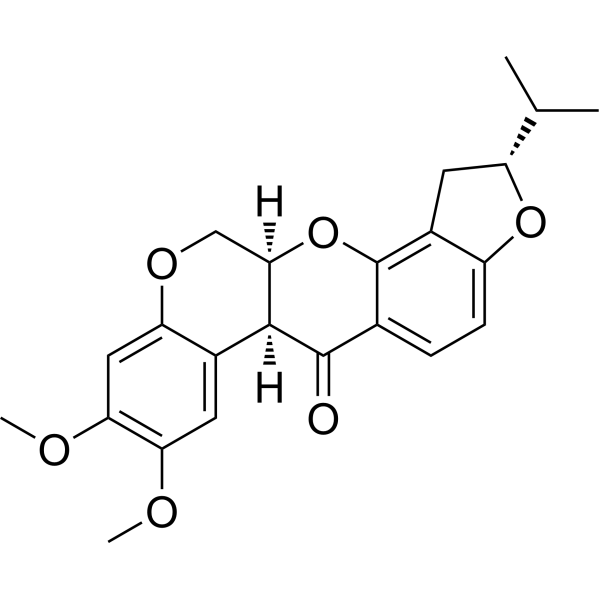
Dihydrorotenone is an insecticide and irreversible inhibitor of mitochondrial complex I. Dihydrorotenone may induce Parkinson's disease. Dihydrorotenone induces apoptosis in human plasma cells by triggering endoplasmic reticulum stress and activating the p38 signaling pathway. The oral LD50 of dihydrorotenone in rats is approximately 2.5 g/kg. Dihydrorotenone exhibits insecticide activity and cytotoxicity to plasma cells. Dihydrorotenone can be used to establish animal models of Parkinson's disease, safety assessment of natural pesticides, and potential cancer chemoprevention studies.
For research use only. We do not sell to patients.
- Purity : 99.66%
- CAS No.: 6659-45-6
- Formula: C23H24O6
- Molecular Weight:396.43
-
Storage:
4°C, protect from light
* In solvent : -80°C, 6 months; -20°C, 1 month (protect from light)

To place orders, for customer services and technical support, please contact: MedChemExpress USA
Tel: 609-228-6898 E-mail: [email protected] [email protected]


-
 Biological Activity
-
Chemical Information
-
Solvent & Solubility
- Protocols
- Purity & Documentation
- References
-
 Help & FAQs


-
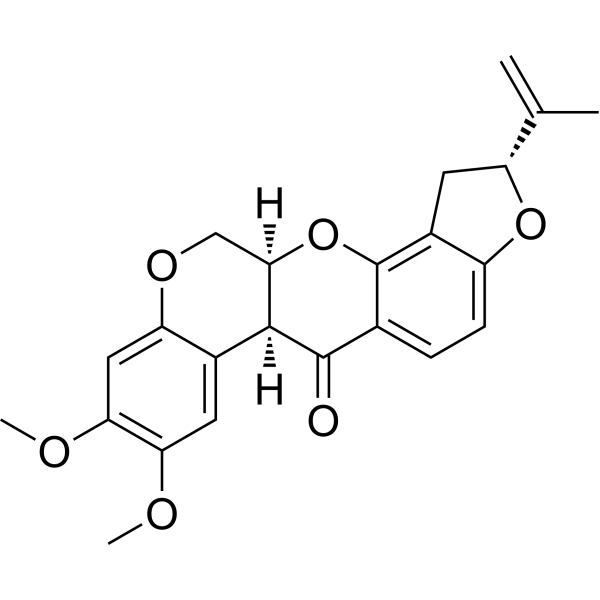
HY-B1756
RotenoneMitochondrial Complex I Inhibitor -
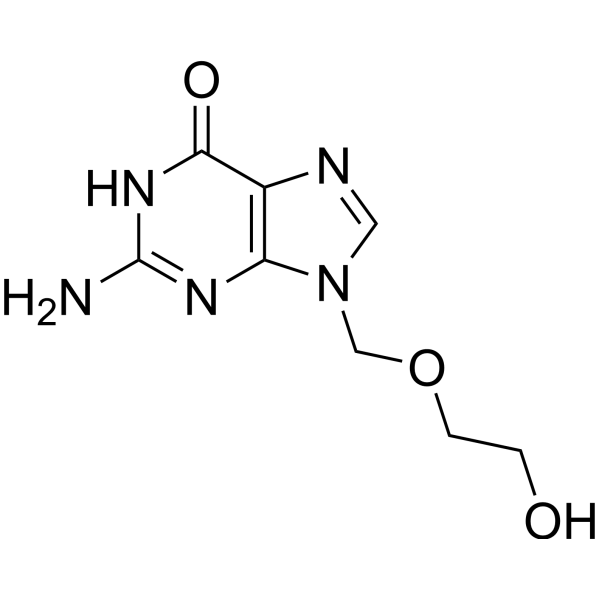
HY-17422
AcyclovirHSV Inhibitor -
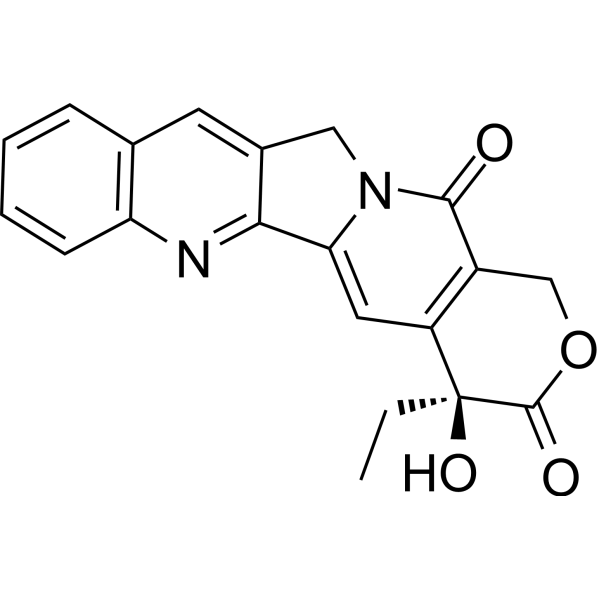
HY-16560
CamptothecinTopo I inhibitor -
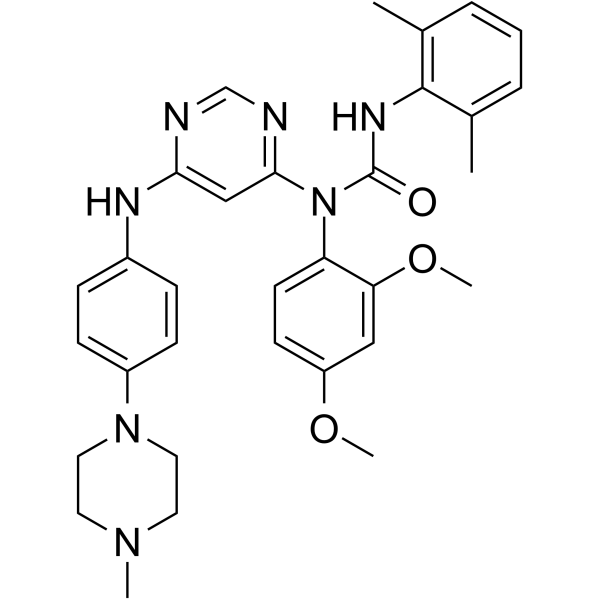
HY-15776
HG-9-91-01SIK Inhibitor -
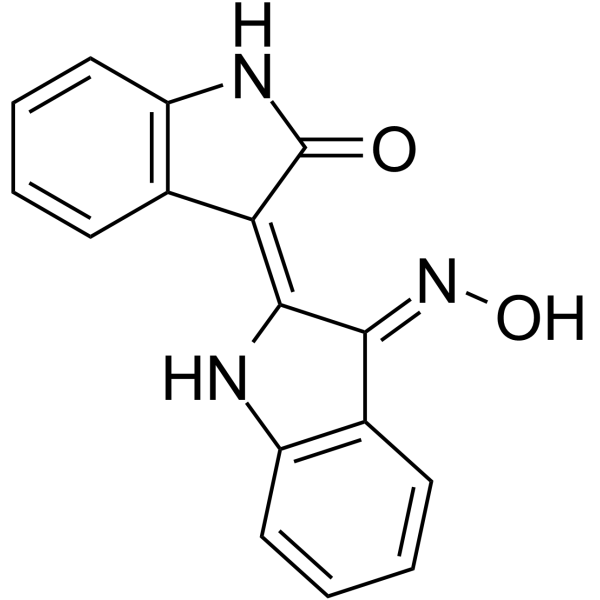
HY-19807
Indirubin-3'-monoximeGSK-3β Inhibitor -
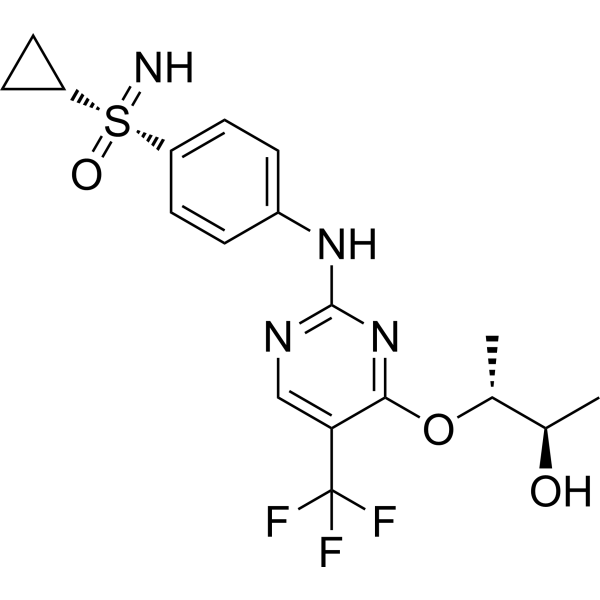
HY-13914
RoniciclibCDK Inhibitor -
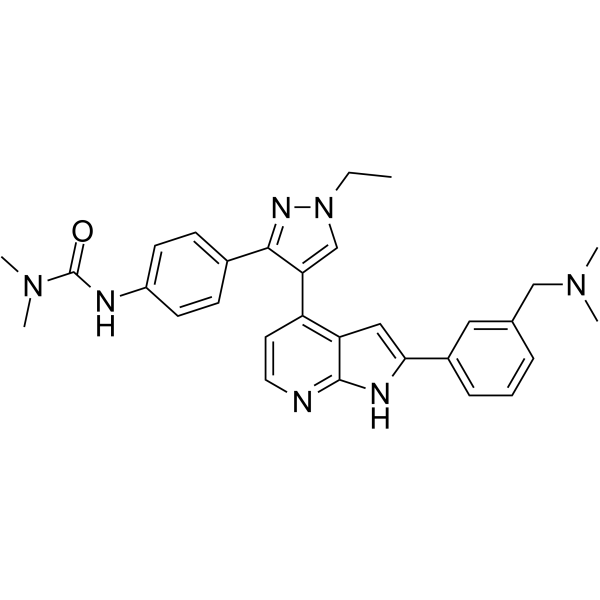
HY-70044
GSK-1070916Aurora B/C Inhibitor -
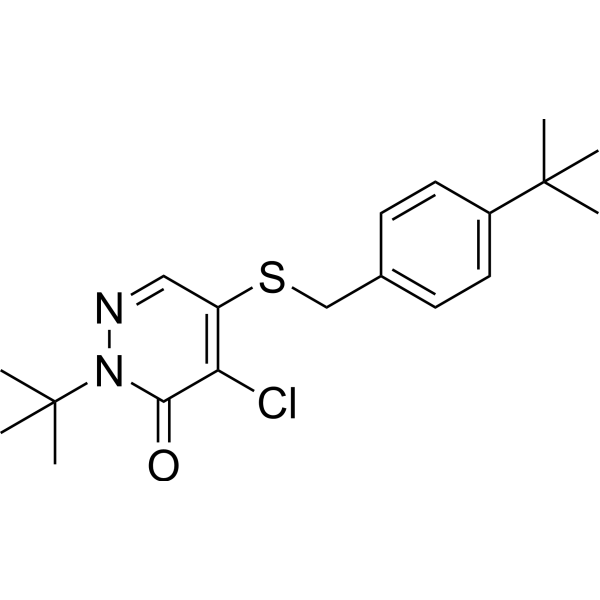
HY-B0817
PyridabenMETI Acaricide -
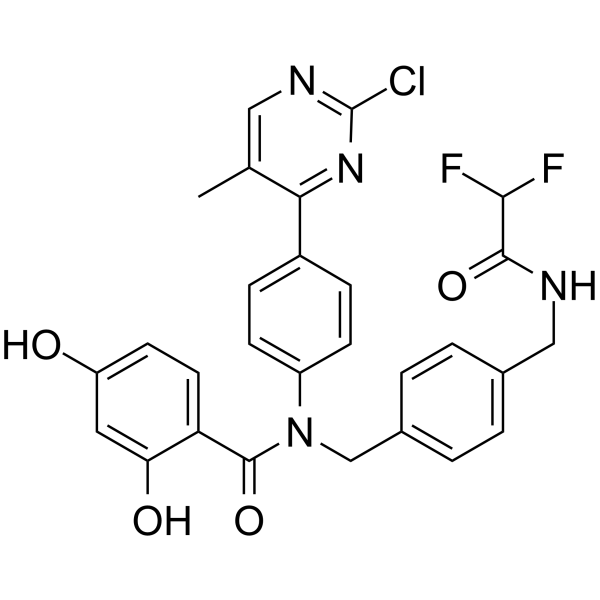
HY-12492
VER-246608 -
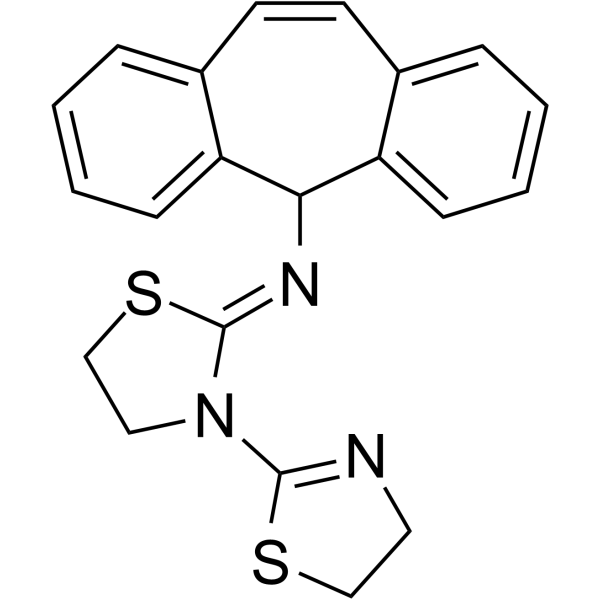
HY-113960
ERRα antagonist-1ERR Antagonist -
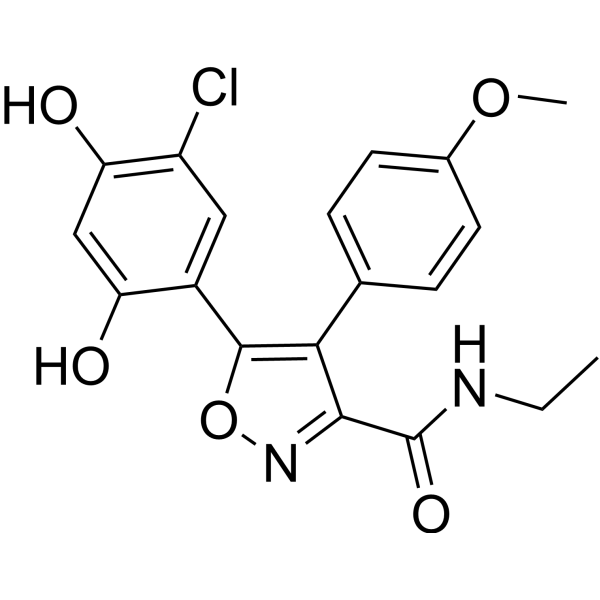
HY-15984
VER-50589Apoptosis Inducer -
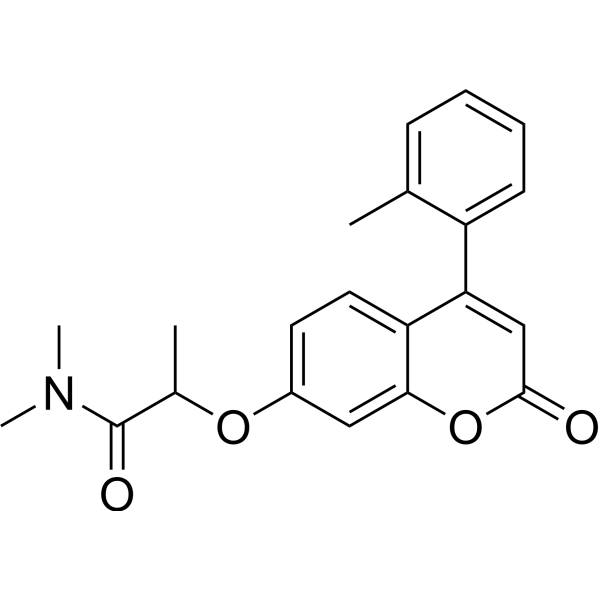
HY-134539
IMT1POLRMT Inhibitor


Biological Activity
Description
In Vitro
Dihydrorotenone (20 μM; 24 h) induces apoptosis in human plasma cell lines LP1, OPM2, KMS11 and U266 in a concentration-dependent manner, activates caspase-3, -8, -9 and downregulates anti-apoptotic proteins Bcl-2 and Mcl-1[1].
Dihydrorotenone (10 μM; 0.5 h or 24 h) causes mitochondrial membrane potential collapse in LP1 cells, and mitochondrial damage precedes apoptosis[1].
Dihydrorotenone (40 μM; 24 h) induces endoplasmic reticulum stress in LP1 and OPM2 cells, upregulates GRP78, ATF4, CHOP and caspase-12, and activates the p38 MAPK signaling pathway[1].
MedChemExpress (MCE) has not independently confirmed the accuracy of these methods. They are for reference only.
-
Cell Line:LP1, OPM2, KMS11, U266
-
Concentration:0, 5, 15, 30 μM
-
Incubation Time:24 h
-
Result:Increased Annexin V-FITC/PI-positive apoptotic cells in a concentration-dependent manner. For example, in LP1 cells, apoptotic rates rose from 6.63% (control) to 40.09% (30 μM). Caspase-3, -8, and -9 cleavage was induced, and pan-caspase inhibitor z-VAD-fmk partially blocked apoptosis.
In Vivo
Dihydrorotenone (0.001-0.032% diet; oral; for approximately 400 days) causes dose-dependent growth retardation in female albino rats (weaning period), loss of hepatocyte basophilia and granular dispersion at concentrations of 0.004% and above, and no significant histological changes at concentrations of 0.001-0.002%[3].
MedChemExpress (MCE) has not independently confirmed the accuracy of these methods. They are for reference only.
-
Animal Model:Female albino rats with chronic dietary toxicity model[3]
-
Dosage:0.001-0.032% DHR in diet (control diet: casein 10%, cornmeal 73%, etc.)
-
Administration:Continuous oral ingestion via diet, approximately 400 days
-
Result:0.001-0.002% DHR: No significant growth or histological changes.
0.004-0.016% DHR: Growth retardation evident from day 70, with progressive loss of hepatic cell basophilia and dispersed cytoplasmic granules.
0.032% DHR: Immediate growth inhibition, severe hepatic cytological changes, and only 3/5 rats survived.
- Detection of Apoptosis
- TUNEL staining for apoptotic DNA fragmentation
- Cell Cytotoxicity Assay
- Mammalian live/dead viability and cytotoxicity staining
- Annexin V plus membrane-impermeant dye apoptosis staining
- Human pluripotent stem cell midbrain dopaminergic neuron differentiation
- Apoptosis Solutions
- Acute Systemic Toxicity Study
- Cell Viability Determination by MTT Colorimetric Assay


Chemical Information
-
CAS No. 6659-45-6
-
Appearance Solid
-
Molecular Weight 396.43
-
Formula C23H24O6
-
Color White to off-white
-
SMILES
O=C1[C@]2([H])[C@](COC3=CC(OC)=C(OC)C=C32)([H])OC4=C5C(O[C@@H](C(C)C)C5)=CC=C14
-
Structure Classification
-
Initial Source
-
Shipping
Room temperature in continental US; may vary elsewhere.
-
Storage
4°C, protect from light
* In solvent : -80°C, 6 months; -20°C, 1 month (protect from light)


Solvent & Solubility
In Vitro:
DMSO : 25 mg/mL (63.06 mM; Need ultrasonic; Hygroscopic DMSO has a significant impact on the solubility of product, please use newly opened DMSO)
Please refer to the solubility information to select the appropriate solvent. Once prepared, please aliquot and store the solution to prevent product inactivation from repeated freeze-thaw cycles.
Storage method and period of stock solution: -80°C, 6 months; -20°C, 1 month (protect from light). When stored at -80°C, please use it within 6 months. When stored at -20°C, please use it within 1 month.
Please refer to the solubility information to select the appropriate solvent. Once prepared, please aliquot and store the solution to prevent product inactivation from repeated freeze-thaw cycles.
Storage method and period of stock solution: -80°C, 6 months; -20°C, 1 month (protect from light). When stored at -80°C, please use it within 6 months. When stored at -20°C, please use it within 1 month.
Concentration (start) × Volume (start) = Concentration (final) × Volume (final)
In Vivo:
Select the appropriate dissolution method based on your experimental animal and administration route.
- For the following dissolution methods, please ensure to first prepare a clear stock solution using an In Vitro approach and then sequentially add co-solvents:
- To ensure reliable experimental results, the clarified stock solution can be appropriately stored based on storage conditions. As for the working solution for In Vivo experiments, it is recommended to prepare freshly and use it on the same day.
- The percentages shown for the solvents indicate their volumetric ratio in the final prepared solution. If precipitation or phase separation occurs during preparation, heat and/or sonication can be used to aid dissolution.
In Vivo Dissolution Calculator
Please enter the basic information of animal experiments:
-
-
-
-
Recommended: Prepare an additional quantity of animals to account for potential losses during experiments.
Please enter your animal formula composition:
-
%DMSO +
Recommended: Keep the proportion of DMSO in working solution below 2% if your animal is weak.
-
%+
-
+%Tween-80 + +
-
%Saline +
The co-solvents required include: DMSO, . All of co-solvents are available by MedChemExpress (MCE). , Tween 80. All of co-solvents are available by MedChemExpress (MCE).
Working solution concentration: 0.22 mg/mL
Method for preparing stock solution: mg drug dissolved in μL DMSO. Stock solution concentration: mg/mL. * In solvent : -80°C, 6 months; -20°C, 1 month (protect from light)
1. Take μL DMSO stock solution;
2. Add μL .
μL , mix evenly;
3. Then add μL Tween 80, mix evenly;
4. Then add μL
Please ensure that the stock solution in the first step is dissolved to a clear state, and add co-solvents in sequence. You can use ultrasonic heating (ultrasonic cleaner, recommended frequency 20-40 kHz), vortexing, etc. to assist dissolution.


Purity & Documentation
-
Data Sheet (278 KB)
-
SDS (643 KB)
- English - EN (643 KB)
- Français - FR (643 KB)
- Deutsch - DE (643 KB)
- Norwegian - NO (643 KB)
- Español - ES (643 KB)
- Swedish - SV (643 KB)
- Italian - IT (643 KB)
- Korean - KR (643 KB)
- Portuguese - PT (643 KB)
-
Handling Instructions (2659 KB)
References
[1]. Zhang J, et al. The natural pesticide dihydrorotenone induces human plasma cell apoptosis by triggering endoplasmic reticulum stress and activating p38 signaling pathway. PLoS One. 2013 Jul 26;8(7):e69911. [Content Brief]
[2]. Caboni P, et al. Rotenone, deguelin, their metabolites, and the rat model of Parkinson's disease. Chem Res Toxicol. 2004 Nov;17(11):1540-8. [Content Brief]
[3]. AMBROSE AM, et al. Toxicological and pharmacological studies on dihydrorotenone. J Am Pharm Assoc Am Pharm Assoc. 1953 Jun;42(6):364-6. [Content Brief]


Complete Stock Solution Preparation Table
Please refer to the solubility information to select the appropriate solvent. Once prepared, please aliquot and store the solution to prevent product inactivation from repeated freeze-thaw cycles.
Storage method and period of stock solution: -80°C, 6 months; -20°C, 1 month (protect from light). When stored at -80°C, please use it within 6 months. When stored at -20°C, please use it within 1 month.
| Optional Solvent | Concentration Solvent Mass | 1 mg | 5 mg | 10 mg | 25 mg |
|---|---|---|---|---|---|
| DMSO | 1 mM | 2.5225 mL | 12.6126 mL | 25.2251 mL | 63.0628 mL |
| 5 mM | 0.5045 mL | 2.5225 mL | 5.0450 mL | 12.6126 mL | |
| 10 mM | 0.2523 mL | 1.2613 mL | 2.5225 mL | 6.3063 mL | |
| 15 mM | 0.1682 mL | 0.8408 mL | 1.6817 mL | 4.2042 mL | |
| 20 mM | 0.1261 mL | 0.6306 mL | 1.2613 mL | 3.1531 mL | |
| 25 mM | 0.1009 mL | 0.5045 mL | 1.0090 mL | 2.5225 mL | |
| 30 mM | 0.0841 mL | 0.4204 mL | 0.8408 mL | 2.1021 mL | |
| 40 mM | 0.0631 mL | 0.3153 mL | 0.6306 mL | 1.5766 mL | |
| 50 mM | 0.0505 mL | 0.2523 mL | 0.5045 mL | 1.2613 mL | |
| 60 mM | 0.0420 mL | 0.2102 mL | 0.4204 mL | 1.0510 mL |


Dihydrorotenone Related Classifications
HY-N4202 Related Classifications
 Powered by Bioz