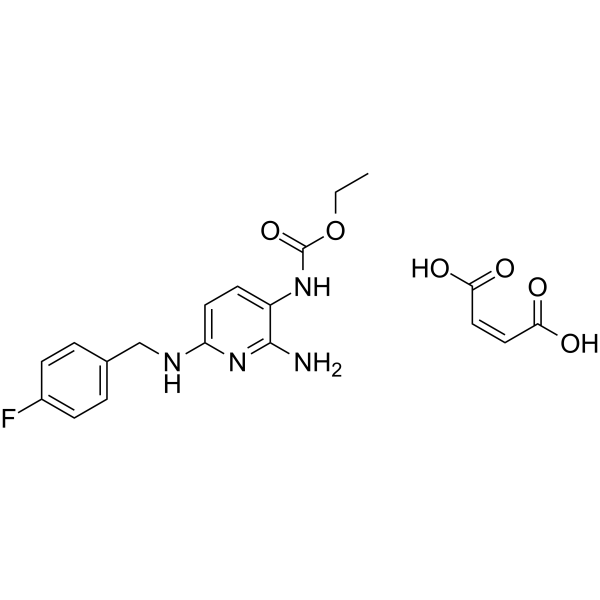
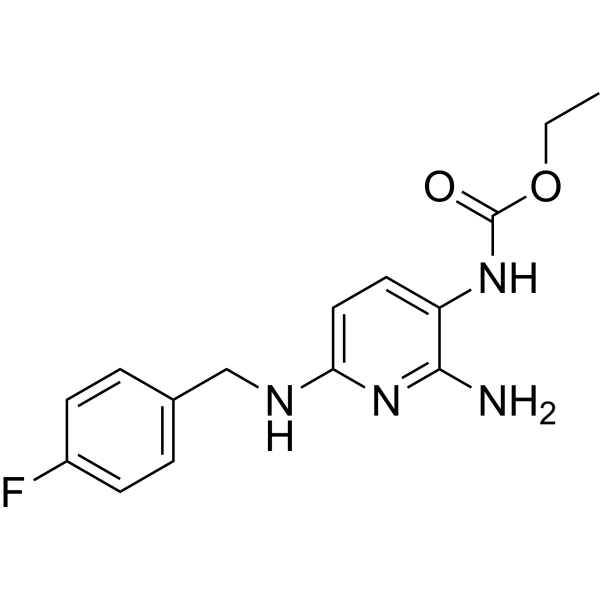
1. Search Result
Search Result
Results for "

muscle-relaxant

" in MedChemExpress (MCE) Product Catalog:

132

Inhibitors & Agonists

1

Biochemical Assay Reagents

4

Natural
Products

21

Isotope-Labeled Compounds

Cat. No. Product Name Target Research Areas Chemical Structure
  • HY-17440
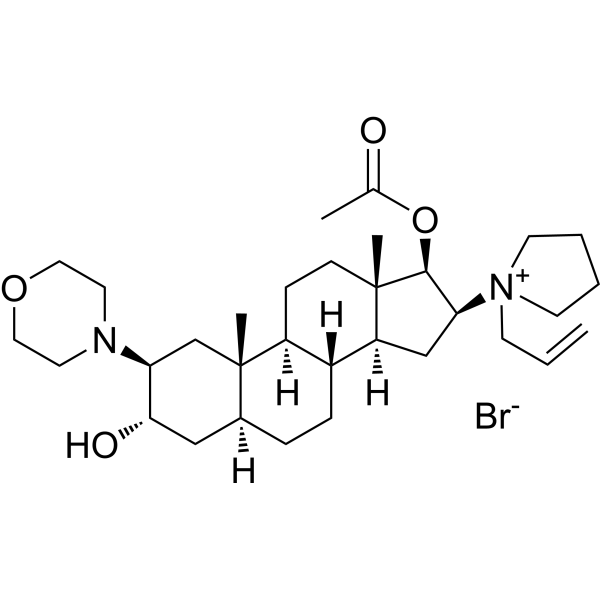
    Rocuronium Bromide
    2 Publications Verification

    ORG 9426 Bromide

    nAChR Neurological Disease Inflammation/Immunology Cancer
    Rocuronium Bromide (ORG 9426 Bromide) is an aminosteroid non-depolarizing neuromuscular blocker or muscle relaxant used in modern anaesthesia, to facilitate endotracheal intubation and to provide skeletal musclerelaxation during surgery or mechanical ventilation.
    Rocuronium Bromide
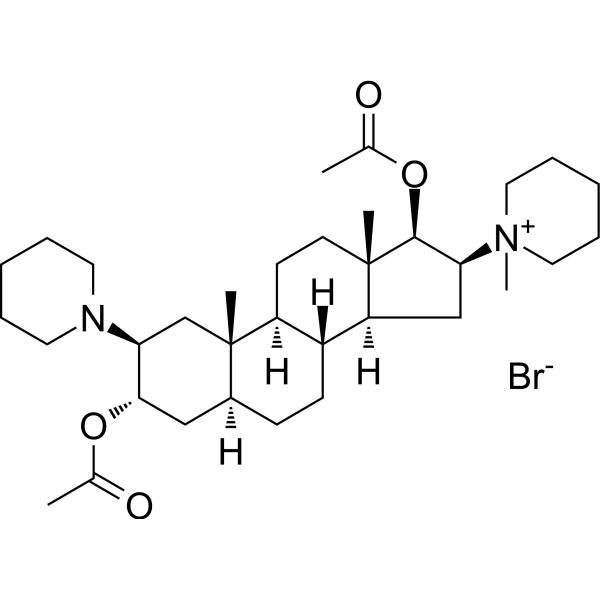
  • HY-B0118A

    ORG NC 45

    nAChR Neurological Disease Cancer
    Vecuronium (ORG NC 45) bromide is a non-depolarizing neuromuscular blocking agent that also acts as a nicotinic acetylcholine receptor (nAChR) inhibitor, a muscle relaxant, and can be used for pre-surgical anesthesia .
    Vecuronium bromide
  • HY-B0499A
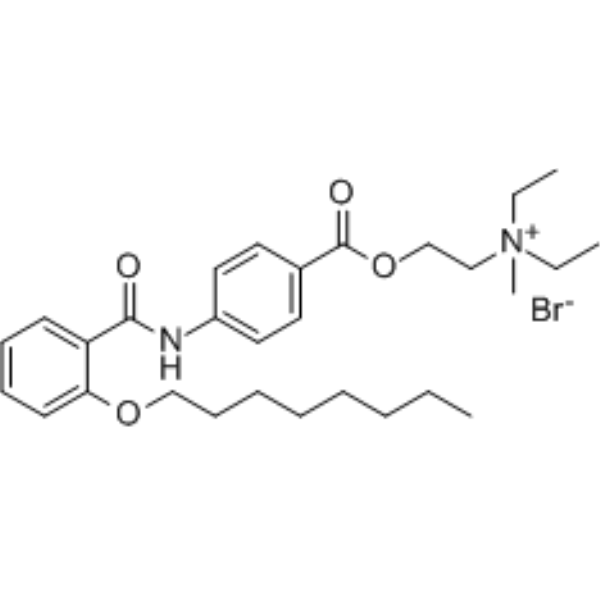
    Otilonium bromide
    3 Publications Verification

    Octylonium bromide; SP63

    mAChR Neurological Disease
    Otilonium bromide (OB) is an orally active mAChR inhibitor and smooth muscle relaxant which can interfere with the mobilization of calcium in intestinal smooth muscle, OB can be used for research of irritable bowel syndrome .
    Otilonium bromide
  • HY-W016221
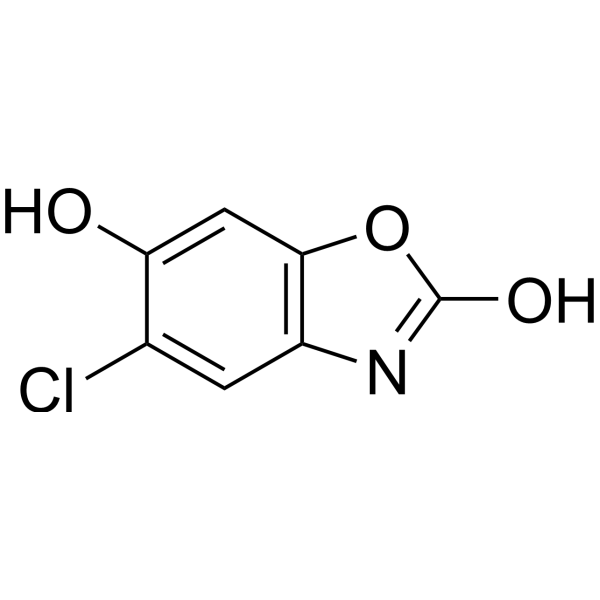
    6-Hydroxy Chlorzoxazone
    1 Publications Verification

    Drug Metabolite Inflammation/Immunology
    6-Hydroxy Chlorzoxazone is a metabolite of Chlorzoxazone (HY-B1462). Chlorzoxazone is a centrally acting muscle relaxant used to treat muscle spasm and the resulting pain or discomfort .
    6-Hydroxy Chlorzoxazone
  • HY-B1139
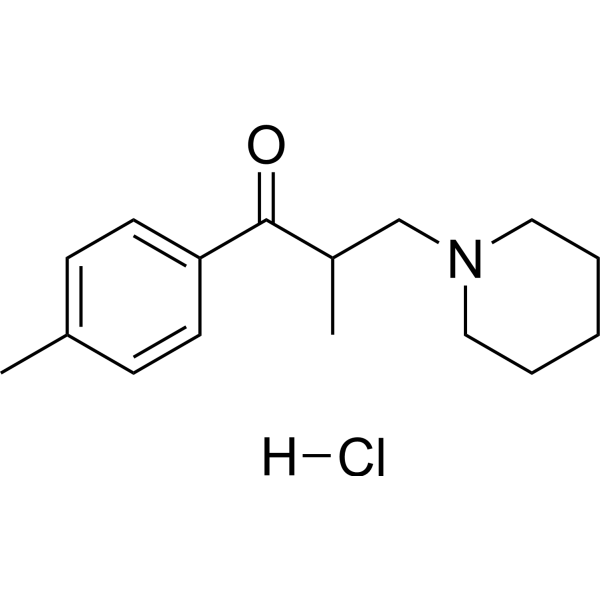
    Tolperisone hydrochloride
    2 Publications Verification

    Apoptosis Neurological Disease
    Tolperisone hydrochloride is a centrally acting muscle relaxant studied in neurological disorders causing pathological rhabdomyosclerosis (pyramidal tract injury, multiple sclerosis, myelopathy, encephalomyelitis), spastic paralysis, and other muscle dystonia-related Encephalopathy. Tolperisone hydrochloride also has antiviral activity .
    Tolperisone hydrochloride
  • HY-B0262
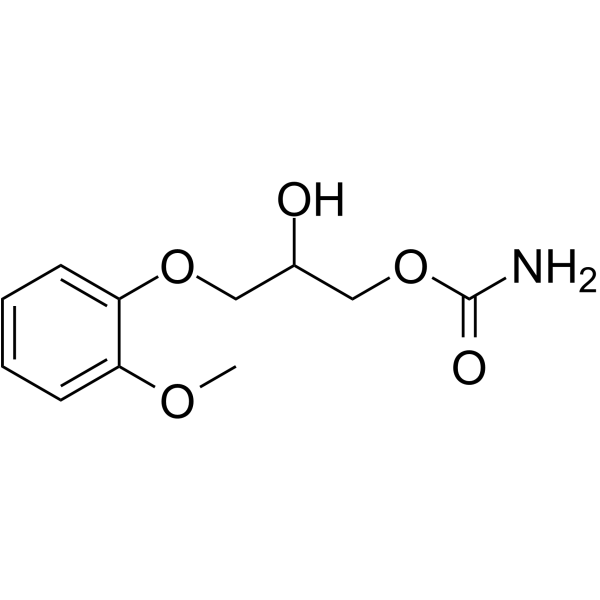
    Methocarbamol
    1 Publications Verification

    Sodium Channel Neurological Disease
    Methocarbamol is an orally active central muscle relaxant and blocks muscular Nav1.4 channel. Methocarbamol reversibly affects voltage dependence of inactivation of Nav1.4 channel. Methocarbamol has the potential for muscle spasms and pain syndromes research .
    Methocarbamol
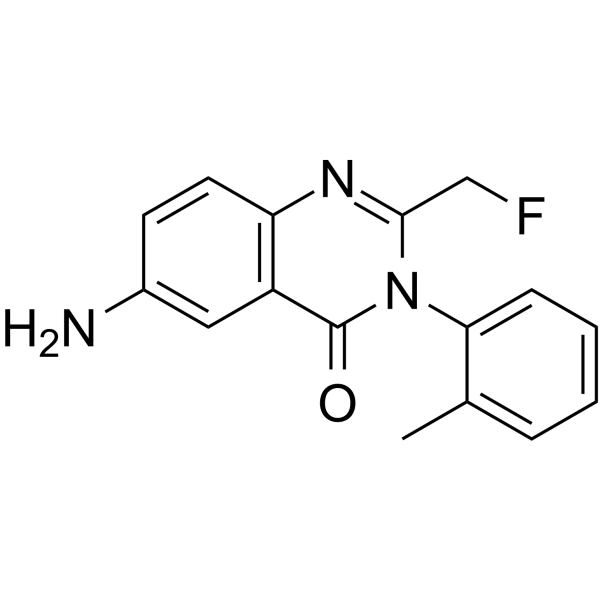
  • HY-B1833

    HQ-495

    GABA Receptor Neurological Disease
    Afloqualone (HQ-495) is an orally active central muscle relaxant and antivertiginous agent that can increase the sensitivity of GABA receptors in neurons of the lateral vestibular nucleus. Afloqualone (HQ-495) can be used in the research of low back pain and neck-arm-shoulder syndrome .
    Afloqualone
  • HY-B0353

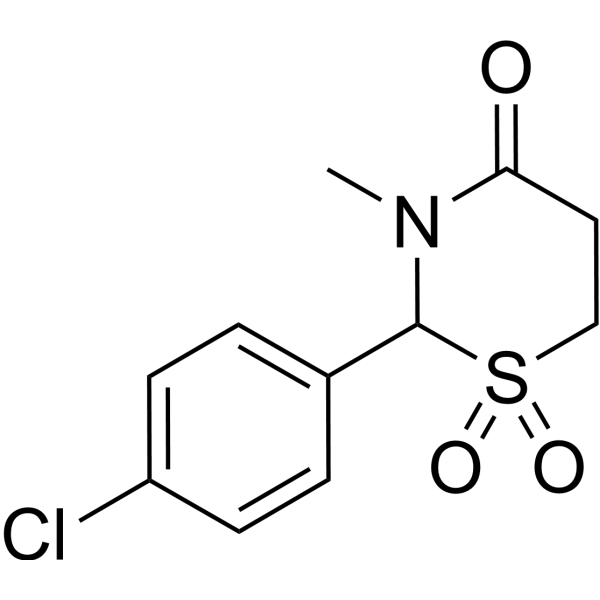
    GABA Receptor Neurological Disease
    Chlormezanone resembles benzodiazepine. The action of Chlormezanone is similar to benzodiazepine-type agents. Chlormezanone is used as an anxiolytic and a muscle relaxant.
    Chlormezanone
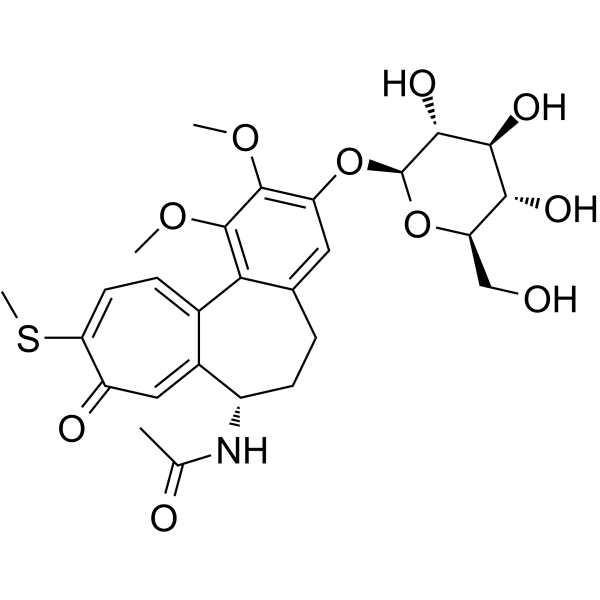
  • HY-N0301

    GABA Receptor Neurological Disease Inflammation/Immunology
    Thiocolchicoside is a competitive γ-aminobutyric acid type A (GABAA) receptor antagonist and glycine receptor agonist in the central nervous system. Thiocolchicoside is a semisynthetic sulfur derivative of colchicoside. Thiocolchicoside is a muscle relaxant and has anti-inflammatory, and analgesic properties .
    Thiocolchicoside
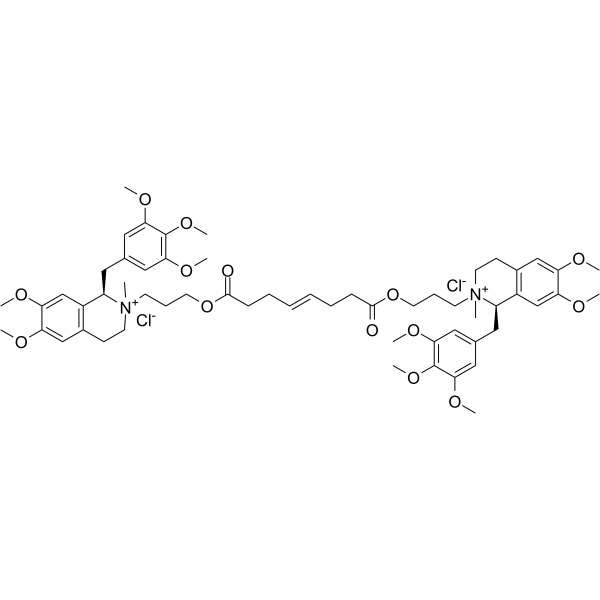
  • HY-B1700A

    nAChR Neurological Disease
    Mivacurium dichloride is a benzylisoquinoline derivative and is a short-acting non-depolarizing neuromuscular blocking agent and skeletal muscle relaxant. Mivacurium dichloride couples with the nAChR to reduce or inhibit the depolarizing effect of acetylcholine on the terminal disc of the muscle cell .
    Mivacurium dichloride
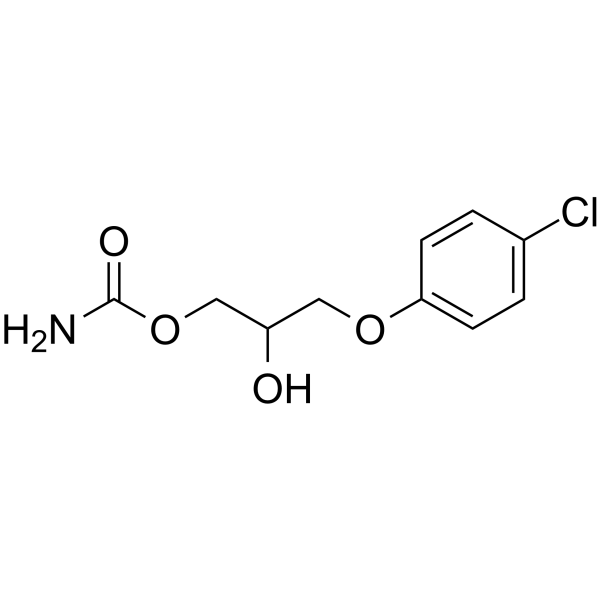
  • HY-107944

    Maolate; U 19646

    Drug Derivative Neurological Disease
    Chlorphenesin carbamate is a centrally acting skeletal muscle relaxant, as well as a derivate of Chlorphenesin (HY-A0133). Chlorphenesin carbamate can be used for the research of pain and discomfort related to skeletal muscle trauma and inflammation . Chlorphenesin carbamate is a selective blocker of polysynaptic pathways at the spinal and supra-spinal levels . Antinociceptive effect .
    Chlorphenesin carbamate
  • HY-101237

    Diheptylviologen dibromide

    Calcium Channel Cardiovascular Disease Neurological Disease
    DHBP dibromide is an inhibitor for calcium release and a muscle relaxant.
    DHBP dibromide
  • HY-B0416

    mAChR Adrenergic Receptor Neurological Disease
    Gallamine Triethiodide is a blood-brain barrier-permeable skeletal muscle relaxant. Gallamine Triethiodide induces skeletal muscle paralysis by blocking acetylcholine. Gallamine Triethiodide directly stimulates intracardiac β receptors. Gallamine Triethiodide prolongs the duration of afterdischarge in the cat cerebral cortex. Gallamine Triethiodide can be used in studies related to convulsive disorders .
    Gallamine Triethiodide
  • HY-B1343

    Cholinesterase (ChE) Neurological Disease
    Pridinol mesylate is an orally active, blood-brain permeable, muscarinic acetylcholine receptor (mAChR)-directed muscle relaxant. Pridinol mesylate reduces the conduction of impulses to spinal motor neurons and exerts muscle relaxant activity. Pridinol mesylate inhibits skeletal muscle contractures in diseases of both central and peripheral origin and can be used in research in the field of musculoskeletal diseases .
    Pridinol mesylate
  • HY-B0570
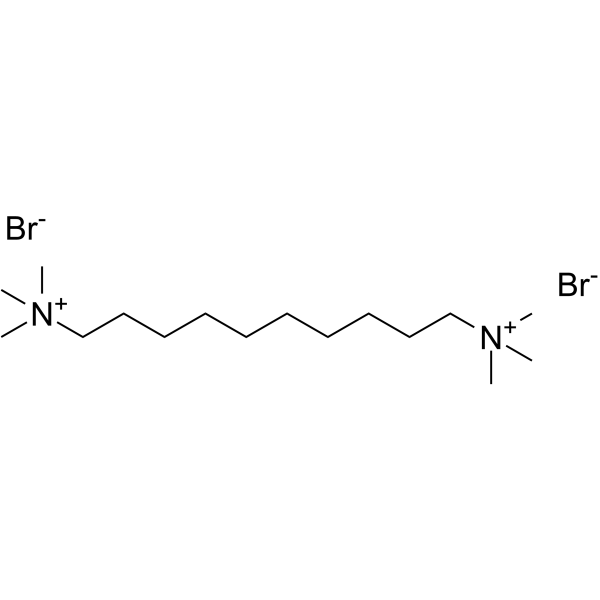
    Decamethonium Bromide
    1 Publications Verification

    nAChR Neurological Disease
    Decamethonium Bromide is an acetylcholine receptor inhibitor and muscle relaxant. Decamethonium Bromide first induces depolarization of skeletal muscles, and then binds to postsynaptic acetylcholine receptors to induce persistent paralysis .\n
    Decamethonium Bromide
  • HY-113920A
    Azumolene
    3 Publications Verification

    EU4093 free base

    Calcium Channel Metabolic Disease
    Azumolene (EU4093 free base), a Dantrolene analog, is a muscle relaxant. Azumolene is a ryanodine receptor (RyR) modulator and inhibits the calcium-release through ryanodine receptor. Azumolene can be used for malignant hyperthermia research .
    Azumolene
  • HY-N4323
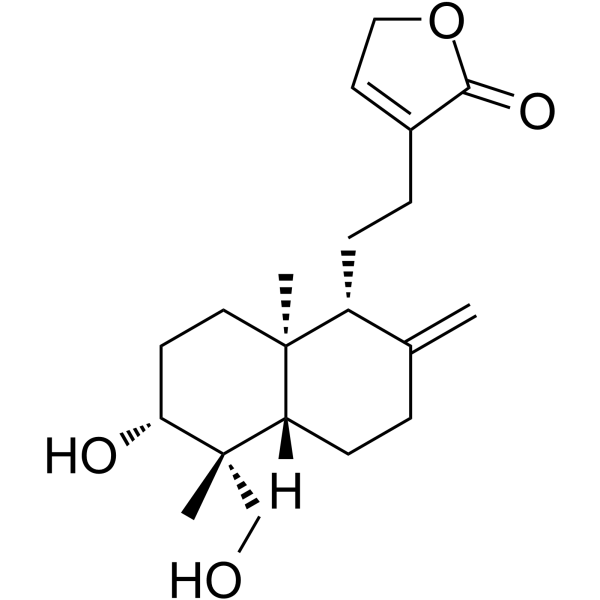
    14-Deoxyandrographolide
    1 Publications Verification

    Calcium Channel Apoptosis Caspase Neurological Disease Metabolic Disease
    14-Deoxyandrographolide is a diterpene with calcium channel blocking activity and acts as a uterine smooth muscle relaxant. 14-Deoxyandrographolide stimulates the release of nitric oxide (NO) in endothelial cells. 14-Deoxyandrographolide gradually desensitizes liver cells to TNF-α mediated apoptosis by inducing the release of TNFRSF1A .
    14-Deoxyandrographolide
  • HY-126112

    Drug Derivative Neurological Disease
    Mephenoxalone is a muscle relaxant with anti-anxiety activity. Mephenoxalone has neuropharmacologic activity in vivo. Mephenoxalone inhibits neuron transmission and can relax skeletal muscles by inhibiting the reflex arc .
    Mephenoxalone
  • HY-N2005

    Calcium Channel Apoptosis Cardiovascular Disease Inflammation/Immunology Cancer
    Cycleanine is a potent vascular selective Calcium antagonist. Cycleanine has analgesic, muscle relaxant and anti-inflammatory activities. Cycleanine has potential for anti-ovarian cancer acting through the apoptosis pathway .
    Cycleanine
  • HY-B2112

    mAChR Neurological Disease
    Valethamate bromide is an ester, serving as an effective rapidly acting anticholinergic antispasmodic and muscle relaxant. Valethamate bromide accelerates labor by improving cervical dilation. Valethamate bromide can significantly shorten the labor process and have fewer side effects .
    Valethamate bromide
  • HY-W016414

    Environmental Pollutants Endogenous Metabolite Cardiovascular Disease
    Triethyl phosphate is a versatile phosphate ester compound. Triethyl phosphate induces rapid and short-acting anesthesia, and exhibits hypotensive, smooth muscle relaxant, and cardiac inhibitory effects. Triethyl phosphate also modulates cholinergic toxicity; its anesthetic effect shows sex- and age-dependency in rodents, and it interacts with SKF 525-A (HY-B1311) to alter the duration of anesthesia .
    Triethyl phosphate
  • HY-B1230

    mAChR Neurological Disease
    Camylofin is an antimuscarinic, is a smooth muscle relaxant
    Camylofine
  • HY-B1462S1

    Cytochrome P450 Inflammation/Immunology
    Chlorzoxazone- 13C is the 13C labeled Chlorzoxazone . Chlorzoxazone is a centrally acting muscle relaxant used to treat muscle spasm and the resulting pain or discomfort .
    Chlorzoxazone-13C
  • HY-B1283

    iGluR Neurological Disease
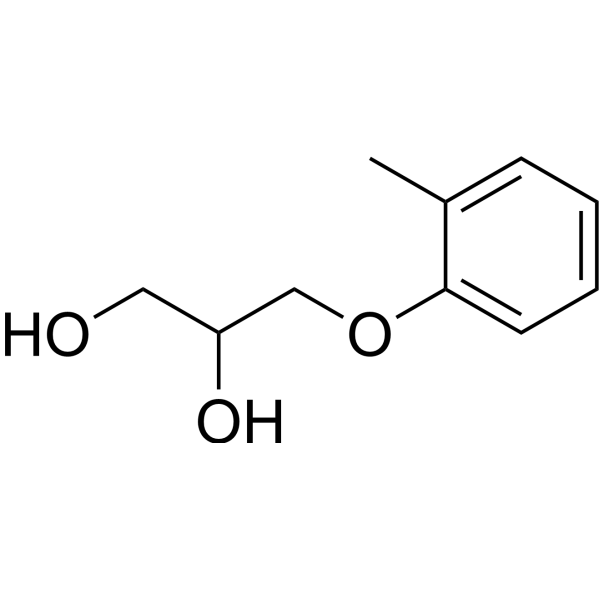
    Mephenesin is an NMDA receptor antagonist. Mephenesin is also a central muscle relaxant with antianxiety, muscle-paralyzing and anticonvulsant effects. Mephenesin acts directly on the skeletal muscle fibres to produce skeletal muscle relaxation. Mephenesin is promising for research of spasticity or painful muscle spasm .
    Mephenesin
  • HY-B1462S

    Cytochrome P450 Inflammation/Immunology
    Chlorzoxazone-d3 is the deuterium labeled Chlorzoxazone. Chlorzoxazone is a centrally acting muscle relaxant used to treat muscle spasm and the resulting pain or discomfort. It acts on the spinal cord by depressing reflexes.Chlorzoxazone is currently being used as a marker substrate in vitro/vivo studies to quantify cytochrome P450 2E1 (CYP2E1) activity in humans.
    Chlorzoxazone-d3
  • HY-121340

    Others Neurological Disease
    Emylcamate is a potent muscle relaxant. Emylcamate has the potential for the research of neurological diseases .
    Emylcamate
  • HY-17033

    Org-9426

    nAChR Neurological Disease Cancer
    Rocuronium (Org-9426) is an aminosteroid non-depolarizing neuromuscular blocker or muscle relaxant used in modern anaesthesia.
    Rocuronium
  • HY-128891

    P2X Receptor Neurological Disease
    Eperisone ((±)-Eperisone) is an antispasmodic agent and centrally acting muscle relaxant useful in the study of diseases characterized by muscle stiffness and pain. Eperisone acts by relaxing skeletal and vascular smooth muscle, resulting in vasodilation, decreased muscle tone, improved circulation, and inhibition of pain reflexes. Eperisone is also a potent P2X7 receptor antagonist .
    Eperisone
  • HY-B1833R

    HQ-495 (Standard)

    Reference Standards GABA Receptor Neurological Disease
    Afloqualone (Standard) is the analytical standard of Afloqualone. This product is intended for research and analytical applications. Afloqualone (HQ-495) is an orally active central muscle relaxant and antivertiginous agent that can increase the sensitivity of GABA receptors in neurons of the lateral vestibular nucleus. Afloqualone (HQ-495) can be used in the research of low back pain and neck-arm-shoulder syndrome .
    Afloqualone (Standard)
  • HY-106888

    Endogenous Metabolite Neurological Disease
    CS-722 Free base is a synthesized centrally acting muscle relaxant, and has a muscle relaxant activity and depressant effectson the spinal reflex . CS-722 Free base inhibits spontaneous inhibitory postsynaptic currents and excitatory postsynaptic currents in hippocampal cultures probably by an inhibition of both sodium and calcium currents .
    CS-722 Free base
  • HY-B1343A

    Cholinesterase (ChE) Neurological Disease
    Pridinol is an orally active, blood-brain permeable, muscarinic acetylcholine receptor (mAChR)-directed muscle relaxant. Pridinol reduces the conduction of impulses to spinal motor neurons and exerts muscle relaxant activity. Pridinol inhibits skeletal muscle contractures in diseases of both central and peripheral origin and can be used in research in the field of musculoskeletal diseases .
    Pridinol
  • HY-A0258A

    Metocurine iodide; Dimethylchondrocurarine iodide

    nAChR Neurological Disease
    Metubine (Metocurine iodide) is a non-depolarizing muscle relaxant. Metubine has neuromuscular blocking activities .
    Metubine
  • HY-W748379

    (±)-Phenyramidol

    Drug Derivative Neurological Disease
    Fenyramidol is an Aminopyridine derivative. Fenyramidol can be used as a moderately potent, non-narcotic muscle relaxant with concomitant analgesic activity .
    Fenyramidol
  • HY-B0740S

    MK130-d3 hydrochloride

    Isotope-Labeled Compounds 5-HT Receptor Neurological Disease
    Cyclobenzaprine-d3 (hydrochloride) is the deuterium labeled Cyclobenzaprine hydrochloride. Cyclobenzaprine hydrochloride (MK130 hydrochloride) is a skeletal muscle relaxant and a central nervous system (CNS) depressant.
    Cyclobenzaprine-d3 hydrochloride
  • HY-B1343R

    Reference Standards Cholinesterase (ChE) Neurological Disease
    Pridinol mesylate (Standard) is the analytical standard of Pridinol mesylate (HY-B1343). This product is intended for research and analytical applications. Pridinol mesylate is an orally active, blood-brain permeable, muscarinic acetylcholine receptor (mAChR)-directed muscle relaxant. Pridinol mesylate reduces the conduction of impulses to spinal motor neurons and exerts muscle relaxant activity. Pridinol mesylate inhibits skeletal muscle contractures in diseases of both central and peripheral origin and can be used in research in the field of musculoskeletal diseases .
    Pridinol mesylate (Standard)
  • HY-172338

    CHZ-N-Glc

    Endogenous Metabolite Others
    Chlorzoxazone-N-glucuronide is a phase II metabolite of the skeletal muscle relaxant – Chlorzoxazone. Chlorzoxazone-N-glucuronide can be synthesized via glucuronidation of chlorozoxazone by UGT1A9 .
    Chlorzoxazone-N-glucuronide
  • HY-N0301R

    Reference Standards GABA Receptor Neurological Disease Inflammation/Immunology
    Thiocolchicoside (Standard) is the analytical standard of Thiocolchicoside. This product is intended for research and analytical applications. Thiocolchicoside is a competitive γ-aminobutyric acid type A (GABAA) receptor antagonist and glycine receptor agonist in the central nervous system. Thiocolchicoside is a semisynthetic sulfur derivative of colchicoside. Thiocolchicoside is a muscle relaxant and has anti-inflammatory, and analgesic properties .
    Thiocolchicoside (Standard)
  • HY-B0499AR

    Octylonium bromide (Standard); SP63 (Standard)

    Reference Standards mAChR Neurological Disease
    Otilonium (bromide) (Standard) is the analytical standard of Otilonium (bromide). This product is intended for research and analytical applications. Otilonium bromide (OB) is an orally active mAChR inhibitor and smooth muscle relaxant which can interfere with the mobilization of calcium in intestinal smooth muscle, OB can be used for research of irritable bowel syndrome .
    Otilonium bromide (Standard)
  • HY-B0262R

    Reference Standards Sodium Channel Neurological Disease
    Methocarbamol (Standard) is the analytical standard of Methocarbamol. This product is intended for research and analytical applications. Methocarbamol is an orally active central muscle relaxant and blocks muscular Nav1.4 channel. Methocarbamol reversibly affects voltage dependence of inactivation of Nav1.4 channel. Methocarbamol has the potential for muscle spasms and pain syndromes research .
    Methocarbamol (Standard)
  • HY-N4323R

    Reference Standards Calcium Channel Apoptosis Caspase Neurological Disease Metabolic Disease
    14-Deoxyandrographolide (Standard) is the analytical standard of 14-Deoxyandrographolide. 14-Deoxyandrographolide is a diterpene with calcium channel blocking activity and acts as a uterine smooth muscle relaxant. 14-Deoxyandrographolide stimulates the release of nitric oxide (NO) in endothelial cells. 14-Deoxyandrographolide gradually desensitizes liver cells to TNF-α mediated apoptosis by inducing the release of TNFRSF1A .
    14-Deoxyandrographolide (Standard)
  • HY-B1901S

    Isotope-Labeled Compounds Neurological Disease
    Eperisone-d10 (hydrochloride) is the deuterium labeled Eperisone hydrochloride. Eperisone Hydrochloride ((±)-Eperisone hydrochloride) is an antispastic agent used for treatment of diseases characterized by muscle stiffness and pain. It works by relaxing both skeletal muscles and vascularsmooth muscles, thus demonstrating avariety of effects such as reduction ofmyotonia, improvement of circulationand suppression of the pain reflex. Eperisone Hydrochloride ((±)-Eperisone hydrochloride) is a centrally acting muscle relaxant inhibiting the pain reflex pathway, having a vasodilator effect [2 .
    Eperisone-d10 hydrochloride
  • HY-100159

    MLV-6976; NC-1200

    Phosphodiesterase (PDE) Neurological Disease
    Ipenoxazone is a potent and centrally acting muscle relaxant.
    Ipenoxazone
  • HY-100159A

    MLV-6976 hydrochloride; NC-1200 hydrochloride

    iGluR Neurological Disease
    Ipenoxazone (MLV-6976) hydrochloride is a potent and centrally acting muscle relaxant.
    Ipenoxazone hydrochloride
  • HY-101808

    SAS-643

    GABA Receptor Neurological Disease
    Doxefazepam is a benzodiazepine derivative. It possesses anxiolytic, anticonvulsan and skeletal muscle relaxant properties.
    Doxefazepam
  • HY-B1139A

    Sodium Channel Neurological Disease
    Tolperisone, a centrally acting muscle relaxant, is utilized for alleviating symptoms of spasticity and muscle spasms.
    Tolperisone
  • HY-14895B

    CM346 dihydrochloride

    Endogenous Metabolite Neurological Disease
    Fabomotizole dihydrochloride is an anxiolytic agent. Fabomotizole dihydrochloride produces anxiolytic and neuroprotective effects without any muscle relaxant actions.
    Fabomotizole dihydrochloride
  • HY-165544

    Others Neurological Disease
    Decamethonium chloride is a depolarizing neuromuscular blocking agent that can be used to study the mechanism of action of muscle relaxants .
    Decamethonium chloride
  • HY-167650

    GABA Receptor Neurological Disease
    Fletazepam is a benzodiazepine derivative with sedative, anxiolytic and muscle relaxant effects. Fletazepam can be utilized in neurological research .
    Fletazepam
  • HY-128469

    GABA Receptor Neurological Disease
    Inaperisone is a centrally acting muscle relaxant. Inaperisone can inhibit the micturition reflex by acting indirectly on GABAB receptors in the brainstem .
    Inaperisone
  • HY-169470

    Cholinesterase (ChE) Neurological Disease
    Pridinol hydrochloride is the hydrochloride salt form of Pridinol (HY-B1343A). Pridinol hydrochloride is an orally active anticholinergic agent, and acts as muscle relaxant .
    Pridinol hydrochloride

Inquiry Online

Your information is safe with us. * Required Fields.

Salutation


Country or Region *

Applicant Name *


Organization Name *

Department *


Email Address *


Product Name *

Cat. No.


Requested quantity *

Phone Number *


Remarks

Inquiry Online

Inquiry Information

Product Name:
Cat. No.:
Quantity:
MCE Japan Authorized Agent:

