



Metaxalone

Based on 1 Customer Validation
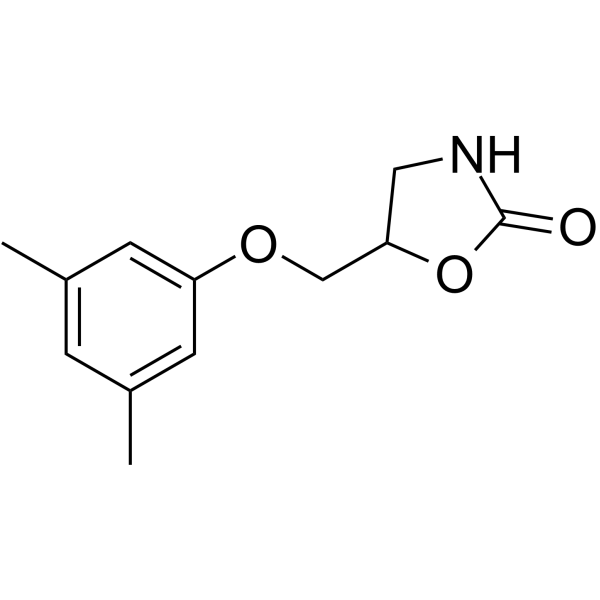
Metaxalone (AHR438; NSC170959) is an FDA-approved muscle relaxant. Metaxalone acts mainly on the central nervous system and achieves muscle relaxation by inhibiting polysynaptic reflex arcs. In addition, Metaxalone is an inhibitor of MAO-A, which has anti-inflammatory and antioxidant effects. Metaxalone inhibits IL-1β-induced inflammatory phenotype, modulates NF-κB and other related signaling pathways, and decreases MAO-A expression and activity in IL-1β-treated microglia.
For research use only. We do not sell to patients.
- Purity : 99.77%
- CAS No.: 1665-48-1
- Formula: C12H15NO3
- Molecular Weight:221.26
-
Storage:Powder -20°C, 3 years , 4°C, 2 years ; In solvent -80°C, 2 years , -20°C, 1 year

To place orders, for customer services and technical support, please contact: MedChemExpress USA
Tel: 609-228-6898 E-mail: [email protected] [email protected]


-
 Biological Activity
-
Chemical Information
-
Solvent & Solubility
- Protocols
- Purity & Documentation
- References
-
 Help & FAQs


-
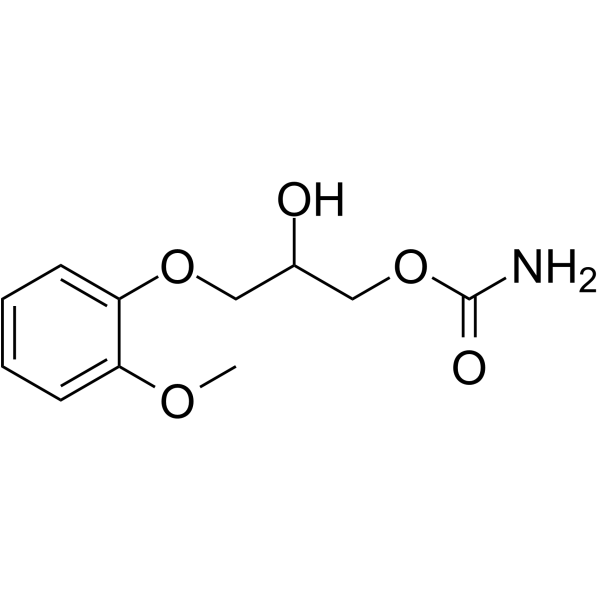
HY-B0262
MethocarbamolNav1.4 Channel Blocker -
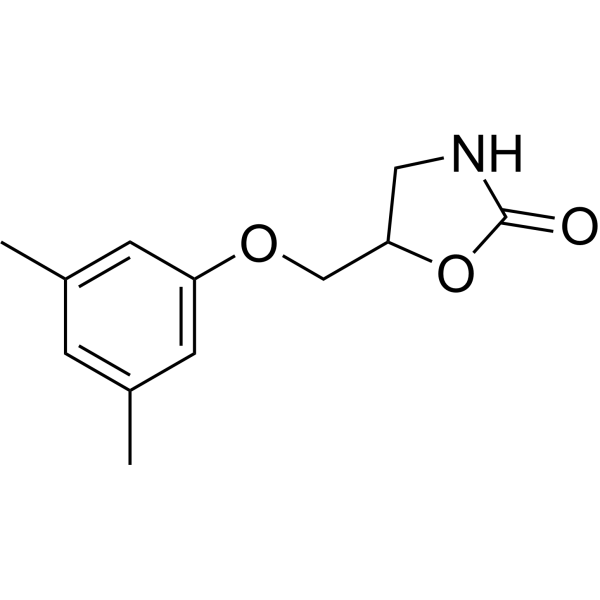
HY-B0678R
Metaxalone (Standard)Muscle Relaxant -
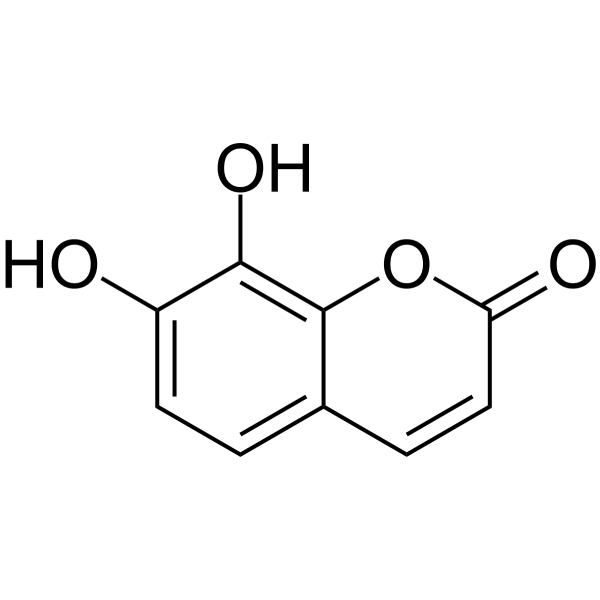
HY-N0281
DaphnetinProtein Kinase Inhibitor -
HY-B0659
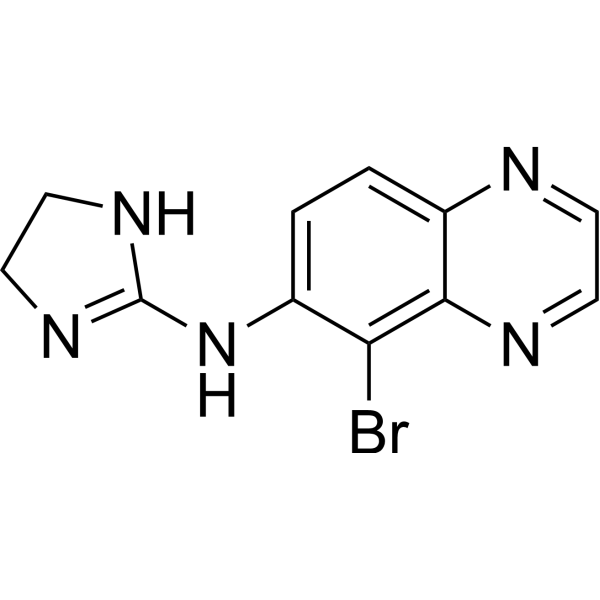
BrimonidineAdrenergic Receptor Agonist -
HY-B0505
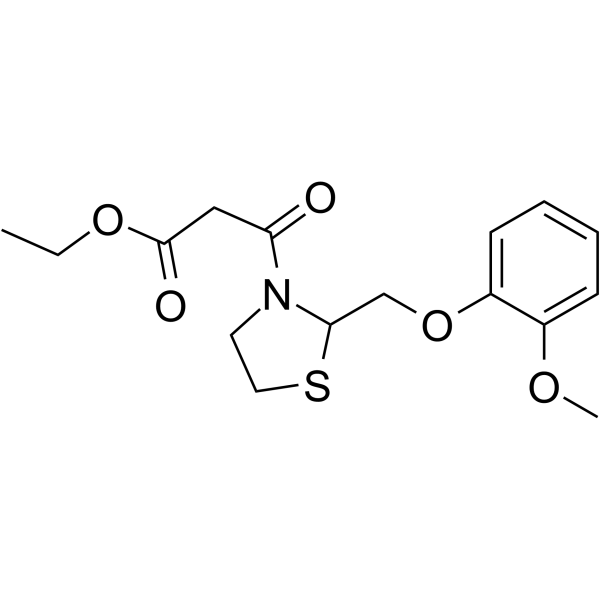
MoguisteineAntitussive Agent -

HY-N0281R
Daphnetin (Standard)Protein Kinase Inhibitor -

HY-B0659R
Brimonidine (Standard)Adrenergic Receptor Agonist -

HY-B0262R
Methocarbamol (Standard)Nav1.4 Channel Blocker


Biological Activity
Description
IC50 & Target
PPARγ and MAO-A[1]
In Vitro
Metaxalone (10-40 µg/mL; 1 h) reverses the inflammatory phenotype of IL-1β-treated HMC3 cells, decreases the expression of pro-inflammatory factors TNF-α and IL-6, and increases the expression of anti-inflammatory factor IL-13[1].
Metaxalone (10-40 µg/mL; 1 h) shows antioxidant properties in IL-1β-treated HMC3 cells, significantly upregating Nrf2 levels and decreasing MDA levels[1].
Metaxalone (10-40 µg/mL; 1 h) inhibits the increase of NF-κB and stimulates the activation of PPARγ and PGC-1α in IL-1β-treated HMC3 cells[1].
Metaxalone (10-40 µg/mL; 1 h) inhibits MAO-A activity in a dose-dependent manner[1].
Metaxalone (10-40 µg/mL; 24-72 h) has no cytotoxic effect on HMC3 cells[1].
MedChemExpress (MCE) has not independently confirmed the accuracy of these methods. They are for reference only.
-
Cell Line:IL-1β treated human microglial HMC3 cell line
-
Concentration:10, 20, and 40 µg/mL
-
Incubation Time:1 h
-
Result:Increased the levels of Nrf2 in a concentration‐dependent manner.
-
Cell Line:Human microglial HMC3 cell line
-
Concentration:10, 20, and 40 µg/mL
-
Incubation Time:24, 48 and 72 h
-
Result:Did not produce any toxic effect in the treated cells and related viability percentage kept similar to control.
Clinical Trial
| NCT Number | Sponsor | Condition | Start Date |
Phase

|
|---|---|---|---|---|
| NCT01329991 | 2011-05 | PHASE1 |


Chemical Information
-
CAS No. 1665-48-1
-
Appearance Solid
-
Molecular Weight 221.26
-
Formula C12H15NO3
-
Color White to off-white
-
SMILES
O=C1OC(COC2=CC(C)=CC(C)=C2)CN1
-
Synonyms
AHR438; NSC170959
-
Shipping
Room temperature in continental US; may vary elsewhere.
-
Storage
Powder -20°C 3 years 4°C 2 years In solvent -80°C 2 years -20°C 1 year


Solvent & Solubility
In Vitro:
DMSO : ≥ 100 mg/mL (451.97 mM; Hygroscopic DMSO has a significant impact on the solubility of product, please use newly opened DMSO)
* "≥" means soluble, but saturation unknown.
Please refer to the solubility information to select the appropriate solvent. Once prepared, please aliquot and store the solution to prevent product inactivation from repeated freeze-thaw cycles.
Storage method and period of stock solution: -80°C, 2 years; -20°C, 1 year. When stored at -80°C, please use it within 2 years. When stored at -20°C, please use it within 1 year.
Please refer to the solubility information to select the appropriate solvent. Once prepared, please aliquot and store the solution to prevent product inactivation from repeated freeze-thaw cycles.
Storage method and period of stock solution: -80°C, 2 years; -20°C, 1 year. When stored at -80°C, please use it within 2 years. When stored at -20°C, please use it within 1 year.
Concentration (start) × Volume (start) = Concentration (final) × Volume (final)
In Vivo:
Select the appropriate dissolution method based on your experimental animal and administration route.
- For the following dissolution methods, please ensure to first prepare a clear stock solution using an In Vitro approach and then sequentially add co-solvents:
- To ensure reliable experimental results, the clarified stock solution can be appropriately stored based on storage conditions. As for the working solution for In Vivo experiments, it is recommended to prepare freshly and use it on the same day.
- The percentages shown for the solvents indicate their volumetric ratio in the final prepared solution. If precipitation or phase separation occurs during preparation, heat and/or sonication can be used to aid dissolution.
Add each solvent one by one: 10% DMSO 40% PEG300 5% Tween-80 45% Saline
Solubility: ≥ 2.5 mg/mL (11.30 mM); Clear solution
This protocol yields a clear solution of ≥ 2.5 mg/mL (saturation unknown).
Taking 1 mL working solution as an example, add 100 μL DMSO stock solution (25.0 mg/mL) to 400 μL PEG300, and mix evenly; then add 50 μL Tween-80 and mix evenly; then add 450 μL Saline to adjust the volume to 1 mL.
Preparation of Saline: Dissolve 0.9 g sodium chloride in ddH₂O and dilute to 100 mL to obtain a clear Saline solution.
Add each solvent one by one: 10% DMSO 90% (20% SBE-β-CD in Saline)
Solubility: ≥ 2.5 mg/mL (11.30 mM); Clear solution
This protocol yields a clear solution of ≥ 2.5 mg/mL (saturation unknown).
Taking 1 mL working solution as an example, add 100 μL DMSO stock solution (25.0 mg/mL) to 900 μL 20% SBE-β-CD in Saline, and mix evenly.
Preparation of 20% SBE-β-CD in Saline (4°C, storage for one week): 2 g SBE-β-CD powder is dissolved in 10 mL Saline, completely dissolve until clear.
In Vivo Dissolution Calculator
Please enter the basic information of animal experiments:
-
-
-
-
Recommended: Prepare an additional quantity of animals to account for potential losses during experiments.
Please enter your animal formula composition:
-
%DMSO +
Recommended: Keep the proportion of DMSO in working solution below 2% if your animal is weak.
-
%+
-
+%Tween-80 + +
-
%Saline +
The co-solvents required include: DMSO, . All of co-solvents are available by MedChemExpress (MCE). , Tween 80. All of co-solvents are available by MedChemExpress (MCE).
Working solution concentration: 0.22 mg/mL
Method for preparing stock solution: mg drug dissolved in μL DMSO. Stock solution concentration: mg/mL.
1. Take μL DMSO stock solution;
2. Add μL .
μL , mix evenly;
3. Then add μL Tween 80, mix evenly;
4. Then add μL
Please ensure that the stock solution in the first step is dissolved to a clear state, and add co-solvents in sequence. You can use ultrasonic heating (ultrasonic cleaner, recommended frequency 20-40 kHz), vortexing, etc. to assist dissolution.


Purity & Documentation
-
Data Sheet (274 KB)
-
SDS (393 KB)
- English - EN (393 KB)
- Français - FR (393 KB)
- Deutsch - DE (393 KB)
- Norwegian - NO (393 KB)
- Español - ES (393 KB)
- Swedish - SV (393 KB)
- Italian - IT (393 KB)
- Korean - KR (393 KB)
- Portuguese - PT (393 KB)
-
Handling Instructions (2659 KB)
References
[1]. Pallio G, D'Ascola A, Cardia L, et al. MAO-A Inhibition by Metaxalone Reverts IL-1β-Induced Inflammatory Phenotype in Microglial Cells. Int J Mol Sci. 2021;22(16):8425. [Content Brief]
[2]. Stanko JR. Review of oral skeletal muscle relaxants for the craniomandibular disorder (CMD) practitioner. Cranio. 1990 Jul;8(3):234-43. [Content Brief]


Complete Stock Solution Preparation Table
Please refer to the solubility information to select the appropriate solvent. Once prepared, please aliquot and store the solution to prevent product inactivation from repeated freeze-thaw cycles.
Storage method and period of stock solution: -80°C, 2 years; -20°C, 1 year. When stored at -80°C, please use it within 2 years. When stored at -20°C, please use it within 1 year.
| Optional Solvent | Concentration Solvent Mass | 1 mg | 5 mg | 10 mg | 25 mg |
|---|---|---|---|---|---|
| DMSO | 1 mM | 4.5197 mL | 22.5983 mL | 45.1965 mL | 112.9913 mL |
| 5 mM | 0.9039 mL | 4.5197 mL | 9.0393 mL | 22.5983 mL | |
| 10 mM | 0.4520 mL | 2.2598 mL | 4.5197 mL | 11.2991 mL | |
| 15 mM | 0.3013 mL | 1.5066 mL | 3.0131 mL | 7.5328 mL | |
| 20 mM | 0.2260 mL | 1.1299 mL | 2.2598 mL | 5.6496 mL | |
| 25 mM | 0.1808 mL | 0.9039 mL | 1.8079 mL | 4.5197 mL | |
| 30 mM | 0.1507 mL | 0.7533 mL | 1.5066 mL | 3.7664 mL | |
| 40 mM | 0.1130 mL | 0.5650 mL | 1.1299 mL | 2.8248 mL | |
| 50 mM | 0.0904 mL | 0.4520 mL | 0.9039 mL | 2.2598 mL | |
| 60 mM | 0.0753 mL | 0.3766 mL | 0.7533 mL | 1.8832 mL | |
| 80 mM | 0.0565 mL | 0.2825 mL | 0.5650 mL | 1.4124 mL | |
| 100 mM | 0.0452 mL | 0.2260 mL | 0.4520 mL | 1.1299 mL |


Metaxalone Related Classifications
HY-B0678 Related Classifications
 Powered by Bioz