



ADX71441

Based on 1 Customer Validation
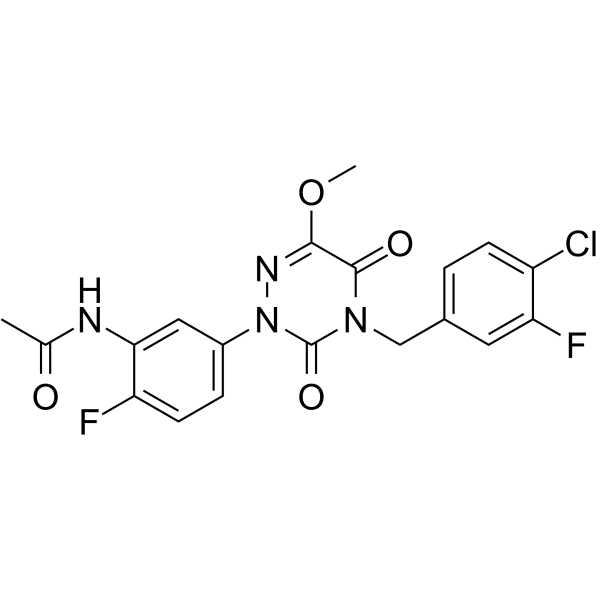
ADX71441 is an orally active, blood-brain barrier penetrant positive allosteric modulator of GABAB receptor. ADX71441 potentiates the activity of endogenous GABA at GABAB receptor, with an EC50 of 96 nM. ADX71441 functionally inhibits adenosine transporters and 5-HT2B receptor. ADX71441 produces anxiolytic-like, analgesic, muscle relaxant, hypothermic and overactive bladder inhibitory effects, reduces acute locomotor activity levels, decreases voluntary intake of alcohol and saccharin, attenuates stress-induced neuronal activation, and exhibits anti-hyperalgesic activity.
For research use only. We do not sell to patients.
- Purity : 98.63%
- CAS No.: 1207440-88-7
- Formula: C19H15ClF2N4O4
- Molecular Weight:436.80
-
Storage:Powder -20°C, 3 years , 4°C, 2 years ; In solvent -80°C, 6 months , -20°C, 1 month

To place orders, for customer services and technical support, please contact: MedChemExpress USA
Tel: 609-228-6898 E-mail: [email protected] [email protected]


-
 Biological Activity
-
Chemical Information
- Protocols
- Purity & Documentation
- References
-
 Help & FAQs


All 5-HT Receptor Isoforms
More

Biological Activity
Description
In Vitro
ADX71441 (10-10 to 10-3 M; 180 s) acts as a positive allosteric modulator of recombinant human GABAB receptors in HEK293 cells, potentiating GABA-induced calcium mobilization with an EC50 of 29 ± 9 nM, exhibiting no significant direct agonist activity, and binding reversibly to the receptor[1].
ADX71441 (10−13 to 10−3 M; 30 min + 30 min) potentiates GABA-induced G-protein activation at endogenous rat cortical GABAB receptors with an EC50 of 53 ± 14 nM, enhancing both the potency and efficacy of GABA[1].
ADX71441 (10-13 to 10-3 M; 30 min + 30 min) potentiates GABA-induced G-protein activation at endogenous human cortical GABAB receptors with an EC50 of 40 ± 7 nM, significantly enhancing GABA's potency and efficacy[1].
ADX71441 (10 μM, up to 30 μM) is highly selective for GABAB receptors, with no activity on mGlu receptors and only weak off-target activity at the 5-HT2B receptor (IC50 6.06 μM) and adenosine transporter (IC50 0.24 μM)[1].
MedChemExpress (MCE) has not independently confirmed the accuracy of these methods. They are for reference only.
In Vivo
ADX71441 (1-10 mg/kg; p.o.; single administration) produces dose-dependent anxiolytic-like effects in the mouse elevated plus-maze test, with a minimum effective dose of 3 mg/kg[1].
ADX71441 (0.3-3 mg/kg; p.o.; single administration) produces a dose-dependent anxiolytic-like effect in the elevated plus-maze test in rats, with the minimum effective dose being 3 mg/kg[1].
ADX71441 (30 mg/kg; p.o.; single administration) exhibits anxiolytic-like effects in the elevated plus-maze test in rats, and such effects remain detectable 24 hours after administration[1].
ADX71441 (1-10 mg/kg; p.o.; single administration) produces dose-dependent and time-dependent analgesic effects in the acetic acid-induced writhing test in mice[1].
ADX71441 (10 mg/kg; p.o.; single administration) induces muscle relaxation in the rat rotarod test[1].
ADX71441 (10 mg/kg; p.o.; single administration) reduces spontaneous locomotor activity in mice treated with acute intragastric administration[1].
After acute oral administration, ADX71441 (3-30 mg/kg; p.o.; single dose) produces a dose-dependent reduction in spontaneous locomotor activity in rats, with a minimum effective dose of 3 mg/kg[1].
Subchronic oral administration of ADX71441 (30 mg/kg; p.o.; once daily for 7 consecutive days) induces tolerance to its motor-suppressant effect in mice[1].
ADX71441 (3-30 mg/kg; p.o.; single administration) exerts a dose-dependent hypothermic effect in mice via activation of GABAB receptors, with its minimum effective dose being 10 mg/kg[1].
ADX71441 (3-30 mg/kg; p.o.; single administration) produces a dose-dependent, transient hypothermic effect in rats, with the minimum effective dose being 3 mg/kg[1].
ADX71441 (1-10 mg/kg; p.o.; single administration) dose-dependently reduces the total number of micturition episodes, total urine volume, and average urine volume, and prolongs the first micturition latency in mice with furosemide (HY-B0135)-induced overactive bladder (OAB)[2].
ADX71441 (1-3 mg/kg; i.v.; single administration) rapidly improves the urodynamic parameters of acetic acid (HY-Y0319)-induced overactive bladder (OAB) in guinea pigs[2].
ADX71441 (1-30 mg/kg; i.p.; single administration) dose-dependently reduces 20% voluntary alcohol intake in non-addicted male Wistar rats[3].
ADX71441 (1-3 mg/kg; i.p.; single administration) exhibits greater efficacy in reducing alcohol self-administration behavior in alcohol-dependent male Wistar rats[3].
ADX71441 (3-10 mg/kg; i.p.; single administration) potently blocks cue-induced and stress-induced alcohol relapse-like drinking behavior in male Wistar rats trained to voluntarily consume alcohol[3].
ADX71441 (3 mg/kg; i.p.; single administration) attenuates stress-induced neuronal activation within the brain region network (nucleus accumbens shell, central amygdala, dorsal raphe nucleus, and medial prefrontal cortex) associated with stress-induced relapse-like alcohol-seeking behavior in male Wistar rats[3].
ADX71441 (0.3-15 mg/kg; p.o.; once daily for 7 consecutive days) exhibits dose-dependent anti-allodynic efficacy in a rat osteoarthritis model induced by Sodium iodoacetate (HY-D0849)[4].
ADX71441 (1-10 mg/kg; p.o.; single administration) exerts muscle relaxant effects in rats[4].
MedChemExpress (MCE) has not independently confirmed the accuracy of these methods. They are for reference only.
-
Animal Model:C57Bl6/J (male, adult, 24-30g)[1]
-
Dosage:1 mg/kg; 3 mg/kg; 10 mg/kg
-
Administration:p.o.; single dose; 60 minutes pre-test
-
Result:Showed no effect at 1 mg/kg.
Produced a ~55% reduction in buried marbles at 3 mg/kg.
Fully suppressed burying behavior at 10 mg/kg.
Reached mean plasma concentrations of 144 ng/mL (1 mg/kg), 341 ng/mL (3 mg/kg), and 629 ng/mL (10 mg/kg) at end of experiment.\nShowed no effect at 1 mg/kg.
Produced ~2-fold increases in open arm entries at 3 mg/kg and 10 mg/kg.
Produced a ~2-fold increase in time spent on open arms at 3 mg/kg, and an almost 3-fold increase at 10 mg/kg.
Showed no effect on closed arm exploration.
Reached mean plasma concentrations of 168 ng/mL (1 mg/kg), 399 ng/mL (3 mg/kg), and 688 ng/mL (10 mg/kg) at end of experiment.
-
Animal Model:Sprague-Dawley (male, adult, 250-350g)[1]
-
Dosage:0.3 mg/kg; 1 mg/kg; 3 mg/kg
-
Administration:p.o.; single dose; 60 minutes pre-test
-
Result:Showed no effect at 0.3 mg/kg and 1 mg/kg.
Produced more than 3-fold increases in open arm entries and more than 4-fold increases in time spent on open arms at 3 mg/kg.
Showed no effect on closed arm exploration.
Reached mean plasma concentrations of 46 ng/mL (1 mg/kg), 171 ng/mL (3 mg/kg) at end of experiment.
-
Animal Model:Sprague-Dawley (male, adult, 250-350g)[1]
-
Dosage:1 mg/kg; 3 mg/kg; 10 mg/kg; 30 mg/kg
-
Administration:p.o.; single dose; 24 hours pre-test
-
Result:Showed no effect at 1 mg/kg and 3 mg/kg.
Showed a trend toward reduced open arm entries at 10 mg/kg.
Produced almost 4-fold increases in open arm entries and almost 4-fold increases in time spent on open arms at 30 mg/kg.
Showed no effect on closed arm entries.
Reached mean brain concentrations of 40 ng/g (1 mg/kg), 107 ng/g (3 mg/kg), 427 ng/g (10 mg/kg), and 1014 ng/g (30 mg/kg); mean plasma concentrations of 11 ng/mL (1 mg/kg), 52 ng/mL (3 mg/kg), 321 ng/mL (10 mg/kg), and 898 ng/mL (30 mg/kg) at end of experiment.
-
Animal Model:C57Bl6/J (male, adult, 24-30g; separate cohort from SLAC, Shanghai, China)[1]
-
Dosage:1 mg/kg; 3 mg/kg; 10 mg/kg
-
Administration:p.o.; single dose; 70 minutes pre-test (dose-response); 1, 2, 4 hours pre-test (time-course)
-
Result:Showed no effect at 1 mg/kg in dose-response study.
Produced a 55% reduction in writhes at 3 mg/kg, and an almost 90% reduction at 10 mg/kg in dose-response study.
Produced an ~80% reduction in writhes at 1 hour post-treatment, ~60% reduction at 2 hours, and ~25% reduction (trend) at 4 hours with 10 mg/kg in time-course study.
Reached mean plasma concentrations of 562 ng/mL (1 hour), 566 ng/mL (2 hours), and 343 ng/mL (4 hours) in time-course study.
-
Animal Model:Sprague-Dawley (male, adult, 250-350g)[1]
-
Dosage:1 mg/kg; 3 mg/kg; 10 mg/kg
-
Administration:p.o.; single dose; measured at 60, 120, 180 minutes post-treatment
-
Result:Showed no effect at 1 mg/kg and 3 mg/kg across all time points.
Reduced time on rotarod by approximately 50% at all time points at 10 mg/kg.
-
Animal Model:C57Bl6/J (male, adult, 24-30g)[1]
-
Dosage:1 mg/kg; 3 mg/kg; 10 mg/kg
-
Administration:p.o.; single dose; 60 minutes pre-test; monitored for 60 minutes
-
Result:Showed no effect at 1 mg/kg and 3 mg/kg.
Produced a ~40% reduction in total distance travelled at 10 mg/kg.
-
Animal Model:Sprague-Dawley (male, adult, 250-350g)[1]
-
Dosage:1 mg/kg; 3 mg/kg; 10 mg/kg; 30 mg/kg
-
Administration:p.o.; single dose; 60 minutes pre-test; monitored for 60 minutes
-
Result:Showed no effect at 1 mg/kg.
Produced an ~50% reduction in total distance travelled at 3 mg/kg, ~85% reduction at 10 mg/kg, and almost 100% reduction at 30 mg/kg.
-
Animal Model:C57Bl6/J (male, adult, 24-30g; cohort from Charles River Laboratories, Wilmington, MA)[1]
-
Dosage:10 mg/kg; 30 mg/kg
-
Administration:p.o.; once daily for 7 days plus acute dose on day 8; 60 minutes pre-test on day 8; monitored for 60 minutes
-
Result:Showed no reduction in locomotor activity (total distance travelled or rearing) with acute 30 mg/kg dose in mice with sub-chronic 30 mg/kg treatment history.
Produced an ~50% reduction in total distance travelled and ~90% reduction in rears with acute 30 mg/kg dose, and no effect with acute 10 mg/kg dose in vehicle-treated mice.
-
Animal Model:C57Bl6/J (male, adult, 24-30g; cohort from Janvier, Le Genest Saint Isle, France)[1]
-
Dosage:3 mg/kg; 10 mg/kg; 30 mg/kg
-
Administration:p.o.; single dose; measured at 1, 2, 4 hours post-treatment (acute); p.o. 30 mg/kg plus oral CGP63360 30 minutes later (target engagement)
-
Result:Showed no effect at 3 mg/kg in acute dose-response study.
Produced a 1.5°C reduction at 1 and 2 hours at 10 mg/kg, and a ~3°C reduction at 1 and 2 hours plus 1.77°C reduction at 4 hours at 30 mg/kg in acute dose-response study.
Had hypothermic effects dose-dependently reversed by CGP63360 in target engagement study; 3 mg/kg CGP63360 returned body temperature to normal at 2 and 4 hours post-ADX71441 treatment.
-
Animal Model:Sprague-Dawley (male, adult, 250-350g)[1]
-
Dosage:1 mg/kg; 3 mg/kg; 10 mg/kg; 30 mg/kg
-
Administration:p.o.; single dose; measured at 1, 2, 4, 20 hours post-treatment
-
Result:Showed no effect at 1 mg/kg.
Produced 0.5-1.2°C reductions at 1, 2, and 4 hours at 3 mg/kg and 10 mg/kg.
Produced 1.4-1.8°C reductions at 1, 2, and 4 hours at 30 mg/kg.
Showed no effect at 20 hours post-treatment across all doses.
-
Animal Model:C57Bl6/J (adult male, 24-30 g, overhydrated with water and challenged with furosemide to induce bladder overactivity)[2]
-
Dosage:1 mg/kg; 3 mg/kg; 10 mg/kg
-
Administration:p.o.; single dose
-
Result:Produced a 70% reduction in total urinary events, a more than threefold increase in latency to the first urinary event, a 55% reduction in total urinary volume, and an approximately 65% reduction in average urinary volume compared to vehicle-treated mice at 10 mg/kg.
Normalized urinary parameters to levels not significantly different from intact untreated controls for number of urinary events, latency to first event, and average urinary volume at 3 mg/kg and 10 mg/kg.
Normalized total urinary volume to levels not significantly different from intact untreated controls at 10 mg/kg.
Achieved plasma concentrations of 101 ng/mL (1 mg/kg), 208 ng/mL (3 mg/kg), and 652 ng/mL (10 mg/kg), corresponding to unbound plasma concentration/EC50 ratios of 0.36, 0.74, and 2.31 respectively.
-
Animal Model:Dunkin Hartley (adult female, 290-370 g, OAB induced by intravesical infusion of 0.2% acetic acid)[2]
-
Dosage:1 mg/kg; 3 mg/kg
-
Administration:i.v.; single bolus dose
-
Result:Significantly increased intercontraction interval and bladder capacity at 1 mg/kg and 3 mg/kg 0-15 minutes post-administration.
Significantly reduced micturition frequency compared to vehicle at 1 mg/kg 0-15 minutes post-administration.
Significantly increased threshold pressure compared to vehicle at 3 mg/kg 0-15 minutes post-administration.
Completely inhibited the micturition reflex, inducing overflow incontinence, in 5 out of 10 animals at 3 mg/kg.
Achieved plasma concentrations of 67 ng/mL (1 mg/kg) and 195 ng/mL (3 mg/kg), corresponding to unbound plasma concentration/EC50 ratios of 0.3 and 0.9 respectively.
-
Animal Model:Wistar rats (adult male, 200-225g at study initiation, trained to self-administer 20% alcohol on FR2 schedule)[3]
-
Dosage:1 mg/kg; 3 mg/kg; 10 mg/kg; 30 mg/kg
-
Administration:i.p.
-
Result:Showed no significant reduction in alcohol reinforcers earned or active lever presses, and no effect on locomotor activity at 1 mg/kg.
Produced statistically significant reduction in alcohol reinforcers earned and active lever presses , no alteration to locomotor activity, and potent reduction in alcohol breakpoints at 3 mg/kg.
Produced statistically significant reduction in alcohol reinforcers earned and active lever presses, no alteration to locomotor activity, and potent reduction in alcohol breakpoints at 10 mg/kg.
Produced statistically significant reduction in alcohol reinforcers earned and active lever presses, and significant reduction in locomotor activity at 30 mg/kg.
-
Animal Model:Wistar rats (adult male, 200-225g at study initiation; alcohol-dependent via chronic intermittent 14-hour daily alcohol vapor exposure for 8 weeks; non-dependent control exposed to normal air)[3]
-
Dosage:1 mg/kg; 3 mg/kg
-
Administration:i.p.
-
Result:Significantly decreased alcohol reinforcers earned and active lever presses in alcohol-dependent rats but had no significant effect in non-dependent rats at 1 mg/kg.
Significantly decreased alcohol reinforcers earned and active lever presses in both alcohol-dependent and non-dependent rats at 3 mg/kg.
-
Animal Model:Wistar rats (adult male, 200-225g at study initiation, trained to self-administer 20% alcohol, extinction trained for alcohol-seeking behavior)[3]
-
Dosage:3 mg/kg; 10 mg/kg
-
Administration:i.p.
-
Result:Potently blocked cue-induced relapse-like alcohol seeking and stress-induced relapse-like alcohol seeking at 3 mg/kg.
Potently blocked cue-induced relapse-like alcohol seeking and stress-induced relapse-like alcohol seeking at 10 mg/kg.
-
Animal Model:Wistar rats (adult male, 200-225g at study initiation, trained to self-administer 20% alcohol, extinction trained for alcohol-seeking behavior)[3]
-
Dosage:3 mg/kg
-
Administration:i.p.
-
Result:Significantly decreased c-Fos expression in the nucleus accumbens shell, central amygdala, and dorsal raphe nucleus compared to vehicle.
Showed a trend for reduced c-Fos expression in the medial prefrontal cortex.
Significantly suppressed activation of a stress-responsive brain network consisting of the dorsal raphe nucleus, nucleus accumbens shell, and medial prefrontal cortex, whose activity correlated strongly with stress-induced relapse-like behavior.
-
Animal Model:Sprague-Dawley rats (adult male, 250-350 g, monosodium iodoacetate-induced osteoarthritis)[4]
-
Dosage:0.3 mg/kg; 1 mg/kg; 3 mg/kg; 15 mg/kg
-
Administration:p.o.; once daily; 7 days
-
Result:Produced a 2-fold increase in ipsilateral joint compression threshold 2 hours post-administration, as well as 1.3-fold and 1.7-fold increases 1 and 4 hours post-administration, respectively, with 15 mg/kg acutely on post-MIA day 14.
Showed no significant acute efficacy on day 14 with 0.3, 1, 3 mg/kg.
Produced consistent 1.5-fold increases in joint compression threshold at all tested time points with 15 mg/kg on post-MIA day 21 after 7 days of daily treatment.
Produced statistically significant, modest increases in joint compression threshold, particularly at 2 and 4 hours post-dosing, with 1 mg/kg and 3 mg/kg on post-MIA day 21 after 7 days of daily treatment.
-
Animal Model:Sprague-Dawley rats (adult male, 250-350 g, rotarod-tested healthy)[4]
-
Dosage:1 mg/kg; 3 mg/kg; 10 mg/kg
-
Administration:p.o.; single dose
-
Result:Had no significant effect on time spent on the rotarod with 1 mg/kg and 3 mg/kg.
Produced an approximately 50% reduction in time spent on the rotarod 2 and 3 hours post-dosing compared with vehicle treatment with 10 mg/kg.


Chemical Information
-
CAS No. 1207440-88-7
-
Appearance Solid
-
Molecular Weight 436.80
-
Formula C19H15ClF2N4O4
-
Color White to off-white
-
SMILES
O=C(N(C1=O)CC2=CC=C(C(F)=C2)Cl)C(OC)=NN1C3=CC=C(C(NC(C)=O)=C3)F
-
Shipping
Room temperature in continental US; may vary elsewhere.
-
Storage
Powder -20°C 3 years 4°C 2 years In solvent -80°C 6 months -20°C 1 month


Purity & Documentation
-
Data Sheet (296 KB)
-
SDS (251 KB)
- English - EN (251 KB)
- Français - FR (251 KB)
- Deutsch - DE (251 KB)
- Norwegian - NO (251 KB)
- Español - ES (251 KB)
- Swedish - SV (251 KB)
- Italian - IT (251 KB)
- Korean - KR (251 KB)
- Portuguese - PT (251 KB)
-
Handling Instructions (2659 KB)
References
[2]. Kalinichev M, et al. ADX71441, a novel, potent and selective positive allosteric modulator of the GABA(B) receptor, shows efficacy in rodent models of overactive bladder. Br J Pharmacol. 2014;171(4):995-1006. [Content Brief]
[3]. Augier E, et al. The GABAB Positive Allosteric Modulator ADX71441 Attenuates Alcohol Self-Administration and Relapse to Alcohol Seeking in Rats. Neuropsychopharmacology. 2017;42(9):1789-1799. [Content Brief]
[4]. Kalinichev M, et al. ADX71943 and ADX71441, novel positive allosteric modulators of the GABAB receptor with distinct central/peripheral profiles, show efficacy in the monosodium iodoacetate model of chronic osteoarthritis pain in the rat. Eur J Pharmacol. 2017;795:43-49. [Content Brief]

Calculators
Concentration (start) × Volume (start) = Concentration (final) × Volume (final)


ADX71441 Related Classifications
HY-118301 Related Classifications
 Powered by Bioz