Search Result
Results for "
root+bark
" in MedChemExpress (MCE) Product Catalog:
| Cat. No. |
Product Name |
Target |
Research Areas |
Chemical Structure |
-
- HY-N1381
-
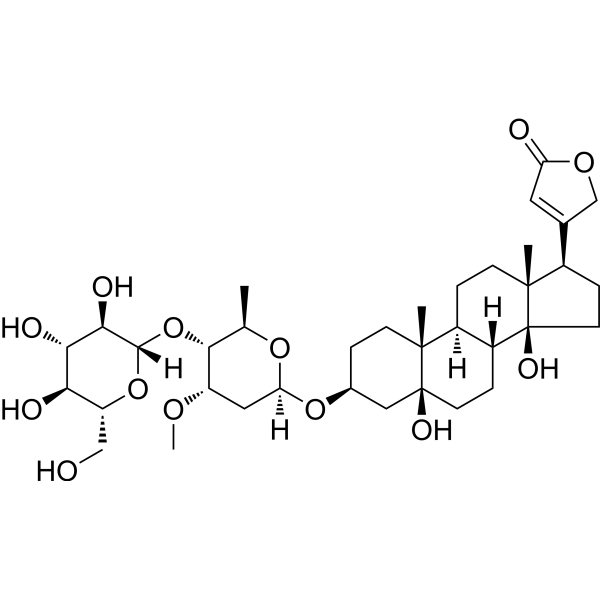
Periplocin
Maximum Cited Publications
6 Publications Verification
|
Apoptosis
|
Inflammation/Immunology
Cancer
|
|
Periplocin is a cardiotonic steroid isolated from root-bark Periploca sepium Bunge. Periplocin promotes tumor cell apoptosis and inhibits tumor growth. Periplocin has the potential to facilitate wound healing through the activation of Src/ERK and PI3K/Akt pathways mediated by Na/K-ATPase .
|
-
-
- HY-N2392
-
|
|
Parasite
Lipoxygenase
Opioid Receptor
Apoptosis
Autophagy
Reactive Oxygen Species (ROS)
Interleukin Related
TNF Receptor
PGE synthase
COX
|
Infection
Neurological Disease
Metabolic Disease
Inflammation/Immunology
Cancer
|
|
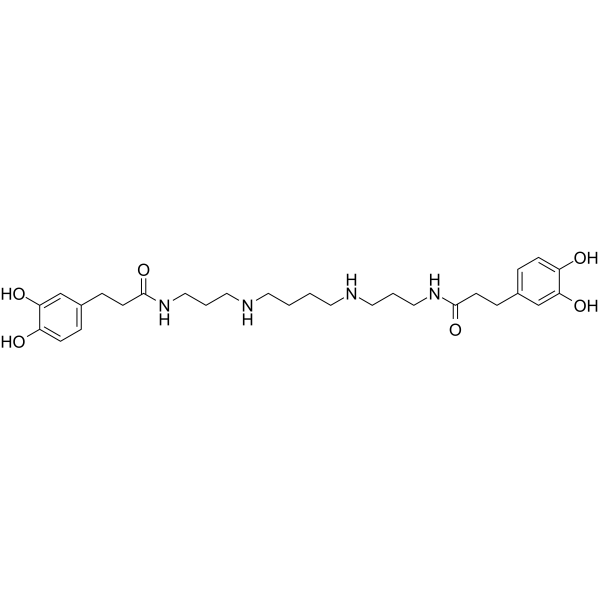
Kukoamine A, a spermine alkaloid, is an orally active and brain-penetrant component found in the root barks of Lycium chinense (L. chinense) Miller. Kukoamine A inhibits purified Crithidia fasciculata trypanothione reductase and soybean lipoxygenase, activates μ-opioid receptor. Kukoamine A can inhibt cancer cell proliferation, migration and invasion, cause G0/G1 phase cell cycle arrest and induce apoptosis. Kukoamine A exerts neuroprotective effect and can induce autophagy . Kukoamine A inhibits LPS (HY-D1056)-induced NO, ROS, PGE2, TNF-α, IL-1β, IL-6 production and COX-2 activity. Kukoamine A reverses palmitic acid-induced insulin resistance, lipid accumulation, and oxidative stress via downregulation of Srebp-1c. Kukoamine A can be used for the research of cancer, infection, inflammation, metabolic and neurological disease, such as glioblastoma and Parkinson's disease .
|
-
-
- HY-N0242
-
|
|
PD-1/PD-L1
HIF/HIF Prolyl-Hydroxylase
STAT
|
Inflammation/Immunology
Cancer
|
|
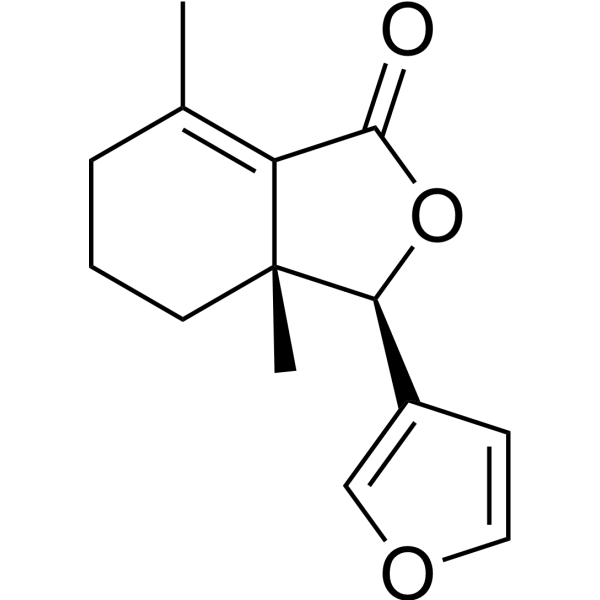
Fraxinellone is isolated from the root bark of the Rutaceae plant, Dictamnus dasycarpus. Fraxinellone is a PD-L1 inhibitor and inhibits HIF-1α protein synthesis without affecting HIF-1α protein degradation. Fraxinellone has the potential to be a valuable candidate for cancer treatment by targeting PD-L1 .
|
-
-
- HY-N0627
-
|
|
LDLR
|
Others
|
|
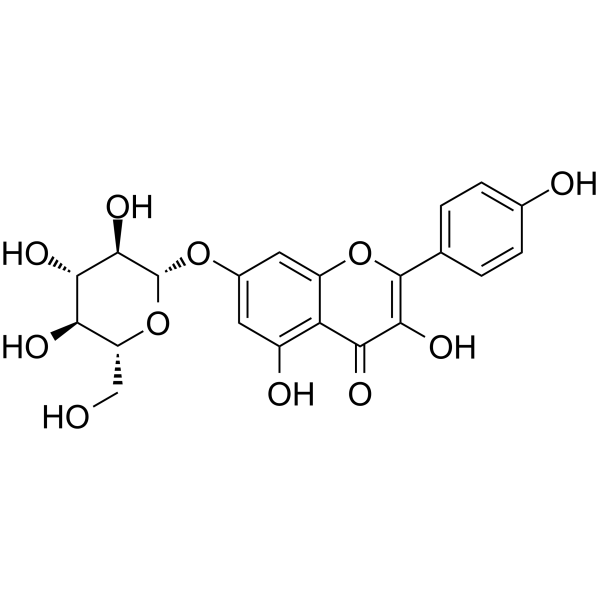
Kaempferol-7-O-β-D-glucopyranoside is a flavonoid glycoside. Kaempferol-7-O-β-D-glucopyranoside exists in the root bark of Cudrania tricuspidata. Kaempferol-7-O-β-D-glucopyranoside inhibits Cu 2+-induced lipid peroxidation of low-density lipoprotein. Kaempferol-7-O-β-D-glucopyranoside possesses antioxidant activity and scavenges DPPH free radicals .
|
-
-
- HY-N2300
-
-
-
- HY-N1931
-
|
|
Caspase
PARP
Apoptosis
MDM-2/p53
|
Cancer
|
|
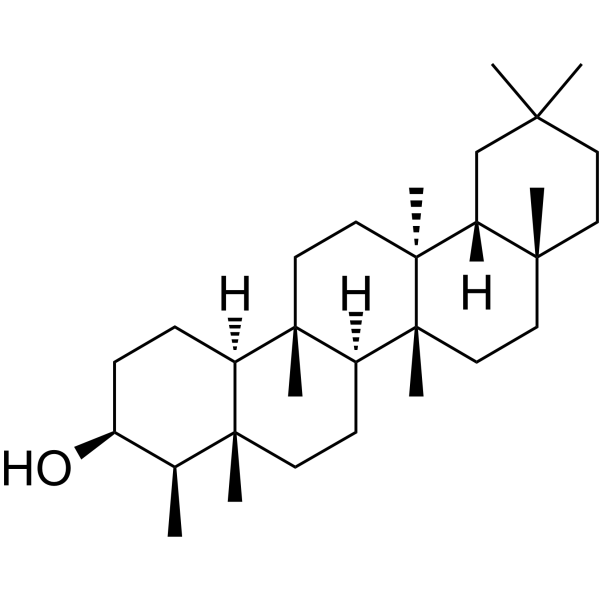
Epifriedelanol is a triterpenoid found in the root bark of Ulmus davidiana. Epifriedelanol induces apoptosis in DU145 cells. Epifriedelanol has antitumor and anti-inflammatory activities. Epifriedelanol inhibits cellular senescence in human primary cells .
|
-
-
- HY-N3395
-
|
|
HSV
|
Infection
|
|
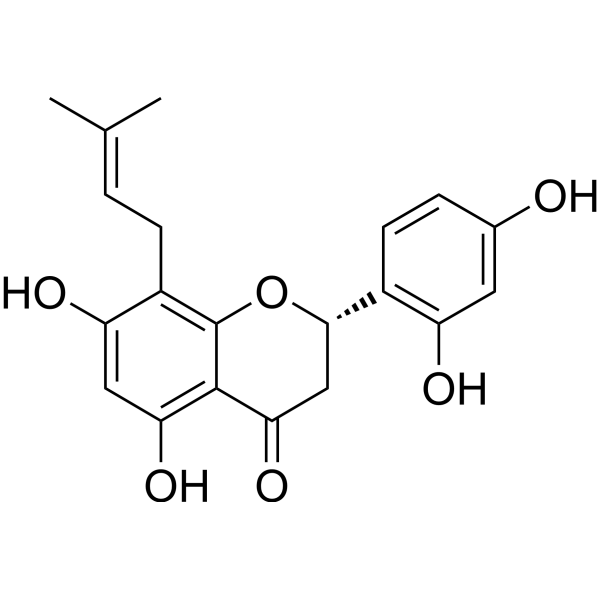
Leachianone G is an antiviral flavonoid from the root bark of Morus alba L. Leachianone G shows potent antiviral activity against herpes simplex type 1 virus (HSV-1) with an IC50 value of 1.6 μg/mL .
|
-
-
- HY-N0672
-
|
|
Fungal
|
Infection
|
|
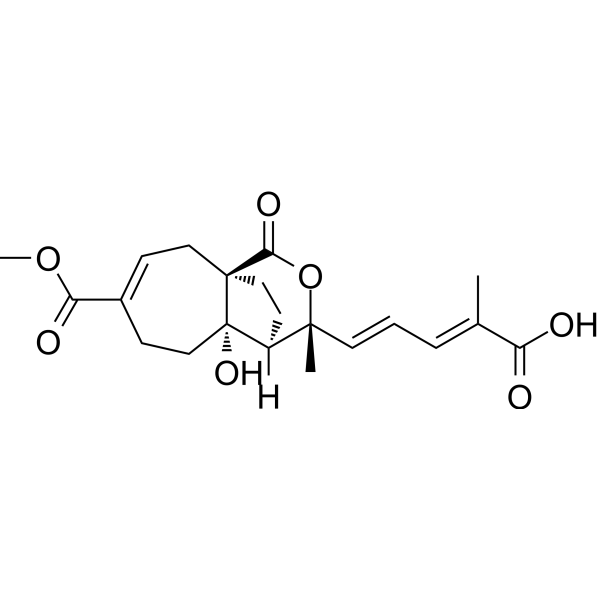
Pseudolaric C is a diterpenoid isolated from the root bark of Pseudolarix amabilis, has antifungal activity .
|
-
-
- HY-N8761
-
|
|
NO Synthase
|
Metabolic Disease
|
|
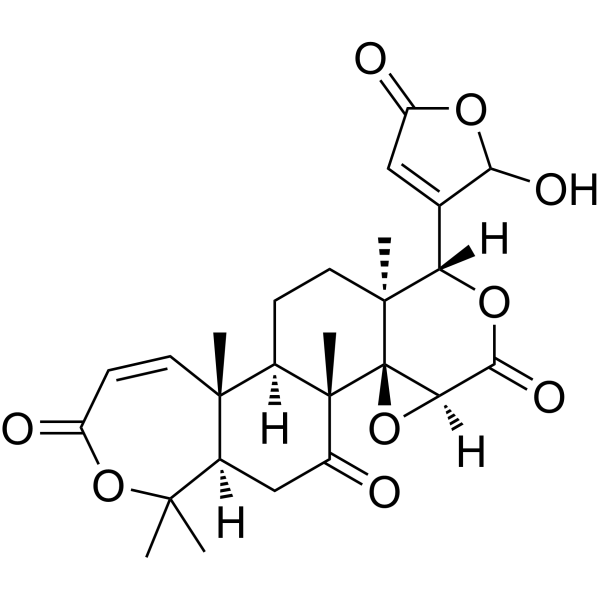
Kihadanin A (compound 3) is a limonoid NOS3 inhibitor that can be isolated from the methanol extract of Dictamnus dasycarpus root bark. Kihadanin A is useful in the study of hyperuricemia (HUA) [3].
|
-
-
- HY-N7536
-
|
|
TRP Channel
|
Others
|
|
Voacangine is an antagonist for TRPV1 and TRPM8 but as an agonist for TRPA1 (EC50=8 μM). Voacangine competitively blockes capsaicin binding to TRPV1 (IC50=50 μM). Voacangine competitively inhibits the binding of menthol to TRPM8 (IC50=9 μM) and it shows noncompetitive inhibition against icilin (IC50=7 μM). Voacangine selectively abrogates chemical agonist-induced TRPM8 activation and did not affect cold-induced activation. Voacangine is an alkaloid isolated from the root bark of Voacanga africana .
|
-

-
- HY-N3944
-
|
6β-Acetoxy-5-epilimonin
|
Others
|
Others
|
|
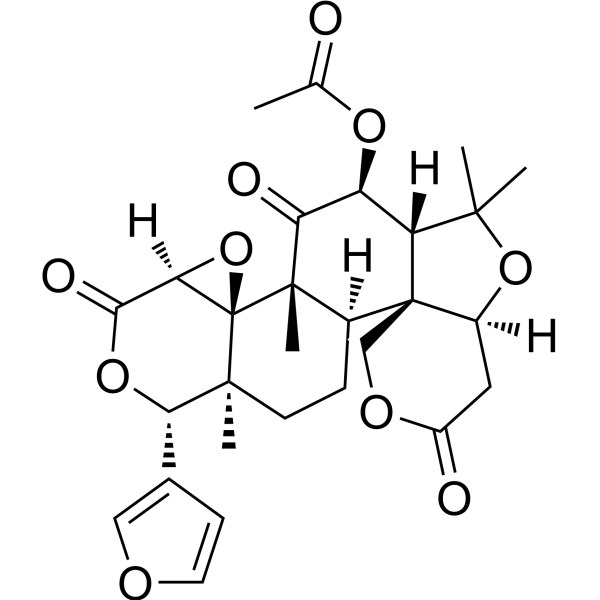
Glaucin B is a bitter limonoid isolated from the root bark of Evodia glauca .
|
-
-
- HY-N10842
-
|
|
Others
|
Others
|
|
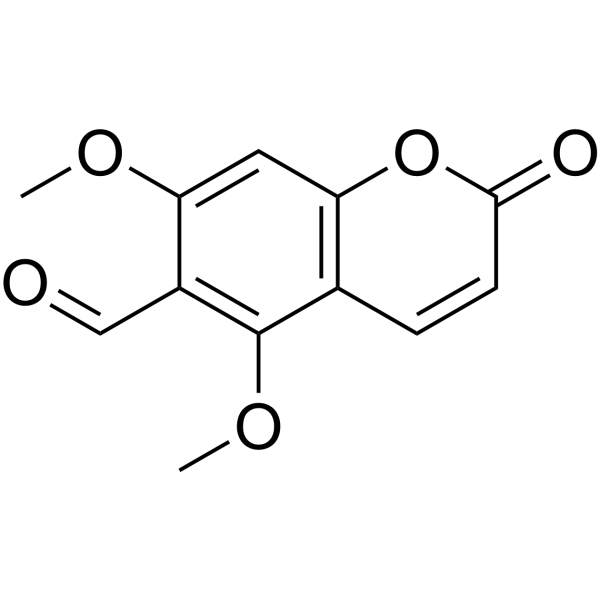
6-Formyllimetin is a natural product isolated from the root bark of T. asiatica LAM .
|
-
-
- HY-N2299
-
|
|
Others
|
Cardiovascular Disease
|
|
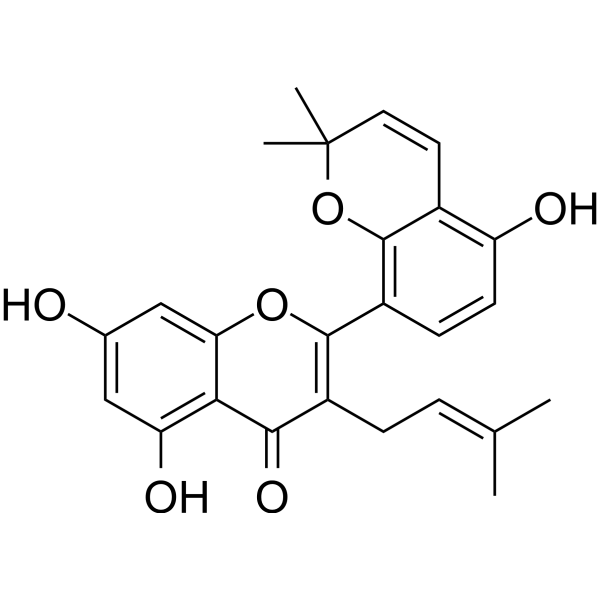
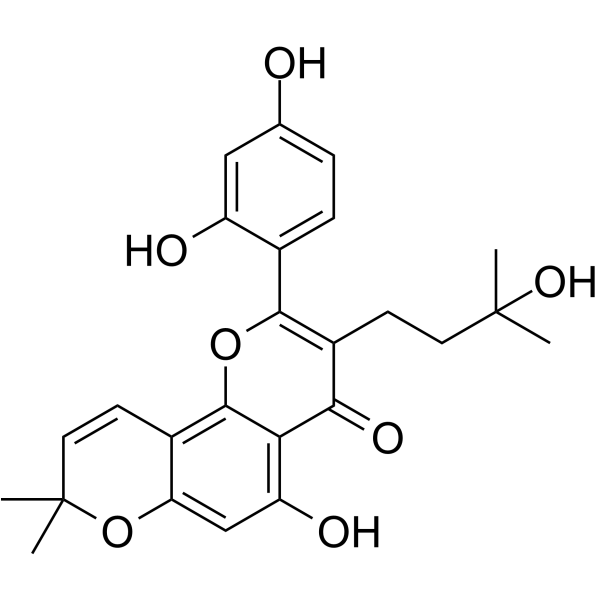
Morusinol is a flavonoid isolated from Morus alba root bark. Morusinol has an antiplatelet activity and significantly inhibits arterial thrombosis in vivo .
|
-
-
- HY-N10695
-
|
|
Parasite
|
Infection
|
|
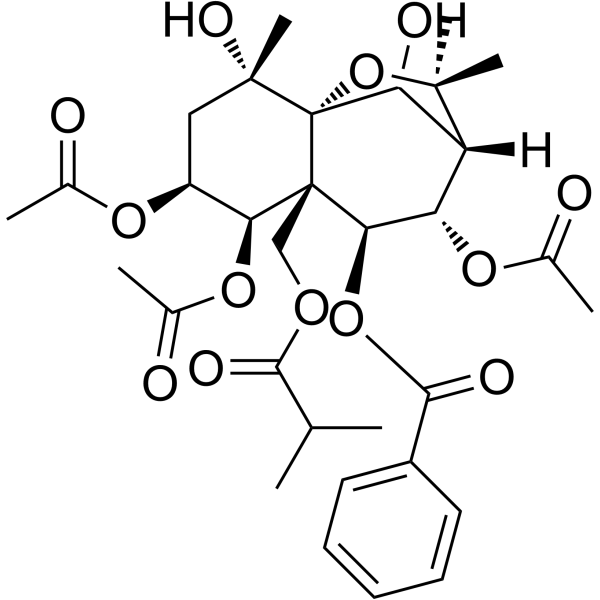
Celangulatin C is an insecticidal sesquiterpene polyol ester, that can be isolated from the root bark of Pseudolarix kaempferi. Celangulatin C shows LD50 against Mythimna separata of 280.4 μg/mL .
|
-
-
- HY-N10803
-
|
|
Others
|
Others
|
|
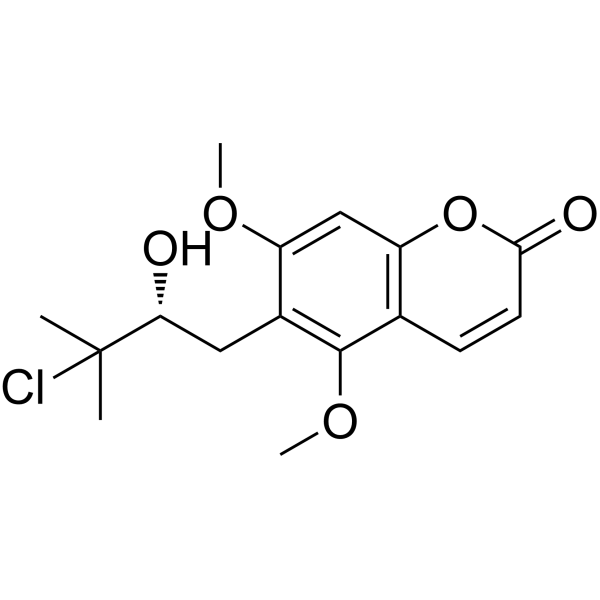
(+)-6-(3-Chloro-2-hydroxy-3-methylbutyl)-5,7-dimethoxycoumarin is a nature product that could be isolated form the root bark of Toddalia asiatica (L.) LAM .
|
-
-
- HY-N10854
-
|
|
Others
|
Others
|
|
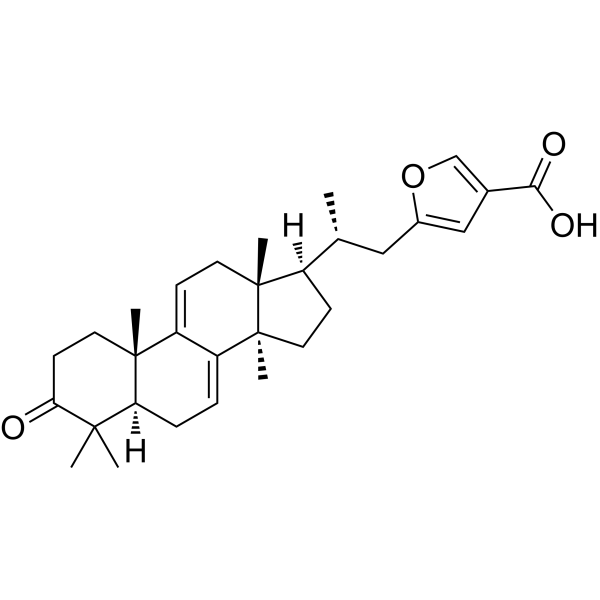
Lanosta-7,9(11),23,25(27)-tetraen-26-oic acid, 23,27-epoxy-3-oxo- is a lanosterane type compound. Lanosta-7,9(11),23,25(27)-tetraen-26-oic acid, 23,27-epoxy-3-oxo- can be isolated from Tu-Jin-Pi (the root bark of Pseudolarix kaempferi) .
|
-
-
- HY-N2159
-
|
|
Others
|
Metabolic Disease
|
|
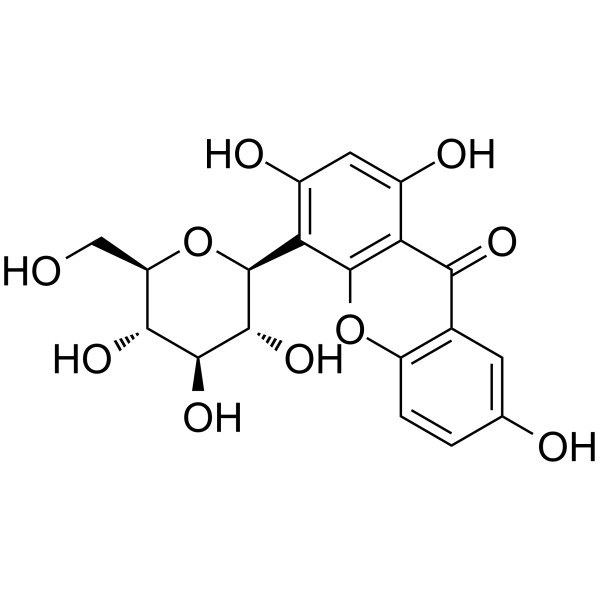
Lancerin, isolated from the root bark of Cudraniu cochinchinensis, possesses anti-lipid peroxidation .
|
-
-
- HY-N11531
-
|
|
Others
|
Others
|
|
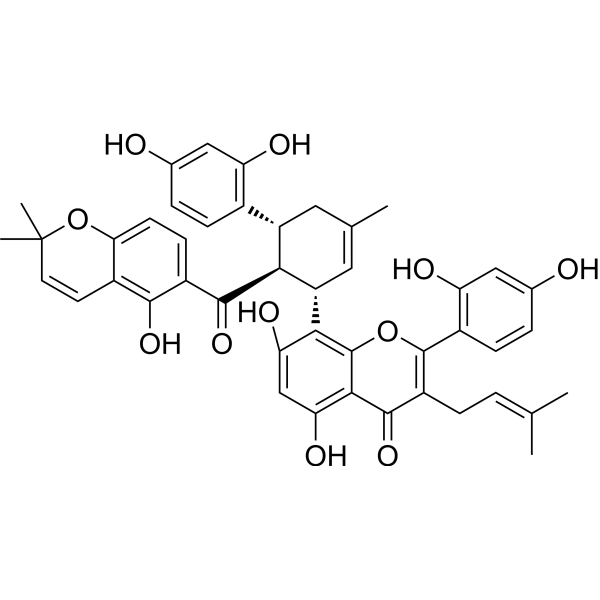
Kuwanon W is a natural product that can be isolated from the root bark of Morus lhou .
|
-
-
- HY-N16130
-
|
|
Drug Derivative
|
Others
|
|
Kuwanon S is a flavonoid compound that can be isolated from the root bark of Morus alba L. Kuwanon S is commonly used in organic synthesis and biochemistry experiments .
|
-

-
- HY-125123
-
|
|
Integrin
|
Cardiovascular Disease
|
|
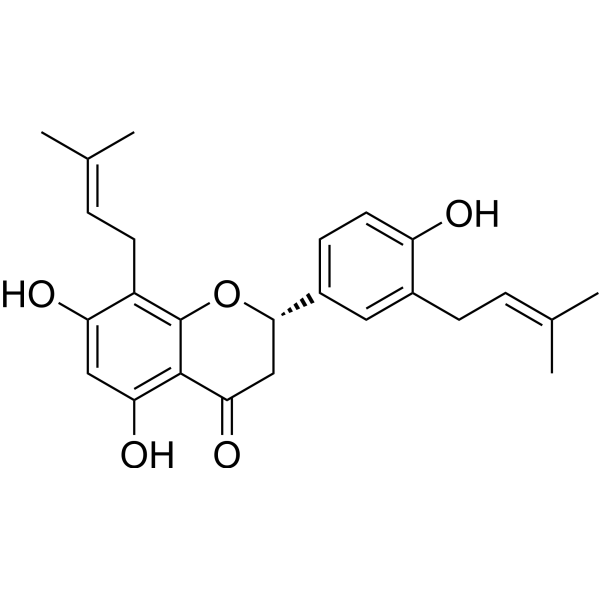
Euchrestaflavanone A is a flavonoid found in the root bark of Cudrania tricuspidate. Euchrestaflavanone A inhibits platelet aggregation and has some antiplatelet and antithrombotic properties, making it a potential compound for thromboprophylaxis .
|
-
-
- HY-N2906
-
|
Atalantoflavone
|
Parasite
|
Cancer
|
|
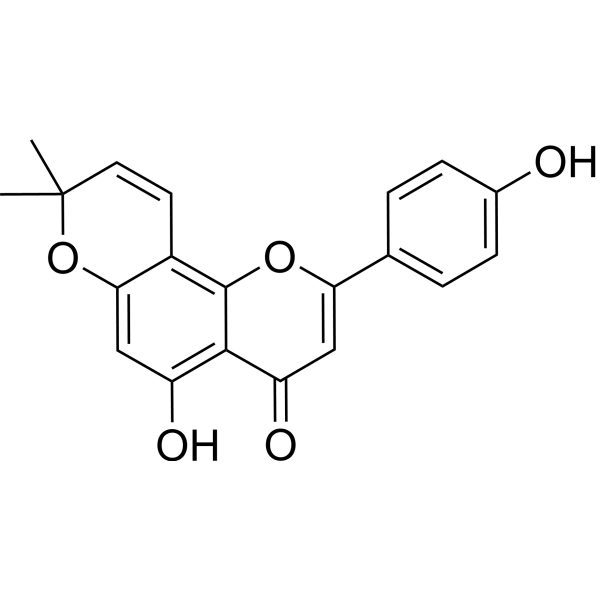
Limonianin (Atalantoflavone) is a flavone, that can be isolated from Erythrina sigmoidea and the root bark of Citrus limonia. Limonianin presents inhibitory effect against P. gingivalis. Limonianin shows cytotoxic activity against multidrug-resistant (MDR) cancer cell lines .
|
-
-
- HY-N10697
-
|
Celangulatin E
|
Parasite
|
Infection
|
|
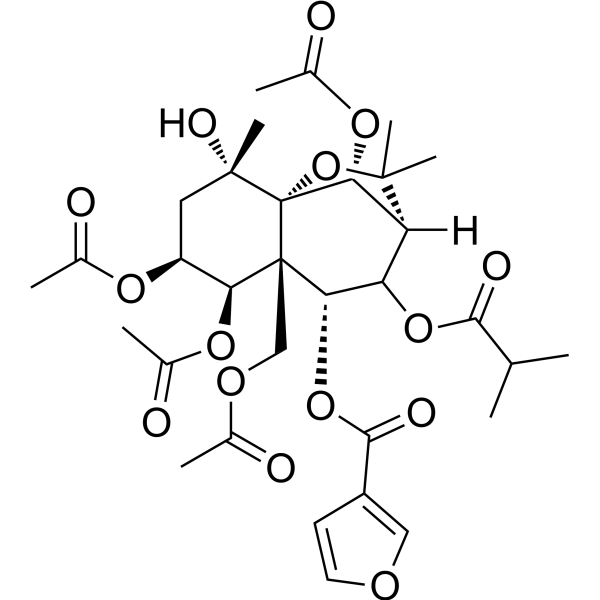
Angulatin G (Celangulatin E) is an insecticidal sesquiterpene polyol ester with a β-dihydroagarofuran sesquiterpene skeleton, which can be isolated from the root bark of Celastrus angulatus. Angulatin G shows LD50 against Mythimna separata of 1656.4 μg/mL .
|
-
-
- HY-N1381R
-
|
|
Reference Standards
Apoptosis
|
Inflammation/Immunology
Cancer
|
|
Periplocin (Standard) is the analytical standard of Periplocin. This product is intended for research and analytical applications. Periplocin is a cardiotonic steroid isolated from root-bark Periploca sepium Bunge. Periplocin promotes tumor cell apoptosis and inhibits tumor growth. Periplocin has the potential to facilitate wound healing through the activation of Src/ERK and PI3K/Akt pathways mediated by Na/K-ATPase .
|
-

-
- HY-N4248
-
|
|
Others
|
Others
|
|
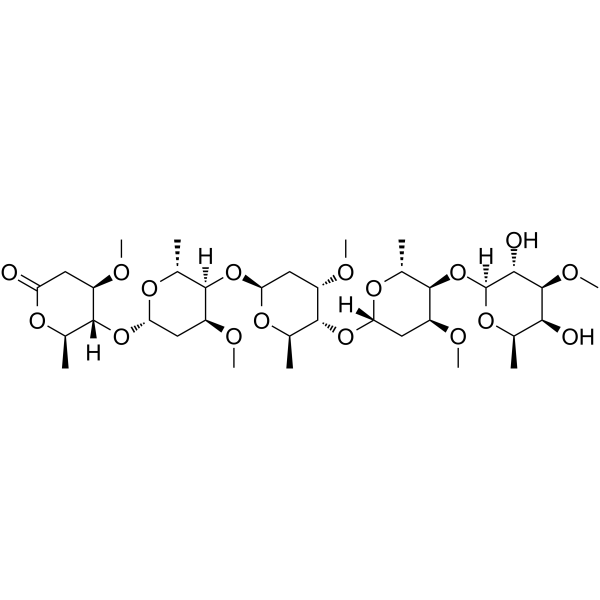
Perisesaccharide C is an oligosaccharide isolated from the root barks of Periploca sepium.
|
-
-
- HY-N4249
-
|
|
Others
|
Others
|
|
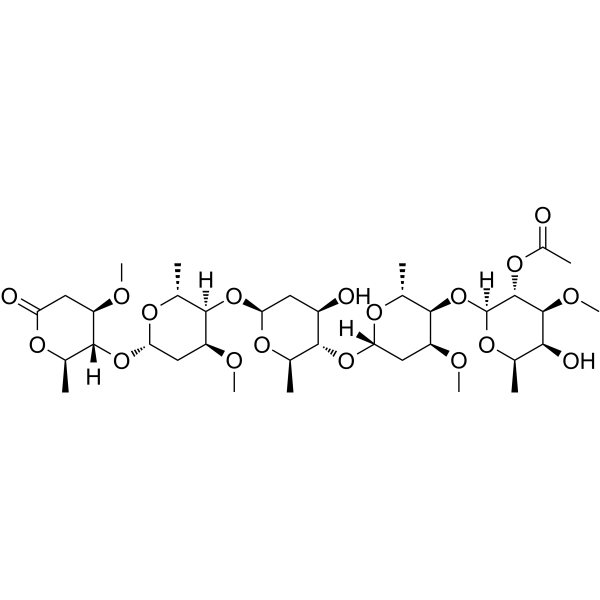
Perisesaccharide B is an oligosaccharide isolated from the root barks of Periploca sepium.
|
-
-
- HY-N5154
-
|
|
Others
|
Others
|
|
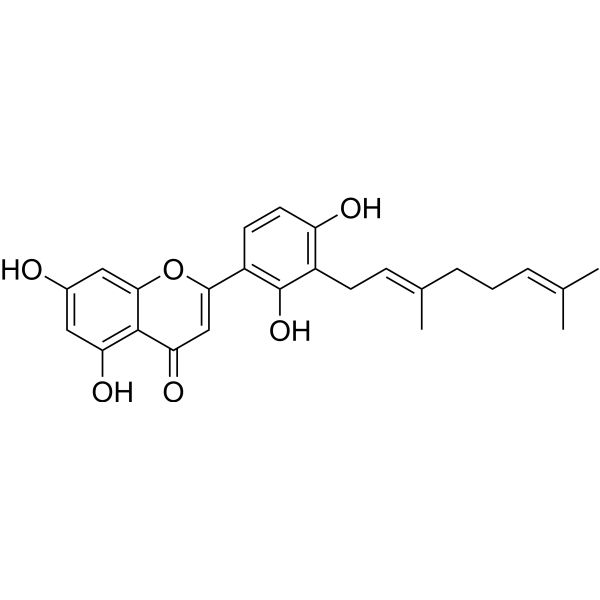
Sanggenon W is an isoprenyl flavonoid extracted from mulberry root bark .
|
-
-
- HY-N4082
-
|
|
Others
|
Cancer
|
|
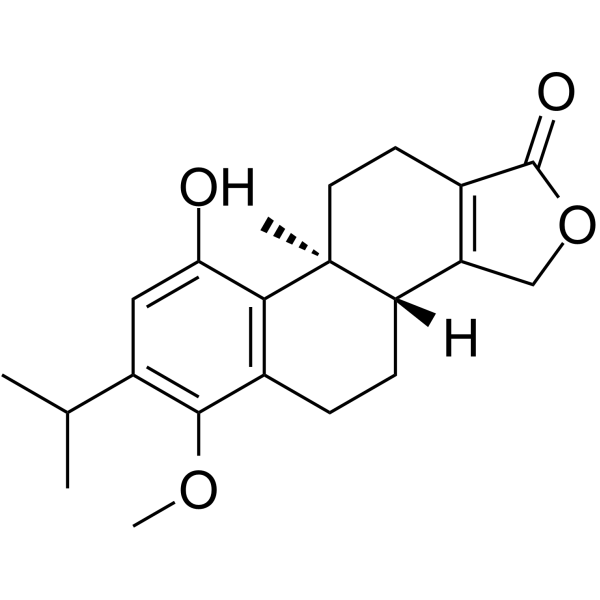
Neotriptophenolide is a sesquiterpene pyridine alkaloid isolated from the root barks of Tripterygium hypoglaucum .
|
-
-
- HY-124915
-
|
|
Others
|
Others
|
|
Netzahualcoyondiol is a triterpene that can be isolated from m root bark of Cheiloclinium cognatum .
|
-

-
- HY-N7871
-
|
|
Others
|
Others
|
|
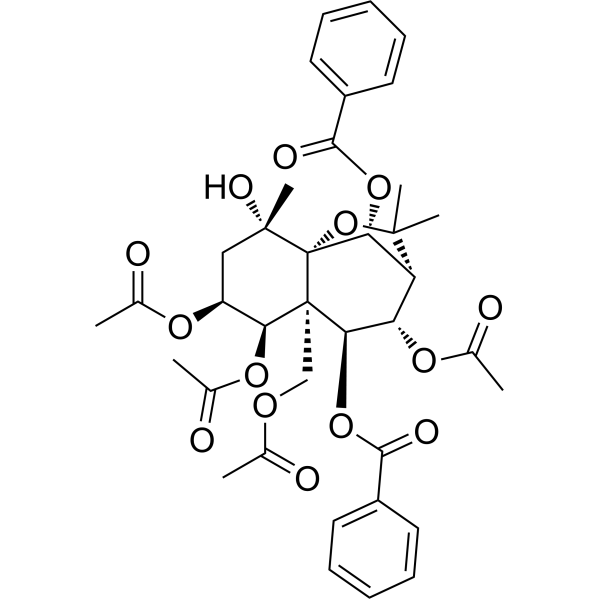
Angulatin K is a natural sesquiterpene polyol ester found in the root bark of Celastrus angulatus .
|
-
-
- HY-N10745
-
|
|
Others
|
Others
|
|
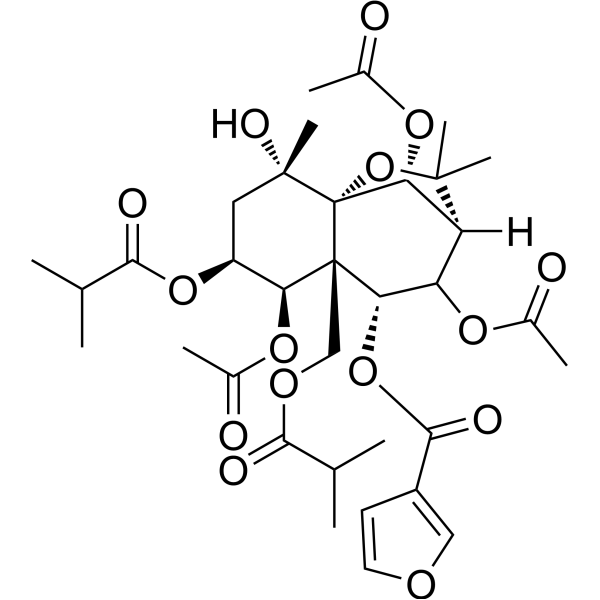
Angulatin B is a natural product that can be found in the root bark of Celastrus angulatus .
|
-
-
- HY-N2979
-
|
Dipterocarpon
|
Others
|
Others
|
|
Cabralealactone (Dipterocarpon) is a Alkaloids product that can be isolated from the root barks of Dictamnus dasycarpus. .
|
-

-
- HY-N8283
-
|
|
Others
|
Others
|
|
Euchrestaflavanone B is a Flavonoids product that can be isolated from the root barks of Cudrania tricuspidata. .
|
-

-
- HY-N8836
-
|
|
Others
|
Others
|
|
Sanggenon K is a Flavonoids product that can be isolated from the root barks of Morus alba L. .
|
-

-
- HY-N3224
-
|
|
Others
|
Others
|
|
Myricanol triacetate is a Phenols product that can be isolated from the root barks of Myrica cerifera L. .
|
-

-
- HY-N8026
-
|
|
Fungal
|
Infection
|
|
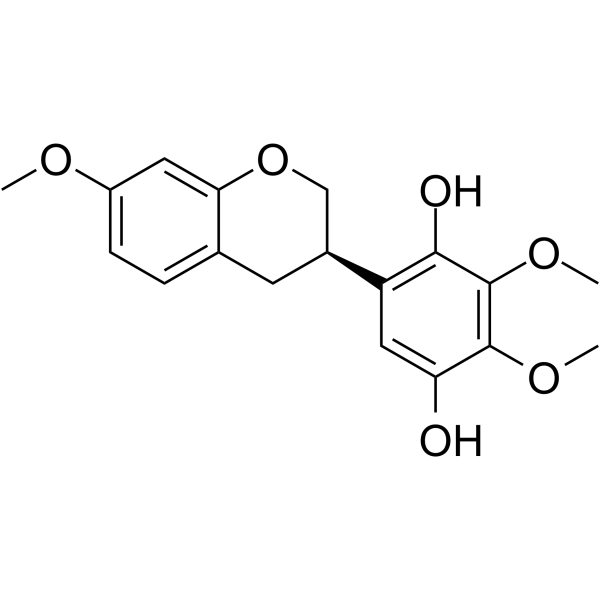
Colutehydroquinone is an isoflavonoid that can be found in the root bark of Colutea arborescens. Colutehydroquinone exhibits antifungal activity .
|
-
-
- HY-N1197
-
|
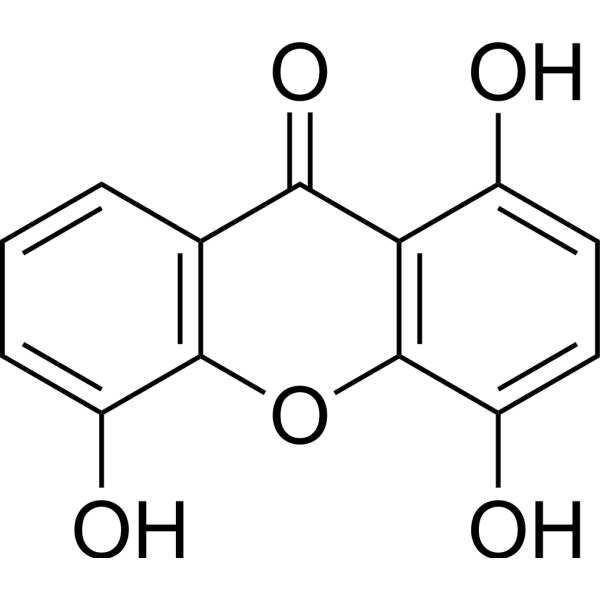
1,4,5-Trihydroxyxanthone
|
Others
|
Others
|
|
Subelliptenone G is a simple oxygenated xanthone that can be isolated from the root bark of Garcinia subelliptica .
|
-
-
- HY-N10873
-
|
|
Others
|
Others
|
|
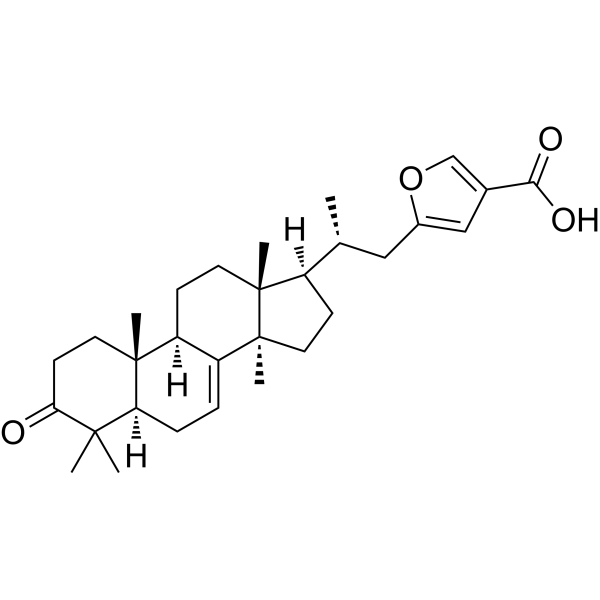
Pseudolarifuroic acid (compound 4) is a nature product that could be isolated from the root bark of P. kaempferi .
|
-
-
- HY-113757
-
|
|
Others
|
Others
|
|
Picrasidine M (compound II) is an alkaloid that can be isolated from the root bark of Picrasma quassinoids BENNET .
|
-

-
- HY-N3137
-
|
Fissistigine C; O-Methyl-(+)-flavinantine
|
Others
|
Others
|
|
O-Methylpallidine (Fissistigine C) is a Alkaloids product that can be isolated from the root barks of Melodinus yunnanensis .
|
-

-
- HY-N10977
-
|
|
Others
|
Others
|
|
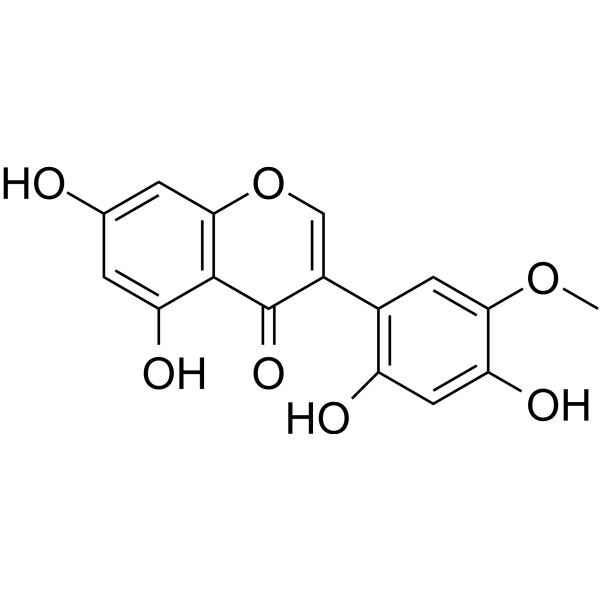
Piscerygenin (compound 4), an isoflavonoid, is a nature product that could be isolated from the root bark of Piscidia erythrina .
|
-
-
- HY-N8783
-
|
|
Others
|
Others
|
|
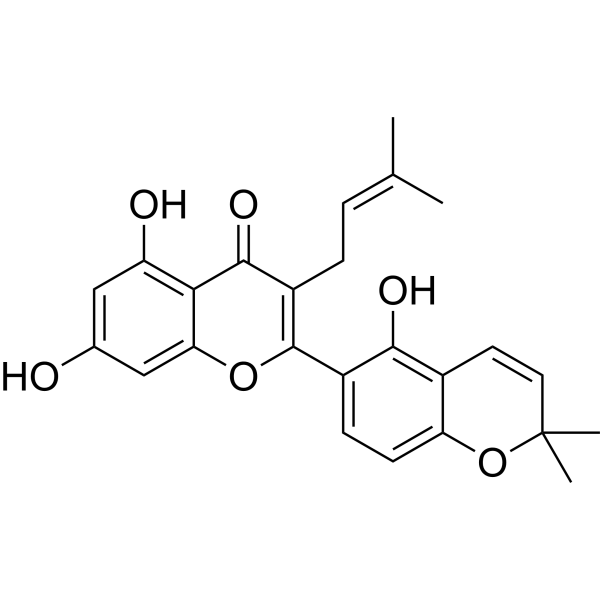
Kuwanon B is a flavone derivative that can be found in the root bark of the cultivated mulberry tree (a variety of Morus alba L.) .
|
-
-
- HY-N10318
-
|
Dictamnoside A
|
Fungal
|
Infection
Others
|
|
Erigeside II is a sesquiterpene glycoside found in the root bark of Dictamnus dasycarpus. Erigeside II stimulates the proliferation of T-cells .
|
-

-
- HY-119637
-
|
|
Others
|
Others
|
|
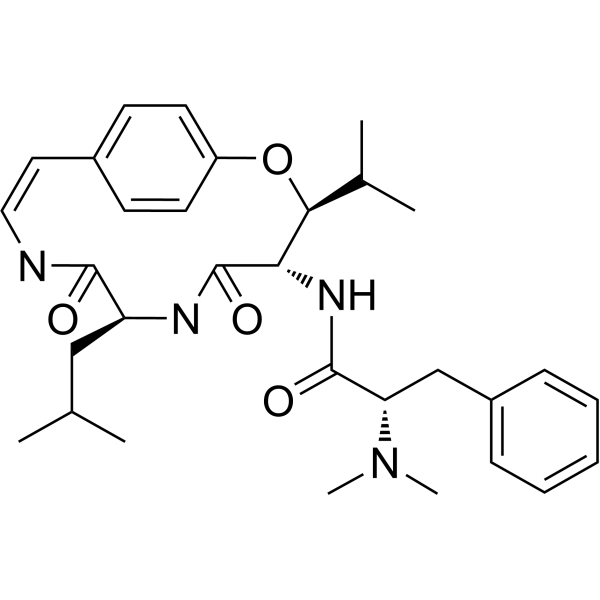
Frangufoline is a 4(14)-type cyclopeptide alkaloid, that can be isolated from the root bark extract of Ziziphus cambodiana Pierre .
|
-
-
- HY-N3448
-
|
|
Others
|
Cancer
|
|
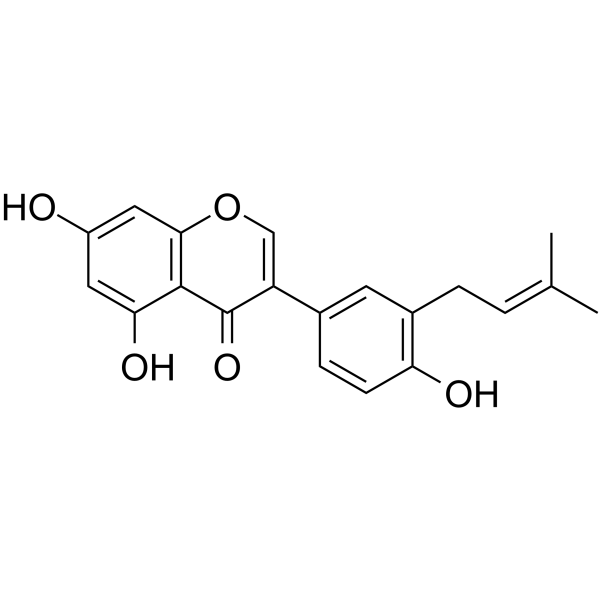
Isowigtheone is a cytotoxic isoflavone compound isolated from the root barks of Brosimum utile. Isowigtheone has the potential for the research of cancer diseases .
|
-
-
- HY-N13105
-
|
|
Others
|
Others
|
|
Camelliagenin A 16-tiglate (compound 6) is a camellia saponin isolated from the acid hydrolysis product of Harpullia cupanioides Roxb root bark saponin .
|
-

-
- HY-N5053
-
|
|
Others
|
Others
|
|
Periplogenin 3-[O-β-glucopyranosyl-(1→4)-β-sarmentopyranoside] is a cardenolide isolated from the root barks of Periploca sepium .
|
-
![Periplogenin 3-[O-β-glucopyranosyl-(1→4)-β-sarmentopyranoside]](//file.medchemexpress.com/product_pic/hy-n5053.gif)
-
- HY-N2159R
-
|
|
Reference Standards
Others
|
Metabolic Disease
|
|
Lancerin (Standard) is the analytical standard of Lancerin. This product is intended for research and analytical applications. Lancerin, isolated from the root bark of Cudraniu cochinchinensis, possesses anti-lipid peroxidation .
|
-

-
- HY-N3563
-
|
|
Others
|
Neurological Disease
|
|
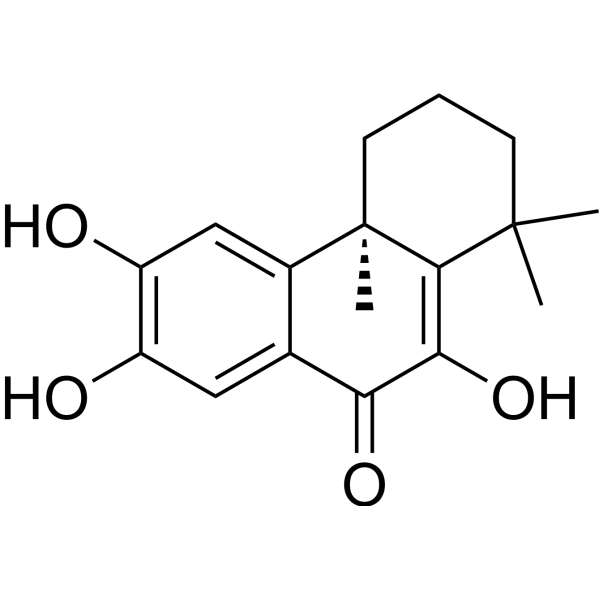
Celaphanol A is a diterpene that can be isolated from the root bark of Celastrus orbiculatus. Celaphanol A shows neuroprotective effect against a hydrogen peroxide-induced cytotoxicity in PC12 cells .
|
-
-
- HY-N0672R
-
|
|
Reference Standards
Fungal
|
Infection
|
|
Pseudolaric Acid C (Standard) is the analytical standard of Pseudolaric Acid C. This product is intended for research and analytical applications. Pseudolaric C is a diterpenoid isolated from the root bark of Pseudolarix amabilis, has antifungal activity .
|
-

-
- HY-N10683
-
|
|
Others
|
Others
|
|
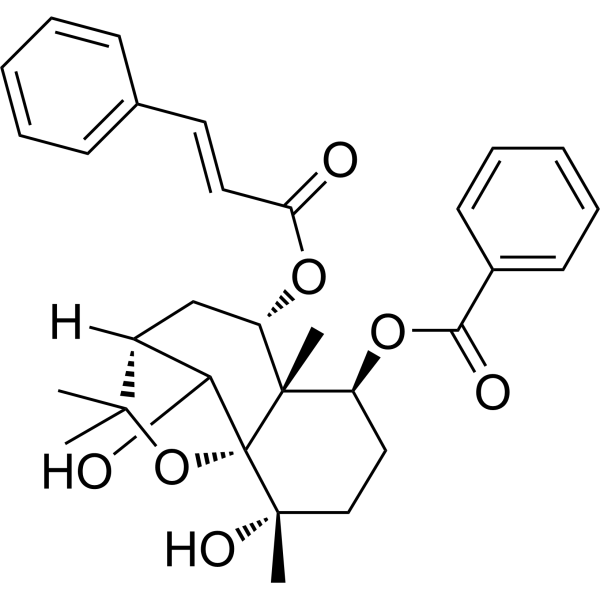
1b-Benzoyl-8a-cinnamoyl-4a,5a-dihydroxydihydroagarofuran is a sesquiterpenoid isolated from the root bark of Tripterygium hypoglaucum containing a benzoyl and a cinnamoyl group .
|
-
- HY-N10375
-
|
|
COX
|
Others
|
|
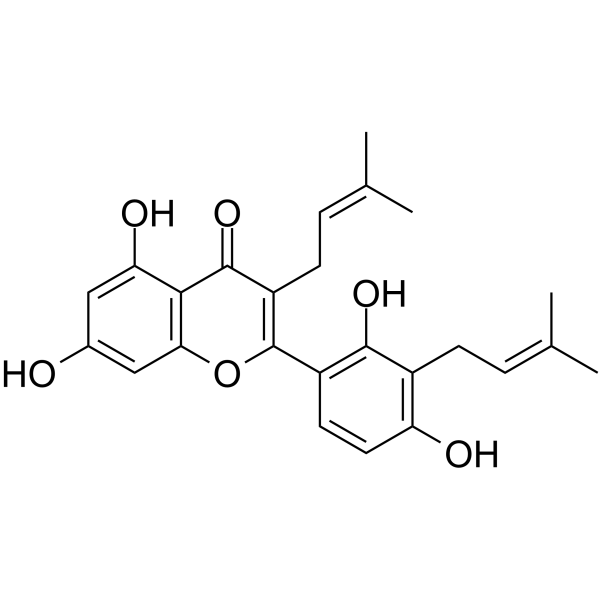
Kuwanon T is an isoprenylated flavonoid compound isolated from the root bark of Morus alba. Kuwanon T shows protective effects on t-BHP-induced oxidative stress with a EC50 of 30.32 μM .
|
-
- HY-N12344
-
|
|
JNK
|
Inflammation/Immunology
|
|
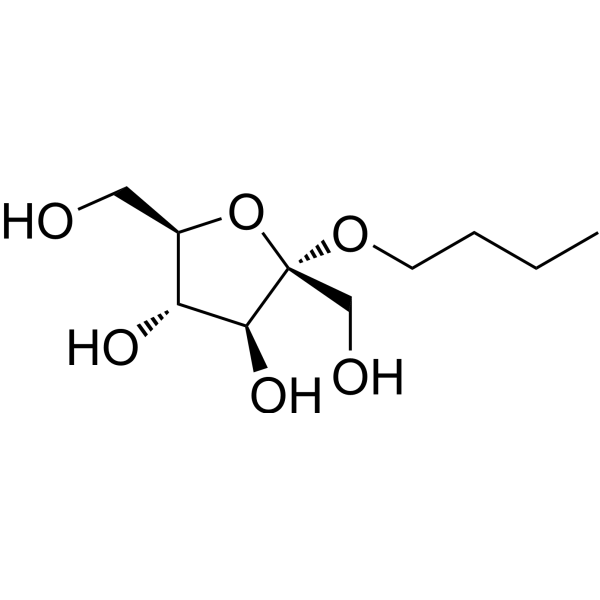
n-Butyl α-D-fructofuranoside, isolated from the root barks of Ulmus davidiana var. japonica, enhances Nrf2 activity through activation of JNK and has antiinflammation activity .
|
-
- HY-N1527
-
|
Quinovic acid 3-O-α-L-rhamnoside
|
Others
|
Others
|
|
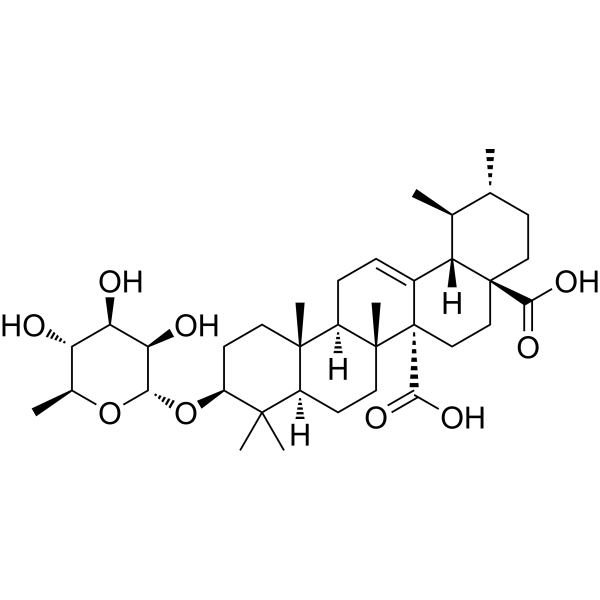
Quinovic acid 3-O-α-L-rhamnopyranoside (Quinovic acid 3-O-α-L-rhamnoside) is glycoside derivative. Quinovic acid 3-O-α-L-rhamnopyranoside can be isolated from the root bark of Guettarda angelica .
|
-
- HY-N1324
-
|
|
Others
|
Others
|
|
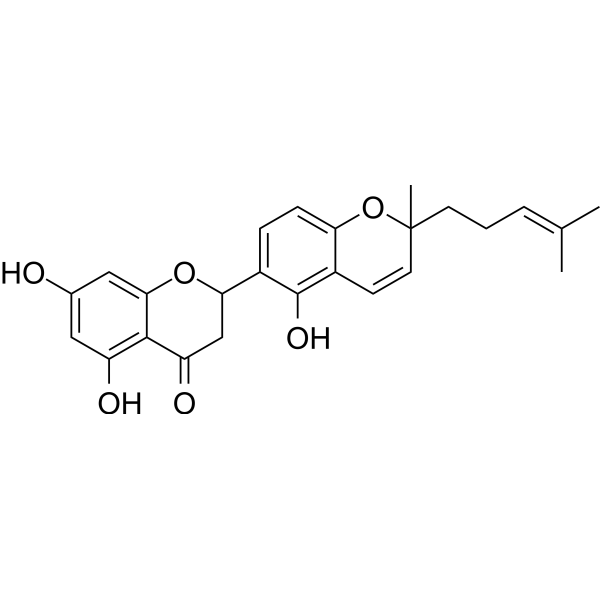
Sanggenon N is an isoprenylated flavonoid that can be isolated from the root bark of Morus alba.Sanggenon N has hepatoprotective activities on t-BHP-induced cell cytotoxicity in HepG2 cells with an EC50 of 23.45 μM .
|
-
- HY-N12040
-
|
Iso-γ-fagarine
|
Others
|
Inflammation/Immunology
|
|
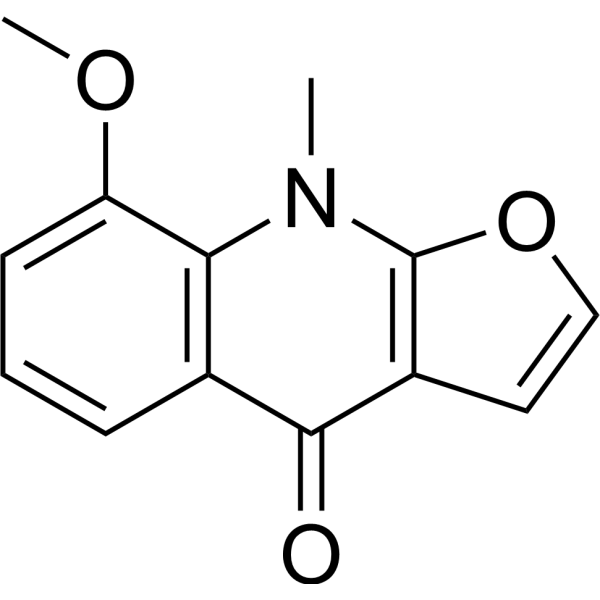
γ-Isofagarine (Iso-γ-fagarine) is an alkaloid that can be isolated from the root bark of Dictamnus angustifolius. Dictamnus angustifolius has been used in the research of rheumatism, bleeding, itching, jaundice, chronic hepatitis, skin diseases, etc .
|
-
- HY-N12130
-
|
|
Insecticide
|
Others
|
|
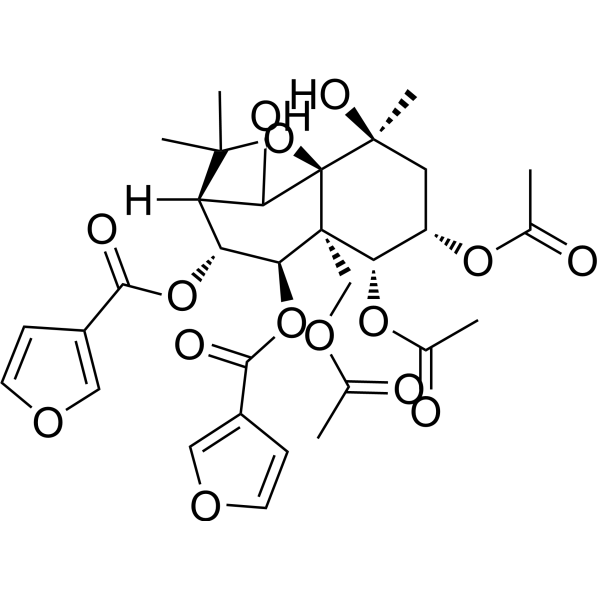
Celangulatin D (Compound 2) is an insecticidal sesquiterpene polyol ester isolated from the root bark of the natural Celastrus angulatus. Celangulatin D has insecticidal activity against armyworms. Celangulatin D can be used for insecticidal and anti-tumor research .
|
-
- HY-N9067
-
|
|
Others
|
Cancer
|
|
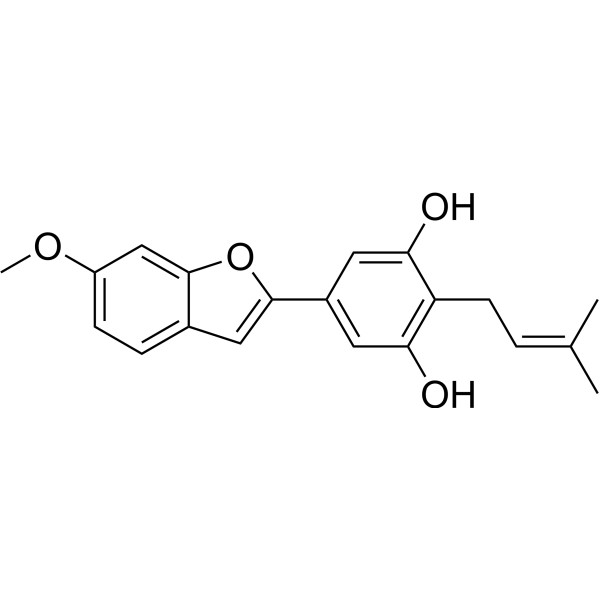
Sanggenofuran B is 2-arylbenzofuran with anti-cancer activity. Sanggenofuran B inhibits A2780 cell line with an IC50 value of 57.1 μM. Sanggenofuran B can be isolated from the root bark of Chinese Morus cathayana .
|
-
- HY-N10786
-
|
|
Fungal
|
Infection
|
|
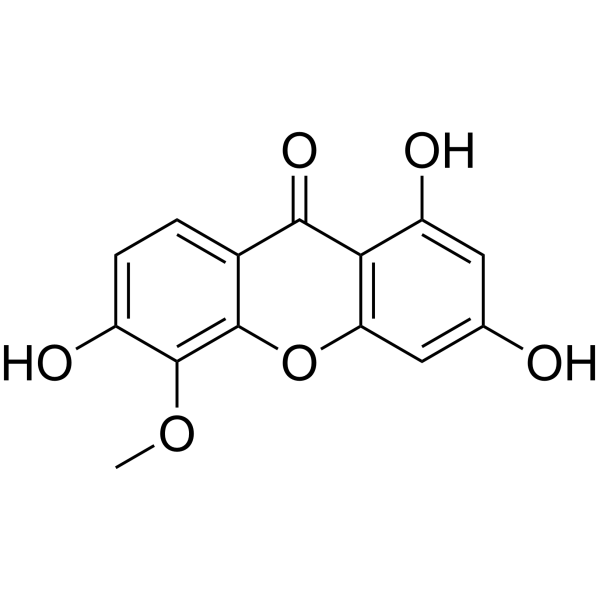
1,3,6-Trihydroxy-5-methoxyxanthone is a nature product that could be isolated form the root bark of Tovomita krukovii. 1,3,6-Trihydroxy-5-methoxyxanthone has anti-fungal effect .
|
-
- HY-N4251
-
|
(-)-Periplocoside M
|
Others
|
Cancer
|
|
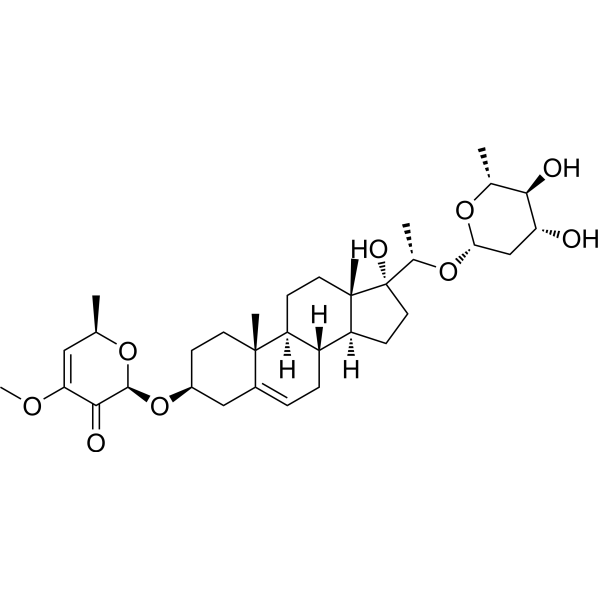
Periplocoside M (compound 8) is a natural product isolated from the root bark of Periploca sepium. Periplocoside M shows antitumor activity against human A-549 and HepG2 cell lines, with the IC50 of 4.84 and 7.06 μM .
|
-
- HY-N12081
-
-
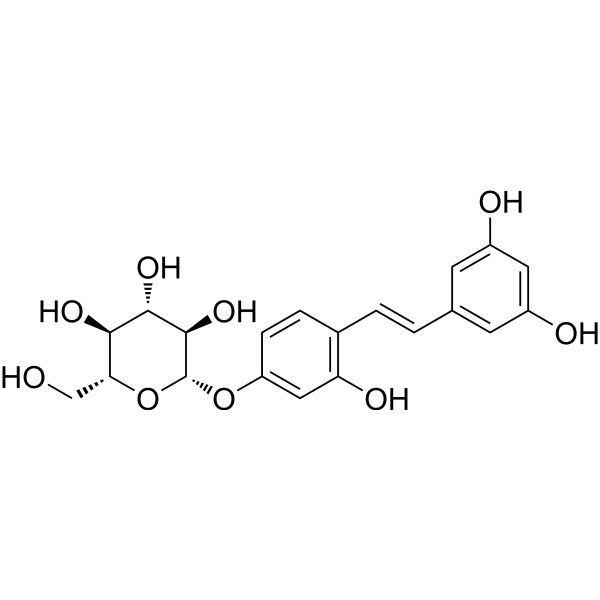
- HY-169751
-
|
|
Fungal
AP-1
|
Infection
Inflammation/Immunology
Cancer
|
|
Dihydro-N-caffeoyltyramine is a new phenolic amide that can be isolated from the root bark of wolfberry and has strong antioxidant activity and antifungal effects. Dihydro-N-caffeoyltyramine downregulates the expression of cyclooxygenase-2 by inhibiting the activity of C/EBP and AP-1 transcription factors .
|
-

- HY-N10750
-
|
|
Others
|
Others
|
|
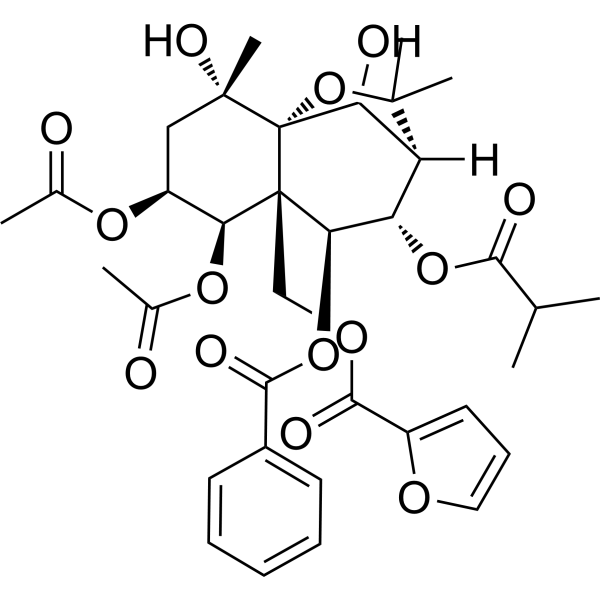
1α, 2α-Diacetoxy-8β-isobutanoyloxy-9α-benzoyloxy-15-β-(β-furancarbonyloxy)-4β, 6β-dihydroxy-β-dihydroagarofuran (compound 7) is an eudesmane-type sesquiterpenoid that can be founfd in the the root bark of Pseudolarix kaempferi .
|
-
- HY-125122
-
|
|
Others
|
Inflammation/Immunology
|
|
Mulberrofuran A is a natural product, that can be isolated from the root bark of mulberry tree. Mulberrofuran A inhibits the formations of 12-hydroxy-,8,10-heptadecatrienoic acid (HHT) and thromboxane B2 (cyclooxygenase products), but it increases the formation of 12-hydroxy-5,8,10,14-eicosatetraenoic acid (12-HETE) (12-lipoxygenase product) .
|
-
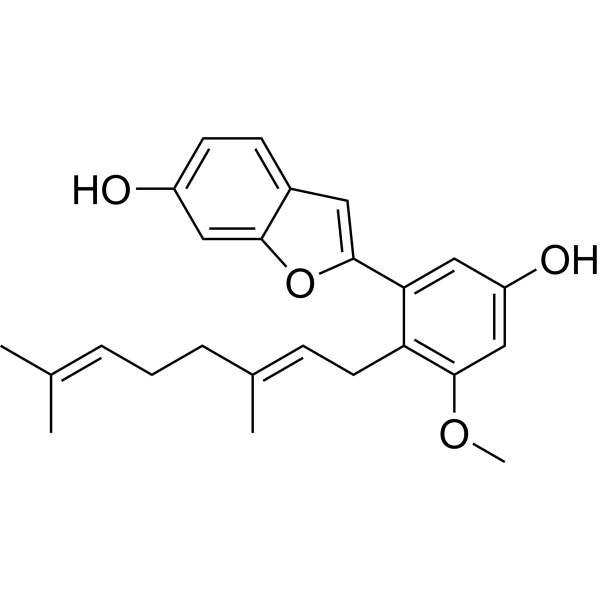
- HY-N15753
-
-

- HY-N0242R
-
|
|
Reference Standards
PD-1/PD-L1
HIF/HIF Prolyl-Hydroxylase
STAT
|
Inflammation/Immunology
Cancer
|
|
Fraxinellone (Standard) is the analytical standard of Fraxinellone. This product is intended for research and analytical applications. Fraxinellone is isolated from the root bark of the Rutaceae plant, Dictamnus dasycarpus. Fraxinellone is a PD-L1 inhibitor and inhibits HIF-1α protein synthesis without affecting HIF-1α protein degradation. Fraxinellone has the potential to be a valuable candidate for cancer treatment by targeting PD-L1 .
|
-

- HY-N17986
-
|
|
Others
|
Others
|
|
Pseudolaric acid G is a diterpenoid found in the root bark of Pseudolarix kaempferi .
|
-

- HY-N18166
-
|
|
Others
|
Others
|
|
Nimbolinin B is a limonoid found in the root bark of Turraea robusta .
|
-

- HY-N1519
-
|
|
Others
|
Others
|
|
Ravenine is a Alkaloids product that can be isolated from the root barks of Dictamnus dasycarpus. .
|
-

- HY-N1146
-
|
|
Others
|
Others
|
|
Toddalosin is a Coumarins product that can be isolated from the root barks of Toddalia asiatica .
|
-

- HY-N3299
-
|
|
Others
|
Others
|
|
Meloscandonine is a Alkaloids product that can be isolated from the root barks of Melodinus yunnanensis .
|
-

- HY-N9070
-
|
|
Others
|
Others
|
|
Taxumairol R is a Diterpenoids product that can be isolated from the root barks of Taxus mairei. .
|
-

- HY-N0956
-
|
|
Others
|
Others
|
|
(+)-S-Myricanol glucoside is a Phenols product that can be isolated from the root barks of Myrica cerifera L. .
|
-

- HY-N17355
-
-

- HY-N7877
-
|
|
Others
|
Others
|
|
Angulatin D is a β-dihydroagarofuran compound found in the root bark of Celastrus angulatus Maxim .
|
-

- HY-N3238
-
|
|
Others
|
Others
|
|
Mulberrofuran G pentaacetate is a Phenols product that can be isolated from the root barks of Morus alba .
|
-

- HY-N18259
-
|
|
Drug Derivative
|
Others
|
|
8-Formyllimettin (Compound 25) is a coumarin compound that can be isolated from the root bark of Toddalia asiatica .
|
-

- HY-N17337
-
|
|
Drug Derivative
|
Others
|
|
Etrogol is a prenylphenol derivative. Etrogol exists in the roots and root barks of citron (C. medica L. var. ethrog ENGL.) .
|
-

- HY-N13130
-
|
|
Others
|
Cancer
|
|
(+)-Mollisacacidin is a flavan compound found in the root bark of Albizia glaberrima. (+)-Mollisacacidin exhibits no significant antiproliferative effect on cancer cells .
|
-

- HY-N1602
-
|
|
Others
|
Others
|
|
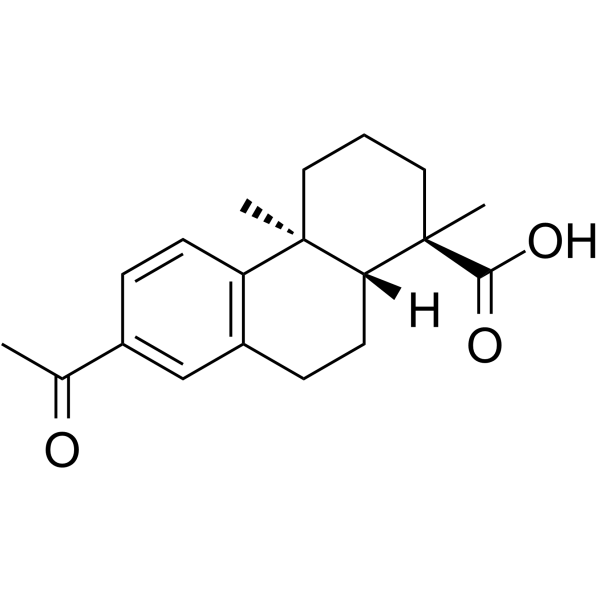
16-Nor-15-oxodehydroabietic acid (compound 32) is a compound isolated from the root bark of Pinus massoniana .
|
-
- HY-N11464
-
|
|
Others
|
Others
|
|
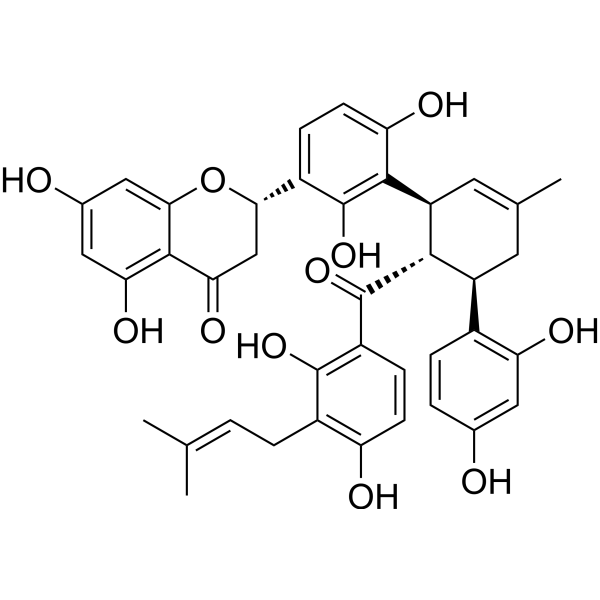
Kuwanon O is a flavonoid derivative with a fused dihydrochalcone partial moiety, that can be isolated from the root bark of Morus lhou (set.) Koidz .
|
-
- HY-N18287
-
|
|
Drug Derivative
|
Others
|
|
Tenuifoliose Q is an oligosaccharide ester esterified with acetic acid, benzoic acid and p-hydroxycinnamic acid, which can be isolated from the root bark of Polygala tenuifolia Willd .
|
-

- HY-N18002
-
|
|
Drug Derivative
|
Others
|
|
3-O-Methylellagic acid 4-O-β-D-glucopyranoside is an ellagic acid derivative found in the root bark of Anisophyllea dichostyla R. Br .
|
-

- HY-N18061
-
|
|
Insecticide
|
Infection
|
|
Neoazedarachin B is an insect antifeedant present in the root bark of Melia toosendan. Neoazedarachin B reduces the feeding behavior of third-instar larvae of Spodoptera littoralis .
|
-

- HY-N17552
-
|
|
Others
|
Cancer
|
|
Notabilisin L is an isoprenylated flavonoid. Notabilisin L can be isolated from root bark of M. alba. Notabilisin L has no significant inhibitory effects on the viability of gastric cancer cells .
|
-

- HY-N17359
-
|
|
Drug Derivative
|
Cancer
|
|
Mulberrofuran W is a 2-arylbenzofuran with a farnesyl group that exists in the root bark of Morus mongolica. It also acts as a cytotoxic agent with low cytotoxicity and weak tumor specificity .
|
-

- HY-N18379
-
|
|
Others
|
Cancer
|
|
Altissimacoumarin L is a terpenylated coumarin. Altissimacoumarin L can be isolated from the root bark of Ailanthus altissima (Mill.) Swingle. Altissimacoumarin L shows no significant cytotoxic activity against hepatoma cells .
|
-

- HY-N18090
-
|
|
Drug Derivative
|
Others
|
|
Voacamidine is an iboga-vobasinyl dimeric monoterpenoid indole alkaloid found in the root bark of Voacanga africana. Voacamidine undergoes cleavage in acid media to produce Voacangine (HY-N7536) .
|
-

- HY-N17415
-
|
|
Drug Derivative
|
Others
|
|
Lyciumin C is a monocyclic octapeptide containing a novel C-N linkage between tryptophan N1 and glycine Cα, and can be found in the root bark of Lycium chinense MILL .
|
-

- HY-N18378
-
|
|
Others
|
Cancer
|
|
Altissimacoumarin K is a terpenylated coumarin. Altissimacoumarin K can be isolated from the root bark of Ailanthus altissima (Mill.) Swingle. Altissimacoumarin K exhibits no significant cytotoxic effect against hepatoma cells .
|
-

- HY-N18151
-
|
|
Others
|
Others
|
|
Ohchinolide C is a ring C-seco limonoid and insect antifeedant. Ohchinolide C can be found in the root bark of Melia toosendan. Ohchinolide C exerts antifeedant activity against Spodoptera eridania larvae .
|
-

- HY-N13831
-
|
|
Others
|
Others
|
|
Swietenidine B is a quinoline alkaloid that can be isolated from the root bark of Dictamnus dasycarpus. Swietenidine B does not show significant activity in inhibiting NO production in LPS-induced BV-2 microglial cells .
|
-

- HY-N17567
-
|
|
Lipase
|
Metabolic Disease
|
|
Morusalnol A is a arylbenzofuran derivative found in the root bark of Morus alba. Morusalnol A is a pancreatic lipase inhibitor with a porcine pancreatic lipase IC50 of 0.71 μM. Morusalnol A inhibits pancreatic lipase activity. Morusalnol A can be used for the research of obesity .
|
-

- HY-N18156
-
|
|
Others
|
Cancer
|
|
29β-Toosendanin is a toosendanin-type limonoid that is found in the root bark of Melia azedarach. 29β-Toosendanin exerts cytotoxic effects on lymphocytic leukemia cells in vitro. 29β-Toosendanin can be used for the research of leukemia .
|
-

- HY-N16630
-
|
Dehydrodiconiferyl alcohol 4,9’-di-O-B-D-glucopyranoside
|
Others
|
Others
|
|
Dehydrodiconiferyl alcohol 4,γ′-di-O-β-D-glucopyranoside (Compound 4) is a lignan glycoside. Dehydrodiconiferyl alcohol 4,γ′-di-O-β-D-glucopyranoside can be isolated from the root bark of Morus alba L .
|
-

- HY-N7869
-
|
|
Insecticide
|
Infection
|
|
Celangulin VII is a β-dihydroagarofuran sesquiterpene polyol ester present in the root bark of Celastrus angulatus. Celangulin VII exhibits insecticidal and narcotic activities against the 4th-instar larvae of Mythimna separata. Celangulin VII can be used in insecticide-related research .
|
-

- HY-N17601
-
|
|
Phosphatase
Glycosidase
|
Metabolic Disease
|
|
Parvisoflavone B is a prenylated flavonoid. Parvisoflavone B can be isolated from root bark of Erythrina mildbraedii. Parvisoflavone B inhibits PTP1B activity with an IC50 of 42.6 μM. Parvisoflavone B inhibits α-glucosidase with an IC50 of 12.19 μM. Parvisoflavone B can be used in the research of type 2 diabetes and obesity .
|
-

| Cat. No. |
Product Name |
Category |
Target |
Chemical Structure |
-
- HY-N1381
-
-
-
- HY-N2392
-
|
|
Cardiovascular Disease
Alkaloids
Structural Classification
other families
Classification of Application Fields
Other Alkaloids
Phenols
Polyphenols
Plants
Disease Research Fields
Source Classification
|
Parasite
Lipoxygenase
Opioid Receptor
Apoptosis
Autophagy
Reactive Oxygen Species (ROS)
Interleukin Related
TNF Receptor
PGE synthase
COX
|
|
Kukoamine A, a spermine alkaloid, is an orally active and brain-penetrant component found in the root barks of Lycium chinense (L. chinense) Miller. Kukoamine A inhibits purified Crithidia fasciculata trypanothione reductase and soybean lipoxygenase, activates μ-opioid receptor. Kukoamine A can inhibt cancer cell proliferation, migration and invasion, cause G0/G1 phase cell cycle arrest and induce apoptosis. Kukoamine A exerts neuroprotective effect and can induce autophagy . Kukoamine A inhibits LPS (HY-D1056)-induced NO, ROS, PGE2, TNF-α, IL-1β, IL-6 production and COX-2 activity. Kukoamine A reverses palmitic acid-induced insulin resistance, lipid accumulation, and oxidative stress via downregulation of Srebp-1c. Kukoamine A can be used for the research of cancer, infection, inflammation, metabolic and neurological disease, such as glioblastoma and Parkinson's disease .
|
-
-
- HY-N0242
-
-
-
- HY-N0627
-
-
-
- HY-N2300
-
-
-
- HY-N1931
-
-
-
- HY-N3395
-
-
-
- HY-N0672
-
-
-
- HY-N8761
-
-
-
- HY-N7536
-
-
-
- HY-N3944
-
-
-
- HY-N10842
-
-
-
- HY-N2299
-
-
-
- HY-N10695
-
-
-
- HY-N10803
-
-
-
- HY-N10854
-
|
|
Triterpenes
Pinaceae
Terpenoids
Pseudolarix amabilis (J. Nelson) Rehder
Plants
Source Classification
|
Others
|
|
Lanosta-7,9(11),23,25(27)-tetraen-26-oic acid, 23,27-epoxy-3-oxo- is a lanosterane type compound. Lanosta-7,9(11),23,25(27)-tetraen-26-oic acid, 23,27-epoxy-3-oxo- can be isolated from Tu-Jin-Pi (the root bark of Pseudolarix kaempferi) .
|
-
-
- HY-N2159
-
-
-
- HY-N11531
-
-
-
- HY-N16130
-
-
-
- HY-125123
-
-
-
- HY-N2906
-
-
-
- HY-N10697
-
-
-
- HY-N1381R
-
-
-
- HY-N4248
-
-
-
- HY-N4249
-
-
-
- HY-N5154
-
-
-
- HY-N4082
-
-
-
- HY-124915
-
-
-
- HY-N7871
-
-
-
- HY-N10745
-
-
-
- HY-N2979
-
-
-
- HY-N8283
-
-
-
- HY-N8836
-
-
-
- HY-N3224
-
-
-
- HY-N8026
-
-
-
- HY-N1197
-
-
-
- HY-N10873
-
-
-
- HY-113757
-
-
-
- HY-N3137
-
-
-
- HY-N10977
-
-
-
- HY-N8783
-
-
-
- HY-N10318
-
-
-
- HY-119637
-
-
-
- HY-N3448
-
-
-
- HY-N13105
-
-
-
- HY-N5053
-
-
-
- HY-N2159R
-
-
-
- HY-N3563
-
-
-
- HY-N0672R
-
-
-
- HY-N10683
-
-
- HY-N12344
-
-
- HY-N1527
-
-
- HY-N1324
-
-
- HY-N12040
-
-
- HY-N12130
-
-
- HY-N9067
-
-
- HY-N10786
-
-
- HY-N4251
-
-
- HY-N12081
-
-
- HY-N10750
-
-
- HY-125122
-
|
|
Monophenols
Phenols
Morus alba L.
Plants
Moraceae
Source Classification
|
Others
|
|
Mulberrofuran A is a natural product, that can be isolated from the root bark of mulberry tree. Mulberrofuran A inhibits the formations of 12-hydroxy-,8,10-heptadecatrienoic acid (HHT) and thromboxane B2 (cyclooxygenase products), but it increases the formation of 12-hydroxy-5,8,10,14-eicosatetraenoic acid (12-HETE) (12-lipoxygenase product) .
|
-
- HY-N15753
-
-
- HY-N0242R
-
-
- HY-N17986
-
-
- HY-N18166
-
-
- HY-N1519
-
-
- HY-N1146
-
-
- HY-N3299
-
-
- HY-N9070
-
-
- HY-N0956
-
-
- HY-N17355
-
-
- HY-N7877
-
-
- HY-N3238
-
-
- HY-N18259
-
-
- HY-N17337
-
-
- HY-N13130
-
-
- HY-N11464
-
-
- HY-N18287
-
-
- HY-N18002
-
-
- HY-N18061
-
-
- HY-N17552
-
-
- HY-N17359
-
-
- HY-N18379
-
-
- HY-N18090
-
-
- HY-N17415
-
-
- HY-N18378
-
-
- HY-N18151
-
-
- HY-N13831
-
-
- HY-N17567
-
-
- HY-N18156
-
-
- HY-N16630
-
-
- HY-N7869
-
-
- HY-N17601
-
-
Your information is safe with us. * Required Fields.
Inquiry Information
- Product Name:
- Cat. No.:
- Quantity:
- MCE Japan Authorized Agent:





![Periplogenin 3-[O-β-glucopyranosyl-(1→4)-β-sarmentopyranoside]](http://file.medchemexpress.com/product_pic/hy-n5053.gif)





