1. Search Result
Search Result
Pathways Recommended: Protein Tyrosine Kinase/RTK
Results for "

src tyrosine kinase

" in MedChemExpress (MCE) Product Catalog:

63

Inhibitors & Agonists

6

Peptides

8

Natural
Products

13

Recombinant Proteins

3

Isotope-Labeled Compounds

16

Antibodies

1

Click Chemistry

Cat. No. Product Name Target Research Areas Chemical Structure
  • HY-10234
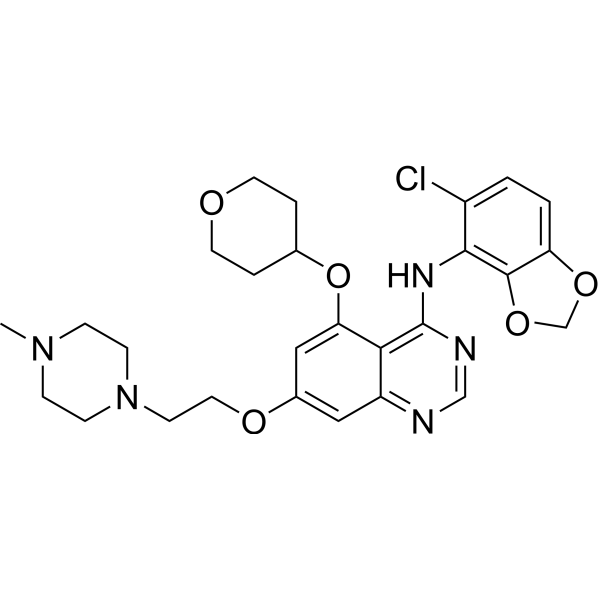
    Saracatinib
    Maximum Cited Publications
    39 Publications Verification

    AZD0530

    Src Autophagy Cancer
    Saracatinib (AZD0530) is a potent Src family inhibitor with IC50s of 2.7 to 11 nM for c-Src, Lck, c-YES, Lyn, Fyn, Fgr, and Blk. Saracatinib shows high selectivity over other tyrosine kinases .
    Saracatinib
  • HY-10158
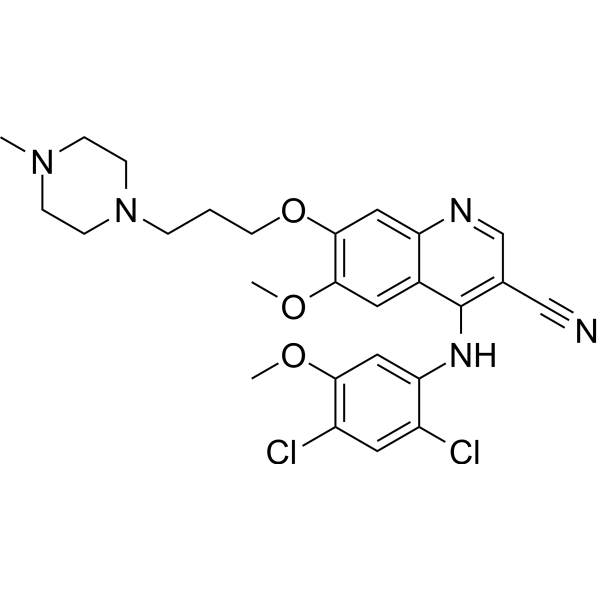
    Bosutinib
    20+ Cited Publications

    SKI-606

    Src Bcr-Abl Autophagy Cancer
    Bosutinib is an orally active Src/Abl tyrosine kinase inhibitor with IC50 of 1.2 nM and 1 nM, respectively .
    Bosutinib
  • HY-101053
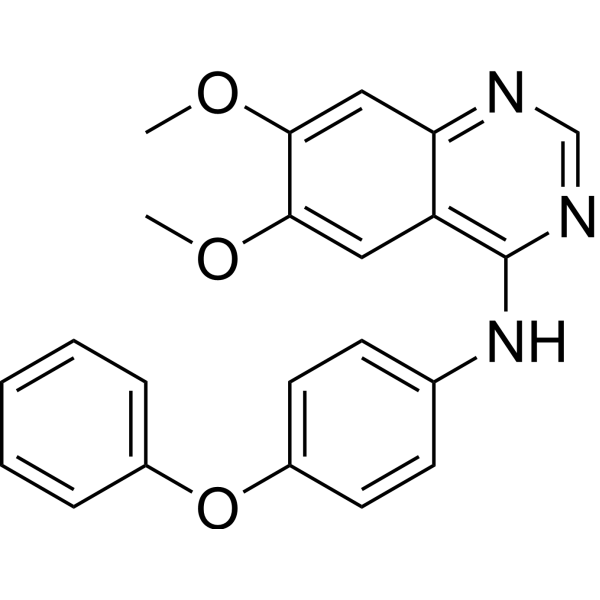
    Src Inhibitor 1
    15+ Cited Publications

    src kinase Inhibitor 1; src-l1

    Src Cancer
    Src Inhibitor 1 is a potent, ATP-competitive and selective dual site Src tyrosine kinase inhibitor with IC50 values of 44 nM for Src and 88nM for Lck.
    Src Inhibitor 1
  • HY-13804
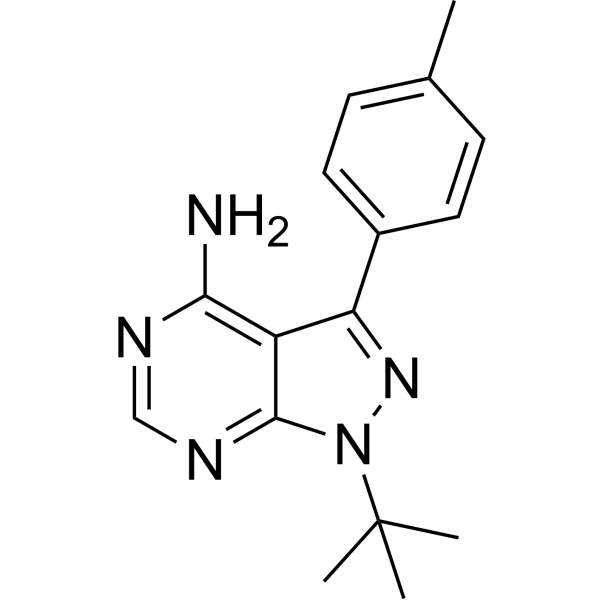
    PP1
    10+ Cited Publications

    AGL 1872; EI 275

    Src Apoptosis Cancer
    PP1 is a potent, and Src family-selective tyrosine kinase inhibitor with IC50 of 5 and 6 nM for Lck and Fyn, respectively.
    PP1
  • HY-16558
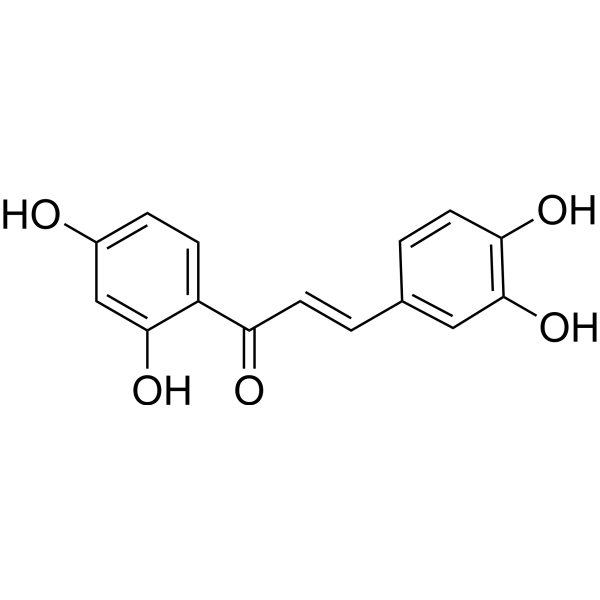
    Butein
    5+ Cited Publications

    2’,3,4,4’-tetrahydroxy Chalcone

    EGFR Autophagy Apoptosis Phosphodiesterase (PDE) Cancer
    Butein is a cAMP-specific PDE inhibitor with an IC50 of 10.4 μM for PDE4 . Butein is a specific protein tyrosine kinase inhibitor with IC50s of 16 and 65 μM for EGFR and p60 c-src in HepG2 cells . Butein sensitizes HeLa cells to Cisplatin through AKT and ERK/p38 MAPK pathways by targeting FoxO3a . Butein is a SIRT1 activator (STAC).
    Butein
  • HY-10158A
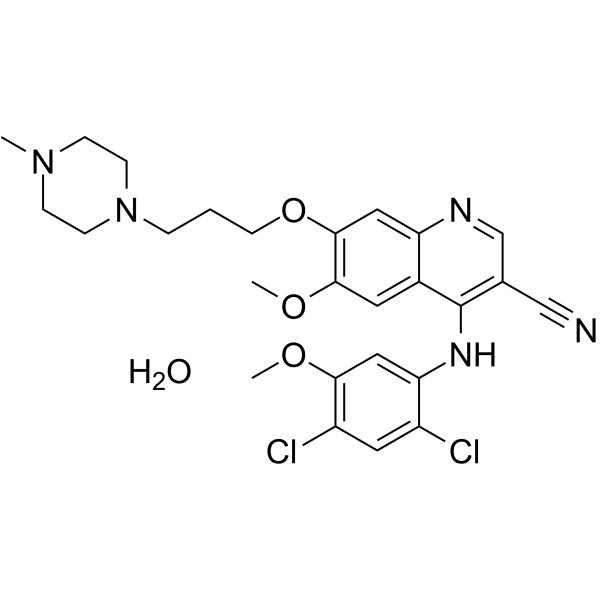
    Bosutinib hydrate
    20+ Cited Publications

    SKI-606 hydrate

    Src Bcr-Abl Cancer
    Bosutinib hydrate is an oraly activel Src/Abl tyrosine kinase inhibito with IC50 of 1.2 nM and 1 nM, respectively .
    Bosutinib hydrate
  • HY-118144

    Src Bcr-Abl p38 MAPK Cancer
    PD166326 is an orally active tyrosine kinase inhibitor with a IC50 of 8 nM against abl tyrosine kinase and a IC50 of 6 nM against src tyrosine kinase. PD166326 blocks Bcr/Abl kinase activity. PD166326 inhibits Bcr/Abl-dependent proliferation and cell cycle progression. PD166326 reduces peripheral blood granulocytosis, alleviates splenomegaly and prolongs survival in a mouse model of chronic myeloid leukemia. PD166326 can be used in research related to chronic myeloid leukemia .
    PD166326
  • HY-10181S
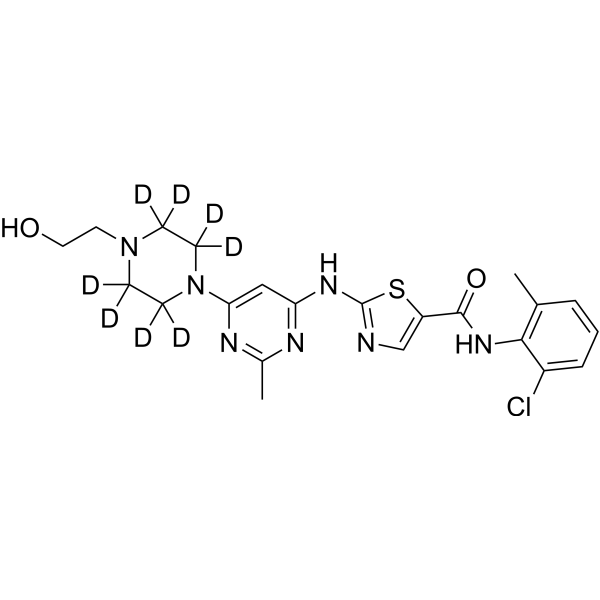
    Dasatinib-d8
    1 Publications Verification

    BMS-354825-d8

    Bcr-Abl Src Apoptosis Autophagy Cancer
    Dasatinib-d8 (BMS-354825-d8) is a deuterium labeled Dasatinib. Dasatinib is a dual Bcr-Abl and Src family tyrosine kinase inhibitor.
    Dasatinib-d8
  • HY-15749
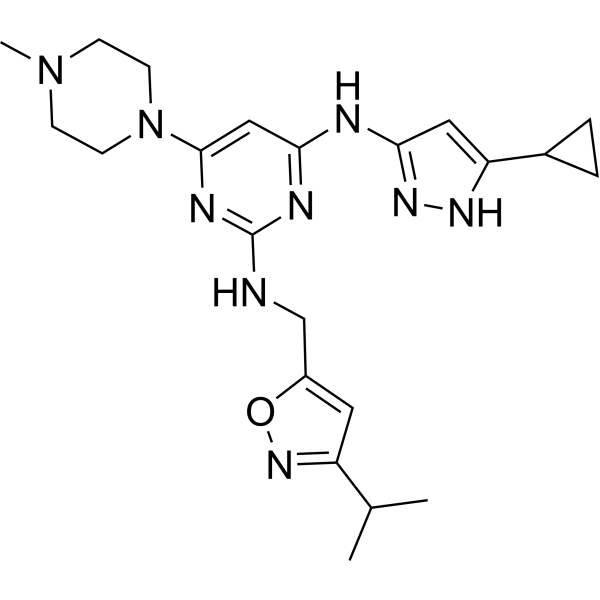
    XL228
    4 Publications Verification

    Aurora Kinase Bcr-Abl IGF-1R Src Endocrinology Cancer
    XL228 is a multi-targeted tyrosine kinase inhibitor with IC50s of 5, 3.1, 1.6, 6.1, 2 nM for Bcr-Abl, Aurora A, IGF-1R, Src and Lyn, respectively.
    XL228
  • HY-18303
    AMG-47a
    3 Publications Verification

    Src VEGFR p38 MAPK JAK Inflammation/Immunology
    AMG-47a is an orally active, ATP-competitive Lck inhibitor (IC50=0.2 nM). AMG-47a inhibits VEGF2, p38α, p38α, Jak3, MLR, and IL-2 with IC50 of 1 nM, 3 nM, 72 nM, 30 nM, and 21 nM, respectively. AMG-47a reduces T cell activation and the production of cytokines such as TGF-β, exerting anti-inflammatory and anti-fibrotic activities. AMG-47a can be used in the research of autoimmune diseases, pulmonary fibrosis, and KRAS mutation-associated cancers[1][2][3].
    AMG-47a
  • HY-100434

    FGFR PDGFR EGFR Src TGF-β Receptor Cardiovascular Disease Cancer
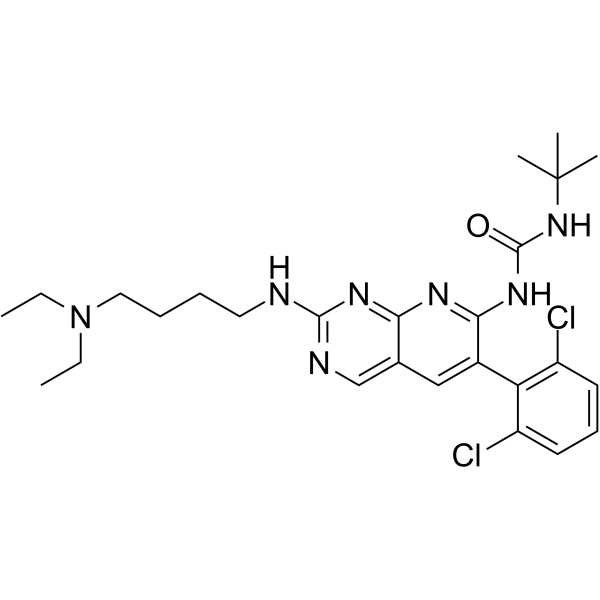
    PD-161570 is a potent and ATP-competitive human FGF-1 receptor inhibitor with an IC50 of 39.9 nM and a Ki of 42 nM. PD-161570 also inhibits the PDGFR, EGFR and c-Src tyrosine kinases with IC50 values of 310 nM, 240 nM, and 44 nM, respectively. PD-161570 inhibits PDGF-stimulated autophosphorylation and FGF-1 receptor phosphorylation with IC50s of 450 nM and 622 nM, respectively . PD-161570 is also a bone morphogenetic proteins (BMPs) and TGF-β signaling inhibitor .
    PD-161570
  • HY-10185
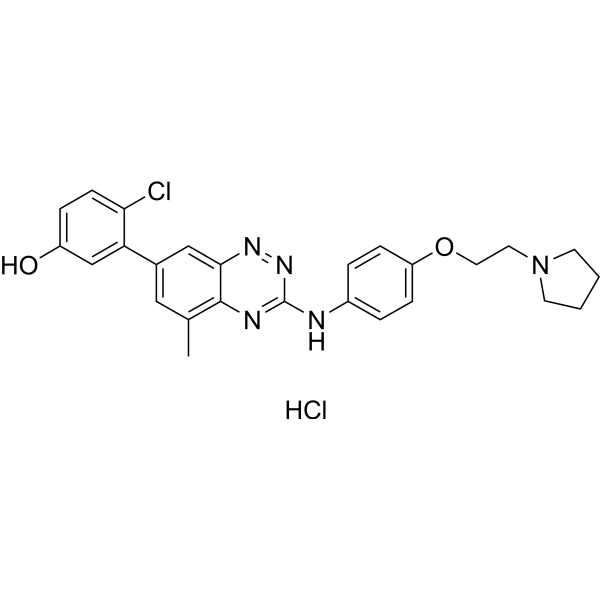
    TG 100572 Hydrochloride
    3 Publications Verification

    Src VEGFR FGFR PDGFR Inflammation/Immunology
    TG 100572 Hydrochloride is a multi-targeted kinase inhibitor which inhibits receptor tyrosine kinases and Src kinases; has IC50s of 2, 7, 2, 16, 13, 5, 0.5, 6, 0.1, 0.4, 1, 0.2 nM for VEGFR1, VEGFR2, FGFR1, FGFR2, PDGFRβ, Fgr, Fyn, Hck, Lck, Lyn, Src, Yes, respectively.
    TG 100572 Hydrochloride
  • HY-78263
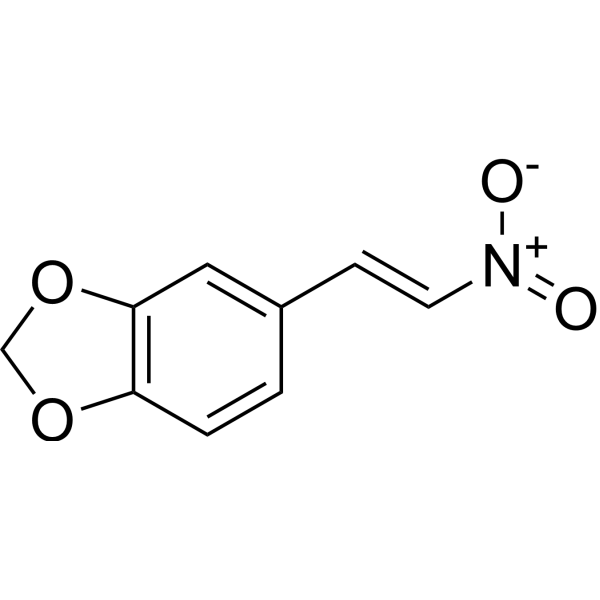
    MNS
    3 Publications Verification

    NSC 170724; 5-(2-Nitrovinyl)benzodioxole

    Src Syk NOD-like Receptor (NLR) Integrin PANoptosis Neurological Disease Inflammation/Immunology Cancer
    MNS (NSC 170724), the beta-nitrostyrene derivative, is an orally active tyrosine kinase inhibitor, a broad-spectrum antiplatelet agent, and a PANoptosis inhibitor. MNS inhibits Src, Syk, and FAK with IC50 of 27.3, 2.8, and 97.6 μM, respectively. MNS inhibits NLRP3 inflammasome and β1 integrin. MNS completely inhibits U46619, ADP-, arachidonic acid-, collagen-, and thrombin-induced platelet aggregation with IC50 values of 2.1, 4.1, 5.8, 7.0, and 12.7 μM, respectively. MNS is cytotoxic to a variety of cells .
    MNS
  • HY-10186
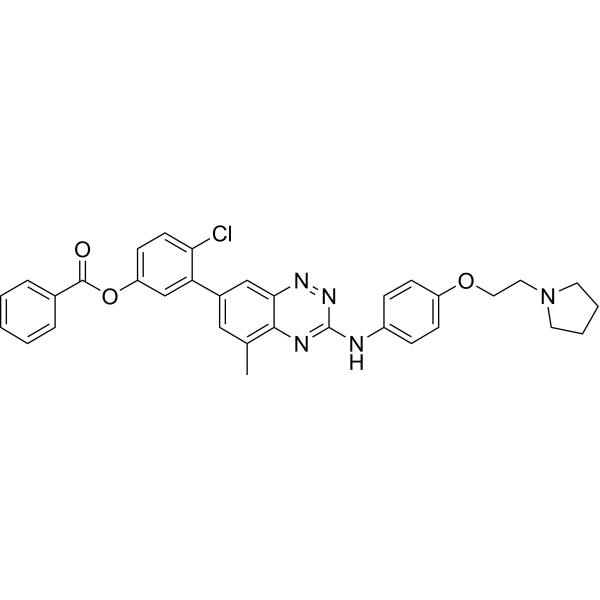
    TG 100801
    1 Publications Verification

    VEGFR FGFR PDGFR Src Cancer
    TG 100801 is a proagent that generates TG 100572 by de-esterification in development to treat age-related macular degeneration. TG 100572 is a multi-targeted kinase inhibitor which inhibits receptor tyrosine kinases and Src kinases; has IC50s of 2, 7, 2, 16, 13, 5, 0.5, 6, 0.1, 0.4, 1, 0.2 nM for VEGFR1, VEGFR2, FGFR1, FGFR2, PDGFRβ, Fgr, Fyn, Hck, Lck, Lyn, Src, Yes, respectively.
    TG 100801
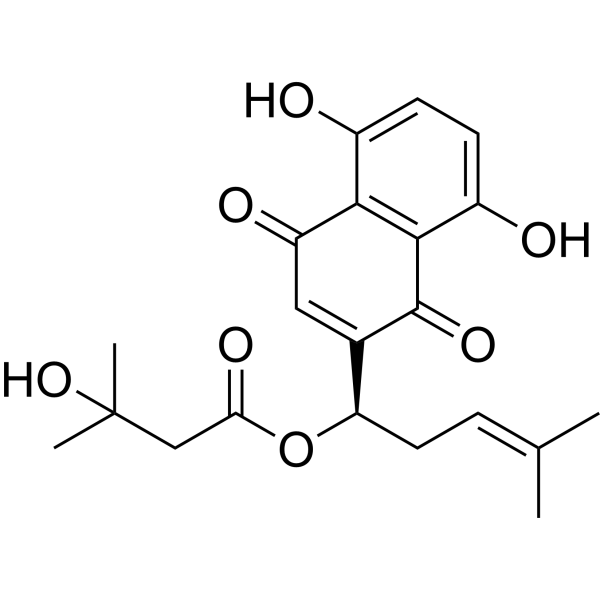
  • HY-N4201

    EGFR Src Cancer
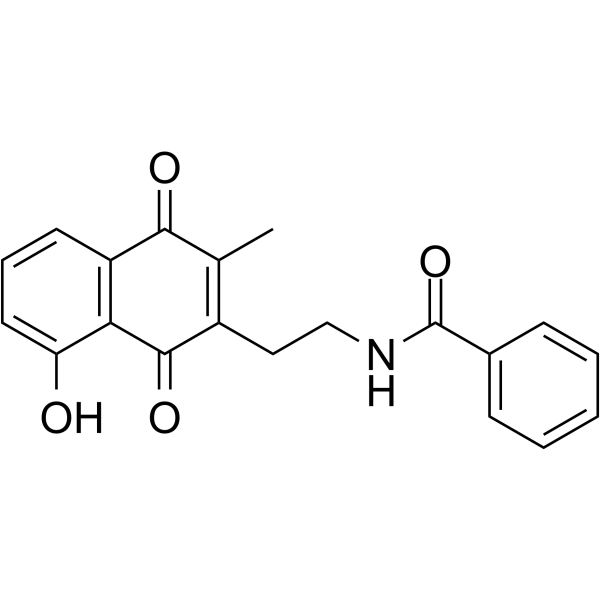
    Beta-hydroxyisovalerylshikonin is a natural product isolated from Lithospermum erythrorhizon, acts as a potent inhibitor of protein tyrosine kinases (PTK), with IC50s of 0.7μM and 1μM for EGFR and v-Src receptor, respectively. Beta-hydroxyisovalerylshikonin is effective against a wide variety of tumor cell lines, and most efficiently induces cell-death in NCI-H522 and DMS114 cells .
    β-Hydroxyisovalerylshikonin
  • HY-103094

    5-HT Receptor Inflammation/Immunology
    LY266097 hydrochloride is a selective 5-HT2B receptor antagonist with pKis of 7.7, 9.8, and 7.6 for 5-HT2A, 5-HT2B, 5-HT2C, respectively. 5-HT2B receptor blockade contributes to the research in depression .
    LY266097 hydrochloride
  • HY-123450

    Bcr-Abl Apoptosis PDGFR Cancer
    S116836, a potent, orally active BCR-ABL tyrosine kinase inhibitor, blocks both wild-type as well as T315I Bcr-Abl. S116836 arrests the cells in the G0/G1 phase of cell cycle, induces apoptosis, increases ROS production, and decreases GSH production in BaF3/WT and BaF3/T315I cells. S116836 also inhibits SRC, LYN, HCK, LCK and BLK, and receptor tyrosine kinases such as FLT3, TIE2, KIT, PDGFR-β. Antitumor activies . S116836 is a click chemistry reagent, it contains an Alkyne group and can undergo copper-catalyzed azide-alkyne cycloaddition (CuAAc) with molecules containing Azide groups.
    S116836
  • HY-149007
    STAT3-IN-11
    1 Publications Verification

    STAT Apoptosis Cancer
    STAT3-IN-11 (7a) is a selective STAT3 inhibitor that inhibits the phosphorylation of STAT3 at site pTyr705. STAT3-IN-11 inhibits the phosphorylation of downstream genes (Survivin and Mcl-1) without affecting its upstream tyrosine kinases (Src and JAK2) levels and p-STAT1 expression. STAT3-IN-11 can induce cancer cell apoptosis, which is potential for the discovery of effective STAT3 inhibitors and antitumor agents against cancers .
    STAT3-IN-11
  • HY-13342AS

    YN968D1-d8 free base

    Src VEGFR Autophagy c-Kit RET Cancer
    Apatinib-d8 (free base) is the deuterium labeled Apatinib free base . Apatinib free base (YN968D1 free base) is an orally bioavailable tyrosine kinase inhibitor, which selectively targets VEGFR-2 (IC50=1 nM). Apatinib free base (YN968D1 free base) is an anti-angiogenic drug for the research of advanced or metastatic gastric cancer. Apatinib free base (YN968D1 free base) potently inhibits Ret, c-Kit and c-Src with IC50s of 13, 429 and 530 nM, respectively. It also inhibits cellular phosphorylation of VEGFR-2, c-kit and PDGFRβ .
    Apatinib-d8 free base
  • HY-10234A
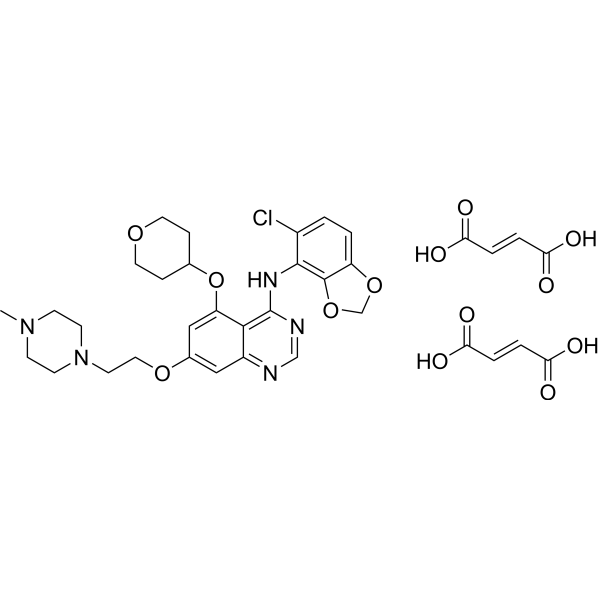
    Saracatinib difumarate
    Maximum Cited Publications
    39 Publications Verification

    AZD0530 difumarate

    Src Cancer
    Saracatinib (AZD0530) difumarate is a potent Src inhibitor with IC50 values of 2.7-11 nM for c-Src, Lck, c-YES, Lyn, Fyn, Fgr and Blk, and is selective for other tyrosine kinases. .
    Saracatinib difumarate
  • HY-10184

    Src VEGFR PDGFR FGFR Cancer
    TG 100572 is a multi-targeted kinase inhibitor which inhibits receptor tyrosine kinases and Src kinases; has IC50s of 2, 7, 2, 16, 13, 5, 0.5, 6, 0.1, 0.4, 1, 0.2 nM for VEGFR1, VEGFR2, FGFR1, FGFR2, PDGFRβ, Fgr, Fyn, Hck, Lck, Lyn, Src, Yes, respectively.
    TG 100572
  • HY-N7160

    Src Apoptosis Cancer
    2-Hydroxy-3-methylanthraquinone (compound 1) is a natural compound isolated from a water extract of Hedyotis diffusa WILLD. 2-Hydroxy-3-methylanthraquinone shows inhibitory activity against protein tyrosine kinases v-src and pp60src, and induces growth arrest and apoptosis in the HepG2 cancer cells .
    2-Hydroxy-3-methylanthraquinone
  • HY-112345

    FGFR PDGFR EGFR Src Cancer
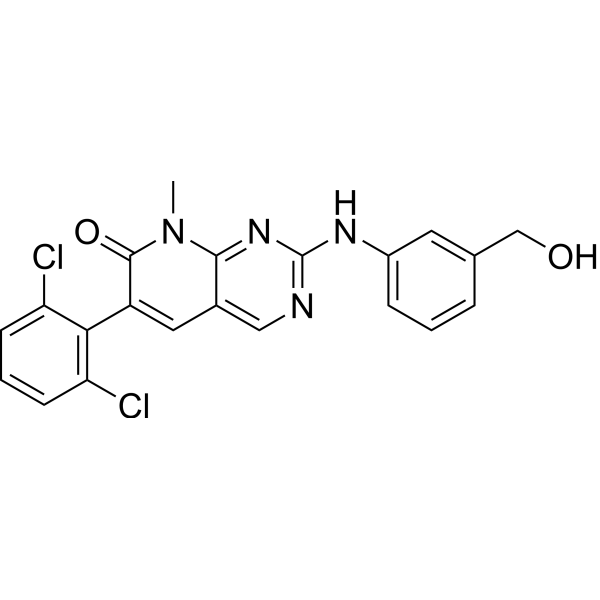
    PD-089828 is an ATP competitive inhibitor of FGFR-1, PDGFR-β and EGFR (IC50s=0.15, 1.76, and 5.47 µM, respectively) and a noncompetitive inhibitor of c-Src tyrosine kinase (IC50=0.18 µM). PD-089828 also inhibits MAPK with an IC50 of 7.1 µM. PD-089828 inhibits PDGF-, EGF- and bFGF-mediated tyrosine kinase receptor autophosphorylation in vitro. PD-089828 has a long-lasting cellular activity .
    PD-089828
  • HY-112386

    Syk Inflammation/Immunology
    OXSI-2 is a bioavailable, cell-permeable Syk inhibitor with an EC50 of 313 nM and an IC50 of 14 nM .
    OXSI-2
  • HY-15268

    c-Met/HGFR PI3K DNA-PK mTOR Bcr-Abl Src VEGFR EGFR PDGFR Cancer
    PP487 is a selective dual inhibitor of Tyrosine kinase/PI3-K, with IC50 values of 0.017 μM, 0.072 μM, 0.004 μM, 0.01 μM, 0.55 μM, 0.22 μM, and < 0.01 μM against DNA-PK, mTOR, Hck, Src, EGFR, EphB4, and PDGFR, respectively. PP487 can be used in cancer research .
    PP487
  • HY-W013857

    CaMK EGFR Src Cancer
    Lavendustin C is a potent Ca 2+ calmodulin-dependent kinase II (CaMK II) inhibitor with an IC50 of 0.2 µM. Lavendustin C inhibits EGFR-associated tyrosine kinase (IC50=0.012 µM) and pp60 c-src(+) kinase (IC50=0.5 µM) .
    Lavendustin C
  • HY-P0200

    Src Inflammation/Immunology
    RR-SRC is a substrate for src-tyrosine-specific protein kinase .
    RR-SRC
  • HY-P3773

    Src Cancer
    p60c-src substrate II is an efficient pentapeptide substrate for the tyrosine kinase pp60c-src .
    p60c-src substrate II
  • HY-P3743

    Src Others Others
    p60c-src Substrate is an efficient and specific substrate for p60c-src protein tyrosine kinase (PTK). p60c-src Substrate can be used to synthesize chimeric branched peptides .
    p60c-src Substrate
  • HY-10187

    VEGFR FGFR PDGFR Src Cancer
    TG 100801 Hydrochloride is a proagent that generates TG 100572 by de-esterification in development to treat age-related macular degeneration. TG 100572 is a multi-targeted kinase inhibitor which inhibits receptor tyrosine kinases and Src kinases; has IC50s of 2, 7, 2, 16, 13, 5, 0.5, 6, 0.1, 0.4, 1, 0.2 nM for VEGFR1, VEGFR2, FGFR1, FGFR2, PDGFRβ, Fgr, Fyn, Hck, Lck, Lyn, Src, Yes, respectively.
    TG 100801 Hydrochloride
  • HY-110367A

    Src Others
    LCB 03-0110, a thienopyridine derivative, is a potent pan-discoidin domain receptor/c-Src family tyrosine kinase inhibitor. LCB 03-0110 suppresses scar formation by inhibiting fibroblast and macrophage activation .
    LCB 03-0110
  • HY-110367

    Src Others
    LCB 03-0110 dihydrochloride is a dihydrochloride of LCB 03-0110. LCB 03-0110 is a potent inhibitor of Src family tyrosine kinase .
    LCB 03-0110 dihydrochloride
  • HY-B1308

    Adrenergic Receptor Cardiovascular Disease Endocrinology
    Adrenalone hydrochloride is an adrenergic agonist used as a topical vasoconstrictor and hemostatic. Adrenalone hydrochloride is an inhibitor of dopamine β oxidase. Adrenalone hydrochloride is chemically similar to known norepinephrine transporter (NET) ligands with an IC50 of 36.9 μM .
    Adrenalone hydrochloride
  • HY-B1308A

    Adrenergic Receptor Cardiovascular Disease Endocrinology
    Adrenalone is an adrenergic agonist used as a topical vasoconstrictor and hemostatic. Adrenalone is an inhibitor of dopamine β oxidase. Adrenalone is chemically similar to known norepinephrine transporter (NET) ligands with an IC50 of 36.9 μM .
    Adrenalone
  • HY-16558R

    2’,3,4,4’-tetrahydroxy Chalcone (Standard)

    Reference Standards EGFR Autophagy Apoptosis Phosphodiesterase (PDE) Cancer
    Butein (Standard) is the analytical standard of Butein. This product is intended for research and analytical applications. Butein is a cAMP-specific PDE inhibitor with an IC50 of 10.4 μM for PDE4 . Butein is a specific protein tyrosine kinase inhibitor with IC50s of 16 and 65 μM for EGFR and p60c-src in HepG2 cells . Butein sensitizes HeLa cells to Cisplatin through AKT and ERK/p38 MAPK pathways by targeting FoxO3a . Butein is a SIRT1 activator (STAC).
    Butein (Standard)
  • HY-P2547A

    Src Others
    Tyrosine Kinase Peptide 1 (acetate) is a control substrate peptide for c-Src assay .
    Tyrosine Kinase Peptide 1 acetate
  • HY-P2547

    Src Others
    Tyrosine Kinase Peptide 1 is a control substrate peptide for c-Src assay .
    Tyrosine Kinase Peptide 1
  • HY-N14271

    Angelmicin B

    Src Bacterial Infection Cancer
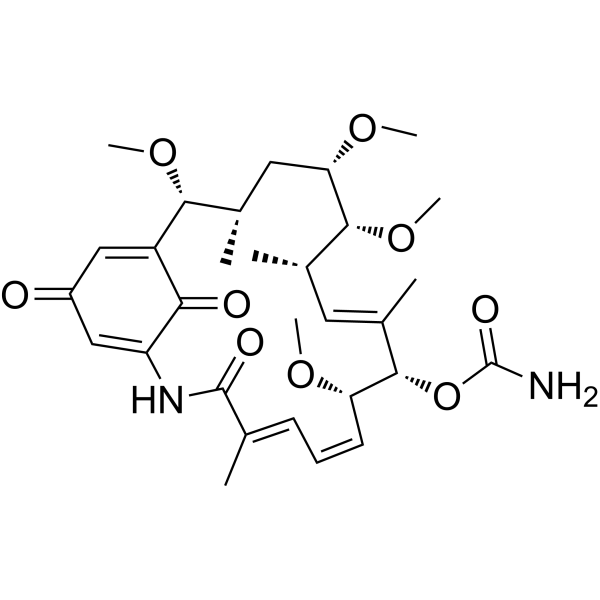
    Hibarimicin B (Angelmicin B) is a tyrosine kinase inhibitor. It selectively inhibits the activity of src tyrosine kinase without affecting protein kinase A and C. It also has moderate anti-Gram-positive bacteria activity with a MIC of 0.8-12.56 μg/mL .
    Hibarimicin B
  • HY-P2372

    Src Others
    P60v-src(137-157) is a synthetic peptide that inhibits the tyrosine kinase activity of p60 v-src (IC50: 7.5 μM) .
    P60v-src(137-157)
  • HY-N14273

    Src Bacterial Infection Cancer
    Hibarimicin C is a tyrosine kinase inhibitor. Hibarimicin C selectively inhibits the activity of src tyrosine kinase without affecting protein kinase A and C. Hibarimicin C also has moderate anti-Gram-positive bacteria activity with a MIC of 0.8-12.56 μg/mL .
    Hibarimicin C
  • HY-N14689

    Src Infection Cancer
    Hibarimicin D is a tyrosine kinase inhibitor. Hibarimicin D selectively inhibits the activity of src tyrosine kinase without affecting protein kinase A and C. Hibarimicin D also has moderate anti-Gram-positive bacteria activity with a MIC of 0.8-12.56 μg/mL .
    Hibarimicin D
  • HY-N14267

    Src Bacterial Infection Cancer
    Hibarimicin A is a tyrosine kinase inhibitor found in Microbispora rosea subsp. hibaria. Hibarimicin A selectively inhibits the activity of src tyrosine kinase without affecting protein kinase A and C. Hibarimicin A also has moderate anti-Gram-positive bacteria activity with a MIC of 0.8-12.56 μg/mL .
    Hibarimicin A
  • HY-171218

    Src Cancer
    CGP062464 is an inhibitor of the tyrosine kinase c-Src (IC50: < 50 nM). CGP062464 can be used for research of osteoporosis and tumor-induced hypercalcemia .
    CGP062464
  • HY-10234AR

    AZD0530 difumarate (Standard)

    Src Reference Standards Cancer
    Saracatinib (difumarate) (Standard) is the analytical standard of Saracatinib (difumarate). This product is intended for research and analytical applications. Saracatinib (AZD0530) difumarate is a potent Src inhibitor with IC50 values of 2.7-11 nM for c-Src, Lck, c-YES, Lyn, Fyn, Fgr and Blk, and is selective for other tyrosine kinases. .
    Saracatinib difumarate (Standard)
  • HY-10234R

    AZD0530 (Standard)

    Reference Standards Src Autophagy Cancer
    Saracatinib (Standard) is the analytical standard of Saracatinib. This product is intended for research and analytical applications. Saracatinib (AZD0530) is a potent Src family inhibitor with IC50s of 2.7 to 11 nM for c-Src, Lck, c-YES, Lyn, Fyn, Fgr, and Blk. Saracatinib shows high selectivity over other tyrosine kinases .
    Saracatinib (Standard)
  • HY-123506

    Src Neurological Disease Inflammation/Immunology
    Fenlean, a natural squamosamide derivative, is a Src tyrosine kinase inhibitor. Fenlean can inhibit over-activated microglia and protect dopaminergic neurons. Fenlean can attenuate neuroinflammation in Parkinson's disease models .
    Fenlean
  • HY-171217

    Src Bcr-Abl Ephrin Receptor Cancer
    TG-100435 is a multitargeted, orally active protein tyrosine kinase inhibitor, with Ki of 13 to 64 nM for Src, Lyn, Abl, Yes, Lck, and EphB4. TG-100435 plays an important role in cancer research .
    TG-100435
  • HY-10158AR

    SKI-606 hydrate (Standard)

    Reference Standards Src Bcr-Abl Cancer
    Bosutinib (Standard) (SKI-606 (Standard)) hydrate is the analytical standard of Bosutinib hydrate (HY-10158A). This product is intended for research and analytical applications. Bosutinib hydrate is an oraly activel Src/Abl tyrosine kinase inhibito with IC50s of 1.2 nM and 1 nM, respectively.
    Bosutinib hydrate (Standard)
  • HY-10158S1

    SKI-606-13C,d3

    Isotope-Labeled Compounds Autophagy Bcr-Abl Src Cancer
    Bosutinib- 13C,d3 (SKI-606- 13C,d3) is 13C labeled Bosutinib. Bosutinib is an orally active Src/Abl tyrosine kinase inhibitor with IC50 of 1.2 nM and 1 nM, respectively .
    Bosutinib-13C,d3
  • HY-108417

    STAT JAK Bcr-Abl Cancer
    Debio 0617B, a multi-kinase inhibitor, reduces maintenance and self-renewal of primary human AML CD34 + stem/progenitor cells. Debio 0617B has a unique profile targeting key kinases upstream of STAT3/STAT5 signaling such as JAK, SRC, ABL, and class III/V receptor tyrosine kinases (TKs). Debio 0617B has documented efficacy in STAT3-driven solid tumors .
    Debio 0617B

Inquiry Online

Your information is safe with us. * Required Fields.

Salutation


Country or Region *

Applicant Name *


Organization Name *

Department *


Email Address *


Product Name *

Cat. No.


Requested quantity *

Phone Number *


Remarks

Inquiry Online

Inquiry Information

Product Name:
Cat. No.:
Quantity:
MCE Japan Authorized Agent:

