Search Result
| Isoforms Recommended: |
ERβ
|
Results for "
ERβ
" in MedChemExpress (MCE) Product Catalog:
22
Isotope-Labeled Compounds
| Cat. No. |
Product Name |
Target |
Research Areas |
Chemical Structure |
-
- HY-103456
-
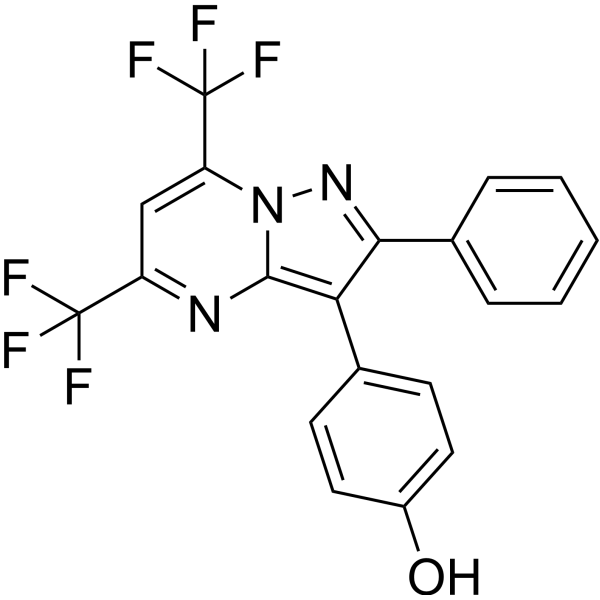
PHTPP
Maximum Cited Publications
30 Publications Verification
|
Estrogen Receptor/ERR
|
Cancer
|
|
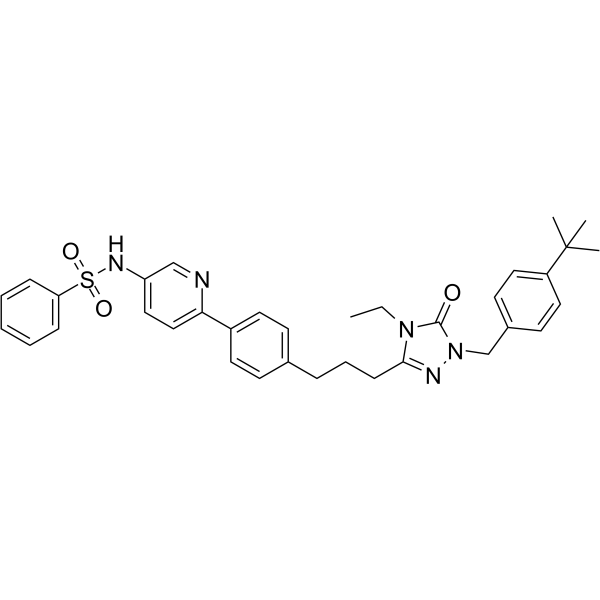
PHTPP is a selective estrogen receptor β (ERβ) antagonist with 36-fold selectivity over ERα .
|
-
-
- HY-N0377
-
-
-
- HY-19822
-
|
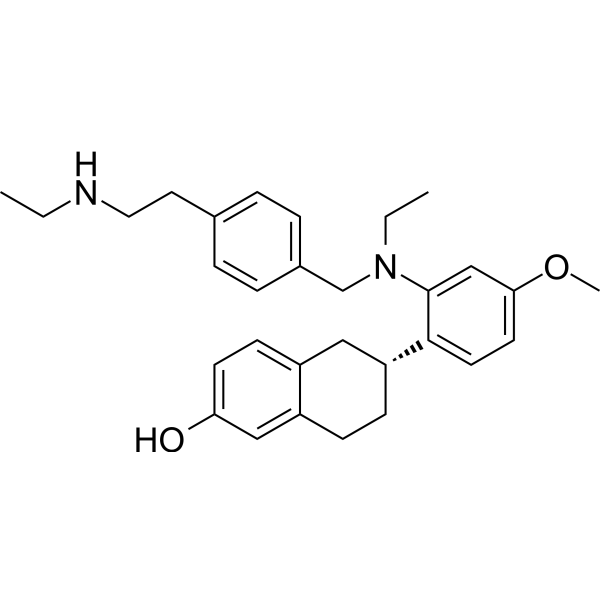
RAD1901
|
Estrogen Receptor/ERR
|
Cancer
|
|
Elacestrant (RAD1901) is an orally available and selective estrogen receptor degrader (SERD) with IC50s of 48 and 870 nM for ERα and ERβ, respectively. Elacestrant also can inhibit growth of ER + breast cancer cell lines in vitro and in vivo .
|
-
-
- HY-A0036
-
|
TSE-424 acetate
|
Estrogen Receptor/ERR
|
Cancer
|
|
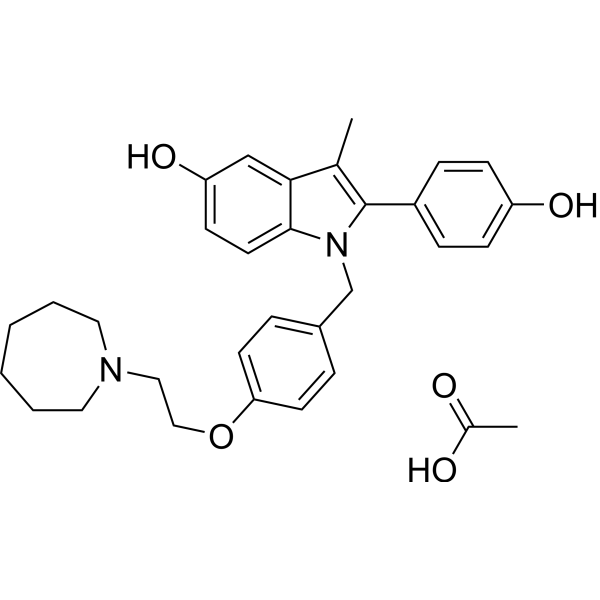
Bazedoxifene acetate (TSE-424 acetate) is an oral, nonsteroidal selective estrogen receptor modulator (SERM), with IC50s of 23 nM and 99 nM for ERα and ERβ, respectively. Bazedoxifene acetate can be used for the research of osteoporosis. Bazedoxifene acetate also acts as an inhibitor of IL-6/GP130 protein-protein interactions and can be used for the research of pancreatic cancer .
|
-
-
- HY-A0031
-
|
TSE-424
|
Estrogen Receptor/ERR
|
Neurological Disease
Cancer
|
|
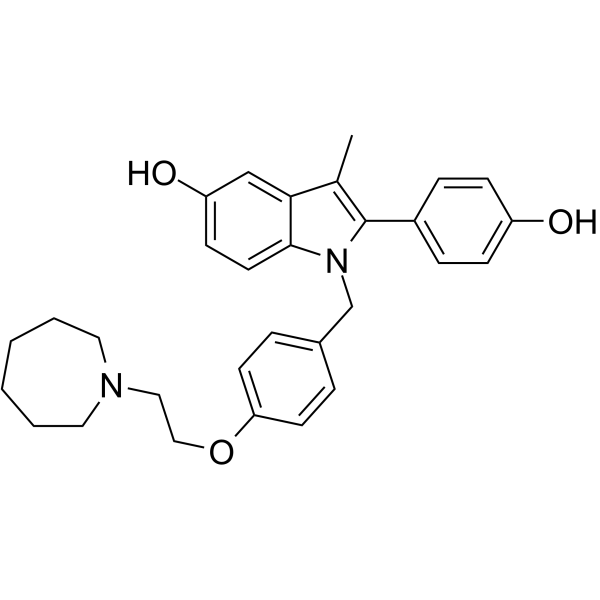
Bazedoxifene (TSE-424) is an oral, BBB-penetrant nonsteroidal selective estrogen receptor modulator (SERM), with IC50s of 23 nM and 99 nM for ERα and ERβ, respectively. Bazedoxifene can be used for the research of osteoporosis. Bazedoxifene also acts as an inhibitor of IL-6/GP130 protein-protein interactions and can be used for the research of pancreatic cancer .
|
-
-
- HY-12452
-
-
-
- HY-100689
-
|
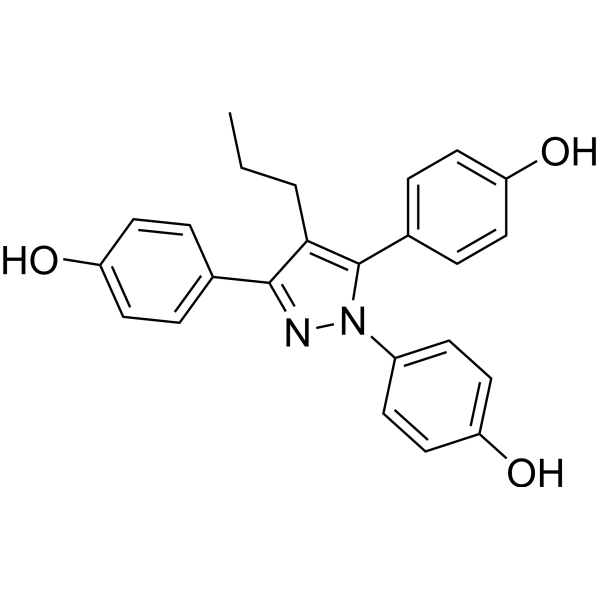
PPT
|
Estrogen Receptor/ERR
|
Cancer
|
|
Propyl pyrazole triol (PPT) is a selective estrogen receptor alpha (ERα) agonist. The relative binding affinity of Propyl pyrazole triol for ERα (ERα: 49%) around 410 times higher compared with estrogen receptor beta (ERβ: 0.12%) .
|
-
-
- HY-100583A
-
-
-
- HY-B0723
-
|
FC-1271a
|
Estrogen Receptor/ERR
Caspase
|
Neurological Disease
Endocrinology
Cancer
|
|
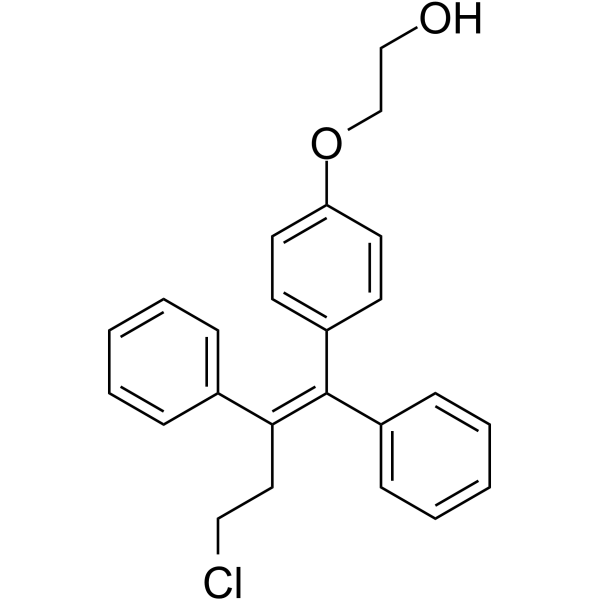
Ospemifene (FC-1271a) is an orally active and non-estrogenic selective estrogen receptor modulator (SERM) with Ki values of 380 and 410 nM for estrogen receptor α (ERα) and ERβ, respectively. Ospemifene inhibits caspase-3 activity. Ospemifene inhibits neuronal degeneration, prevents bone loss, and increases vaginal weight and vaginal epithelial height. Ospemifene has anticancer activity against breast cancer .
|
-
-
- HY-B0412
-
Estriol
5 Publications Verification
Oestriol
|
Estrogen Receptor/ERR
Endogenous Metabolite
|
Cancer
|
|
Estriol (Oestriol), an orally active estrogen, is a ERα and ERβ agonist. Estriol is a potent GPR30 antagonist in estrogen receptor-negative breast cancer cells. Estriol can ameliorate disease severity through immunomodulatory mechanisms that decrease tissue inflammation. Estriol has powerful proconvulsant effects .
|
-
-
- HY-N0233
-
|
Corylifolin
|
Estrogen Receptor/ERR
|
Cancer
|
|
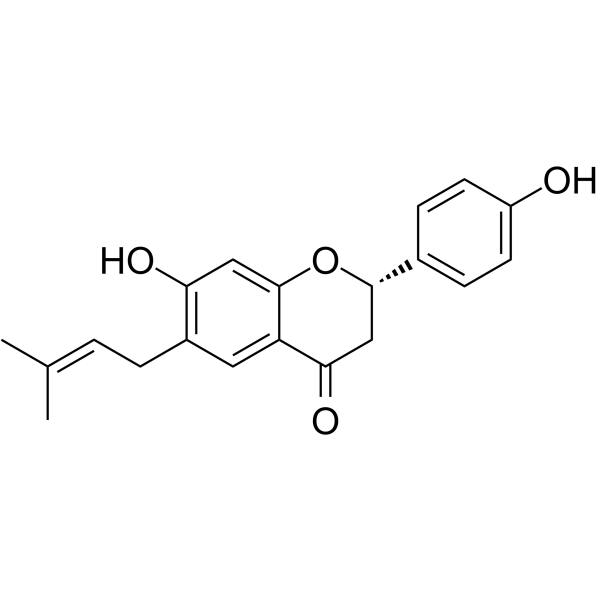
Bavachin, a flavonoid first isolated from seeds of P. corylifolia, acts as a phytoestrogen that activates the estrogen receptors ERα and ERβ with EC50s of 320 and 680 nM, respectively.
|
-
-
- HY-18295
-
|
LY500307
|
Estrogen Receptor/ERR
|
Neurological Disease
Cancer
|
|
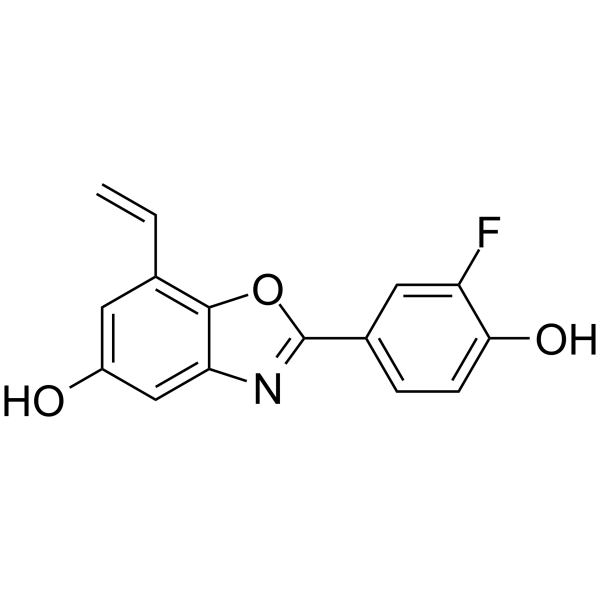
Erteberel (LY500307) is a potent and selective estrogen receptor beta (ERβ) agonist with Ki and EC50 of 1.54 nM and 3.61 nM, respectively. Erteberel has anti-tumor activities .
|
-
-
- HY-15483
-
DY131
3 Publications Verification
GSK 9089
|
Estrogen Receptor/ERR
Smo
|
Endocrinology
Cancer
|
|
DY131 (GSK 9089) is a potent and selective ERRγ and ERRβ agonist. DY131displays inactive against ERRα, ERα and ERβ . DY131 also inhibits Smo signaling .
|
-
-
- HY-19822A
-
|
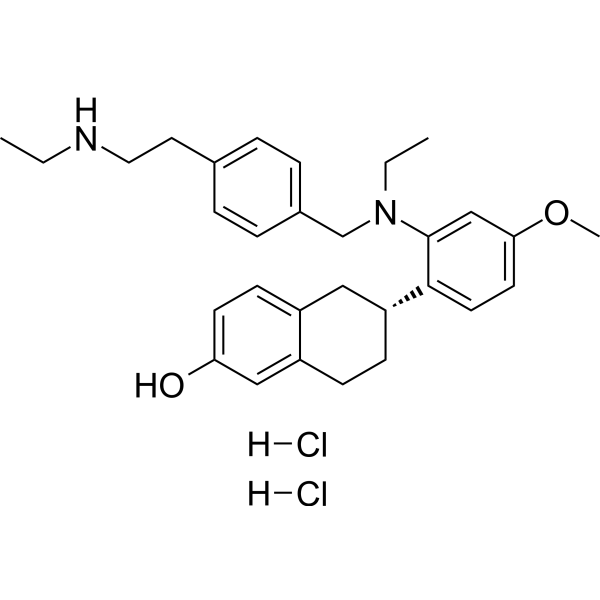
RAD1901 dihydrochloride
|
Estrogen Receptor/ERR
|
Cancer
|
|
Elacestrant (RAD1901) dihydrochloride is an orally available and selective estrogen receptor degrader (SERD) with IC50s of 48 and 870 nM for ERα and ERβ, respectively. Elacestrant dihydrochloride also can inhibit growth of ER + breast cancer cell lines in vitro and in vivo .
|
-
-
- HY-B0141S2
-
|
β-Estradiol-d5; 17β-Estradiol-d5; 17β-Oestradiol-d5
|
Estrogen Receptor/ERR
Endogenous Metabolite
|
Endocrinology
Cancer
|
|
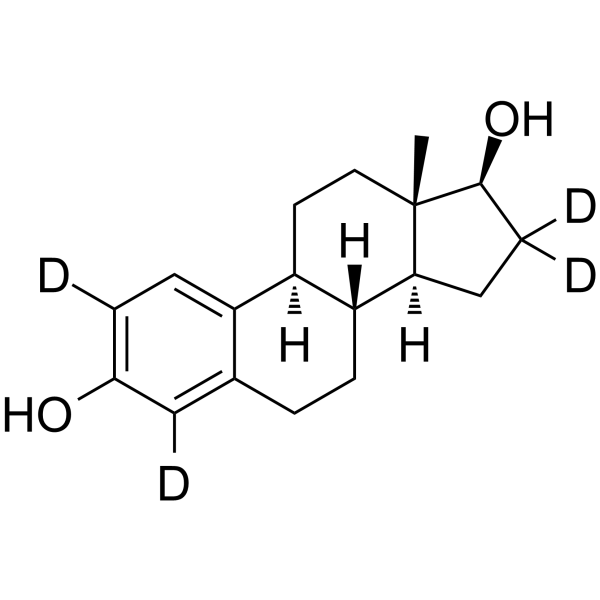
Estradiol-d5 is deuterium labeled Estradiol. Estradiol is a steroid sex hormone vital to the maintenance of fertility and secondary sexual characteristics in females. Estradiol upregulates IL-6 expression through the estrogen receptor β (ERβ) pathway .
|
-
-
- HY-10426
-
|
|
Estrogen Receptor/ERR
Autophagy
|
Cancer
|
|
XCT-790 is a potent and selective inverse agonist for ERRα with an IC50 value of 0.37 μM. XCT-790 induces cell death in chemotherapeutic resistant cancer cells. XCT-790 (Compound 12) is inactive against ERRγ and the estrogen receptors ERα and ERβ .
|
-
-
- HY-15731
-
|
|
Estrogen Receptor/ERR
Endogenous Metabolite
NO Synthase
|
Cardiovascular Disease
Cancer
|
|
Estetrol, an orally active estrogen synthesized exclusively during pregnancy by the human fetal liver, is a selective nuclear estrogen receptor modulator. Estetrol binds ERα as well as ERβ (with a fourfold lower affinity). Estetrol increases eNOS expression/activity and NO synthesis in endothelial cells. Estetrol exerts estrogenic actions on the endometrium or the central nervous system but presents antagonistic effects on the breast. Estetrol can be used in contraception and menopausal hormone research .
|
-
-
- HY-14933
-
|
ERB-041
|
Estrogen Receptor/ERR
Wnt
Apoptosis
|
Cancer
|
|
Prinaberel (ERB-041) is a potent and selective estrogen receptor (ER) β agonist with IC50s of 5.4, 3.1 and 3.7 nM for human, rat and mouse ERβ, respectively. Prinaberel displays >200-fold selectivity for ERβ over ERα. Prinaberel is a potent skin cancer chemopreventive agent that acts by dampening the WNT/β-catenin signaling pathway. Prinaberel induces ovarian cancer apoptosis .
|
-
-
- HY-108052
-
|
Delphinidin 3-O-glucoside chloride; Delphinidin 3-O-β-glucoside chloride
|
EGFR
Apoptosis
Akt
|
Cardiovascular Disease
Cancer
|
|
Delphinidin 3-glucoside chloride (Delphinidin 3-O-glucoside chloride) is an active anthocyanin found in Hibiscus sabdariffa extract. Delphinidin 3-glucoside chloride induces a pro-apoptotic effect in B cell chronic lymphocytic leukaemia (B CLL) . Delphinidin 3-glucoside chloride exerts phytoestrogen activity by binding to ERβ, with an IC50 of 9.7 μM . Delphinidin-3-O-glucoside chloride inhibits EGFR with an IC50 of 2.37 µM . Delphinidin 3-glucoside chloride exhibits antitumor effects through pAKT/IRF1/HOTAIR pathway. Delphinidin 3-glucoside chloride exhibits efficacy against oxidative stress, inhibits platelet activation and endothelial dysfunction .
|
-
-
- HY-B0141S1
-
|
β-Estradiol-d4; 17β-Estradiol-d4; 17β-Oestradiol-d4
|
Estrogen Receptor/ERR
Endogenous Metabolite
|
Endocrinology
Cancer
|
|
Estradiol-d4 is the deuterium labeled Estradiol. Estradiol is a steroid sex hormone vital to the maintenance of fertility and secondary sexual characteristics in females. Estradiol upregulates IL-6 expression through the estrogen receptor β (ERβ) pathway .
|
-
-
- HY-B1662
-
|
|
Estrogen Receptor/ERR
|
Endocrinology
|
|
Hexestrol is a nonsteroidal synthetic estrogen, with a Ki of 0.06 and 0.06 nM for estrogen receptor alpha (ERα) and ERβ. Hexestrol can be used for the research of the diseases caused by estrogen deficiencym, and it also can increase the weight of cattle .
|
-
-
- HY-101271
-
-
-
- HY-B0141S
-
|
β-Estradiol-d3; 17β-Estradiol-d3; 17β-Oestradiol-d3
|
Estrogen Receptor/ERR
Endogenous Metabolite
|
Endocrinology
Cancer
|
|
Estradiol-d3 is the deuterium labeled Estradiol. Estradiol is a steroid sex hormone vital to the maintenance of fertility and secondary sexual characteristics in females. Estradiol upregulates IL-6 expression through the estrogen receptor β (ERβ) pathway.
|
-
-
- HY-114263
-
NXT629
4 Publications Verification
|
PPAR
|
Cancer
|
|
NXT629 is a potent, selective, and competitive PPAR-α antagonist, with an IC50 of 77 nM for human PPARα, shows high selectivity over other nuclear hormone receptor, such as PPARδ, PPARγ, ERβ, GR and TRβ, IC50s are 6.0, 15, 15.2, 32.5 and >100 μM, respectively . NXT629 has potent anti-tumor activity and inhibits experimental metastasis of cancer cell in animal models .
|
-
-
- HY-126109
-
|
|
Estrogen Receptor/ERR
Apoptosis
|
Metabolic Disease
Endocrinology
Cancer
|
|
(±)-8-Prenylnaringenin, a natural prenylated flavonoid, is a potent phytoestrogen. (±)-8-Prenylnaringenin is an orally active selective estrogen receptor modulator (SERM) (Estrogen Receptor/ERR) that inhibits ERα and ERβ with IC50s of 57 nM and 68 nM, respectively. (±)-8-Prenylnaringenin has anticancer effects, and can be used for osteoporosis research .
|
-
-
- HY-16023A
-
|
EM-652; SCH 57068
|
Estrogen Receptor/ERR
|
Cancer
|
|
Acolbifene (EM-652), the active metabolite of EM800, is an orally active pure antiestrogen and selective estrogen receptor antagonist. Acolbifene (EM-652) inhibits estradiol (E2)-induced transcriptional activity of ERα (IC50 = 2 nM) and ERβ (IC50 = 0.4 nM). Acolbifene (EM-652) possesses potent and pure anticarcinogenic properties .
|
-
-
- HY-137004
-
|
Ind-Cl
|
Estrogen Receptor/ERR
COX
|
Inflammation/Immunology
|
|
Indazole-Cl (Ind-Cl) is an Estrogen receptor (ER)-β-specific agonist with inflammatory effect. Indazole-Cl inhibits cyclooxygenase-2 exression reduction induced by hypoxia. And Indazole-Cl inhibits ROS production. Indazole-Cl also inhibits cell migration and invasion by hypoxia increased by hypoxia. Indazole-Cl is potent inhibitor of hypoxia-induced inflammation in vascular smooth muscle cells (VSMCs) .
|
-
-
- HY-110157
-
|
|
Estrogen Receptor/ERR
|
Neurological Disease
|
|
AC-186 is a selective non-steroidal estrogen receptor β (ERβ) agonist with EC50s of 6 nM and 5000 nM for ERβ and ERα, respectively. AC-186 shows gender selective neuroprotective effects in a male rat model of Parkinson's disease .
|
-
-
- HY-103457
-
|
|
Estrogen Receptor/ERR
|
Cancer
|
|
Y134 is a selective and orally active oestrogen receptor (ER) modulator (SERM), exhibits potent antagonist activity at ERα and ERβ. Y134 shows 121.1-fold selectivity for ERα (Ki=0.09 nM) over ERβ (Ki=11.31 nM). Y134 inhibits oestrogen-stimulated proliferation of ER-positive human breast cancer cells .
|
-
-
- HY-P4190
-
|
|
GnRH Receptor
|
Endocrinology
|
|
FSH receptor-binding inhibitor fragment(bi-10) is a potent FSH antagonist. FSH receptor-binding inhibitor fragment(bi-10) blocks the binding of FSH to FSHR, and alteres FSH action at the receptor level. FSH receptor-binding inhibitor fragment(bi-10) results in the suppression of ovulation and causes follicular atresia of mice. FSH receptor-binding inhibitor fragment(bi-10) has the potential for utilizing to restrain the carcinogenesis of ovarian cancer by down-regulating overexpression of FSHR and ERβ in the ovaries .
|
-
-
- HY-108414
-
-
-
- HY-B0141S3
-
-
-
- HY-B0141S5
-
-
-
- HY-A0036D
-
|
TSE-424 acetate-D
|
Estrogen Receptor/ERR
|
Cancer
|
|
Bazedoxifene (acetate)-D (TSE-424 (acetate)-D) is the D-crystal form compound of Bazedoxifene acetate (HY-A0036). Bazedoxifene acetate is an orally active, nonsteroidal selective estrogen receptor modulator (SERM), with IC50s of 23 nM and 99 nM for ERα and ERβ, respectively .
|
-
-
- HY-125703
-
|
|
Estrogen Receptor/ERR
Apoptosis
|
Infection
Inflammation/Immunology
Endocrinology
Cancer
|
|
Ferutinin, a natural terpenoid compound, is an estrogen receptor ERα agonist and estrogen ERβ-receptor agonist/antagonist with IC50s of 33.1 nM and 180.5 nM, respectively. Ferutinin acts as an electrogenic Ca 2+-ionophore that increases calcium permeability of lipid bilayer membranes, mitochondria. Ferutinin possesses estrogenic, antitumor, antibacterial and antiinflammatory activities .
|
-
-
- HY-150601
-
-
-
- HY-A0031A
-
|
TSE-424 hydrochloride
|
Estrogen Receptor/ERR
|
Cancer
|
|
Bazedoxifene hydrochloride (TSE-424 hydrochloride) is an oral active, BBB-penetrant nonsteroidal selective estrogen receptor modulator (SERM), with IC50s of 23 nM and 99 nM for ERα and ERβ, respectively. Bazedoxifene hydrochloride can be used for the research of osteoporosis. Bazedoxifene hydrochloride acts as an inhibitor of IL-6/GP130 protein-protein interactions. Bazedoxifene hydrochloride can be used for the research of pancreatic cancer .
|
-
-
- HY-A0036R
-
|
TSE-424 acetate (Standard)
|
Reference Standards
Estrogen Receptor/ERR
|
Cancer
|
|
Bazedoxifene (acetate) (Standard) is the analytical standard of Bazedoxifene (acetate). This product is intended for research and analytical applications. Bazedoxifene acetate (TSE-424 acetate) is an oral, nonsteroidal selective estrogen receptor modulator (SERM), with IC50s of 23 nM and 99 nM for ERα and ERβ, respectively. Bazedoxifene acetate can be used for the research of osteoporosis. Bazedoxifene acetate also acts as an inhibitor of IL-6/GP130 protein-protein interactions and can be used for the research of pancreatic cancer .
|
-
-
- HY-150693
-
|
|
Estrogen Receptor/ERR
|
Cancer
|
|
Estrogen receptor β antagonist 2 is a potent and selective estrogen receptor β (ERβ) antagonist with IC50s of 109.10, 0.63 µM for Erα and Erβ, respectively .
|
-
-
- HY-161740
-
|
|
AUTOTACs
Estrogen Receptor/ERR
Autophagy
|
Cancer
|
|
PHTPP-1304 is a PHTPP-based autophagy targeting chimera (AUTOTAC). PHTPP-1304 induces the degradation of estrogen receptor ERβ through the autophagy pathway, rather than ubiquitination (DC50 ≈ 2 nM, in HEK293T cells; < 100 nM in ACHN renal carcinoma and MCF-7 breast cancer cells). PHTPP-1304 can induce the self-oligomerization of p62. PHTPP-1304 can be used to study various cancers mediated by ERβ .
|
-
-
- HY-19822D
-
|
RAD1901 S enantiomer
|
Estrogen Receptor/ERR
|
Cancer
|
|
Elacestrant S enantiomer (RAD1901 S enantiomer) is an low activity enantiomer of elacestrant. Elacestrant (RAD1901) is a selective and orally available estrogen receptor (ERR) degrader with IC50 values of 48 and 870 nM for ERα and ERβ, respectively .
|
-
-
- HY-151230
-
|
|
Estrogen Receptor/ERR
|
Cancer
|
|
(-)-Erteberel is a selective estrogen receptor beta (ERβ) agonist. (-)-Erteberel can be utilized in the study of diseases mediated by estrogen receptor beta (ERβ), such as prostate cancer .
|
-
-
- HY-149584
-
|
|
Estrogen Receptor/ERR
|
Cancer
|
|
CIDD-0149897 is a potent, selective and brain-penetrant ERβ agonist. CIDD-0149897 exert antitumor functions in glioblastoma .
|
-
-
- HY-19822B
-
|
RAD1901 S enantiomer dihydrochloride
|
Estrogen Receptor/ERR
|
Cancer
|
|
Elacestrant S enantiomer dihydrochloride (RAD1901 S enantiomer dihydrochloride) is an low activity enantiomer of elacestrant dihydrochloride. Elacestrant (RAD1901) dihydrochloride is a selective and orally available estrogen receptor (ERR) degrader with IC50 values of 48 and 870 nM for ERα and ERβ, respectively.
|
-
-
- HY-W114419
-
|
|
Estrogen Receptor/ERR
mTOR
|
Cardiovascular Disease
Metabolic Disease
|
|
Bisphenol C is an estrogen receptor-α (ERα) agonist and an ERβ antagonist, with IC50 values of 2.65 nM for ERα and 1.94 nM for ERβ. Bisphenol C is a material of manufacturing polyester polymers like polycarbonate, is widely used in daily items like water bottles, food packaging, textile and so on .
|
-
-
- HY-125263
-
|
|
Estrogen Receptor/ERR
|
Cancer
|
|
OP-1074, a pure anti-estrogen drug, is a selective ER degrader (PA-SERD) with specific anti-estrogenic activity against ERα and ERβ, inhibiting 17β-estradiol (E2)-stimulated transcription with IC50 values of 1.6 and 3.2 nM, respectively.
|
-
-
- HY-179002
-
|
|
Estrogen Receptor/ERR
|
Inflammation/Immunology
|
|
(S)-STO021 is a highly selective, orally effective ERβ agonist. (S)-STO021 has a dual activity of inhibiting osteoclast activity and promoting osteoblast activity. (S)-STO021 can be used for research on osteoporosis .
|
-
-
- HY-173474
-
|
|
Estrogen Receptor/ERR
Androgen Receptor
|
Cancer
|
|
ERβ agonist-1 (Compound 8) is a dual-active selective ERβ agonist (EC50: 46.8 nM) and AR antagonist (IC50: 1555 nM). ERβ agonist-1 activates ERβ signaling by binding to ERβ and inhibits AR activity. ERβ agonist-1 retains selective ERβ agonist activity in mouse models and can be used to study prostate cancer .
|
-
-
- HY-169941
-
|
|
Estrogen Receptor/ERR
|
Metabolic Disease
Cancer
|
|
ERα/ERβ antagonist-1 (Compound 10) is partial antagonists of ERα and ERβ. ERα/ERβ antagonist-1 reduces ERα and ERβ activity in a dose-dependent manner in HepG2 liver cells .
|
-
-
- HY-16023
-
|
EM-652 hydrochloride; SCH 57068 hydrochloride
|
Estrogen Receptor/ERR
|
Cancer
|
|
Acolbifene (EM-652) hydrochloride, an active metabolite of EM800, is an orally active, cancer-preventing selective estrogen receptor modulator (SERM). Acolbifene (EM-652) hydrochloride inhibits estradiol (E2)-induced transcriptional activity of ERα (IC50=2 nM) and ERβ (IC50=0.4 nM). Acolbifene (EM-652) hydrochloride exerts a potent and pure antiestrogenic action in the mammary gland and uterus. Anticarcinogenic properties .
|
-
- HY-19468
-
-
- HY-108052R
-
|
Delphinidin 3-O-glucoside chloride (Standard); Delphinidin 3-O-β-glucoside chloride (Standard)
|
Reference Standards
EGFR
Apoptosis
Akt
|
Cardiovascular Disease
Cancer
|
|
Delphinidin 3-glucoside (chloride) (Standard) is the analytical standard of Delphinidin 3-glucoside (chloride). This product is intended for research and analytical applications. Delphinidin 3-glucoside chloride (Delphinidin 3-O-glucoside chloride) is an active anthocyanin found in Hibiscus sabdariffa extract. Delphinidin 3-glucoside chloride induces a pro-apoptotic effect in B cell chronic lymphocytic leukaemia (B CLL) . Delphinidin 3-glucoside chloride exerts phytoestrogen activity by binding to ERβ, with an IC50 of 9.7 μM . Delphinidin-3-O-glucoside chloride inhibits EGFR with an IC50 of 2.37 µM . Delphinidin 3-glucoside chloride exhibits antitumor effects through pAKT/IRF1/HOTAIR pathway. Delphinidin 3-glucoside chloride exhibits efficacy against oxidative stress, inhibits platelet activation and endothelial dysfunction .
|
-
- HY-103446
-
-
- HY-B0141S4
-
-
- HY-176955
-
|
|
Estrogen Receptor/ERR
|
Cancer
|
|
ER degrader 12 (Example 1) is an estrogen receptor (ER) degrader with IC50 values for ERα and ERβ of 2.3 and 80.2 nM respectively (TR-FRET experiment). ER degrader 12 inhibits the proliferation of MCF-7 cells, with an IC50 of 1.53 nM. ER degrader 12 can be used for research on breast cancer .
|
-
- HY-19822S
-
|
RAD1901-d4
|
Isotope-Labeled Compounds
Estrogen Receptor/ERR
|
Cancer
|
|
Elacestrant-d4 (RAD1901-d4) is a deuterated labeled Elacestrant (HY-19822). Elacestrant (RAD1901) is a selective estrogen receptor (estrogen receptor, ER) degrader (SERD) with oral activity, with IC50 values of 48 and 870 nM for ERα and ERβ, respectively. Elacestrant can also effectively inhibit the growth of ER + breast cancer cell lines both in vitro and in vivo.
|
-
- HY-125263B
-
|
|
Estrogen Receptor/ERR
|
Cancer
|
|
(R)-OP-1074 is an isomer of OP-1074 (HY-125263) and can serve as a control compound in experiments. OP-1074, a pure anti-estrogen drug, is a selective ER degrader (PA-SERD) with specific anti-estrogenic activity against ERα and ERβ, inhibiting 17β-estradiol (E2)-stimulated transcription with IC50 values of 1.6 and 3.2 nM, respectively.
|
-
- HY-B0723S
-
|
FC-1271a-d4
|
Isotope-Labeled Compounds
Estrogen Receptor/ERR
|
Cancer
|
|
Ospemifene-d4 is a deuterium labeled Ospemifene. Ospemifene is a selective and orally active estrogen receptor modulator for the prevention of osteoporosis with IC50 values of 827 nM and 1633 nM for estrogen receptor α (ERα) and ERβ, respectively. Ospemifene has bone-sparing, antitumor, and cholesterol-lowering effects .
|
-
- HY-A0031R
-
|
TSE-424 (Standard)
|
Reference Standards
Estrogen Receptor/ERR
|
Cancer
|
|
Bazedoxifene (Standard) is the analytical standard of Bazedoxifene. This product is intended for research and analytical applications. Bazedoxifene (TSE-424) is an oral, BBB-penetrant nonsteroidal selective estrogen receptor modulator (SERM), with IC50s of 23 nM and 99 nM for ERα and ERβ, respectively. Bazedoxifene can be used for the research of osteoporosis. Bazedoxifene also acts as an inhibitor of IL-6/GP130 protein-protein interactions and can be used for the research of pancreatic cancer .
|
-
- HY-103451
-
|
|
Estrogen Receptor/ERR
|
Metabolic Disease
|
|
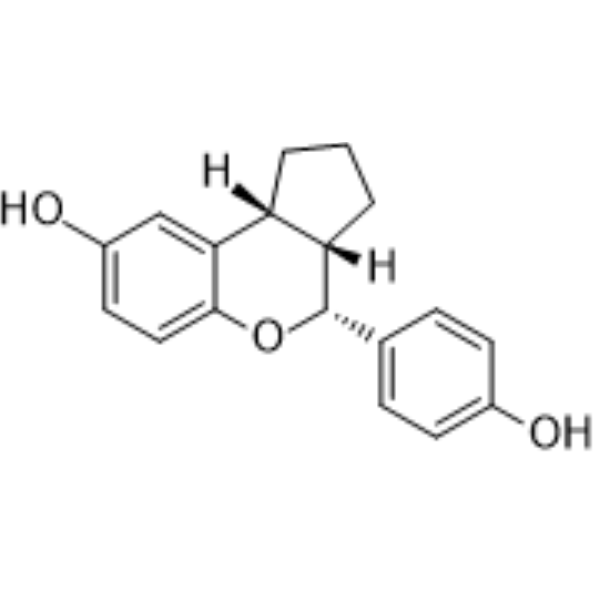
(R,R)-THC is an ERα agonist and an ERβ antagonist, with Kis of 9.0 nM and 3.6 nM for ERα and ERβ, respectively. (R,R)-THC has higher relative binding affinity for ERβ than ERα with the values of 25 and 3.6 .
|
-
- HY-103451A
-
|
|
Estrogen Receptor/ERR
|
Metabolic Disease
|
|
rel-(R,R)-THC is the relative configuration of (R,R)-THC (HY-103451). (R,R)-THC is an ERα agonist and an ERβ antagonist, with Kis of 9.0 nM and 3.6 nM for ERα and ERβ, respectively. (R,R)-THC has higher relative binding affinity for ERβ than ERα with the values of 25 and 3.6 .
|
-
- HY-103453
-
|
|
Estrogen Receptor/ERR
|
Endocrinology
|
|
(R)-DPN (compound 3) is a selective ERβ ligand with EC50s of 2.9, 0.8 nM for ERα and ERβ, respectively. (R)-DPN shows a very high affinity and potency preference for ERβ over ERα. (R)-DPN shows cytoxicity for HEC-1 and U2OS cells with EC50s of 286, 205 nM, respectively .
|
-
- HY-138690
-
|
|
Estrogen Receptor/ERR
|
Endocrinology
|
|
Estrogen receptor modulator 6 (compound 3a) is a selective estrogen receptor (ER) β agonist (Ki=0.44 nM). Estrogen receptor modulator 6 displays 19-fold selectivity for ERβ over ERα(Ki=8.4 nM) .
|
-
- HY-171791
-
-
- HY-103456R
-
|
|
Reference Standards
Estrogen Receptor/ERR
|
Cancer
|
|
PHTPP (Standard) is the analytical standard of PHTPP. This product is intended for research and analytical applications. PHTPP is a selective estrogen receptor β (ERβ) antagonist with 36-fold selectivity over ERα .
|
-
- HY-18295A
-
|
rel-LY500307
|
Estrogen Receptor/ERR
|
Neurological Disease
|
|
rel-Erteberel is rel isomer of Erteberel (HY-18295). Erteberel is a potent and selective estrogen receptor beta (ERβ) agonist with Ki and EC50 of 1.54 nM and 3.61 nM, respectively. Erteberel has anti-tumor activities .
|
-
- HY-19822S1
-
|
RAD1901-d4-1
|
Isotope-Labeled Compounds
Estrogen Receptor/ERR
|
Cancer
|
|
Elacestrant-d4-1 is the deuterium labeled Elacestrant (HY-19822). Elacestrant is an orally available and selective estrogen receptor degrader (SERD) with IC50s of 48 and 870 nM for ERα and ERβ, respectively .
|
-
- HY-100583AR
-
-
- HY-N0233R
-
|
Corylifolin (Standard)
|
Reference Standards
Estrogen Receptor/ERR
|
Cancer
|
|
Bavachin (Standard) is the analytical standard of Bavachin. This product is intended for research and analytical applications. Bavachin, a flavonoid first isolated from seeds of P. corylifolia, acts as a phytoestrogen that activates the estrogen receptors ERα and ERβ with EC50s of 320 and 680 nM, respectively.
|
-
- HY-12452R
-
|
Diarylpropionitrile (Standard)
|
Estrogen Receptor/ERR
Apoptosis
Autophagy
Reference Standards
|
Neurological Disease
|
|
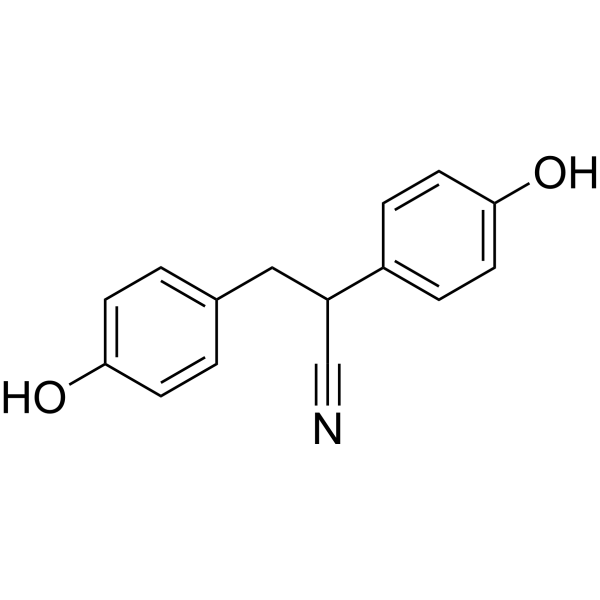
DPN (Standard) is the analytical standard of DPN. This product is intended for research and analytical applications. DPN (Diarylpropionitrile) is a non-steroidal estrogen receptor β (ERβ) selective ligand, with an EC50 of 0.85 nM. DPN has neuroprotective effects in a number of neurological diseases .
|
-
- HY-107043
-
-
- HY-N15473
-
|
(±)-Isopaucifloral F
|
Estrogen Receptor/ERR
Drug Derivative
|
Inflammation/Immunology
|
|
Isopaucifloral F ((±)-Isopaucifloral F) is a Resveratrol (HY-16561)-derived sesquiterpenes. Isopaucifloral F is an orally active ERβ agonist (EC50: 46.96 μM). Isopaucifloral F has antiosteoporosis activity. LD50 in rats: > 5 mg/kg .
|
-
- HY-B0141S6
-
-
- HY-N11973
-
|
|
Others
|
Cancer
|
|
5,7-Dimethoxy-2,3-phenanthrenediol is a compound with estrogenic activity. 5,7-Dimethoxy-2,3-phenanthrenediol increases the proliferation of MCF-7 cell and the expression of ERβ in the MCF-7 cell line .
|
-
- HY-19822S2
-
|
RAD1901-d10
|
Estrogen Receptor/ERR
Isotope-Labeled Compounds
|
Cancer
|
|
Elacestrant-d10 is the deuterium labeled of Elacestrant (HY-19822). Elacestrant is an orally available and selective estrogen receptor degrader (SERD) with IC50s of 48 and 870 nM for ERα and ERβ, respectively. Elacestrant also inhibits growth of ER + breast cancer cell lines in vitro and in vivo .
|
-
- HY-B1662R
-
|
|
Reference Standards
Estrogen Receptor/ERR
|
Endocrinology
|
|
Hexestrol (Standard) is the analytical standard of Hexestrol. This product is intended for research and analytical applications. Hexestrol is a nonsteroidal synthetic estrogen, with a Ki of 0.06 and 0.06 nM for estrogen receptor alpha (ERα) and ERβ. Hexestrol can be used for the research of the diseases caused by estrogen deficiencym, and it also can increase the weight of cattle .
|
-
- HY-B0723S2
-
|
FC-1271a-d5
|
Isotope-Labeled Compounds
Estrogen Receptor/ERR
|
Cancer
|
|
Ospemifene-d5 (FC-1271a-d5) is deuterium labeled Ospemifene. Ospemifene is a non-estrogen selective estrogen receptor modulator (SERM), with Kis of 380 and 410 nM for estrogen receptor α (ERα) and ERβ, respectively. Ospemifene can be used for the research of vaginal atrophy and breast cancer .
|
-
- HY-121441
-
|
|
Estrogen Receptor/ERR
|
Inflammation/Immunology
|
|
Fispemifene, an orally active selective estrogen receptor modulator with anti-inflammatory and antiestrogenic action, attenuates glandular inflammation in an animal model of chronic nonbacterial prostatitis .
|
-
- HY-19822S3
-
|
RAD1901-d6
|
Isotope-Labeled Compounds
Estrogen Receptor/ERR
|
Cancer
|
|
Elacestrant-d6 (RAD1901-d6) is a deuterated labeled Elacestrant (HY-19822). Elacestrant is a selective estrogen receptor (estrogen receptor, ER) degrader (SERD) with oral activity, with IC50 values of 48 and 870 nM for ERα and ERβ, respectively. Elacestrant can also effectively inhibit the growth of ER + breast cancer cell lines both in vitro and in vivo.
|
-
- HY-100689R
-
|
PPT (Standard)
|
Reference Standards
Estrogen Receptor/ERR
|
Cancer
|
|
Propyl pyrazole triol (Standard) is the analytical standard of Propyl pyrazole triol. This product is intended for research and analytical applications. Propyl pyrazole triol (PPT) is a selective estrogen receptor alpha (ERα) agonist. The relative binding affinity of Propyl pyrazole triol for ERα (ERα: 49%) around 410 times higher compared with estrogen receptor beta (ERβ: 0.12%) .
|
-
- HY-146742
-
|
|
PPAR
|
Metabolic Disease
|
|
PPARγ agonist 2 is a potent PPARγ partial agonist and can be used for metabolic disease research .
|
-
- HY-125091
-
|
|
Estrogen Receptor/ERR
|
Cancer
|
|
LY2066948 is a selective and orally active estrogen receptor modulator (SERM). LY2066948 has high affinity for estrogen receptors ERα and ERβ (Ki: 0.51 and 1.36 nM respectively) and shows potent antiestrogenic activity. LY2066948 blocks uterine weight gain induced by Ethynyl estradiol (HY-B0216) in immature rats. LY2066948 can be used for research of uterine fibroids and myomas .
|
-
- HY-A0031S
-
|
TSE-424-d4
|
Isotope-Labeled Compounds
Estrogen Receptor/ERR
|
Cancer
|
|
Bazedoxifene-d4 is deuterium labeled Bazedoxifene. Bazedoxifene (TSE-424) is an oral, BBB-penetrant nonsteroidal selective estrogen receptor modulator (SERM), with IC50s of 23 nM and 99 nM for ERα and ERβ, respectively. Bazedoxifene can be used for the research of osteoporosis. Bazedoxifene also acts as an inhibitor of IL-6/GP130 protein-protein interactions and can be used for the research of pancreatic cancer[1][2].
|
-
- HY-A0031S2
-
|
TSE-424-d4 acetate
|
Estrogen Receptor/ERR
|
Cancer
|
|
Bazedoxifene-d4 (acetate) is the deuterium labeled Bazedoxifene[1]. Bazedoxifene (TSE-424) is an oral, BBB-penetrant nonsteroidal selective estrogen receptor modulator (SERM), with IC50s of 23 nM and 99 nM for ERα and ERβ, respectively. Bazedoxifene can be used for the research of osteoporosis. Bazedoxifene also acts as an inhibitor of IL-6/GP130 protein-protein interactions and can be used for the research of pancreatic cancer[2][3].
|
-
- HY-186074
-
|
|
Estrogen Receptor/ERR
|
Cardiovascular Disease
Infection
Neurological Disease
Inflammation/Immunology
|
|
ERβ agonist-2 (Page 72) is a selective ERβ agonist with an EC50 of 800 nM or lower. ERβ agonist-2 selectively inhibits T cell activation and/or proliferation, thereby reducing circulating T cell levels in subjects, without exerting significant effects on circulating neutrophil, monocyte or B cell levels. ERβ agonist-2 is applicable to studies of chronic heart failure after myocardial infarction, as well as graft-versus-host disease, multiple sclerosis and experimental autoimmune encephalomyelitis .
|
-
- HY-183187
-
|
|
Estrogen Receptor/ERR
COX
|
Cancer
|
|
4H-Chromen-4-one-o-carborane is an estrogen receptor (ER) agonist, with an EC50 of 0.9 μM for ERα and an EC50 of 11.1 μM for ERβ. 4H-Chromen-4-one-o-carborane also acts as an inhibitor of COX-1 and COX-2, with an IC50 of 6.6 μM for COX-1 and an IC50 of 17.7 μM for COX-2 .
|
-
- HY-43322
-
|
|
17β-HSD
|
Cancer
|
|
7-Coumaryl triflate is a type 17β-HSD1 inhibitor of 17β-hydroxysteroid dehydrogenase. Its IC50 is 360 nM and Ki is 173 nM. 7-Coumaryl triflate shows selectivity for 17β-HSD2 and has no detectable affinity for ERα or ERβ. 7-Coumaryl triflate can be used in related research on hormone-dependent breast cancer .
|
-
- HY-169777
-
-
- HY-49537
-
-
- HY-180850
-
|
|
PROTACs
Estrogen Receptor/ERR
Reactive Oxygen Species (ROS)
Apoptosis
|
Cancer
|
|
ERB-2 is a selective ERβ PROTAC degrader. ERB-2 removes the inhibitory effect of ERβ on ROS, leading to the accumulation of ROS, mitochondrial damage, and ultimately triggering cell apoptosis (apoptosis). ERB-2 significantly inhibits tumor growth in the nude mouse model of NCI-H1975OR tumors. ERB-2 can be used for the study of non-small cell lung cancer .
|
-
- HY-108414R
-
|
(+)-Equol (Standard)
|
Estrogen Receptor/ERR
Reference Standards
|
Cancer
|
|
(R)-Equol (Standard) is the analytical standard of (R)-Equol. This product is intended for research and analytical applications. (R)-Equol is an agonist of both ERα and ERβ with Kis of 27.4 and 15.4 nM, respectively.
|
-
- HY-W615671
-
|
|
Estrogen Receptor/ERR
|
Others
|
|
4,4'-(Cyclohexylidenemethylene)diphenol (Compound 2) is a symmetric cyclic nonsteroidal estrogen. 4,4'-(Cyclohexylidenemethylene)diphenol has high binding affinity for estrogen receptors ERα and ERβ .
|
-
- HY-101271R
-
-
- HY-182498
-
|
|
Cytochrome P450
Estrogen Receptor/ERR
|
Cancer
|
|
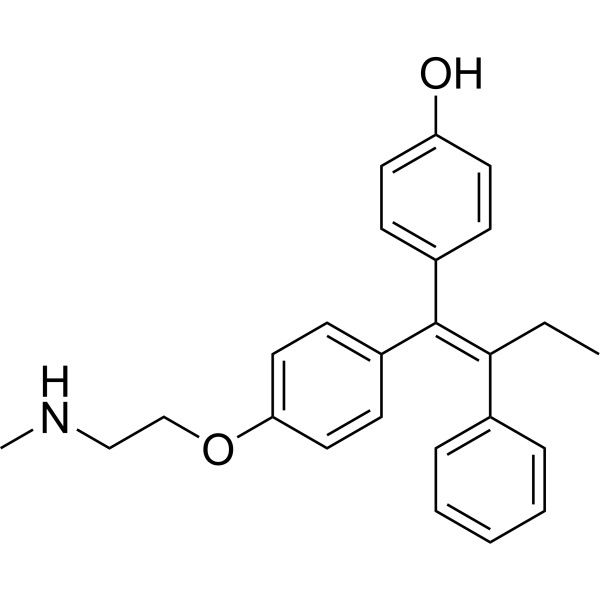
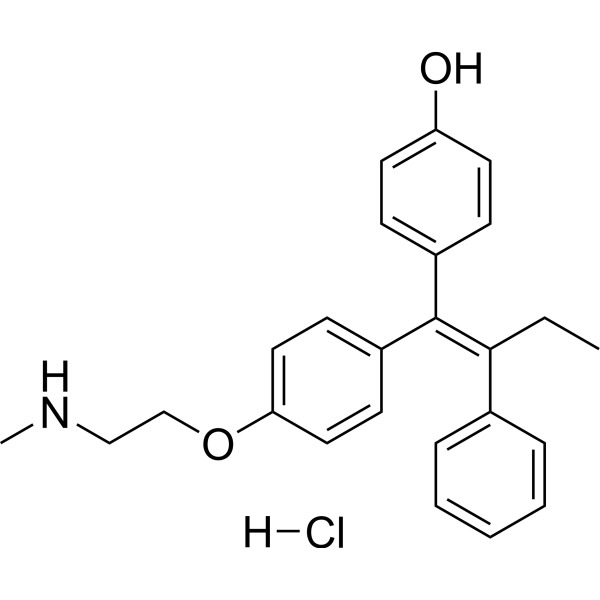
(Z)-Norendoxifen is an aromatase inhibitor and estrogen receptor modulator. The IC50 value of (Z)-Norendoxifen against aromatase is 102 nM. The EC50 values of (Z)-Norendoxifen for ER-α and ER-β are 27.0 nM and 35.2 nM, respectively. (Z)-Norendoxifen can be used in breast cancer research .
|
-
- HY-N0377S
-
|
4',7-Dihydroxyflavanone-d4
|
Isotope-Labeled Compounds
Estrogen Receptor/ERR
|
Neurological Disease
|
|
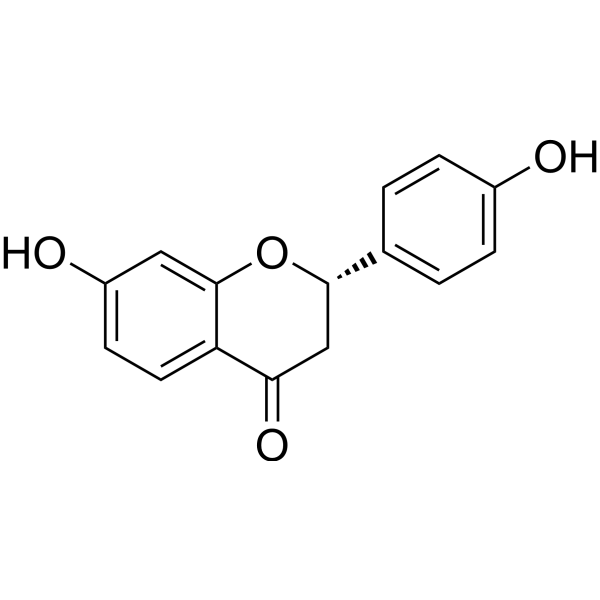
Liquiritigenin-d4 (4',7-Dihydroxyflavanone-d4) is the deuterium labeled Liquiritigenin (HY-N0377). Liquiritigenin, a flavanone isolated from Glycyrrhiza uralensis, is a highly selective estrogen receptor β (ERβ) agonist with an EC50 of 36.5 nM for activation of the ERE tk-Luc.
|
-
- HY-164726
-
|
|
Estrogen Receptor/ERR
|
Others
|
|
Estrogen receptor modulator 11 (Compound 27) is a tetrahydroisoquinoline derivative. Estrogen receptor modulator 11 has a certain affinity for estrogen receptors (ER), with IC50 values of 285 nM and 421 nM for ERα and ERβ, respectively. Estrogen receptor modulator 11 lacks antagonist activity in the MCF-7 cellular assay .
|
-
- HY-B1662S3
-
|
|
Isotope-Labeled Compounds
MEK
Autophagy
Apoptosis
|
Cancer
|
|
Hexestrol-d4 is the deuterium labeled Hexestrol (HY-B1662). Hexestrol is a nonsteroidal synthetic estrogen, with a Ki of 0.06 and 0.06 nM for estrogen receptor alpha (ERα) and ERβ. Hexestrol can be used for the research of the diseases caused by estrogen deficiencym, and it also can increase the weight of cattle .
|
-
- HY-180851
-
|
|
Estrogen Receptor/ERR
|
Cancer
|
|
ER ligand-14 is an estrogen receptor (ER) ligand. ER ligand-14 can serve as a ligand for target protein for PROTAC, and can be used to develop and design degradative agents for PROTAC ERβ, such as ERB-2 (HY-180850). ERB-2 displays favorable antiproliferative activity against Osimertinib (HY-15772) resistance NSCLC cells .
|
-
- HY-B0141E
-
|
ent-β-Estradiol; ent-17β-Estradiol; ent-17β-Oestradiol
|
Estrogen Receptor/ERR
|
Endocrinology
|
|
Ent-Estradiol is the enantiomer of Estradiol (HY-B0141). Ent-Estradiol is a highly selective estrogen receptor ligand, but does not possess estrogenic activity. Ent-Estradiol displays IC50 values of 24.9 nM, 9.59 nM and 8.17 nM for human, rat and mouse ERβ, and 151 nM, 246 nM and 268 nM for human, rat and mouse ERα, respectively. Ent-Estradiol can be used for the study of menopausal physiological changes .
|
-
- HY-10426R
-
|
|
Reference Standards
Estrogen Receptor/ERR
Autophagy
|
Cancer
|
|
XCT790 (Standard) is the analytical standard of XCT790 (HY-10426). This product is intended for research and analytical applications. XCT-790 is a potent and selective inverse agonist for ERRα with an IC50 value of 0.37 μM. XCT-790 induces cell death in chemotherapeutic resistant cancer cells. XCT-790 (Compound 12) is inactive against ERRγ and the estrogen receptors ERα and ERβ .
|
-
- HY-163712
-
|
|
Estrogen Receptor/ERR
|
Endocrinology
|
|
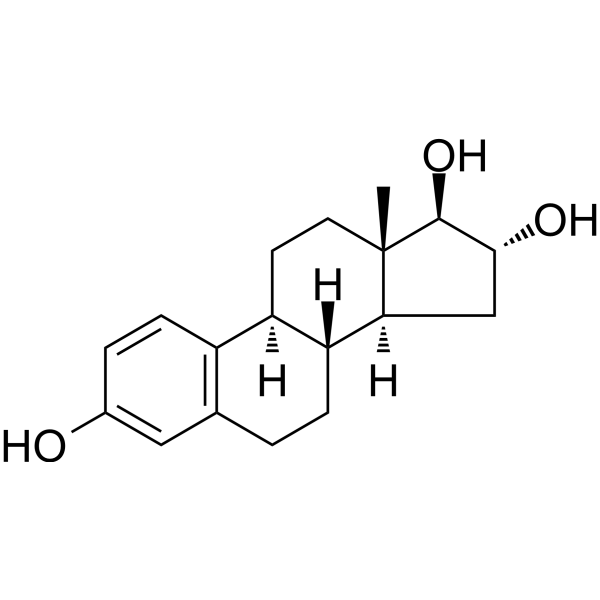
17-Epiestriol is an estrogen metabolite and a selective estrogen receptor (ER) β agonist. 17-epiestriol inhibits the mRNA and protein expression of the vascular cell adhesion molecule VCAM-1 induced by tumor necrosis factor α (TNFα). 17-epiestriol also inhibits TNFα-induced VCAM-1 expression and prevents NF-κB migration to the nucleus. 17-Epiestriol also induces the mRNA and protein expression of endothelial nitric oxide synthase .
|
-
- HY-183188
-
-
- HY-B1984
-
|
4,4'-DDD; p,p'-Dichlorodiphenyl dichloroethane
|
Environmental Pollutants
Drug Metabolite
Apoptosis
Insecticide
Necroptosis
|
Infection
Neurological Disease
Cancer
|
|
p,p'-DDD (4,4’-DDD) is an organochlorine insecticide, a major metabolite of p,p'-DDT. p,p'-DDD is an agonist at estrogen receptor α(ERα) and ERβ. p,p'-DDD increases DNA damage, apoptosis and necrosis in peripheral blood. p,p'-DDD stimulates cell proliferation in SKBR3 cells. p,p'-DDD activates the AP-1 transcription factor. p,p'-DDD decreases sleep times of barbiturates and steroids in rats .
|
-
- HY-175260
-
|
|
Estrogen Receptor/ERR
|
Cancer
|
|
ZN-c5 is a selective and orally active estrogen receptor degrader. ZN-c5 exhibits high potency in the cellular assay (MCF-7, IC50 = 0.3 nM) and binds with high affinity to ERα and ERβ (IC50 = 0.4 nM and 0.8 nM, respectively). ZN-c5 inhibits tumor growth in MCF-7 mouse xenograft model and WHIM20 xenograft model. ZN-c5 can be used for the study of breast cancer .
|
-
- HY-114631
-
|
|
Estrogen Receptor/ERR
|
Cancer
|
|
EM-800, an orally active anti-estrogen, serves as an antagonist to the transcriptional functions of estrogen receptors α (ERα) and β (ERβ). EM-800 possesses anticancer activity, capable of inhibiting the growth of breast cancer induced by 7,12-Dimethylbenz[a]anthracene (DMBA) (HY-W011845). Furthermore, in ovariectomized animals, EM-800 effectively slows down bone loss. Additionally, EM-800 shows potential in the research of breast and endometrial cancers, while exerting beneficial effects on bone and lipid metabolism .
|
-
- HY-15731S1
-
|
|
Isotope-Labeled Compounds
NO Synthase
Endogenous Metabolite
Estrogen Receptor/ERR
|
Cardiovascular Disease
|
|
Estetrol-d4 (Major) is the deuterium labeled Estetrol (HY-15731). Estetrol, an orally active estrogen synthesized exclusively during pregnancy by the human fetal liver, is a selective nuclear estrogen receptor modulator. Estetrol binds ERα as well as ERβ (with a fourfold lower affinity). Estetrol increases eNOS expression/activity and NO synthesis in endothelial cells. Estetrol exerts estrogenic actions on the endometrium or the central nervous system but presents antagonistic effects on the breast. Estetrol can be used in contraception and menopausal hormone research .
|
-
- HY-125627
-
|
|
Glucocorticoid Receptor
Androgen Receptor
|
Neurological Disease
Metabolic Disease
|
|
CP-394531 is an efficient and highly selective non-steroidal glucocorticoid receptor (GR) antagonist, with a Ki value of 0.1 nM. CP-394531 has a weak binding to androgen receptor (AR) (Ki = 130 nM), and has almost no effect on progesterone receptor (PR) and estrogen receptors (ERα, ERβ). CP-394531 completely blocks the half-maximal agonistic effect induced by Dexamethasone (HY-14648G), with a Kif of 4.1 nM. CP-394531 can be used to study various diseases such as diabetes, obesity, depression, neurodegenerative diseases, glaucoma and Cushing's disease .
|
-
- HY-155197
-
|
|
Microtubule/Tubulin
Estrogen Receptor/ERR
|
Cancer
|
|
ER degrader 7 (Compound 35t) is an ERα and ERβ degrader. ER degrader 7 inhibits tubulin polymerization. ER degrader 7 inhibits cell viability with IC50s of 0.06, 2.56, 15.84, 1.59, 1.67, 1.37 μM for MCF-7, T47D, MCF-10A, LCC2, T47D D538G, and T47D Y537S cells respectively. ER degrader 7 also inhibits breast cancer tumor growth .
|
-
- HY-126066
-
-
- HY-163712S
-
|
|
Isotope-Labeled Compounds
Estrogen Receptor/ERR
|
Endocrinology
|
|
17-Epiestriol-d5-1 is the deuterium labeled 17-Epiestriol (HY-163712). 17-Epiestriol is an estrogen metabolite and a selective estrogen receptor (ER) β agonist. 17-epiestriol inhibits the mRNA and protein expression of the vascular cell adhesion molecule VCAM-1 induced by tumor necrosis factor α (TNFα). 17-epiestriol also inhibits TNFα-induced VCAM-1 expression and prevents NF-κB migration to the nucleus. 17-Epiestriol also induces the mRNA and protein expression of endothelial nitric oxide synthase .
|
-
- HY-B1984S
-
|
4,4'-DDD-d8; p,p'-Dichlorodiphenyl dichloroethane-d8
|
Drug Metabolite
Apoptosis
Necroptosis
Insecticide
|
Infection
Neurological Disease
Cancer
|
|
p,p'-DDD-d8 is the deuterium labeled p,p'-DDD[1]. p,p'-DDD (4,4’-DDD) is an organochlorine insecticide, a major metabolite of p,p'-DDT. p,p'-DDD is an agonist at estrogen receptor α(ERα) and ERβ. p,p'-DDD increases DNA damage, apoptosis and necrosis in peripheral blood. p,p'-DDD stimulates cell proliferation in SKBR3 cells. p,p'-DDD activates the AP-1 transcription factor. p,p'-DDD decreases sleep times of barbiturates and steroids in rats .
|
-
- HY-B1984R
-
|
4,4'-DDD (Standard); p,p'-Dichlorodiphenyl dichloroethane (Standard)
|
Reference Standards
Drug Metabolite
Apoptosis
Necroptosis
Insecticide
|
Infection
Neurological Disease
Cancer
|
|
p,p'-DDD (Standard) is the analytical standard of p,p'-DDD (HY-B1984) . This product is intended for research and analytical applications. p,p'-DDD (4,4’-DDD) is an organochlorine insecticide, a major metabolite of p,p'-DDT. p,p'-DDD is an agonist at estrogen receptor α(ERα) and ERβ. p,p'-DDD increases DNA damage, apoptosis and necrosis in peripheral blood. p,p'-DDD stimulates cell proliferation in SKBR3 cells. p,p'-DDD activates the AP-1 transcription factor. p,p'-DDD decreases sleep times of barbiturates and steroids in rats.
|
-
- HY-U00425
-
|
|
Ligands for Target Protein for PROTAC
Estrogen Receptor/ERR
|
Metabolic Disease
Cancer
|
|
PROTAC ERRα ligand 1 is a PROTAC target protein ligand. PROTAC ERRα ligand 1 is an orally active ERRα inverse agonist with IC50 values of 0.6 μM for ERRα. PROTAC ERRα ligand 1 shows no significant activity against a panel of other nuclear receptors, including ERα c, ERRγ, ERβ, PPARα, PPARγ, PPARδ, and RXRα. PROTAC ERRα ligand 1 can provide enhanced insulin sensitivity in vivo. PROTAC ERRα ligand 1 can be used for metabolic diseases research, such as type 2 diabetes and obesity .
|
-
- HY-N6043
-
|
|
Apoptosis
Reactive Oxygen Species (ROS)
Bacterial
SARS-CoV
Estrogen Receptor/ERR
|
Infection
Neurological Disease
Inflammation/Immunology
|
|
Hydroxytyrosol acetate is an orally active, blood-brain barrier-permeable multi-active compound with multiple effects including antibacterial, antioxidant, anti-platelet aggregation, and neuroprotective activities. Hydroxytyrosol acetate not only inhibits the growth of Vibrio by increasing bacterial membrane permeability, but also interacts with DNA and mediates supercoiled DNA relaxation. Meanwhile, Hydroxytyrosol acetate effectively reduces thrombosis and inhibits lipid oxidation by inhibiting COX activity and promoting vascular nitric oxide production. In terms of neuroprotection, Hydroxytyrosol acetate significantly alleviates neuronal apoptosis and inflammatory responses by up-regulating the expression level of ERβ, thereby improving cognitive function in Alzheimer's disease models. Hydroxytyrosol acetate has been widely used in scientific research related to Vibrio infection, arterial thrombosis, Alzheimer's disease and other related fields .
|
-
- HY-N0570
-
|
DOPET; 3,4-Dihydroxyphenethyl alcohol; 3-Hydroxytyrosol
|
Apoptosis
Bacterial
Reactive Oxygen Species (ROS)
SARS-CoV
Estrogen Receptor/ERR
|
Infection
Cardiovascular Disease
Neurological Disease
Metabolic Disease
Inflammation/Immunology
Cancer
|
|
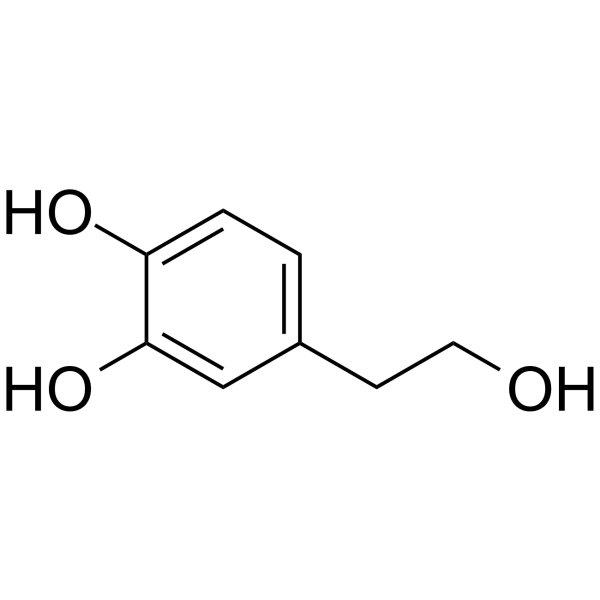
Hydroxytyrosol (DOPET; 3,4-Dihydroxyphenethyl alcohol) is an orally active, blood-brain barrier-permeable multi-active compound with multiple effects including antibacterial, antioxidant, anti-platelet aggregation, and neuroprotective activities. Hydroxytyrosol not only inhibits the growth of Vibrio by increasing bacterial membrane permeability, but also interacts with DNA and mediates supercoiled DNA relaxation. Meanwhile, Hydroxytyrosol effectively reduces thrombosis and inhibits lipid oxidation by inhibiting COX activity and promoting vascular nitric oxide production. In terms of neuroprotection, Hydroxytyrosol significantly alleviates neuronal apoptosis and inflammatory responses by up-regulating the expression level of ERβ, thereby improving cognitive function in Alzheimer's disease models. Hydroxytyrosol has been widely used in scientific research related to Vibrio infection, arterial thrombosis, Alzheimer's disease and other related fields .
|
-
- HY-113382R
-
|
1-Methylhydantoin (Standard)
|
Reference Standards
Endogenous Metabolite
|
Others
|
|
Delphinidin 3-glucoside (chloride) (Standard) is the analytical standard of Delphinidin 3-glucoside (chloride). This product is intended for research and analytical applications. Delphinidin 3-glucoside chloride (Delphinidin 3-O-glucoside chloride) is an active anthocyanin found in Hibiscus sabdariffa extract. Delphinidin 3-glucoside chloride induces a pro-apoptotic effect in B cell chronic lymphocytic leukaemia (B CLL) . Delphinidin 3-glucoside chloride exerts phytoestrogen activity by binding to ERβ, with an IC50 of 9.7 μM . Delphinidin-3-O-glucoside chloride inhibits EGFR with an IC50 of 2.37 µM . Delphinidin 3-glucoside chloride exhibits antitumor effects through pAKT/IRF1/HOTAIR pathway. Delphinidin 3-glucoside chloride exhibits efficacy against oxidative stress, inhibits platelet activation and endothelial dysfunction .
|
-
- HY-N6043R
-
|
|
Reference Standards
Apoptosis
Bacterial
Reactive Oxygen Species (ROS)
SARS-CoV
Estrogen Receptor/ERR
|
Infection
Cardiovascular Disease
Neurological Disease
Metabolic Disease
Inflammation/Immunology
Cancer
|
|
Hydroxytyrosol acetate (Standard) is the analytical standard of Hydroxytyrosol (HY-N0570). This product is intended for research and analytical applications. Hydroxytyrosol acetate is an orally active, blood-brain barrier-permeable multi-active compound with multiple effects including antibacterial, antioxidant, anti-platelet aggregation, and neuroprotective activities. Hydroxytyrosol acetate not only inhibits the growth of Vibrio by increasing bacterial membrane permeability, but also interacts with DNA and mediates supercoiled DNA relaxation. Meanwhile, Hydroxytyrosol acetate effectively reduces thrombosis and inhibits lipid oxidation by inhibiting COX activity and promoting vascular nitric oxide production. In terms of neuroprotection, Hydroxytyrosol acetate significantly alleviates neuronal apoptosis and inflammatory responses by up-regulating the expression level of ERβ, thereby improving cognitive function in Alzheimer's disease models. Hydroxytyrosol acetate has been widely used in scientific research related to Vibrio infection, arterial thrombosis, Alzheimer's disease and other related fields .
|
-
- HY-N0570S1
-
|
DOPET-d5; 3,4-Dihydroxyphenethyl alcohol-d5; 3-Hydroxytyrosol-d5
|
Isotope-Labeled Compounds
Apoptosis
Bacterial
Reactive Oxygen Species (ROS)
SARS-CoV
Estrogen Receptor/ERR
|
Cardiovascular Disease
Infection
Neurological Disease
Metabolic Disease
Inflammation/Immunology
Cancer
|
|
Hydroxytyrosol-d5 (DOPET-d5) is the deuterium labeled Hydroxytyrosol (HY-N0570). Hydroxytyrosol is an orally active, blood-brain barrier-permeable multi-active compound with multiple effects including antibacterial, antioxidant, anti-platelet aggregation, and neuroprotective activities. Hydroxytyrosol not only inhibits the growth of Vibrio by increasing bacterial membrane permeability, but also interacts with DNA and mediates supercoiled DNA relaxation. Meanwhile, Hydroxytyrosol effectively reduces thrombosis and inhibits lipid oxidation by inhibiting COX activity and promoting vascular nitric oxide production. In terms of neuroprotection, Hydroxytyrosol significantly alleviates neuronal apoptosis and inflammatory responses by up-regulating the expression level of ERβ, thereby improving cognitive function in Alzheimer's disease models. Hydroxytyrosol has been widely used in scientific research related to Vibrio infection, arterial thrombosis, Alzheimer's disease and other related fields .
|
-
- HY-N0570S
-
|
DOPET-d4; 3,4-Dihydroxyphenethyl alcohol-d4; 3-Hydroxytyrosol-d4
|
Isotope-Labeled Compounds
Apoptosis
Bacterial
Reactive Oxygen Species (ROS)
SARS-CoV
Estrogen Receptor/ERR
|
Cardiovascular Disease
Infection
Neurological Disease
Metabolic Disease
Inflammation/Immunology
Cancer
|
|
Hydroxytyrosol-d4 (DOPET-d4) is the deuterium labeled Hydroxytyrosol (HY-N0570). Hydroxytyrosol is an orally active, blood-brain barrier-permeable multi-active compound with multiple effects including antibacterial, antioxidant, anti-platelet aggregation, and neuroprotective activities. Hydroxytyrosol not only inhibits the growth of Vibrio by increasing bacterial membrane permeability, but also interacts with DNA and mediates supercoiled DNA relaxation. Meanwhile, Hydroxytyrosol effectively reduces thrombosis and inhibits lipid oxidation by inhibiting COX activity and promoting vascular nitric oxide production. In terms of neuroprotection, Hydroxytyrosol significantly alleviates neuronal apoptosis and inflammatory responses by up-regulating the expression level of ERβ, thereby improving cognitive function in Alzheimer's disease models. Hydroxytyrosol has been widely used in scientific research related to Vibrio infection, arterial thrombosis, Alzheimer's disease and other related fields .
|
-
- HY-N0570R
-
|
DOPET (Standard); 3,4-Dihydroxyphenethyl alcohol (Standard); 3-Hydroxytyrosol (Standard)
|
Reference Standards
Apoptosis
Bacterial
Reactive Oxygen Species (ROS)
SARS-CoV
Estrogen Receptor/ERR
|
Infection
Cardiovascular Disease
Neurological Disease
Metabolic Disease
Inflammation/Immunology
Cancer
|
|
Hydroxytyrosol (Standard) (DOPET (Standard)) is the analytical standard of Hydroxytyrosol (HY-N0570). This product is intended for research and analytical applications. Hydroxytyrosol is an orally active, blood-brain barrier-permeable multi-active compound with multiple effects including antibacterial, antioxidant, anti-platelet aggregation, and neuroprotective activities. Hydroxytyrosol not only inhibits the growth of Vibrio by increasing bacterial membrane permeability, but also interacts with DNA and mediates supercoiled DNA relaxation. Meanwhile, Hydroxytyrosol effectively reduces thrombosis and inhibits lipid oxidation by inhibiting COX activity and promoting vascular nitric oxide production. In terms of neuroprotection, Hydroxytyrosol significantly alleviates neuronal apoptosis and inflammatory responses by up-regulating the expression level of ERβ, thereby improving cognitive function in Alzheimer's disease models. Hydroxytyrosol has been widely used in scientific research related to Vibrio infection, arterial thrombosis, Alzheimer's disease and other related fields .
|
-
- HY-N0910
-
-
- HY-181172
-
|
|
Estrogen Receptor/ERR
|
Cancer
|
|
FRAGHIT-4 is an estrogen receptor alpha (ERα) inhibitor. FRAGHIT-4 exhibits antineoplastic activity against breast cancer via targeting ER signaling. FRAGHIT-4 can be used for the research of breast cancer .
|
-
- HY-123664
-
|
LY133314
|
Estrogen Receptor/ERR
|
Cancer
|
|
Trioxifene mesylate (LY133314) is an orally active and selective estrogen receptor (ER) modulator with human ERα IC50 of 203.49 nM and Ki of 20.84 nM. Trioxifene mesylate binds estradiol receptors, inhibits ERα-mediated gene expression, reduces circulating gonadotrophin levels. Trioxifene mesylate can be used for the research of advanced breast cancer and androgen-independent, metastatic prostatic adenocarcinoma .
|
-
- HY-135529
-
|
LY133314 free base
|
Estrogen Receptor/ERR
|
Cancer
|
|
Trioxifene (LY133314 free base) is an orally active and selective estrogen receptor (ER) modulator with human ERα IC50 of 203.49 nM and Ki of 20.84 nM. Trioxifene binds estradiol receptors, inhibits ERα-mediated gene expression, reduces circulating gonadotrophin levels. Trioxifene can be used for the research of advanced breast cancer and androgen-independent, metastatic prostatic adenocarcinoma .
|
-
| Cat. No. |
Product Name |
Target |
Research Area |
-
- HY-P4190
-
|
|
GnRH Receptor
|
Endocrinology
|
|
FSH receptor-binding inhibitor fragment(bi-10) is a potent FSH antagonist. FSH receptor-binding inhibitor fragment(bi-10) blocks the binding of FSH to FSHR, and alteres FSH action at the receptor level. FSH receptor-binding inhibitor fragment(bi-10) results in the suppression of ovulation and causes follicular atresia of mice. FSH receptor-binding inhibitor fragment(bi-10) has the potential for utilizing to restrain the carcinogenesis of ovarian cancer by down-regulating overexpression of FSHR and ERβ in the ovaries .
|
| Cat. No. |
Product Name |
Category |
Target |
Chemical Structure |
-
- HY-N0377
-
-
-
- HY-N0570
-
|
DOPET; 3,4-Dihydroxyphenethyl alcohol; 3-Hydroxytyrosol
|
Infection
Structural Classification
Canarium album (Lour.) Rauesch.
Classification of Application Fields
Phenols
Polyphenols
Plants
Endogenous metabolite
Burseraceae
Inflammation/Immunology
Disease Research Fields
Source Classification
|
Apoptosis
Bacterial
Reactive Oxygen Species (ROS)
SARS-CoV
Estrogen Receptor/ERR
|
|
Hydroxytyrosol (DOPET; 3,4-Dihydroxyphenethyl alcohol) is an orally active, blood-brain barrier-permeable multi-active compound with multiple effects including antibacterial, antioxidant, anti-platelet aggregation, and neuroprotective activities. Hydroxytyrosol not only inhibits the growth of Vibrio by increasing bacterial membrane permeability, but also interacts with DNA and mediates supercoiled DNA relaxation. Meanwhile, Hydroxytyrosol effectively reduces thrombosis and inhibits lipid oxidation by inhibiting COX activity and promoting vascular nitric oxide production. In terms of neuroprotection, Hydroxytyrosol significantly alleviates neuronal apoptosis and inflammatory responses by up-regulating the expression level of ERβ, thereby improving cognitive function in Alzheimer's disease models. Hydroxytyrosol has been widely used in scientific research related to Vibrio infection, arterial thrombosis, Alzheimer's disease and other related fields .
|
-
-
- HY-100583A
-
-
-
- HY-B0412
-
-
-
- HY-N0233
-
-
-
- HY-15731
-
-
-
- HY-108052
-
|
Delphinidin 3-O-glucoside chloride; Delphinidin 3-O-β-glucoside chloride
|
Malvaceae
Anthocyans
Flavonoids
Microorganisms
Classification of Application Fields
Hibiscus sabdariffa Linn.
Plants
Disease Research Fields
Source Classification
Cancer
|
EGFR
Apoptosis
Akt
|
|
Delphinidin 3-glucoside chloride (Delphinidin 3-O-glucoside chloride) is an active anthocyanin found in Hibiscus sabdariffa extract. Delphinidin 3-glucoside chloride induces a pro-apoptotic effect in B cell chronic lymphocytic leukaemia (B CLL) . Delphinidin 3-glucoside chloride exerts phytoestrogen activity by binding to ERβ, with an IC50 of 9.7 μM . Delphinidin-3-O-glucoside chloride inhibits EGFR with an IC50 of 2.37 µM . Delphinidin 3-glucoside chloride exhibits antitumor effects through pAKT/IRF1/HOTAIR pathway. Delphinidin 3-glucoside chloride exhibits efficacy against oxidative stress, inhibits platelet activation and endothelial dysfunction .
|
-
-
- HY-N6043
-
|
|
Structural Classification
Canarium album (Lour.) Rauesch.
Classification of Application Fields
Phenols
Polyphenols
Plants
Burseraceae
Inflammation/Immunology
Disease Research Fields
Source Classification
|
Apoptosis
Reactive Oxygen Species (ROS)
Bacterial
SARS-CoV
Estrogen Receptor/ERR
|
|
Hydroxytyrosol acetate is an orally active, blood-brain barrier-permeable multi-active compound with multiple effects including antibacterial, antioxidant, anti-platelet aggregation, and neuroprotective activities. Hydroxytyrosol acetate not only inhibits the growth of Vibrio by increasing bacterial membrane permeability, but also interacts with DNA and mediates supercoiled DNA relaxation. Meanwhile, Hydroxytyrosol acetate effectively reduces thrombosis and inhibits lipid oxidation by inhibiting COX activity and promoting vascular nitric oxide production. In terms of neuroprotection, Hydroxytyrosol acetate significantly alleviates neuronal apoptosis and inflammatory responses by up-regulating the expression level of ERβ, thereby improving cognitive function in Alzheimer's disease models. Hydroxytyrosol acetate has been widely used in scientific research related to Vibrio infection, arterial thrombosis, Alzheimer's disease and other related fields .
|
-
-
- HY-126109
-
-
-
- HY-126066
-
-
-
- HY-N0910
-
-
-
- HY-125703
-
-
-
- HY-N0570R
-
|
DOPET (Standard); 3,4-Dihydroxyphenethyl alcohol (Standard); 3-Hydroxytyrosol (Standard)
|
Structural Classification
Canarium album (Lour.) Rauesch.
Phenols
Polyphenols
Plants
Endogenous metabolite
Burseraceae
Source Classification
|
Reference Standards
Apoptosis
Bacterial
Reactive Oxygen Species (ROS)
SARS-CoV
Estrogen Receptor/ERR
|
|
Hydroxytyrosol (Standard) (DOPET (Standard)) is the analytical standard of Hydroxytyrosol (HY-N0570). This product is intended for research and analytical applications. Hydroxytyrosol is an orally active, blood-brain barrier-permeable multi-active compound with multiple effects including antibacterial, antioxidant, anti-platelet aggregation, and neuroprotective activities. Hydroxytyrosol not only inhibits the growth of Vibrio by increasing bacterial membrane permeability, but also interacts with DNA and mediates supercoiled DNA relaxation. Meanwhile, Hydroxytyrosol effectively reduces thrombosis and inhibits lipid oxidation by inhibiting COX activity and promoting vascular nitric oxide production. In terms of neuroprotection, Hydroxytyrosol significantly alleviates neuronal apoptosis and inflammatory responses by up-regulating the expression level of ERβ, thereby improving cognitive function in Alzheimer's disease models. Hydroxytyrosol has been widely used in scientific research related to Vibrio infection, arterial thrombosis, Alzheimer's disease and other related fields .
|
-
-
- HY-108052R
-
|
Delphinidin 3-O-glucoside chloride (Standard); Delphinidin 3-O-β-glucoside chloride (Standard)
|
Malvaceae
Structural Classification
Anthocyans
Flavonoids
Microorganisms
Hibiscus sabdariffa Linn.
Plants
Source Classification
|
Reference Standards
EGFR
Apoptosis
Akt
|
|
Delphinidin 3-glucoside (chloride) (Standard) is the analytical standard of Delphinidin 3-glucoside (chloride). This product is intended for research and analytical applications. Delphinidin 3-glucoside chloride (Delphinidin 3-O-glucoside chloride) is an active anthocyanin found in Hibiscus sabdariffa extract. Delphinidin 3-glucoside chloride induces a pro-apoptotic effect in B cell chronic lymphocytic leukaemia (B CLL) . Delphinidin 3-glucoside chloride exerts phytoestrogen activity by binding to ERβ, with an IC50 of 9.7 μM . Delphinidin-3-O-glucoside chloride inhibits EGFR with an IC50 of 2.37 µM . Delphinidin 3-glucoside chloride exhibits antitumor effects through pAKT/IRF1/HOTAIR pathway. Delphinidin 3-glucoside chloride exhibits efficacy against oxidative stress, inhibits platelet activation and endothelial dysfunction .
|
-
-
- HY-100583AR
-
-
-
- HY-N0233R
-
-
-
- HY-N15473
-
-
-
- HY-N11973
-
-
-
- HY-113382R
-
|
1-Methylhydantoin (Standard)
|
Alkaloids
Structural Classification
Other Alkaloids
Endogenous metabolite
Source Classification
|
Reference Standards
Endogenous Metabolite
|
|
Delphinidin 3-glucoside (chloride) (Standard) is the analytical standard of Delphinidin 3-glucoside (chloride). This product is intended for research and analytical applications. Delphinidin 3-glucoside chloride (Delphinidin 3-O-glucoside chloride) is an active anthocyanin found in Hibiscus sabdariffa extract. Delphinidin 3-glucoside chloride induces a pro-apoptotic effect in B cell chronic lymphocytic leukaemia (B CLL) . Delphinidin 3-glucoside chloride exerts phytoestrogen activity by binding to ERβ, with an IC50 of 9.7 μM . Delphinidin-3-O-glucoside chloride inhibits EGFR with an IC50 of 2.37 µM . Delphinidin 3-glucoside chloride exhibits antitumor effects through pAKT/IRF1/HOTAIR pathway. Delphinidin 3-glucoside chloride exhibits efficacy against oxidative stress, inhibits platelet activation and endothelial dysfunction .
|
-
-
- HY-N6043R
-
|
|
Structural Classification
Canarium album (Lour.) Rauesch.
Phenols
Polyphenols
Plants
Burseraceae
Source Classification
|
Reference Standards
Apoptosis
Bacterial
Reactive Oxygen Species (ROS)
SARS-CoV
Estrogen Receptor/ERR
|
|
Hydroxytyrosol acetate (Standard) is the analytical standard of Hydroxytyrosol (HY-N0570). This product is intended for research and analytical applications. Hydroxytyrosol acetate is an orally active, blood-brain barrier-permeable multi-active compound with multiple effects including antibacterial, antioxidant, anti-platelet aggregation, and neuroprotective activities. Hydroxytyrosol acetate not only inhibits the growth of Vibrio by increasing bacterial membrane permeability, but also interacts with DNA and mediates supercoiled DNA relaxation. Meanwhile, Hydroxytyrosol acetate effectively reduces thrombosis and inhibits lipid oxidation by inhibiting COX activity and promoting vascular nitric oxide production. In terms of neuroprotection, Hydroxytyrosol acetate significantly alleviates neuronal apoptosis and inflammatory responses by up-regulating the expression level of ERβ, thereby improving cognitive function in Alzheimer's disease models. Hydroxytyrosol acetate has been widely used in scientific research related to Vibrio infection, arterial thrombosis, Alzheimer's disease and other related fields .
|
-
| Cat. No. |
Product Name |
Chemical Structure |
-
- HY-B0141S2
-
|
|
|
Estradiol-d5 is deuterium labeled Estradiol. Estradiol is a steroid sex hormone vital to the maintenance of fertility and secondary sexual characteristics in females. Estradiol upregulates IL-6 expression through the estrogen receptor β (ERβ) pathway .
|
-
-
- HY-B0141S1
-
2 Publications Verification
|
|
Estradiol-d4 is the deuterium labeled Estradiol. Estradiol is a steroid sex hormone vital to the maintenance of fertility and secondary sexual characteristics in females. Estradiol upregulates IL-6 expression through the estrogen receptor β (ERβ) pathway .
|
-
-
- HY-B0141S
-
|
|
|
Estradiol-d3 is the deuterium labeled Estradiol. Estradiol is a steroid sex hormone vital to the maintenance of fertility and secondary sexual characteristics in females. Estradiol upregulates IL-6 expression through the estrogen receptor β (ERβ) pathway.
|
-
-
- HY-B0141S3
-
|
|
|
Estradiol-d2 is the deuterium labeled Estradiol. Estradiol is a steroid sex hormone vital to the maintenance of fertility and secondary sexual characteristics in females. Estradiol upregulates IL-6 expression through the estrogen receptor β (ERβ) pathway .
|
-
-
- HY-B0141S5
-
|
|
|
Estradiol- 13C2 is the 13C-labeled Estradiol. Estradiol is a steroid sex hormone vital to the maintenance of fertility and secondary sexual characteristics in females. Estradiol upregulates IL-6 expression through the estrogen receptor β (ERβ) pathway .
|
-
-
- HY-B0141S4
-
|
|
|
Estradiol- 13C6 is the 13C-labeled Estradiol. Estradiol is a steroid sex hormone vital to the maintenance of fertility and secondary sexual characteristics in females. Estradiol upregulates IL-6 expression through the estrogen receptor β (ERβ) pathway .
|
-
-
- HY-19822S
-
|
|
|
Elacestrant-d4 (RAD1901-d4) is a deuterated labeled Elacestrant (HY-19822). Elacestrant (RAD1901) is a selective estrogen receptor (estrogen receptor, ER) degrader (SERD) with oral activity, with IC50 values of 48 and 870 nM for ERα and ERβ, respectively. Elacestrant can also effectively inhibit the growth of ER + breast cancer cell lines both in vitro and in vivo.
|
-
-
- HY-B1984S
-
|
|
|
p,p'-DDD-d8 is the deuterium labeled p,p'-DDD[1]. p,p'-DDD (4,4’-DDD) is an organochlorine insecticide, a major metabolite of p,p'-DDT. p,p'-DDD is an agonist at estrogen receptor α(ERα) and ERβ. p,p'-DDD increases DNA damage, apoptosis and necrosis in peripheral blood. p,p'-DDD stimulates cell proliferation in SKBR3 cells. p,p'-DDD activates the AP-1 transcription factor. p,p'-DDD decreases sleep times of barbiturates and steroids in rats .
|
-
-
- HY-N0570S
-
|
|
|
Hydroxytyrosol-d4 (DOPET-d4) is the deuterium labeled Hydroxytyrosol (HY-N0570). Hydroxytyrosol is an orally active, blood-brain barrier-permeable multi-active compound with multiple effects including antibacterial, antioxidant, anti-platelet aggregation, and neuroprotective activities. Hydroxytyrosol not only inhibits the growth of Vibrio by increasing bacterial membrane permeability, but also interacts with DNA and mediates supercoiled DNA relaxation. Meanwhile, Hydroxytyrosol effectively reduces thrombosis and inhibits lipid oxidation by inhibiting COX activity and promoting vascular nitric oxide production. In terms of neuroprotection, Hydroxytyrosol significantly alleviates neuronal apoptosis and inflammatory responses by up-regulating the expression level of ERβ, thereby improving cognitive function in Alzheimer's disease models. Hydroxytyrosol has been widely used in scientific research related to Vibrio infection, arterial thrombosis, Alzheimer's disease and other related fields .
|
-
-
- HY-N0570S1
-
|
|
|
Hydroxytyrosol-d5 (DOPET-d5) is the deuterium labeled Hydroxytyrosol (HY-N0570). Hydroxytyrosol is an orally active, blood-brain barrier-permeable multi-active compound with multiple effects including antibacterial, antioxidant, anti-platelet aggregation, and neuroprotective activities. Hydroxytyrosol not only inhibits the growth of Vibrio by increasing bacterial membrane permeability, but also interacts with DNA and mediates supercoiled DNA relaxation. Meanwhile, Hydroxytyrosol effectively reduces thrombosis and inhibits lipid oxidation by inhibiting COX activity and promoting vascular nitric oxide production. In terms of neuroprotection, Hydroxytyrosol significantly alleviates neuronal apoptosis and inflammatory responses by up-regulating the expression level of ERβ, thereby improving cognitive function in Alzheimer's disease models. Hydroxytyrosol has been widely used in scientific research related to Vibrio infection, arterial thrombosis, Alzheimer's disease and other related fields .
|
-
-
- HY-B0723S
-
|
|
|
Ospemifene-d4 is a deuterium labeled Ospemifene. Ospemifene is a selective and orally active estrogen receptor modulator for the prevention of osteoporosis with IC50 values of 827 nM and 1633 nM for estrogen receptor α (ERα) and ERβ, respectively. Ospemifene has bone-sparing, antitumor, and cholesterol-lowering effects .
|
-
-
- HY-19822S1
-
|
|
|
Elacestrant-d4-1 is the deuterium labeled Elacestrant (HY-19822). Elacestrant is an orally available and selective estrogen receptor degrader (SERD) with IC50s of 48 and 870 nM for ERα and ERβ, respectively .
|
-
-
- HY-B0141S6
-
|
|
|
Estradiol-d2-1 is the deuterium labeled Estradiol. Estradiol is a steroid sex hormone vital to the maintenance of fertility and secondary sexual characteristics in females. Estradiol upregulates IL-6 expression through the estrogen receptor β (ERβ) pathway .
|
-
-
- HY-19822S2
-
|
|
|
Elacestrant-d10 is the deuterium labeled of Elacestrant (HY-19822). Elacestrant is an orally available and selective estrogen receptor degrader (SERD) with IC50s of 48 and 870 nM for ERα and ERβ, respectively. Elacestrant also inhibits growth of ER + breast cancer cell lines in vitro and in vivo .
|
-
-
- HY-B0723S2
-
|
|
|
Ospemifene-d5 (FC-1271a-d5) is deuterium labeled Ospemifene. Ospemifene is a non-estrogen selective estrogen receptor modulator (SERM), with Kis of 380 and 410 nM for estrogen receptor α (ERα) and ERβ, respectively. Ospemifene can be used for the research of vaginal atrophy and breast cancer .
|
-
-
- HY-19822S3
-
|
|
|
Elacestrant-d6 (RAD1901-d6) is a deuterated labeled Elacestrant (HY-19822). Elacestrant is a selective estrogen receptor (estrogen receptor, ER) degrader (SERD) with oral activity, with IC50 values of 48 and 870 nM for ERα and ERβ, respectively. Elacestrant can also effectively inhibit the growth of ER + breast cancer cell lines both in vitro and in vivo.
|
-
-
- HY-A0031S
-
|
|
|
Bazedoxifene-d4 is deuterium labeled Bazedoxifene. Bazedoxifene (TSE-424) is an oral, BBB-penetrant nonsteroidal selective estrogen receptor modulator (SERM), with IC50s of 23 nM and 99 nM for ERα and ERβ, respectively. Bazedoxifene can be used for the research of osteoporosis. Bazedoxifene also acts as an inhibitor of IL-6/GP130 protein-protein interactions and can be used for the research of pancreatic cancer[1][2].
|
-
-
- HY-A0031S2
-
|
|
|
Bazedoxifene-d4 (acetate) is the deuterium labeled Bazedoxifene[1]. Bazedoxifene (TSE-424) is an oral, BBB-penetrant nonsteroidal selective estrogen receptor modulator (SERM), with IC50s of 23 nM and 99 nM for ERα and ERβ, respectively. Bazedoxifene can be used for the research of osteoporosis. Bazedoxifene also acts as an inhibitor of IL-6/GP130 protein-protein interactions and can be used for the research of pancreatic cancer[2][3].
|
-
-
- HY-15731S1
-
|
|
|
Estetrol-d4 (Major) is the deuterium labeled Estetrol (HY-15731). Estetrol, an orally active estrogen synthesized exclusively during pregnancy by the human fetal liver, is a selective nuclear estrogen receptor modulator. Estetrol binds ERα as well as ERβ (with a fourfold lower affinity). Estetrol increases eNOS expression/activity and NO synthesis in endothelial cells. Estetrol exerts estrogenic actions on the endometrium or the central nervous system but presents antagonistic effects on the breast. Estetrol can be used in contraception and menopausal hormone research .
|
-
-
- HY-163712S
-
|
|
|
17-Epiestriol-d5-1 is the deuterium labeled 17-Epiestriol (HY-163712). 17-Epiestriol is an estrogen metabolite and a selective estrogen receptor (ER) β agonist. 17-epiestriol inhibits the mRNA and protein expression of the vascular cell adhesion molecule VCAM-1 induced by tumor necrosis factor α (TNFα). 17-epiestriol also inhibits TNFα-induced VCAM-1 expression and prevents NF-κB migration to the nucleus. 17-Epiestriol also induces the mRNA and protein expression of endothelial nitric oxide synthase .
|
-
-
- HY-N0377S
-
|
|
|
Liquiritigenin-d4 (4',7-Dihydroxyflavanone-d4) is the deuterium labeled Liquiritigenin (HY-N0377). Liquiritigenin, a flavanone isolated from Glycyrrhiza uralensis, is a highly selective estrogen receptor β (ERβ) agonist with an EC50 of 36.5 nM for activation of the ERE tk-Luc.
|
-
-
- HY-B1662S3
-
|
|
|
Hexestrol-d4 is the deuterium labeled Hexestrol (HY-B1662). Hexestrol is a nonsteroidal synthetic estrogen, with a Ki of 0.06 and 0.06 nM for estrogen receptor alpha (ERα) and ERβ. Hexestrol can be used for the research of the diseases caused by estrogen deficiencym, and it also can increase the weight of cattle .
|
-
Your information is safe with us. * Required Fields.
Inquiry Information
- Product Name:
- Cat. No.:
- Quantity:
- MCE Japan Authorized Agent:

