



PROTAC ERRα ligand 1

Based on 1 Customer Validation
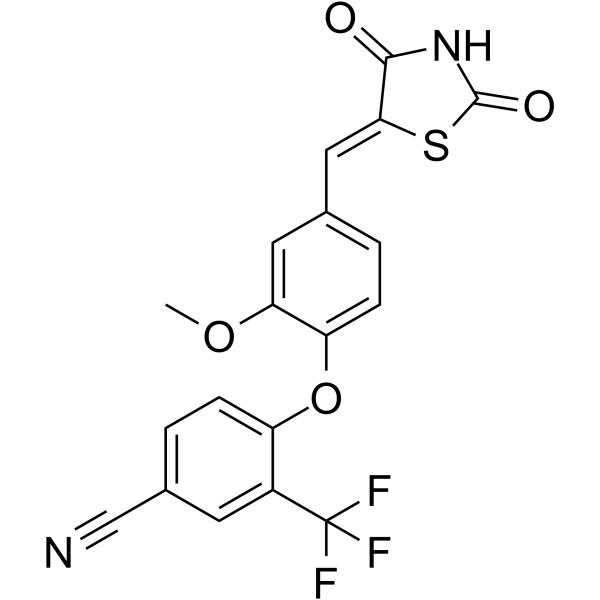
PROTAC ERRα ligand 1 is a PROTAC target protein ligand. PROTAC ERRα ligand 1 is an orally active ERRα inverse agonist with IC50 values of 0.6 μM for ERRα. PROTAC ERRα ligand 1 shows no significant activity against a panel of other nuclear receptors, including ERαc, ERRγ, ERβ, PPARα, PPARγ, PPARδ, and RXRα. PROTAC ERRα ligand 1 can provide enhanced insulin sensitivity in vivo. PROTAC ERRα ligand 1 can be used for metabolic diseases research, such as type 2 diabetes and obesity.
For research use only. We do not sell to patients.
- Purity : 98.61%
- CAS No.: 1264754-13-3
- Formula: C19H11F3N2O4S
- Molecular Weight:420.36
-
Storage:Powder -20°C, 3 years , 4°C, 2 years ; In solvent -80°C, 6 months , -20°C, 1 month

To place orders, for customer services and technical support, please contact: MedChemExpress USA
Tel: 609-228-6898 E-mail: [email protected] [email protected]


-
 Biological Activity
-
Chemical Information
-
Solvent & Solubility
- Purity & Documentation
- References
-
 Help & FAQs


-
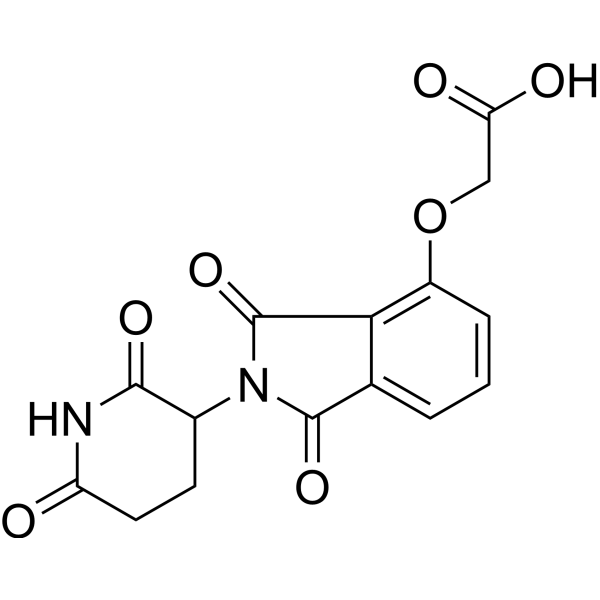
HY-103597
Thalidomide-O-COOHCereblon Ligand -
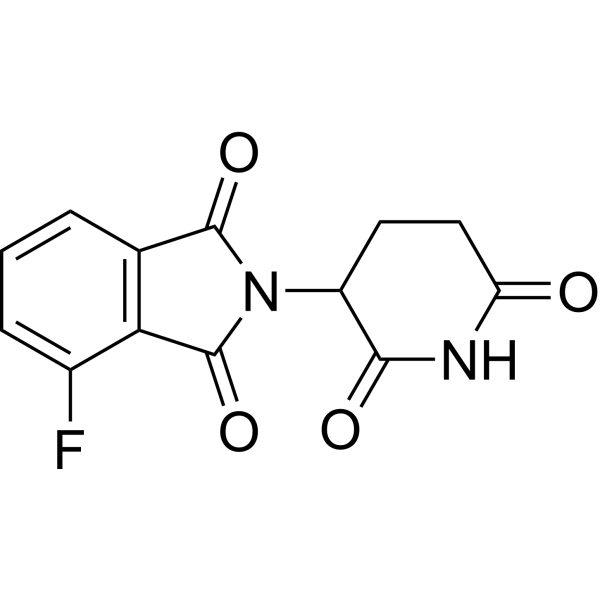
HY-41547
Thalidomide 4-fluorideLigands for E3 Ligase -
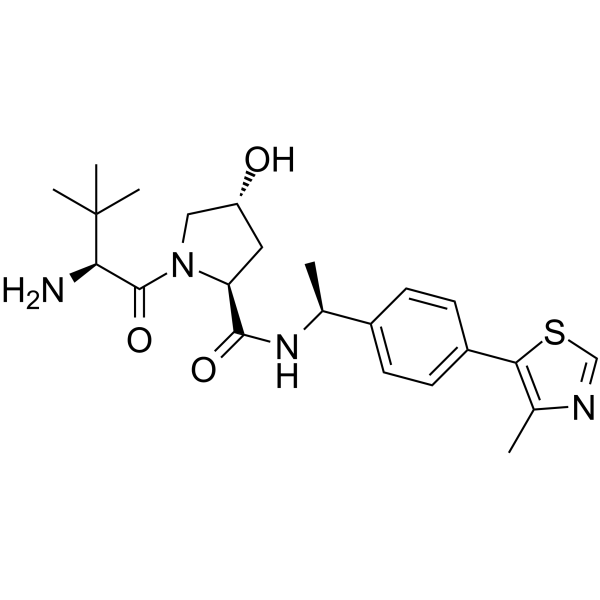
HY-112078
(S,R,S)-AHPC-MeLigands for E3 Ligase -
HY-103596
Thalidomide-4-OHCereblon Ligand -
HY-42424
(S,R,S)-AHPC-Me hydrochlorideLigands for E3 Ligase -

HY-103596R
Thalidomide-4-OH (Standard)Reference Standard -
HY-103456
PHTPPERβ Antagonist -

HY-103597R
Thalidomide-O-COOH (Standard)Reference Standard -
HY-110402
(S,R,S)-AHPC TFAVHL Ligand -
HY-111226
GSK5182ERRγ Inverse Agonist -
HY-15483
DY131ERRγ/β Agonist -
HY-12870
AZD9496ERα Antagonist


Biological Activity
Description
IC50 & Target
[1]|
ERRα 0.04 μM (IC50) |
Cellular Effect
|
Cell Line

|
Type | Value | Description | References |
|---|---|---|---|---|
| HEK293 | EC50 |
1.6 μM
Compound: 29
|
Agonist activity at ZFP-fused ERRbeta LBD expressed in HEK293 cells by TR-FRET assay
Agonist activity at ZFP-fused ERRbeta LBD expressed in HEK293 cells by TR-FRET assay
|
[PMID: 21218783] |
| HEK293 | IC50 |
0.6 μM
Compound: 29
|
Antagonist activity at ERRalpha LBD expressed in HEK293 cells assessed as Gal4-SRC2 interaction by two hybrid luciferase reporter gene assay
Antagonist activity at ERRalpha LBD expressed in HEK293 cells assessed as Gal4-SRC2 interaction by two hybrid luciferase reporter gene assay
|
[PMID: 21218783] |
| MCF7 | EC50 |
>15 μM
Compound: 29
|
Agonist activity at human ERalpha LBD in human MCF7 cells assessed as induction of cell proliferation after up to 6 days by celltiter-glo assay
Agonist activity at human ERalpha LBD in human MCF7 cells assessed as induction of cell proliferation after up to 6 days by celltiter-glo assay
|
[PMID: 21218783] |
| MCF7 | IC50 |
>15 μM
Compound: 29
|
Antagonist activity at human ERalpha LBD in human MCF7 cells assessed as inhibition of estradiol-induced cell proliferation after up to 6 days by celltiter-glo assay
Antagonist activity at human ERalpha LBD in human MCF7 cells assessed as inhibition of estradiol-induced cell proliferation after up to 6 days by celltiter-glo assay
|
[PMID: 21218783] |
In Vitro
PROTAC ERRα ligand 1 (compound 29) (24 h) inhibits ERRα with an IC50 of 0.6 μM in a two-hybrid reporter assay in HEK293 cells[1].
PROTAC ERRα ligand 1 (10 μM) exhibits a clean off-target profile, showing no significant inhibition of CYP3A4, CYP2D6, or a broad panel of 51 receptors and ion channels[1].
PROTAC ERRα ligand 1 (15 μM, 24 h) shows no functional activity against PPARα, PPARγ, PPARδ and RXRα in HEK293 cells[1].
PROTAC ERRα ligand 1 (4-18 h) proves much less potent (>50-fold selectivity) at inhibiting coactivator peptide binding with ERRγ and does not compete with PPARγ ligand binding at test concentrations up to 10 μM[1].
PROTAC ERRα ligand 1 (15 μM, 0-6 days) shows no functional estrogenic or anti-estrogenic activity in reporter gene and MCF-7 cell proliferation assays[1].
MedChemExpress (MCE) has not independently confirmed the accuracy of these methods. They are for reference only.
Parmacokinetics
| Species | Dose | Route | Note | Cmax | Tmax | AUC | T1/2 | F | CL | Vss | AUC0-24 |
|---|---|---|---|---|---|---|---|---|---|---|---|
| Cynomolgus Monkey[1] | 10 mg/kg | p.o. | Female;AUC0-72 | 4.2 μg/mL | 7 h | 71.8 μg/mL·h | 13.9 h | 118 % | / | / | / |
| Cynomolgus Monkey[1] | 2 mg/kg | i.v. | Female | / | / | / | 12.8 h | / | 0.72 mL/min/kg | 0.78 L/kg | / |
| Dog[1] | 10 mg/kg | p.o. | Beagle Dogs;AUC0-48 | 14.3 μg/mL | 4.5 h | 228.2 μg/mL·h | 5.5 h | 91 % | / | / | / |
| Dog[1] | 2 mg/kg | i.v. | Beagle Dogs | / | / | / | 5.0 h | / | 0.87 mL/min/kg | 0.32 L/kg | / |
| Mice[1] | 10 mg/kg | p.o. | Male CD-1 Mice;AUC0-7 | 6.8 μg/mL | 0.5 h | 30.3 μg·h/mL | 2.5 h | 147 % | / | / | / |
| Mice[1] | 2 mg/kg | i.v. | Male CD-1 Mice | / | / | / | 2.7 h | / | 5.01 mL/min/kg | 1.16 L/kg | / |
| Rat[1] | 0.08 mg/kg | p.o. | Male ZDF Rats;AUC0-48 | 0.08 μg/mL | 4 h | 1.4 μg·h/mL | 9.8 h | / | / | / | / |
| Rat[1] | 0.4 mg/kg | p.o. | Male ZDF Rats;AUC0-48 | 0.33 μg/mL | 4 h | 6.8 μg·h/mL | 11.3 h | / | / | / | / |
| Rat[1] | 10 mg/kg | p.o. | Male SD Rats | 6.3 μg/mL | 3 h | / | 7.8 h | 77 % | / | / | 84.4 μg·h/mL |
| Rat[1] | 10 mg/kg | p.o. | Male ZDF Rats;AUC0-48 | 9.3 μg/mL | 4 h | 168.3 μg·h/mL | 7.9 h | / | / | / | / |
| Rat[1] | 2 mg/kg | i.v. | Male SD Rats | / | / | / | 6.9 h | / | 1 mL/min/kg | 0.80 L/kg | / |
| Rat[1] | 2 mg/kg | p.o. | Male ZDF Rats;AUC0-48 | 2.76 μg/mL | 2.7 h | 58.9 μg·h/mL | 10.1 h | / | / | / | / |
In Vivo
PROTAC ERRα ligand 1 (0.08-10 mg/kg, p.o., q.d. for 12 or 25 days) markedly enhances insulin sensitivity, normalizing glucose levels in Zucker diabetic fatty (ZDF) rat models[1].
MedChemExpress (MCE) has not independently confirmed the accuracy of these methods. They are for reference only.
-
Animal Model:Male AKR/J mice (8 weeks old) maintained on a high-fat diet for 5 weeks[1]
-
Dosage:3 and 30 mg/kg
-
Administration:p.o., b.i.d. for 5 days
-
Result:Exhibited significant weight loss (5%) and reductions in food intake (23%) at the higher dose compared with vehicle-treated controls.
Reduced body weight with a selective decrease in body fat without a change in lean mass.
Reduced circulating insulin levels by 67% without concomitant changes in fed glucose levels at 30 mg/kg, indicating an improvement of peripheral insulin sensitivity.
Reduced triglyceride levels by ∼50%.
Exhibited trends toward lower FFA and higher ketone (3-hydroxybutyrate) levels at the higher dose.
Showed no apparent toxicities or adverse effects at either dose.
-
Animal Model:Male C57BL/6 mice (8 weeks old) maintained on a high-fat diet for 11 weeks[1]
-
Dosage:10 and 30 mg/kg
-
Administration:p.o., q.d. for 15 days
-
Result:Equally effective reducing circulating insulin (~46%), free fatty acid (~40%), and triglyceride (~19%) levels at both doses, compared to vehicle-treated animals on day 10.
Showed no changes in food intake, body weight, body composition.
Showed no apparent toxicities.
Revealed improved glucose handling in an OGTT test performed on day 14.
Increased liver weight (26% at 30 mg/kg) and elevated liver triglyceride levels (2-fold and 3-fold at 10 and 30 mg/kg, respectively) in a dose-dependent manner, but without changes in AST/ALT levels or other clinical chemistries.
-
Animal Model:Male ZDF fa/fa rat (7 weeks old) maintained on a Purina 5008 diet[1]
-
Dosage:10 mg/kg
-
Administration:p.o., q.d. for 12 days
-
Result:Showed a marked decrease of plasma glucose levels in the insulin tolerance test (ITT) test, resulting in near normalization, indicating enhanced insulin sensitivity, with an effect comparable to Rosiglitazone (HY-17386).
-
Animal Model:Male ZDF fa/fa rat (7 weeks old) maintained on a Purina 5008 diet[1]
-
Dosage:0.08, 0.4, 2, and 10 mg/kg
-
Administration:p.o., q.d. for 25 days
-
Result:Showed a dose-dependent reduction of fed glucose, triglycerides, and FFAs on day 14, reaching significance at 10 mg/kg.
Revealed a dose-dependent reduction in glucose excursion and significant reductions in glucose AUC values (-29% at 0.4 mg/kg, -48% at 2 mg/kg, and -52% at 10 mg/kg) in an OGTT on day 22, indicating improved glucose tolerance at all test doses.
Exhibited no changes in weight or epididymal fat pad.
Exhibited no apparent toxicities or adverse effects.
Showed dose-linear exposures on day 22, with maximal efficacy in the OGTT achieved at a dose level of 2.0 mg/kg.


Chemical Information
-
CAS No. 1264754-13-3
-
Appearance Solid
-
Molecular Weight 420.36
-
Formula C19H11F3N2O4S
-
Color Light yellow to green yellow
-
SMILES
N#CC1=CC=C(OC2=CC=C(/C=C(SC(N3)=O)/C3=O)C=C2OC)C(C(F)(F)F)=C1
-
Shipping
Room temperature in continental US; may vary elsewhere.
-
Storage
Powder -20°C 3 years 4°C 2 years In solvent -80°C 6 months -20°C 1 month


Solvent & Solubility
In Vitro:
DMSO : 100 mg/mL (237.89 mM; Need ultrasonic; Hygroscopic DMSO has a significant impact on the solubility of product, please use newly opened DMSO)
Please refer to the solubility information to select the appropriate solvent. Once prepared, please aliquot and store the solution to prevent product inactivation from repeated freeze-thaw cycles.
Storage method and period of stock solution: -80°C, 6 months; -20°C, 1 month. When stored at -80°C, please use it within 6 months. When stored at -20°C, please use it within 1 month.
Please refer to the solubility information to select the appropriate solvent. Once prepared, please aliquot and store the solution to prevent product inactivation from repeated freeze-thaw cycles.
Storage method and period of stock solution: -80°C, 6 months; -20°C, 1 month. When stored at -80°C, please use it within 6 months. When stored at -20°C, please use it within 1 month.
Concentration (start) × Volume (start) = Concentration (final) × Volume (final)
In Vivo:
Select the appropriate dissolution method based on your experimental animal and administration route.
- For the following dissolution methods, please ensure to first prepare a clear stock solution using an In Vitro approach and then sequentially add co-solvents:
- To ensure reliable experimental results, the clarified stock solution can be appropriately stored based on storage conditions. As for the working solution for In Vivo experiments, it is recommended to prepare freshly and use it on the same day.
- The percentages shown for the solvents indicate their volumetric ratio in the final prepared solution. If precipitation or phase separation occurs during preparation, heat and/or sonication can be used to aid dissolution.
Add each solvent one by one: 10% DMSO 40% PEG300 5% Tween-80 45% Saline
Solubility: ≥ 2.5 mg/mL (5.95 mM); Clear solution
This protocol yields a clear solution of ≥ 2.5 mg/mL (saturation unknown).
Taking 1 mL working solution as an example, add 100 μL DMSO stock solution (25.0 mg/mL) to 400 μL PEG300, and mix evenly; then add 50 μL Tween-80 and mix evenly; then add 450 μL Saline to adjust the volume to 1 mL.
Preparation of Saline: Dissolve 0.9 g sodium chloride in ddH₂O and dilute to 100 mL to obtain a clear Saline solution.
In Vivo Dissolution Calculator
Please enter the basic information of animal experiments:
-
-
-
-
Recommended: Prepare an additional quantity of animals to account for potential losses during experiments.
Please enter your animal formula composition:
-
%DMSO +
Recommended: Keep the proportion of DMSO in working solution below 2% if your animal is weak.
-
%+
-
+%Tween-80 + +
-
%Saline +
The co-solvents required include: DMSO, . All of co-solvents are available by MedChemExpress (MCE). , Tween 80. All of co-solvents are available by MedChemExpress (MCE).
Working solution concentration: 0.22 mg/mL
Method for preparing stock solution: mg drug dissolved in μL DMSO. Stock solution concentration: mg/mL.
1. Take μL DMSO stock solution;
2. Add μL .
μL , mix evenly;
3. Then add μL Tween 80, mix evenly;
4. Then add μL
Please ensure that the stock solution in the first step is dissolved to a clear state, and add co-solvents in sequence. You can use ultrasonic heating (ultrasonic cleaner, recommended frequency 20-40 kHz), vortexing, etc. to assist dissolution.


Purity & Documentation
-
Data Sheet (283 KB)
-
SDS (394 KB)
- English - EN (394 KB)
- Français - FR (394 KB)
- Deutsch - DE (394 KB)
- Norwegian - NO (394 KB)
- Español - ES (394 KB)
- Swedish - SV (394 KB)
- Italian - IT (394 KB)
- Korean - KR (394 KB)
- Portuguese - PT (394 KB)
-
Handling Instructions (2659 KB)
References


Complete Stock Solution Preparation Table
Please refer to the solubility information to select the appropriate solvent. Once prepared, please aliquot and store the solution to prevent product inactivation from repeated freeze-thaw cycles.
Storage method and period of stock solution: -80°C, 6 months; -20°C, 1 month. When stored at -80°C, please use it within 6 months. When stored at -20°C, please use it within 1 month.
| Optional Solvent | Concentration Solvent Mass | 1 mg | 5 mg | 10 mg | 25 mg |
|---|---|---|---|---|---|
| DMSO | 1 mM | 2.3789 mL | 11.8946 mL | 23.7891 mL | 59.4728 mL |
| 5 mM | 0.4758 mL | 2.3789 mL | 4.7578 mL | 11.8946 mL | |
| 10 mM | 0.2379 mL | 1.1895 mL | 2.3789 mL | 5.9473 mL | |
| 15 mM | 0.1586 mL | 0.7930 mL | 1.5859 mL | 3.9649 mL | |
| 20 mM | 0.1189 mL | 0.5947 mL | 1.1895 mL | 2.9736 mL | |
| 25 mM | 0.0952 mL | 0.4758 mL | 0.9516 mL | 2.3789 mL | |
| 30 mM | 0.0793 mL | 0.3965 mL | 0.7930 mL | 1.9824 mL | |
| 40 mM | 0.0595 mL | 0.2974 mL | 0.5947 mL | 1.4868 mL | |
| 50 mM | 0.0476 mL | 0.2379 mL | 0.4758 mL | 1.1895 mL | |
| 60 mM | 0.0396 mL | 0.1982 mL | 0.3965 mL | 0.9912 mL | |
| 80 mM | 0.0297 mL | 0.1487 mL | 0.2974 mL | 0.7434 mL | |
| 100 mM | 0.0238 mL | 0.1189 mL | 0.2379 mL | 0.5947 mL |


PROTAC ERRα ligand 1 Related Classifications
HY-U00425 Related Classifications
 Powered by Bioz