



(±)-Equol

Based on 1 Customer Validation
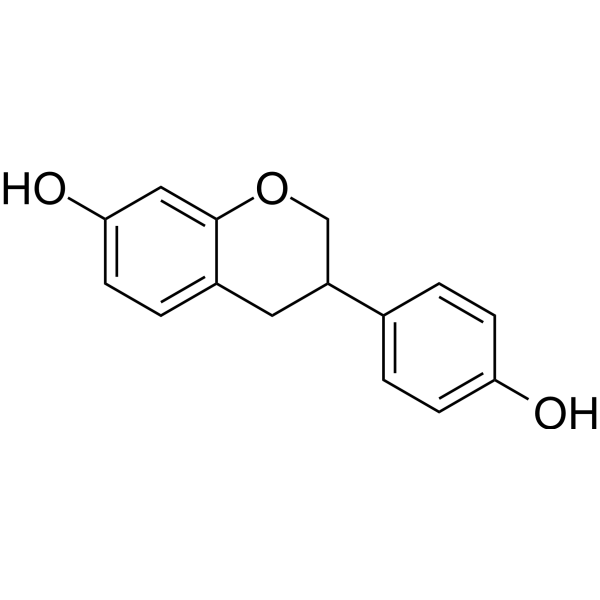
(±)-Equol is the racemate of equol. (±)-equol exhibits EC50s of 200 and 74 nM for human ERα and ERβ, respectively. Equol is a metabolite of the soy isoflavones, daidzin and daidzein.
Nur für Forschungszwecke. Wir verkaufen nicht an Patienten.
- Reinheit : 98.81%
- CAS. Nr.: 94105-90-5
- Formel: C15H14O3
- Molecular Weight:242.27
-
Speicherung:Powder -20°C, 3 years , 4°C, 2 years ; In solvent -80°C, 2 years , -20°C, 1 year

To place orders, for customer services and technical support, please contact: MedChemExpress USA
Tel: 609-228-6898 E-mail: [email protected] [email protected]


-
 Biologische Aktivität
-
Chemical Information
-
Lösungsmittel & Löslichkeit
- Reinheit & Dokumentation
- Verweise
-
 Help & FAQs


-
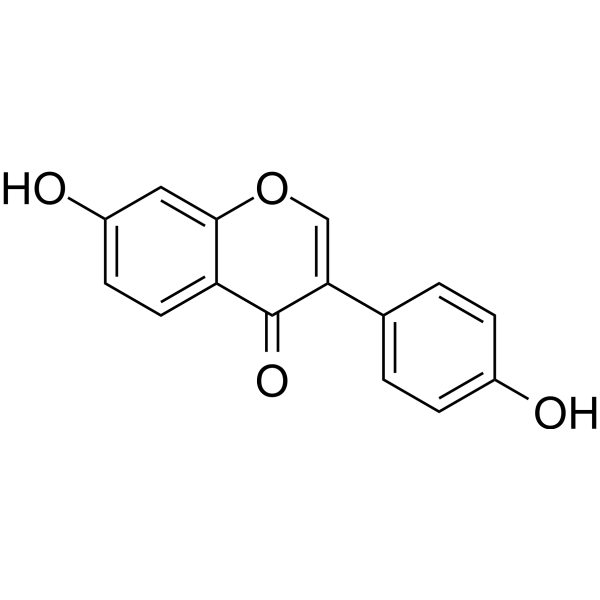
HY-N0019
DaidzeinEndogenous Metabolite -
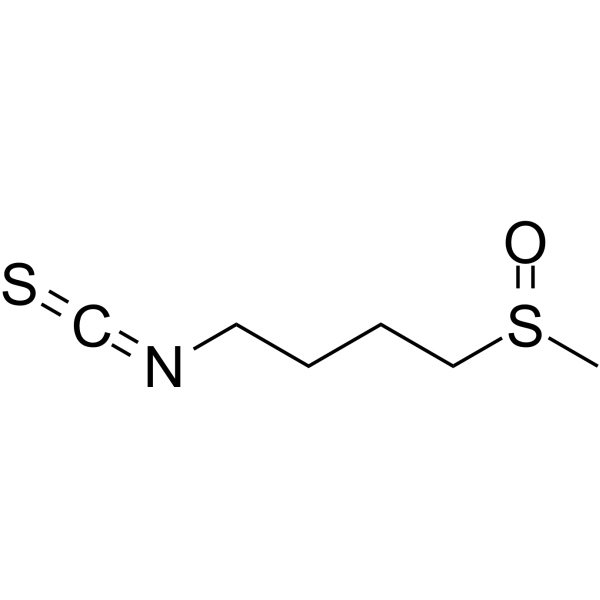
HY-13755
SulforaphaneKeap1/Nrf2/ARE Inducer -
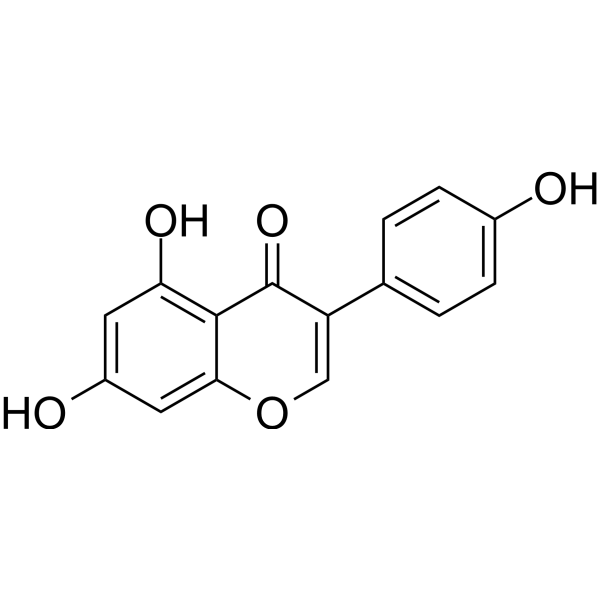
HY-14596
GenisteinAutophagy Inducer -
HY-Y0703
Sodium carboxymethyl cellulose (Viscosity:800-1200 mPa.s)Biochemical Assay Reagent -
HY-15144
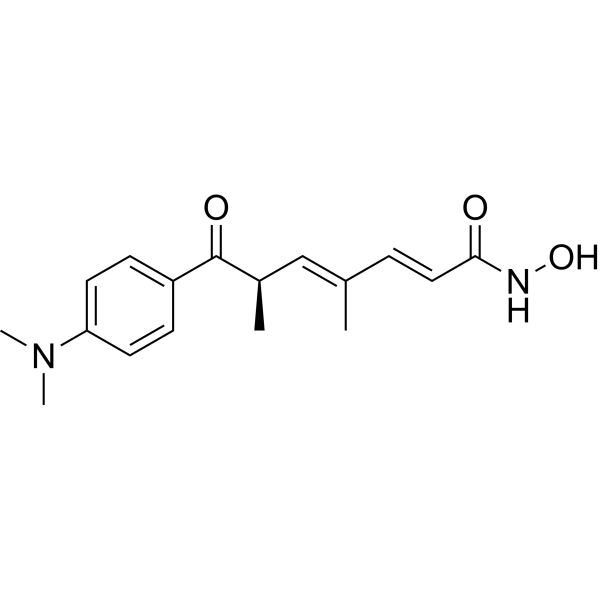
Trichostatin AHDAC Class I/II Inhibitor -
HY-13030
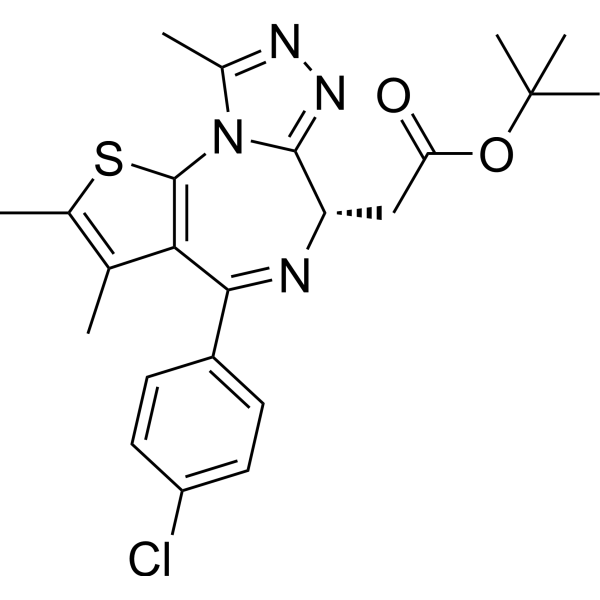
(+)-JQ-1BET Inhibitor -
HY-N4075
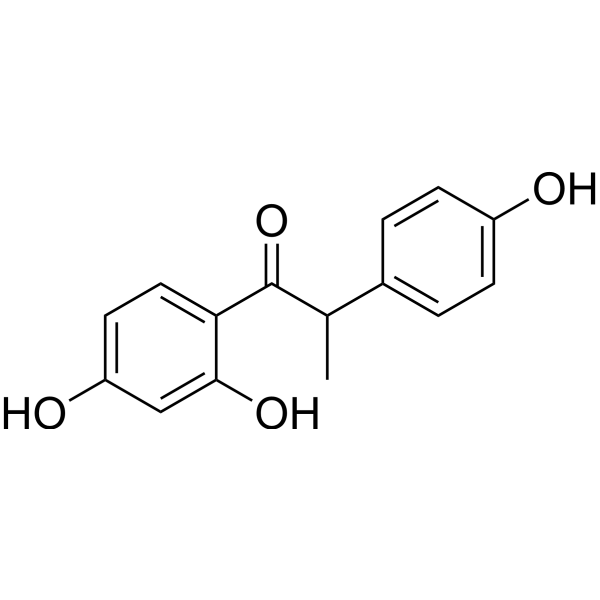
O-DesmethylangolensinEndogenous Metabolite -
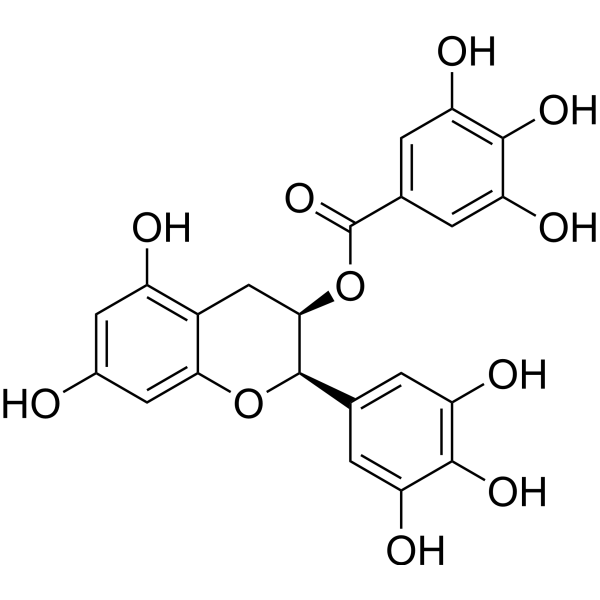
HY-13653
(-)-Epigallocatechin GallateAnticancer Agent -
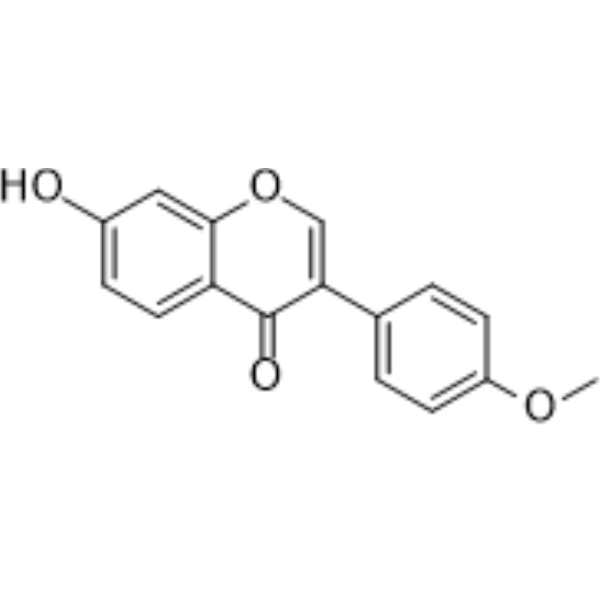
HY-N0183
FormononetinFGFR2 Inhibitor -
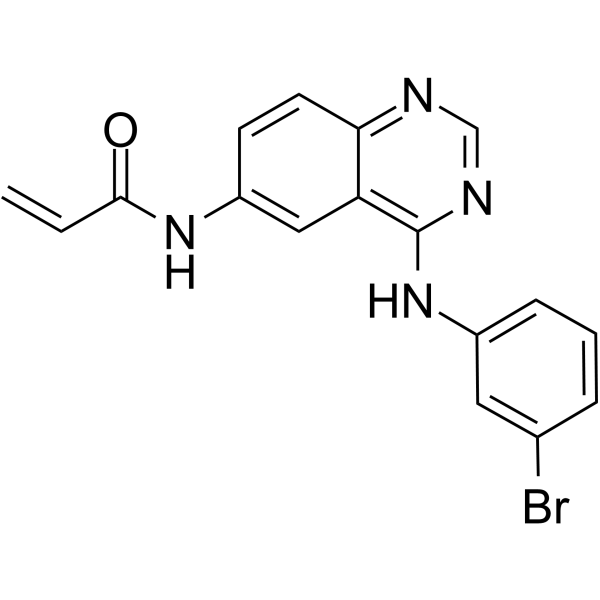
HY-13896
PD168393EGFR Tyrosine Kinase Inhibitor -
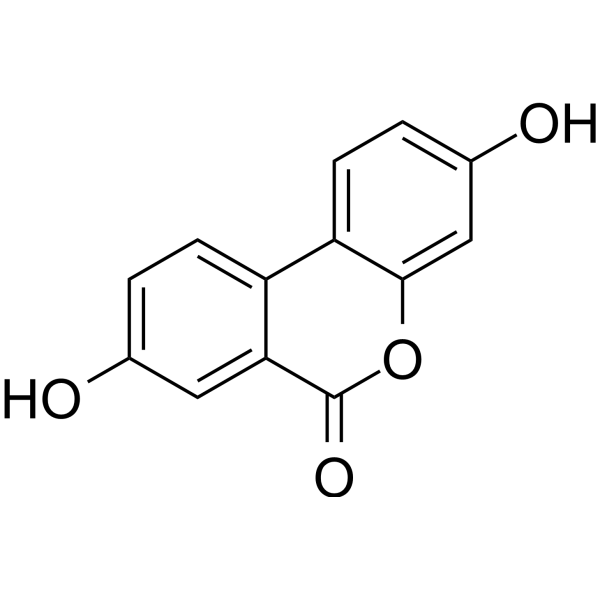
HY-100599
Urolithin AMitophagy Activator -
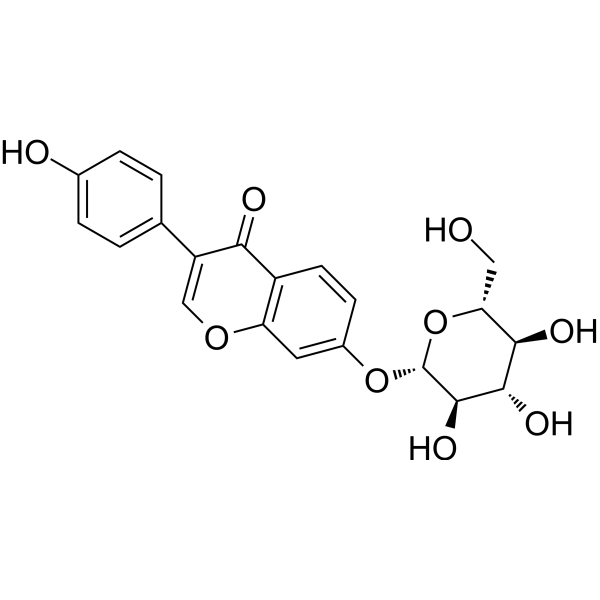
HY-N0018
DaidzinReverse Transcriptase Inhibitor


Biologische Aktivität
Beschreibung
Cellular Effect
|
Cell Line

|
Type | Value | Description | References |
|---|---|---|---|---|
| MCF7 | IC50 |
1 μM
Compound: Equol
|
Antiproliferative activity against human MCF7 cells assessed as inhibition of cell growth incubated for 6 days by SRB assay
Antiproliferative activity against human MCF7 cells assessed as inhibition of cell growth incubated for 6 days by SRB assay
|
[PMID: 33257172] |
In Vitro
Equol is first isolated and identified from pregnant-mares' urine and later found in the urine of the goat, cow, hen and sheep[1]. Equol, unlike the soy isoflavones daidzein or genistein, has a chiral center and therefore can occur as 2 distinct diastereoisomers. S-equol is the exclusive product of human intestinal bacterial synthesis from soy isoflavones and both enantiomers are bioavailable. S-equol has a high affinity for estrogen receptor beta (Ki=0.73 nM), whereas R-equol is relatively inactive[2]. Equol could promote the proliferation and differentiation of rat osteoblasts through activating the ER-PKCα-related signaling pathway. The alkaline phosphatase activity also increases significantly in all of the equol and 17β-estradiol (E2 ) groups. Equol also significantly elevates the osteocalcin levels[3].
MedChemExpress (MCE) has not independently confirmed the accuracy of these methods. They are for reference only. .
In Vivo
MedChemExpress (MCE) has not independently confirmed the accuracy of these methods. They are for reference only.


Chemical Information
-
CAS. Nr. 94105-90-5
-
Appearance Solid
-
Molecular Weight 242.27
-
Formel C15H14O3
-
Color White to yellow
-
SMILES
OC1=CC=C2CC(C3=CC=C(O)C=C3)COC2=C1
-
Structure Classification
-
Initial Source
-
Versand
Room temperature in continental US; may vary elsewhere.
-
Speicherung
Powder -20°C 3 years 4°C 2 years In solvent -80°C 2 years -20°C 1 year


Lösungsmittel & Löslichkeit
In Vitro:
DMSO : ≥ 100 mg/mL (412.76 mM; Hygroscopic DMSO has a significant impact on the solubility of product, please use newly opened DMSO)
H2O : < 0.1 mg/mL (insoluble)
* "≥" means soluble, but saturation unknown.
Please refer to the solubility information to select the appropriate solvent. Once prepared, please aliquot and store the solution to prevent product inactivation from repeated freeze-thaw cycles.
Storage method and period of stock solution: -80°C, 2 years; -20°C, 1 year. When stored at -80°C, please use it within 2 years. When stored at -20°C, please use it within 1 year.
Please refer to the solubility information to select the appropriate solvent. Once prepared, please aliquot and store the solution to prevent product inactivation from repeated freeze-thaw cycles.
Storage method and period of stock solution: -80°C, 2 years; -20°C, 1 year. When stored at -80°C, please use it within 2 years. When stored at -20°C, please use it within 1 year.
Konzentration (Stammlösung) × Volumen (Stammlösung) = Konzentration (Ziellösung) × Volumen (Ziellösung)
In Vivo:
Select the appropriate dissolution method based on your experimental animal and administration route.
- For the following dissolution methods, please ensure to first prepare a clear stock solution using an In Vitro approach and then sequentially add co-solvents:
- To ensure reliable experimental results, the clarified stock solution can be appropriately stored based on storage conditions. As for the working solution for In Vivo experiments, it is recommended to prepare freshly and use it on the same day.
- The percentages shown for the solvents indicate their volumetric ratio in the final prepared solution. If precipitation or phase separation occurs during preparation, heat and/or sonication can be used to aid dissolution.
Add each solvent one by one: 10% DMSO 40% PEG300 5% Tween-80 45% Saline
Solubility: ≥ 2.5 mg/mL (10.32 mM); Clear solution
This protocol yields a clear solution of ≥ 2.5 mg/mL (saturation unknown).
Taking 1 mL working solution as an example, add 100 μL DMSO stock solution (25.0 mg/mL) to 400 μL PEG300, and mix evenly; then add 50 μL Tween-80 and mix evenly; then add 450 μL Saline to adjust the volume to 1 mL.
Preparation of Saline: Dissolve 0.9 g sodium chloride in ddH₂O and dilute to 100 mL to obtain a clear Saline solution.
Add each solvent one by one: 10% DMSO 90% (20% SBE-β-CD in Saline)
Solubility: ≥ 2.5 mg/mL (10.32 mM); Clear solution
This protocol yields a clear solution of ≥ 2.5 mg/mL (saturation unknown).
Taking 1 mL working solution as an example, add 100 μL DMSO stock solution (25.0 mg/mL) to 900 μL 20% SBE-β-CD in Saline, and mix evenly.
Preparation of 20% SBE-β-CD in Saline (4°C, storage for one week): 2 g SBE-β-CD powder is dissolved in 10 mL Saline, completely dissolve until clear.
In Vivo Dissolution Calculator
Please enter the basic information of animal experiments:
-
-
-
-
Recommended: Prepare an additional quantity of animals to account for potential losses during experiments.
Please enter your animal formula composition:
-
%DMSO +
Recommended: Keep the proportion of DMSO in working solution below 2% if your animal is weak.
-
%+
-
+%Tween-80 + +
-
%Saline +
The co-solvents required include: DMSO, . All of co-solvents are available by MedChemExpress (MCE). , Tween 80. All of co-solvents are available by MedChemExpress (MCE).
Working solution concentration: 0.22 mg/mL
Method for preparing stock solution: mg drug dissolved in μL DMSO. Stock solution concentration: mg/mL.
1. Take μL DMSO stock solution;
2. Add μL .
μL , mix evenly;
3. Then add μL Tween 80, mix evenly;
4. Then add μL
Please ensure that the stock solution in the first step is dissolved to a clear state, and add co-solvents in sequence. You can use ultrasonic heating (ultrasonic cleaner, recommended frequency 20-40 kHz), vortexing, etc. to assist dissolution.


Reinheit & Dokumentation
-
Data Sheet (277 KB)
-
SDS (254 KB)
- English - EN (254 KB)
- Français - FR (254 KB)
- Deutsch - DE (254 KB)
- Norwegian - NO (254 KB)
- Español - ES (254 KB)
- Swedish - SV (254 KB)
- Italian - IT (254 KB)
- Korean - KR (254 KB)
- Portuguese - PT (254 KB)
-
Handling Instructions (2659 KB)
Verweise
[1]. Axelson M, et al. The identification of the weak oestrogen equol [7-hydroxy-3-(4'-hydroxyphenyl)chroman] in human urine. Biochem J. 1982 Feb 1;201(2):353-7. [Content Brief]
[2]. Setchell KD, et al. S-equol, a potent ligand for estrogen receptor beta, is the exclusive enantiomeric form of the soy isoflavone metabolite produced by human intestinal bacterial flora. Am J Clin Nutr. 2005 May;81(5):1072-9. human intestinal bacterial flora. [Content Brief]
[3]. Wang J, et al. Equol promotes rat osteoblast proliferation and differentiation through activating estrogen receptor. Genet Mol Res. 2014 Jul 4;13(3):5055-63. [Content Brief]
[4]. Gimenez I,et al. Renal and vascular actions of equol in the rat. J Hypertens. 1997 Nov;15(11):1303-8. [Content Brief]
[5]. Choi EJ, et al. Anticancer mechanism of equol in 7,12-dimethylbenz(a)anthracene-treated animals. Int J Oncol. 2011 Sep;39(3):747-54. [Content Brief]
[6]. Charoenthongtrakul S, et al. Enhanced gastrointestinal motility with orally active ghrelin receptor agonists. J Pharmacol Exp Ther. 2009;329(3):1178-1186. [Content Brief]


Complete Stock Solution Preparation Table
Please refer to the solubility information to select the appropriate solvent. Once prepared, please aliquot and store the solution to prevent product inactivation from repeated freeze-thaw cycles.
Storage method and period of stock solution: -80°C, 2 years; -20°C, 1 year. When stored at -80°C, please use it within 2 years. When stored at -20°C, please use it within 1 year.
| Optional Solvent | Concentration Solvent Mass | 1 mg | 5 mg | 10 mg | 25 mg |
|---|---|---|---|---|---|
| DMSO | 1 mM | 4.1276 mL | 20.6381 mL | 41.2763 mL | 103.1907 mL |
| 5 mM | 0.8255 mL | 4.1276 mL | 8.2553 mL | 20.6381 mL | |
| 10 mM | 0.4128 mL | 2.0638 mL | 4.1276 mL | 10.3191 mL | |
| 15 mM | 0.2752 mL | 1.3759 mL | 2.7518 mL | 6.8794 mL | |
| 20 mM | 0.2064 mL | 1.0319 mL | 2.0638 mL | 5.1595 mL | |
| 25 mM | 0.1651 mL | 0.8255 mL | 1.6511 mL | 4.1276 mL | |
| 30 mM | 0.1376 mL | 0.6879 mL | 1.3759 mL | 3.4397 mL | |
| 40 mM | 0.1032 mL | 0.5160 mL | 1.0319 mL | 2.5798 mL | |
| 50 mM | 0.0826 mL | 0.4128 mL | 0.8255 mL | 2.0638 mL | |
| 60 mM | 0.0688 mL | 0.3440 mL | 0.6879 mL | 1.7198 mL | |
| 80 mM | 0.0516 mL | 0.2580 mL | 0.5160 mL | 1.2899 mL | |
| 100 mM | 0.0413 mL | 0.2064 mL | 0.4128 mL | 1.0319 mL |


(±)-Equol Related Classifications
HY-100583A Related Classifications
 Powered by Bioz