



Elacestrant
Based on 20 publication(s) in Google Scholar
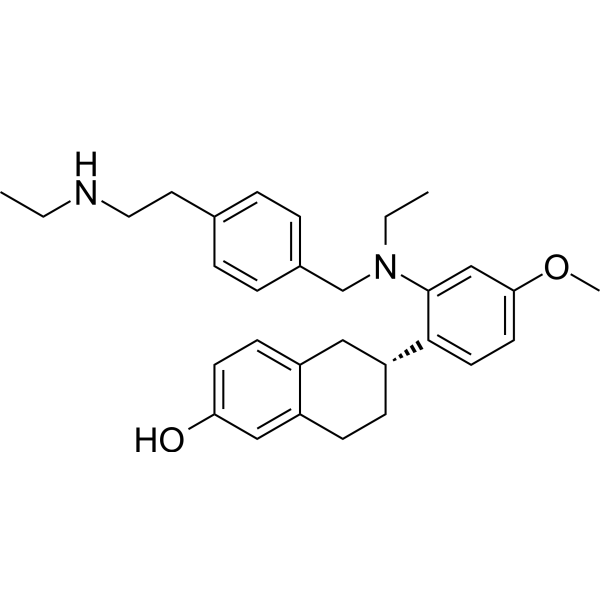
Elacestrant (RAD1901) is an orally available and selective estrogen receptor degrader (SERD) with IC50s of 48 and 870 nM for ERα and ERβ, respectively. Elacestrant also can inhibit growth of ER+ breast cancer cell lines in vitro and in vivo.
For research use only. We do not sell to patients.
- Purity : 99.38%
- CAS No.: 722533-56-4
- Formula: C30H38N2O2
- Molecular Weight:458.63
-
Storage:
4°C, sealed storage, away from moisture and light
* In solvent : -80°C, 6 months; -20°C, 1 month (sealed storage, away from moisture and light)

To place orders, for customer services and technical support, please contact: MedChemExpress USA
Tel: 609-228-6898 E-mail: [email protected] [email protected]


-
 Biological Activity
-
Chemical Information
-
Solvent & Solubility
- Protocols
- Purity & Documentation
- References
-
 Help & FAQs


-
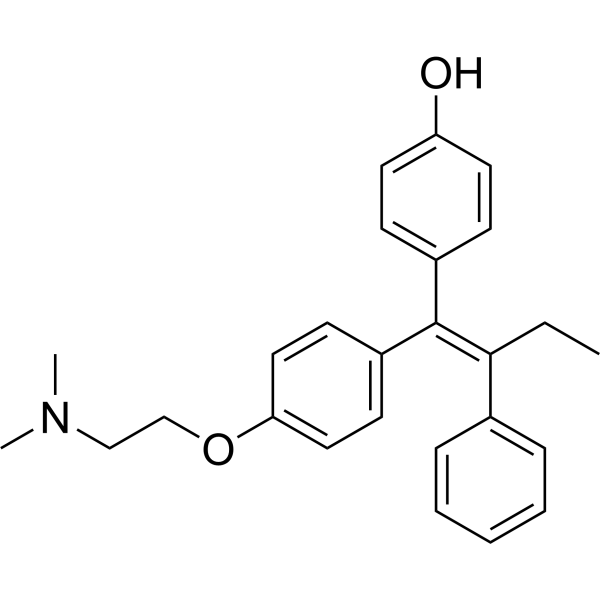
HY-16950
4-HydroxytamoxifenEstrogen Receptor Modulator -
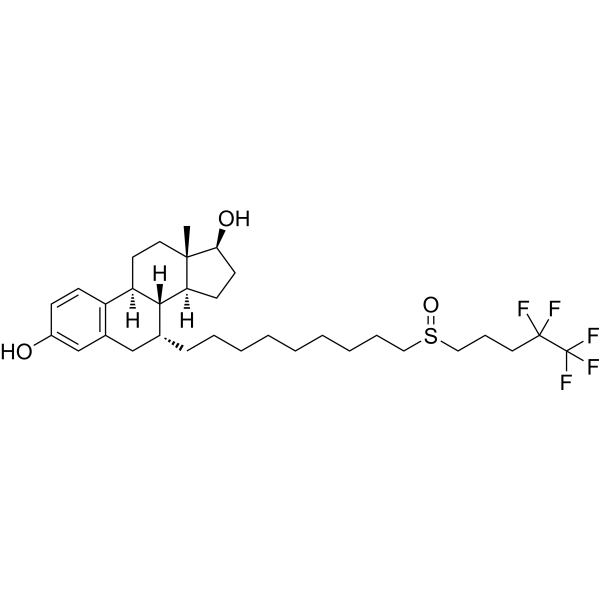
HY-13636
FulvestrantEstrogen Receptor Antagonist -
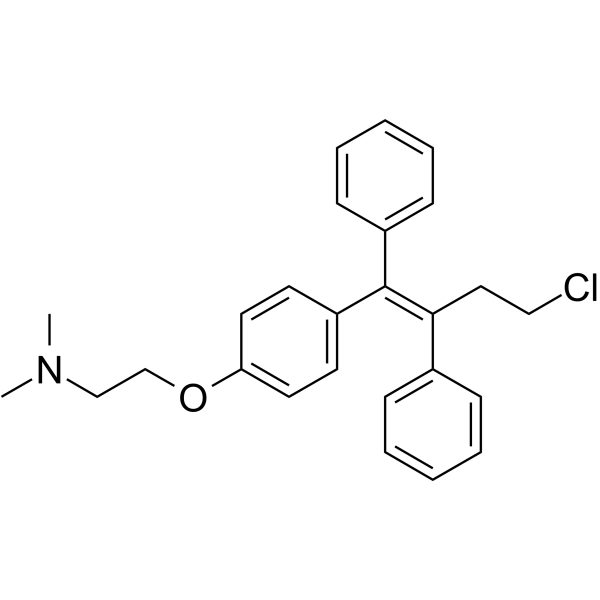
HY-B0005A
ToremifeneEstrogen Receptor/ERR Modulator -
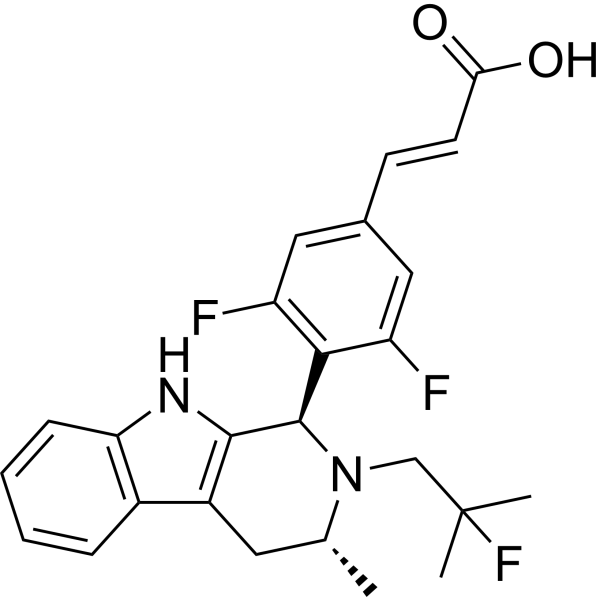
HY-12870
AZD9496ERα Antagonist -
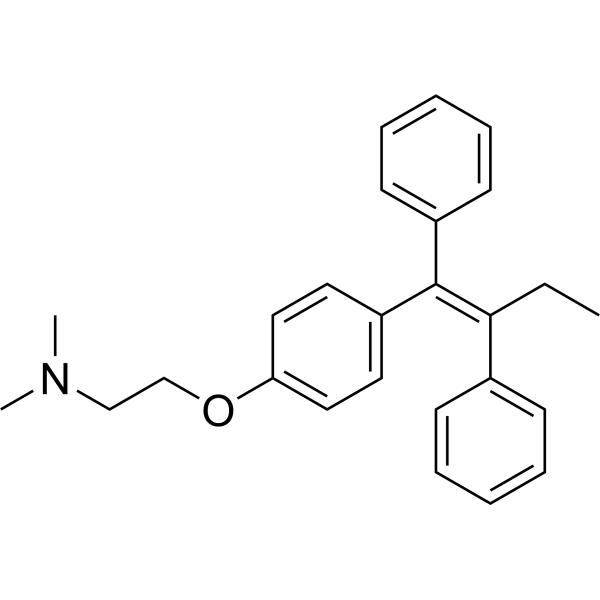
HY-13757A
TamoxifenEstrogen Receptor Modulator -
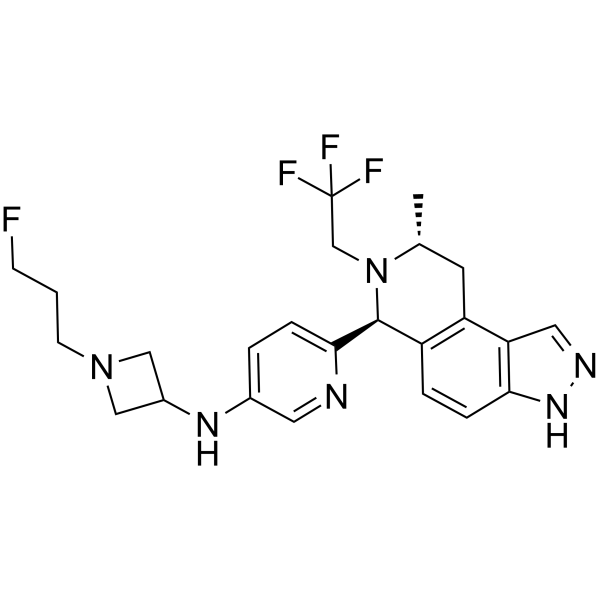
HY-136255
CamizestrantEstrogen Receptor Antagonist -
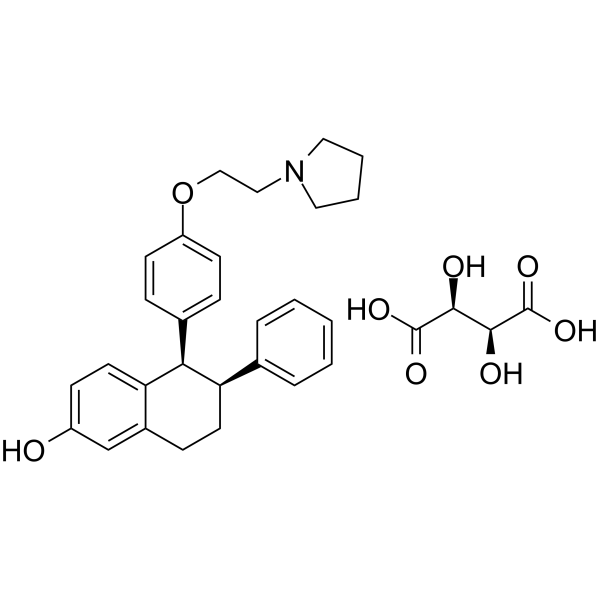
HY-A0038
Lasofoxifene tartrateEstrogen Receptor Modulator -
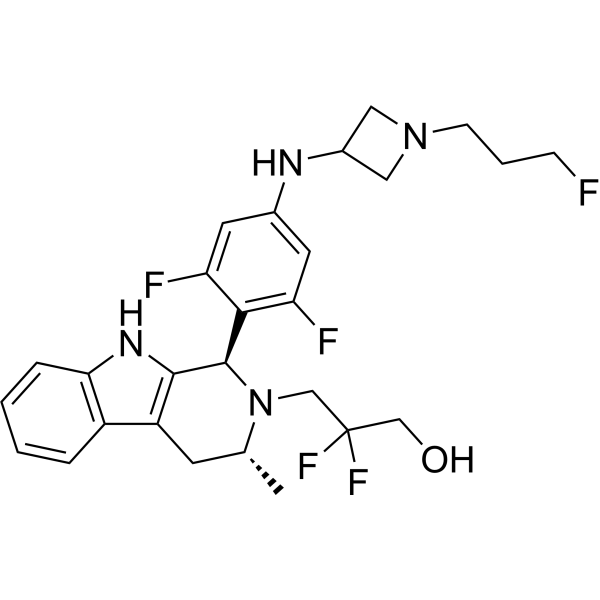
HY-109176
GiredestrantERα Degrader -
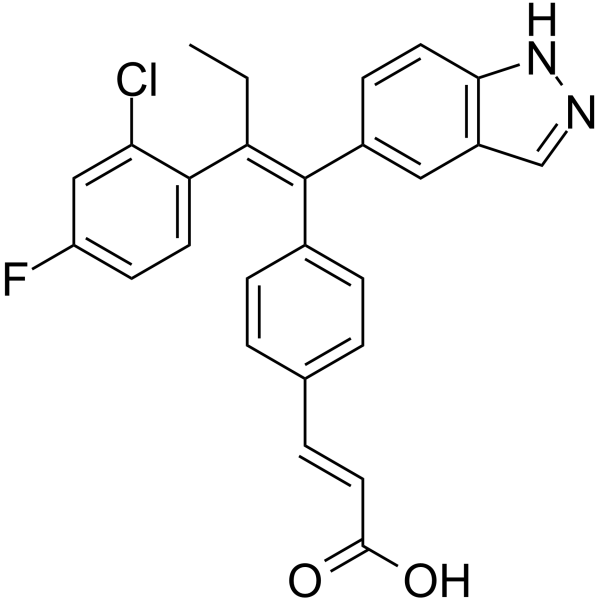
HY-12864
BrilanestrantEstrogen Receptor Degrader -
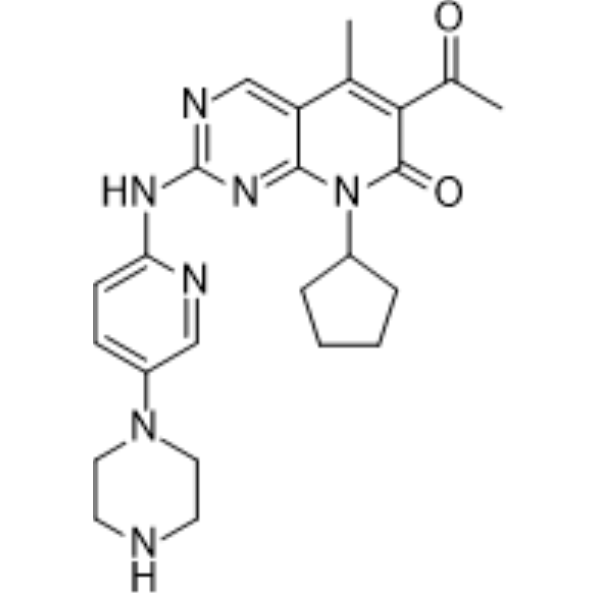
HY-50767
PalbociclibCDK4/6 Inhibitor -
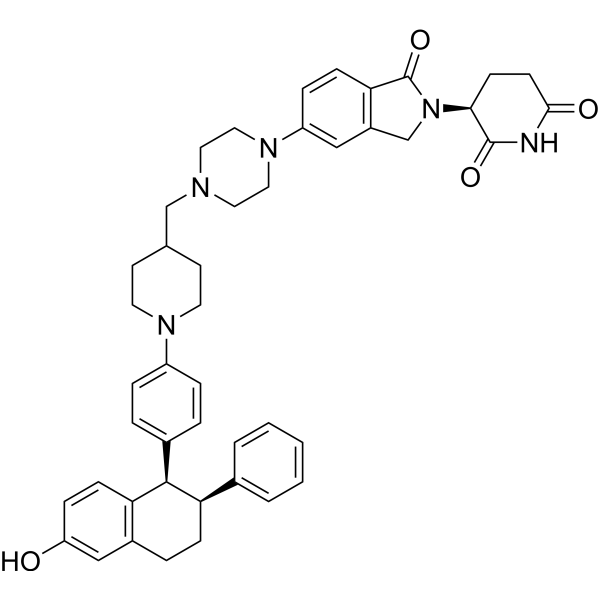
HY-138642
VepdegestrantPROTAC ER Degrader -
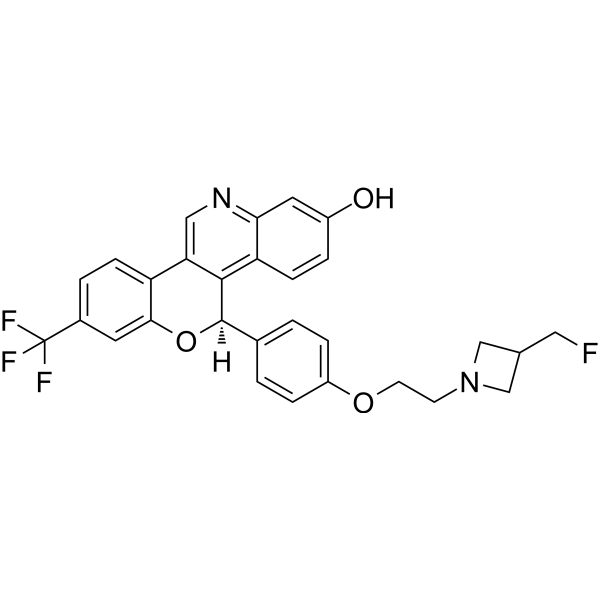
HY-145572
ImlunestrantEstrogen Receptor Degrader
Publications Citing Use of MedChemExpress (MCE) Elacestrant
More- Cancer Discov. 2024 Feb 8;14(2):274-289. [Abstract]
- Cancer Res. 2024 Dec 16;84(24):4283-4297. [Abstract]
- Nat Commun. 2026 May 5;17(1):6063. [Abstract]
- Adv Healthc Mater. 2026 Aug;15(31):e71457.
- NPJ Breast Cancer. 2025 Nov 12;11(1):125. [Abstract]
- NPJ Breast Cancer. 2022 Dec 14;8(1):130. [Abstract]
- Genes Dev. 2025 Nov 5. [Abstract]
- J Med Chem. 2020 Oct 8;63(19):11085-11099. [Abstract]
- Mol Cancer Ther. 2020 Jul;19(7):1395-1405. [Abstract]
- J Cell Mol Med. 2023 Sep;27(17):2467-2481. [Abstract]
- Biomed Chromatogr. 2026 Mar;40(3):e70374. [Abstract]
- Loyola University Chicago. 2026.
- bioRxiv. 2025 Nov 21:2025.11.20.689560. [Abstract]
- Research Square Preprint. 2024 Nov 06.
- Biomed Pharmacother. 2024 Nov:180:117523. [Abstract]
- Res Sq. 2024 Jun 04.
- bioRxiv. 2024 Jun 2:2024.05.28.596307. [Abstract]
- bioRxiv. 2023 Nov 2.
- Research Square Preprint. 2023 May 9.
- Harvard University. 2023 Mar. 30487357.
 Customer Validation & Images

-
Flow Cytometry
-
Cell Imaging/Staining
-
WB
-
RT-PCR
-
Flow Cytometry


Biological Activity
Description
IC50 & Target
IC50: 48 nM (ERα), 870 nM (ERβ)[1]
Cellular Effect
|
Cell Line

|
Type | Value | Description | References |
|---|---|---|---|---|
| MCF7 | EC50 |
0.6 nM
Compound: 1; RAD1901
|
Downregulation of ER expression in human MCF7 cells incubated for 48 hrs by ELISA
Downregulation of ER expression in human MCF7 cells incubated for 48 hrs by ELISA
|
[PMID: 37163948] |
| MCF7 | GI50 |
0.028 nM
Compound: RAD1901; 9
|
Inhibition of cell growth in human MCF7 cells after 4 days by wst-8-based colorimetric analysis
Inhibition of cell growth in human MCF7 cells after 4 days by wst-8-based colorimetric analysis
|
[PMID: 30990042] |
| MCF7 | IC50 |
4.2 nM
Compound: 1; RAD1901
|
Antiproliferative activity against estradiol-stimulated human MCF7 cells incubated for 48 hrs by CellTiter Glo assay
Antiproliferative activity against estradiol-stimulated human MCF7 cells incubated for 48 hrs by CellTiter Glo assay
|
[PMID: 37163948] |
| MCF7 | IC50 |
4.2 nM
Compound: 45; RAD1901
|
Antiproliferative activity against human MCF7 cells assessed as reduction in cell proliferation
Antiproliferative activity against human MCF7 cells assessed as reduction in cell proliferation
|
[PMID: 33138369] |
| MCF7 | IC50 |
4.2 μM
Compound: 8; RAD1901
|
Antiproliferative activity against human MCF7 cells assessed as reduction in cell viability
Antiproliferative activity against human MCF7 cells assessed as reduction in cell viability
|
[PMID: 37019030] |
In Vitro
Elacestrant (RAD1901; 0.5 nM-10 µM; 48 h) exhibits dose-dependent inhibition of ERα expression, with a EC50 of 0.6 nM in MCF-7 cells[1].
Elacestrant (0-1 µM; 48 h) inhibits proliferation of Estradiol (E2)-stimulated MCF-7 cells in a dose-dependent manner, with an EC50 of 4 pM[1].
Elacestrant (0-1 µM; 24 or 48 h) results in a dose-dependent and marked decrease in estrogen receptor protein expression in MCF7, T47D, and HCC1428 cells[2].
Elacestrant (0.01, 0.1, 1.0 µM) decreases expression of progesterone receptor (PGR, PR; an ER target gene), in both MCF7 and T47D cell lines[2].
MedChemExpress (MCE) has not independently confirmed the accuracy of these methods. They are for reference only.
-
Cell Line:ER-positive MCF-7 cells (Estradiol (E2)-stimulated)[1]
-
Concentration:0-1 µM
-
Incubation Time:48 h
-
Result:Showed antiproliferative activity on cells.
-
Cell Line:MCF-7 cells
-
Concentration:0.5 nM-10 µM
-
Incubation Time:48 h
-
Result:Inhibited ERα expression (EC50 of 0.6 nM) in a dose-dependent manner.
-
Cell Line:MCF7, T47D, and HCC1428 cells
-
Concentration:0-1 µM
-
Incubation Time:24 or 48 h
-
Result:Decreased the expression of estrogen receptor protein.
In Vivo
Elacestrant (30, 60 mg/kg; p.o.; single daily for 4 weeks) induces complete tumor growth inhibition in mice[2].
Tumor growth inhibition is maintained for 4 weeks after Elacestrant withdrawal[2].
MedChemExpress (MCE) has not independently confirmed the accuracy of these methods. They are for reference only.
-
Animal Model:MCF7 cell line xenograft model of mice[2].
-
Dosage:30, 60 mg/kg
-
Administration:Oral administration; single daily for 4 weeks.
-
Result:Inhibited growth of tumor.
Clinical Trial
| NCT Number | Sponsor | Condition | Start Date |
Phase
|
|---|---|---|---|---|
| NCT01329991 | Plexxikon| | 2011-05 | PHASE1 |


Chemical Information
-
CAS No. 722533-56-4
-
Appearance Solid
-
Molecular Weight 458.63
-
Formula C30H38N2O2
-
Color White to off-white
-
SMILES
OC1=CC=C2C[C@H](C3=CC=C(OC)C=C3N(CC)CC4=CC=C(CCNCC)C=C4)CCC2=C1
-
Synonyms
RAD1901
-
Shipping
Room temperature in continental US; may vary elsewhere.
-
Storage
4°C, sealed storage, away from moisture and light
* In solvent : -80°C, 6 months; -20°C, 1 month (sealed storage, away from moisture and light)


Publications (20)
-
Journal Impact Factor
-
Most Recent
-
Cancer Discov
2024 Feb 8;14(2):274-289. PMID: 37982575 -
Cancer Res
Induction of the TEAD Coactivator VGLL1 by Estrogen Receptor-Targeted Therapy Drives Resistance in Breast Cancer. [Abstract]2024 Dec 16;84(24):4283-4297. PMID: 39356622 -
Nat Commun
ERα blockade in dendritic cells enhances antigen cross-presentation and induces antitumor CD8+ T cell immunity. [Abstract]2026 May 5;17(1):6063. PMID: 42086580 -
-
NPJ Breast Cancer
Discovery of a novel small molecule degrader of wild type and mutant estrogen receptors using DNA encoded libraries. [Abstract]2025 Nov 12;11(1):125. PMID: 41224743 -
NPJ Breast Cancer
Unconventional isoquinoline-based SERMs elicit fulvestrant-like transcriptional programs in ER+ breast cancer cells. [Abstract]2022 Dec 14;8(1):130. PMID: 36517522 -
Genes Dev
Mutant p53 binds and controls estrogen receptor activity to drive endocrine resistance in ovarian cancer. [Abstract]2025 Nov 5. PMID: 41193244
Elacestrant purchased from MedChemExpress. Usage Cited in: Genes Dev. 2025 Nov 5. [Abstract]
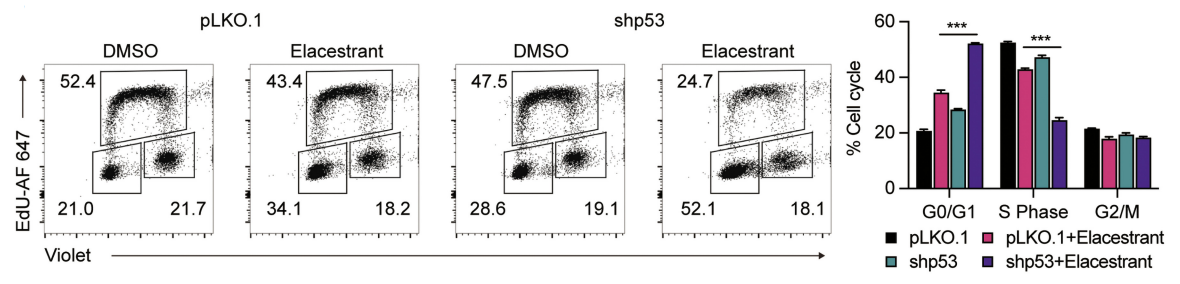
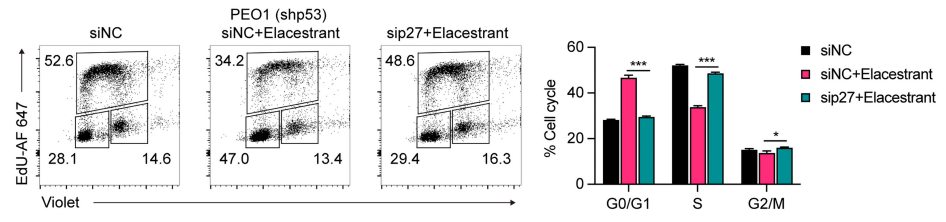
Elacestrant (3 µM; 48 h) induced G1 arrest of PEO1 cells stably infected with pLKO.1 and shp53.
Elacestrant purchased from MedChemExpress. Usage Cited in: Genes Dev. 2025 Nov 5. [Abstract]
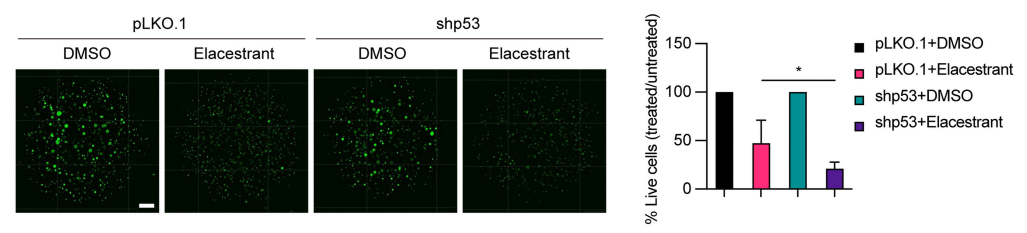
Elacestrant (3 µM) inhibited the viability of PEO1-pLKO.1 and PEO1-shp53 cells grown as organoids.
Elacestrant purchased from MedChemExpress. Usage Cited in: Genes Dev. 2025 Nov 5. [Abstract]
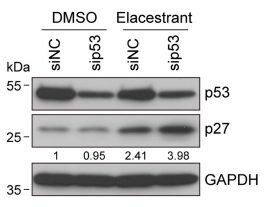
Elacestrant (3 µM; 48 h) led to an increase in p27Kip1 protein levels in PEO1 cells transfected with siNC or sip53.
Elacestrant purchased from MedChemExpress. Usage Cited in: Genes Dev. 2025 Nov 5. [Abstract]
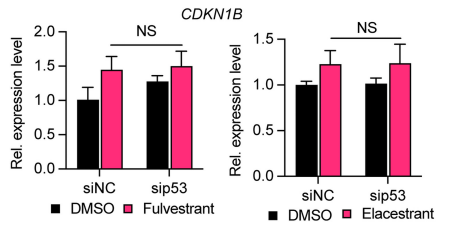
qPCR analysis of CDKN1B expression in PEO1 cells transfected with siNC or sip53 and treated with Elacestrant (3 µM; 48 h).
Elacestrant purchased from MedChemExpress. Usage Cited in: Genes Dev. 2025 Nov 5. [Abstract]
Elacestrant (3 µM; 48 h) arrested dramatic G1 in shp53 PEO1 cells transfected with siNC.
-
J Med Chem
Screening and Reverse-Engineering of Estrogen Receptor Ligands as Potent Pan-Filovirus Inhibitors. [Abstract]2020 Oct 8;63(19):11085-11099. PMID: 32886512 -
Mol Cancer Ther
The Dysregulated Pharmacology of Clinically Relevant ESR1 Mutants is Normalized by Ligand-activated WT Receptor. [Abstract]2020 Jul;19(7):1395-1405. PMID: 32381587 -
J Cell Mol Med
Oestrogen treatment restores dentate gyrus development in premature newborns by IGF1 regulation. [Abstract]2023 Sep;27(17):2467-2481. PMID: 37594177 -
Biomed Chromatogr
Characterization of In Vitro Metabolic Profiles of Elacestrant in Rat and Human Liver Microsomes Using HPLC-MS/MS and HPLC-Q-Orbitrap-HRMS. [Abstract]2026 Mar;40(3):e70374. PMID: 41587767 -
-
bioRxiv
Progesterone receptors drive advanced breast cancer phenotypes including circulating tumor- and stem-like cell expansion in the context of ESR1 mutation. [Abstract]2025 Nov 21:2025.11.20.689560. PMID: 41332612 -
-
Biomed Pharmacother
Polypharmacological profiling across protein target families and cellular pathways using the multiplexed cell-based assay platform safetyProfiler reveals efficacy, potency and side effects of drugs. [Abstract]2024 Nov:180:117523. PMID: 39405910 -
-
bioRxiv
Targeting Unique Ligand Binding Domain Structural Features Downregulates DKK1 in Y537S ESR1 Mutant Breast Cancer Cells. [Abstract]2024 Jun 2:2024.05.28.596307. PMID: 38854123 -
-
-


Solvent & Solubility
In Vitro:
DMSO : 160 mg/mL (348.87 mM; Need ultrasonic; Hygroscopic DMSO has a significant impact on the solubility of product, please use newly opened DMSO)
Please refer to the solubility information to select the appropriate solvent. Once prepared, please aliquot and store the solution to prevent product inactivation from repeated freeze-thaw cycles.
Storage method and period of stock solution: -80°C, 6 months; -20°C, 1 month (sealed storage, away from moisture and light). When stored at -80°C, please use it within 6 months. When stored at -20°C, please use it within 1 month.
Please refer to the solubility information to select the appropriate solvent. Once prepared, please aliquot and store the solution to prevent product inactivation from repeated freeze-thaw cycles.
Storage method and period of stock solution: -80°C, 6 months; -20°C, 1 month (sealed storage, away from moisture and light). When stored at -80°C, please use it within 6 months. When stored at -20°C, please use it within 1 month.
Concentration (start) × Volume (start) = Concentration (final) × Volume (final)
In Vivo:
Select the appropriate dissolution method based on your experimental animal and administration route.
- For the following dissolution methods, please ensure to first prepare a clear stock solution using an In Vitro approach and then sequentially add co-solvents:
- To ensure reliable experimental results, the clarified stock solution can be appropriately stored based on storage conditions. As for the working solution for In Vivo experiments, it is recommended to prepare freshly and use it on the same day.
- The percentages shown for the solvents indicate their volumetric ratio in the final prepared solution. If precipitation or phase separation occurs during preparation, heat and/or sonication can be used to aid dissolution.
Add each solvent one by one: 10% DMSO 40% PEG300 5% Tween-80 45% Saline
Solubility: ≥ 4 mg/mL (8.72 mM); Clear solution
This protocol yields a clear solution of ≥ 4 mg/mL (saturation unknown).
Taking 1 mL working solution as an example, add 100 μL DMSO stock solution (40.0 mg/mL) to 400 μL PEG300, and mix evenly; then add 50 μL Tween-80 and mix evenly; then add 450 μL Saline to adjust the volume to 1 mL.
Preparation of Saline: Dissolve 0.9 g sodium chloride in ddH₂O and dilute to 100 mL to obtain a clear Saline solution.
Add each solvent one by one: 10% DMSO 90% (20% SBE-β-CD in Saline)
Solubility: ≥ 4 mg/mL (8.72 mM); Clear solution
This protocol yields a clear solution of ≥ 4 mg/mL (saturation unknown).
Taking 1 mL working solution as an example, add 100 μL DMSO stock solution (40.0 mg/mL) to 900 μL 20% SBE-β-CD in Saline, and mix evenly.
Preparation of 20% SBE-β-CD in Saline (4°C, storage for one week): 2 g SBE-β-CD powder is dissolved in 10 mL Saline, completely dissolve until clear.
In Vivo Dissolution Calculator
Please enter the basic information of animal experiments:
-
-
-
-
Recommended: Prepare an additional quantity of animals to account for potential losses during experiments.
Please enter your animal formula composition:
-
%DMSO +
Recommended: Keep the proportion of DMSO in working solution below 2% if your animal is weak.
-
%+
-
+%Tween-80 + +
-
%Saline +
The co-solvents required include: DMSO, . All of co-solvents are available by MedChemExpress (MCE). , Tween 80. All of co-solvents are available by MedChemExpress (MCE).
Working solution concentration: 0.22 mg/mL
Method for preparing stock solution: mg drug dissolved in μL DMSO. Stock solution concentration: mg/mL. * In solvent : -80°C, 6 months; -20°C, 1 month (sealed storage, away from moisture and light)
1. Take μL DMSO stock solution;
2. Add μL .
μL , mix evenly;
3. Then add μL Tween 80, mix evenly;
4. Then add μL
Please ensure that the stock solution in the first step is dissolved to a clear state, and add co-solvents in sequence. You can use ultrasonic heating (ultrasonic cleaner, recommended frequency 20-40 kHz), vortexing, etc. to assist dissolution.


Purity & Documentation
-
Data Sheet (278 KB)
-
SDS (394 KB)
- English - EN (394 KB)
- Français - FR (394 KB)
- Deutsch - DE (394 KB)
- Norwegian - NO (394 KB)
- Español - ES (394 KB)
- Swedish - SV (394 KB)
- Italian - IT (394 KB)
- Korean - KR (394 KB)
- Portuguese - PT (394 KB)
-
Handling Instructions (2659 KB)
References
[1]. Garner F, et al. RAD1901: a novel, orally bioavailable selective estrogen receptor degrader that demonstrates antitumor activity in breast cancer xenograft models. Anticancer Drugs. 2015 Oct;26(9):948-56. [Content Brief]
[2]. Bihani T, et al. Elacestrant (RAD1901), a Selective Estrogen Receptor Degrader (SERD), Has Antitumor Activity in Multiple ER+ Breast Cancer Patient-derived Xenograft Models. Clin Cancer Res. 2017 Aug 15;23(16):4793-4804. [Content Brief]


Complete Stock Solution Preparation Table
Please refer to the solubility information to select the appropriate solvent. Once prepared, please aliquot and store the solution to prevent product inactivation from repeated freeze-thaw cycles.
Storage method and period of stock solution: -80°C, 6 months; -20°C, 1 month (sealed storage, away from moisture and light). When stored at -80°C, please use it within 6 months. When stored at -20°C, please use it within 1 month.
| Optional Solvent | Concentration Solvent Mass | 1 mg | 5 mg | 10 mg | 25 mg |
|---|---|---|---|---|---|
| DMSO | 1 mM | 2.1804 mL | 10.9020 mL | 21.8041 mL | 54.5102 mL |
| 5 mM | 0.4361 mL | 2.1804 mL | 4.3608 mL | 10.9020 mL | |
| 10 mM | 0.2180 mL | 1.0902 mL | 2.1804 mL | 5.4510 mL | |
| 15 mM | 0.1454 mL | 0.7268 mL | 1.4536 mL | 3.6340 mL | |
| 20 mM | 0.1090 mL | 0.5451 mL | 1.0902 mL | 2.7255 mL | |
| 25 mM | 0.0872 mL | 0.4361 mL | 0.8722 mL | 2.1804 mL | |
| 30 mM | 0.0727 mL | 0.3634 mL | 0.7268 mL | 1.8170 mL | |
| 40 mM | 0.0545 mL | 0.2726 mL | 0.5451 mL | 1.3628 mL | |
| 50 mM | 0.0436 mL | 0.2180 mL | 0.4361 mL | 1.0902 mL | |
| 60 mM | 0.0363 mL | 0.1817 mL | 0.3634 mL | 0.9085 mL | |
| 80 mM | 0.0273 mL | 0.1363 mL | 0.2726 mL | 0.6814 mL | |
| 100 mM | 0.0218 mL | 0.1090 mL | 0.2180 mL | 0.5451 mL |


Elacestrant Related Classifications
HY-19822 Related Classifications
 Powered by Bioz