



p,p'-DDD
Based on 1 publication(s) in Google Scholar
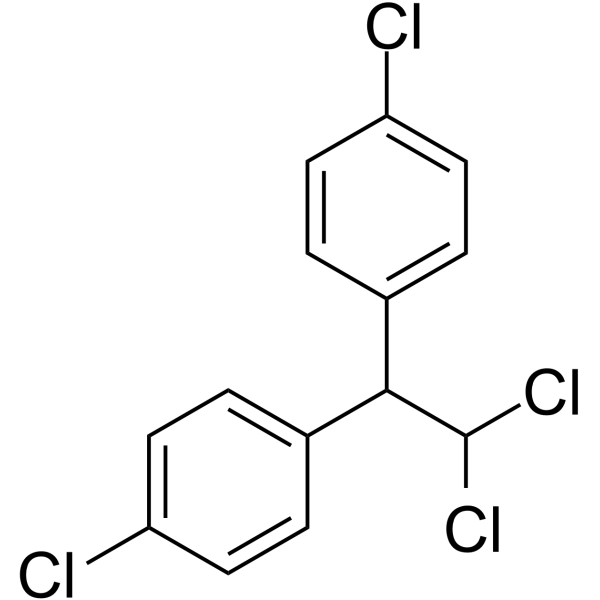
p,p'-DDD (4,4’-DDD) is an organochlorine insecticide, a major metabolite of p,p'-DDT. p,p'-DDD is an agonist at estrogen receptor α(ERα) and ERβ. p,p'-DDD increases DNA damage, apoptosis and necrosis in peripheral blood. p,p'-DDD stimulates cell proliferation in SKBR3 cells. p,p'-DDD activates the AP-1 transcription factor. p,p'-DDD decreases sleep times of barbiturates and steroids in rats.
For research use only. We do not sell to patients.
- Purity : 99.37%
- CAS No.: 72-54-8
- Formula: C14H10Cl4
- Molecular Weight:320.04
-
Storage:
4°C, sealed storage, away from moisture and light
* In solvent : -80°C, 6 months; -20°C, 1 month (sealed storage, away from moisture and light)

To place orders, for customer services and technical support, please contact: MedChemExpress USA
Tel: 609-228-6898 E-mail: [email protected] [email protected]


-
 Biological Activity
-
Chemical Information
-
Solvent & Solubility
- Protocols
- Purity & Documentation
- References
-
 Help & FAQs


-
HY-B0815
ChlorpyrifosMuscarinic Antagonist -
HY-B0838
ImidaclopridInsecticide -
HY-B1986
p,p'-DDEAndrogen Receptor Antagonist -

HY-B1984R
p,p'-DDD (Standard)Standard of p,p'-DDD -
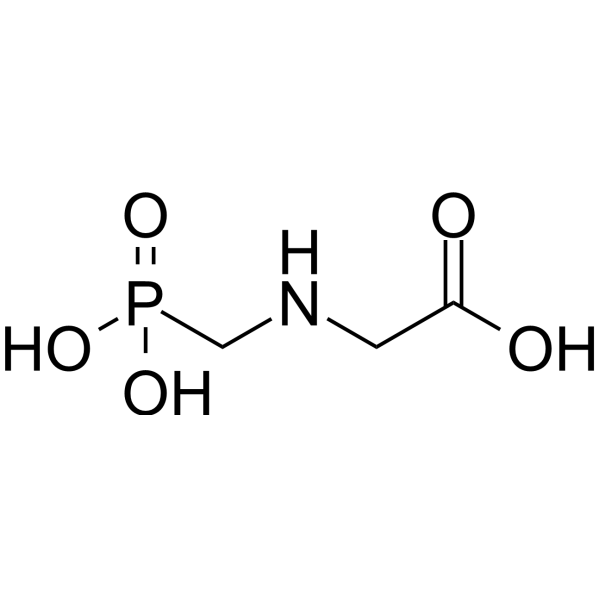
HY-B0863
GlyphosateEPSPS Inhibitor -

HY-B1986R
p,p'-DDE (Standard)Androgen Receptor Antagonist -
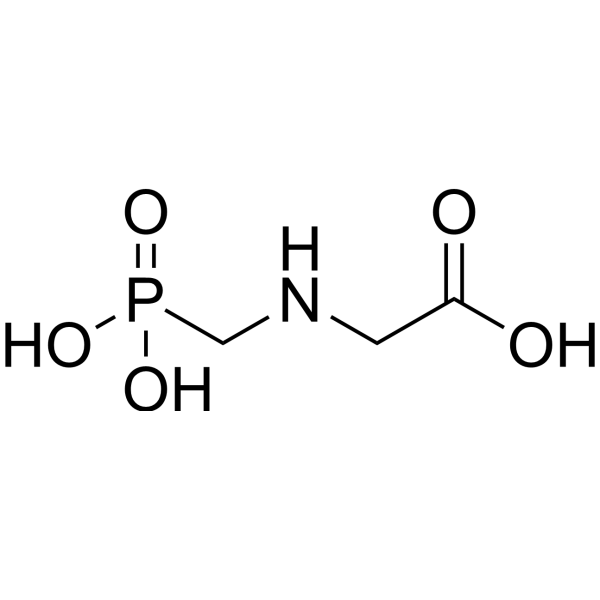
HY-B0863R
Glyphosate (Standard)Herbicide -
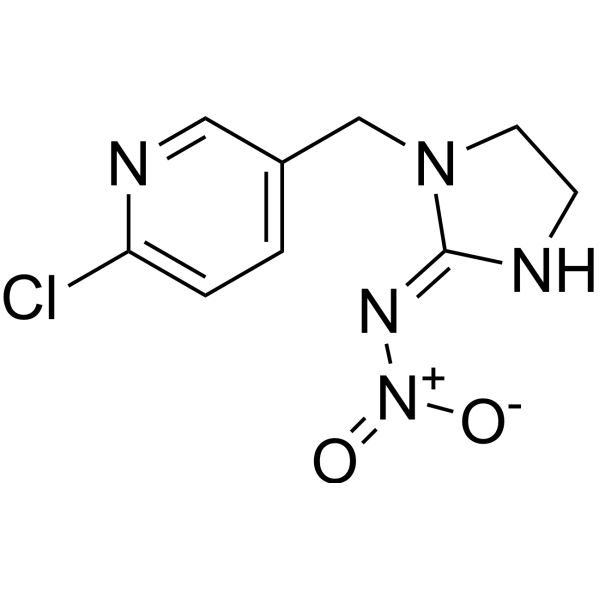
HY-B0838R
Imidacloprid (Standard)Insecticide -
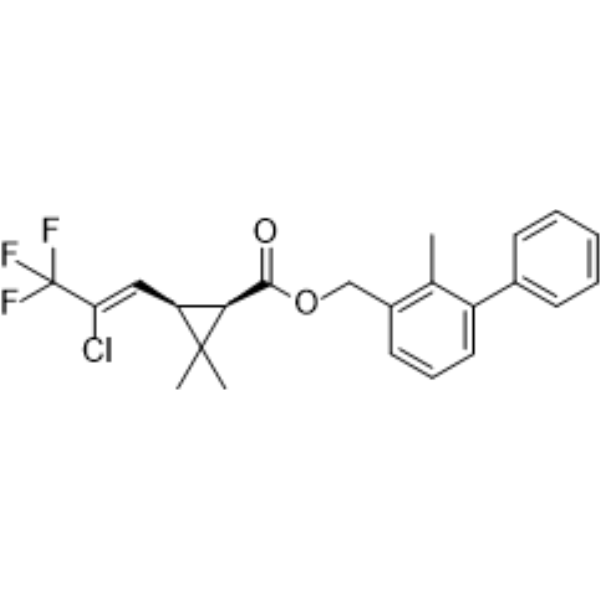
HY-B0824
BifenthrinSodium Channel Activator -
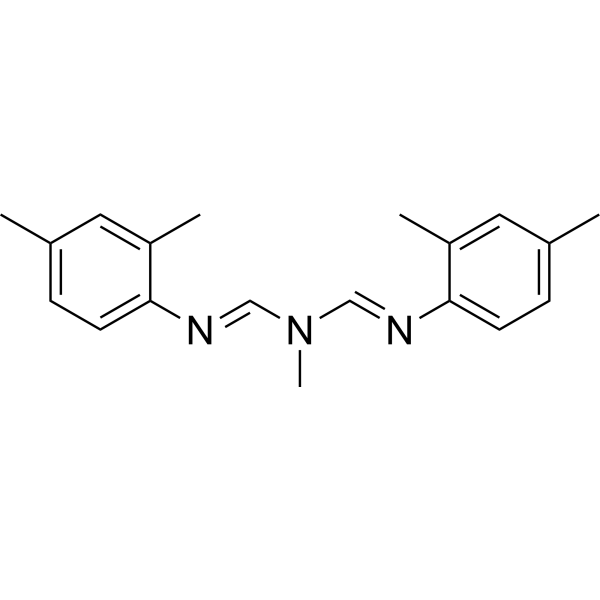
HY-B1111
AmitrazParasite Inhibitor -
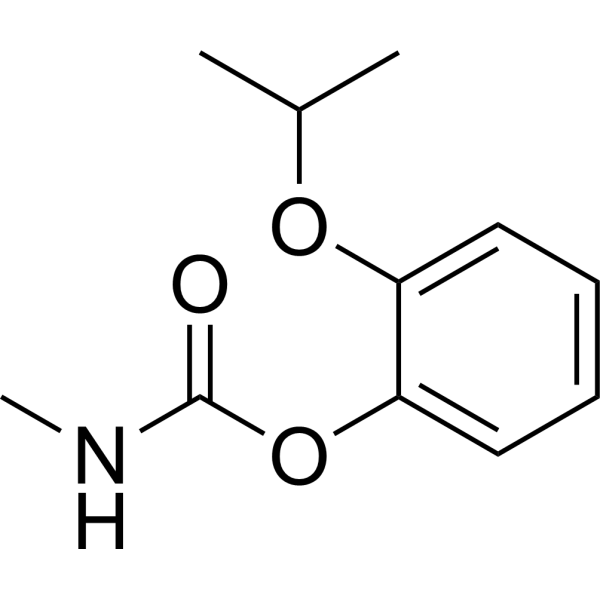
HY-B0916
PropoxurAChE Inhibitor -
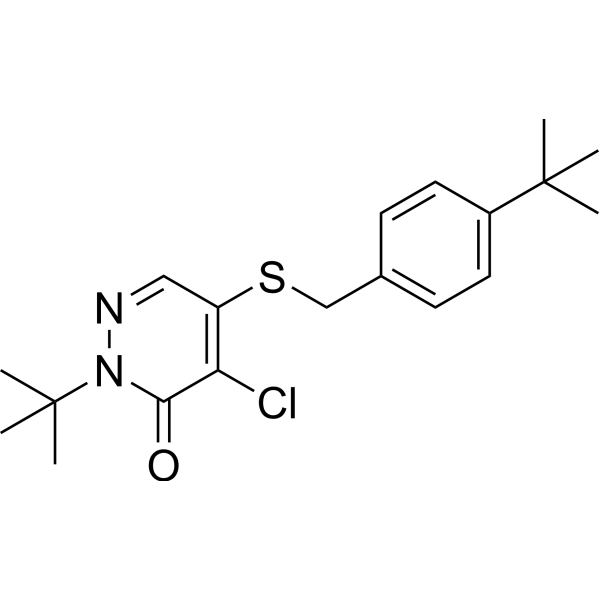
HY-B0817
PyridabenMETI Acaricide
Publications Citing Use of MedChemExpress (MCE) p,p'-DDD
More

Biological Activity
Description
In Vitro
p,p'-DDD (3.9 μg/mL, 1-24 h) shows increase in DNA damage, apoptosis and necrosis in peripheral blood, the percentage is time-dependent, and necrosis dominated[1].
p,p'-DDD (4,4’-DDD) (1.56-50 μM) s enhances the transcriptional activity of ERRγ in a dose-dependent manner, indicating it exhibits agonistic activities on ERRγ[2].
p,p'-DDD (0.004-50 μM, 24-96 h) stimulates SKBR3 cell proliferation by activating the ERRγ-mediated pathway[2].
p,p'-DDD (2.5-25 μM, 24-96 h) disturbs the SKBR3 cell cycle via ERRγ[2].
p,p'-DDD (18-24 h) activates the AP-1 transcription factor independent of ER (α or β) status in HEK293 and Ishikawa cell[3].
MedChemExpress (MCE) has not independently confirmed the accuracy of these methods. They are for reference only.
-
Cell Line:SKBR3 cell
-
Concentration:0.004, 0.02, 0.1, 0.5, 2.5, 12.5, 25, 50 μM
-
Incubation Time:24, 48, 72, 96 h
-
Result:Induced SKBR3 cell proliferation.
Showed pro-proliferative effects at micromolar concentrations with lowest observed effective concentrations (LOECs) of 12.5 μM.
The pro-proliferative effects were significantly inhibited by ERRγ antagonist (E/Z)-4-Hydroxytamoxifen (4-OHT) (HY-16950A).
-
Cell Line:SKBR3 cell
-
Concentration:2.5, 12.5, 25 μM
-
Incubation Time:24, 48, 72, 96 h
-
Result:Significantly disturbed the progression of the cell cycle and led to a reduction in the percentage of cells in the G0/G1 phase and an increase in the percentage of cells in the S phase.
The disruption effects on the progression of the cell cycle were significantly inhibited by 4-OHT.
In Vivo
MedChemExpress (MCE) has not independently confirmed the accuracy of these methods. They are for reference only.
- Annexin V plus membrane-impermeant dye apoptosis staining
- BrdU Incorporation Assay
- Somatic Cell Culture
- CFSE Dye Dilution Proliferation Assay
- Dye-dilution cell tracking and proliferation staining
- CCK-8/WST-8 Cell Proliferation Assay
- Protocol for Cell Cycle
- Cell Counting-Based Growth Curve Assay
- Colony Formation (Clonogenic) Assay
- Cell Viability Determination by MTT Colorimetric Assay
- Nuclear Protein Extraction (High-Salt/Hypotonic Fractionation)
- EdU Incorporation Assay (Click Chemistry-Based DNA Synthesis Measurement)
- Detection of Apoptosis
- TUNEL staining for apoptotic DNA fragmentation
- Ki-67 Immunostaining Proliferation Assay
- PCNA Immunodetection Proliferation Assay
- Protocol for Cell Counting and Cell Density Analysis
- Research Protocol for Endocrine Diseases
- Apoptosis Solutions
- MTT Cell Proliferation Assay
- Genotoxicity/Mutagenicity Study


Chemical Information
-
CAS No. 72-54-8
-
Appearance Solid
-
Molecular Weight 320.04
-
Formula C14H10Cl4
-
Color White to off-white
-
SMILES
ClC(Cl)C(C1=CC=C(Cl)C=C1)C2=CC=C(Cl)C=C2
-
Synonyms
4,4'-DDD; p,p'-Dichlorodiphenyl dichloroethane
-
Shipping
Room temperature in continental US; may vary elsewhere.
-
Storage
4°C, sealed storage, away from moisture and light
* In solvent : -80°C, 6 months; -20°C, 1 month (sealed storage, away from moisture and light)


Publications (1)
-
Journal Impact Factor
-
Most Recent
-
Anal Chem
Exposome-Scale Investigation of Cl-/Br-Containing Chemicals Using High-Resolution Mass Spectrometry, Multistage Machine Learning, and Cloud Computing. [Abstract]2025 Jun 3;97(21):11099-11109. PMID: 40401576


Solvent & Solubility
In Vitro:
DMSO : 100 mg/mL (312.46 mM; Need ultrasonic; Hygroscopic DMSO has a significant impact on the solubility of product, please use newly opened DMSO)
Please refer to the solubility information to select the appropriate solvent. Once prepared, please aliquot and store the solution to prevent product inactivation from repeated freeze-thaw cycles.
Storage method and period of stock solution: -80°C, 6 months; -20°C, 1 month (sealed storage, away from moisture and light). When stored at -80°C, please use it within 6 months. When stored at -20°C, please use it within 1 month.
Please refer to the solubility information to select the appropriate solvent. Once prepared, please aliquot and store the solution to prevent product inactivation from repeated freeze-thaw cycles.
Storage method and period of stock solution: -80°C, 6 months; -20°C, 1 month (sealed storage, away from moisture and light). When stored at -80°C, please use it within 6 months. When stored at -20°C, please use it within 1 month.
Concentration (start) × Volume (start) = Concentration (final) × Volume (final)
In Vivo:
Select the appropriate dissolution method based on your experimental animal and administration route.
- For the following dissolution methods, please ensure to first prepare a clear stock solution using an In Vitro approach and then sequentially add co-solvents:
- To ensure reliable experimental results, the clarified stock solution can be appropriately stored based on storage conditions. As for the working solution for In Vivo experiments, it is recommended to prepare freshly and use it on the same day.
- The percentages shown for the solvents indicate their volumetric ratio in the final prepared solution. If precipitation or phase separation occurs during preparation, heat and/or sonication can be used to aid dissolution.
In Vivo Dissolution Calculator
Please enter the basic information of animal experiments:
-
-
-
-
Recommended: Prepare an additional quantity of animals to account for potential losses during experiments.
Please enter your animal formula composition:
-
%DMSO +
Recommended: Keep the proportion of DMSO in working solution below 2% if your animal is weak.
-
%+
-
+%Tween-80 + +
-
%Saline +
The co-solvents required include: DMSO, . All of co-solvents are available by MedChemExpress (MCE). , Tween 80. All of co-solvents are available by MedChemExpress (MCE).
Working solution concentration: 0.22 mg/mL
Method for preparing stock solution: mg drug dissolved in μL DMSO. Stock solution concentration: mg/mL. * In solvent : -80°C, 6 months; -20°C, 1 month (sealed storage, away from moisture and light)
1. Take μL DMSO stock solution;
2. Add μL .
μL , mix evenly;
3. Then add μL Tween 80, mix evenly;
4. Then add μL
Please ensure that the stock solution in the first step is dissolved to a clear state, and add co-solvents in sequence. You can use ultrasonic heating (ultrasonic cleaner, recommended frequency 20-40 kHz), vortexing, etc. to assist dissolution.


Purity & Documentation
-
Data Sheet (281 KB)
-
SDS (788 KB)
- English - EN (788 KB)
- Français - FR (788 KB)
- Deutsch - DE (788 KB)
- Norwegian - NO (788 KB)
- Español - ES (788 KB)
- Swedish - SV (788 KB)
- Italian - IT (788 KB)
- Korean - KR (788 KB)
- Portuguese - PT (788 KB)
-
Handling Instructions (2659 KB)
References
[1]. Gerić M, et al. Cytogenetic status of human lymphocytes after exposure to low concentrations of p,p'-DDT, and its metabolites (p,p'-DDE, and p,p'-DDD) in vitro. Chemosphere. 2012 Jun;87(11):1288-94. [Content Brief]
[2]. Wang L, et al. Binding and Activation of Estrogen-Related Receptor γ: A Novel Molecular Mechanism for the Estrogenic Disruption Effects of DDT and Its Metabolites. Environ Sci Technol. 2022 Sep 6;56(17):12358-12367. [Content Brief]
[3]. Frigo DE, et al. DDT and its metabolites alter gene expression in human uterine cell lines through estrogen receptor-independent mechanisms. Environ Health Perspect. 2002 Dec;110(12):1239-45. [Content Brief]
[4]. Azarnoff DL, et al. The effect of DDD on barbiturate and steroid-induced hypnosis in the dog and rat. Biochem Pharmacol. 1966 Dec;15(12):1985-93. [Content Brief]


Complete Stock Solution Preparation Table
Please refer to the solubility information to select the appropriate solvent. Once prepared, please aliquot and store the solution to prevent product inactivation from repeated freeze-thaw cycles.
Storage method and period of stock solution: -80°C, 6 months; -20°C, 1 month (sealed storage, away from moisture and light). When stored at -80°C, please use it within 6 months. When stored at -20°C, please use it within 1 month.
| Optional Solvent | Concentration Solvent Mass | 1 mg | 5 mg | 10 mg | 25 mg |
|---|---|---|---|---|---|
| DMSO | 1 mM | 3.1246 mL | 15.6230 mL | 31.2461 mL | 78.1152 mL |
| 5 mM | 0.6249 mL | 3.1246 mL | 6.2492 mL | 15.6230 mL | |
| 10 mM | 0.3125 mL | 1.5623 mL | 3.1246 mL | 7.8115 mL | |
| 15 mM | 0.2083 mL | 1.0415 mL | 2.0831 mL | 5.2077 mL | |
| 20 mM | 0.1562 mL | 0.7812 mL | 1.5623 mL | 3.9058 mL | |
| 25 mM | 0.1250 mL | 0.6249 mL | 1.2498 mL | 3.1246 mL | |
| 30 mM | 0.1042 mL | 0.5208 mL | 1.0415 mL | 2.6038 mL | |
| 40 mM | 0.0781 mL | 0.3906 mL | 0.7812 mL | 1.9529 mL | |
| 50 mM | 0.0625 mL | 0.3125 mL | 0.6249 mL | 1.5623 mL | |
| 60 mM | 0.0521 mL | 0.2604 mL | 0.5208 mL | 1.3019 mL | |
| 80 mM | 0.0391 mL | 0.1953 mL | 0.3906 mL | 0.9764 mL | |
| 100 mM | 0.0312 mL | 0.1562 mL | 0.3125 mL | 0.7812 mL |


p,p'-DDD Related Classifications
HY-B1984 Related Classifications
 Powered by Bioz