



Liquiritigenin
Based on 14 publication(s) in Google Scholar
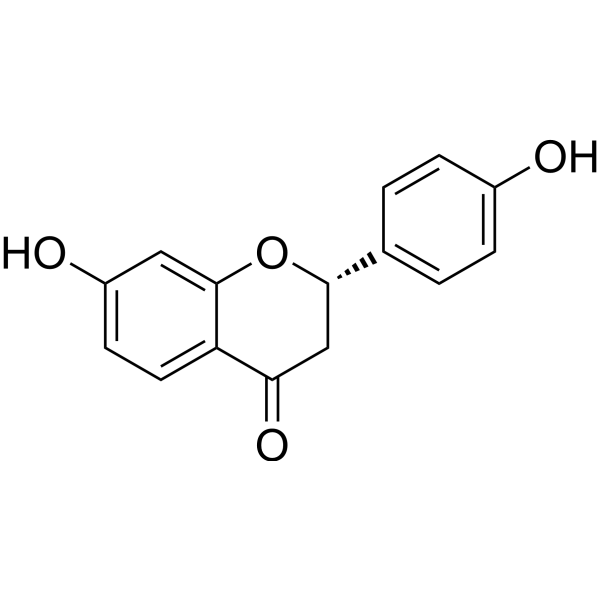
Liquiritigenin, a flavanone isolated from Glycyrrhiza uralensis, is a highly selective estrogen receptor β (ERβ) agonist with an EC50 of 36.5 nM for activation of the ERE tk-Luc.
商品は「研究用試薬」です。人や動物の医療用・臨床診断用・食品用の製品ではありません。
研究用途以外に使用した場合、当社は一切の責任を負いかねます。
- 純度 : 99.85%
- CAS 番号: 578-86-9
- 分子式: C15H12O4
- 分子量:256.25
-
保管条件:Powder -20°C, 3 years , 4°C, 2 years ; In solvent -80°C, 2 years , -20°C, 1 year

To place orders, for customer services and technical support, please contact: MedChemExpress USA
Tel: 609-228-6898 E-mail: [email protected] [email protected]


-
 生物活性
生物活性
-
化学情報
-
溶剤 & 溶解度
- プロトコル
- 純度とドキュメンテーション
- 参考文献
-
 Help & FAQs


-
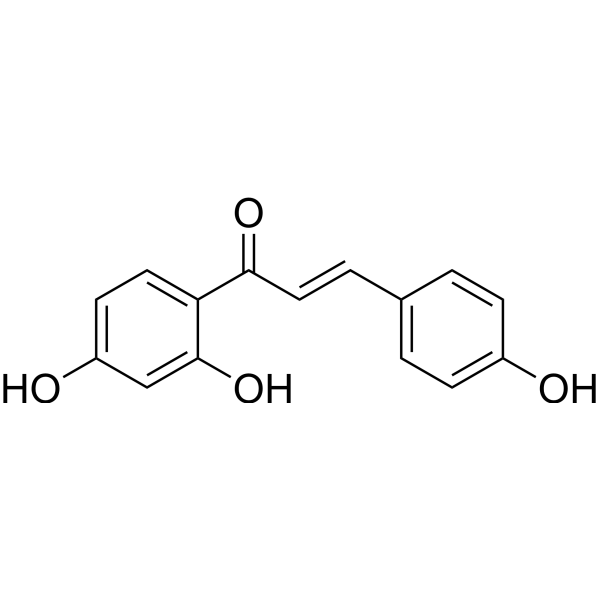
HY-N0102
IsoliquiritigeninAutophagy Inducer -
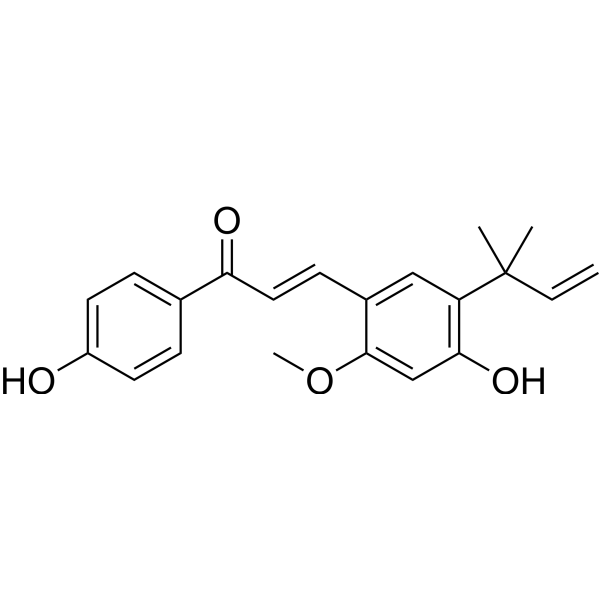
HY-N0372
Licochalcone AUGTs inhibitor -
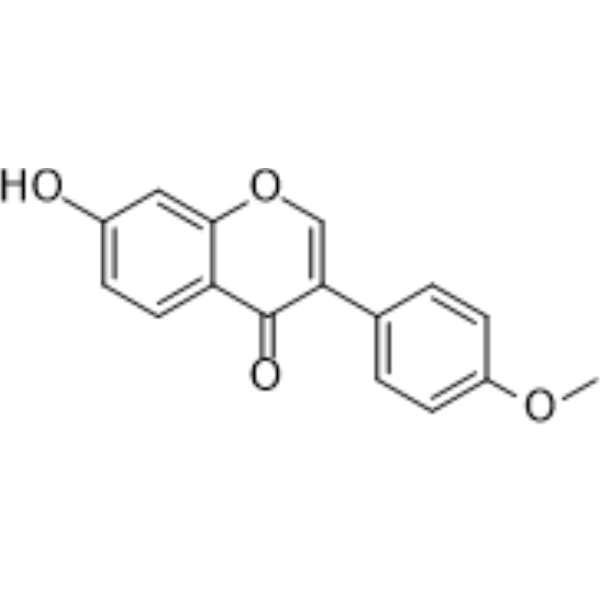
HY-N0183
FormononetinFGFR2 Inhibitor -
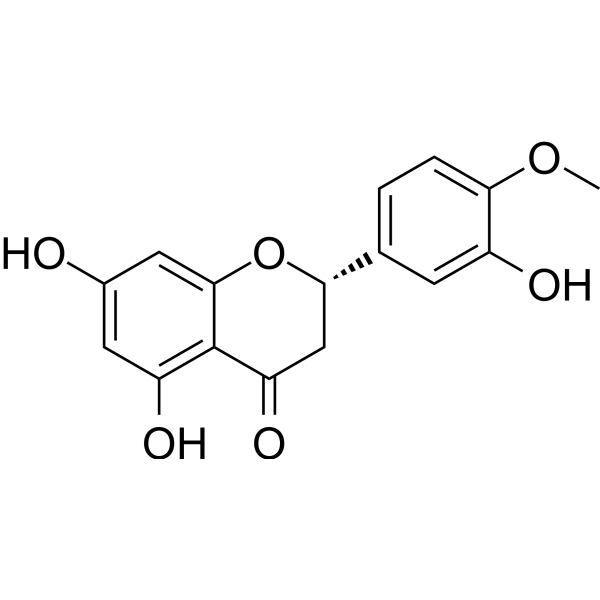
HY-N0168
HesperetinUGT Inhibitor -
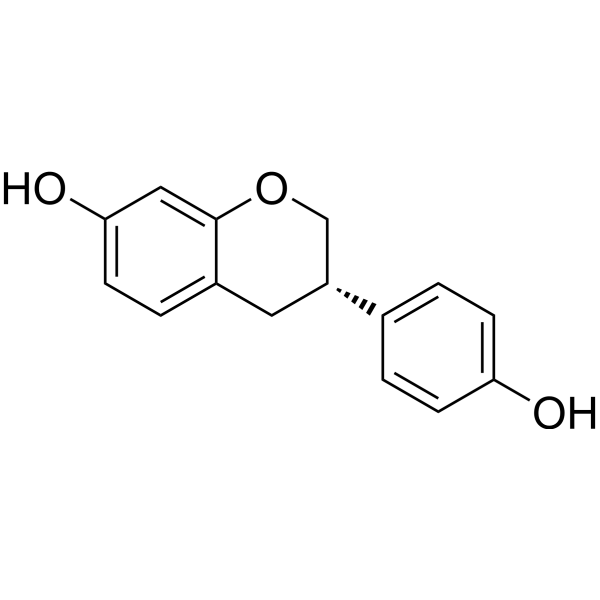
HY-100583
(-)-(S)-EquolEstrogen Receptor β Ligand -
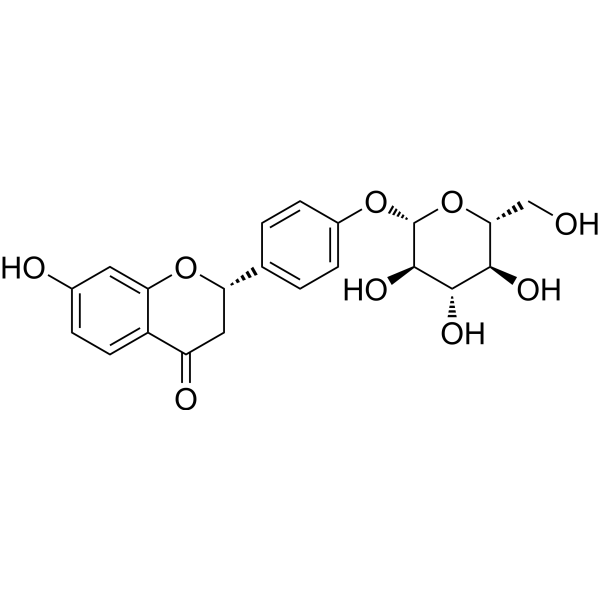
HY-N0376
LiquiritinAKR1C1 Inhibitor -
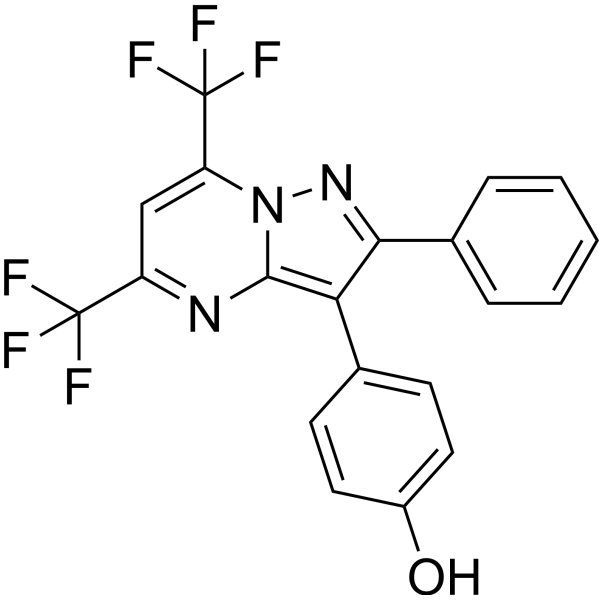
HY-103456
PHTPPERβ Antagonist -
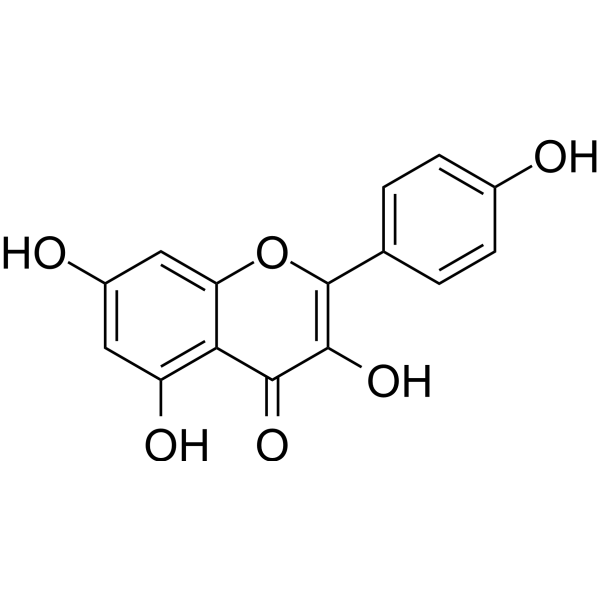
HY-14590
KaempferolEstrogen Receptor α Inhibitor -
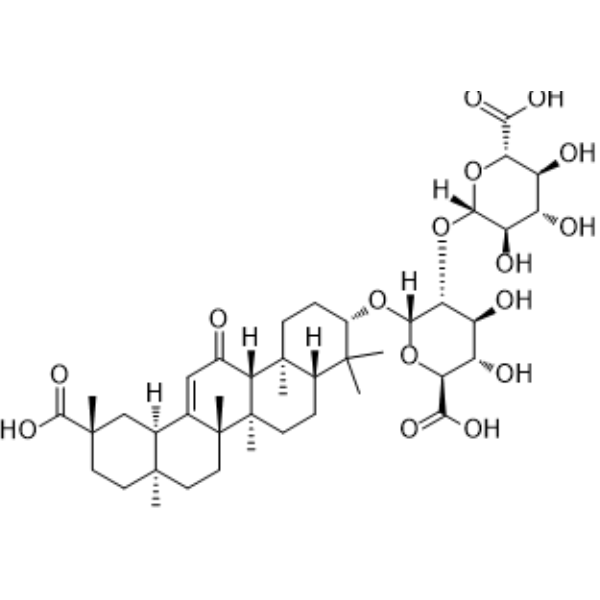
HY-N0184
Glycyrrhizic acidHMGB1 Antagonist -
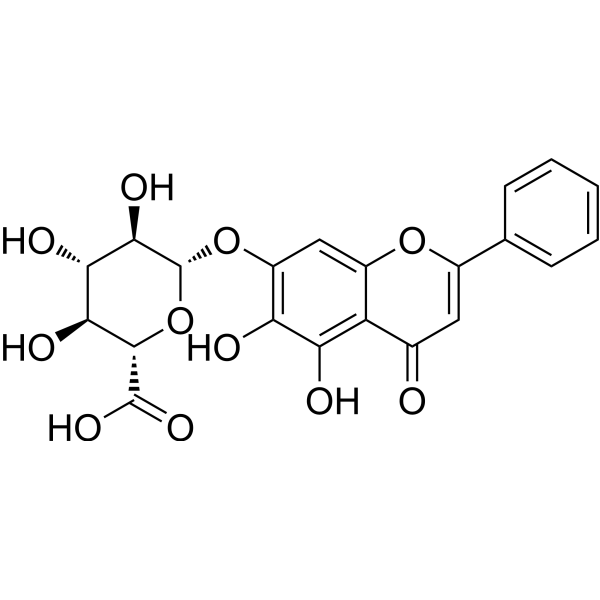
HY-N0197
BaicalinAutophagy Inducer -
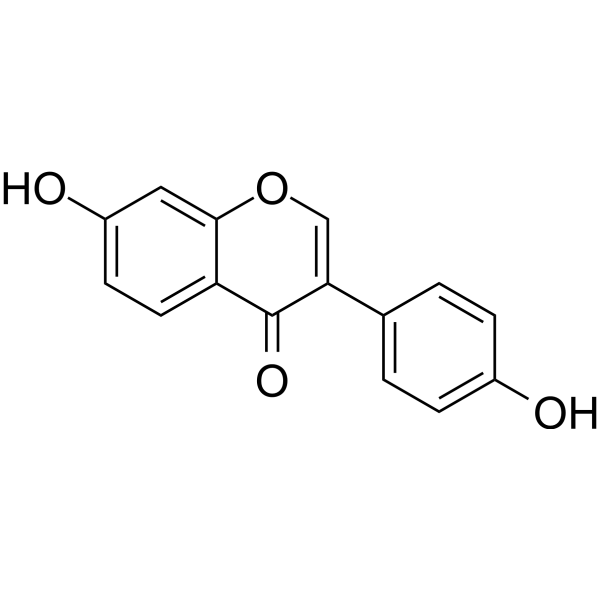
HY-N0019
DaidzeinEndogenous Metabolite -
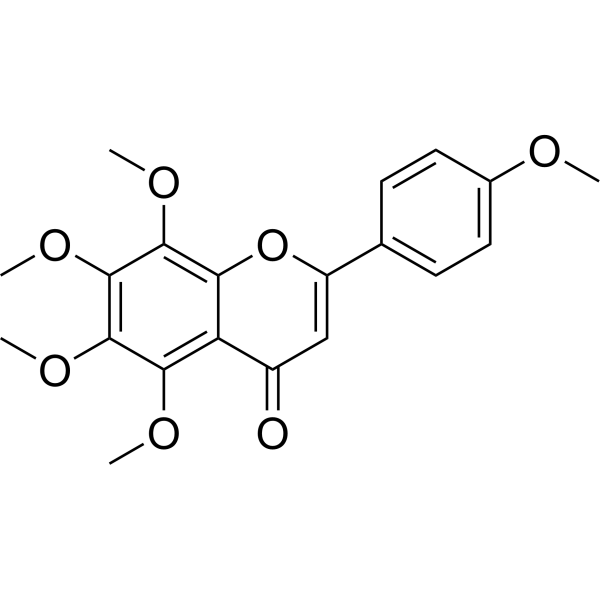
HY-N0133
TangeretinApoptosis Inducer
MedChemExpress(MCE)の使用を引用している文献 Liquiritigenin
More- Acta Pharm Sin B. 2021 Jan;11(1):143-155. [Abstract]
- Phytomedicine. 2025 Dec:149:157553. [Abstract]
- Phytomedicine. 2025 Sep:145:157081. [Abstract]
- Cancer Genet. 2025 Jun:294-295:156-170. [Abstract]
- Food Chem. 2025 Dec 30:497:146992. [Abstract]
- Food Chem. 2025 Oct 15:489:144992. [Abstract]
- Am J Chin Med. 2024;52(5):1507-1526. [Abstract]
- J Ethnopharmacol. 2025 Sep 3:120526. [Abstract]
- Nutrients. 2024 Apr 14;16(8):1167. [Abstract]
- Arch Biochem Biophys. 2024 Nov:761:110184. [Abstract]
- J Pharm Biomed Anal. 2024 Sep 1:247:116257. [Abstract]
- Reprod Sci. 2025 Aug 27. [Abstract]
- bioRxiv. 2025 Feb 19.
- SSRN. 2024 Mar 21.
 Customer Validation & Images

-
Cell Proliferation/Viability Assay
-
Flow Cytometry
-
ELISA
-
Cell Imaging/Staining
-
Bio/Physico-chemical Assay


生物活性
製品説明
IC50 & Target
EC50: 36.5 nM (activation of the ERE tk-Luc)[1]
Cellular Effect
|
Cell Line

|
Type | Value | Description | References |
|---|---|---|---|---|
| A549 | IC50 |
>100 μM
Compound: 2
|
Cytotoxicity against human A549 cells after 72 hrs by MTT assay
Cytotoxicity against human A549 cells after 72 hrs by MTT assay
|
[PMID: 18440233] |
| B16 | IC50 |
5 μg/mL
Compound: 6, liquiritigenin
|
Cytotoxicity against mouse B16 cells after 72 hrs by MTT assay
Cytotoxicity against mouse B16 cells after 72 hrs by MTT assay
|
[PMID: 15787450] |
| B16-BL6 | IC50 |
97.7 μM
Compound: 2
|
Cytotoxicity against mouse B16-BL6 cells after 72 hrs by MTT assay
Cytotoxicity against mouse B16-BL6 cells after 72 hrs by MTT assay
|
[PMID: 18440233] |
| CCRF-CEM | IC50 |
>25 μg/mL
Compound: 6, liquiritigenin
|
Cytotoxicity against human CEM cells after 72 hrs by MTT assay
Cytotoxicity against human CEM cells after 72 hrs by MTT assay
|
[PMID: 15787450] |
| DU-145 | IC50 |
>100 μM
Compound: 7
|
Cytotoxicity against human DU145 cells after 72 hrs by MTT assay
Cytotoxicity against human DU145 cells after 72 hrs by MTT assay
|
[PMID: 20494492] |
| HCT-116 | IC50 |
37.2 μM
Compound: 7
|
Cytotoxicity against human HCT116 cells after 72 hrs by MTT assay
Cytotoxicity against human HCT116 cells after 72 hrs by MTT assay
|
[PMID: 20494492] |
| HCT-8 | IC50 |
19.5 μg/mL
Compound: 6, liquiritigenin
|
Cytotoxicity against human HCT8 cells after 72 hrs by MTT assay
Cytotoxicity against human HCT8 cells after 72 hrs by MTT assay
|
[PMID: 15787450] |
| HeLa | IC50 |
>100 μM
Compound: 2
|
Cytotoxicity against human HeLa cells after 72 hrs by MTT assay
Cytotoxicity against human HeLa cells after 72 hrs by MTT assay
|
[PMID: 18440233] |
| HeLa | IC50 |
>100 μM
Compound: 7
|
Cytotoxicity against human HeLa cells after 72 hrs by MTT assay
Cytotoxicity against human HeLa cells after 72 hrs by MTT assay
|
[PMID: 20494492] |
| HL-60 | IC50 |
22.5 μg/mL
Compound: 6, liquiritigenin
|
Cytotoxicity against human HL60 cells after 72 hrs by MTT assay
Cytotoxicity against human HL60 cells after 72 hrs by MTT assay
|
[PMID: 15787450] |
| HT-1080 | IC50 |
>100 μM
Compound: 2
|
Cytotoxicity against human HT1080 cells after 72 hrs by MTT assay
Cytotoxicity against human HT1080 cells after 72 hrs by MTT assay
|
[PMID: 18440233] |
| K562 | IC50 |
>100 μM
Compound: 7
|
Cytotoxicity against human K562 cells after 72 hrs by MTT assay
Cytotoxicity against human K562 cells after 72 hrs by MTT assay
|
[PMID: 20494492] |
| Lewis lung carcinoma cell line | IC50 |
>100 μM
Compound: 2
|
Cytotoxicity against mouse LLC cells after 72 hrs by MTT assay
Cytotoxicity against mouse LLC cells after 72 hrs by MTT assay
|
[PMID: 18440233] |
| MCF7 | IC50 |
>25 μg/mL
Compound: 6, liquiritigenin
|
Cytotoxicity against human MCF7 cells after 72 hrs by MTT assay
Cytotoxicity against human MCF7 cells after 72 hrs by MTT assay
|
[PMID: 15787450] |
| MDCK | CC50 |
301 μM
Compound: 10
|
Cytotoxicity against MDCK cells after 72 hrs
Cytotoxicity against MDCK cells after 72 hrs
|
[PMID: 24313801] |
| Peritoneal macrophage | IC50 |
85 μM
Compound: kp24
|
Inhibition of LPS-stimulated nitric oxide production in ddy mouse peritoneal macrophages measured after 20 hrs by Greiss method
Inhibition of LPS-stimulated nitric oxide production in ddy mouse peritoneal macrophages measured after 20 hrs by Greiss method
|
[PMID: 27955927] |
| RAW264.7 | IC50 |
16.34 μM
Compound: 69
|
Anti-inflammatory activity against mouse RAW264.7 cells assessed as reduction in NO production pre-incubated with compound for 1 hrs followed by LPS-stimulation and measured for 1 hrs by Western blot analysis
Anti-inflammatory activity against mouse RAW264.7 cells assessed as reduction in NO production pre-incubated with compound for 1 hrs followed by LPS-stimulation and measured for 1 hrs by Western blot analysis
|
[PMID: 37683361] |
| SGC-7901 | IC50 |
92.4 μM
Compound: 7
|
Cytotoxicity against human SGC7901 cells after 72 hrs by MTT assay
Cytotoxicity against human SGC7901 cells after 72 hrs by MTT assay
|
[PMID: 20494492] |
体外実験
Liquiritigenin produces a dose-response activation of ERE tk-Luc in the U2OS cells transfected with ERβ, but not ERα. Liquiritigenin produces a dose-dependent activation and a time-dependent increase of the CECR6, NKG2E and NKD with ERβ but not with ERα. The ERβ-selectivity of liquiritigenin is due to the selective recruitment of the coactivator steroid receptor coactivator-2 to target genes. Liquiritigenin exhibits similar binding affinities for ERα and ERβ, and causes the recruitment of SRC-2 to target genes selectively in ERβ cells[1]. Pretreatment of MC3T3-E1 cells with liquiritigenin prevents the MG-induced cell death and production of protein adduct, intracellular reactive oxygen species, mitochondrial superoxide, cardiolipin peroxidation, and TNF-α in osteoblastic MC3T3-E1 cells[2].
MedChemExpress (MCE) has not independently confirmed the accuracy of these methods. They are for reference only.
体内実験
MedChemExpress (MCE) has not independently confirmed the accuracy of these methods. They are for reference only.


化学情報
-
CAS 番号 578-86-9
-
性状 Solid
-
分子量 256.25
-
分子式 C15H12O4
-
Color White to light yellow
-
SMILES
O=C1C[C@@H](C2=CC=C(O)C=C2)OC3=CC(O)=CC=C13
-
別名
4',7-Dihydroxyflavanone
-
Structure Classification
-
輸送条件
Room temperature in continental US; may vary elsewhere.
-
保管条件
Powder -20°C 3 years 4°C 2 years In solvent -80°C 2 years -20°C 1 year


Publications (14)
-
Journal Impact Factor
-
Most Recent
-
Acta Pharm Sin B
Chrysin serves as a novel inhibitor of DGK α/FAK interaction to suppress the malignancy of esophageal squamous cell carcinoma (ESCC). [Abstract]2021 Jan;11(1):143-155. PMID: 33532186 -
Phytomedicine
Liquiritigenin attenuates thrombosis by inhibiting P2Y12R-mediated Src/PLCγ2 signaling and cytoplasmic Ca2+ mobilization in platelets. [Abstract]2025 Dec:149:157553. PMID: 41273866 -
Phytomedicine
Amoebicidal action of isoliquiritigenin and glabridin from Glycyrrhiza species: Mechanisms and effects against Acanthamoeba castellanii. [Abstract]2025 Sep:145:157081. PMID: 40701128 -
Cancer Genet
Mechanistic study of Liquiritigenin inhibiting bladder cancer cell proliferation and migration by regulating STING1. [Abstract]2025 Jun:294-295:156-170. PMID: 40347832 -
Food Chem
Effects of sun drying combined with baking processes on the flavor quality of Chongqing Tuocha raw tea. [Abstract]2025 Dec 30:497:146992. PMID: 41285060 -
Food Chem
Flavonoid-mediated metabolic underpinning quality variation in red bud-sport pear mutants. [Abstract]2025 Oct 15:489:144992. PMID: 40466530
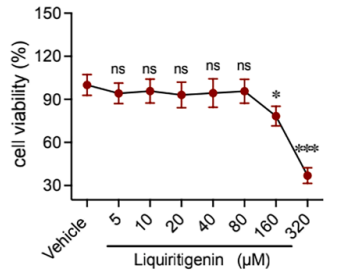
Liquiritigenin purchased from MedChemExpress. Usage Cited in: Food Chem. 2025 Oct 15:489:144992. [Abstract]
Viability of platelets treated with gradient concentrations of liquiritigenin (5, 10, 20, 40, 80, 160, 320 μM, 6 h) as determined by MTT assay; n = 3.
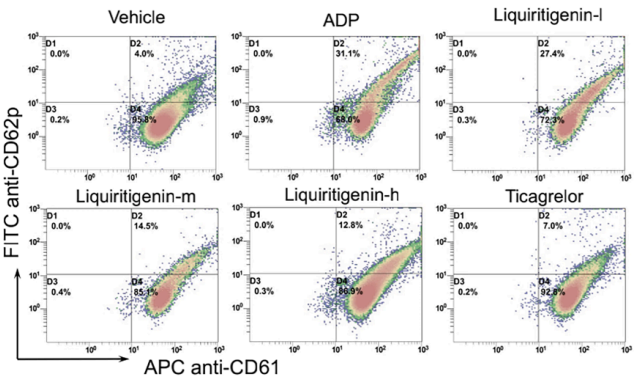
Liquiritigenin purchased from MedChemExpress. Usage Cited in: Food Chem. 2025 Oct 15:489:144992. [Abstract]
Flow cytometric analysis of CD61⁺CD62P⁺ expression in ADP-stimulated platelets following liquiritigenin (20, 40, or 80 μM) treatment; n = 4.
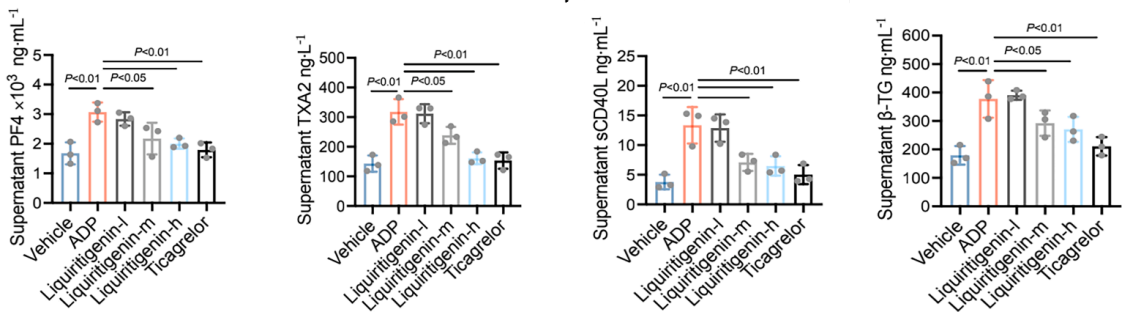
Liquiritigenin purchased from MedChemExpress. Usage Cited in: Food Chem. 2025 Oct 15:489:144992. [Abstract]
Levels of PF4, TXA2, sCD40L, and β-TG in platelet supernatants after ADP stimulation, measured by ELISA in the presence or absence of liquiritigenin (20, 40, or 80 μM); n = 3.
Liquiritigenin purchased from MedChemExpress. Usage Cited in: Food Chem. 2025 Oct 15:489:144992. [Abstract]
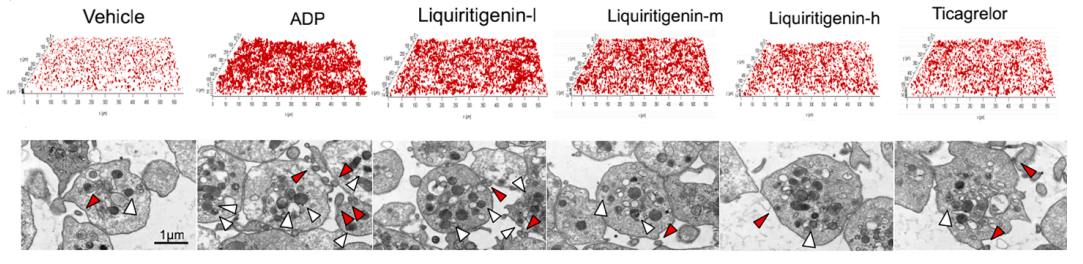
Representative three-dimensional reconstructions of iFluor™ 555-labeled platelets (red) adherent to fibrinogen-coated surfaces in the presence or absence of Liquiritigenin (20, 40, or 80 μM). Transmission electron micrographs of ADP-activated platelets showing dense granule morphology before and after liquiritigenin treatment. White arrows indicate dense granules; red arrows indicate granule secretion. Scale bar = 1 μm; magnification: × 8000.
Liquiritigenin purchased from MedChemExpress. Usage Cited in: Food Chem. 2025 Oct 15:489:144992. [Abstract]
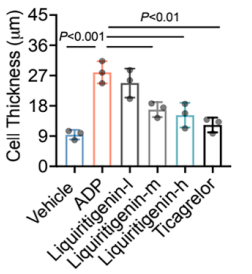
Quantitative analysis of platelet adhesion thickness on fibrinogen-coated surfaces following ADP activation with or without Liquiritigenin (20, 40, or 80 μM) treatment; n = 3.
Liquiritigenin purchased from MedChemExpress. Usage Cited in: Food Chem. 2025 Oct 15:489:144992. [Abstract]
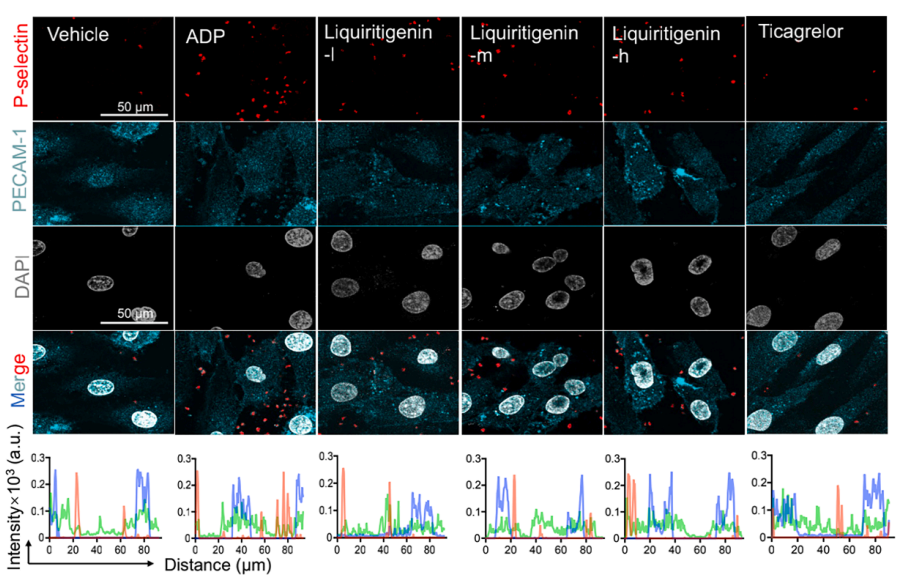
Representative fluorescence images showing interactions between P-selectin–labeled platelets and PECAM-1–labeled HUVECs in the presence or absence of Liquiritigenin (20, 40, or 80 μM). Scale bar = 50 μm; magnification: × 400.
Liquiritigenin purchased from MedChemExpress. Usage Cited in: Food Chem. 2025 Oct 15:489:144992. [Abstract]
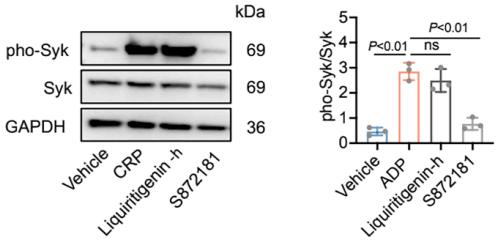
Western blot analysis of Syk phosphorylation mediated by GPVI activation with CRP as an agonist, in the presence or absence of Liquiritigenin (20, 40, or 80 μM); n = 3.
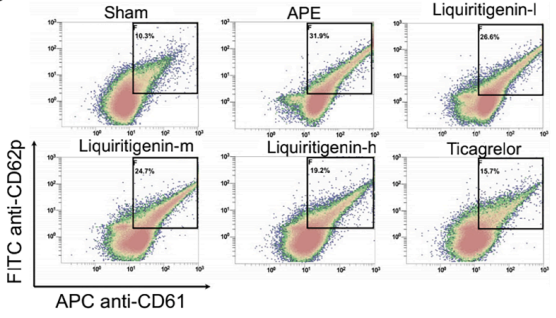
Liquiritigenin purchased from MedChemExpress. Usage Cited in: Food Chem. 2025 Oct 15:489:144992. [Abstract]
Liquiritigenin (10, 20, and 40 mg/kg, oral gavage, once daily for five consecutive days). Flow cytometric analysis of peripheral blood platelet activation in the APE model with or without liquiritigenin treatment. Total platelets were labeled with APC anti-CD61; activated platelets were labeled with FITC anti-CD62P.
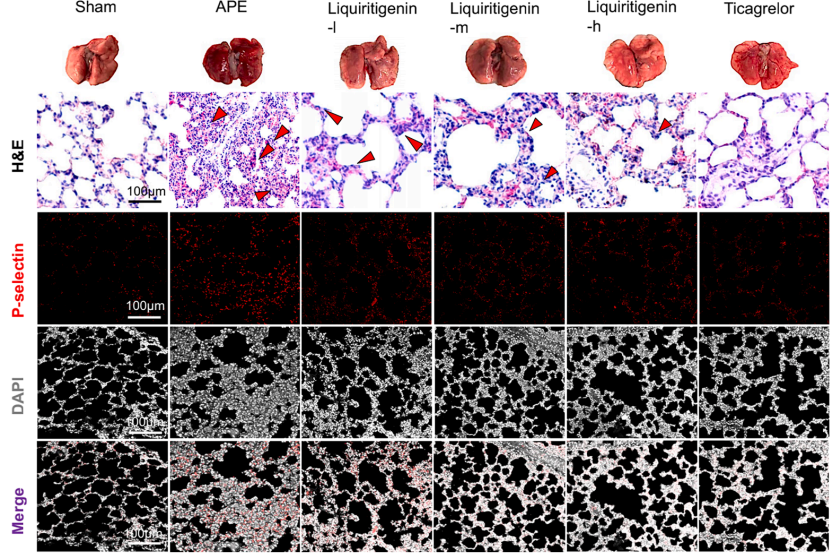
Liquiritigenin purchased from MedChemExpress. Usage Cited in: Food Chem. 2025 Oct 15:489:144992. [Abstract]
Liquiritigenin (10, 20, and 40 mg/kg, oral gavage, once daily for five consecutive days). Representative images of lung tissue sections stained with H&E, and immunofluorescence staining of thrombotic areas. Thrombotic lesions are indicated by red arrows; activated platelets were labeled with P-selectin. Scale bar = 100 μm; magnification: × 200.
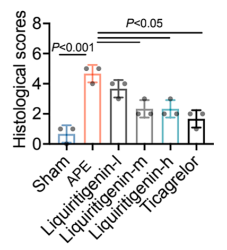
Liquiritigenin purchased from MedChemExpress. Usage Cited in: Food Chem. 2025 Oct 15:489:144992. [Abstract]
Liquiritigenin (10, 20, and 40 mg/kg, oral gavage, once daily for five consecutive days). Histopathological scoring of lung tissues from APE mice with or without liquiritigenin treatment; n = 3.
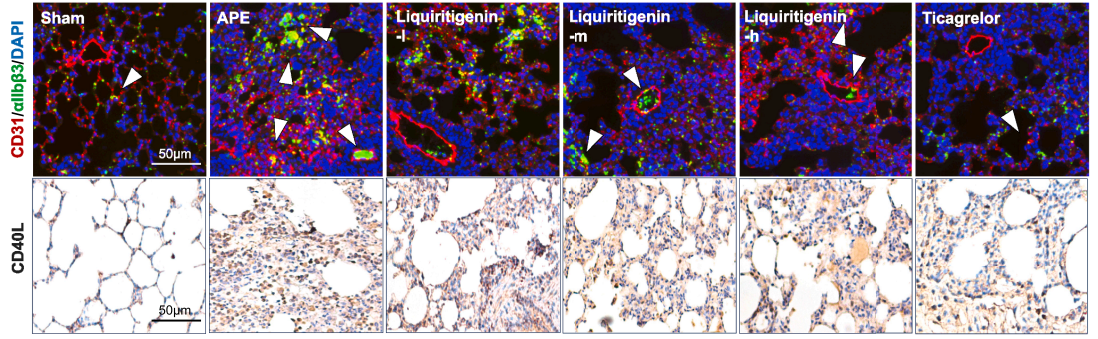
Liquiritigenin purchased from MedChemExpress. Usage Cited in: Food Chem. 2025 Oct 15:489:144992. [Abstract]
Liquiritigenin (10, 20, and 40 mg/kg, oral gavage, once daily for five consecutive days). Representative tissue immunofluorescence images showing integrin αIIbβ3 activation sites (platelets) and CD31 endothelial cells in pulmonary microvessels, with corresponding immunohistochemical detection of CD40L expression. scale bar = 50 μm; magnification: × 400.
-
Am J Chin Med
Liquiritigenin, an Active Ingredient of Liquorice, Alleviates Acute Kidney Injury by VKORC1-Mediated Ferroptosis Inhibition. [Abstract]2024;52(5):1507-1526. PMID: 39192677 -
J Ethnopharmacol
Liquiritigenin alleviates inflammation and mitochondrial dysfunction in acute pancreatitis via ERβ-VDAC1 signaling. [Abstract]2025 Sep 3:120526. PMID: 40912483 -
Nutrients
Interpreting the Mechanism of Active Ingredients in Polygonati Rhizoma in Treating Depression by Combining Systemic Pharmacology and In Vitro Experiments. [Abstract]2024 Apr 14;16(8):1167. PMID: 38674858 -
Arch Biochem Biophys
Liquiritigenin inhibits the migration, invasion, and EMT of prostate cancer through activating ER stress. [Abstract]2024 Nov:761:110184. PMID: 39447623 -
J Pharm Biomed Anal
Chemical profiling of Zhi-Ke-Bao pills and its potential mechanism against cough by ultra-high performance liquid chromatography coupled to quadrupole time-of-flight mass spectrometry and network pharmacology. [Abstract]2024 Sep 1:247:116257. PMID: 38815520 -
Reprod Sci
Liquiritigenin Restores Declined Oocyte Quality and Improves Embryo Development in Aged Mice. [Abstract]2025 Aug 27. PMID: 40866779 -
-


溶剤 & 溶解度
体外:
DMSO : 100 mg/mL (390.24 mM; Need ultrasonic; Hygroscopic DMSO has a significant impact on the solubility of product, please use newly opened DMSO)
Please refer to the solubility information to select the appropriate solvent. Once prepared, please aliquot and store the solution to prevent product inactivation from repeated freeze-thaw cycles.
Storage method and period of stock solution: -80°C, 2 years; -20°C, 1 year. When stored at -80°C, please use it within 2 years. When stored at -20°C, please use it within 1 year.
Please refer to the solubility information to select the appropriate solvent. Once prepared, please aliquot and store the solution to prevent product inactivation from repeated freeze-thaw cycles.
Storage method and period of stock solution: -80°C, 2 years; -20°C, 1 year. When stored at -80°C, please use it within 2 years. When stored at -20°C, please use it within 1 year.
濃度 (開始) × 体積 (開始) = 濃度 (終了) × 体積 (終了)
体内:
Select the appropriate dissolution method based on your experimental animal and administration route.
- For the following dissolution methods, please ensure to first prepare a clear stock solution using an In Vitro approach and then sequentially add co-solvents:
- To ensure reliable experimental results, the clarified stock solution can be appropriately stored based on storage conditions. As for the working solution for In Vivo experiments, it is recommended to prepare freshly and use it on the same day.
- The percentages shown for the solvents indicate their volumetric ratio in the final prepared solution. If precipitation or phase separation occurs during preparation, heat and/or sonication can be used to aid dissolution.
Add each solvent one by one: 10% DMSO 40% PEG300 5% Tween-80 45% Saline
Solubility: ≥ 2.42 mg/mL (9.44 mM); Clear solution
This protocol yields a clear solution of ≥ 2.42 mg/mL (saturation unknown).
Taking 1 mL working solution as an example, add 100 μL DMSO stock solution (24.2 mg/mL) to 400 μL PEG300, and mix evenly; then add 50 μL Tween-80 and mix evenly; then add 450 μL Saline to adjust the volume to 1 mL.
Preparation of Saline: Dissolve 0.9 g sodium chloride in ddH₂O and dilute to 100 mL to obtain a clear Saline solution.
Add each solvent one by one: 10% DMSO 90% (20% SBE-β-CD in Saline)
Solubility: ≥ 2.42 mg/mL (9.44 mM); Clear solution
This protocol yields a clear solution of ≥ 2.42 mg/mL (saturation unknown).
Taking 1 mL working solution as an example, add 100 μL DMSO stock solution (24.2 mg/mL) to 900 μL 20% SBE-β-CD in Saline, and mix evenly.
Preparation of 20% SBE-β-CD in Saline (4°C, storage for one week): 2 g SBE-β-CD powder is dissolved in 10 mL Saline, completely dissolve until clear.
In Vivo Dissolution Calculator
Please enter the basic information of animal experiments:
-
-
-
-
Recommended: Prepare an additional quantity of animals to account for potential losses during experiments.
Please enter your animal formula composition:
-
%DMSO +
Recommended: Keep the proportion of DMSO in working solution below 2% if your animal is weak.
-
%+
-
+%Tween-80 + +
-
%Saline +
The co-solvents required include: DMSO, . All of co-solvents are available by MedChemExpress (MCE). , Tween 80. All of co-solvents are available by MedChemExpress (MCE).
Working solution concentration: 0.22 mg/mL
Method for preparing stock solution: mg drug dissolved in μL DMSO. Stock solution concentration: mg/mL.
1. Take μL DMSO stock solution;
2. Add μL .
μL , mix evenly;
3. Then add μL Tween 80, mix evenly;
4. Then add μL
Please ensure that the stock solution in the first step is dissolved to a clear state, and add co-solvents in sequence. You can use ultrasonic heating (ultrasonic cleaner, recommended frequency 20-40 kHz), vortexing, etc. to assist dissolution.


純度とドキュメンテーション
-
データシート (285 KB)
-
SDS (396 KB)
- English - EN (396 KB)
- Français - FR (396 KB)
- Deutsch - DE (396 KB)
- Norwegian - NO (396 KB)
- Español - ES (396 KB)
- Swedish - SV (396 KB)
- Italian - IT (396 KB)
- Korean - KR (396 KB)
- Portuguese - PT (396 KB)
-
取扱説明書 (2659 KB)
参考文献
[1]. Mersereau JE, et al. Liquiritigenin is a plant-derived highly selective estrogen receptor beta agonist. Mol Cell Endocrinol. 2008 Feb 13;283(1-2):49-57. [Content Brief]
[2]. Suh KS, et al. Protective effect of liquiritigenin against methylglyoxal cytotoxicity in osteoblastic MC3T3-E1 cells. Food Funct. 2014 Jul 25;5(7):1432-40. [Content Brief]
[3]. Tao W, et al. Liquiritigenin reverses depression-like behavior in unpredictable chronic mild stress-induced mice by regulating PI3K/Akt/mTOR mediated BDNF/TrkB pathway. Behav Brain Res. 2016 Jul 15;308:177-86. [Content Brief]


Complete Stock Solution Preparation Table
Please refer to the solubility information to select the appropriate solvent. Once prepared, please aliquot and store the solution to prevent product inactivation from repeated freeze-thaw cycles.
Storage method and period of stock solution: -80°C, 2 years; -20°C, 1 year. When stored at -80°C, please use it within 2 years. When stored at -20°C, please use it within 1 year.
| Optional Solvent | Concentration Solvent Mass | 1 mg | 5 mg | 10 mg | 25 mg |
|---|---|---|---|---|---|
| DMSO | 1 mM | 3.9024 mL | 19.5122 mL | 39.0244 mL | 97.5610 mL |
| 5 mM | 0.7805 mL | 3.9024 mL | 7.8049 mL | 19.5122 mL | |
| 10 mM | 0.3902 mL | 1.9512 mL | 3.9024 mL | 9.7561 mL | |
| 15 mM | 0.2602 mL | 1.3008 mL | 2.6016 mL | 6.5041 mL | |
| 20 mM | 0.1951 mL | 0.9756 mL | 1.9512 mL | 4.8780 mL | |
| 25 mM | 0.1561 mL | 0.7805 mL | 1.5610 mL | 3.9024 mL | |
| 30 mM | 0.1301 mL | 0.6504 mL | 1.3008 mL | 3.2520 mL | |
| 40 mM | 0.0976 mL | 0.4878 mL | 0.9756 mL | 2.4390 mL | |
| 50 mM | 0.0780 mL | 0.3902 mL | 0.7805 mL | 1.9512 mL | |
| 60 mM | 0.0650 mL | 0.3252 mL | 0.6504 mL | 1.6260 mL | |
| 80 mM | 0.0488 mL | 0.2439 mL | 0.4878 mL | 1.2195 mL | |
| 100 mM | 0.0390 mL | 0.1951 mL | 0.3902 mL | 0.9756 mL |


Liquiritigenin 関連分類
HY-N0377 関連分類
 Powered by Bioz