Search Result
Results for "
methyl-3
" in MedChemExpress (MCE) Product Catalog:
47
Biochemical Assay Reagents
33
Isotope-Labeled Compounds
| Cat. No. |
Product Name |
Target |
Research Areas |
Chemical Structure |
-
- HY-Z0548
-
|
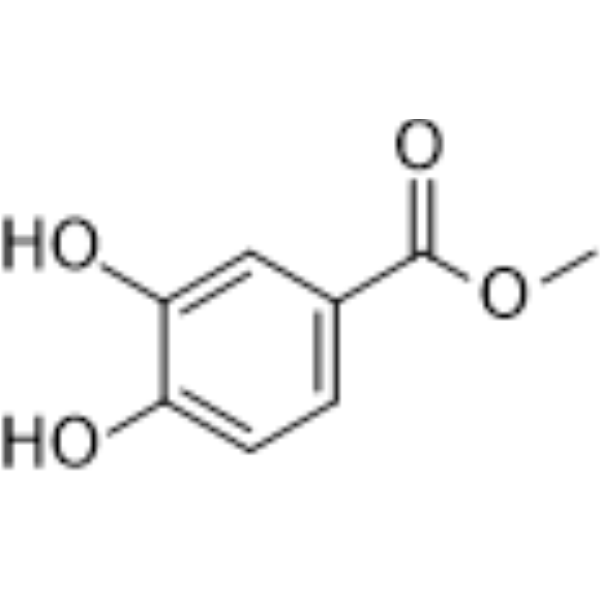
Protocatechuic acid methyl ester; methyl protocatechuate
|
Keap1-Nrf2
Apoptosis
|
Inflammation/Immunology
Cancer
|
|
Methyl 3,4-dihydroxybenzoate (Protocatechuic acid methyl ester; Methyl protocatechuate) is a major metabolite of antioxidant polyphenols found in green tea. Antioxidant and anti-inflammatory effect .
|
-
-
- HY-W017212
-
|
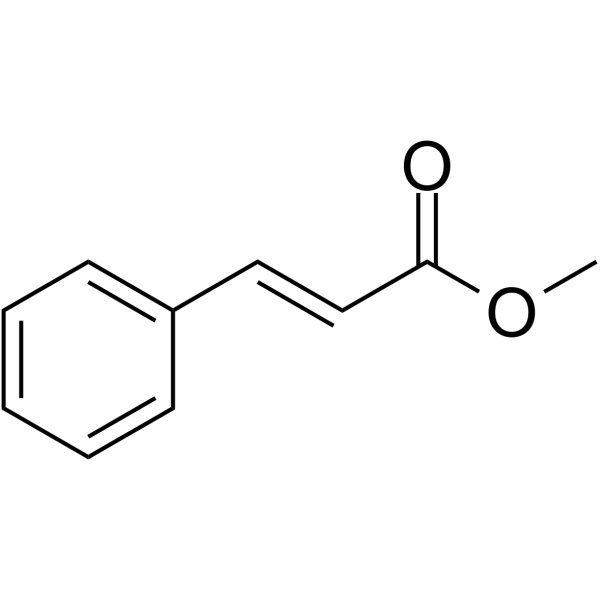
methyl 3-phenylpropenoate
|
Environmental Pollutants
AMPK
Bacterial
Tyrosinase
|
Infection
Metabolic Disease
|
|
Methyl cinnamate (Methyl 3-phenylpropenoate), an active component of Zanthoxylum armatum, is a widely used natural flavor compound. Methyl cinnamate (Methyl 3-phenylpropenoate) possesses antimicrobial activity and is a tyrosinase inhibitor that can prevent food browning. Methyl cinnamate (Methyl 3-phenylpropenoate) has antiadipogenic activity through mechanisms mediated, in part, by the CaMKK2-AMPK signaling pathway .
|
-
-
- HY-42569
-
|
|
PROTAC Linkers
|
Cancer
|
|
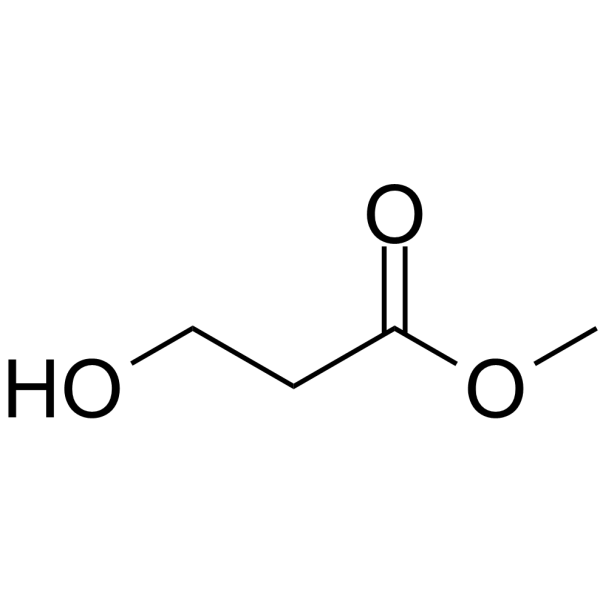
Methyl 3-hydroxypropanoate is an alkyl/ether-based PROTAC linker that can be used in the synthesis of PROTACs .
|
-
-
- HY-W004091
-
|
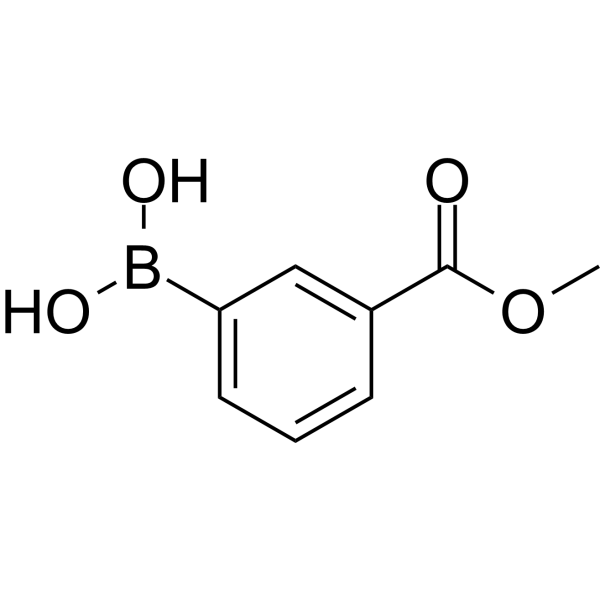
3-(Methoxycarbonyl)phenylboronic acid
|
Biochemical Assay Reagents
|
Others
|
|
3-(Methoxycarbonyl)phenylboronic acid is a biochemical reagent that can be used as a biological material or organic compound for life science related research.
|
-
-
- HY-W342499
-
|
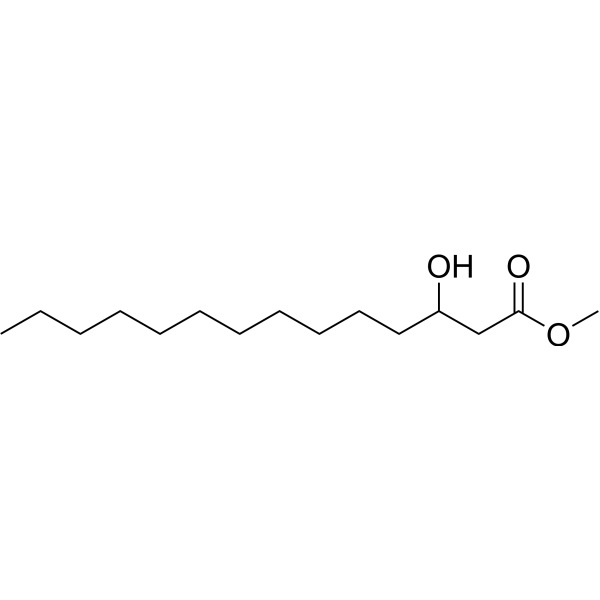
methyl 3-hydroxytetradecanoate; 3-OH PAME; methyl 3-hydroxymyristate
|
Fungal
|
Metabolic Disease
|
|
3-Hydroxy myristic acid methyl ester (Methyl 3-hydroxytetradecanoate) is the quorum-sensing signal molecule (quormone), which regulates the virulence of Ralstonia solanacearum .
|
-
-
- HY-W000158
-
|
|
PROTAC Linkers
|
Cancer
|
|
Methyl 3-aminobicyclo[1.1.1]pentane-1-carboxylate hydrochloride is a PROTAC linker that can be used in the synthesis of PROTACs.
|
-
![Methyl 3-aminobicyclo[1.1.1]pentane-1-carboxylate hydrochloride](//file.medchemexpress.com/product_pic/hy-w000158.gif)
-
- HY-W007828
-
|
|
Others
|
Neurological Disease
|
|
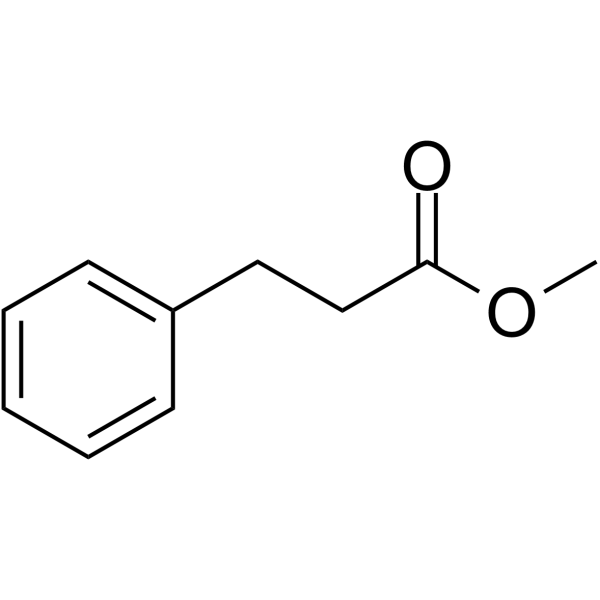
Methyl 3-phenylpropanoate is a phenylpropionate compound. Methyl 3-phenylpropanoate derivatives interfere with insect feeding behavior. Methyl 3-phenylpropanoate can be used to study insect feeding behavior [3] .
|
-
-
- HY-116632
-
-

-
- HY-W010394
-
|
|
Biochemical Assay Reagents
|
Others
|
|
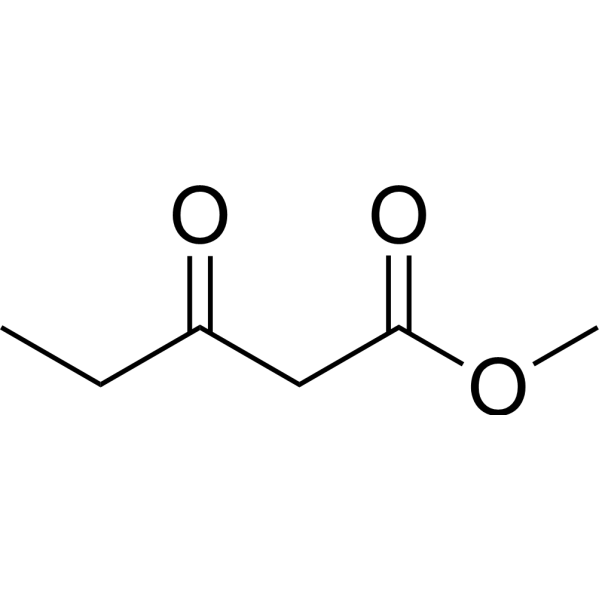
Methyl 3-oxopentanoate, which is also known as diethyl acetylmalonate or MEAM, Methyl 3-oxopentanoate is commonly used as a building block for the synthesis of various organic compounds, including pharmaceuticals, agrochemicals, and flavorings, and it can also Used as a reagent in organic chemical reactions, especially the formation of carbon-carbon bonds through malonate synthesis, the researchers also investigated the potential use of Methyl 3-oxopentanoate in the development of chiral auxiliaries that can aid in the selection of Controlling the stereochemistry of chemical reactions.
|
-
-
- HY-117201
-
|
3-Hydroxy octanoic acid methyl ester
|
Biochemical Assay Reagents
|
Others
|
|
Methyl 3-hydroxyoctanoate (3-Hydroxy octanoic acid methyl ester) is an ester. Methyl 3-hydroxyoctanoate can be isolated from Pineapple .
|
-

-
- HY-W007648
-
|
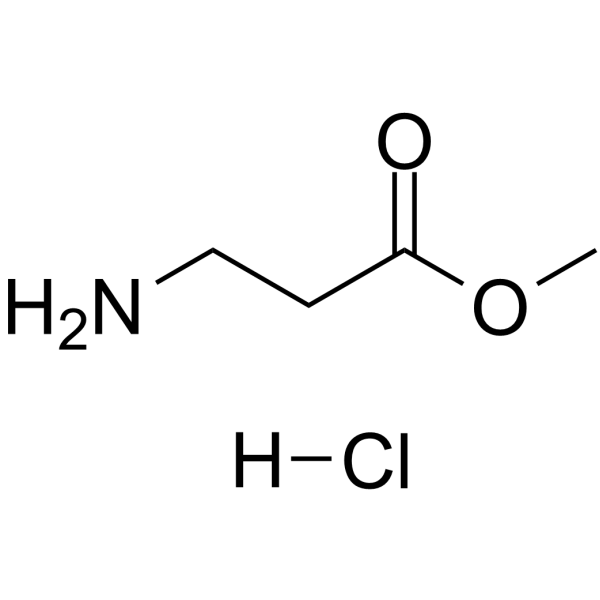
β-Alanine methyl ester hydrochloride
|
Drug Intermediate
Biochemical Assay Reagents
|
Others
|
|
Methyl 3-aminopropanoate (β-Alanine methyl ester) hydrochloride is a compound prepared by esterification of Β-Alanine (I). Methyl 3-aminopropanoate hydrochloride can be used in the synthesis of bidentate pyridine-acid ligand. Methyl 3-aminopropionate hydrochloride can be used for proteomics research .
|
-
-
- HY-N6669
-
|
M3OMG
|
Others
|
Neurological Disease
|
|
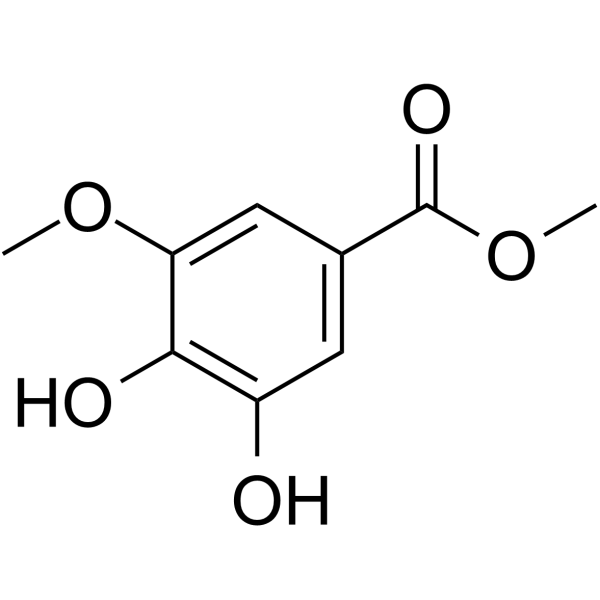
Methyl 3-O-methylgallate (M3OMG) possesses antioxidant effect and can protect neuronal cells from oxidative damage .
|
-
-
- HY-W054211
-
|
|
PROTAC Linkers
|
Cancer
|
|
Methyl 3-(hydroxymethyl)bicyclo[1.1.1]pentane-1-carboxylate is a PROTAC linker that can be used in the synthesis of PROTACs.
|
-
![Methyl 3-(hydroxymethyl)bicyclo[1.1.1]pentane-1-carboxylate](//file.medchemexpress.com/product_pic/hy-w054211.gif)
-
- HY-N3287
-
|
|
Bacterial
Fungal
Reactive Oxygen Species (ROS)
|
Infection
|
|
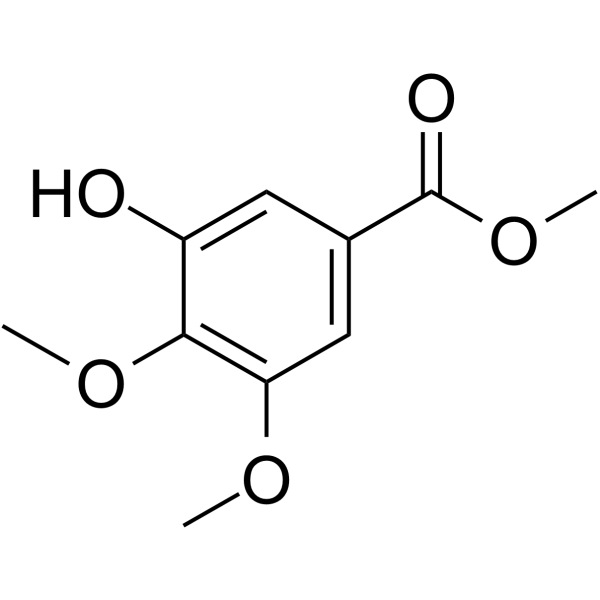
Methyl 3-hydroxy-4,5-dimethoxybenzoate is a gallic acid derivant that can be isolated from myricaria Laxiflora. Methyl 3-hydroxy-4,5-dimethoxybenzoate shows obvious antimicrobial activities. Methyl 3-hydroxy-4,5-dimethoxybenzoate shows fairly active for oxidation resistance in the presence of H2O2 .
|
-
-
- HY-W003888
-
|
|
PROTAC Linkers
|
Cancer
|
|
Methyl 3-aminocyclobutane-1-carboxylate hydrochloride is a PROTAC linker that can be used in the synthesis of PROTACs.
|
-

-
- HY-20095
-
|
|
Drug Intermediate
|
Others
|
|
Methyl 3-amino-2-thiophenecarboxylate is a drug intermediate for synthesis of various active compounds.
|
-

-
- HY-W005176
-
|
methyl Butyrylacetate; methyl 3-oxohexanoate
|
Biochemical Assay Reagents
|
Others
|
|
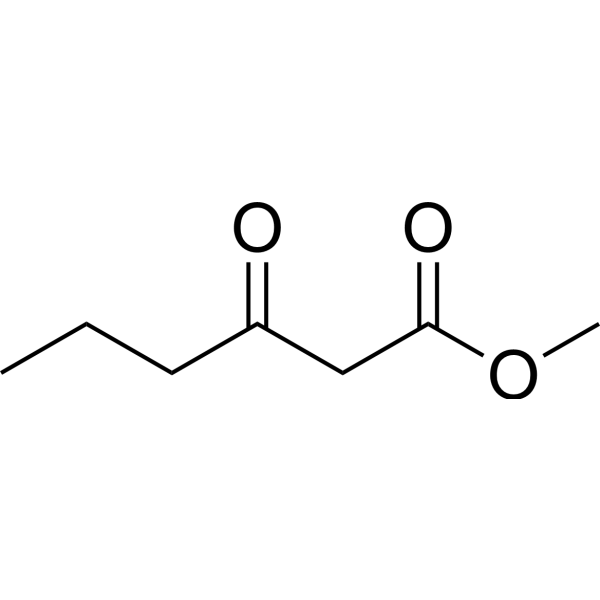
Methyl 3-oxohexanoate (Methyl Butyrylacetate) is an organic compound commonly used in the manufacture of fragrances, drugs, and other chemicals. It can be used as a condensation reagent, a diazotization reagent and an addition reagent, and it plays a catalytic role in some organic synthesis reactions, and can also play a role in some drug synthesis. In addition, the compound is widely used in the food industry, for example in products such as juices, beer and confectionery.
|
-
-
- HY-W016407
-
|
|
Enterovirus
|
Infection
|
|
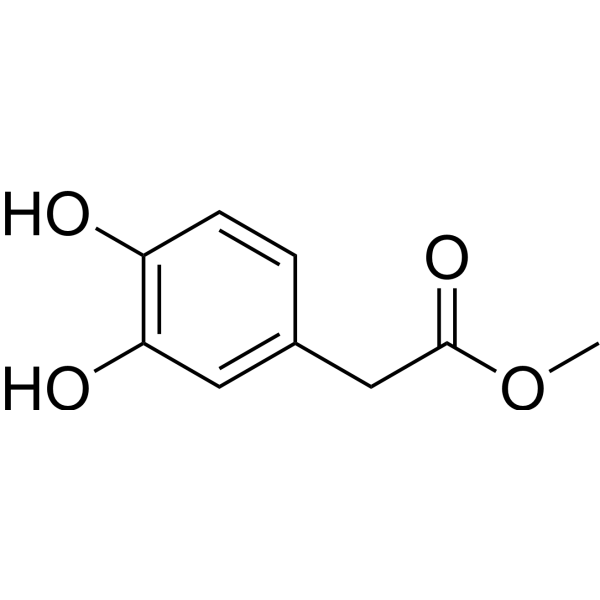
Methyl 3,4-dihydroxyphenylacetate is a potent enterovirus 71 (EV71) infection inhibitor. Methyl 3,4-dihydroxyphenylacetate inhibits EV71 replication in rhabdomyosarcoma (RD) cells .
|
-
-
- HY-132237
-
|
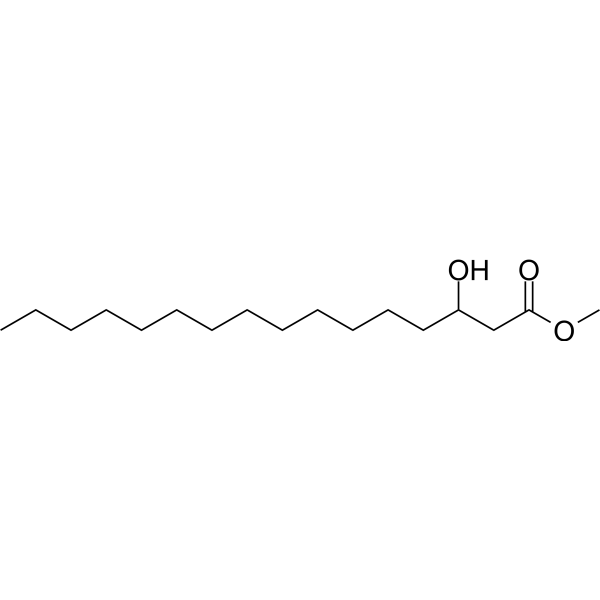
3-Hydroxyhexadecanoic acid methyl ester
|
Biochemical Assay Reagents
|
Others
|
|
3-Hydroxyhexadecanoic Acid Methyl Ester is a biochemical reagent that can be used as a biological material or organic compound for life science related research.
|
-
-
- HY-W704598
-
-

-
- HY-Y0195
-
|
|
PROTAC Linkers
|
Cancer
|
|
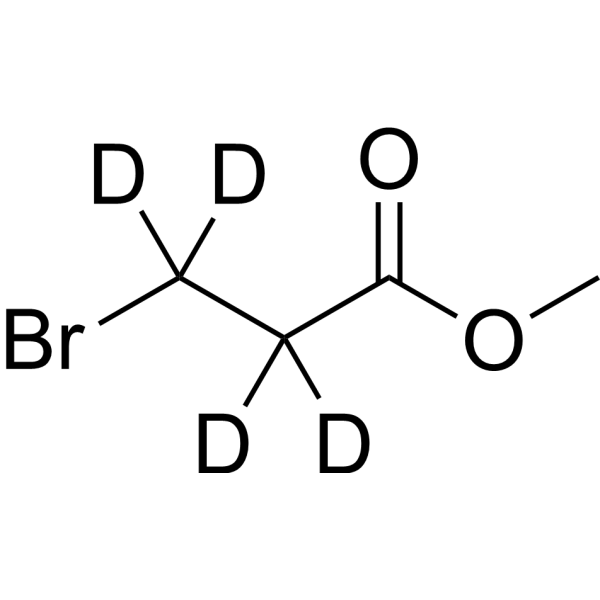
Methyl 3-bromopropanoate is a PROTAC linker that can be used in the synthesis of PROTACs.
|
-

-
- HY-W088425
-
-

-
- HY-W101731
-
|
|
PROTAC Linkers
|
Cancer
|
|
Methyl 3-((tert-butoxycarbonyl)amino)propanoate is a PROTAC linker that can be used in the synthesis of PROTACs.
|
-

-
- HY-W106792
-
|
|
PROTAC Linkers
|
Cancer
|
|
Methyl 3-((tert-butoxycarbonyl)(methyl)amino)propanoate is a PROTAC linker that can be used in the synthesis of PROTACs.
|
-

-
- HY-75803
-
|
|
Drug Intermediate
|
Others
|
|
Methyl 3-hydroxy-4-nitrothiophene-2-carboxylate is a drug intermediate for synthesis of various active compounds.
|
-

-
- HY-44919
-
|
|
Drug Intermediate
|
Others
|
|
Methyl 3-((tert-butoxycarbonyl)amino)-5-iodothiophene-2-carboxylate is a drug intermediate for synthesis of various active compounds.
|
-

-
- HY-W007431
-
|
|
Biochemical Assay Reagents
|
Others
|
|
Methyl 3,4-diaminobenzoate is an analogue of 3,4-diaminobenzoic acid, which contains the CO2H group protected as a methyl ester and the amino (NH2) substituents required to form the quinoxaline .
|
-

-
- HY-Z0690
-
-

-
- HY-W008830
-
|
|
PROTAC Linkers
|
Cancer
|
|
Methyl 3-cyanopropanoate is a PROTAC linker that can be used in the synthesis of PROTACs.
|
-

-
- HY-90004
-
|
|
Biochemical Assay Reagents
|
Others
|
|
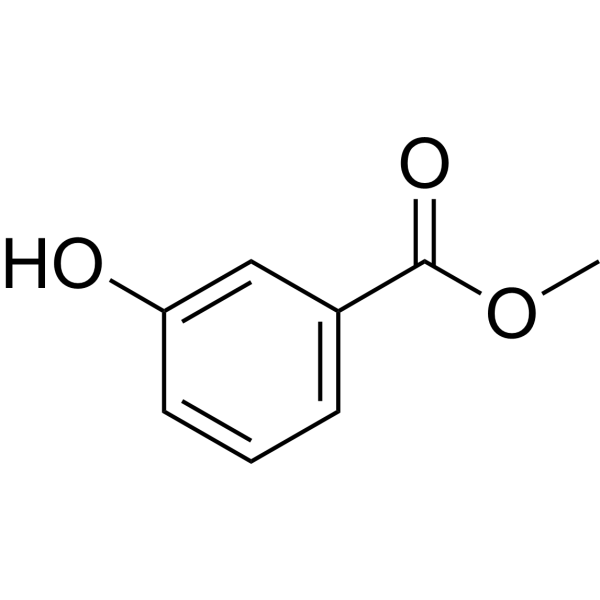
Methyl 3-hydroxybenzoate is a biochemical reagent that can be used as a biological material or organic compound for life science related research.
|
-
-
- HY-W051642
-
|
methyl 3-hydroxy-1-H-pyrrole-2-carboxyate
|
MOFs
|
Others
|
|
Methyl 3-hydroxy-1H-pyrrole-2-carboxylate (Methyl 3-hydroxy-1-H-pyrrole-2-carboxyate) is a metal-organic framework (MOF).
|
-

-
- HY-W099750
-
|
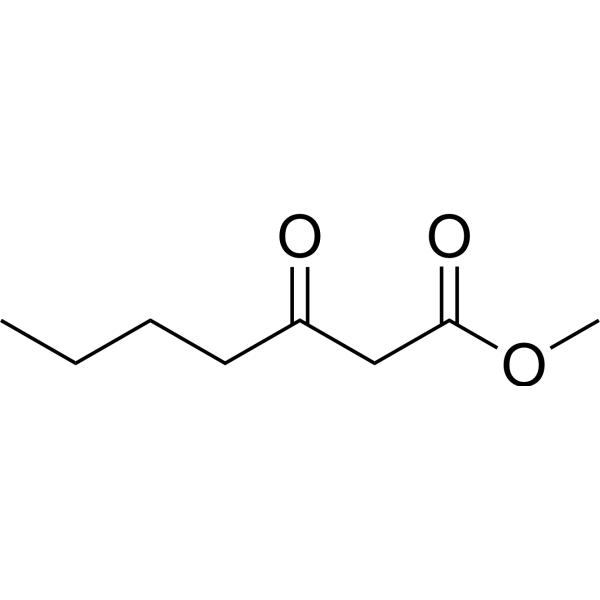
methyl Valerylacetate
|
Biochemical Assay Reagents
|
Others
|
|
Methyl 3-oxoheptanoate is the methyl ester of the organic compound 3-oxoheptanoate. It has a fruity smell and taste. Methyl 3-oxoheptanoate is widely used as a flavoring agent and fragrance in the food and fragrance industry for its pleasant aroma. It is also used as an intermediate in the synthesis of other organic compounds such as pharmaceuticals, agrochemicals, and polymers.
|
-
-
- HY-W017212R
-
|
methyl 3-phenylpropenoate (Standard)
|
Reference Standards
Tyrosinase
Bacterial
AMPK
|
Infection
Metabolic Disease
|
|
Methyl cinnamate (Methyl 3-phenylpropenoate), an active component of Zanthoxylum armatum, is a widely used natural flavor compound. Methyl cinnamate (Methyl 3-phenylpropenoate) possesses antimicrobial activity and is a tyrosinase inhibitor that can prevent food browning. Methyl cinnamate (Methyl 3-phenylpropenoate) has antiadipogenic activity through mechanisms mediated, in part, by the CaMKK2-AMPK signaling pathway .
|
-

-
- HY-W014347
-
|
|
Drug Intermediate
|
Others
|
|
Methyl 3-methoxy-4-nitrobenzoate is a drug intermediate for synthesis of various active compounds.
|
-

-
- HY-W010106
-
|
|
Biochemical Assay Reagents
|
Others
|
|
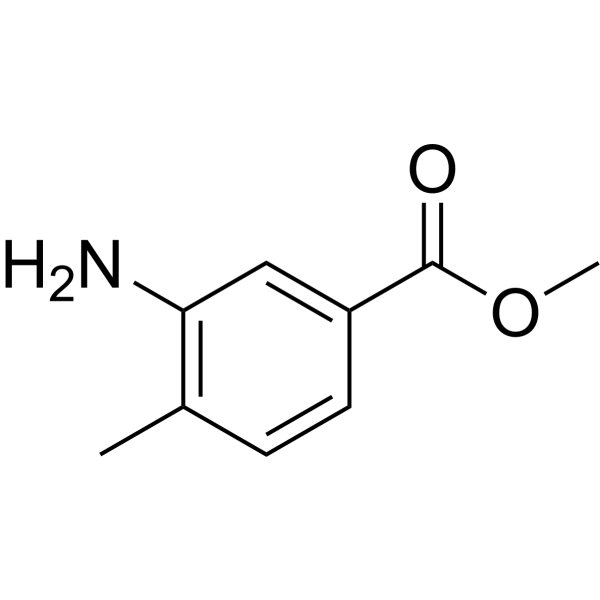
Methyl 3-amino-4-methylbenzoate is a biochemical reagent that can be used as a biological material or organic compound for life science related research.
|
-
-
- HY-W002874
-
|
|
Biochemical Assay Reagents
|
Others
|
|
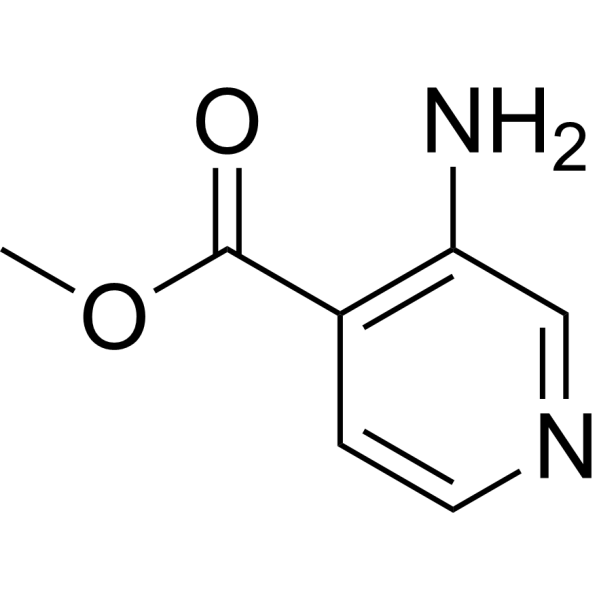
Methyl 3-aminopyridine-4-carboxylate is a biochemical reagent that can be used as a biological material or organic compound for life science related research.
|
-
-
- HY-W057279
-
|
|
PROTAC Linkers
|
Cancer
|
|
Methyl 3-{[(tert-butoxy)carbonyl]amino}cyclobutane-1-carboxylate is a PROTAC linker that can be used in the synthesis of PROTACs.
|
-
![Methyl 3-{[(tert-butoxy)carbonyl]amino}cyclobutane-1-carboxylate](//file.medchemexpress.com/product_pic/hy-w057279.gif)
-
- HY-W057274
-
|
|
PROTAC Linkers
|
Cancer
|
|
Methyl 3-aminobicyclo[1.1.1]pentane-1-carboxylate is a PROTAC linker that can be used in the synthesis of PROTACs.
|
-
![Methyl 3-aminobicyclo[1.1.1]pentane-1-carboxylate](//file.medchemexpress.com/product_pic/hy-w057274.gif)
-
- HY-W032995
-
|
|
Drug Intermediate
|
Others
|
|
Methyl 3-carbamoylbicyclo[1.1.1]pentane-1-carboxylate is a drug intermediate for synthesis of various active compounds.
|
-
![Methyl 3-carbamoylbicyclo[1.1.1]pentane-1-carboxylate](//file.medchemexpress.com/product_pic/hy-w032995.gif)
-
- HY-W017474
-
|
|
Biochemical Assay Reagents
|
Others
|
|
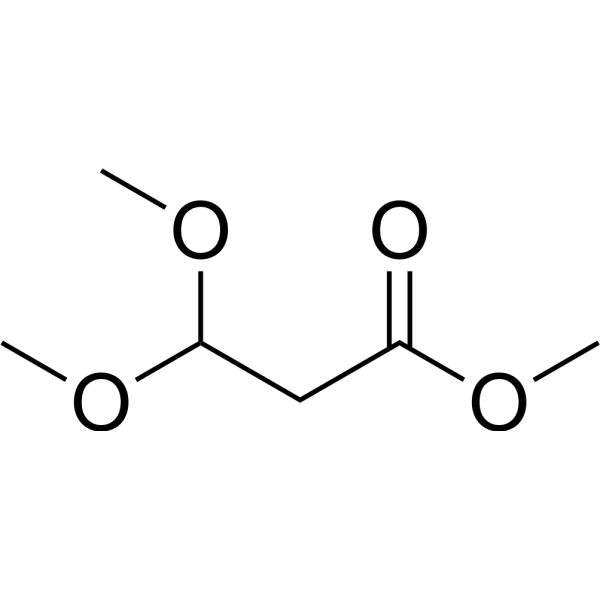
Methyl 3,3-dimethoxypropanoate is a biochemical reagent that can be used as a biological material or organic compound for life science related research.
|
-
-
- HY-34580
-
|
|
Biochemical Assay Reagents
|
Others
|
|
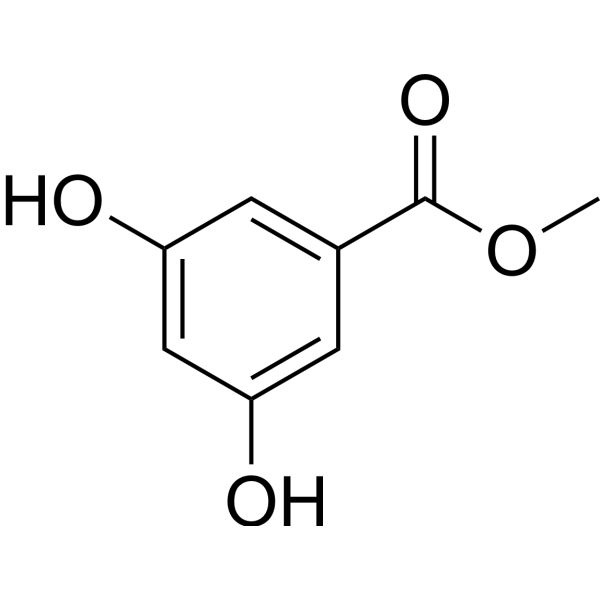
Methyl 3,5-dihydroxybenzoate is a biochemical reagent that can be used as a biological material or organic compound for life science related research.
|
-
-
- HY-N2044
-
|
|
Others
|
Others
|
|
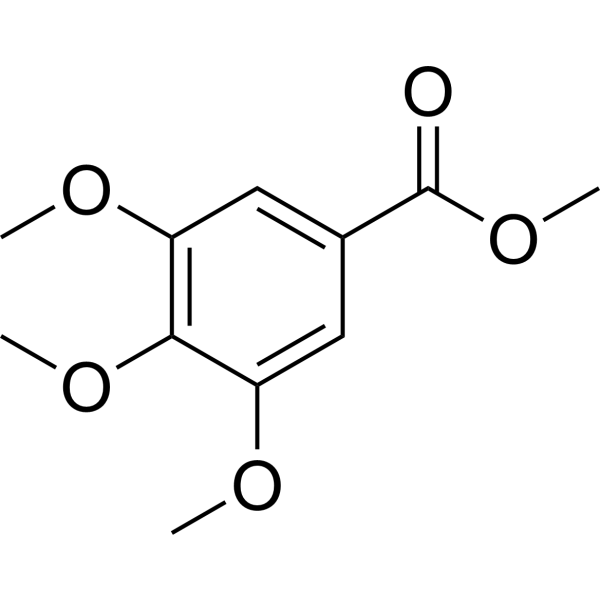
Methyl 3,4,5-trimethoxybenzoate can be synthesized from Gallic acid. Methyl 3,4,5-trimethoxybenzoate is mainly used in the production of Trimethoprim (TMP), Sulfa synergistic intermediates, and many other agents.
|
-
-
- HY-N8453
-
|
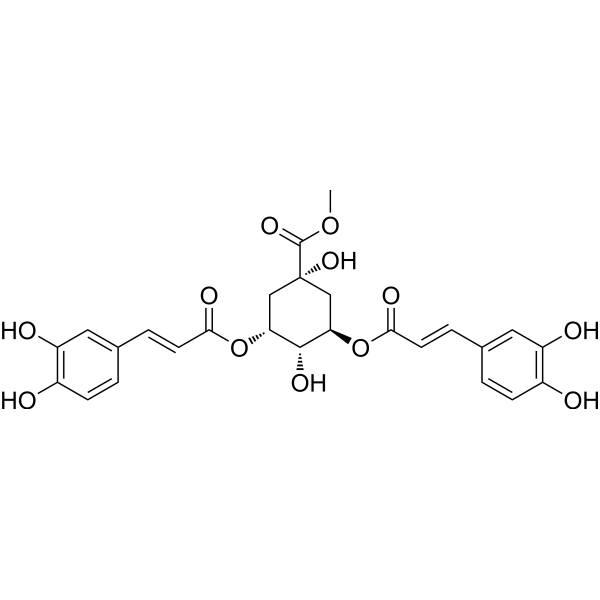
methyl 3,5-dicaffeoyl quinic acid
|
p38 MAPK
|
Neurological Disease
|
|
Macranthoin G is an inhibitor of p38 MAPK. Macranthoin G protects the cytotoxicity induced by Aβ or hydrogen peroxide in neuronal cells by downregulating p38 MAPK. Macranthoin G can used in study Alzheimer’s Disease .
|
-
-
- HY-W411236
-
-

-
- HY-W704596
-
-

-
- HY-100084
-
|
|
ROR
|
Inflammation/Immunology
|
|
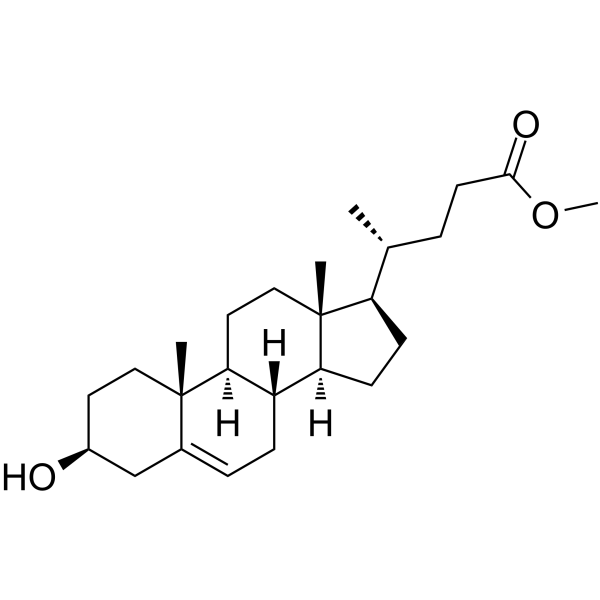
Methyl-3β-hydroxycholenate is a ROR gamma modulator extracted from patent US20110263046 A1, in figure 2.
|
-
-
- HY-W251660
-
|
|
PROTAC Linkers
|
Cancer
|
|
Methyl 3-iodopropiolate is a PROTAC linker that can be used in the synthesis of PROTACs.
|
-

-
- HY-W017453R
-
|
methyl(3-phenylpropyl)amine (Standard)
|
Reference Standards
|
|
|
N-Methyl-3-phenylpropan-1-amine (Standard) is the analytical standard of N-Methyl-3-phenylpropan-1-amine. This product is intended for research and analytical applications.
|
-

-
- HY-W691047S
-
-

-
- HY-W235043
-
|
|
DNA/RNA Synthesis
|
Infection
|
|
Methyl 3-Oxodecanoate has been shown to have virulence factor activity against human pathogens and is active against fluorescent haplophyllum and culture supernatant. Methyl 3-oxodecanoate has also been shown to inhibit DNA synthesis by inhibiting protein synthesis at the level of translation initiation. Reagent grade, for research purpose.
|
-

- HY-W010106R
-
|
|
Biochemical Assay Reagents
Reference Standards
|
Others
|
|
Methyl 3-amino-4-methylbenzoate (Standard) is the analytical standard of Methyl 3-amino-4-methylbenzoate. This product is intended for research and analytical applications. Methyl 3-amino-4-methylbenzoate is a biochemical reagent that can be used as a biological material or organic compound for life science related research.
|
-

- HY-W127538
-
|
|
Biochemical Assay Reagents
|
Others
|
|
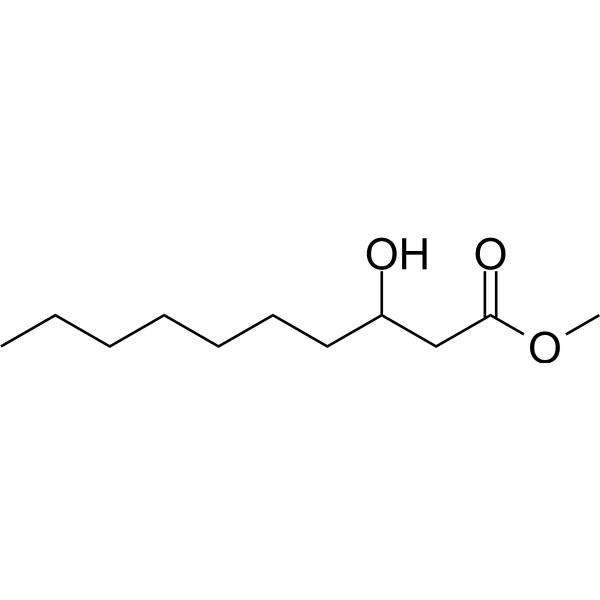
Methyl 3-Hydroxydecanoate is a biochemical reagent that can be used as a biological material or organic compound for life science related research.
|
-
- HY-116503
-
-

- HY-116166
-
-

- HY-N3291
-
|
|
Others
|
Others
|
|
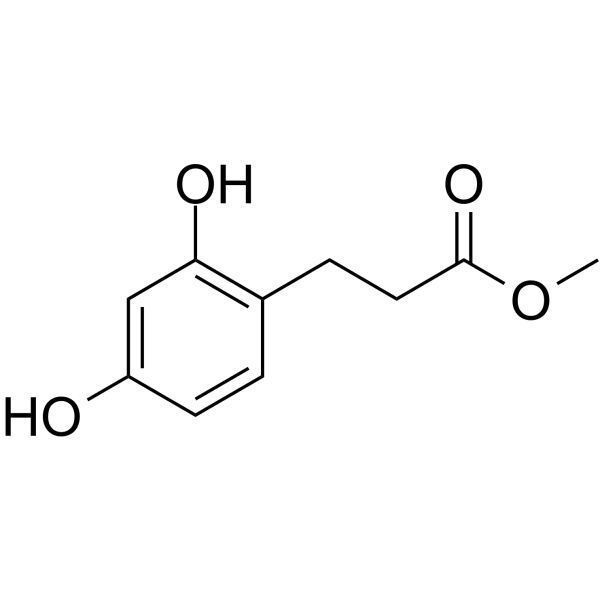
Methyl-3-(2,4-dihydroxy phenyl) propanoate is a phenylpropanoic ester with antifeedant activity .
|
-
- HY-W007972
-
|
3-Methoxyacrylic Acid methyl Ester
|
Drug Derivative
|
Others
|
|
Methyl 3-methoxyacrylate (3-Methoxyacrylic Acid Methyl Ester) is a Lignans product that can be isolated from the herbs of Lysimachia clethroides .
|
-

- HY-154354
-
|
|
Nucleoside Antimetabolite/Analog
|
Cancer
|
|
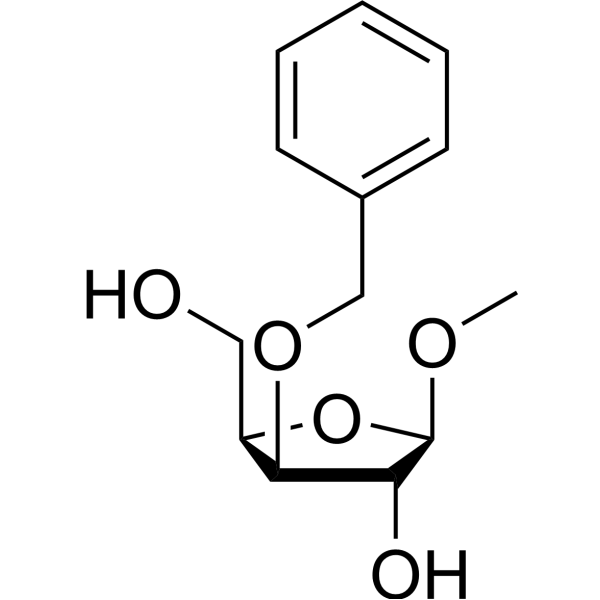
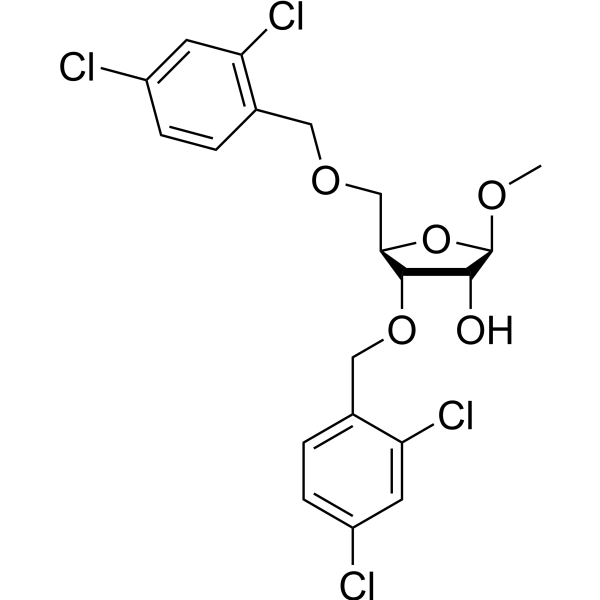
Methyl 3’-O-benzyl xyloriboside is a purine nucleoside analog. Purine nucleoside analogs have broad antitumor activity targeting indolent lymphoid malignancies. Anticancer mechanisms in this process rely on inhibition of DNA synthesis, induction of apoptosis, etc .
|
-
- HY-W017212S
-
|
methyl 3-phenylpropenoate-d7
|
AMPK
Tyrosinase
Bacterial
Isotope-Labeled Compounds
|
Infection
|
|
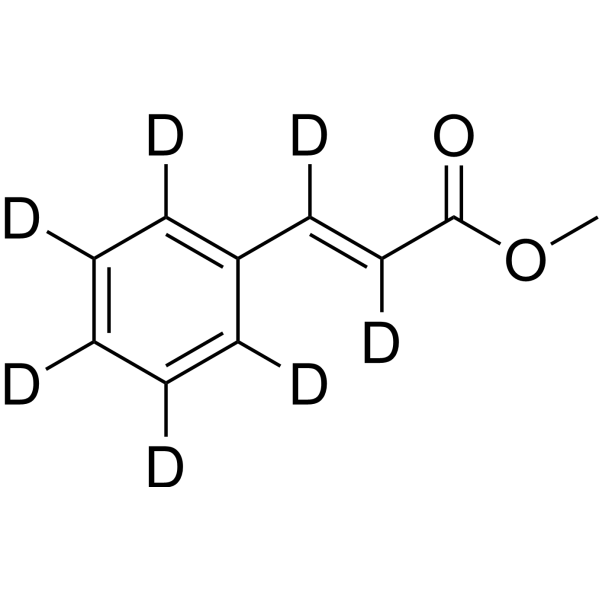
Methyl cinnamate-d7 is deuterated labeled Methyl cinnamate (HY-W017212). Methyl cinnamate (Methyl 3-phenylpropenoate), an active component of Zanthoxylum armatum, is a widely used natural flavor compound. Methyl cinnamate (Methyl 3-phenylpropenoate) possesses antimicrobial activity and is a tyrosinase inhibitor that can prevent food browning. Methyl cinnamate (Methyl 3-phenylpropenoate) has antiadipogenic activity through mechanisms mediated, in part, by the CaMKK2-AMPK signaling pathway .
|
-
- HY-48526
-
|
|
PROTAC Linkers
|
Cancer
|
|
Methyl 3-chlorobicyclo[1.1.1]pentane-1-carboxylate is a PROTAC linker that can be used in the synthesis of PROTACs.
|
-
![Methyl 3-chlorobicyclo[1.1.1]pentane-1-carboxylate](//file.medchemexpress.com/product_pic/hy-48526.gif)
- HY-166139
-
-

- HY-166159
-
-

- HY-166130
-
-

- HY-166146
-
-

- HY-W416257
-
|
|
Biochemical Assay Reagents
|
|
|
Methyl 3-O-β-D-galactopyranosyl-β-D-galactopyranoside is a class of biochemical reagent used in glycobiology research. Glycobiology studies the structure, synthesis, biology, and evolution of sugars. It deals with carbohydrate chemistry, glycan formation and degradation enzymology, protein-glycan recognition, and the role of glycans in biological systems. The field is closely related to basic research, biomedicine and biotechnology .
|
-

- HY-124152
-
|
methyl-3,4-dephostatin
|
MAP3K
MAP4K
Phosphatase
|
Neurological Disease
|
|
3,4-Dephostatin (Methyl-3,4-dephostatin) is an inhibitor of protein-tyrosine phosphatase (PTPase). 3,4-Dephostatin accelerates nerve growth factor (NGF)-induced neurite formation in PC12h cells. 3,4-Dephostatin sustains the NGF-induced tyrosine phosphorylation of proteins, most prominently that of mitogen-activated protein (MAP) kinase. 3,4-Dephostatin also prolongs epidermal growth factor (EGF)-induced tyrosine phosphorylation and activation of MAP kinase .
|
-

- HY-166150
-
-

- HY-W554624
-
|
|
Biochemical Assay Reagents
|
Others
|
|
Methyl 3-O-methyl-4,6-O-(phenylmethylene)-α-D-mannopyranoside is a class of biochemical reagents used in glycobiology research. Glycobiology studies the structure, synthesis, biology, and evolution of sugars. It involves carbohydrate chemistry, enzymology of glycan formation and degradation, protein-glycan recognition, and the role of glycans in biological systems. This field is closely related to basic research, biomedicine, and biotechnology .
|
-

- HY-W700429
-
|
|
Biochemical Assay Reagents
|
Others
|
|
Methyl 3-acetylamino-2,3-dideoxy-4,6-O-benzylidene-α-D-ribo-hexopyranoside is a class of biochemical reagents used in glycobiology research. Glycobiology studies the structure, synthesis, biology, and evolution of sugars. It involves carbohydrate chemistry, enzymology of glycan formation and degradation, protein-glycan recognition, and the role of glycans in biological systems. This field is closely related to basic research, biomedicine, and biotechnology .
|
-

- HY-W700431
-
|
|
Biochemical Assay Reagents
|
Others
|
|
Methyl 3-acetamido-4,6-O-benzylidene-2,3-dideoxy-α-D-arabino-hexopyranoside is a class of biochemical reagents used in glycobiology research. Glycobiology studies the structure, synthesis, biology, and evolution of sugars. It involves carbohydrate chemistry, enzymology of glycan formation and degradation, protein-glycan recognition, and the role of glycans in biological systems. This field is closely related to basic research, biomedicine, and biotechnology .
|
-

- HY-W127431
-
|
5α-Cholanic acid-3α-ol-6-one 3-acetate methyl ester
|
Biochemical Assay Reagents
|
Others
|
|
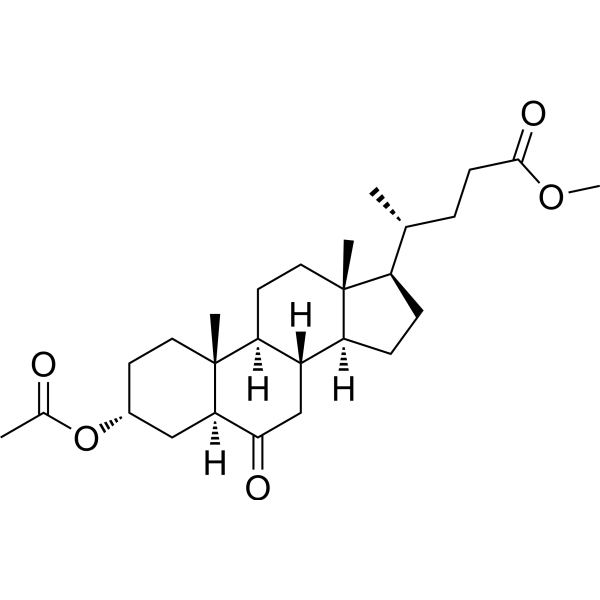
Methyl (3α,5α)-3-(acetyloxy)-6-oxocholan-24-oate is a biochemical reagent that can be used as a biological material or organic compound for life science related research.
|
-
- HY-W416359
-
|
|
Biochemical Assay Reagents
|
|
|
Methyl 3-O-benzyl-4, 6-O-Benzylidene-2-deoxy-2-N-Phthalimido-β-d-Glucopyranoside is a class of biochemical reagents used in the study of glycobiology. Glycobiology studies the structure, synthesis, biology, and evolution of sugars. It deals with carbohydrate chemistry, glycan formation and degradation enzymology, protein-glycan recognition, and the role of glycans in biological systems. The field is closely related to basic research, biomedicine and biotechnology .
|
-

- HY-W698908
-
|
methyl 3-O-[2-(acetylamino)-2-deoxy-β-D-galactopyranosyl]-α-D-galactopyranoside
|
Biochemical Assay Reagents
|
Others
|
|
GalNAc1-b-3Gal-α-Ome (Methyl 3-O-[2-(acetylamino)-2-deoxy-β-D-galactopyranosyl]-α-D-galactopyranoside) is a class of biochemical reagents used in glycobiology research. Glycobiology studies the structure, synthesis, biology, and evolution of sugars. It involves carbohydrate chemistry, enzymology of glycan formation and degradation, protein-glycan recognition, and the role of glycans in biological systems. This field is closely related to basic research, biomedicine, and biotechnology .
|
-

- HY-W242821
-
|
|
Fungal
|
Cancer
|
|
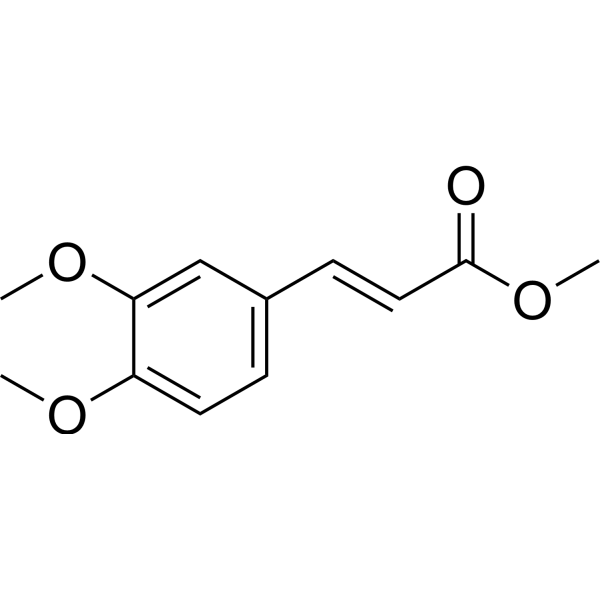
Methyl 3,4-dimethoxycinnamate is an inhibitor of uredospore germination. Methyl 3,4-dimethoxycinnamate also inhibits global DNA methylation in in Hep3B cells .
|
-
- HY-W071576
-
|
|
PROTAC Linkers
|
Cancer
|
|
Methyl 3-(4-aminophenyl)propanoate is a PROTAC linker that can be used in the synthesis of PROTACs.
|
-

- HY-N3289
-
|
|
Others
|
Others
|
|
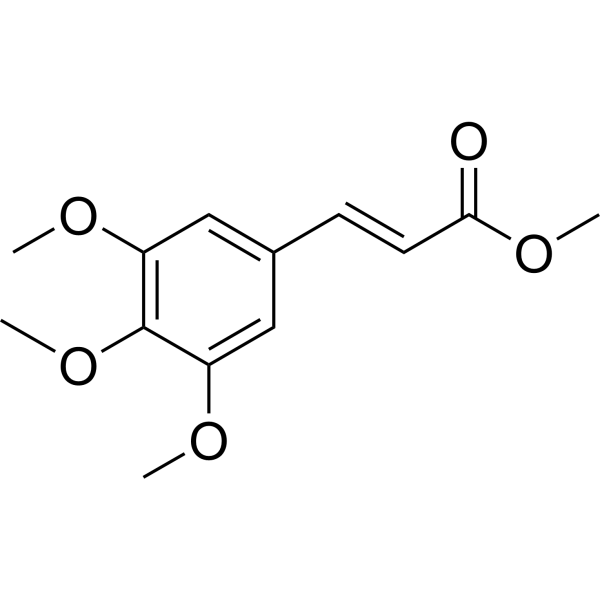
Methyl 3,4,5-trimethoxycinnamate (Compound III) is a natural compound with hydroxyl radical-scavenging effects .
|
-
- HY-Z0548S1
-
|
|
Isotope-Labeled Compounds
Keap1-Nrf2
Apoptosis
|
Inflammation/Immunology
Cancer
|
|
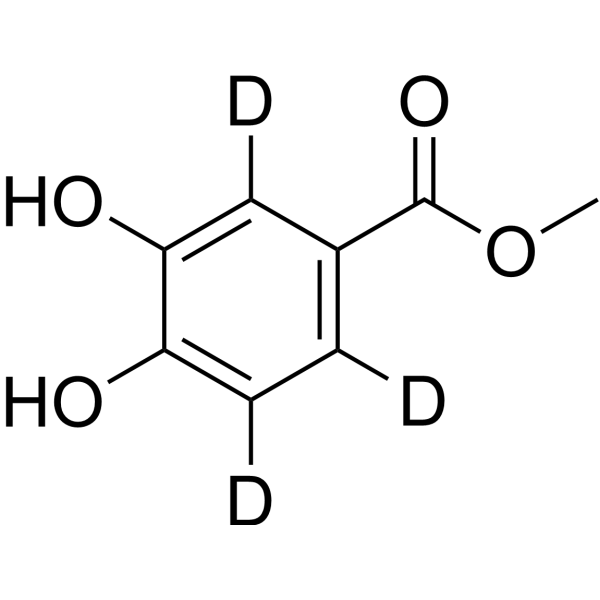
Methyl 3,4-dihydroxybenzoate-d3-1 is the deuterium labeled Methyl 3,4-dihydroxybenzoate. Methyl 3,4-dihydroxybenzoate (Protocatechuic acid methyl ester; Methyl protocatechuate) is a major metabolite of antioxidant polyphenols found in green tea. Antioxidant and anti-inflammatory effect .
|
-
- HY-W007972R
-
|
3-Methoxyacrylic Acid methyl Ester (Standard)
|
Reference Standards
Others
|
Others
|
|
Anilazine (Standard) is the analytical standard of Anilazine. This product is intended for research and analytical applications. Anilazine is a fungicide and inhibit the growth of Rhizobium sp. and E. coli. Anilazine inhibits glucose oxidation and succinate oxidation and also inhibits in vitro succinic dehydrogenase activity .
|
-

- HY-W721210
-
-

- HY-W357162
-
|
|
Biochemical Assay Reagents
|
Others
|
|
Methyl3,4,6-tri-O-acetyl-2-deoxy-2-phthalimido-b-D-glucopyranoside is a class of biochemical reagents used in glycobiology research. Glycobiology studies the structure, synthesis, biology, and evolution of sugars. It involves carbohydrate chemistry, enzymology of glycan formation and degradation, protein-glycan recognition, and the role of glycans in biological systems. This field is closely related to basic research, biomedicine, and biotechnology .
|
-

- HY-77377
-
|
|
Drug Intermediate
|
Others
|
|
Methyl (3S,6R)-6-methyl-3-piperidinecarboxylate L-tartaric acid salt is a drug intermediate for synthesis of various active compounds.
|
-

- HY-W007828R
-
|
|
Reference Standards
Biochemical Assay Reagents
|
Neurological Disease
|
|
Methyl 3-phenylpropanoate (Standard) is the analytical standard of Methyl 3-phenylpropanoate (HY-W007828). This product is intended for research and analytical applications. Methyl 3-phenylpropanoate is a phenylpropionate compound. Methyl 3-phenylpropanoate derivatives interfere with insect feeding behavior. Methyl 3-phenylpropanoate can be used to study insect feeding behavior [3] .
|
-

- HY-Y0195S
-
-
- HY-Z0690R
-
|
|
Reference Standards
|
|
|
Methyl 3-chlorobenzoate (Standard) is the analytical standard of Methyl 3-chlorobenzoate. This product is intended for research and analytical applications.
|
-

- HY-166120
-
-

- HY-118068
-
-

- HY-W724396
-
-

- HY-W017408S
-
-
- HY-32968S
-
|
methyl 3-iodo-p-toluate-d6
|
Isotope-Labeled Compounds
|
Others
|
|
Methyl 3-iodo-4-methylbenzoate-d6 (Methyl 3-iodo-p-toluated6) is the deuterium labeled Methyl 3-iodo-4-methylbenzoate.
|
-

- HY-W098352
-
|
|
PROTAC Linkers
|
Cancer
|
|
Methyl 3-(methylamino)propanoate is a PROTAC linker that can be used in the synthesis of PROTACs.
|
-

- HY-126418
-
|
|
Others
|
Others
|
|
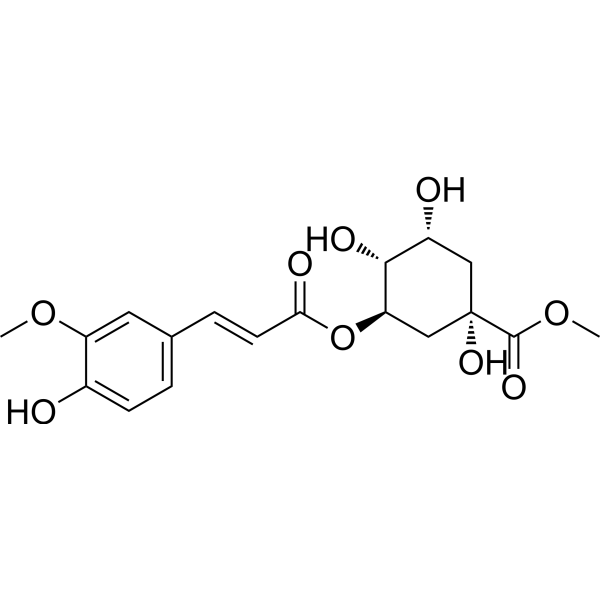
Methyl 3-O-feruloylquinate is a natural product that can be isolated from the roots of Murraya exotica .
|
-
- HY-W124404
-
|
|
MOFs
|
Others
|
|
Methyl 3-(dimethylamino)-4-iodobenzoate is a metal-organic framework (MOF).
|
-

- HY-N6669R
-
|
M3OMG (Standard)
|
Others
Reference Standards
|
Neurological Disease
|
|
Methyl 3-O-methylgallate (Standard) (M3OMG (Standard)) is the analytical standard of Methyl 3-O-methylgallate (HY-N6669). This product is intended for research and analytical applications. Methyl 3-O-methylgallate (M3OMG) possesses antioxidant effect and can protect neuronal cells from oxidative damage .
|
-

- HY-166134
-
-

- HY-W063706
-
|
|
PROTAC Linkers
|
Cancer
|
|
Methyl 3-(aminomethyl)bicyclo[1.1.1]pentane-1-carboxylate hydrochloride is a PROTAC linker that can be used in the synthesis of PROTACs.
|
-
![Methyl 3-(aminomethyl)bicyclo[1.1.1]pentane-1-carboxylate hydrochloride](//file.medchemexpress.com/product_pic/hy-w063706.gif)
- HY-179917
-
-

- HY-W699493
-
|
|
Biochemical Assay Reagents
|
|
|
Methyl 3-deoxy-D-arabino-heptulopyranoside-7-phosphate is a biochemical agent used in glycobiology research. Glycobiology studies the structure, synthesis, biology, and evolution of sugars. It deals with carbohydrate chemistry, glycan formation and degradation enzymology, protein-glycan recognition, and the role of glycans in biological systems. The field is closely related to basic research, biomedicine and biotechnology .
|
-

- HY-W460507
-
|
|
Biochemical Assay Reagents
|
Others
|
|
Methyl 3,4-O-isopropylidene-L-threonate is a class of biochemical reagents used in glycobiology research. Glycobiology studies the structure, synthesis, biology, and evolution of sugars. It involves carbohydrate chemistry, enzymology of glycan formation and degradation, protein-glycan recognition, and the role of glycans in biological systems. This field is closely related to basic research, biomedicine, and biotechnology .
|
-

- HY-N2044S
-
|
|
Isotope-Labeled Compounds
|
Others
|
|
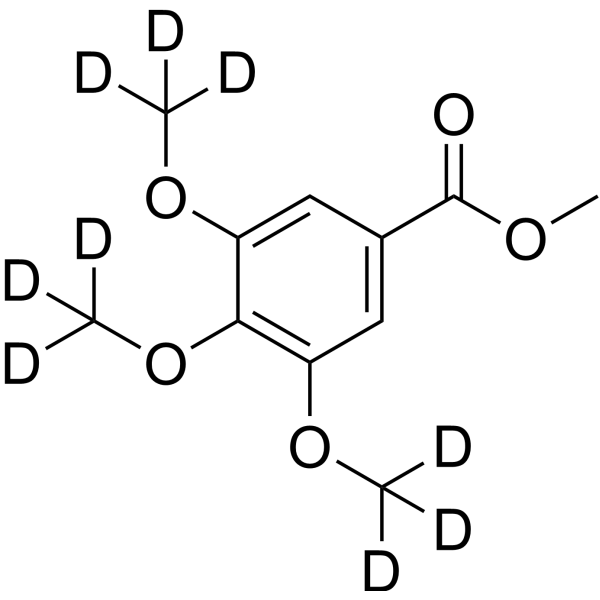
Methyl 3,4,5-trimethoxybenzoate-d9 is the deuterium labeled Methyl 3,4,5-trimethoxybenzoate . Methyl 3,4,5-trimethoxybenzoate can be synthesized from Gallic acid. Methyl 3,4,5-trimethoxybenzoate is mainly used in the production of Trimethoprim (TMP), Sulfa synergistic intermediates, and many other agents .
|
-
- HY-W555457
-
-

- HY-W740311
-
|
|
Biochemical Assay Reagents
|
Others
|
|
Methyl 3,4-O-isopropylidene-α-D-galactopyranoside is a class of biochemical reagents used in glycobiology research. Glycobiology studies the structure, synthesis, biology, and evolution of sugars. It involves carbohydrate chemistry, enzymology of glycan formation and degradation, protein-glycan recognition, and the role of glycans in biological systems. This field is closely related to basic research, biomedicine, and biotechnology .
|
-

- HY-W092495
-
|
|
Drug Intermediate
|
Others
|
|
Methyl 3-(1H-indol-3-yl)propanoate is an indole derivative and can be used as a drug intermediate .
|
-

- HY-43944
-
|
|
Drug Intermediate
|
Others
|
|
Methyl 3-(2-((tert-butoxycarbonyl)amino)ethyl)benzoate is a drug intermediate for synthesis of various active compounds.
|
-

- HY-Y1298
-
|
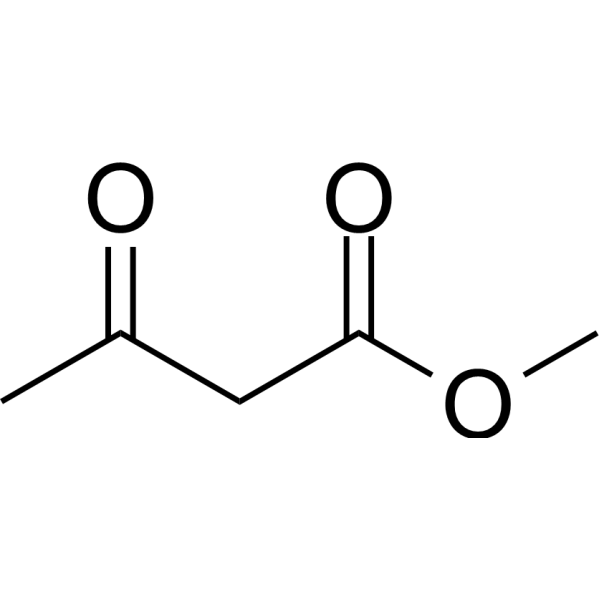
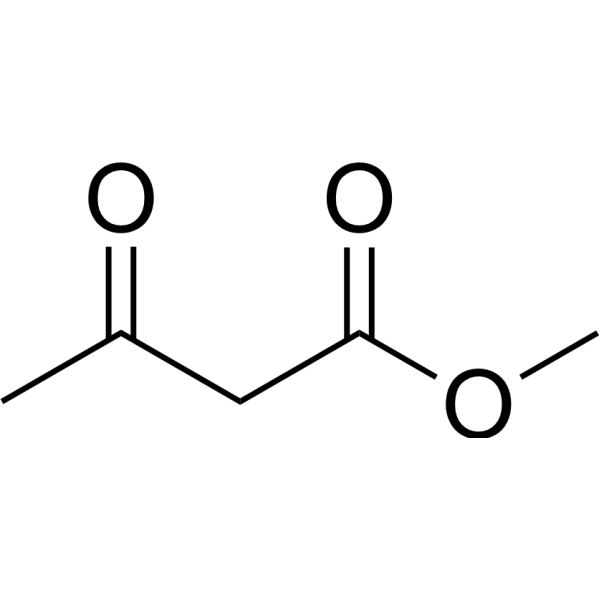
Acetoacetate methyl ester; methyl 3-oxobutanoate; methyl acetoacetate
|
Endogenous Metabolite
|
Metabolic Disease
Inflammation/Immunology
|
|
Methyl acetylacetate is a chemical reagent used in the synthesis of pharmaceuticals for the synthesis of α-substituted acetoacetate and cyclic compounds such as pyrazole, pyrimidine, and coumarin derivatives. Methyl acetoacetate can be used in the study of inflammatory diseases [3].
|
-
- HY-W698364
-
|
|
Biochemical Assay Reagents
|
Others
|
|
Methyl 3,4-bis-O-(phenylmethyl)-α-D-mannopyranoside is a class of biochemical reagents used in glycobiology research. Glycobiology studies the structure, synthesis, biology, and evolution of sugars. It involves carbohydrate chemistry, enzymology of glycan formation and degradation, protein-glycan recognition, and the role of glycans in biological systems. This field is closely related to basic research, biomedicine, and biotechnology .
|
-

- HY-W412313
-
-
- HY-N10261
-
-
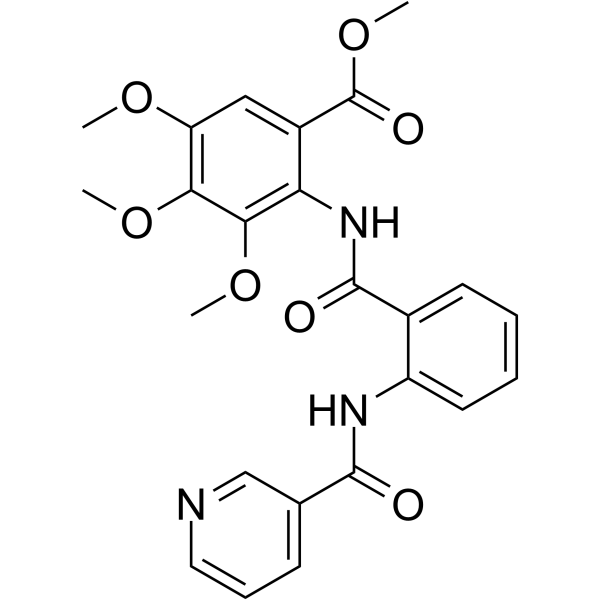
- HY-Z0548R
-
|
Protocatechuic acid methyl ester (Standard); methyl protocatechuate (Standard)
|
Reference Standards
Keap1-Nrf2
Apoptosis
|
Inflammation/Immunology
Cancer
|
|
Methyl 3,4-dihydroxybenzoate (Standard) is the analytical standard of Methyl 3,4-dihydroxybenzoate. This product is intended for research and analytical applications. Methyl 3,4-dihydroxybenzoate (Protocatechuic acid methyl ester; Methyl protocatechuate) is a major metabolite of antioxidant polyphenols found in green tea. Antioxidant and anti-inflammatory effect .
|
-

- HY-W558285
-
|
|
Biochemical Assay Reagents
|
Others
|
|
Methyl 3,6-di-O-(α-D-mannopyranosyl)-α-D-mannopyranoside is a class of biochemical reagents used in glycobiology research. Glycobiology studies the structure, synthesis, biology, and evolution of sugars. It involves carbohydrate chemistry, enzymology of glycan formation and degradation, protein-glycan recognition, and the role of glycans in biological systems. This field is closely related to basic research, biomedicine, and biotechnology .
|
-

- HY-141239
-
|
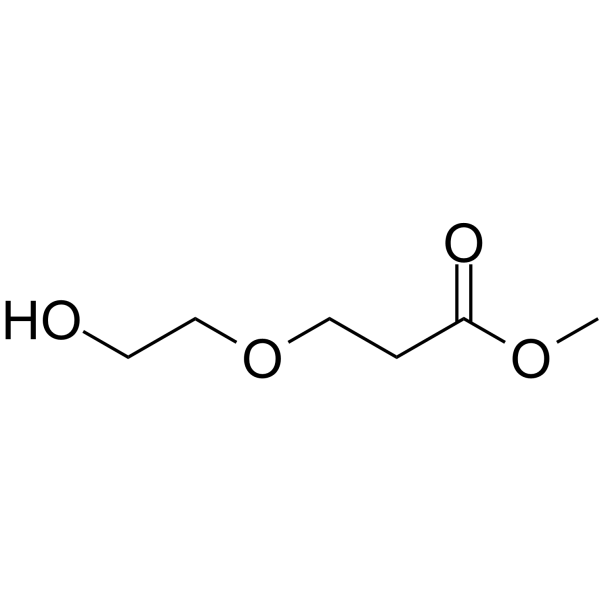
methyl 3-(2-hydroxyethoxy)propanoate
|
PROTAC Linkers
|
Cancer
|
|
Hydroxy-PEG1-C2-methyl ester is a PEG-based PROTAC linker that can be used in the synthesis of PROTACs .
|
-
- HY-W777377
-
|
|
Biochemical Assay Reagents
|
Others
|
|
Methyl 3,4-O-Isopropylidene-6-O-trityl-α-D-galactopyranoside is a class of biochemical reagents used in glycobiology research. Glycobiology studies the structure, synthesis, biology, and evolution of sugars. It involves carbohydrate chemistry, enzymology of glycan formation and degradation, protein-glycan recognition, and the role of glycans in biological systems. This field is closely related to basic research, biomedicine, and biotechnology .
|
-

- HY-W773183
-
|
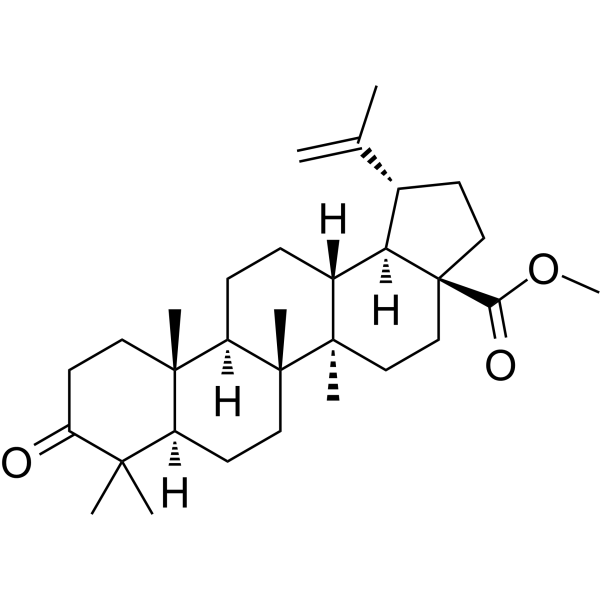
Betulonic acid methyl ester; methyl 3-oxolup-20(29)-en-28-oate
|
Drug Intermediate
|
Cancer
|
|
Methyl betulonate (Betulonic acid methyl ester) is a triterpenoid. Methyl betulonate inhibits cell growth of eight tumor (including resistant) and two normal fibroblast cell lines with the IC50s >50.0 μM .
|
-
- HY-141240
-
|
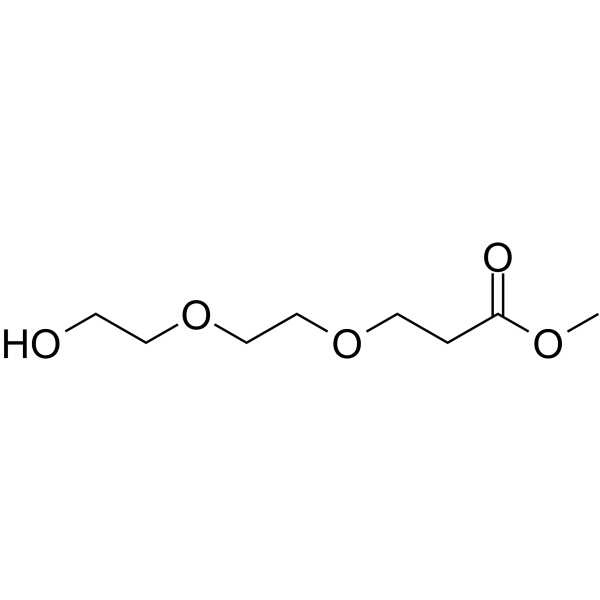
methyl 3-[2-(2-hydroxyethoxy)ethoxy]propanoate
|
PROTAC Linkers
|
Cancer
|
|
Hydroxy-PEG2-C2-methyl ester is a PEG-based PROTAC linker that can be used in the synthesis of PROTACs .
|
-
- HY-Y1298R
-
|
Acetoacetate methyl ester (Standard); methyl 3-oxobutanoate (Standard); methyl acetoacetate (Standard)
|
Endogenous Metabolite
Reference Standards
|
Metabolic Disease
|
|
Methyl acetylacetate (Standard) is the analytical standard of Methyl acetylacetate. This product is intended for research and analytical applications. Methyl acetylacetate is an endogenous metabolite.
|
-
- HY-W698363
-
|
|
Biochemical Assay Reagents
|
Others
|
|
Methyl 3,6-Di-O-benzyl-2-deoxy-2-N-phthalimido-β-D-glucopyranoside is a biochemical reagent used in glycobiology research, such as the study of glycosylation reactions.
|
-

- HY-W394551
-
|
|
Biochemical Assay Reagents
|
Others
|
|
Methyl 3,4-dibromo-2,5-dioxo-2,5-dihydro-1H-pyrrole-1-carboxylate is a small pyrrolidone molecule which features two bromine atoms and a methyl ester. The unsaturated dibromo motif is a covalent ligand for thiol groups, and may be used to label cysteine residues in proteins. The presence of two leaving groups on this molecule allows this linker to bind two thiols at a time. The methyl ester can be saponified to link this molecule to amines to form larger structures.
|
-

- HY-W145624
-
|
|
Biochemical Assay Reagents
|
Others
|
|
Methyl 3,4,6-tri-O-acetyl-2-deoxy-2-phthalimido-1-thio-β-D-glucopyranoside is a class of biochemical reagents used in glycobiology research. Glycobiology studies the structure, synthesis, biology, and evolution of sugars. It involves carbohydrate chemistry, enzymology of glycan formation and degradation, protein-glycan recognition, and the role of glycans in biological systems. This field is closely related to basic research, biomedicine, and biotechnology .
|
-

- HY-Y1298S1
-
|
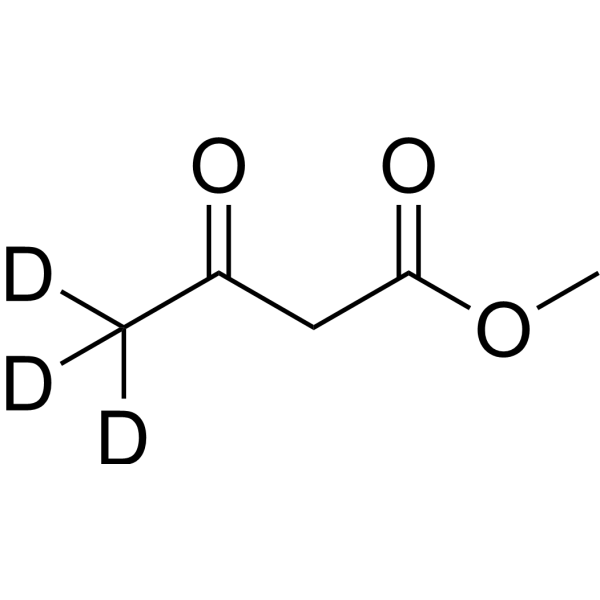
Acetoacetate methyl ester-d3; methyl 3-oxobutanoate-d3; methyl acetoacetate-d3
|
Isotope-Labeled Compounds
|
Others
|
|
Methyl acetylacetate-d3 (Acetoacetate methyl ester-d3) is a deuterium labeled Methyl acetylacetate (HY-Y1298). Methyl acetylacetate is an endogenous metabolite .
|
-
- HY-Y1298S
-
|
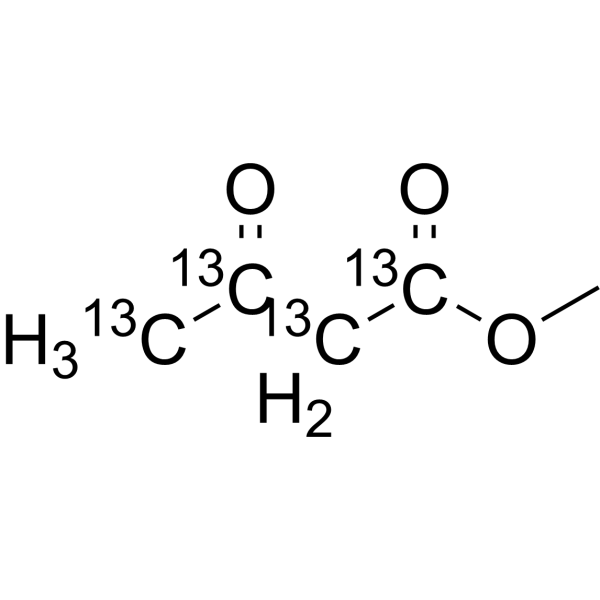
Acetoacetate methyl ester-13C4; methyl 3-oxobutanoate-13C4; methyl acetoacetate-13C4
|
Endogenous Metabolite
|
Others
|
|
Methyl acetylacetate- 13C4 is an isotopically labeled compound. Methyl acetylacetate- 13C4 can be used for various biochemical studies .
|
-
- HY-CE00864
-
-

- HY-CE01325
-
-

- HY-CE00935
-
-

- HY-CE00679
-
-

- HY-79572
-
|
|
Parasite
|
Infection
|
|
4-Methyl-3-nitrophenol is a phenolic compound classified as a soft electrophile. 4-Methyl-3-nitrophenol is toxic to ciliates, with a log IC50 value of -3.740 against T. pyriformis .
|
-

- HY-W086901S
-
-
- HY-W676492
-
-

- HY-N8858
-
|
|
Others
|
Others
|
|
5-Methyl-3-heptanone is an intermediate for drug synthesis .
|
-

- HY-W752920
-
-

- HY-W179109
-
-

- HY-CE01324
-
-

- HY-CE01504
-
-

- HY-W335674
-
-

- HY-W343538S
-
|
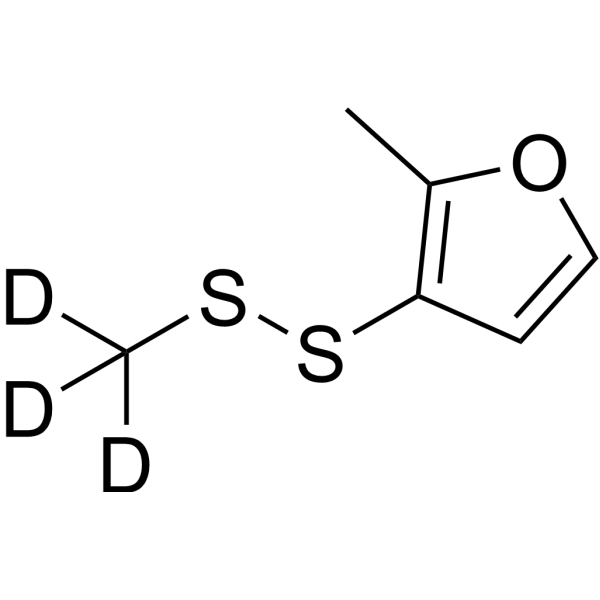
methyl-(2-methyl-3-furyl)disulfide-d3
|
Isotope-Labeled Compounds
|
Others
|
|
2-Methyl-3-(methyldisulfanyl)furan-d3 is deuterated labeled 2-Methyl-3-(methyldisulfanyl)furan.
|
-
- HY-132800S
-
-
- HY-I0708
-
|
|
Biochemical Assay Reagents
|
Others
|
|
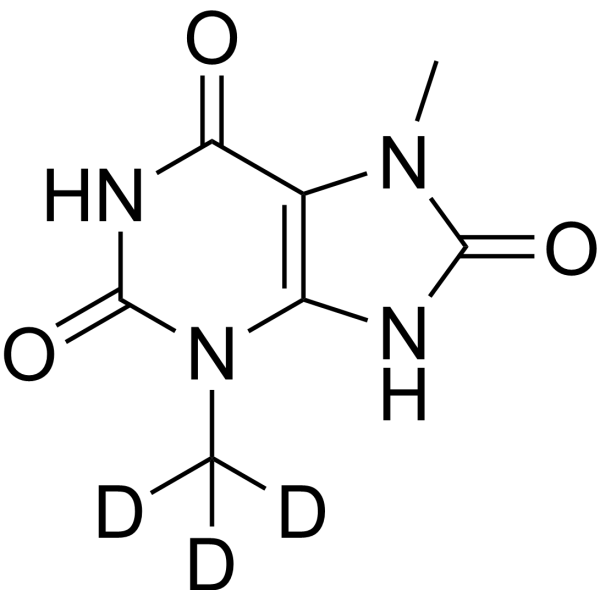
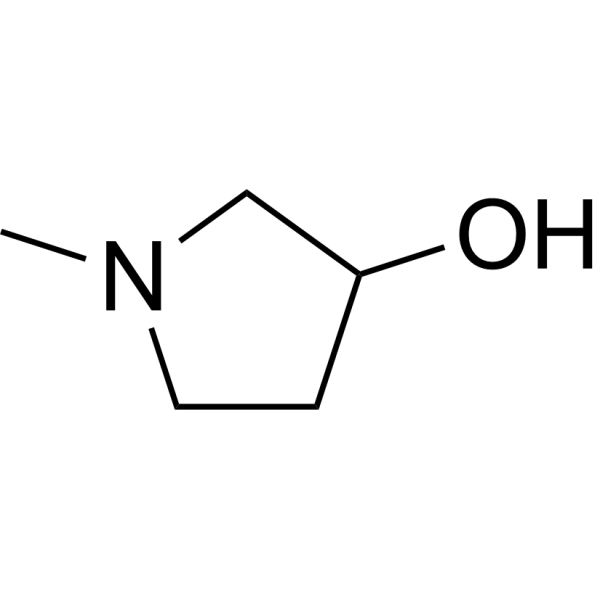
1-Methyl-3-pyrrolidinol is a biochemical reagent that can be used as a biological material or organic compound for life science related research.
|
-
- HY-W021293
-
|
|
Biochemical Assay Reagents
|
Others
|
|
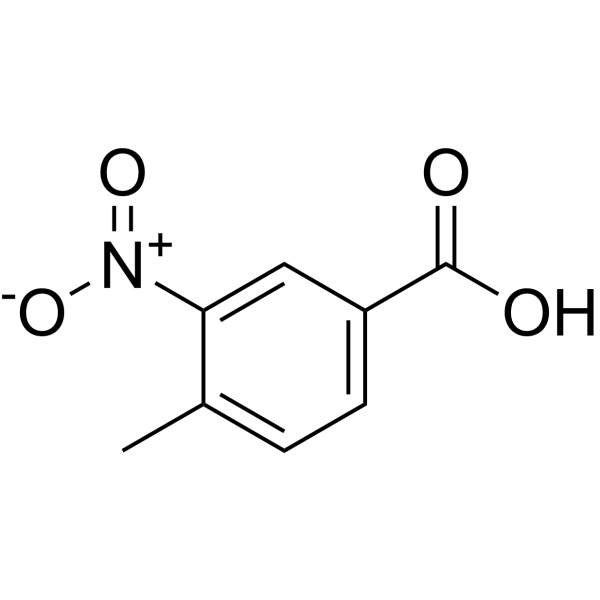
4-Methyl-3-nitrobenzoic acid is a biochemical reagent that can be used as a biological material or organic compound for life science related research.
|
-
- HY-107497R
-
|
|
Reference Standards
Biochemical Assay Reagents
|
Cancer
|
|
1-Methyl-3-amino-4-cyanopyrazole (Standard) is the analytical standard of 1-Methyl-3-amino-4-cyanopyrazole (HY-107497). This product is intended for research and analytical applications. 1-Methyl-3-amino-4-cyanopyrazole (compound 3) is a molecular compound that can be used in the synthesis of adenosine A3 receptor antagonists. 1-Methyl-3-amino-4-cyanopyrazole can be utilized in cancer research .
|
-

- HY-W009708R
-
|
|
Reference Standards
Mucin
|
Others
|
|
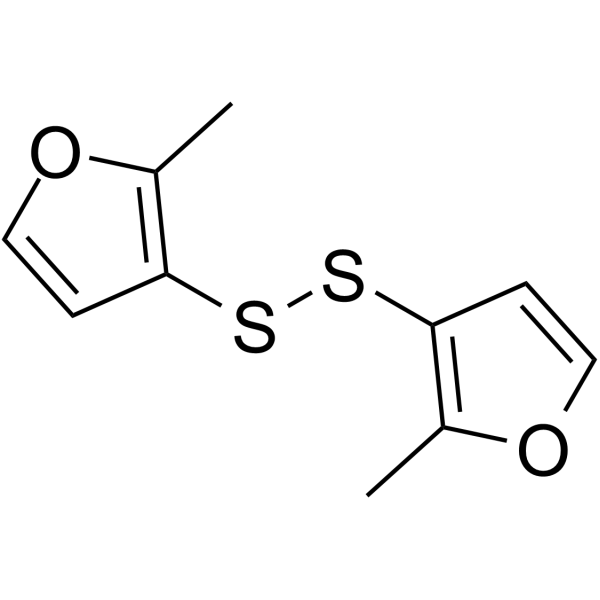
Bis(2-methyl-3-furyl)disulfide (Standard) is the analytical standard of Bis(2-methyl-3-furyl)disulfide. This product is used for research and analytical applications. Bis(2-methyl-3-furyl)disulfide is a meat flavor characteristic aroma compound that can bind to oral mucin. Bis(2-methyl-3-furyl)disulfide can interact with oral mucin through hydrogen bonds, hydrophobic interactions, and van der Waals forces to form a stable spontaneous 1:1 complex, and the interaction intensity varies with pH. Bis(2-methyl-3-furyl)disulfide helps to produce unique meat aroma and flavor, and its binding to oral mucin will change the perception of aroma.
|
-

- HY-75703R
-
|
|
Reference Standards
|
|
|
5-Methyl-3-phenylisoxazole-4-carboxylic acid (Standard) is the analytical standard of 5-Methyl-3-phenylisoxazole-4-carboxylic acid. This product is intended for research and analytical applications.
|
-

- HY-204565
-
|
MHA
|
Drug Intermediate
|
Others
|
|
4-Methyl-3-hydroxyanthranilic acid (MHA) is a key precursor for the synthesis of Actinomycin D (HY-17559) .
|
-

- HY-107497
-
|
|
Biochemical Assay Reagents
|
Cancer
|
|
1-Methyl-3-amino-4-cyanopyrazole (compound 3) is a molecular compound that can be used in the synthesis of adenosine A3 receptor antagonists. 1-Methyl-3-amino-4-cyanopyrazole can be utilized in cancer research .
|
-

- HY-W009708
-
|
|
Mucin
|
Others
|
|
Bis (2-methyl-3-furyl) disulfide is a meat-characteristic aroma compound that binds to oral mucins. Bis (2-methyl-3-furyl) disulfide interacts with oral mucins via hydrogen bonding, hydrophobic interactions and van der Waals forces to form stable spontaneous 1:1 complexes, and the interaction strength varies with pH. Bis (2-methyl-3-furyl) disulfide contributes to the production of unique meat aroma and flavor, and its binding to oral mucins alters aroma perception .
|
-
- HY-W141219
-
|
|
PROTAC Linkers
|
Cancer
|
|
tert-Butyl methyl(3-oxopropyl)carbamate is a PROTAC linker that can be used in the synthesis of PROTACs.
|
-

- HY-W014159
-
|
|
Biochemical Assay Reagents
|
Others
|
|
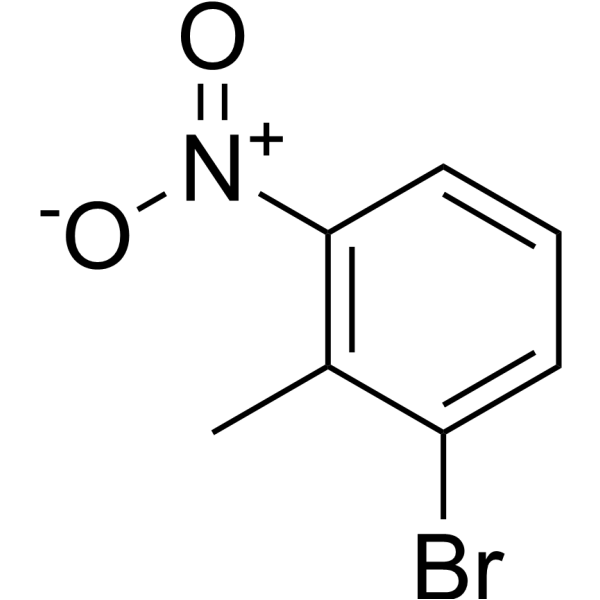
1-Bromo-2-methyl-3-nitrobenzene is an organic synthesis intermediate. 1-Bromo-2-methyl-3-nitrobenzene participates in chemical reactions such as electrophilic substitution and coupling through the bromine atom and nitro group in the molecule, and acts as a synthetic precursor. 1-Bromo-2-methyl-3-nitrobenzene can construct complex molecular structures by relying on the leaving property of bromine and the electron-withdrawing property of nitro group, and can be used in the synthesis of benzimidazole VISTA inhibitors in medicinal chemistry .
|
-
- HY-Z0132R
-
|
|
Reference Standards
|
|
|
N-Methyl-3-nitroaniline (Standard) is the analytical standard of N-Methyl-3-nitroaniline. This product is intended for research and analytical applications.
|
-

- HY-W004681
-
|
6-methyl-3-pyridinol
|
Drug Intermediate
|
Inflammation/Immunology
|
|
6-Methyl-3-pyridinol (5-hydroxy-2-methylpyridine) is a starting compound for the synthesis of L-azatyrosine (HY-W048303). 6-Methyl-3-pyridinol can be isolated from cigarette smoke condensate. 6-Methyl-3-pyridinol aggravates Collagen-induced arthritis in mice .
|
-

- HY-W140713
-
-

- HY-116201
-
-

- HY-W081067
-
|
HFPO-DA
|
PPAR
|
Infection
|
|
Perfluoro (2-methyl-3-oxahexanoic) acid (HFPO-DA) is an orally active PPARα agonist with an EC50 of 2.1 μM for human PPARα. Perfluoro (2-methyl-3-oxahexanoic) acid induces peroxisome proliferation and increases the levels of proinflammatory mediators. It impairs intestinal barrier function and disrupts cecal flora balance. Perfluoro (2-methyl-3-oxahexanoic) acid is applicable to research related to developmental toxicity, hepatotoxicity and intestinal toxicity [3].
|
-

- HY-44868
-
|
|
Drug Intermediate
|
Others
|
|
5-Methyl-3-methylenehexan-2-one is a drug intermediate for synthesis of various active compounds.
|
-

- HY-W338150
-
-

- HY-Z0132
-
-

- HY-156347S
-
-
- HY-W346453
-
|
|
PROTAC Linkers
|
Cancer
|
|
Tert-butyl methyl(3-(methylamino)propyl)carbamate is a PROTAC linker that can be used in the synthesis of PROTACs.
|
-

- HY-150708S
-
-
- HY-147113
-
|
|
Others
|
Others
|
|
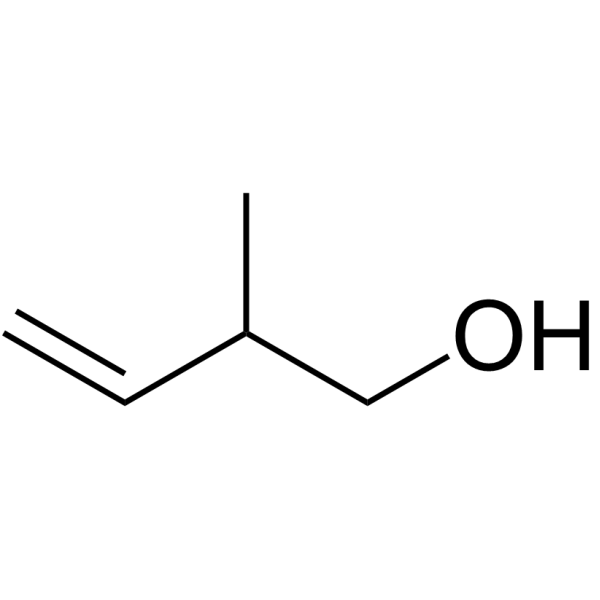
2-Methyl-3-buten-1-ol is a component of ylang-ylang oils can be extracted from the flowers .
|
-
- HY-W016552
-
-
- HY-N16847
-
|
|
Others
|
Others
|
|
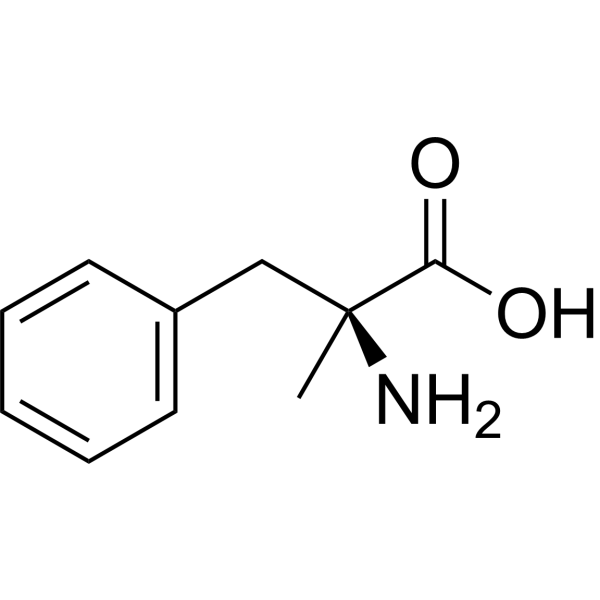
3-Methyl-3-butenyl (E)-Caffeate is a caffeic acid ester compound found in Algerian propolis. Algerian propolis has antioxidant and anticholinesterase activities .
|
-

- HY-113876
-
|
|
PDGFR
|
Cancer
|
|
2-Methyl-3-phenylquinoxaline (compound 38) is a potent platelet-derived growth factor receptor tyrosine kinase (PDGF-RTK) inhibitor with modest inhibitory activity against PDGFR kinase in intact cells (IC50 greater than 100 μM) .
|
-

- HY-CE00805
-
-

- HY-W345015
-
|
|
Drug Intermediate
|
Others
|
|
2-Methyl-3-pyrimidin-2-yl-propionic acid is a synthetic intermediate useful for pharmaceutical synthesis.
|
-

- HY-W041877
-
|
|
PROTAC Linkers
|
Cancer
|
|
cis-Methyl 3-aminocyclobutanecarboxylate hydrochloride is a PROTAC linker that can be used in the synthesis of PROTACs.
|
-

- HY-32806
-
|
|
Drug Intermediate
|
Infection
|
|
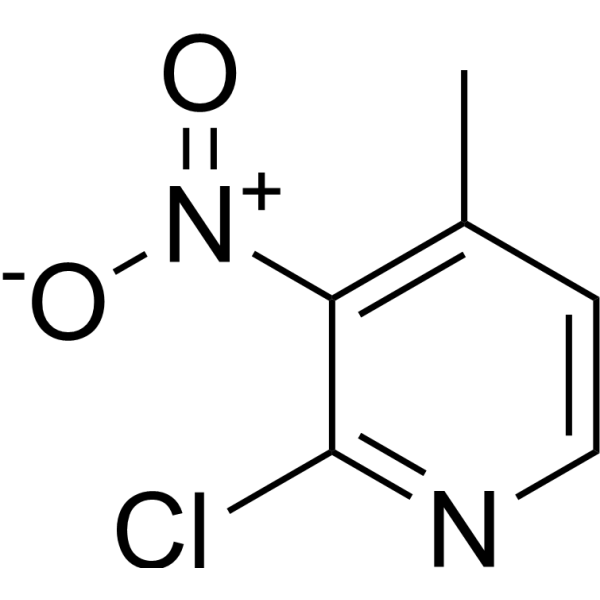
2-Chloro-4-methyl-3-nitropyridine is a pyridine derivative that can be used to synthesize 2-methoxypyridine derivatives with antibacterial and antituberculosis activities .
|
-
- HY-W002448R
-
|
3-Trifluoromethyl-2-methylaniline (Standard)
|
Biochemical Assay Reagents
Reference Standards
|
Others
|
|
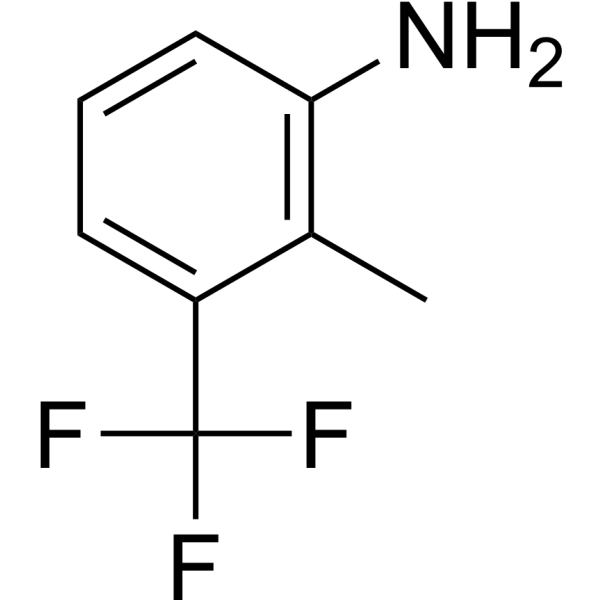
2-Methyl-3-(trifluoromethyl)aniline (Standard) is the analytical standard of 2-Methyl-3-(trifluoromethyl)aniline. This product is intended for research and analytical applications. 2-Methyl-3-(trifluoromethyl)aniline is a biochemical reagent that can be used as a biological material or organic compound for life science related research.
|
-

- HY-W339484
-
|
|
Biochemical Assay Reagents
|
Others
|
|
1-Ethyl-2-methyl-3-hydroxypyrid-4-one is an α-ketohydroxypyridinium iron chelator with high specificity for iron and no specific activity against other metal ions such as copper, zinc, calcium and magnesium. In rabbits with iron overload, 1-Ethyl-2-methyl-3-hydroxypyrid-4-one increased iron excretion after oral or parenteral administration.
|
-

- HY-W012885
-
|
|
Biochemical Assay Reagents
|
Others
|
|
(S)-Methyl 3-hydroxybutanoate consists of a chiral center, resulting in two enantiomers, where (S)-Methyl 3-hydroxybutanoate means that the hydroxyl group is located on the third carbon atom of the S-configuration carboxylic acid group stereoisomers. This compound is often used as a building block for the synthesis of various pharmaceuticals and natural products. Due to its fruity taste, it is also used as a flavor and fragrance ingredient.
|
-
- HY-W710608
-
|
α-methylcinnamaldehyde-d5
|
Isotope-Labeled Compounds
|
Others
|
|
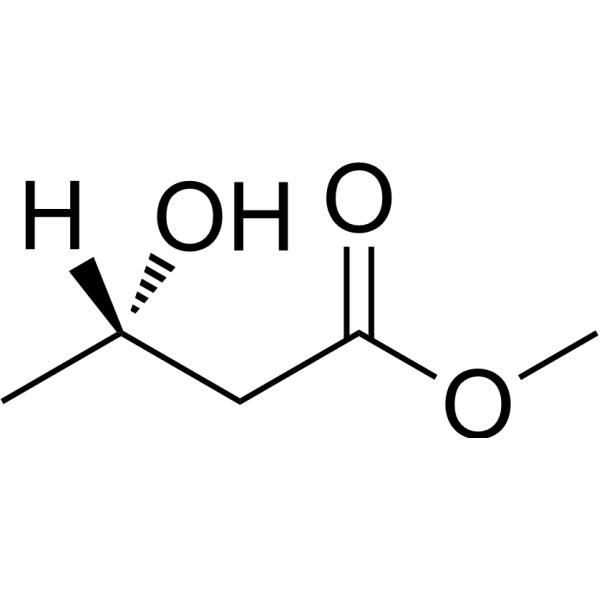
2-Methyl-3-phenylacrylaldehyde-d5 (α-Methylcinnamaldehyde-d5) is the deuterium labeled 2-Methyl-3-phenylacrylaldehyde (HY-W015638).
|
-

- HY-W002448
-
|
3-Trifluoromethyl-2-methylaniline
|
Biochemical Assay Reagents
|
Others
|
|
2-Methyl-3-(trifluoromethyl)aniline is a biochemical reagent that can be used as a biological material or organic compound for life science related research.
|
-
- HY-W142293
-
|
Methallylcarbinol
|
Drug Derivative
|
Others
|
|
3-Methyl-3-buten-1-ol (Methallylcarbinol), a semiterpenoid alcohol, is an aggregation pheromone that can be found in the venom glands of the European hornet (Vespa crabro) and our-eyed spruce bark beetle .
|
-

- HY-W250446
-
|
|
Biochemical Assay Reagents
|
Others
|
|
(R)-Methyl 3-hydroxydecanoate is an enantiomerically pure hydroxylated fatty acid methyl ester. The hydroxyl group enables further derivatization or replacement with other reactive functional groups.
|
-

- HY-W596000
-
|
|
Biochemical Assay Reagents
|
Others
|
|
3-(3-Methyl-3H-diazirin-3-yl)propan-1-ol is a chemical intermediate. 3-(3-Methyl-3H-diazirin-3-yl)propan-1-ol can be used in the synthesis of the SDASO linker (SDASO-M) .
|
-

- HY-W150365R
-
|
6-Chloro-5-amino-o-cresol (Standard)
|
Reference Standards
|
|
|
2-Chloro-4-methyl-3-hydroxyaniline (Standard) is the analytical standard of 2-Chloro-4-methyl-3-hydroxyaniline. This product is intended for research and analytical applications.
|
-

- HY-W699870
-
|
Isobutyrylacetic Acid Ethyl Ester-d6
|
Isotope-Labeled Compounds
|
Others
|
|
Ethyl 4-methyl-3-oxopentanoate-d6 (Isobutyrylacetic Acid Ethyl Ester-d6) is the deuterium labeled Ethyl 4-methyl-3-oxopentanoate (HY-W015489).
|
-

- HY-W700793
-
|
3-Trifluoromethyl-2-methylaniline-d3
|
Isotope-Labeled Compounds
Biochemical Assay Reagents
|
Others
|
|
2-Methyl-3-(trifluoromethyl)aniline-d3 (3-Trifluoromethyl-2-methylaniline-d3) is deuterium labeled 2-Methyl-3-(trifluoromethyl)aniline. 2-Methyl-3-(trifluoromethyl)aniline is a biochemical reagent that can be used as a biological material or organic compound for life science related research.
|
-

- HY-W098557R
-
|
|
Reference Standards
|
|
|
2-Methyl-3-thioxo-1,2,4-triazinane-5,6-dione (Standard) is the analytical standard of 2-Methyl-3-thioxo-1,2,4-triazinane-5,6-dione. This product is intended for research and analytical applications.
|
-

- HY-121030
-
|
N-(7-Dimethylamino-4-methyl-3-coumarinyl)maleimide
|
Fluorescent Dye
|
Others
|
|
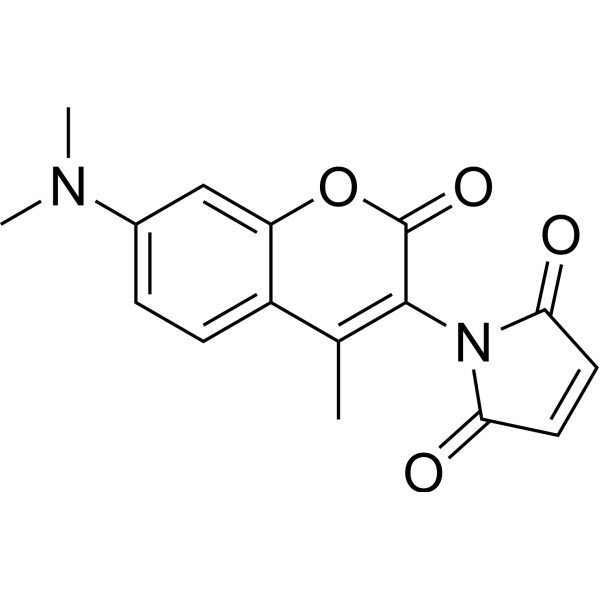
DACM (N-(7-Dimethylamino-4-methyl-3-coumarinyl)maleimide) is a thiol-directed fluorescent dye (Ex=396 nm, Em=468 nm) .
|
-
- HY-N9278
-
|
|
Others
|
Others
|
|
8beta-(2-Hydroxy-2-methyl-3-oxobutyryloxy)glucozaluzanin C is a Sesquiterpenoids product that can be isolated from the herbs of Crepis crocea. .
|
-

- HY-177543
-
|
|
Quinone Reductase
|
Others
|
|
5-(4-Methoxyphenol)-4-methyl-3H-1,2-dithiole-3-thione is a Phase 2 enzyme inducer. 5-(4-Methoxyphenol)-4-methyl-3H-1,2-dithiole-3-thione induces the activity of NAD (P) H:quinone oxidoreductase (QR; NQO1) in hepatoma cells. 5-(4-Methoxyphenol)-4-methyl-3H-1,2-dithiole-3-thione enhances growth hormone production in plasmid-transfected hepatoma cells .
|
-

- HY-W010507
-
|
methyl (R)-(-)-3-hydroxybutyrate
|
Biochemical Assay Reagents
|
Others
|
|
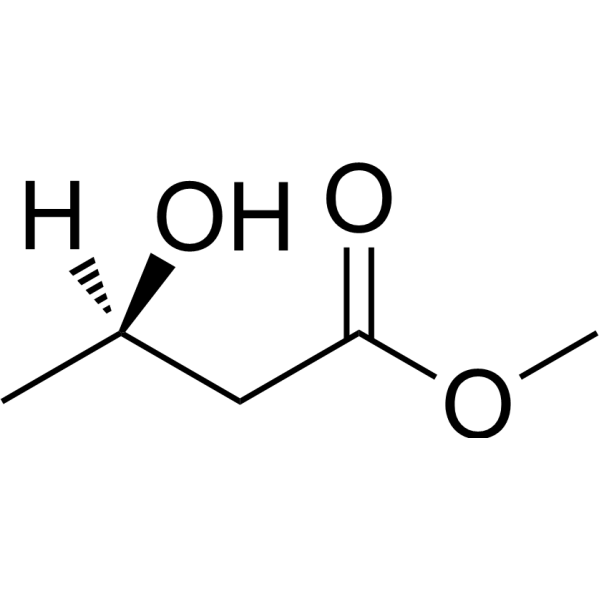
(R)-Methyl 3-hydroxybutanoate, (R)-Methyl 3-hydroxybutanoate is an enantiomer, from the perspective of the methyl (-CH3) group, the hydroxyl (-OH) group on the third carbon atom The group faces to the right, a colorless transparent liquid, soluble in organic solvents such as ethanol and ether, insoluble in water, (R)-Methyl 3-hydroxybutanoate is usually used to synthesize various organic compounds (including drugs, agricultural chemicals and flavoring agents) It can also be used as a chiral auxiliary in asymmetric synthetic reactions involving the formation of chemical bonds in a stereoselective manner.
|
-
- HY-152575
-
|
|
Nucleoside Antimetabolite/Analog
|
Cancer
|
|
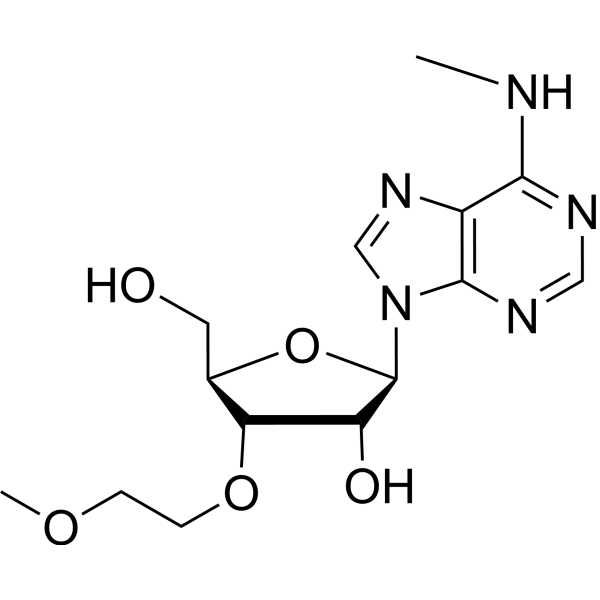
N6-Methyl-3’-O-(2-methoxyethyl) adenosine is a purine nucleoside analog. Purine nucleoside analogs have broad antitumor activity targeting indolent lymphoid malignancies. Anticancer mechanisms in this process rely on inhibition of DNA synthesis, induction of apoptosis, etc .
|
-
- HY-152587
-
|
|
Nucleoside Antimetabolite/Analog
|
Cancer
|
|
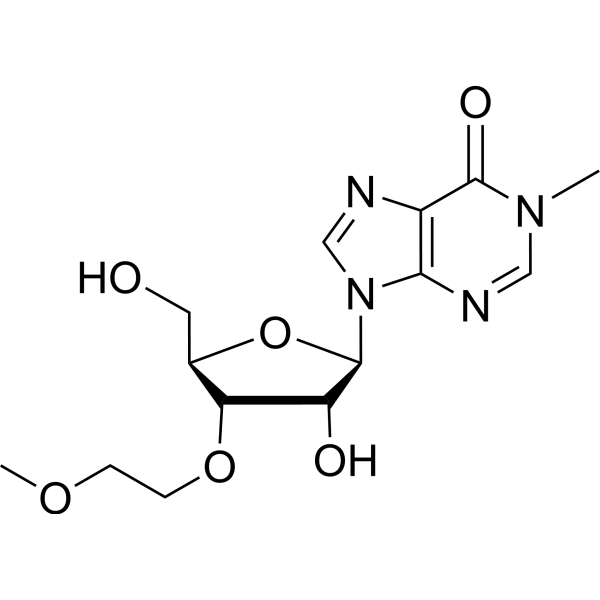
N1-Methyl-3’-O-(2-methoxyethyl) inosine is a purine nucleoside analog. Purine nucleoside analogs have broad antitumor activity targeting indolent lymphoid malignancies. Anticancer mechanisms in this process rely on inhibition of DNA synthesis, induction of apoptosis, etc .
|
-
- HY-152573
-
|
|
Nucleoside Antimetabolite/Analog
|
Cancer
|
|
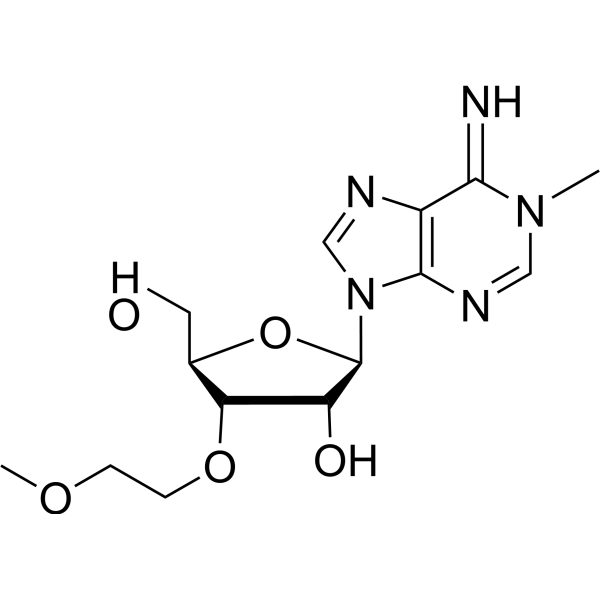
N1-Methyl-3’-O-(2-methoxyethyl) adenosine is a purine nucleoside analog. Purine nucleoside analogs have broad antitumor activity targeting indolent lymphoid malignancies. Anticancer mechanisms in this process rely on inhibition of DNA synthesis, induction of apoptosis, etc .
|
-
- HY-N17915
-
|
|
Others
|
Others
|
|
2-Methyl-3,5,6-trihydroxyanthraquinone (compound 6) is an anthraquinone found in cell suspension cultures of Morinda citrifolia .
|
-

- HY-23337S
-
|
|
Isotope-Labeled Compounds
|
Others
|
|
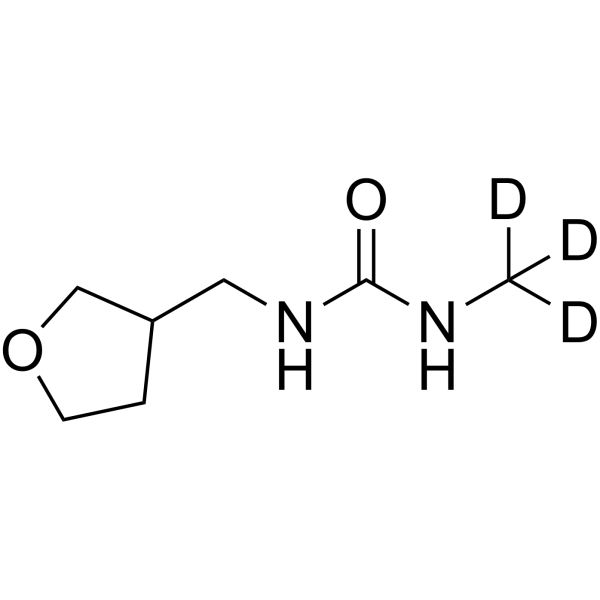
1-Methyl-3-((tetrahydrofuran-3-yl)methyl)urea-d3 is the deuterium labeled γ-Tocotrienol. γ-Tocotrienol is an active form of vitamin E[1].
|
-
- HY-32800
-
|
6-Chloro-3-nitro-2-picoline
|
Biochemical Assay Reagents
|
Others
|
|
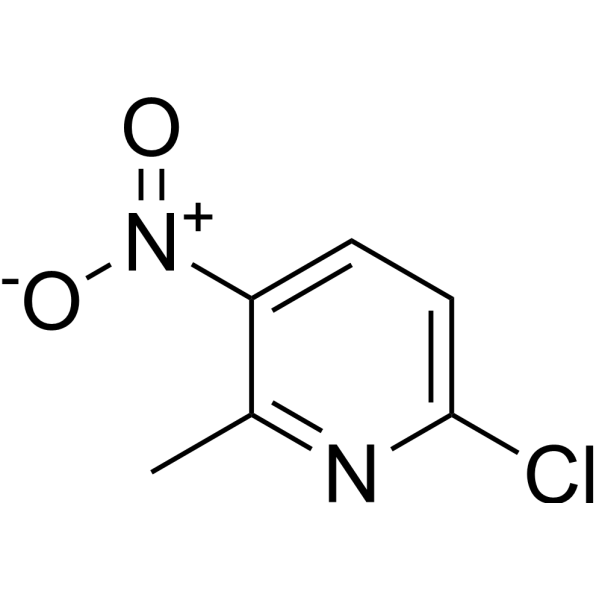
6-Chloro-2-methyl-3-nitropyridine is a biochemical reagent that can be used as a biological material or organic compound for life science related research.
|
-
- HY-146627S
-
-
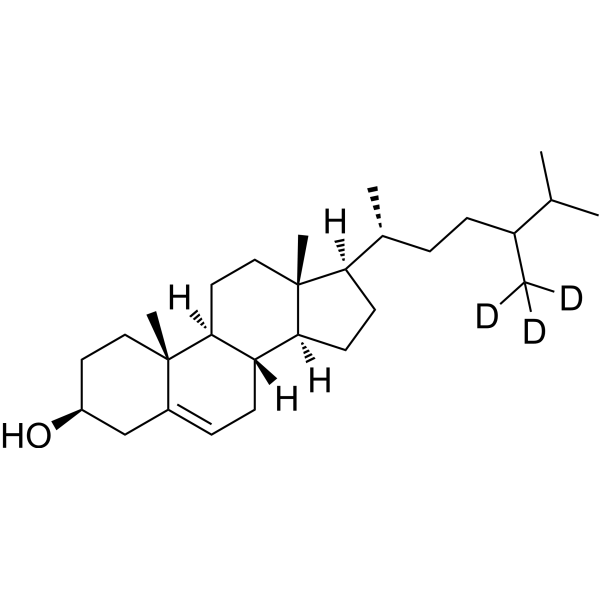
- HY-W587979
-
|
3'-Hydroxy-N-methylcoclaurine hydrochloride
|
Drug Intermediate
|
Others
|
|
N-Methyl-3'-hydroxycoclaurine (3'-Hydroxy-N-methylcoclaurine) hydrochloride is a Coclaurine (HY-N3610) impurity.
|
-

- HY-W250457R
-
|
|
Reference Standards
|
|
|
9-Methyl-3-methylene-2,3-dihydro-1H-carbazol-4(9H)-one (Standard) is the analytical standard of 9-Methyl-3-methylene-2,3-dihydro-1H-carbazol-4(9H)-one. This product is intended for research and analytical applications.
|
-

- HY-W1119944
-
-

- HY-D0026
-
|
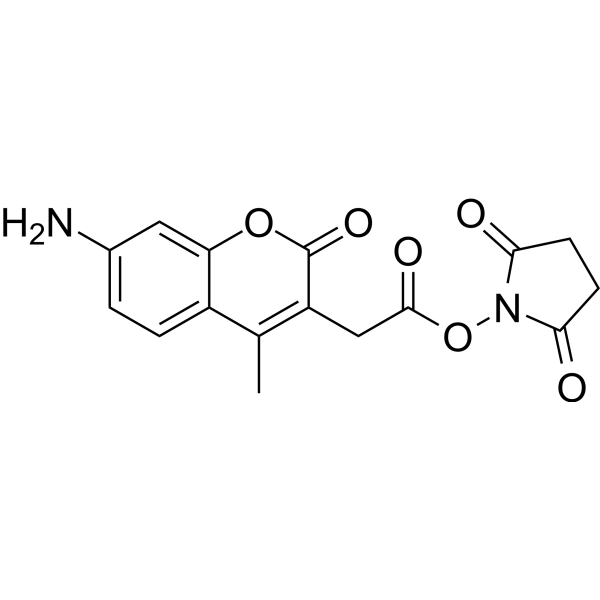
7-Amino-4-methyl-3-coumarinacetic acid N-succinimidyl ester
|
Fluorescent Dye
|
Others
|
|
AMCA,SE (7-Amino-4-methyl-3-coumarinacetic acid N-succinimidyl ester) is a bright blue fluorescent dye. AMCA,SE reacts with amino groups and is excited by ultraviolet light. AMCA,SE can be used for amine reactive labeling (Ex/Em = 354/440 nm) .
|
-
- HY-W102175
-
|
|
PROTAC Linkers
|
Cancer
|
|
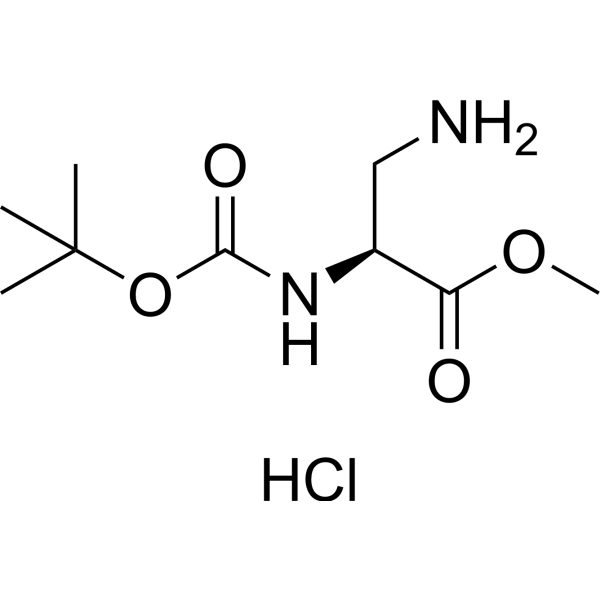
N-Boc-N-methyl-3-chloro-1-propanamine is a PROTAC linker that can be used in the synthesis of PROTACs.
|
-

- HY-W006152
-
-
- HY-154139
-
|
|
Nucleoside Antimetabolite/Analog
|
Cancer
|
|
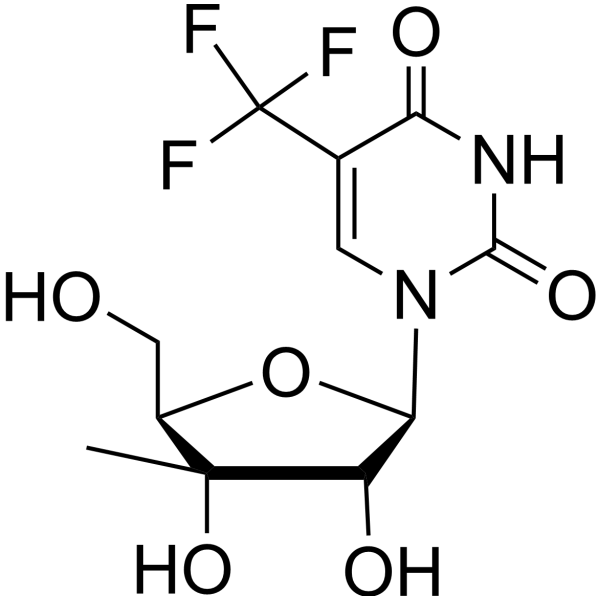
3’-Beta-C-Methyl-3-deazauridine is a thymidine analog. Analogs of this series have insertional activity towards replicated DNA. They can be used to label cells and track DNA synthesis .
|
-
- HY-W112336
-
|
|
MOFs
|
Others
|
|
4-Methyl-3,5-bis(pyridin-4-yl)benzoic acid is a metal-organic framework (MOF).
|
-

- HY-W048333
-
|
|
PROTAC Linkers
|
Cancer
|
|
(9H-Fluoren-9-yl)methyl (3-aminopropyl)carbamate hydrochloride is a PROTAC linker that can be used in the synthesis of PROTACs.
|
-

- HY-152651
-
|
|
Nucleoside Antimetabolite/Analog
|
Cancer
|
|
5’(R)-C-Methyl-3-deazauridine is a purine nucleoside analog. Purine nucleoside analogs have broad antitumor activity targeting indolent lymphoid malignancies. Anticancer mechanisms in this process rely on inhibition of DNA synthesis, induction of apoptosis, etc .
|
-
- HY-N2782
-
|
|
Others
|
Others
|
|
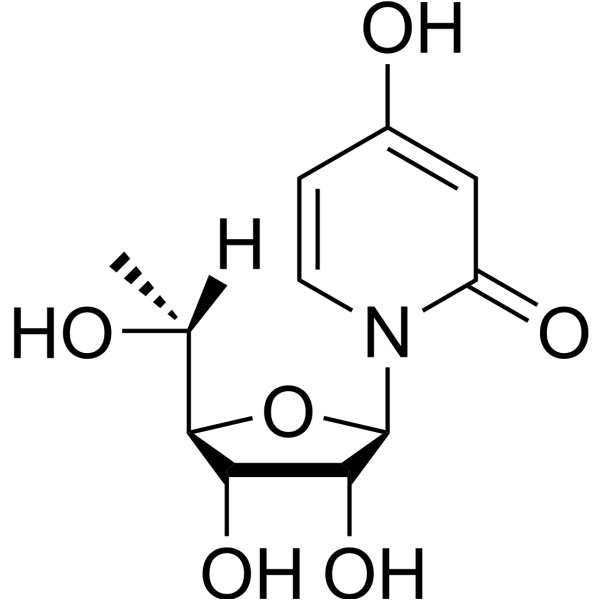
8-O-Demethyl-7-O-methyl-3,9-dihydropunctatin is a Flavonoids product that can be isolated from the herbs of Scilla scilloides .
|
-

- HY-W066651
-
|
|
Drug Intermediate
|
Others
|
|
1-tert-Butyl 3-methyl 3-hydroxyazetidine-1,3-dicarboxylate is a drug intermediate for synthesis of various active compounds.
|
-

- HY-Z10179R
-
|
|
Reference Standards
|
|
|
(S)-N-methyl-3-(naphthalen-1-yloxy)-1-phenylpropan-1-amine hydrochloride (Standard) is the analytical standard of (S)-N-methyl-3-(naphthalen-1-yloxy)-1-phenylpropan-1-amine hydrochloride. This product is intended for research and analytical applications.
|
-

- HY-Z3474A
-
|
Duloxetine N-methyl 3-thiophene isomer oxalate
|
Drug Intermediate
|
Others
|
|
Duloxetine impurity 4 oxalate (Duloxetine N-methyl 3-thiophene isomer oxalate) is an impurity of Duloxetine oxalate.
|
-

- HY-152738
-
|
|
Nucleoside Antimetabolite/Analog
|
Others
|
|
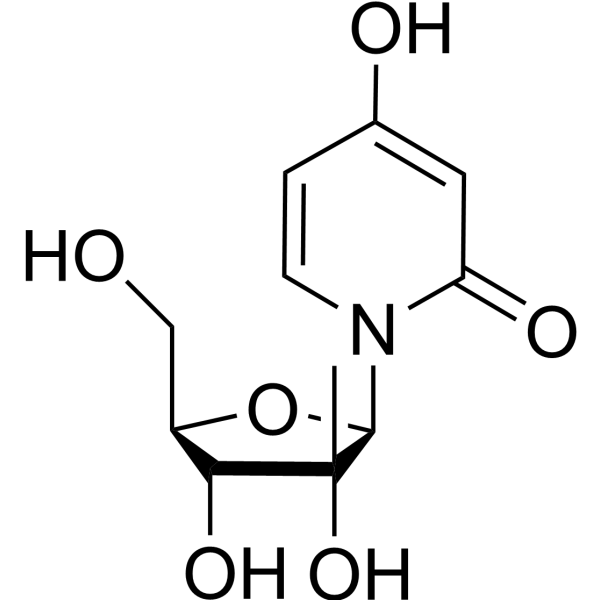
2’-β-C-Methyl-3-deazauri dine is a purine nucleoside analogue. Purine nucleoside analogs have broad antitumor activity targeting indolent lymphoid malignancies. Anticancer mechanisms in this process rely on inhibition of DNA synthesis, induction of apoptosis, etc .
|
-
- HY-W024615
-
|
3-(3-methyl-3H-diazirin-3-yl)propanoic acid
|
Drug Intermediate
Biochemical Assay Reagents
|
Others
|
|
Me-diazirine-cooh (3-(3-Methyl-3H-diazirin-3-yl) propanoic acid) is a molecular building block containing an aliphatic diazirine ring. Me-diazirine-cooh undergoes orthogonal coupling in solid-phase peptide synthesis to introduce the Diazirine group into collagen-mimetic peptides. Me-diazirine-cooh is used to construct the photoaffinity probe P1 .
|
-

- HY-W653776
-
|
|
Drug Intermediate
|
Others
|
|
(6a,11β)-11,20-Dihydroxy-6-methyl-3-oxopregna-1,4,17(20)-trien-21-al is a Methylprednisolon (HY-B0260) impurity.
|
-

- HY-W706319
-
|
|
Isotope-Labeled Compounds
Others
|
Cancer
|
|
2-Amino-3-methyl-3H-imidazo[4,5-f]quinoline-d3 is deuterium labeled 2-Ammo-3-memyl-imidazo-[4,5-f]-quinoIine. 2-Ammo-3-memyl-imidazo-[4,5-f]-quinoIine is a mutagenic compound .
|
-
![2-Amino-3-methyl-3H-imidazo[4,5-f]quinoline-d3](//file.medchemexpress.com/product_pic/hy-w706319.gif)
- HY-W286622S
-
|
1-Isopropyl-1-butanol-d4; 5-methyl-4-hexanol-d4
|
Isotope-Labeled Compounds
|
Others
|
|
2-Methyl-3-hexanol-d4 (1-Isopropyl-1-butanol-d4) is the deuterium labeled 2-Methylhexan-3-ol.
|
-

- HY-Z8616R
-
|
|
Reference Standards
|
|
|
3-(4-Chlorophenyl)-N-methyl-3-(pyridin-2-yl)propan-1-amine maleate (Chlorphenamine Impurity) (Standard) is the analytical standard of 3-(4-Chlorophenyl)-N-methyl-3-(pyridin-2-yl)propan-1-amine maleate (Chlorphenamine Impurity). This product is intended for research and analytical applications.
|
-

- HY-44072
-
|
|
Drug Intermediate
|
Others
|
|
7-Chloro-6-fluoro-1-(2-isopropyl-4-methyl-3-pyridyl)pyrido[2,3-d]pyrimidine-2,4-dione is a drug intermediate for synthesis of various active compounds.
|
-
![7-Chloro-6-fluoro-1-(2-isopropyl-4-methyl-3-pyridyl)pyrido[2,3-d]pyrimidine-2,4-dione](//file.medchemexpress.com/product_pic/hy-44072.gif)
- HY-W779193
-
|
|
Isotope-Labeled Compounds
|
Cancer
|
|
2-Amino-3-methyl-3H-imidazo[4,5-f]quinoline-2- 13C is 13C labeled 2-Ammo-3-memyl-imidazo-[4,5-f]-quinoIine. 2-Ammo-3-memyl-imidazo-[4,5-f]-quinoIine is a mutagenic compound .
|
-
![2-Amino-3-methyl-3H-imidazo[4,5-f]quinoline-2-13C](//file.medchemexpress.com/product_pic/hy-w779193.gif)
- HY-W699494
-
|
|
Biochemical Assay Reagents
|
Others
|
|
Methyl (methyl 3-deoxy-D-arabino-heptulopyranosid)onate-7-phosphate is a class of biochemical reagents used in glycobiology research. Glycobiology studies the structure, synthesis, biology, and evolution of sugars. It involves carbohydrate chemistry, enzymology of glycan formation and degradation, protein-glycan recognition, and the role of glycans in biological systems. This field is closely related to basic research, biomedicine, and biotechnology .
|
-

- HY-W112097
-
|
Bis(5-pyridyl-2-methyl-3-thienyl)cyclopentene
|
MOFs
|
Others
|
|
1,2-Bis(2-methyl-5-(pyridin-4-yl)thiophen-3-yl)cyclopent-1-ene (Bis(5-pyridyl-2-methyl-3-thienyl)cyclopentene) is a metal-organic framework (MOF).
|
-

- HY-W112706
-
|
|
MOFs
|
Others
|
|
2'-(((Tert-butoxycarbonyl)amino)methyl)-3,3''-dihydroxy-[1,1':4',1''-terphenyl]-4,4''-dicarboxylic acid is a metal-organic framework (MOF).
|
-
![2'-(((Tert-butoxycarbonyl)amino)methyl)-3,3''-dihydroxy-[1,1':4',1''-terphenyl]-4,4''-dicarboxylic acid](//file.medchemexpress.com/product_pic/hy-w112706.gif)
- HY-W021499
-
|
5-methyl-3-(pyridin-2-yl)-1H-1,2,4-triazole
|
MOFs
|
Others
|
|
2-(3-Methyl-1H-1,2,4-triazol-5-yl)pyridine (5-Methyl-3-(pyridin-2-yl)-1H-1,2,4-triazole) is a metal-organic framework (MOF).
|
-

- HY-154056
-
|
|
Nucleoside Antimetabolite/Analog
|
Cancer
|
|
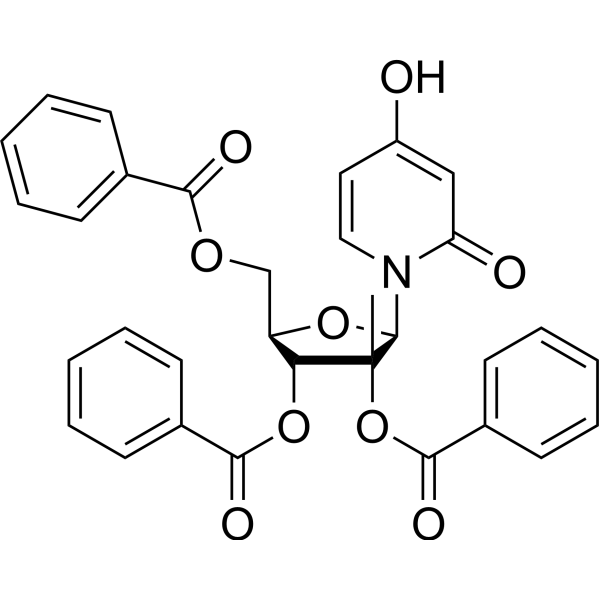
2’,3’,5’-Tri-O-benzoyl-2’-β-C-methyl-3-deazauridine is a purine nucleoside analog. Purine nucleoside analogs have broad antitumor activity targeting indolent lymphoid malignancies. Anticancer mechanisms in this process rely on inhibition of DNA synthesis, induction of apoptosis, etc .
|
-
- HY-78558R
-
|
3-((3R,4R)-4-methyl-3-(methyl(7H-pyrrolo[2,3-d]pyrimidin-4-yl)amino)piperidin-1-yl)-3-oxopropanamide (Standard)
|
Reference Standards
|
|
|
3-((3R,4R)-4-methyl-3-(methyl(7H-pyrrolo[2,3-d]pyrimidin-4-yl)amino)piperidin-1-yl)-3-oxopropanamide (Standard) is the analytical standard of 3-((3R,4R)-4-methyl-3-(methyl(7H-pyrrolo[2,3-d]pyrimidin-4-yl)amino)piperidin-1-yl)-3-oxopropanamide. This product is intended for research and analytical applications.
|
-

- HY-W112605
-
|
4-[2-[2-methyl-3-(2-pyridin-4-ylethynyl)phenyl]ethynyl]pyridine
|
MOFs
|
Others
|
|
2,6-Bis(4-pyridylethynyl)toluene (4-[2-[2-Methyl-3-(2-pyridin-4-ylethynyl)phenyl]ethynyl]pyridine) is a metal-organic framework (MOF).
|
-

- HY-W700524
-
|
|
Biochemical Assay Reagents
|
Others
|
|
Methyl 6-deoxy-2-O-methyl-3-O-benzyl-α-D-galactopyranoside is a class of biochemical reagents used in glycobiology research. Glycobiology studies the structure, synthesis, biology, and evolution of sugars. It involves carbohydrate chemistry, enzymology of glycan formation and degradation, protein-glycan recognition, and the role of glycans in biological systems. This field is closely related to basic research, biomedicine, and biotechnology .
|
-

- HY-78558
-
|
3-((3R,4R)-4-methyl-3-(methyl(7H-pyrrolo[2,3-d]pyrimidin-4-yl)amino)piperidin-1-yl)-3-oxopropanamide
|
Drug Intermediate
|
Others
|
|
Tofacitinib Impurity T (3-((3R,4R)-4-Methyl-3-(methyl(7H-pyrrolo[2,3-d]pyrimidin-4-yl)amino)piperidin-1-yl)-3-oxopropanamide) is a drug intermediate for synthesis of various active compounds.
|
-

- HY-W112724
-
|
|
MOFs
|
Others
|
|
10-Methyl-3,7-bis(4,4,5,5-tetramethyl-1,3,2-dioxaborolan-2-yl)-10H-phenothiazine is a metal-organic framework (MOF).
|
-

- HY-180505
-
-

- HY-W740309
-
|
|
Biochemical Assay Reagents
|
Others
|
|
Methyl 6-deoxy-2-O-methyl-3,4-O-(1-methylethylidene)-α-D-galactopyranoside is a class of biochemical reagents used in glycobiology research. Glycobiology studies the structure, synthesis, biology, and evolution of sugars. It involves carbohydrate chemistry, enzymology of glycan formation and degradation, protein-glycan recognition, and the role of glycans in biological systems. This field is closely related to basic research, biomedicine, and biotechnology .
|
-

- HY-W776953R
-
|
|
Reference Standards
|
|
|
6a,9a-Difluoro-11b-hydroxy-16a-methyl-3-oxo-17a-(propionyloxy)-androsta-1,4-diene-17b-carbothioic Acid (Standard) is the analytical standard of 6a,9a-Difluoro-11b-hydroxy-16a-methyl-3-oxo-17a-(propionyloxy)-androsta-1,4-diene-17b-carbothioic Acid. This product is intended for research and analytical applications.
|
-

- HY-W777372
-
|
|
Biochemical Assay Reagents
|
Others
|
|
Methyl 4-azido-4,6-dideoxy-2-O-methyl-3-O-(phenylmethyl)-α-D-glucopyranoside is a class of biochemical reagents used in glycobiology research. Glycobiology studies the structure, synthesis, biology, and evolution of sugars. It involves carbohydrate chemistry, enzymology of glycan formation and degradation, protein-glycan recognition, and the role of glycans in biological systems. This field is closely related to basic research, biomedicine, and biotechnology .
|
-

- HY-75357
-
|
4-methyl-3,4-dihydro-2h-cyclopenta[b]indol-1-one
|
Drug Intermediate
|
Others
|
|
4-Methyl-2,3-dihydrocyclopenta[b]indol-1(4H)-one (4-Methyl-3,4-dihydro-2h-cyclopenta[b]indol-1-one) is a drug intermediate for synthesis of various active compounds.
|
-
![4-Methyl-2,3-dihydrocyclopenta[b]indol-1(4H)-one](//file.medchemexpress.com/product_pic/hy-75357.gif)
- HY-B1161AR
-
|
(+)-Methoprene (Standard); (7S)-Methoprene (Standard)
|
Cannabinoid Receptor
Reference Standards
|
Others
|
|
2-Methyl-3-(trifluoromethyl)aniline (Standard) is the analytical standard of 2-Methyl-3-(trifluoromethyl)aniline. This product is intended for research and analytical applications. 2-Methyl-3-(trifluoromethyl)aniline is a biochemical reagent that can be used as a biological material or organic compound for life science related research.
|
-

- HY-N10931
-
|
|
Others
|
Others
|
|
4,5-Dihydroxy-2-((5-methyl-3,8-dimethylene-2-oxododecahydroazuleno[6,5-b]furan-5-yl)oxy)tetrahydro-2H-pyran-3-yl acetate, a α-arabinopyranosides analogue, can be isolated from the aboveground part of barley .
|
-
![4,5-Dihydroxy-2-((5-methyl-3,8-dimethylene-2-oxododecahydroazuleno[6,5-b]furan-5-yl)oxy)tetrahydro-2H-pyran-3-yl acetate](//file.medchemexpress.com/product_pic/hy-n10931.gif)
- HY-78694
-
-

- HY-W612164
-
|
|
Drug Derivative
|
Infection
|
|
2-Methyl-3-phenylpropanal is a volatile aromatic compound found in the flowers of legume host plants such as cowpeas and lentils. 2-Methyl-3-phenylpropanal can specifically bind to the odor-binding protein MvitOBP3 of the bean pod moth and exert potential oviposition attraction activity. 2-Methyl-3-phenylpropanal can be used for pest control .
|
-

- HY-134124
-
|
|
Reactive Oxygen Species (ROS)
|
Metabolic Disease
|
|
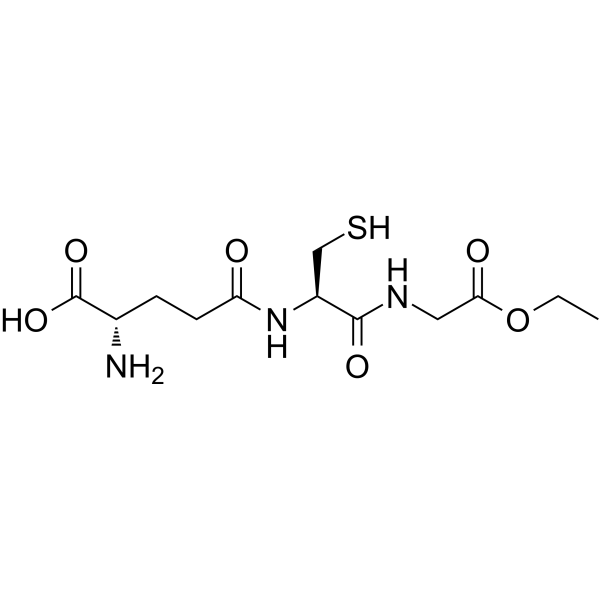
Glutathione ethyl ester is a cell-permeable GSH donor and provides an efficient supply of GSH to the oocyte. Glutathione ethyl ester shows positive effect on the in vitro production of embryos by enhancement of the antioxidative defense .
|
-
- HY-132698S
-
|
|
Isotope-Labeled Compounds
|
Others
|
|
2-Amino-4-chloro-N-[(1R,2R)-2-(2,4-difluorophenyl)-2-hydroxy-1-methyl-3-(1H-1,2,4-triazol-1-yl)propyl]benzamide-d3 is the deuterium labeled 2-Amino-4-chloro-N-[(1R,2R)-2-(2,4-difluorophenyl)-2-hydroxy-1-methyl-3-(1H-1,2,4-triazol-1-yl)propyl]benzamide .
|
-
![2-Amino-4-chloro-N-[(1R,2R)-2-(2,4-difluorophenyl)-2-hydroxy-1-methyl-3-(1H-1,2,4-triazol-1-yl)propyl]benzamide-d3](//file.medchemexpress.com/product_pic/hy-132698s.gif)
- HY-P10828
-
|
|
Virus Protease
|
Infection
Inflammation/Immunology
|
|
MAPI is a polypeptide irreversible 3C cysteine protease (SV3CP) inhibitor. MAPI inhibits SV3CP by covalently binding its C-terminal Michael-acceptor extension to the active site thiol of SV3CP Cys 139. MAPI is promising for research of noroviruses infection .
|
-

- HY-W038820R
-
|
|
Reference Standards
|
|
|
N-((4-(5-Methyl-3-phenylisoxazol-4-yl)phenyl)sulfonyl)acetamide (Standard) is the analytical standard of N-((4-(5-Methyl-3-phenylisoxazol-4-yl)phenyl)sulfonyl)acetamide. This product is intended for research and analytical applications.
|
-

- HY-W612293
-
|
|
Others
|
Others
|
|
2-Ethoxypropan-1-ol is a volatile oil found in Ardisia japonica .
|
-

- HY-P1108A
-
|
|
CRFR
|
Neurological Disease
Inflammation/Immunology
|
Astressin 2B TFA is a blood-brain barrier-impermeable, highly selective CRFR2 antagonist (rCRFR2, IC50=0.57 nM). Astressin 2B TFA blocks the protective effects mediated by CRFR2, thereby exacerbating indomethacin (HY-14397)-induced hemorrhagic intestinal injury in rats. Astressin 2B TFA reverses the protective effects of Urocortin 1 against intestinal hypermotility, bacterial invasion and upregulation of inflammatory mediators. Astressin 2B TFA also blocks the anxiogenic effect of Urocortin 2 and attenuates stress-induced anxiety-related behaviors. In the Clostridioides difficile toxin A (C. difficile toxin A)-mediated enteritis model, Astressin 2B TFA mimics the phenotype of CRFR2-deficient mice, significantly exacerbating intestinal epithelial damage, edema, neutrophil migration and the expression of multiple proinflammatory cytokines. Astressin 2B TFA is an important tool molecule for investigating the intestinal protective mechanisms of CRFR2 [3] .
|
-

- HY-P1108
-
|
|
CRFR
|
Neurological Disease
Inflammation/Immunology
|
Astressin 2B is a blood-brain barrier-impermeable, highly selective CRFR2 antagonist (rCRFR2, IC50=0.57 nM). Astressin 2B blocks the protective effects mediated by CRFR2, thereby exacerbating indomethacin (HY-14397)-induced hemorrhagic intestinal injury in rats. Astressin 2B reverses the protective effects of Urocortin 1 against intestinal hypermotility, bacterial invasion and upregulation of inflammatory mediators. Astressin 2B also blocks the anxiogenic effect of Urocortin 2 and attenuates stress-induced anxiety-related behaviors. In the Clostridioides difficile toxin A (C. difficile toxin A)-mediated enteritis model, Astressin 2B mimics the phenotype of CRFR2-deficient mice, significantly exacerbating intestinal epithelial damage, edema, neutrophil migration and the expression of multiple proinflammatory cytokines. Astressin 2B is an important tool molecule for investigating the intestinal protective mechanisms of CRFR2 [3] .
|
-

- HY-W714077
-
-

- HY-W700565
-
-

- HY-W060216
-
|
|
Biochemical Assay Reagents
|
Others
|
|
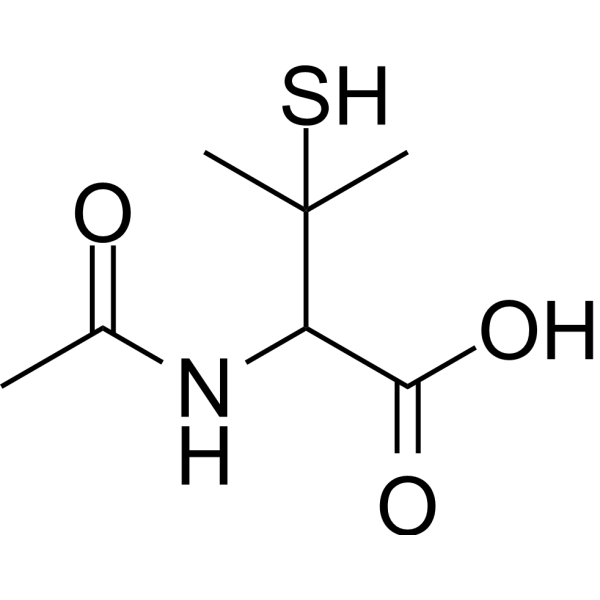
2-Acetamido-3-methyl-3-sulfanylbutanoic acid is an organic compound that belongs to the class of amino acids. It is a derivative of methionine, an essential amino acid commonly found in various foods. 2-Acetamido-3-methyl-3-sulfanylbutanoic acid contains a thiol group and an acetamido group at specific positions in the amino acid chain. It has various applications in the food industry, especially as a flavor enhancer and umami seasoning. Additionally, it has potential research utility in liver disease and other metabolic disorders.
|
-
- HY-Y0636R
-
|
|
Reference Standards
|
|
|
Methyl isobutyrylacetate (Standard) is the analytical standard of Methyl isobutyrylacetate. This product is intended for research and analytical applications.
|
-

- HY-N3289A
-
|
|
Others
|
Inflammation/Immunology
|
|
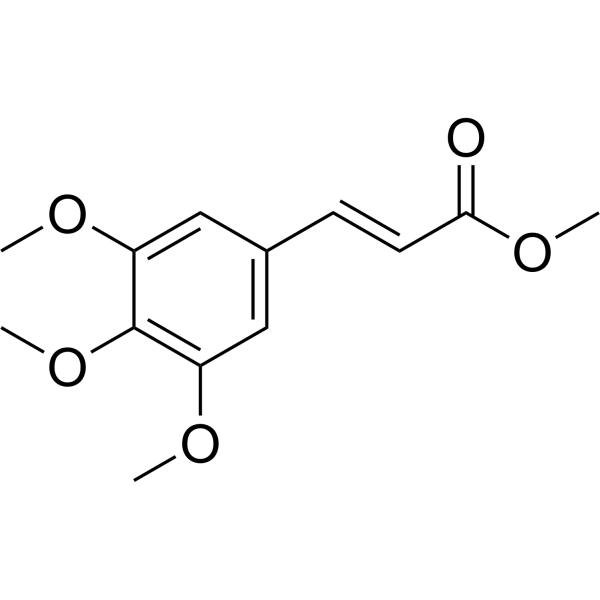
(E)-Methyl 3,4,5-trimethoxycinnamate is a bioactive natural phenylpropanoid. (E)-Methyl 3,4,5-trimethoxycinnamate suppresses inflammation in RAW264.7 macrophages and blocks macrophage-adipocyte interaction. (E)-Methyl 3,4,5-trimethoxycinnamate also has antiarrhythmic effect, leads to suppression of triggered activities in rabbit myocytes .
|
-
- HY-48099
-
|
|
Drug Intermediate
|
Others
|
|
tert-Butyl (S)-2-(4-fluoro-3,5-dimethylphenyl)-4-methyl-3-(2-oxo-2,3-dihydro-1H-imidazol-1-yl)-2,4,6,7-tetrahydro-5H-pyrazolo[4,3-c]pyridine-5-carboxylate is a drug intermediate for synthesis of various active compounds.
|
-
![tert-Butyl (S)-2-(4-fluoro-3,5-dimethylphenyl)-4-methyl-3-(2-oxo-2,3-dihydro-1H-imidazol-1-yl)-2,4,6,7-tetrahydro-5H-pyrazolo[4,3-c]pyridine-5-carboxylate](//file.medchemexpress.com/product_pic/hy-48099.gif)
- HY-161627
-
|
|
Pyruvate Carboxylase (PC)
NOD-like Receptor (NLR)
NF-κB
Interleukin Related
|
Inflammation/Immunology
|
|
Anemoside A3-methyl 6-aminohexanoate is an orally effective pyruvate carboxylase (PC) inhibitor with a Kd value of 10.1 μM against human PC. Anemoside A3-methyl 6-aminohexanoate exerts its function through the PC/NF-κB/NLRP3 inflammasome axis. Anemoside A3-methyl 6-aminohexanoate significantly alleviates symptoms of DSS (HY-116282C)-induced colitis in mice. Anemoside A3-methyl 6-aminohexanoate can be used in colitis-related research .
|
-

- HY-W020445
-
|
3-Bromo-7-aza-bicyclo[2.2.1]hepta-2,5-diene-2,7-dicarboxylic acid 7-tert-butyl ester 2-methyl ester
|
Drug Intermediate
|
Others
|
|
7-(tert-Butyl) 2-methyl 3-bromo-7-azabicyclo[2.2.1]hepta-2,5-diene-2,7-dicarboxylate (3-Bromo-7-aza-bicyclo[2.2.1]hepta-2,5-diene-2,7-dicarboxylic acid 7-tert-butyl ester 2-methyl ester) is a drug intermediate for synthesis of various active compounds.
|
-
![7-(tert-Butyl) 2-methyl 3-bromo-7-azabicyclo[2.2.1]hepta-2,5-diene-2,7-dicarboxylate](//file.medchemexpress.com/product_pic/hy-w020445.gif)
- HY-I0278R
-
|
|
Reference Standards
|
|
|
1-((3R,4R)-4-methyl-3-(methyl(7H-pyrrolo[2,3-d]pyrimidin-4-yl)amino)piperidin-1-yl)ethanone (Standard) is the analytical standard of 1-((3R,4R)-4-methyl-3-(methyl(7H-pyrrolo[2,3-d]pyrimidin-4-yl)amino)piperidin-1-yl)ethanone. This product is intended for research and analytical applications.
|
-

- HY-Z3707
-
-

- HY-21796
-
-

- HY-E71112
-
|
|
Biochemical Assay Reagents
|
Others
|
|
(S)-3-Amino-2-methylpropionate transaminase (EC 2.6.1.22) acts on β-alanine and other ω-amino acids having carbon chains between 2 and 5. The two enantiomers of the 2-methyl-3-oxopropanoate formed by the enzyme interconvert by enolization.
|
-

- HY-N12596
-
|
|
Others
|
Others
|
|
Uralenol-3-methyl ether is a flavonol which can be extracted from Daphne giraldii .
|
-
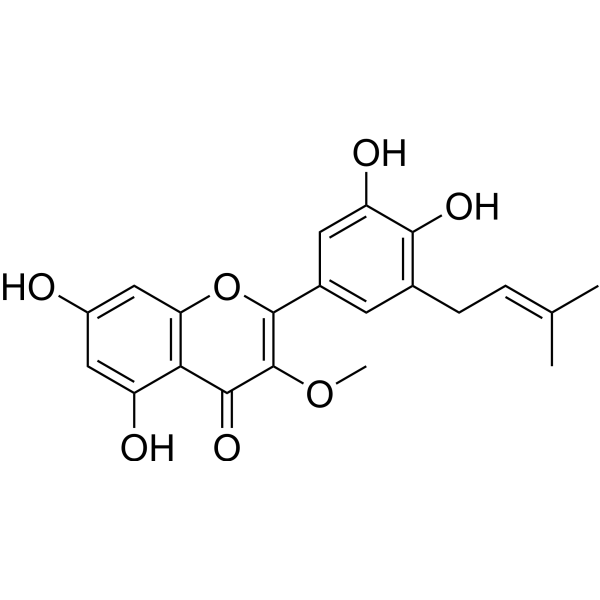
- HY-P2592
-
-
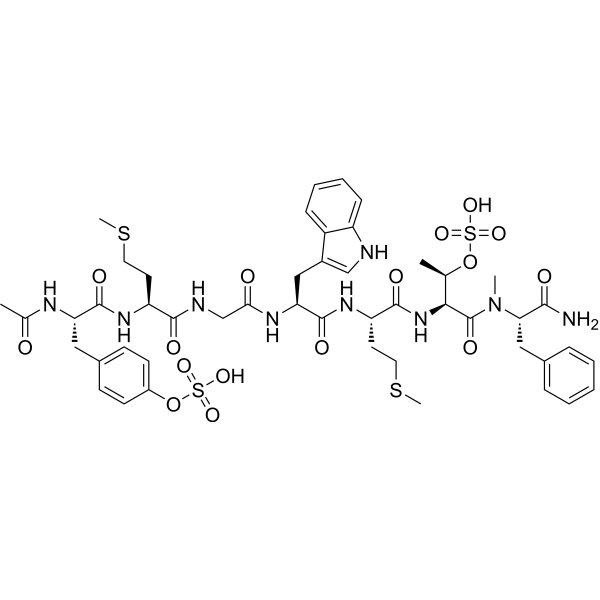
- HY-W109161R
-
|
|
Reference Standards
|
|
|
4-Amino-1-methyl-3-(2-methylpropyl)-1H-pyrazole-5-carboxamide (Standard) is the analytical standard of 4-Amino-1-methyl-3-(2-methylpropyl)-1H-pyrazole-5-carboxamide. This product is intended for research and analytical applications.
|
-

- HY-P10143
-
|
Ac-Pro-Leu-Gly-[(S)-2-mercapto-4-methyl-pentanoyl]-Leu-Gly-OEt
|
MMP
|
Others
|
|
MMP-2/MMP-9 Substrate (Ac-Pro-Leu-Gly-[(S)-2-mercapto-4-methyl-pentanoyl]-Leu-Gly-OEt) is a synthetic chromogenic polypeptide substrate whose core structure mimics the cleavage sites of MMP-2 and MMP-9 (gelatinase A and B) in collagen. After being hydrolyzed by collagenase, MMP-2/MMP-9 Substrate reacts with 4,4'-dithiodipyridine or Ellman's Reagent via its thiol fragment to produce a product with ultraviolet absorption properties .
|
-
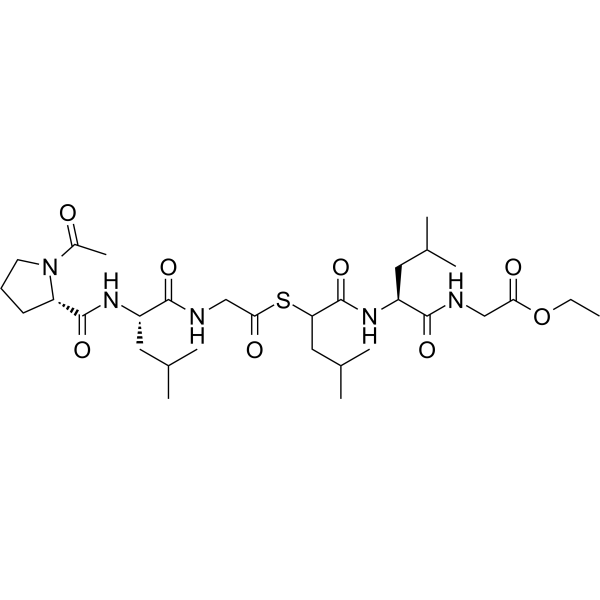
- HY-W010247R
-
|
4-methyl -3-aminobenzoic acid (Standard)
|
Reference Standards
|
|
|
3-Amino-4-methylbenzoic acid (Standard) is the analytical standard of 3-Amino-4-methylbenzoic acid (HY-W010247). This product is intended for research and analytical applications.
|
-

- HY-E71090
-
|
|
Biochemical Assay Reagents
|
Others
|
|
The two enantiomers of the 2-methyl-3-oxopropanoate formed by the enzyme interconvert by enolization, so that (R)-3-Amino-2-methylpropionate-pyruvate transaminase (EC 2.6.1.40) , together with EC 2.6.1.22, (S)-3-Amino-2-methylpropionate transaminase, provide a route for interconversion of the enantiomers of 3-amino-2-methylpropanoate.
|
-

- HY-W703512
-
|
|
Isotope-Labeled Compounds
|
Others
|
|
Iso sildenafil-d3 is the deuterium labeled 5-(2-Ethoxy-5-((4-methylpiperazin-1-yl)sulfonyl)phenyl)-2-methyl-3-propyl-2,4-dihydro-7H-pyrazolo[4,3-d]pyrimidin-7-one (HY-W703511).
|
-

- HY-P3066
-
|
d(CH2)5Tyr(Et)VAVP
|
Vasopressin Receptor
|
Metabolic Disease
|
|
SKF 100398 (d(CH2)5Tyr(Et)VAVP), an arginine vasopressin (AVP) analogue, is a specific antagonist of the antidiuretic effect of exogenous and endogenous AVP .
|
-
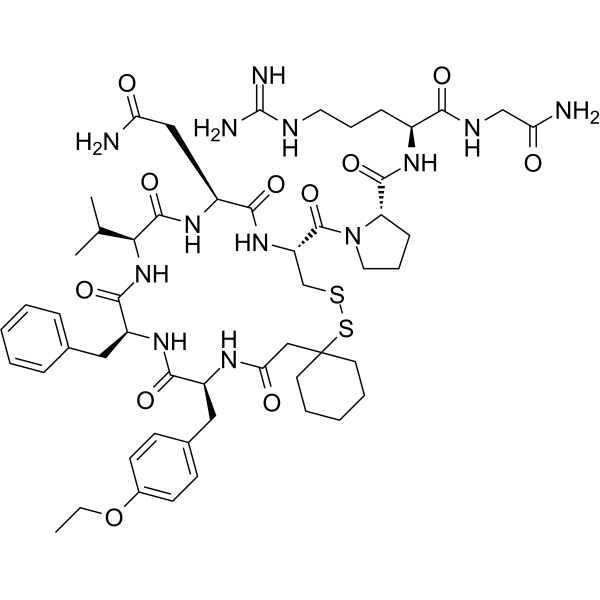
- HY-108984
-
|
5-(Benzylsulfonyl)-4-bromo-2-methyl-3(2H)-pyridazinone
|
Mitochondrial Metabolism
|
Neurological Disease
|
|
BBMP is a permeability transition pore (PTP) inhibitor. BBMP prevents Ca 2+-induced permeability transition and mitochondrial depolarization. BBMP possess potential for the neurodegenerative disorders research .
|
-

- HY-W777374
-
-

- HY-B0489
-
|
methyl 1,2,5,6-tetrahydro-1-methyl-3-pyridinecarboxylate hydrobromide
|
mAChR
nAChR
|
Infection
Neurological Disease
Metabolic Disease
Inflammation/Immunology
Cancer
|
|
Arecoline hydrobromide, a naturally brain-penetrant and orally active occurring psychoactive alkaloid, is a partial agonist of nicotinic and muscarinic acetylcholine receptor. Arecoline hydrobromide exhibits stimulation, alertness, anxiolysis and anti-parasitic effects. Arecoline hydrobromide also can induce oxidative stress [3] .
|
-
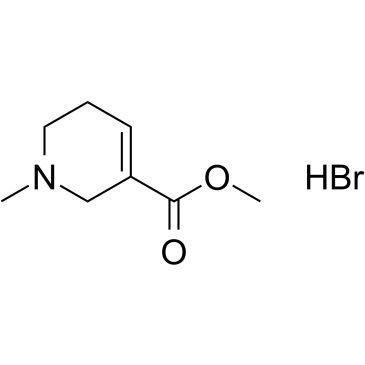
- HY-W101602S
-
-
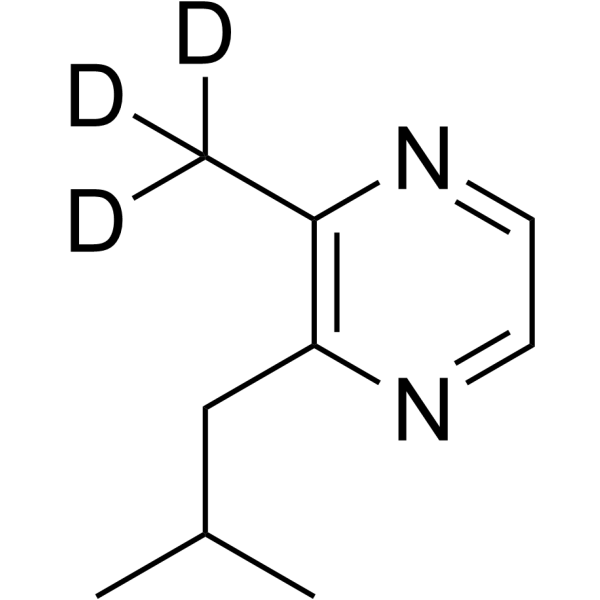
- HY-W587773R
-
|
|
Reference Standards
|
|
|
Monodesmethylchlorpheniramine (Standard) is the analytical standard of Monodesmethylchlorpheniramine. This product is intended for research and analytical applications.
|
-

- HY-W076490
-
|
IPO 4328; N-methyl-N'-phenylurea; 1-methyl-3-phenylurea
|
Herbicide
|
Others
|
|
Defenuron (IPO 4328) is a herbicide for controlling undesirable grasses and broad-leaved plants in a variety of crops .
|
-

- HY-125628
-
|
|
Endogenous Metabolite
|
Infection
|
|
Kahalalide A is an anti-mycobacterial compound with antimicrobial activity. Kahalalide A is derived from the marine mollusk Elysia rufescens. Kahalalide A has attracted extensive attention in natural product research due to its potential medicinal value .
|
-

- HY-W167769
-
|
|
Endogenous Metabolite
|
Others
|
|
(±)-Mellein, a marine-derived natural product, is known for its presence in Helicascus kanaloanus, exhibiting the chemical structure of 8-hydroxy-3-methyl-3,4-dihydroisochromen-1-one.
|
-

- HY-W004681S
-
-
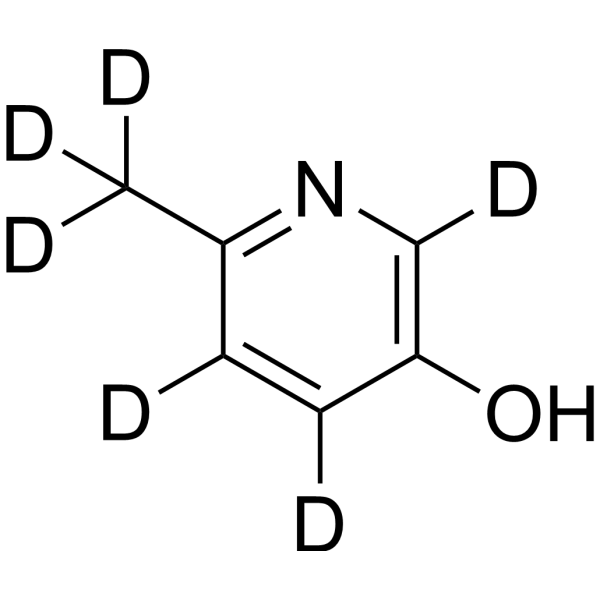
- HY-W288788S
-
-
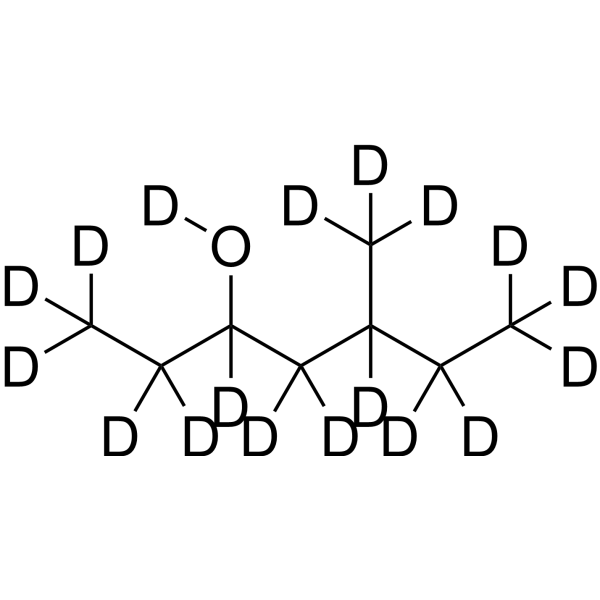
- HY-79009R
-
|
N-methyl-3-phenyl-3-hydroxypropylamine (Standard)
|
Reference Standards
|
|
|
α-[2-(Methylamino)ethyl]benzenemethanol (Standard) is the analytical standard of α-[2-(Methylamino)ethyl]benzenemethanol. This product is intended for research and analytical applications.
|
-
![α-[2-(Methylamino)ethyl]benzenemethanol (Standard)](//file.medchemexpress.com/product_pic/hy-79009r.gif)
- HY-Z0177R
-
|
|
Reference Standards
|
|
|
(S)-methyl 3-([1,1'-biphenyl]-4-yl)-2-((tert-butoxycarbonyl)amino)propanoate (Standard) is the analytical standard of (S)-methyl 3-([1,1'-biphenyl]-4-yl)-2-((tert-butoxycarbonyl)amino)propanoate. This product is intended for research and analytical applications.
|
-
![(S)-methyl 3-([1,1'-biphenyl]-4-yl)-2-((tert-butoxycarbonyl)amino)propanoate (Standard)](//file.medchemexpress.com/product_pic/hy-z0177r.gif)
- HY-P10272
-
|
PTG-300
|
Ferroportin
|
Others
|
|
Rusfertide is a peptide mimetic of natural hepcidin, which targets and degrades ferroportin, reduces serum iron and transferrin-saturation, and thus regulates the production of red blood cells. Rusfertide ameliorates the polycythemia vera, β-thalassemia and hereditary hemochromatosis .
|
-

- HY-B0489R
-
|
methyl 1,2,5,6-tetrahydro-1-methyl-3-pyridinecarboxylate hydrobromide (Standard)
|
Reference Standards
mAChR
nAChR
|
Infection
Neurological Disease
Metabolic Disease
Inflammation/Immunology
Cancer
|
|
Arecoline hydrobromide (Standard) is the analytical standard of Arecoline hydrobromide. This product is intended for research and analytical applications. Arecoline hydrobromide, a naturally brain-penetrant and orally active occurring psychoactive alkaloid, is a partial agonist of nicotinic and muscarinic acetylcholine receptor. Arecoline hydrobromide exhibits stimulation, alertness, anxiolysis and anti-parasitic effects. Arecoline hydrobromide also can induce oxidative stress [3] .
|
-

- HY-A0248AS1
-
|
|
Isotope-Labeled Compounds
Bacterial
|
Infection
|
|
Polymyxin B1-D-Leu-d7 TFA is the deuterium labeled Polymyxin B1 (HY-A0248A). Polymyxin B1 is a potent antimicrobial lipopeptide first derived from Bacilus polymyxa. Polymyxin B1 is the major component in Polymyxin B (HY-A0248). Polymyxin B1 can induce lysis of bacterial cells through interaction with their membranes. Polymyxin B1 has the potential for multidrug-resistant Gram-negative bacterial infections treatment .
|
-

- HY-A0248A
-
|
|
Bacterial
|
Infection
|
|
Polymyxin B1 is a potent antimicrobial lipopeptide first derived from Bacilus polymyxa. Polymyxin B1 is the major component in Polymyxin B (HY-A0248). Polymyxin B1 can induce lysis of bacterial cells through interaction with their membranes. Polymyxin B1 has the potential for multidrug-resistant Gram-negative bacterial infections treatment .
|
-
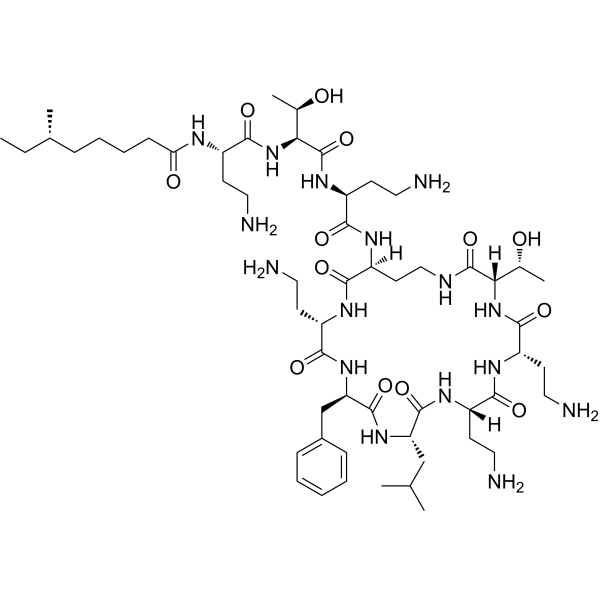
- HY-A0248AS
-
|
|
Isotope-Labeled Compounds
Bacterial
|
Infection
|
|
Polymyxin B1-d7 TFA is the deuterium labeled Polymyxin B1 TFA (HY-A0248A). Polymyxin B1 is a potent antimicrobial lipopeptide first derived from Bacilus polymyxa. Polymyxin B1 is the major component in Polymyxin B (HY-A0248). Polymyxin B1 can induce lysis of bacterial cells through interaction with their membranes. Polymyxin B1 has the potential for multidrug-resistant Gram-negative bacterial infections treatment .
|
-

- HY-154144
-
|
|
Nucleoside Antimetabolite/Analog
|
Cancer
|
|
2’,3’,5’-Tri-O-benzoyl-2’-β-C-methyl-5-methyl uridine is a thymidine analog. Analogs of this series have insertional activity towards replicated DNA. They can be used to label cells and track DNA synthesis .
|
-
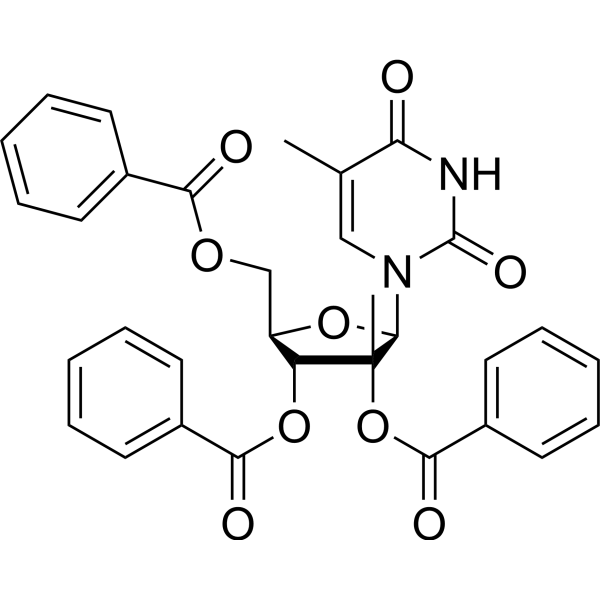
- HY-W003303R
-
|
3-Piperidinemethanol,4-(4-fluorophenyl)-1-methyl-,(3S,4R)- (Standard)
|
Reference Standards
|
|
|
(3S,4R)-4-(4-Fluorophenyl)-3-hydroxymethyl-1-methylpiperidine (Standard) is the analytical standard of (3S,4R)-4-(4-Fluorophenyl)-3-hydroxymethyl-1-methylpiperidine (HY-W003303). This product is intended for research and analytical applications.
|
-

- HY-W1009015
-
|
|
DNA/RNA Synthesis
Phosphoramidites
|
Others
|
|
(1R,4R,5S)-1-((Bis(4-methoxyphenyl)(phenyl)methoxy)methyl)-3-(2-isobutyramido-6-oxo-1H-purin-9(6H)-yl)-2,6-dioxabicyclo[3.2.0]heptan-4-yl (2-cyanoethyl) diisopropylphosphoramidite is a phosphoramidite that can be used in the synthesis of oligonucleotides.
|
-
![N2-iBu-Guanine bicyclo[3.2.0]-CE-diisopropylphosphoramidite](//file.medchemexpress.com/product_pic/hy-w1009015.gif)
- HY-201025
-
|
|
DNA/RNA Synthesis
Phosphoramidites
|
Others
|
|
(1R,3S,4S,7S)-1-((Bis(4-methoxyphenyl)(phenyl)methoxy)methyl)-3-(1-methyl-2,4-dioxo-1,2,3,4-tetrahydropyrimidin-5-yl)-2,5-dioxabicyclo[2.2.1]heptan-7-yl (2-cyanoethyl) diisopropylphosphoramidite is a phosphoramidite that can be used in the synthesis of oligonucleotides.
|
-

- HY-79271
-
|
Butanamide, 2-amino-N,3,3-trimethyl-, (S)-; (S)-2-Amino-N-methyl-3,3-dimethylbutanamide; L-tert-Leucine methylamide; L-tert-Leucine-N-methylamide
|
Amino Acid Derivatives
|
Others
|
|
S-tert-Leucine N-methylamide is a leucine derivative .
|
-
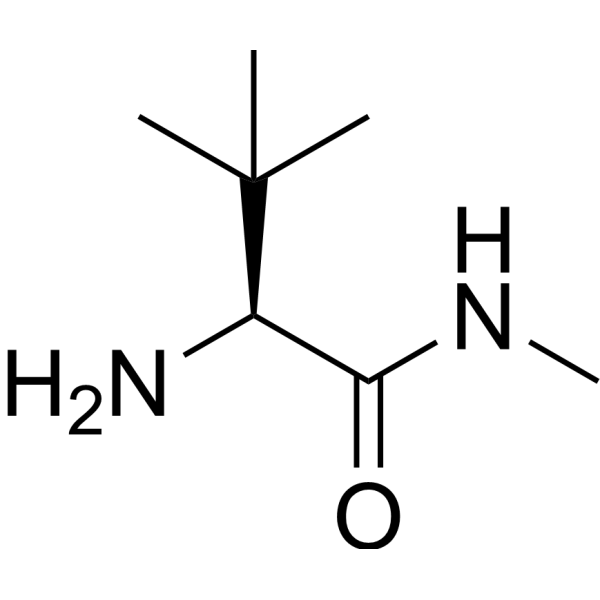
- HY-P10563
-
|
BHV-1100
|
CD38
|
Cancer
|
|
Noraramtide (BHV-1100) is an antibody recruitment molecule. Noraramtide can specifically bind to CD38 molecules to recruit natural killer (NK) cells. Noraramtide enhances the ability of NK cells to kill tumor cells through antibody-dependent cellular cytotoxicity (ADCC). This mechanism allows NK cells to more effectively recognize and eliminate tumor cells while avoiding mutual killing between NK cells. Noraramtide can be used for the study of autologous cancer immunity .
|
-

- HY-W039379
-
|
trans-2-Octenoic acid methyl ester
|
Biochemical Assay Reagents
|
Others
|
|
Methyl (E)-oct-2-enoate is commonly used as an ingredient in perfume, cologne, and food flavor in the perfume and fragrance industry. Its pleasant fragrance and low volatility make it a good choice for adding fruit to various products. A popular choice for incense, in addition to its application in the fragrance and fragrance industry, Methyl (E)-oct-2-enoate is also used as a raw material for the synthesis of other organic compounds, it can be oxidized to form methyl 3-oxobutyrate, Used in the production of pharmaceuticals and agrochemicals. Overall, Methyl (E)-oct-2-enoate is a versatile compound that is used in various industries for its pleasant aroma and reactivity, its fruity and floral notes in fragrances and essences Industry is highly sought after, and its ability to serve as a starting material for other compounds makes it useful in organic synthesis.
|
-
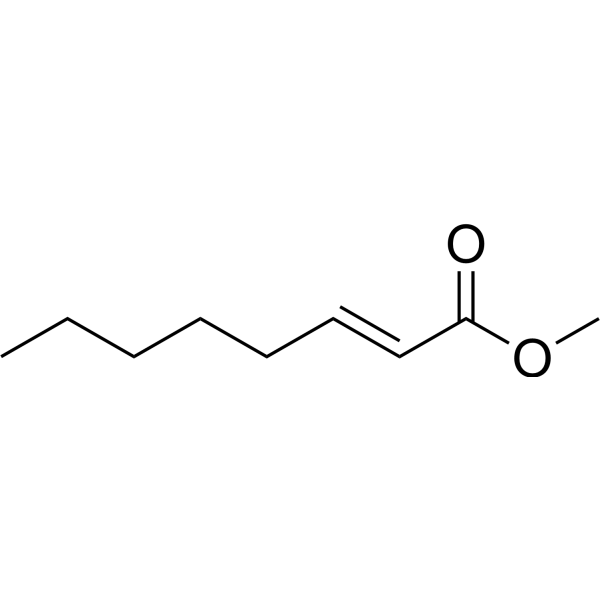
| Cat. No. |
Product Name |
Type |
-
- HY-D0026
-
|
7-Amino-4-methyl-3-coumarinacetic acid N-succinimidyl ester
|
Fluorescent Dyes
|
|
AMCA,SE (7-Amino-4-methyl-3-coumarinacetic acid N-succinimidyl ester) is a bright blue fluorescent dye. AMCA,SE reacts with amino groups and is excited by ultraviolet light. AMCA,SE can be used for amine reactive labeling (Ex/Em = 354/440 nm) .
|
-
- HY-121030
-
|
N-(7-Dimethylamino-4-methyl-3-coumarinyl)maleimide
|
Fluorescent Dyes
|
|
DACM (N-(7-Dimethylamino-4-methyl-3-coumarinyl)maleimide) is a thiol-directed fluorescent dye (Ex=396 nm, Em=468 nm) .
|
| Cat. No. |
Product Name |
Type |
-
- HY-W004091
-
|
3-(Methoxycarbonyl)phenylboronic acid
|
Biochemical Assay Reagents
|
|
3-(Methoxycarbonyl)phenylboronic acid is a biochemical reagent that can be used as a biological material or organic compound for life science related research.
|
-
- HY-W010507
-
|
methyl (R)-(-)-3-hydroxybutyrate
|
Biochemical Assay Reagents
|
|
(R)-Methyl 3-hydroxybutanoate, (R)-Methyl 3-hydroxybutanoate is an enantiomer, from the perspective of the methyl (-CH3) group, the hydroxyl (-OH) group on the third carbon atom The group faces to the right, a colorless transparent liquid, soluble in organic solvents such as ethanol and ether, insoluble in water, (R)-Methyl 3-hydroxybutanoate is usually used to synthesize various organic compounds (including drugs, agricultural chemicals and flavoring agents) It can also be used as a chiral auxiliary in asymmetric synthetic reactions involving the formation of chemical bonds in a stereoselective manner.
|
-
- HY-W010394
-
|
|
Biochemical Assay Reagents
|
|
Methyl 3-oxopentanoate, which is also known as diethyl acetylmalonate or MEAM, Methyl 3-oxopentanoate is commonly used as a building block for the synthesis of various organic compounds, including pharmaceuticals, agrochemicals, and flavorings, and it can also Used as a reagent in organic chemical reactions, especially the formation of carbon-carbon bonds through malonate synthesis, the researchers also investigated the potential use of Methyl 3-oxopentanoate in the development of chiral auxiliaries that can aid in the selection of Controlling the stereochemistry of chemical reactions.
|
-
- HY-W014159
-
|
|
Biochemical Assay Reagents
|
|
1-Bromo-2-methyl-3-nitrobenzene is an organic synthesis intermediate. 1-Bromo-2-methyl-3-nitrobenzene participates in chemical reactions such as electrophilic substitution and coupling through the bromine atom and nitro group in the molecule, and acts as a synthetic precursor. 1-Bromo-2-methyl-3-nitrobenzene can construct complex molecular structures by relying on the leaving property of bromine and the electron-withdrawing property of nitro group, and can be used in the synthesis of benzimidazole VISTA inhibitors in medicinal chemistry .
|
-
- HY-W012885
-
|
|
Biochemical Assay Reagents
|
|
(S)-Methyl 3-hydroxybutanoate consists of a chiral center, resulting in two enantiomers, where (S)-Methyl 3-hydroxybutanoate means that the hydroxyl group is located on the third carbon atom of the S-configuration carboxylic acid group stereoisomers. This compound is often used as a building block for the synthesis of various pharmaceuticals and natural products. Due to its fruity taste, it is also used as a flavor and fragrance ingredient.
|
-
- HY-W002448
-
|
3-Trifluoromethyl-2-methylaniline
|
Biochemical Assay Reagents
|
|
2-Methyl-3-(trifluoromethyl)aniline is a biochemical reagent that can be used as a biological material or organic compound for life science related research.
|
-
- HY-W005176
-
|
methyl Butyrylacetate; methyl 3-oxohexanoate
|
Biochemical Assay Reagents
|
|
Methyl 3-oxohexanoate (Methyl Butyrylacetate) is an organic compound commonly used in the manufacture of fragrances, drugs, and other chemicals. It can be used as a condensation reagent, a diazotization reagent and an addition reagent, and it plays a catalytic role in some organic synthesis reactions, and can also play a role in some drug synthesis. In addition, the compound is widely used in the food industry, for example in products such as juices, beer and confectionery.
|
-
- HY-132237
-
|
3-Hydroxyhexadecanoic acid methyl ester
|
Biochemical Assay Reagents
|
|
3-Hydroxyhexadecanoic Acid Methyl Ester is a biochemical reagent that can be used as a biological material or organic compound for life science related research.
|
-
- HY-W039379
-
|
trans-2-Octenoic acid methyl ester
|
Biochemical Assay Reagents
|
|
Methyl (E)-oct-2-enoate is commonly used as an ingredient in perfume, cologne, and food flavor in the perfume and fragrance industry. Its pleasant fragrance and low volatility make it a good choice for adding fruit to various products. A popular choice for incense, in addition to its application in the fragrance and fragrance industry, Methyl (E)-oct-2-enoate is also used as a raw material for the synthesis of other organic compounds, it can be oxidized to form methyl 3-oxobutyrate, Used in the production of pharmaceuticals and agrochemicals. Overall, Methyl (E)-oct-2-enoate is a versatile compound that is used in various industries for its pleasant aroma and reactivity, its fruity and floral notes in fragrances and essences Industry is highly sought after, and its ability to serve as a starting material for other compounds makes it useful in organic synthesis.
|
-
- HY-W007431
-
|
|
Biochemical Assay Reagents
|
|
Methyl 3,4-diaminobenzoate is an analogue of 3,4-diaminobenzoic acid, which contains the CO2H group protected as a methyl ester and the amino (NH2) substituents required to form the quinoxaline .
|
-
- HY-I0708
-
|
|
Biochemical Assay Reagents
|
|
1-Methyl-3-pyrrolidinol is a biochemical reagent that can be used as a biological material or organic compound for life science related research.
|
-
- HY-W021293
-
|
|
Biochemical Assay Reagents
|
|
4-Methyl-3-nitrobenzoic acid is a biochemical reagent that can be used as a biological material or organic compound for life science related research.
|
-
- HY-32806
-
|
|
Biochemical Assay Reagents
|
|
2-Chloro-4-methyl-3-nitropyridine is a pyridine derivative that can be used to synthesize 2-methoxypyridine derivatives with antibacterial and antituberculosis activities .
|
-
- HY-90004
-
|
|
Biochemical Assay Reagents
|
|
Methyl 3-hydroxybenzoate is a biochemical reagent that can be used as a biological material or organic compound for life science related research.
|
-
- HY-W099750
-
|
methyl Valerylacetate
|
Biochemical Assay Reagents
|
|
Methyl 3-oxoheptanoate is the methyl ester of the organic compound 3-oxoheptanoate. It has a fruity smell and taste. Methyl 3-oxoheptanoate is widely used as a flavoring agent and fragrance in the food and fragrance industry for its pleasant aroma. It is also used as an intermediate in the synthesis of other organic compounds such as pharmaceuticals, agrochemicals, and polymers.
|
-
- HY-W010106
-
|
|
Biochemical Assay Reagents
|
|
Methyl 3-amino-4-methylbenzoate is a biochemical reagent that can be used as a biological material or organic compound for life science related research.
|
-
- HY-W002874
-
|
|
Biochemical Assay Reagents
|
|
Methyl 3-aminopyridine-4-carboxylate is a biochemical reagent that can be used as a biological material or organic compound for life science related research.
|
-
- HY-32800
-
|
6-Chloro-3-nitro-2-picoline
|
Biochemical Assay Reagents
|
|
6-Chloro-2-methyl-3-nitropyridine is a biochemical reagent that can be used as a biological material or organic compound for life science related research.
|
-
- HY-W017474
-
|
|
Biochemical Assay Reagents
|
|
Methyl 3,3-dimethoxypropanoate is a biochemical reagent that can be used as a biological material or organic compound for life science related research.
|
-
- HY-34580
-
|
|
Biochemical Assay Reagents
|
|
Methyl 3,5-dihydroxybenzoate is a biochemical reagent that can be used as a biological material or organic compound for life science related research.
|
-
- HY-W676492
-
-
- HY-W338150
-
-
- HY-W002448R
-
|
3-Trifluoromethyl-2-methylaniline (Standard)
|
Biochemical Assay Reagents
|
|
2-Methyl-3-(trifluoromethyl)aniline (Standard) is the analytical standard of 2-Methyl-3-(trifluoromethyl)aniline. This product is intended for research and analytical applications. 2-Methyl-3-(trifluoromethyl)aniline is a biochemical reagent that can be used as a biological material or organic compound for life science related research.
|
-
- HY-W010106R
-
|
|
Biochemical Assay Reagents
|
|
Methyl 3-amino-4-methylbenzoate (Standard) is the analytical standard of Methyl 3-amino-4-methylbenzoate. This product is intended for research and analytical applications. Methyl 3-amino-4-methylbenzoate is a biochemical reagent that can be used as a biological material or organic compound for life science related research.
|
-
- HY-W127538
-
|
|
Biochemical Assay Reagents
|
|
Methyl 3-Hydroxydecanoate is a biochemical reagent that can be used as a biological material or organic compound for life science related research.
|
-
- HY-W416257
-
|
|
Biochemical Assay Reagents
|
|
Methyl 3-O-β-D-galactopyranosyl-β-D-galactopyranoside is a class of biochemical reagent used in glycobiology research. Glycobiology studies the structure, synthesis, biology, and evolution of sugars. It deals with carbohydrate chemistry, glycan formation and degradation enzymology, protein-glycan recognition, and the role of glycans in biological systems. The field is closely related to basic research, biomedicine and biotechnology .
|
-
- HY-W554624
-
|
|
Biochemical Assay Reagents
|
|
Methyl 3-O-methyl-4,6-O-(phenylmethylene)-α-D-mannopyranoside is a class of biochemical reagents used in glycobiology research. Glycobiology studies the structure, synthesis, biology, and evolution of sugars. It involves carbohydrate chemistry, enzymology of glycan formation and degradation, protein-glycan recognition, and the role of glycans in biological systems. This field is closely related to basic research, biomedicine, and biotechnology .
|
-
- HY-W700524
-
|
|
Biochemical Assay Reagents
|
|
Methyl 6-deoxy-2-O-methyl-3-O-benzyl-α-D-galactopyranoside is a class of biochemical reagents used in glycobiology research. Glycobiology studies the structure, synthesis, biology, and evolution of sugars. It involves carbohydrate chemistry, enzymology of glycan formation and degradation, protein-glycan recognition, and the role of glycans in biological systems. This field is closely related to basic research, biomedicine, and biotechnology .
|
-
- HY-W700429
-
|
|
Biochemical Assay Reagents
|
|
Methyl 3-acetylamino-2,3-dideoxy-4,6-O-benzylidene-α-D-ribo-hexopyranoside is a class of biochemical reagents used in glycobiology research. Glycobiology studies the structure, synthesis, biology, and evolution of sugars. It involves carbohydrate chemistry, enzymology of glycan formation and degradation, protein-glycan recognition, and the role of glycans in biological systems. This field is closely related to basic research, biomedicine, and biotechnology .
|
-
- HY-W700431
-
|
|
Biochemical Assay Reagents
|
|
Methyl 3-acetamido-4,6-O-benzylidene-2,3-dideoxy-α-D-arabino-hexopyranoside is a class of biochemical reagents used in glycobiology research. Glycobiology studies the structure, synthesis, biology, and evolution of sugars. It involves carbohydrate chemistry, enzymology of glycan formation and degradation, protein-glycan recognition, and the role of glycans in biological systems. This field is closely related to basic research, biomedicine, and biotechnology .
|
-
- HY-W127431
-
|
5α-Cholanic acid-3α-ol-6-one 3-acetate methyl ester
|
Biochemical Assay Reagents
|
|
Methyl (3α,5α)-3-(acetyloxy)-6-oxocholan-24-oate is a biochemical reagent that can be used as a biological material or organic compound for life science related research.
|
-
- HY-W740309
-
|
|
Biochemical Assay Reagents
|
|
Methyl 6-deoxy-2-O-methyl-3,4-O-(1-methylethylidene)-α-D-galactopyranoside is a class of biochemical reagents used in glycobiology research. Glycobiology studies the structure, synthesis, biology, and evolution of sugars. It involves carbohydrate chemistry, enzymology of glycan formation and degradation, protein-glycan recognition, and the role of glycans in biological systems. This field is closely related to basic research, biomedicine, and biotechnology .
|
-
- HY-W416359
-
|
|
Biochemical Assay Reagents
|
|
Methyl 3-O-benzyl-4, 6-O-Benzylidene-2-deoxy-2-N-Phthalimido-β-d-Glucopyranoside is a class of biochemical reagents used in the study of glycobiology. Glycobiology studies the structure, synthesis, biology, and evolution of sugars. It deals with carbohydrate chemistry, glycan formation and degradation enzymology, protein-glycan recognition, and the role of glycans in biological systems. The field is closely related to basic research, biomedicine and biotechnology .
|
-
- HY-W698908
-
|
methyl 3-O-[2-(acetylamino)-2-deoxy-β-D-galactopyranosyl]-α-D-galactopyranoside
|
Biochemical Assay Reagents
|
|
GalNAc1-b-3Gal-α-Ome (Methyl 3-O-[2-(acetylamino)-2-deoxy-β-D-galactopyranosyl]-α-D-galactopyranoside) is a class of biochemical reagents used in glycobiology research. Glycobiology studies the structure, synthesis, biology, and evolution of sugars. It involves carbohydrate chemistry, enzymology of glycan formation and degradation, protein-glycan recognition, and the role of glycans in biological systems. This field is closely related to basic research, biomedicine, and biotechnology .
|
-
- HY-W060216
-
|
|
Biochemical Assay Reagents
|
|
2-Acetamido-3-methyl-3-sulfanylbutanoic acid is an organic compound that belongs to the class of amino acids. It is a derivative of methionine, an essential amino acid commonly found in various foods. 2-Acetamido-3-methyl-3-sulfanylbutanoic acid contains a thiol group and an acetamido group at specific positions in the amino acid chain. It has various applications in the food industry, especially as a flavor enhancer and umami seasoning. Additionally, it has potential research utility in liver disease and other metabolic disorders.
|
-
- HY-W558285
-
|
|
Biochemical Assay Reagents
|
|
Methyl 3,6-di-O-(α-D-mannopyranosyl)-α-D-mannopyranoside is a class of biochemical reagents used in glycobiology research. Glycobiology studies the structure, synthesis, biology, and evolution of sugars. It involves carbohydrate chemistry, enzymology of glycan formation and degradation, protein-glycan recognition, and the role of glycans in biological systems. This field is closely related to basic research, biomedicine, and biotechnology .
|
-
- HY-W777374
-
-
- HY-W357162
-
|
|
Biochemical Assay Reagents
|
|
Methyl3,4,6-tri-O-acetyl-2-deoxy-2-phthalimido-b-D-glucopyranoside is a class of biochemical reagents used in glycobiology research. Glycobiology studies the structure, synthesis, biology, and evolution of sugars. It involves carbohydrate chemistry, enzymology of glycan formation and degradation, protein-glycan recognition, and the role of glycans in biological systems. This field is closely related to basic research, biomedicine, and biotechnology .
|
-
- HY-W699493
-
|
|
Biochemical Assay Reagents
|
|
Methyl 3-deoxy-D-arabino-heptulopyranoside-7-phosphate is a biochemical agent used in glycobiology research. Glycobiology studies the structure, synthesis, biology, and evolution of sugars. It deals with carbohydrate chemistry, glycan formation and degradation enzymology, protein-glycan recognition, and the role of glycans in biological systems. The field is closely related to basic research, biomedicine and biotechnology .
|
-
- HY-W699494
-
|
|
Biochemical Assay Reagents
|
|
Methyl (methyl 3-deoxy-D-arabino-heptulopyranosid)onate-7-phosphate is a class of biochemical reagents used in glycobiology research. Glycobiology studies the structure, synthesis, biology, and evolution of sugars. It involves carbohydrate chemistry, enzymology of glycan formation and degradation, protein-glycan recognition, and the role of glycans in biological systems. This field is closely related to basic research, biomedicine, and biotechnology .
|
-
- HY-W777372
-
|
|
Biochemical Assay Reagents
|
|
Methyl 4-azido-4,6-dideoxy-2-O-methyl-3-O-(phenylmethyl)-α-D-glucopyranoside is a class of biochemical reagents used in glycobiology research. Glycobiology studies the structure, synthesis, biology, and evolution of sugars. It involves carbohydrate chemistry, enzymology of glycan formation and degradation, protein-glycan recognition, and the role of glycans in biological systems. This field is closely related to basic research, biomedicine, and biotechnology .
|
-
- HY-W460507
-
|
|
Biochemical Assay Reagents
|
|
Methyl 3,4-O-isopropylidene-L-threonate is a class of biochemical reagents used in glycobiology research. Glycobiology studies the structure, synthesis, biology, and evolution of sugars. It involves carbohydrate chemistry, enzymology of glycan formation and degradation, protein-glycan recognition, and the role of glycans in biological systems. This field is closely related to basic research, biomedicine, and biotechnology .
|
-
- HY-W740311
-
|
|
Biochemical Assay Reagents
|
|
Methyl 3,4-O-isopropylidene-α-D-galactopyranoside is a class of biochemical reagents used in glycobiology research. Glycobiology studies the structure, synthesis, biology, and evolution of sugars. It involves carbohydrate chemistry, enzymology of glycan formation and degradation, protein-glycan recognition, and the role of glycans in biological systems. This field is closely related to basic research, biomedicine, and biotechnology .
|
-
- HY-W698364
-
|
|
Biochemical Assay Reagents
|
|
Methyl 3,4-bis-O-(phenylmethyl)-α-D-mannopyranoside is a class of biochemical reagents used in glycobiology research. Glycobiology studies the structure, synthesis, biology, and evolution of sugars. It involves carbohydrate chemistry, enzymology of glycan formation and degradation, protein-glycan recognition, and the role of glycans in biological systems. This field is closely related to basic research, biomedicine, and biotechnology .
|
-
- HY-W777377
-
|
|
Biochemical Assay Reagents
|
|
Methyl 3,4-O-Isopropylidene-6-O-trityl-α-D-galactopyranoside is a class of biochemical reagents used in glycobiology research. Glycobiology studies the structure, synthesis, biology, and evolution of sugars. It involves carbohydrate chemistry, enzymology of glycan formation and degradation, protein-glycan recognition, and the role of glycans in biological systems. This field is closely related to basic research, biomedicine, and biotechnology .
|
-
- HY-W698363
-
|
|
Biochemical Assay Reagents
|
|
Methyl 3,6-Di-O-benzyl-2-deoxy-2-N-phthalimido-β-D-glucopyranoside is a biochemical reagent used in glycobiology research, such as the study of glycosylation reactions.
|
-
- HY-W145624
-
|
|
Biochemical Assay Reagents
|
|
Methyl 3,4,6-tri-O-acetyl-2-deoxy-2-phthalimido-1-thio-β-D-glucopyranoside is a class of biochemical reagents used in glycobiology research. Glycobiology studies the structure, synthesis, biology, and evolution of sugars. It involves carbohydrate chemistry, enzymology of glycan formation and degradation, protein-glycan recognition, and the role of glycans in biological systems. This field is closely related to basic research, biomedicine, and biotechnology .
|
| Cat. No. |
Product Name |
Target |
Research Area |
-
- HY-134124
-
|
|
Reactive Oxygen Species (ROS)
|
Metabolic Disease
|
|
Glutathione ethyl ester is a cell-permeable GSH donor and provides an efficient supply of GSH to the oocyte. Glutathione ethyl ester shows positive effect on the in vitro production of embryos by enhancement of the antioxidative defense .
|
-
- HY-P10272
-
|
PTG-300
|
Ferroportin
|
Others
|
|
Rusfertide is a peptide mimetic of natural hepcidin, which targets and degrades ferroportin, reduces serum iron and transferrin-saturation, and thus regulates the production of red blood cells. Rusfertide ameliorates the polycythemia vera, β-thalassemia and hereditary hemochromatosis .
|
-
- HY-A0248A
-
|
|
Bacterial
|
Infection
|
|
Polymyxin B1 is a potent antimicrobial lipopeptide first derived from Bacilus polymyxa. Polymyxin B1 is the major component in Polymyxin B (HY-A0248). Polymyxin B1 can induce lysis of bacterial cells through interaction with their membranes. Polymyxin B1 has the potential for multidrug-resistant Gram-negative bacterial infections treatment .
|
-
- HY-W016552
-
-
- HY-P1108A
-
|
|
CRFR
|
Neurological Disease
Inflammation/Immunology
|
Astressin 2B TFA is a blood-brain barrier-impermeable, highly selective CRFR2 antagonist (rCRFR2, IC50=0.57 nM). Astressin 2B TFA blocks the protective effects mediated by CRFR2, thereby exacerbating indomethacin (HY-14397)-induced hemorrhagic intestinal injury in rats. Astressin 2B TFA reverses the protective effects of Urocortin 1 against intestinal hypermotility, bacterial invasion and upregulation of inflammatory mediators. Astressin 2B TFA also blocks the anxiogenic effect of Urocortin 2 and attenuates stress-induced anxiety-related behaviors. In the Clostridioides difficile toxin A (C. difficile toxin A)-mediated enteritis model, Astressin 2B TFA mimics the phenotype of CRFR2-deficient mice, significantly exacerbating intestinal epithelial damage, edema, neutrophil migration and the expression of multiple proinflammatory cytokines. Astressin 2B TFA is an important tool molecule for investigating the intestinal protective mechanisms of CRFR2 [3] .
|
-
- HY-P1108
-
|
|
CRFR
|
Neurological Disease
Inflammation/Immunology
|
Astressin 2B is a blood-brain barrier-impermeable, highly selective CRFR2 antagonist (rCRFR2, IC50=0.57 nM). Astressin 2B blocks the protective effects mediated by CRFR2, thereby exacerbating indomethacin (HY-14397)-induced hemorrhagic intestinal injury in rats. Astressin 2B reverses the protective effects of Urocortin 1 against intestinal hypermotility, bacterial invasion and upregulation of inflammatory mediators. Astressin 2B also blocks the anxiogenic effect of Urocortin 2 and attenuates stress-induced anxiety-related behaviors. In the Clostridioides difficile toxin A (C. difficile toxin A)-mediated enteritis model, Astressin 2B mimics the phenotype of CRFR2-deficient mice, significantly exacerbating intestinal epithelial damage, edema, neutrophil migration and the expression of multiple proinflammatory cytokines. Astressin 2B is an important tool molecule for investigating the intestinal protective mechanisms of CRFR2 [3] .
|
-
- HY-P10143
-
|
Ac-Pro-Leu-Gly-[(S)-2-mercapto-4-methyl-pentanoyl]-Leu-Gly-OEt
|
MMP
|
Others
|
|
MMP-2/MMP-9 Substrate (Ac-Pro-Leu-Gly-[(S)-2-mercapto-4-methyl-pentanoyl]-Leu-Gly-OEt) is a synthetic chromogenic polypeptide substrate whose core structure mimics the cleavage sites of MMP-2 and MMP-9 (gelatinase A and B) in collagen. After being hydrolyzed by collagenase, MMP-2/MMP-9 Substrate reacts with 4,4'-dithiodipyridine or Ellman's Reagent via its thiol fragment to produce a product with ultraviolet absorption properties .
|
-
- HY-A0248AS
-
|
|
Isotope-Labeled Compounds
Bacterial
|
Infection
|
|
Polymyxin B1-d7 TFA is the deuterium labeled Polymyxin B1 TFA (HY-A0248A). Polymyxin B1 is a potent antimicrobial lipopeptide first derived from Bacilus polymyxa. Polymyxin B1 is the major component in Polymyxin B (HY-A0248). Polymyxin B1 can induce lysis of bacterial cells through interaction with their membranes. Polymyxin B1 has the potential for multidrug-resistant Gram-negative bacterial infections treatment .
|
-
- HY-P10563
-
|
BHV-1100
|
CD38
|
Cancer
|
|
Noraramtide (BHV-1100) is an antibody recruitment molecule. Noraramtide can specifically bind to CD38 molecules to recruit natural killer (NK) cells. Noraramtide enhances the ability of NK cells to kill tumor cells through antibody-dependent cellular cytotoxicity (ADCC). This mechanism allows NK cells to more effectively recognize and eliminate tumor cells while avoiding mutual killing between NK cells. Noraramtide can be used for the study of autologous cancer immunity .
|
-
- HY-P3066
-
|
d(CH2)5Tyr(Et)VAVP
|
Vasopressin Receptor
|
Metabolic Disease
|
|
SKF 100398 (d(CH2)5Tyr(Et)VAVP), an arginine vasopressin (AVP) analogue, is a specific antagonist of the antidiuretic effect of exogenous and endogenous AVP .
|
-
- HY-W006152
-
-
- HY-P10828
-
|
|
Virus Protease
|
Infection
Inflammation/Immunology
|
|
MAPI is a polypeptide irreversible 3C cysteine protease (SV3CP) inhibitor. MAPI inhibits SV3CP by covalently binding its C-terminal Michael-acceptor extension to the active site thiol of SV3CP Cys 139. MAPI is promising for research of noroviruses infection .
|
-
- HY-79271
-
|
Butanamide, 2-amino-N,3,3-trimethyl-, (S)-; (S)-2-Amino-N-methyl-3,3-dimethylbutanamide; L-tert-Leucine methylamide; L-tert-Leucine-N-methylamide
|
Amino Acid Derivatives
|
Others
|
|
S-tert-Leucine N-methylamide is a leucine derivative .
|
-
- HY-P4756
-
|
|
Peptides
|
Others
|
|
N-(2-Carbamoyl-ethyl)-Val-Leu-anilide is a polypeptide that can be found by peptide screening. Peptide screening is a research tool that pools active peptides primarily by immunoassay. Peptide screening can be used for protein interaction, functional analysis, epitope screening, especially in the field of agent research and development .
|
-
- HY-P2592
-
-
- HY-125628
-
|
|
Endogenous Metabolite
|
Infection
|
|
Kahalalide A is an anti-mycobacterial compound with antimicrobial activity. Kahalalide A is derived from the marine mollusk Elysia rufescens. Kahalalide A has attracted extensive attention in natural product research due to its potential medicinal value .
|
-
- HY-A0248AS1
-
|
|
Isotope-Labeled Compounds
Bacterial
|
Infection
|
|
Polymyxin B1-D-Leu-d7 TFA is the deuterium labeled Polymyxin B1 (HY-A0248A). Polymyxin B1 is a potent antimicrobial lipopeptide first derived from Bacilus polymyxa. Polymyxin B1 is the major component in Polymyxin B (HY-A0248). Polymyxin B1 can induce lysis of bacterial cells through interaction with their membranes. Polymyxin B1 has the potential for multidrug-resistant Gram-negative bacterial infections treatment .
|
| Cat. No. |
Product Name |
Category |
Target |
Chemical Structure |
-
- HY-B0489
-
-
-
- HY-Z0548
-
-
-
- HY-A0248A
-
-
-
- HY-W017212
-
-
-
- HY-Y1298
-
-
-
- HY-W007828
-
-
-
- HY-N6669
-
-
-
- HY-A0248AS
-
-
-
- HY-N3287
-
-
-
- HY-N12596
-
-
-
- HY-W009708
-
-
-
- HY-W088425
-
-
-
- HY-W179109
-
-
-
- HY-W017212R
-
-
-
- HY-W612293
-
-
-
- HY-N2044
-
-
-
- HY-N8453
-
-
-
- HY-B0489R
-
|
methyl 1,2,5,6-tetrahydro-1-methyl-3-pyridinecarboxylate hydrobromide (Standard)
|
Alkaloids
Structural Classification
Areca catechu L.
Other Alkaloids
Palmae
Plants
Source Classification
|
Reference Standards
mAChR
nAChR
|
|
Arecoline hydrobromide (Standard) is the analytical standard of Arecoline hydrobromide. This product is intended for research and analytical applications. Arecoline hydrobromide, a naturally brain-penetrant and orally active occurring psychoactive alkaloid, is a partial agonist of nicotinic and muscarinic acetylcholine receptor. Arecoline hydrobromide exhibits stimulation, alertness, anxiolysis and anti-parasitic effects. Arecoline hydrobromide also can induce oxidative stress [3] .
|
-
-
- HY-N8858
-
-
-
- HY-W009708R
-
|
|
Structural Classification
Natural Products
Microorganisms
Animals
Source Classification
|
Reference Standards
Mucin
|
|
Bis(2-methyl-3-furyl)disulfide (Standard) is the analytical standard of Bis(2-methyl-3-furyl)disulfide. This product is used for research and analytical applications. Bis(2-methyl-3-furyl)disulfide is a meat flavor characteristic aroma compound that can bind to oral mucin. Bis(2-methyl-3-furyl)disulfide can interact with oral mucin through hydrogen bonds, hydrophobic interactions, and van der Waals forces to form a stable spontaneous 1:1 complex, and the interaction intensity varies with pH. Bis(2-methyl-3-furyl)disulfide helps to produce unique meat aroma and flavor, and its binding to oral mucin will change the perception of aroma.
|
-
-
- HY-N3291
-
-
-
- HY-N9278
-
-
-
- HY-W007972
-
-
-
- HY-N2782
-
-
-
- HY-N10931
-
-
-
- HY-W242821
-
-
-
- HY-N3289
-
-
-
- HY-N3289A
-
-
-
- HY-W007972R
-
-
-
- HY-N10261
-
-
-
- HY-Z0548R
-
-
-
- HY-Y1298R
-
-
-
- HY-W007828R
-
-
-
- HY-W335674
-
-
-
- HY-N16847
-
-
-
- HY-126418
-
-
-
- HY-W142293
-
-
-
- HY-N6669R
-
-
-
- HY-N17915
-
-
-
- HY-W612164
-
-
-
- HY-W714077
-
-
-
- HY-A0248AS1
-
-
| Cat. No. |
Product Name |
Chemical Structure |
-
- HY-A0248AS
-
|
|
|
Polymyxin B1-d7 TFA is the deuterium labeled Polymyxin B1 TFA (HY-A0248A). Polymyxin B1 is a potent antimicrobial lipopeptide first derived from Bacilus polymyxa. Polymyxin B1 is the major component in Polymyxin B (HY-A0248). Polymyxin B1 can induce lysis of bacterial cells through interaction with their membranes. Polymyxin B1 has the potential for multidrug-resistant Gram-negative bacterial infections treatment .
|
-
-
- HY-23337S
-
|
|
|
1-Methyl-3-((tetrahydrofuran-3-yl)methyl)urea-d3 is the deuterium labeled γ-Tocotrienol. γ-Tocotrienol is an active form of vitamin E[1].
|
-
-
- HY-W004681S
-
|
|
|
5-Hydroxy-2-methylpyridine-d6 is the deuterium labeled 5-Hydroxy-2-methylpyridine .
|
-
-
- HY-Y1298S
-
|
|
|
Methyl acetylacetate- 13C4 is an isotopically labeled compound. Methyl acetylacetate- 13C4 can be used for various biochemical studies .
|
-
-
- HY-W086901S
-
|
|
|
2-Methyl-3-propylpyrazine-d3 is deuterated labeled 2-Methyl-3-propylpyrazine.
|
-
-
- HY-W343538S
-
|
|
|
2-Methyl-3-(methyldisulfanyl)furan-d3 is deuterated labeled 2-Methyl-3-(methyldisulfanyl)furan.
|
-
-
- HY-132800S
-
|
|
|
7-Methyl-3-methyluric acid-d3 is the deuterium labeled 7-Methyl-3-methyluric acid .
|
-
-
- HY-W691047S
-
|
|
|
Methyl 3-(diethylcarbamoyl)benzoate-d10 is the deuterium labeled Methyl 3-(diethylcarbamoyl)benzoate (HY-W691047).
|
-
-
- HY-156347S
-
|
|
|
(2-Methyl-3-furanyl)-dithio-2-propanone-d3 is deuterated labeled (2-Methyl-3-furanyl)-dithio-2-propanone.
|
-
-
- HY-150708S
-
|
|
|
Ethyl 2-hydroxy-2-methyl-3-oxobutanoate- 13C is the 13C labeled Ethyl 2-hydroxy-2-methyl-3-oxobutanoate .
|
-
-
- HY-W710608
-
|
|
|
2-Methyl-3-phenylacrylaldehyde-d5 (α-Methylcinnamaldehyde-d5) is the deuterium labeled 2-Methyl-3-phenylacrylaldehyde (HY-W015638).
|
-
-
- HY-146627S
-
|
|
|
5-Cholesten-24(RS)-methyl-3β-ol-d3 is the deuterium labeled 5-Cholesten-24(RS)-methyl-3β-ol .
|
-
-
- HY-W017212S
-
|
|
|
Methyl cinnamate-d7 is deuterated labeled Methyl cinnamate (HY-W017212). Methyl cinnamate (Methyl 3-phenylpropenoate), an active component of Zanthoxylum armatum, is a widely used natural flavor compound. Methyl cinnamate (Methyl 3-phenylpropenoate) possesses antimicrobial activity and is a tyrosinase inhibitor that can prevent food browning. Methyl cinnamate (Methyl 3-phenylpropenoate) has antiadipogenic activity through mechanisms mediated, in part, by the CaMKK2-AMPK signaling pathway .
|
-
-
- HY-W779193
-
|
|
|
2-Amino-3-methyl-3H-imidazo[4,5-f]quinoline-2- 13C is 13C labeled 2-Ammo-3-memyl-imidazo-[4,5-f]-quinoIine. 2-Ammo-3-memyl-imidazo-[4,5-f]-quinoIine is a mutagenic compound .
|
-
-
- HY-W700565
-
|
|
|
(S)-N-Methyl pregabalin-d5 is the deuterium labeled (S)-5-Methyl-3-((methylamino)methyl)hexanoic acid (HY-W700564).
|
-
-
- HY-Z0548S1
-
|
|
|
Methyl 3,4-dihydroxybenzoate-d3-1 is the deuterium labeled Methyl 3,4-dihydroxybenzoate. Methyl 3,4-dihydroxybenzoate (Protocatechuic acid methyl ester; Methyl protocatechuate) is a major metabolite of antioxidant polyphenols found in green tea. Antioxidant and anti-inflammatory effect .
|
-
-
- HY-W721210
-
|
|
|
Methyl 3,4-bis(methoxy-d3)benzoate is the deuterium labeled Methyl 3,4-bis(methoxy)benzoate.
|
-
-
- HY-W101602S
-
|
|
|
2-Isobutyl-3-methylpyrazine-d3 is deuterated labeled 2-Isobutyl-3-methylpyrazine.
|
-
-
- HY-W288788S
-
|
|
|
5-Methylheptan-3-ol-d18 is the deuterium labeled 5-Methylheptan-3-ol .
|
-
-
- HY-Y1298S1
-
|
|
|
Methyl acetylacetate-d3 (Acetoacetate methyl ester-d3) is a deuterium labeled Methyl acetylacetate (HY-Y1298). Methyl acetylacetate is an endogenous metabolite .
|
-
-
- HY-W752920
-
|
|
|
3-Methyl-3-hexanol-d7 is the deuterium labeled 3-Methyl-3-hexanol.
|
-
-
- HY-Y0195S
-
|
|
|
Methyl 3-bromopropanoate-d4 is the deuterium labeled Methyl 3-bromopropanoate .
|
-
-
- HY-W724396
-
|
|
|
Methyl 3-phenoxybenzoate-d9 is the deuterium labeled Methyl 3-phenoxybenzoate.
|
-
-
- HY-W017408S
-
|
|
|
Methyl 3-aminobenzoate-d4 is the deuterium labeled Methyl 3-aminobenzoate .
|
-
-
- HY-32968S
-
|
|
|
Methyl 3-iodo-4-methylbenzoate-d6 (Methyl 3-iodo-p-toluated6) is the deuterium labeled Methyl 3-iodo-4-methylbenzoate.
|
-
-
- HY-W699870
-
|
|
|
Ethyl 4-methyl-3-oxopentanoate-d6 (Isobutyrylacetic Acid Ethyl Ester-d6) is the deuterium labeled Ethyl 4-methyl-3-oxopentanoate (HY-W015489).
|
-
-
- HY-W700793
-
|
|
|
2-Methyl-3-(trifluoromethyl)aniline-d3 (3-Trifluoromethyl-2-methylaniline-d3) is deuterium labeled 2-Methyl-3-(trifluoromethyl)aniline. 2-Methyl-3-(trifluoromethyl)aniline is a biochemical reagent that can be used as a biological material or organic compound for life science related research.
|
-
-
- HY-W706319
-
|
|
|
2-Amino-3-methyl-3H-imidazo[4,5-f]quinoline-d3 is deuterium labeled 2-Ammo-3-memyl-imidazo-[4,5-f]-quinoIine. 2-Ammo-3-memyl-imidazo-[4,5-f]-quinoIine is a mutagenic compound .
|
-
-
- HY-W286622S
-
|
|
|
2-Methyl-3-hexanol-d4 (1-Isopropyl-1-butanol-d4) is the deuterium labeled 2-Methylhexan-3-ol.
|
-
-
- HY-132698S
-
|
|
|
2-Amino-4-chloro-N-[(1R,2R)-2-(2,4-difluorophenyl)-2-hydroxy-1-methyl-3-(1H-1,2,4-triazol-1-yl)propyl]benzamide-d3 is the deuterium labeled 2-Amino-4-chloro-N-[(1R,2R)-2-(2,4-difluorophenyl)-2-hydroxy-1-methyl-3-(1H-1,2,4-triazol-1-yl)propyl]benzamide .
|
-
-
- HY-N2044S
-
|
|
|
Methyl 3,4,5-trimethoxybenzoate-d9 is the deuterium labeled Methyl 3,4,5-trimethoxybenzoate . Methyl 3,4,5-trimethoxybenzoate can be synthesized from Gallic acid. Methyl 3,4,5-trimethoxybenzoate is mainly used in the production of Trimethoprim (TMP), Sulfa synergistic intermediates, and many other agents .
|
-
-
- HY-W703512
-
|
|
|
Iso sildenafil-d3 is the deuterium labeled 5-(2-Ethoxy-5-((4-methylpiperazin-1-yl)sulfonyl)phenyl)-2-methyl-3-propyl-2,4-dihydro-7H-pyrazolo[4,3-d]pyrimidin-7-one (HY-W703511).
|
-
-
- HY-A0248AS1
-
|
|
|
Polymyxin B1-D-Leu-d7 TFA is the deuterium labeled Polymyxin B1 (HY-A0248A). Polymyxin B1 is a potent antimicrobial lipopeptide first derived from Bacilus polymyxa. Polymyxin B1 is the major component in Polymyxin B (HY-A0248). Polymyxin B1 can induce lysis of bacterial cells through interaction with their membranes. Polymyxin B1 has the potential for multidrug-resistant Gram-negative bacterial infections treatment .
|
-
| Cat. No. |
Product Name |
|
Classification |
-
- HY-152738
-
|
|
|
Nucleoside Analogs
|
|
2’-β-C-Methyl-3-deazauri dine is a purine nucleoside analogue. Purine nucleoside analogs have broad antitumor activity targeting indolent lymphoid malignancies. Anticancer mechanisms in this process rely on inhibition of DNA synthesis, induction of apoptosis, etc .
|
-
- HY-154056
-
|
|
|
Nucleoside Analogs
Uridine
|
|
2’,3’,5’-Tri-O-benzoyl-2’-β-C-methyl-3-deazauridine is a purine nucleoside analog. Purine nucleoside analogs have broad antitumor activity targeting indolent lymphoid malignancies. Anticancer mechanisms in this process rely on inhibition of DNA synthesis, induction of apoptosis, etc .
|
-
- HY-152575
-
|
|
|
Nucleoside Analogs
Adenosine
|
|
N6-Methyl-3’-O-(2-methoxyethyl) adenosine is a purine nucleoside analog. Purine nucleoside analogs have broad antitumor activity targeting indolent lymphoid malignancies. Anticancer mechanisms in this process rely on inhibition of DNA synthesis, induction of apoptosis, etc .
|
-
- HY-152587
-
|
|
|
Nucleoside Analogs
Inosine
|
|
N1-Methyl-3’-O-(2-methoxyethyl) inosine is a purine nucleoside analog. Purine nucleoside analogs have broad antitumor activity targeting indolent lymphoid malignancies. Anticancer mechanisms in this process rely on inhibition of DNA synthesis, induction of apoptosis, etc .
|
-
- HY-152573
-
|
|
|
Nucleoside Analogs
Adenosine
|
|
N1-Methyl-3’-O-(2-methoxyethyl) adenosine is a purine nucleoside analog. Purine nucleoside analogs have broad antitumor activity targeting indolent lymphoid malignancies. Anticancer mechanisms in this process rely on inhibition of DNA synthesis, induction of apoptosis, etc .
|
-
- HY-154354
-
|
|
|
Nucleoside Analogs
|
|
Methyl 3’-O-benzyl xyloriboside is a purine nucleoside analog. Purine nucleoside analogs have broad antitumor activity targeting indolent lymphoid malignancies. Anticancer mechanisms in this process rely on inhibition of DNA synthesis, induction of apoptosis, etc .
|
-
- HY-154139
-
|
|
|
Nucleoside Analogs
Uridine
|
|
3’-Beta-C-Methyl-3-deazauridine is a thymidine analog. Analogs of this series have insertional activity towards replicated DNA. They can be used to label cells and track DNA synthesis .
|
-
- HY-152651
-
|
|
|
Nucleoside Analogs
Uridine
|
|
5’(R)-C-Methyl-3-deazauridine is a purine nucleoside analog. Purine nucleoside analogs have broad antitumor activity targeting indolent lymphoid malignancies. Anticancer mechanisms in this process rely on inhibition of DNA synthesis, induction of apoptosis, etc .
|
-
- HY-154144
-
|
|
|
Nucleoside Analogs
Uridine
|
|
2’,3’,5’-Tri-O-benzoyl-2’-β-C-methyl-5-methyl uridine is a thymidine analog. Analogs of this series have insertional activity towards replicated DNA. They can be used to label cells and track DNA synthesis .
|
-
- HY-W1009015
-
|
|
|
Phosphoramidites
Guanine
|
|
(1R,4R,5S)-1-((Bis(4-methoxyphenyl)(phenyl)methoxy)methyl)-3-(2-isobutyramido-6-oxo-1H-purin-9(6H)-yl)-2,6-dioxabicyclo[3.2.0]heptan-4-yl (2-cyanoethyl) diisopropylphosphoramidite is a phosphoramidite that can be used in the synthesis of oligonucleotides.
|
-
- HY-201025
-
|
|
|
Phosphoramidites
Thymine
|
|
(1R,3S,4S,7S)-1-((Bis(4-methoxyphenyl)(phenyl)methoxy)methyl)-3-(1-methyl-2,4-dioxo-1,2,3,4-tetrahydropyrimidin-5-yl)-2,5-dioxabicyclo[2.2.1]heptan-7-yl (2-cyanoethyl) diisopropylphosphoramidite is a phosphoramidite that can be used in the synthesis of oligonucleotides.
|
Your information is safe with us. * Required Fields.
Inquiry Information
- Product Name:
- Cat. No.:
- Quantity:
- MCE Japan Authorized Agent:





![Methyl 3-aminobicyclo[1.1.1]pentane-1-carboxylate hydrochloride](http://file.medchemexpress.com/product_pic/hy-w000158.gif)


![Methyl 3-(hydroxymethyl)bicyclo[1.1.1]pentane-1-carboxylate](http://file.medchemexpress.com/product_pic/hy-w054211.gif)


![Methyl 3-{[(tert-butoxy)carbonyl]amino}cyclobutane-1-carboxylate](http://file.medchemexpress.com/product_pic/hy-w057279.gif)
![Methyl 3-aminobicyclo[1.1.1]pentane-1-carboxylate](http://file.medchemexpress.com/product_pic/hy-w057274.gif)
![Methyl 3-carbamoylbicyclo[1.1.1]pentane-1-carboxylate](http://file.medchemexpress.com/product_pic/hy-w032995.gif)


![Methyl 3-chlorobicyclo[1.1.1]pentane-1-carboxylate](http://file.medchemexpress.com/product_pic/hy-48526.gif)


![Methyl 3-(aminomethyl)bicyclo[1.1.1]pentane-1-carboxylate hydrochloride](http://file.medchemexpress.com/product_pic/hy-w063706.gif)


![2-Amino-3-methyl-3H-imidazo[4,5-f]quinoline-d3](http://file.medchemexpress.com/product_pic/hy-w706319.gif)


![7-Chloro-6-fluoro-1-(2-isopropyl-4-methyl-3-pyridyl)pyrido[2,3-d]pyrimidine-2,4-dione](http://file.medchemexpress.com/product_pic/hy-44072.gif)
![2-Amino-3-methyl-3H-imidazo[4,5-f]quinoline-2-13C](http://file.medchemexpress.com/product_pic/hy-w779193.gif)


![2'-(((Tert-butoxycarbonyl)amino)methyl)-3,3''-dihydroxy-[1,1':4',1''-terphenyl]-4,4''-dicarboxylic acid](http://file.medchemexpress.com/product_pic/hy-w112706.gif)


![4-Methyl-2,3-dihydrocyclopenta[b]indol-1(4H)-one](http://file.medchemexpress.com/product_pic/hy-75357.gif)

![4,5-Dihydroxy-2-((5-methyl-3,8-dimethylene-2-oxododecahydroazuleno[6,5-b]furan-5-yl)oxy)tetrahydro-2H-pyran-3-yl acetate](http://file.medchemexpress.com/product_pic/hy-n10931.gif)


![2-Amino-4-chloro-N-[(1R,2R)-2-(2,4-difluorophenyl)-2-hydroxy-1-methyl-3-(1H-1,2,4-triazol-1-yl)propyl]benzamide-d3](http://file.medchemexpress.com/product_pic/hy-132698s.gif)


![tert-Butyl (S)-2-(4-fluoro-3,5-dimethylphenyl)-4-methyl-3-(2-oxo-2,3-dihydro-1H-imidazol-1-yl)-2,4,6,7-tetrahydro-5H-pyrazolo[4,3-c]pyridine-5-carboxylate](http://file.medchemexpress.com/product_pic/hy-48099.gif)

![7-(tert-Butyl) 2-methyl 3-bromo-7-azabicyclo[2.2.1]hepta-2,5-diene-2,7-dicarboxylate](http://file.medchemexpress.com/product_pic/hy-w020445.gif)


![α-[2-(Methylamino)ethyl]benzenemethanol (Standard)](http://file.medchemexpress.com/product_pic/hy-79009r.gif)
![(S)-methyl 3-([1,1'-biphenyl]-4-yl)-2-((tert-butoxycarbonyl)amino)propanoate (Standard)](http://file.medchemexpress.com/product_pic/hy-z0177r.gif)


![N2-iBu-Guanine bicyclo[3.2.0]-CE-diisopropylphosphoramidite](http://file.medchemexpress.com/product_pic/hy-w1009015.gif)





