



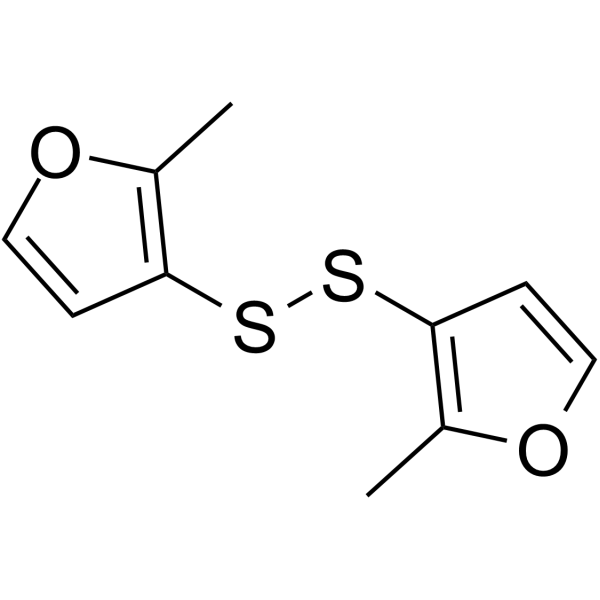
Bis(2-methyl-3-furyl)disulfide

Based on 1 Customer Validation
Bis (2-methyl-3-furyl) disulfide is a meat-characteristic aroma compound that binds to oral mucins. Bis (2-methyl-3-furyl) disulfide interacts with oral mucins via hydrogen bonding, hydrophobic interactions and van der Waals forces to form stable spontaneous 1:1 complexes, and the interaction strength varies with pH. Bis (2-methyl-3-furyl) disulfide contributes to the production of unique meat aroma and flavor, and its binding to oral mucins alters aroma perception.
For research use only. We do not sell to patients.
- Purity : 98.37%
- CAS No.: 28588-75-2
- Formula: C10H10O2S2
- Molecular Weight:226.31
-
Storage:Pure form -20°C, 3 years , 4°C, 2 years ; In solvent -80°C, 6 months , -20°C, 1 month

To place orders, for customer services and technical support, please contact: MedChemExpress USA
Tel: 609-228-6898 E-mail: [email protected] [email protected]


-
 Biological Activity
-
Chemical Information
-
Solvent & Solubility
- Purity & Documentation
- References
-
 Help & FAQs


-

HY-W009708R
Bis(2-methyl-3-furyl)disulfide (Standard) -
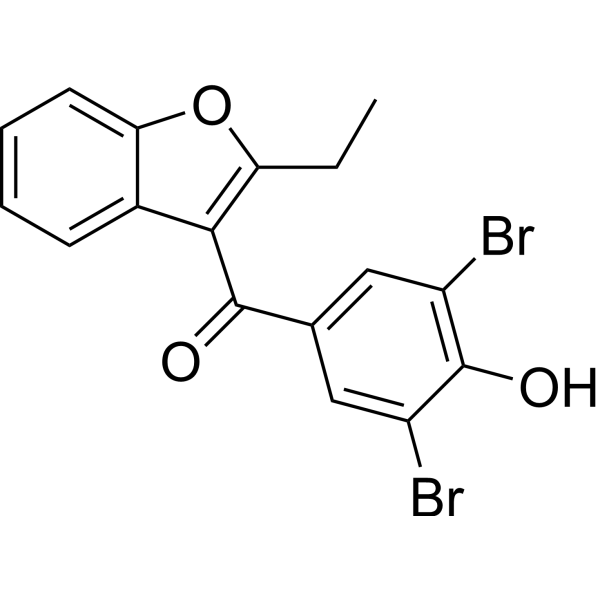
HY-B1135
Benzbromarone -
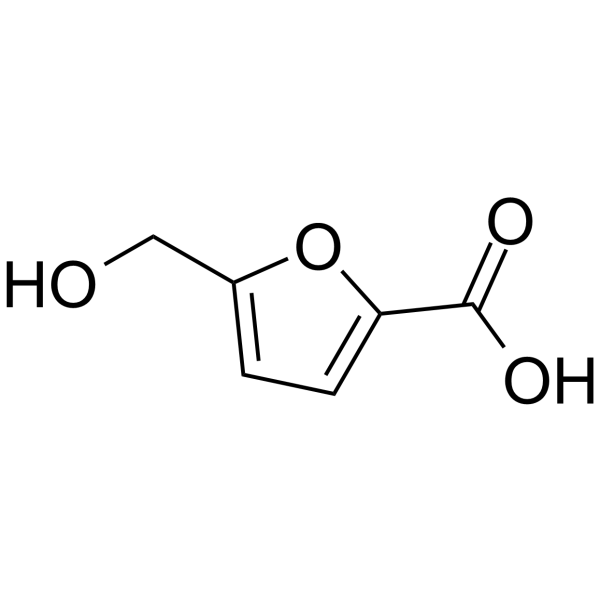
HY-W005241
5-Hydroxymethyl-2-furancarboxylic acid -
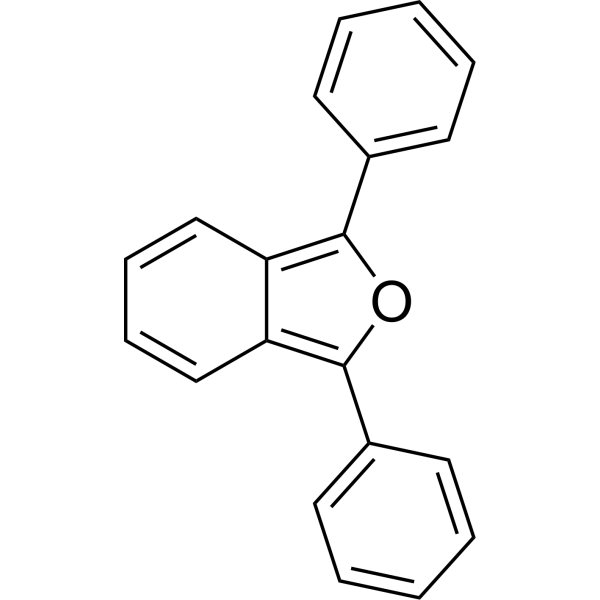
HY-W011664
1,3-Diphenylisobenzofuran -
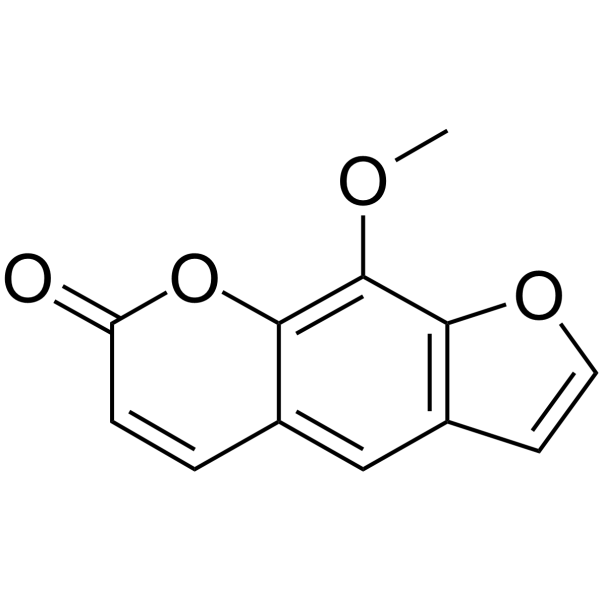
HY-30151
Methoxsalen -
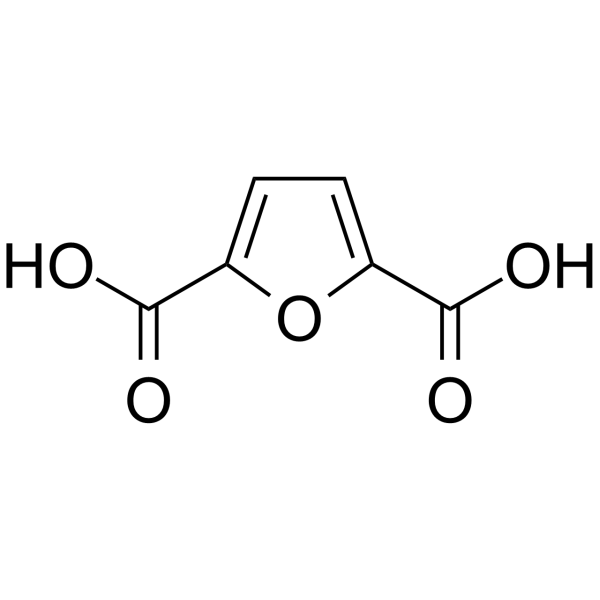
HY-W002105
2,5-Furandicarboxylic acid -
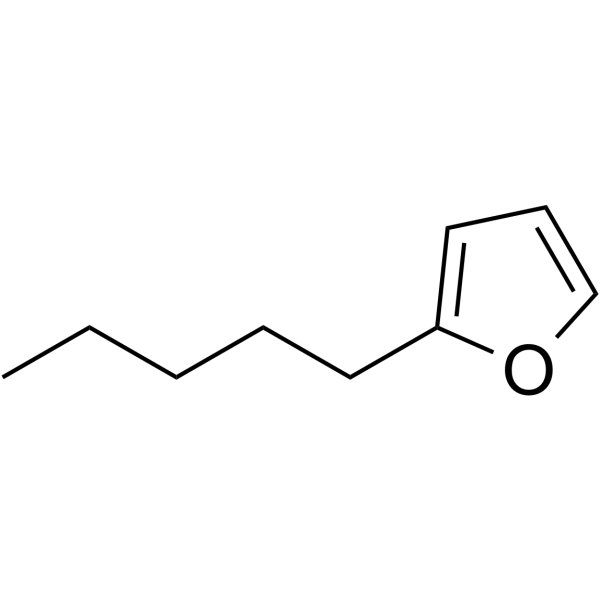
HY-N7398
2-Pentylfuran -

HY-B1135R
Benzbromarone (Standard) -

HY-W017445
Homogentisic acid lactone -
![Dibenzo[b,d]furan](https://file.medchemexpress.com/product_pic/hy-w017086.gif)
HY-W017086
Dibenzo[b,d]furan -

HY-76203
2-Coumaranone -
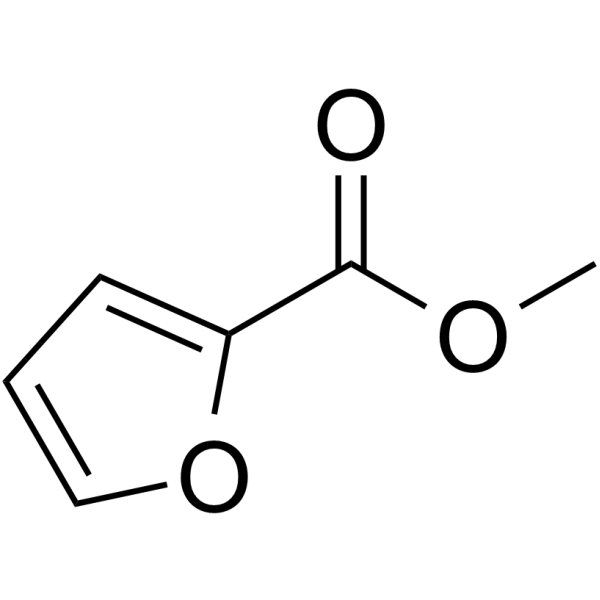
HY-Y0949
Methyl 2-furoate


Biological Activity
Description
In Vitro
Bis (2-methyl-3-furyl) disulfide (1-16 mM; 30 min) increases the turbidity of porcine gastric mucin solution in a concentration-dependent manner, with the strongest interaction (highest turbidity) occurring at pH 8.5, followed by pH 5.0 and pH 7.0[1].
Bis (2-methyl-3-furyl) disulfide (30-480 μM; 30 min) binds to porcine gastric mucin at a 1:1 ratio via a static quenching mechanism. Its binding is mainly driven by hydrogen bonds and van der Waals forces, and the binding process proceeds spontaneously; the binding affinity reaches the highest level at pH 8.5 (Ka = 9.13 mM-1 at 298 K), followed by that at pH 5.0 (Ka = 1.26 mM-1) and pH 7.0 (Ka = 1.14 mM-1)[1].
MedChemExpress (MCE) has not independently confirmed the accuracy of these methods. They are for reference only.


Chemical Information
-
CAS No. 28588-75-2
-
Appearance Liquid (Density: 1.211 g/cm3)
-
Molecular Weight 226.31
-
Formula C10H10O2S2
-
Color Light yellow to brown
-
SMILES
CC1=C(SSC2=C(C)OC=C2)C=CO1
-
Initial Source
human leukemia Jurkat cells
-
Shipping
Room temperature in continental US; may vary elsewhere.
-
Storage
Pure form -20°C 3 years 4°C 2 years In solvent -80°C 6 months -20°C 1 month


Solvent & Solubility
In Vitro:
DMSO : 100 mg/mL (441.87 mM; Need ultrasonic; Hygroscopic DMSO has a significant impact on the solubility of product, please use newly opened DMSO)
Please refer to the solubility information to select the appropriate solvent. Once prepared, please aliquot and store the solution to prevent product inactivation from repeated freeze-thaw cycles.
Storage method and period of stock solution: -80°C, 6 months; -20°C, 1 month. When stored at -80°C, please use it within 6 months. When stored at -20°C, please use it within 1 month.
Please refer to the solubility information to select the appropriate solvent. Once prepared, please aliquot and store the solution to prevent product inactivation from repeated freeze-thaw cycles.
Storage method and period of stock solution: -80°C, 6 months; -20°C, 1 month. When stored at -80°C, please use it within 6 months. When stored at -20°C, please use it within 1 month.
Concentration (start) × Volume (start) = Concentration (final) × Volume (final)
In Vivo:
Select the appropriate dissolution method based on your experimental animal and administration route.
- For the following dissolution methods, please ensure to first prepare a clear stock solution using an In Vitro approach and then sequentially add co-solvents:
- To ensure reliable experimental results, the clarified stock solution can be appropriately stored based on storage conditions. As for the working solution for In Vivo experiments, it is recommended to prepare freshly and use it on the same day.
- The percentages shown for the solvents indicate their volumetric ratio in the final prepared solution. If precipitation or phase separation occurs during preparation, heat and/or sonication can be used to aid dissolution.
Add each solvent one by one: 10% DMSO 40% PEG300 5% Tween-80 45% Saline
Solubility: ≥ 2.5 mg/mL (11.05 mM); Clear solution
This protocol yields a clear solution of ≥ 2.5 mg/mL (saturation unknown).
Taking 1 mL working solution as an example, add 100 μL DMSO stock solution (25.0 mg/mL) to 400 μL PEG300, and mix evenly; then add 50 μL Tween-80 and mix evenly; then add 450 μL Saline to adjust the volume to 1 mL.
Preparation of Saline: Dissolve 0.9 g sodium chloride in ddH₂O and dilute to 100 mL to obtain a clear Saline solution.
Add each solvent one by one: 10% DMSO 90% (20% SBE-β-CD in Saline)
Solubility: 2.5 mg/mL (11.05 mM); Suspended solution; Need ultrasonic
This protocol yields a suspended solution of 2.5 mg/mL. Suspended solution can be used for oral and intraperitoneal injection.
Taking 1 mL working solution as an example, add 100 μL DMSO stock solution (25.0 mg/mL) to 900 μL 20% SBE-β-CD in Saline, and mix evenly.
Preparation of 20% SBE-β-CD in Saline (4°C, storage for one week): 2 g SBE-β-CD powder is dissolved in 10 mL Saline, completely dissolve until clear.
In Vivo Dissolution Calculator
Please enter the basic information of animal experiments:
-
-
-
-
Recommended: Prepare an additional quantity of animals to account for potential losses during experiments.
Please enter your animal formula composition:
-
%DMSO +
Recommended: Keep the proportion of DMSO in working solution below 2% if your animal is weak.
-
%+
-
+%Tween-80 + +
-
%Saline +
The co-solvents required include: DMSO, . All of co-solvents are available by MedChemExpress (MCE). , Tween 80. All of co-solvents are available by MedChemExpress (MCE).
Working solution concentration: 0.22 mg/mL
Method for preparing stock solution: mg drug dissolved in μL DMSO. Stock solution concentration: mg/mL.
1. Take μL DMSO stock solution;
2. Add μL .
μL , mix evenly;
3. Then add μL Tween 80, mix evenly;
4. Then add μL
Please ensure that the stock solution in the first step is dissolved to a clear state, and add co-solvents in sequence. You can use ultrasonic heating (ultrasonic cleaner, recommended frequency 20-40 kHz), vortexing, etc. to assist dissolution.


Purity & Documentation
-
Data Sheet (277 KB)
-
SDS (476 KB)
- English - EN (476 KB)
- Français - FR (476 KB)
- Deutsch - DE (476 KB)
- Norwegian - NO (476 KB)
- Español - ES (476 KB)
- Swedish - SV (476 KB)
- Italian - IT (476 KB)
- Korean - KR (476 KB)
- Portuguese - PT (476 KB)
-
Handling Instructions (2659 KB)
References
[1].
Xi Y, et al. Decoding the interaction mechanism between bis(2-methyl-3-furyl) disulfide and oral mucin. Food Chem. 2024 Mar 15;436:137762.
[Content Brief]
[2].
Song N, et al. Transglutaminase cross-linking effect on sensory characteristics and antioxidant activities of Maillard reaction products from soybean protein hydrolysates. Food Chem. 2013 Jan 1;136(1):144-51.
[Content Brief]


Complete Stock Solution Preparation Table
Please refer to the solubility information to select the appropriate solvent. Once prepared, please aliquot and store the solution to prevent product inactivation from repeated freeze-thaw cycles.
Storage method and period of stock solution: -80°C, 6 months; -20°C, 1 month. When stored at -80°C, please use it within 6 months. When stored at -20°C, please use it within 1 month.
| Optional Solvent | Concentration Solvent Mass | 1 mg | 5 mg | 10 mg | 25 mg |
|---|---|---|---|---|---|
| DMSO | 1 mM | 4.4187 mL | 22.0936 mL | 44.1872 mL | 110.4679 mL |
| 5 mM | 0.8837 mL | 4.4187 mL | 8.8374 mL | 22.0936 mL | |
| 10 mM | 0.4419 mL | 2.2094 mL | 4.4187 mL | 11.0468 mL | |
| 15 mM | 0.2946 mL | 1.4729 mL | 2.9458 mL | 7.3645 mL | |
| 20 mM | 0.2209 mL | 1.1047 mL | 2.2094 mL | 5.5234 mL | |
| 25 mM | 0.1767 mL | 0.8837 mL | 1.7675 mL | 4.4187 mL | |
| 30 mM | 0.1473 mL | 0.7365 mL | 1.4729 mL | 3.6823 mL | |
| 40 mM | 0.1105 mL | 0.5523 mL | 1.1047 mL | 2.7617 mL | |
| 50 mM | 0.0884 mL | 0.4419 mL | 0.8837 mL | 2.2094 mL | |
| 60 mM | 0.0736 mL | 0.3682 mL | 0.7365 mL | 1.8411 mL | |
| 80 mM | 0.0552 mL | 0.2762 mL | 0.5523 mL | 1.3808 mL | |
| 100 mM | 0.0442 mL | 0.2209 mL | 0.4419 mL | 1.1047 mL |


Bis(2-methyl-3-furyl)disulfide Related Classifications
HY-W009708 Related Classifications
 Powered by Bioz
Keywords
- Bis(2-methyl-3-furyl)disulfide
- 28588-75-2
- Mucin
- van der Waals forces
- porcine oral mucin
- MTGase cross-linked soybean peptides
- porcine stomach mucin
- uncross-linked peptides
- UV-vis absorption
- hydrogen bonding
- Maillard Reaction Products
- molecular dynamics simulations
- hydrophobic interactions
- Inhibitor
- inhibitor
- inhibit