1. Metabolic Enzyme/Protease MAPK/ERK Pathway GPCR/G Protein Stem Cell/Wnt PI3K/Akt/mTOR Apoptosis Anti-infection
  2. Farnesyl Transferase Ras ERK mTOR Caspase Apoptosis Akt PI3K Bacterial
  3. FTI-277

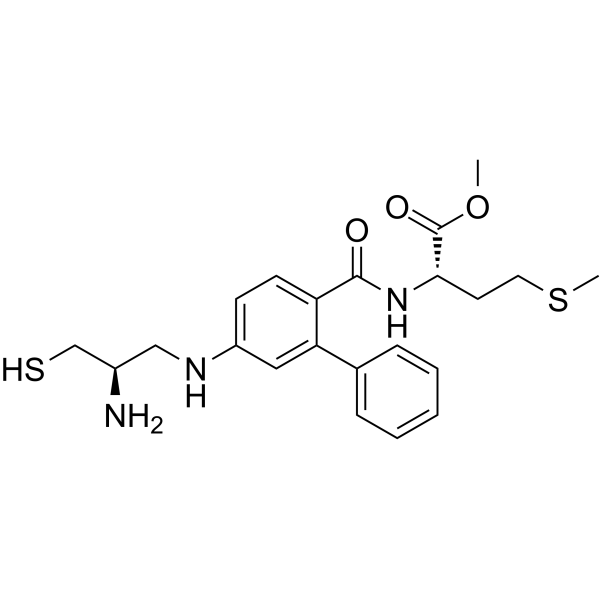
FTI-277 is a farnesyltransferase (FTase) inhibitor. FTI-277 inhibits Ras farnesylation, blocks the phosphorylation of downstream ERK1/2 and mTOR, and reduces membrane-bound active N-ras protein. FTI-277 activates caspase 3, upregulates Bim expression, induces cell apoptosis, suppresses regulatory T cell expansion, enhances macrophage phagocytosis, and improves bacterial clearance. FTI-277 activates the PI3K/Akt signaling pathway, inhibits osteoblast differentiation, and reduces the proliferation ability of neuroblastoma cells. FTI-277 can be used in research related to head and neck squamous cell carcinoma, neuroblastoma, sepsis, and vascular calcification.

商品は「研究用試薬」です。人や動物の医療用・臨床診断用・食品用の製品ではありません。
研究用途以外に使用した場合、当社は一切の責任を負いかねます。

CAS 番号 : 170006-73-2

容量 在庫状況
50 mg   お問い合わせ  
100 mg   お問い合わせ  
250 mg   お問い合わせ  

* アイテムを追加する前、数量をご選択ください

This product is a controlled substance and not for sale in your territory.

Other 在庫あり Forms of FTI-277:

Other Forms of FTI-277:

Top Publications Citing Use of Products

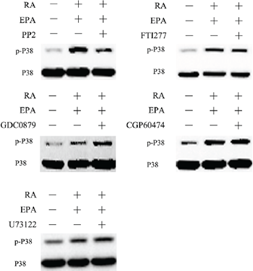
    FTI-277 purchased from MedChemExpress. Usage Cited in: Oncotarget. 2017 Nov 22;8(65):109135-109150.  [Abstract]

    MCF-7 cells are pretreated with the indicated chemical inhibitors for 30min, followed by 15 min treatment with RA (20 μM) + EPA (80 μM).Cell extracts are prepared and subjected to western blotting analysis.

    Ras アイソフォーム固有の製品をすべて表示:

    ERK アイソフォーム固有の製品をすべて表示:

    mTOR アイソフォーム固有の製品をすべて表示:

    Caspase アイソフォーム固有の製品をすべて表示:

    Akt アイソフォーム固有の製品をすべて表示:

    PI3K アイソフォーム固有の製品をすべて表示:

    • 生物活性

    • 純度とドキュメンテーション

    • 参考文献

    • カスタマーレビュー

    製品説明

    FTI-277 is a farnesyltransferase (FTase) inhibitor. FTI-277 inhibits Ras farnesylation, blocks the phosphorylation of downstream ERK1/2 and mTOR, and reduces membrane-bound active N-ras protein. FTI-277 activates caspase 3, upregulates Bim expression, induces cell apoptosis, suppresses regulatory T cell expansion, enhances macrophage phagocytosis, and improves bacterial clearance. FTI-277 activates the PI3K/Akt signaling pathway, inhibits osteoblast differentiation, and reduces the proliferation ability of neuroblastoma cells. FTI-277 can be used in research related to head and neck squamous cell carcinoma, neuroblastoma, sepsis, and vascular calcification[1][2][3][4].

    IC50 & Target[1]

    ERK1


    ERK2


    Caspase 3


    Cellular Effect
    Cell Line Type Value Description References
    NIH3T3 ED50
    0.2 3
    Compound: 2
    Inhibition of Ha-Ras processing in NIH3T3 Ras transformed cells.
    Inhibition of Ha-Ras processing in NIH3T3 Ras transformed cells.
    [PMID: 9784104]
    NIH3T3 ED50
    >25 3
    Compound: FTI-277
    Effective dose against murine 3T3 fibroblasts cells
    Effective dose against murine 3T3 fibroblasts cells
    [PMID: 14711313]
    NIH3T3 ED50
    > 25 3
    Compound: FTI-277
    Effective dose against murine 3T3 fibroblasts cells
    Effective dose against murine 3T3 fibroblasts cells
    [PMID: 14711313]
    NIH3T3 ED50
    0.2 3
    Compound: 2
    Inhibition of Ha-Ras processing in NIH3T3 Ras transformed cells.
    Inhibition of Ha-Ras processing in NIH3T3 Ras transformed cells.
    [PMID: 9784104]
    体外実験

    FTI-277 (1-40 μM; 24-72 h) decreases the viability of HEp-2 head and neck squamous cell carcinoma cells in a concentration-dependent manner, with a 58.5% reduction in viability at the highest tested concentration (40 μM) after 72 h of treatment[1].
    FTI-277 (0.5-10 μM; 24-72 h) decreases the viability of HSC-3 head and neck squamous cell carcinoma cells in a concentration-dependent manner, with a 77.0% reduction in viability at the highest tested concentration (10 μM) after 72 h of treatment, and exhibits greater potency against HSC-3 cells than HEp-2 cells[1].
    FTI-277 (40 μM; 36 h) significantly increases caspase-3 activity in HEp-2 head and neck squamous cell carcinoma cells[1].
    FTI-277 (5 μM; 36 h) significantly increases caspase-3 activity in HSC-3 head and neck squamous cell carcinoma cells, demonstrating greater potency than against HEp-2 cells[1].
    FTI-277 (40 μM; 36 h) significantly increases the percentage of annexin V-positive HEp-2 head and neck squamous cell carcinoma cells, indicating induction of apoptosis[1].
    FTI-277 (5 μM; 36 h) significantly increases the percentage of annexin V-positive HSC-3 head and neck squamous cell carcinoma cells, indicating induction of apoptosis with greater potency than against HEp-2 cells[1].
    FTI-277 (40 μM; 48 h) suppresses Ras membrane localization, reduces phosphorylation of ERK1/2 and mTOR, and increases Bim protein expression in HEp-2 head and neck squamous cell carcinoma cells[1].
    FTI-277 (5 μM; 48 h) suppresses Ras membrane localization, reduces phosphorylation of ERK1/2 and mTOR, and increases Bim protein expression in HSC-3 head and neck squamous cell carcinoma cells, demonstrating greater potency than against HEp-2 cells[1].
    FTI-277 (5 μM; 72 h) significantly decreases the viability of NW7 v-H-Ras-transfected NIH3T3 cells but has no significant effect on NV20 empty vector-transfected NIH3T3 cells, indicating selective activity against Ras-overexpressing cells[1].
    FTI-277 (1-20 μM; 8-10 days) inhibits osteogenic differentiation and βGP-induced mineralization in primary bovine vascular smooth muscle cells, with significant effects observed at concentrations ≥10 μM, and even when added up to 6 days post-βGP initiation[3].
    FTI-277 (10 μM; 77 h) enhances Akt phosphorylation in primary bovine vascular smooth muscle cells when followed by serum starvation and short-term serum stimulation[3].
    FTI-277 (10-20 μM; 9-10 days) maintains Akt phosphorylation during βGP-induced mineralization in primary bovine vascular smooth muscle cells, and this Akt activation is required for FTI-277's inhibitory effect on mineralization[3].
    FTI-277 (10 μM) inhibits phosphate-induced apoptosis in human coronary artery vascular smooth muscle cells, and this effect depends on Akt activation[3].
    FTI-277 (10 μM; 96 h) reduces farnesylated N-Ras protein levels by approximately 50% in IMR-5 neuroblastoma cells[4].
    FTI-277 (10 μM; 96 h) reduces basal MAP-kinase activity by ~47% and blunts BDNF-induced MAP-kinase activation to 35% of control levels in IMR-5 neuroblastoma cells[4].
    FTI-277 (10 μM; 96 h) reduces basal N-myc expression to 70% of controls and blunts BDNF-induced N-myc expression to 53% of control-stimulated levels in IMR-5 neuroblastoma cells[4].
    FTI-277 (10 μM; 96 h) significantly reduces cell proliferation across complete, serum-free, and BDNF-supplemented media, and abolishes BDNF-induced proliferation in IMR-5 neuroblastoma cells[4].

    MedChemExpress (MCE) has not independently confirmed the accuracy of these methods. They are for reference only.

    Cell Viability Assay[1]

    Cell Line: HEp-2 head and neck squamous cell carcinoma cells
    Concentration: 1 μM, 5 μM, 10 μM, 20 μM, 40 μM
    Incubation Time: 24 h, 48 h, 72 h
    Result: Decreased HEp-2 cell viability in a concentration-dependent manner.
    Reduced cell viability to 97.9% with 1 μM, 98.9% with 5 μM, 89.1% with 10 μM, 78.3% with 20 μM, and 41.5% with 40 μM after 72 h treatment.
    Induced statistically significant viability reductions with 20 μM and 40 μM at 48 h, and with 10 μM, 20 μM, and 40 μM at 72 h relative to controls.

    Cell Viability Assay[1]

    Cell Line: HSC-3 head and neck squamous cell carcinoma cells
    Concentration: 0.5 μM, 1 μM, 2.5 μM, 5 μM, 10 μM
    Incubation Time: 24 h, 48 h, 72 h
    Result: Decreased HSC-3 cell viability in a concentration-dependent manner, with greater potency than in HEp-2 cells.
    Reduced cell viability to 89.7% with 0.5 μM, 69.1% with 1 μM, 52.9% with 2.5 μM, 33.4% with 5 μM, and 23.0% with 10 μM after 72 h treatment.
    Induced statistically significant viability reductions with all tested concentrations at 24, 48, and 72 h relative to controls.

    Apoptosis Analysis[1]

    Cell Line: HEp-2 head and neck squamous cell carcinoma cells
    Concentration: 40 μM
    Incubation Time: 36 h
    Result: Increased the percentage of annexin V-positive HEp-2 cells to approximately 42%, relative to control cells with approximately 7% annexin V-positive cells.
    Induced statistically significant elevation of annexin V-positive cells, indicating apoptosis induction.

    Apoptosis Analysis[1]

    Cell Line: HSC-3 head and neck squamous cell carcinoma cells
    Concentration: 5 μM
    Incubation Time: 36 h
    Result: Increased the percentage of annexin V-positive HSC-3 cells to approximately 47%, relative to control cells with approximately 9% annexin V-positive cells.
    Induced statistically significant elevation of annexin V-positive cells, indicating apoptosis induction with greater potency than against HEp-2 cells.

    Western Blot Analysis[1]

    Cell Line: HEp-2 head and neck squamous cell carcinoma cells
    Concentration: 40 μM
    Incubation Time: 48 h
    Result: Inhibited Ras membrane localization and increased Ras cytoplasmic localization in HEp-2 cells.
    Decreased the expression of phosphorylated ERK1/2 and phosphorylated mTOR.
    Increased the expression of Bim protein, relative to control cells.

    Western Blot Analysis[1]

    Cell Line: HSC-3 head and neck squamous cell carcinoma cells
    Concentration: 5 μM
    Incubation Time: 48 h
    Result: Inhibited Ras membrane localization and increased Ras cytoplasmic localization in HSC-3 cells.
    Decreased the expression of phosphorylated ERK1/2 and phosphorylated mTOR.
    Increased the expression of Bim protein, relative to control cells.
    Demonstrated greater potency than against HEp-2 cells.

    Cell Viability Assay[1]

    Cell Line: NV20 empty vector-transfected NIH3T3 cells, NW7 v-H-Ras-transfected NIH3T3 cells
    Concentration: 5 μM
    Incubation Time: 72 h
    Result: Had no significant effect on the viability of NV20 empty vector-transfected NIH3T3 cells.
    Significantly reduced the viability of NW7 v-H-Ras-transfected NIH3T3 cells to approximately 35%, relative to untreated NW7 cells.
    Exhibited selective activity against Ras-overexpressing cells.

    Western Blot Analysis[4]

    Cell Line: IMR-5 neuroblastoma cells
    Concentration: 10 μM
    Incubation Time: 96 h
    Result: Reduced farnesylated N-Ras protein levels by 47%.\nReduced basal MAP-kinase activity by 47% compared to untreated controls.
    Blunted BDNF-induced MAP-kinase activation to 35% of control levels.

    RT-PCR[4]

    Cell Line: IMR-5 neuroblastoma cells
    Concentration: 10 μM
    Incubation Time: 96 h
    Result: Reduced basal N-myc expression to 70% of untreated control levels.
    Blunted BDNF-induced N-myc expression to 53% of control-stimulated levels.

    Cell Proliferation Assay[4]

    Cell Line: IMR-5 neuroblastoma cells
    Concentration: 10 μM
    Incubation Time: 96 h
    Result: Decreased cell numbers by 10% in complete medium over 48 hours, compared to an ~80% increase in untreated controls.
    Resulted in significantly lower cell numbers than controls in serum-free medium.
    Abolished BDNF-induced 22% proliferation increase seen in control cells in serum-free medium.
    Reduced cell proliferation significantly across all three media conditions.
    体内実験

    FTI-277 (25 mg/kg; i.p.; single dose) administered 2 hours post-CLP reduces septic mouse mortality to a 67% survival rate, while improving bacterial clearance, reversing immune dysfunction, and suppressing sepsis-induced protein farnesylation[2].

    MedChemExpress (MCE) has not independently confirmed the accuracy of these methods. They are for reference only.

    Animal Model: C57BL/6 (male, 7 weeks of age, sepsis induced by cecal ligation and puncture)[2]
    Dosage: 25 mg/kg
    Administration: i.p.; single dose
    Result: Increased survival rate of septic mice to 67% (10/15 survived to 7 days) compared to 7% (1/15) in vehicle-treated group.
    Significantly reduced bacterial colony-forming units in blood and peritoneal cavity at 16 hours post-CLP.
    Almost completely blocked sepsis-induced increase in serum HMGB1 concentration at 16 hours post-CLP.
    Reduced percentage of TUNEL-positive apoptotic cells in spleen from ~7% to ~2% and in thymus from ~9% to ~1% at 16 hours post-CLP.
    Reversed sepsis-induced increase in splenic farnesylated protein levels and farnesyltransferase activity to sham-equivalent levels at 16 hours post-CLP.
    Partially reversed sepsis-induced increase in splenic CD4+Foxp3+ regulatory T cells from ~22% to ~15% of total CD4+ cells without altering total CD4+ splenocyte counts.
    Restored IFN-γ secretion from ~30 pg/mL to ~100 pg/mL and splenocyte proliferative response to sham-equivalent levels, and reversed sepsis-induced decrease in IFN-γ to IL-4 ratio.
    Reduced sepsis-induced increases in PD-L1 and PD-1 expression on splenic CD4+ T cells and macrophages.
    Increased phagocytotic activity of peritoneal F4/80+ macrophages, with percentage of fluorescent microsphere-positive cells rising from ~45% to ~65% and mean fluorescence intensity per cell rising from ~220 to ~300.
    分子量

    447.61

    分子式

    C22H29N3O3S2

    CAS 番号
    SMILES

    CSCC[C@@H](C(OC)=O)NC(C1=CC=C(NC[C@@H](N)CS)C=C1C2=CC=CC=C2)=O

    輸送条件

    Room temperature in continental US; may vary elsewhere.

    保管条件

    Please store the product under the recommended conditions in the Certificate of Analysis.

    純度とドキュメンテーション
    参考文献
    • No file chosen (Maximum size is: 1024 Kb)
    • If you have published this work, please enter the PubMed ID.
    • Your name will appear on the site.
    • Molarity Calculator

    • Dilution Calculator

    The molarity calculator equation

    Mass (g) = Concentration (mol/L) × Volume (L) × Molecular Weight (g/mol)

    質量   濃度   体積   分子量 *
    = × ×

    The dilution calculator equation

    Concentration (start) × Volume (start) = Concentration (final) × Volume (final)

    一般には略語で表示されます:C1V1 = C2V2

    濃度 (開始) × 体積 (開始) = 濃度 (終了) × 体積 (終了)
    × = ×
    C1   V1   C2   V2
    Help & FAQs
    • Do most proteins show cross-species activity?

      Species cross-reactivity must be investigated individually for each product. Many human cytokines will produce a nice response in mouse cell lines, and many mouse proteins will show activity on human cells. Other proteins may have a lower specific activity when used in the opposite species.

    最近チェックした製品:

    オンラインお問い合わせ

    Your information is safe with us. * Required Fields.

    製品名


    カスタマ需要量 *

    お名前 *


    タイトル

    メールアドレス *


    電話番号 *

    デパートメント


    組纖名 *

    市区町村

    都道府県

    国或いは地域 *


    必ず会社名を記載ください。個人への返信は行いません。

    備考

    バルクお問い合わせ

    Inquiry Information

    製品名:
    FTI-277
    製品番号:
    HY-15872
    数量:
    MCE 日本正規代理店: