Search Result
Results for "
MG degrader3
" in MedChemExpress (MCE) Product Catalog:
| Cat. No. |
Product Name |
Target |
Research Areas |
Chemical Structure |
-
- HY-168625
-
|
|
Molecular Glues
|
Inflammation/Immunology
|
|
VAV1 degrader-3 (Example 185) is an orally active VAV1 molecular glue degrader (DC50: 7 nM). VAV1 degrader-3 reduces immune cell activation, immune cell proliferation and the production of various cytokines. VAV1 degrader-3 can be used for research of inflammatory or autoimmune disorder. VAV1 degrader-3 inhibits disease progression in experimntal autoimmune encephalomyelitis (EAE) mouse model, Collagen-induced arthritis (CIA) mouse model, etc. .
|
-

-
- HY-177456
-
|
|
STAT
|
Inflammation/Immunology
|
|
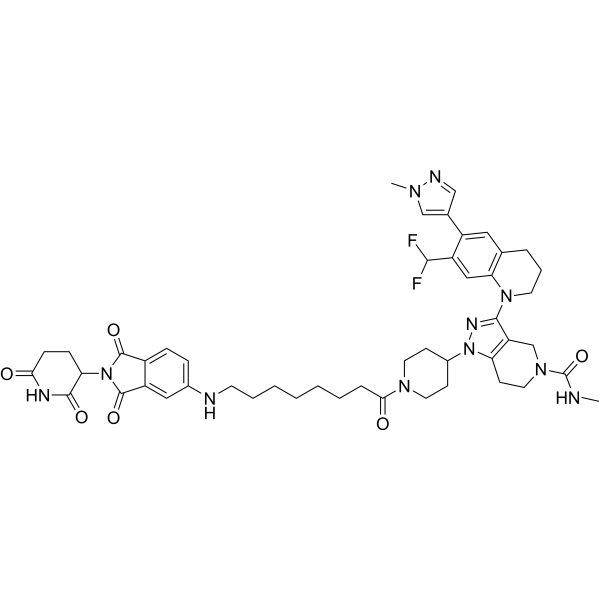
STAT6 degrader-3 (Compound I-1) is a potent and selective STAT6 degrader with a DC50 of <1 nM. STAT6 degrader-3 can be used in the research of Type 2 immune and allergic responses .
|
-

-
- HY-164827
-
|
|
Molecular Glues
CDK
|
Cancer
|
|
CDK2 degrader 3 is a selective CDK2 molecular glue-like degrader. CDK2 degrader 3 induces G1 cell cycle arrest in CCNE1-amplified cancer cells. CDK2 degrader 3 is applicable to breast cancer-related research .
|
-

-
- HY-136857
-
|
|
Epigenetic Reader Domain
|
Cancer
|
|
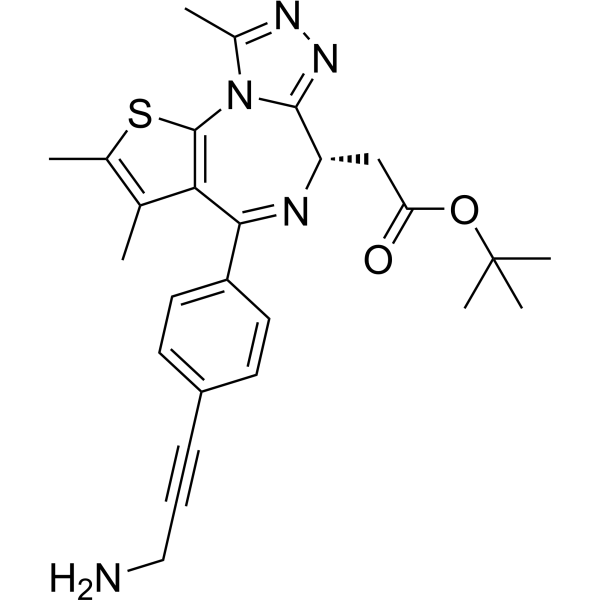
BRD4 degrader-3 is a potent bromodomain BRD4 degrader extracted from patent WO2020055976A1, example 1a, has IC50s of 15.5 and 12.3 nM for BRD4-BD1 and BRD4-BD2, respectively . PROTAC BRD4 Degrader-7 is a click chemistry reagent, it contains an Alkyne group and can undergo copper-catalyzed azide-alkyne cycloaddition (CuAAc) with molecules containing Azide groups.
|
-
-
- HY-139185
-
|
|
PROTACs
Estrogen Receptor/ERR
|
Cancer
|
|
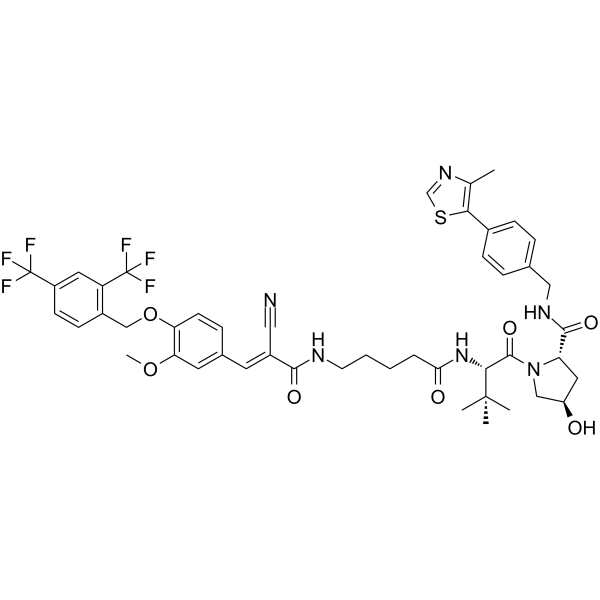
PROTAC ERRα Degrader-3 is a potent and selective ERRα degrader based on von Hippel-Lindau ligand. PROTAC ERRα Degrader-3 is capable of specifically degrading ERRα protein by >80% at a concentration of 30 nM. PROTAC ERRα Degrader-3 is inactive against ERRβ and ERRγ proteins .
|
-
-
- HY-69260
-
|
|
PROTAC Linkers
|
Others
|
|
tert-Butyl 4-formylpiperidine-1-carboxylate is a PROTAC linker and can be used in the synthesis of PROTAC BRM/BRG1 degrader-3 (HY-168251) .
|
-

-
- HY-152134
-
|
|
HDAC
PROTACs
|
Cancer
|
|
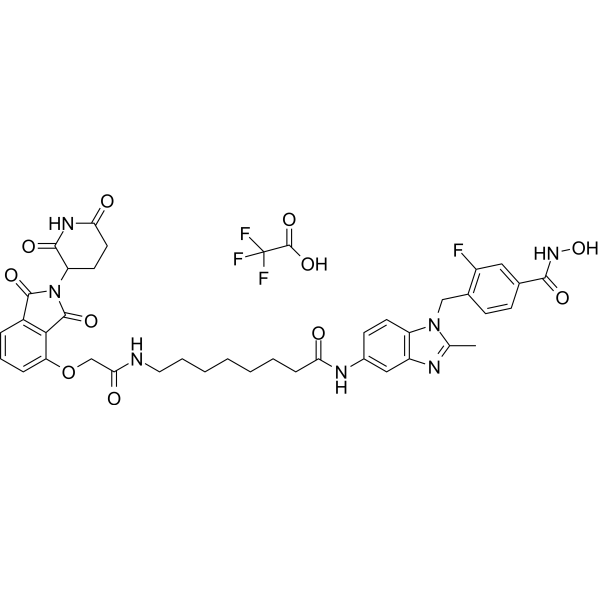
HDAC6 degrader-3 is a potent and selective HDAC6 degrader via ternary complex formation and the ubiquitin-proteasome pathway with a DC50 value of 19.4 nM. HDAC6 degrader-3 has IC50s of 4.54 nM and 0.647 μM for HDAC6 and HDAC1, respectively. HDAC6 degrader-3 causes strong hyperacetylation of α-tubulin .
|
-
-
- HY-135382A
-
-
-
- HY-168054
-
|
|
PROTACs
Ras
|
Cancer
|
|
PROTAC K-Ras Degrader-3 (compound 40) is a PROTAC degrader of K-Ras with a DC50 of ≤ 1 nM against SW620 KRAS G12D, and a GI50 of ≤ 10 nM against SW620 3D cell growth. PROTAC K-Ras Degrader-3 can be utilized in cancer research, such as non-small-cell lung cancer (NSCLC) .
|
-

-
- HY-132997
-
|
|
PROTACs
Bcl-2 Family
|
Cancer
|
|
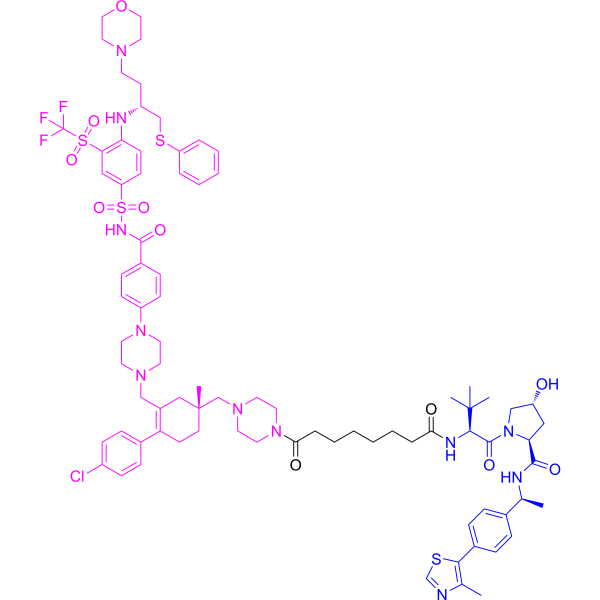
PROTAC Bcl-xL degrader-3 is a potent PROTAC Bcl-xL degrader. PROTAC Bcl-xL degrader-3 forms ternary complexes with the VHL-complex and BCL-XL. PROTAC Bcl-xL degrader-3 can be used in research on acute lymphoblastic leukemia .
|
-
-
- HY-173414
-
|
|
PROTACs
STING
NF-κB
|
Inflammation/Immunology
|
|
PROTAC STING degrader-3 is a STING PROTAC degrader (DC50: 0.62 μM). PROTAC STING degrader-3 induces STING degradation via the ubiquitin-proteasome pathway. PROTAC STING degrader-3 exerts anti-inflammatory effects by inhibiting STING/TBK1/NF-κB signaling. PROTAC STING degrader-3 has renal protective effects and can be used in the study of acute kidney injury (AKI) .
|
-

-
- HY-135345
-
|
|
PROTACs
FKBP
|
Cancer
|
|
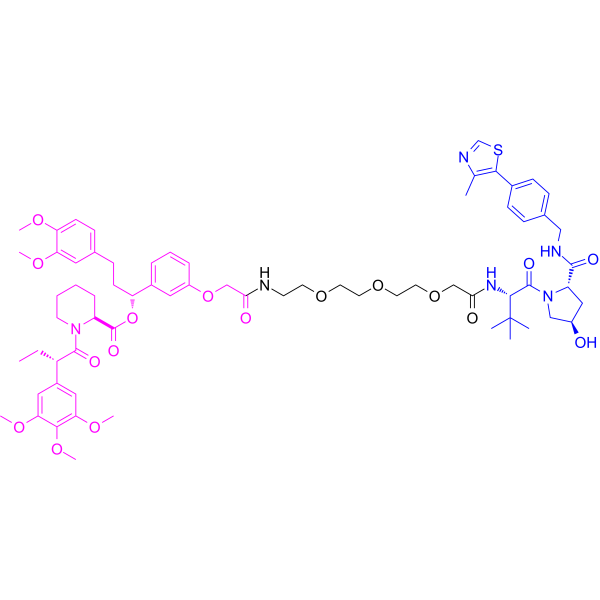
PROTAC FKBP Degrader-3 is a PROTAC that comprises a FKBP ligand binding group, a linker and an von Hippel-Lindau binding group. PROTAC FKBP Degrader-3 is a potent FKBP degrader .
|
-
-
- HY-176919
-
|
|
PROTACs
STAT
|
Inflammation/Immunology
Cancer
|
|
PROTAC STAT6 degrader-3 is a potent STAT6 PROTAC degrader with a DC50 of less than 1 nM. PROTAC STAT6 degrader-3 can be used for research on allergic/inflammatory diseases and cancer .
|
-

-
- HY-114229
-
-
-
- HY-163502
-
|
|
PROTACs
STAT
|
Cancer
|
|
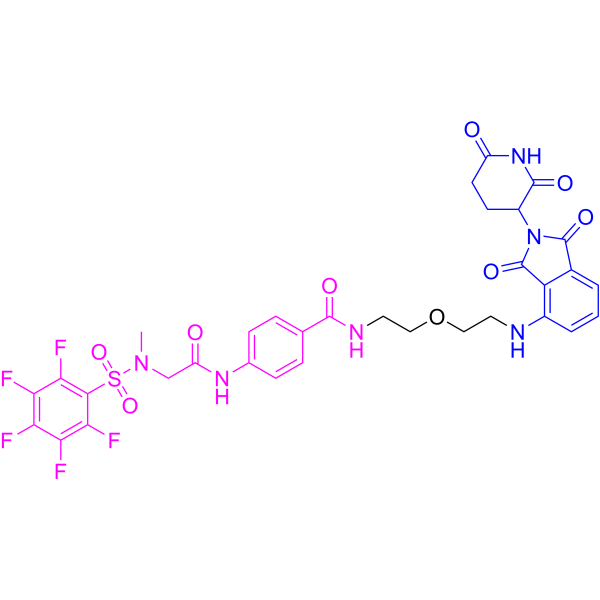
PROTAC STAT3 degrader-3 (S3D1) is a STAT3 PROTAC degrader with anticancer activity (Structural notes: (Blue: Cereblon ligand (HY-10984), Black: linker; Pink: Pentafluorobenzenesulfonamide(Me)-CH2-CONH-benzamide (HY-163526)) .
|
-
-
- HY-128842
-
|
|
PROTACs
MDM-2/p53
|
Cancer
|
|
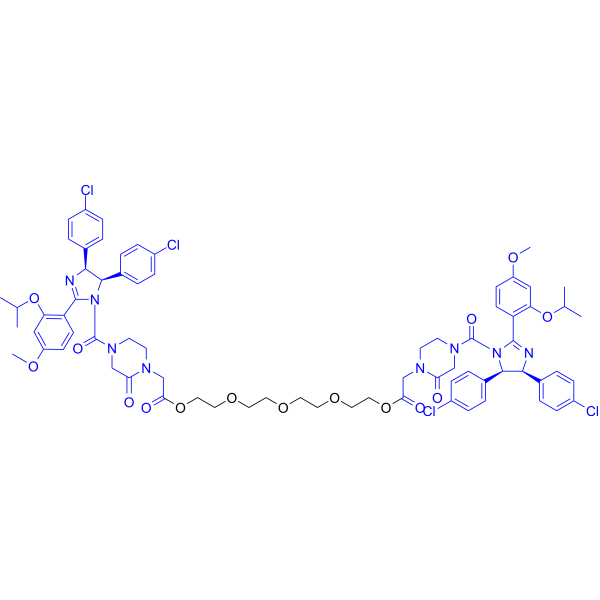
PROTAC MDM2 Degrader-3 is a MDM2 self-degrading (dimeric) PROTAC. PROTAC MDM2 Degrader-3 can be used in cancer research .
|
-
-
- HY-136001
-
|
|
PROTACs
α-synuclein
|
Neurological Disease
|
|
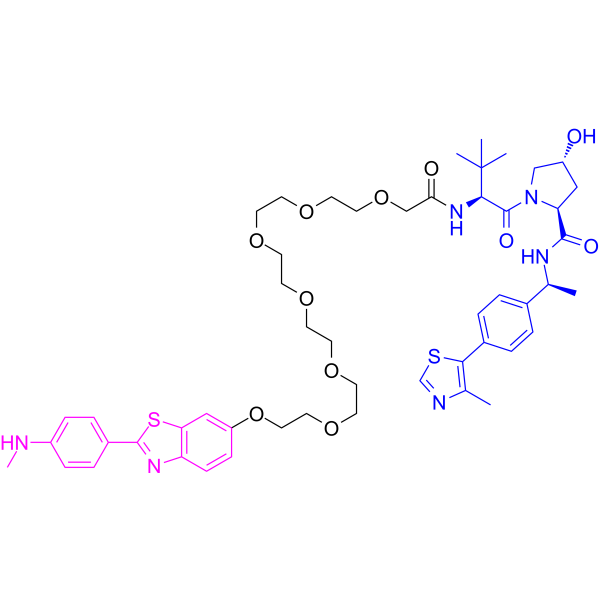
PROTAC α-synuclein degrader 3 (Compound 5) is a selective α-synuclein PROTAC degrader. PROTAC α-synuclein degrader 3 can promote the ubiquitination and degradation of α-synuclein. PROTAC α-synuclein degrader 3 can be used for Parkinson's disease research (Pink: target protein ligand (HY-W278021); Black: linker; HY-133302; Blue: E3 ligase VHL ligand (HY-112078)) .
|
-
-
- HY-155506
-
|
|
NAMPT
|
Cancer
|
|
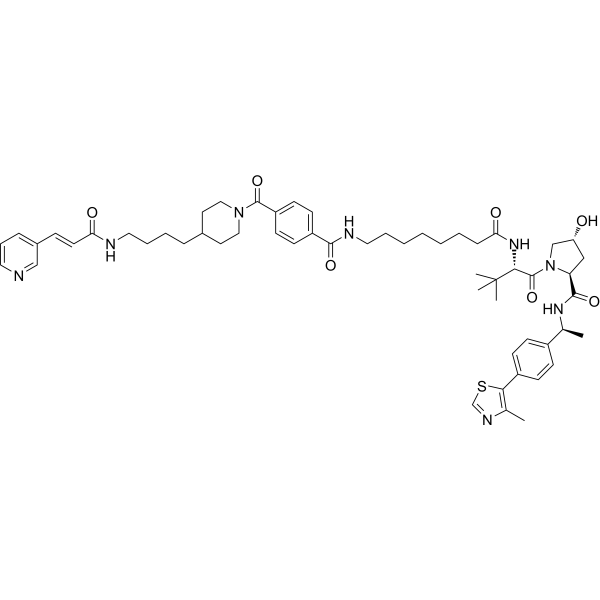
NAMPT degrader-3 (compound C5) is a NAMPT degrader, depending on VHL- and proteasome manner. NAMPT degrader-3 displays cytotoxicity and inhibits A2780 cells proliferation .
|
-
-
- HY-176386
-
|
|
Ligands for E3 Ligase
|
Cancer
|
|
E3 ligase Ligand 68 is an E3 ligase ligand that can be used in the synthesis of PROTACs, such as PROTAC ER Degrader-3 (HY-128527) .
|
-

-
- HY-171140
-
|
|
PROTACs
HDAC
|
Cancer
|
|
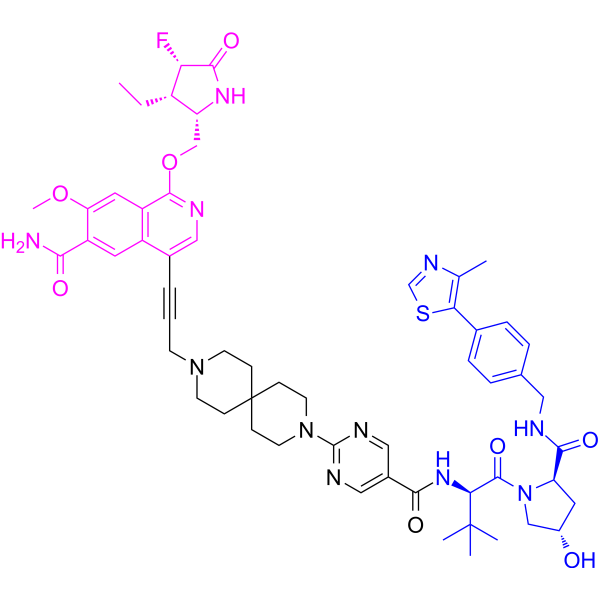
PROTAC HDAC6 degrader 3 (Compound 4) is a selective inhibitor and degrader for HDAC6 with an IC50 of 686 nM and a DC50 of 171 nM. PROTAC HDAC6 degrader 3 promotes the acetylation of α-tubulin . (Pink: ligand for target protein (HY-171141); Blue: ligand for E3 ligase VHL (HY-150803))
|
-

-
- HY-152145
-
|
|
SOS1
PROTACs
Ras
|
Cancer
|
|
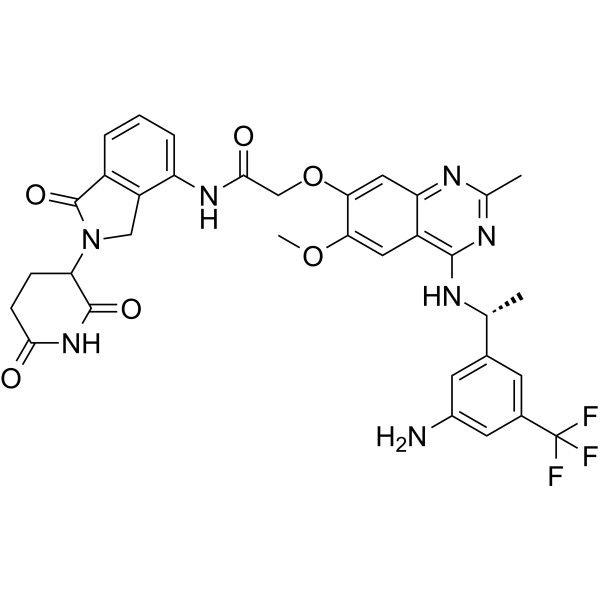
PROTAC SOS1 degrader-3 is a potent PROTAC SOS1 degrader. PROTAC SOS1 degrader-3 effectively targeted SOS1 for degradation through the ubiquitin-proteasome system .
|
-
-
- HY-178797
-
-

-
- HY-153536
-
|
|
PROTACs
Btk
|
Cancer
|
|
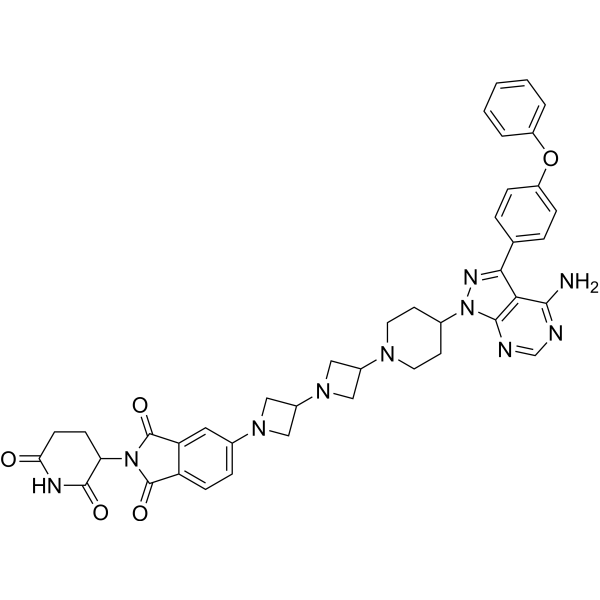
PROTAC BTK Degrader-3 is a potent BTK degrader with a DC50 value of 10.9 nM of BTK degradation in Mino cells. PROTAC BTK Degrader-3 has the potential for B-cell malignancies, including chronic lymphoid malignancies research .
|
-
-
- HY-145400
-
|
|
PROTACs
|
Cancer
|
|
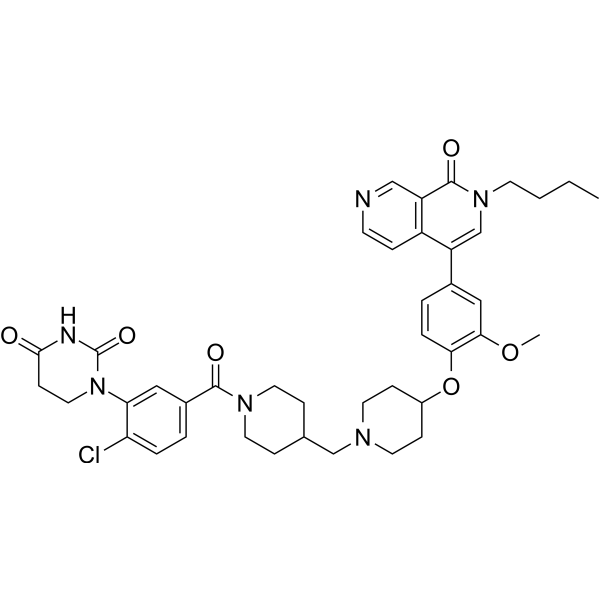
PROTAC BRD9 Degrader-3 is a BRD9 bifunctional degrader for researching cancer.
|
-
-
- HY-177728
-
|
|
Molecular Glues
E1/E2/E3 Enzyme
|
Cancer
|
|
MG degrader 3 (Compound CM-3) is a molecular glucose degrading agent that targets the CRBN protein. MG degrader 3 has certain anti proliferative activity in MM.1S cells (IC50 = 8.7 nM). MG degrader 3 can be used for cancer research .
|
-

-
- HY-168131
-
|
|
PROTACs
Histone Methyltransferase
Apoptosis
|
Cancer
|
|
PROTAC EZH2 Degrader-3 (compound ZJ-20) is a EZH2 PROTAC degrader. PROTAC EZH2 Degrader-3 (5 μM, 24 h) not only potently inhibits the expression of EZH2 protein, but also had a strong inhibits effect on the expression levels of other subunits of PRC2 as well as H3k27me3 protein. PROTAC EZH2 Degrader-3 shows anti-proliferative activity and blocks the cell cycle in the G0-G1 phase and induces cell apoptosis((Blue: cereblon ligand Pomalidomide (HY-10984), Black: linker HY-W361751;Pink: EZH2 inhibitor Tazemetostat (HY-13803)) .
|
-

-
- HY-163526
-
-

-
- HY-139707
-
-
-
- HY-128527
-
|
|
PROTAC-Linker Conjugates for PAC
Estrogen Receptor/ERR
|
Cancer
|
|
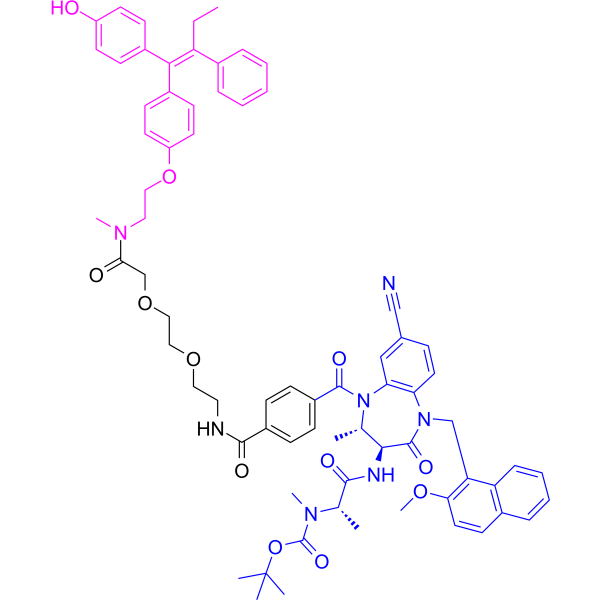
PROTAC ER Degrader-3 is an intermediate for synthesis of PAC. PAC, consists the ADCs linker and PROTACs, conjugated to an antibody. PAC extracts from patent WO2017201449A1, compound LP2. PAC conjugated to an antibody is a more marked estrogen receptor-alpha (ERα) degrader compared to PROTAC (without Ab) .
|
-
-
- HY-178938
-
|
|
Molecular Glues
Androgen Receptor
Caspase
Apoptosis
|
Endocrinology
Cancer
|
AR Degrader-3 is an orally active molecular glue that targets AR/ARV7 and induces the degradation of AR and ARV7 through the ubiquitin-proteasome pathway (UPP). AR Degrader-3 directly interacts with the ligand-binding domain (LBD) and the N-terminal domain (NTD) of AR. AR Degrader-3 effectively suppresses the transcriptional activity of wild-type AR (AR-WT), AR mutants, and ARV7. AR Degrader-3 downregulates the mRNA and protein levels of downstream AR target genes, thereby overcoming antiandrogen resistance mediated by ARV7 and AR point mutations. AR Degrader-3 induces apoptosis in Enzalutamide (HY-70002) (ENZa)-resistant cells and increases cleaved caspase-3 protein levels. AR Degrader-3 can be used for the study of castration-resistant prostate cancer (CRPC) .
|
-

-
- HY-162245
-
|
|
PROTACs
Epigenetic Reader Domain
|
Cancer
|
|
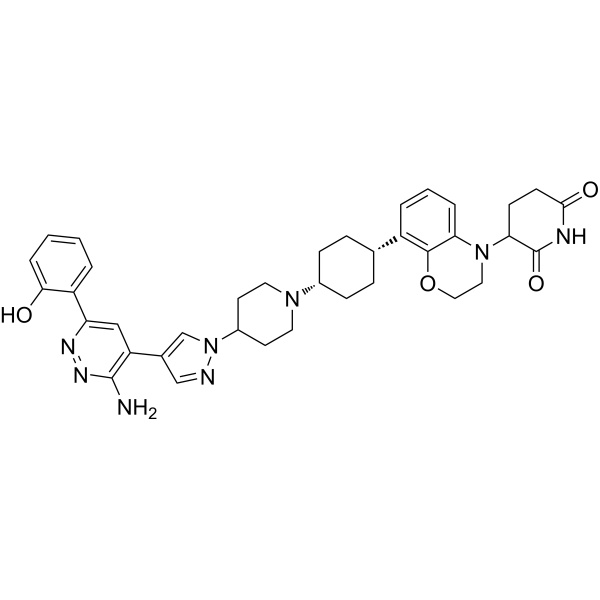
PROTAC SMARCA2 degrader-3 is a PROTAC degrader of the SWI/SNF ATPase subunits, SMARCA2. PROTAC SMARCA2 degrader-3 has anticancer effects (WO2023244764A1; Compound 153) .
|
-
-
- HY-168910
-
|
|
PROTACs
c-Met/HGFR
|
Cancer
|
|
PROTAC c-Met degrader-3 (Compound 22b) is a c-Met PROTAC degrader. PROTAC c-Met degrader-3 promotes ubiquitination and degradation of c-Met (DC50 of 0.59 nM in EBC-1 cells). PROTAC c-Met degrader-3 can be used for the research of lung cancer (Pink: c-Met ligand (HY-14721); Blue: E3 ligase CRBN ligand (HY-W249500); linker + E3 ligase ligand (HY-168911)) .
|
-

-
- HY-175204
-
|
|
AUTACs
SHP2
Apoptosis
Autophagy
Atg8/LC3
|
Cancer
|
|
SHP2 protein degrader-3 is a SHP2 AUTAC degrader. SHP2 protein degrader-3 shows dose-dependent SHP2 degradation ability (DC50 = 3.22 μM) and anti-tumor activity (IC50 = 5.59 μM) in HeLa cells. SHP2 protein degrader-3 induces degradation through the LC3-mediated autophagy pathway, which can be inhibited by lysosome inhibitors. SHP2 protein degrader-3 induces apoptosis in various cancer cells (HeLa cells, HepG2 cells, LoVo cells, Huh-7 cells) (SHP2 Ligand : (HY-100388); LC3 Ligand: (HY-10542); Linker : (HY-128834)) .
|
-

-
- HY-163810
-
-

-
- HY-111842
-
|
|
SNIPERs
PROTACs
|
Cancer
|
|
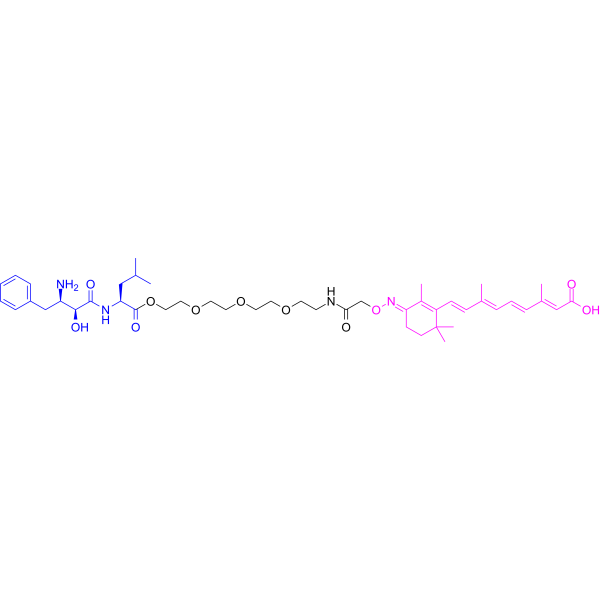
PROTAC CRABP-II Degrader-3 is a potent cellular retinoic acid binding protein (CRABP-II) degrader based on IAP ligand .
|
-
-
- HY-168722
-
|
|
PARP
PROTACs
|
Cancer
|
|
PROTAC PARP1 degrader-3 (Compound C6) is a PROTAC degrader for PARP1 with a DC50 of 58.14 nM. PROTAC PARP1 degrader-3 exhibits cytotoxicity in cancer cell SW-620 and LOVO with IC50 of 1.63 μM and 2.84 μM. PROTAC PARP1 degrader-3 exhibits a synergistic effect with SN-38 (HY-13704) in BRCA-mutated colon cancer cell with a combination index (CI) of 0.487. (Blue: Ligand for E3 ligase Cereblon (HY-23095); Pink: Ligand for target protein (HY-10619); Black: Linker (HY-16872))
|
-

-
- HY-135558
-
-
-
- HY-157426
-
-
-
- HY-161933
-
|
|
PROTAC Linkers
|
Cancer
|
|
1-Adamantane-amide-C7-NH2 is the linker, which can be used for syntheisis of PROTAC GPX4 degrader-3 (HY-161930) .
|
-

-
- HY-144605
-
|
|
EGFR
PROTACs
|
Cancer
|
|
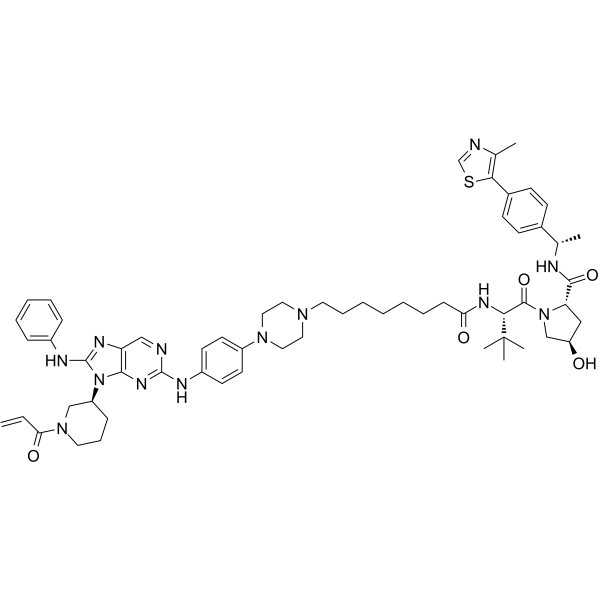
PROTAC EGFR degrader 3 is a potent PROTAC EGFR degrader. PROTAC EGFR degrader 3 shows excellent cellular activity against the H1975 and HCC827 cells with high selectively. PROTAC EGFR degrader 3 shows that the lysosome is involved in the degradation process of EGFR mutant degradation .
|
-
-
- HY-168076
-
|
|
PROTAC-Linker Conjugates for PAC
|
Cancer
|
|
(S)-Deoxy-thalidomide-2,7-diazaspiro[3.5]nonane-CH2-Me-PIP-Boc consists of E3 ligase ligand and PROTAC linker of PROTAC K-Ras Degrader-3 (HY-168054). (S)-Deoxy-thalidomide-2,7-diazaspiro[3.5]nonane-CH2-Me-PIP-Boc is promising for research of cancers .
|
-
![(S)-Deoxy-thalidomide-2,7-diazaspiro[3.5]nonane-CH2-Me-PIP-Boc](//file.medchemexpress.com/product_pic/hy-168076.gif)
-
- HY-168056
-
-

-
- HY-178830
-
|
|
PROTAC Linkers
|
Neurological Disease
|
|
Azacyclohexane-O-cyclohexane-C-(OCH3)2 is a PROTAC linker that can be used to synthesize PROTAC LRRK2 Degrader-3 (HY-178797). PROTAC LRRK2 Degrader-3 is a potent LRRK2 PROTAC degrader with anti-neuroinflammatory activity .
|
-

-
- HY-168055
-
|
|
Ligands for E3 Ligase
|
Cancer
|
|
(S)-Deoxy-thalidomide is an E3 ubiquitin ligase ligand. (S)-Deoxy-thalidomide can be linked to the target protein ligand through a linker to form PROTAC K-Ras Degrader-3 (HY-168054). PROTAC K-Ras Degrader-3 can target KRAS mutant proteins for degradation .
|
-

-
- HY-178828
-
|
|
E3 Ligase Ligand-Linker Conjugates
|
Neurological Disease
|
|
E3 ligase Ligand 29-azacyclohexane-O-cyclohexane-CO is a synthesized E3 ligase ligand-linker conjugate that can be used to synthesize PROTAC LRRK2 Degrader-3 (HY-178797). PROTAC LRRK2 Degrader-3 is a potent LRRK2 PROTAC degrader with anti-neuroinflammatory activity .
|
-

-
- HY-168253
-
-

-
- HY-168551
-
|
|
PROTACs
Anaplastic lymphoma kinase (ALK)
|
Cancer
|
|
PROTAC ALK degrader-3 (4B) is an orally active ALK degrader based on PROTACs, which can effectively induce persistent degradation of ALK fusion protein in Karpas 299 cells and strong inhibition of downstream pathways,IC50 is 119.33 nM. PROTAC ALK degrader-3 exhibits antitumor activity. (Structure Note: PINK, ALK Inhibitor (HY-15656); Blue, E3 (HY-W023573); Black, linker (HY-168552)) .
|
-

-
- HY-168252
-
-

-
- HY-161791
-
-

-
- HY-162816
-
|
|
PROTACs
MAP4K
|
Cancer
|
|
PROTAC HPK1 Degrader-3 (compound C3) is an orally effective PROTAC targeting HPK1 (DC50=21.26 nM). HPK1 is a negative regulator of T cell receptors, which can lead to T cell dysfunction after abnormal activation. PROTAC HPK1 Degrader-3 can inhibit SLP76 and NF-κB signaling pathways and inhibit MAPK signal transduction, and has anticancer activity and immune activation. PROTAC HPK1 Degrader-3 has a certain oral bioavailability and can be combined with PD-L1 antibody therapy to achieve a tumor growth inhibition rate of 65.58%. PROTAC HPK1 Degrader-3 is composed of E3 ligase ligand Thalidomide (HY-14658; blue part), PROTAC linker tert-Butyl 3-oxoazetidine-1-carboxylate (HY-40146; black part), and target protein ligand HPK1-IN-51 (HY-162842; red part); the activity control of the target protein ligand can be HPK1 ligand 1 (HY-162841) [1] .
|
-

- HY-161930
-
|
|
PROTACs
Ferroptosis
|
Cancer
|
|
PROTAC GPX4 degrader-3 is a potent PROTAC GPX4 degrader with a DC50 (24h) of 0.019 μM and an IC50 of 0.024 μM in HT1080 cell .
|
-

- HY-176387
-
|
|
E3 Ligase Ligand-Linker Conjugates
|
Cancer
|
|
E3 Ligase Ligand-linker Conjugate 201 is a synthesized E3 ligase ligand-linker conjugate that can be used in the synthesis of PROTACs, such as PROTAC ER Degrader-3 (HY-128527) .
|
-

- HY-168912
-
|
|
PROTAC Linkers
|
Cancer
|
|
3,9-Diazaspiro[5.5]undecane-3-carboxylic acid is the linker that can be used for synthesis of PROTAC c-Met degrader-3 (HY-168910) .
|
-
![3,9-Diazaspiro[5.5]undecane-3-carboxylic acid](//file.medchemexpress.com/product_pic/hy-168912.gif)
- HY-161792
-
|
|
PROTAC Linkers
|
Infection
|
|
N3-C5-O-C-Boc is a linker, which can be utilized for the synthesis of PROTAC SARS-CoV-2 Mpro degrader-3 (HY-161789) .
|
-

- HY-168723
-
|
|
PROTAC Linkers
|
Cancer
|
|
Piperidine-C-Pip-C2-Pip-C2-OH is a PROTAC Linker that can be used to synthesize the PROTAC PARP1 degrader-3 (HY-168722) for tumor research .
|
-

- HY-161790
-
-

- HY-168075
-
|
|
PROTAC Linkers
|
Others
|
|
Boc-PIP-Me-CH2-2,7-diazaspiro[3.5]nonane is the linker of PROTAC K-Ras Degrader-3 (HY-168054), which can be used in the synthesis of PROTACs .
|
-
![Boc-PIP-Me-CH2-2,7-diazaspiro[3.5]nonane](//file.medchemexpress.com/product_pic/hy-168075.gif)
- HY-168251
-
|
|
PROTACs
Epigenetic Reader Domain
|
Cancer
|
|
PROTAC BRM/BRG1 degrader-3 (compound 304) is a PROTACs-based BRM/BRG1 degrader with a DC50 of less than 1 nM for BRM degradation in SW1573 cells and a DC50 of greater than 1 nM for BRG1 degradation in SW1573 cells. PROTAC BRM/BRG1 degrader-3 has anti-tumor activity and anti-proliferative activity against A549 cells (IC50=0.6 nM). (Structure Note: PINK, Target protein ligand (HY-168252); Blue, E3 (HY-168253); Black, linker (HY-69260)).
|
-

- HY-163866
-
|
|
PROTACs
|
Cancer
|
|
SMARCA2 degrader-3 (compound I-323) is a PROTAC degrader targeting SMARCA2; it degrades SMARCA2 proteins in A549 cells with an DC50 <100 nM, and a maximum degradation rate (Dmax%) >90 after 24 h of treatment .
|
-

- HY-169365
-
|
|
PD-1/PD-L1
|
Others
|
|
2-Methylbiphenyl-oxadiazole-NH-Ph-CHO is the PD-L1 ligand part of AUTAC PD-L1 degrader-3 (HY-169363). 2-Methylbiphenyl-oxadiazole-NH-Ph-CHO can be utilized in AUTAC synthesis .
|
-

- HY-161789
-
|
|
PROTACs
SARS-CoV
Virus Protease
|
Infection
|
|
PROTAC SARS-CoV-2 Mpro degrader-3 (Compound P2) exhibits antiviral activity through the degradation of the main protease (Mpro) of human coronaviruses (HCoVs) (DC50=27 μM). PROTAC SARS-CoV-2 Mpro degrader-3 inhibits the viral replication, with EC50 of 4.6 μM, 4.6 μM, and 0.71 μM, for human coronaviruses HCoV-229E, HCoV-OC43 and SARS-CoV-2, respectively. (Pink: ligand for target protein Mpro ligand 2 (HY-161791); Black: linker (HY-161792); Blue: ligand for E3 ligase (S,R,S)-AHPC (HY-125845)) .
|
-

- HY-175459
-
|
|
PROTACs
FAK
|
Inflammation/Immunology
Cancer
|
|
PROTAC FAK degrader 3 is a selective FAK PROTAC degrader (DC50 = 1.08 nM). PROTAC FAK degrader 3 induces FAK degradation dependent on the ubiquitin-proteasome system and its binding to FAK and CRBN. PROTAC FAK degrader 3 upregulates MHC-I gene transcription and tumor cell surface expression by inhibiting the non-catalytic activity of FAK, leading to increased antigen presentation and activation of cytotoxic CD8 T cells. PROTAC FAK degrader 3 enhances in vivo anti-tumor activity by promoting MHC-I expression and enhancing T cell activation. PROTAC FAK degrader 3 can be used in cancer research targeting FAK degradation in ovarian cancer, hepatocellular carcinoma, and other cancers. (Pink: FAK-IN-3:HY-143407, Blue: Thalidomide-4-OH:HY-103596, Blue + Black: FAK ligand-3: HY-W939883, Black: Linker) .
|
-

- HY-159454
-
|
|
PROTACs
|
Cancer
|
|
SMARCA2/4-degrader-3 (compound I-433) is a PROTAC SMARCA2/4-degrader based on VH032-NH2, with a degradation potency (DC50) <100 nM in MV4-11 cells .
|
-

- HY-177754
-
-

- HY-176788
-
|
|
Target Protein Ligand-Linker Conjugates
EGFR
|
Cancer
|
|
EGFR Ligand-Linker Conjugates 1 is an Target Protein Ligand-Linker Conjugate that incorporates a ligand for EGFR (HY-150905) and a PROTAC linker, which recruits E3 ligases. EGFR Ligand-Linker Conjugates 1 can be used for synthesis of PROTAC EGFR degrader 3 (HY-144605) .
|
-

- HY-161793
-
|
|
E3 Ligase Ligand-Linker Conjugates
|
Infection
|
|
(S,R,S)-AHPC-NHCO-C-O-C5-N3 is a conjugate of ligand for E3 ligase (HY-125845) and linker (HY-161792). (S,R,S)-AHPC-NHCO-C-O-C5-N3 can be utilized for synthesis of PROTAC SARS-CoV-2 Mpro degrader-3 (HY-161789) .
|
-

- HY-169364
-
|
|
PD-1/PD-L1
|
Others
|
|
2-Methylbiphenyl-oxadiazole-NH-Ph-NH-PEG3-C2-NH-Boc is the PD-L1 ligand-linker conjugate part of AUTAC PD-L1 degrader-3 (HY-169363). 2-Methylbiphenyl-oxadiazole-NH-Ph-NH-PEG3-C2-NH-Boc can be utilized in AUTAC synthesis .
|
-

- HY-182343
-
|
|
PROTACs
Mixed Lineage Kinase
|
Cancer
|
|
PROTAC MLKL Degrader-3 (compound C116) is a MLKL PROTAC degrader. PROTAC MLKL Degrader-3 induces proteasome- and cereblon-dependent MLKL degradation via ubiquitination. PROTAC MLKL Degrader-3 is applicable to the research of hepatocellular carcinoma .
|
-

- HY-181732
-
|
|
PROTACs
Transglutaminase
FAK
Src
Akt
|
Cancer
|
|
PROTAC TG2 Degrader-3 is a TG2 (TGM2) PROTAC degrader. PROTAC TG2 Degrader-3 inhibits the adhesion and migration of ovarian cancer cells. PROTAC TG2 Degrader-3 can be used for the research of ovarian cancer .
|
-

- HY-182016
-
|
|
PROTACs
ATM/ATR
Checkpoint Kinase (Chk)
Apoptosis
DNA/RNA Synthesis
Caspase
Bcl-2 Family
MDM-2/p53
|
Cancer
|
|
PROTAC ATR degrader-3 is a potent CRBN-based ATR PROTAC degrader with a DC50 of 127 nM. PROTAC ATR degrader-3 also degrades CHK1 with an DC50 of 135 nM. PROTAC ATR degrader-3 inhibits cancer cells proliferation, migration and invasion, triggers apoptosis and induces S phase arrest and DNA damage. PROTAC ATR degrader-3 achieves tumor growth inhibition in LoVo xenograft mouse model without apparent toxicity. PROTAC ATR degrader-3 can be used for the research of colorectal cancer .
|
-

- HY-180928
-
-

- HY-186067
-
-

- HY-181590
-
|
|
PROTACs
SNIPERs
YAP
IAP
|
Cancer
|
|
PROTAC TEAD1/IAP degrader-3 is a TEAD1/IAP PROTAC degrader. PROTAC TEAD1/IAP degrader-3 recruits the cIAP1 and XIAP E3 ligases to form a ternary complex, drives proteasomal degradation of TEAD1, and triggers autoubiquitination and proteasomal degradation of cIAP1. PROTAC TEAD1/IAP degrader-3 inhibits cell proliferation. PROTAC TEAD1/IAP degrader-3 regulates Hippo pathway activity by downregulating CTGF gene expression in a TEAD-dependent manner. PROTAC TEAD1/IAP degrader-3 is applicable to the research of mesothelioma .
|
-

- HY-181023
-
|
|
PROTACs
HDAC
|
Cancer
|
|
PROTAC HDAC8 Degrader-3 (Compound BP1) is an efficient and selective HDAC8 PROTAC degrader with a DC50 of 20 nM. PROTAC HDAC8 Degrader-3 exhibits IC50 for HDAC8 and CRBN of 0.46 and 7.5 μM, respectively. PROTAC HDAC8 Degrader-3 exhibits potent anti-proliferative activity against MM.1S and HL-60 cells. PROTAC HDAC8 Degrader-3 can be used for research on multiple myeloma and acute myeloid leukemia .
|
-

- HY-182239
-
|
|
PD-1/PD-L1
|
Cancer
|
|
PDL1 degrader-3 (comppund e24) is a PD-L1 degrader. PDL1 degrader-3 inhibits CSN5 enzymatic activity, increases PD-L1 ubiquitination, and induces PD-L1 degradation via the ubiquitin-proteasome pathway, reducing PD-L1 expression on tumor cell membranes. PDL1 degrader-3 blocks PD-1/PD-L1 interaction, activates the tumor immune microenvironment, enhances tumor-infiltrating T-cell immunity, and inhibits activation of immunosuppressive MDSCs and Tregs. PDL1 degrader-3 exerts antitumor effects in mouse tumor models. PDL1 degrader-3 can be used for the research of colorectal cancer, lung cancer .
|
-

- HY-185311
-
|
|
Molecular Glues
NEKs
NOD-like Receptor (NLR)
Caspase
Interleukin Related
Pyroptosis
|
Neurological Disease
Inflammation/Immunology
|
|
NEK7 degrader-3 is an orally active and brain-penetrant NEK7 molecular glue degrader with a DC50 of 33.1 nM. NEK7 degrader-3 mediates interaction between NEK7 and E3 ligase cereblon, promoting proteasomal degradation of NEK7 and attenuating NLRP3 inflammasome-mediated inflammatory responses. NEK7 degrader-3 inhibits caspase-1 activity, cytokine release of IL-1β, IL-1α, and IL-18, and pyroptosis-related plasma membrane permeabilization. NEK7 degrader-3 shows antiinflammatory activity in an LPS (HY-D1056)-induced neuroinflammation mouse model. NEK7 degrader-3 can be used for the research of neuroinflammation .
|
-

- HY-179577
-
|
|
PIN1
|
Cancer
|
|
PIN1 degrader-3 is a Pin1 (peptidyl-prolyl isomerase protein) (IC50 = 4.65 nM) degrader. PIN1 degrader-3 bound covalently to Pin1. PIN1 degrader-3-induced Pin1 degradation reduced cell viability, with EC50 values after 72 h of 8.4 μM in MIA PaCa-2 cells and 5.3 μM in KPC cell lines.PIN1 degrader-3 can destabilize Pin1 in vitro, causing its degradation in cells. PIN1 degrader-3 can be used for the study of pancreatic cancer .
|
-

- HY-181000
-
|
|
PROTACs
Polo-like Kinase (PLK)
|
Cancer
|
|
PROTAC PLK1 Degrader-3 (Compound DD-1) is a PLK1 PROTAC degrader based on the N-deglycosylation pathway, with a Kd value of 2.2 μM. The cell penetration ability of PROTAC PLK1 Degrader-3 is limited and a higher concentration is required to achieve significant degradation effects. PROTAC PLK1 Degrader-3 can be used for research on non-small cell lung cancer .
|
-

- HY-181024
-
|
|
PROTACs
HDAC
|
Cancer
|
|
PROTAC HDAC8 Degrader-3 (Compound BP6) is an efficient, selective and low-toxicity HDAC8 PROTAC degrader with a DC50 of 80 nM. PROTAC HDAC8 Degrader-3 exhibits IC50 of PROTAC for HDAC8 and CRBN of 0.26 and 30 μM respectively. PROTAC HDAC8 Degrader-3 increases the level of Ac-SMC3, stabilizes p53 and sensitizes targeted reagents (such as Idasanutlin (HY-15676)), demonstrating its great potential in combination therapy .
|
-

- HY-181001
-
-

- HY-182982
-
|
|
PROTAC Linkers
|
Cancer
|
|
7-[(2-Aminoethyl)carbamoyl]heptanoic acid is a PROTAC linker that can be used to synthesize PROTAC molecules, such as PROTAC PD-L1 Degrader-3 (HY-182959) .
|
-
![7-[(2-Aminoethyl)carbamoyl]heptanoic acid](//file.medchemexpress.com/product_pic/hy-182982.gif)
- HY-182017
-
-

- HY-181591
-
|
|
Ligands for E3 Ligase
|
Cancer
|
|
IAP ligand 10 is an E3 ligase ligand (E3 ligase ligand). E3 ligase Ligand 58 can be used for the synthesis of PROTAC TEAD1/IAP degrader-3 (HY-181590) .
|
-

- HY-185551
-
-

- HY-163819
-
|
|
Histone Acetyltransferase
|
Cardiovascular Disease
|
|
WIZ degrader 3 (Compound 29) is a degrader for widely interspaced zinc finger motifs (WIZ), with an AC50 of 6.4 nM. WIZ degrader 3 induces the expression of fetal hemoglobin (HbF), with an EC50 of 45 nM. WIZ degrader 3 can be used for the research of blood disorders, such as sickle cell disease and β- thalassemia .
|
-

- HY-186068
-
-

- HY-168254
-
|
|
E3 Ligase Ligand-Linker Conjugates
|
Cancer
|
|
E3 Ligase Ligand-linker Conjugate 127 is an E3 ligase ligand-linker conjugate. E3 Ligase Ligand-linker Conjugate 127 can be used to synthesize PROTAC BRM/BRG1 degrader-3 (HY-168251) .
|
-

- HY-161280
-
|
|
PROTACs
FLT3
|
Cancer
|
|
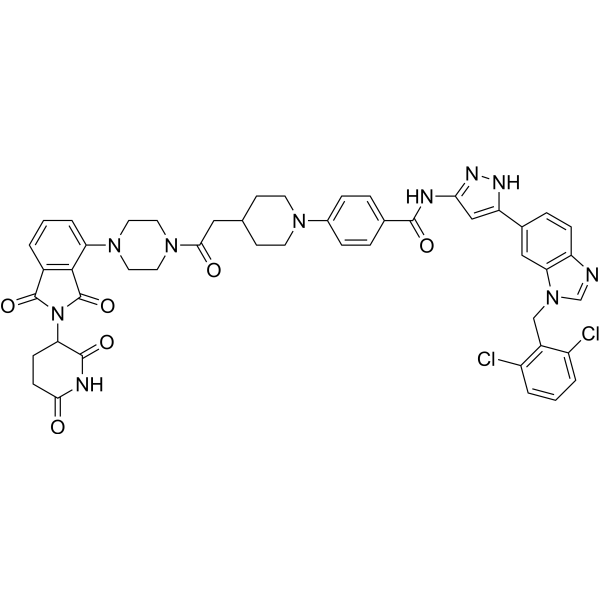
PROTAC FLT-3 degrader 3 (compound 35) is a PROTACs degrader of FLT. PROTAC FLT-3 degrader 3 has antiproliferative activity, with IC50 of 7.55 nM in MV4-11 cells .
|
-
- HY-142927
-
|
|
Estrogen Receptor/ERR
|
Cancer
|
|
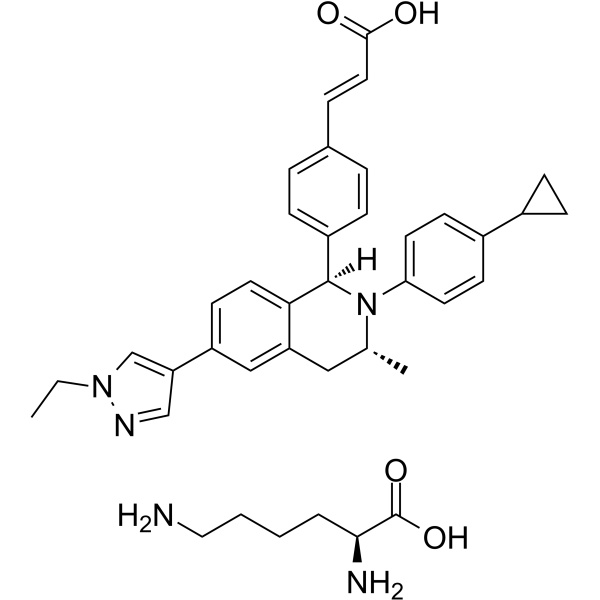
ER degrader 3 is a potent degrader of estrogen receptor (ER). The estrogen signaling system plays an important role in regulating cell growth, differentiation and apoptosis. ER degrader 3 has the potential for the research of cancer diseases (extracted from patent WO2018233591A1, compound 1) .
|
-
- HY-168911
-
|
|
E3 Ligase Ligand-Linker Conjugates
|
Cancer
|
|
E3 Ligase Ligand-linker Conjugate 168 is a conjugate composed of E3 ligase Cereblon ligand (HY-W249500) and a linker. E3 Ligase Ligand-linker Conjugate 168 can be used for synthesis of PROTAC c-Met degrader-3 (HY-168910) .
|
-

- HY-182018
-
|
|
Target Protein Ligand-Linker Conjugates
ATM/ATR
|
Others
|
|
ATR ligand 2-CO-Ph-COOH (Compound 39) is a Target Protein Ligand-Linker Conjugate that incorporates a ligand for ATR (HY-182017) and a PROTAC linker, which recruits E3 ligases. can be used for synthesis of PROTAC ATR degrader-3 (HY-182016) .
|
-

- HY-175392
-
|
|
PROTACs
Epoxide Hydrolase
|
Metabolic Disease
Inflammation/Immunology
|
|
PROTAC sEH-degrader-3 (Compound 1a) is a targeted sEH PROTAC degrader that can selectively degrade sEH in the cytosol without affecting sEH in peroxisomes. PROTAC sEH-degrader-3 degrades sEH through a CRBN-dependent lysosomal pathway rather than the proteasome, with an IC50 of 0.8 nM against hsEH. PROTAC sEH-degrader-3 can inhibit endoplasmic reticulum stress and can be used in the research of inflammation, metabolic diseases, and other diseases related to endoplasmic reticulum stress. (Pink: sEH inhibitor (HY-114266); Black: Linker (HY-W008352); Blue: E3 Ligase Ligand (HY-14658)) .
|
-

- HY-180572
-
|
|
Ligands for Target Protein for PROTAC
CCR
|
Cancer
|
|
CCR2 ligand-1 is a ligand for CCR2. CCR2 ligand-1 conjugates with the Linker PIN1 degrader-3 (HY-79577) and the E3 ligase ligand Thalidomide 4-fluoride (HY-41547) can be used for the synthesis of LUF7996 (HY-180571) .
|
-

- HY-W267161
-
-

- HY-181593
-
|
|
E3 Ligase Ligand-Linker Conjugates
|
Cancer
|
|
IAP ligand-Linker Conjugate 2 is a synthetic target E3 ligase ligand-linker conjugate that can be used for the synthesis of PROTACs, such as PROTAC TEAD1/IAP degrader-3 (HY-181590). PROTAC TEAD degrader-2 is a potent TEAD1/IAP PROTAC degrader with anti-cancer activity .
|
-

- HY-182344
-
|
|
Ligands for Target Protein for PROTAC
Mixed Lineage Kinase
|
Cancer
|
|
MLKL ligand-2 is a mixed lineage kinase domain-like pseudokinase (MLKL) PROTAC ligand with a KD of 9.408 μM. MLKL ligand-2 forms hydrogen bond networks and hydrophobic interactions with specific MLKL residues, and stabilizes MLKL in hepatic cells. MLKL ligand-2 can be used to synthesize PROTAC MLKL Degrader-3 (HY-182343) .
|
-

- HY-182980
-
|
|
Target Protein Ligand-Linker Conjugates
PD-1/PD-L1
|
Cancer
|
|
N-(8-Carboxyoctanoyl)-deacetyl BMS-202 is a target protein ligand-linker conjugate. N-(8-Carboxyoctanoyl)-deacetyl BMS-202 contains the target protein PD-1/PD-L1 ligand and a PROTAC linker. N-(8-Carboxyoctanoyl)-deacetyl BMS-202 can be used for the synthesis of PROTAC PD-L1 Degrader-3 (HY-182959) .
|
-

- HY-181737
-
|
|
E3 Ligase Ligand-Linker Conjugates
|
Others
|
|
E3 Ligase Ligand-linker Conjugate 225 is an E3 ligase ligand-linker conjugate used for the synthesis of PROTACs; it consists of the PEG-based linker Bis-Tos-PEG3 (HY-W013731) and the VHL-type E3 ubiquitin ligase ligand VH 101 thiol (HY-47851). E3 Ligase Ligand-linker Conjugate 225 can be further coupled with a target protein ligand—such as MT-4 (HY-128595)—to synthesize the PROTAC TG2 Degrader-3 (HY-181732) .
|
-

- HY-182087
-
|
|
HyT
Anaplastic lymphoma kinase (ALK)
|
Cancer
|
|
ALK degrader 3 is a ALK HyT degrader with an IC50 of 1.2 nM. ALK degrader 3 inhibits ALK kinase activity, increases the solvent-accessible surface area of hydrophobic residues near the ALK binding pocket, promotes ALK to form a partially unfolded conformation, and drives ALK degradation via the proteasomal pathway. ALK degrader 3 inhibits the proliferation of tumor cells. ALK degrader 3 can be used for the research of non-small cell lung cancer. (ALK ligand: Brigatinib (HY-12857); hydrophobic tag: Tetraasterane (HY-W1139353)) .
|
-

- HY-W1139353
-
|
|
HyT
|
Cancer
|
|
Tetraasterane is a hydrophobic tag that promotes the degradation of ALK protein. Tetraasterane can be used for synthesis of ALK degrader 3 (HY-182087) .
|
-

- HY-100932
-
ML-9
5 Publications Verification
|
Myosin
|
Cancer
|
|
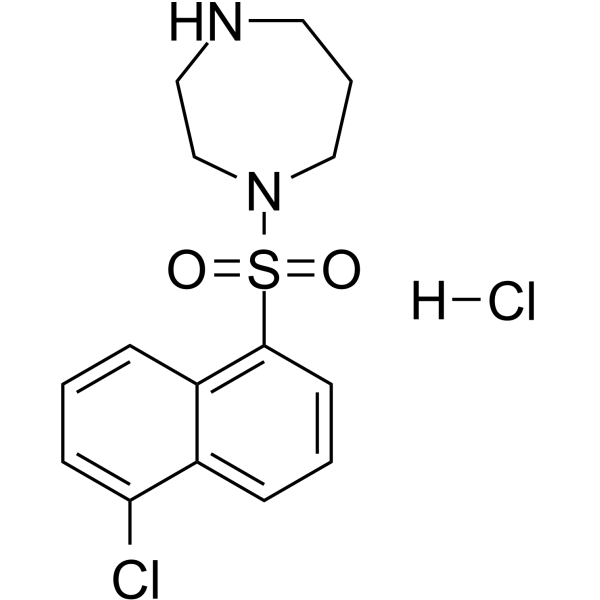
ML-9 is a selective and potent inhibitor of Akt kinase, inhibits myosin light-chain kinase (MLCK) and stromal interaction molecule 1 (STIM1) activity . ML-9 inhibits inhibits MLCK, PKA and PKC activity with Ki values of 4, 32 and 54 μM, respectively . ML-9 induces autophagy by stimulating autophagosome formation and inhibiting their degradation .
|
-
- HY-W939883
-
|
|
E3 Ligase Ligand-Linker Conjugates
|
Others
|
|
Thalidomide-4-O-C7-Br is a synthesized E3 ligase ligand-linker conjugate that incorporates the Thalidomide based CRBN ligand and a linker used in PROTAC technology. Thalidomide-4-O-C7-Br can be connected to the ligand for protein by a linker to form PROTAC FAK degrader 3 (HY-175459) .
|
-

- HY-100932A
-
|
|
Myosin
|
Cancer
|
|
ML-9 (Free Base) is a selective and potent inhibitor of Akt kinase, inhibits myosin light-chain kinase (MLCK) and stromal interaction molecule 1 (STIM1) activity . ML-9 (Free Base) inhibits inhibits MLCK, PKA and PKC activity with Ki values of 4, 32 and 54 μM, respectively . ML-9 (Free Base) induces autophagy by stimulating autophagosome formation and inhibiting their degradation .
|
-
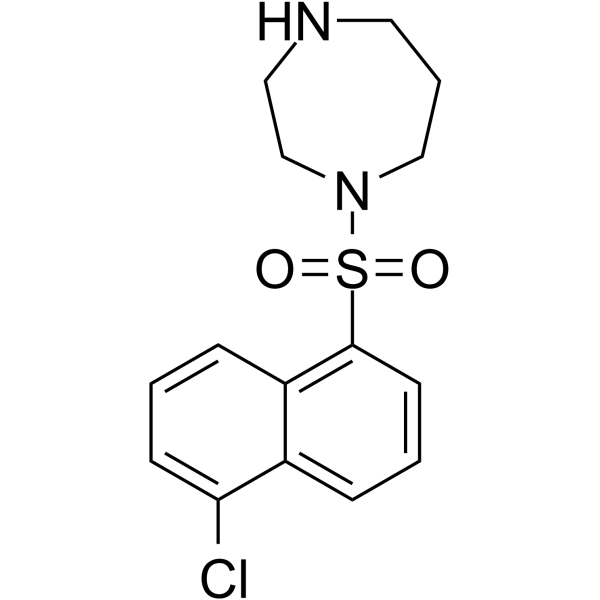
- HY-100932R
-
|
|
Myosin
Reference Standards
|
Cancer
|
|
ML-9 (Standard) is the analytical standard of ML-9 (HY-100932). This product is intended for research and analytical applications. ML-9 is a selective and potent inhibitor of Akt kinase, inhibits myosin light-chain kinase (MLCK) and stromal interaction molecule 1 (STIM1) activity . ML-9 inhibits inhibits MLCK, PKA and PKC activity with Ki values of 4, 32 and 54 μM, respectively . ML-9 induces autophagy by stimulating autophagosome formation and inhibiting their degradation .
|
-

| Cat. No. |
Product Name |
|
Classification |
-
- HY-136857
-
|
|
|
PROTAC Synthesis
|
|
BRD4 degrader-3 is a potent bromodomain BRD4 degrader extracted from patent WO2020055976A1, example 1a, has IC50s of 15.5 and 12.3 nM for BRD4-BD1 and BRD4-BD2, respectively . PROTAC BRD4 Degrader-7 is a click chemistry reagent, it contains an Alkyne group and can undergo copper-catalyzed azide-alkyne cycloaddition (CuAAc) with molecules containing Azide groups.
|
-
- HY-161792
-
|
|
|
Azide
|
|
N3-C5-O-C-Boc is a linker, which can be utilized for the synthesis of PROTAC SARS-CoV-2 Mpro degrader-3 (HY-161789) .
|
-
- HY-159454
-
|
|
|
Azide
|
|
SMARCA2/4-degrader-3 (compound I-433) is a PROTAC SMARCA2/4-degrader based on VH032-NH2, with a degradation potency (DC50) <100 nM in MV4-11 cells .
|
-
- HY-161793
-
|
|
|
Azide
|
|
(S,R,S)-AHPC-NHCO-C-O-C5-N3 is a conjugate of ligand for E3 ligase (HY-125845) and linker (HY-161792). (S,R,S)-AHPC-NHCO-C-O-C5-N3 can be utilized for synthesis of PROTAC SARS-CoV-2 Mpro degrader-3 (HY-161789) .
|
Your information is safe with us. * Required Fields.
Inquiry Information
- Product Name:
- Cat. No.:
- Quantity:
- MCE Japan Authorized Agent:





![(S)-Deoxy-thalidomide-2,7-diazaspiro[3.5]nonane-CH2-Me-PIP-Boc](http://file.medchemexpress.com/product_pic/hy-168076.gif)


![3,9-Diazaspiro[5.5]undecane-3-carboxylic acid](http://file.medchemexpress.com/product_pic/hy-168912.gif)


![Boc-PIP-Me-CH2-2,7-diazaspiro[3.5]nonane](http://file.medchemexpress.com/product_pic/hy-168075.gif)


![7-[(2-Aminoethyl)carbamoyl]heptanoic acid](http://file.medchemexpress.com/product_pic/hy-182982.gif)





