



Search Result
Results for "
muscular
" in MedChemExpress (MCE) Product Catalog:
1
Biochemical Assay Reagents
6
Isotope-Labeled Compounds
| Cat. No. |
Product Name |
Target |
Research Areas |
Chemical Structure |
-
- HY-14415
-
SR8278
Maximum Cited Publications
15 Publications Verification
|
REV-ERB
|
Neurological Disease
Metabolic Disease
|
|
SR8278 is a REV-ERBα antagonist and inhibits the REV-ERBα transcriptional repression activity with an EC50 of 0.47 μM. SR8278 is used to regulate the metabolism in organisms and study biological rhythm. SR8278 also can be used for the research of Duchenne muscular dystrophy and Alzheimer's disease .
|
-
-
- HY-14842
-
|
ITF-2357
|
HDAC
|
Inflammation/Immunology
Cancer
|
|
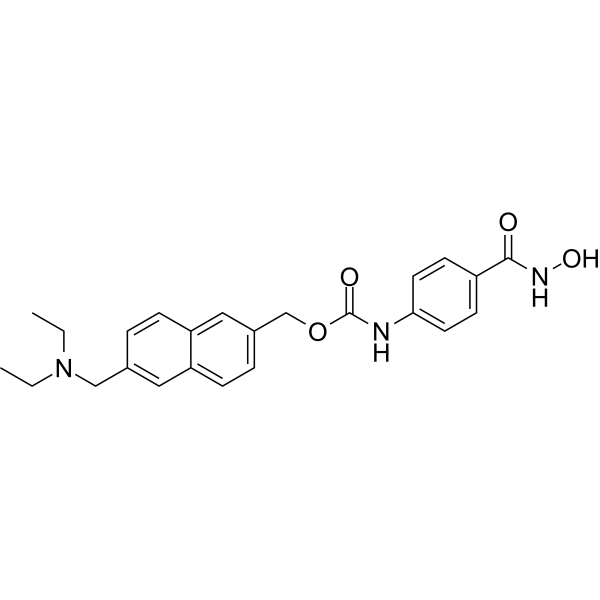
Givinostat (ITF-2357) is a HDAC inhibitor with an IC50 of 198 and 157 nM for HDAC1 and HDAC3, respectively. Givinostat can be used for Duchenne muscular dystrophy (DMD) research. Givinostat can penetrate the blood-brain barrier (BBB) .
|
-
-
- HY-W015828
-
|
RGX-202; 3-Guanidinopropionic acid
|
Apoptosis
Endogenous Metabolite
|
Cancer
|
|
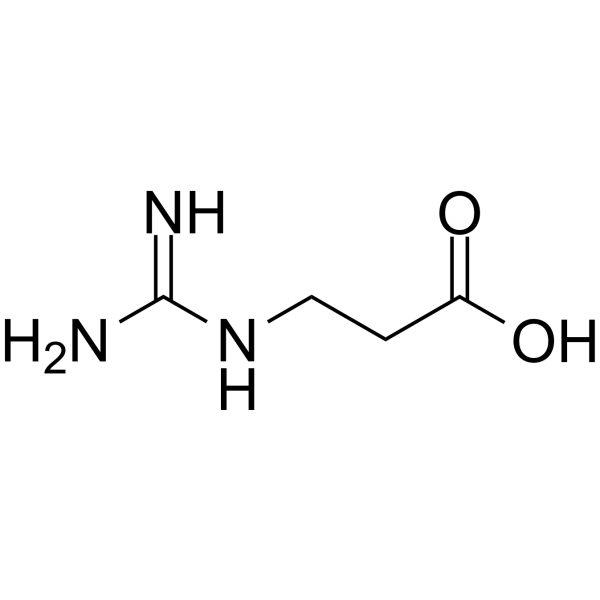
Ompenaclid (RGX-202) is an oral small-molecule SLC6A8 transporter inhibitor. Ompenaclid robustly inhibits creatine import in vitro and in vivo, reduces intracellular phosphocreatine and ATP levels, and induces tumor apoptosis. Ompenaclid can be used for the research of cancer and duchenne muscular dystrophy .
|
-
-
- HY-112980
-
|
|
DNA/RNA Synthesis
|
Neurological Disease
|
|
Nusinersen is an antisense oligonucleotide active molecule. Nusinersen modifies the pre-messenger RNA splicing of the SMN2 gene, thereby promoting the production of full-length SMN protein. Nusinersen improves spinal muscular atrophy .
|
-
-
- HY-109017
-
-
-
- HY-19620
-
Branaplam
Maximum Cited Publications
15 Publications Verification
LMI070; NVS-SM1
|
DNA/RNA Synthesis
Potassium Channel
|
Cancer
|
|
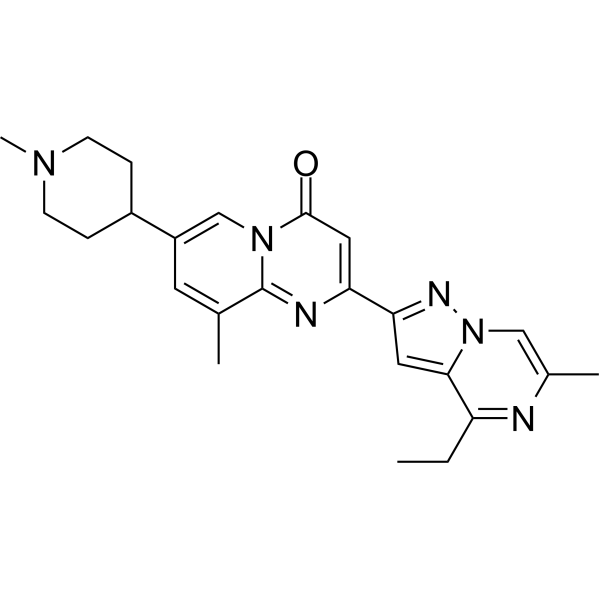
Branaplam (LMI070; NVS-SM1) is a highly potent, selective and orally active survival motor neuron-2 (SMN2) splicing modulator with an EC50 of 20 nM for SMN. Branaplam inhibits human-ether-a-go-go-related gene (hERG) with an IC50 of 6.3 μM. Branaplam elevates full-length SMN protein and extends survival in a severe spinal muscular atrophy (SMA) mouse model .
|
-
-
- HY-108753
-
|
AVI 4658
|
Arp2/3 Complex
|
Metabolic Disease
|
|
Eteplirsen (AVI 4658) is a synthetic antisense oligonucleotide. Eteplirsen can be used for Duchenne muscular dystrophy research .
|
-
-
- HY-P99441
-
|
SRK-015
|
TGF-beta/Smad
|
Neurological Disease
|
|
Apitegromab (SRK-015) is an anti-promyostatin monoclonal antibody. Apitegromab can be used for the research of neuromuscular disease including spinal muscular atrophy .
|
-
-
- HY-148799
-
|
EDG-5506
|
Myosin
|
Others
|
|
Sevasemten is an orally active, selective allosteric inhibitor of skeletal muscle myosin that protects skeletal muscle from contraction-induced injury. Sevasemten decreases muscle damage biomarkers and fibrosis while increasing muscle strength and activity in in Duchenne muscular dystrophy disease models .
|
-
-
- HY-112980A
-
|
|
DNA/RNA Synthesis
|
Neurological Disease
|
|
Nusinersen sodium is an antisense oligonucleotide active molecule. Nusinersen sodium modifies the pre-messenger RNA splicing of the SMN2 gene, thereby promoting the production of full-length SMN protein. Nusinersen sodium improves spinal muscular atrophy .
|
-
-
- HY-132611
-
|
SRP-4053
|
Dystrophin
DNA/RNA Synthesis
|
Neurological Disease
|
|
Golodirsen (SRP-4053) is an antisense oligonucleotide of the phophorodiamidate morpholino oligomer (PMO). Golodirsen restores the reading frame of the Duchenne muscular dystrophy (DMD) gene by modifying the splicing process of the pre-mRNA, skipping exon 53. Golodirsen can restore the expression of the anti-myostatin protein. Golodirsen can be used for the research of duchenne muscular dystrophy (DMD) .
|
-
-
- HY-102020
-
RG3039
3 Publications Verification
PF-06687859
|
DNA/RNA Synthesis
|
Neurological Disease
|
|
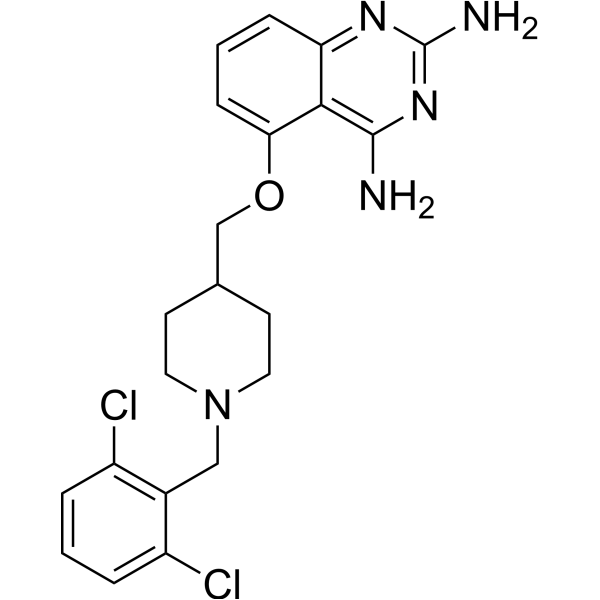
RG3039 (PF-06687859) is an orally active, blood-brain barrier-permeable DcpS inhibitor with an IC50 of 4.2 nM against hDcpS. RG3039 inhibits the decapping activity of DcpS and maintains DcpS in a catalytically inactive conformation in the central nervous system and other tissues. RG3039 extends survival and improves function in spinal muscular atrophy mice. RG3039 is applicable to research related to spinal muscular atrophy .
|
-
-
- HY-P99518
-
|
BMS 986089; RG 6206; RO 7239361; BHV2000
|
TGF-beta/Smad
|
Others
|
|
Taldefgrobep alfa (BMS 986089; RG 6206; RO 7239361) is a protein that blocks myostatin. Taldefgrobep alfa is a fusion protein composed of a human IgG1-Fc domain and Adnectin domain. Taldefgrobep alfa can be used for spinal muscular atrophy (SMA) research .
|
-
-
- HY-119850
-
|
ARM036; S44121
|
Calcium Channel
|
Cardiovascular Disease
|
|
Aladorian (ARM036; S44121) is a non-peptidic ryanodine receptor 2 (RyR2) stabilizer. Aladorian stabilizes RyR2 channels and rectifies abnormal Ca²⁺ handling in cardiomyocytes. Aladorian improves cardiomyocyte Ca²⁺ homeostasis independent of dystrophin restoration. Aladorian attenuates early cardiomyopathy and enhances left ventricular function in a canine muscular dystrophy model. Aladorian can be used for the research of heart failure, Duchenne muscular dystrophy-associated cardiomyopathy and muscular dystrophy .
|
-
-
- HY-132586
-
|
NS-065/NCNP-01
|
Nucleoside Antimetabolite/Analog
Dystrophin
|
Metabolic Disease
|
|
Viltolarsen (NS-065/NCNP-01) is a phosphorodiamidate morpholino antisense oligonucleotide. Viltolarsen binds to exon 53 of the dystrophin mRNA precursor and restores the amino acid open-reading frame by skipping exon 53, resulting in the production of a shortened dystrophin protein that contains essential functional portions. Viltolarsen has the potential for Duchenne muscular dystrophy (DMD) research .
|
-
-
- HY-19620A
-
|
LMI070 hydrochloride; NVS-SM1 hydrochloride
|
DNA/RNA Synthesis
Potassium Channel
|
Cancer
|
|
Branaplam (LMI070; NVS-SM1) hydrochloride is a highly potent, selective and orally active survival motor neuron-2 (SMN2) splicing modulator with an EC50 of 20 nM for SMN. Branaplam hydrochloride inhibits human-ether-a-go-go-related gene (hERG) with an IC50 of 6.3 μM. Branaplam hydrochloride elevates full-length SMN protein and extends survival in a severe spinal muscular atrophy (SMA) mouse model .
|
-
-
- HY-176803
-
|
|
15-PGDH
|
Neurological Disease
|
|
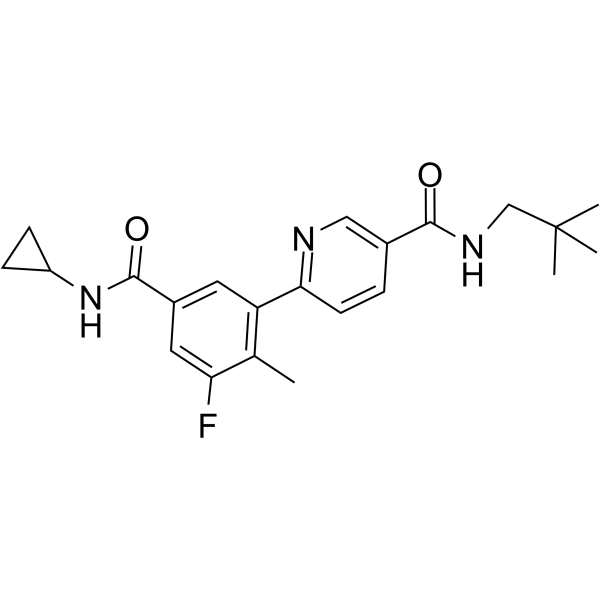
MF-DH-300 is a 15-PGDH inhibitor that can be applicable to the research of muscle disorders such as spinal muscular atrophy (SMA).
|
-
-
- HY-B0262
-
|
|
Sodium Channel
|
Neurological Disease
|
|
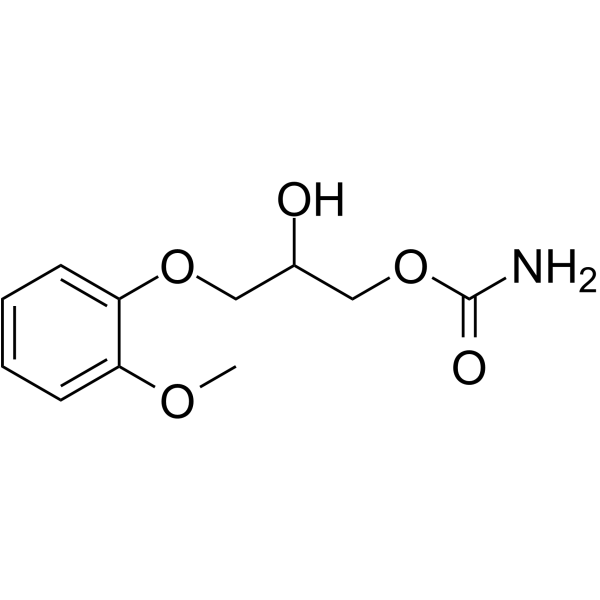
Methocarbamol is an orally active central muscle relaxant and blocks muscular Nav1.4 channel. Methocarbamol reversibly affects voltage dependence of inactivation of Nav1.4 channel. Methocarbamol has the potential for muscle spasms and pain syndromes research .
|
-
-
- HY-127137
-
|
Adenylosuccinate; Aspartyl adenylate
|
Endogenous Metabolite
|
Metabolic Disease
|
|
Adenylosuccinic acid (Adenylosuccinate; Aspartyl adenylate) is a purine ribonucleoside monophosphate and plays a role in nucleotide cycle metabolite. Adenylosuccinic acid can be converted into fumaric acid through adenylosuccinate lyase. Adenylosuccinic acid has the potential for the study of duchenne muscular dystrophy(DMD) .
|
-
-
- HY-101792
-
RG7800
5 Publications Verification
RO6885247
|
DNA/RNA Synthesis
|
Others
|
|
RG7800 is a SMN2 splicing modifier. RG7800 has the potential for spinal muscular atrophy treatment.
|
-
-
- HY-P990993
-
|
GYM-329, RG6237, RG-70240
|
TGF-beta/Smad
|
Inflammation/Immunology
|
|
Emugrobart (GYM-329, RG6237, RG-70240) is a humanized IgG1κ antibody targeting myostatin (Myostatin; GDF8). Emugrobart binds to pro-myostatin and latent myostatin, blocking their cleavage into mature myostatin; it also has a clearance function, which transports bound myostatin for degradation and allows for cyclic reuse. Emugrobart enhances muscle strength in mouse models of muscle atrophy and increases muscle mass in cynomolgus monkeys. Emugrobart can be used in research on spinal muscular atrophy and facioscapulohumeral muscular dystrophy .
|
-
-
- HY-P99857
-
|
PF-06252616
|
TGF-beta/Smad
|
Metabolic Disease
|
|
Domagrozumab is an anti-myostatin humanized monoclonal antibody with a KD value of 2.6 pM for human myostatin. Domagrozumab induces muscle anabolic activity. Domagrozumab can be used in research of duchenne muscular dystrophy (DMD) .
|
-
-
- HY-17614
-
|
SMT C1100; BMN 195; VOX-C1100
|
Cytochrome P450
|
Others
|
|
Ezutromid (SMT C1100) is a first-in-class, orally active benzoxazole utrophin modulator with an EC50 of 0.91 μM. Ezutromid can be used for the research Duchenne muscular dystrophy (DMD). Ezutromid inhibits CYP1A2 enzymic activity in human liver microsomes (HLM) with an IC50 of 5.4 μM .
|
-
-
- HY-145724
-
|
Kyndrisa; GSK2402968A; PRO051
|
DNA/RNA Synthesis
Dystrophin
|
Neurological Disease
|
|
Drisapersen (Kyndrisa) is a 2 '-O-methyl phosphorothioate RNA antisense oligonucleotide that induces exon 51 skipping. Drisapersen induces skipping of exon 51 during Dystrophin pre-mRNA splicing, allowing the synthesis of partially functional Dystrophin. Drisapersen can be used in research related to Duchenne muscular dystrophy .
|
-
-
- HY-P99588
-
|
MYO-029
|
TGF-β Receptor
|
Metabolic Disease
|
|
Stamulumab (MYO-029) is a recombinant human IgG1λ antibody that binds to myostatin and neutralizes its activity by preventing binding to its endogenous high-affinity receptor ActRIIB. Stamulumab leads to muscle fiber hypertrophy and not hyperplasia in SCID mice. Stamulumab has the potential for Becker muscular dystrophy (BMD), facioscapulohumeral dystrophy (FSHD), and limb-girdle muscular dystrophy (LGMD) research .
|
-
-
- HY-132611A
-
|
SRP-4053 sodium
|
DNA/RNA Synthesis
Dystrophin
|
Neurological Disease
|
|
Golodirsen (SRP-4053) sodium is an antisense oligonucleotide of the phophorodiamidate morpholino oligomer (PMO). Golodirsen sodium restores the reading frame of the Duchenne muscular dystrophy (DMD) gene by modifying the splicing process of the pre-mRNA, skipping exon 53. Golodirsen sodium can restore the expression of the anti-myostatin protein. Golodirsen sodium can be used for the research of duchenne muscular dystrophy (DMD) .
|
-
-
- HY-152219
-
|
|
CDK
|
Infection
Cancer
|
|
CLK1-IN-2 is metabolically stable Clk1 inhibitor. CLK1-IN-2 has selectivity for Clk1 with an IC50 value of 1.7 nM. CLK1-IN-2 can be used for the research of tumour, Duchenne's muscular dystrophy and viral infections such as HIV-1 and influenza .
|
-
-
- HY-134377
-
|
ASP0367; MA-0211
|
PPAR
|
Metabolic Disease
|
|
Bocidelpar (ASP0367; MA-0211) is a selective, orally active PPARδ modulator. Bocidelpar activates the PPARδ downstream signaling pathway, upregulates the expression of target genes such as ABCA1 and ACAA2. Bocidelpar then promotes fatty acid oxidation (FAO) and mitochondrial biogenesis, and improves mitochondrial dysfunction. Bocidelpar can improve mitochondrial biogenesis and function in muscle cells. Bocidelpar is mainly used in the study of mitochondrial dysfunction diseases such as primary mitochondrial myopathy (PMM) and Duchenne muscular dystrophy (DMD) .
|
-
-
- HY-16361A
-
|
CGP3466B; CGP3446 maleate; TCH346 maleate
|
Apoptosis
|
Neurological Disease
Metabolic Disease
Inflammation/Immunology
|
|
Omigapil maleate (CGP3466B), an orally active GAPDH nitrosylation inhibitor, abrogates Aβ1-42-induced tau acetylation, memory impairment, and locomotor dysfunction in mice. Omigapil maleate has the potential for the research of Alzheimer's disease. Omigapil maleate is a apoptosis inhibitor. Omigapil maleate can be used for the research of congenital muscular dystrophy (CMD). Omigapil maleate is a click chemistry reagent, it contains an Alkyne group and can undergo copper-catalyzed azide-alkyne cycloaddition (CuAAc) with molecules containing Azide groups .
|
-
-
- HY-18102
-
|
|
Androgen Receptor
|
Neurological Disease
|
|
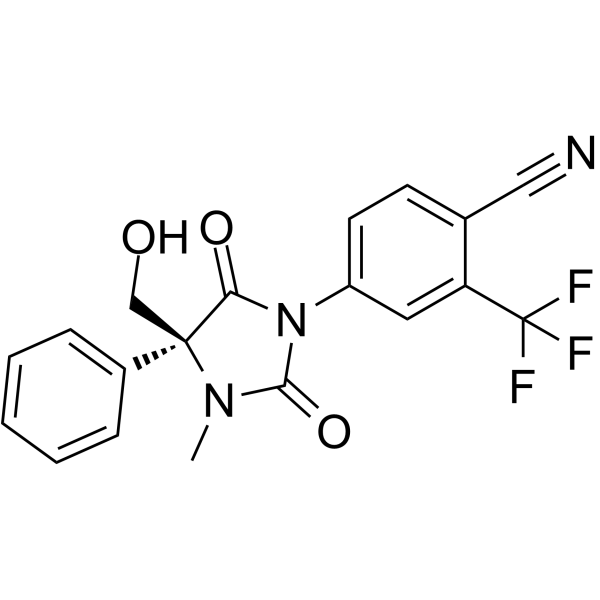
GLPG0492 is an orally active, non-steroidal selective androgen receptor modulator. GLPG0492 exerts functional transactivation by binding to the ligand-binding domain of the receptor, exhibiting preferential partial agonist activity in muscle and bone tissues with low activity in reproductive tissues. GLPG0492 effectively counteracts muscle atrophy-related pathways, significantly enhances muscle strength, maintains motor ability, reduces fibrosis and improves electrophysiological parameters. GLPG0492 prevents immobilization-induced muscle atrophy and regulates muscle mass homeostasis, serving as a valuable tool compound for studies on Duchenne muscular dystrophy, muscle loss and various types of disuse musculoskeletal atrophy .
|
-
-
- HY-112633
-
|
|
DNA/RNA Synthesis
|
Others
|
|
SMN-C3 is an orally active SMN2 splicing modulator and has the potential to treat spinal muscular atrophy (SMA).
|
-
-
- HY-149127
-
|
ASC-JM17; ALZ-003
|
Keap1-Nrf2
Androgen Receptor
HSP
Mitophagy
Ferroptosis
Apoptosis
Reactive Oxygen Species (ROS)
Autophagy
|
Metabolic Disease
|
|
Rosolutamide (ASC-JM17) is an orally active Nrf1/Nrf2 activator. Rosolutamide activates Hsf1 pathways, upregulates proteasome subunits and antioxidant enzymes, induces proteasome complex structural rearrangement, and enhances ubiquitin-proteasome system-mediated degradation. Rosolutamide reduces mutant androgen receptor and ataxin-3 aggregates, restores mitochondrial function, attenuates reactive oxygen species (ROS) levels, induces apoptosis and ferroptosis, and inhibits cancer cell growth. Rosolutamide can be used for the research of spinal and bulbar muscular atrophy, Huntington’s disease, and temozolomide-resistant glioblastoma .
|
-
-
- HY-P10242
-
|
|
TGF-beta/Smad
|
Others
|
|
Myostatin inhibitory peptide 7 is a 23 amino acids peptide, which is derived from amino acids 21 to 43 of the mouse myostatin prodomain. Myostatin inhibitory peptide 7 inhibits myostatin with a Kd of 29.7 nM. Myostatin inhibitory peptide 7 can be used for researches of muscle atrophic disorders .
|
-
-
- HY-111520
-
|
|
DNA/RNA Synthesis
|
Neurological Disease
|
|
NVS-SM2 is a potent, orally active and brain-penetrant SMN2 splicing enhancer with an EC50 of 2 nM for SMN. NVS-SM2 enhances U1-pre-mRNA association. NVS-SM2 promotes exon 7 inclusion and restores normal survival motor neuron (SMN) protein expression. NVS-SM2 can be used for spinal muscular atrophy (SMA) research .
|
-
-
- HY-132586A
-
|
NS-065/NCNP-01 sodium
|
Nucleoside Antimetabolite/Analog
Dystrophin
|
Metabolic Disease
|
|
Viltolarsen (NS-065/NCNP-01) sodium is a phosphorodiamidate morpholino antisense oligonucleotide. Viltolarsen sodium binds to exon 53 of the dystrophin mRNA precursor and restores the amino acid open-reading frame by skipping exon 53, resulting in the production of a shortened dystrophin protein that contains essential functional portions. Viltolarsen sodium has the potential for Duchenne muscular dystrophy (DMD) research .
|
-
-
- HY-101792A
-
|
RO6885247 tetrahydrochloride
|
DNA/RNA Synthesis
|
Neurological Disease
|
|
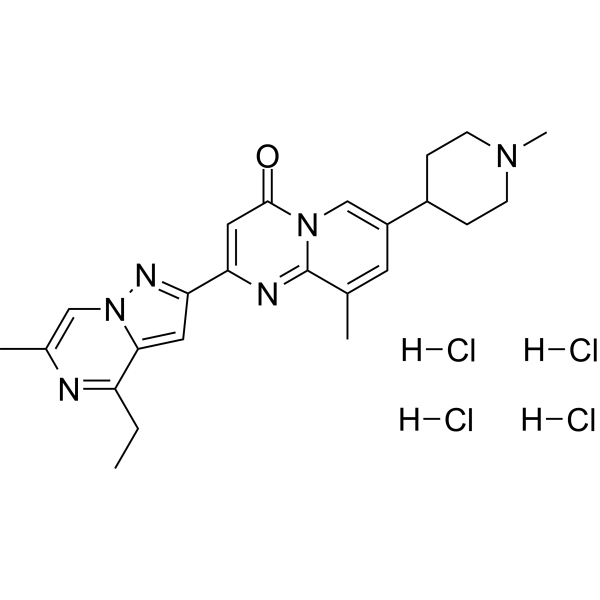
RG7800 hydrochloride is an orally active SMN2 splicing modulator, with EC1.5xs of 23 nM and 87 nM for SMN2 splicing and SMN protein; RG7800 hydrochloride has the potential to treat spinal muscular atrophy.
|
-
-
- HY-122604
-
|
|
DNA/RNA Synthesis
|
Neurological Disease
|
|
PF-DcpSi is a mRNA decapping scavenger enzyme (DcpS) inhibitor (IC50: 0.11 nM). PF-DcpSi (30 mg/kg,i.p.) ameliorates the disease phenotype in a mice model of spinal muscular atrophy (SMA) .
|
-
-
- HY-122631
-
|
|
CDK
Dystrophin
|
Others
|
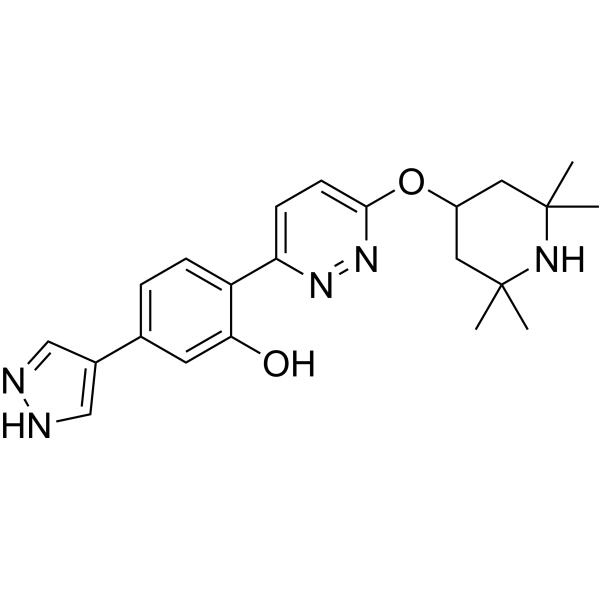
|
TG693 is an orally active inhibitor of CLK1. TG693 regulates the mutated exon 31 of the dystrophin gene in vivo. TG693 is used in Duchenne muscular dystrophy (DMD) research .
|
-
-
- HY-124713
-
|
|
DNA/RNA Synthesis
|
Neurological Disease
|
|
ML372 inhibits survival motor neuron (SMN) protein ubiquitination, increases SMN protein stability without affecting mRNA expression. ML372 improves spinal muscular atrophy (SMA) in mice. ML372 is brain penetrant and has a reasonable exposure and half-life in vivo .
|
-
-
- HY-147253
-
|
NS 089; NCNP 02
|
DNA/RNA Synthesis
|
Neurological Disease
|
|
Brogidirsen (NS 089; NCNP 02) is a a dual-targeting antisense oligonucleotide. Brogidirsen can induce dystrophin protein experession. Brogidirsen can be used for the research of Duchenne muscular dystrophy .
|
-
-
- HY-111055
-
|
|
GSK-3
|
Neurological Disease
|
|
BIP-135 is a potent and selective ATP-competitive GSK-3 inhibitor, with IC50s of 16 nM and 21 nM for GSK-3α and GSK-3β, respectively. BIP 135 exhibits neuroprotective effect .
|
-
-
- HY-101459
-
|
|
Dystrophin
|
Metabolic Disease
|
RTC13 restores dystrophin expression and improves muscle function in the mdx mouse model for Duchenne muscular dystrophy (DMD) .
|
-
-
- HY-127137A
-
|
Adenylosuccinate tetraammonium; Aspartyl adenylate tetraammonium
|
Endogenous Metabolite
|
Metabolic Disease
|
|
Adenylosuccinic acid tetraammonium (Adenylosuccinate; Aspartyl adenylate) is an orally active purine ribonucleoside monophosphate and plays a role in nucleotide cycle metabolite. Adenylosuccinic acid tetraammonium can be converted into fumaric acid through adenylosuccinate lyase. Adenylosuccinic acid tetraammonium has the potential for the study of duchenne muscular dystrophy(DMD) .
|
-
-
- HY-161050
-
|
|
HDAC
Apoptosis
|
Cancer
|
|
YSR734 (Compound 21) is a covalent HDAC inhibitor with IC50 values of 110 nM, 154 nM, and 143 nM for HDAC1, HDAC2, and HDAC3, respectively. YSR734 can induce apoptosis in leukemia cells. YSR734 can induce myoblast differentiation and is used in the study of Duchenne muscular dystrophy .
|
-
-
- HY-114739
-
|
|
PPAR
|
Metabolic Disease
|
|
MA-0204 is a potent, highly selective and orally available peroxisome proliferator activated receptor δ (PPARδ) modulator with EC50s of 0.4 nM, 7.9 nM and 10 nM for human, mouse and rat PPARδ, respectively. Potential treatment for Duchene Muscular Dystrophy (DMD) .
|
-
-
- HY-109134
-
|
TAS-205 free base
|
Prostaglandin Receptor
|
Metabolic Disease
Inflammation/Immunology
|
|
Pizuglanstat (Compound 3; TAS-205 free base) is an orally active prostaglandin D synthase inhibitor with an IC50 of 76 nM for human hematopoietic prostaglandin D synthase. Pizuglanstat inhibits the synthesis of PGD2. Pizuglanstat improves experimental allergic rhinitis. Pizuglanstat can be used in the study of muscle regenerative diseases such as muscular dystrophy .
|
-
-
- HY-152006S
-
|
|
Isotope-Labeled Compounds
Endogenous Metabolite
|
Inflammation/Immunology
|
|
Propionyl-L-carnitine-d3 (hydrochloride) is deuterium labeled Propionyl-L-carnitine. Propionyl-L-carnitine is a carnitine derivative and has a high affinity for muscular carnitine transferase. Propionyl-L-carnitine increases cellular carnitine content, thereby allowing free fatty acid transport into the mitochondria. Propionyl-L-carnitine alleviates the symptoms of PAD through a metabolic pathway, thereby improving exercise performance .
|
-
-
- HY-147774
-
|
|
Cathepsin
|
Others
|
|
Cathepsin K inhibitor 6 (compound 19) is an inhibitor of cathepsin K (Cat K) with an IC50 of 17 nM. Cathepsin K inhibitor 6 also has inhibitory effects on other isoforms, with IC50s of 0.05 μM (Cat L) and 0.3 μM (Cat B), respectively .
|
-
-
- HY-134577
-
|
|
Adrenergic Receptor
|
Endocrinology
|
|
Clorprenaline is a potent agonist of β2-adrenergic. Clorprenaline promotes animal muscular mass growth and decreases fat accumulation. Clorprenaline is a potential new lean meat-boosting feed additive .
|
-
-
- HY-153405
-
|
|
Biochemical Assay Reagents
Phosphoramidites
|
Others
|
|
Activated DPG Subunit can be used in the synthesis of exon jumping oligomer conjugates. The oligomer conjugates complement selected target sites in the human anti-muscular atrophy protein gene and induce exon 51 jumping. It can be used for research of muscular dystrophy .
|
-
- HY-153406
-
|
|
Biochemical Assay Reagents
|
Others
|
|
Activated T Subunit can be used in the synthesis of exon jumping oligomer conjugates. The oligomer conjugates complement selected target sites in the human anti-muscular atrophy protein gene and induce exon 51 jumping. Activated T subunit can be used for research of muscular dystrophy .
|
-
- HY-N1072
-
|
|
Calcium Channel
|
Inflammation/Immunology
|
|
Wilforgine is a bioactive sesquiterpene alkaloid in Tripterygium wilfordii Hook. F. Wilforgine can induce microstructural and ultrastructural changes in the muscles of Mythimna separata larvae, and the sites of action are proposed to be calcium receptors or channels in the muscular system .
|
-
- HY-14842R
-
|
ITF-2357 (Standard)
|
HDAC
Reference Standards
|
Inflammation/Immunology
Cancer
|
|
Givinostat (Standard) is the analytical standard of Givinostat. This product is intended for research and analytical applications. Givinostat (ITF-2357) is a HDAC inhibitor with an IC50 of 198 and 157 nM for HDAC1 and HDAC3, respectively. Givinostat can be used for Duchenne muscular dystrophy (DMD) research .
|
-
- HY-139046
-
|
|
Adrenergic Receptor
|
Neurological Disease
|
|
MEPB is a modulator of AF-2 of the androgen receptor. MEPB increases co-repressor binding of AR. MEPB can bind to the BF3 pocket of AR specifically, thereby modulating the binding of co-regulators to the AF2 domain. MEPB alleviates degeneration in spinal bulbar muscular atrophy mouse model .
|
-
- HY-150077
-
|
|
Microtubule/Tubulin
|
Others
|
|
Utrophin modulator 1 is a potent utrophin modulator (upregulates utrophin protein levels), with an EC50 of 0.11 μM. Utrophin modulator 1 can be used in study of duchenne muscular dystrophy (DMD) .
|
-
- HY-117000A
-
|
|
DNA/RNA Synthesis
Dihydrofolate reductase (DHFR)
|
Neurological Disease
|
|
D156844 (Compound 11a) hydrochloride is a SMN2 promoter activator with an EC50 of 4 nM. D156844 hydrochloride increases the mRNA expression of the mouse SMN in NSC-34 cells and human SMN2 promoter in severe type I spinal muscular atrophy (SMA) fibroblasts as well as full-length human SMN protein. D156844 hydrochloride overcomes DHFR inhibition. D156844 hydrochloride can be used for SMA research .
|
-
- HY-114898
-
|
|
Mitochondrial Metabolism
|
Cardiovascular Disease
Neurological Disease
|
|
ML404 (Compound 38) is an inhibitor of the mitochondrial permeability transition pore (mtPTP), which can suppress mitochondrial swelling (EC50=4.9 nM) and only disrupts mitochondrial coupling (an adverse effect) at concentrations > 100 μM. ML404 can be utilized in research related to multiple sclerosis (MS), amyotrophic lateral sclerosis (ALS), Alzheimer's disease (AD), muscular dystrophies (MD), myocardial infarction, and stroke .
|
-
- HY-177659
-
|
|
Dystrophin
|
Others
|
|
Rimigorsen is an antisense oligonucleotide that induces skipping of exon 44 of the pre-mRNA encoding dystrophin in a Duchenne muscular dystrophy (DMD)
|
-
- HY-114081A
-
|
HC-3 chloride
|
Choline Kinase
|
Neurological Disease
|
|
Hemicholinium chloride (HC-3) is a choline kinase (ChoK) inhibitor. Hemicholinium chloride Hemicholinium chloride induces ataxia and muscular weakness .
|
-
- HY-107901
-
|
|
PPAR
|
Cardiovascular Disease
Metabolic Disease
|
|
Pparδ agonist 1 is a PPAR-δ agonist, with an EC50 of 5.06 nM, used in the research of PPAR-delta related diseases, such as mitochondrial diseases, muscular diseases, vascular diseases, demyelinating diseases and metabolic diseases.
|
-
- HY-48959
-
|
|
Integrin
|
Metabolic Disease
|
|
α7β1 integrin modulator-1 is a potent α7β1 integrin modulator. α7β1 integrin modulator-1 has the potential for the research of muscular dystrophy .
|
-
- HY-122588A
-
|
|
Antibiotic
|
Cardiovascular Disease
Metabolic Disease
|
|
Negamycin (hydrochloride) is a dipeptide antibiotic. Negamycin (hydrochloride) can restore dystrophin expression in skeletal and cardiac muscles in mdx Duchenne muscular dystrophy (DMD) murine model. Negamycin (hydrochloride) can bind to a partial sequence of the eukaryotic rRNA-decoding A-site. Negamycin (hydrochloride) can be studied in DMD research .
|
-
- HY-W015828R
-
|
RGX-202 (Standard); 3-Guanidinopropionic acid (Standard)
|
Reference Standards
Apoptosis
Endogenous Metabolite
|
Cancer
|
|
Ompenaclid (RGX-202) is an oral small-molecule SLC6A8 transporter inhibitor. Ompenaclid robustly inhibits creatine import in vitro and in vivo, reduces intracellular phosphocreatine and ATP levels, and induces tumor apoptosis. Ompenaclid can be used for the research of cancer and duchenne muscular dystrophy .
|
-
- HY-109134A
-
|
TAS-205
|
Prostaglandin Receptor
|
Metabolic Disease
Inflammation/Immunology
|
|
Pizuglanstat hydrate (Compound 3; TAS-205) is an orally active prostaglandin D synthase inhibitor with an IC50 of 76 nM for human hematopoietic prostaglandin D synthase. Pizuglanstat hydrate inhibits the synthesis of PGD2. Pizuglanstat hydrate improves experimental allergic rhinitis. Pizuglanstat hydrate can be used in the study of muscle regenerative diseases such as muscular dystrophy .
|
-
- HY-176754
-
|
|
Liposome
|
Metabolic Disease
Inflammation/Immunology
|
|
TCL065 is an ionizable lipid with a pKa of 6.3. TCL065 can be used to generate lipid nanoparticles (LNPs) for the delivery of mRNA as well as single-guide RNA (sgRNA) both in vitro and in vivo. TCL065-containing LNPs can studied in research for Duchenne muscular dystrophy and gene-editing technologies .
|
-
- HY-177971
-
|
|
Antibody-Oligonucleotide Conjugates (AOCs)
|
Neurological Disease
|
|
Braxlosiran, one of the components of the AOC Delpacibart braxlosiran (HY-177566), is composed of a siRNA targeting DUX4 (dual homologous box protein) and SMCC linker (HY-42360). Abnormal expression of the DUX4 protein leads to changes in gene expression in muscle cells, and these changes are associated with the loss of muscle function in facioscapulohumeral muscular dystrophy (FSHD) .
|
-
- HY-B0262R
-
|
|
Reference Standards
Sodium Channel
|
Neurological Disease
|
|
Methocarbamol (Standard) is the analytical standard of Methocarbamol. This product is intended for research and analytical applications. Methocarbamol is an orally active central muscle relaxant and blocks muscular Nav1.4 channel. Methocarbamol reversibly affects voltage dependence of inactivation of Nav1.4 channel. Methocarbamol has the potential for muscle spasms and pain syndromes research .
|
-
- HY-124041
-
|
|
Drug Metabolite
|
|
|
p-Hydroxybestatin is an active metabolite of Bestatinc (HY-B0134) that can be found in serum from muscular dystrophic patients and from healthy subjects dosed with Bestatin .
|
-
- HY-W019878
-
|
β-Lipotropin 61-91
|
Opioid Receptor
|
Cardiovascular Disease
Neurological Disease
|
|
β-Endorphin, rat (β-Lipotropin 61-91), a neuropeptide, is involved in cardiovascular regulation. β-Endorphin, rat induces marked, prolonged muscular rigidity and immobility similar to a catatonic state in rats .
|
-
- HY-150078
-
|
|
Microtubule/Tubulin
|
Others
|
|
OX01914 is a water-solube and permeable utrophin modulator (upregulates utrophin protein levels), with an EC50 of 20.5 μM. OX01914 can be used in study of duchenne muscular dystrophy (DMD) .
|
-
- HY-17614R
-
|
SMT C1100 (Standard); BMN 195 (Standard); VOX-C1100 (Standard)
|
Cytochrome P450
Reference Standards
|
Others
|
|
Ezutromid (Standard) is the analytical standard of Ezutromid. This product is intended for research and analytical applications. Ezutromid (SMT C1100) is a first-in-class, orally active benzoxazole utrophin modulator with an EC50 of 0.91 μM. Ezutromid can be used for the research Duchenne muscular dystrophy (DMD). Ezutromid inhibits CYP1A2 enzymic activity in human liver microsomes (HLM) with an IC50 of 5.4 μM .
|
-
- HY-134577R
-
|
|
Reference Standards
Adrenergic Receptor
|
Endocrinology
|
|
Clorprenaline (Standard) is the analytical standard of Clorprenaline. This product is intended for research and analytical applications. Clorprenaline is a potent agonist of β2-adrenergic. Clorprenaline promotes animal muscular mass growth and decreases fat accumulation. Clorprenaline is a potential new lean meat-boosting feed additive .
|
-
- HY-117000
-
|
|
DNA/RNA Synthesis
Dihydrofolate reductase (DHFR)
|
Neurological Disease
|
|
D156844 (Compound 11a) is a SMN2 promoter activator with an EC50 of 4 nM. D156844 increases the mRNA expression of the mouse SMN in NSC-34 cells and human SMN2 promoter in severe type I spinal muscular atrophy (SMA) fibroblasts as well as full-length human SMN protein. D156844 overcomes DHFR inhibition. D156844 can be used for SMA research .
|
-
- HY-153403
-
|
|
Biochemical Assay Reagents
|
Others
|
|
Activated A Subunit can be used in the synthesis of exon jumping oligomer conjugates. The oligomer conjugates complement selected target sites in the human anti-muscular atrophy protein gene and induce exon 51 jumping. It can be used for research of muscular dystrophy .
|
-
- HY-153404
-
|
|
DNA/RNA Synthesis
|
Others
|
|
Activated C Subunit can be used in the synthesis of exon jumping oligomer conjugates. The oligomer conjugates complement selected target sites in the human anti-muscular atrophy protein gene and induce exon 51 jumping. It can be used for research of muscular dystrophy .
|
-
- HY-153407
-
|
|
Biochemical Assay Reagents
|
Others
|
|
NCP2 Anchor can be used in the synthesis of exon jumping oligomer conjugates. The oligomer conjugates complement selected target sites in the human anti-muscular atrophy protein gene and induce exon 52 jumping. NCP2 Anchor can be used for research of muscular dystrophy .
|
-
- HY-119850A
-
|
ARM036 sodium; S44121 sodium
|
Calcium Channel
|
Cardiovascular Disease
|
|
Aladorian (ARM036; S44121) sodium is a non-peptidic ryanodine receptor 2 (RyR2) stabilizer. Aladorian sodium stabilizes RyR2 channels and rectifies abnormal Ca²⁺ handling in cardiomyocytes. Aladorian sodium improves cardiomyocyte Ca 2+ homeostasis independent of dystrophin restoration. Aladorian sodium attenuates early cardiomyopathy and enhances left ventricular function in a canine muscular dystrophy model. Aladorian sodium can be used for the research of heart failure, Duchenne muscular dystrophy-associated cardiomyopathy and muscular dystrophy .
|
-
- HY-177659A
-
|
|
Dystrophin
|
Others
|
|
Rimigorsen sodium is an antisense oligonucleotide that induces skipping of exon 44 of the pre-mRNA encoding dystrophin in a Duchenne muscular dystrophy (DMD)
|
-
- HY-B0262S
-
-
- HY-W272699
-
|
|
Others
|
Metabolic Disease
|
|
Utrophin activator-1 (compound 3) is an utrophin upregulator with an EC50 of 1.8 μM. Utrophin activator-1 can be used for Duchenne muscular dystrophy research .
|
-
- HY-147253A
-
|
NS 089 sodium; NCNP 02 sodium
|
DNA/RNA Synthesis
|
Neurological Disease
|
|
Brogidirsen (NS 089; NCNP 02) sodium is a a dual-targeting antisense oligonucleotide. Brogidirsen sodium can induce dystrophin protein experession. Brogidirsen sodium can be used for the research of Duchenne muscular dystrophy .
|
-
- HY-171277
-
|
|
Casein Kinase
p38 MAPK
|
Cancer
|
|
Casein kinase 1δ-IN-27 (Compound 8) is the inhibitor for casein kinase 1 that inhibits CK1α, CK1δ, CK1ε, and p38α with IC50s of 22, 16.5, 9.41 and 14.8 nM, respectively. Casein kinase 1δ-IN-27 inhibits the DUX4 expression with an IC50 of 10 nM .
|
-
- HY-150237
-
|
|
DNA/RNA Synthesis
Dystrophin
|
Others
|
|
FITC-labeled Drisapersen (sodium) is Drisapersen labeled with FITC. Drisapersen, a antisense oligonucleotide, induces exon 51 skipping during dystrophin pre-mRNA splicing and allows synthesis of partially functional dystrophin in Duchenne muscular dystrophy (DMD) patients with amenable mutations.
|
-
- HY-119460
-
|
|
ERK
|
Neurological Disease
|
|
Cuspin-1 is a upregulator of Survival of Motor Neuron protein (SMN). Cuspin-1 upregulates SMN expression post-transcriptionally, and increases the phosphorylation of Erk. Cuspin-1 can be used for research of neurodegenerative disease, such as spinal muscular atrophy (SMA) .
|
-
- HY-138121
-
|
|
Cannabinoid Receptor
|
Inflammation/Immunology
|
|
PSB-KD107 is an agonist of the cannabinoid activated orphan G-protein-coupled receptor GPR18, and PSB-KD107 has anti-inflammatory activity. PSB-KD107 can be used in the study of Duchenne muscular dystrophy .
|
-
- HY-W893751
-
|
|
Biochemical Assay Reagents
|
Metabolic Disease
|
|
PMO-G is a spherical-shape polymeric micelles. PMO-G has skin permeation. PMO-G can result in up to a 50-fold higher level of dystrophin in abdominal muscles of mdx mice. PMO-G can be studied in research on Duchenne muscular dystrophy .
|
-
- HY-N1072R
-
|
|
Reference Standards
Calcium Channel
|
Inflammation/Immunology
|
|
Wilforgine (Standard) is the analytical standard of Wilforgine. This product is intended for research and analytical applications. Wilforgine is a bioactive sesquiterpene alkaloid in Tripterygium wilfordii Hook. F. Wilforgine can induce microstructural and ultrastructural changes in the muscles of Mythimna separata larvae, and the sites of action are proposed to be calcium receptors or channels in the muscular system .
|
-
- HY-B0262S1
-
|
|
Isotope-Labeled Compounds
Sodium Channel
|
Neurological Disease
|
|
Methocarbamol-d3 is the deuterium labeled Methocarbamol. Methocarbamol is an orally active central muscle relaxant and blocks muscular Nav1.4 channel. Methocarbamol reversibly affects voltage dependence of inactivation of Nav1.4 channel. Methocarbamol has the potential for muscle spasms and pain syndromes research .
|
-
- HY-101459R
-
|
|
Dystrophin
Reference Standards
|
Metabolic Disease
|
RTC13 (Standard) is the analytical standard of RTC13 (HY-101459). This product is intended for research and analytical applications. RTC13 restores dystrophin expression and improves muscle function in the mdx mouse model for Duchenne muscular dystrophy (DMD) .
|
-
- HY-P992223
-
|
|
Transmembrane Glycoprotein
|
Neurological Disease
|
|
Anti-DAG1/Dystroglycan Antibody (DAG-6F4) is a human monoclonal antibody against DAG1/Dystroglycan. Anti-DAG1/Dystroglycan Antibody (DAG-6F4) can bind specifically to the α and β subunits of the dystroglycan protein complex. Anti-DAG1/Dystroglycan Antibody (DAG-6F4) is applicable to research related to muscular dystrophy .
|
-
- HY-102020A
-
|
|
DNA/RNA Synthesis
|
Neurological Disease
|
|
RG3039 hydrochloride is an orally active, blood-brain barrier-permeable DcpS inhibitor with an IC50 of 4.2 nM against hDcpS. RG3039 hydrochloride inhibits the decapping activity of DcpS and maintains DcpS in a catalytically inactive conformation in the central nervous system and other tissues. RG3039 hydrochloride extends survival and improves function in spinal muscular atrophy mice. RG3039 hydrochloride is applicable to research related to spinal muscular atrophy .
|
-
- HY-124640
-
|
|
DNA/RNA Synthesis
|
Neurological Disease
|
|
SMN2 modulator-1 is a brain-penetrant survival motor neuron (SMN) modulator. SMN2 modulator-1 post-translationally stabilizes SMN protein and increases SMN protein levels independent of SMN2 transcription. SMN2 modulator-1 can be used for the research of spinal muscular atrophy[1].
|
-
- HY-16361
-
|
CGP3466B free base; TCH346
|
Apoptosis
|
Neurological Disease
Metabolic Disease
Inflammation/Immunology
|
|
Omigapil (CGP3466B free base), an orally active GAPDH nitrosylation inhibitor, abrogates Aβ1-42-induced tau acetylation, memory impairment, and locomotor dysfunction in mice. Omigapil has the potential for the research of Alzheimer's disease. Omigapil is a apoptosis inhibitor. Omigapil can be used for the research of congenital muscular dystrophy (CMD). Omigapil is a click chemistry reagent, it contains an Alkyne group and can undergo copper-catalyzed azide-alkyne cycloaddition (CuAAc) with molecules containing Azide groups .
|
-
- HY-P11741
-
|
|
Exosomes
Biochemical Assay Reagents
|
Neurological Disease
|
|
BV2 is a delivery peptide that binds to BVES, with a Ka of 2.03 μM for the BVES target. BV2 specifically binds to the extracellular domain of BVES, achieving muscle homing and cellular internalization via caveolae-mediated endocytosis. When BV2 is modified on the surface of exosomes by PMO, it enhances dystrophin restoration in the peripheral muscles and myocardium of dystrophin-deficient mice. BV2 is applicable to research related to Duchenne muscular dystrophy and muscle atrophy .
|
-
- HY-185321
-
|
|
Dystrophin
|
Others
|
|
Tacadirsen is an oligonucleotide that can promote the synthesis of functional dystrophin synthesis, and is used for the research of Duchenne muscular dystrophy.
|
-
- HY-185321A
-
|
|
Dystrophin
|
Others
|
|
Tacadirsen sodium is an oligonucleotide that can promote the synthesis of functional dystrophin synthesis, and is used for the research of Duchenne muscular dystrophy.
|
-
- HY-153406A
-
|
|
Biochemical Assay Reagents
|
Others
|
|
(rac)-Activated T subunit is the racemate of Activated T Subunit (HY-153406). Activated T Subunit can be used in the synthesis of exon jumping oligomer conjugates. The oligomer conjugates complement selected target sites in the human anti-muscular atrophy protein gene and induce exon 51 jumping. (rac)-Activated T subunit can be used for research of muscular dystrophy .
|
-
- HY-102020R
-
|
PF-06687859 (Standard)
|
DNA/RNA Synthesis
Reference Standards
|
Neurological Disease
|
|
RG3039 (Standard) is the analytical standard of RG3039 (HY-102020). This product is intended for research and analytical applications. RG3039 (PF-06687859) is an orally active, blood-brain barrier-permeable DcpS inhibitor with an IC50 of 4.2 nM against hDcpS. RG3039 inhibits the decapping activity of DcpS and maintains DcpS in a catalytically inactive conformation in the central nervous system and other tissues. RG3039 extends survival and improves function in spinal muscular atrophy mice. RG3039 is applicable to research related to spinal muscular atrophy .
|
-
- HY-101792R
-
|
RO6885247 (Standard)
|
Reference Standards
DNA/RNA Synthesis
|
Others
|
|
RG7800 (Standard) (RO6885247 (Standard)) is the analytical standard of RG7800 (HY-101792). This product is intended for research and analytical applications. RG7800 is a SMN2 splicing modifier. RG7800 has the potential for spinal muscular atrophy treatment.
|
-
- HY-B1139S
-
|
|
Isotope-Labeled Compounds
|
Neurological Disease
|
|
Tolperisone-d10 (hydrochloride) is the deuterium labeled Tolperisone hydrochloride. Tolperisone hydrochloride is a centrally acting muscle relaxant, is indicated for use in the treatment of pathologically increased tone of the cross-striated muscle caused by neurological diseases (damage of the pyramidal tract, multiple sclerosis, myelopathy, encephalomyelitis) and of spastic paralysis and other encephalopathies manifested with muscular dystonia.
|
-
- HY-B0262S2
-
|
|
Isotope-Labeled Compounds
Sodium Channel
|
Neurological Disease
|
|
Methocarbamol- 13C,d3 is the 13C- and deuterium labeled Methocarbamol. Methocarbamol is an orally active central muscle relaxant and blocks muscular Nav1.4 channel. Methocarbamol reversibly affects voltage dependence of inactivation of Nav1.4 channel. Methocarbamol has the potential for muscle spasms and pain syndromes research .
|
-
- HY-177972
-
|
|
Antibody-Oligonucleotide Conjugates (AOCs)
|
Neurological Disease
|
|
Zotadirsen, one of the components of the AOC Delpacibart zotadirsen (HY-177564), is composed of a phosphorodiamidate morpholino oligomers (PMOs) and SMCC linker (HY-42360). Zotadirsen specifically skip exon 44 of the dystrophin gene and enable production of near-full length dystrophin. Zotadirsen can be used to synthesize AOC drugs. Zotadirsen can also be used in the research of Duchenne muscular dystrophy (DM) .
|
-
- HY-P990051
-
|
AOC-1001 Antibody; AOC-1044 Antibody
|
Transferrin Receptor
|
Neurological Disease
Inflammation/Immunology
|
|
Delpacibart is a humanized IgG1κ monoclonal antibody targeting the transferrin receptor TFRC. Delpacibart can be conjugated with the phosphorodiamidate morpholino oligonucleotide (PMO) Zotadirsen (HY-177972), which targets exon 44 of the dystrophin gene, to synthesize the antibody-oligonucleotide conjugate (AOC) Delpacibart zotadirsen (HY-177564). Delpacibart is suitable for use in Duchenne muscular dystrophy (DMD44) research .
|
-
- HY-109017R
-
-
- HY-127004
-
|
RGH-5002
|
Sodium Channel
|
Others
|
|
Silperisone hydrochloride is an organosilicone compound similar to tolperisone that has centrally acting muscle relaxant properties. Silperisone (hydrochloride) is a sodium channel protein type 2 alpha channel blocker that blocks sodium and calcium channels in cells, reduces muscle cell excitability and contraction, reduces peripheral tone, and acts as a muscle relaxant and peripheral vascular dilator. Silperisone (hydrochloride) is used to study recurrent painful myoclonus due to spinal cord injury, abnormal hypertonia due to cerebrovascular disease, myotonia symptoms, pyramidal tonia syndrome, multiple sclerosis myospasm, and myelitis .
|
-
- HY-123359
-
|
|
DNA/RNA Synthesis
Dystrophin
|
Others
|
|
RTC14 is a read-through compound (RTC) that can induce ribosomes to bypass nonsense mutations in mRNA and allow the production of full-length functional proteins. RTC14 has the potential to be used in the research of various genetic disorders, such as nonsense mutations in the ataxia-telangiectasia mutated (ATM) gene and the dystrophin gene .
|
-
- HY-124648
-
|
|
DNA/RNA Synthesis
|
Inflammation/Immunology
|
|
SMN-C2, an analog of RG-7916, is a selective modulator of SMN2 gene splicing that acts by binding SMN2 pre-mRNA, thereby increasing far upstream element binding protein 1 (FUBP1) and KH-spliced RNA binding Protein affinity regulator protein (KHSRP) to the SMN2 pre-mRNA complex. SMN-C2 can be used in spinal muscular atrophy (SMA) research .
|
-
- HY-P1360
-
|
|
Drug Derivative
|
Metabolic Disease
|
|
H-D-MeAla-EtVaI-VaI-MeLeu-AIa-D-AIa-MeLeu-MeLeu-MeVaI-MeBmt(OAc)-Abu-O-CH2-CH2-NHMe is a nonimmunosuppressive cyclosporin A derivative. H-D-MeAla-EtVaI-VaI-MeLeu-AIa-D-AIa-MeLeu-MeLeu-MeVaI-MeBmt(OAc)-Abu-O-CH2-CH2-NHMe has the potential for the research of congenital muscular dystrophy .
|
-
- HY-136340
-
|
|
Glucocorticoid Receptor
NF-κB
|
Metabolic Disease
Inflammation/Immunology
|
|
21-Acetoxypregna-1,4,9(11),16-tetraene-3,20-dione is an intermediate of delta 9,11 steroids synthesis, for example, Vamorolone (HY-109017). The delta 9,11 steroids are modifications of glucocorticoids and has anti-inflammatory properties. The delta 9,11 steroids are agents for protection against cell damage (lipid peroxidation) and inhibition of neovascularization .
|
-
- HY-153369
-
|
BAY 1165747
|
Guanylate Cyclase
|
Cardiovascular Disease
Neurological Disease
|
|
BAY-747 (BAY 1165747) is an orally active and brain-penetrant stimulator of soluble guanylate cyclase (sGC). BAY-747 reverses L-NAME induced memory impairments and enhances cognition of rats in the object location task (OLT). BAY-747 also decreases blood pressure in both conscious normotensive and spontaneously hypertensive rats (SHR). BAY-747 improves function of the skeletal muscle associated with Duchenne muscular dystrophy (DMD) in mdx/mTRG2 mice model .
|
-
- HY-P99370
-
|
LY2495655; Anti-GDF8 / Myostatin Reference Antibody (landogrozumab)
|
TGF-beta/Smad
|
Inflammation/Immunology
Cancer
|
|
Landogrozumab (LY2495655) is an humanized anti-myostatin monoclonal antibody. Landogrozumab effectively improves muscle volume, hand grip strength and function. Landogrozumab can be used for the research of muscle wasting disease .
|
-
- HY-176863
-
|
|
Androgen Receptor
|
Neurological Disease
|
|
Di(5-(methylsulfonyl)-1,3,4-oxadiazol-2-yl)-benzene-amide-PEG4-ester-2,3,5,6-F-Ph (Compound L-1026) is a linker that connects Androgen Receptor (AR) RNAi agent to targeting ligands (such as antibodies). The conjugation can inhibit AR gene expression and reduce AR activity. Di(5-(methylsulfonyl)-1,3,4-oxadiazol-2-yl)-benzene-amide-PEG4-ester-2,3,5,6-F-Ph can be used for spinal and bulbar muscular atrophy (SBMA) research .
|
-
- HY-145969
-
|
3'-O-Me-m7G(5')ppp(5')G
|
DNA/RNA Synthesis
Eukaryotic Initiation Factor (eIF)
|
Cancer
|
|
β-S-ARCA (3'-O-Me-m7G(5')ppp(5')G) is a mRNA 7-methylguanosine (m7G) cap analog carrying a phosphorothioate (PS) moiety. β-S-ARCA binds eIF4E via electrostatic interactions between its β-sulfur atom and positively charged Arg and Lys residues in the protein binding site. β-S-ARCA prevents the decapping by Dcp2, increases the mRNA half-life, enhances cap-dependent translation, and increases protein expression in cells. β-S-ARCA has been applied in researching experimental mRNA-based anticancer vaccines .
|
-
- HY-120508
-
|
AN-9; Pivalyloxymethyl butyrate
|
HDAC
Bcr-Abl
Apoptosis
|
Inflammation/Immunology
Cancer
|
|
Pivanex (AN-9), a derivative of Butyric acid, is an orally active HDAC inhibitor. Pivanex down-regulates bcr-abl protein and enhances apoptosis. Pivanex has antimetastic and antiangiogenic properties .
|
-
- HY-18102BS
-
|
|
Isotope-Labeled Compounds
Adrenergic Receptor
|
Neurological Disease
|
|
GLPG0492- 13C,d3 racemate is 13C-labeled GLPG0492 (racemate) (HY-18102B). GLPG0492 racemate is an orally active, non-steroidal selective androgen receptor modulator. GLPG0492 racemate exerts functional transactivation by binding to the ligand-binding domain of the receptor, exhibiting preferential partial agonist activity in muscle and bone tissues with low activity in reproductive tissues. GLPG0492 racemate effectively counteracts muscle atrophy-related pathways, significantly enhances muscle strength, maintains motor ability, reduces fibrosis and improves electrophysiological parameters. GLPG0492 racemate prevents immobilization-induced muscle atrophy and regulates muscle mass homeostasis, serving as a valuable tool compound for studies on Duchenne muscular dystrophy, muscle loss and various types of disuse musculoskeletal atrophy .
|
-
- HY-125222
-
|
|
Dynamin
|
Others
|
|
Drp1-IN-1 is a dynamin-1-like protein (Drp1) inhibitor with an IC50 of 0.91 μM. Drp1 mediates the fission of the outer mitochondrial membrane. Drp1-IN-1 can be used to study diseases associated with mitochondrial dysfunction .
|
-
- HY-147332
-
|
|
Liposome
|
Neurological Disease
|
|
TCL053 is an ionizable lipid carrier and used to introduce active components, in particular nucleic acids, into cells with excellent efriciency. TCL053, together with DPPC (Dipalmitoylphosphatidylcholine), PEG-DMG (Polyethylene glycoldimyristoyl glycerol), and cholesterol, forms lipid nanoparticle (LNP) which is able to deliver Cas9 mRNA and sgRNA into skeletal muscle .
|
-
-
-
HY-L086
-
|
|
3,545 compounds
|
|
Neurodegenerative diseases are incurable and life-threatening conditions that result in progressive degeneration and/or death of nerve cells. Some common neurodegenerative diseases include Alzheimer’s Disease (AD), Parkinson’s Disease (PD), Motor Neuron Disease (MND), Huntington’s Disease (HD), Spino-Cerebellar Ataxia (SCA), Spinal Muscular Atrophy (SMA), and Amyotrophic Lateral Sclerosis (ALS). Because the pathophysiology of neurodegenerative disorders is generally poorly understood, it is difficult to identify promising molecular targets and validate them. At the same time, about 85% of the drugs fail in clinical trials. Therefore, validating new targets and discovering new drugs to mitigate neurodegenerative disorders is need of the hour.
MCE offers a unique collection of 3,545 compounds with anti-Neurodegenerative Diseases activities or targeting the unique targets of neurodegenerative diseases. MCE Neurodegenerative Disease-related Compound Library is a useful tool for exploring the mechanism of neurodegenerative diseases and discovering new drugs for neurodegenerative diseases.
|
| Cat. No. |
Product Name |
Type |
-
- HY-147332
-
|
|
Biochemical Assay Reagents
|
|
TCL053 is an ionizable lipid carrier and used to introduce active components, in particular nucleic acids, into cells with excellent efriciency. TCL053, together with DPPC (Dipalmitoylphosphatidylcholine), PEG-DMG (Polyethylene glycoldimyristoyl glycerol), and cholesterol, forms lipid nanoparticle (LNP) which is able to deliver Cas9 mRNA and sgRNA into skeletal muscle .
|
| Cat. No. |
Product Name |
Target |
Research Area |
-
- HY-P10242
-
|
|
TGF-beta/Smad
|
Others
|
|
Myostatin inhibitory peptide 7 is a 23 amino acids peptide, which is derived from amino acids 21 to 43 of the mouse myostatin prodomain. Myostatin inhibitory peptide 7 inhibits myostatin with a Kd of 29.7 nM. Myostatin inhibitory peptide 7 can be used for researches of muscle atrophic disorders .
|
-
- HY-P3712
-
|
|
Peptides
|
Cardiovascular Disease
Neurological Disease
|
|
Cardioexcitatory peptide 1 is a cardioexcitatory neuropeptide, can be isolated from Achatina atria. Cardioexcitatory peptide 1 has potent cardio-excitatory action on the hearts and also modifies the motility of muscular tissues and neural activities .
|
-
- HY-W019878
-
|
β-Lipotropin 61-91
|
Opioid Receptor
|
Cardiovascular Disease
Neurological Disease
|
|
β-Endorphin, rat (β-Lipotropin 61-91), a neuropeptide, is involved in cardiovascular regulation. β-Endorphin, rat induces marked, prolonged muscular rigidity and immobility similar to a catatonic state in rats .
|
-
- HY-P5240
-
|
|
Peptides
|
Others
|
|
Acetyl tripeptide-30 citrulline is a bioactive peptide with anti-wrinkle effect and has been reported used as a cosmetic ingredient .
|
-
- HY-P1360
-
|
|
Drug Derivative
|
Metabolic Disease
|
|
H-D-MeAla-EtVaI-VaI-MeLeu-AIa-D-AIa-MeLeu-MeLeu-MeVaI-MeBmt(OAc)-Abu-O-CH2-CH2-NHMe is a nonimmunosuppressive cyclosporin A derivative. H-D-MeAla-EtVaI-VaI-MeLeu-AIa-D-AIa-MeLeu-MeLeu-MeVaI-MeBmt(OAc)-Abu-O-CH2-CH2-NHMe has the potential for the research of congenital muscular dystrophy .
|
-
- HY-P11741
-
|
|
Exosomes
Biochemical Assay Reagents
|
Neurological Disease
|
|
BV2 is a delivery peptide that binds to BVES, with a Ka of 2.03 μM for the BVES target. BV2 specifically binds to the extracellular domain of BVES, achieving muscle homing and cellular internalization via caveolae-mediated endocytosis. When BV2 is modified on the surface of exosomes by PMO, it enhances dystrophin restoration in the peripheral muscles and myocardium of dystrophin-deficient mice. BV2 is applicable to research related to Duchenne muscular dystrophy and muscle atrophy .
|
| Cat. No. |
Product Name |
Target |
Research Area |
Image |
-
- HY-P99441
-
|
SRK-015
|
TGF-beta/Smad
|
Neurological Disease
|
|
Apitegromab (SRK-015) is an anti-promyostatin monoclonal antibody. Apitegromab can be used for the research of neuromuscular disease including spinal muscular atrophy .
|
-
(5)
-
- HY-P99518
-
|
BMS 986089; RG 6206; RO 7239361; BHV2000
|
TGF-beta/Smad
|
Others
|
|
Taldefgrobep alfa (BMS 986089; RG 6206; RO 7239361) is a protein that blocks myostatin. Taldefgrobep alfa is a fusion protein composed of a human IgG1-Fc domain and Adnectin domain. Taldefgrobep alfa can be used for spinal muscular atrophy (SMA) research .
|
-
(5)
-
- HY-P990051
-
|
AOC-1001 Antibody; AOC-1044 Antibody
|
Transferrin Receptor
|
Neurological Disease
Inflammation/Immunology
|
|
Delpacibart is a humanized IgG1κ monoclonal antibody targeting the transferrin receptor TFRC. Delpacibart can be conjugated with the phosphorodiamidate morpholino oligonucleotide (PMO) Zotadirsen (HY-177972), which targets exon 44 of the dystrophin gene, to synthesize the antibody-oligonucleotide conjugate (AOC) Delpacibart zotadirsen (HY-177564). Delpacibart is suitable for use in Duchenne muscular dystrophy (DMD44) research .
|
-
(5)
-
- HY-P99370
-
|
LY2495655; Anti-GDF8 / Myostatin Reference Antibody (landogrozumab)
|
TGF-beta/Smad
|
Inflammation/Immunology
Cancer
|
|
Landogrozumab (LY2495655) is an humanized anti-myostatin monoclonal antibody. Landogrozumab effectively improves muscle volume, hand grip strength and function. Landogrozumab can be used for the research of muscle wasting disease .
|
-
(5)
-
- HY-P990993
-
|
GYM-329, RG6237, RG-70240
|
TGF-beta/Smad
|
Inflammation/Immunology
|
|
Emugrobart (GYM-329, RG6237, RG-70240) is a humanized IgG1κ antibody targeting myostatin (Myostatin; GDF8). Emugrobart binds to pro-myostatin and latent myostatin, blocking their cleavage into mature myostatin; it also has a clearance function, which transports bound myostatin for degradation and allows for cyclic reuse. Emugrobart enhances muscle strength in mouse models of muscle atrophy and increases muscle mass in cynomolgus monkeys. Emugrobart can be used in research on spinal muscular atrophy and facioscapulohumeral muscular dystrophy .
|
-
(5)
-
- HY-P99857
-
|
PF-06252616
|
TGF-beta/Smad
|
Metabolic Disease
|
|
Domagrozumab is an anti-myostatin humanized monoclonal antibody with a KD value of 2.6 pM for human myostatin. Domagrozumab induces muscle anabolic activity. Domagrozumab can be used in research of duchenne muscular dystrophy (DMD) .
|
-
(5)
-
- HY-P99588
-
|
MYO-029
|
TGF-β Receptor
|
Metabolic Disease
|
|
Stamulumab (MYO-029) is a recombinant human IgG1λ antibody that binds to myostatin and neutralizes its activity by preventing binding to its endogenous high-affinity receptor ActRIIB. Stamulumab leads to muscle fiber hypertrophy and not hyperplasia in SCID mice. Stamulumab has the potential for Becker muscular dystrophy (BMD), facioscapulohumeral dystrophy (FSHD), and limb-girdle muscular dystrophy (LGMD) research .
|
-
(5)
-
- HY-P992223
-
|
|
Transmembrane Glycoprotein
|
Neurological Disease
|
|
Anti-DAG1/Dystroglycan Antibody (DAG-6F4) is a human monoclonal antibody against DAG1/Dystroglycan. Anti-DAG1/Dystroglycan Antibody (DAG-6F4) can bind specifically to the α and β subunits of the dystroglycan protein complex. Anti-DAG1/Dystroglycan Antibody (DAG-6F4) is applicable to research related to muscular dystrophy .
|
-
(5)
| Cat. No. |
Product Name |
Category |
Target |
Chemical Structure |
| Cat. No. |
Product Name |
Chemical Structure |
-
- HY-152006S
-
|
|
|
Propionyl-L-carnitine-d3 (hydrochloride) is deuterium labeled Propionyl-L-carnitine. Propionyl-L-carnitine is a carnitine derivative and has a high affinity for muscular carnitine transferase. Propionyl-L-carnitine increases cellular carnitine content, thereby allowing free fatty acid transport into the mitochondria. Propionyl-L-carnitine alleviates the symptoms of PAD through a metabolic pathway, thereby improving exercise performance .
|
-
-
- HY-B0262S
-
|
|
|
Methocarbamol-d5 is deuterium labeled Methocarbamol. Methocarbamol is an orally active central muscle relaxant and blocks muscular Nav1.4 channel .
|
-
-
- HY-B0262S1
-
|
|
|
Methocarbamol-d3 is the deuterium labeled Methocarbamol. Methocarbamol is an orally active central muscle relaxant and blocks muscular Nav1.4 channel. Methocarbamol reversibly affects voltage dependence of inactivation of Nav1.4 channel. Methocarbamol has the potential for muscle spasms and pain syndromes research .
|
-
-
- HY-B0262S2
-
|
|
|
Methocarbamol- 13C,d3 is the 13C- and deuterium labeled Methocarbamol. Methocarbamol is an orally active central muscle relaxant and blocks muscular Nav1.4 channel. Methocarbamol reversibly affects voltage dependence of inactivation of Nav1.4 channel. Methocarbamol has the potential for muscle spasms and pain syndromes research .
|
-
-
- HY-18102BS
-
|
|
|
GLPG0492- 13C,d3 racemate is 13C-labeled GLPG0492 (racemate) (HY-18102B). GLPG0492 racemate is an orally active, non-steroidal selective androgen receptor modulator. GLPG0492 racemate exerts functional transactivation by binding to the ligand-binding domain of the receptor, exhibiting preferential partial agonist activity in muscle and bone tissues with low activity in reproductive tissues. GLPG0492 racemate effectively counteracts muscle atrophy-related pathways, significantly enhances muscle strength, maintains motor ability, reduces fibrosis and improves electrophysiological parameters. GLPG0492 racemate prevents immobilization-induced muscle atrophy and regulates muscle mass homeostasis, serving as a valuable tool compound for studies on Duchenne muscular dystrophy, muscle loss and various types of disuse musculoskeletal atrophy .
|
-
-
- HY-B1139S
-
|
|
|
Tolperisone-d10 (hydrochloride) is the deuterium labeled Tolperisone hydrochloride. Tolperisone hydrochloride is a centrally acting muscle relaxant, is indicated for use in the treatment of pathologically increased tone of the cross-striated muscle caused by neurological diseases (damage of the pyramidal tract, multiple sclerosis, myelopathy, encephalomyelitis) and of spastic paralysis and other encephalopathies manifested with muscular dystonia.
|
-
| Cat. No. |
Product Name |
|
Classification |
-
- HY-16361A
-
|
CGP3466B; CGP3446 maleate; TCH346 maleate
|
|
Alkynes
|
|
Omigapil maleate (CGP3466B), an orally active GAPDH nitrosylation inhibitor, abrogates Aβ1-42-induced tau acetylation, memory impairment, and locomotor dysfunction in mice. Omigapil maleate has the potential for the research of Alzheimer's disease. Omigapil maleate is a apoptosis inhibitor. Omigapil maleate can be used for the research of congenital muscular dystrophy (CMD). Omigapil maleate is a click chemistry reagent, it contains an Alkyne group and can undergo copper-catalyzed azide-alkyne cycloaddition (CuAAc) with molecules containing Azide groups .
|
-
- HY-16361
-
|
CGP3466B free base; TCH346
|
|
Alkynes
|
|
Omigapil (CGP3466B free base), an orally active GAPDH nitrosylation inhibitor, abrogates Aβ1-42-induced tau acetylation, memory impairment, and locomotor dysfunction in mice. Omigapil has the potential for the research of Alzheimer's disease. Omigapil is a apoptosis inhibitor. Omigapil can be used for the research of congenital muscular dystrophy (CMD). Omigapil is a click chemistry reagent, it contains an Alkyne group and can undergo copper-catalyzed azide-alkyne cycloaddition (CuAAc) with molecules containing Azide groups .
|
| Cat. No. |
Product Name |
|
Classification |
-
- HY-112980
-
|
|
|
Antisense Oligonucleotides
|
|
Nusinersen is an antisense oligonucleotide active molecule. Nusinersen modifies the pre-messenger RNA splicing of the SMN2 gene, thereby promoting the production of full-length SMN protein. Nusinersen improves spinal muscular atrophy .
|
-
- HY-108753
-
|
AVI 4658
|
|
Antisense Oligonucleotides
|
|
Eteplirsen (AVI 4658) is a synthetic antisense oligonucleotide. Eteplirsen can be used for Duchenne muscular dystrophy research .
|
-
- HY-112980A
-
|
|
|
Antisense Oligonucleotides
|
|
Nusinersen sodium is an antisense oligonucleotide active molecule. Nusinersen sodium modifies the pre-messenger RNA splicing of the SMN2 gene, thereby promoting the production of full-length SMN protein. Nusinersen sodium improves spinal muscular atrophy .
|
-
- HY-132611
-
|
SRP-4053
|
|
Antisense Oligonucleotides
|
|
Golodirsen (SRP-4053) is an antisense oligonucleotide of the phophorodiamidate morpholino oligomer (PMO). Golodirsen restores the reading frame of the Duchenne muscular dystrophy (DMD) gene by modifying the splicing process of the pre-mRNA, skipping exon 53. Golodirsen can restore the expression of the anti-myostatin protein. Golodirsen can be used for the research of duchenne muscular dystrophy (DMD) .
|
-
- HY-132586
-
|
NS-065/NCNP-01
|
|
Antisense Oligonucleotides
|
|
Viltolarsen (NS-065/NCNP-01) is a phosphorodiamidate morpholino antisense oligonucleotide. Viltolarsen binds to exon 53 of the dystrophin mRNA precursor and restores the amino acid open-reading frame by skipping exon 53, resulting in the production of a shortened dystrophin protein that contains essential functional portions. Viltolarsen has the potential for Duchenne muscular dystrophy (DMD) research .
|
-
- HY-147332
-
|
|
|
Cationic Lipids
|
|
TCL053 is an ionizable lipid carrier and used to introduce active components, in particular nucleic acids, into cells with excellent efriciency. TCL053, together with DPPC (Dipalmitoylphosphatidylcholine), PEG-DMG (Polyethylene glycoldimyristoyl glycerol), and cholesterol, forms lipid nanoparticle (LNP) which is able to deliver Cas9 mRNA and sgRNA into skeletal muscle .
|
-
- HY-145724
-
|
Kyndrisa; GSK2402968A; PRO051
|
|
Antisense Oligonucleotides
|
|
Drisapersen (Kyndrisa) is a 2 '-O-methyl phosphorothioate RNA antisense oligonucleotide that induces exon 51 skipping. Drisapersen induces skipping of exon 51 during Dystrophin pre-mRNA splicing, allowing the synthesis of partially functional Dystrophin. Drisapersen can be used in research related to Duchenne muscular dystrophy .
|
-
- HY-108753A
-
|
AVI 4658 sodium
|
|
Antisense Oligonucleotides
|
|
Eteplirsen (AVI 4658) sodium is a synthetic antisense oligonucleotide that induces dystrophin production. Eteplirsen (AVI 4658) sodium promotes exon 51 skipping in Duchenne muscular dystrophy patients and can be used in Duchenne muscular dystrophy research .
|
-
- HY-132611A
-
|
SRP-4053 sodium
|
|
Antisense Oligonucleotides
|
|
Golodirsen (SRP-4053) sodium is an antisense oligonucleotide of the phophorodiamidate morpholino oligomer (PMO). Golodirsen sodium restores the reading frame of the Duchenne muscular dystrophy (DMD) gene by modifying the splicing process of the pre-mRNA, skipping exon 53. Golodirsen sodium can restore the expression of the anti-myostatin protein. Golodirsen sodium can be used for the research of duchenne muscular dystrophy (DMD) .
|
-
- HY-132586A
-
|
NS-065/NCNP-01 sodium
|
|
Antisense Oligonucleotides
|
|
Viltolarsen (NS-065/NCNP-01) sodium is a phosphorodiamidate morpholino antisense oligonucleotide. Viltolarsen sodium binds to exon 53 of the dystrophin mRNA precursor and restores the amino acid open-reading frame by skipping exon 53, resulting in the production of a shortened dystrophin protein that contains essential functional portions. Viltolarsen sodium has the potential for Duchenne muscular dystrophy (DMD) research .
|
-
- HY-145969
-
|
3'-O-Me-m7G(5')ppp(5')G
|
|
Cap Analogs
|
|
β-S-ARCA (3'-O-Me-m7G(5')ppp(5')G) is a mRNA 7-methylguanosine (m7G) cap analog carrying a phosphorothioate (PS) moiety. β-S-ARCA binds eIF4E via electrostatic interactions between its β-sulfur atom and positively charged Arg and Lys residues in the protein binding site. β-S-ARCA prevents the decapping by Dcp2, increases the mRNA half-life, enhances cap-dependent translation, and increases protein expression in cells. β-S-ARCA has been applied in researching experimental mRNA-based anticancer vaccines .
|
-
- HY-147253
-
|
NS 089; NCNP 02
|
|
Antisense Oligonucleotides
|
|
Brogidirsen (NS 089; NCNP 02) is a a dual-targeting antisense oligonucleotide. Brogidirsen can induce dystrophin protein experession. Brogidirsen can be used for the research of Duchenne muscular dystrophy .
|
-
- HY-127137A
-
|
Adenylosuccinate tetraammonium; Aspartyl adenylate tetraammonium
|
|
Nucleotide Analogs
|
|
Adenylosuccinic acid tetraammonium (Adenylosuccinate; Aspartyl adenylate) is an orally active purine ribonucleoside monophosphate and plays a role in nucleotide cycle metabolite. Adenylosuccinic acid tetraammonium can be converted into fumaric acid through adenylosuccinate lyase. Adenylosuccinic acid tetraammonium has the potential for the study of duchenne muscular dystrophy(DMD) .
|
-
- HY-145724A
-
|
Kyndrisa sodium; GSK2402968A sodium; PRO051 sodium
|
|
Antisense Oligonucleotides
|
|
Drisapersen sodium, a antisense oligonucleotide, induces exon 51 skipping during dystrophin pre-mRNA splicing and allows synthesis of partially functional dystrophin in Duchenne muscular dystrophy (DMD) patients with amenable mutations.
|
-
- HY-132585A
-
|
SRP-5051 sodium
|
|
Antisense Oligonucleotides
|
|
Vesleteplirsen (SRP-5051) sodium is a next-generation antisense oligonucleotide of peptide phosphorodiamidate morpholino oligomer (PPMO). Vesleteplirsen targets exon 51 skipping in Duchenne muscular dystrophy (DMD) .
|
-
- HY-153405
-
|
|
|
Phosphoramidites
Other Phosphoramidite
|
|
Activated DPG Subunit can be used in the synthesis of exon jumping oligomer conjugates. The oligomer conjugates complement selected target sites in the human anti-muscular atrophy protein gene and induce exon 51 jumping. It can be used for research of muscular dystrophy .
|
-
- HY-177661
-
|
BIIB115; ION306
|
|
Antisense Oligonucleotides
|
|
Salanersen is an antisense oligonucleotide targeted to survival motor neuron 2 (SMN2). It is used for the study of spinal muscular atrophy (SMA).
|
-
- HY-177659
-
|
|
|
Antisense Oligonucleotides
|
|
Rimigorsen is an antisense oligonucleotide that induces skipping of exon 44 of the pre-mRNA encoding dystrophin in a Duchenne muscular dystrophy (DMD)
|
-
- HY-176754
-
|
|
|
Cationic Lipids
|
|
TCL065 is an ionizable lipid with a pKa of 6.3. TCL065 can be used to generate lipid nanoparticles (LNPs) for the delivery of mRNA as well as single-guide RNA (sgRNA) both in vitro and in vivo. TCL065-containing LNPs can studied in research for Duchenne muscular dystrophy and gene-editing technologies .
|
-
- HY-177971
-
|
|
|
siRNAs
|
|
Braxlosiran, one of the components of the AOC Delpacibart braxlosiran (HY-177566), is composed of a siRNA targeting DUX4 (dual homologous box protein) and SMCC linker (HY-42360). Abnormal expression of the DUX4 protein leads to changes in gene expression in muscle cells, and these changes are associated with the loss of muscle function in facioscapulohumeral muscular dystrophy (FSHD) .
|
-
- HY-132592A
-
|
WVE-210201 sodium
|
|
Antisense Oligonucleotides
|
|
Suvodirsen sodium induces exon 51 skipping and has the potential for study Duchenne muscular dystrophy (DMD) .
|
-
- HY-132592
-
|
WVE-210201
|
|
Antisense Oligonucleotides
|
|
Suvodirsen (WVE-210201) is a oligonucleotide. Suvodirsen has the potential for study Duchenne muscular dystrophy (DMD) .
|
-
- HY-153404
-
|
|
|
Phosphoramidites
Other Phosphoramidite
|
|
Activated C Subunit can be used in the synthesis of exon jumping oligomer conjugates. The oligomer conjugates complement selected target sites in the human anti-muscular atrophy protein gene and induce exon 51 jumping. It can be used for research of muscular dystrophy .
|
-
- HY-153324
-
|
|
|
Antisense Oligonucleotides
|
|
PS220 sodium is an antisense RNA oligonucleotides. PS220 sodium can be used for research ofstudying muscular dystrophy .
|
-
- HY-177659A
-
|
|
|
Antisense Oligonucleotides
|
|
Rimigorsen sodium is an antisense oligonucleotide that induces skipping of exon 44 of the pre-mRNA encoding dystrophin in a Duchenne muscular dystrophy (DMD)
|
-
- HY-147253A
-
|
NS 089 sodium; NCNP 02 sodium
|
|
Antisense Oligonucleotides
|
|
Brogidirsen (NS 089; NCNP 02) sodium is a a dual-targeting antisense oligonucleotide. Brogidirsen sodium can induce dystrophin protein experession. Brogidirsen sodium can be used for the research of Duchenne muscular dystrophy .
|
-
- HY-150237
-
|
|
|
Antisense Oligonucleotides
|
|
FITC-labeled Drisapersen (sodium) is Drisapersen labeled with FITC. Drisapersen, a antisense oligonucleotide, induces exon 51 skipping during dystrophin pre-mRNA splicing and allows synthesis of partially functional dystrophin in Duchenne muscular dystrophy (DMD) patients with amenable mutations.
|
-
- HY-185321
-
|
|
|
Antisense Oligonucleotides
|
|
Tacadirsen is an oligonucleotide that can promote the synthesis of functional dystrophin synthesis, and is used for the research of Duchenne muscular dystrophy.
|
-
- HY-185321A
-
|
|
|
Antisense Oligonucleotides
|
|
Tacadirsen sodium is an oligonucleotide that can promote the synthesis of functional dystrophin synthesis, and is used for the research of Duchenne muscular dystrophy.
|
-
- HY-177661A
-
|
BIIB115 sodium; ION306 sodium
|
|
Antisense Oligonucleotides
|
|
Salanersen sodium is an antisense oligonucleotide targeted to survival motor neuron 2 (SMN2). It is used for the study of spinal muscular atrophy (SMA).
|
Your information is safe with us. * Required Fields.
Inquiry Information
- Product Name:
- Cat. No.:
- Quantity:
- MCE Japan Authorized Agent:

