Delivery of temperature sensitive items including proteins and kits will be paused on 6/19 for the Juneteenth holiday. For urgent orders please contact customer service.
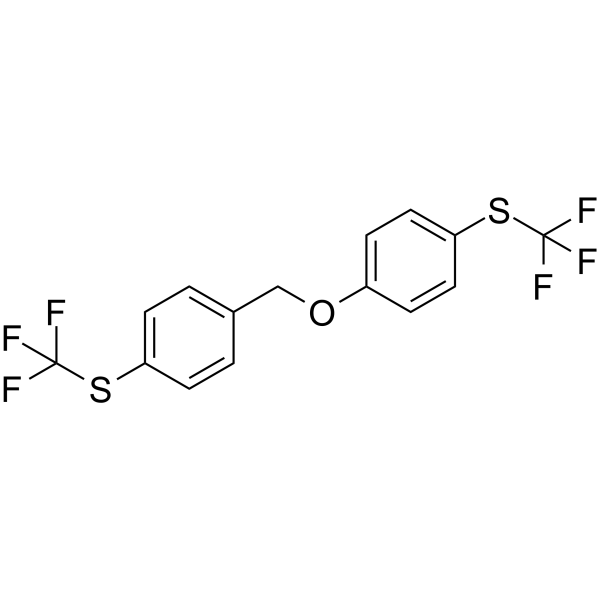
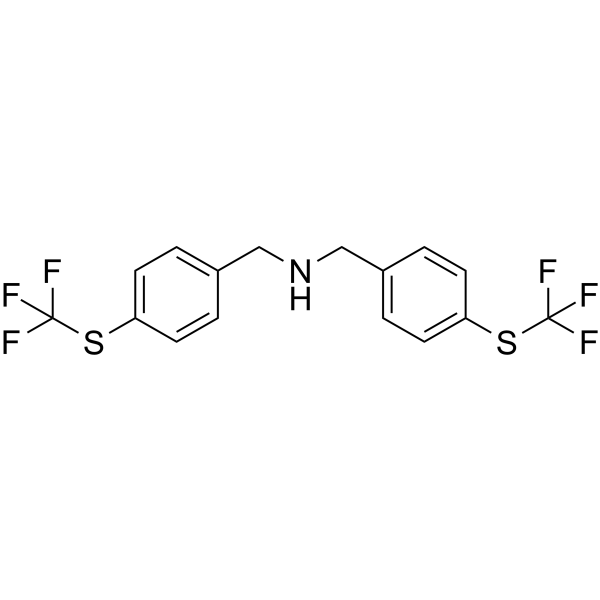
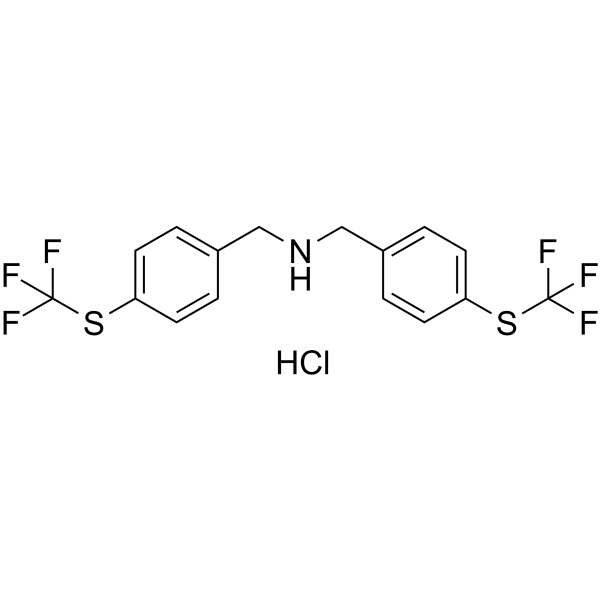
MY10 is a potent and orally active receptorproteintyrosinephosphatase (RPTPβ/ζ) inhibitor. MY10 reduces NF-κB p65 expression. MY10 activates tyrosine phosphorylation of c-Met. MY10 prevents the alcohol-induced downregulation of Ptprz1 and Alk expression. MY10 attenuates binge-like ethanol consumption and ethanol reward. MY10 can be used in the study of neurological and vascular diseases .
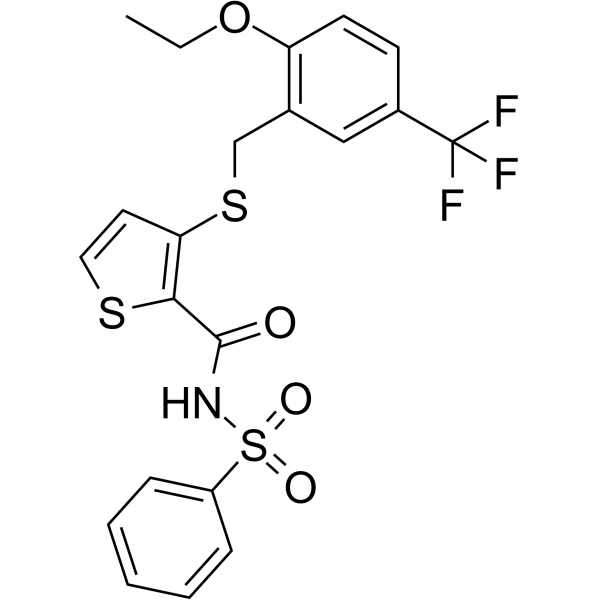
NAZ2329, the first cell-permeable inhibitor of R5 subfamily of receptor-type proteintyrosinephosphatases (RPTPs), allosterically and preferentially inhibits PTPRZ (IC50=7.5 µM for hPTPRZ1) and PTPRG (IC50=4.8 µM for hPTPRG) over other PTPs. NAZ2329 binds to the active D1 domain and more potently inhibits PTPRZ-D1 fragment (IC50 of 1.1 µM) than the whole intracellular (D1 + D2) fragment (IC50 of 7.5 µM). NAZ2329 can effectively inhibit tumor growth of the glioblastoma cells and suppress stem cell-like properties .
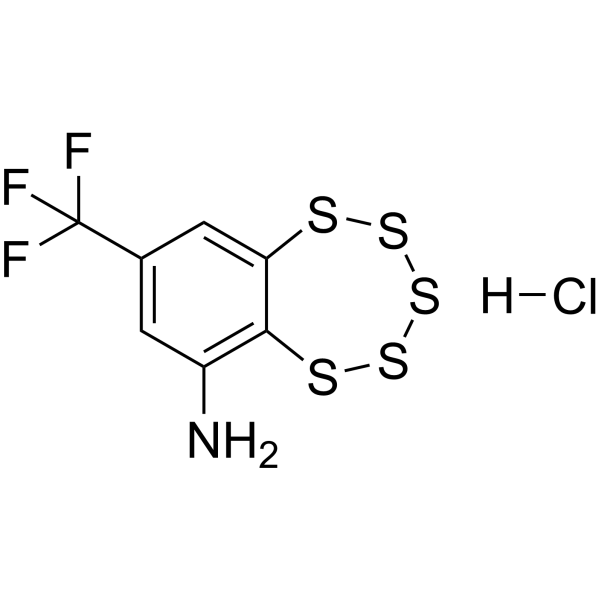
TC-2153 is a selective inhibitor of striatal-enriched proteintyrosinephosphatase (STEP), with psychotropic activity and low acute toxicity. TC-2153 increases the expression of brain-derived neurotropic factor (BDNF) in the brain. And it decreases MAOA and 5-HT1A receptors mRNA level in midbrain. TC-2153 also inhibits 5-HT2A receptor-mediated signaling .
MY33-3 is a potent and selective inhibitor of receptorproteintyrosinephosphatase (RPTP)β/ζ, with an IC50 of ~0.1 μM. MY33-3 also inhibits PTP-1B (IC50 ~0.7 μM). MY33-3 can reduce ethanol consumption and alleviate Sevoflurane-induced neuroinflammation and cognitive dysfunction .
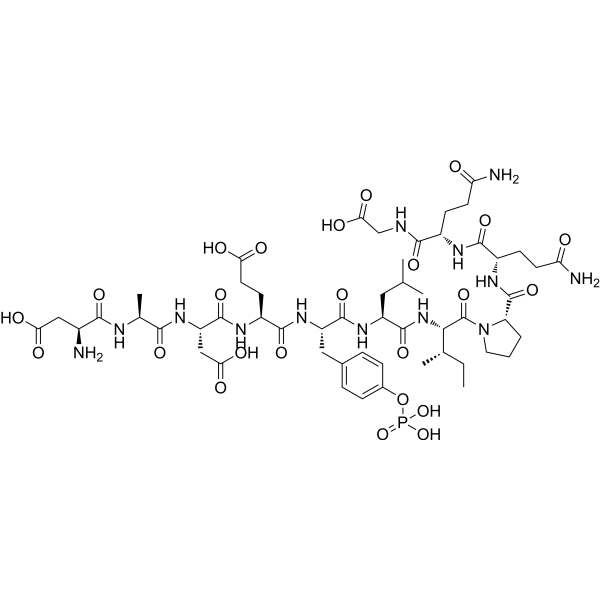
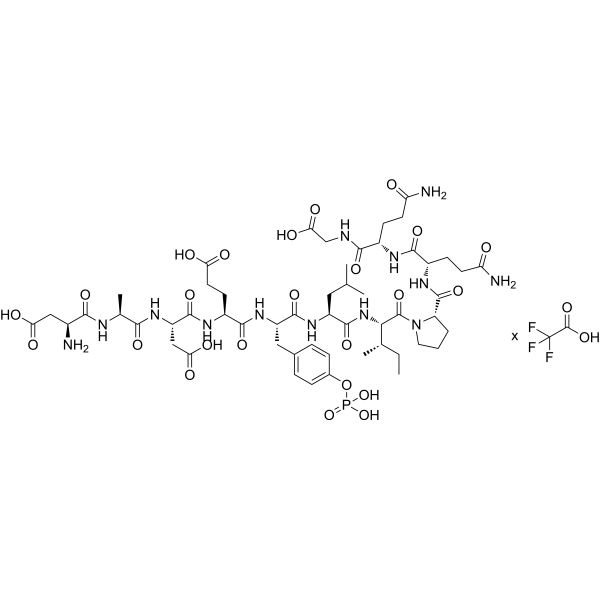
EGF Receptor Substrate 2 (Phospho-Tyr5) acetate, a biologically active peptide, is a tyrosine phosphate substrate. EGF Receptor Substrate 2 (Phospho-Tyr5) acetate can be used to detect proteintyrosinephosphatases activity .
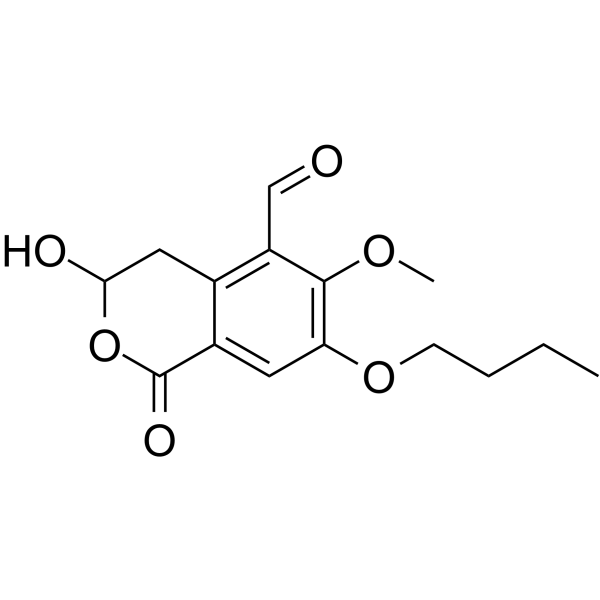
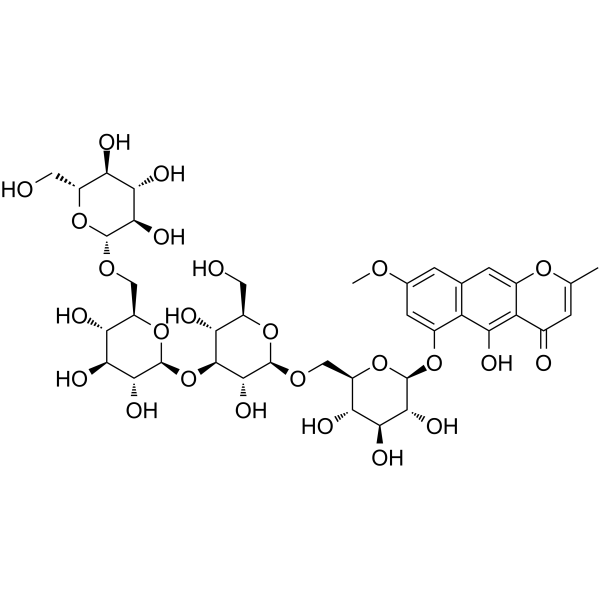
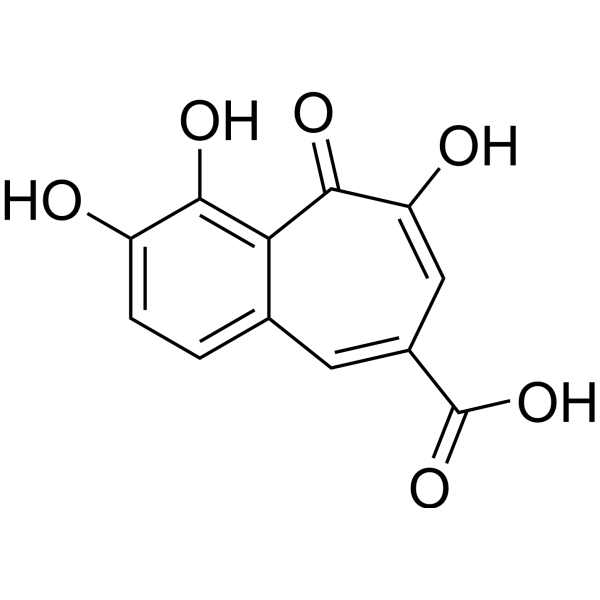
Cassiaside B2 is a proteintyrosinephosphatase 1B (PTP1B) and human monoamine oxidase A (hMAO-A) inhibitor. Cassiaside B2 possesses antiallergic and is a 5-HT2Creceptor agonist . ..
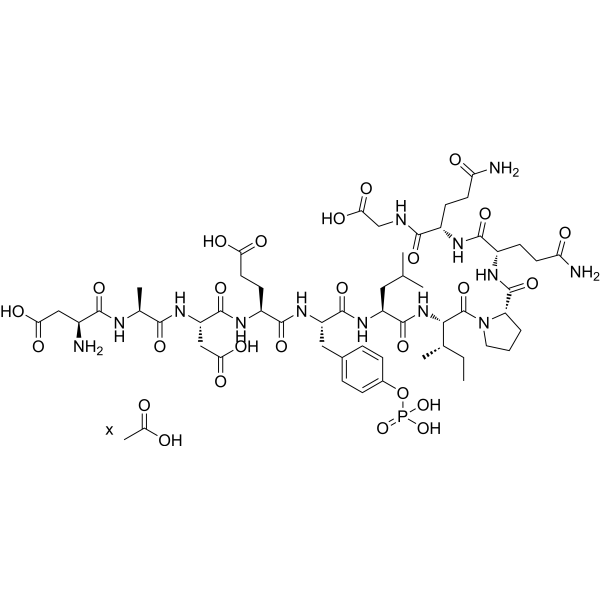
EGF Receptor Substrate 2 (Phospho-Tyr5) acetate, a biologically active peptide, is a tyrosine phosphate substrate. EGF Receptor Substrate 2 (Phospho-Tyr5) acetate can be used to detect proteintyrosinephosphatases activity .
EGF Receptor Substrate 2 (Phospho-Tyr5) acetate, a biologically active peptide, is a tyrosine phosphate substrate. EGF Receptor Substrate 2 (Phospho-Tyr5) acetate can be used to detect proteintyrosinephosphatases activity .
3-Hydroxyphloridzin (3-Hydroxyphlorizin) is a proteintyrosinephosphatase 1B (PTP1B) inhibitor. 3-Hydroxyphloridzin modulates insulin receptor phosphorylation levels. 3-Hydroxyphloridzin is promising for research of type 2 diabetes .
SHP2-IN-5 (compound 1) is an inhibitor of SHP2 (IC50: 97 nM). SHP2 is a non-receptorproteintyrosinephosphatase associated with cell growth and proliferation. SHP2-IN-5 has the potential to inhibit cancer and SHP2-related human diseases .
MY33-3 hydrochloride is a potent and selective inhibitor of receptorproteintyrosinephosphatase (RPTP)β/ζ, with an IC50 of ~0.1 μM. MY33-3 hydrochloride also inhibits PTP-1B (IC50 ~0.7 μM). MY33-3 hydrochloride can reduce ethanol consumption and alleviate Sevoflurane-induced neuroinflammation and cognitive dysfunction .
MY17 is an inhibitor of proteintyrosinephosphatase 1B (PTP1B) (IC50=0.41±0.05 μM). MY17 alleviates palmitic acid (PA) -induced insulin resistance by up-regulating the expression of phosphorylated insulin receptor substrate (IRS1) and protein kinase B (AKT). By binding with PTP1B, MY17 can inhibit the activity of PTP1B, thereby improving insulin signaling and having anti-diabetic activity. MY17 can be used in the study of type 2 diabetes .
Glycybridin C is a Proteintyrosinephosphatase 1B (PTP1B) inhibitor and pregnane X receptor (PXR) ligand. Glycybridin C inhibits insulin and leptin signaling pathway negative regulation, LPS (HY-D1056)-induced NF-κB transcriptional activity. Glycybridin C forms hydrophobic and π-π stacking interactions with Met243, Phe288, Tyr306, and His407 residues of PXR. Glycybridin C can be used for the research of hepatocellular carcinoma, colorectal adenocarcinoma, breast carcinoma .
NAT6-297775 (Compound 29) is a proteintyrosinephosphatase (PTP) inhibitor targeting non-receptor PTP SHP-2 with an IC50 of 2.5 μM. NAT6-297775 can inhibit the RAS/MAP kinase signaling pathway. NAT6-297775 can be used for the research of cancer, such as leukemia .
NAZ2329 (Standard) is the analytical standard of NAZ2329 (HY-103693). This product is intended for research and analytical applications. NAZ2329, the first cell-permeable inhibitor of R5 subfamily of receptor-type proteintyrosinephosphatases (RPTPs), allosterically and preferentially inhibits PTPRZ (IC50=7.5 µM for hPTPRZ1) and PTPRG (IC50=4.8 µM for hPTPRG) over other PTPs. NAZ2329 binds to the active D1 domain and more potently inhibits PTPRZ-D1 fragment (IC50 of 1.1 µM) than the whole intracellular (D1 + D2) fragment (IC50 of 7.5 µM). NAZ2329 can effectively inhibit tumor growth of the glioblastoma cells and suppress stem cell-like properties .
EGF Receptor Substrate 2 (Phospho-Tyr5) acetate, a biologically active peptide, is a tyrosine phosphate substrate. EGF Receptor Substrate 2 (Phospho-Tyr5) acetate can be used to detect proteintyrosinephosphatases activity .
EGF Receptor Substrate 2 (Phospho-Tyr5) acetate, a biologically active peptide, is a tyrosine phosphate substrate. EGF Receptor Substrate 2 (Phospho-Tyr5) acetate can be used to detect proteintyrosinephosphatases activity .
EGF Receptor Substrate 2 (Phospho-Tyr5) acetate, a biologically active peptide, is a tyrosine phosphate substrate. EGF Receptor Substrate 2 (Phospho-Tyr5) acetate can be used to detect proteintyrosinephosphatases activity .
Cassiaside B2 is a proteintyrosinephosphatase 1B (PTP1B) and human monoamine oxidase A (hMAO-A) inhibitor. Cassiaside B2 possesses antiallergic and is a 5-HT2Creceptor agonist . ..
3-Hydroxyphloridzin (3-Hydroxyphlorizin) is a proteintyrosinephosphatase 1B (PTP1B) inhibitor. 3-Hydroxyphloridzin modulates insulin receptor phosphorylation levels. 3-Hydroxyphloridzin is promising for research of type 2 diabetes .
Glycybridin C is a Proteintyrosinephosphatase 1B (PTP1B) inhibitor and pregnane X receptor (PXR) ligand. Glycybridin C inhibits insulin and leptin signaling pathway negative regulation, LPS (HY-D1056)-induced NF-κB transcriptional activity. Glycybridin C forms hydrophobic and π-π stacking interactions with Met243, Phe288, Tyr306, and His407 residues of PXR. Glycybridin C can be used for the research of hepatocellular carcinoma, colorectal adenocarcinoma, breast carcinoma .
PTPRG protein, also known as G-type protein tyrosine phosphatase receptor, is characterized by its tyrosine phosphatase activity. As a member of the protein tyrosine phosphatase (PTP) family, PTPRG is involved in the dephosphorylation of tyrosine residues in target proteins. PTPRG Protein, Human is the recombinant human-derived PTPRG protein, expressed by E. coli , with tag free.
PTPRG protein, also known as G-type protein tyrosine phosphatase receptor, is characterized by its tyrosine phosphatase activity. As a member of the protein tyrosine phosphatase (PTP) family, PTPRG is involved in the dephosphorylation of tyrosine residues in target proteins. PTPRG Protein, Human (His) is the recombinant human-derived PTPRG protein, expressed by E. coli , with N-6*His labeled tag.
SHP-1 Protein modulates signaling from tyrosine-phosphorylated cell surface receptors, including KIT and EGFR. It enhances the inhibition of mast cell activation via the Lilrb4a receptor. The SH2 regions interact with cellular components to regulate its phosphatase activity. In collaboration with MTUS1, it induces UBE2V2 expression upon angiotensin II stimulation. SHP-1 plays a crucial role in hematopoiesis. SHP-1 Protein, Human (His) is the recombinant human-derived SHP-1 protein, expressed by E. coli , with C-6*His labeled tag.
CD45/PTPRC Protein, Mouse (HEK 293, His) expresses in HEK293 with a His tag at the N-terminus. CD45 is a transmembrane glycoprotein, expressed on almost all haematopoietic cells except for mature erythrocytes. PTPRC is an essential regulator of T and B cell antigen receptor-mediated activation.
PTPRC/CD45RABC Protein, Human (HEK293, His) is a type 1 transmembrane protein tyrosine phosphatase (PTPase) expressed by all the haematopoietic stem cells (HSCs) except that of erythrocytes and platelets.
Receptor-type tyrosine-protein phosphatase C (PTPRC) is a receptor type PTP and an essential positive regulator of T- and B-cell antigen receptor signaling. PTPRC functions through direct interaction with antigen receptor complexes, or by activating various Src family kinases required for the antigen receptor signaling. PTPRC also suppresses JAK kinases as a regulator of cytokine receptor signaling. PTPRC/CD45RA Protein, Human (HEK293, His) is the recombinant human-derived PTPRC/CD45RA protein, expressed by HEK293 , with C-6*His labeled tag.
PTPRC/CD45R0 Protein, Human (HEK293, His) expresses in HEK293 with a His tag at the N-terminus. CD45R0 (UCHL1), a member of leucocyte common antigen family, is expressed largely on previously activated or memory T cells.
The SHP-2 protein is a key player downstream of the receptor and cytoplasmic protein tyrosine kinases, facilitating signal transduction from the cell surface to the nucleus. It actively regulates the MAPK pathway and dephosphorylates key substrates, including GAB1, ARHGAP35, EGFR, ROCK2 ("Tyr-722"), and CDC73. SHP-2 Protein, Human (T253M, Q257L, His) is the recombinant human-derived SHP-2 protein, expressed by E. coli , with N-6*His labeled tag and T253M, Q257L mutation.
TCPTP is a non-receptor tyrosine-specific phosphatase that regulates multiple signaling pathways by dephosphorylating proteins such as INSR, EGFR, CSF1R, PDGFR, JAK, Src kinase and STAT.TCPTP acts in the nucleus and cytoplasm to regulate hematopoiesis, inflammation, cell proliferation, differentiation, and glucose homeostasis.TCPTP Protein, Mouse (sf9, His) is the recombinant mouse-derived TCPTP protein, expressed by Sf9 insect cells , with N-His labeled tag.
TCPTP is a non-receptor tyrosine-specific phosphatase that critically regulates various kinases (INSR, EGFR, JAK, Src) affecting hematopoiesis, inflammation, cell proliferation, and glucose homeostasis. In the immune system, TCPTP regulates T cell receptor signaling and inhibits cytokine pathways (IL2, interferon). TCPTP Protein, Human (sf9) is the recombinant human-derived TCPTP protein, expressed by Sf9 insect cells , with tag free.
CD45 Protein, a versatile member of the protein tyrosine phosphatase family, displays heparan sulfate proteoglycan and heparin binding activity, as well as protein tyrosine phosphatase activity. It plays a crucial role in lymphocyte differentiation, macromolecule metabolic processes, and signal transduction regulation. CD45 is associated with diseases such as systemic lupus erythematosus, hepatitis C, multiple sclerosis, and severe combined immunodeficiency. CD45 Protein, Mouse (sf9) is the recombinant mouse-derived CD45 protein, expressed by Sf9 insect cells , with tag free.
TCPTP is a non-receptor tyrosine-specific phosphatase that critically regulates various kinases (INSR, EGFR, JAK, Src) affecting hematopoiesis, inflammation, cell proliferation, and glucose homeostasis. In the immune system, TCPTP regulates T cell receptor signaling and inhibits cytokine pathways (IL2, interferon). TCPTP Protein, Human (sf9, solution) is the recombinant human-derived TCPTP protein, expressed by Sf9 insect cells, with tag free.
The PTPN12 protein is a multifunctional enzyme that can dephosphorylate a variety of proteins and regulate cell signaling cascades. According to literature, PTPN12 selectively targets tyrosine kinases such as ERBB2 and PTK2B/PYK2 to control related pathways. PTPN12 Protein, Human (sf9) is the recombinant human-derived PTPN12 protein, expressed by Sf9 insect cells, with tag free.
PTP1B is an important tyrosine protein phosphatase that regulates the endoplasmic reticulum unfolded protein response by dephosphorylating EIF2AK3/PERK and inhibiting its kinase activity. It affects the signaling cascade induced by CKII and p60c-src, and may regulate the EFNA5-EPHA3 pathway, affecting cell reorganization. PTP1B Protein, Human (His) is the recombinant human-derived PTP1B protein, expressed by E. coli , with N-His labeled tag.
The CD45 protein is a multifunctional member of the protein tyrosine phosphatase family with heparan sulfate proteoglycan and heparin binding activity as well as protein tyrosine phosphatase activity. It plays a crucial role in lymphocyte differentiation, macromolecular metabolic processes, and signal transduction regulation. CD45 Protein, Mouse (HEK293, Fc) is the recombinant mouse-derived CD45 protein, expressed by HEK293 , with C-hFc labeled tag.
TCPTP is a non-receptor tyrosine-specific phosphatase that critically regulates various kinases (INSR, EGFR, JAK, Src) affecting hematopoiesis, inflammation, cell proliferation, and glucose homeostasis. In the immune system, TCPTP regulates T cell receptor signaling and inhibits cytokine pathways (IL2, interferon). TCPTP Protein, Human (sf9, His-GST) is the recombinant human-derived TCPTP protein, expressed by Sf9 insect cells , with N-His, N-GST labeled tag.
CD45 Protein, a versatile member of the protein tyrosine phosphatase family, displays heparan sulfate proteoglycan and heparin binding activity, as well as protein tyrosine phosphatase activity. It plays a crucial role in lymphocyte differentiation, macromolecule metabolic processes, and signal transduction regulation. CD45 is associated with diseases such as systemic lupus erythematosus, hepatitis C, multiple sclerosis, and severe combined immunodeficiency. CD45 Protein, Mouse (sf9, His-GST) is the recombinant mouse-derived CD45 protein, expressed by Sf9 insect cells , with N-His, N-GST labeled tag.
The PTPN12 protein is a multifunctional enzyme that can dephosphorylate a variety of proteins and regulate cell signaling cascades. According to literature, PTPN12 selectively targets tyrosine kinases such as ERBB2 and PTK2B/PYK2 to control related pathways. PTPN12 Protein, Human (sf9, His-GST) is the recombinant human-derived PTPN12 protein, expressed by Sf9 insect cells , with N-GST, N-His labeled tag.
Receptor-type tyrosine-protein phosphatase C (PTPRC) is a receptor type PTP and an essential positive regulator of T- and B-cell antigen receptor signaling. PTPRC functions through direct interaction with antigen receptor complexes, or by activating various Src family kinases required for the antigen receptor signaling. PTPRC also suppresses JAK kinases as a regulator of cytokine receptor signaling. PTPRC/CD45RAB Protein, Human (529a.a, HEK293, His) is the recombinant human-derived PTPRC/CD45RAB protein, expressed by HEK293 , with C-His labeled tag.
PTP alpha/PTPRA Protein, a tyrosine protein phosphatase, participates in integrin-mediated focal adhesion formation. Upon integrin engagement, it recruits BCAR3, BCAR1, and CRK to focal adhesions, promoting SRC-mediated phosphorylation of BRAC1. This leads to the activation of PAK and small GTPases RAC1 and CDC42. PTP alpha/PTPRA Protein, Human (sf9, His-GST) is the recombinant human-derived PTP alpha/PTPRA protein, expressed by Sf9 insect cells , with N-His, N-GST labeled tag.
SHP-2 Protein functions downstream of diverse receptor and cytoplasmic tyrosine kinases, participating in signal transduction from the cell surface to the nucleus.It positively regulates the MAPK pathway and dephosphorylates key proteins like GAB1, ARHGAP35, EGFR, ROCK2, CDC73, and SOX9.Additionally, SHP-2 dephosphorylates NEDD9/CAS-L to modulate cellular processes.SHP-2 Protein, Mouse (HEK293, His) is the recombinant mouse-derived SHP-2 protein, expressed by HEK293 , with C-His labeled tag.
Receptor-type tyrosine-protein phosphatase C (PTPRC) is a receptor type PTP and an essential positive regulator of T- and B-cell antigen receptor signaling. PTPRC functions through direct interaction with antigen receptor complexes, or by activating various Src family kinases required for the antigen receptor signaling. PTPRC also suppresses JAK kinases as a regulator of cytokine receptor signaling. PTPRC/CD45R0 Protein, Human (HEK293, Fc) is the recombinant human-derived PTPRC/CD45R0 protein, expressed by HEK293 , with C-hFc labeled tag.
DEP-1/CD148 protein is a tyrosine phosphatase that affects multiple targets such as CTNND1, FLT3, PDGFRB, and EGFR, thereby affecting cellular processes such as adhesion, migration, proliferation, and differentiation. DEP-1/CD148 is critical in vascular development, regulating macrophage adhesion, platelet activation, and thrombosis, while negatively regulating cell proliferation and PDGF-stimulated migration. DEP-1/CD148 Protein, Human (341a.a, His) is the recombinant human-derived DEP-1/CD148 protein, expressed by E. coli , with N-His labeled tag.
The PTP-MEG2/PTPN9 protein is a multifunctional protein tyrosine phosphatase with potential roles related to hydrophobic ligand transfer or Golgi function. It operates in a complex cellular environment, demonstrating the versatility of different molecular processes. PTP-MEG2/PTPN9 Protein, Human (sf9, His-GST) is the recombinant human-derived PTP-MEG2/PTPN9 protein, expressed by Sf9 insect cells , with C-His, N-GST labeled tag.
SHP-1 Protein modulates signaling from tyrosine-phosphorylated cell surface receptors, including KIT and EGFR. It enhances the inhibition of mast cell activation via the Lilrb4a receptor. The SH2 regions interact with cellular components to regulate its phosphatase activity. In collaboration with MTUS1, it induces UBE2V2 expression upon angiotensin II stimulation. SHP-1 plays a crucial role in hematopoiesis. SHP-1 Protein, Mouse (sf9, His-GST) is the recombinant mouse-derived SHP-1 protein, expressed by Sf9 insect cells , with N-His, N-GST labeled tag.
The SIRP α V4/CD172a protein is an immunoglobulin-like cell surface receptor for CD47 that acts as a docking protein to facilitate the translocation of PTPN6, PTPN11, and other partners to the plasma membrane. It supports the adhesion of cerebellar neurons, promotes neurite growth, and promotes glial cell attachment. SIRP alpha V5/CD172a Protein, Human (HEK293, His, Avi) is the recombinant human-derived SIRP alpha V5/CD172a protein, expressed by HEK293, with C-His and C-Avi labeled tag.
SIRP alpha/CD172a Protein, Human (CAA71403.1, HEK 293, His)
, as a recombinant protein produced in HEK293 cells, is a polypeptide chain with a His tag.
The IA2 protein is critical in the vesicle-mediated secretion process and is essential for the accumulation of secretory vesicles in the hippocampus, pituitary gland, and pancreatic islets. IA2 is critical for insulin-related functions, ensuring normal levels of insulin-containing vesicles, preventing degradation and promoting glucose-stimulated insulin secretion. IA2 Protein, Human (His) is the recombinant human-derived IA2 protein, expressed by E. coli , with N-6*His labeled tag.
The IA2 protein is critical in the vesicle-mediated secretion process and is essential for the accumulation of secretory vesicles in the hippocampus, pituitary gland, and pancreatic islets. IA2 is critical for insulin-related functions, ensuring normal levels of insulin-containing vesicles, preventing degradation and promoting glucose-stimulated insulin secretion. IA2 Protein, Human (293a.a, N-His) is the recombinant human-derived IA2 protein, expressed by E. coli , with N-6*His labeled tag.
The IA2 protein is critical in the vesicle-mediated secretion process and is essential for the accumulation of secretory vesicles in the hippocampus, pituitary gland, and pancreatic islets. IA2 is critical for insulin-related functions, ensuring normal levels of insulin-containing vesicles, preventing degradation and promoting glucose-stimulated insulin secretion. IA2 Protein, Human (293a.a, His, solution) is the recombinant human-derived IA2 protein, expressed by E. coli , with N-6*His labeled tag.
CD148, DEP1, PTPRJ, receptor-type tyrosine-proteinphosphatase eta, protein-tyrosinephosphatase eta, R-PTP-eta, Density-enhanced phosphatase 1, HPTP eta, protein-tyrosinephosphatasereceptor type J, DEP-1, R-PTP-J
FC, ELISA
Human
DEP1/CD148 Antibody (YA7104) is a Mouse-derived and non-conjugated IgG2b monoclonal antibody, targeting to DEP1/CD148.
B220; CD 45; CD-45; cd45 antigen; ec3.1.3.48; CD45R; GP180; GP180; GP 180; L CA; LCA; L-CA; Leukocyte common antigen; LY5; Ly-5 glycoprotein; proteintyrosinephosphatasereceptor type C; proteintyrosinephosphatasereceptor type c polypeptide; proteintyrosinephosphatase, receptor type, C; receptor-type tyrosine-proteinphosphatase C; PTPRC; PTPRC_HUMAN; SCID due to PTPRC deficiency; T200; T200 glycoprotein; T200 leukocyte common antigen; Human homolog of severe combined immunodeficiency due to PTPRC deficiency.
WB, IHC-P, IHC-F, IF-Tissue
Human
CD45 Antibody (YA6369) is a Rabbit-derived and non-conjugated IgG monoclonal antibody, targeting to CD45.
B220; CD 45; CD-45; cd45 antigen; ec3.1.3.48; CD45R; GP180; GP180; GP 180; L CA; LCA; L-CA; Leukocyte common antigen; LY5; Ly-5 glycoprotein; proteintyrosinephosphatasereceptor type C; proteintyrosinephosphatasereceptor type c polypeptide; proteintyrosinephosphatase, receptor type, C; receptor-type tyrosine-proteinphosphatase C; PTPRC; PTPRC_HUMAN; SCID due to PTPRC deficiency; T200; T200 glycoprotein; T200 leukocyte common antigen; Human homolog of severe combined immunodeficiency due to PTPRC deficiency.
FC
Human
CD45 Antibody (YA6408) (PBS only) is a Mouse-derived and non-conjugated IgG1 monoclonal antibody, targeting to CD45.
PTPRF-interacting protein-binding protein 2, proteintyrosinephosphatasereceptor type f polypeptide-interacting protein-binding protein 2, Liprin-beta-2
WB, ICC/IF, IF-Tissue, IP, ELISA
human
Liprin β2 Antibody (YA9430) is a Mouse-derived and non-conjugated IgG1 monoclonal antibody, targeting to Liprin β2.
PTPRC; CD45; receptor-type tyrosine-proteinphosphatase C; Leukocyte common antigen; L-CA; T200; CD antigen CD45
FC
Human
Purified Mouse Anti-Human CD45RA Antibody (YA3628) is a Mouse-derived and non-conjugated IgG2b monoclonal antibody, targeting to Purified Mouse Anti-Human CD45RA.
UCHL1 / PGP9.5; UCHL1; B220; CD 45; CD45; cd45 antigen; ec3.1.3.48; GP 180; GP180; Human homolog of severe combined immunodeficiency due to PTPRC deficiency; L CA; L-CA; lca; Leukocyte common antigen; LY 5; LY5; proteintyrosinephosphatasereceptor type
WB, IHC-P, IHC-F, ICC/IF, IP
Human, Mouse, Rat
PGP9.5 Antibody (YA231) is a Rabbit-derived and non-conjugated IgG monoclonal antibody, targeting to PGP9.5.
UCHL1 / PGP9.5; UCHL1; B220; CD 45; CD45; cd45 antigen; ec3.1.3.48; GP 180; GP180; Human homolog of severe combined immunodeficiency due to PTPRC deficiency; L CA; L-CA; lca; Leukocyte common antigen; LY 5; LY5; proteintyrosinephosphatasereceptor type
WB, IHC-P, IHC-F, ICC/IF, IP
Human, Mouse, Rat
PGP9.5 Antibody (YA231) is a Rabbit-derived and non-conjugated IgG monoclonal antibody, targeting to PGP9.5.
(5)
Product Comparison
Compare
Clear All
Compare Products
Products
해외재고보유
-
+
Add to Cart
Cat. No.
Host
Reactivity
Application
Dilution Ratio
Molecular Weight
Conjugation
Clonality
Immunogen
Appearance
Isotype
Gene ID
SwissProt ID
Purity
Formulation
Free Sample
YesNo
Size
* This product has been "discontinued".
Optimized version of product available:
/
해외재고보유
-
+
장바구니에 담기
견적 받기
온라인 문의
Your information is safe with us. * Required Fields.
Western blot analysis of extracts from THP-1(lane 2(20μg), Jurkat (lane 3(20μg) and NIH3T3(lane 4(20μg) using FOXO1A (HY-P80132) Rabbit mAb. Proteins were transferred
to a PVDF membrane and blocked with 5% non-fat milk in TBST for 2 hour at room temperature. The primary antibody (1/1000) and Loading control antibody (Beta Actin, HY-P80438, 1/10000) was
used in 5% non-fat milk in TBST at 4°C overnight. Goat Anti-Mouse/Rabbit IgG-HRP Secondary Antibody (1/10000) was used for 1 hour at room temperature.
Western blot analysis of extracts from THP-1(lane 2(20μg), Jurkat (lane 3(20μg) and NIH3T3(lane 4(20μg) using FOXO1A (HY-P80132) Rabbit mAb. Proteins were transferred
to a PVDF membrane and blocked with 5% non-fat milk in TBST for 2 hour at room temperature. The primary antibody (1/1000) and Loading control antibody (Beta Actin, HY-P80438, 1/10000) was
used in 5% non-fat milk in TBST at 4°C overnight. Goat Anti-Mouse/Rabbit IgG-HRP Secondary Antibody (1/10000) was used for 1 hour at room temperature.
Western blot analysis of extracts from THP-1(lane 2(20μg), Jurkat (lane 3(20μg) and NIH3T3(lane 4(20μg) using FOXO1A (HY-P80132) Rabbit mAb. Proteins were transferred
to a PVDF membrane and blocked with 5% non-fat milk in TBST for 2 hour at room temperature. The primary antibody (1/1000) and Loading control antibody (Beta Actin, HY-P80438, 1/10000) was
used in 5% non-fat milk in TBST at 4°C overnight. Goat Anti-Mouse/Rabbit IgG-HRP Secondary Antibody (1/10000) was used for 1 hour at room temperature.
Western blot analysis of extracts from THP-1(lane 2(20μg), Jurkat (lane 3(20μg) and NIH3T3(lane 4(20μg) using FOXO1A (HY-P80132) Rabbit mAb. Proteins were transferred
to a PVDF membrane and blocked with 5% non-fat milk in TBST for 2 hour at room temperature. The primary antibody (1/1000) and Loading control antibody (Beta Actin, HY-P80438, 1/10000) was
MedchemExpress Validation 03
Western blot analysis of extracts from THP-1(lane 2(20μg), Jurkat (lane 3(20μg) and NIH3T3(lane 4(20μg) using FOXO1A (HY-P80132) Rabbit mAb. Proteins were transferred
MedchemExpress Validation 04
Western blot analysis of extracts from THP-1(lane 2(20μg), Jurkat (lane 3(20μg) and NIH3T3(lane 4(20μg) using FOXO1A (HY-P80132) Rabbit mAb. Proteins were transferred
to a PVDF membrane and blocked with 5% non-fat milk in TBST for 2 hour at room temperature. The primary antibody (1/1000) and Loading control antibody (Beta Actin, HY-P80438, 1/10000) was
used in 5% non-fat milk in TBST at 4°C overnight. Goat Anti-Mouse/Rabbit IgG-HRP Secondary Antibody (1/10000) was used for 1 hour at room temperature.
MedchemExpress Validation
Western blot analysis of extracts from THP-1(lane 2(20μg), Jurkat (lane 3(20μg) and NIH3T3(lane 4(20μg) using FOXO1A (HY-P80132) Rabbit mAb. Proteins were transferred
to a PVDF membrane and blocked with 5% non-fat milk in TBST for 2 hour at room temperature. The primary antibody (1/1000) and Loading control antibody (Beta Actin, HY-P80438, 1/10000) was
used in 5% non-fat milk in TBST at 4°C overnight. Goat Anti-Mouse/Rabbit IgG-HRP Secondary Antibody (1/10000) was used for 1 hour at room temperature.
Western blot analysis of extracts from THP-1(lane 2(20μg), Jurkat (lane 3(20μg) and NIH3T3(lane 4(20μg) using FOXO1A (HY-P80132) Rabbit mAb. Proteins were transferred
to a PVDF membrane and blocked with 5% non-fat milk in TBST for 2 hour at room temperature. The primary antibody (1/1000) and Loading control antibody (Beta Actin, HY-P80438, 1/10000) was
used in 5% non-fat milk in TBST at 4°C overnight. Goat Anti-Mouse/Rabbit IgG-HRP Secondary Antibody (1/10000) was used for 1 hour at room temperature.
MedchemExpress Validation
Western blot analysis of extracts from THP-1(lane 2(20μg), Jurkat (lane 3(20μg) and NIH3T3(lane 4(20μg) using FOXO1A (HY-P80132) Rabbit mAb. Proteins were transferred
to a PVDF membrane and blocked with 5% non-fat milk in TBST for 2 hour at room temperature. The primary antibody (1/1000) and Loading control antibody (Beta Actin, HY-P80438, 1/10000) was
used in 5% non-fat milk in TBST at 4°C overnight. Goat Anti-Mouse/Rabbit IgG-HRP Secondary Antibody (1/10000) was used for 1 hour at room temperature.
MedchemExpress Validation
Western blot analysis of extracts from THP-1(lane 2(20μg), Jurkat (lane 3(20μg) and NIH3T3(lane 4(20μg) using FOXO1A (HY-P80132) Rabbit mAb. Proteins were transferred
to a PVDF membrane and blocked with 5% non-fat milk in TBST for 2 hour at room temperature. The primary antibody (1/1000) and Loading control antibody (Beta Actin, HY-P80438, 1/10000) was
used in 5% non-fat milk in TBST at 4°C overnight. Goat Anti-Mouse/Rabbit IgG-HRP Secondary Antibody (1/10000) was used for 1 hour at room temperature.
MedchemExpress Validation
Western blot analysis of extracts from THP-1(lane 2(20μg), Jurkat (lane 3(20μg) and NIH3T3(lane 4(20μg) using FOXO1A (HY-P80132) Rabbit mAb. Proteins were transferred
to a PVDF membrane and blocked with 5% non-fat milk in TBST for 2 hour at room temperature. The primary antibody (1/1000) and Loading control antibody (Beta Actin, HY-P80438, 1/10000) was
used in 5% non-fat milk in TBST at 4°C overnight. Goat Anti-Mouse/Rabbit IgG-HRP Secondary Antibody (1/10000) was used for 1 hour at room temperature.
MedchemExpress Validation
Western blot analysis of extracts from THP-1(lane 2(20μg), Jurkat (lane 3(20μg) and NIH3T3(lane 4(20μg) using FOXO1A (HY-P80132) Rabbit mAb. Proteins were transferred
to a PVDF membrane and blocked with 5% non-fat milk in TBST for 2 hour at room temperature. The primary antibody (1/1000) and Loading control antibody (Beta Actin, HY-P80438, 1/10000) was
used in 5% non-fat milk in TBST at 4°C overnight. Goat Anti-Mouse/Rabbit IgG-HRP Secondary Antibody (1/10000) was used for 1 hour at room temperature.
MedchemExpress Validation
Western blot analysis of extracts from THP-1(lane 2(20μg), Jurkat (lane 3(20μg) and NIH3T3(lane 4(20μg) using FOXO1A (HY-P80132) Rabbit mAb. Proteins were transferred
to a PVDF membrane and blocked with 5% non-fat milk in TBST for 2 hour at room temperature. The primary antibody (1/1000) and Loading control antibody (Beta Actin, HY-P80438, 1/10000) was
used in 5% non-fat milk in TBST at 4°C overnight. Goat Anti-Mouse/Rabbit IgG-HRP Secondary Antibody (1/10000) was used for 1 hour at room temperature.
MedchemExpress Validation
Western blot analysis of extracts from THP-1(lane 2(20μg), Jurkat (lane 3(20μg) and NIH3T3(lane 4(20μg) using FOXO1A (HY-P80132) Rabbit mAb. Proteins were transferred
to a PVDF membrane and blocked with 5% non-fat milk in TBST for 2 hour at room temperature. The primary antibody (1/1000) and Loading control antibody (Beta Actin, HY-P80438, 1/10000) was
used in 5% non-fat milk in TBST at 4°C overnight. Goat Anti-Mouse/Rabbit IgG-HRP Secondary Antibody (1/10000) was used for 1 hour at room temperature.
MedChemExpress values your privacy and your trust is important to us. We use cookies to enhance your website experience. Some cookies are necessary to run the website.
Privacy and Cookie Policy