1. Membrane Transporter/Ion Channel Neuronal Signaling Metabolic Enzyme/Protease
  2. TRP Channel Lipoxygenase Endogenous Metabolite
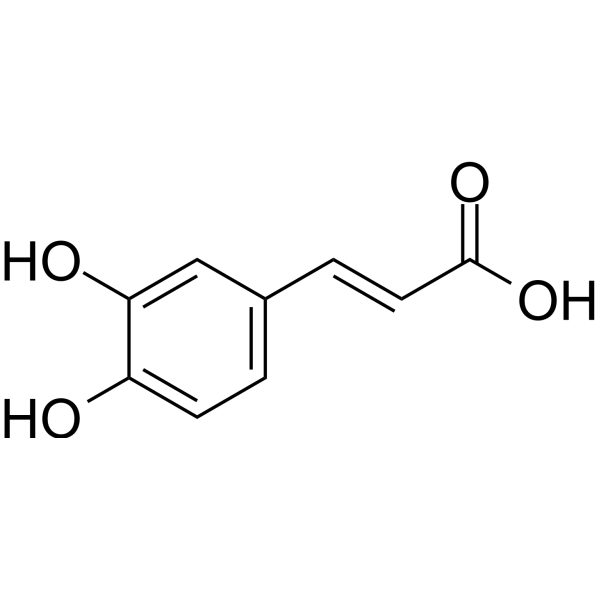
  3. Caffeic acid

Caffeic acid is an inhibitor of both TRPV1 ion channel and 5-Lipoxygenase (5-LO).

Nur für Forschungszwecke. Wir verkaufen nicht an Patienten.

CAS. Nr. : 331-39-5

Größe Preis Verfügbarkeit Menge
Solid + Solvent (Highly Recommended)
10 mM * 1 mL in DMSO
ready for reconstitution
Auf Lager
Solution
10 mM * 1 mL in DMSO Auf Lager
Solid
5 g Auf Lager
10 g Auf Lager
25 g Auf Lager
50 g   Angebot einholen  

* Bitte wählen Sie Menge, bevor Sie Artikel hinzufügen.

This product is a controlled substance and not for sale in your territory.

Kundenbewertung

Based on 7 publication(s) in Google Scholar

Other Forms of Caffeic acid:

Top Publications Citing Use of Products

    Caffeic acid purchased from MedChemExpress. Usage Cited in: Pestic Biochem Physiol. 2025 Dec:215:106655.

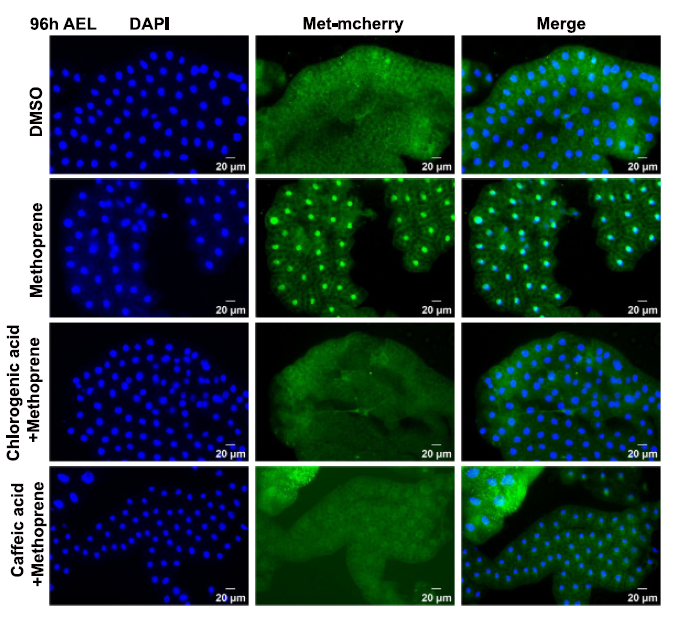
    Immunostaining with anti-mCherry antibody to detect the effect of Caffeic acid (2 mg/mL) on Methoprene-induced nuclear localization of Met at 96 h AEL. Caffeic acid effectively prevented the Methoprene-induced nuclear import of Met at 96 h AEL in the larvae of D. melanogaster Met-mCherry.

    Caffeic acid purchased from MedChemExpress. Usage Cited in: Pestic Biochem Physiol. 2025 Dec:215:106655.

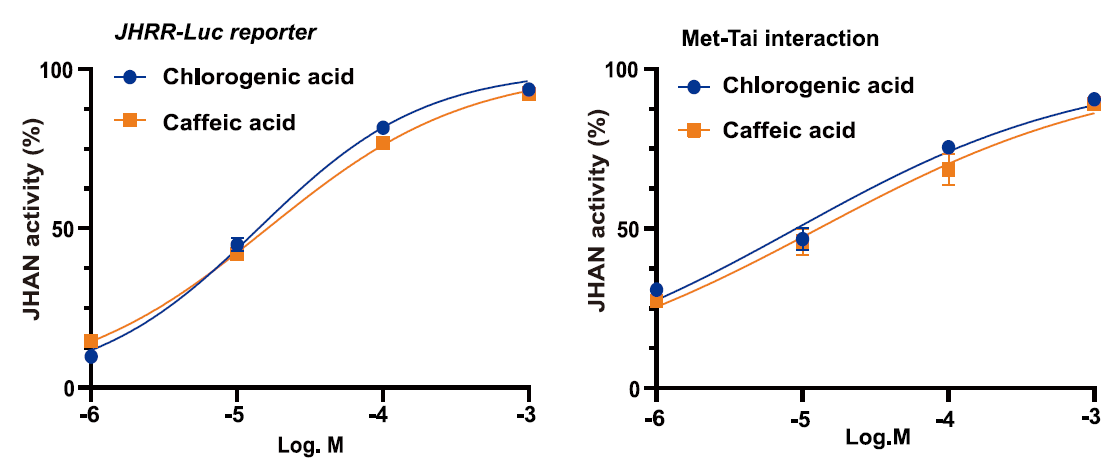
    Caffeic acid (1–1000 μM) inhibited the Methoprene-induced JHRR-Luc expression and Met-Tai interaction in a dose-dependent manner.

    Caffeic acid purchased from MedChemExpress. Usage Cited in: Pestic Biochem Physiol. 2025 Dec:215:106655.

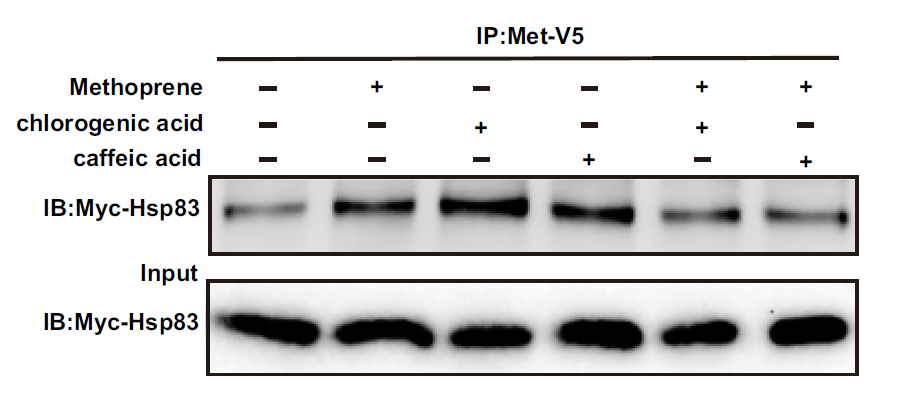
    Co-immunoprecipitation assays were performed to detect the effect of Caffeic acid (10 μM; 1 h) on the interaction between Met and Hsp83. Caffeic acid promoted the binding between Met and Hsp83.

    Caffeic acid purchased from MedChemExpress. Usage Cited in: Pestic Biochem Physiol. 2025 Dec:215:106655.

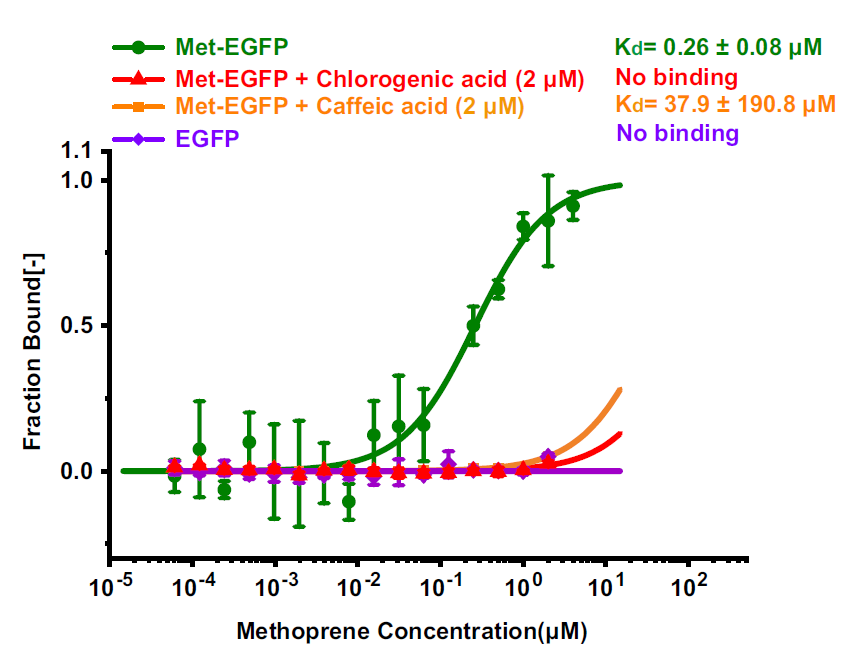
    The binding and competition curves of Met and Methoprene were shown. Caffeic acid (2 μM) inhibited the interaction between Met and Methoprene.

    Caffeic acid purchased from MedChemExpress. Usage Cited in: Pestic Biochem Physiol. 2025 Dec:215:106655.

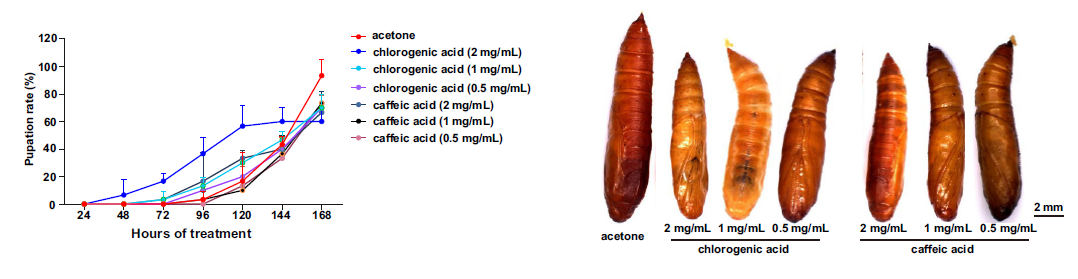
    2 mg/mL Caffeic acid (0.5-2.0 mg/mL) resulted in significantly precocious pupation, and smaller pupae of O. furnacalis compared to controls.

    Alle TRP Channel Isoform-spezifische Produkte anzeigen:

    Alle Lipoxygenase Isoform-spezifische Produkte anzeigen:

    Alle Endogenous Metabolite Isoform-spezifische Produkte anzeigen:

    • Biologische Aktivität

    • Protokoll

    • Reinheit & Dokumentation

    • Verweise

    • Kundenbewertung

    Beschreibung

    Caffeic acid is an inhibitor of both TRPV1 ion channel and 5-Lipoxygenase (5-LO).

    IC50 & Target

    5-LO


    Cellular Effect
    Cell Line Type Value Description References
    A-431 IC50
    1 x 10³ μM
    Compound: 129
    Inhibition of EGFR in human A431 cells
    Inhibition of EGFR in human A431 cells
    [PMID: 1479375]
    A549 IC50
    0.5 mM
    Compound: Caffeic acid
    Cytotoxicity against human A549 cells assessed as reduction in cell viability measured after 48 hrs by FMCA assay
    Cytotoxicity against human A549 cells assessed as reduction in cell viability measured after 48 hrs by FMCA assay
    [PMID: 27162124]
    A549 IC50
    0.7 mM
    Compound: Caffeic acid
    Cytotoxicity against human A549 cells assessed as reduction in cell viability measured after 48 hrs by MTT assay
    Cytotoxicity against human A549 cells assessed as reduction in cell viability measured after 48 hrs by MTT assay
    [PMID: 27162124]
    A549 IC50
    0.7 mM
    Compound: Caffeic acid
    Cytotoxicity against human A549 cells assessed as reduction in cell viability measured after 48 hrs by luminescence-based ATP assay
    Cytotoxicity against human A549 cells assessed as reduction in cell viability measured after 48 hrs by luminescence-based ATP assay
    [PMID: 27162124]
    A549 IC50
    > 100 μM
    Compound: CA
    Antiproliferative activity against human A549 cells after 72 hrs by MTT assay
    Antiproliferative activity against human A549 cells after 72 hrs by MTT assay
    [PMID: 26638042]
    AGS IC50
    129 μM
    Compound: 8
    Cytotoxicity against human AGS cells after 96 hrs by MTT assay
    Cytotoxicity against human AGS cells after 96 hrs by MTT assay
    [PMID: 23746477]
    B16-F10 IC50
    > 100 μM
    Compound: CA
    Antiproliferative activity against mouse B16F10 cells after 72 hrs by MTT assay
    Antiproliferative activity against mouse B16F10 cells after 72 hrs by MTT assay
    [PMID: 26638042]
    BALB/3T3 IC50
    553.8 μM
    Compound: 12
    Growth inhibition of BALB/c mouse cloned 3T3/A31 cells after 72 hrs by nigrosin assay
    Growth inhibition of BALB/c mouse cloned 3T3/A31 cells after 72 hrs by nigrosin assay
    [PMID: 10096863]
    BMDC IC50
    > 50 μM
    Compound: 3
    Inhibition of LPS-induced IL-12 p40 production in wild-type C57BL/6 mouse BMDC pretreated with compound for 1 hr before LPS treatment measured 16 hrs by ELISA
    Inhibition of LPS-induced IL-12 p40 production in wild-type C57BL/6 mouse BMDC pretreated with compound for 1 hr before LPS treatment measured 16 hrs by ELISA
    [PMID: 25769817]
    BMDC IC50
    > 50 μM
    Compound: 3
    Inhibition of LPS-induced IL-6 production in wild-type C57BL/6 mouse BMDC pretreated with compound for 1 hr before LPS treatment measured 16 hrs by ELISA
    Inhibition of LPS-induced IL-6 production in wild-type C57BL/6 mouse BMDC pretreated with compound for 1 hr before LPS treatment measured 16 hrs by ELISA
    [PMID: 25769817]
    BMDC IC50
    > 50 μM
    Compound: 3
    Inhibition of LPS-induced TNF-alpha production in wild-type C57BL/6 mouse BMDC pretreated with compound for 1 hr before LPS treatment measured 16 hrs by ELISA
    Inhibition of LPS-induced TNF-alpha production in wild-type C57BL/6 mouse BMDC pretreated with compound for 1 hr before LPS treatment measured 16 hrs by ELISA
    [PMID: 25769817]
    BMDM IC50
    41 μM
    Compound: Caffeic acid
    Inhibition of M-CSF/RANKL-induced osteoclast differentiation in C57BL/6 mouse bone marrow macrophage assessed as reduction in multinucleated TRAP+ cells incubated for 6 days with fresh media replacement on day 3 and measured on day 6 by TRAP staining-based microscopic analysis
    Inhibition of M-CSF/RANKL-induced osteoclast differentiation in C57BL/6 mouse bone marrow macrophage assessed as reduction in multinucleated TRAP+ cells incubated for 6 days with fresh media replacement on day 3 and measured on day 6 by TRAP staining-based microscopic analysis
    [PMID: 31257875]
    Caco-2 IC50
    > 100 μM
    Compound: CA
    Antiproliferative activity against human Caco2 cells after 72 hrs by MTT assay
    Antiproliferative activity against human Caco2 cells after 72 hrs by MTT assay
    [PMID: 26638042]
    EA.hy 926 EC50
    12.6 μM
    Compound: Caffeic acid
    Cytoprotective activity against H2O2-induced cytotoxicity in human EAhy926 cells pre-incubated for 24 hrs before H2O2 challenge for 12 hrs by MTT assay
    Cytoprotective activity against H2O2-induced cytotoxicity in human EAhy926 cells pre-incubated for 24 hrs before H2O2 challenge for 12 hrs by MTT assay
    10.1039/C4MD00022F
    Erythrocyte IC50
    0.75 mM
    Compound: 21
    Anticomplement activity in sheep erythrocytes assessed as concentration required for 50% hemolytic inhibition by classic pathway pretreated for 10 mins with guinea pig serum followed by erythrocyte addition measured after 30 mins by spectrophotometeric method
    Anticomplement activity in sheep erythrocytes assessed as concentration required for 50% hemolytic inhibition by classic pathway pretreated for 10 mins with guinea pig serum followed by erythrocyte addition measured after 30 mins by spectrophotometeric method
    [PMID: 29631958]
    Erythrocyte IC50
    0.94 mM
    Compound: 21
    Anticomplement activity in rabbit erythrocytes assessed as concentration required for 50% hemolytic inhibition by alternative pathway pretreated for 10 mins with normal human serum followed by erythrocyte addition measured after 30 mins by spectrophotometeric method
    Anticomplement activity in rabbit erythrocytes assessed as concentration required for 50% hemolytic inhibition by alternative pathway pretreated for 10 mins with normal human serum followed by erythrocyte addition measured after 30 mins by spectrophotometeric method
    [PMID: 29631958]
    Flp-In-293 IC50
    124.55 nM
    Compound: 50
    Reversal of paclitaxel resistance in human Flp-In-293 cells expressing ABCB1 assessed as cell growth inhibition in presence of caffeic acid for 30 mins by fluorescence based assay
    Reversal of paclitaxel resistance in human Flp-In-293 cells expressing ABCB1 assessed as cell growth inhibition in presence of caffeic acid for 30 mins by fluorescence based assay
    [PMID: 35751979]
    Flp-In-293 IC50
    198.04 nM
    Compound: 50
    Reversal of vincristine resistance in human Flp-In-293 cells expressing ABCB1 assessed as cell growth inhibition in presence of caffeic acid for 30 mins by fluorescence based assay
    Reversal of vincristine resistance in human Flp-In-293 cells expressing ABCB1 assessed as cell growth inhibition in presence of caffeic acid for 30 mins by fluorescence based assay
    [PMID: 35751979]
    Flp-In-293 IC50
    596.9 nM
    Compound: 50
    Reversal of doxorubicin resistance in human Flp-In-293 cells expressing ABCB1 assessed as cell growth inhibition in presence of caffeic acid for 30 mins by fluorescence based assay
    Reversal of doxorubicin resistance in human Flp-In-293 cells expressing ABCB1 assessed as cell growth inhibition in presence of caffeic acid for 30 mins by fluorescence based assay
    [PMID: 35751979]
    HCT-116 IC50
    29.73 μM
    Compound: 8
    Cytotoxicity against human HCT116 cells after 96 hrs by MTT assay
    Cytotoxicity against human HCT116 cells after 96 hrs by MTT assay
    [PMID: 23746477]
    HEK293 IC50
    25 μM
    Compound: Caf.Ac
    Inhibition of human 5LOX expressed in HEK293 cells
    Inhibition of human 5LOX expressed in HEK293 cells
    [PMID: 19152786]
    HT-22 EC50
    77.1 μM
    Compound: 30
    Neuroprotective activity against glutamate-induced cell death in mouse HT-22 cells assessed as increase in cell viability after 24 hrs by EZ-Cytox assay
    Neuroprotective activity against glutamate-induced cell death in mouse HT-22 cells assessed as increase in cell viability after 24 hrs by EZ-Cytox assay
    [PMID: 32991171]
    HT-22 EC50
    > 10000 μM
    Compound: Caffeic acid
    Inhibition of glutamate-induced oxytosis of mouse hippocampal HT22 cells
    Inhibition of glutamate-induced oxytosis of mouse hippocampal HT22 cells
    [PMID: 16392814]
    HT-29 IC50
    27.16 μM
    Compound: 8
    Cytotoxicity against human HT-29 cells after 96 hrs by MTT assay
    Cytotoxicity against human HT-29 cells after 96 hrs by MTT assay
    [PMID: 23746477]
    HT-29 IC50
    > 100 μM
    Compound: CaA
    Growth inhibition of human HT-29 cells after 48 hrs by MTT assay
    Growth inhibition of human HT-29 cells after 48 hrs by MTT assay
    [PMID: 27783972]
    HeLa IC50
    2.54 mM
    Compound: 22, 3,4-dihydroxy-cinnamic acid
    Inhibition of HDAC in human Hela cells nuclear extracts by fluorimetric assay
    Inhibition of HDAC in human Hela cells nuclear extracts by fluorimetric assay
    [PMID: 19520580]
    HeLa IC50
    44 μg/mL
    Compound: 2
    Antiallergic activity in Ca(2+)-stimulated differentiated human HeLa cells assessed as inhibition of cys-leukotriene release after 6 days by ELISA
    Antiallergic activity in Ca(2+)-stimulated differentiated human HeLa cells assessed as inhibition of cys-leukotriene release after 6 days by ELISA
    [PMID: 19942440]
    Hep 3B2 IC50
    10 nM
    Compound: 3, CA
    Inhibition of MMP9 in human Hep3B cells using gelatin as substrate
    Inhibition of MMP9 in human Hep3B cells using gelatin as substrate
    [PMID: 23375794]
    LNCaP IC50
    > 100 μM
    Compound: 1
    Cytotoxicity against human LNCAP cells assessed as reduction in cell viability after 24 hrs by WST-1 assay
    Cytotoxicity against human LNCAP cells assessed as reduction in cell viability after 24 hrs by WST-1 assay
    [PMID: 24080105]
    MCF7 IC50
    > 550 μM
    Compound: Caffeic acid
    Cytotoxicity against human MCF7 cells assessed as [3H]-hypoxanthine incorporation after 48 hrs
    Cytotoxicity against human MCF7 cells assessed as [3H]-hypoxanthine incorporation after 48 hrs
    [PMID: 20954722]
    MDA-MB-231 IC50
    > 100 μM
    Compound: CaA
    Growth inhibition of human MDA-MB-231 cells after 48 hrs by MTT assay
    Growth inhibition of human MDA-MB-231 cells after 48 hrs by MTT assay
    [PMID: 27783972]
    MDCK EC50
    > 100000 nM
    Compound: CA
    Antiviral activity against Influenza A virus (A/WSN/1933(H1N1)) infected in MDCK cells assessed as inhibition of virus induced cytopathic effect
    Antiviral activity against Influenza A virus (A/WSN/1933(H1N1)) infected in MDCK cells assessed as inhibition of virus induced cytopathic effect
    [PMID: 22963087]
    MOLM-13 IC50
    6.4 μM
    Compound: 15
    Antiproliferative activity against human MOLM13 cells by Cell-Titer Glo assay
    Antiproliferative activity against human MOLM13 cells by Cell-Titer Glo assay
    [PMID: 30370766]
    MOLM-14 IC50
    > 10 μM
    Compound: 15
    Antiproliferative activity against human MOLM14 cells by Cell-Titer Glo assay
    Antiproliferative activity against human MOLM14 cells by Cell-Titer Glo assay
    [PMID: 30370766]
    MT2 ED50
    > 1389 μM
    Compound: caffeic acid
    Concentration that inhibits Human Immunodeficiency Virus Type 1 (HIV-1)-induced death of MT-2 cells
    Concentration that inhibits Human Immunodeficiency Virus Type 1 (HIV-1)-induced death of MT-2 cells
    [PMID: 9986720]
    MT4 IC50
    > 1 μM
    Compound: 5
    Antiviral activity against wild type HIV1 NL4-3 infected in human MT4 cells by p24 ELISA
    Antiviral activity against wild type HIV1 NL4-3 infected in human MT4 cells by p24 ELISA
    [PMID: 27676157]
    MV4-11 IC50
    > 10 μM
    Compound: 15
    Antiproliferative activity against human MV4-11 cells by Cell-Titer Glo assay
    Antiproliferative activity against human MV4-11 cells by Cell-Titer Glo assay
    [PMID: 30370766]
    Oocyte IC50
    16.7 μM
    Compound: Caf-COOH
    Antagonist activity at Gloeobacter violaceus ligand-gated ion channel expressed in Xenopus oocytes assessed as inhibition of MES buffer pH 5.5 -induced currents after 30 secs by voltage clamp technique
    Antagonist activity at Gloeobacter violaceus ligand-gated ion channel expressed in Xenopus oocytes assessed as inhibition of MES buffer pH 5.5 -induced currents after 30 secs by voltage clamp technique
    [PMID: 23682762]
    P388 GI50
    > 25 μg/mL
    Compound: caffeic acid
    Cytotoxicity against mouse P388 cells after 72 hrs by MTT assay
    Cytotoxicity against mouse P388 cells after 72 hrs by MTT assay
    [PMID: 10785435]
    PC-12 IC50
    75.8 μM
    Compound: Caffeic acid
    Neuroprotection against amyloid beta (25 to 35)-induced cell death in rat PC12 cells preincubated for 3 hrs followed by amyloid beta addition measured after 24 hrs by MTT assay
    Neuroprotection against amyloid beta (25 to 35)-induced cell death in rat PC12 cells preincubated for 3 hrs followed by amyloid beta addition measured after 24 hrs by MTT assay
    [PMID: 29107423]
    PC-3 IC50
    > 100 μM
    Compound: CA
    Antiproliferative activity against human PC3 cells after 72 hrs by MTT assay
    Antiproliferative activity against human PC3 cells after 72 hrs by MTT assay
    [PMID: 26638042]
    Peritoneal macrophage cell IC50
    > 550 μM
    Compound: Caffeic acid
    Cytotoxicity against mouse peritoneal macrophages assessed as cell viability after 48 hrs by hematocytometer
    Cytotoxicity against mouse peritoneal macrophages assessed as cell viability after 48 hrs by hematocytometer
    [PMID: 20954722]
    RAW264.7 EC50
    165.295 μM
    Compound: 1
    Inhibition of LPS-induced nitric oxide production in mouse RAW264.7 cells assessed as nitrite accumulation administered 1 hr before LPS challenge and measured after 24 hrs by Griess reagent assay
    Inhibition of LPS-induced nitric oxide production in mouse RAW264.7 cells assessed as nitrite accumulation administered 1 hr before LPS challenge and measured after 24 hrs by Griess reagent assay
    [PMID: 18667320]
    RAW264.7 EC50
    3406 μM
    Compound: 1
    Cytotoxicity against mouse RAW264.7 cells assessed as cell survival after 24 hrs by MTT assay
    Cytotoxicity against mouse RAW264.7 cells assessed as cell survival after 24 hrs by MTT assay
    [PMID: 18667320]
    RBL-1 IC50
    4.3 x 10⁻⁵ M
    Compound: caffeic acid
    In vitro inhibition against 5-lipoxygenase in RBL-1 cells was determined
    In vitro inhibition against 5-lipoxygenase in RBL-1 cells was determined
    [PMID: 8254620]
    SH-SY5Y EC50
    33.82 μM
    Compound: Caffeic acid
    Neuroprotection against H2O2-induced cell death in human SH-SY5Y cells preincubated for 6 hrs followed by H2O2 addition and measured after 24 hrs by MTT assay
    Neuroprotection against H2O2-induced cell death in human SH-SY5Y cells preincubated for 6 hrs followed by H2O2 addition and measured after 24 hrs by MTT assay
    [PMID: 30470490]
    T47D IC50
    2 nM
    Compound: Caffeic acid
    Antiproliferative activity against human T47D cells after 5 days by MTT assay
    Antiproliferative activity against human T47D cells after 5 days by MTT assay
    [PMID: 23228470]
    U-937 CC50
    > 2000 μM
    Compound: 19, CA
    Cytotoxicity against human U937 cells after 48 hrs by trypan blue assay
    Cytotoxicity against human U937 cells after 48 hrs by trypan blue assay
    [PMID: 22925447]
    U-937 EC50
    9.9 μM
    Compound: 5
    Cytotoxicity against human U937 cells assessed as reduction in viability incubated for 24 hrs by MTT assay
    Cytotoxicity against human U937 cells assessed as reduction in viability incubated for 24 hrs by MTT assay
    [PMID: 26197161]
    U-937 IC50
    316.5 μM
    Compound: 19, CA
    Antiproliferative activity against human U937 cells assessed as incorporation of [3H]-methyl-thymidine after 12 hrs by scintillation counting
    Antiproliferative activity against human U937 cells assessed as incorporation of [3H]-methyl-thymidine after 12 hrs by scintillation counting
    [PMID: 22925447]
    Vero IC50
    > 550 μM
    Compound: Caffeic acid
    Cytotoxicity against african green monkey Vero cells assessed as [3H]-hypoxanthine incorporation after 48 hrs
    Cytotoxicity against african green monkey Vero cells assessed as [3H]-hypoxanthine incorporation after 48 hrs
    [PMID: 20954722]
    In Vitro

    Caffeic acid has inhibitory effects on histamine-induced responses and the inhibitory effect of Caffeic acid is gradually increased when the concentration used for pretreatment is increased from 0.1 to 1 mM, similar to typical dose-dependent responses. Pretreatment of HEK293T-TRPV1 cells with 1 mM Caffeic acid results in significant inhibition of capsaicin-induced responses. When lower concentration of Caffeic acid is used, the inhibitory effect for capsaicin-induced responses is less evident. Calcium imaging experiments show that Caffeic acid incubation results in significant inhibition in histamine-sensitive dorsal root ganglion (DRG) neurons. Pretreatment with Caffeic acid (1 mM) results in a significant decrease in the percentage of responsive DRG neurons to histamine application from 12.5% to 2.1%. Pretreatment with 1 mM Caffeic acid dramatically blocks the allylisothiocyanate (AITC)-induced intracellular calcium increase in TRPA1-expressing cells. Caffeic acid is also able to block the AITC-induced activation of TRPA1[1].

    MedChemExpress (MCE) has not independently confirmed the accuracy of these methods. They are for reference only.

    In Vivo

    Mice pretreated with Caffeic acid (500 mg/kg) exhibit significantly less histamine-induced scratching (30.50±10.87 bouts/1 h, n=6). It is further found that the lower dose of Caffeic acid (100 mg/kg) is not significantly effective in terms of anti-scratching effects in histamine-induced scratching, although there appears to be a tendency of reduction (49.40±12.35 bouts/1 h, n=5). The chloroquine induced scratching is significantly inhibited by pretreatment with 500 mg/kg of Caffeic acid (161.6±31.42 bouts/1 h, n=5)[1].Caffeic acid significantly reduces the expression of 5-LO mRNA (P<0.01) dose-dependently in hippocampus. Compare with the ischemia-reperfusion (I/R) non-treated group, 5-LO protein expression is significantly reduced in the I/R-Caffeic acid group (P<0.05 or P<0.01), especially in the I/R-Caffeic acid group (50 mg/kg). Compare with the I/R non-treated group, the latency to find platform is significantly shortened in low- and high-dose Caffeic acid groups, the shortened platform latency is most evident in the I/R- Caffeic acid group (50 mg/kg) (P<0.01). In the low-dose Caffeic acid group, cell injury is still marked, the pyknosis ratio is (63.6±2.8)%, whereas in the high-dose Caffeic acid group, hippocampal neuron karyopyknosis is significantly reduced and the pyknosis ratio is (13.3±3.0)%[2].

    MedChemExpress (MCE) has not independently confirmed the accuracy of these methods. They are for reference only.

    Klinische Studie
    Molekulargewicht

    180.16

    Formel

    C9H8O4

    CAS. Nr.
    Appearance

    Solid

    Color

    Off-white to light yellow

    SMILES

    O=C(O)/C=C/C1=CC=C(O)C(O)=C1

    Structure Classification
    Initial Source
    Versand

    Room temperature in continental US; may vary elsewhere.

    Speicherung
    Powder -20°C 3 years
    4°C 2 years
    In solvent -80°C 6 months
    -20°C 1 month
    Lösungsmittel & Löslichkeit
    In Vitro: 

    DMSO : 100 mg/mL (555.06 mM; Need ultrasonic; Hygroscopic DMSO has a significant impact on the solubility of product, please use newly opened DMSO)

    H2O : < 0.1 mg/mL (insoluble)

    Preparing
    Stock Solutions
    Concentration Solvent Mass 1 mg 5 mg 10 mg
    1 mM 5.5506 mL 27.7531 mL 55.5062 mL
    5 mM 1.1101 mL 5.5506 mL 11.1012 mL
    View the Complete Stock Solution Preparation Table

    * Please refer to the solubility information to select the appropriate solvent. Once prepared, please aliquot and store the solution to prevent product inactivation from repeated freeze-thaw cycles.
    Storage method and period of stock solution: -80°C, 6 months; -20°C, 1 month. When stored at -80°C, please use it within 6 months. When stored at -20°C, please use it within 1 month.

    • Molaritätsrechner

    • Verdünnungsrechner

    Mass (g) = Concentration (mol/L) × Volume (L) × Molecular Weight (g/mol)

    Mass
    =
    Concentration
    ×
    Volume
    ×
    Molecular Weight *

    Concentration (start) × Volume (start) = Concentration (final) × Volume (final)

    This equation is commonly abbreviated as: C1V1 = C2V2

    Concentration (start)

    C1

    ×
    Volume (start)

    V1

    =
    Concentration (final)

    C2

    ×
    Volume (final)

    V2

    In Vivo:

    Select the appropriate dissolution method based on your experimental animal and administration route.

    For the following dissolution methods, please ensure to first prepare a clear stock solution using an In Vitro approach and then sequentially add co-solvents:
    To ensure reliable experimental results, the clarified stock solution can be appropriately stored based on storage conditions. As for the working solution for in vivo experiments, it is recommended to prepare freshly and use it on the same day.
    The percentages shown for the solvents indicate their volumetric ratio in the final prepared solution. If precipitation or phase separation occurs during preparation, heat and/or sonication can be used to aid dissolution.

    • Protocol 1

      Add each solvent one by one:  10% DMSO    90% (20% SBE-β-CD in Saline)

      Solubility: ≥ 2.5 mg/mL (13.88 mM); Clear solution

      This protocol yields a clear solution of ≥ 2.5 mg/mL (saturation unknown).

      Taking 1 mL working solution as an example, add 100 μL DMSO stock solution (25.0 mg/mL) to 900 μL 20% SBE-β-CD in Saline, and mix evenly.

      Preparation of 20% SBE-β-CD in Saline (4°C, storage for one week): 2 g SBE-β-CD powder is dissolved in 10 mL Saline, completely dissolve until clear.
    • Protocol 2

      Add each solvent one by one:  10% DMSO    90% Corn Oil

      Solubility: ≥ 2.5 mg/mL (13.88 mM); Clear solution

      This protocol yields a clear solution of ≥ 2.5 mg/mL (saturation unknown). If the continuous dosing period exceeds half a month, please choose this protocol carefully.

      Taking 1 mL working solution as an example, add 100 μL DMSO stock solution (25.0 mg/mL) to 900 μL Corn oil, and mix evenly.

    In Vivo Dissolution Calculator
    Please enter the basic information of animal experiments:

    Dosage

    mg/kg

    Animal weight
    (per animal)

    g

    Dosing volume
    (per animal)

    μL

    Number of animals

    Recommended: Prepare an additional quantity of animals to account for potential losses during experiments.
    Please enter your animal formula composition:
    %
    DMSO +
    +
    %
    Tween-80 +
    %
    Saline
    Recommended: Keep the proportion of DMSO in working solution below 2% if your animal is weak.
    The co-solvents required include: DMSO, . All of co-solvents are available by MedChemExpress (MCE). , Tween 80. All of co-solvents are available by MedChemExpress (MCE).
    Calculation results:
    Working solution concentration: mg/mL
    Method for preparing stock solution: mg drug dissolved in μL  DMSO (Stock solution concentration: mg/mL).
    The concentration of the stock solution you require exceeds the measured solubility. The following solution is for reference only. If necessary, please contact MedChemExpress (MCE).
    Method for preparing in vivo working solution for animal experiments: Take μL DMSO stock solution, add μL . μL , mix evenly, next add μL Tween 80, mix evenly, then add μL Saline.
     If the continuous dosing period exceeds half a month, please choose this protocol carefully.
    Please ensure that the stock solution in the first step is dissolved to a clear state, and add co-solvents in sequence. You can use ultrasonic heating (ultrasonic cleaner, recommended frequency 20-40 kHz), vortexing, etc. to assist dissolution.
    Reinheit & Dokumentation

    Purity: 99.92%

    Verweise
    Zellassay
    [1]

    To determine cell viability, MTT assay is performed. HEK293T cells are cultured in 96-well plate at 37°C, a day before so that the confluence of cell is 85 to 90% on the actual day of the experiment. On the day of the experiment the cells are treated with different concentration of Caffeic acid for 10 min. Control cells are treated only with media. After removing supernatant and washing with PBS, MTT reagent (5 mg/mL) is added directly to fresh media. Cells are then incubated at 37°C for additional 4 h followed by draining of the media and overnight storage in dark condition. The next day, DMSO is added to each well and mixed in shaker for 10 min after which plate is read using microplate recorder at 490 nm with a reference wavelength of 620 nm. The relative cell viability (%) is expressed as a percentage relative to the untreated control cells[1].

    MCE hat die Genauigkeit dieser Methoden nicht unabhängig bestätigt. Sie dienen nur als Referenz.

    Tierverwaltung
    [2]

    Rats are divided into five groups: the sham group (n=9), ischemia-reperfusion (I/R) non-treated group (n=9), I/R-Caffeic acid group (10 mg/kg) (n=9), I/R-Caffeic acid group (30 mg/kg) (n=9) and I/R- Caffeic acid group (50 mg/kg) (n=9). In I/R-Caffeic acid groups, the rats are administrated Caffeic acid at 10, 30, 50 mg/kg (prepared with 0.3% sodium carboxymethyl cellulose) by intraperitoneal injection at 30 min prior to ischemia. The sham group and I/R group are treated with an equal volume of 0.3% sodium carboxymethyl cellulose[2].

    MCE hat die Genauigkeit dieser Methoden nicht unabhängig bestätigt. Sie dienen nur als Referenz.

    Verweise

    Complete Stock Solution Preparation Table

    * Please refer to the solubility information to select the appropriate solvent. Once prepared, please aliquot and store the solution to prevent product inactivation from repeated freeze-thaw cycles.
    Storage method and period of stock solution: -80°C, 6 months; -20°C, 1 month. When stored at -80°C, please use it within 6 months. When stored at -20°C, please use it within 1 month.

    Optional Solvent Concentration Solvent Mass 1 mg 5 mg 10 mg 25 mg
    DMSO 1 mM 5.5506 mL 27.7531 mL 55.5062 mL 138.7655 mL
    5 mM 1.1101 mL 5.5506 mL 11.1012 mL 27.7531 mL
    10 mM 0.5551 mL 2.7753 mL 5.5506 mL 13.8766 mL
    15 mM 0.3700 mL 1.8502 mL 3.7004 mL 9.2510 mL
    20 mM 0.2775 mL 1.3877 mL 2.7753 mL 6.9383 mL
    25 mM 0.2220 mL 1.1101 mL 2.2202 mL 5.5506 mL
    30 mM 0.1850 mL 0.9251 mL 1.8502 mL 4.6255 mL
    40 mM 0.1388 mL 0.6938 mL 1.3877 mL 3.4691 mL
    50 mM 0.1110 mL 0.5551 mL 1.1101 mL 2.7753 mL
    60 mM 0.0925 mL 0.4626 mL 0.9251 mL 2.3128 mL
    80 mM 0.0694 mL 0.3469 mL 0.6938 mL 1.7346 mL
    100 mM 0.0555 mL 0.2775 mL 0.5551 mL 1.3877 mL
    • No file chosen (Maximum size is: 1024 Kb)
    • If you have published this work, please enter the PubMed ID.
    • Your name will appear on the site.
    Help & FAQs
    • Do most proteins show cross-species activity?

      Species cross-reactivity must be investigated individually for each product. Many human cytokines will produce a nice response in mouse cell lines, and many mouse proteins will show activity on human cells. Other proteins may have a lower specific activity when used in the opposite species.

    Ihre kürzlich angesehenen Produkte:

    Online-Anfrage

    Your information is safe with us. * Required Fields.

    Produktname


    Requested Quantity *

    Name des Antragstellers *


    Anrede

    E-Mail-Addresse *


    Telefonnummer *

    Department


    Name der Organisation *

    City

    Bundesland

    Country or Region *


    Bemerkungen

    Massenanfrage

    Inquiry Information

    Produktname:
    Caffeic acid
    Art. -Nr.:
    HY-N0172
    Menge:
    MCE Japan Authorized Agent: