Search Result
Results for "
Muscarinic receptor agonist
" in MedChemExpress (MCE) Product Catalog:
9
Isotope-Labeled Compounds
| Cat. No. |
Product Name |
Target |
Research Areas |
Chemical Structure |
-
- HY-17366
-
|
|
Drug Metabolite
mAChR
Dopamine Receptor
|
Neurological Disease
|
|
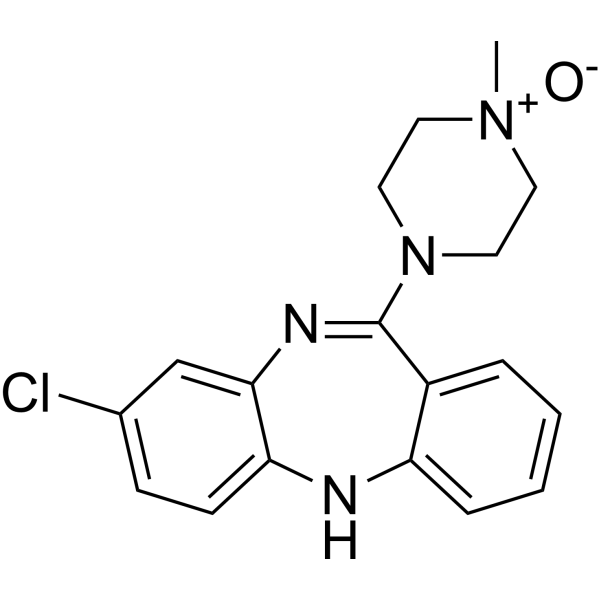
Clozapine N-oxide is a major metabolite of Clozapine and a human muscarinic designer receptors (DREADDs) agonist. Clozapine N-oxide activates the DREADD receptor hM3Dq and hM4Di. Clozapine N-oxide can't cross the blood-brain barrier . Clozapine is a potent dopamine antagonist and also a potent and selective muscarinic M4 receptor (EC50=11 nM) agonist .
|
-
-
- HY-42110
-
|
|
mAChR
|
Neurological Disease
|
|
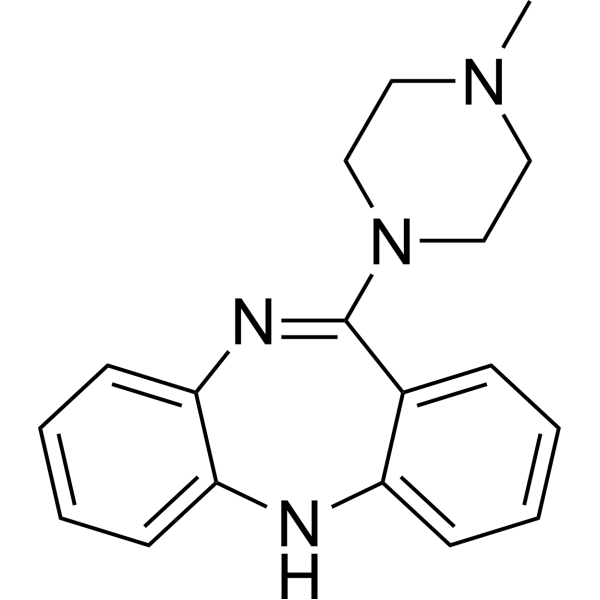
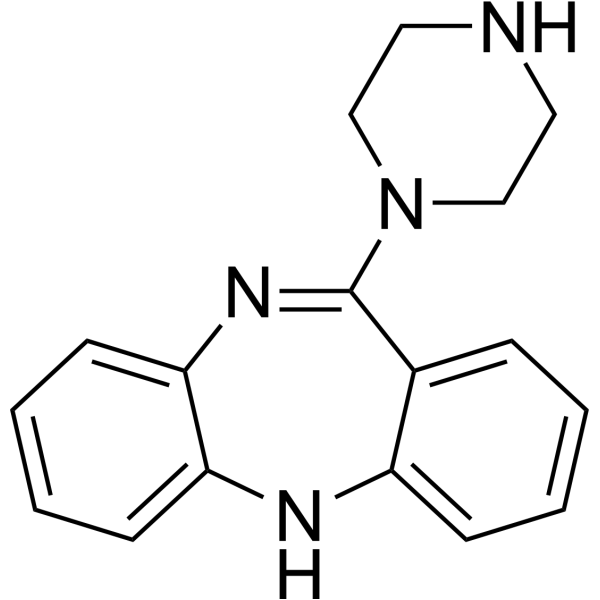
Deschloroclozapine, a metabolite of Clozapine, is a highly potent muscarinic DREADDs agonist, with blood-brain barrier permeability. Deschloroclozapine binds to DREADD receptor subtypes hM3Dq and hM4Di with Ki of 6.3 and 4.2 nM, respectively. [ 11C]-Deschloroclozapine is developed as a promising PET tracer for DREADD imaging .
|
-
-
- HY-B0726
-
-
-
- HY-17366A
-
|
|
mAChR
Dopamine Receptor
Drug Metabolite
|
Neurological Disease
|
|
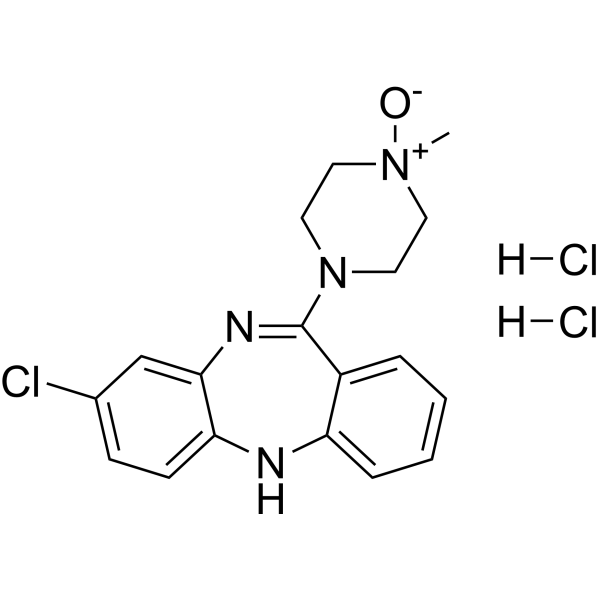
Clozapine N-oxide dihydrochloride is a major metabolite of Clozapine and a human muscarinic designer receptors (DREADDs) agonist. Clozapine N-oxide dihydrochloride activates the DREADD receptor hM3Dq and hM4Di. Clozapine N-oxide dihydrochloride cannot cross the blood-brain barrier . Clozapine is a potent dopamine antagonist and also a potent and selective muscarinic M4 receptor (EC50=11 nM) agonist .
|
-
-
- HY-14539
-
|
HF 1854; ZINC000019796155
|
Dopamine Receptor
mAChR
Adrenergic Receptor
5-HT Receptor
Ligands for E3 Ligase
|
Neurological Disease
Cancer
|
|
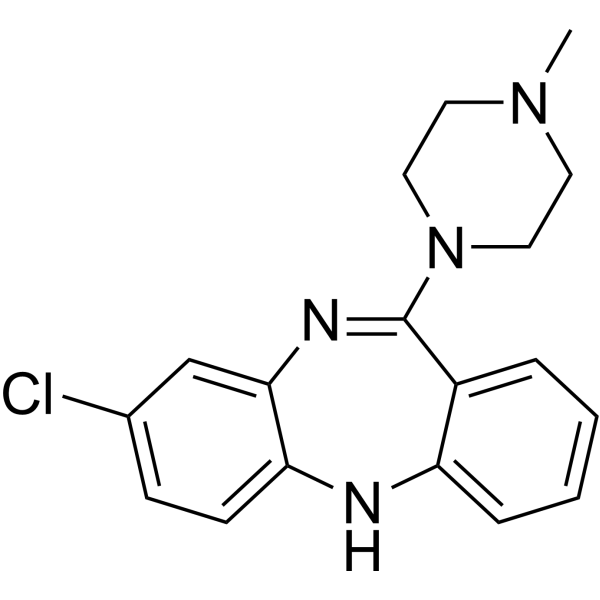
Clozapine (HF 1854) is an antipsychotic used for the research of schizophrenia. Clozapine has high affinity for a number of neuroreceptors. Clozapine is a potent antagonist of dopamine D2 with a Ki of 75 nM. Clozapine inhibits the muscarinic M1 receptor and serotonin 5HT2A receptor with Kis of 9.5 nM and 4 nM, respectively . Clozapine is also a potent and selective agonist at the muscarinic M4 receptor (EC50=11 nM) .
|
-
-
- HY-B0726A
-
-
-
- HY-A0083
-
|
Acetyl-β-methylcholine chloride
|
mAChR
|
Others
|
|
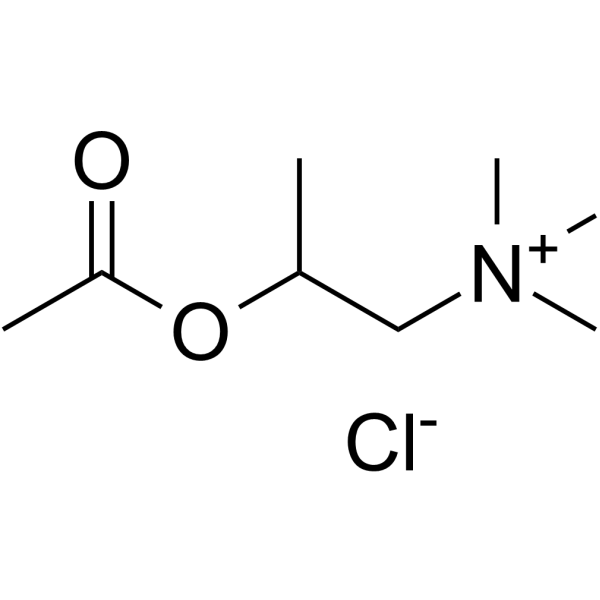
Methacholine (Acetyl-β-methylcholine) choride is a potent muscarinic-3 (M3) agonist. Methacholine choride acts directly on acetylcholine receptors on smooth muscle causing bronchoconstriction and airway narrowing. Methacholine choride shows a high sensitivity to identify bronchial hyperresponsiveness (BHR). Methacholine choride can be used to measure airway hyperresponsiveness (AHR) as a diagnostic aid in the assessment of individuals with asthma-like symptoms and normal resting expiratory flow rates .
|
-
-
- HY-105182
-
|
LY-246708
|
mAChR
|
Neurological Disease
|
|
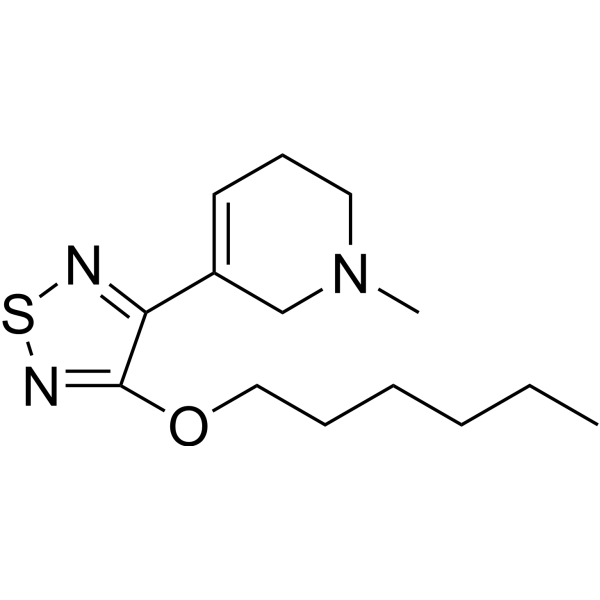
Xanomeline, as an effective and selective muscarinic type 1 and type 4 (M1/M4) receptor agonist, increases neuronal excitability. Xanomeline can be used for the research of neurological disorders, such as schizophrenia .
|
-
-
- HY-13410
-
|
LY246708 oxalate
|
mAChR
|
Neurological Disease
|
|
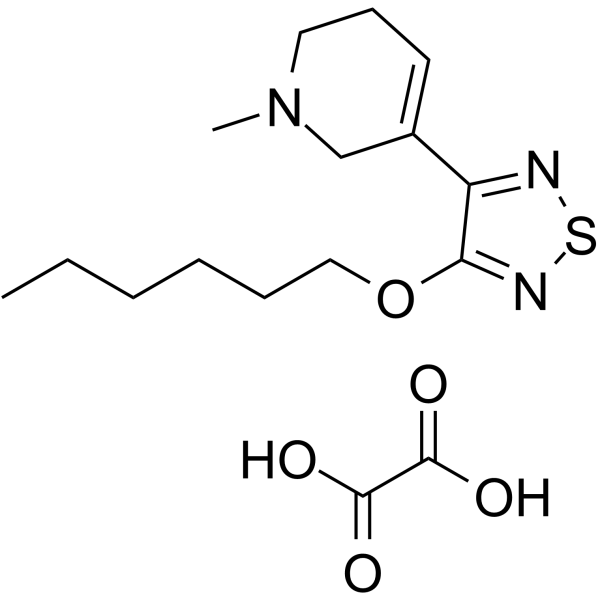
Xanomeline oxalate (LY246708 oxalate) is a potent and selective muscarinic receptor agonist (SMRA) and stimulates phosphoinositide hydrolysis in vivo. Xanomeline oxalate can be used for the research of Alzheimer’s disease .
|
-
-
- HY-N2364
-
-
-
- HY-B0489
-
|
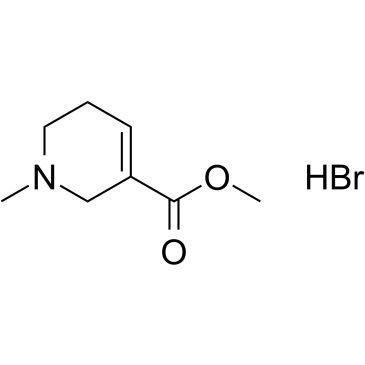
methyl 1,2,5,6-tetrahydro-1-methyl-3-pyridinecarboxylate hydrobromide
|
mAChR
nAChR
|
Infection
Neurological Disease
Metabolic Disease
Inflammation/Immunology
Cancer
|
|
Arecoline hydrobromide, a naturally brain-penetrant and orally active occurring psychoactive alkaloid, is a partial agonist of nicotinic and muscarinic acetylcholine receptor. Arecoline hydrobromide exhibits stimulation, alertness, anxiolysis and anti-parasitic effects. Arecoline hydrobromide also can induce oxidative stress .
|
-
-
- HY-70020B
-
|
AF102B hydrochloride
|
mAChR
|
Neurological Disease
Cancer
|
|
Cevimeline hydrochloride (AF102B hydrochloride) is a quinuclidine derivative of acetylcholine and a selective and orally active muscarinic M1 and M3 receptor agonist. Cevimeline hydrochloride stimulates secretion by the salivary glands and can be used as a sialogogue for xerostomia . Cevimeline hydrochloride can cross the blood-brain barrier (BBB) .
|
-
-
- HY-100234
-
|
|
mAChR
|
Neurological Disease
|
|
DREADD agonist 21 is a potent human muscarinic acetylcholine M3 receptors (hM3Dq) agonist (EC50=1.7 nM) .
|
-
-
- HY-105182A
-
|
LY 246708 tartrate
|
mAChR
|
Neurological Disease
|
|
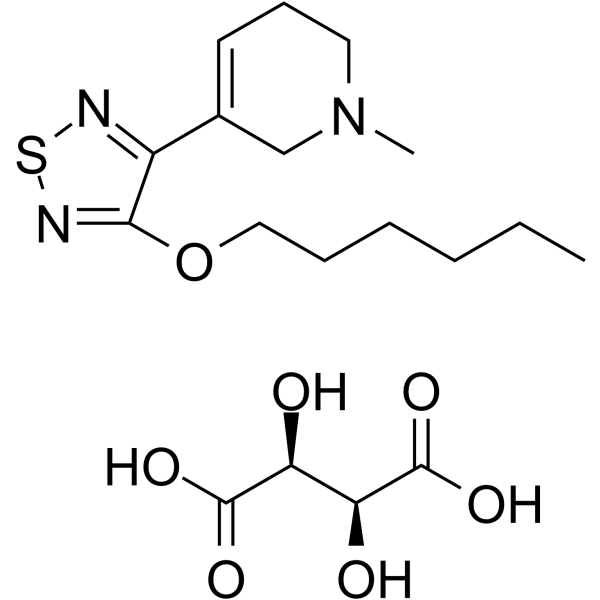
Xanomeline (LY 246708) is the potent agonist of muscarinic M1/M4 receptor with antipsychotic-like activity. Xanomeline (LY 246708) increases neuronal excitability. Xanomeline (LY 246708) can be used for the research of schizophrenia .
|
-
-
- HY-32067
-
|
Quinuclidin-3-yl acetate
|
mAChR
|
Cardiovascular Disease
Neurological Disease
|
|
Aceclidine (Quinuclidin-3-yl acetate) is a modulator of M3 muscarinic acetylcholine receptor and a M1 receptor agonist (EC50: 40 μM). Aceclidine is a cycloplegic agent, a surfactant, a tonicity adjustor and optionally a viscosity enhancer and an antioxidant. Aceclidine has the potential for the research of disorders such as refractive errors of the eye, xerostomia, Sjogren's syndrome, glaucoma, conjunctivitis, lacrimal gland disease, and esotropia .
|
-
-
- HY-B1006
-
-
-
- HY-105296
-
|
|
Sigma Receptor
mAChR
|
Cancer
|
|
Blarcamesine is an orally bioavailable Sigma-1 receptor agonist and muscarinic receptor modulator, with anticonvulsant, anti-amnesic, neuroprotective and antidepressant properties. Blarcamesine ameliorates neurologic impairments in a mouse model of Rett syndrome .
|
-
-
- HY-42110A
-
|
|
mAChR
|
Neurological Disease
|
|
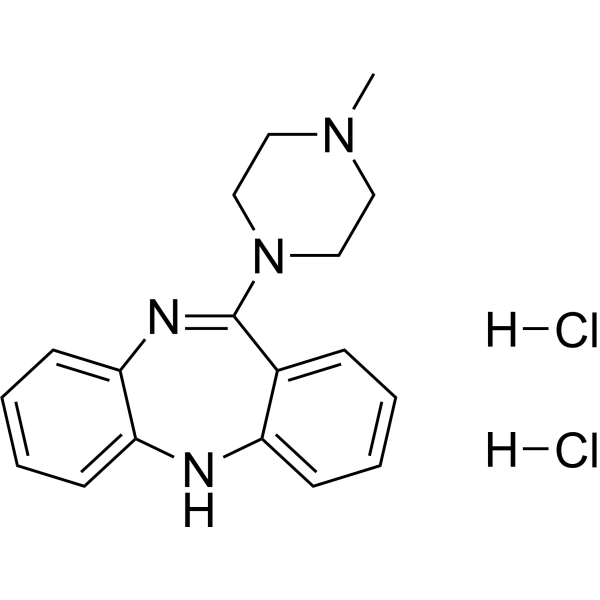
Deschloroclozapine dihydrochloride, a metabolite of Clozapine, is a highly potent muscarinic DREADDs agonist. Deschloroclozapine binds to DREADD receptor subtypes hM3Dq and hM4Di with Ki of 6.3 and 4.2 nM, respectively. [ 11C]-Deschloroclozapine is developed as a promising PET tracer for DREADD imaging .
|
-
-
- HY-101372A
-
|
|
mAChR
|
Neurological Disease
|
|
Oxotremorine M iodide is a potent and non-selective muscarinic acetylcholine receptor (mAChR) agonist. Oxotremorine M iodide potentiates NMDA receptors by muscarinic receptor dependent and independent mechanisms .
|
-
-
- HY-100234A
-
|
|
mAChR
|
Neurological Disease
|
|
DREADD agonist 21 dihydrochloride is a potent human muscarinic acetylcholine M3 receptors (hM3Dq) agonist (EC50=1.7 nM) .
|
-
-
- HY-122190
-
|
|
mAChR
|
Neurological Disease
|
|
TAK-071 is a novel, potent and highly selective muscarinic acetylcholine receptor 1 (M1R) positive allosteric modulator. EC50 of TAK-071 M1R agonist activities is 520 nM .
|
-
-
- HY-15885
-
-
-
- HY-12980
-
|
GSK961081; TD-5959
|
Adrenergic Receptor
mAChR
|
Inflammation/Immunology
Endocrinology
|
|
Batefenterol (GSK961081;TD-5959) is a novel muscarinic receptor antagonist and β2-adrenoceptor agonist; displays high affinity for hM2, hM3 muscarinic and hβ2-adrenoceptor with Ki values of 1.4, 1.3 and 3.7 nM, respectively.
|
-
-
- HY-76772
-
|
SNI-2011; AF102B hydrochloride hemihydrate
|
mAChR
|
Neurological Disease
Cancer
|
|
Cevimeline hydrochloride hemihydrate (SNI-2011) is a quinuclidine derivative of acetylcholine and a selective and orally active muscarinic M1 and M3 receptor agonist. Cevimeline hydrochloride hemihydrate stimulates secretion by the salivary glands and can be used as a sialogogue for xerostomia . Cevimeline hydrochloride hemihydrate can cross the blood-brain barrier (BBB) .
|
-
-
- HY-32067A
-
|
Quinuclidin-3-yl acetate hydrochloride
|
mAChR
|
Neurological Disease
|
|
Aceclidine (Quinuclidin-3-yl acetate) hydrochloride is a modulator of M3 muscarinic acetylcholine receptor and a M1 receptor agonist (EC50: 40 μM). Aceclidine hydrochloride is a cycloplegic agent, a surfactant, a tonicity adjustor and optionally a viscosity enhancer and an antioxidant. Aceclidine hydrochloride has the potential for the research of disorders such as refractive errors of the eye, xerostomia, Sjogren's syndrome, glaucoma, conjunctivitis, lacrimal gland disease, and esotropia .
|
-
-
- HY-70020
-
|
AF102B
|
mAChR
|
Neurological Disease
Cancer
|
|
Cevimeline (AF-102B) is a quinuclidine derivative of acetylcholine and a selective and orally active muscarinic M1 and M3 receptor agonist. Cevimeline stimulates secretion by the salivary glands and can be used as a sialogogue for xerostomia . Cevimeline can cross the blood-brain barrier (BBB) .
|
-
-
- HY-N5016
-
|
|
mAChR
|
Cardiovascular Disease
|
Guvacoline hydrochloride, a pyridine alkaloid found in Areca triandra, can act as a weak full agonist of atrial and ileal muscarinic receptors .
|
-
-
- HY-107654
-
|
(+)-Muscarine iodide
|
mAChR
|
Neurological Disease
|
|
Muscarine ((+)-Muscarine) iodide is a toxin that can stimulate the parasympathetic nervous system. Muscarine iodide is a prototype muscarinic acetylcholine receptor agonist .
|
-
-
- HY-116480
-
|
|
mAChR
|
Neurological Disease
|
|
LY593093 is a selective, orally active, and brain-penetrant muscarinic M1 receptor agonist with an EC50 of 22.8 nM. LY593093 can be utilized in Alzheimer’s disease research .
|
-
-
- HY-139126
-
|
DL-Muscarin chloride
|
mAChR
|
Neurological Disease
|
|
(±)-Muscarine chloride is the racemate of Muscarine chloride. Muscarine is a prototype muscarinic acetylcholine receptor agonist .
|
-
-
- HY-100336
-
-
-
- HY-17366R
-
|
|
Reference Standards
mAChR
Dopamine Receptor
Drug Metabolite
|
Neurological Disease
|
|
Clozapine N-oxide (Standard) is the analytical standard of Clozapine N-oxide. This product is intended for research and analytical applications. Clozapine N-oxide is a major metabolite of Clozapine and a human muscarinic designer receptors (DREADDs) agonist. Clozapine N-oxide activates the DREADD receptor hM3Dq and hM4Di. Clozapine N-oxide cannot cross the blood-brain barrier[1][2][3][4]. Clozapine is a potent dopamine antagonist and also a potent and selective muscarinic M4 receptor (EC50=11 nM) agonist[5][6].
|
-
-
- HY-110239
-
|
MP-11
|
mAChR
|
Neurological Disease
|
|
Perlapine is a potent muscarinic DREADD (Designer Receptors Exclusively Activated by Designer agents) agonist Perlapine exhibits >10000-fold selectivity for hM3Dq over hM3 receptors .
|
-
-
- HY-14539A
-
|
HF 1854 hydrochloride
|
Dopamine Receptor
mAChR
Adrenergic Receptor
5-HT Receptor
|
Neurological Disease
|
|
Clozapine hydrochloride (HF 1854 hydrochloride) is an antipsychotic used for the research of schizophrenia. Clozapine hydrochloride has high affinity for a number of neuroreceptors. Clozapine hydrochloride is a potent antagonist of dopamine D2 with a Ki of 75 nM. Clozapine hydrochloride inhibits the muscarinic M1 receptor and serotonin 5HT2A receptor with Kis of 9.5 nM and 4 nM, respectively . Clozapine hydrochloride is also a potent and selective agonist at the muscarinic M4 receptor (EC50=11 nM) .
|
-
-
- HY-14539R
-
|
HF 1854 (Standard)
|
Reference Standards
Dopamine Receptor
mAChR
Adrenergic Receptor
5-HT Receptor
|
Neurological Disease
|
|
Clozapine (Standard) is the analytical standard of Clozapine. This product is intended for research and analytical applications. Clozapine (HF 1854) is an antipsychotic used for the research of schizophrenia. Clozapine has high affinity for a number of neuroreceptors. Clozapine is a potent antagonist of dopamine D2 with a Ki of 75 nM. Clozapine inhibits the muscarinic M1 receptor and serotonin 5HT2A receptor with Kis of 9.5 nM and 4 nM, respectively . Clozapine is also a potent and selective agonist at the muscarinic M4 receptor (EC50=11 nM) .
|
-
-
- HY-113616A
-
|
|
MARCKS
mAChR
|
Neurological Disease
|
|
VU0364572 TFA is an orally active and selective allosteric agonist of the M1 muscarinic receptor with an EC50 of 0.11 μM. VU0364572 TFA has neuroprotective potential for preventing memory impairments and reducing neuropathology in Alzheimer’s Disease. VU0364572 TFA is CNS penetrant .
|
-
-
- HY-116586A
-
|
|
mAChR
Sigma Receptor
|
Neurological Disease
|
|
(Rac)-AF710B is the racemate of AF710B (HY-116586). AF710B is a highly potent and selective allosteric M1 muscarinic and σ1 receptor agonist. AF710B can be used for the research of Alzheimer’s disease .
|
-
-
- HY-113970A
-
|
WEB 1881 FU hydrochloride
|
mAChR
Calcium Channel
|
Neurological Disease
|
|
Nebracetam (WEB 1881 FU) hydrochloride is an orally active M1 muscarinic receptor agonist. Nebracetam hydrochloride can induce an increase in intracellular Ca 2+ concentration, with an EC50 value of 1.59 mM. Nebracetam hydrochloride exhibits neuroprotective activity and the ability to improve cognitive impairment. Nebracetam hydrochloride can be used in the research of neurological diseases such as Alzheimer's disease .
|
-
-
- HY-172418
-
|
|
mAChR
|
Neurological Disease
|
|
Betovumeline is the agonist for muscarinic receptor and can be used for researchs of neurological disorders .
|
-
-
- HY-148524
-
|
|
mAChR
Adrenergic Receptor
|
Cardiovascular Disease
|
|
β2AR/M-receptor agonist-1 (example 131) is a muscarinic antagonist and β2 adrenoceptor agonist (MABA). β2AR/M-receptor agonist-1 shows potency to β2 adrenoceptor with an EC50 value of 9.2 nM. β2AR/M-receptor agonist-1 also has potency to muscarinic receptor with a Ki value of 30.2 nM. β2AR/M-receptor agonist-1 shows MABA potency with an EC50 value of 4.0 nM .
|
-
-
- HY-148525
-
|
β2AR/M-receptor agonist-2
|
mAChR
Adrenergic Receptor
|
Cardiovascular Disease
Inflammation/Immunology
|
|
β2AR/M-receptor agonist-2 (compound 15) is a muscarinic antagonist and β2 adrenoceptor agonist (MABA). β2AR/M-receptor agonist-2 shows potency to β2 adrenoceptor with an EC50 value of 3.7 nM. β2AR/M-receptor agonist-2 also has potency to human cloned M3 receptor with a Ki value of 0.73 nM. β2AR/M-receptor agonist-2 is a potent bronchodilator, it can be used for the research of chronic obstructive pulmonary disease (COPD) .
|
-
-
- HY-123852
-
|
|
mAChR
|
Neurological Disease
|
|
PF-06764427 is a selective M1 muscarinic acetylcholine receptor positive allosteric modulator. PF-06764427 exhibits robust M1 agonist activity. PF-06764427 can be used in the research of Alzheimer's disease and schizophrenia .
|
-
-
- HY-118806A
-
|
|
mAChR
|
Neurological Disease
|
|
AC-42 hydrochloride is the hydrochloride salt form of AC-42 (HY-118806). AC-42 hydrochloride is an allosteric agonist for muscarinic M1 receptor with EC50s of 805 nM and 220 nM for human wild-type and Y381A mutated M1 receptors, respectively. AC-42 hydrochloride stimulates the inositol phosphate (IP)-accumulation and calcium mobilization in CHO cells .
|
-
-
- HY-U00038
-
|
ENS 213-163; Sandoz ENS 163 phosphate; Thiopilocarpine phosphate
|
mAChR
|
Neurological Disease
|
|
ENS-163 phosphate is a selective muscarinic M1 receptor agonist.
|
-
-
- HY-B0726R
-
|
|
Reference Standards
mAChR
|
Neurological Disease
Cancer
|
|
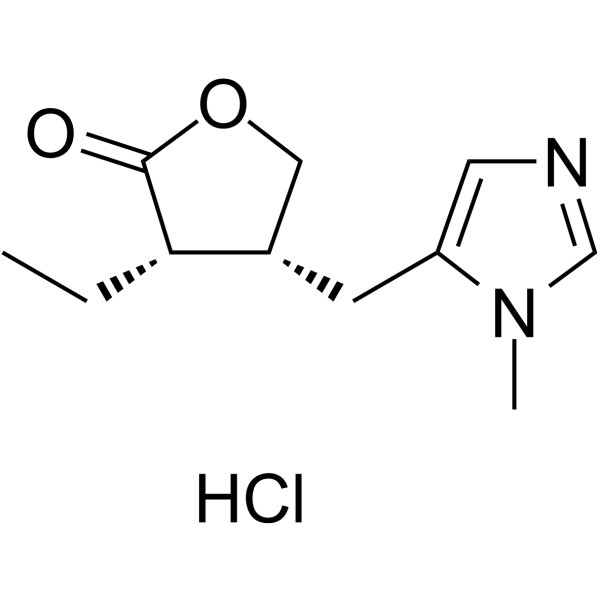
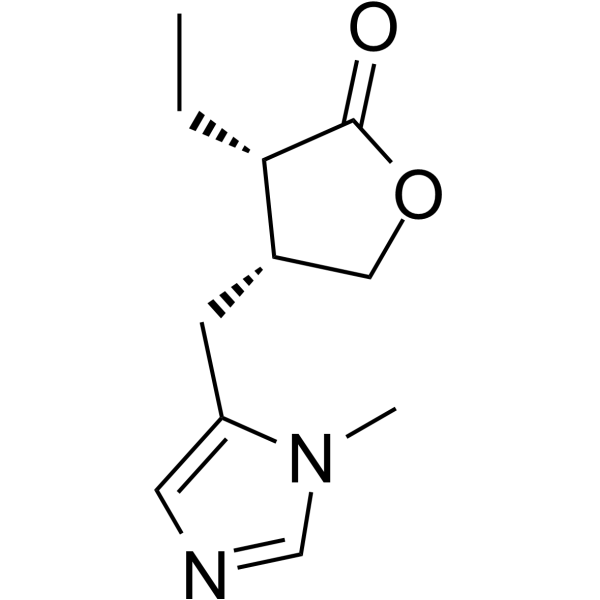
Pilocarpine (Hydrochloride) (Standard) is the analytical standard of Pilocarpine (Hydrochloride). This product is intended for research and analytical applications. Pilocarpine Hydrochloride is a potent M3-type muscarinic acetylcholine receptor (M3 muscarinic receptor) agonist.
|
-
-
- HY-177410
-
|
|
mAChR
|
Neurological Disease
|
|
Muscarinic M1 receptor agonist-1 (Ex.1-21) is a Muscarinic M1 receptor agonist. Muscarinic M1 receptor agonist-1 can be used in the research of psychiatric disorders such as schizophrenia .
|
-
-
- HY-106432
-
|
SB-202026; Memric
|
mAChR
|
Neurological Disease
|
|
Sabcomeline (SB-202026) is a potent and functionally selective muscarinic M1 receptor partial agonist that improve cognition. Sabcomeline can be used for Alzheimer's disease research .
|
-
-
- HY-148533
-
|
|
mAChR
Adrenergic Receptor
|
Neurological Disease
|
|
β2AR agonist /M-receptor antagonist-1 is a potent dual muscarinic antagonist/beta 2 agonist (MABA). β2AR agonist /M-receptor antagonist-1 potently relaxes either Carbachol?(HY-B1208)-induced contraction, in the absence (MABA) or presence of Propranolol?(HY-B1208), or Histamine(HY-B1204)-induced contraction (β2) .
|
-
-
- HY-113616
-
|
|
mAChR
MARCKS
|
Neurological Disease
|
|
VU0364572 is a selective allosteric agonist of the M1 muscarinic receptor with an EC50 of 0.11 μM. VU0364572 has neuroprotective potential for preventing memory impairments and reducing neuropathology in Alzheimer’s Disease. VU0364572 is orally active and is CNS penetrant .
|
-
-
- HY-19092
-
|
|
mAChR
|
Neurological Disease
|
|
YM-796 dihydroxybutanedioate is a selective muscarinic M1 receptor agonist. YM-796 dihydroxybutanedioate can improve cognitive impairment and reduce amyloid plaque deposition. YM-796 dihydroxybutanedioate can be used in the research of cognitive impairment diseases such as Alzheimer's disease .
|
-
- HY-A0083B
-
|
Acetyl-β-methylcholine bromide
|
mAChR
|
Cardiovascular Disease
|
|
Methacholine (Acetyl-β-methylcholine) bromide is a potent muscarinic-3 (M3) agonist. Methacholine bromide acts directly on acetylcholine receptors on smooth muscle causing bronchoconstriction and airway narrowing. Methacholine bromide shows a high sensitivity to identify bronchial hyperresponsiveness (BHR). Methacholine bromide can be used to measure airway hyperresponsiveness (AHR) as a diagnostic aid in the assessment of individuals with asthma-like symptoms and normal resting expiratory flow rates .
|
-
- HY-A0083R
-
|
Acetyl-β-methylcholine chloride (Standard)
|
Reference Standards
mAChR
|
Others
|
|
Methacholine (chloride) (Standard) is the analytical standard of Methacholine (chloride). This product is intended for research and analytical applications. Methacholine (Acetyl-β-methylcholine) choride is a potent muscarinic-3 (M3) agonist. Methacholine choride acts directly on acetylcholine receptors on smooth muscle causing bronchoconstriction and airway narrowing. Methacholine choride shows a high sensitivity to identify bronchial hyperresponsiveness (BHR). Methacholine choride can be used to measure airway hyperresponsiveness (AHR) as a diagnostic aid in the assessment of individuals with asthma-like symptoms and normal resting expiratory flow rates .
|
-
- HY-120915
-
|
|
mAChR
|
Neurological Disease
|
|
L 689660 maleate, a cholinomimetic agent, is a selective M1 and M3 muscarinic receptors agonist. L 689660 maleate is a potent M1 muscarinic receptor full agonist in the rat superior cervical ganglion (pEC50 of 7.3). L 689660 maleate is a potent M3 receptors agonist in the guinea-pig ileum myenteric plexus-longitudinal muscle or in trachea (pEC50 of 7.5 and 7.7, respectively) .
|
-
- HY-W909173
-
|
|
Trace Amine-associated Receptor (TAAR)
Histamine Receptor
mAChR
|
Neurological Disease
|
|
TAAR1 agonist 2 (compound 30) is a full agonist of trace amine-associated receptor 1 (TAAR1) (pEC50=7.5). TAAR1 agonist 2 also exhibits agonist activity at H1 receptors and activates several members of the muscarinic acetylcholine receptor family, such as the M2 receptor (pEC50=5). TAAR1 agonist 2 can be used in the study of neuropsychiatric diseases .
|
-
- HY-107650
-
|
CI 979 hydrochloride; RU 35926 hydrochloride
|
mAChR
|
Neurological Disease
|
|
Milameline (CI 979; RU35926) hydrochloride is a nonselective, partical and orally active muscarinic receptor agonist that improves cognition. Milameline hydrochloride has equal affinity for different subtypes of human muscarinic receptors with IC50 of 1.3 µM for M1-, 1.1 µM for M2-, 1.5 µM for M3-, and 1.9 µM for M4-muscarinic receptors. Milameline hydrochloride has a higher affinity for sites [ 3H]CMD (IC50 = 20 nM), than [ 3H]QNB, (IC50 = 3059 nM). Milameline hydrochloride produces both central and peripheral cholinergic effects and reverses the cognitive deficits induced by Scopolamine (HY-N0296). Milameline hydrochloride can be used for the study of Alzheimer’s Disease .
|
-
- HY-135460
-
|
CI-979; RU35926
|
mAChR
|
Neurological Disease
|
|
Milameline (CI-979; RU35926) is a nonselective, partical and orally active muscarinic receptor agonist that improves cognition. Milameline has equal affinity for different subtypes of human muscarinic receptors with IC50 of 1.3 µM for M1-, 1.1 µM for M2-, 1.5 µM for M3-, and 1.9 µM for M4-muscarinic receptors. Milameline has a higher affinity for sites [ 3H]CMD (IC50 = 20 nM), than [ 3H]QNB, (IC50 = 3059 nM). Milameline produces both central and peripheral cholinergic effects and reverses the cognitive deficits induced by Scopolamine (HY-N0296). Milameline can be used for the study of Alzheimer’s Disease .
|
-
- HY-120418
-
|
|
mAChR
|
Others
|
|
L-687306 is a high affinity muscarinic M1 receptor partial agonist with activity as a partial agonist of M1 receptors in rat ganglia and as a high affinity competitive antagonist at guinea pig cardiac M2 and ileal M3 muscarinic receptors, useful for studying the receptor reserve of muscarinic receptors.
|
-
- HY-U00230
-
-
- HY-B0726S
-
-
- HY-100916
-
-
- HY-B0726S1
-
-
- HY-B1006R
-
|
|
Reference Standards
mAChR
|
Neurological Disease
Cancer
|
|
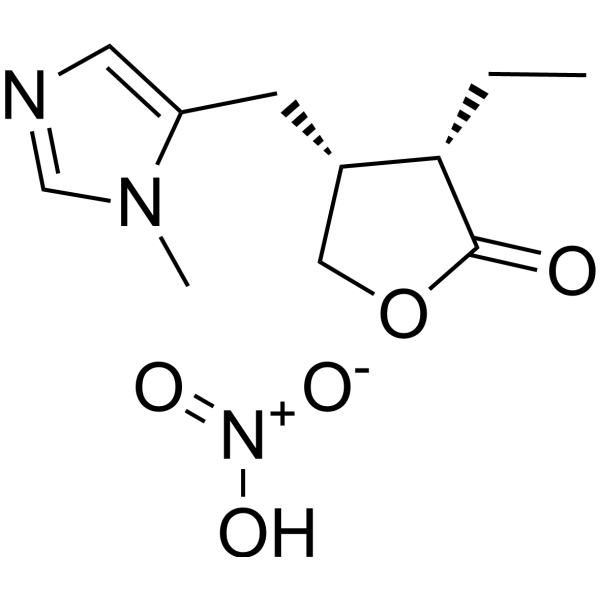
Pilocarpine (nitrate) (Standard) is the analytical standard of Pilocarpine (nitrate). This product is intended for research and analytical applications. Pilocarpine nitrate is a potent M3-type muscarinic acetylcholine receptor (M3 muscarinic receptor) agonist.
|
-
- HY-76772A
-
|
(+)-SNI-2011; (+)-AF102B hydrochloride hemihydrate
|
mAChR
|
Neurological Disease
|
|
(+)-Cevimeline hydrochloride hemihydrate ((+)-SNI-2011), a potent muscarinic receptor agonist, is a candidate therapeutic drug for xerostomia in Sjogren's syndrome.
|
-
- HY-76772B
-
|
(-)-SNI-2011; (-)-AF102B hydrochloride hemihydrate
|
mAChR
|
Neurological Disease
|
|
(-)-Cevimeline hydrochloride hemihydrate ((-)-SNI-2011), a novel muscarinic receptor agonist, is a candidate therapeutic drug for xerostomia in Sjogren's syndrome.
|
-
- HY-17366AR
-
|
|
Reference Standards
mAChR
Dopamine Receptor
Drug Metabolite
|
Neurological Disease
|
|
Clozapine N-oxide (dihydrochloride) (Standard) is the analytical standard of Clozapine N-oxide (dihydrochloride). This product is intended for research and analytical applications. Clozapine N-oxide dihydrochloride is a major metabolite of Clozapine and a human muscarinic designer receptors (DREADDs) agonist. Clozapine N-oxide dihydrochloride activates the DREADD receptor hM3Dq and hM4Di. Clozapine N-oxide dihydrochloride can cross the blood-brain barrier[1][2][3][4]. Clozapine is a potent dopamine antagonist and also a potent and selective muscarinic M4 receptor (EC50=11 nM) agonist[5][6].
|
-
- HY-14539B
-
|
HF 1854 dihydrochloride
|
Dopamine Receptor
mAChR
Adrenergic Receptor
5-HT Receptor
|
Neurological Disease
Cancer
|
|
Clozapine (HF 1854) dihydrochloride is an antipsychotic used for the research of schizophrenia. Clozapine has high affinity for a number of neuroreceptors. Clozapine is a potent antagonist of dopamine D2 with a Ki of 75 nM. Clozapine inhibits the muscarinic M1 receptor and serotonin 5HT2A receptor with Kis of 9.5 nM and 4 nM, respectively . Clozapine is also a potent and selective agonist at the muscarinic M4 receptor (EC50=11 nM) .
|
-
- HY-120329
-
|
|
mAChR
|
Others
|
|
Lu 26-046 is the agonist for muscarinic M1 receptor and M2 receptor and a weak antagonist for M3 receptor, with Ki of 0.51, 26 and 5 nM, respectively. Lu 26-046 exhibits specific stimulus property, that can be recognized by rats .
|
-
- HY-W748582
-
|
|
Isotope-Labeled Compounds
Dopamine Receptor
mAChR
Drug Metabolite
|
Neurological Disease
|
|
Clozapine N-oxide-d8 is the deuterium labeled Clozapine N-oxide (HY-17366). Clozapine N-oxide is a major metabolite of Clozapine and a human muscarinic designer receptors (DREADDs) agonist. Clozapine N-oxide activates the DREADD receptor hM3Dq and hM4Di. Clozapine N-oxide can't cross the blood-brain barrier . Clozapine is a potent dopamine antagonist and also a potent and selective muscarinic M4 receptor (EC50=11 nM) agonist .
|
-
- HY-B1789
-
|
|
mAChR
|
Neurological Disease
|
|
Telenzepine is an antimuscarinic agent with Kis of 0.94 nM (M1 mAChR) and 17.8 nM (M2 mAChR) binding to muscarinic receptors. Telenzepine effectively blocks synaptic transmission promoted by muscarinic or M1 receptor agonists. Thus, Telenzepine can reduce the amplitude of extracellular slow excitatory postsynaptic potentials (EC50=38 nM) and slow inhibitory postsynaptic potentials (EC50=253 nM) .
|
-
- HY-106949
-
|
|
mAChR
|
Neurological Disease
|
|
Tazomeline is a selective M1 muscarinic receptor agonist. Tazomeline inhibits twitch height in rabbit vas deferens(IC50= 0.001 nM). Tazomeline can be used for research of neuropsychiatric disorders .
|
-
- HY-101078A
-
|
CMI 545 dihydrochloride
|
Dopamine Receptor
|
Neurological Disease
|
|
(±)-Epibatidine (CMI 545) dihydrochloride is an agonist of nicotinic with potent analgetic activity. (±)-Epibatidine (CMI 545) dihydrochloride is an alkaloid originally characterized from frog skin. (±)-Epibatidine (CMI 545) dihydrochloride have little or no activity at a variety of other central receptors, including opioid receptors, muscarinic receptors, adrenergic receptors, dopamine receptors, serotonin receptors, and gamma-aminobutyric acid receptors .
|
-
- HY-117223
-
|
|
Potassium Channel
|
Neurological Disease
|
|
GEA 857 is a structural analog of the Serotonin (HY-B1473A) uptake blocker Alaproclate (HY-164011). GEA 857 enhances responses induced by muscarinic receptor agonists by inhibiting certain calcium-dependent potassium channels on membranes, a blockade that can enhance or prolong the muscarinic cholinergic effects. GEA 857 can be used in research on neurodegenerative diseases .
|
-
- HY-107654S
-
|
(+)-Muscarine-d9 iodide
|
Isotope-Labeled Compounds
mAChR
|
Neurological Disease
|
|
Muscarine-d9 (iodide) is the deuterium labeled Muscarine iodide. Muscarine ((+)-Muscarine) iodide is a toxin that can stimulate the parasympathetic nervous system. Muscarine iodide is a prototype muscarinic acetylcholine receptor agonist .
|
-
- HY-148961
-
|
|
mAChR
|
Neurological Disease
|
|
HTL-9936 is a selective M1 muscarinic acetylcholine receptor (M1-mAChR) agonist. HTL-9936 is promising for research of neurodegenerative disorders (e.g., Alzheimer’s) .
|
-
- HY-119082A
-
|
|
mAChR
|
Others
|
|
VU0029767 is an allosteric enhancer of the M1 muscarinic receptor with the activity to modulate M1 receptor activity. VU0029767 can enhance M1 receptor activity by increasing agonist affinity, but exhibits different properties from other compounds under different experimental conditions, such as effects on mutant M1 receptors and effects on downstream signaling pathways.
|
-
- HY-14539S3
-
|
HF 1854-d3
|
Isotope-Labeled Compounds
5-HT Receptor
Adrenergic Receptor
Dopamine Receptor
mAChR
|
Neurological Disease
Cancer
|
|
Clozapine-d3 (HF 1854-d3) is deuterium labeled Clozapine. Clozapine (HF 1854) is an antipsychotic used for the research of schizophrenia. Clozapine has high affinity for a number of neuroreceptors. Clozapine is a potent antagonist of dopamine D2 with a Ki of 75 nM. Clozapine inhibits the muscarinic M1 receptor and serotonin 5HT2A receptor with Kis of 9.5 nM and 4 nM, respectively . Clozapine is also a potent and selective agonist at the muscarinic M4 receptor (EC50=11 nM) .
|
-
- HY-157956
-
|
|
mAChR
|
Neurological Disease
|
|
LASSBio-873 is an orally active muscarinic cholinergic receptor (mAChR) agonist that crosses the blood-brain barrier. LASSBio-873 has potent analgesic effects on acute and inflammatory pain. The analgesic effect of LASSBio-873 can be inhibited by intrathecal injection of the M2 receptor antagonist methoctramine .
|
-
- HY-U00085
-
|
RU 47213
|
Cholinesterase (ChE)
|
Neurological Disease
|
|
Itameline (RU 47213) is a prodrug with oral and long-lasting cholinergic activity. Itameline is a novel tetrahydropyridine-oxime that is cleaved in vivo to form an active metabolite, RU 35963. RU 35963 is a muscarinic receptor agonist that is nonselective with respect to receptor subtypes. Itameline possesses the capacity to reduce memory deficits induced by an impairment of cholinergic transmission in the rat .
|
-
- HY-A0083C
-
|
Acetyl-β-methylcholine iodide
|
mAChR
|
Cardiovascular Disease
|
|
Methacholine iodide is a potent muscarinic-3 (M3) agonist. Methacholine iodide acts directly on acetylcholine receptors on smooth muscle causing bronchoconstriction and airway narrowing. Methacholine iodide shows a high sensitivity to identify bronchial hyperresponsiveness (BHR). Methacholine iodide can be used to measure airway hyperresponsiveness (AHR) as a diagnostic aid in the assessment of individuals with asthma-like symptoms and normal resting expiratory flow rates .
|
-
- HY-12980R
-
|
GSK961081 (Standard); TD-5959 (Standard)
|
Adrenergic Receptor
mAChR
Reference Standards
|
Inflammation/Immunology
Endocrinology
|
|
Batefenterol (Standard) is the analytical standard of Batefenterol. This product is intended for research and analytical applications. Batefenterol (GSK961081;TD-5959) is a novel muscarinic receptor antagonist and β2-adrenoceptor agonist; displays high affinity for hM2, hM3 muscarinic and hβ2-adrenoceptor with Ki values of 1.4, 1.3 and 3.7 nM, respectively.
|
-
- HY-B0489A
-
-
- HY-163702
-
|
|
Adrenergic Receptor
mAChR
|
Inflammation/Immunology
|
|
CHF-6550 is an antagonist for muscarinic M3 receptor and an agonist for β2 adrenoceptor (MABA), with pKi of 9.3 and 10.6, respectively. CHF-6550 exhibits good hepatocyte clearance in rat models and good pharmacokinetic characteristics in guinea pigs .
|
-
- HY-13410R
-
|
LY246708 oxalate (Standard)
|
mAChR
Reference Standards
|
Neurological Disease
|
|
Xanomeline (oxalate) (Standard) is the analytical standard of Xanomeline (oxalate). This product is intended for research and analytical applications. Xanomeline oxalate (LY246708 oxalate) is a potent and selective muscarinic receptor agonist (SMRA) and stimulates phosphoinositide hydrolysis in vivo. Xanomeline oxalate can be used for the research of Alzheimer’s disease .
|
-
- HY-118806
-
|
|
mAChR
|
Neurological Disease
|
|
AC-42 is a poent M1 muscarinic selective allosteric agonist with EC50s of 805 nM and 220 nM for human wild-type and Y381A mutated M1 receptors, respectively. AC-42 stimulates the IP-accumulation and calcium mobilization in CHO cells .
|
-
- HY-105182R
-
|
LY-246708 (Standard)
|
Reference Standards
mAChR
|
Neurological Disease
|
|
Xanomeline (Standard) is the analytical standard of Xanomeline. This product is intended for research and analytical applications. Xanomeline, as an effective and selective muscarinic type 1 and type 4 (M1/M4) receptor agonist, increases neuronal excitability. Xanomeline can be used for the research of neurological disorders, such as schizophrenia .
|
-
- HY-113970
-
|
WEB 1881 FU
|
mAChR
Calcium Channel
|
Neurological Disease
|
|
Nebracetam (WEB 1881 FU) is an orally active M1 muscarinic receptor agonist. Nebracetam can induce an increase in intracellular Ca 2+ concentration, with an EC50 value of 1.59 mM. Nebracetam exhibits neuroprotective activity and the ability to improve cognitive impairment. Nebracetam can be used in the research of neurological diseases such as Alzheimer's disease .
|
-
- HY-108157
-
|
|
mAChR
|
Neurological Disease
|
|
A-72055 is a partial agonist of muscarinic receptors. A-72055 has binding activity to both M1 and M2 receptors, with Ki values of 32 nM and 30 nM, respectively. A-72055 can enhance cognitive function and improve learning and memory deficits. A-72055 has better security. A-72055 can be used for research on neurological disorders such as cognitive impairment .
|
-
- HY-107650A
-
|
CI 979 hydroiodide; RU 35926 hydroiodide
|
mAChR
|
Neurological Disease
|
|
Milameline (CI 979; RU35926) hydroiodide is a nonselective, partical and orally active muscarinic receptor agonist that improves cognition. Milameline hydroiodide has equal affinity for different subtypes of human muscarinic receptors with IC50 of 1.3 µM for M1-, 1.1 µM for M2-, 1.5 µM for M3-, and 1.9 µM for M4-muscarinic receptors. Milameline hydroiodide has a higher affinity for sites [ 3H]CMD (IC50 = 20 nM), than [ 3H]QNB, (IC50 = 3059 nM). Milameline hydroiodide produces both central and peripheral cholinergic effects and reverses the cognitive deficits induced by Scopolamine (HY-N0296). Milameline hydroiodide can be used for the study of Alzheimer’s Disease .
|
-
- HY-167107
-
|
|
mAChR
|
Others
|
|
Methamilane methiodide is a potent muscarinic receptor agonist .
|
-
- HY-U00230A
-
-
- HY-172418A
-
|
|
mAChR
|
Neurological Disease
|
|
Betovumeline hydrochloride is the agonist for muscarinic receptor and can be used for researchs of neurological disorders .
|
-
- HY-186083
-
|
|
mAChR
|
Cardiovascular Disease
|
|
Propylbenzilylcholine mustard (PrBCM) is an irreversible, covalently binding selective antagonist targeting rat cardiac muscarinic receptors, with a preference for muscarinic receptor subtypes that show low affinity for agonists. Propylbenzilylcholine mustard inactivates such receptors in a dose- and time-dependent manner in vitro, and its receptor selectivity remains stable across different ionic strengths and in GTP-containing buffer systems. Propylbenzilylcholine mustard can be applied to basic pharmacological studies on the structure and function of muscarinic receptors, especially focusing on the heterogeneity of cardiac muscarinic receptors and related cardiovascular pharmacological research .
|
-
- HY-101372AR
-
|
|
mAChR
Reference Standards
|
Neurological Disease
|
|
Oxotremorine M (iodide) (Standard) is the analytical standard of Oxotremorine M (iodide) (HY-101372A). This product is intended for research and analytical applications. Oxotremorine M iodide is a potent and non-selective muscarinic acetylcholine receptor (mAChR) agonist. Oxotremorine M iodide potentiates NMDA receptors by muscarinic receptor dependent and independent mechanisms .
|
-
- HY-100234AR
-
|
|
mAChR
Reference Standards
|
Neurological Disease
|
|
DREADD agonist 21 (dihydrochloride) (Standard) is the analytical standard of DREADD agonist 21 (dihydrochloride) (HY-100234A). This product is intended for research and analytical applications. DREADD agonist 21 dihydrochloride is a potent human muscarinic acetylcholine M3 receptors (hM3Dq) agonist (EC50=1.7 nM) .
|
-
- HY-100336R
-
|
|
mAChR
Reference Standards
|
Neurological Disease
|
|
AC260584 (Standard) is the analytical standard of AC260584 (HY-100336). This product is intended for research and analytical applications. AC260584 is an M1 muscarinic receptor allosteric agonist with a pEC50 of 7.6.
|
-
- HY-176710A
-
|
|
Drug Isomer
|
Others
|
|
(R)-PAD-PF2 is an isomer of PAD-PF2 (HY-176710). PAD-PF2 is a PAD family inhibitor, as well as a κ-opioid receptor agonist (EC50 = 7.55 μM) and an M1 muscarinic acetylcholine receptor antagonist (IC50 = 12.3 μM).
|
-
- HY-105296R
-
|
|
Reference Standards
Sigma Receptor
mAChR
|
Cancer
|
|
Blarcamesine (Standard) is the analytical standard of Blarcamesine (HY-105296). This product is intended for research and analytical applications. Blarcamesine is an orally bioavailable Sigma-1 receptor agonist and muscarinic receptor modulator, with anticonvulsant, anti-amnesic, neuroprotective and antidepressant properties. Blarcamesine ameliorates neurologic impairments in a mouse model of Rett syndrome .
|
-
- HY-119082
-
|
|
mAChR
|
Others
|
|
(E/Z)-VU0029767 is an allosteric enhancer of M1 muscarinic receptors with the activity to modulate M1 receptor activity. (E/Z)-VU0029767 can enhance M1 receptor activity by increasing agonist affinity, but exhibits different properties from other compounds under different experimental conditions, such as effects on mutant M1 receptors and effects on downstream signaling pathways.
|
-
- HY-106432AR
-
|
SB-202026 hydrochloride (Standard); Memric hydrochloride (Standard)
|
Reference Standards
mAChR
|
Neurological Disease
|
|
Sabcomeline hydrochloride (Standard) is the analytical standard of Sabcomeline hydrochloride (HY-106432A). This product is intended for research and analytical applications. Sabcomeline (SB-202026) hydrochloride is a potent and functionally selective muscarinic M1 receptor partial agonist that improve cognition. Sabcomeline hydrochloride can be used for Alzheimer's disease research .
|
-
- HY-30647
-
|
|
mAChR
|
Neurological Disease
|
|
RS-86 is a potent, central acting, and selective muscarinic acetylcholine receptor agonist. RS-86 exhibits typical cholinergic excitatory effects, such as inducing smooth muscle contraction, ganglion depolarization, central hypothermia, etc. RS-86 can be used for research on Alzheimer's disease .
|
-
- HY-118363
-
|
|
mAChR
|
Neurological Disease
|
|
Lu AE51090 is selective muscarinic M1 receptor agonist with blood-brain barrier penetration. Lu AE51090 activates human M1 receptor with EC50 of 61 nM, while showing no significant agonism at M2-M5 receptors. Lu AE51090 exerts procognitive effects in mice. Lu AE51090 can be used for the study of Alzheimer’s disease (AD) and cognitive impairment associated with schizophrenia (CIAS) .
|
-
- HY-105182S1
-
|
LY-246708-d3
|
Isotope-Labeled Compounds
mAChR
|
Neurological Disease
|
|
Xanomeline-d3 (LY-246708-d3) is deuterium labeled Xanomeline. Xanomeline, as an effective and selective muscarinic type 1 and type 4 (M1/M4) receptor agonist, increases neuronal excitability. Xanomeline can be used for the research of neurological disorders, such as schizophrenia .
|
-
- HY-183853
-
|
|
mAChR
Reactive Oxygen Species (ROS)
DNA/RNA Synthesis
Apoptosis
SOD
Sirtuin
|
Cardiovascular Disease
Neurological Disease
Cancer
|
|
Arecaidine-propargyl ester is a selective M2 muscarinic receptor agonist with blood-brain barrier permeability, with a pKi of 5.91 for hm1, 7.06 for hm2, 6.07 for hm3, 6.01 for hm4, and 6.03 for hm5. Arecaidine-propargyl ester stimulates central and peripheral muscarinic receptors. Arecaidine-propargyl ester increases intracellular ROS, induces DNA damage and Apoptosis, and upregulates the expression of MnSOD and SIRT1. Arecaidine-propargyl ester reduces sympathetic nerve outflow, induces dose-dependent hypotension, and triggers negative chronotropic effects at high peripheral doses. Arecaidine-propargyl ester can be used in research related to Alzheimer's disease and glioblastoma .
|
-
- HY-107656
-
|
|
mAChR
|
Neurological Disease
|
|
PTAC oxalate is a selective muscarinic receptor ligand. PTAC oxalate is an partial agonist of M2 and M4 but antagonist of M1, M3, and M5 (Ki values of 0.2-2.8 nM for hM1-5 in CHO cells). PTAC oxalate alleviates the mechanical allodynia on the neuropathic pain and has antidepression effects .
|
-
- HY-105182AR
-
|
LY 246708 tartrate (Standard)
|
Reference Standards
mAChR
|
Neurological Disease
|
|
Xanomeline (tartrate) (Standard) is the analytical standard of Xanomeline (tartrate). This product is intended for research and analytical applications. Xanomeline (LY 246708) is the potent agonist of muscarinic M1/M4 receptor with antipsychotic-like activity. Xanomeline (LY 246708) increases neuronal excitability. Xanomeline (LY 246708) can be used for the research of schizophrenia .
|
-
- HY-W011235R
-
|
|
Reference Standards
5-HT Receptor
Calcium Channel
Drug Metabolite
|
Cardiovascular Disease
Neurological Disease
|
|
Arecoline (hydrobromide) (Standard) is the analytical standard of Arecoline (hydrobromide). This product is intended for research and analytical applications. Arecoline hydrobromide, a naturally occurring psychoactive alkaloid, is a partial agonist of nicotinic and muscarinic acetylcholine receptor. Arecoline hydrobromide exhibits stimulation, alertness, anxiolysis and anti-parasitic effects. Arecoline hydrobromide also can induce oxidative stress .
|
-
- HY-W739837
-
-
- HY-131196
-
|
|
mAChR
|
Neurological Disease
|
|
M3 mAChR agonist 1 is an M3-preferring M3/M5 mAChR dual positive allosteric modulators (PAM). M3 mAChR agonist 1 shows excellent subtype selectivity over other subtypes of mAChRs including M1, M2, and M4 mAChRs. M3 mAChR agonist 1 increases the contraction of isolated rat bladder strips by modulating the M3 muscarinic acetylcholine receptor, leading to enhanced signaling pathways. M3 mAChR agonist 1 can be used for the research of endocrinology .
|
-
- HY-105182S
-
|
LY-246708-d11
|
Isotope-Labeled Compounds
mAChR
|
Neurological Disease
|
|
Xanomeline-d11 (LY-246708-d11) is the deuterium labeled Xanomeline (HY-105182). Xanomeline, as an effective and selective muscarinic type 1 and type 4 (M1/M4) receptor agonist, increases neuronal excitability. Xanomeline can be used for the research of neurological disorders, such as schizophrenia .
|
-
- HY-116586
-
|
|
Sigma Receptor
mAChR
ERK
Amyloid-β
Tau Protein
|
Neurological Disease
|
|
AF710B is an orally effective allosteric agonist for the M1 muscarinic receptor and σ1 receptor. AF710B activates the downstream phosphorylated ERK1/2 and phosphorylated CREB signaling pathways. AF710B simultaneously improves cognitive function and alleviates the core pathological features of Alzheimer's disease, including Aβ deposition, excessive Tau phosphorylation and neuroinflammation. AF710B is applicable to the research of Alzheimer's disease .
|
-
- HY-76772R
-
|
SNI-2011 (Standard); AF102B hydrochloride hemihydrate (Standard)
|
mAChR
Reference Standards
|
Neurological Disease
Cancer
|
|
Cevimeline (hydrochloride hemihydrate) (Standard) is the analytical standard of Cevimeline (hydrochloride hemihydrate). This product is intended for research and analytical applications. Cevimeline hydrochloride hemihydrate (SNI-2011) is a quinuclidine derivative of acetylcholine and a selective and orally active muscarinic M1 and M3 receptor agonist. Cevimeline hydrochloride hemihydrate stimulates secretion by the salivary glands and can be used as a sialogogue for xerostomia . Cevimeline hydrochloride hemihydrate can cross the blood-brain barrier (BBB) .
|
-
- HY-70020BR
-
|
AF102B hydrochloride (Standard)
|
mAChR
Reference Standards
|
Neurological Disease
Cancer
|
|
Cevimeline (hydrochloride) (Standard) is the analytical standard of Cevimeline (hydrochloride). This product is intended for research and analytical applications. Cevimeline hydrochloride (AF102B hydrochloride) is a quinuclidine derivative of acetylcholine and a selective and orally active muscarinic M1 and M3 receptor agonist. Cevimeline hydrochloride stimulates secretion by the salivary glands and can be used as a sialogogue for xerostomia . Cevimeline hydrochloride can cross the blood-brain barrier (BBB) .
|
-
- HY-B0489R
-
|
methyl 1,2,5,6-tetrahydro-1-methyl-3-pyridinecarboxylate hydrobromide (Standard)
|
Reference Standards
mAChR
nAChR
|
Infection
Neurological Disease
Metabolic Disease
Inflammation/Immunology
Cancer
|
|
Arecoline hydrobromide (Standard) is the analytical standard of Arecoline hydrobromide. This product is intended for research and analytical applications. Arecoline hydrobromide, a naturally brain-penetrant and orally active occurring psychoactive alkaloid, is a partial agonist of nicotinic and muscarinic acetylcholine receptor. Arecoline hydrobromide exhibits stimulation, alertness, anxiolysis and anti-parasitic effects. Arecoline hydrobromide also can induce oxidative stress .
|
-
- HY-135096
-
|
|
Serotonin Transporter
5-HT Receptor
Histamine Receptor
mAChR
Adrenergic Receptor
Sodium Channel
Trk Receptor
|
Neurological Disease
|
|
Amitriptyline-d3 hydrochloride is the deuterium labeled Amitriptyline (hydrochloride). Amitriptyline hydrochloride is an inhibitor of serotonin reuptake transporter (SERT) and noradrenaline reuptake transporter (NET), with Kis of 3.45 nM and 13.3 nM for human SERT and NET, respectively. Amitriptyline hydrochloride also weakly binds to dopamine reuptake transporter (DAT) with a Ki of 2.58 μM. Amitriptyline hydrochloride also inhibits adrenergic, muscarinic, histamine and 5-HT receptors. Amitriptyline hydrochloride is a TrkA and TrkB receptors agonist with potent neurotrophic activity. Amitriptyline hydrochloride has antidepressant activity .
|
-
- HY-19752
-
|
CID-25010775 free base
|
mAChR
|
Neurological Disease
|
|
VU0357017 (CID-25010775) is a potent, selective and brain-penetrant allosteric agonist of M1 muscarinic acetylcholine receptor, with an EC50 of 477 nM. VU0357017 is highly selective for M1 and has no activity at M2-M5 up to the highest concentrations tested (30 μM). VU0357017 can be used for the research of Alzheimer’s disease and schizophrenia .
|
-
- HY-19752A
-
|
CID-25010775
|
mAChR
|
Neurological Disease
|
|
VU0357017 hydrochloride (CID-25010775) is a potent, selective and brain-penetrant allosteric agonist of M1 muscarinic acetylcholine receptor, with an EC50 of 477 nM. VU0357017 hydrochloride is highly selective for M1 and has no activity at M2-M5 up to the highest concentrations tested (30 μM). VU0357017 hydrochloride can be used for the research of Alzheimer’s disease and schizophrenia .
|
-
- HY-N4157
-
|
|
mAChR
5-HT Receptor
Bacterial
|
Neurological Disease
|
|
Isopteropodine is a positive modulator that selectively acts on muscarinic M1 and 5-HT2 receptors. Isopteropodine has an EC50 of 9.92 μM for acetylcholine and 14.5 μM for 5-HT. Isopteropodine also has antibacterial activity against Gram-positive bacteria, with MICs of 150 μg/mL and 250 μg/mL for Staphylococcus aureus and Bacillus subtilis, respectively. Isopteropodine enhances receptor function by increasing the affinity of agonists for receptors and can also inhibit the growth of specific Gram-positive bacteria, and can be used in cognitive impairment and antibacterial research .
|
-
- HY-119333
-
|
|
mAChR
|
Neurological Disease
|
|
NNC 11-1607 is a selective M1/M4 muscarinic acetylcholine receptor (mAChR) agonist. NNC 11-1607 inhibits Forskolin (HY-15371)-stimulated cAMP accumulation in Chinese hamster ovary cells expressing the human M2 or M4 mAChR. NNC 11-1607 is promising for research of central nervous system disorders, such as Alzheimer’s disease and schizophrenia .
|
-
- HY-159829
-
|
NBI-1117568; HTL-0016878
|
mAChR
|
Neurological Disease
|
|
Direclidine (NBI-1117568, HTL-0016878) is a selective orthosteric agonist targeting the muscarinic acetylcholine M4 receptor, exhibiting very low affinity for M1, M2, M3, and M5 receptors. It binds to the orthosteric site of the M4 receptor in a non-covalent, competitive manner. Direclidine specifically activates the M4 receptor, inhibiting the release of acetylcholine from striatal cholinergic interneurons, thereby regulating the balance of the dopaminergic system and reducing psychiatric symptoms associated with excessive dopamine release. Direclidine can improve symptoms associated with neuropsychiatric disorders and is used in research on schizophrenia and other neuropsychiatric disorders .
|
-
- HY-151198
-
|
|
mAChR
Adrenergic Receptor
Calcium Channel
|
Inflammation/Immunology
Endocrinology
|
|
CHF-6366 is a potent M3 muscarinic antagonist and β2-adrenergic receptors agonist with pKi values of 10.4 and 11.4, respectively. CHF-6366 is also a weak calcium channel inhibitor (IC50~50 μM). CHF-6366 inhibits bronchoconstriction in guinea pigs. CHF-6366 can be used to research chronic obstructive pulmonary disease (COPD) .
|
-
- HY-134004
-
|
Carbetapentane
|
Sigma Receptor
mAChR
|
Neurological Disease
Inflammation/Immunology
|
|
Pentoxyverine (Carbetapentane) is an orally active sigma-1 receptor agonist, with Kis of 41 nM, 894 nM and 75 nM for σ1, σ2 and guinea-pig brain membran σ1, respectively. Pentoxyverine is a muscarinic antagonist. Pentoxyverine is a potent antitussive, anticonvulsant, and spasmolytic agent. Pentoxyverine can be used for inhibiting bronchial interceptor, weakening of cough reflex, bronchial smooth muscle relaxation and reduction of airway resistance .
|
-
- HY-106432A
-
|
SB-202026 hydrochloride; Memric hydrochloride
|
mAChR
Dopamine Receptor
|
Neurological Disease
|
|
Sabcomeline (SB-202026; Memric) hydrochloride is a muscarinic receptor agonist capable of crossing the blood-brain barrier. Sabcomeline hydrochloride exhibits affinity for all hM1 to hM5 subtypes (pKi=6.72-7.23), and shows near-full agonism at the hM3 receptor, inducing extracellular acidification. Sabcomeline hydrochloride alters the binding kinetics of dopamine D2 receptors through neural network regulation. Sabcomeline hydrochloride also causes minimal cardiovascular changes, effectively reverses spatial memory deficits in rodents and induces conditioned taste aversion. Sabcomeline hydrochloride is an important tool compound in studies of Alzheimer's disease and related neurodegenerative diseases .
|
-
- HY-15618
-
|
M1 receptor modulator
|
mAChR
Calcium Channel
|
Neurological Disease
|
|
MK-7622 (M1 receptor modulator) is an orally active positive allosteric modulator of muscarinic M1 acetylcholine receptors (mAChRs). MK-7622 enhances ACh-induced calcium flux in CHO cells expressing human M1 receptors (EC50 = 21 nM) and shows robust agonist activity in rat M1-expressing CHO cells, increasing intracellular calcium. MK-7622 reverses Scopolamine (HY-N0296)-induced cognitive deficits in rhesus macaques in an object retrieval detour task. MK-7622 can be used for the study of Alzheimer's disease (AD) .
|
-
- HY-101341
-
|
|
5-HT Receptor
|
Neurological Disease
|
|
RS 67333 hydrochloride is a potent and selective 5-HT4 receptor (5-HT4R) partial agonist with a pKi of 8.7 in guinea-pig striatum. RS 67333 hydrochloride exhibits lower affinities at several other receptors including 5-HT1A, 5-HT1D, 5-HT2A, 5-HT2C, dopamine D1, D2 and muscarinic M1-M3 receptors. RS 67333 hydrochloride has neuroprotective effects, and can be used for Alzheimer's disease research .
|
-
- HY-N4157R
-
|
|
Reference Standards
mAChR
5-HT Receptor
Bacterial
|
Neurological Disease
|
|
Isopteropodine (Standard) is the analytical standard of Isopteropodine (HY-N4157). This product is intended for research and analytical applications. Isopteropodine is a positive modulator that selectively acts on muscarinic M1 and 5-HT2 receptors. Isopteropodine has an EC50 of 9.92 μM for acetylcholine and 14.5 μM for 5-HT. Isopteropodine also has antibacterial activity against Gram-positive bacteria, with MICs of 150 μg/mL and 250 μg/mL for Staphylococcus aureus and Bacillus subtilis, respectively. Isopteropodine enhances receptor function by increasing the affinity of agonists for receptors and can also inhibit the growth of specific Gram-positive bacteria, and can be used in cognitive impairment and antibacterial research .
|
-
- HY-B1055
-
|
Carbetapentane citrate
|
Sigma Receptor
mAChR
|
Neurological Disease
Inflammation/Immunology
|
|
Pentoxyverine (Carbetapentane) citrate is an orally active and blood-brain barrier permeability sigma-1 receptor agonist, with Kis of 41 nM, 894 nM and 75 nM for σ1, σ2 and guinea-pig brain membrane σ1, respectively. Pentoxyverine citrate is a muscarinic antagonist. Pentoxyverine citrate is a potent antitussive, anticonvulsant, and spasmolytic agent. Pentoxyverine citrate can be used for inhibiting bronchial interceptor, weakening of cough reflex, bronchial smooth muscle relaxation and reduction of airway resistance .
|
-
- HY-134004R
-
|
Carbetapentane (Standard)
|
Reference Standards
Sigma Receptor
mAChR
|
Neurological Disease
Inflammation/Immunology
|
|
Pentoxyverine (Standard) is the analytical standard of Pentoxyverine. This product is intended for research and analytical applications. Pentoxyverine (Carbetapentane) is an orally active sigma-1 receptor agonist, with Kis of 41 nM, 894 nM and 75 nM for σ1, σ2 and guinea-pig brain membran σ1, respectively. Pentoxyverine is a muscarinic antagonist. Pentoxyverine is a potent antitussive, anticonvulsant, and spasmolytic agent. Pentoxyverine can be used for inhibiting bronchial interceptor, weakening of cough reflex, bronchial smooth muscle relaxation and reduction of airway resistance .
|
-
- HY-101341R
-
|
|
5-HT Receptor
Reference Standards
|
Neurological Disease
|
|
RS 67333 (hydrochloride) (Standard) is the analytical standard of RS 67333 (hydrochloride) (HY-101341). This product is intended for research and analytical applications. RS 67333 hydrochloride is a potent and selective 5-HT4 receptor (5-HT4R) partial agonist with a pKi of 8.7 in guinea-pig striatum. RS 67333 hydrochloride exhibits lower affinities at several other receptors including 5-HT1A, 5-HT1D, 5-HT2A, 5-HT2C, dopamine D1, D2 and muscarinic M1-M3 receptors. RS 67333 hydrochloride has neuroprotective effects, and can be used for Alzheimer's disease research .
|
-
- HY-B1055R
-
|
Carbetapentane citrate (Standard)
|
Reference Standards
Sigma Receptor
mAChR
|
Neurological Disease
Inflammation/Immunology
|
|
Pentoxyverine (citrate) (Standard) is the analytical standard of Pentoxyverine (citrate). This product is intended for research and analytical applications. Pentoxyverine (Carbetapentane) citrate is an orally active sigma-1 receptor agonist, with Kis of 41 nM, 894 nM and 75 nM for σ1, σ2 and guinea-pig brain membrane σ1, respectively. Pentoxyverine citrate is a muscarinic antagonist. Pentoxyverine citrate is a potent antitussive, anticonvulsant, and spasmolytic agent. Pentoxyverine citrate can be used for inhibiting bronchial interceptor, weakening of cough reflex, bronchial smooth muscle relaxation and reduction of airway resistance [4].
|
-
- HY-134061
-
|
|
Apoptosis
Mitosis
|
Cancer
|
|
Arecaidine propargyl ester hydrobromide is an agonist of M2 muscarinic acetylcholine receptors and has the activity of inhibiting tumor cell proliferation. The application of arecaidine propargyl ester hydrobromide has shown that it can reduce the number of ovarian cancer cells in vitro and induce apoptosis and the production of reactive oxygen species (ROS) at specific concentrations. Arecaidine propargyl ester hydrobromide can also arrest cells at the G2/M phase of the cell cycle and increase the percentage of abnormal mitosis. Arecaidine propargyl ester hydrobromide is more sensitizing to ovarian surface epithelial cells with higher M2 receptor levels than to cancer cells. Arecaidine propargyl ester hydrobromide exhibits the effect of lowering arterial blood pressure when interacting with the cardiovascular system in a natural physiological state, indicating its potential pharmacological application .
|
-
- HY-176710
-
|
|
Protein Arginine Deiminase
Opioid Receptor
mAChR
|
Neurological Disease
Inflammation/Immunology
Cancer
|
|
PAD-PF2 is a PAD family inhibitor, as well as a κ-opioid receptor agonist (EC50 = 7.55 μM) and an M1 muscarinic acetylcholine receptor antagonist (IC50 = 12.3 μM). The IC50 values of PAD-PF2 against PAD1, PAD2, PAD3 and PAD4 are 109 nM, 27.9 nM, 106 nM and 20.1 nM, respectively. PAD-PF2 binds to the common allosteric pocket of PAD1-4, and its inhibitory effects on PAD2 and PAD4 are Ca 2+-dependent. PAD-PF2 inhibits protein citrullination in neutrophils. PAD-PF2 is applicable to research related to rheumatoid arthritis, neurodegenerative diseases and cancer .
|
-
- HY-B0527
-
|
|
Serotonin Transporter
Trk Receptor
Sodium Channel
5-HT Receptor
Histamine Receptor
Adrenergic Receptor
mAChR
Potassium Channel
Dopamine Transporter
Apoptosis
|
Neurological Disease
Inflammation/Immunology
Endocrinology
|
|
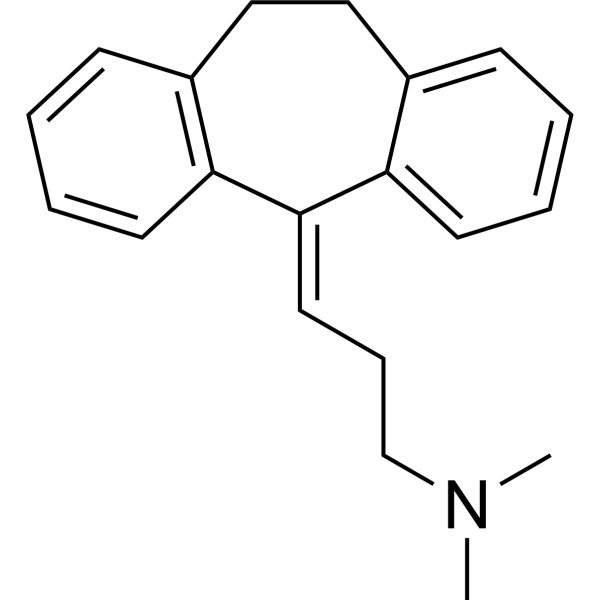
Amitriptyline is an orally active tricyclic antidepressant (TCA). Amitriptyline mainly exerts its antidepressant effect by blocking SERT (Ki = 3.45 nM) and NET (Ki = 13.3 nM), thereby increasing the concentrations of 5-hydroxytryptamine (5-HT) and norepinephrine (NE) in the synaptic cleft. Amitriptyline is also an agonist at α2A and TrkA/TrkB receptors, thereby exerting analgesic and neurotrophic activities (inhibiting cell apoptosis). Amitriptyline can reduce inflammation, angiogenesis and fibrosis. Amitriptyline binds to DAT (with Ki = 2.58 μM). Amitriptyline has high affinity for a series of receptors and can antagonize muscarinic cholinergic receptors (M1/M2/M3/M4/M5 receptors) (Ki = 11-24 nM), H1 receptors (Ki = 0.5-1.1 nM), adrenergic α1 receptors (Ki = 4.4 nM), etc., resulting in a series of side effects. Amitriptyline can block sodium channels and hERG potassium channel (IC50 = 4.78 μM) and it has cardiotoxicity .
|
-
- HY-B0527A
-
|
|
Serotonin Transporter
5-HT Receptor
mAChR
Histamine Receptor
Adrenergic Receptor
Trk Receptor
Sodium Channel
Potassium Channel
Dopamine Transporter
Apoptosis
|
Neurological Disease
Inflammation/Immunology
Endocrinology
|
|
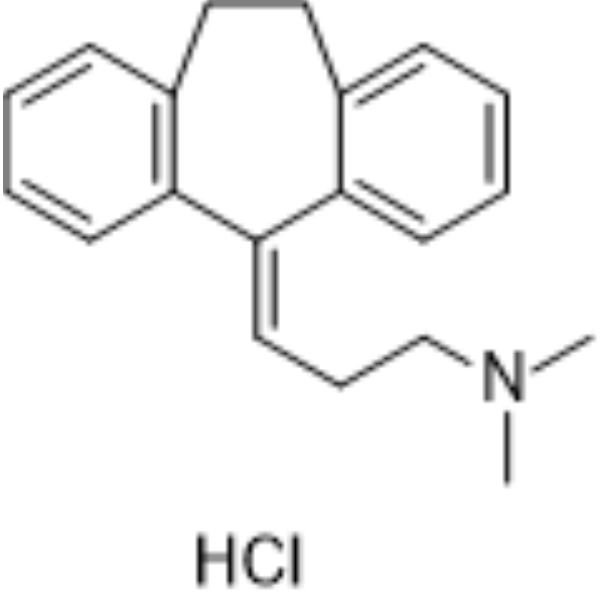
Amitriptyline hydrochloride is an orally active tricyclic antidepressant (TCA). Amitriptyline hydrochloride mainly exerts its antidepressant effect by blocking SERT (Ki = 3.45 nM) and NET (Ki = 13.3 nM), thereby increasing the concentrations of 5-hydroxytryptamine (5-HT) and norepinephrine (NE) in the synaptic cleft. Amitriptyline hydrochloride is also an agonist at α2A and TrkA/TrkB receptors, thereby exerting analgesic and neurotrophic activities (inhibiting cell apoptosis). Amitriptyline hydrochloride can reduce inflammation, angiogenesis and fibrosis. Amitriptyline hydrochloride binds to DAT (with Ki = 2.58 μM). Amitriptyline hydrochloride has high affinity for a series of receptors and can antagonize muscarinic cholinergic receptors (M1/M2/M3/M4/M5 receptors) (Ki = 11-24 nM), H1 receptors (Ki = 0.5-1.1 nM), adrenergic α1 receptors (Ki = 4.4 nM), etc., resulting in a series of side effects. Amitriptyline hydrochloride can block sodium channels and hERG potassium channel (IC50 = 4.78 μM) and it has cardiotoxicity .
|
-
- HY-B0527AS
-
|
|
Isotope-Labeled Compounds
Serotonin Transporter
5-HT Receptor
Histamine Receptor
mAChR
Adrenergic Receptor
Trk Receptor
Sodium Channel
Potassium Channel
Dopamine Transporter
Apoptosis
|
Neurological Disease
Inflammation/Immunology
Endocrinology
|
|
Amitriptyline-d6 hydrochloride is the deuterium labeled Amitriptyline hydrochloride (HY-B0527A). Amitriptyline hydrochloride is an orally active tricyclic antidepressant (TCA). Amitriptyline hydrochloride mainly exerts its antidepressant effect by blocking SERT (Ki = 3.45 nM) and NET (Ki = 13.3 nM), thereby increasing the concentrations of 5-hydroxytryptamine (5-HT) and norepinephrine (NE) in the synaptic cleft. Amitriptyline hydrochloride is also an agonist at α2A and TrkA/TrkB receptors, thereby exerting analgesic and neurotrophic activities (inhibiting cell apoptosis). Amitriptyline hydrochloride can reduce inflammation, angiogenesis and fibrosis. Amitriptyline hydrochloride binds to DAT (with Ki = 2.58 μM). Amitriptyline hydrochloride has high affinity for a series of receptors and can antagonize muscarinic cholinergic receptors (M1/M2/M3/M4/M5 receptors) (Ki = 11-24 nM), H1 receptors (Ki = 0.5-1.1 nM), adrenergic α1 receptors (Ki = 4.4 nM), etc., resulting in a series of side effects. Amitriptyline hydrochloride can block sodium channels and hERG potassium channel (IC50 = 4.78 μM) and it has cardiotoxicity.
|
-
- HY-B0527AR
-
|
|
Reference Standards
Serotonin Transporter
5-HT Receptor
Histamine Receptor
mAChR
Adrenergic Receptor
Trk Receptor
Sodium Channel
Potassium Channel
Dopamine Transporter
Apoptosis
|
Neurological Disease
Inflammation/Immunology
Endocrinology
|
|
Amitriptyline hydrochloride (Standard) is the analytical standard of Amitriptyline hydrochloride (HY-B0527A). This product is intended for research and analytical applications. Amitriptyline hydrochloride is an orally active tricyclic antidepressant (TCA). Amitriptyline hydrochloride mainly exerts its antidepressant effect by blocking SERT (Ki = 3.45 nM) and NET (Ki = 13.3 nM), thereby increasing the concentrations of 5-hydroxytryptamine (5-HT) and norepinephrine (NE) in the synaptic cleft. Amitriptyline hydrochloride is also an agonist at α2A and TrkA/TrkB receptors, thereby exerting analgesic and neurotrophic activities (inhibiting cell apoptosis). Amitriptyline hydrochloride can reduce inflammation, angiogenesis and fibrosis. Amitriptyline hydrochloride binds to DAT (with Ki = 2.58 μM). Amitriptyline hydrochloride has high affinity for a series of receptors and can antagonize muscarinic cholinergic receptors (M1/M2/M3/M4/M5 receptors) (Ki = 11-24 nM), H1 receptors (Ki = 0.5-1.1 nM), adrenergic α1 receptors (Ki = 4.4 nM), etc., resulting in a series of side effects. Amitriptyline hydrochloride can block sodium channels and hERG potassium channel (IC50 = 4.78 μM) and it has cardiotoxicity.
|
-
| Cat. No. |
Product Name |
Category |
Target |
Chemical Structure |
-
- HY-B0726
-
-
-
- HY-N2364
-
-
-
- HY-B0489
-
-
-
- HY-B1006
-
-
-
- HY-N5016
-
-
-
- HY-N4157
-
|
|
Uncaria rhynchophylla (Miq.) Miq. ex Havil.
Structural Classification
Iridoids
Terpenoids
Rubiaceae
Plants
Source Classification
|
mAChR
5-HT Receptor
Bacterial
|
|
Isopteropodine is a positive modulator that selectively acts on muscarinic M1 and 5-HT2 receptors. Isopteropodine has an EC50 of 9.92 μM for acetylcholine and 14.5 μM for 5-HT. Isopteropodine also has antibacterial activity against Gram-positive bacteria, with MICs of 150 μg/mL and 250 μg/mL for Staphylococcus aureus and Bacillus subtilis, respectively. Isopteropodine enhances receptor function by increasing the affinity of agonists for receptors and can also inhibit the growth of specific Gram-positive bacteria, and can be used in cognitive impairment and antibacterial research .
|
-
-
- HY-B0726R
-
-
-
- HY-B0489R
-
|
methyl 1,2,5,6-tetrahydro-1-methyl-3-pyridinecarboxylate hydrobromide (Standard)
|
Alkaloids
Structural Classification
Areca catechu L.
Other Alkaloids
Palmae
Plants
Source Classification
|
Reference Standards
mAChR
nAChR
|
|
Arecoline hydrobromide (Standard) is the analytical standard of Arecoline hydrobromide. This product is intended for research and analytical applications. Arecoline hydrobromide, a naturally brain-penetrant and orally active occurring psychoactive alkaloid, is a partial agonist of nicotinic and muscarinic acetylcholine receptor. Arecoline hydrobromide exhibits stimulation, alertness, anxiolysis and anti-parasitic effects. Arecoline hydrobromide also can induce oxidative stress .
|
-
-
- HY-B1006R
-
-
-
- HY-101078A
-
|
CMI 545 dihydrochloride
|
Alkaloids
Structural Classification
Animals
Pyridine Alkaloids
Source Classification
|
Dopamine Receptor
|
|
(±)-Epibatidine (CMI 545) dihydrochloride is an agonist of nicotinic with potent analgetic activity. (±)-Epibatidine (CMI 545) dihydrochloride is an alkaloid originally characterized from frog skin. (±)-Epibatidine (CMI 545) dihydrochloride have little or no activity at a variety of other central receptors, including opioid receptors, muscarinic receptors, adrenergic receptors, dopamine receptors, serotonin receptors, and gamma-aminobutyric acid receptors .
|
-
-
- HY-B0489A
-
-
-
- HY-N4157R
-
|
|
Uncaria rhynchophylla (Miq.) Miq. ex Havil.
Structural Classification
Iridoids
Terpenoids
Rubiaceae
Plants
Source Classification
|
Reference Standards
mAChR
5-HT Receptor
Bacterial
|
|
Isopteropodine (Standard) is the analytical standard of Isopteropodine (HY-N4157). This product is intended for research and analytical applications. Isopteropodine is a positive modulator that selectively acts on muscarinic M1 and 5-HT2 receptors. Isopteropodine has an EC50 of 9.92 μM for acetylcholine and 14.5 μM for 5-HT. Isopteropodine also has antibacterial activity against Gram-positive bacteria, with MICs of 150 μg/mL and 250 μg/mL for Staphylococcus aureus and Bacillus subtilis, respectively. Isopteropodine enhances receptor function by increasing the affinity of agonists for receptors and can also inhibit the growth of specific Gram-positive bacteria, and can be used in cognitive impairment and antibacterial research .
|
-
| Cat. No. |
Product Name |
Chemical Structure |
-
- HY-105182S1
-
|
|
|
Xanomeline-d3 (LY-246708-d3) is deuterium labeled Xanomeline. Xanomeline, as an effective and selective muscarinic type 1 and type 4 (M1/M4) receptor agonist, increases neuronal excitability. Xanomeline can be used for the research of neurological disorders, such as schizophrenia .
|
-
-
- HY-B0527AS
-
|
|
|
Amitriptyline-d6 hydrochloride is the deuterium labeled Amitriptyline hydrochloride (HY-B0527A). Amitriptyline hydrochloride is an orally active tricyclic antidepressant (TCA). Amitriptyline hydrochloride mainly exerts its antidepressant effect by blocking SERT (Ki = 3.45 nM) and NET (Ki = 13.3 nM), thereby increasing the concentrations of 5-hydroxytryptamine (5-HT) and norepinephrine (NE) in the synaptic cleft. Amitriptyline hydrochloride is also an agonist at α2A and TrkA/TrkB receptors, thereby exerting analgesic and neurotrophic activities (inhibiting cell apoptosis). Amitriptyline hydrochloride can reduce inflammation, angiogenesis and fibrosis. Amitriptyline hydrochloride binds to DAT (with Ki = 2.58 μM). Amitriptyline hydrochloride has high affinity for a series of receptors and can antagonize muscarinic cholinergic receptors (M1/M2/M3/M4/M5 receptors) (Ki = 11-24 nM), H1 receptors (Ki = 0.5-1.1 nM), adrenergic α1 receptors (Ki = 4.4 nM), etc., resulting in a series of side effects. Amitriptyline hydrochloride can block sodium channels and hERG potassium channel (IC50 = 4.78 μM) and it has cardiotoxicity.
|
-
-
- HY-B0726S
-
|
|
|
Pilocarpine-d3 (hydrochloride) is deuterium labeled Pilocarpine (Hydrochloride). Pilocarpine Hydrochloride is a potent M3-type muscarinic acetylcholine receptor (M3 muscarinic receptor) agonist.
|
-
-
- HY-B0726S1
-
|
|
|
Pilocarpine-d5 hydrochloride is deuterated labeled Pilocarpine hydrochloride (HY-B0726). Pilocarpine Hydrochloride is a potent M3-type muscarinic acetylcholine receptor (M3 muscarinic receptor) agonist.
|
-
-
- HY-W748582
-
|
|
|
Clozapine N-oxide-d8 is the deuterium labeled Clozapine N-oxide (HY-17366). Clozapine N-oxide is a major metabolite of Clozapine and a human muscarinic designer receptors (DREADDs) agonist. Clozapine N-oxide activates the DREADD receptor hM3Dq and hM4Di. Clozapine N-oxide can't cross the blood-brain barrier . Clozapine is a potent dopamine antagonist and also a potent and selective muscarinic M4 receptor (EC50=11 nM) agonist .
|
-
-
- HY-107654S
-
|
|
|
Muscarine-d9 (iodide) is the deuterium labeled Muscarine iodide. Muscarine ((+)-Muscarine) iodide is a toxin that can stimulate the parasympathetic nervous system. Muscarine iodide is a prototype muscarinic acetylcholine receptor agonist .
|
-
-
- HY-14539S3
-
|
|
|
Clozapine-d3 (HF 1854-d3) is deuterium labeled Clozapine. Clozapine (HF 1854) is an antipsychotic used for the research of schizophrenia. Clozapine has high affinity for a number of neuroreceptors. Clozapine is a potent antagonist of dopamine D2 with a Ki of 75 nM. Clozapine inhibits the muscarinic M1 receptor and serotonin 5HT2A receptor with Kis of 9.5 nM and 4 nM, respectively . Clozapine is also a potent and selective agonist at the muscarinic M4 receptor (EC50=11 nM) .
|
-
-
- HY-W739837
-
|
|
|
Arecoline-d5 hydrobromide is the deuterium labeled Arecoline hydrobromide (HY-B0489). Arecoline hydrobromide, a naturally occurring psychoactive alkaloid, is a partial agonist of nicotinic and muscarinic acetylcholine receptor. Arecoline hydrobromide exhibits stimulation, alertness, anxiolysis and anti-parasitic effects. Arecoline hydrobromide also can induce oxidative stress .
|
-
-
- HY-105182S
-
|
|
|
Xanomeline-d11 (LY-246708-d11) is the deuterium labeled Xanomeline (HY-105182). Xanomeline, as an effective and selective muscarinic type 1 and type 4 (M1/M4) receptor agonist, increases neuronal excitability. Xanomeline can be used for the research of neurological disorders, such as schizophrenia .
|
-
| Cat. No. |
Product Name |
|
Classification |
-
- HY-134061
-
|
|
|
Alkynes
|
|
Arecaidine propargyl ester hydrobromide is an agonist of M2 muscarinic acetylcholine receptors and has the activity of inhibiting tumor cell proliferation. The application of arecaidine propargyl ester hydrobromide has shown that it can reduce the number of ovarian cancer cells in vitro and induce apoptosis and the production of reactive oxygen species (ROS) at specific concentrations. Arecaidine propargyl ester hydrobromide can also arrest cells at the G2/M phase of the cell cycle and increase the percentage of abnormal mitosis. Arecaidine propargyl ester hydrobromide is more sensitizing to ovarian surface epithelial cells with higher M2 receptor levels than to cancer cells. Arecaidine propargyl ester hydrobromide exhibits the effect of lowering arterial blood pressure when interacting with the cardiovascular system in a natural physiological state, indicating its potential pharmacological application .
|
-
- HY-120329
-
|
|
|
Alkynes
|
|
Lu 26-046 is the agonist for muscarinic M1 receptor and M2 receptor and a weak antagonist for M3 receptor, with Ki of 0.51, 26 and 5 nM, respectively. Lu 26-046 exhibits specific stimulus property, that can be recognized by rats .
|
-
- HY-183853
-
|
|
|
Alkynes
|
|
Arecaidine-propargyl ester is a selective M2 muscarinic receptor agonist with blood-brain barrier permeability, with a pKi of 5.91 for hm1, 7.06 for hm2, 6.07 for hm3, 6.01 for hm4, and 6.03 for hm5. Arecaidine-propargyl ester stimulates central and peripheral muscarinic receptors. Arecaidine-propargyl ester increases intracellular ROS, induces DNA damage and Apoptosis, and upregulates the expression of MnSOD and SIRT1. Arecaidine-propargyl ester reduces sympathetic nerve outflow, induces dose-dependent hypotension, and triggers negative chronotropic effects at high peripheral doses. Arecaidine-propargyl ester can be used in research related to Alzheimer's disease and glioblastoma .
|
Your information is safe with us. * Required Fields.
Inquiry Information
- Product Name:
- Cat. No.:
- Quantity:
- MCE Japan Authorized Agent:

