



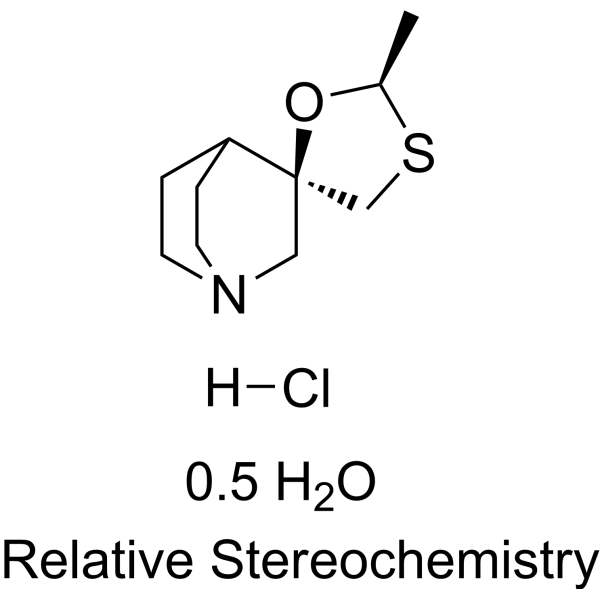
Cevimeline hydrochloride hemihydrate
Based on 2 publication(s) in Google Scholar
Cevimeline hydrochloride hemihydrate (SNI-2011) is a quinuclidine derivative of acetylcholine and a selective and orally active muscarinic M1 and M3 receptor agonist. Cevimeline hydrochloride hemihydrate stimulates secretion by the salivary glands and can be used as a sialogogue for xerostomia. Cevimeline hydrochloride hemihydrate can cross the blood-brain barrier (BBB).
For research use only. We do not sell to patients.
- Purity : 99.52%
- CAS No.: 153504-70-2
- Formula: C10H17NOS.HCl.1/2H2O
- Molecular Weight:244.78
-
Storage:
4°C, sealed storage, away from moisture
* In solvent : -80°C, 6 months; -20°C, 1 month (sealed storage, away from moisture)

To place orders, for customer services and technical support, please contact: MedChemExpress USA
Tel: 609-228-6898 E-mail: [email protected] [email protected]


-
 Biological Activity
-
Chemical Information
-
Solvent & Solubility
- Purity & Documentation
- References
-
 Help & FAQs


-
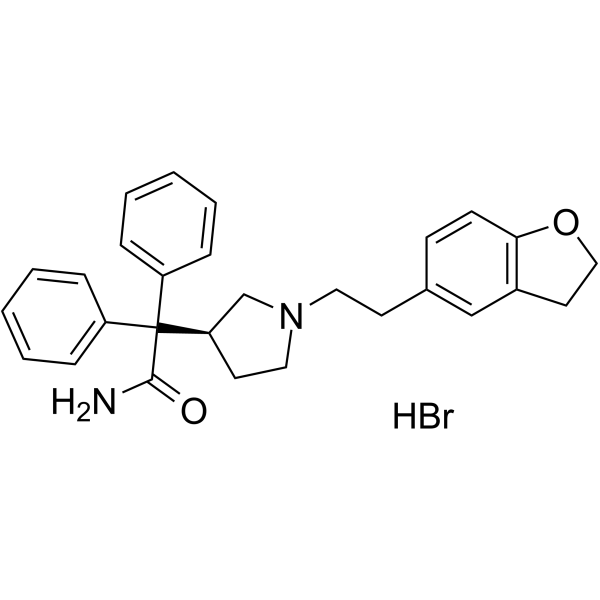
HY-A0012
Darifenacin hydrobromideM3 Muscarinic Receptor Antagonist -
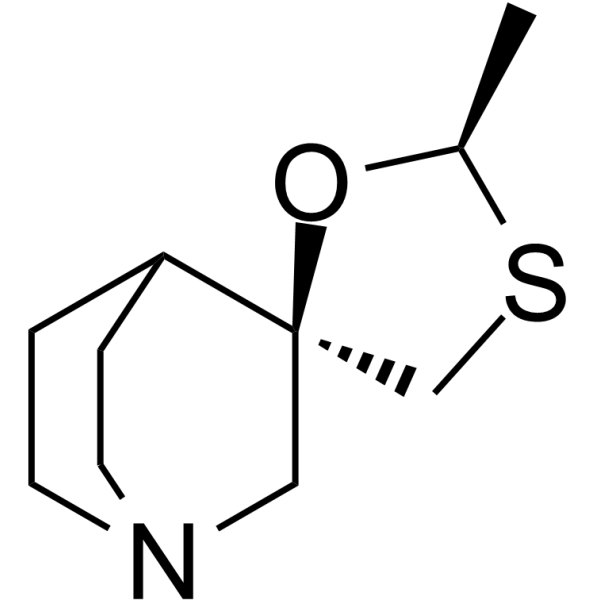
HY-70020
CevimelineMuscarinic M1/M3 Receptor Agonist -
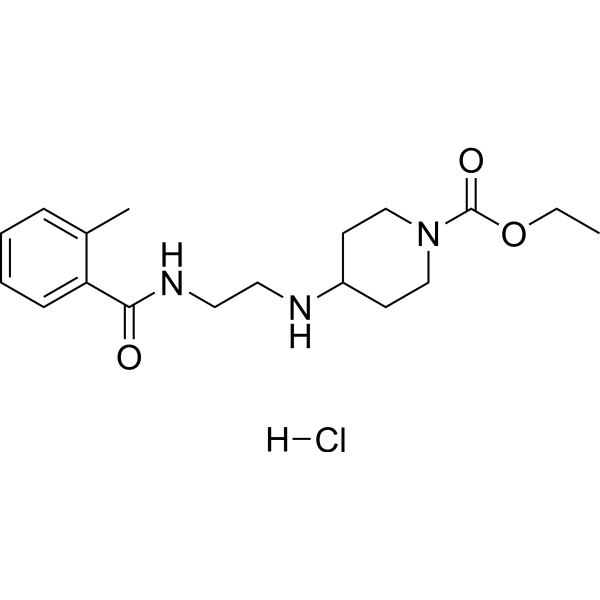
HY-19752A
VU0357017 hydrochlorideM1 Agonist -
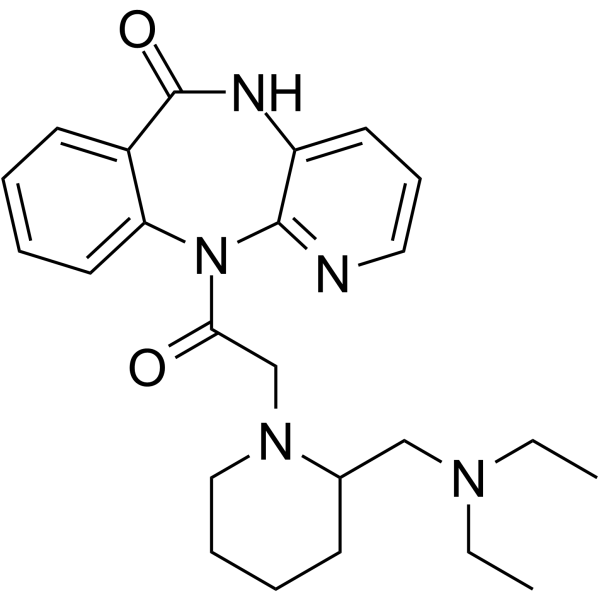
HY-101381
OtenzepadmAChR Antagonist -

HY-76772R
Cevimeline hydrochloride hemihydrate (Standard)Muscarinic M1/M3 Receptor Agonist -
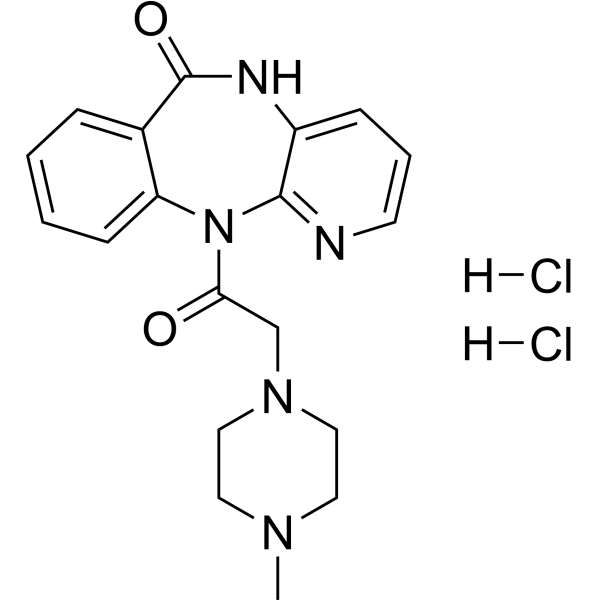
HY-17037
Pirenzepine dihydrochlorideM1 mAChR Antagonist -
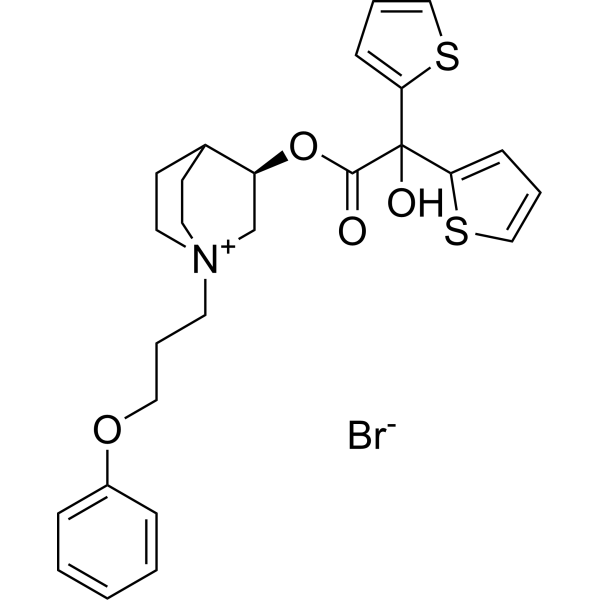
HY-14144
Aclidinium BromidemAChR Antagonist -
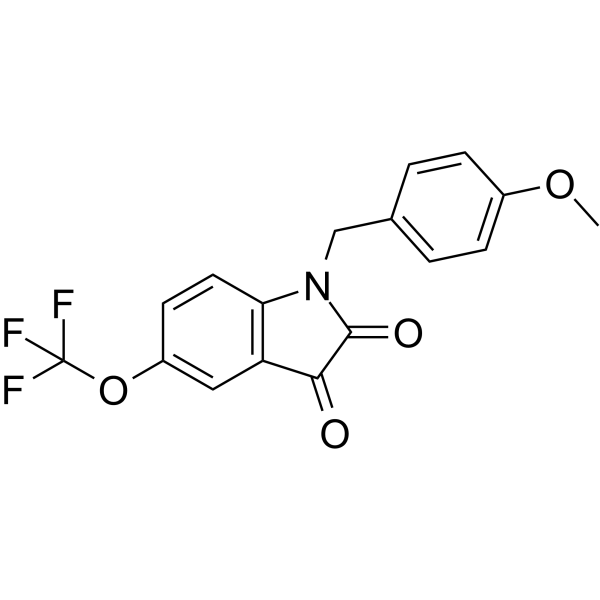
HY-12157
VU 0238429M5 Positive Allosteric Modulator -
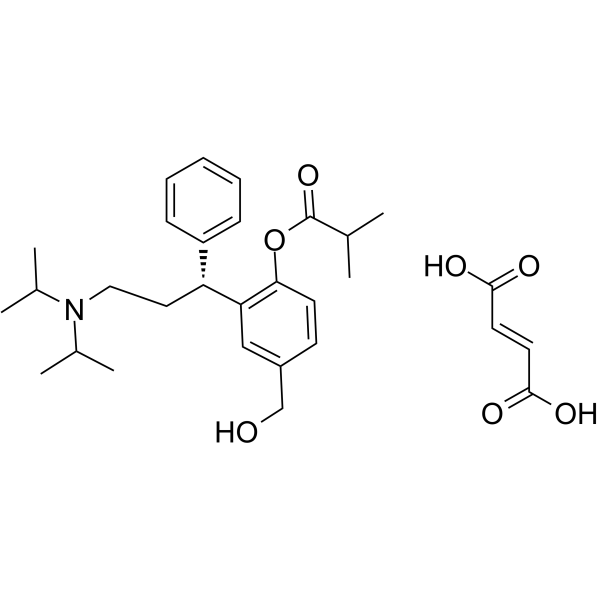
HY-A0030
Fesoterodine fumaratemAChR Antagonist -
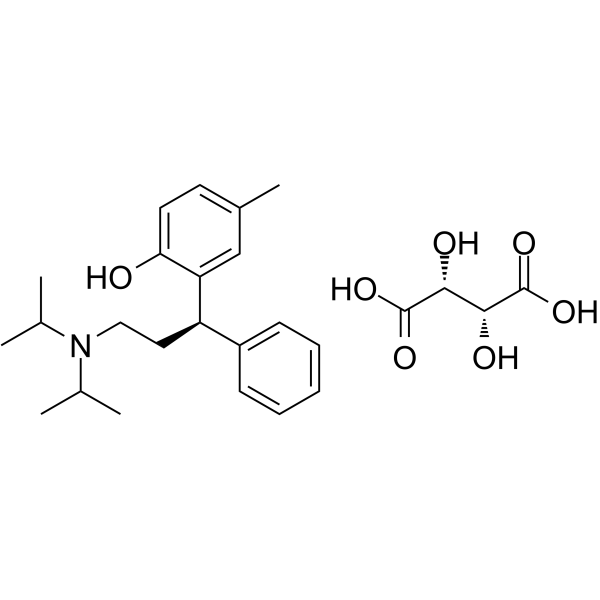
HY-90010
Tolterodine tartratemAChR Inhibitor -
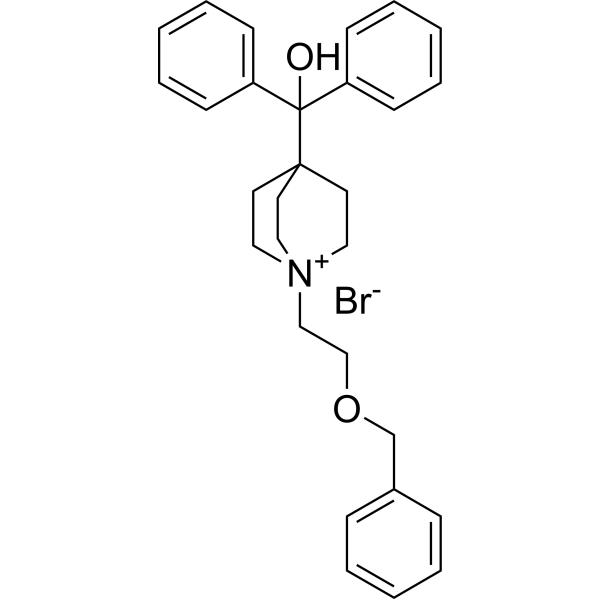
HY-12100
Umeclidinium bromidemAChR Antagonist -
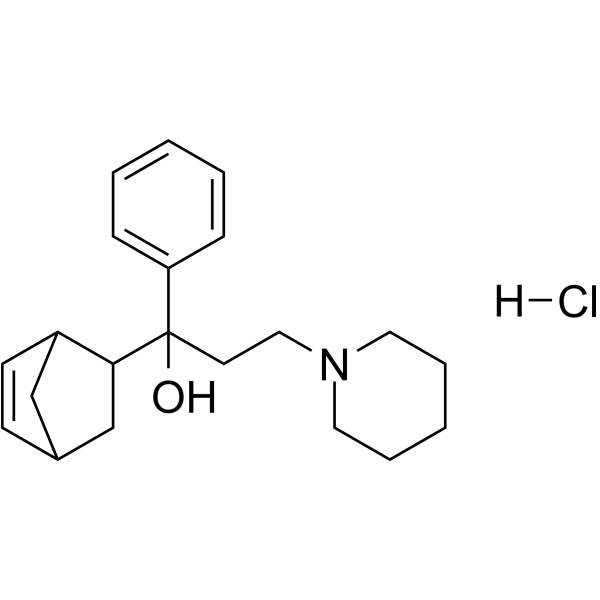
HY-13204
Biperiden hydrochlorideMuscarinic Receptor Antagonist
Publications Citing Use of MedChemExpress (MCE) Cevimeline hydrochloride hemihydrate
More

Biological Activity
Description
IC50 & Target
|
mAChR1 |
mAChR3 |
In Vitro
In Vivo
MedChemExpress (MCE) has not independently confirmed the accuracy of these methods. They are for reference only.
-
Animal Model:Male Wistar rats (8-week-old) injected with angiotensin-II[1]
-
Dosage:0.008 mg/kg, 0.016 mg/kg
-
Administration:Intraperitoneal injection
-
Result:Showed slowly increasing and lasting salivation, and increased blood flow increment in the parotid gland and pressor response.
Clinical Trial
| NCT Number | Sponsor | Condition | Start Date |
Phase

|
|---|---|---|---|---|
| NCT01329991 | Plexxikon| | 2011-05 | PHASE1 |


Chemical Information
-
CAS No. 153504-70-2
-
Appearance Solid
-
Molecular Weight 244.78
-
Formula C10H17NOS.HCl.1/2H2O
-
Color White to off-white
-
SMILES
C[C@H]1SC[C@@]2(CN3CCC2CC3)O1.[H]Cl.[H]O[H]
-
Synonyms
SNI-2011; AF102B hydrochloride hemihydrate
-
Shipping
Room temperature in continental US; may vary elsewhere.
-
Storage
4°C, sealed storage, away from moisture
* In solvent : -80°C, 6 months; -20°C, 1 month (sealed storage, away from moisture)


Publications (2)
-
Journal Impact Factor
-
Most Recent
-
Cancer Cell
2025 Nov 10;43(11):2089-2105.e10. PMID: 40829591 -
Cell Rep
Circuit-selective pharmacological targeting of prefrontal cortex-projecting locus coeruleus neurons drives antinociception. [Abstract]2025 Oct 28;44(10):116294. PMID: 40971298


Solvent & Solubility
In Vitro:
DMSO : 100 mg/mL (408.53 mM; Need ultrasonic; Hygroscopic DMSO has a significant impact on the solubility of product, please use newly opened DMSO)
H2O : ≥ 50 mg/mL (204.27 mM)
* "≥" means soluble, but saturation unknown.
Please refer to the solubility information to select the appropriate solvent. Once prepared, please aliquot and store the solution to prevent product inactivation from repeated freeze-thaw cycles.
Storage method and period of stock solution: -80°C, 6 months; -20°C, 1 month (sealed storage, away from moisture). When stored at -80°C, please use it within 6 months. When stored at -20°C, please use it within 1 month.
* Note: If you choose water as the stock solution, please dilute it to the working solution, then filter and sterilize it with a 0.22 μm filter before use.
Please refer to the solubility information to select the appropriate solvent. Once prepared, please aliquot and store the solution to prevent product inactivation from repeated freeze-thaw cycles.
Storage method and period of stock solution: -80°C, 6 months; -20°C, 1 month (sealed storage, away from moisture). When stored at -80°C, please use it within 6 months. When stored at -20°C, please use it within 1 month.
* Note: If you choose water as the stock solution, please dilute it to the working solution, then filter and sterilize it with a 0.22 μm filter before use.
Concentration (start) × Volume (start) = Concentration (final) × Volume (final)
In Vivo:
Select the appropriate dissolution method based on your experimental animal and administration route.
- For the following dissolution methods, please ensure to first prepare a clear stock solution using an In Vitro approach and then sequentially add co-solvents:
- To ensure reliable experimental results, the clarified stock solution can be appropriately stored based on storage conditions. As for the working solution for In Vivo experiments, it is recommended to prepare freshly and use it on the same day.
- The percentages shown for the solvents indicate their volumetric ratio in the final prepared solution. If precipitation or phase separation occurs during preparation, heat and/or sonication can be used to aid dissolution.
Add each solvent one by one: 10% DMSO 40% PEG300 5% Tween-80 45% Saline
Solubility: ≥ 2.5 mg/mL (10.21 mM); Clear solution
This protocol yields a clear solution of ≥ 2.5 mg/mL (saturation unknown).
Taking 1 mL working solution as an example, add 100 μL DMSO stock solution (25.0 mg/mL) to 400 μL PEG300, and mix evenly; then add 50 μL Tween-80 and mix evenly; then add 450 μL Saline to adjust the volume to 1 mL.
Preparation of Saline: Dissolve 0.9 g sodium chloride in ddH₂O and dilute to 100 mL to obtain a clear Saline solution.
Add each solvent one by one: 10% DMSO 90% (20% SBE-β-CD in Saline)
Solubility: ≥ 2.5 mg/mL (10.21 mM); Clear solution
This protocol yields a clear solution of ≥ 2.5 mg/mL (saturation unknown).
Taking 1 mL working solution as an example, add 100 μL DMSO stock solution (25.0 mg/mL) to 900 μL 20% SBE-β-CD in Saline, and mix evenly.
Preparation of 20% SBE-β-CD in Saline (4°C, storage for one week): 2 g SBE-β-CD powder is dissolved in 10 mL Saline, completely dissolve until clear.
For the following dissolution methods, please prepare the working solution directly:
It is recommended to prepare fresh solutions and use them promptly within a short period of time.
The percentages shown for the solvents indicate their volumetric ratio in the final prepared solution. If precipitation or phase separation occurs during preparation, heat and/or sonication can be used to aid dissolution.
Add each solvent one by one: PBS
Solubility: 100 mg/mL (408.53 mM); Clear solution; Need ultrasonic
In Vivo Dissolution Calculator
Please enter the basic information of animal experiments:
-
-
-
-
Recommended: Prepare an additional quantity of animals to account for potential losses during experiments.
Working solution concentration: 0.22 mg/mL
This product has good water solubility, please refer to the measured solubility data in water/PBS/Saline for details.


Purity & Documentation
-
Data Sheet (282 KB)
-
SDS (479 KB)
- English - EN (479 KB)
- Français - FR (479 KB)
- Deutsch - DE (479 KB)
- Norwegian - NO (479 KB)
- Español - ES (479 KB)
- Swedish - SV (479 KB)
- Italian - IT (479 KB)
- Korean - KR (479 KB)
- Portuguese - PT (479 KB)
-
Handling Instructions (2659 KB)
References
[1]. Ono K, et al. Distinct effects of cevimeline and pilocarpine on salivary mechanisms, cardiovascular response and thirst sensation in rats.Arch Oral Biol. 2012 Apr;57(4):421-8. Epub 2011 Nov 17. [Content Brief]
[2]. Witsell DL, et al. Effectiveness of cevimeline to improve oral health in patients with postradiation xerostomia.Head Neck. 2012 Aug;34(8):1136-42. doi: 10.1002/hed.21894. Epub 2012 Jan 9. [Content Brief]
[3]. Kondo Y, et al.Cevimeline-induced monophasic salivation from the mouse submandibular gland: decreased Na+ content in saliva results from specific and early activation of Na+/H+ exchange.J Pharmacol Exp Ther. 2011 Apr;337(1):267-74. Epub 2011 Jan 14. [Content Brief]
[4]. Voskoboynik B, et al.Cevimeline (Evoxac) overdose.J Med Toxicol. 2011 Mar;7(1):57-9. [Content Brief]
[5]. Mitoh Y, et al. Effects of cevimeline on excitability of parasympathetic preganglionic neurons in the superior salivatory nucleus of rats. Auton Neurosci. 2017 Sep;206:1-7. [Content Brief]


Complete Stock Solution Preparation Table
Please refer to the solubility information to select the appropriate solvent. Once prepared, please aliquot and store the solution to prevent product inactivation from repeated freeze-thaw cycles.
Storage method and period of stock solution: -80°C, 6 months; -20°C, 1 month (sealed storage, away from moisture). When stored at -80°C, please use it within 6 months. When stored at -20°C, please use it within 1 month.
| Optional Solvent | Concentration Solvent Mass | 1 mg | 5 mg | 10 mg | 25 mg |
|---|---|---|---|---|---|
| H2O / DMSO | 1 mM | 4.0853 mL | 20.4265 mL | 40.8530 mL | 102.1325 mL |
| 5 mM | 0.8171 mL | 4.0853 mL | 8.1706 mL | 20.4265 mL | |
| 10 mM | 0.4085 mL | 2.0427 mL | 4.0853 mL | 10.2133 mL | |
| 15 mM | 0.2724 mL | 1.3618 mL | 2.7235 mL | 6.8088 mL | |
| 20 mM | 0.2043 mL | 1.0213 mL | 2.0427 mL | 5.1066 mL | |
| 25 mM | 0.1634 mL | 0.8171 mL | 1.6341 mL | 4.0853 mL | |
| 30 mM | 0.1362 mL | 0.6809 mL | 1.3618 mL | 3.4044 mL | |
| 40 mM | 0.1021 mL | 0.5107 mL | 1.0213 mL | 2.5533 mL | |
| 50 mM | 0.0817 mL | 0.4085 mL | 0.8171 mL | 2.0427 mL | |
| 60 mM | 0.0681 mL | 0.3404 mL | 0.6809 mL | 1.7022 mL | |
| 80 mM | 0.0511 mL | 0.2553 mL | 0.5107 mL | 1.2767 mL | |
| 100 mM | 0.0409 mL | 0.2043 mL | 0.4085 mL | 1.0213 mL |
* Note: If you choose water as the stock solution, please dilute it to the working solution, then filter and sterilize it with a 0.22 μm filter before use.


Cevimeline hydrochloride hemihydrate Related Classifications
HY-76772 Related Classifications
 Powered by Bioz