Search Result
Results for "
PEG lipid
" in MedChemExpress (MCE) Product Catalog:
219
Biochemical Assay Reagents
| Cat. No. |
Product Name |
Target |
Research Areas |
Chemical Structure |
-
- HY-167036
-
|
|
Biochemical Assay Reagents
|
Others
|
|
DMG-PEG2000-Mal is a pegylated lipid with a molecular weight of 2000. DMG-PEG-Mal serves as a component of lipid nanoparticles for mRNA delivery .
|
-

-
- HY-144006
-
|
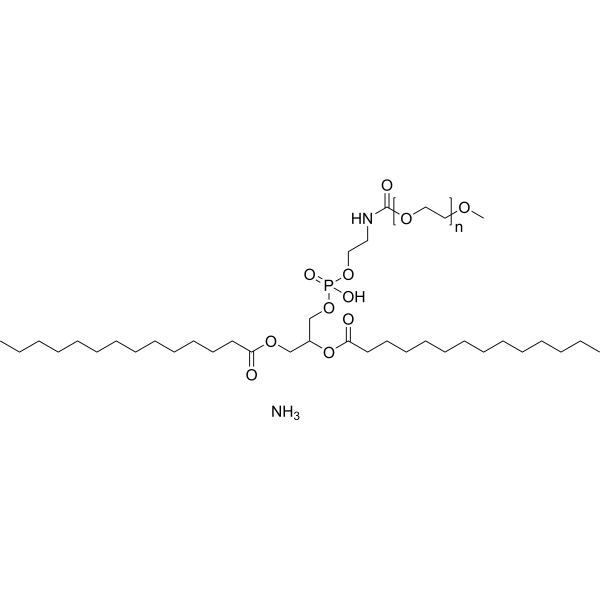
14:0 PEG2000 PE ammonium; 1,2-Dimyristoyl-sn-glycero-3-phosphoethanolamine-N-[methoxy(polyethylene glycol)-2000] ammonium
|
Liposome
|
Others
|
|
DMPE-PEG2000 ammonium (14:0 PEG2000 PE ammonium) is a PEG-phospholipid conjugate to prepare nanostructured lipid carrier .
|
-
-
- HY-141892A
-
|
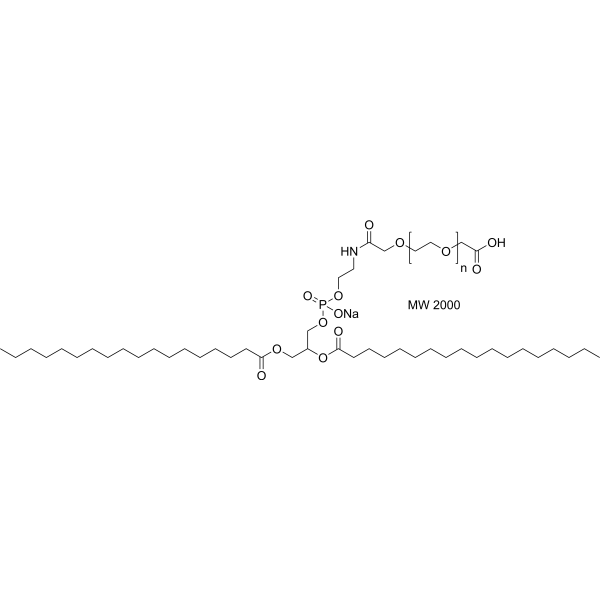
DSPE PEG2000(2000) Carboxylic Acid sodium
|
Liposome
|
Others
|
|
DSPE-PEG2000 Carboxylic acid sodium is a PEG-lipid that can be used in the preparation of drug delivery nanoparticles .
|
-
-
- HY-168399
-
|
|
Liposome
|
Cancer
|
|
PEG(2000)-C-DMG is a PEGylated derivative of 1,2-Dimyristoyl-sn-glycerol (HY-128468). PEG(2000)-C-DMG can be used in combination with other lipids in the formation of lipid nanoparticles (LNPs) for the delivery of siRNA .
|
-

-
- HY-N16040
-
|
|
Liposome
|
Others
|
|
DMG-pSar25 is a double lipid-tailed polysarcosine lipid with 25 sarcosine moieties, serving as a PEG lipid substitute in lipid nanoparticle formulations for mRNA delivery. DMG-pSar25 supports mRNA delivery in lipid nanoparticle formulations .
|
-

-
- HY-N15956
-
|
|
Liposome
|
Others
|
|
DMG-PEG(2k)-DBCO is a Clickable PEG lipid containing a DBCO group. DSPE-PEG8-DBCO can be used to prepare lipid nanoparticles for drug delivery.
|
-

-
- HY-144012A
-
|
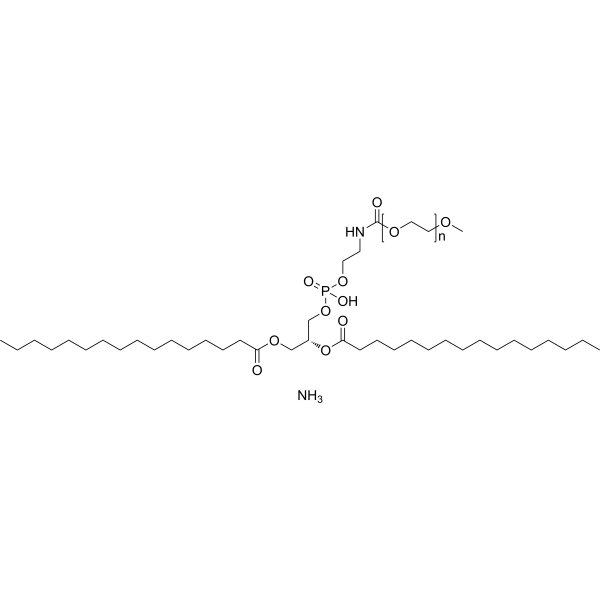
16:0 PEG350 PE; 1,2-Dipalmitoyl-sn-glycero-3-phosphoethanolamine-N-[methoxy(polyethylene glycol)-350] ammonium
|
Liposome
CD1
|
Others
|
|
DPPE-PEG350 is a CD1d-dependent lipid antagonist thus blocking the ERK phosphorylation pathway in iNKT cells . DPPE-PEG350 is a PEG lipid functional end group used in the synthesis of liposomes (LPs) for the design of conjugated polymer nanoparticles.
|
-
-
- HY-154927
-
|
|
Liposome
|
Cancer
|
|
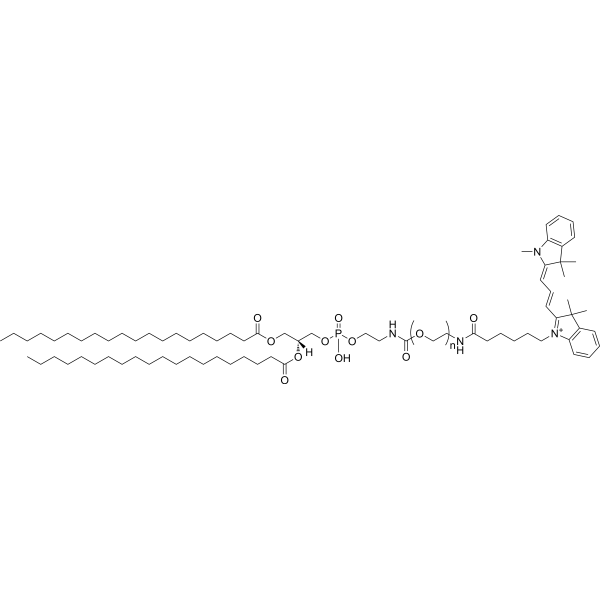
DSPE-PEG-Cy5 is a fluorescent lipophilic PEG lipid. DSPE-PEG-Cy5 can insert into cell membranes and localize uniformly on them. DSPE-PEG-Cy5 can serve as a fluorescent model molecule to optimize and validate membrane insertion conditions for cell surface functionalization. DSPE-PEG-Cy5 can be used in research on drug delivery, cancer, and other fields .
|
-

-
- HY-W440821
-
-

-
- HY-W440908
-
|
|
Liposome
|
Others
|
|
DSPE-PEG2000-Cy3 is a PEG lipid conjugated with a fluorophore. The Cy3 fluorophore is commonly used in applications such as immunolabeling, nucleic acid labeling, fluorescence microscopy and flow cytometry. The absorption wavelength of the Cy3 fluorophore peaks at 548-552 nm, while its emission wavelength reaches a maximum at 562-570 nm. DSPE-PEG2000-Cy3 can be used in research areas such as the preparation of nanoparticles and drug delivery .
|
-
-
- HY-W440894
-
|
|
Biochemical Assay Reagents
|
Others
|
|
DSPE-PEG5000-DBCO sodium is a PEG lipid that can improve the delivery efficiency and tissue specificity of poorly soluble drugs. DSPE-PEG5000-DBCO sodium can be used in drug delivery research .
|
-

-
- HY-167028
-
|
|
Biochemical Assay Reagents
|
Others
|
|
DSPE-PEG2000-alkyne is a PEG lipid that can improve the delivery efficiency and tissue specificity of poorly soluble drugs. DSPE-PEG2000-alkyne can be used in drug delivery research .
|
-

-
- HY-W440881
-
|
|
Biochemical Assay Reagents
|
Others
|
|
DSPE-PEG3400-DBCO sodium is a PEG lipid that can improve the delivery efficiency and tissue specificity of poorly soluble drugs. DSPE-PEG3400-DBCO sodium can be used in drug delivery research .
|
-

-
- HY-W440823B
-
|
|
Liposome
|
Cancer
|
|
DSPE-PEG2000-amine sodium is a pegylated derivative of 1,2-Distearoyl-sn-glycero-3-phosphorylethanolamine (HY-112530), which can be used to synthesize solid lipid and thermosensitive liposomal nanoparticles for the delivery of anticancer agents .
|
-

-
- HY-167064
-
|
DSPE-Polysarcosine50
|
Biochemical Assay Reagents
|
Others
|
|
DSPE-pSar50 (DSPE-Polysarcosine50) is a pSar-lipid derivative. DSPE-pSar50 is a hydrophilic alternative to PEG and can be used in drug delivery research .
|
-

-
- HY-167065
-
|
DSPE-Polysarcosine20
|
Biochemical Assay Reagents
|
Others
|
|
DSPE-pSar20 (DSPE-Polysarcosine20) is a pSar-lipid derivative. DSPE-pSar20 is a hydrophilic alternative to PEG and can be used in drug delivery research .
|
-

-
- HY-164035
-
|
|
Biochemical Assay Reagents
|
Others
|
|
DOPE-PEG2000-DBCO is a PEG lipid with a DOPE and a DBCO as functional groups. DOPE can be used as a helper lipid in gene transfection. PEG is used in drug delivery system. DBCO can be used for click chemistry .
|
-

-
- HY-160278
-
|
|
Fluorescent Dye
|
Others
|
|
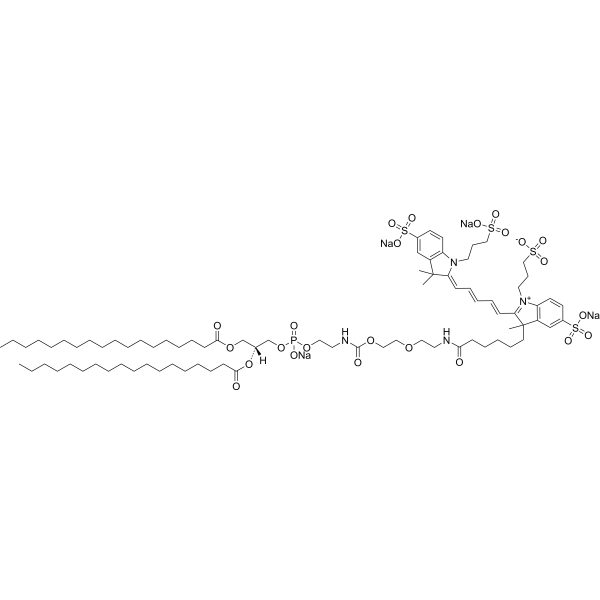
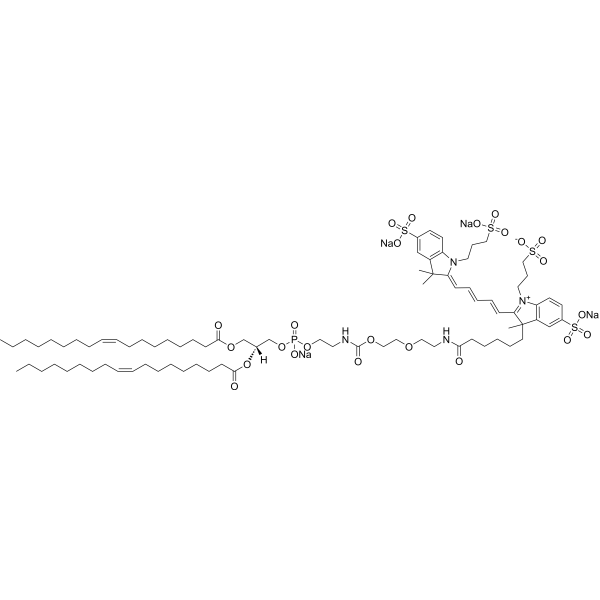
DSPE-PEG2000-Fluor 647 is a fluorescent lipid (Ex/Em=648/671 nm) composed of PEG-lipid-dye conjugation. DSPE is a phospholipid. Fluor 647 is a fluorescent dye. DSPE-PEG2000-Fluor 647 can be used to prepare nanoparticles or liposomes with fluorescent signals.
|
-
-
- HY-166968
-
|
|
Biochemical Assay Reagents
|
Others
|
|
DSPE-PEG5000-COOH is a PEG lipid that can improve the delivery efficiency and tissue specificity of poorly soluble drugs. DSPE-PEG5000-COOH can be used in drug delivery research .
|
-

-
- HY-166983
-
|
|
Biochemical Assay Reagents
|
Others
|
|
m-PEG5000-DMG is a PEG lipid that can improve the delivery efficiency and tissue specificity of poorly soluble drugs. m-PEG5000-DMG can be used in drug delivery research .
|
-

-
- HY-166979
-
|
|
Biochemical Assay Reagents
|
Others
|
|
Stearic acid-mPEG2000 is a PEG lipid that can improve the delivery efficiency and tissue specificity of poorly soluble drugs. Stearic acid-mPEG2000 can be used in drug delivery research .
|
-

-
- HY-N15971
-
|
|
Liposome
|
Others
|
|
DSPE-PEG(2000) Succinyl ammonium is functionalized PEG lipid that can be used to synthesize lipid nanoparticles for drug delivery.
|
-

-
- HY-N16321
-
|
|
Biochemical Assay Reagents
|
Others
|
|
C18:0 DG-PEG2K-triGalNAc is a functionalized PEG lipid that consists of a C18:0 DG unit conjugated to a triGalNAc. C18:0 DG-PEG2K-triGalNAc can be used to prepare lipid nanoparticles for drug delivery.
|
-

-
- HY-W440895
-
|
|
Biochemical Assay Reagents
|
Others
|
|
DSPE-PEG1000-SH is an amphiphilic poly-PEG that can form lipid bilayers in water. This amphiphilic polymer can form lipid bilayers in aqueous solution and can be used to embed active molecules for drug delivery systems such as mRNA vaccines.
|
-

-
- HY-W440925
-
|
|
Biochemical Assay Reagents
|
Others
|
|
m-PEG5000-DSPE sodium is a PEG lipid that can improve the delivery efficiency and tissue specificity of poorly soluble drugs. m-PEG5000-DSPE sodium can be used in drug delivery research .
|
-

-
- HY-166874
-
|
|
Biochemical Assay Reagents
|
Others
|
|
DSPE-PEG2000-endo-BCN is a PEG lipid that can improve the delivery efficiency and tissue specificity of poorly soluble drugs. DSPE-PEG2000-endo-BCN can be used in drug delivery research .
|
-

-
- HY-167067
-
|
DSPE-Polysarcosine100
|
Biochemical Assay Reagents
|
Others
|
|
DSPE-pSar100 (DSPE-Polysarcosine100) is a pSar-lipid derivative. DSPE-pSar100 is a hydrophilic alternative to PEG and can be used in drug delivery research .
|
-

-
- HY-W1049124A
-
|
|
Liposome
|
Cancer
|
|
PEG5000-C-DMG is a PEGylated derivative of 1,2-Dimyristoyl-sn-glycerol (HY-128468). PEG5000-C-DMG can be combined with other lipids to form lipid nanoparticles (LNPs) for the delivery of siRNA .
|
-

-
- HY-N16289
-
|
|
Biochemical Assay Reagents
|
Others
|
|
DSPE-PEG8 Maleimide sodium is a PEG lipid containing DSPE, a polyethylene glycol chain consisting of eight ethylene glycol units (PEG8), and a maleimide group (Mal). DSPE-PEG8 Maleimide sodium can be used to prepare lipid nanoparticles for drug delivery .
|
-

-
- HY-160280
-
-
-
- HY-155934
-
|
DOPE-PEG5000 ammonium; 1,2-Dioleoyl-sn-glycero-3-phosphoethanolamine-N-[methoxy(polyethylene glycol)-5000] ammonium
|
Liposome
|
Others
|
|
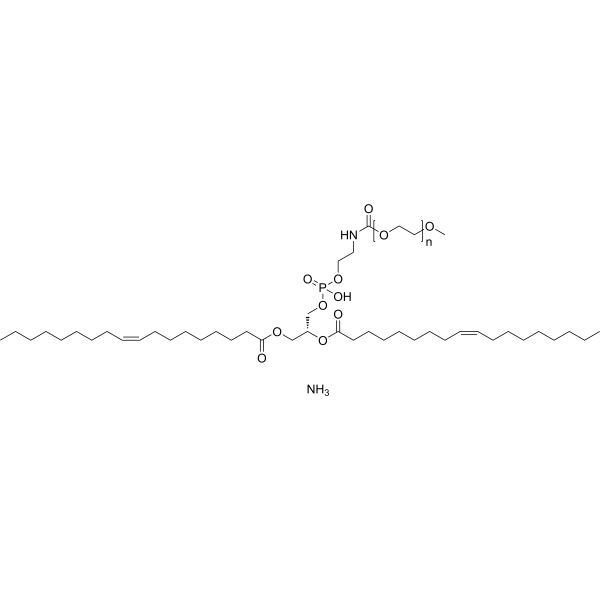
18:1 PEG5000 PE ammonium (DOPE-PEG5000 ammonium) is a PEG lipid functional end group used in the synthesis of liposomes (LPs) for the design of conjugated polymer nanoparticles. Through biotin modification and carboxyl terminus, lipid nanoparticles (LNPs) further coupling with other biomolecules can be achieved. Functionalized nanoparticles can be used for targeted labeling of specific cellular proteins. With streptavidin as a linker, biotinylated PEG lipid-conjugated polymer nanoparticles are able to bind to biotinylated antibodies on cell surface receptors, yielding the utility of fluorescence-based imaging and sensing.
|
-
-
- HY-155926
-
|
14:0 PEG750 PE ammonium; 1,2-Dimyristoyl-sn-glycero-3-phosphoethanolamine-N-[methoxy(polyethylene glycol)-750] ammonium
|
Liposome
|
Others
|
|
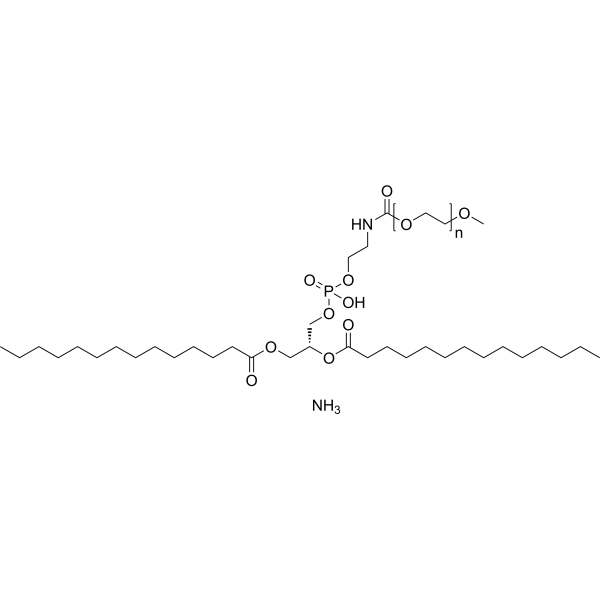
DMPE-PEG750 ammonium (14:0 PEG750 PE ammonium) is a PEG lipid functional end group used in the synthesis of liposomes (LPs) for the design of conjugated polymeric nanoparticles. Through biotin modification and carboxyl terminus, lipid nanoparticles (LNPs) further coupling with other biomolecules can be achieved. Functionalized nanoparticles can be used for targeted labeling of specific cellular proteins. With streptavidin as a linker, biotinylated PEG lipid-conjugated polymer nanoparticles are able to bind to biotinylated antibodies on cell surface receptors, yielding the utility of fluorescence-based imaging and sensing.
|
-
-
- HY-144005B
-
|
C16 PEG Ceramide (MW 5000)
|
Biochemical Assay Reagents
Liposome
|
Others
|
|
C16 PEG5000 Ceramide (C16 PEG Ceramide (MW 5000)) is a PEG lipid for the preparation of liposomes and can be used in drug delivery studies .
|
-

-
- HY-144005A
-
|
C16 PEG Ceramide (MW 750)
|
Biochemical Assay Reagents
Liposome
|
Others
|
|
C16 PEG750 Ceramide (C16 PEG Ceramide (MW 750)) is a PEG lipid for the preparation of liposomes and can be used in drug delivery studies .
|
-

-
- HY-166871
-
|
|
Biochemical Assay Reagents
|
Others
|
|
DSPE-PEG5000-endo-BCN is a PEG lipid that can improve the delivery efficiency and tissue specificity of poorly soluble drugs. DSPE-PEG5000-endo-BCN can be used in drug delivery research .
|
-

-
- HY-167063
-
|
Azide-Polysarcosine20
|
Biochemical Assay Reagents
|
Others
|
|
Azide-pSar20 (Azide-Polysarcosine20) is a pSar-lipid derivative. Azide-pSar20 is a hydrophilic alternative to PEG and can be used in drug delivery research .
|
-

-
- HY-112756
-
|
|
Liposome
|
Others
|
|
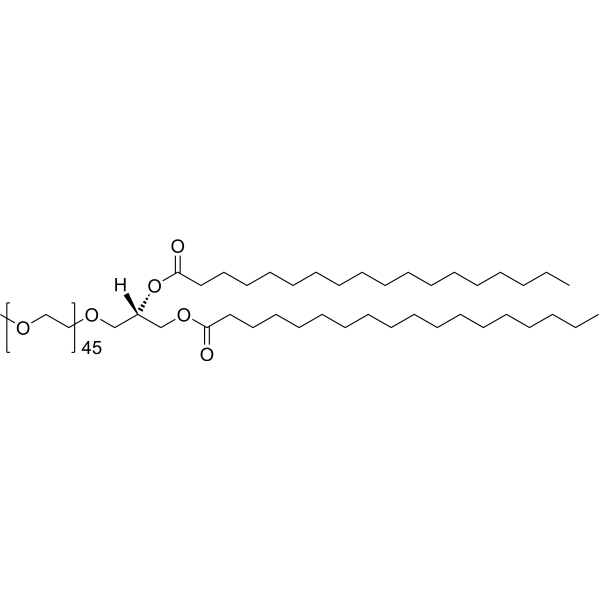
PEG2000-DGG is a synthetic lipid. PEG2000-DGG can be used in lipid-based nanoparticle (LNP) delivery systems .
|
-
-
- HY-N15837
-
|
|
Biochemical Assay Reagents
|
Others
|
|
DSPE-PEG(2000)-N-Triphenylphosphonium is functionalized PEG lipid that can be used to synthesize lipid nanoparticles for drug delivery.
|
-

-
- HY-144008
-
|
|
Liposome
|
Others
|
|
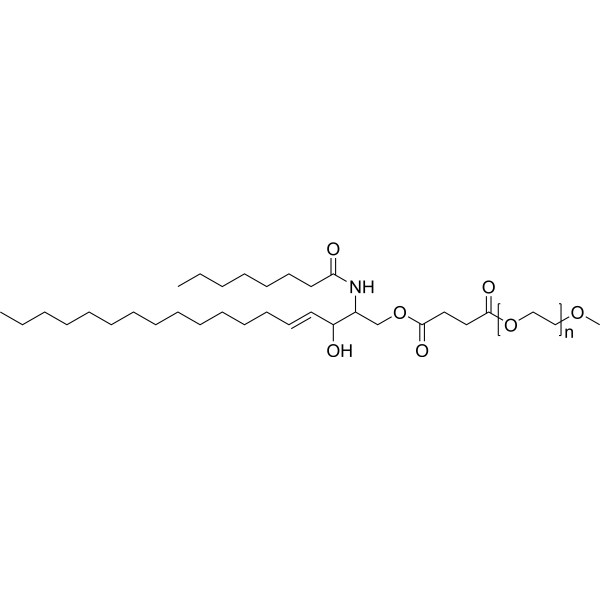
C8 PEG-Ceramide is a lipid product. C8 PEG-Ceramide can synthesize lipid bilayer carrier and can be used for drug delivery .
|
-
-
- HY-N15908
-
-

-
- HY-160279
-
|
|
Fluorescent Dye
|
Others
|
|
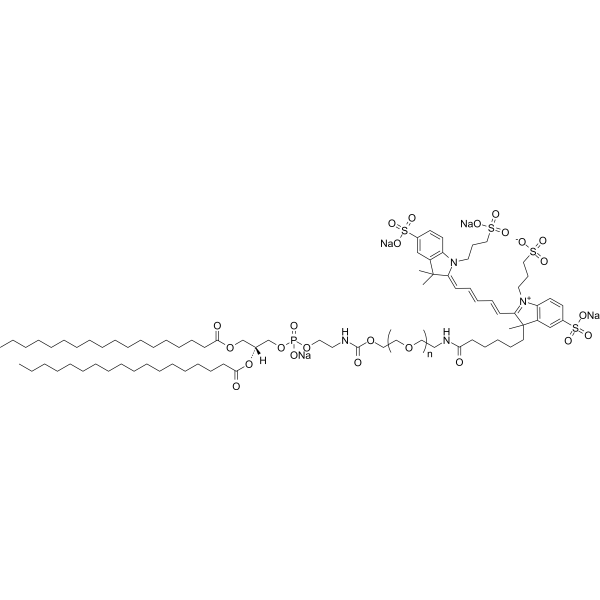
DSPE-PEG5000-Fluor 647 is a fluorescent lipid (Ex/Em=648/671 nm) composed of PEG-lipid-dye conjugation. DSPE is a phospholipid. Fluor 647 is a fluorescent dye. DSPE-PEG5000-Fluor 647 can be used to prepare nanoparticles or liposomes with fluorescent signals.
|
-
-
- HY-160273
-
-
-
- HY-W440899
-
|
|
Liposome
|
Others
|
|
DSPE-PEG1000-SPDP is a thiol reactive PEG lipid. The polymer is amphiphilic and spontaneously forms lipid bilayer in water. It can be used to encapsulate nutrients or therapeutics for targeted drug delivery, for example mRNA or DNA vaccine, liposomal doxorubicin for anti tumor.
|
-

-
- HY-155931
-
|
DOPE-PEG550 ammonium; 1,2-Dioleoyl-sn-glycero-3-phosphoethanolamine-N-[methoxy(polyethylene glycol)-550] ammonium
|
Liposome
|
Others
|
|
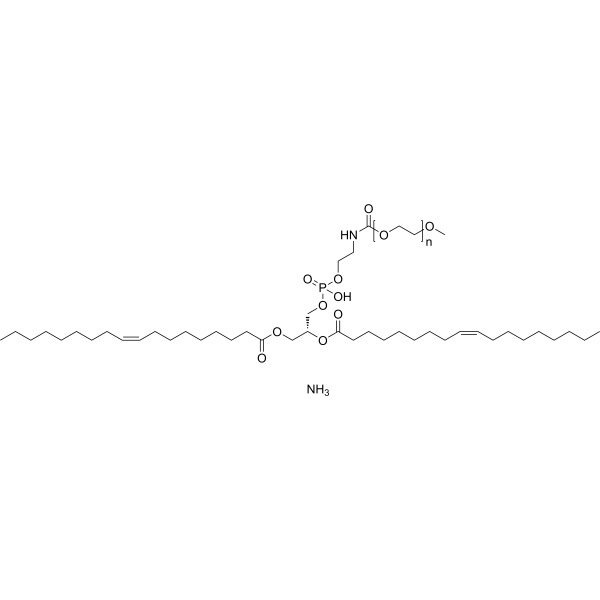
18:1 PEG550 PE ammonium (DOPE-PEG550 ammonium) is a PEG lipid functional end group used in the synthesis of liposomes (LPs) for the design of conjugated polymer nanoparticles. Through biotin modification and carboxyl terminus, lipid nanoparticles (LNPs) further coupling with other biomolecules can be achieved. Functionalized nanoparticles can be used for targeted labeling of specific cellular proteins. With streptavidin as a linker, biotinylated PEG lipid-conjugated polymer nanoparticles are able to bind to biotinylated antibodies on cell surface receptors, yielding the utility of fluorescence-based imaging and sensing.
|
-
-
- HY-155933
-
|
DOPE-PEG3000 ammonium; 1,2-Dioleoyl-sn-glycero-3-phosphoethanolamine-N-[methoxy(polyethylene glycol)-3000] ammonium
|
Liposome
|
Others
|
|
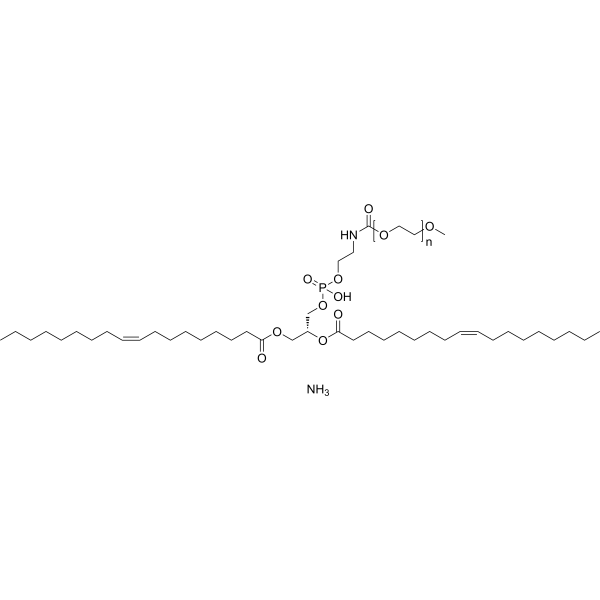
18:1 PEG3000 PE ammonium (DOPE-PEG3000 ammonium) is a PEG lipid functional end group used in the synthesis of liposomes (LPs) for the design of conjugated polymer nanoparticles. Through biotin modification and carboxyl terminus, lipid nanoparticles (LNPs) further coupling with other biomolecules can be achieved. Functionalized nanoparticles can be used for targeted labeling of specific cellular proteins. With streptavidin as a linker, biotinylated PEG lipid-conjugated polymer nanoparticles are able to bind to biotinylated antibodies on cell surface receptors, yielding the utility of fluorescence-based imaging and sensing.
|
-
-
- HY-173376
-
|
1,2-Didodecanoyl-rac-glycero-3-methoxypolyethylene glycol (MW 2000)
|
Liposome
Biochemical Assay Reagents
|
Cancer
|
|
C12 DG PEG (1,2-Didodecanoyl-rac-glycero-3-methoxypolyethylene glycol) (MW 2000) is a PEG lipid that can be used in lipid nanoparticle and liposome formation. C12 DG PEG (MW 2000) is promising for research of cancers .
|
-

-
- HY-160271
-
|
|
Fluorescent Dye
|
Others
|
|
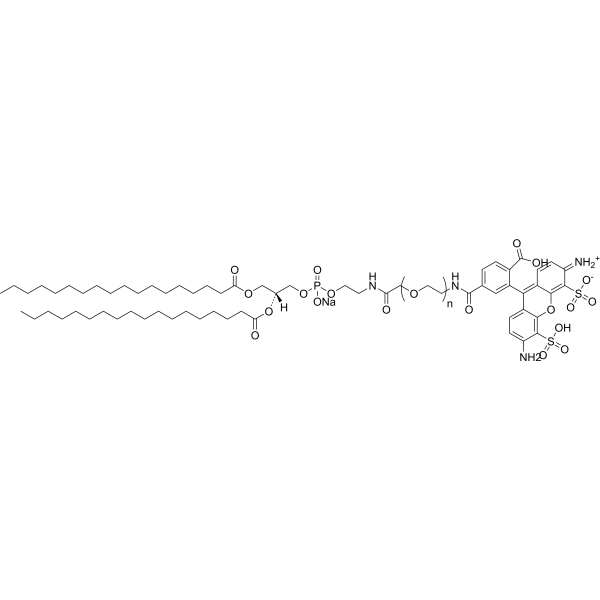
DSPE-CH2-PEG2000-Fluor 488 is a PEG lipid conjugate with a DSPE group and a Fluor 488 dye. DSPE is a phosphoethanolamine (PE) lipid that can be used in the synthesis of liposomes. And Fluor 488 is a fluorescent dye .
|
-
-
- HY-155877N
-
|
|
Biochemical Assay Reagents
|
Others
|
|
mPEG-DSPE (MW 5000) sodium is a PEG lipid that can improve the delivery efficiency and tissue specificity of poorly soluble drugs. mPEG-DSPE (MW 5000) sodium can be used in drug delivery research .
|
-

-
- HY-160274
-
|
|
Fluorescent Dye
|
Others
|
|
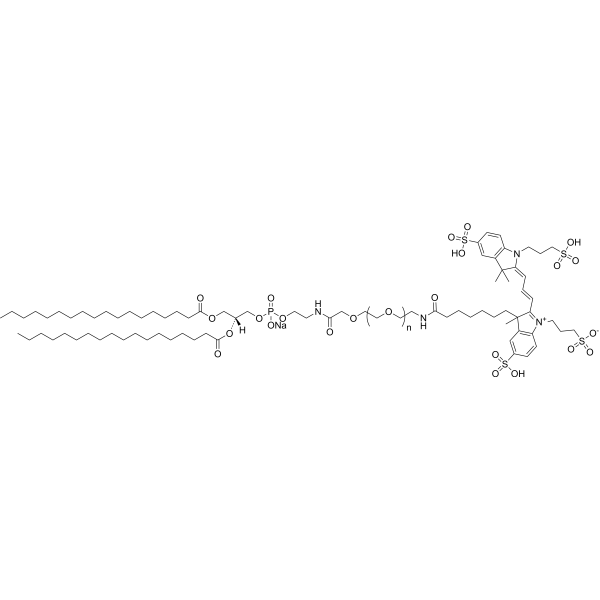
DSPE-PEG2000-Fluor 555 is a PEG lipid conjugate with a DSPE group and a Fluor 555 dye. DSPE is a phosphoethanolamine (PE) lipid that can be used in the synthesis of liposomes. And Fluor 555 is a fluorescent dye .
|
-
-
- HY-166980
-
|
|
Biochemical Assay Reagents
|
Others
|
|
m-PEG-DPPE (MW 2000) is a PEG lipid that can improve the delivery efficiency and tissue specificity of poorly soluble drugs. m-PEG-DPPE (MW 2000) can be used in drug delivery research .
|
-

- HY-W440924
-
|
|
Biochemical Assay Reagents
|
Others
|
|
m-PEG3000-DSPE sodium is a PEG lipid that can improve the delivery efficiency and tissue specificity of poorly soluble drugs. m-PEG3000-DSPE sodium can be used in drug delivery research .
|
-

- HY-167031
-
|
|
Biochemical Assay Reagents
|
Others
|
|
DOPE-PEG5000-DBCO is a PEG lipid that can improve the delivery efficiency and tissue specificity of poorly soluble drugs. DOPE-PEG5000-DBCO can be used in drug delivery research .
|
-

- HY-W440922
-
|
|
Biochemical Assay Reagents
|
Others
|
|
m-PEG1000-DSPE sodium is a PEG lipid that can improve the delivery efficiency and tissue specificity of poorly soluble drugs. m-PEG1000-DSPE sodium can be used in drug delivery research .
|
-

- HY-167022
-
|
|
Biochemical Assay Reagents
|
Others
|
|
DSPE-PEG600-azide is a PEG lipid that can improve the delivery efficiency and tissue specificity of poorly soluble drugs. DSPE-PEG600-azide can be used in drug delivery research .
|
-

- HY-166982
-
|
|
Biochemical Assay Reagents
|
Others
|
|
DSPE-PEG2000-PA is a PEG lipid that can improve the delivery efficiency and tissue specificity of poorly soluble drugs. DSPE-PEG2000-PA can be used in drug delivery research .
|
-

- HY-W440722
-
|
|
Liposome
|
Others
|
|
Cholesterol-PEG1000-Thiol is a PEGylated lipid that forms micelles in water and can be used to prepare liposomes or nanoparticles as drug delivery systems. The thiol moiety reacts with maleimide to form a stable thioether bond .
|
-

- HY-147018
-
|
|
Liposome
|
Others
|
|
1-Octylnonyl 8-[[8-[(1-ethylnonyl)oxy]-8-oxooctyl](2-hydroxyethyl)amino]octanoate is a PEG lipid. 1-Octylnonyl 8-[[8-[(1-ethylnonyl)oxy]-8-oxooctyl](2-hydroxyethyl)amino]octanoate can be used for researching drug delivery .
|
-
![1-Octylnonyl 8-[[8-[(1-ethylnonyl)oxy]-8-oxooctyl](2-hydroxyethyl)amino]octanoate](//file.medchemexpress.com/product_pic/hy-147018.gif)
- HY-167069
-
|
Azide-Polysarcosine100
|
Biochemical Assay Reagents
|
Others
|
|
Azide-pSar100 (Azide-Polysarcosine100) is a pSar-lipid derivative. Azide-pSar100 is a hydrophilic alternative to PEG and can be used in drug delivery research .
|
-

- HY-159674
-
|
N-Tetamine-polySarcosine45-Maleimide
|
Biochemical Assay Reagents
|
Others
|
|
N-Tetamine-pSar45-Maleimide (N-Tetamine-polySarcosine45-Maleimide) is a pSar-lipid derivative. As a hydrophilic alternative to PEG, N-Tetamine-pSar45-Maleimide can be used in drug delivery research .
|
-

- HY-166996
-
|
|
Biochemical Assay Reagents
|
Others
|
|
Bis(N-2-ethoxyethyl 2-hexyldecanoate)amine is a PEG lipid that can improve the delivery efficiency and tissue specificity of poorly soluble drugs. Bis(N-2-ethoxyethyl 2-hexyldecanoate)amine can be used in drug delivery research .
|
-

- HY-N15951
-
|
|
Biochemical Assay Reagents
|
Others
|
|
C16 Ceramide-suc-PEG2K-maleimide is functionalized PEG lipid that can be used to synthesize lipid nanoparticles for drug delivery.
|
-

- HY-N16285
-
|
|
Biochemical Assay Reagents
|
Others
|
|
DSPE-PEG400 carboxylic acid sodium is a lipid that consists of a DSPE-PEG400 unit conjugated to a carboxy group. DSPE-PEG400 carboxylic acid sodium can be used to prepare lipid nanoparticles for drug delivery.
|
-

- HY-144008A
-
|
|
Liposome
|
Others
|
|
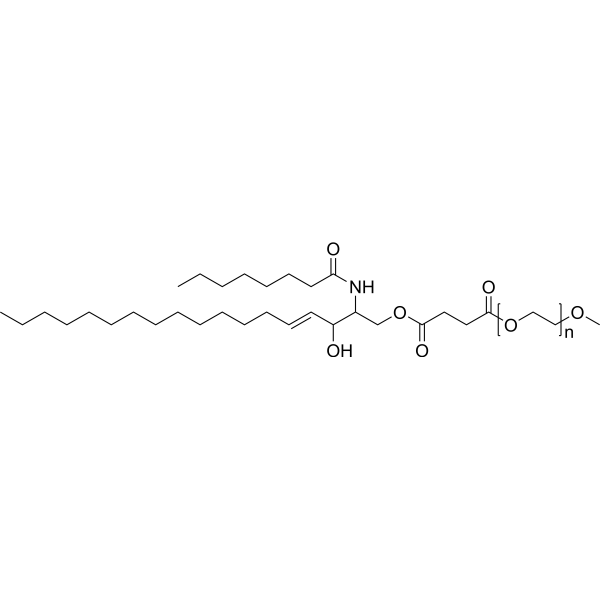
C8 PEG5000 Ceramide is a lipid product. C8 PEG5000 Ceramide can synthesize lipid bilayer carrier and can be used for drug delivery .
|
-
- HY-N16234
-
|
|
Fluorescent Dye
|
Others
|
|
Chol-PEG1000 fluorescein is a fluorescent lipid that consists of a cholesterol-PEG1000 unit conjugated to fluorescein. Chol-PEG1000 fluorescein can be used to prepare lipid nanoparticles for drug delivery research (Ex/Em = 480/520 nm).
|
-

- HY-N16323
-
|
|
Biochemical Assay Reagents
|
Others
|
|
DSPE-PEG2K-triGalNAc (II) ammonium is a functionalized PEG lipid that consists of a DSPE unit conjugated to a triGalNAc. DSPE-PEG2K-triGalNAc (II) ammonium can be used to prepare lipid nanoparticles for drug delivery.
|
-

- HY-144008B
-
|
|
PROTAC Linkers
|
Others
|
|
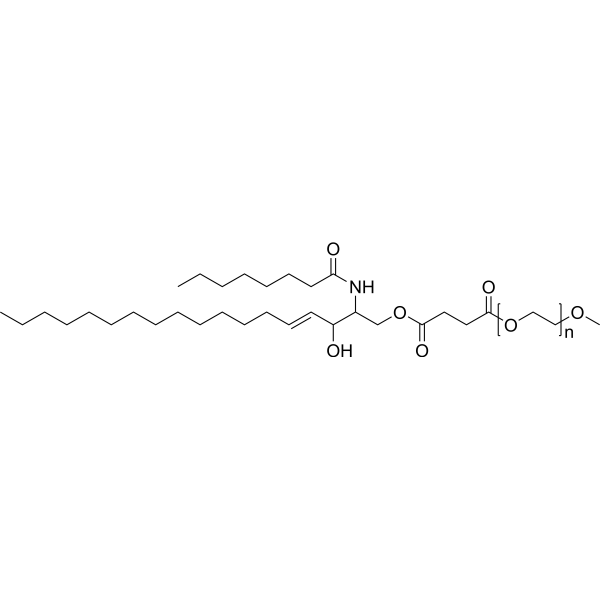
C8 PEG750 Ceramide is a lipid product. C8 PEG750 Ceramide synthesizes a lipid bilayer carrier for the selective delivery of various diagnostic and therapeutic agents to acidic diseased cells .
|
-
- HY-W440897
-
|
|
Biochemical Assay Reagents
|
Others
|
|
DSPE-PEG3400-SH is a maleimide reactive PEG lipid. The amphiphilic polymer forms lipid bilayer in water and can be used to prepare liposomes for drug nanocarriers to deliver mRNA, DNA or siRNA.
|
-

- HY-173379
-
|
1,2-didecanoyl-rac-glycero-3-methoxypolyethylene glycol-2000
|
Biochemical Assay Reagents
|
Cancer
|
|
C10 DG PEG 2000 (1,2-didecanoyl-rac-glycero-3-methoxypolyethylene glycol-2000) is a PEG lipid consisting of a glycerol backbone with two C10 acyl chains and PEG 2000 units. C10 DG PEG 2000 can be used for lipid nanoparticle and liposome formation.
|
-

- HY-173380
-
|
1,2-dioctanoyl-rac-glycero-3-methoxypolyethylene glycol-2000
|
Biochemical Assay Reagents
|
Cancer
|
|
C8 DG PEG 2000 (1,2-dioctanoyl-rac-glycero-3-methoxypolyethylene glycol-2000) is a PEG lipid consisting of a glycerol backbone with two C8 acyl chains and PEG 2000 units. C10 DG PEG 2000 can be used for lipid nanoparticle and liposome formation.
|
-

- HY-160275
-
|
|
Liposome
|
Others
|
|
DOPE-PEG2000-Fluor 555 is a PEG-lipid-dye conjugate featuring a DOPE phospholipid and a Fluor 555 dye. DOPE (HY-112005) is a neutral helper lipid for cationic liposome. Fluor 555 is a fluorescent dye .
|
-
- HY-N16038
-
|
|
Biochemical Assay Reagents
|
Others
|
|
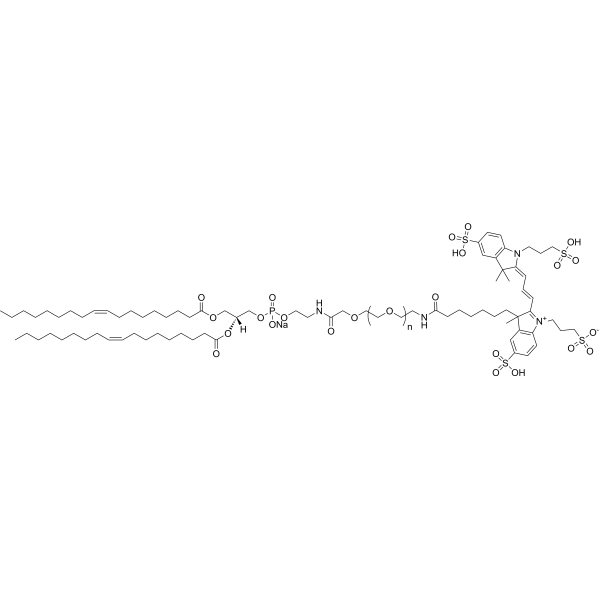
Bis-DSPE PEG2000 sodium is a PEG polymer containing DSPE and amine end groups. Bis-DSPE PEG2000 sodium can be used to synthesize lipid nanoparticles for drug delivery .
|
-

- HY-174950B
-
|
|
Biochemical Assay Reagents
|
Others
|
|
DSPE-PEG3400-Pyrene is a lipid-containing PEG derivative that can be used to form micelles as nanoparticles for drug delivery .
|
-

- HY-W440825
-
|
|
Biochemical Assay Reagents
|
Others
|
|
DSPE-PEG1000-COOH is a PEG lipid that can improve the delivery efficiency and tissue specificity of poorly soluble drugs. DSPE-PEG1000-COOH can be used in drug delivery research .
|
-

- HY-166807
-
|
|
Biochemical Assay Reagents
|
Others
|
|
Palmitate-PEG1000-Mal is a PEG lipid that can improve the delivery efficiency and tissue specificity of poorly soluble drugs. Palmitate-PEG1000-Mal can be used in drug delivery research .
|
-

- HY-W440830
-
|
|
Biochemical Assay Reagents
|
Others
|
|
DSPE-PEG3400-COOH is a PEG lipid that can improve the delivery efficiency and tissue specificity of poorly soluble drugs. DSPE-PEG3400-COOH can be used in drug delivery research .
|
-

- HY-167068
-
|
Azide-Polysarcosine150
|
Biochemical Assay Reagents
|
Others
|
|
Azide-pSar150 (Azide-Polysarcosine150) is a pSar-lipid derivative. Azide-pSar150 is a hydrophilic alternative to PEG and can be used in drug delivery research .
|
-

- HY-167066
-
|
DSPE-Polysarcosine150
|
Biochemical Assay Reagents
|
Others
|
|
DSPE-pSar150 (DSPE-Polysarcosine150) is a pSar-lipid derivative. DSPE-pSar150 is a hydrophilic alternative to PEG and can be used in drug delivery research .
|
-

- HY-W440930
-
|
|
Biochemical Assay Reagents
|
Others
|
|
Stearic acid-mPEG1000 is a PEG lipid that can improve the delivery efficiency and tissue specificity of poorly soluble drugs. Stearic acid-mPEG1000 can be used in drug delivery research .
|
-

- HY-W440942
-
|
|
Biochemical Assay Reagents
|
Others
|
|
Pentacosadiynoic acid-mPEG2000 is a PEG lipid that can improve the delivery efficiency and tissue specificity of poorly soluble drugs. Pentacosadiynoic acid-mPEG2000 can be used in drug delivery research .
|
-

- HY-W440943
-
|
|
Biochemical Assay Reagents
|
Others
|
|
Pentacosadiynoic acid-mPEG5000 is a PEG lipid that can improve the delivery efficiency and tissue specificity of poorly soluble drugs. Pentacosadiynoic acid-mPEG5000 can be used in drug delivery research .
|
-

- HY-W440932
-
|
|
Biochemical Assay Reagents
|
Others
|
|
Stearic acid-mPEG5000 is a PEG lipid that can improve the delivery efficiency and tissue specificity of poorly soluble drugs. Stearic acid-mPEG5000 can be used in drug delivery research .
|
-

- HY-W440941
-
|
|
Biochemical Assay Reagents
|
Others
|
|
Pentacosadiynoic acid-mPEG1000 is a PEG lipid that can improve the delivery efficiency and tissue specificity of poorly soluble drugs. Pentacosadiynoic acid-mPEG1000 can be used in drug delivery research .
|
-

- HY-N16002
-
-

- HY-N16292
-
|
|
Biochemical Assay Reagents
|
Others
|
|
Chol-PEG2000 carboxylic acid is a PEG lipid that consists of a cholesterol and a carboxylic acid. Chol-PEG2000 carboxylic acid can be used to prepare lipid nanoparticles for drug delivery.
|
-

- HY-N16320
-
|
|
Biochemical Assay Reagents
|
Others
|
|
C12 DG PEG2000 is a PEG lipid that consists of a glycerol back bone with two C12 acyl chains and a PEG 2000 unit. C12 DG PEG2000 can be used to prepare lipid nanoparticles for drug delivery.
|
-

- HY-N16299
-
|
|
Biochemical Assay Reagents
|
Others
|
|
DSPE-PEG12 carboxy sodium is a lipid that consists of a DSPE-PEG12 unit conjugated to a carboxy group. DSPE-PEG12 carboxy sodium can be used to prepare lipid nanoparticles for drug delivery.
|
-

- HY-179836
-
|
|
Liposome
|
Metabolic Disease
|
|
DOPE-PEG-Azide ammonium is a lipid that can be used to prepare lipid nanoparticles (LNPs) for drug delivery.
|
-

- HY-N16233
-
|
|
Fluorescent Dye
|
Others
|
|
Chol-PEG2000 fluorescein is a fluorescent lipid that consists of a cholesterol-PEG2000 unit conjugated to fluorescein. Chol-PEG2000 fluorescein can be used to prepare lipid nanoparticles for drug delivery research (Ex/Em = 480/520 nm).
|
-

- HY-179911
-
|
|
Liposome
|
Others
|
|
mPEG2000-DLG is a PEG-based lipid that can be used to formulate lipid nanoparticles for drug delivery.
|
-

- HY-179895
-
-

- HY-N16312
-
-

- HY-N15843
-
|
|
Liposome
|
Others
|
|
Chol-mPEG2000 is a PEG lipid containing cholesterol and can be used to prepare lipid nanoparticles for drug delivery.
|
-

- HY-179910
-
|
|
Liposome
|
Others
|
|
mPEG2000-DCG is a PEG-based lipid that can be used to formulate lipid nanoparticles for drug delivery.
|
-

- HY-174950C
-
|
|
Biochemical Assay Reagents
|
Others
|
|
DSPE-PEG5000-Pyrene is a lipid-containing PEG derivative that can be used to form micelles as nanoparticles for drug delivery .
|
-

- HY-174901A
-
|
|
Biochemical Assay Reagents
|
Others
|
|
DSPE-PEG2000-Furan is a lipid-containing PEG derivative that can be used to form micelles as nanoparticles for drug delivery .
|
-

- HY-174950A
-
|
|
Biochemical Assay Reagents
|
Others
|
|
DSPE-PEG2000-Pyrene is a lipid-containing PEG derivative that can be used to form micelles as nanoparticles for drug delivery .
|
-

- HY-174901C
-
|
|
Biochemical Assay Reagents
|
Others
|
|
DSPE-PEG5000-Furan is a lipid-containing PEG derivative that can be used to form micelles as nanoparticles for drug delivery .
|
-

- HY-174901B
-
|
|
Biochemical Assay Reagents
|
Others
|
|
DSPE-PEG3400-Furan is a lipid-containing PEG derivative that can be used to form micelles as nanoparticles for drug delivery .
|
-

- HY-174950
-
|
|
Biochemical Assay Reagents
|
Others
|
|
DSPE-PEG1000-Pyrene is a lipid-containing PEG derivative that can be used to form micelles as nanoparticles for drug delivery .
|
-

- HY-174901
-
|
|
Biochemical Assay Reagents
|
Others
|
|
DSPE-PEG1000-Furan is a lipid-containing PEG derivative that can be used to form micelles as nanoparticles for drug delivery .
|
-

- HY-155932
-
|
DOPE-PEG1000 ammonium; 1,2-Dioleoyl-sn-glycero-3-phosphoethanolamine-N-[methoxy(polyethylene glycol)-1000] ammonium
|
Liposome
|
Others
|
|
18:1 PEG1000 PE ammonium (DOPE-PEG1000 ammonium) is a PEG lipid functional end group used in the synthesis of liposomes (LPs) for the design of conjugated polymer nanoparticles. Through biotin modification and carboxyl terminus, lipid nanoparticles (LNPs) further coupling with other biomolecules can be achieved. Functionalized nanoparticles can be used for targeted labeling of specific cellular proteins. With streptavidin as a linker, biotinylated PEG lipid-conjugated polymer nanoparticles are able to bind to biotinylated antibodies on cell surface receptors, yielding the utility of fluorescence-based imaging and sensing.
|
-
- HY-155925
-
|
14:0 PEG550 PE ammonium; 1,2-Dimyristoyl-sn-glycero-3-phosphoethanolamine-N-[methoxy(polyethylene glycol)-550] ammonium
|
Liposome
|
Others
|
|
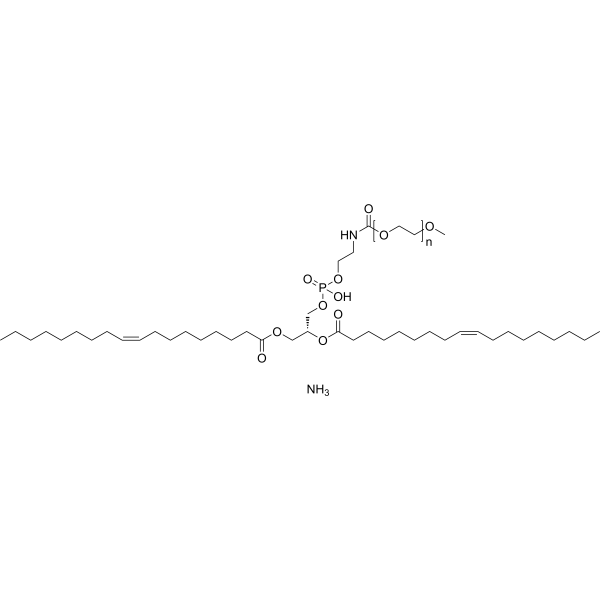
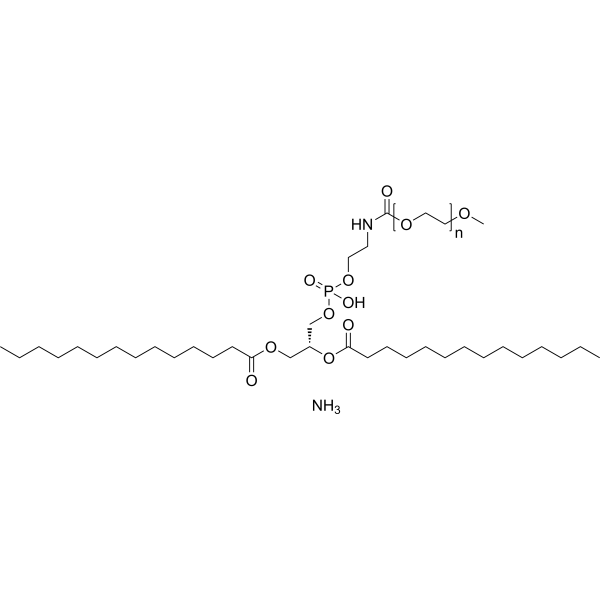
DMPE-PEG550 ammonium (14:0 PEG550 PE ammonium) is a PEG lipid functional end group used in the synthesis of liposomes (LPs) for the design of conjugated polymeric nanoparticles. Through biotin modification and carboxyl terminus, lipid nanoparticles (LNPs) further coupling with other biomolecules can be achieved. Functionalized nanoparticles can be used for targeted labeling of specific cellular proteins. With streptavidin as a linker, biotinylated PEG lipid-conjugated polymer nanoparticles are able to bind to biotinylated antibodies on cell surface receptors, yielding the utility of fluorescence-based imaging and sensing.
|
-
- HY-155930
-
|
DOPE-PEG350 ammonium; 1,2-Dioleoyl-sn-glycero-3-phosphoethanolamine-N-[methoxy(polyethylene glycol)-350] ammonium
|
Liposome
|
Others
|
|
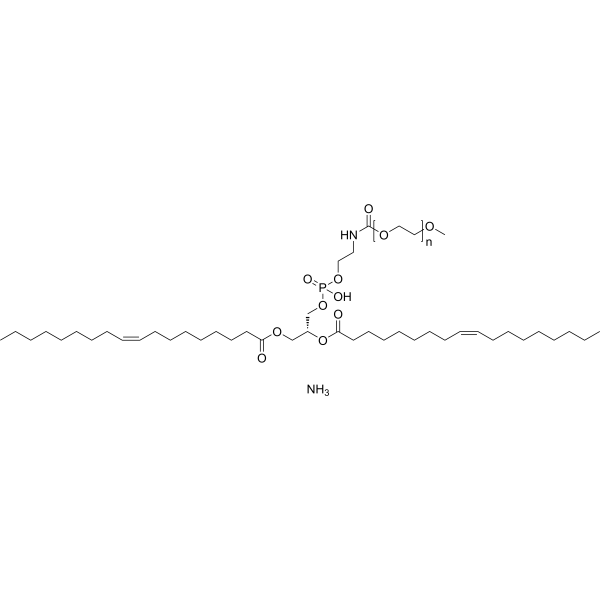
18:1 PEG350 PE ammonium (DOPE-PEG350 ammonium) is a PEG lipid functional end group used in the synthesis of liposomes (LPs) for the design of conjugated polymer nanoparticles. Through biotin modification and carboxyl terminus, lipid nanoparticles (LNPs) further coupling with other biomolecules can be achieved. Functionalized nanoparticles can be used for targeted labeling of specific cellular proteins. With streptavidin as a linker, biotinylated PEG lipid-conjugated polymer nanoparticles are able to bind to biotinylated antibodies on cell surface receptors, yielding the utility of fluorescence-based imaging and sensing.
|
-
- HY-155924
-
|
14:0 PEG350 PE ammonium; 1,2-Dimyristoyl-sn-glycero-3-phosphoethanolamine-N-[methoxy(polyethylene glycol)-350] ammonium
|
Liposome
|
Others
|
|
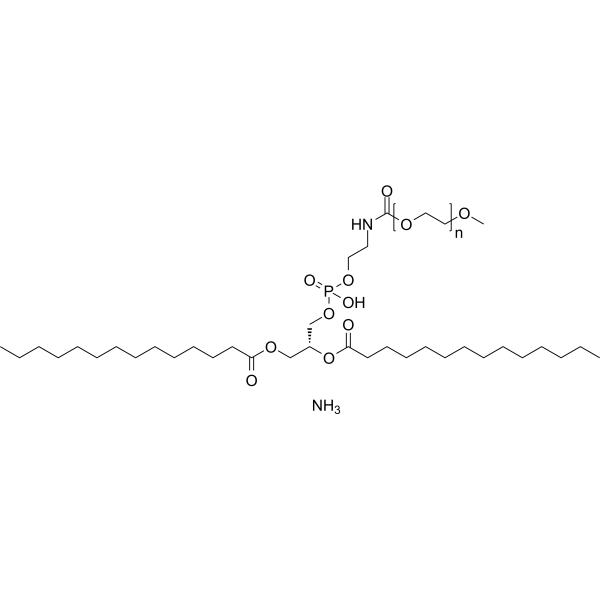
DMPE-PEG350 ammonium (14:0 PEG350 PE ammonium) is a PEG lipid functional end group used in the synthesis of liposomes (LPs) for the design of conjugated polymer nanoparticles. Through biotin modification and carboxyl terminus, lipid nanoparticles (LNPs) further coupling with other biomolecules can be achieved. Functionalized nanoparticles can be used for targeted labeling of specific cellular proteins. With streptavidin as a linker, biotinylated PEG lipid-conjugated polymer nanoparticles are able to bind to biotinylated antibodies on cell surface receptors, yielding the utility of fluorescence-based imaging and sensing.
|
-
- HY-155927
-
|
14:0 PEG1000 PE ammonium; 1,2-Dimyristoyl-sn-glycero-3-phosphoethanolamine-N-[methoxy(polyethylene glycol)-1000] ammonium
|
Liposome
|
Others
|
|
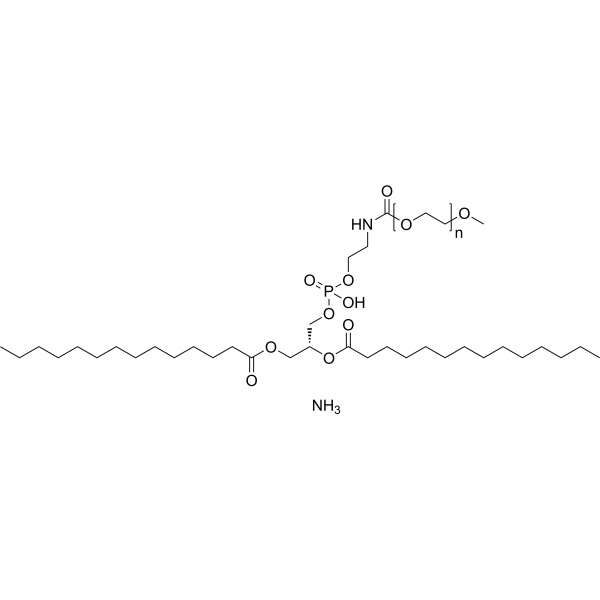
DMPE-PEG1000 ammonium (14:0 PEG1000 PE ammonium) is a PEG lipid functional end group used in the synthesis of liposomes (LPs) for the design of conjugated polymer nanoparticles. Through biotin modification and carboxyl terminus, lipid nanoparticles (LNPs) further coupling with other biomolecules can be achieved. Functionalized nanoparticles can be used for targeted labeling of specific cellular proteins. With streptavidin as a linker, biotinylated PEG lipid-conjugated polymer nanoparticles are able to bind to biotinylated antibodies on cell surface receptors, yielding the utility of fluorescence-based imaging and sensing.
|
-
- HY-155929
-
|
14:0 PEG5000 PE ammonium; 1,2-Dimyristoyl-sn-glycero-3-phosphoethanolamine-N-[methoxy(polyethylene glycol)-5000] ammonium
|
Liposome
|
Others
|
|
DMPE-PEG5000 ammonium (14:0 PEG5000 PE ammonium) is a PEG lipid functional end group used in the synthesis of liposomes (LPs) for the design of conjugated polymer nanoparticles. Through biotin modification and carboxyl terminus, lipid nanoparticles (LNPs) further coupling with other biomolecules can be achieved. Functionalized nanoparticles can be used for targeted labeling of specific cellular proteins. With streptavidin as a linker, biotinylated PEG lipid-conjugated polymer nanoparticles are able to bind to biotinylated antibodies on cell surface receptors, yielding the utility of fluorescence-based imaging and sensing.
|
-
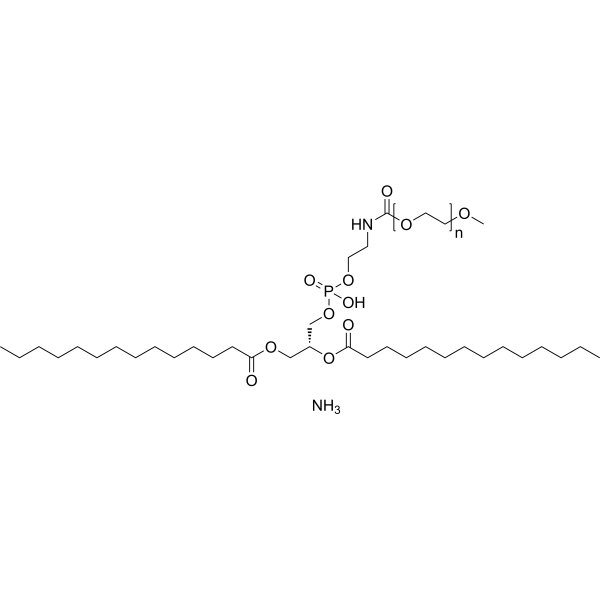
- HY-155928
-
|
14:0 PEG3000 PE ammonium; 1,2-Dimyristoyl-sn-glycero-3-phosphoethanolamine-N-[methoxy(polyethylene glycol)-3000] ammonium
|
Liposome
|
Others
|
|
DMPE-PEG3000 ammonium (14:0 PEG3000 PE ammonium) is a PEG lipid functional end group used in the synthesis of liposomes (LPs) for the design of conjugated polymer nanoparticles. Through biotin modification and carboxyl terminus, lipid nanoparticles (LNPs) further coupling with other biomolecules can be achieved. Functionalized nanoparticles can be used for targeted labeling of specific cellular proteins. With streptavidin as a linker, biotinylated PEG lipid-conjugated polymer nanoparticles are able to bind to biotinylated antibodies on cell surface receptors, yielding the utility of fluorescence-based imaging and sensing.
|
-
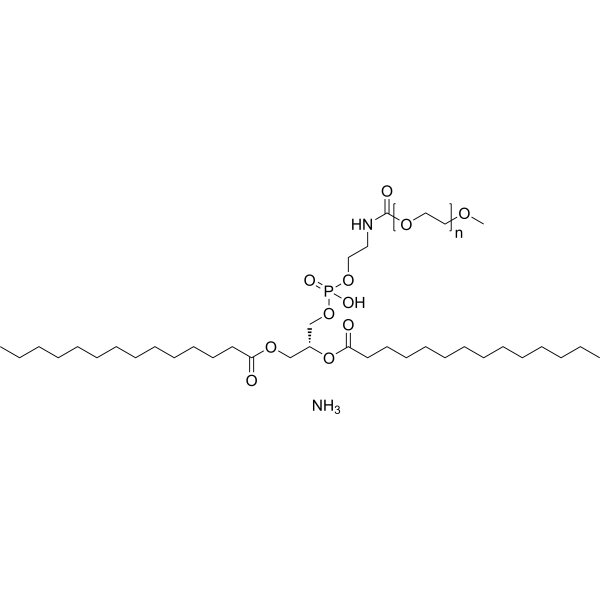
- HY-144012B
-
|
16:0 PEG550 PE; 1,2-Dipalmitoyl-sn-glycero-3-phosphoethanolamine-N-[methoxy(polyethylene glycol)-550] ammonium
|
Biochemical Assay Reagents
Liposome
|
Others
|
|
DPPE-PEG550 is a PEG lipid functional end group used in the synthesis of liposomes (LPs) for the design of conjugated polymer nanoparticles. Through biotin modification and carboxyl terminus, lipid nanoparticles (LNPs) further coupling with other biomolecules can be achieved. Functionalized nanoparticles can be used for targeted labeling of specific cellular proteins. With streptavidin as a linker, biotinylated PEG lipid-conjugated polymer nanoparticles are able to bind to biotinylated antibodies on cell surface receptors, yielding the utility of fluorescence-based imaging and sensing.
|
-
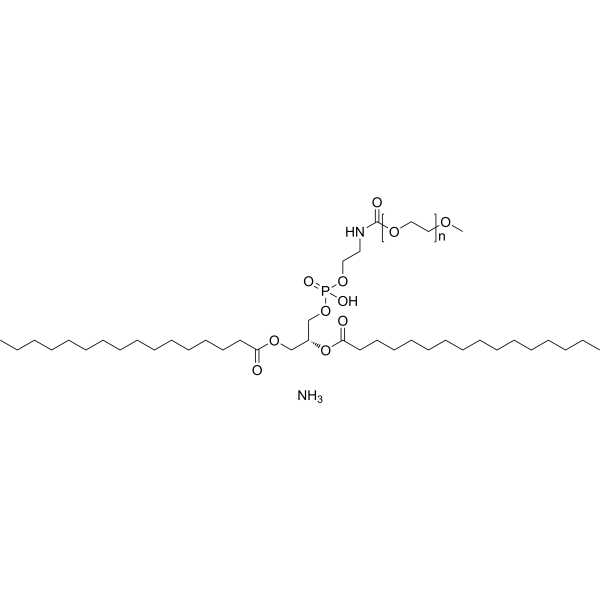
- HY-144012E
-
|
16:0 PEG3000 PE; 1,2-Dipalmitoyl-sn-glycero-3-phosphoethanolamine-N-[methoxy(polyethylene glycol)-3000] ammonium
|
Liposome
|
Others
|
|
DPPE-PEG3000 is a PEG lipid functional end group used in the synthesis of liposomes (LPs) for the design of conjugated polymer nanoparticles. Through biotin modification and carboxyl terminus, lipid nanoparticles (LNPs) further coupling with other biomolecules can be achieved. Functionalized nanoparticles can be used for targeted labeling of specific cellular proteins. With streptavidin as a linker, biotinylated PEG lipid-conjugated polymer nanoparticles are able to bind to biotinylated antibodies on cell surface receptors, yielding the utility of fluorescence-based imaging and sensing.
|
-
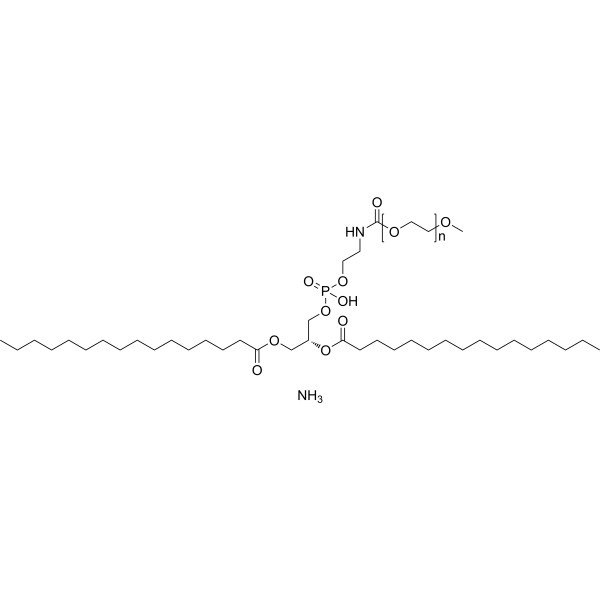
- HY-144012D
-
|
16:0 PEG1000 PE; 1,2-Dipalmitoyl-sn-glycero-3-phosphoethanolamine-N-[methoxy(polyethylene glycol)-1000] ammonium
|
Liposome
|
Others
|
|
DPPE-PEG1000 is a PEG lipid functional end group used in the synthesis of liposomes (LPs) for the design of conjugated polymer nanoparticles. Through biotin modification and carboxyl terminus, lipid nanoparticles (LNPs) further coupling with other biomolecules can be achieved. Functionalized nanoparticles can be used for targeted labeling of specific cellular proteins. With streptavidin as a linker, biotinylated PEG lipid-conjugated polymer nanoparticles are able to bind to biotinylated antibodies on cell surface receptors, yielding the utility of fluorescence-based imaging and sensing.
|
-
- HY-144012C
-
|
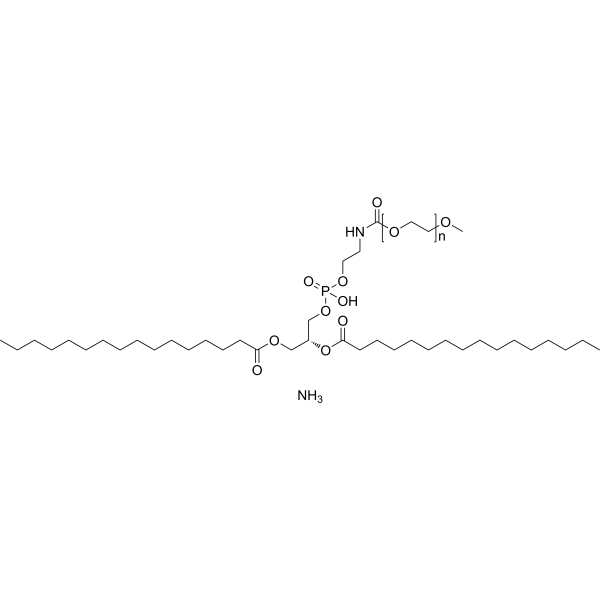
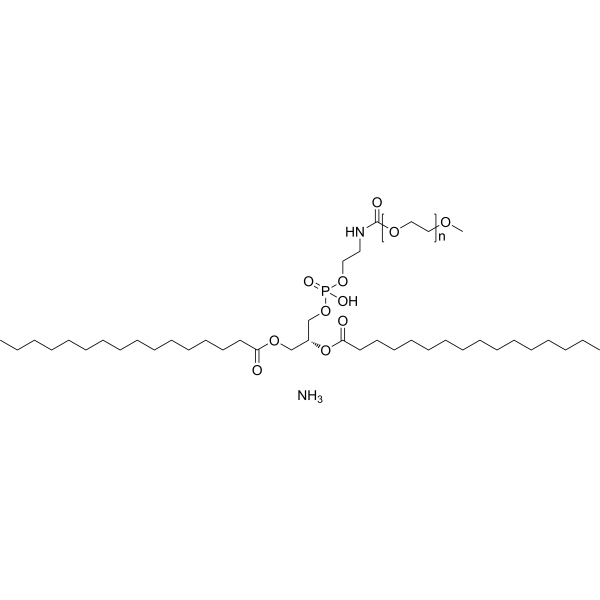
16:0 PEG750 PE; 1,2-Dipalmitoyl-sn-glycero-3-phosphoethanolamine-N-[methoxy(polyethylene glycol)-750] ammonium
|
Biochemical Assay Reagents
Liposome
|
Others
|
|
DPPE-PEG750 is a PEG lipid functional end group used in the synthesis of liposomes (LPs) for the design of conjugated polymer nanoparticles. Through biotin modification and carboxyl terminus, lipid nanoparticles (LNPs) further coupling with other biomolecules can be achieved. Functionalized nanoparticles can be used for targeted labeling of specific cellular proteins. With streptavidin as a linker, biotinylated PEG lipid-conjugated polymer nanoparticles are able to bind to biotinylated antibodies on cell surface receptors, yielding the utility of fluorescence-based imaging and sensing.
|
-
- HY-160269
-
|
|
Fluorescent Dye
|
Others
|
|
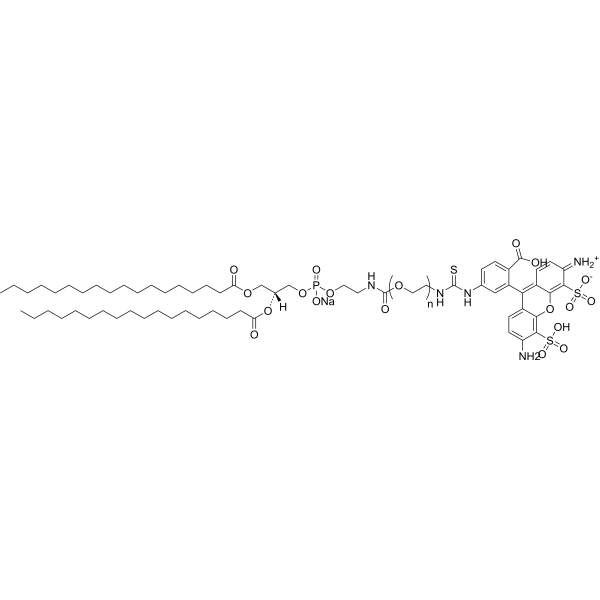
DSPE-PEG2000-Fluor 488 is a PEG-dye-lipid conjugate consisting of a DSPE phospholipid and a Fluor 488 dye. DSPE is a phospholipid that spontaneously forms micelles in a water medium, and Fluor 488 is a cyanine dye that is widely used in fluorescence microscopy. Fluor 488 has excitation and emission maxima at 499 nm and 520 nm. Polyethylene glycol lipids are commonly used for the stabilization of lipid nanoparticles .
|
-
- HY-N15817
-
-

- HY-W440915
-
|
|
Liposome
|
Inflammation/Immunology
|
|
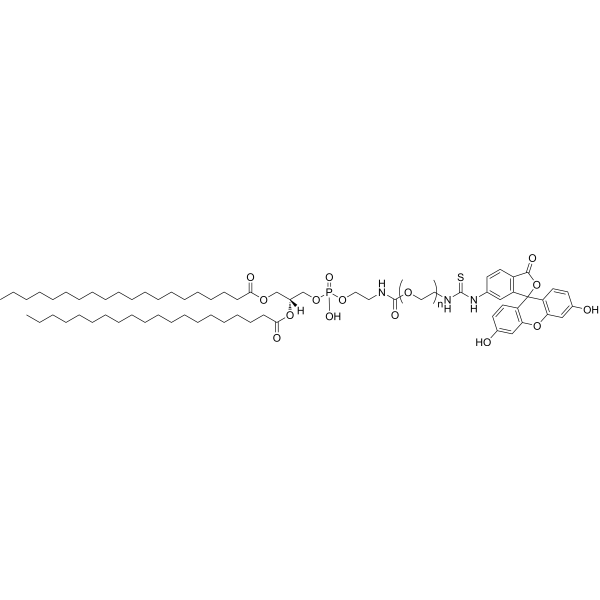
DSPE-PEG2000-FITC is a PEG lipid conjugated with fluorescein. FITC is a green dye with a peak absorption at 494 nm and a maximum emission at 520 nm, which is used for staining biological samples or nanoparticles. DSPE-PEG2000-FITC spontaneously forms lipid bilayers or micelles in water and can be used to prepare liposomes for delivering substances such as mRNA vaccines .
|
-
- HY-N15903
-
|
|
Biochemical Assay Reagents
|
Others
|
|
DSPE-PEG2k-tri Mannose ammonium is a trimannose-DSPE-conjugated PEG derivative that can be used to synthesize lipid nanoparticles for drug delivery.
|
-

- HY-W440907
-
|
|
Biochemical Assay Reagents
|
Others
|
|
DSPE-PEG5000-Vinylsulfone is a viniyl sulfone PEG lipid which can be used for bioconjugation with cysteine or other thiol molecule through thiol-ene reaction. The polymer is a self-assembling reagetn which forms lipid bilayer in water and can be used as drug carrier to delivery therapeutic agents, such as mRNA or DNA vaccine.
|
-

- HY-W440904
-
|
|
Biochemical Assay Reagents
|
Others
|
|
DSPE-PEG1000-Vinylsulfone is a viniyl sulfone PEG lipid which can be used for bioconjugation with cysteine or other thiol molecule through thiol-ene reaction. The polymer is a self-assembling reagetn which forms lipid bilayer in water and can be used as drug carrier to delivery therapeutic agents, such as mRNA or DNA vaccine.
|
-

- HY-W440906
-
|
|
Biochemical Assay Reagents
|
Others
|
|
DSPE-PEG3400-Vinylsulfone is a viniyl sulfone PEG lipid which can be used for bioconjugation with cysteine or other thiol molecule through thiol-ene reaction. The polymer is a self-assembling reagetn which forms lipid bilayer in water and can be used as drug carrier to delivery therapeutic agents, such as mRNA or DNA vaccine.
|
-

- HY-W440905
-
|
|
Biochemical Assay Reagents
|
Others
|
|
DSPE-PEG2000-Vinylsulfone is a viniyl sulfone PEG lipid which can be used for bioconjugation with cysteine or other thiol molecule through thiol-ene reaction. The polymer is a self-assembling reagetn which forms lipid bilayer in water and can be used as drug carrier to delivery therapeutic agents, such as mRNA or DNA vaccine.
|
-

- HY-138300
-
-
- HY-W440711
-
|
|
Liposome
|
Cancer
|
|
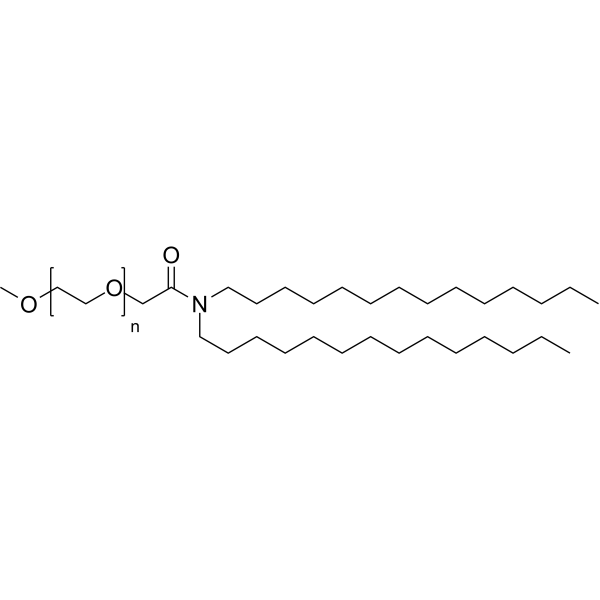
Cholesterol-PEG-Biotin (MW 2000) is a pegylated lipids which has strong binding to avidin or streptavidin.
|
-

- HY-N15896
-
-

- HY-144011
-
|
|
Liposome
|
Others
|
|
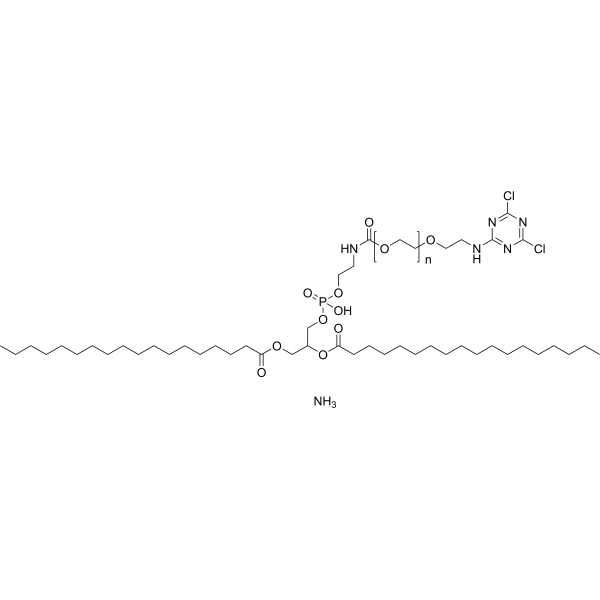
DSPE-PEG-Cyanur ammonium is a PEG derivative containing cyanur functional group. DSPE-PEG-Cyanur ammonium can be used for PEGylation of protein under mild basic conditions. DSPE-PEG-Cyanur ammonium can be used for nanostructured lipid carrier .
|
-
- HY-167028A
-
|
|
Biochemical Assay Reagents
|
Others
|
|
DSPE-PEG1000-alkyne is a PEG lipid that can improve the delivery efficiency and tissue specificity of poorly soluble drugs. DSPE-PEG1000-alkyne can be used in drug delivery research .
|
-

- HY-167028B
-
|
|
Biochemical Assay Reagents
|
Others
|
|
DSPE-PEG3400-alkyne is a PEG lipid that can improve the delivery efficiency and tissue specificity of poorly soluble drugs. DSPE-PEG3400-alkyne can be used in drug delivery research .
|
-

- HY-167028C
-
|
|
Biochemical Assay Reagents
|
Others
|
|
DSPE-PEG5000-alkyne is a PEG lipid that can improve the delivery efficiency and tissue specificity of poorly soluble drugs. DSPE-PEG5000-alkyne can be used in drug delivery research .
|
-

- HY-144004A
-
|
DSPE-PEG5000 Maleimide ammonium; 1,2-Distearoyl-sn-glycero-3-phosphoethanolamine-N-[maleimide(polyethylene glycol)-5000] ammonium
|
Liposome
|
Others
|
|
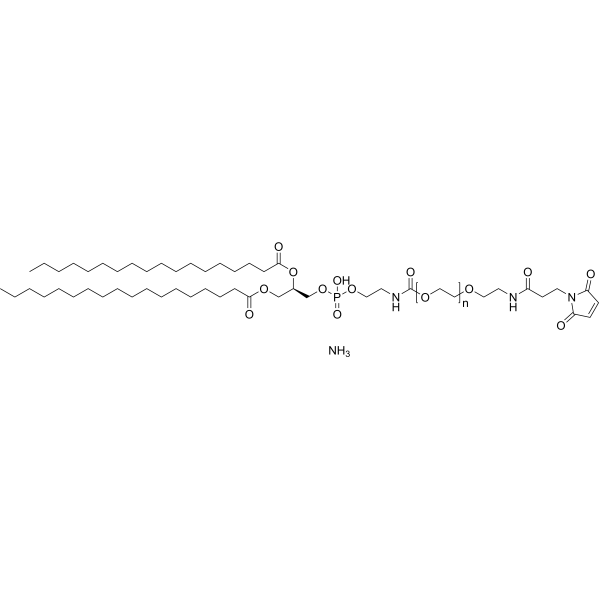
DSPE-PEG-Maleimide has DSPE phospholipid and maleimide to prepare nanostructured lipid carrier. DSPE-PEG-Maleimide extends blood circulation time and higher stability for encapsulated agents . DSPE-PEG5000-Mal ammonium contains PEG5000.
|
-
- HY-166883
-
-

- HY-168374A
-
-

- HY-144004
-
|
DSPE-PEG2000 Maleimide ammonium; 1,2-Distearoyl-sn-glycero-3-phosphoethanolamine-N-[maleimide(polyethylene glycol)-2000] ammonium
|
Liposome
|
Others
|
|
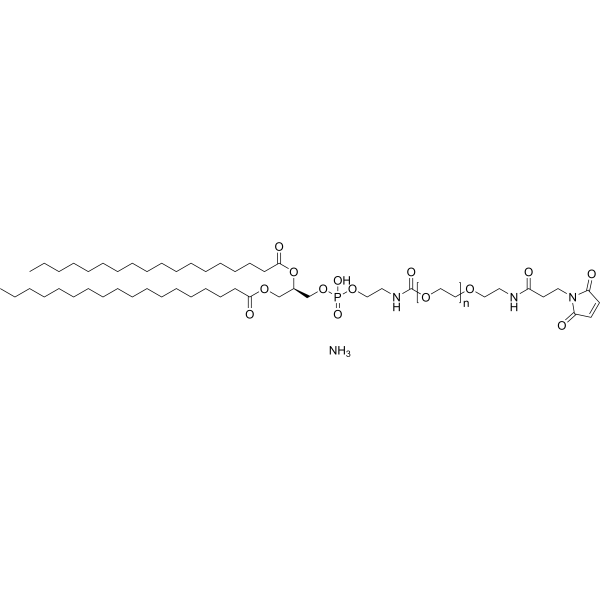
DSPE-PEG-Maleimide has DSPE phospholipid and maleimide to prepare nanostructured lipid carrier. DSPE-PEG-Maleimide extends blood circulation time and higher stability for encapsulated agents .
|
-
- HY-179677B
-
|
|
Liposome
|
Others
|
|
DSPE-PEG5000-Mal-Cys-DT7 is a phospholipid-PEG conjugate. DSPE-PEG5000-Mal-Cys-DT7 utilizes the amphiphilicity of DSPE to insert into the lipid bilayer of liposomes or nanoparticles.
|
-

- HY-179677A
-
|
|
Liposome
|
Others
|
|
DSPE-PEG3400-Mal-Cys-DT7 is a phospholipid-PEG conjugate. DSPE-PEG3400-Mal-Cys-DT7 utilizes the amphiphilicity of DSPE to insert into the lipid bilayer of liposomes or nanoparticles.
|
-

- HY-179677
-
|
|
Liposome
|
Others
|
|
DSPE-PEG2000-Mal-Cys-DT7 is a phospholipid-PEG conjugate. DSPE-PEG2000-Mal-Cys-DT7 utilizes the amphiphilicity of DSPE to insert into the lipid bilayer of liposomes or nanoparticles.
|
-

- HY-W440888B
-
|
|
Biochemical Assay Reagents
|
Others
|
|
DSPE-PEG3400-Folate is a PEG derivative containing folic acid. DSPE-PEG-Folate has a targeting effect and bind to folate receptors in cancer cells. DSPE-PEG-Folate form micelles/lipid bilayer and can be used to targeted drug delivery system research .
|
-

- HY-W440888A
-
|
|
Biochemical Assay Reagents
|
Others
|
|
DSPE-PEG1000-Folate is a PEG derivative containing folic acid. DSPE-PEG-Folate has a targeting effect and bind to folate receptors in cancer cells. DSPE-PEG-Folate form micelles/lipid bilayer and can be used to targeted drug delivery system research .
|
-

- HY-144005
-
|
C16 PEG Ceramide (MW 2000)
|
Liposome
Autophagy
|
Cancer
|
|
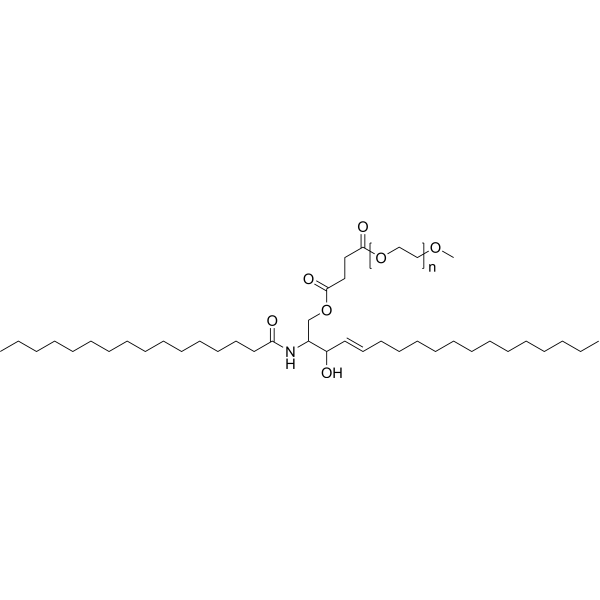
C16 PEG2000 Ceramide is a polyethylene glycolylated ceramide. C16 PEG2000 Ceramide can be used for lipid carrier to delivery. C16 PEG2000 Ceramide induces autophagy. C16 PEG2000 Ceramide can be used for cancer research .
|
-
- HY-W440888C
-
|
|
Biochemical Assay Reagents
|
Others
|
|
DSPE-PEG5000-Folate is a PEG derivative containing folic acid. DSPE-PEG-Folate has a targeting effect and bind to folate receptors in cancer cells. DSPE-PEG-Folate form micelles/lipid bilayer and can be used to targeted drug delivery system research .
|
-

- HY-W440902
-
|
|
Biochemical Assay Reagents
|
Others
|
|
DSPE-PEG3400-IA is an iodoacetyll PEG lipid. The polymer can form lipid bilayer or micelles spontaneoulsy in water. The lipophilic tails can be used to encapsulate hydrophobic therapeutic agents while the hydrophilic head can be used to encapuslate hydrophilic drugs/nutrient, such as antibody, mRNA/DNA. The iodoacetyl group is reactive with thiol to produce a thioether linkage.
|
-

- HY-174264
-
|
|
Biochemical Assay Reagents
|
Others
|
|
DMG-PEG2000-NHS is a polyethylene glycol lipid with a molecular weight of 2000, which can be used to construct novel drug delivery systems that confer mucoadhesive and cell-targeting capabilities to lipid nanoparticles .
|
-

- HY-144009
-
|
|
Liposome
|
Cancer
|
|
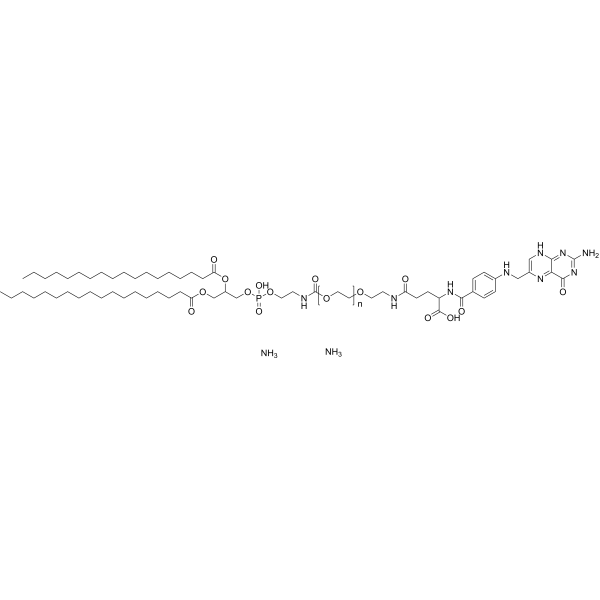
DSPE-PEG-Folate, MW 3350 is a PEG derivative containing folic acid. DSPE-PEG-Folate has a targeting effect and bind to folate receptors in cancer cells. DSPE-PEG-Folate form micelles/lipid bilayer and can be used to targeted drug delivery system research .
|
-
- HY-144013B
-
|
DSPE-mPEG550 ammonium; 1,2-Distearoyl-sn-glycero-3-phosphoethanolamine-N-[methoxy(polyethylene glycol)-550] ammonium
|
Biochemical Assay Reagents
Liposome
|
Others
|
|
18:0 mPEG550 PE (ammonium) is a PEG lipid functional end group used in the synthesis of liposomes (LPs) for the design of conjugated polymeric nanoparticles. Through biotin modification and carboxyl terminus, lipid nanoparticles (LNPs) further coupling with other biomolecules can be achieved. Functionalized nanoparticles can be used for targeted labeling of specific cellular proteins. With streptavidin as a linker, biotinylated PEG lipid-conjugated polymer nanoparticles are able to bind to biotinylated antibodies on cell surface receptors, yielding the utility of fluorescence-based imaging and sensing.
|
-
- HY-144013A
-
|
DSPE-mPEG350 ammonium; 1,2-Distearoyl-sn-glycero-3-phosphoethanolamine-N-[methoxy(polyethylene glycol)-350] ammonium
|
Liposome
|
Others
|
|
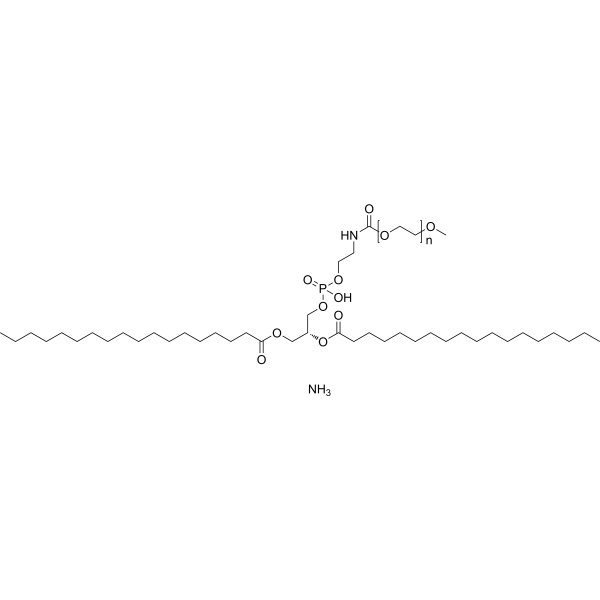
18:0 mPEG350 PE (ammonium) is a PEG lipid functional end group used in the synthesis of liposomes (LPs) for the design of conjugated polymer nanoparticles. Through biotin modification and carboxyl terminus, lipid nanoparticles (LNPs) further coupling with other biomolecules can be achieved. Functionalized nanoparticles can be used for targeted labeling of specific cellular proteins. With streptavidin as a linker, biotinylated PEG lipid-conjugated polymer nanoparticles are able to bind to biotinylated antibodies on cell surface receptors, yielding the utility of fluorescence-based imaging and sensing.
|
-
- HY-144013D
-
|
DSPE-mPEG1000 ammonium; 1,2-Distearoyl-sn-glycero-3-phosphoethanolamine-N-[methoxy(polyethylene glycol)-1000] ammonium
|
Liposome
|
Others
|
|
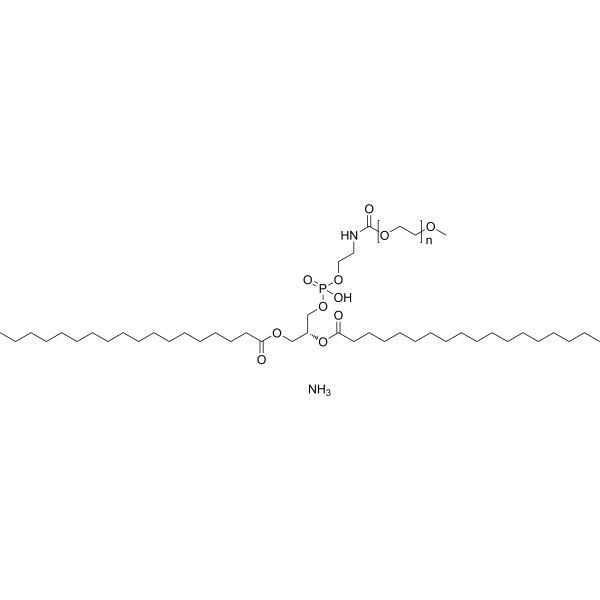
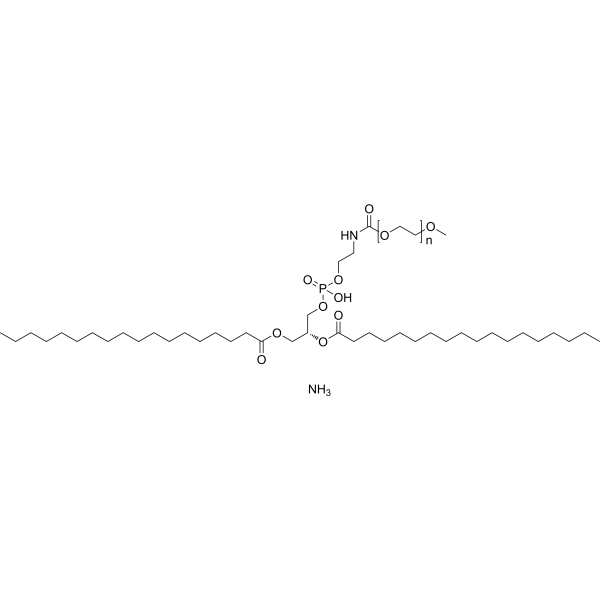
18:0 mPEG1000 PE (ammonium) is a PEG lipid functional end group used in the synthesis of liposomes (LPs) for the design of conjugated polymeric nanoparticles. Through biotin modification and carboxyl terminus, lipid nanoparticles (LNPs) further coupling with other biomolecules can be achieved. Functionalized nanoparticles can be used for targeted labeling of specific cellular proteins. With streptavidin as a linker, biotinylated PEG lipid-conjugated polymer nanoparticles are able to bind to biotinylated antibodies on cell surface receptors, yielding the utility of fluorescence-based imaging and sensing.
|
-
- HY-144013E
-
|
DSPE-mPEG3000 ammonium; 1,2-Distearoyl-sn-glycero-3-phosphoethanolamine-N-[methoxy(polyethylene glycol)-3000] ammonium
|
Liposome
|
Others
|
|
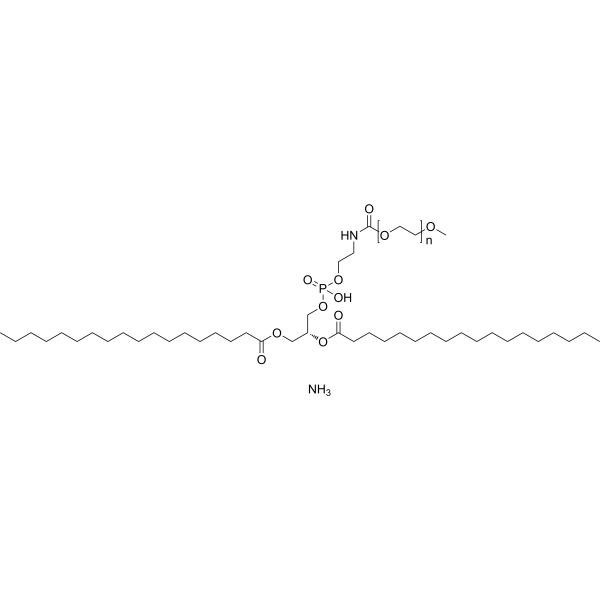
18:0 mPEG3000 PE (ammonium) is a PEG lipid functional end group used in the synthesis of liposomes (LPs) for the design of conjugated polymeric nanoparticles. Through biotin modification and carboxyl terminus, lipid nanoparticles (LNPs) further coupling with other biomolecules can be achieved. Functionalized nanoparticles can be used for targeted labeling of specific cellular proteins. With streptavidin as a linker, biotinylated PEG lipid-conjugated polymer nanoparticles are able to bind to biotinylated antibodies on cell surface receptors, yielding the utility of fluorescence-based imaging and sensing.
|
-
- HY-144013C
-
|
DSPE-mPEG750 ammonium; 1,2-Distearoyl-sn-glycero-3-phosphoethanolamine-N-[methoxy(polyethylene glycol)-750] ammonium
|
Biochemical Assay Reagents
Liposome
|
Others
|
|
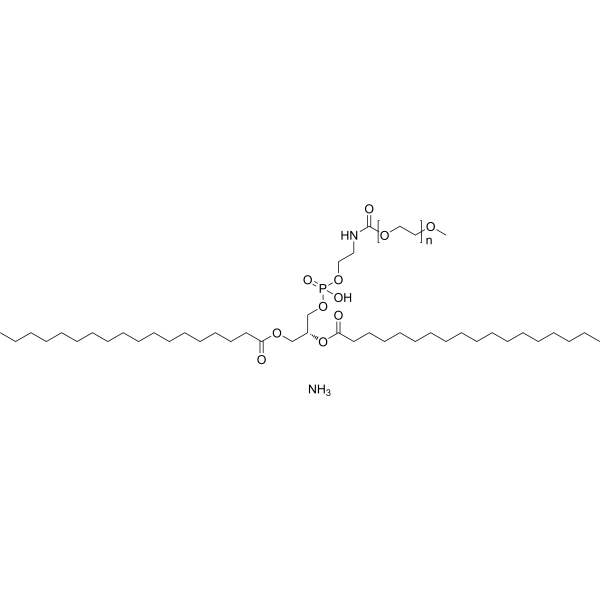
18:0 mPEG750 PE (ammonium) is a PEG lipid functional end group used in the synthesis of liposomes (LPs) for the design of conjugated polymeric nanoparticles. Through biotin modification and carboxyl terminus, lipid nanoparticles (LNPs) further coupling with other biomolecules can be achieved. Functionalized nanoparticles can be used for targeted labeling of specific cellular proteins. With streptavidin as a linker, biotinylated PEG lipid-conjugated polymer nanoparticles are able to bind to biotinylated antibodies on cell surface receptors, yielding the utility of fluorescence-based imaging and sensing.
|
-
- HY-W441014B
-
|
|
Biochemical Assay Reagents
|
Others
|
|
DSPE-PEG20000-NHS ammonium is one of the most commonly used reactive phospholipids for coupling antibodies, proteins, peptides or other substrates to the surface of liposomes and other lipid PEG nanoparticles .
|
-

- HY-W441014C
-
|
|
Biochemical Assay Reagents
|
Others
|
|
DSPE-PEG40000-NHS ammonium is one of the most commonly used reactive phospholipids for coupling antibodies, proteins, peptides or other substrates to the surface of liposomes and other lipid PEG nanoparticles .
|
-

- HY-W441014A
-
|
|
Biochemical Assay Reagents
|
Others
|
|
DSPE-PEG10000-NHS ammonium is one of the most commonly used reactive phospholipids for coupling antibodies, proteins, peptides or other substrates to the surface of liposomes and other lipid PEG nanoparticles .
|
-

- HY-144012H
-
|
16:0 PEG5000 PE; 1,2-Dipalmitoyl-sn-glycero-3-phosphoethanolamine-N-[methoxy(polyethylene glycol)-5000] ammonium
|
Liposome
|
Others
|
|
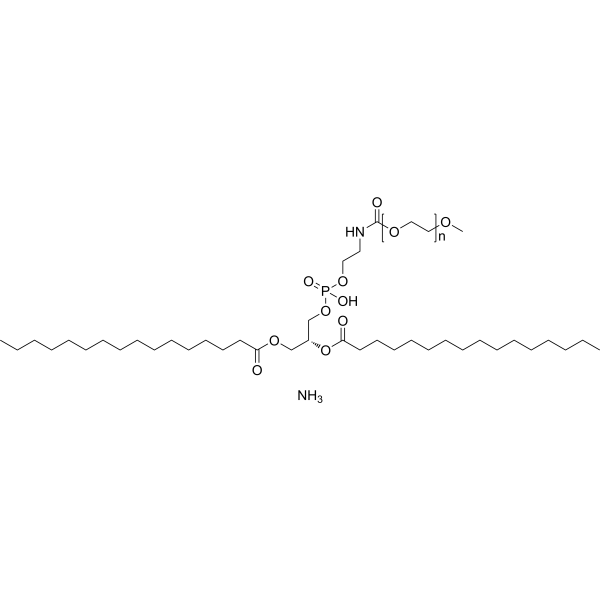
DPPE-PEG5000 (16:0 PEG5000 PE) is a polymer-lipid conjugate and LipoParticle stabilizer with a PEG chain of 5,000 g/mol molecular weight attached to its polar head, and it can be internalized by biological membranes. DPPE-PEG5000 enables LipoParticle to maintain colloidal stability after 20-fold dilution in PBS or cell culture medium, and prevents aggregate formation during lyophilization and rehydration. DPPE-PEG5000 helps enhance the non-cytotoxic property of LipoParticle formulations against human osteoblasts. DPPE-PEG5000 serves as a PEG lipid functional end group for synthesizing liposomes (LPs), is used in the design of conjugated polymer nanoparticles, and applies to research related to bone and joint infections .
|
-
- HY-W440914B
-
|
|
Fluorescent Dye
|
Others
|
|
DSPE-PEG10000-FITC is an amphiphile PEG polymer which has unsaturated lipid tails. DSPE-PEG10000-FITC can form micelles in an aqueous solution and can be used to prepare liposome/nano particles for drug nanocarriers .
|
-

- HY-W440893
-
|
|
Biochemical Assay Reagents
|
Others
|
|
DSPE-PEG5000-OH is a linear phospholipid PEG polymer. The lipid tails allow encapsulation of hdyrophobic therapeutics while the PEG chain maintains its hydrophilicity. The polymer can be used for drug nanocarrier, such as liposomal anti cancer drug or mRNA/DNA vaccine.
|
-

- HY-W440914A
-
|
|
Fluorescent Dye
|
Others
|
|
DSPE-PEG400-FITC is an amphiphile PEG polymer which has unsaturated lipid tails. DSPE-PEG400-FITC can form micelles in an aqueous solution and can be used to prepare liposome/nano particles for drug nanocarriers .
|
-

- HY-160272
-
|
|
Fluorescent Dye
|
Others
|
|
DOPE-PEG2000-Fluor 488 is a PEG lipid, composed of a DOPE phospholipid and a Fluor 488 fluorophore. DOPE is an unsaturated phospholipid. Fluor 488 has excitation and emission maxima at 499 nm and 520 nm .
|
-
- HY-112768
-
|
|
Liposome
|
Others
|
|
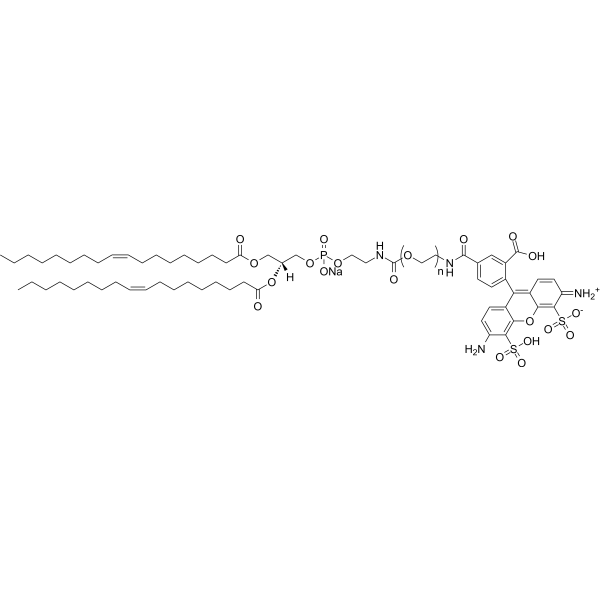
PEG2000-DMPE can be used to synthsis a LNP. PEG2000-DMPE enhances the entrapment efficiency depending on the increasing portion in the liposome. The optimal formulation for animal study is that DMPC/PEG2000-DMPE/CH=50/5/45 at the weight ratio of drug/lipid=1/20 .
|
-
- HY-W440991
-
|
DOPE-PEG2000-NH2
|
Liposome
|
Cancer
|
|
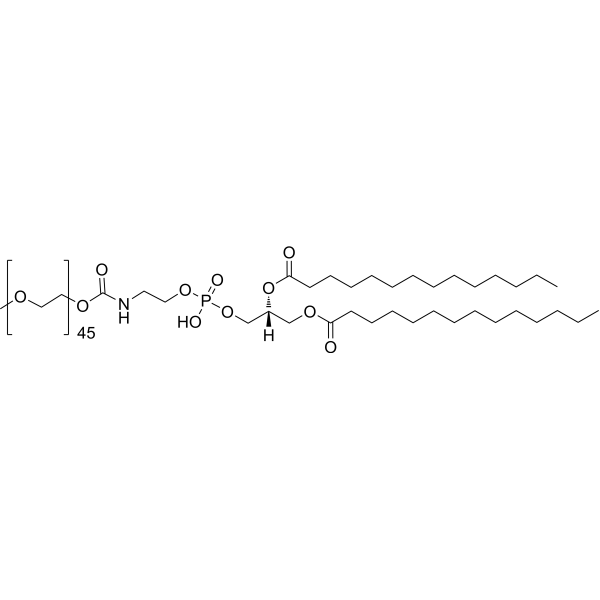
DOPE-PEG-Amine (MW 2000) is a polydisperse PEG covalently attached to a phospholipid. The polymer is an amphiphilic molecule with hydrophobic fatty acid chains and hydrophilic PEG head which enables lipid bilayer or micelle formation in water. The phospholipid PEG can be used to prepare liposome or nanoparticles for targeted drug delivery and is reactive with alkyne to form a triazole ring.
|
-

- HY-N15973
-
|
|
Biochemical Assay Reagents
|
Others
|
|
DSPE PEG2k-OH ammonium is a hydroxyl-terminated PEGylated phospholipid. The hydrophobic tail allows for the encapsulation and aggregation of other hydrophobic drugs, and the hydroxyl terminus is suitable for further reactions. DSPE PEG2k-OH ammonium can be used to prepare liposomes or lipid nanoparticles .
|
-

- HY-W440890
-
|
|
Liposome
|
Cancer
|
|
DSPE-PEG-Folate, MW 5000 is a PEG derivative containing folic acid. DSPE-PEG-Folate, MW 5000 has a targeting effect and bind to folate receptors in cancer cells. DSPE-PEG-Folate, MW 5000 form micelles/lipid bilayer and can be used to targeted drug delivery system research .
|
-
- HY-W441009A
-
|
|
Liposome
|
Others
|
|
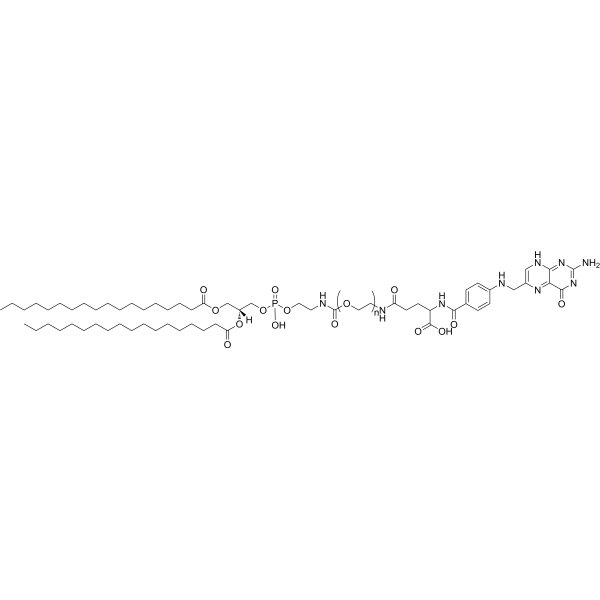
DSPE-PEG3400-Maleimide ammonium has DSPE phospholipid and maleimide to prepare nanostructured lipid carrier. DSPE-PEG3400-Maleimide ammonium can be used in drug delivery research .
|
-

- HY-140740
-
|
|
Liposome
|
Others
|
|
DSPE-PEG5000-Maleimide, is a linker lipid containing DSPE phospholipid and Maleimide. DSPE-PEG-Maleimide is used in the synthesis of liposomes, including HELDC liposomes, sterically stabilized liposomes, and immunoliposomes .
|
-
- HY-W441009C
-
|
|
Liposome
|
Others
|
|
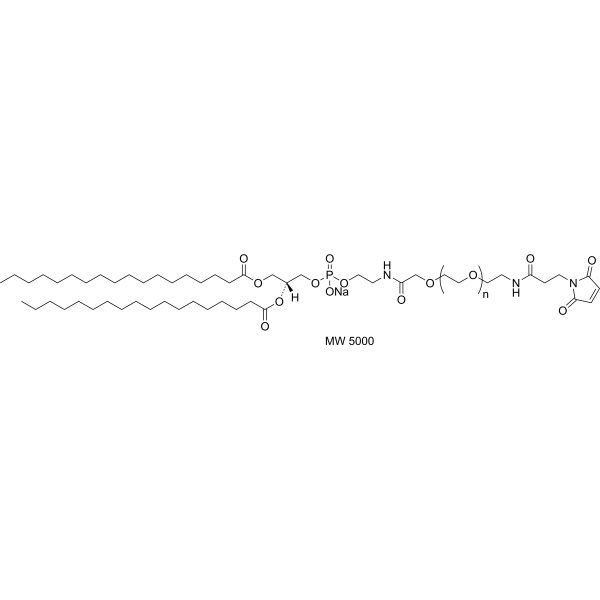
DSPE-PEG4000-Maleimide ammonium has DSPE phospholipid and maleimide to prepare nanostructured lipid carrier. DSPE-PEG4000-Maleimide ammonium can be used in drug delivery research .
|
-

- HY-W441009B
-
|
|
Liposome
|
Others
|
|
DSPE-PEG1000-Maleimide ammonium has DSPE phospholipid and maleimide to prepare nanostructured lipid carrier. DSPE-PEG1000-Maleimide ammonium can be used in drug delivery research .
|
-

- HY-W441009H
-
|
|
Liposome
|
Others
|
|
DSPE-PEG40000-Maleimide ammonium has DSPE phospholipid and maleimide to prepare nanostructured lipid carrier. DSPE-PEG40000-Maleimide ammonium can be used in drug delivery research .
|
-

- HY-W441009E
-
|
|
Liposome
|
Others
|
|
DSPE-PEG20000-Maleimide ammonium has DSPE phospholipid and maleimide to prepare nanostructured lipid carrier. DSPE-PEG20000-Maleimide ammonium can be used in drug delivery research .
|
-

- HY-W441009D
-
|
|
Liposome
|
Others
|
|
DSPE-PEG10000-Maleimide ammonium has DSPE phospholipid and maleimide to prepare nanostructured lipid carrier. DSPE-PEG10000-Maleimide ammonium can be used in drug delivery research .
|
-

- HY-141489
-
|
|
Biochemical Assay Reagents
Liposome
|
Neurological Disease
|
|
DSPE-PEG2000-Carboxy NHS sodium is a linker. DSPE-PEG2000-Carboxy NHS sodium enables conjugation of targeting peptides to lipid nanoparticles after their preparation. DSPE-PEG2000-Carboxy NHS sodium is applicable to the research of hereditary retinal degeneration .
|
-

- HY-W440833
-
|
|
Liposome
|
Others
|
|
DSPE-PEG3400-azide is a polydisperse PEG covalently attached to a phospholipid. The polymer is an amphiphilic molecule with hydrophobic fatty acid chains and hydrophilic PEG head which enables lipid bilayer or micelles formation in water. The phospholipid PEG can be used to prepare liposome or nanoparticles for targeted drug delivery and is reactive with alkyne to form triazole bond.
|
-

- HY-N16025
-
|
|
Liposome
Biochemical Assay Reagents
|
Others
|
|
DOPE-PEG(2000) Amine ammonium is a polydisperse PEG covalently attached to a phospholipid. The polymer is an amphiphilic molecule with hydrophobic fatty acid chains and hydrophilic PEG head which enables lipid bilayer or micelle formation in water. The phospholipid PEG can be used to prepare liposome or nanoparticles for targeted agent delivery and is reactive with alkyne to form a triazole ring .
|
-

- HY-W440690
-
|
|
Liposome
|
Cancer
|
|
Cholesterol-PEG2000-amine is a pegylated lipids which can be used for preparation of liposome or nanoparticle. The lipophilic moiety can encapsulate hydrophobic drugs whereas the hydrophilic PEG chain helps the overal water solubility of the micelles.
|
-

- HY-174897
-
|
|
Biochemical Assay Reagents
|
Others
|
|
DSPE-PEG4-NHS ester is a lipid-containing PEG derivative that can be used to form micelles as nanoparticles for drug delivery . NHS esters can be conjugated to amino acids or other molecules containing an amino group.
|
-

- HY-W440881A
-
|
|
Liposome
|
|
|
DSPE-PEG3400-C2-DBCO sodium is a PEG lipid that can improve the delivery efficiency and tissue specificity of poorly soluble drugs. DSPE-PEG3400-C2-DBCO sodium can be used in drug delivery research .
|
-

- HY-183134A
-
|
|
Biochemical Assay Reagents
|
Others
|
|
C16-PEG3400-NHS is a conjugate composed of hexadecyl (C16, i.e., palmitoyl), a PEG chain, and an active ester (NHS). C16-PEG3400-NHS combines the membrane compatibility of lipids with glucose as an active site for sugar recognition or subsequent conjugation reactions, making it suitable for research in biomaterial construction and drug delivery.
|
-

- HY-183169B
-
|
|
Biochemical Assay Reagents
|
Others
|
|
C18-PEG5000-NHS is a conjugate composed of octadecyl (C18 aliphatic chain), PEG chains, and an active ester (NHS). C18-PEG5000-NHS combines the membrane compatibility of lipids with glucose as an active site for sugar recognition or subsequent coupling reactions, making it suitable for research in biomaterial construction and drug delivery.
|
-

- HY-D2517
-
|
|
Fluorescent Dye
Liposome
|
Others
|
|
Cy3-PEG5000-DSPE is a PEG phospholipid with Cy3 (HY-D0822) dye used in protein/nucelic acid labeling. Cy3-PEG5000-DSPE can self-assemble in aqueous solution to form micelles/lipid bilayer and used to prepare liposomes or nanoparticles for nutrients delivery such as mRNA or DNA vaccine.
|
-

- HY-183134B
-
|
|
Biochemical Assay Reagents
|
Others
|
|
C16-PEG5000-NHS is a conjugate composed of hexadecyl (C16, i.e., palmitoyl), a PEG chain, and an active ester (NHS). C16-PEG5000-NHS combines the membrane compatibility of lipids with glucose as an active site for sugar recognition or subsequent conjugation reactions, making it suitable for research in biomaterial construction and drug delivery.
|
-

- HY-183169
-
|
|
Biochemical Assay Reagents
|
Others
|
|
C18-PEG2000-NHS is a conjugate composed of octadecyl (C18 aliphatic chain), PEG chains, and an active ester (NHS). C18-PEG2000-NHS combines the membrane compatibility of lipids with glucose as an active site for sugar recognition or subsequent coupling reactions, making it suitable for research in biomaterial construction and drug delivery.
|
-

- HY-183169A
-
|
|
Biochemical Assay Reagents
|
Others
|
|
C18-PEG3400-NHS is a conjugate composed of octadecyl (C18 aliphatic chain), PEG chains, and an active ester (NHS). C18-PEG3400-NHS combines the membrane compatibility of lipids with glucose as an active site for sugar recognition or subsequent coupling reactions, making it suitable for research in biomaterial construction and drug delivery.
|
-

- HY-183134
-
|
|
Biochemical Assay Reagents
|
Others
|
|
C16-PEG2000-NHS is a conjugate composed of hexadecyl (C16, i.e., palmitoyl), a PEG chain, and an active ester (NHS). C16-PEG2000-NHS combines the membrane compatibility of lipids with glucose as an active site for sugar recognition or subsequent conjugation reactions, making it suitable for research in biomaterial construction and drug delivery.
|
-

- HY-144012
-
|
16:0 PEG2000 PE ammonium; 1,2-Dipalmitoyl-sn-glycero-3-phosphoethanolamine-N-[methoxy(polyethylene glycol)-2000] ammonium
|
Liposome
|
Others
|
|
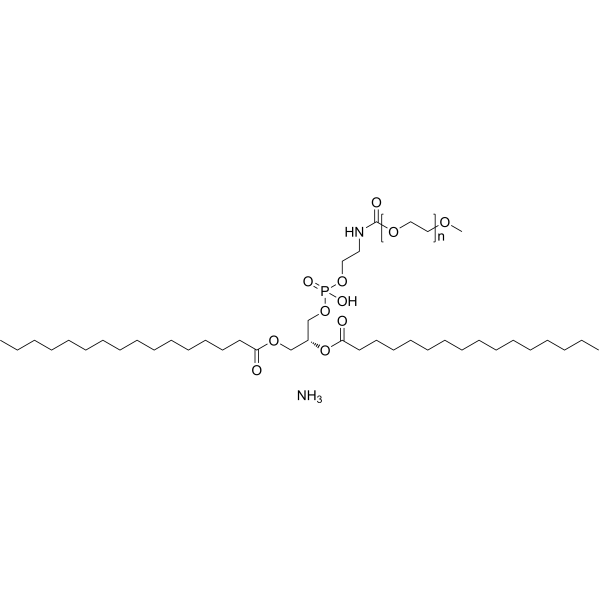
DPPE-PEG2000 ammonium (16:0 PEG5000 PE) is a polymer-lipid conjugate and LipoParticle stabilizer with a PEG chain of 5,000 g/mol molecular weight attached to its polar head, and it can be internalized by biological membranes. DPPE-PEG2000 ammonium enables LipoParticle to maintain colloidal stability after 20-fold dilution in PBS or cell culture medium, and prevents aggregate formation during lyophilization and rehydration. DPPE-PEG2000 ammonium helps enhance the non-cytotoxic property of LipoParticle formulations against human osteoblasts. DPPE-PEG2000 ammonium serves as a PEG lipid functional end group for synthesizing liposomes (LPs), is used in the design of conjugated polymer nanoparticles, and applies to research related to bone and joint infections .
|
-
- HY-W440898
-
|
|
Biochemical Assay Reagents
|
Others
|
|
DSPE-PEG5000-SH is a polyPEG attached DSPE molecule. The lipid tails allow formation of lipid bilayer in water and can be used to solubilize hydrophobic drugs while the hydrophilic core can encapsulate therapeutic agents, such as nuclein acid (mRNA/DNA), protein or peptide.
|
-

- HY-160573
-
|
|
Liposome
|
Others
|
|
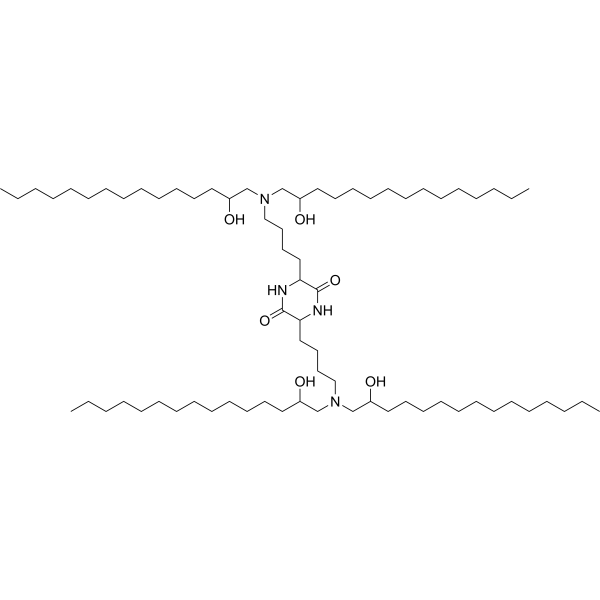
cKK-E15 is a peptide-lipid that can be used to formulate LNP3 with C14PEG2000, unmodified cholesterol, and DOPE .
|
-
- HY-D2542
-
|
|
Fluorescent Dye
|
Others
|
|
Cy5-PEG2000-DSPE is a PEG phospholipid with Cy5 (HY-D0821) dye used in protein/nucelic acid labeling and fluorescence microscopy. Cy5-PEG2000-DSPE can self-assemble in aqueous solution to form micelles/lipid bilayer and used to prepare liposomes or nanoparticles for nutrients delivery such as mRNA or DNA vaccine.
|
-

- HY-171337B
-
|
|
Biochemical Assay Reagents
|
Others
|
|
C18-PEG5000-Mal is a conjugate composed of a octadecyl (C18 aliphatic chain), a PEG chain, and maleimide (Mal). C18-PEG5000-Mal combines the membrane compatibility of lipids with the specific Michael addition reaction with thiol-containing (-SH) biomolecules (such as peptides, antibodies, and aptamers), making it suitable for research in biomaterial construction and drug delivery.
|
-

- HY-183135
-
|
|
Biochemical Assay Reagents
|
Others
|
|
C16-PEG2000-Mal is a conjugate composed of a hexadecyl (C16 aliphatic chain), a PEG chain, and maleimide (Mal). C16-PEG2000-Mal combines the membrane compatibility of lipids with the specific Michael addition reaction with thiol-containing (-SH) biomolecules (such as peptides, antibodies, and aptamers), making it suitable for research in biomaterial construction and drug delivery.
|
-

- HY-D2541
-
|
|
Fluorescent Dye
|
Others
|
|
Cy5-PEG1000-DSPE is a PEG phospholipid with Cy5 (HY-D0821) dye used in protein/nucelic acid labeling and fluorescence microscopy. Cy5-PEG1000-DSPE can self-assemble in aqueous solution to form micelles/lipid bilayer and used to prepare liposomes or nanoparticles for nutrients delivery such as mRNA or DNA vaccine.
|
-

- HY-D2516
-
|
|
Fluorescent Dye
Liposome
|
Others
|
|
Cy3-PEG3400-DSPE is a PEG phospholipid with Cy3 (HY-D0822) dye used in protein/nucelic acid labeling and fluorescence microscopy. Cy3-PEG3400-DSPE can self-assemble in aqueous solution to form micelles/lipid bilayer and used to prepare liposomes or nanoparticles for nutrients delivery such as mRNA or DNA vaccine.
|
-

- HY-D2544
-
|
|
Fluorescent Dye
|
Others
|
|
Cy5-PEG5000-DSPE is a PEG phospholipid with Cy5 (HY-D0821) dye used in protein/nucelic acid labeling and fluorescence microscopy. Cy5-PEG5000-DSPE can self-assemble in aqueous solution to form micelles/lipid bilayer and used to prepare liposomes or nanoparticles for nutrients delivery such as mRNA or DNA vaccine.
|
-

- HY-171337
-
|
|
Biochemical Assay Reagents
|
Others
|
|
C18-PEG2000-Mal is a conjugate composed of a octadecyl (C18 aliphatic chain), a PEG chain, and maleimide (Mal). C18-PEG2000-Mal combines the membrane compatibility of lipids with the specific Michael addition reaction with thiol-containing (-SH) biomolecules (such as peptides, antibodies, and aptamers), making it suitable for research in biomaterial construction and drug delivery.
|
-

- HY-D2543
-
|
|
Fluorescent Dye
|
Others
|
|
Cy5-PEG3400-DSPE is a PEG phospholipid with Cy5 (HY-D0821) dye used in protein/nucelic acid labeling and fluorescence microscopy. Cy5-PEG3400-DSPE can self-assemble in aqueous solution to form micelles/lipid bilayer and used to prepare liposomes or nanoparticles for nutrients delivery such as mRNA or DNA vaccine.
|
-

- HY-183135A
-
|
|
Biochemical Assay Reagents
|
Others
|
|
C16-PEG3400-Mal is a conjugate composed of a hexadecyl (C16 aliphatic chain), a PEG chain, and maleimide (Mal). C16-PEG3400-Mal combines the membrane compatibility of lipids with the specific Michael addition reaction with thiol-containing (-SH) biomolecules (such as peptides, antibodies, and aptamers), making it suitable for research in biomaterial construction and drug delivery.
|
-

- HY-183135B
-
|
|
Biochemical Assay Reagents
|
Others
|
|
C16-PEG5000-Mal is a conjugate composed of a hexadecyl (C16 aliphatic chain), a PEG chain, and maleimide (Mal). C16-PEG5000-Mal combines the membrane compatibility of lipids with the specific Michael addition reaction with thiol-containing (-SH) biomolecules (such as peptides, antibodies, and aptamers), making it suitable for research in biomaterial construction and drug delivery.
|
-

- HY-D2545
-
|
|
Fluorescent Dye
|
Others
|
|
Cy5-PEG10000-DSPE is a PEG phospholipid with Cy5 (HY-D0821) dye used in protein/nucelic acid labeling and fluorescence microscopy. Cy5-PEG10000-DSPE can self-assemble in aqueous solution to form micelles/lipid bilayer and used to prepare liposomes or nanoparticles for nutrients delivery such as mRNA or DNA vaccine.
|
-

- HY-W440914C
-
|
|
Fluorescent Dye
|
Others
|
|
DSPE-PEG600-FITC is an amphiphile PEG polymer which has unsaturated lipid tails. DSPE-PEG600-FITC can form micelles in an aqueous solution and can be used to prepare liposome/nano particles for drug nanocarriers (Ex/Em=488/525 nm) .
|
-

- HY-W440807
-
|
|
Liposome
|
Others
|
|
Oleoyl-Gly-Lys-(m-PEG11)-NH2 is a PEG-lipid molecule featuring an oleoyl amide linked to a Gly-Lys dipeptide and a methoxy PEG11 chain on the C-terminus of the lysine. The lysine primary amine may be used in a wide variety of reactions with carboxylic acids, NHS esters, and carbonyl groups. The PEG linker provides aqueous solubility.
|
-

- HY-160270
-
|
|
Liposome
|
Others
|
|
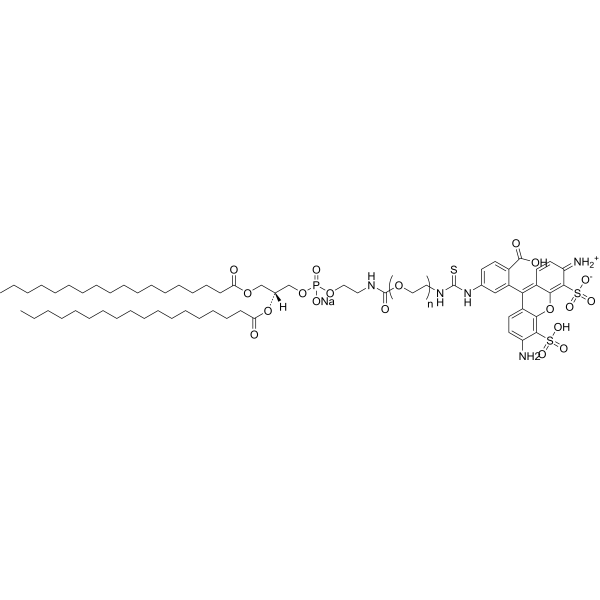
DSPE-PEG5000-Fluor 488 is a PEG-dye-lipid conjugate consists of a DSPE phospholipid which is an unsaturated phospholipid, a Fluor 488 dye which is a cyanine dye that is prominently used in fluorescence microscopy with excitation and emission maxima at 499 nm and 520 nm and a large PEG spacer which links the former substance together.
|
-
- HY-W440891
-
|
|
Biochemical Assay Reagents
|
Others
|
|
DSPE-PEG1000-OH is a hydroxyl terminated phospholipid PEG polymer. The hydrophobic tails allow for the encapsulation and congregation of other hydrophobic drugs. The polymer can be used to prepare liposomes or lipid nanoparticles. Hydroxyl terminal can further derivatize the compound.
|
-

- HY-W440917
-
|
|
Liposome
|
Others
|
|
DSPE-PEG5000-FITC is a fluorescein attached PEG lipid. It can be used to prepare liposomes as drug carrier in targeted drug delivery. The polymer is modified with fluorescein (green) dye which can be used for staining cells, tissues, biomarkers, or nanoparticles.
|
-
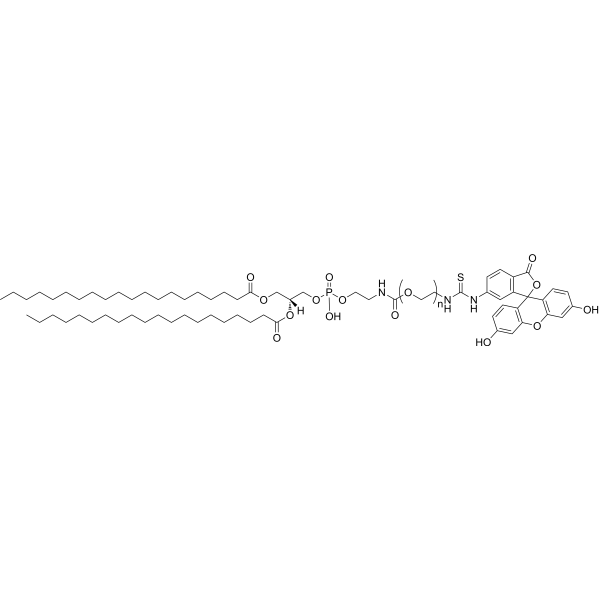
- HY-W440916
-
|
|
Liposome
|
Others
|
|
DSPE-PEG3400-FITC is a fluorescein attached PEG lipid. It can be used to prepare liposomes as drug carrier in targeted drug delivery. The polymer is modified with fluorescein (green) dye which can be used for staining cells, tissues, biomarkers, or nanoparticles.
|
-
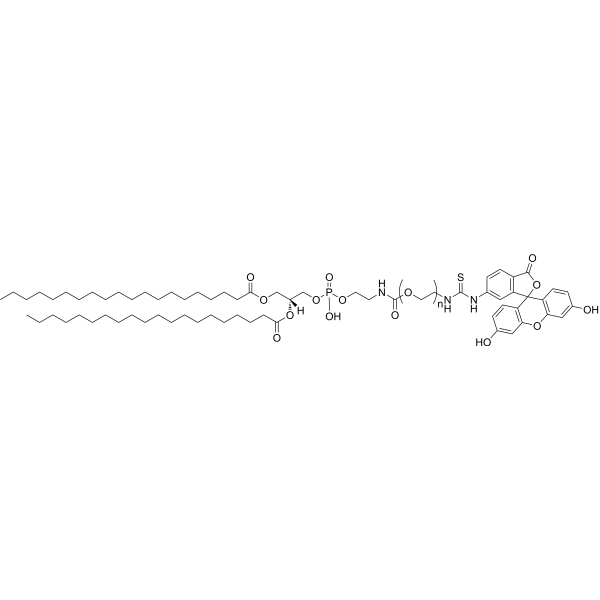
- HY-173385
-
|
|
Biochemical Assay Reagents
|
Metabolic Disease
|
|
Cholesteryl-PEG1000-Azide is a lipid that can be used for drug delivery. Cholesteryl-PEG1000-Azide is attached to the cholesterol backbone with a PEG unit on one side and an azide unit on the other side of the PEG. Cholesteryl-PEG1000-Azide contains an azide group that can undergo copper-catalyzed azide-alkyne cycloaddition reaction (CuAAc) with molecules containing an alkyne group .
|
-

- HY-173381A
-
|
Cholesteryl biotinyl(polyethyleneglycol)-1000 carbamate
|
Biochemical Assay Reagents
|
Others
|
|
Cholesteryl-PEG1000-Biotin is a lipid product. Cholesteryl-PEG1000-Biotin is a cholesterol backbone attached to one side of a PEG unit and a Biotin unit on the other side. Biotin is an enzyme cofactor that can be used to label proteins, and PEG is a low-toxic, hydrophilic, water-soluble polymer. Cholesteryl-PEG1000-Biotin can be used for drug circulation time studies .
|
-

- HY-155887
-
|
DSPE-PEG-NH2, MW 3400 ammonium
|
Liposome
|
Cancer
|
|
DSPE-PEG-Amine (DSPE-PEG-NH2), MW 3400 ammonium is an amino-functionalized PEGylated phospholipid. It serves not only as a key component for preparing σ receptor-targeted liposomes (such as anisamide-modified lipids) but also as a starting material for synthesizing click chemistry- and tumor-targeted lipids including DSPE-PEG-DBCO (HY-155788) and DSPE-PEG2000-TCO (HY-170704). DSPE-PEG-Amine, MW 3400 ammonium effectively modulates the ζ potential of nanoparticles, enables complexation with nucleic acids or proteins to protect DNA from nuclease degradation, and supports ligand conjugation on the nanoparticle surface. It is used in studies related to DU-145 tumors, breast cancer, and other relevant research .
|
-
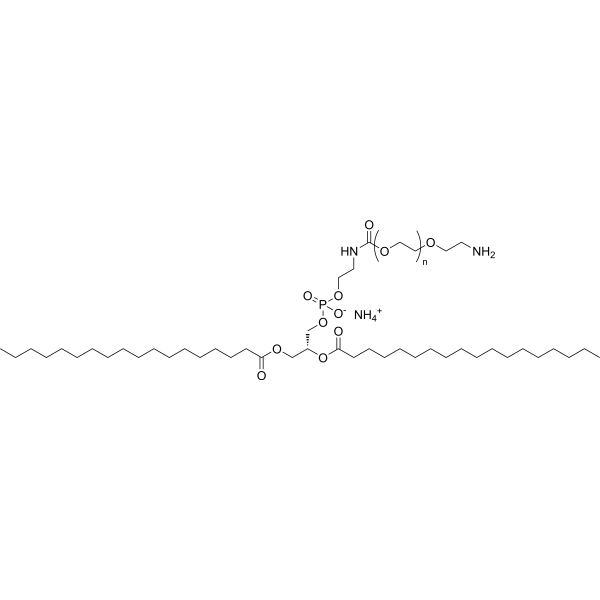
- HY-166648A
-
|
|
Liposome
|
Others
|
|
DSPE-PEG-Maleimide ammonium (MW 2000) is a functional lipid component and a thiol-reactive crosslinker. DSPE-PEG-Maleimide ammonium (MW 2000) undergoes Michael addition with the thiol groups of thiolated or cyclic RGD peptides to form stable thioether bonds and DSPE-PEG (2000)-RGD. DSPE-PEG-Maleimide ammonium (MW 2000) is applicable to research on drug delivery .
|
-

- HY-W440914
-
|
|
Fluorescent Dye
|
Others
|
|
DSPE-PEG1000-FITC is an amphiphile PEG polymer which has unsaturated lipid tails. The polymer can form micelles in an aqueous solution and can be used to prepare liposome/nano particles for drug nanocarriers. . Reagent grade, for research use only.
|
-

- HY-183133B
-
|
|
Biochemical Assay Reagents
|
Others
|
|
C16-PEG5000-COOH is a conjugate composed of a hexadecyl (C16 aliphatic chain), a PEG chain, and a carboxyl group (-COOH). C16-PEG5000-COOH combines the membrane compatibility of lipids with the carboxyl group, which can form amide bonds with primary amines via EDC/NHS activation, making it suitable for research in biomaterial construction and drug delivery.
|
-

- HY-183168B
-
|
|
Biochemical Assay Reagents
|
Others
|
|
C18-PEG5000-COOH is a conjugate composed of an octadecyl group (C18 aliphatic chain), a PEG chain, and a carboxyl group (-COOH). C18-PEG5000-COOH combines the membrane compatibility of lipids with the carboxyl group, which can form amide bonds with primary amines via EDC/NHS activation, making it suitable for research in biomaterial construction and drug delivery.
|
-

- HY-D2567
-
|
|
Fluorescent Dye
|
Others
|
|
Cy5.5-PEG5000-DSPE is a PEG phospholipid with Cy5.5 (HY-D0924) dye used in protein/nucelic acid labeling and fluorescence microscopy. Cy5.5-PEG5000-DSPE can self-assemble in aqueous solution to form micelles/lipid bilayer and used to prepare liposomes or nanoparticles for nutrients delivery such as mRNA or DNA vaccine.
|
-

- HY-D2566
-
|
|
Fluorescent Dye
|
Others
|
|
Cy5.5-PEG3400-DSPE is a PEG phospholipid with Cy5.5 (HY-D0924) dye used in protein/nucelic acid labeling and fluorescence microscopy. Cy5.5-PEG3400-DSPE can self-assemble in aqueous solution to form micelles/lipid bilayer and used to prepare liposomes or nanoparticles for nutrients delivery such as mRNA or DNA vaccine.
|
-

- HY-D2565
-
|
|
Fluorescent Dye
|
Others
|
|
Cy5.5-PEG2000-DSPE is a PEG phospholipid with Cy5.5 (HY-D0924) dye used in protein/nucelic acid labeling and fluorescence microscopy. Cy5.5-PEG2000-DSPE can self-assemble in aqueous solution to form micelles/lipid bilayer and used to prepare liposomes or nanoparticles for nutrients delivery such as mRNA or DNA vaccine.
|
-
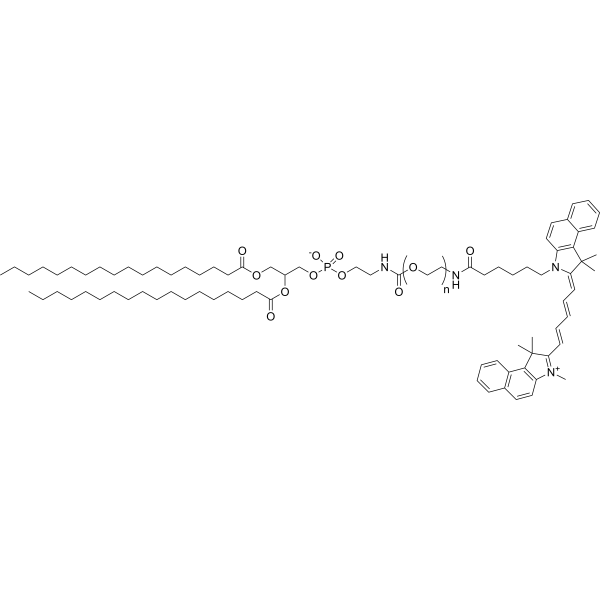
- HY-183168A
-
|
|
Biochemical Assay Reagents
|
Others
|
|
C18-PEG3400-COOH is a conjugate composed of an octadecyl group (C18 aliphatic chain), a PEG chain, and a carboxyl group (-COOH). C18-PEG3400-COOH combines the membrane compatibility of lipids with the carboxyl group, which can form amide bonds with primary amines via EDC/NHS activation, making it suitable for research in biomaterial construction and drug delivery.
|
-

- HY-183168
-
|
|
Biochemical Assay Reagents
|
Others
|
|
C18-PEG2000-COOH is a conjugate composed of an octadecyl group (C18 aliphatic chain), a PEG chain, and a carboxyl group (-COOH). C18-PEG2000-COOH combines the membrane compatibility of lipids with the carboxyl group, which can form amide bonds with primary amines via EDC/NHS activation, making it suitable for research in biomaterial construction and drug delivery.
|
-

- HY-183133
-
|
|
Biochemical Assay Reagents
|
Others
|
|
C16-PEG2000-COOH is a conjugate composed of a hexadecyl (C16 aliphatic chain), a PEG chain, and a carboxyl group (-COOH). C16-PEG2000-COOH combines the membrane compatibility of lipids with the carboxyl group, which can form amide bonds with primary amines via EDC/NHS activation, making it suitable for research in biomaterial construction and drug delivery.
|
-

- HY-W440922A
-
|
|
Biochemical Assay Reagents
|
Others
|
|
m-PEG-C1-DSPE sodium (MW 1000) is a structural analog of m-PEG-DSPE sodium (MW 1000) (HY-W440922). m-PEG-C1-DSPE sodium (MW 1000) is a PEG lipid that can improve the delivery efficiency and tissue specificity of poorly soluble drugs. m-PEG-C1-DSPE sodium (MW 1000) can be used in drug delivery research .
|
-

- HY-183133A
-
|
|
Biochemical Assay Reagents
|
Others
|
|
C16-PEG3400-COOH is a conjugate composed of a hexadecyl (C16 aliphatic chain), a PEG chain, and a carboxyl group (-COOH). C16-PEG3400-COOH combines the membrane compatibility of lipids with the carboxyl group, which can form amide bonds with primary amines via EDC/NHS activation, making it suitable for research in biomaterial construction and drug delivery.
|
-

- HY-D2564
-
|
|
Fluorescent Dye
|
Others
|
|
Cy5.5-PEG1000-DSPE is a PEG phospholipid with Cy5.5 (HY-D0924) dye used in protein/nucelic acid labeling and fluorescence microscopy. Cy5.5-PEG1000-DSPE can self-assemble in aqueous solution to form micelles/lipid bilayer and used to prepare liposomes or nanoparticles for nutrients delivery such as mRNA or DNA vaccine.
|
-

- HY-D2568
-
|
|
Fluorescent Dye
|
Others
|
|
Cy5.5-PEG10000-DSPE is a PEG phospholipid with Cy5.5 (HY-D0924) dye used in protein/nucelic acid labeling and fluorescence microscopy. Cy5.5-PEG10000-DSPE can self-assemble in aqueous solution to form micelles/lipid bilayer and used to prepare liposomes or nanoparticles for nutrients delivery such as mRNA or DNA vaccine.
|
-

- HY-174947
-
|
|
Biochemical Assay Reagents
|
Others
|
|
DPPE-PEG2-mal is an amphiphilic phospholipid-modified polymer that can be used to prepare lipid nanoparticles or liposomes for targeted drug delivery applications .
|
-

- HY-D2526
-
|
|
Fluorescent Dye
Liposome
|
Others
|
|
Cy3 IRGD-PEG-DSPE is a PEG phospholipid with Cy3 (HY-D0822) dye used in protein/nucelic acid labeling and fluorescence microscopy. Cy3 IRGD-PEG-DSPE can self-assemble in aqueous solution to form micelles/lipid bilayer and used to prepare liposomes or nanoparticles for nutrients delivery such as mRNA or DNA vaccine.
|
-
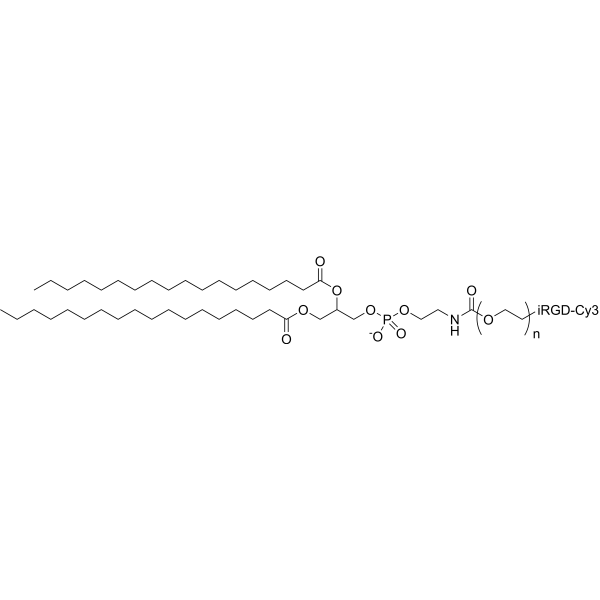
- HY-W440835
-
|
DSPE-PEG2000(2000)-DBCO
|
Liposome
|
Others
|
|
DSPE-PEG2000-DBCO is a phospholipid-PEG polymer that can be used to form micelles as lipid nanoparticles for drug delivery . DSPE-PEG2000-DBCO is a click chemistry reagent, it contains a DBCO group that can undergo strain-promoted alkyne-azide cycloaddition (SPAAC) with molecules containing Azide groups.
|
-
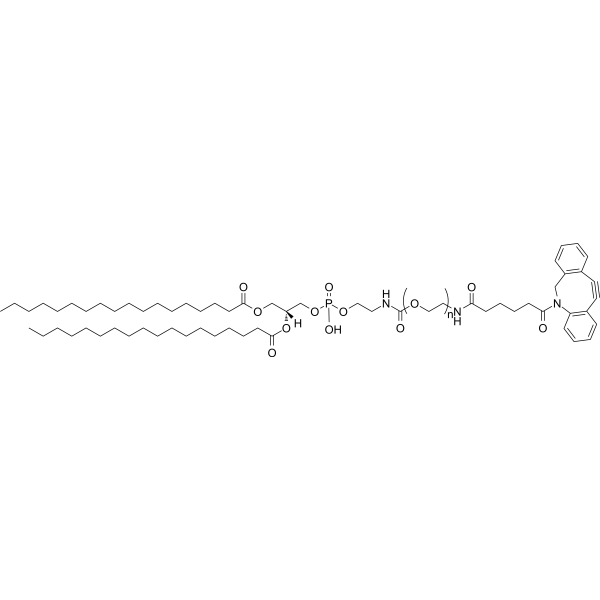
- HY-W440835B
-
|
|
Biochemical Assay Reagents
|
Others
|
|
DSPE-PEG600-DBCO is a phospholipid-PEG polymer that can be used to form micelles as lipid nanoparticles for drug delivery . DSPE-PEG600-DBCO is a click chemistry reagent, it contains a DBCO group that can undergo strain-promoted alkyne-azide cycloaddition (SPAAC) with molecules containing Azide groups.
|
-

- HY-W440835D
-
|
|
Biochemical Assay Reagents
|
Others
|
|
DSPE-PEG3400-DBCO is a phospholipid-PEG polymer that can be used to form micelles as lipid nanoparticles for drug delivery . DSPE-PEG3400-DBCO is a click chemistry reagent, it contains a DBCO group that can undergo strain-promoted alkyne-azide cycloaddition (SPAAC) with molecules containing Azide groups.
|
-

- HY-W440835C
-
|
|
Biochemical Assay Reagents
|
Others
|
|
DSPE-PEG1000-DBCO is a phospholipid-PEG polymer that can be used to form micelles as lipid nanoparticles for drug delivery . DSPE-PEG1000-DBCO is a click chemistry reagent, it contains a DBCO group that can undergo strain-promoted alkyne-azide cycloaddition (SPAAC) with molecules containing Azide groups.
|
-

- HY-W440835E
-
|
|
Biochemical Assay Reagents
|
Others
|
|
DSPE-PEG5000-DBCO is a phospholipid-PEG polymer that can be used to form micelles as lipid nanoparticles for drug delivery . DSPE-PEG5000-DBCO is a click chemistry reagent, it contains a DBCO group that can undergo strain-promoted alkyne-azide cycloaddition (SPAAC) with molecules containing Azide groups.
|
-

- HY-W440835A
-
|
|
Biochemical Assay Reagents
|
Others
|
|
DSPE-PEG400-DBCO is a phospholipid-PEG polymer that can be used to form micelles as lipid nanoparticles for drug delivery . DSPE-PEG400-DBCO is a click chemistry reagent, it contains a DBCO group that can undergo strain-promoted alkyne-azide cycloaddition (SPAAC) with molecules containing Azide groups.
|
-

- HY-W440835H
-
|
|
Biochemical Assay Reagents
|
Others
|
|
DSPE-PEG10000-DBCO is a phospholipid-PEG polymer that can be used to form micelles as lipid nanoparticles for drug delivery . DSPE-PEG10000-DBCO is a click chemistry reagent, it contains a DBCO group that can undergo strain-promoted alkyne-azide cycloaddition (SPAAC) with molecules containing Azide groups.
|
-

- HY-W440681
-
|
|
Liposome
|
Others
|
|
C13-112-tri-tail is a cationic lipid-like compound containing a polar amino alcohol head group, three hydrophobic carbon-13 tails, and a PEG2 linker. C13-112-tri-tail can be formulated into a lipid nanoparticle (LNP).
|
-
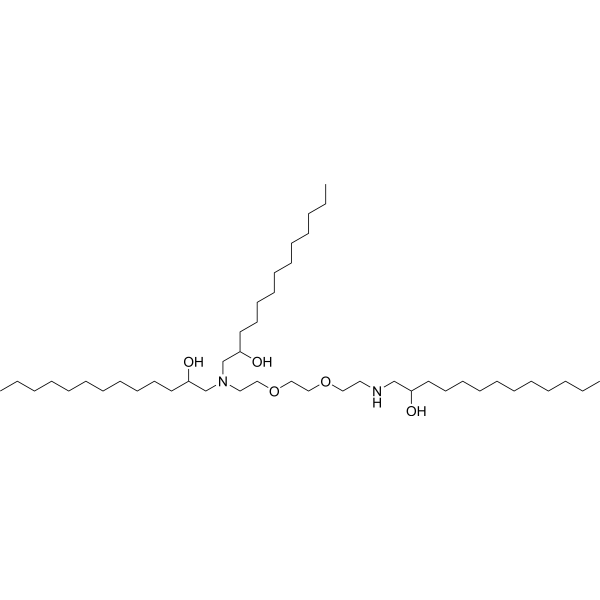
- HY-W440683
-
|
|
Liposome
|
Others
|
|
C13-112-tetra-tail is a cationic lipid-like compound containing a polar amino alcohol head group, four hydrophobic carbon-13 tails, and a PEG2 linker. C13-112-tetra-tail can be formulated into a lipid nanoparticle (LNP).
|
-
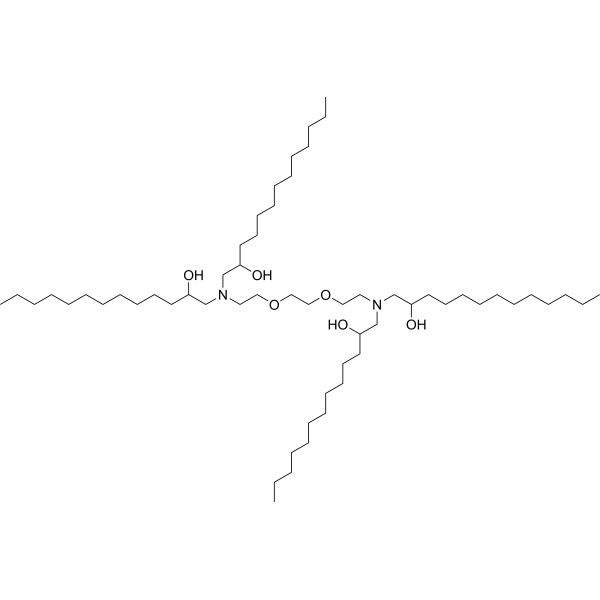
- HY-112760
-
|
DSPE-mPEG2000 sodium; 1,2-Distearoyl-sn-glycero-3-phosphoethanolamine-N-[methoxy(polyethylene glycol)-2000] sodium
|
Liposome
|
Others
|
|
18:0 mPEG2000 PE (DSPE-mPEG2000) sodium is a conjugate of phospholipid and polyethylene glycol, and it can serve as an important PEG lipid component in lipid nanoparticles (LNPs). 18:0 mPEG2000 PE sodium can be used in the research of gene transfection, drug carriers and drug delivery .
|
-
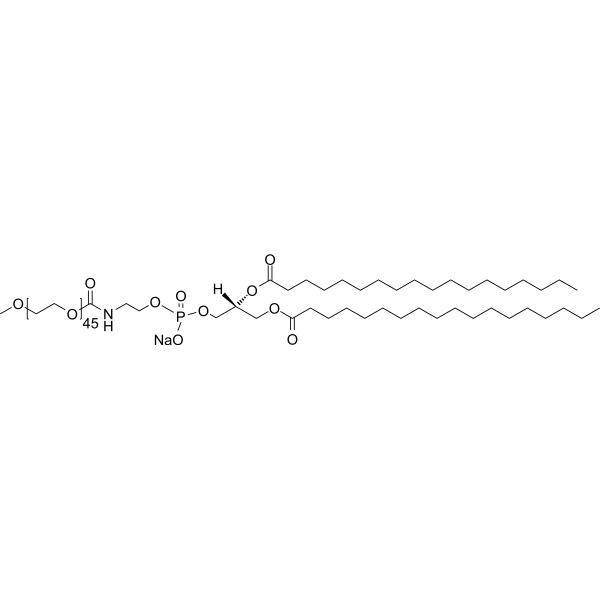
- HY-145411
-
|
|
Liposome
|
Endocrinology
|
|
PEG2000-C-DMG, a pegylated lipid, can be used for the preparation of Onpattro. Onpattro, a hepatically directed investigational RNAi therapeutic agent, harnesses this process to reduce the production of mutant and wild-type transthyretin by targeting the 3′ untranslated region of transthyretin mRNA .
|
-
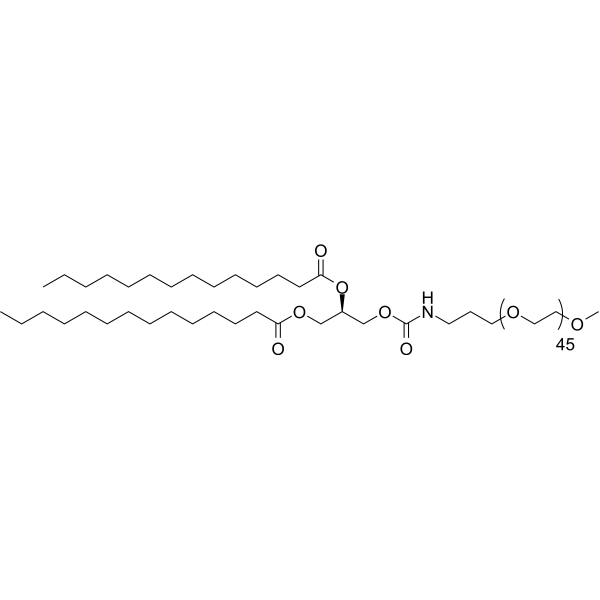
- HY-147207C
-
|
|
Liposome
|
Others
|
|
Phospholipid-PEG5000-Biotin is a phospholipid PEG derivative, can be used for modify liposome and cells surface, and pancreatic islets for cell transplantation. Phospholipid is a class of lipid containing a hydrophilic “head” and two hydrophobic “tails”; PEG is a hydrophilic and water-soluble polymer with low toxicity; Biotin is an enzyme co-factor, can be used for labeling protein .
|
-
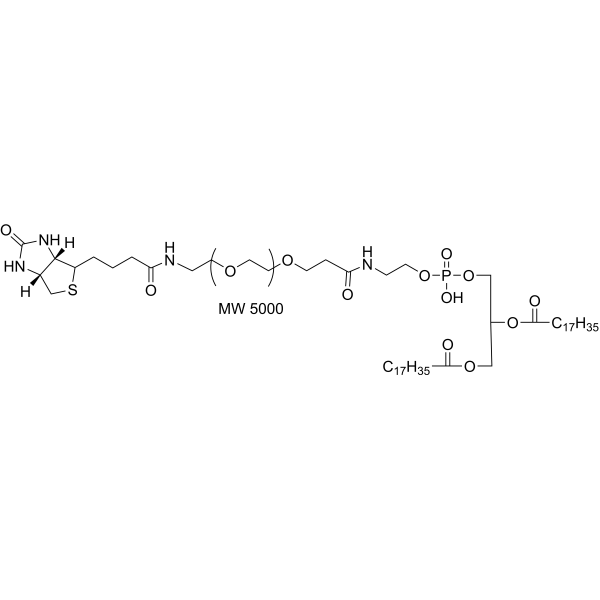
- HY-164720
-
|
|
Liposome
|
Others
|
|
DSPE-PEG4000-OH is a hydroxy-terminated phospholipid PEG polymer. The hydrophobic tails that allows the encapsulation and aggregation of other hydrophobic drugs, and the hydroxy-terminated can be further reacted. DSPE-PEG4000-OH can prepare liposomes or lipid nanoparticles, which can be used in drug delivery and promoting drug absorption research .
|
-

- HY-164723
-
|
|
Liposome
|
Others
|
|
DSPE-PEG10000-OH is a hydroxy-terminated phospholipid PEG polymer. The hydrophobic tails that allows the encapsulation and aggregation of other hydrophobic drugs, and the hydroxy-terminated can be further reacted. DSPE-PEG10000-OH can prepare liposomes or lipid nanoparticles, which can be used in drug delivery and promoting drug absorption research .
|
-

- HY-164721
-
|
|
Liposome
|
Others
|
|
DSPE-PEG6000-OH is a hydroxy-terminated phospholipid PEG polymer. The hydrophobic tails that allows the encapsulation and aggregation of other hydrophobic drugs, and the hydroxy-terminated can be further reacted. DSPE-PEG6000-OH can prepare liposomes or lipid nanoparticles, which can be used in drug delivery and promoting drug absorption research .
|
-

- HY-164722
-
|
|
Liposome
|
Others
|
|
DSPE-PEG8000-OH is a hydroxy-terminated phospholipid PEG polymer. The hydrophobic tails that allows the encapsulation and aggregation of other hydrophobic drugs, and the hydroxy-terminated can be further reacted. DSPE-PEG8000-OH can prepare liposomes or lipid nanoparticles, which can be used in drug delivery and promoting drug absorption research .
|
-

- HY-112764
-
mPEG2000-DMG
Maximum Cited Publications
21 Publications Verification
|
Liposome
|
Metabolic Disease
|
|
DMG-PEG 2000 is used for the preparation of liposome for siRNA delivery with improved transfection efficiency in vitro. DMG-PEG 2000 is also used for the lipid nanoparticle for an oral plasmid DNA delivery approach in vivo through a facile surface modification to improve the mucus permeability and delivery efficiency of the nanoparticles .
|
-
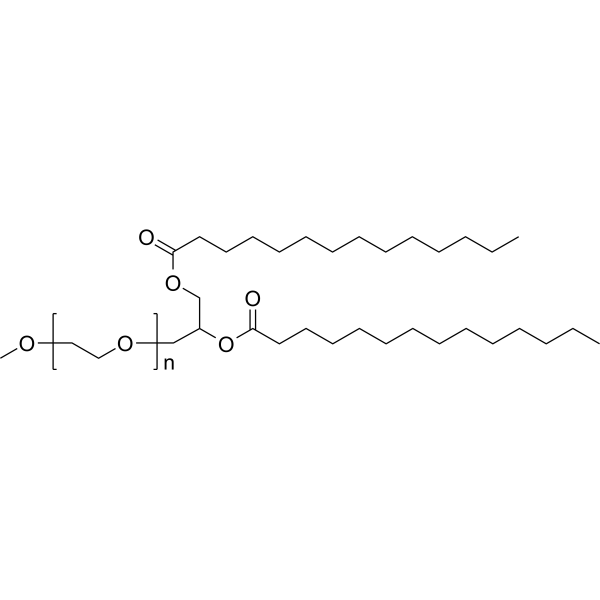
- HY-125924A
-
|
|
Drug Derivative
|
Cancer
|
|
DSPE-PEG20000-Amine ammonium is an amine derivative of phospholipid-polyethylene glycol, which is used to synthesize solid lipid and thermosensitive liposome nanoparticles for the delivery of anticancer agents. DSPE-PEG20000-Amine ammonium is applicable for cancer research .
|
-

- HY-172288
-
|
|
Biochemical Assay Reagents
|
Others
|
|
N-TETAMINE-pSar45 is a polysarcosine (pSar) derivative featuring an N-tetamine head group and a 45-mer polysarcosine tail. Sarcosine is an amino acid derivated that is being developed as an alternative to PEG for in vivo applications due to its biodegradability and highly reduced antigenicity. pSar-lipid derivatives such as this may be applied in the development of lipid nanoparticles.
|
-

- HY-172510
-
|
|
Biochemical Assay Reagents
|
Others
|
|
N-Hexadecyl-pSar25 is a polysarcosine (pSar) derivative featuring a hexadecyl head group and a 25-mer polysarcosine tail. Sarcosine is an amino acid derivated that is being developed as an alternative to PEG for in vivo applications due to its biodegradability and highly reduced antigenicity. pSar-lipid derivatives such as this may be applied in the development of lipid nanoparticles.
|
-

- HY-147332
-
|
|
Liposome
|
Neurological Disease
|
|
TCL053 is an ionizable lipid carrier and used to introduce active components, in particular nucleic acids, into cells with excellent efriciency. TCL053, together with DPPC (Dipalmitoylphosphatidylcholine), PEG-DMG (Polyethylene glycoldimyristoyl glycerol), and cholesterol, forms lipid nanoparticle (LNP) which is able to deliver Cas9 mRNA and sgRNA into skeletal muscle .
|
-
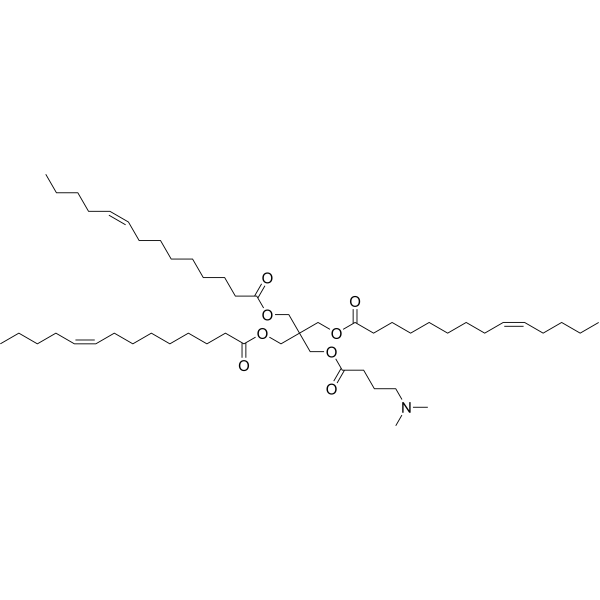
- HY-157950
-
|
|
Liposome
|
Cancer
|
|
DSPE-PEG2K-triGalNAc ammonium is a polar lipid composed of DSPE and tri-N-acetylgalactosamine that can be used to construct liposomes target to asialoglycoprotein receptor (ASGPR).
|
-
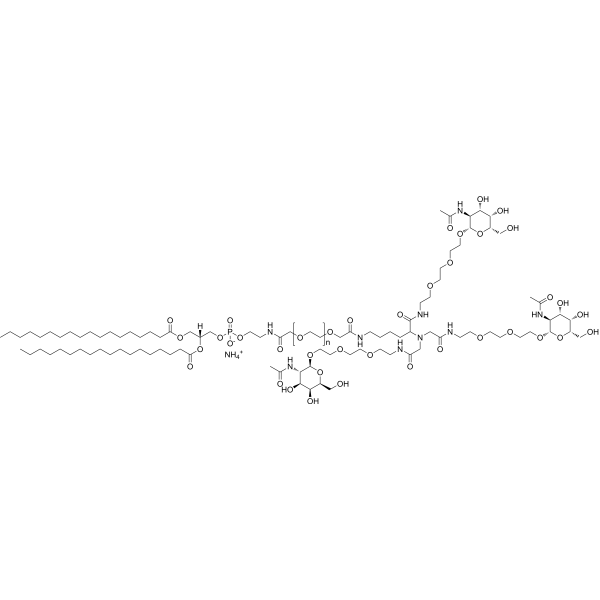
- HY-160277
-
|
|
Fluorescent Dye
|
Others
|
|
DSPE-PEG2000-Fluor 594 is a PEGylated lipid with a DSPE group and a Fluor 594 fluorophore. DSPE is a phospholipid. Fluor 594 is a red water-soluble dye .
|
-
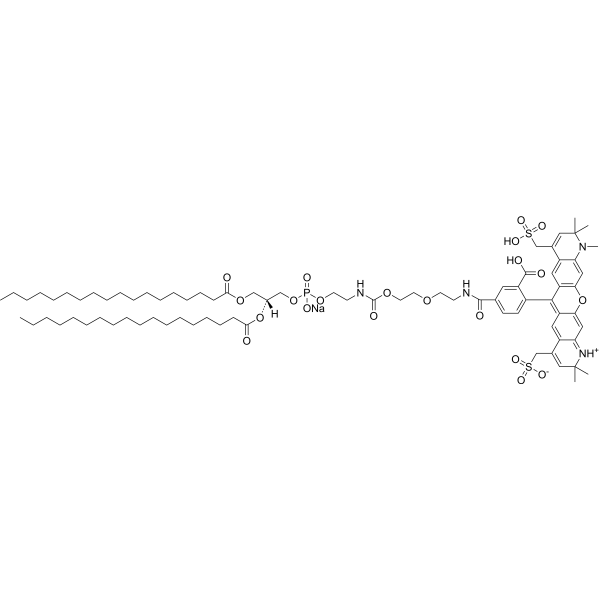
- HY-W440888
-
|
DSPE-PEG2000(2000) Folate
|
Liposome
Folate Receptor (FR)
|
Cancer
|
|
DSPE-PEG2000-Folate (DSPE-PEG2000 Folate) is a folate-containing PEG derivative. DSPE-PEG2000-Folate possesses targeting activity and binds to folate receptors in cancer cells. DSPE-PEG2000-Folate can be post-inserted into preformed liposomal bilayers to prepare folate-targeted liposomal formulations. DSPE-PEG2000-Folate forms micelles/lipid bilayers and can be used in studies of targeted drug delivery systems [2].
|
-
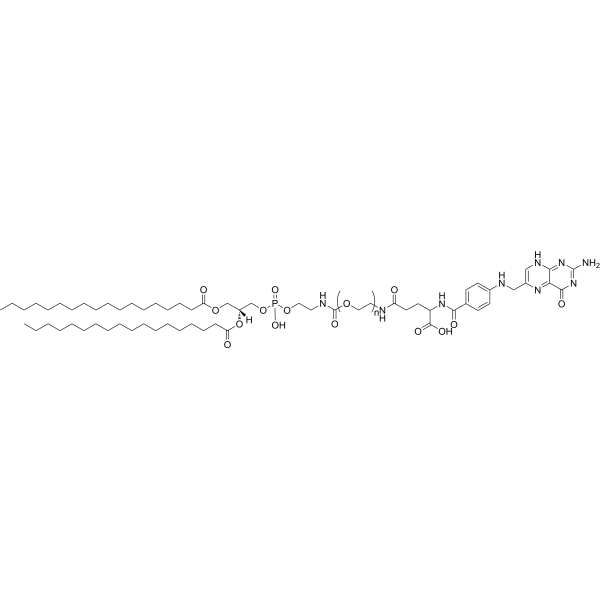
- HY-147207A
-
|
|
Liposome
|
Others
|
|
Phospholipid-PEG2000-Biotin is a Biotin labeled phospholipid PEG derivative, can be used for modify liposome and cells surface, and pancreatic islets for cell transplantation. Phospholipid is a class of lipid containing a hydrophilic "head" and two hydrophobic "tails" ; PEG is a hydrophilic and water-soluble polymer with low toxicity; Biotin is an enzyme co-factor, can be used for labeling protein .
|
-
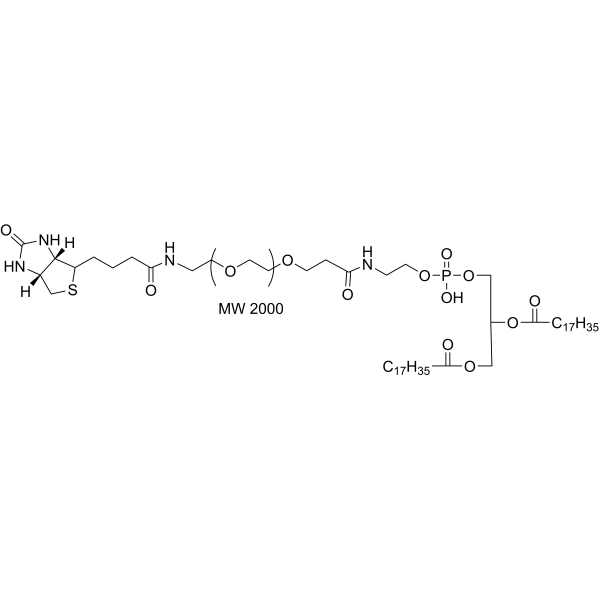
- HY-D2609
-
|
|
Fluorescent Dye
|
Others
|
|
ICG PEG1000 DSPE is a PEG phospholipid with Indocyanine green (ICG) (HY-D0711) dye used in protein/nucelic acid labeling and fluorescence microscopy. ICG PEG1000 DSPE can self-assemble in aqueous solution to form micelles/lipid bilayer and used to prepare liposomes or nanoparticles for nutrients delivery such as mRNA or DNA vaccine (Ex/Em=785/813 nm).
|
-

- HY-D2611
-
|
|
Fluorescent Dye
|
Others
|
|
ICG PEG3400 DSPE is a PEG phospholipid with Indocyanine green (ICG) (HY-D0711) dye used in protein/nucelic acid labeling and fluorescence microscopy. ICG PEG3400 DSPE can self-assemble in aqueous solution to form micelles/lipid bilayer and used to prepare liposomes or nanoparticles for nutrients delivery such as mRNA or DNA vaccine (Ex/Em=785/813 nm).
|
-

- HY-D2613
-
|
|
Fluorescent Dye
|
Others
|
|
ICG PEG10000 DSPE is a PEG phospholipid with Indocyanine green (ICG) (HY-D0711) dye used in protein/nucelic acid labeling and fluorescence microscopy. ICG PEG10000 DSPE can self-assemble in aqueous solution to form micelles/lipid bilayer and used to prepare liposomes or nanoparticles for nutrients delivery such as mRNA or DNA vaccine (Ex/Em=785/813 nm).
|
-

- HY-D2612
-
|
|
Fluorescent Dye
|
Others
|
|
ICG PEG5000 DSPE is a PEG phospholipid with Indocyanine green (ICG) (HY-D0711) dye used in protein/nucelic acid labeling and fluorescence microscopy. ICG PEG5000 DSPE can self-assemble in aqueous solution to form micelles/lipid bilayer and used to prepare liposomes or nanoparticles for nutrients delivery such as mRNA or DNA vaccine (Ex/Em=785/813 nm).
|
-

- HY-D2610
-
|
|
Fluorescent Dye
|
Others
|
|
ICG PEG2000 DSPE is a PEG phospholipid with Indocyanine green (ICG) (HY-D0711) dye used in protein/nucelic acid labeling and fluorescence microscopy. ICG PEG2000 DSPE can self-assemble in aqueous solution to form micelles/lipid bilayer and used to prepare liposomes or nanoparticles for nutrients delivery such as mRNA or DNA vaccine (Ex/Em=785/813 nm).
|
-

- HY-174896A
-
|
|
Biochemical Assay Reagents
|
Others
|
|
DSPE-PEG2000-Fmoc is a lipid-containing PEG derivative that can be used to form micelles as nanoparticles for drug delivery . Fmoc is a commonly used amino protecting group that protects the amino group from unwanted reactions until it is removed when a specific coupling reaction is required.
|
-

- HY-174896
-
|
|
Biochemical Assay Reagents
|
Others
|
|
DSPE-PEG1000-Fmoc is a lipid-containing PEG derivative that can be used to form micelles as nanoparticles for drug delivery . Fmoc is a commonly used amino protecting group that protects the amino group from unwanted reactions until it is removed when a specific coupling reaction is required.
|
-

- HY-174896B
-
|
|
Biochemical Assay Reagents
|
Others
|
|
DSPE-PEG3400-Fmoc is a lipid-containing PEG derivative that can be used to form micelles as nanoparticles for drug delivery . Fmoc is a commonly used amino protecting group that protects the amino group from unwanted reactions until it is removed when a specific coupling reaction is required.
|
-

- HY-W440910
-
|
|
Liposome
|
Others
|
|
DSPE-PEG5000-Cy3 is a phospholipid PEG polymer with Cy3 dye used in labeling and fluorescence microscopy. The polymer can self-assemble in aqueous solution to form micelles/lipid bilayer and used to prepare liposomes or nanoparticles for nutrients delivery such as mRNA or DNA vaccine.
|
-
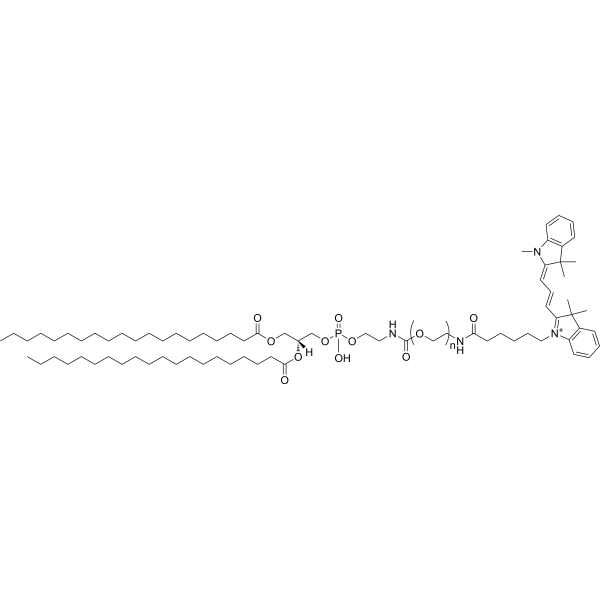
- HY-174896C
-
|
|
Biochemical Assay Reagents
|
Others
|
|
DSPE-PEG5000-Fmoc is a lipid-containing PEG derivative that can be used to form micelles as nanoparticles for drug delivery . Fmoc is a commonly used amino protecting group that protects the amino group from unwanted reactions until it is removed when a specific coupling reaction is required.
|
-

- HY-W440909
-
|
|
Liposome
|
Others
|
|
DSPE-PEG3400-Cy3 is a phospholipid PEG polymer with Cy3 dye used in labeling and fluorescence microscopy. The polymer can self-assemble in aqueous solution to form micelles/lipid bilayer and used to prepare liposomes or nanoparticles for nutrients delivery such as mRNA or DNA vaccine.
|
-
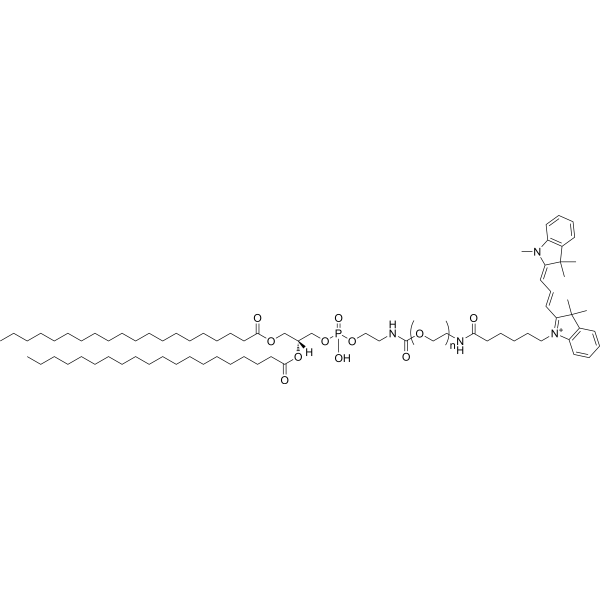
- HY-N16294
-
|
|
Biochemical Assay Reagents
|
Others
|
|
DSPE-PEG8-DBCO is a click chemistry reagent, it contains a DBCO group that can undergo strain-promoted alkyne-azide cycloaddition (SPAAC) with molecules containing Azide groups. DSPE-PEG8-DBCO can be used to prepare lipid nanoparticles for drug delivery.
|
-

- HY-D2593
-
|
|
Fluorescent Dye
|
Others
|
|
Cy7.5-PEG2000-DSPE is a PEG phospholipid with CY7.5 (HY-D0926) dye used in protein/nucelic acid labeling and fluorescence microscopy. Cy7.5-PEG2000-DSPE can self-assemble in aqueous solution to form micelles/lipid bilayer and used to prepare liposomes or nanoparticles for nutrients delivery such as mRNA or DNA vaccine (Ex/Em=770/820 nm).
|
-

- HY-D2596
-
|
|
Fluorescent Dye
|
Others
|
|
Cy7.5-PEG10000-DSPE is a PEG phospholipid with CY7.5 (HY-D0926) dye used in protein/nucelic acid labeling and fluorescence microscopy. Cy7.5-PEG10000-DSPE can self-assemble in aqueous solution to form micelles/lipid bilayer and used to prepare liposomes or nanoparticles for nutrients delivery such as mRNA or DNA vaccine (Ex/Em=770/820 nm).
|
-

- HY-D2592
-
|
|
Fluorescent Dye
|
Others
|
|
Cy7.5-PEG1000-DSPE is a PEG phospholipid with CY7.5 (HY-D0926) dye used in protein/nucelic acid labeling and fluorescence microscopy. Cy7.5-PEG1000-DSPE can self-assemble in aqueous solution to form micelles/lipid bilayer and used to prepare liposomes or nanoparticles for nutrients delivery such as mRNA or DNA vaccine (Ex/Em=770/820 nm).
|
-

- HY-D2594
-
|
|
Fluorescent Dye
|
Others
|
|
Cy7.5-PEG3400-DSPE is a PEG phospholipid with CY7.5 (HY-D0926) dye used in protein/nucelic acid labeling and fluorescence microscopy. Cy7.5-PEG3400-DSPE can self-assemble in aqueous solution to form micelles/lipid bilayer and used to prepare liposomes or nanoparticles for nutrients delivery such as mRNA or DNA vaccine (Ex/Em=770/820 nm).
|
-

- HY-D2595
-
|
|
Fluorescent Dye
|
Others
|
|
Cy7.5-PEG5000-DSPE is a PEG phospholipid with CY7.5 (HY-D0926) dye used in protein/nucelic acid labeling and fluorescence microscopy. Cy7.5-PEG5000-DSPE can self-assemble in aqueous solution to form micelles/lipid bilayer and used to prepare liposomes or nanoparticles for nutrients delivery such as mRNA or DNA vaccine (Ex/Em=770/820 nm).
|
-

- HY-W440706
-
|
|
Liposome
|
Cancer
|
|
Cholesterol-PEG2000-alcohol is a pegylated lipids which can be used for preparation of liposome or nanoparticle. The lipophilic moiety can encapsulate hydrophobic drugs whereas the hydrophilic PEG chain helps the overal water solubility of the micelles. The amine can react with an activated NHS ester to form a stable amide bond.
|
-

- HY-W440912
-
|
|
Liposome
|
Others
|
|
DSPE-PEG3400-Cy5 is a PEG phospholipid with Cy5 dye used in protein/nucelic acid labeling and fluorescence microscopy. The polymer can self-assemble in aqueous solution to form micelles/lipid bilayer and used to prepare liposomes or nanoparticles for nutrients delivery such as mRNA or DNA vaccine.
|
-
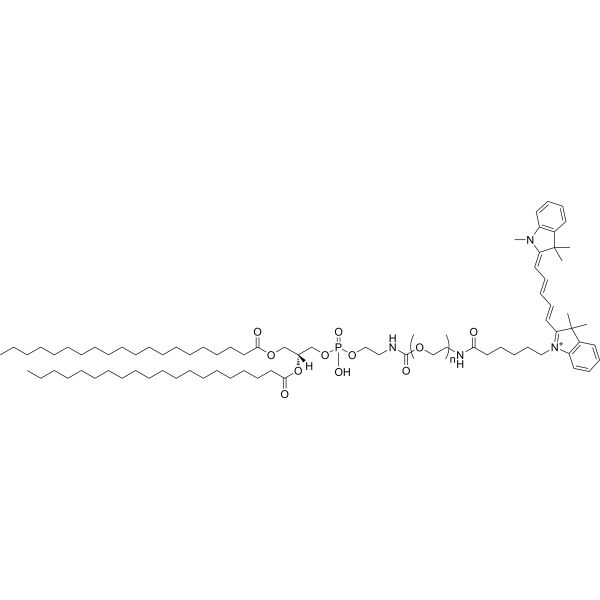
- HY-172499
-
|
|
Liposome
|
Cancer
|
|
DSPE-PEG1000-Mal-CLPLIPTHIISFS is a PEG compound composed of DSPE and the liver cancer targeting peptide SP94 (HY-P11050A) (sequence SFSIIHTPILPL). SP94 exhibits specific binding to hepatocellular carcinoma (HCC) cells. DSPE-PEG1000-Mal-CLPLIPTHIISFS can be used to prepare lipid nanoparticles to form liver cancer-targeting nanocarriers.
|
-

- HY-172501
-
|
|
Liposome
|
Cancer
|
|
DSPE-PEG5000-Mal-CLPLIPTHIISFS is a PEG compound composed of DSPE and the liver cancer targeting peptide SP94 (HY-P11050A) (sequence SFSIIHTPILPL). SP94 exhibits specific binding to hepatocellular carcinoma (HCC) cells. DSPE-PEG5000-Mal-CLPLIPTHIISFS can be used to prepare lipid nanoparticles to form liver cancer-targeting nanocarriers.
|
-

- HY-172500A
-
|
|
Liposome
|
Cancer
|
|
DSPE-PEG3400-Mal-CLPLIPTHIISFS is a PEG compound composed of DSPE and the liver cancer targeting peptide SP94 (HY-P11050A) (sequence SFSIIHTPILPL). SP94 exhibits specific binding to hepatocellular carcinoma (HCC) cells. DSPE-PEG3400-Mal-CLPLIPTHIISFS can be used to prepare lipid nanoparticles to form liver cancer-targeting nanocarriers.
|
-

- HY-172500
-
|
|
Liposome
|
Cancer
|
|
DSPE-PEG2000-Mal-CLPLIPTHIISFS is a PEG compound composed of DSPE and the liver cancer targeting peptide SP94 (HY-P11050A) (sequence SFSIIHTPILPL). SP94 exhibits specific binding to hepatocellular carcinoma (HCC) cells. DSPE-PEG2000-Mal-CLPLIPTHIISFS can be used to prepare lipid nanoparticles to form liver cancer-targeting nanocarriers.
|
-

- HY-166648
-
|
|
Liposome
|
Cancer
|
|
DSPE-PEG2000-Maleimide sodium (purity>99%) is a functional lipid component and a thiol-reactive crosslinker. DSPE-PEG2000-Maleimide sodium (purity>99%) undergoes Michael addition with the thiol groups of thiolated or cyclic RGD peptides to form stable thioether bonds and DSPE-PEG2000-RGD. DSPE-PEG2000-Maleimide sodium (purity>99%) is applicable to research on drug delivery .
|
-

- HY-174946
-
|
DPPE-PEG1-N3
|
Biochemical Assay Reagents
|
Others
|
|
DPPE-PEG1-azide (DPPE-PEG1-N3) is a PEG-modified lipid containing an azide group. DPPE-PEG1-azide can undergo a copper-catalyzed azide-alkyne cycloaddition reaction (CuAAc) with molecules containing an alkynyl group. It can also undergo ring strain-driven alkyne-azide cycloaddition (SPAAC) reactions with molecules containing DBCO or BCN groups .
|
-

- HY-174946A
-
|
DPPE-PEG5-N3
|
Biochemical Assay Reagents
|
Others
|
|
DPPE-PEG5-azide (DPPE-PEG5-N3) is a PEG-modified lipid containing an azide group. DPPE-PEG5-azide can undergo a copper-catalyzed azide-alkyne cycloaddition reaction (CuAAc) with molecules containing an alkynyl group. It can also undergo ring strain-driven alkyne-azide cycloaddition (SPAAC) reactions with molecules containing DBCO or BCN groups .
|
-

- HY-171562
-
|
|
Biochemical Assay Reagents
|
Metabolic Disease
|
|
Cholesterol-SA-PEG2000-Azide is a lipid that can be used for drug delivery. Cholesterol-SA-PEG2000-Azide contains Cholesterol (HY-N0322), Succinic acid (HY-N0420), PEG units and an azide group. Cholesterol-SA-PEG2000-Azide contains an azide group that can undergo copper-catalyzed azide-alkyne cycloaddition reaction (CuAAc) with molecules containing an alkyne group .
|
-

- HY-101530B
-
|
PEG 40 stearate
|
Biochemical Assay Reagents
|
Others
|
|
Polyoxyl 40 stearate (PEG 40 stearate) is a nonionic surfactant formed by the esterification of stearic acid with polyethylene glycol (PEG) containing approximately 40 ethoxy units, it is widely used in pharmaceutical preparations, nanodrug carriers, emulsification systems and biomedical materials. Polyoxyl 40 stearate can serve as a matrix component of solid lipid nanoparticles to achieve controlled release of encapsulated antifungal drugs; it can also act as a base material for solid lipid nanoparticles for vaginal administration, and polymerizable groups can be introduced via modification with acryloyl chloride .
|
-
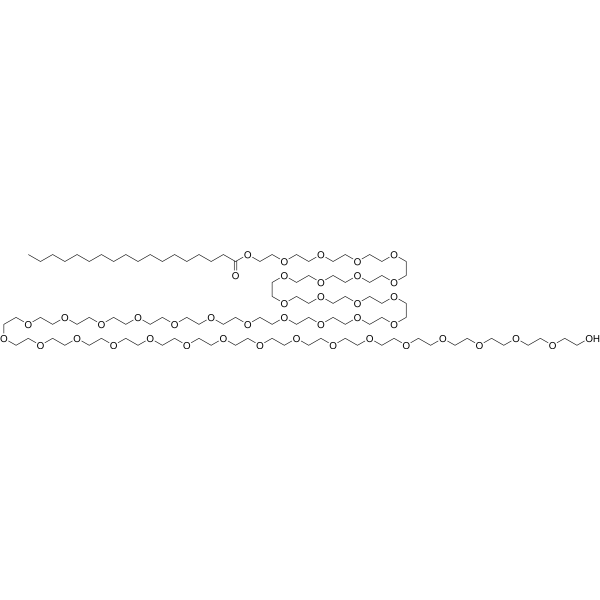
- HY-125924
-
|
DSPE-PEG-NH2, MW 2000 ammonium; DSPE-PEG(2000) Amine ammonium
|
Liposome
|
Others
|
|
DSPE-PEG-Amine, MW 2000 (ammonium), an amine derivative of phospholipid poly ethylene glycol, is used in the synthesis of solid lipid and thermosensitive liposomal nanoparticles for the delivery of anticancer agents .
|
-
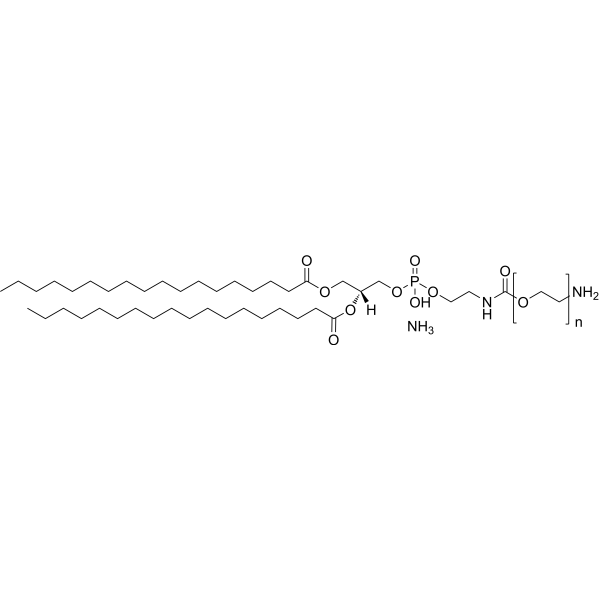
- HY-W441015A
-
|
|
Liposome
|
Others
|
|
DSPE-m-PEG3400-NHS is a pegylated phospholipid derivatives which can be used to prepare liposome or lipid nanoparticles for targeted drug delivery system, such as DNA or mRNA vaccine .
|
-
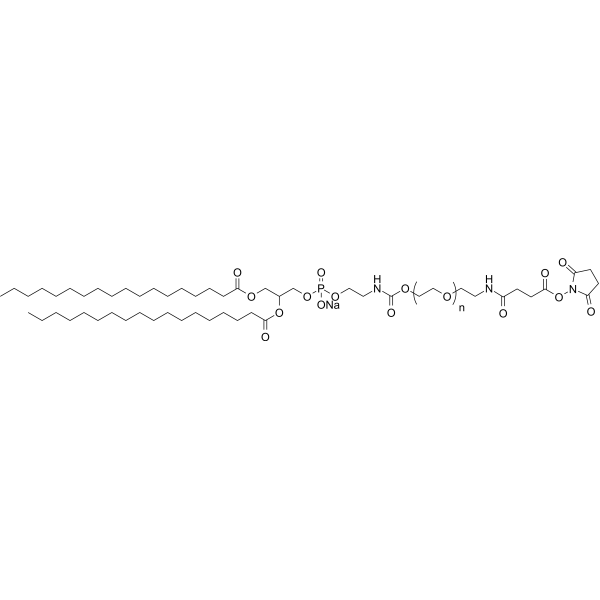
- HY-172699
-
|
|
Liposome
LDLR
|
Cancer
|
|
DSPE-PEG2000-ANG is a conjugate of DSPE-PEG2000-MAL and Angiopep-2. Angiopep-2 is a peptide ligand that targets LRP-1. DSPE-PEG2000-ANG is used to synthesize gadolinium-boron bifunctionalized lipid nanoparticles BPA-F&DOTA-Gd@LIPO-ANG with blood-brain barrier and glioma targeting properties .
|
-

- HY-165156
-
|
1,2-DPPE-MPEG(2000)
|
Liposome
|
Others
|
|
DPPE-MPEG 2000 (1,2-DPPE-MPEG(2000)) is a PEG-modified lipids. DPPE-MPEG 2000 can reduce the nonspecific adsorption of protein and prolong circulation time in vivo .
|
-

- HY-112764GL
-
|
|
Liposome
|
Metabolic Disease
|
|
DMG-PEG 2000 (GMP Like) is DMG-PEG 2000 (HY-112764) produced by using GMP like guidelines. GMP Like small molecules works appropriately as an auxiliary reagent for cell therapy manufacture. DMG-PEG 2000 is used for the preparation of liposome for siRNA delivery with improved transfection efficiency in vitro. DMG-PEG 2000 is also used for the lipid nanoparticle for an oral plasmid DNA delivery approach in vivo through a facile surface modification to improve the mucus permeability and delivery efficiency of the nanoparticles .
|
-

- HY-186175
-
|
|
Biochemical Assay Reagents
|
Others
|
|
DMG-PEG2000-Mal-Cys-penetratin is a conjugate composed of dimyristoylglycerol (DMG), a PEG chain, and terminal maleimide (Mal). DMG-PEG2000-Mal-Cys-penetratin combines the membrane compatibility of lipids, the specific Michael addition reaction with thiol-containing (-SH) biomolecules (such as peptides, antibodies, and aptamers) by maleimide, and cell-penetrating peptides, making it suitable for research on biomaterial construction and drug delivery to cells.
|
-

- HY-186176
-
|
|
Biochemical Assay Reagents
|
Others
|
|
DSPE-PEG2000-Mal-Cys-penetratin is a conjugate composed of DSPE, a PEG chain, and terminal maleimide (Mal). DSPE-PEG2000-Mal-Cys-penetratin combines the membrane compatibility of lipids, the ability to undergo specific Michael addition reactions with thiol-containing (-SH) biomolecules (such as peptides, antibodies, and aptamers), and the ability to penetrate cell membranes, making it suitable for research on biomaterial construction and drug delivery to cells.
|
-

- HY-W440900
-
|
|
Biochemical Assay Reagents
|
Others
|
|
DSPE-PEG3400-SPDP is an amphiphilic polyPEG which forms lipid bilayer in water. It can be used to encapsualte therapeutic agents, such as hydrophilic nutrierns (protein/peptide, mRNA/DNA/siRNA) or hdyrophobic drugs (
|
-

- HY-140739
-
|
|
Liposome
|
Neurological Disease
Cancer
|
|
DSPE-PEG2000-Maleimide sodium (purity>95%) is a phospholipid-PEG conjugate. DSPE-PEG2000-Maleimide utilizes the amphiphilicity of DSPE to insert into the lipid bilayer of liposomes or nanoparticles. DSPE-PEG2000-Maleimide covalently couples to the sulfhydryl (-SH) of ligands (such as antibodies, peptides, or proteins) via thiol-maleimide click chemistry, giving the particles targeting capabilities. DSPE-PEG2000-Maleimide sodium (purity>95%) can be used in the researches of breast cancer, lymphoma, and inherited retinal degeneration .
|
-
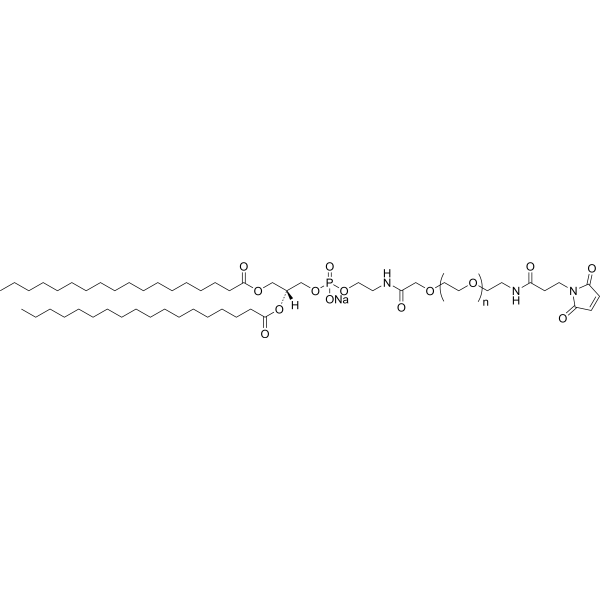
- HY-140739A
-
|
|
Liposome
|
Neurological Disease
Cancer
|
|
DSPE-PEG2000-Maleimide free acid is a phospholipid-PEG conjugate. DSPE-PEG2000-Maleimide free acid utilizes the amphiphilicity of DSPE to insert into the lipid bilayer of liposomes or nanoparticles. DSPE-PEG2000-Maleimide free acid covalently couples to the sulfhydryl (-SH) of ligands (such as antibodies, peptides, or proteins) via thiol-maleimide click chemistry, giving the particles targeting capabilities. DSPE-PEG2000-Maleimide free acid can be used in the researches of breast cancer, lymphoma, and inherited retinal degeneration .
|
-

- HY-171728
-
|
|
Liposome
|
Metabolic Disease
|
|
Azide-PEG2-amide-C14-COOH (Compound LP-379-p) is a lipid-containing compound. Azide-PEG2-amide-C14-COOH facilitates the delivery of oligonucleotide-based reagents to certain cell types or adipose tissue .
|
-

- HY-D2938
-
|
|
Fluorescent Dye
|
Others
|
|
BG-PEG11-Cya-NR is a high-performance, non washable, fluorescent opening probe. BG-PEG11-Cya-NR has very weak fluorescence in polar environments (such as aqueous solutions), while its fluorescence is significantly enhanced in non-polar environments (such as the lipid bilayer of cell membranes) .
|
-

- HY-151773
-
|
|
ADC Linker
|
Others
|
|
Methyltetrazine-PEG12-acid is a click chemistry PEG reagent containing a tetrazine group. Click chemistry has great potential for use in binding between nucleic acids, lipids, proteins, and other molecules, and has been used in many research fields because of its beneficial characteristics, including high yield, high specificity, and simplicity .
|
-
- HY-176509D
-
|
|
Liposome
|
Others
|
|
DSPE-PEG10000-CHO is a linear heterobifunctional PEGylation reagent with DSPE phospholipids and aldehyde groups. PEG linkers have good hydrophilicity and water solubility. Aldehyde-polyethylene glycol (DSPE) is one of the most commonly used reactive phospholipids to bind antibodies, peptides or other ligands to the surface of liposomes and other lipid-polyethylene glycol nanoparticles. DSPE-PEG10000-CHO can be used for drug delivery .
|
-

- HY-176509B
-
|
|
Liposome
|
Others
|
|
DSPE-PEG3400-CHO is a linear heterobifunctional PEGylation reagent with DSPE phospholipids and aldehyde groups. PEG linkers have good hydrophilicity and water solubility. Aldehyde-polyethylene glycol (DSPE) is one of the most commonly used reactive phospholipids to bind antibodies, peptides or other ligands to the surface of liposomes and other lipid-polyethylene glycol nanoparticles. DSPE-PEG3400-CHO can be used for drug delivery .
|
-

- HY-151772
-
|
|
ADC Linker
|
Others
|
|
Methyltetrazine-PEG12-t-butyl ester is a monodisperse PEG compound. Methyltetrazine-PEG12-t-butyl ester is a click chemistry reagent containing a tetrazine group. Click chemistry has great potential for use in binding between nucleic acids, lipids, proteins, and other molecules, and has been used in many research fields because of its beneficial characteristics, including high yield, high specificity, and simplicity .
|
-
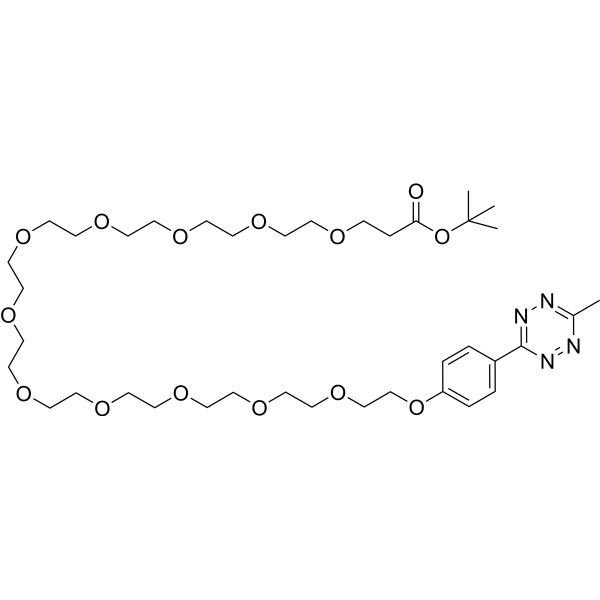
- HY-176509C
-
|
|
Liposome
|
Others
|
|
DSPE-PEG5000-CHO is a linear heterobifunctional PEGylation reagent with DSPE phospholipids and aldehyde groups. PEG linkers have good hydrophilicity and water solubility. Aldehyde-polyethylene glycol (DSPE) is one of the most commonly used reactive phospholipids to bind antibodies, peptides or other ligands to the surface of liposomes and other lipid-polyethylene glycol nanoparticles. DSPE-PEG5000-CHO can be used for drug delivery .
|
-

- HY-176509
-
|
|
Liposome
|
Others
|
|
DSPE-PEG1000-CHO is a linear heterobifunctional PEGylation reagent with DSPE phospholipids and aldehyde groups. PEG linkers have good hydrophilicity and water solubility. Aldehyde-polyethylene glycol (DSPE) is one of the most commonly used reactive phospholipids to bind antibodies, peptides or other ligands to the surface of liposomes and other lipid-polyethylene glycol nanoparticles. DSPE-PEG1000-CHO can be used for drug delivery .
|
-

- HY-176509E
-
|
|
Liposome
|
Others
|
|
DSPE-PEG20000-CHO is a linear heterobifunctional PEGylation reagent with DSPE phospholipids and aldehyde groups. PEG linkers have good hydrophilicity and water solubility. Aldehyde-polyethylene glycol (DSPE) is one of the most commonly used reactive phospholipids to bind antibodies, peptides or other ligands to the surface of liposomes and other lipid-polyethylene glycol nanoparticles. DSPE-PEG20000-CHO can be used for drug delivery .
|
-

- HY-176509H
-
|
|
Liposome
|
Others
|
|
DSPE-PEG40000-CHO is a linear heterobifunctional PEGylation reagent with DSPE phospholipids and aldehyde groups. PEG linkers have good hydrophilicity and water solubility. Aldehyde-polyethylene glycol (DSPE) is one of the most commonly used reactive phospholipids to bind antibodies, peptides or other ligands to the surface of liposomes and other lipid-polyethylene glycol nanoparticles. DSPE-PEG40000-CHO can be used for drug delivery .
|
-

- HY-176509A
-
|
|
Liposome
|
Others
|
|
DSPE-PEG2000-CHO is a linear heterobifunctional PEGylation reagent with DSPE phospholipids and aldehyde groups. PEG linkers have good hydrophilicity and water solubility. Aldehyde-polyethylene glycol (DSPE) is one of the most commonly used reactive phospholipids to bind antibodies, peptides or other ligands to the surface of liposomes and other lipid-polyethylene glycol nanoparticles. DSPE-PEG2000-CHO can be used for drug delivery .
|
-

- HY-W440901
-
|
|
Liposome
|
Others
|
|
DSPE-PEG5000-SPDP is an amphiphilic polyPEG which forms lipid bilayer in water. It can be used to encapsualte therapeutic agents. The core can encapsulate hydrophilic nutrients, such as protein/peptide and mRNA/DNA/siRNA etc. while the lipid bilayer can solubilize hydrophobic drugs, such as doxorubicin, curcumin etc. The SPDP moiety can react with thiol molecule to form a disulfide bond.
|
-

- HY-W440939
-
|
|
Liposome
|
Others
|
|
Stearic acid-PEG3400-FITC is a PEG lipid which forms micelles in water and can be used for drug delivery applications. The FITC fluorescent can be easily traced by miscroscopy. FITC is a green dye with peak absorption at 494 nm and maximum emission at 520 nm and can be used for staining biological samples or nanoparticles. FITC can be easily traced by fluorescence microscopy.
|
-
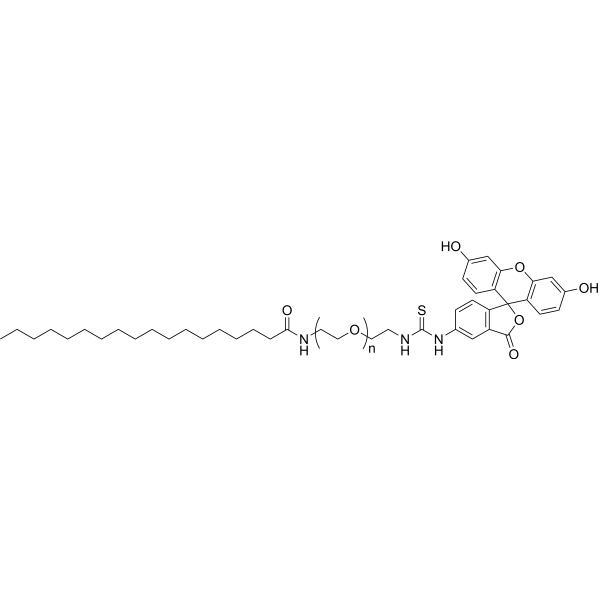
- HY-W440940
-
|
|
Liposome
|
Others
|
|
Stearic acid-PEG5000-FITC is a PEG lipid which forms micelles in water and can be used for drug delivery applications. The FITC fluorescent can be easily traced by miscroscopy. FITC is a green dye with peak absorption at 494 nm and maximum emission at 520 nm and can be used for staining biological samples or nanoparticles. FITC can be easily traced by fluorescence microscopy.
|
-
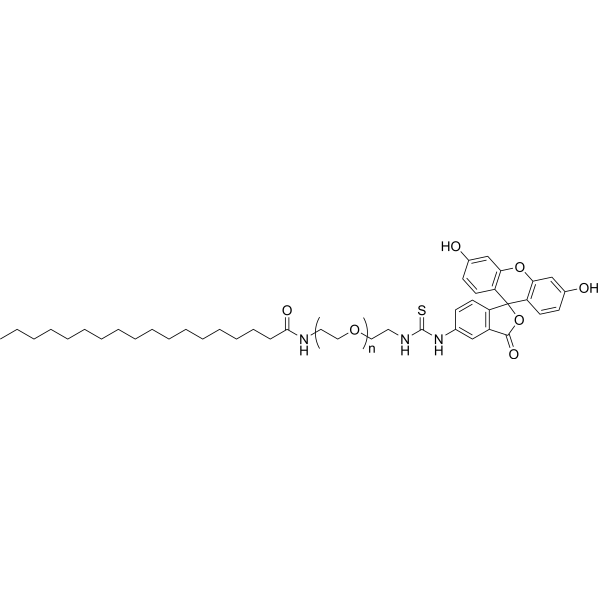
- HY-D2440
-
|
|
Fluorescent Dye
|
Others
|
|
cRGD-PEG-Cy3 is a Cy3 (HY-D0822) labeled cRGD-PEG conjugate. The Cy3 fluorophore is commonly used in applications such as immunolabeling, nucleic acid labeling, fluorescence microscopy, and flow cytometry. Cy3 has an emission maximum around 562-570 nm. cRGD can be used to modify lipid for improved stability .
|
-

- HY-W440928
-
|
|
Liposome
|
Others
|
|
Stearic acid-PEG3400-NHS is a phospholipid polyPEG which can self-assemble in water to form lipid bilayer. The polymer can be used to prepare liposomes as drug carrier to deliver nutrients/therpeutic agents, such as mRNA or DNA.
|
-

- HY-W440903
-
|
|
Biochemical Assay Reagents
|
Others
|
|
DSPE-PEG5000-IA is a cyclooctyne containing phospholipid PEG polymer. The polymer can self-assemble spontaneously in water to form micelles/lipid bilayer. It can be used to prepare nanoparticles or liposomes as drug carrier in targeted drug delivery system. The DBCO can react with azide molecule via copper free click chemistry to form a stable triazole bond.
|
-

- HY-W440926
-
|
|
Liposome
|
Others
|
|
Stearic acid-PEG1000-NHS is a cyclooctyne containing phospholipid PEG polymer. The polymer can self-assemble spontaneously in water to form micelles/lipid bilayer. It can be used to prepare nanoparticles or liposomes as drug carrier in targeted drug delivery system. The DBCO can react with azide molecule via copper free click chemistry to form a stable triazole bond.
|
-

- HY-W440885
-
|
|
Biochemical Assay Reagents
|
Others
|
|
DSPE-PEG5000-Ald is a phospholipid PEG polymer which can self-assemble spontaneously in water with their hydrophilic heads oriented toward the water (micelles). The polymer can be used to prepare liposome as a drug nanocarrier for administration of nutrients and therapeutic drugs, such as lipid nanoparticles in mRNA or DNA vaccines. The aldehyde is reactive with aminooxy to form a stable oxime linkage or with amine at pH < 7 to form a reversible imine bond.
|
-

- HY-W440834
-
|
|
Liposome
|
Others
|
|
DSPE-PEG5000-azide is a click chemistry reactive phospholipid polyPEG which forms lipid bilayer or micelles in an aqueous solution. The polymer can be used to prepare liposomes or nanoparticles used for delivering nutrients or therapeutic agents, for example mRNA or DNA vaccine.
|
-

- HY-174945B
-
|
DSPE-PEG8-N3
|
Biochemical Assay Reagents
|
Others
|
|
DSPE-PEG8-azide (DSPE-PEG8-N3) is an azide containing lipid that can be used to form micelles as nanoparticles for drug delivery. DSPE-PEG8-azide is a click chemistry reagent, it contains an Azide group and can undergo copper-catalyzed azide-alkyne cycloaddition reaction (CuAAc) with molecules containing Alkyne groups. It can also undergo strain-promoted alkyne-azide cycloaddition (SPAAC) reactions with molecules containing DBCO or BCN groups .
|
-

- HY-174945A
-
|
DSPE-PEG1-N3
|
Biochemical Assay Reagents
|
Others
|
|
DSPE-PEG1-azide (DSPE-PEG1-N3) is an azide containing lipid that can be used to form micelles as nanoparticles for drug delivery. DSPE-PEG1-azide is a click chemistry reagent, it contains an Azide group and can undergo copper-catalyzed azide-alkyne cycloaddition reaction (CuAAc) with molecules containing Alkyne groups. It can also undergo strain-promoted alkyne-azide cycloaddition (SPAAC) reactions with molecules containing DBCO or BCN groups .
|
-

- HY-174945
-
|
DSPE-PEG3-N3
|
Biochemical Assay Reagents
|
Others
|
|
DSPE-PEG3-azide (DSPE-PEG3-N3) is an azide containing lipid that can be used to form micelles as nanoparticles for drug delivery. DSPE-PEG3-azide is a click chemistry reagent, it contains an Azide group and can undergo copper-catalyzed azide-alkyne cycloaddition reaction (CuAAc) with molecules containing Alkyne groups. It can also undergo strain-promoted alkyne-azide cycloaddition (SPAAC) reactions with molecules containing DBCO or BCN groups .
|
-

- HY-168374
-
|
|
Biochemical Assay Reagents
Liposome
Small Interfering RNA (siRNA)
|
Cancer
|
|
DSPE-PEG 2000-Mannose is a mannose-containing lipid. DSPE-PEG 2000-Mannose is used to prepare mannose-conjugated Liposome (Man-lipo) for siRNA delivery. Mannose-modified liposomes encapsulating IDO siRNA (Man-lipo-siIDO) preferentially knock down IDO expression in the draining lymph nodes and spleens of melanoma-bearing mice. Man-lipo-siIDO delays the onset time of melanoma and reduces tumor volume .
|
-

- HY-W440921
-
|
|
Liposome
|
Others
|
|
DSPE-PEG5000-Rhodamine is a phospholipid polyPEG with red fluorescent. The polymer can form lipid bilayer and be used to prepare nanoparticles or liposomes for targeted drug delivery. Rhodamine has maximum absorption at 570 nm and emission around 595 nm and can be easily traced using an imaging technique.
|
-
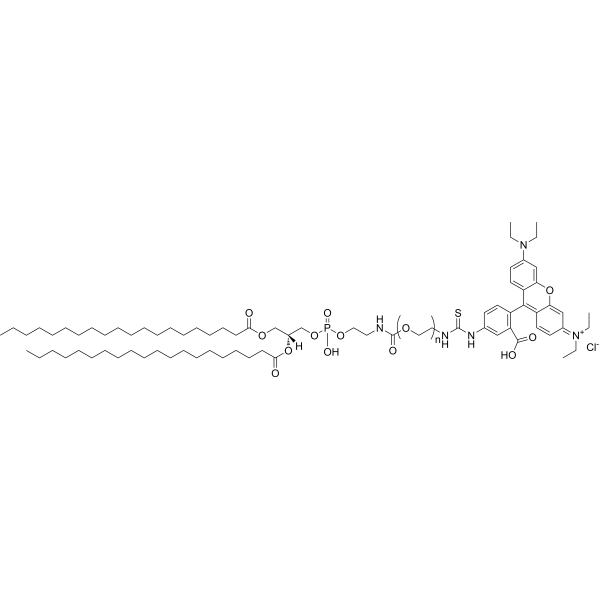
- HY-W440920
-
|
|
Liposome
|
Others
|
|
DSPE-PEG3400-Rhodamine is a phospholipid polyPEG with red fluorescent. The polymer can form lipid bilayer and be used to prepare nanoparticles or liposomes for targeted drug delivery. Rhodamine has maximum absorption at 570 nm and emission around 595 nm and can be easily traced using an imaging technique.
|
-
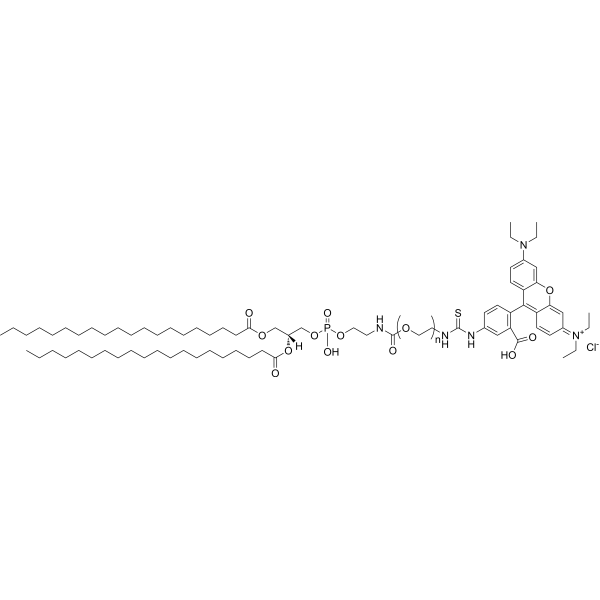
- HY-170704
-
|
|
Liposome
|
Metabolic Disease
Cancer
|
|
DSPE-PEG2000-TCO is a click chemistry coupling partner. DSPE-PEG2000-TCO undergoes a reverse electron-demand Diels-Alder click reaction to form a covalent linkage with tetrazine-modified Cetuximab (HY-P9905). DSPE-PEG2000-TCO maintains the stability of lipid nanoparticles (LNPs) and has high mRNA encapsulation efficiency, which supports cellular uptake and mRNA transfection. DSPE-PEG2000-TCO is used to prepare EGFR-targeted and APN-targeted mRNA-loaded LNPs, mediating receptor-dependent endocytosis, mRNA delivery, and intestinal epithelial transcytosis .
|
-

- HY-138300GL
-
|
|
Liposome
|
Inflammation/Immunology
|
|
ALC-0159 (GMP Like) is the GMP Like class ALC-0159 (HY-138300). GMP small molecules works appropriately as an auxiliary reagent for cell therapy manufacture. ALC-0159, a polyethylene glycol (PEG) lipid conjugate, could be used as vaccine excipient .
|
-

- HY-W440832
-
|
|
Liposome
|
Infection
|
|
DSPE-PEG2000-azide is an azide containing lipid that can be used to form micelles as nanoparticles for drug delivery . DSPE-PEG2000-azide is a click chemistry reagent, it contains an Azide group and can undergo copper-catalyzed azide-alkyne cycloaddition reaction (CuAAc) with molecules containing Alkyne groups. It can also undergo strain-promoted alkyne-azide cycloaddition (SPAAC) reactions with molecules containing DBCO or BCN groups.
|
-
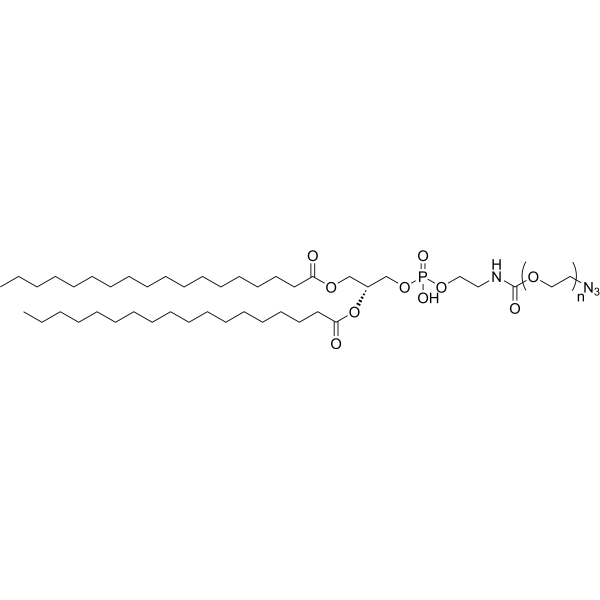
- HY-173606
-
|
|
Liposome
|
Others
|
|
DSPE-PEG2000-Azide ammonium is an azide containing lipid that can be used to form micelles as nanoparticles for drug delivery . DSPE-PEG2000-Azide ammonium is a click chemistry reagent, it contains an Azide group and can undergo copper-catalyzed azide-alkyne cycloaddition reaction (CuAAc) with molecules containing Alkyne groups. It can also undergo strain-promoted alkyne-azide cycloaddition (SPAAC) reactions with molecules containing DBCO or BCN groups.
|
-

- HY-W441003
-
|
|
Biochemical Assay Reagents
|
Others
|
|
DSPE-PEG2000-IA is a thiol reactive phospholipid polyPEG. The iodoacetyll group is reactive with thiol to produce a thioether linkage. The polymer can self-assemble in water to form lipid bilayer and can be used to encapsulate drugs in targeted delivery application, such as liposomal doxorubicin as an anti cancer drug or mRNA vaccine.
|
-

- HY-W440919
-
|
|
Liposome
|
Others
|
|
DSPE-PEG2000-Rhodamine is a dye functionalized phospholipid. The amphiphilic polymer can form lipid bilayer in water and be used to encapsulate therapeutic agents, such as liposomal anticancer drug or mRNA vaccine. Rhodamine has maximum absorption at 570 nm and emission around 595 nm and can be easily traced using an imaging technique.
|
-
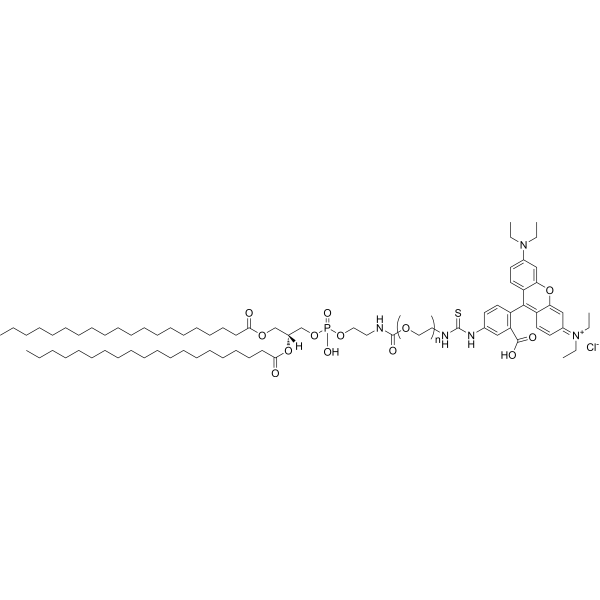
- HY-W440884
-
|
|
Biochemical Assay Reagents
|
Others
|
|
DSPE-PEG3400-Ald is a self-assemble polyPEG which spontaneously forms lipid bilayer in water. The polymer can be used to prepare nanoparticles or liposomse as a targeted drug carrier, such as mRNA vaccine. The aldehyde is reactive with aminooxy to form a stable oxime linkage or with amine at pH < 7 to form a reversible imine bond.
|
-

- HY-W591424
-
|
mPEG2000-SC; mPEG2000-Succinimidyl ester
|
Biochemical Assay Reagents
MMP
|
Cancer
|
|
m-PEG2000-NHS ester (mPEG2000-SC) is a reagent with both cell adhesion inhibition and peptide conjugation functions. The NHS ester group of m-PEG2000-NHS ester forms stable amide bonds with primary amine-containing molecules (e.g., the N-terminus of MMP-2-cleavable octapeptide) to generate mPEG-peptide intermediates for liposome surface modification. When m-PEG2000-NHS ester is immobilized on a cystamine-modified gold surface, it can construct an in vitro model for cell adhesion kinetic studies, and higher PEG density and thicker layers correlate with lower cell adhesion rates. m-PEG2000-NHS ester can synthesize MMP-2-responsive PEGylated lipid conjugates to achieve MMP-triggered dePEGylation in the tumor microenvironment. m-PEG2000-NHS ester can be used in studies related to colon cancer and other conditions .
|
-
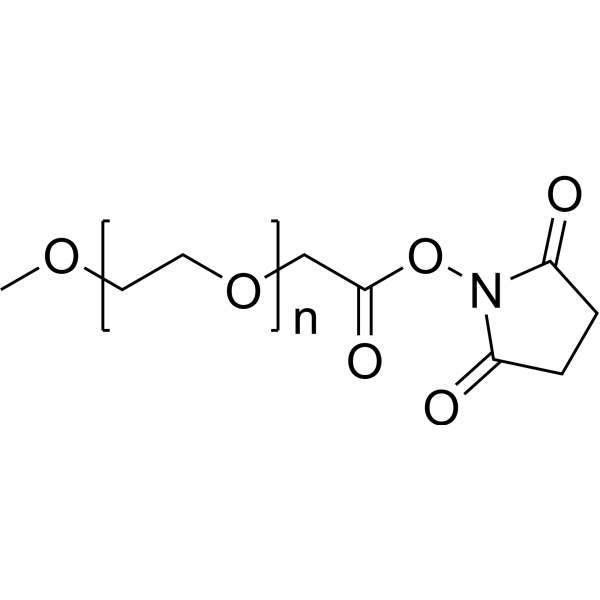
- HY-164191
-
|
|
DNA/RNA Synthesis
|
Others
|
|
m7(3'Ma-Peg5-FAM)Gppp(2'OMe)ApG ammonium is a FAM-labled cap analogue that can be used for mRNA synthesis. The efficiency of mRNA delivery can be determined by the detection of FAM by flow cytometry, which can be used to track mRNA in cells and in living animals and to screen delivery lipid ratios.
|
-

- HY-W440883
-
|
|
Liposome
|
Others
|
|
DSPE-PEG2000-Ald is a phospholipid polyPEG which can self-assemble to form lipid bilayer in aqueous solution. The polymer can be used to prepare liposome as a drug delivery vehicle for administration of drugs or nutrients, such as mRNA vaccines. The aldehyde is reactive with aminooxy to form a stable oxime linkage or with amine at pH < 7 to form a reversible imine bond. Reagent grade, for research use only.
|
-

- HY-158385
-
|
|
Biochemical Assay Reagents
|
Others
|
|
5-Azido-PEG4-SS-UTP tristriethylamine is a biochemical assay reagent, which can be used in click chemistry. Click chemistry has great potential for use in binding between nucleic acids, lipids, proteins, and other molecules, and has been used in many research fields because of its beneficial characteristics, including high yield, high specificity, and simplicity .
|
-

- HY-W591449
-
|
|
Liposome
|
Cancer
|
|
DOPE-PEG2000-Azide is a liposome to simulate biological phospholipid membrane. Liposomes are the main component of vesicles with concentric phospholipid bilayer membranes, which can be used to construct drug delivery systems for anti-cancer and anti-infection fields. Highly polar water-soluble payloads can be trapped in the internal aqueous space of liposomes, while lipophilic payloads can partition into and become part of the lipid bilayer. Especially for delivering antisense oligonucleotides, it can overcome problems such as inefficient cellular uptake and rapid loss in the body .
|
-

- HY-157415
-
|
1,2-Dierucoyl-sn-3-phosphatidylethanolamine; di22:1-PE; PE(22:1/22:1)
|
Liposome
|
Inflammation/Immunology
|
|
1,2-Dierucoyl-sn-glycero-3-PE (1,2-Dierucoyl-sn-3-phosphatidylethanolamine) is a phospholipid that contains erucic acid. 1,2-Dierucoyl-sn-glycero-3-PE can be used in the generation of lipid nanoparticles (LNPs) to deliver mRNA in vivo. 1,2-Dierucoyl-sn-glycero-3-PE can also be used to synthesize numerous PEG-conjugates for liposomes incorporation .
|
-

- HY-161972
-
|
|
HyT
Ferroptosis
Glutathione Peroxidase
|
Cancer
|
|
ZX782 is a HyT GPX4 degrader and a ferroptosis inducer, which induces GPX4 degradation and significantly increases lipid ROS accumulation in HT1080 cells. ZX782 can be used to treat AD by reducing the size and/or number of brain amyloid plaques and by inhibiting the spread of IL-1beta-positive microglial-like cells around amyloid plaques. ZX782 is labeled with hydrophobic benzyl alcohol (HBA) and appears bright blue under acidic conditions, which can be used for quantitative determination . ZX782 is composed of target protein ligand (red part) ML-210 (HY-100003), PROTAC linker (black part) Bromo-PEG2-CH2-Boc (HY-141371) and Hty molecule (blue part) Adamantan-1-ylmethanamine (HY-W037848). The conjugate consisting of Hyt and linker parts is Adamantan-C-amide-PEG2-C-Br (HY-161974), and the activity control of the target protein ligand is Hydroxyl-ML-210 (HY-161973).
|
-

- HY-174858
-
|
|
PROTACs
ASK1
p38 MAPK
|
Metabolic Disease
|
|
dASK1-VHL is an orally active PROTAC degrader targeting ASK1. dASK1-VHL can effectively bind VHL and promote the selective degradation of ASK1. dASK1-VHL effectively reduces ASK1 protein levels, inhibits the activation of p38 MAPK, and reduces liver lipid content. dASK1-VHL provides new ideas for the study of Metabolic dysfunction-associated steatohepatitis (MASH) (Pink: ASK1 ligand 1 (HY-174860); Blue: E3 ligand (S,R,S)-AHPC (HY-125845); Black: Linker, (S,R,S)-AHPC-CO-C2-PEG-NHCO-C2-COOH (HY-174861) .
|
-

| Cat. No. |
Product Name |
Type |
-
- HY-W440914B
-
|
|
Fluorescent Dyes
|
|
DSPE-PEG10000-FITC is an amphiphile PEG polymer which has unsaturated lipid tails. DSPE-PEG10000-FITC can form micelles in an aqueous solution and can be used to prepare liposome/nano particles for drug nanocarriers .
|
-
- HY-W440916
-
|
|
Fluorescent Dyes
|
|
DSPE-PEG3400-FITC is a fluorescein attached PEG lipid. It can be used to prepare liposomes as drug carrier in targeted drug delivery. The polymer is modified with fluorescein (green) dye which can be used for staining cells, tissues, biomarkers, or nanoparticles.
|
-
- HY-W440914
-
|
|
Fluorescent Dyes
|
|
DSPE-PEG1000-FITC is an amphiphile PEG polymer which has unsaturated lipid tails. The polymer can form micelles in an aqueous solution and can be used to prepare liposome/nano particles for drug nanocarriers. . Reagent grade, for research use only.
|
-
- HY-D2565
-
|
|
Fluorescent Dyes
|
|
Cy5.5-PEG2000-DSPE is a PEG phospholipid with Cy5.5 (HY-D0924) dye used in protein/nucelic acid labeling and fluorescence microscopy. Cy5.5-PEG2000-DSPE can self-assemble in aqueous solution to form micelles/lipid bilayer and used to prepare liposomes or nanoparticles for nutrients delivery such as mRNA or DNA vaccine.
|
-
- HY-D2593
-
|
|
Fluorescent Dyes
|
|
Cy7.5-PEG2000-DSPE is a PEG phospholipid with CY7.5 (HY-D0926) dye used in protein/nucelic acid labeling and fluorescence microscopy. Cy7.5-PEG2000-DSPE can self-assemble in aqueous solution to form micelles/lipid bilayer and used to prepare liposomes or nanoparticles for nutrients delivery such as mRNA or DNA vaccine (Ex/Em=770/820 nm).
|
-
- HY-138300GL
-
|
|
Fluorescent Dyes
|
|
ALC-0159 (GMP Like) is the GMP Like class ALC-0159 (HY-138300). GMP small molecules works appropriately as an auxiliary reagent for cell therapy manufacture. ALC-0159, a polyethylene glycol (PEG) lipid conjugate, could be used as vaccine excipient .
|
-
- HY-W440914C
-
|
|
Fluorescent Dyes
|
|
DSPE-PEG600-FITC is an amphiphile PEG polymer which has unsaturated lipid tails. DSPE-PEG600-FITC can form micelles in an aqueous solution and can be used to prepare liposome/nano particles for drug nanocarriers (Ex/Em=488/525 nm) .
|
-
- HY-D2610
-
|
|
Fluorescent Dyes
|
|
ICG PEG2000 DSPE is a PEG phospholipid with Indocyanine green (ICG) (HY-D0711) dye used in protein/nucelic acid labeling and fluorescence microscopy. ICG PEG2000 DSPE can self-assemble in aqueous solution to form micelles/lipid bilayer and used to prepare liposomes or nanoparticles for nutrients delivery such as mRNA or DNA vaccine (Ex/Em=785/813 nm).
|
-
- HY-112764GL
-
|
|
Fluorescent Dyes
|
|
DMG-PEG 2000 (GMP Like) is DMG-PEG 2000 (HY-112764) produced by using GMP like guidelines. GMP Like small molecules works appropriately as an auxiliary reagent for cell therapy manufacture. DMG-PEG 2000 is used for the preparation of liposome for siRNA delivery with improved transfection efficiency in vitro. DMG-PEG 2000 is also used for the lipid nanoparticle for an oral plasmid DNA delivery approach in vivo through a facile surface modification to improve the mucus permeability and delivery efficiency of the nanoparticles .
|
-
- HY-D2440
-
|
|
Fluorescent Dyes
|
|
cRGD-PEG-Cy3 is a Cy3 (HY-D0822) labeled cRGD-PEG conjugate. The Cy3 fluorophore is commonly used in applications such as immunolabeling, nucleic acid labeling, fluorescence microscopy, and flow cytometry. Cy3 has an emission maximum around 562-570 nm. cRGD can be used to modify lipid for improved stability .
|
-
- HY-W440914A
-
|
|
Fluorescent Dyes
|
|
DSPE-PEG400-FITC is an amphiphile PEG polymer which has unsaturated lipid tails. DSPE-PEG400-FITC can form micelles in an aqueous solution and can be used to prepare liposome/nano particles for drug nanocarriers .
|
-
- HY-D2517
-
|
|
Fluorescent Dyes
|
|
Cy3-PEG5000-DSPE is a PEG phospholipid with Cy3 (HY-D0822) dye used in protein/nucelic acid labeling. Cy3-PEG5000-DSPE can self-assemble in aqueous solution to form micelles/lipid bilayer and used to prepare liposomes or nanoparticles for nutrients delivery such as mRNA or DNA vaccine.
|
-
- HY-D2542
-
|
|
Fluorescent Dyes
|
|
Cy5-PEG2000-DSPE is a PEG phospholipid with Cy5 (HY-D0821) dye used in protein/nucelic acid labeling and fluorescence microscopy. Cy5-PEG2000-DSPE can self-assemble in aqueous solution to form micelles/lipid bilayer and used to prepare liposomes or nanoparticles for nutrients delivery such as mRNA or DNA vaccine.
|
-
- HY-D2516
-
|
|
Fluorescent Dyes
|
|
Cy3-PEG3400-DSPE is a PEG phospholipid with Cy3 (HY-D0822) dye used in protein/nucelic acid labeling and fluorescence microscopy. Cy3-PEG3400-DSPE can self-assemble in aqueous solution to form micelles/lipid bilayer and used to prepare liposomes or nanoparticles for nutrients delivery such as mRNA or DNA vaccine.
|
-
- HY-D2544
-
|
|
Fluorescent Dyes
|
|
Cy5-PEG5000-DSPE is a PEG phospholipid with Cy5 (HY-D0821) dye used in protein/nucelic acid labeling and fluorescence microscopy. Cy5-PEG5000-DSPE can self-assemble in aqueous solution to form micelles/lipid bilayer and used to prepare liposomes or nanoparticles for nutrients delivery such as mRNA or DNA vaccine.
|
-
- HY-D2526
-
|
|
Fluorescent Dyes
|
|
Cy3 IRGD-PEG-DSPE is a PEG phospholipid with Cy3 (HY-D0822) dye used in protein/nucelic acid labeling and fluorescence microscopy. Cy3 IRGD-PEG-DSPE can self-assemble in aqueous solution to form micelles/lipid bilayer and used to prepare liposomes or nanoparticles for nutrients delivery such as mRNA or DNA vaccine.
|
-
- HY-D2609
-
|
|
Fluorescent Dyes
|
|
ICG PEG1000 DSPE is a PEG phospholipid with Indocyanine green (ICG) (HY-D0711) dye used in protein/nucelic acid labeling and fluorescence microscopy. ICG PEG1000 DSPE can self-assemble in aqueous solution to form micelles/lipid bilayer and used to prepare liposomes or nanoparticles for nutrients delivery such as mRNA or DNA vaccine (Ex/Em=785/813 nm).
|
-
- HY-D2611
-
|
|
Fluorescent Dyes
|
|
ICG PEG3400 DSPE is a PEG phospholipid with Indocyanine green (ICG) (HY-D0711) dye used in protein/nucelic acid labeling and fluorescence microscopy. ICG PEG3400 DSPE can self-assemble in aqueous solution to form micelles/lipid bilayer and used to prepare liposomes or nanoparticles for nutrients delivery such as mRNA or DNA vaccine (Ex/Em=785/813 nm).
|
-
- HY-D2613
-
|
|
Fluorescent Dyes
|
|
ICG PEG10000 DSPE is a PEG phospholipid with Indocyanine green (ICG) (HY-D0711) dye used in protein/nucelic acid labeling and fluorescence microscopy. ICG PEG10000 DSPE can self-assemble in aqueous solution to form micelles/lipid bilayer and used to prepare liposomes or nanoparticles for nutrients delivery such as mRNA or DNA vaccine (Ex/Em=785/813 nm).
|
-
- HY-D2592
-
|
|
Fluorescent Dyes
|
|
Cy7.5-PEG1000-DSPE is a PEG phospholipid with CY7.5 (HY-D0926) dye used in protein/nucelic acid labeling and fluorescence microscopy. Cy7.5-PEG1000-DSPE can self-assemble in aqueous solution to form micelles/lipid bilayer and used to prepare liposomes or nanoparticles for nutrients delivery such as mRNA or DNA vaccine (Ex/Em=770/820 nm).
|
-
- HY-D2595
-
|
|
Fluorescent Dyes
|
|
Cy7.5-PEG5000-DSPE is a PEG phospholipid with CY7.5 (HY-D0926) dye used in protein/nucelic acid labeling and fluorescence microscopy. Cy7.5-PEG5000-DSPE can self-assemble in aqueous solution to form micelles/lipid bilayer and used to prepare liposomes or nanoparticles for nutrients delivery such as mRNA or DNA vaccine (Ex/Em=770/820 nm).
|
-
- HY-D2541
-
|
|
Fluorescent Dyes
|
|
Cy5-PEG1000-DSPE is a PEG phospholipid with Cy5 (HY-D0821) dye used in protein/nucelic acid labeling and fluorescence microscopy. Cy5-PEG1000-DSPE can self-assemble in aqueous solution to form micelles/lipid bilayer and used to prepare liposomes or nanoparticles for nutrients delivery such as mRNA or DNA vaccine.
|
-
- HY-D2543
-
|
|
Fluorescent Dyes
|
|
Cy5-PEG3400-DSPE is a PEG phospholipid with Cy5 (HY-D0821) dye used in protein/nucelic acid labeling and fluorescence microscopy. Cy5-PEG3400-DSPE can self-assemble in aqueous solution to form micelles/lipid bilayer and used to prepare liposomes or nanoparticles for nutrients delivery such as mRNA or DNA vaccine.
|
-
- HY-D2545
-
|
|
Fluorescent Dyes
|
|
Cy5-PEG10000-DSPE is a PEG phospholipid with Cy5 (HY-D0821) dye used in protein/nucelic acid labeling and fluorescence microscopy. Cy5-PEG10000-DSPE can self-assemble in aqueous solution to form micelles/lipid bilayer and used to prepare liposomes or nanoparticles for nutrients delivery such as mRNA or DNA vaccine.
|
-
- HY-D2567
-
|
|
Fluorescent Dyes
|
|
Cy5.5-PEG5000-DSPE is a PEG phospholipid with Cy5.5 (HY-D0924) dye used in protein/nucelic acid labeling and fluorescence microscopy. Cy5.5-PEG5000-DSPE can self-assemble in aqueous solution to form micelles/lipid bilayer and used to prepare liposomes or nanoparticles for nutrients delivery such as mRNA or DNA vaccine.
|
-
- HY-D2566
-
|
|
Fluorescent Dyes
|
|
Cy5.5-PEG3400-DSPE is a PEG phospholipid with Cy5.5 (HY-D0924) dye used in protein/nucelic acid labeling and fluorescence microscopy. Cy5.5-PEG3400-DSPE can self-assemble in aqueous solution to form micelles/lipid bilayer and used to prepare liposomes or nanoparticles for nutrients delivery such as mRNA or DNA vaccine.
|
-
- HY-D2564
-
|
|
Fluorescent Dyes
|
|
Cy5.5-PEG1000-DSPE is a PEG phospholipid with Cy5.5 (HY-D0924) dye used in protein/nucelic acid labeling and fluorescence microscopy. Cy5.5-PEG1000-DSPE can self-assemble in aqueous solution to form micelles/lipid bilayer and used to prepare liposomes or nanoparticles for nutrients delivery such as mRNA or DNA vaccine.
|
-
- HY-D2568
-
|
|
Fluorescent Dyes
|
|
Cy5.5-PEG10000-DSPE is a PEG phospholipid with Cy5.5 (HY-D0924) dye used in protein/nucelic acid labeling and fluorescence microscopy. Cy5.5-PEG10000-DSPE can self-assemble in aqueous solution to form micelles/lipid bilayer and used to prepare liposomes or nanoparticles for nutrients delivery such as mRNA or DNA vaccine.
|
-
- HY-D2612
-
|
|
Fluorescent Dyes
|
|
ICG PEG5000 DSPE is a PEG phospholipid with Indocyanine green (ICG) (HY-D0711) dye used in protein/nucelic acid labeling and fluorescence microscopy. ICG PEG5000 DSPE can self-assemble in aqueous solution to form micelles/lipid bilayer and used to prepare liposomes or nanoparticles for nutrients delivery such as mRNA or DNA vaccine (Ex/Em=785/813 nm).
|
-
- HY-D2596
-
|
|
Fluorescent Dyes
|
|
Cy7.5-PEG10000-DSPE is a PEG phospholipid with CY7.5 (HY-D0926) dye used in protein/nucelic acid labeling and fluorescence microscopy. Cy7.5-PEG10000-DSPE can self-assemble in aqueous solution to form micelles/lipid bilayer and used to prepare liposomes or nanoparticles for nutrients delivery such as mRNA or DNA vaccine (Ex/Em=770/820 nm).
|
-
- HY-D2594
-
|
|
Fluorescent Dyes
|
|
Cy7.5-PEG3400-DSPE is a PEG phospholipid with CY7.5 (HY-D0926) dye used in protein/nucelic acid labeling and fluorescence microscopy. Cy7.5-PEG3400-DSPE can self-assemble in aqueous solution to form micelles/lipid bilayer and used to prepare liposomes or nanoparticles for nutrients delivery such as mRNA or DNA vaccine (Ex/Em=770/820 nm).
|
-
- HY-D2938
-
|
|
Fluorescent Dyes
|
|
BG-PEG11-Cya-NR is a high-performance, non washable, fluorescent opening probe. BG-PEG11-Cya-NR has very weak fluorescence in polar environments (such as aqueous solutions), while its fluorescence is significantly enhanced in non-polar environments (such as the lipid bilayer of cell membranes) .
|
| Cat. No. |
Product Name |
Type |
-
- HY-138300
-
-
- HY-144004
-
|
DSPE-PEG2000 Maleimide ammonium; 1,2-Distearoyl-sn-glycero-3-phosphoethanolamine-N-[maleimide(polyethylene glycol)-2000] ammonium
|
Biochemical Assay Reagents
|
|
DSPE-PEG-Maleimide has DSPE phospholipid and maleimide to prepare nanostructured lipid carrier. DSPE-PEG-Maleimide extends blood circulation time and higher stability for encapsulated agents .
|
-
- HY-167036
-
|
|
Biochemical Assay Reagents
|
|
DMG-PEG2000-Mal is a pegylated lipid with a molecular weight of 2000. DMG-PEG-Mal serves as a component of lipid nanoparticles for mRNA delivery .
|
-
- HY-144006
-
|
14:0 PEG2000 PE ammonium; 1,2-Dimyristoyl-sn-glycero-3-phosphoethanolamine-N-[methoxy(polyethylene glycol)-2000] ammonium
|
Biochemical Assay Reagents
|
|
DMPE-PEG2000 ammonium (14:0 PEG2000 PE ammonium) is a PEG-phospholipid conjugate to prepare nanostructured lipid carrier .
|
-
- HY-144004A
-
|
DSPE-PEG5000 Maleimide ammonium; 1,2-Distearoyl-sn-glycero-3-phosphoethanolamine-N-[maleimide(polyethylene glycol)-5000] ammonium
|
Biochemical Assay Reagents
|
|
DSPE-PEG-Maleimide has DSPE phospholipid and maleimide to prepare nanostructured lipid carrier. DSPE-PEG-Maleimide extends blood circulation time and higher stability for encapsulated agents . DSPE-PEG5000-Mal ammonium contains PEG5000.
|
-
- HY-141892A
-
|
DSPE PEG2000(2000) Carboxylic Acid sodium
|
Biochemical Assay Reagents
|
|
DSPE-PEG2000 Carboxylic acid sodium is a PEG-lipid that can be used in the preparation of drug delivery nanoparticles .
|
-
- HY-144005
-
|
C16 PEG Ceramide (MW 2000)
|
Biochemical Assay Reagents
|
|
C16 PEG2000 Ceramide is a polyethylene glycolylated ceramide. C16 PEG2000 Ceramide can be used for lipid carrier to delivery. C16 PEG2000 Ceramide induces autophagy. C16 PEG2000 Ceramide can be used for cancer research .
|
-
- HY-144012A
-
|
16:0 PEG350 PE; 1,2-Dipalmitoyl-sn-glycero-3-phosphoethanolamine-N-[methoxy(polyethylene glycol)-350] ammonium
|
Biochemical Assay Reagents
|
|
DPPE-PEG350 is a CD1d-dependent lipid antagonist thus blocking the ERK phosphorylation pathway in iNKT cells . DPPE-PEG350 is a PEG lipid functional end group used in the synthesis of liposomes (LPs) for the design of conjugated polymer nanoparticles.
|
-
- HY-W440915
-
|
|
Biochemical Assay Reagents
|
|
DSPE-PEG2000-FITC is a PEG lipid conjugated with fluorescein. FITC is a green dye with a peak absorption at 494 nm and a maximum emission at 520 nm, which is used for staining biological samples or nanoparticles. DSPE-PEG2000-FITC spontaneously forms lipid bilayers or micelles in water and can be used to prepare liposomes for delivering substances such as mRNA vaccines .
|
-
- HY-W440821
-
|
|
Biochemical Assay Reagents
|
|
m-PEG-DMG (MW 2000) is a PEG lipid for the preparation of liposomes and can be used in drug delivery studies .
|
-
- HY-W440908
-
|
|
Biochemical Assay Reagents
|
|
DSPE-PEG2000-Cy3 is a PEG lipid conjugated with a fluorophore. The Cy3 fluorophore is commonly used in applications such as immunolabeling, nucleic acid labeling, fluorescence microscopy and flow cytometry. The absorption wavelength of the Cy3 fluorophore peaks at 548-552 nm, while its emission wavelength reaches a maximum at 562-570 nm. DSPE-PEG2000-Cy3 can be used in research areas such as the preparation of nanoparticles and drug delivery .
|
-
- HY-W440894
-
|
|
Biochemical Assay Reagents
|
|
DSPE-PEG5000-DBCO sodium is a PEG lipid that can improve the delivery efficiency and tissue specificity of poorly soluble drugs. DSPE-PEG5000-DBCO sodium can be used in drug delivery research .
|
-
- HY-167028
-
|
|
Biochemical Assay Reagents
|
|
DSPE-PEG2000-alkyne is a PEG lipid that can improve the delivery efficiency and tissue specificity of poorly soluble drugs. DSPE-PEG2000-alkyne can be used in drug delivery research .
|
-
- HY-W440881
-
|
|
Biochemical Assay Reagents
|
|
DSPE-PEG3400-DBCO sodium is a PEG lipid that can improve the delivery efficiency and tissue specificity of poorly soluble drugs. DSPE-PEG3400-DBCO sodium can be used in drug delivery research .
|
-
- HY-167064
-
|
DSPE-Polysarcosine50
|
Biochemical Assay Reagents
|
|
DSPE-pSar50 (DSPE-Polysarcosine50) is a pSar-lipid derivative. DSPE-pSar50 is a hydrophilic alternative to PEG and can be used in drug delivery research .
|
-
- HY-167065
-
|
DSPE-Polysarcosine20
|
Biochemical Assay Reagents
|
|
DSPE-pSar20 (DSPE-Polysarcosine20) is a pSar-lipid derivative. DSPE-pSar20 is a hydrophilic alternative to PEG and can be used in drug delivery research .
|
-
- HY-164035
-
|
|
Biochemical Assay Reagents
|
|
DOPE-PEG2000-DBCO is a PEG lipid with a DOPE and a DBCO as functional groups. DOPE can be used as a helper lipid in gene transfection. PEG is used in drug delivery system. DBCO can be used for click chemistry .
|
-
- HY-160278
-
|
|
Biochemical Assay Reagents
|
|
DSPE-PEG2000-Fluor 647 is a fluorescent lipid (Ex/Em=648/671 nm) composed of PEG-lipid-dye conjugation. DSPE is a phospholipid. Fluor 647 is a fluorescent dye. DSPE-PEG2000-Fluor 647 can be used to prepare nanoparticles or liposomes with fluorescent signals.
|
-
- HY-166883
-
-
- HY-166968
-
|
|
Biochemical Assay Reagents
|
|
DSPE-PEG5000-COOH is a PEG lipid that can improve the delivery efficiency and tissue specificity of poorly soluble drugs. DSPE-PEG5000-COOH can be used in drug delivery research .
|
-
- HY-166983
-
|
|
Biochemical Assay Reagents
|
|
m-PEG5000-DMG is a PEG lipid that can improve the delivery efficiency and tissue specificity of poorly soluble drugs. m-PEG5000-DMG can be used in drug delivery research .
|
-
- HY-166979
-
|
|
Biochemical Assay Reagents
|
|
Stearic acid-mPEG2000 is a PEG lipid that can improve the delivery efficiency and tissue specificity of poorly soluble drugs. Stearic acid-mPEG2000 can be used in drug delivery research .
|
-
- HY-W440895
-
|
|
Biochemical Assay Reagents
|
|
DSPE-PEG1000-SH is an amphiphilic poly-PEG that can form lipid bilayers in water. This amphiphilic polymer can form lipid bilayers in aqueous solution and can be used to embed active molecules for drug delivery systems such as mRNA vaccines.
|
-
- HY-160269
-
|
|
Biochemical Assay Reagents
|
|
DSPE-PEG2000-Fluor 488 is a PEG-dye-lipid conjugate consisting of a DSPE phospholipid and a Fluor 488 dye. DSPE is a phospholipid that spontaneously forms micelles in a water medium, and Fluor 488 is a cyanine dye that is widely used in fluorescence microscopy. Fluor 488 has excitation and emission maxima at 499 nm and 520 nm. Polyethylene glycol lipids are commonly used for the stabilization of lipid nanoparticles .
|
-
- HY-W440925
-
|
|
Biochemical Assay Reagents
|
|
m-PEG5000-DSPE sodium is a PEG lipid that can improve the delivery efficiency and tissue specificity of poorly soluble drugs. m-PEG5000-DSPE sodium can be used in drug delivery research .
|
-
- HY-166874
-
|
|
Biochemical Assay Reagents
|
|
DSPE-PEG2000-endo-BCN is a PEG lipid that can improve the delivery efficiency and tissue specificity of poorly soluble drugs. DSPE-PEG2000-endo-BCN can be used in drug delivery research .
|
-
- HY-167067
-
|
DSPE-Polysarcosine100
|
Biochemical Assay Reagents
|
|
DSPE-pSar100 (DSPE-Polysarcosine100) is a pSar-lipid derivative. DSPE-pSar100 is a hydrophilic alternative to PEG and can be used in drug delivery research .
|
-
- HY-160280
-
|
|
Biochemical Assay Reagents
|
|
DOPE-PEG2000-Fluor 647 is a PEG-lipid-dye conjugate. composed of a DOPE phospholipid and a Fluor 647 dye .
|
-
- HY-155934
-
|
DOPE-PEG5000 ammonium; 1,2-Dioleoyl-sn-glycero-3-phosphoethanolamine-N-[methoxy(polyethylene glycol)-5000] ammonium
|
Biochemical Assay Reagents
|
|
18:1 PEG5000 PE ammonium (DOPE-PEG5000 ammonium) is a PEG lipid functional end group used in the synthesis of liposomes (LPs) for the design of conjugated polymer nanoparticles. Through biotin modification and carboxyl terminus, lipid nanoparticles (LNPs) further coupling with other biomolecules can be achieved. Functionalized nanoparticles can be used for targeted labeling of specific cellular proteins. With streptavidin as a linker, biotinylated PEG lipid-conjugated polymer nanoparticles are able to bind to biotinylated antibodies on cell surface receptors, yielding the utility of fluorescence-based imaging and sensing.
|
-
- HY-155926
-
|
14:0 PEG750 PE ammonium; 1,2-Dimyristoyl-sn-glycero-3-phosphoethanolamine-N-[methoxy(polyethylene glycol)-750] ammonium
|
Biochemical Assay Reagents
|
|
DMPE-PEG750 ammonium (14:0 PEG750 PE ammonium) is a PEG lipid functional end group used in the synthesis of liposomes (LPs) for the design of conjugated polymeric nanoparticles. Through biotin modification and carboxyl terminus, lipid nanoparticles (LNPs) further coupling with other biomolecules can be achieved. Functionalized nanoparticles can be used for targeted labeling of specific cellular proteins. With streptavidin as a linker, biotinylated PEG lipid-conjugated polymer nanoparticles are able to bind to biotinylated antibodies on cell surface receptors, yielding the utility of fluorescence-based imaging and sensing.
|
-
- HY-155925
-
|
14:0 PEG550 PE ammonium; 1,2-Dimyristoyl-sn-glycero-3-phosphoethanolamine-N-[methoxy(polyethylene glycol)-550] ammonium
|
Biochemical Assay Reagents
|
|
DMPE-PEG550 ammonium (14:0 PEG550 PE ammonium) is a PEG lipid functional end group used in the synthesis of liposomes (LPs) for the design of conjugated polymeric nanoparticles. Through biotin modification and carboxyl terminus, lipid nanoparticles (LNPs) further coupling with other biomolecules can be achieved. Functionalized nanoparticles can be used for targeted labeling of specific cellular proteins. With streptavidin as a linker, biotinylated PEG lipid-conjugated polymer nanoparticles are able to bind to biotinylated antibodies on cell surface receptors, yielding the utility of fluorescence-based imaging and sensing.
|
-
- HY-155924
-
|
14:0 PEG350 PE ammonium; 1,2-Dimyristoyl-sn-glycero-3-phosphoethanolamine-N-[methoxy(polyethylene glycol)-350] ammonium
|
Biochemical Assay Reagents
|
|
DMPE-PEG350 ammonium (14:0 PEG350 PE ammonium) is a PEG lipid functional end group used in the synthesis of liposomes (LPs) for the design of conjugated polymer nanoparticles. Through biotin modification and carboxyl terminus, lipid nanoparticles (LNPs) further coupling with other biomolecules can be achieved. Functionalized nanoparticles can be used for targeted labeling of specific cellular proteins. With streptavidin as a linker, biotinylated PEG lipid-conjugated polymer nanoparticles are able to bind to biotinylated antibodies on cell surface receptors, yielding the utility of fluorescence-based imaging and sensing.
|
-
- HY-155927
-
|
14:0 PEG1000 PE ammonium; 1,2-Dimyristoyl-sn-glycero-3-phosphoethanolamine-N-[methoxy(polyethylene glycol)-1000] ammonium
|
Biochemical Assay Reagents
|
|
DMPE-PEG1000 ammonium (14:0 PEG1000 PE ammonium) is a PEG lipid functional end group used in the synthesis of liposomes (LPs) for the design of conjugated polymer nanoparticles. Through biotin modification and carboxyl terminus, lipid nanoparticles (LNPs) further coupling with other biomolecules can be achieved. Functionalized nanoparticles can be used for targeted labeling of specific cellular proteins. With streptavidin as a linker, biotinylated PEG lipid-conjugated polymer nanoparticles are able to bind to biotinylated antibodies on cell surface receptors, yielding the utility of fluorescence-based imaging and sensing.
|
-
- HY-155929
-
|
14:0 PEG5000 PE ammonium; 1,2-Dimyristoyl-sn-glycero-3-phosphoethanolamine-N-[methoxy(polyethylene glycol)-5000] ammonium
|
Biochemical Assay Reagents
|
|
DMPE-PEG5000 ammonium (14:0 PEG5000 PE ammonium) is a PEG lipid functional end group used in the synthesis of liposomes (LPs) for the design of conjugated polymer nanoparticles. Through biotin modification and carboxyl terminus, lipid nanoparticles (LNPs) further coupling with other biomolecules can be achieved. Functionalized nanoparticles can be used for targeted labeling of specific cellular proteins. With streptavidin as a linker, biotinylated PEG lipid-conjugated polymer nanoparticles are able to bind to biotinylated antibodies on cell surface receptors, yielding the utility of fluorescence-based imaging and sensing.
|
-
- HY-155928
-
|
14:0 PEG3000 PE ammonium; 1,2-Dimyristoyl-sn-glycero-3-phosphoethanolamine-N-[methoxy(polyethylene glycol)-3000] ammonium
|
Biochemical Assay Reagents
|
|
DMPE-PEG3000 ammonium (14:0 PEG3000 PE ammonium) is a PEG lipid functional end group used in the synthesis of liposomes (LPs) for the design of conjugated polymer nanoparticles. Through biotin modification and carboxyl terminus, lipid nanoparticles (LNPs) further coupling with other biomolecules can be achieved. Functionalized nanoparticles can be used for targeted labeling of specific cellular proteins. With streptavidin as a linker, biotinylated PEG lipid-conjugated polymer nanoparticles are able to bind to biotinylated antibodies on cell surface receptors, yielding the utility of fluorescence-based imaging and sensing.
|
-
- HY-144005B
-
|
C16 PEG Ceramide (MW 5000)
|
Biochemical Assay Reagents
|
|
C16 PEG5000 Ceramide (C16 PEG Ceramide (MW 5000)) is a PEG lipid for the preparation of liposomes and can be used in drug delivery studies .
|
-
- HY-144005A
-
|
C16 PEG Ceramide (MW 750)
|
Biochemical Assay Reagents
|
|
C16 PEG750 Ceramide (C16 PEG Ceramide (MW 750)) is a PEG lipid for the preparation of liposomes and can be used in drug delivery studies .
|
-
- HY-166871
-
|
|
Biochemical Assay Reagents
|
|
DSPE-PEG5000-endo-BCN is a PEG lipid that can improve the delivery efficiency and tissue specificity of poorly soluble drugs. DSPE-PEG5000-endo-BCN can be used in drug delivery research .
|
-
- HY-167063
-
|
Azide-Polysarcosine20
|
Biochemical Assay Reagents
|
|
Azide-pSar20 (Azide-Polysarcosine20) is a pSar-lipid derivative. Azide-pSar20 is a hydrophilic alternative to PEG and can be used in drug delivery research .
|
-
- HY-112756
-
|
|
Biochemical Assay Reagents
|
|
PEG2000-DGG is a synthetic lipid. PEG2000-DGG can be used in lipid-based nanoparticle (LNP) delivery systems .
|
-
- HY-144008
-
|
|
Biochemical Assay Reagents
|
|
C8 PEG-Ceramide is a lipid product. C8 PEG-Ceramide can synthesize lipid bilayer carrier and can be used for drug delivery .
|
-
- HY-160279
-
|
|
Biochemical Assay Reagents
|
|
DSPE-PEG5000-Fluor 647 is a fluorescent lipid (Ex/Em=648/671 nm) composed of PEG-lipid-dye conjugation. DSPE is a phospholipid. Fluor 647 is a fluorescent dye. DSPE-PEG5000-Fluor 647 can be used to prepare nanoparticles or liposomes with fluorescent signals.
|
-
- HY-160273
-
-
- HY-W440899
-
|
|
Biochemical Assay Reagents
|
|
DSPE-PEG1000-SPDP is a thiol reactive PEG lipid. The polymer is amphiphilic and spontaneously forms lipid bilayer in water. It can be used to encapsulate nutrients or therapeutics for targeted drug delivery, for example mRNA or DNA vaccine, liposomal doxorubicin for anti tumor.
|
-
- HY-155931
-
|
DOPE-PEG550 ammonium; 1,2-Dioleoyl-sn-glycero-3-phosphoethanolamine-N-[methoxy(polyethylene glycol)-550] ammonium
|
Biochemical Assay Reagents
|
|
18:1 PEG550 PE ammonium (DOPE-PEG550 ammonium) is a PEG lipid functional end group used in the synthesis of liposomes (LPs) for the design of conjugated polymer nanoparticles. Through biotin modification and carboxyl terminus, lipid nanoparticles (LNPs) further coupling with other biomolecules can be achieved. Functionalized nanoparticles can be used for targeted labeling of specific cellular proteins. With streptavidin as a linker, biotinylated PEG lipid-conjugated polymer nanoparticles are able to bind to biotinylated antibodies on cell surface receptors, yielding the utility of fluorescence-based imaging and sensing.
|
-
- HY-155933
-
|
DOPE-PEG3000 ammonium; 1,2-Dioleoyl-sn-glycero-3-phosphoethanolamine-N-[methoxy(polyethylene glycol)-3000] ammonium
|
Biochemical Assay Reagents
|
|
18:1 PEG3000 PE ammonium (DOPE-PEG3000 ammonium) is a PEG lipid functional end group used in the synthesis of liposomes (LPs) for the design of conjugated polymer nanoparticles. Through biotin modification and carboxyl terminus, lipid nanoparticles (LNPs) further coupling with other biomolecules can be achieved. Functionalized nanoparticles can be used for targeted labeling of specific cellular proteins. With streptavidin as a linker, biotinylated PEG lipid-conjugated polymer nanoparticles are able to bind to biotinylated antibodies on cell surface receptors, yielding the utility of fluorescence-based imaging and sensing.
|
-
- HY-155932
-
|
DOPE-PEG1000 ammonium; 1,2-Dioleoyl-sn-glycero-3-phosphoethanolamine-N-[methoxy(polyethylene glycol)-1000] ammonium
|
Biochemical Assay Reagents
|
|
18:1 PEG1000 PE ammonium (DOPE-PEG1000 ammonium) is a PEG lipid functional end group used in the synthesis of liposomes (LPs) for the design of conjugated polymer nanoparticles. Through biotin modification and carboxyl terminus, lipid nanoparticles (LNPs) further coupling with other biomolecules can be achieved. Functionalized nanoparticles can be used for targeted labeling of specific cellular proteins. With streptavidin as a linker, biotinylated PEG lipid-conjugated polymer nanoparticles are able to bind to biotinylated antibodies on cell surface receptors, yielding the utility of fluorescence-based imaging and sensing.
|
-
- HY-155930
-
|
DOPE-PEG350 ammonium; 1,2-Dioleoyl-sn-glycero-3-phosphoethanolamine-N-[methoxy(polyethylene glycol)-350] ammonium
|
Biochemical Assay Reagents
|
|
18:1 PEG350 PE ammonium (DOPE-PEG350 ammonium) is a PEG lipid functional end group used in the synthesis of liposomes (LPs) for the design of conjugated polymer nanoparticles. Through biotin modification and carboxyl terminus, lipid nanoparticles (LNPs) further coupling with other biomolecules can be achieved. Functionalized nanoparticles can be used for targeted labeling of specific cellular proteins. With streptavidin as a linker, biotinylated PEG lipid-conjugated polymer nanoparticles are able to bind to biotinylated antibodies on cell surface receptors, yielding the utility of fluorescence-based imaging and sensing.
|
-
- HY-144012B
-
|
16:0 PEG550 PE; 1,2-Dipalmitoyl-sn-glycero-3-phosphoethanolamine-N-[methoxy(polyethylene glycol)-550] ammonium
|
Biochemical Assay Reagents
|
|
DPPE-PEG550 is a PEG lipid functional end group used in the synthesis of liposomes (LPs) for the design of conjugated polymer nanoparticles. Through biotin modification and carboxyl terminus, lipid nanoparticles (LNPs) further coupling with other biomolecules can be achieved. Functionalized nanoparticles can be used for targeted labeling of specific cellular proteins. With streptavidin as a linker, biotinylated PEG lipid-conjugated polymer nanoparticles are able to bind to biotinylated antibodies on cell surface receptors, yielding the utility of fluorescence-based imaging and sensing.
|
-
- HY-144012E
-
|
16:0 PEG3000 PE; 1,2-Dipalmitoyl-sn-glycero-3-phosphoethanolamine-N-[methoxy(polyethylene glycol)-3000] ammonium
|
Biochemical Assay Reagents
|
|
DPPE-PEG3000 is a PEG lipid functional end group used in the synthesis of liposomes (LPs) for the design of conjugated polymer nanoparticles. Through biotin modification and carboxyl terminus, lipid nanoparticles (LNPs) further coupling with other biomolecules can be achieved. Functionalized nanoparticles can be used for targeted labeling of specific cellular proteins. With streptavidin as a linker, biotinylated PEG lipid-conjugated polymer nanoparticles are able to bind to biotinylated antibodies on cell surface receptors, yielding the utility of fluorescence-based imaging and sensing.
|
- HY-144012D
-
|
16:0 PEG1000 PE; 1,2-Dipalmitoyl-sn-glycero-3-phosphoethanolamine-N-[methoxy(polyethylene glycol)-1000] ammonium
|
Biochemical Assay Reagents
|
|
DPPE-PEG1000 is a PEG lipid functional end group used in the synthesis of liposomes (LPs) for the design of conjugated polymer nanoparticles. Through biotin modification and carboxyl terminus, lipid nanoparticles (LNPs) further coupling with other biomolecules can be achieved. Functionalized nanoparticles can be used for targeted labeling of specific cellular proteins. With streptavidin as a linker, biotinylated PEG lipid-conjugated polymer nanoparticles are able to bind to biotinylated antibodies on cell surface receptors, yielding the utility of fluorescence-based imaging and sensing.
|
- HY-144012C
-
|
16:0 PEG750 PE; 1,2-Dipalmitoyl-sn-glycero-3-phosphoethanolamine-N-[methoxy(polyethylene glycol)-750] ammonium
|
Biochemical Assay Reagents
|
|
DPPE-PEG750 is a PEG lipid functional end group used in the synthesis of liposomes (LPs) for the design of conjugated polymer nanoparticles. Through biotin modification and carboxyl terminus, lipid nanoparticles (LNPs) further coupling with other biomolecules can be achieved. Functionalized nanoparticles can be used for targeted labeling of specific cellular proteins. With streptavidin as a linker, biotinylated PEG lipid-conjugated polymer nanoparticles are able to bind to biotinylated antibodies on cell surface receptors, yielding the utility of fluorescence-based imaging and sensing.
|
- HY-168374A
-
- HY-173376
-
|
1,2-Didodecanoyl-rac-glycero-3-methoxypolyethylene glycol (MW 2000)
|
Biochemical Assay Reagents
|
|
C12 DG PEG (1,2-Didodecanoyl-rac-glycero-3-methoxypolyethylene glycol) (MW 2000) is a PEG lipid that can be used in lipid nanoparticle and liposome formation. C12 DG PEG (MW 2000) is promising for research of cancers .
|
- HY-160271
-
|
|
Biochemical Assay Reagents
|
|
DSPE-CH2-PEG2000-Fluor 488 is a PEG lipid conjugate with a DSPE group and a Fluor 488 dye. DSPE is a phosphoethanolamine (PE) lipid that can be used in the synthesis of liposomes. And Fluor 488 is a fluorescent dye .
|
- HY-160274
-
|
|
Biochemical Assay Reagents
|
|
DSPE-PEG2000-Fluor 555 is a PEG lipid conjugate with a DSPE group and a Fluor 555 dye. DSPE is a phosphoethanolamine (PE) lipid that can be used in the synthesis of liposomes. And Fluor 555 is a fluorescent dye .
|
- HY-166980
-
|
|
Biochemical Assay Reagents
|
|
m-PEG-DPPE (MW 2000) is a PEG lipid that can improve the delivery efficiency and tissue specificity of poorly soluble drugs. m-PEG-DPPE (MW 2000) can be used in drug delivery research .
|
- HY-W440924
-
|
|
Biochemical Assay Reagents
|
|
m-PEG3000-DSPE sodium is a PEG lipid that can improve the delivery efficiency and tissue specificity of poorly soluble drugs. m-PEG3000-DSPE sodium can be used in drug delivery research .
|
- HY-167031
-
|
|
Biochemical Assay Reagents
|
|
DOPE-PEG5000-DBCO is a PEG lipid that can improve the delivery efficiency and tissue specificity of poorly soluble drugs. DOPE-PEG5000-DBCO can be used in drug delivery research .
|
- HY-W440922
-
|
|
Biochemical Assay Reagents
|
|
m-PEG1000-DSPE sodium is a PEG lipid that can improve the delivery efficiency and tissue specificity of poorly soluble drugs. m-PEG1000-DSPE sodium can be used in drug delivery research .
|
- HY-167022
-
|
|
Biochemical Assay Reagents
|
|
DSPE-PEG600-azide is a PEG lipid that can improve the delivery efficiency and tissue specificity of poorly soluble drugs. DSPE-PEG600-azide can be used in drug delivery research .
|
- HY-166982
-
|
|
Biochemical Assay Reagents
|
|
DSPE-PEG2000-PA is a PEG lipid that can improve the delivery efficiency and tissue specificity of poorly soluble drugs. DSPE-PEG2000-PA can be used in drug delivery research .
|
- HY-W440722
-
|
|
Biochemical Assay Reagents
|
|
Cholesterol-PEG1000-Thiol is a PEGylated lipid that forms micelles in water and can be used to prepare liposomes or nanoparticles as drug delivery systems. The thiol moiety reacts with maleimide to form a stable thioether bond .
|
- HY-147018
-
|
|
Biochemical Assay Reagents
|
|
1-Octylnonyl 8-[[8-[(1-ethylnonyl)oxy]-8-oxooctyl](2-hydroxyethyl)amino]octanoate is a PEG lipid. 1-Octylnonyl 8-[[8-[(1-ethylnonyl)oxy]-8-oxooctyl](2-hydroxyethyl)amino]octanoate can be used for researching drug delivery .
|
- HY-167069
-
|
Azide-Polysarcosine100
|
Biochemical Assay Reagents
|
|
Azide-pSar100 (Azide-Polysarcosine100) is a pSar-lipid derivative. Azide-pSar100 is a hydrophilic alternative to PEG and can be used in drug delivery research .
|
- HY-159674
-
|
N-Tetamine-polySarcosine45-Maleimide
|
Biochemical Assay Reagents
|
|
N-Tetamine-pSar45-Maleimide (N-Tetamine-polySarcosine45-Maleimide) is a pSar-lipid derivative. As a hydrophilic alternative to PEG, N-Tetamine-pSar45-Maleimide can be used in drug delivery research .
|
- HY-166996
-
|
|
Biochemical Assay Reagents
|
|
Bis(N-2-ethoxyethyl 2-hexyldecanoate)amine is a PEG lipid that can improve the delivery efficiency and tissue specificity of poorly soluble drugs. Bis(N-2-ethoxyethyl 2-hexyldecanoate)amine can be used in drug delivery research .
|
- HY-144008A
-
|
|
Biochemical Assay Reagents
|
|
C8 PEG5000 Ceramide is a lipid product. C8 PEG5000 Ceramide can synthesize lipid bilayer carrier and can be used for drug delivery .
|
- HY-W440897
-
|
|
Biochemical Assay Reagents
|
|
DSPE-PEG3400-SH is a maleimide reactive PEG lipid. The amphiphilic polymer forms lipid bilayer in water and can be used to prepare liposomes for drug nanocarriers to deliver mRNA, DNA or siRNA.
|
- HY-173379
-
|
1,2-didecanoyl-rac-glycero-3-methoxypolyethylene glycol-2000
|
Biochemical Assay Reagents
|
|
C10 DG PEG 2000 (1,2-didecanoyl-rac-glycero-3-methoxypolyethylene glycol-2000) is a PEG lipid consisting of a glycerol backbone with two C10 acyl chains and PEG 2000 units. C10 DG PEG 2000 can be used for lipid nanoparticle and liposome formation.
|
- HY-173380
-
|
1,2-dioctanoyl-rac-glycero-3-methoxypolyethylene glycol-2000
|
Biochemical Assay Reagents
|
|
C8 DG PEG 2000 (1,2-dioctanoyl-rac-glycero-3-methoxypolyethylene glycol-2000) is a PEG lipid consisting of a glycerol backbone with two C8 acyl chains and PEG 2000 units. C10 DG PEG 2000 can be used for lipid nanoparticle and liposome formation.
|
- HY-160275
-
|
|
Biochemical Assay Reagents
|
|
DOPE-PEG2000-Fluor 555 is a PEG-lipid-dye conjugate featuring a DOPE phospholipid and a Fluor 555 dye. DOPE (HY-112005) is a neutral helper lipid for cationic liposome. Fluor 555 is a fluorescent dye .
|
- HY-174950B
-
|
|
Biochemical Assay Reagents
|
|
DSPE-PEG3400-Pyrene is a lipid-containing PEG derivative that can be used to form micelles as nanoparticles for drug delivery .
|
- HY-W440907
-
|
|
Biochemical Assay Reagents
|
|
DSPE-PEG5000-Vinylsulfone is a viniyl sulfone PEG lipid which can be used for bioconjugation with cysteine or other thiol molecule through thiol-ene reaction. The polymer is a self-assembling reagetn which forms lipid bilayer in water and can be used as drug carrier to delivery therapeutic agents, such as mRNA or DNA vaccine.
|
- HY-W440904
-
|
|
Biochemical Assay Reagents
|
|
DSPE-PEG1000-Vinylsulfone is a viniyl sulfone PEG lipid which can be used for bioconjugation with cysteine or other thiol molecule through thiol-ene reaction. The polymer is a self-assembling reagetn which forms lipid bilayer in water and can be used as drug carrier to delivery therapeutic agents, such as mRNA or DNA vaccine.
|
- HY-W440905
-
|
|
Biochemical Assay Reagents
|
|
DSPE-PEG2000-Vinylsulfone is a viniyl sulfone PEG lipid which can be used for bioconjugation with cysteine or other thiol molecule through thiol-ene reaction. The polymer is a self-assembling reagetn which forms lipid bilayer in water and can be used as drug carrier to delivery therapeutic agents, such as mRNA or DNA vaccine.
|
- HY-144011
-
|
|
Biochemical Assay Reagents
|
|
DSPE-PEG-Cyanur ammonium is a PEG derivative containing cyanur functional group. DSPE-PEG-Cyanur ammonium can be used for PEGylation of protein under mild basic conditions. DSPE-PEG-Cyanur ammonium can be used for nanostructured lipid carrier .
|
- HY-167028B
-
|
|
Biochemical Assay Reagents
|
|
DSPE-PEG3400-alkyne is a PEG lipid that can improve the delivery efficiency and tissue specificity of poorly soluble drugs. DSPE-PEG3400-alkyne can be used in drug delivery research .
|
- HY-179677A
-
|
|
Biochemical Assay Reagents
|
|
DSPE-PEG3400-Mal-Cys-DT7 is a phospholipid-PEG conjugate. DSPE-PEG3400-Mal-Cys-DT7 utilizes the amphiphilicity of DSPE to insert into the lipid bilayer of liposomes or nanoparticles.
|
- HY-179677
-
|
|
Biochemical Assay Reagents
|
|
DSPE-PEG2000-Mal-Cys-DT7 is a phospholipid-PEG conjugate. DSPE-PEG2000-Mal-Cys-DT7 utilizes the amphiphilicity of DSPE to insert into the lipid bilayer of liposomes or nanoparticles.
|
- HY-W440888B
-
|
|
Biochemical Assay Reagents
|
|
DSPE-PEG3400-Folate is a PEG derivative containing folic acid. DSPE-PEG-Folate has a targeting effect and bind to folate receptors in cancer cells. DSPE-PEG-Folate form micelles/lipid bilayer and can be used to targeted drug delivery system research .
|
- HY-W440888A
-
|
|
Biochemical Assay Reagents
|
|
DSPE-PEG1000-Folate is a PEG derivative containing folic acid. DSPE-PEG-Folate has a targeting effect and bind to folate receptors in cancer cells. DSPE-PEG-Folate form micelles/lipid bilayer and can be used to targeted drug delivery system research .
|
- HY-W440825
-
|
|
Biochemical Assay Reagents
|
|
DSPE-PEG1000-COOH is a PEG lipid that can improve the delivery efficiency and tissue specificity of poorly soluble drugs. DSPE-PEG1000-COOH can be used in drug delivery research .
|
- HY-166807
-
|
|
Biochemical Assay Reagents
|
|
Palmitate-PEG1000-Mal is a PEG lipid that can improve the delivery efficiency and tissue specificity of poorly soluble drugs. Palmitate-PEG1000-Mal can be used in drug delivery research .
|
- HY-W440830
-
|
|
Biochemical Assay Reagents
|
|
DSPE-PEG3400-COOH is a PEG lipid that can improve the delivery efficiency and tissue specificity of poorly soluble drugs. DSPE-PEG3400-COOH can be used in drug delivery research .
|
- HY-167068
-
|
Azide-Polysarcosine150
|
Biochemical Assay Reagents
|
|
Azide-pSar150 (Azide-Polysarcosine150) is a pSar-lipid derivative. Azide-pSar150 is a hydrophilic alternative to PEG and can be used in drug delivery research .
|
- HY-167066
-
|
DSPE-Polysarcosine150
|
Biochemical Assay Reagents
|
|
DSPE-pSar150 (DSPE-Polysarcosine150) is a pSar-lipid derivative. DSPE-pSar150 is a hydrophilic alternative to PEG and can be used in drug delivery research .
|
- HY-W440930
-
|
|
Biochemical Assay Reagents
|
|
Stearic acid-mPEG1000 is a PEG lipid that can improve the delivery efficiency and tissue specificity of poorly soluble drugs. Stearic acid-mPEG1000 can be used in drug delivery research .
|
- HY-W440942
-
|
|
Biochemical Assay Reagents
|
|
Pentacosadiynoic acid-mPEG2000 is a PEG lipid that can improve the delivery efficiency and tissue specificity of poorly soluble drugs. Pentacosadiynoic acid-mPEG2000 can be used in drug delivery research .
|
- HY-W440943
-
|
|
Biochemical Assay Reagents
|
|
Pentacosadiynoic acid-mPEG5000 is a PEG lipid that can improve the delivery efficiency and tissue specificity of poorly soluble drugs. Pentacosadiynoic acid-mPEG5000 can be used in drug delivery research .
|
- HY-W440932
-
|
|
Biochemical Assay Reagents
|
|
Stearic acid-mPEG5000 is a PEG lipid that can improve the delivery efficiency and tissue specificity of poorly soluble drugs. Stearic acid-mPEG5000 can be used in drug delivery research .
|
- HY-W440941
-
|
|
Biochemical Assay Reagents
|
|
Pentacosadiynoic acid-mPEG1000 is a PEG lipid that can improve the delivery efficiency and tissue specificity of poorly soluble drugs. Pentacosadiynoic acid-mPEG1000 can be used in drug delivery research .
|
- HY-174950C
-
|
|
Biochemical Assay Reagents
|
|
DSPE-PEG5000-Pyrene is a lipid-containing PEG derivative that can be used to form micelles as nanoparticles for drug delivery .
|
- HY-174950A
-
|
|
Biochemical Assay Reagents
|
|
DSPE-PEG2000-Pyrene is a lipid-containing PEG derivative that can be used to form micelles as nanoparticles for drug delivery .
|
- HY-174950
-
|
|
Biochemical Assay Reagents
|
|
DSPE-PEG1000-Pyrene is a lipid-containing PEG derivative that can be used to form micelles as nanoparticles for drug delivery .
|
- HY-174901
-
|
|
Biochemical Assay Reagents
|
|
DSPE-PEG1000-Furan is a lipid-containing PEG derivative that can be used to form micelles as nanoparticles for drug delivery .
|
- HY-W440906
-
|
|
Biochemical Assay Reagents
|
|
DSPE-PEG3400-Vinylsulfone is a viniyl sulfone PEG lipid which can be used for bioconjugation with cysteine or other thiol molecule through thiol-ene reaction. The polymer is a self-assembling reagetn which forms lipid bilayer in water and can be used as drug carrier to delivery therapeutic agents, such as mRNA or DNA vaccine.
|
- HY-167028A
-
|
|
Biochemical Assay Reagents
|
|
DSPE-PEG1000-alkyne is a PEG lipid that can improve the delivery efficiency and tissue specificity of poorly soluble drugs. DSPE-PEG1000-alkyne can be used in drug delivery research .
|
- HY-167028C
-
|
|
Biochemical Assay Reagents
|
|
DSPE-PEG5000-alkyne is a PEG lipid that can improve the delivery efficiency and tissue specificity of poorly soluble drugs. DSPE-PEG5000-alkyne can be used in drug delivery research .
|
- HY-179677B
-
|
|
Biochemical Assay Reagents
|
|
DSPE-PEG5000-Mal-Cys-DT7 is a phospholipid-PEG conjugate. DSPE-PEG5000-Mal-Cys-DT7 utilizes the amphiphilicity of DSPE to insert into the lipid bilayer of liposomes or nanoparticles.
|
- HY-W440888C
-
|
|
Biochemical Assay Reagents
|
|
DSPE-PEG5000-Folate is a PEG derivative containing folic acid. DSPE-PEG-Folate has a targeting effect and bind to folate receptors in cancer cells. DSPE-PEG-Folate form micelles/lipid bilayer and can be used to targeted drug delivery system research .
|
- HY-W440902
-
|
|
Biochemical Assay Reagents
|
|
DSPE-PEG3400-IA is an iodoacetyll PEG lipid. The polymer can form lipid bilayer or micelles spontaneoulsy in water. The lipophilic tails can be used to encapsulate hydrophobic therapeutic agents while the hydrophilic head can be used to encapuslate hydrophilic drugs/nutrient, such as antibody, mRNA/DNA. The iodoacetyl group is reactive with thiol to produce a thioether linkage.
|
- HY-174264
-
|
|
Biochemical Assay Reagents
|
|
DMG-PEG2000-NHS is a polyethylene glycol lipid with a molecular weight of 2000, which can be used to construct novel drug delivery systems that confer mucoadhesive and cell-targeting capabilities to lipid nanoparticles .
|
- HY-144009
-
|
|
Biochemical Assay Reagents
|
|
DSPE-PEG-Folate, MW 3350 is a PEG derivative containing folic acid. DSPE-PEG-Folate has a targeting effect and bind to folate receptors in cancer cells. DSPE-PEG-Folate form micelles/lipid bilayer and can be used to targeted drug delivery system research .
|
- HY-144013B
-
|
DSPE-mPEG550 ammonium; 1,2-Distearoyl-sn-glycero-3-phosphoethanolamine-N-[methoxy(polyethylene glycol)-550] ammonium
|
Biochemical Assay Reagents
|
|
18:0 mPEG550 PE (ammonium) is a PEG lipid functional end group used in the synthesis of liposomes (LPs) for the design of conjugated polymeric nanoparticles. Through biotin modification and carboxyl terminus, lipid nanoparticles (LNPs) further coupling with other biomolecules can be achieved. Functionalized nanoparticles can be used for targeted labeling of specific cellular proteins. With streptavidin as a linker, biotinylated PEG lipid-conjugated polymer nanoparticles are able to bind to biotinylated antibodies on cell surface receptors, yielding the utility of fluorescence-based imaging and sensing.
|
- HY-144013A
-
|
DSPE-mPEG350 ammonium; 1,2-Distearoyl-sn-glycero-3-phosphoethanolamine-N-[methoxy(polyethylene glycol)-350] ammonium
|
Biochemical Assay Reagents
|
|
18:0 mPEG350 PE (ammonium) is a PEG lipid functional end group used in the synthesis of liposomes (LPs) for the design of conjugated polymer nanoparticles. Through biotin modification and carboxyl terminus, lipid nanoparticles (LNPs) further coupling with other biomolecules can be achieved. Functionalized nanoparticles can be used for targeted labeling of specific cellular proteins. With streptavidin as a linker, biotinylated PEG lipid-conjugated polymer nanoparticles are able to bind to biotinylated antibodies on cell surface receptors, yielding the utility of fluorescence-based imaging and sensing.
|
- HY-144013D
-
|
DSPE-mPEG1000 ammonium; 1,2-Distearoyl-sn-glycero-3-phosphoethanolamine-N-[methoxy(polyethylene glycol)-1000] ammonium
|
Biochemical Assay Reagents
|
|
18:0 mPEG1000 PE (ammonium) is a PEG lipid functional end group used in the synthesis of liposomes (LPs) for the design of conjugated polymeric nanoparticles. Through biotin modification and carboxyl terminus, lipid nanoparticles (LNPs) further coupling with other biomolecules can be achieved. Functionalized nanoparticles can be used for targeted labeling of specific cellular proteins. With streptavidin as a linker, biotinylated PEG lipid-conjugated polymer nanoparticles are able to bind to biotinylated antibodies on cell surface receptors, yielding the utility of fluorescence-based imaging and sensing.
|
- HY-144013E
-
|
DSPE-mPEG3000 ammonium; 1,2-Distearoyl-sn-glycero-3-phosphoethanolamine-N-[methoxy(polyethylene glycol)-3000] ammonium
|
Biochemical Assay Reagents
|
|
18:0 mPEG3000 PE (ammonium) is a PEG lipid functional end group used in the synthesis of liposomes (LPs) for the design of conjugated polymeric nanoparticles. Through biotin modification and carboxyl terminus, lipid nanoparticles (LNPs) further coupling with other biomolecules can be achieved. Functionalized nanoparticles can be used for targeted labeling of specific cellular proteins. With streptavidin as a linker, biotinylated PEG lipid-conjugated polymer nanoparticles are able to bind to biotinylated antibodies on cell surface receptors, yielding the utility of fluorescence-based imaging and sensing.
|
- HY-144013C
-
|
DSPE-mPEG750 ammonium; 1,2-Distearoyl-sn-glycero-3-phosphoethanolamine-N-[methoxy(polyethylene glycol)-750] ammonium
|
Biochemical Assay Reagents
|
|
18:0 mPEG750 PE (ammonium) is a PEG lipid functional end group used in the synthesis of liposomes (LPs) for the design of conjugated polymeric nanoparticles. Through biotin modification and carboxyl terminus, lipid nanoparticles (LNPs) further coupling with other biomolecules can be achieved. Functionalized nanoparticles can be used for targeted labeling of specific cellular proteins. With streptavidin as a linker, biotinylated PEG lipid-conjugated polymer nanoparticles are able to bind to biotinylated antibodies on cell surface receptors, yielding the utility of fluorescence-based imaging and sensing.
|
- HY-W441014B
-
|
|
Biochemical Assay Reagents
|
|
DSPE-PEG20000-NHS ammonium is one of the most commonly used reactive phospholipids for coupling antibodies, proteins, peptides or other substrates to the surface of liposomes and other lipid PEG nanoparticles .
|
- HY-W441014C
-
|
|
Biochemical Assay Reagents
|
|
DSPE-PEG40000-NHS ammonium is one of the most commonly used reactive phospholipids for coupling antibodies, proteins, peptides or other substrates to the surface of liposomes and other lipid PEG nanoparticles .
|
- HY-W441014A
-
|
|
Biochemical Assay Reagents
|
|
DSPE-PEG10000-NHS ammonium is one of the most commonly used reactive phospholipids for coupling antibodies, proteins, peptides or other substrates to the surface of liposomes and other lipid PEG nanoparticles .
|
- HY-144012H
-
|
16:0 PEG5000 PE; 1,2-Dipalmitoyl-sn-glycero-3-phosphoethanolamine-N-[methoxy(polyethylene glycol)-5000] ammonium
|
Biochemical Assay Reagents
|
|
DPPE-PEG5000 (16:0 PEG5000 PE) is a polymer-lipid conjugate and LipoParticle stabilizer with a PEG chain of 5,000 g/mol molecular weight attached to its polar head, and it can be internalized by biological membranes. DPPE-PEG5000 enables LipoParticle to maintain colloidal stability after 20-fold dilution in PBS or cell culture medium, and prevents aggregate formation during lyophilization and rehydration. DPPE-PEG5000 helps enhance the non-cytotoxic property of LipoParticle formulations against human osteoblasts. DPPE-PEG5000 serves as a PEG lipid functional end group for synthesizing liposomes (LPs), is used in the design of conjugated polymer nanoparticles, and applies to research related to bone and joint infections .
|
- HY-W440893
-
|
|
Biochemical Assay Reagents
|
|
DSPE-PEG5000-OH is a linear phospholipid PEG polymer. The lipid tails allow encapsulation of hdyrophobic therapeutics while the PEG chain maintains its hydrophilicity. The polymer can be used for drug nanocarrier, such as liposomal anti cancer drug or mRNA/DNA vaccine.
|
- HY-160272
-
|
|
Biochemical Assay Reagents
|
|
DOPE-PEG2000-Fluor 488 is a PEG lipid, composed of a DOPE phospholipid and a Fluor 488 fluorophore. DOPE is an unsaturated phospholipid. Fluor 488 has excitation and emission maxima at 499 nm and 520 nm .
|
- HY-112768
-
|
|
Biochemical Assay Reagents
|
|
PEG2000-DMPE can be used to synthsis a LNP. PEG2000-DMPE enhances the entrapment efficiency depending on the increasing portion in the liposome. The optimal formulation for animal study is that DMPC/PEG2000-DMPE/CH=50/5/45 at the weight ratio of drug/lipid=1/20 .
|
- HY-W440890
-
|
|
Biochemical Assay Reagents
|
|
DSPE-PEG-Folate, MW 5000 is a PEG derivative containing folic acid. DSPE-PEG-Folate, MW 5000 has a targeting effect and bind to folate receptors in cancer cells. DSPE-PEG-Folate, MW 5000 form micelles/lipid bilayer and can be used to targeted drug delivery system research .
|
- HY-W441009A
-
|
|
Biochemical Assay Reagents
|
|
DSPE-PEG3400-Maleimide ammonium has DSPE phospholipid and maleimide to prepare nanostructured lipid carrier. DSPE-PEG3400-Maleimide ammonium can be used in drug delivery research .
|
- HY-140740
-
|
|
Biochemical Assay Reagents
|
|
DSPE-PEG5000-Maleimide, is a linker lipid containing DSPE phospholipid and Maleimide. DSPE-PEG-Maleimide is used in the synthesis of liposomes, including HELDC liposomes, sterically stabilized liposomes, and immunoliposomes .
|
- HY-W441009C
-
|
|
Biochemical Assay Reagents
|
|
DSPE-PEG4000-Maleimide ammonium has DSPE phospholipid and maleimide to prepare nanostructured lipid carrier. DSPE-PEG4000-Maleimide ammonium can be used in drug delivery research .
|
- HY-W441009B
-
|
|
Biochemical Assay Reagents
|
|
DSPE-PEG1000-Maleimide ammonium has DSPE phospholipid and maleimide to prepare nanostructured lipid carrier. DSPE-PEG1000-Maleimide ammonium can be used in drug delivery research .
|
- HY-W441009H
-
|
|
Biochemical Assay Reagents
|
|
DSPE-PEG40000-Maleimide ammonium has DSPE phospholipid and maleimide to prepare nanostructured lipid carrier. DSPE-PEG40000-Maleimide ammonium can be used in drug delivery research .
|
- HY-W441009E
-
|
|
Biochemical Assay Reagents
|
|
DSPE-PEG20000-Maleimide ammonium has DSPE phospholipid and maleimide to prepare nanostructured lipid carrier. DSPE-PEG20000-Maleimide ammonium can be used in drug delivery research .
|
- HY-W441009D
-
|
|
Biochemical Assay Reagents
|
|
DSPE-PEG10000-Maleimide ammonium has DSPE phospholipid and maleimide to prepare nanostructured lipid carrier. DSPE-PEG10000-Maleimide ammonium can be used in drug delivery research .
|
- HY-W440833
-
|
|
Biochemical Assay Reagents
|
|
DSPE-PEG3400-azide is a polydisperse PEG covalently attached to a phospholipid. The polymer is an amphiphilic molecule with hydrophobic fatty acid chains and hydrophilic PEG head which enables lipid bilayer or micelles formation in water. The phospholipid PEG can be used to prepare liposome or nanoparticles for targeted drug delivery and is reactive with alkyne to form triazole bond.
|
- HY-174897
-
|
|
Biochemical Assay Reagents
|
|
DSPE-PEG4-NHS ester is a lipid-containing PEG derivative that can be used to form micelles as nanoparticles for drug delivery . NHS esters can be conjugated to amino acids or other molecules containing an amino group.
|
- HY-183134A
-
|
|
Biochemical Assay Reagents
|
|
C16-PEG3400-NHS is a conjugate composed of hexadecyl (C16, i.e., palmitoyl), a PEG chain, and an active ester (NHS). C16-PEG3400-NHS combines the membrane compatibility of lipids with glucose as an active site for sugar recognition or subsequent conjugation reactions, making it suitable for research in biomaterial construction and drug delivery.
|
- HY-183169B
-
|
|
Biochemical Assay Reagents
|
|
C18-PEG5000-NHS is a conjugate composed of octadecyl (C18 aliphatic chain), PEG chains, and an active ester (NHS). C18-PEG5000-NHS combines the membrane compatibility of lipids with glucose as an active site for sugar recognition or subsequent coupling reactions, making it suitable for research in biomaterial construction and drug delivery.
|
- HY-183134B
-
|
|
Biochemical Assay Reagents
|
|
C16-PEG5000-NHS is a conjugate composed of hexadecyl (C16, i.e., palmitoyl), a PEG chain, and an active ester (NHS). C16-PEG5000-NHS combines the membrane compatibility of lipids with glucose as an active site for sugar recognition or subsequent conjugation reactions, making it suitable for research in biomaterial construction and drug delivery.
|
- HY-183169
-
|
|
Biochemical Assay Reagents
|
|
C18-PEG2000-NHS is a conjugate composed of octadecyl (C18 aliphatic chain), PEG chains, and an active ester (NHS). C18-PEG2000-NHS combines the membrane compatibility of lipids with glucose as an active site for sugar recognition or subsequent coupling reactions, making it suitable for research in biomaterial construction and drug delivery.
|
- HY-183169A
-
|
|
Biochemical Assay Reagents
|
|
C18-PEG3400-NHS is a conjugate composed of octadecyl (C18 aliphatic chain), PEG chains, and an active ester (NHS). C18-PEG3400-NHS combines the membrane compatibility of lipids with glucose as an active site for sugar recognition or subsequent coupling reactions, making it suitable for research in biomaterial construction and drug delivery.
|
- HY-183134
-
|
|
Biochemical Assay Reagents
|
|
C16-PEG2000-NHS is a conjugate composed of hexadecyl (C16, i.e., palmitoyl), a PEG chain, and an active ester (NHS). C16-PEG2000-NHS combines the membrane compatibility of lipids with glucose as an active site for sugar recognition or subsequent conjugation reactions, making it suitable for research in biomaterial construction and drug delivery.
|
- HY-144012
-
|
16:0 PEG2000 PE ammonium; 1,2-Dipalmitoyl-sn-glycero-3-phosphoethanolamine-N-[methoxy(polyethylene glycol)-2000] ammonium
|
Biochemical Assay Reagents
|
|
DPPE-PEG2000 ammonium (16:0 PEG5000 PE) is a polymer-lipid conjugate and LipoParticle stabilizer with a PEG chain of 5,000 g/mol molecular weight attached to its polar head, and it can be internalized by biological membranes. DPPE-PEG2000 ammonium enables LipoParticle to maintain colloidal stability after 20-fold dilution in PBS or cell culture medium, and prevents aggregate formation during lyophilization and rehydration. DPPE-PEG2000 ammonium helps enhance the non-cytotoxic property of LipoParticle formulations against human osteoblasts. DPPE-PEG2000 ammonium serves as a PEG lipid functional end group for synthesizing liposomes (LPs), is used in the design of conjugated polymer nanoparticles, and applies to research related to bone and joint infections .
|
- HY-W440898
-
|
|
Biochemical Assay Reagents
|
|
DSPE-PEG5000-SH is a polyPEG attached DSPE molecule. The lipid tails allow formation of lipid bilayer in water and can be used to solubilize hydrophobic drugs while the hydrophilic core can encapsulate therapeutic agents, such as nuclein acid (mRNA/DNA), protein or peptide.
|
- HY-171337B
-
|
|
Biochemical Assay Reagents
|
|
C18-PEG5000-Mal is a conjugate composed of a octadecyl (C18 aliphatic chain), a PEG chain, and maleimide (Mal). C18-PEG5000-Mal combines the membrane compatibility of lipids with the specific Michael addition reaction with thiol-containing (-SH) biomolecules (such as peptides, antibodies, and aptamers), making it suitable for research in biomaterial construction and drug delivery.
|
- HY-183135
-
|
|
Biochemical Assay Reagents
|
|
C16-PEG2000-Mal is a conjugate composed of a hexadecyl (C16 aliphatic chain), a PEG chain, and maleimide (Mal). C16-PEG2000-Mal combines the membrane compatibility of lipids with the specific Michael addition reaction with thiol-containing (-SH) biomolecules (such as peptides, antibodies, and aptamers), making it suitable for research in biomaterial construction and drug delivery.
|
- HY-171337
-
|
|
Biochemical Assay Reagents
|
|
C18-PEG2000-Mal is a conjugate composed of a octadecyl (C18 aliphatic chain), a PEG chain, and maleimide (Mal). C18-PEG2000-Mal combines the membrane compatibility of lipids with the specific Michael addition reaction with thiol-containing (-SH) biomolecules (such as peptides, antibodies, and aptamers), making it suitable for research in biomaterial construction and drug delivery.
|
- HY-183135A
-
|
|
Biochemical Assay Reagents
|
|
C16-PEG3400-Mal is a conjugate composed of a hexadecyl (C16 aliphatic chain), a PEG chain, and maleimide (Mal). C16-PEG3400-Mal combines the membrane compatibility of lipids with the specific Michael addition reaction with thiol-containing (-SH) biomolecules (such as peptides, antibodies, and aptamers), making it suitable for research in biomaterial construction and drug delivery.
|
- HY-183135B
-
|
|
Biochemical Assay Reagents
|
|
C16-PEG5000-Mal is a conjugate composed of a hexadecyl (C16 aliphatic chain), a PEG chain, and maleimide (Mal). C16-PEG5000-Mal combines the membrane compatibility of lipids with the specific Michael addition reaction with thiol-containing (-SH) biomolecules (such as peptides, antibodies, and aptamers), making it suitable for research in biomaterial construction and drug delivery.
|
- HY-160270
-
|
|
Biochemical Assay Reagents
|
|
DSPE-PEG5000-Fluor 488 is a PEG-dye-lipid conjugate consists of a DSPE phospholipid which is an unsaturated phospholipid, a Fluor 488 dye which is a cyanine dye that is prominently used in fluorescence microscopy with excitation and emission maxima at 499 nm and 520 nm and a large PEG spacer which links the former substance together.
|
- HY-W440891
-
|
|
Biochemical Assay Reagents
|
|
DSPE-PEG1000-OH is a hydroxyl terminated phospholipid PEG polymer. The hydrophobic tails allow for the encapsulation and congregation of other hydrophobic drugs. The polymer can be used to prepare liposomes or lipid nanoparticles. Hydroxyl terminal can further derivatize the compound.
|
- HY-W440917
-
|
|
Biochemical Assay Reagents
|
|
DSPE-PEG5000-FITC is a fluorescein attached PEG lipid. It can be used to prepare liposomes as drug carrier in targeted drug delivery. The polymer is modified with fluorescein (green) dye which can be used for staining cells, tissues, biomarkers, or nanoparticles.
|
- HY-W440916
-
|
|
Biochemical Assay Reagents
|
|
DSPE-PEG3400-FITC is a fluorescein attached PEG lipid. It can be used to prepare liposomes as drug carrier in targeted drug delivery. The polymer is modified with fluorescein (green) dye which can be used for staining cells, tissues, biomarkers, or nanoparticles.
|
- HY-173385
-
|
|
Biochemical Assay Reagents
|
|
Cholesteryl-PEG1000-Azide is a lipid that can be used for drug delivery. Cholesteryl-PEG1000-Azide is attached to the cholesterol backbone with a PEG unit on one side and an azide unit on the other side of the PEG. Cholesteryl-PEG1000-Azide contains an azide group that can undergo copper-catalyzed azide-alkyne cycloaddition reaction (CuAAc) with molecules containing an alkyne group .
|
- HY-173381A
-
|
Cholesteryl biotinyl(polyethyleneglycol)-1000 carbamate
|
Biochemical Assay Reagents
|
|
Cholesteryl-PEG1000-Biotin is a lipid product. Cholesteryl-PEG1000-Biotin is a cholesterol backbone attached to one side of a PEG unit and a Biotin unit on the other side. Biotin is an enzyme cofactor that can be used to label proteins, and PEG is a low-toxic, hydrophilic, water-soluble polymer. Cholesteryl-PEG1000-Biotin can be used for drug circulation time studies .
|
- HY-155887
-
|
DSPE-PEG-NH2, MW 3400 ammonium
|
Biochemical Assay Reagents
|
|
DSPE-PEG-Amine (DSPE-PEG-NH2), MW 3400 ammonium is an amino-functionalized PEGylated phospholipid. It serves not only as a key component for preparing σ receptor-targeted liposomes (such as anisamide-modified lipids) but also as a starting material for synthesizing click chemistry- and tumor-targeted lipids including DSPE-PEG-DBCO (HY-155788) and DSPE-PEG2000-TCO (HY-170704). DSPE-PEG-Amine, MW 3400 ammonium effectively modulates the ζ potential of nanoparticles, enables complexation with nucleic acids or proteins to protect DNA from nuclease degradation, and supports ligand conjugation on the nanoparticle surface. It is used in studies related to DU-145 tumors, breast cancer, and other relevant research .
|
- HY-183133B
-
|
|
Biochemical Assay Reagents
|
|
C16-PEG5000-COOH is a conjugate composed of a hexadecyl (C16 aliphatic chain), a PEG chain, and a carboxyl group (-COOH). C16-PEG5000-COOH combines the membrane compatibility of lipids with the carboxyl group, which can form amide bonds with primary amines via EDC/NHS activation, making it suitable for research in biomaterial construction and drug delivery.
|
- HY-183168B
-
|
|
Biochemical Assay Reagents
|
|
C18-PEG5000-COOH is a conjugate composed of an octadecyl group (C18 aliphatic chain), a PEG chain, and a carboxyl group (-COOH). C18-PEG5000-COOH combines the membrane compatibility of lipids with the carboxyl group, which can form amide bonds with primary amines via EDC/NHS activation, making it suitable for research in biomaterial construction and drug delivery.
|
- HY-183168A
-
|
|
Biochemical Assay Reagents
|
|
C18-PEG3400-COOH is a conjugate composed of an octadecyl group (C18 aliphatic chain), a PEG chain, and a carboxyl group (-COOH). C18-PEG3400-COOH combines the membrane compatibility of lipids with the carboxyl group, which can form amide bonds with primary amines via EDC/NHS activation, making it suitable for research in biomaterial construction and drug delivery.
|
- HY-183168
-
|
|
Biochemical Assay Reagents
|
|
C18-PEG2000-COOH is a conjugate composed of an octadecyl group (C18 aliphatic chain), a PEG chain, and a carboxyl group (-COOH). C18-PEG2000-COOH combines the membrane compatibility of lipids with the carboxyl group, which can form amide bonds with primary amines via EDC/NHS activation, making it suitable for research in biomaterial construction and drug delivery.
|
- HY-183133
-
|
|
Biochemical Assay Reagents
|
|
C16-PEG2000-COOH is a conjugate composed of a hexadecyl (C16 aliphatic chain), a PEG chain, and a carboxyl group (-COOH). C16-PEG2000-COOH combines the membrane compatibility of lipids with the carboxyl group, which can form amide bonds with primary amines via EDC/NHS activation, making it suitable for research in biomaterial construction and drug delivery.
|
- HY-183133A
-
|
|
Biochemical Assay Reagents
|
|
C16-PEG3400-COOH is a conjugate composed of a hexadecyl (C16 aliphatic chain), a PEG chain, and a carboxyl group (-COOH). C16-PEG3400-COOH combines the membrane compatibility of lipids with the carboxyl group, which can form amide bonds with primary amines via EDC/NHS activation, making it suitable for research in biomaterial construction and drug delivery.
|
- HY-174947
-
|
|
Biochemical Assay Reagents
|
|
DPPE-PEG2-mal is an amphiphilic phospholipid-modified polymer that can be used to prepare lipid nanoparticles or liposomes for targeted drug delivery applications .
|
- HY-W440835
-
|
DSPE-PEG2000(2000)-DBCO
|
Biochemical Assay Reagents
|
|
DSPE-PEG2000-DBCO is a phospholipid-PEG polymer that can be used to form micelles as lipid nanoparticles for drug delivery . DSPE-PEG2000-DBCO is a click chemistry reagent, it contains a DBCO group that can undergo strain-promoted alkyne-azide cycloaddition (SPAAC) with molecules containing Azide groups.
|
- HY-W440835B
-
|
|
Biochemical Assay Reagents
|
|
DSPE-PEG600-DBCO is a phospholipid-PEG polymer that can be used to form micelles as lipid nanoparticles for drug delivery . DSPE-PEG600-DBCO is a click chemistry reagent, it contains a DBCO group that can undergo strain-promoted alkyne-azide cycloaddition (SPAAC) with molecules containing Azide groups.
|
- HY-W440835D
-
|
|
Biochemical Assay Reagents
|
|
DSPE-PEG3400-DBCO is a phospholipid-PEG polymer that can be used to form micelles as lipid nanoparticles for drug delivery . DSPE-PEG3400-DBCO is a click chemistry reagent, it contains a DBCO group that can undergo strain-promoted alkyne-azide cycloaddition (SPAAC) with molecules containing Azide groups.
|
- HY-W440835C
-
|
|
Biochemical Assay Reagents
|
|
DSPE-PEG1000-DBCO is a phospholipid-PEG polymer that can be used to form micelles as lipid nanoparticles for drug delivery . DSPE-PEG1000-DBCO is a click chemistry reagent, it contains a DBCO group that can undergo strain-promoted alkyne-azide cycloaddition (SPAAC) with molecules containing Azide groups.
|
- HY-W440835E
-
|
|
Biochemical Assay Reagents
|
|
DSPE-PEG5000-DBCO is a phospholipid-PEG polymer that can be used to form micelles as lipid nanoparticles for drug delivery . DSPE-PEG5000-DBCO is a click chemistry reagent, it contains a DBCO group that can undergo strain-promoted alkyne-azide cycloaddition (SPAAC) with molecules containing Azide groups.
|
- HY-W440835A
-
|
|
Biochemical Assay Reagents
|
|
DSPE-PEG400-DBCO is a phospholipid-PEG polymer that can be used to form micelles as lipid nanoparticles for drug delivery . DSPE-PEG400-DBCO is a click chemistry reagent, it contains a DBCO group that can undergo strain-promoted alkyne-azide cycloaddition (SPAAC) with molecules containing Azide groups.
|
- HY-W440835H
-
|
|
Biochemical Assay Reagents
|
|
DSPE-PEG10000-DBCO is a phospholipid-PEG polymer that can be used to form micelles as lipid nanoparticles for drug delivery . DSPE-PEG10000-DBCO is a click chemistry reagent, it contains a DBCO group that can undergo strain-promoted alkyne-azide cycloaddition (SPAAC) with molecules containing Azide groups.
|
- HY-W440681
-
|
|
Biochemical Assay Reagents
|
|
C13-112-tri-tail is a cationic lipid-like compound containing a polar amino alcohol head group, three hydrophobic carbon-13 tails, and a PEG2 linker. C13-112-tri-tail can be formulated into a lipid nanoparticle (LNP).
|
- HY-W440683
-
|
|
Biochemical Assay Reagents
|
|
C13-112-tetra-tail is a cationic lipid-like compound containing a polar amino alcohol head group, four hydrophobic carbon-13 tails, and a PEG2 linker. C13-112-tetra-tail can be formulated into a lipid nanoparticle (LNP).
|
- HY-112760
-
|
DSPE-mPEG2000 sodium; 1,2-Distearoyl-sn-glycero-3-phosphoethanolamine-N-[methoxy(polyethylene glycol)-2000] sodium
|
Biochemical Assay Reagents
|
|
18:0 mPEG2000 PE (DSPE-mPEG2000) sodium is a conjugate of phospholipid and polyethylene glycol, and it can serve as an important PEG lipid component in lipid nanoparticles (LNPs). 18:0 mPEG2000 PE sodium can be used in the research of gene transfection, drug carriers and drug delivery .
|
- HY-145411
-
|
|
Biochemical Assay Reagents
|
|
PEG2000-C-DMG, a pegylated lipid, can be used for the preparation of Onpattro. Onpattro, a hepatically directed investigational RNAi therapeutic agent, harnesses this process to reduce the production of mutant and wild-type transthyretin by targeting the 3′ untranslated region of transthyretin mRNA .
|
- HY-147207C
-
|
|
Biochemical Assay Reagents
|
|
Phospholipid-PEG5000-Biotin is a phospholipid PEG derivative, can be used for modify liposome and cells surface, and pancreatic islets for cell transplantation. Phospholipid is a class of lipid containing a hydrophilic “head” and two hydrophobic “tails”; PEG is a hydrophilic and water-soluble polymer with low toxicity; Biotin is an enzyme co-factor, can be used for labeling protein .
|
- HY-112764
-
mPEG2000-DMG
Maximum Cited Publications
21 Publications Verification
|
Biochemical Assay Reagents
|
|
DMG-PEG 2000 is used for the preparation of liposome for siRNA delivery with improved transfection efficiency in vitro. DMG-PEG 2000 is also used for the lipid nanoparticle for an oral plasmid DNA delivery approach in vivo through a facile surface modification to improve the mucus permeability and delivery efficiency of the nanoparticles .
|
- HY-125924A
-
|
|
Biochemical Assay Reagents
|
|
DSPE-PEG20000-Amine ammonium is an amine derivative of phospholipid-polyethylene glycol, which is used to synthesize solid lipid and thermosensitive liposome nanoparticles for the delivery of anticancer agents. DSPE-PEG20000-Amine ammonium is applicable for cancer research .
|
- HY-147332
-
|
|
Biochemical Assay Reagents
|
|
TCL053 is an ionizable lipid carrier and used to introduce active components, in particular nucleic acids, into cells with excellent efriciency. TCL053, together with DPPC (Dipalmitoylphosphatidylcholine), PEG-DMG (Polyethylene glycoldimyristoyl glycerol), and cholesterol, forms lipid nanoparticle (LNP) which is able to deliver Cas9 mRNA and sgRNA into skeletal muscle .
|
- HY-160277
-
|
|
Biochemical Assay Reagents
|
|
DSPE-PEG2000-Fluor 594 is a PEGylated lipid with a DSPE group and a Fluor 594 fluorophore. DSPE is a phospholipid. Fluor 594 is a red water-soluble dye .
|
- HY-W440888
-
|
DSPE-PEG2000(2000) Folate
|
Biochemical Assay Reagents
|
|
DSPE-PEG2000-Folate (DSPE-PEG2000 Folate) is a folate-containing PEG derivative. DSPE-PEG2000-Folate possesses targeting activity and binds to folate receptors in cancer cells. DSPE-PEG2000-Folate can be post-inserted into preformed liposomal bilayers to prepare folate-targeted liposomal formulations. DSPE-PEG2000-Folate forms micelles/lipid bilayers and can be used in studies of targeted drug delivery systems [2].
|
- HY-147207A
-
|
|
Biochemical Assay Reagents
|
|
Phospholipid-PEG2000-Biotin is a Biotin labeled phospholipid PEG derivative, can be used for modify liposome and cells surface, and pancreatic islets for cell transplantation. Phospholipid is a class of lipid containing a hydrophilic "head" and two hydrophobic "tails" ; PEG is a hydrophilic and water-soluble polymer with low toxicity; Biotin is an enzyme co-factor, can be used for labeling protein .
|
- HY-174896A
-
|
|
Biochemical Assay Reagents
|
|
DSPE-PEG2000-Fmoc is a lipid-containing PEG derivative that can be used to form micelles as nanoparticles for drug delivery . Fmoc is a commonly used amino protecting group that protects the amino group from unwanted reactions until it is removed when a specific coupling reaction is required.
|
- HY-174896
-
|
|
Biochemical Assay Reagents
|
|
DSPE-PEG1000-Fmoc is a lipid-containing PEG derivative that can be used to form micelles as nanoparticles for drug delivery . Fmoc is a commonly used amino protecting group that protects the amino group from unwanted reactions until it is removed when a specific coupling reaction is required.
|
- HY-174896B
-
|
|
Biochemical Assay Reagents
|
|
DSPE-PEG3400-Fmoc is a lipid-containing PEG derivative that can be used to form micelles as nanoparticles for drug delivery . Fmoc is a commonly used amino protecting group that protects the amino group from unwanted reactions until it is removed when a specific coupling reaction is required.
|
- HY-W440910
-
|
|
Biochemical Assay Reagents
|
|
DSPE-PEG5000-Cy3 is a phospholipid PEG polymer with Cy3 dye used in labeling and fluorescence microscopy. The polymer can self-assemble in aqueous solution to form micelles/lipid bilayer and used to prepare liposomes or nanoparticles for nutrients delivery such as mRNA or DNA vaccine.
|
- HY-174896C
-
|
|
Biochemical Assay Reagents
|
|
DSPE-PEG5000-Fmoc is a lipid-containing PEG derivative that can be used to form micelles as nanoparticles for drug delivery . Fmoc is a commonly used amino protecting group that protects the amino group from unwanted reactions until it is removed when a specific coupling reaction is required.
|
- HY-W440909
-
|
|
Biochemical Assay Reagents
|
|
DSPE-PEG3400-Cy3 is a phospholipid PEG polymer with Cy3 dye used in labeling and fluorescence microscopy. The polymer can self-assemble in aqueous solution to form micelles/lipid bilayer and used to prepare liposomes or nanoparticles for nutrients delivery such as mRNA or DNA vaccine.
|
- HY-W440912
-
|
|
Biochemical Assay Reagents
|
|
DSPE-PEG3400-Cy5 is a PEG phospholipid with Cy5 dye used in protein/nucelic acid labeling and fluorescence microscopy. The polymer can self-assemble in aqueous solution to form micelles/lipid bilayer and used to prepare liposomes or nanoparticles for nutrients delivery such as mRNA or DNA vaccine.
|
- HY-172499
-
|
|
Biochemical Assay Reagents
|
|
DSPE-PEG1000-Mal-CLPLIPTHIISFS is a PEG compound composed of DSPE and the liver cancer targeting peptide SP94 (HY-P11050A) (sequence SFSIIHTPILPL). SP94 exhibits specific binding to hepatocellular carcinoma (HCC) cells. DSPE-PEG1000-Mal-CLPLIPTHIISFS can be used to prepare lipid nanoparticles to form liver cancer-targeting nanocarriers.
|
- HY-172501
-
|
|
Biochemical Assay Reagents
|
|
DSPE-PEG5000-Mal-CLPLIPTHIISFS is a PEG compound composed of DSPE and the liver cancer targeting peptide SP94 (HY-P11050A) (sequence SFSIIHTPILPL). SP94 exhibits specific binding to hepatocellular carcinoma (HCC) cells. DSPE-PEG5000-Mal-CLPLIPTHIISFS can be used to prepare lipid nanoparticles to form liver cancer-targeting nanocarriers.
|
- HY-172500A
-
|
|
Biochemical Assay Reagents
|
|
DSPE-PEG3400-Mal-CLPLIPTHIISFS is a PEG compound composed of DSPE and the liver cancer targeting peptide SP94 (HY-P11050A) (sequence SFSIIHTPILPL). SP94 exhibits specific binding to hepatocellular carcinoma (HCC) cells. DSPE-PEG3400-Mal-CLPLIPTHIISFS can be used to prepare lipid nanoparticles to form liver cancer-targeting nanocarriers.
|
- HY-172500
-
|
|
Biochemical Assay Reagents
|
|
DSPE-PEG2000-Mal-CLPLIPTHIISFS is a PEG compound composed of DSPE and the liver cancer targeting peptide SP94 (HY-P11050A) (sequence SFSIIHTPILPL). SP94 exhibits specific binding to hepatocellular carcinoma (HCC) cells. DSPE-PEG2000-Mal-CLPLIPTHIISFS can be used to prepare lipid nanoparticles to form liver cancer-targeting nanocarriers.
|
- HY-166648
-
|
|
Biochemical Assay Reagents
|
|
DSPE-PEG2000-Maleimide sodium (purity>99%) is a functional lipid component and a thiol-reactive crosslinker. DSPE-PEG2000-Maleimide sodium (purity>99%) undergoes Michael addition with the thiol groups of thiolated or cyclic RGD peptides to form stable thioether bonds and DSPE-PEG2000-RGD. DSPE-PEG2000-Maleimide sodium (purity>99%) is applicable to research on drug delivery .
|
- HY-174946
-
|
DPPE-PEG1-N3
|
Biochemical Assay Reagents
|
|
DPPE-PEG1-azide (DPPE-PEG1-N3) is a PEG-modified lipid containing an azide group. DPPE-PEG1-azide can undergo a copper-catalyzed azide-alkyne cycloaddition reaction (CuAAc) with molecules containing an alkynyl group. It can also undergo ring strain-driven alkyne-azide cycloaddition (SPAAC) reactions with molecules containing DBCO or BCN groups .
|
- HY-174946A
-
|
DPPE-PEG5-N3
|
Biochemical Assay Reagents
|
|
DPPE-PEG5-azide (DPPE-PEG5-N3) is a PEG-modified lipid containing an azide group. DPPE-PEG5-azide can undergo a copper-catalyzed azide-alkyne cycloaddition reaction (CuAAc) with molecules containing an alkynyl group. It can also undergo ring strain-driven alkyne-azide cycloaddition (SPAAC) reactions with molecules containing DBCO or BCN groups .
|
- HY-171562
-
|
|
Biochemical Assay Reagents
|
|
Cholesterol-SA-PEG2000-Azide is a lipid that can be used for drug delivery. Cholesterol-SA-PEG2000-Azide contains Cholesterol (HY-N0322), Succinic acid (HY-N0420), PEG units and an azide group. Cholesterol-SA-PEG2000-Azide contains an azide group that can undergo copper-catalyzed azide-alkyne cycloaddition reaction (CuAAc) with molecules containing an alkyne group .
|
- HY-125924
-
|
DSPE-PEG-NH2, MW 2000 ammonium; DSPE-PEG(2000) Amine ammonium
|
Biochemical Assay Reagents
|
|
DSPE-PEG-Amine, MW 2000 (ammonium), an amine derivative of phospholipid poly ethylene glycol, is used in the synthesis of solid lipid and thermosensitive liposomal nanoparticles for the delivery of anticancer agents .
|
- HY-W441015A
-
|
|
Biochemical Assay Reagents
|
|
DSPE-m-PEG3400-NHS is a pegylated phospholipid derivatives which can be used to prepare liposome or lipid nanoparticles for targeted drug delivery system, such as DNA or mRNA vaccine .
|
- HY-172699
-
|
|
Biochemical Assay Reagents
|
|
DSPE-PEG2000-ANG is a conjugate of DSPE-PEG2000-MAL and Angiopep-2. Angiopep-2 is a peptide ligand that targets LRP-1. DSPE-PEG2000-ANG is used to synthesize gadolinium-boron bifunctionalized lipid nanoparticles BPA-F&DOTA-Gd@LIPO-ANG with blood-brain barrier and glioma targeting properties .
|
- HY-112764GL
-
|
|
Biochemical Assay Reagents
|
|
DMG-PEG 2000 (GMP Like) is DMG-PEG 2000 (HY-112764) produced by using GMP like guidelines. GMP Like small molecules works appropriately as an auxiliary reagent for cell therapy manufacture. DMG-PEG 2000 is used for the preparation of liposome for siRNA delivery with improved transfection efficiency in vitro. DMG-PEG 2000 is also used for the lipid nanoparticle for an oral plasmid DNA delivery approach in vivo through a facile surface modification to improve the mucus permeability and delivery efficiency of the nanoparticles .
|
- HY-W440900
-
|
|
Biochemical Assay Reagents
|
|
DSPE-PEG3400-SPDP is an amphiphilic polyPEG which forms lipid bilayer in water. It can be used to encapsualte therapeutic agents, such as hydrophilic nutrierns (protein/peptide, mRNA/DNA/siRNA) or hdyrophobic drugs (
|
- HY-140739
-
|
|
Biochemical Assay Reagents
|
|
DSPE-PEG2000-Maleimide sodium (purity>95%) is a phospholipid-PEG conjugate. DSPE-PEG2000-Maleimide utilizes the amphiphilicity of DSPE to insert into the lipid bilayer of liposomes or nanoparticles. DSPE-PEG2000-Maleimide covalently couples to the sulfhydryl (-SH) of ligands (such as antibodies, peptides, or proteins) via thiol-maleimide click chemistry, giving the particles targeting capabilities. DSPE-PEG2000-Maleimide sodium (purity>95%) can be used in the researches of breast cancer, lymphoma, and inherited retinal degeneration .
|
- HY-176509D
-
|
|
Biochemical Assay Reagents
|
|
DSPE-PEG10000-CHO is a linear heterobifunctional PEGylation reagent with DSPE phospholipids and aldehyde groups. PEG linkers have good hydrophilicity and water solubility. Aldehyde-polyethylene glycol (DSPE) is one of the most commonly used reactive phospholipids to bind antibodies, peptides or other ligands to the surface of liposomes and other lipid-polyethylene glycol nanoparticles. DSPE-PEG10000-CHO can be used for drug delivery .
|
- HY-176509B
-
|
|
Biochemical Assay Reagents
|
|
DSPE-PEG3400-CHO is a linear heterobifunctional PEGylation reagent with DSPE phospholipids and aldehyde groups. PEG linkers have good hydrophilicity and water solubility. Aldehyde-polyethylene glycol (DSPE) is one of the most commonly used reactive phospholipids to bind antibodies, peptides or other ligands to the surface of liposomes and other lipid-polyethylene glycol nanoparticles. DSPE-PEG3400-CHO can be used for drug delivery .
|
- HY-176509C
-
|
|
Biochemical Assay Reagents
|
|
DSPE-PEG5000-CHO is a linear heterobifunctional PEGylation reagent with DSPE phospholipids and aldehyde groups. PEG linkers have good hydrophilicity and water solubility. Aldehyde-polyethylene glycol (DSPE) is one of the most commonly used reactive phospholipids to bind antibodies, peptides or other ligands to the surface of liposomes and other lipid-polyethylene glycol nanoparticles. DSPE-PEG5000-CHO can be used for drug delivery .
|
- HY-176509
-
|
|
Biochemical Assay Reagents
|
|
DSPE-PEG1000-CHO is a linear heterobifunctional PEGylation reagent with DSPE phospholipids and aldehyde groups. PEG linkers have good hydrophilicity and water solubility. Aldehyde-polyethylene glycol (DSPE) is one of the most commonly used reactive phospholipids to bind antibodies, peptides or other ligands to the surface of liposomes and other lipid-polyethylene glycol nanoparticles. DSPE-PEG1000-CHO can be used for drug delivery .
|
- HY-176509E
-
|
|
Biochemical Assay Reagents
|
|
DSPE-PEG20000-CHO is a linear heterobifunctional PEGylation reagent with DSPE phospholipids and aldehyde groups. PEG linkers have good hydrophilicity and water solubility. Aldehyde-polyethylene glycol (DSPE) is one of the most commonly used reactive phospholipids to bind antibodies, peptides or other ligands to the surface of liposomes and other lipid-polyethylene glycol nanoparticles. DSPE-PEG20000-CHO can be used for drug delivery .
|
- HY-176509H
-
|
|
Biochemical Assay Reagents
|
|
DSPE-PEG40000-CHO is a linear heterobifunctional PEGylation reagent with DSPE phospholipids and aldehyde groups. PEG linkers have good hydrophilicity and water solubility. Aldehyde-polyethylene glycol (DSPE) is one of the most commonly used reactive phospholipids to bind antibodies, peptides or other ligands to the surface of liposomes and other lipid-polyethylene glycol nanoparticles. DSPE-PEG40000-CHO can be used for drug delivery .
|
- HY-176509A
-
|
|
Biochemical Assay Reagents
|
|
DSPE-PEG2000-CHO is a linear heterobifunctional PEGylation reagent with DSPE phospholipids and aldehyde groups. PEG linkers have good hydrophilicity and water solubility. Aldehyde-polyethylene glycol (DSPE) is one of the most commonly used reactive phospholipids to bind antibodies, peptides or other ligands to the surface of liposomes and other lipid-polyethylene glycol nanoparticles. DSPE-PEG2000-CHO can be used for drug delivery .
|
- HY-W440901
-
|
|
Biochemical Assay Reagents
|
|
DSPE-PEG5000-SPDP is an amphiphilic polyPEG which forms lipid bilayer in water. It can be used to encapsualte therapeutic agents. The core can encapsulate hydrophilic nutrients, such as protein/peptide and mRNA/DNA/siRNA etc. while the lipid bilayer can solubilize hydrophobic drugs, such as doxorubicin, curcumin etc. The SPDP moiety can react with thiol molecule to form a disulfide bond.
|
- HY-W440939
-
|
|
Biochemical Assay Reagents
|
|
Stearic acid-PEG3400-FITC is a PEG lipid which forms micelles in water and can be used for drug delivery applications. The FITC fluorescent can be easily traced by miscroscopy. FITC is a green dye with peak absorption at 494 nm and maximum emission at 520 nm and can be used for staining biological samples or nanoparticles. FITC can be easily traced by fluorescence microscopy.
|
- HY-W440940
-
|
|
Biochemical Assay Reagents
|
|
Stearic acid-PEG5000-FITC is a PEG lipid which forms micelles in water and can be used for drug delivery applications. The FITC fluorescent can be easily traced by miscroscopy. FITC is a green dye with peak absorption at 494 nm and maximum emission at 520 nm and can be used for staining biological samples or nanoparticles. FITC can be easily traced by fluorescence microscopy.
|
- HY-W440928
-
|
|
Biochemical Assay Reagents
|
|
Stearic acid-PEG3400-NHS is a phospholipid polyPEG which can self-assemble in water to form lipid bilayer. The polymer can be used to prepare liposomes as drug carrier to deliver nutrients/therpeutic agents, such as mRNA or DNA.
|
- HY-W440903
-
|
|
Biochemical Assay Reagents
|
|
DSPE-PEG5000-IA is a cyclooctyne containing phospholipid PEG polymer. The polymer can self-assemble spontaneously in water to form micelles/lipid bilayer. It can be used to prepare nanoparticles or liposomes as drug carrier in targeted drug delivery system. The DBCO can react with azide molecule via copper free click chemistry to form a stable triazole bond.
|
- HY-W440926
-
|
|
Biochemical Assay Reagents
|
|
Stearic acid-PEG1000-NHS is a cyclooctyne containing phospholipid PEG polymer. The polymer can self-assemble spontaneously in water to form micelles/lipid bilayer. It can be used to prepare nanoparticles or liposomes as drug carrier in targeted drug delivery system. The DBCO can react with azide molecule via copper free click chemistry to form a stable triazole bond.
|
- HY-W440885
-
|
|
Biochemical Assay Reagents
|
|
DSPE-PEG5000-Ald is a phospholipid PEG polymer which can self-assemble spontaneously in water with their hydrophilic heads oriented toward the water (micelles). The polymer can be used to prepare liposome as a drug nanocarrier for administration of nutrients and therapeutic drugs, such as lipid nanoparticles in mRNA or DNA vaccines. The aldehyde is reactive with aminooxy to form a stable oxime linkage or with amine at pH < 7 to form a reversible imine bond.
|
- HY-W440834
-
|
|
Biochemical Assay Reagents
|
|
DSPE-PEG5000-azide is a click chemistry reactive phospholipid polyPEG which forms lipid bilayer or micelles in an aqueous solution. The polymer can be used to prepare liposomes or nanoparticles used for delivering nutrients or therapeutic agents, for example mRNA or DNA vaccine.
|
- HY-174945B
-
|
DSPE-PEG8-N3
|
Biochemical Assay Reagents
|
|
DSPE-PEG8-azide (DSPE-PEG8-N3) is an azide containing lipid that can be used to form micelles as nanoparticles for drug delivery. DSPE-PEG8-azide is a click chemistry reagent, it contains an Azide group and can undergo copper-catalyzed azide-alkyne cycloaddition reaction (CuAAc) with molecules containing Alkyne groups. It can also undergo strain-promoted alkyne-azide cycloaddition (SPAAC) reactions with molecules containing DBCO or BCN groups .
|
- HY-174945A
-
|
DSPE-PEG1-N3
|
Biochemical Assay Reagents
|
|
DSPE-PEG1-azide (DSPE-PEG1-N3) is an azide containing lipid that can be used to form micelles as nanoparticles for drug delivery. DSPE-PEG1-azide is a click chemistry reagent, it contains an Azide group and can undergo copper-catalyzed azide-alkyne cycloaddition reaction (CuAAc) with molecules containing Alkyne groups. It can also undergo strain-promoted alkyne-azide cycloaddition (SPAAC) reactions with molecules containing DBCO or BCN groups .
|
- HY-174945
-
|
DSPE-PEG3-N3
|
Biochemical Assay Reagents
|
|
DSPE-PEG3-azide (DSPE-PEG3-N3) is an azide containing lipid that can be used to form micelles as nanoparticles for drug delivery. DSPE-PEG3-azide is a click chemistry reagent, it contains an Azide group and can undergo copper-catalyzed azide-alkyne cycloaddition reaction (CuAAc) with molecules containing Alkyne groups. It can also undergo strain-promoted alkyne-azide cycloaddition (SPAAC) reactions with molecules containing DBCO or BCN groups .
|
- HY-W440921
-
|
|
Biochemical Assay Reagents
|
|
DSPE-PEG5000-Rhodamine is a phospholipid polyPEG with red fluorescent. The polymer can form lipid bilayer and be used to prepare nanoparticles or liposomes for targeted drug delivery. Rhodamine has maximum absorption at 570 nm and emission around 595 nm and can be easily traced using an imaging technique.
|
- HY-W440920
-
|
|
Biochemical Assay Reagents
|
|
DSPE-PEG3400-Rhodamine is a phospholipid polyPEG with red fluorescent. The polymer can form lipid bilayer and be used to prepare nanoparticles or liposomes for targeted drug delivery. Rhodamine has maximum absorption at 570 nm and emission around 595 nm and can be easily traced using an imaging technique.
|
- HY-138300GL
-
|
|
Biochemical Assay Reagents
|
|
ALC-0159 (GMP Like) is the GMP Like class ALC-0159 (HY-138300). GMP small molecules works appropriately as an auxiliary reagent for cell therapy manufacture. ALC-0159, a polyethylene glycol (PEG) lipid conjugate, could be used as vaccine excipient .
|
- HY-W440832
-
|
|
Biochemical Assay Reagents
|
|
DSPE-PEG2000-azide is an azide containing lipid that can be used to form micelles as nanoparticles for drug delivery . DSPE-PEG2000-azide is a click chemistry reagent, it contains an Azide group and can undergo copper-catalyzed azide-alkyne cycloaddition reaction (CuAAc) with molecules containing Alkyne groups. It can also undergo strain-promoted alkyne-azide cycloaddition (SPAAC) reactions with molecules containing DBCO or BCN groups.
|
- HY-173606
-
|
|
Biochemical Assay Reagents
|
|
DSPE-PEG2000-Azide ammonium is an azide containing lipid that can be used to form micelles as nanoparticles for drug delivery . DSPE-PEG2000-Azide ammonium is a click chemistry reagent, it contains an Azide group and can undergo copper-catalyzed azide-alkyne cycloaddition reaction (CuAAc) with molecules containing Alkyne groups. It can also undergo strain-promoted alkyne-azide cycloaddition (SPAAC) reactions with molecules containing DBCO or BCN groups.
|
- HY-W441003
-
|
|
Biochemical Assay Reagents
|
|
DSPE-PEG2000-IA is a thiol reactive phospholipid polyPEG. The iodoacetyll group is reactive with thiol to produce a thioether linkage. The polymer can self-assemble in water to form lipid bilayer and can be used to encapsulate drugs in targeted delivery application, such as liposomal doxorubicin as an anti cancer drug or mRNA vaccine.
|
- HY-W440919
-
|
|
Biochemical Assay Reagents
|
|
DSPE-PEG2000-Rhodamine is a dye functionalized phospholipid. The amphiphilic polymer can form lipid bilayer in water and be used to encapsulate therapeutic agents, such as liposomal anticancer drug or mRNA vaccine. Rhodamine has maximum absorption at 570 nm and emission around 595 nm and can be easily traced using an imaging technique.
|
- HY-W440884
-
|
|
Biochemical Assay Reagents
|
|
DSPE-PEG3400-Ald is a self-assemble polyPEG which spontaneously forms lipid bilayer in water. The polymer can be used to prepare nanoparticles or liposomse as a targeted drug carrier, such as mRNA vaccine. The aldehyde is reactive with aminooxy to form a stable oxime linkage or with amine at pH < 7 to form a reversible imine bond.
|
- HY-W591424
-
|
mPEG2000-SC; mPEG2000-Succinimidyl ester
|
Biochemical Assay Reagents
|
|
m-PEG2000-NHS ester (mPEG2000-SC) is a reagent with both cell adhesion inhibition and peptide conjugation functions. The NHS ester group of m-PEG2000-NHS ester forms stable amide bonds with primary amine-containing molecules (e.g., the N-terminus of MMP-2-cleavable octapeptide) to generate mPEG-peptide intermediates for liposome surface modification. When m-PEG2000-NHS ester is immobilized on a cystamine-modified gold surface, it can construct an in vitro model for cell adhesion kinetic studies, and higher PEG density and thicker layers correlate with lower cell adhesion rates. m-PEG2000-NHS ester can synthesize MMP-2-responsive PEGylated lipid conjugates to achieve MMP-triggered dePEGylation in the tumor microenvironment. m-PEG2000-NHS ester can be used in studies related to colon cancer and other conditions .
|
| Cat. No. |
Product Name |
Category |
Target |
Chemical Structure |
-
- HY-N16040
-
|
|
Structural Classification
Lipid
|
Liposome
|
|
DMG-pSar25 is a double lipid-tailed polysarcosine lipid with 25 sarcosine moieties, serving as a PEG lipid substitute in lipid nanoparticle formulations for mRNA delivery. DMG-pSar25 supports mRNA delivery in lipid nanoparticle formulations .
|
-
-
- HY-N16025
-
|
|
Structural Classification
Lipid
|
Liposome
Biochemical Assay Reagents
|
|
DOPE-PEG(2000) Amine ammonium is a polydisperse PEG covalently attached to a phospholipid. The polymer is an amphiphilic molecule with hydrophobic fatty acid chains and hydrophilic PEG head which enables lipid bilayer or micelle formation in water. The phospholipid PEG can be used to prepare liposome or nanoparticles for targeted agent delivery and is reactive with alkyne to form a triazole ring .
|
-
-
- HY-N15971
-
-
-
- HY-N16321
-
|
|
Lipid
|
Biochemical Assay Reagents
|
|
C18:0 DG-PEG2K-triGalNAc is a functionalized PEG lipid that consists of a C18:0 DG unit conjugated to a triGalNAc. C18:0 DG-PEG2K-triGalNAc can be used to prepare lipid nanoparticles for drug delivery.
|
-
-
- HY-N16289
-
|
|
Lipid
|
Biochemical Assay Reagents
|
|
DSPE-PEG8 Maleimide sodium is a PEG lipid containing DSPE, a polyethylene glycol chain consisting of eight ethylene glycol units (PEG8), and a maleimide group (Mal). DSPE-PEG8 Maleimide sodium can be used to prepare lipid nanoparticles for drug delivery .
|
-
-
- HY-N15837
-
|
|
Lipid
|
Biochemical Assay Reagents
|
|
DSPE-PEG(2000)-N-Triphenylphosphonium is functionalized PEG lipid that can be used to synthesize lipid nanoparticles for drug delivery.
|
-
-
- HY-N15908
-
-
-
- HY-N15817
-
-
-
- HY-N15903
-
|
|
Lipid
|
Biochemical Assay Reagents
|
|
DSPE-PEG2k-tri Mannose ammonium is a trimannose-DSPE-conjugated PEG derivative that can be used to synthesize lipid nanoparticles for drug delivery.
|
-
-
- HY-N15973
-
|
|
Lipid
|
Biochemical Assay Reagents
|
|
DSPE PEG2k-OH ammonium is a hydroxyl-terminated PEGylated phospholipid. The hydrophobic tail allows for the encapsulation and aggregation of other hydrophobic drugs, and the hydroxyl terminus is suitable for further reactions. DSPE PEG2k-OH ammonium can be used to prepare liposomes or lipid nanoparticles .
|
-
-
- HY-N15951
-
|
|
Lipid
|
Biochemical Assay Reagents
|
|
C16 Ceramide-suc-PEG2K-maleimide is functionalized PEG lipid that can be used to synthesize lipid nanoparticles for drug delivery.
|
-
-
- HY-N16285
-
|
|
Lipid
|
Biochemical Assay Reagents
|
|
DSPE-PEG400 carboxylic acid sodium is a lipid that consists of a DSPE-PEG400 unit conjugated to a carboxy group. DSPE-PEG400 carboxylic acid sodium can be used to prepare lipid nanoparticles for drug delivery.
|
-
-
- HY-N16234
-
|
|
Lipid
|
Fluorescent Dye
|
|
Chol-PEG1000 fluorescein is a fluorescent lipid that consists of a cholesterol-PEG1000 unit conjugated to fluorescein. Chol-PEG1000 fluorescein can be used to prepare lipid nanoparticles for drug delivery research (Ex/Em = 480/520 nm).
|
-
-
- HY-N16323
-
|
|
Lipid
|
Biochemical Assay Reagents
|
|
DSPE-PEG2K-triGalNAc (II) ammonium is a functionalized PEG lipid that consists of a DSPE unit conjugated to a triGalNAc. DSPE-PEG2K-triGalNAc (II) ammonium can be used to prepare lipid nanoparticles for drug delivery.
|
-
-
- HY-N16002
-
-
-
- HY-N16292
-
|
|
Lipid
|
Biochemical Assay Reagents
|
|
Chol-PEG2000 carboxylic acid is a PEG lipid that consists of a cholesterol and a carboxylic acid. Chol-PEG2000 carboxylic acid can be used to prepare lipid nanoparticles for drug delivery.
|
-
-
- HY-N16320
-
|
|
Lipid
|
Biochemical Assay Reagents
|
|
C12 DG PEG2000 is a PEG lipid that consists of a glycerol back bone with two C12 acyl chains and a PEG 2000 unit. C12 DG PEG2000 can be used to prepare lipid nanoparticles for drug delivery.
|
-
-
- HY-N16299
-
|
|
Lipid
|
Biochemical Assay Reagents
|
|
DSPE-PEG12 carboxy sodium is a lipid that consists of a DSPE-PEG12 unit conjugated to a carboxy group. DSPE-PEG12 carboxy sodium can be used to prepare lipid nanoparticles for drug delivery.
|
-
-
- HY-N16233
-
|
|
Lipid
|
Fluorescent Dye
|
|
Chol-PEG2000 fluorescein is a fluorescent lipid that consists of a cholesterol-PEG2000 unit conjugated to fluorescein. Chol-PEG2000 fluorescein can be used to prepare lipid nanoparticles for drug delivery research (Ex/Em = 480/520 nm).
|
-
-
- HY-N16312
-
-
-
- HY-N15843
-
-
-
- HY-N15896
-
-
-
- HY-N16294
-
|
|
Lipid
|
Biochemical Assay Reagents
|
|
DSPE-PEG8-DBCO is a click chemistry reagent, it contains a DBCO group that can undergo strain-promoted alkyne-azide cycloaddition (SPAAC) with molecules containing Azide groups. DSPE-PEG8-DBCO can be used to prepare lipid nanoparticles for drug delivery.
|
-
| Cat. No. |
Product Name |
|
Classification |
-
- HY-W440835
-
|
DSPE-PEG2000(2000)-DBCO
|
|
DBCO
|
|
DSPE-PEG2000-DBCO is a phospholipid-PEG polymer that can be used to form micelles as lipid nanoparticles for drug delivery . DSPE-PEG2000-DBCO is a click chemistry reagent, it contains a DBCO group that can undergo strain-promoted alkyne-azide cycloaddition (SPAAC) with molecules containing Azide groups.
|
-
- HY-W440832
-
|
|
|
Azide
|
|
DSPE-PEG2000-azide is an azide containing lipid that can be used to form micelles as nanoparticles for drug delivery . DSPE-PEG2000-azide is a click chemistry reagent, it contains an Azide group and can undergo copper-catalyzed azide-alkyne cycloaddition reaction (CuAAc) with molecules containing Alkyne groups. It can also undergo strain-promoted alkyne-azide cycloaddition (SPAAC) reactions with molecules containing DBCO or BCN groups.
|
-
- HY-W440835E
-
|
|
|
DBCO
|
|
DSPE-PEG5000-DBCO is a phospholipid-PEG polymer that can be used to form micelles as lipid nanoparticles for drug delivery . DSPE-PEG5000-DBCO is a click chemistry reagent, it contains a DBCO group that can undergo strain-promoted alkyne-azide cycloaddition (SPAAC) with molecules containing Azide groups.
|
-
- HY-W440894
-
|
|
|
DBCO
|
|
DSPE-PEG5000-DBCO sodium is a PEG lipid that can improve the delivery efficiency and tissue specificity of poorly soluble drugs. DSPE-PEG5000-DBCO sodium can be used in drug delivery research .
|
-
- HY-W440881
-
|
|
|
DBCO
|
|
DSPE-PEG3400-DBCO sodium is a PEG lipid that can improve the delivery efficiency and tissue specificity of poorly soluble drugs. DSPE-PEG3400-DBCO sodium can be used in drug delivery research .
|
-
- HY-164035
-
|
|
|
DBCO
|
|
DOPE-PEG2000-DBCO is a PEG lipid with a DOPE and a DBCO as functional groups. DOPE can be used as a helper lipid in gene transfection. PEG is used in drug delivery system. DBCO can be used for click chemistry .
|
-
- HY-W440833
-
|
|
|
Azide
|
|
DSPE-PEG3400-azide is a polydisperse PEG covalently attached to a phospholipid. The polymer is an amphiphilic molecule with hydrophobic fatty acid chains and hydrophilic PEG head which enables lipid bilayer or micelles formation in water. The phospholipid PEG can be used to prepare liposome or nanoparticles for targeted drug delivery and is reactive with alkyne to form triazole bond.
|
-
- HY-W440834
-
|
|
|
Azide
|
|
DSPE-PEG5000-azide is a click chemistry reactive phospholipid polyPEG which forms lipid bilayer or micelles in an aqueous solution. The polymer can be used to prepare liposomes or nanoparticles used for delivering nutrients or therapeutic agents, for example mRNA or DNA vaccine.
|
-
- HY-167063
-
|
Azide-Polysarcosine20
|
|
Azide
|
|
Azide-pSar20 (Azide-Polysarcosine20) is a pSar-lipid derivative. Azide-pSar20 is a hydrophilic alternative to PEG and can be used in drug delivery research .
|
-
- HY-W440835D
-
|
|
|
DBCO
|
|
DSPE-PEG3400-DBCO is a phospholipid-PEG polymer that can be used to form micelles as lipid nanoparticles for drug delivery . DSPE-PEG3400-DBCO is a click chemistry reagent, it contains a DBCO group that can undergo strain-promoted alkyne-azide cycloaddition (SPAAC) with molecules containing Azide groups.
|
-
- HY-151773
-
|
|
|
Tetrazine
|
|
Methyltetrazine-PEG12-acid is a click chemistry PEG reagent containing a tetrazine group. Click chemistry has great potential for use in binding between nucleic acids, lipids, proteins, and other molecules, and has been used in many research fields because of its beneficial characteristics, including high yield, high specificity, and simplicity .
|
-
- HY-174945
-
|
DSPE-PEG3-N3
|
|
Azide
|
|
DSPE-PEG3-azide (DSPE-PEG3-N3) is an azide containing lipid that can be used to form micelles as nanoparticles for drug delivery. DSPE-PEG3-azide is a click chemistry reagent, it contains an Azide group and can undergo copper-catalyzed azide-alkyne cycloaddition reaction (CuAAc) with molecules containing Alkyne groups. It can also undergo strain-promoted alkyne-azide cycloaddition (SPAAC) reactions with molecules containing DBCO or BCN groups .
|
-
- HY-174945A
-
|
DSPE-PEG1-N3
|
|
Azide
|
|
DSPE-PEG1-azide (DSPE-PEG1-N3) is an azide containing lipid that can be used to form micelles as nanoparticles for drug delivery. DSPE-PEG1-azide is a click chemistry reagent, it contains an Azide group and can undergo copper-catalyzed azide-alkyne cycloaddition reaction (CuAAc) with molecules containing Alkyne groups. It can also undergo strain-promoted alkyne-azide cycloaddition (SPAAC) reactions with molecules containing DBCO or BCN groups .
|
-
- HY-167031
-
|
|
|
DBCO
|
|
DOPE-PEG5000-DBCO is a PEG lipid that can improve the delivery efficiency and tissue specificity of poorly soluble drugs. DOPE-PEG5000-DBCO can be used in drug delivery research .
|
-
- HY-167022
-
|
|
|
Azide
|
|
DSPE-PEG600-azide is a PEG lipid that can improve the delivery efficiency and tissue specificity of poorly soluble drugs. DSPE-PEG600-azide can be used in drug delivery research .
|
-
- HY-167069
-
|
Azide-Polysarcosine100
|
|
Azide
|
|
Azide-pSar100 (Azide-Polysarcosine100) is a pSar-lipid derivative. Azide-pSar100 is a hydrophilic alternative to PEG and can be used in drug delivery research .
|
-
- HY-W440881A
-
|
|
|
DBCO
|
|
DSPE-PEG3400-C2-DBCO sodium is a PEG lipid that can improve the delivery efficiency and tissue specificity of poorly soluble drugs. DSPE-PEG3400-C2-DBCO sodium can be used in drug delivery research .
|
-
- HY-W440835B
-
|
|
|
DBCO
|
|
DSPE-PEG600-DBCO is a phospholipid-PEG polymer that can be used to form micelles as lipid nanoparticles for drug delivery . DSPE-PEG600-DBCO is a click chemistry reagent, it contains a DBCO group that can undergo strain-promoted alkyne-azide cycloaddition (SPAAC) with molecules containing Azide groups.
|
-
- HY-W440835C
-
|
|
|
DBCO
|
|
DSPE-PEG1000-DBCO is a phospholipid-PEG polymer that can be used to form micelles as lipid nanoparticles for drug delivery . DSPE-PEG1000-DBCO is a click chemistry reagent, it contains a DBCO group that can undergo strain-promoted alkyne-azide cycloaddition (SPAAC) with molecules containing Azide groups.
|
-
- HY-W440835A
-
|
|
|
DBCO
|
|
DSPE-PEG400-DBCO is a phospholipid-PEG polymer that can be used to form micelles as lipid nanoparticles for drug delivery . DSPE-PEG400-DBCO is a click chemistry reagent, it contains a DBCO group that can undergo strain-promoted alkyne-azide cycloaddition (SPAAC) with molecules containing Azide groups.
|
-
- HY-W440835H
-
|
|
|
DBCO
|
|
DSPE-PEG10000-DBCO is a phospholipid-PEG polymer that can be used to form micelles as lipid nanoparticles for drug delivery . DSPE-PEG10000-DBCO is a click chemistry reagent, it contains a DBCO group that can undergo strain-promoted alkyne-azide cycloaddition (SPAAC) with molecules containing Azide groups.
|
-
- HY-151772
-
|
|
|
Tetrazine
|
|
Methyltetrazine-PEG12-t-butyl ester is a monodisperse PEG compound. Methyltetrazine-PEG12-t-butyl ester is a click chemistry reagent containing a tetrazine group. Click chemistry has great potential for use in binding between nucleic acids, lipids, proteins, and other molecules, and has been used in many research fields because of its beneficial characteristics, including high yield, high specificity, and simplicity .
|
-
- HY-158385
-
|
|
|
Azide
|
|
5-Azido-PEG4-SS-UTP tristriethylamine is a biochemical assay reagent, which can be used in click chemistry. Click chemistry has great potential for use in binding between nucleic acids, lipids, proteins, and other molecules, and has been used in many research fields because of its beneficial characteristics, including high yield, high specificity, and simplicity .
|
-
- HY-167068
-
|
Azide-Polysarcosine150
|
|
Azide
|
|
Azide-pSar150 (Azide-Polysarcosine150) is a pSar-lipid derivative. Azide-pSar150 is a hydrophilic alternative to PEG and can be used in drug delivery research .
|
-
- HY-173385
-
|
|
|
Azide
|
|
Cholesteryl-PEG1000-Azide is a lipid that can be used for drug delivery. Cholesteryl-PEG1000-Azide is attached to the cholesterol backbone with a PEG unit on one side and an azide unit on the other side of the PEG. Cholesteryl-PEG1000-Azide contains an azide group that can undergo copper-catalyzed azide-alkyne cycloaddition reaction (CuAAc) with molecules containing an alkyne group .
|
| Cat. No. |
Product Name |
|
Classification |
-
- HY-138300
-
|
|
|
Pegylated Lipids
|
|
ALC-0159, a polyethylene glycol (PEG) lipid conjugate, could be used as vaccine excipient .
|
-
- HY-144004
-
|
DSPE-PEG2000 Maleimide ammonium; 1,2-Distearoyl-sn-glycero-3-phosphoethanolamine-N-[maleimide(polyethylene glycol)-2000] ammonium
|
|
Pegylated Lipids
|
|
DSPE-PEG-Maleimide has DSPE phospholipid and maleimide to prepare nanostructured lipid carrier. DSPE-PEG-Maleimide extends blood circulation time and higher stability for encapsulated agents .
|
-
- HY-144009
-
|
|
|
Pegylated Lipids
|
|
DSPE-PEG-Folate, MW 3350 is a PEG derivative containing folic acid. DSPE-PEG-Folate has a targeting effect and bind to folate receptors in cancer cells. DSPE-PEG-Folate form micelles/lipid bilayer and can be used to targeted drug delivery system research .
|
-
- HY-167036
-
|
|
|
Pegylated Lipids
|
|
DMG-PEG2000-Mal is a pegylated lipid with a molecular weight of 2000. DMG-PEG-Mal serves as a component of lipid nanoparticles for mRNA delivery .
|
-
- HY-144006
-
|
14:0 PEG2000 PE ammonium; 1,2-Dimyristoyl-sn-glycero-3-phosphoethanolamine-N-[methoxy(polyethylene glycol)-2000] ammonium
|
|
Pegylated Lipids
|
|
DMPE-PEG2000 ammonium (14:0 PEG2000 PE ammonium) is a PEG-phospholipid conjugate to prepare nanostructured lipid carrier .
|
-
- HY-140740
-
|
|
|
Pegylated Lipids
|
|
DSPE-PEG5000-Maleimide, is a linker lipid containing DSPE phospholipid and Maleimide. DSPE-PEG-Maleimide is used in the synthesis of liposomes, including HELDC liposomes, sterically stabilized liposomes, and immunoliposomes .
|
-
- HY-144004A
-
|
DSPE-PEG5000 Maleimide ammonium; 1,2-Distearoyl-sn-glycero-3-phosphoethanolamine-N-[maleimide(polyethylene glycol)-5000] ammonium
|
|
Pegylated Lipids
|
|
DSPE-PEG-Maleimide has DSPE phospholipid and maleimide to prepare nanostructured lipid carrier. DSPE-PEG-Maleimide extends blood circulation time and higher stability for encapsulated agents . DSPE-PEG5000-Mal ammonium contains PEG5000.
|
-
- HY-141892A
-
|
DSPE PEG2000(2000) Carboxylic Acid sodium
|
|
Pegylated Lipids
|
|
DSPE-PEG2000 Carboxylic acid sodium is a PEG-lipid that can be used in the preparation of drug delivery nanoparticles .
|
-
- HY-168399
-
|
|
|
Pegylated Lipids
Polymers
|
|
PEG(2000)-C-DMG is a PEGylated derivative of 1,2-Dimyristoyl-sn-glycerol (HY-128468). PEG(2000)-C-DMG can be used in combination with other lipids in the formation of lipid nanoparticles (LNPs) for the delivery of siRNA .
|
-
- HY-144005
-
|
C16 PEG Ceramide (MW 2000)
|
|
Pegylated Lipids
|
|
C16 PEG2000 Ceramide is a polyethylene glycolylated ceramide. C16 PEG2000 Ceramide can be used for lipid carrier to delivery. C16 PEG2000 Ceramide induces autophagy. C16 PEG2000 Ceramide can be used for cancer research .
|
-
- HY-174264
-
|
|
|
Pegylated Lipids
|
|
DMG-PEG2000-NHS is a polyethylene glycol lipid with a molecular weight of 2000, which can be used to construct novel drug delivery systems that confer mucoadhesive and cell-targeting capabilities to lipid nanoparticles .
|
-
- HY-112768
-
|
|
|
Pegylated Lipids
|
|
PEG2000-DMPE can be used to synthsis a LNP. PEG2000-DMPE enhances the entrapment efficiency depending on the increasing portion in the liposome. The optimal formulation for animal study is that DMPC/PEG2000-DMPE/CH=50/5/45 at the weight ratio of drug/lipid=1/20 .
|
-
- HY-144012
-
|
16:0 PEG2000 PE ammonium; 1,2-Dipalmitoyl-sn-glycero-3-phosphoethanolamine-N-[methoxy(polyethylene glycol)-2000] ammonium
|
|
Pegylated Lipids
|
|
DPPE-PEG2000 ammonium (16:0 PEG5000 PE) is a polymer-lipid conjugate and LipoParticle stabilizer with a PEG chain of 5,000 g/mol molecular weight attached to its polar head, and it can be internalized by biological membranes. DPPE-PEG2000 ammonium enables LipoParticle to maintain colloidal stability after 20-fold dilution in PBS or cell culture medium, and prevents aggregate formation during lyophilization and rehydration. DPPE-PEG2000 ammonium helps enhance the non-cytotoxic property of LipoParticle formulations against human osteoblasts. DPPE-PEG2000 ammonium serves as a PEG lipid functional end group for synthesizing liposomes (LPs), is used in the design of conjugated polymer nanoparticles, and applies to research related to bone and joint infections .
|
-
- HY-144012H
-
|
16:0 PEG5000 PE; 1,2-Dipalmitoyl-sn-glycero-3-phosphoethanolamine-N-[methoxy(polyethylene glycol)-5000] ammonium
|
|
Pegylated Lipids
|
|
DPPE-PEG5000 (16:0 PEG5000 PE) is a polymer-lipid conjugate and LipoParticle stabilizer with a PEG chain of 5,000 g/mol molecular weight attached to its polar head, and it can be internalized by biological membranes. DPPE-PEG5000 enables LipoParticle to maintain colloidal stability after 20-fold dilution in PBS or cell culture medium, and prevents aggregate formation during lyophilization and rehydration. DPPE-PEG5000 helps enhance the non-cytotoxic property of LipoParticle formulations against human osteoblasts. DPPE-PEG5000 serves as a PEG lipid functional end group for synthesizing liposomes (LPs), is used in the design of conjugated polymer nanoparticles, and applies to research related to bone and joint infections .
|
-
- HY-W440917
-
|
|
|
Pegylated Lipids
Fluorescent Lipids
|
|
DSPE-PEG5000-FITC is a fluorescein attached PEG lipid. It can be used to prepare liposomes as drug carrier in targeted drug delivery. The polymer is modified with fluorescein (green) dye which can be used for staining cells, tissues, biomarkers, or nanoparticles.
|
-
- HY-N15956
-
|
|
|
Pegylated Lipids
|
|
DMG-PEG(2k)-DBCO is a Clickable PEG lipid containing a DBCO group. DSPE-PEG8-DBCO can be used to prepare lipid nanoparticles for drug delivery.
|
-
- HY-144012A
-
|
16:0 PEG350 PE; 1,2-Dipalmitoyl-sn-glycero-3-phosphoethanolamine-N-[methoxy(polyethylene glycol)-350] ammonium
|
|
Pegylated Lipids
|
|
DPPE-PEG350 is a CD1d-dependent lipid antagonist thus blocking the ERK phosphorylation pathway in iNKT cells . DPPE-PEG350 is a PEG lipid functional end group used in the synthesis of liposomes (LPs) for the design of conjugated polymer nanoparticles.
|
-
- HY-W440915
-
|
|
|
Pegylated Lipids
Fluorescent Lipids
|
|
DSPE-PEG2000-FITC is a PEG lipid conjugated with fluorescein. FITC is a green dye with a peak absorption at 494 nm and a maximum emission at 520 nm, which is used for staining biological samples or nanoparticles. DSPE-PEG2000-FITC spontaneously forms lipid bilayers or micelles in water and can be used to prepare liposomes for delivering substances such as mRNA vaccines .
|
-
- HY-W440890
-
|
|
|
Pegylated Lipids
|
|
DSPE-PEG-Folate, MW 5000 is a PEG derivative containing folic acid. DSPE-PEG-Folate, MW 5000 has a targeting effect and bind to folate receptors in cancer cells. DSPE-PEG-Folate, MW 5000 form micelles/lipid bilayer and can be used to targeted drug delivery system research .
|
-
- HY-W440690
-
|
|
|
Pegylated Lipids
|
|
Cholesterol-PEG2000-amine is a pegylated lipids which can be used for preparation of liposome or nanoparticle. The lipophilic moiety can encapsulate hydrophobic drugs whereas the hydrophilic PEG chain helps the overal water solubility of the micelles.
|
-
- HY-W440916
-
|
|
|
Pegylated Lipids
Fluorescent Lipids
|
|
DSPE-PEG3400-FITC is a fluorescein attached PEG lipid. It can be used to prepare liposomes as drug carrier in targeted drug delivery. The polymer is modified with fluorescein (green) dye which can be used for staining cells, tissues, biomarkers, or nanoparticles.
|
-
- HY-166648A
-
|
|
|
Pegylated Lipids
|
|
DSPE-PEG-Maleimide ammonium (MW 2000) is a functional lipid component and a thiol-reactive crosslinker. DSPE-PEG-Maleimide ammonium (MW 2000) undergoes Michael addition with the thiol groups of thiolated or cyclic RGD peptides to form stable thioether bonds and DSPE-PEG (2000)-RGD. DSPE-PEG-Maleimide ammonium (MW 2000) is applicable to research on drug delivery .
|
-
- HY-W440908
-
|
|
|
Pegylated Lipids
Fluorescent Lipids
|
|
DSPE-PEG2000-Cy3 is a PEG lipid conjugated with a fluorophore. The Cy3 fluorophore is commonly used in applications such as immunolabeling, nucleic acid labeling, fluorescence microscopy and flow cytometry. The absorption wavelength of the Cy3 fluorophore peaks at 548-552 nm, while its emission wavelength reaches a maximum at 562-570 nm. DSPE-PEG2000-Cy3 can be used in research areas such as the preparation of nanoparticles and drug delivery .
|
-
- HY-W440881
-
|
|
|
Pegylated Lipids
|
|
DSPE-PEG3400-DBCO sodium is a PEG lipid that can improve the delivery efficiency and tissue specificity of poorly soluble drugs. DSPE-PEG3400-DBCO sodium can be used in drug delivery research .
|
-
- HY-164035
-
|
|
|
Pegylated Lipids
|
|
DOPE-PEG2000-DBCO is a PEG lipid with a DOPE and a DBCO as functional groups. DOPE can be used as a helper lipid in gene transfection. PEG is used in drug delivery system. DBCO can be used for click chemistry .
|
-
- HY-160278
-
|
|
|
Pegylated Lipids
Fluorescent Lipids
|
|
DSPE-PEG2000-Fluor 647 is a fluorescent lipid (Ex/Em=648/671 nm) composed of PEG-lipid-dye conjugation. DSPE is a phospholipid. Fluor 647 is a fluorescent dye. DSPE-PEG2000-Fluor 647 can be used to prepare nanoparticles or liposomes with fluorescent signals.
|
-
- HY-W440711
-
|
|
|
Pegylated Lipids
|
|
Cholesterol-PEG-Biotin (MW 2000) is a pegylated lipids which has strong binding to avidin or streptavidin.
|
-
- HY-166883
-
-
- HY-W441009A
-
|
|
|
Pegylated Lipids
|
|
DSPE-PEG3400-Maleimide ammonium has DSPE phospholipid and maleimide to prepare nanostructured lipid carrier. DSPE-PEG3400-Maleimide ammonium can be used in drug delivery research .
|
-
- HY-W440833
-
|
|
|
Pegylated Lipids
|
|
DSPE-PEG3400-azide is a polydisperse PEG covalently attached to a phospholipid. The polymer is an amphiphilic molecule with hydrophobic fatty acid chains and hydrophilic PEG head which enables lipid bilayer or micelles formation in water. The phospholipid PEG can be used to prepare liposome or nanoparticles for targeted drug delivery and is reactive with alkyne to form triazole bond.
|
-
- HY-155887
-
|
DSPE-PEG-NH2, MW 3400 ammonium
|
|
Pegylated Lipids
|
|
DSPE-PEG-Amine (DSPE-PEG-NH2), MW 3400 ammonium is an amino-functionalized PEGylated phospholipid. It serves not only as a key component for preparing σ receptor-targeted liposomes (such as anisamide-modified lipids) but also as a starting material for synthesizing click chemistry- and tumor-targeted lipids including DSPE-PEG-DBCO (HY-155788) and DSPE-PEG2000-TCO (HY-170704). DSPE-PEG-Amine, MW 3400 ammonium effectively modulates the ζ potential of nanoparticles, enables complexation with nucleic acids or proteins to protect DNA from nuclease degradation, and supports ligand conjugation on the nanoparticle surface. It is used in studies related to DU-145 tumors, breast cancer, and other relevant research .
|
-
- HY-166983
-
|
|
|
Pegylated Lipids
|
|
m-PEG5000-DMG is a PEG lipid that can improve the delivery efficiency and tissue specificity of poorly soluble drugs. m-PEG5000-DMG can be used in drug delivery research .
|
-
- HY-N15971
-
|
|
|
Pegylated Lipids
|
|
DSPE-PEG(2000) Succinyl ammonium is functionalized PEG lipid that can be used to synthesize lipid nanoparticles for drug delivery.
|
-
- HY-W440895
-
|
|
|
Pegylated Lipids
|
|
DSPE-PEG1000-SH is an amphiphilic poly-PEG that can form lipid bilayers in water. This amphiphilic polymer can form lipid bilayers in aqueous solution and can be used to embed active molecules for drug delivery systems such as mRNA vaccines.
|
-
- HY-160269
-
|
|
|
Pegylated Lipids
Fluorescent Lipids
|
|
DSPE-PEG2000-Fluor 488 is a PEG-dye-lipid conjugate consisting of a DSPE phospholipid and a Fluor 488 dye. DSPE is a phospholipid that spontaneously forms micelles in a water medium, and Fluor 488 is a cyanine dye that is widely used in fluorescence microscopy. Fluor 488 has excitation and emission maxima at 499 nm and 520 nm. Polyethylene glycol lipids are commonly used for the stabilization of lipid nanoparticles .
|
-
- HY-W1049124A
-
|
|
|
Pegylated Lipids
|
|
PEG5000-C-DMG is a PEGylated derivative of 1,2-Dimyristoyl-sn-glycerol (HY-128468). PEG5000-C-DMG can be combined with other lipids to form lipid nanoparticles (LNPs) for the delivery of siRNA .
|
-
- HY-160280
-
-
- HY-155934
-
|
DOPE-PEG5000 ammonium; 1,2-Dioleoyl-sn-glycero-3-phosphoethanolamine-N-[methoxy(polyethylene glycol)-5000] ammonium
|
|
Pegylated Lipids
|
|
18:1 PEG5000 PE ammonium (DOPE-PEG5000 ammonium) is a PEG lipid functional end group used in the synthesis of liposomes (LPs) for the design of conjugated polymer nanoparticles. Through biotin modification and carboxyl terminus, lipid nanoparticles (LNPs) further coupling with other biomolecules can be achieved. Functionalized nanoparticles can be used for targeted labeling of specific cellular proteins. With streptavidin as a linker, biotinylated PEG lipid-conjugated polymer nanoparticles are able to bind to biotinylated antibodies on cell surface receptors, yielding the utility of fluorescence-based imaging and sensing.
|
-
- HY-155926
-
|
14:0 PEG750 PE ammonium; 1,2-Dimyristoyl-sn-glycero-3-phosphoethanolamine-N-[methoxy(polyethylene glycol)-750] ammonium
|
|
Pegylated Lipids
|
|
DMPE-PEG750 ammonium (14:0 PEG750 PE ammonium) is a PEG lipid functional end group used in the synthesis of liposomes (LPs) for the design of conjugated polymeric nanoparticles. Through biotin modification and carboxyl terminus, lipid nanoparticles (LNPs) further coupling with other biomolecules can be achieved. Functionalized nanoparticles can be used for targeted labeling of specific cellular proteins. With streptavidin as a linker, biotinylated PEG lipid-conjugated polymer nanoparticles are able to bind to biotinylated antibodies on cell surface receptors, yielding the utility of fluorescence-based imaging and sensing.
|
-
- HY-155925
-
|
14:0 PEG550 PE ammonium; 1,2-Dimyristoyl-sn-glycero-3-phosphoethanolamine-N-[methoxy(polyethylene glycol)-550] ammonium
|
|
Pegylated Lipids
|
|
DMPE-PEG550 ammonium (14:0 PEG550 PE ammonium) is a PEG lipid functional end group used in the synthesis of liposomes (LPs) for the design of conjugated polymeric nanoparticles. Through biotin modification and carboxyl terminus, lipid nanoparticles (LNPs) further coupling with other biomolecules can be achieved. Functionalized nanoparticles can be used for targeted labeling of specific cellular proteins. With streptavidin as a linker, biotinylated PEG lipid-conjugated polymer nanoparticles are able to bind to biotinylated antibodies on cell surface receptors, yielding the utility of fluorescence-based imaging and sensing.
|
-
- HY-155924
-
|
14:0 PEG350 PE ammonium; 1,2-Dimyristoyl-sn-glycero-3-phosphoethanolamine-N-[methoxy(polyethylene glycol)-350] ammonium
|
|
Pegylated Lipids
|
|
DMPE-PEG350 ammonium (14:0 PEG350 PE ammonium) is a PEG lipid functional end group used in the synthesis of liposomes (LPs) for the design of conjugated polymer nanoparticles. Through biotin modification and carboxyl terminus, lipid nanoparticles (LNPs) further coupling with other biomolecules can be achieved. Functionalized nanoparticles can be used for targeted labeling of specific cellular proteins. With streptavidin as a linker, biotinylated PEG lipid-conjugated polymer nanoparticles are able to bind to biotinylated antibodies on cell surface receptors, yielding the utility of fluorescence-based imaging and sensing.
|
-
- HY-155927
-
|
14:0 PEG1000 PE ammonium; 1,2-Dimyristoyl-sn-glycero-3-phosphoethanolamine-N-[methoxy(polyethylene glycol)-1000] ammonium
|
|
Pegylated Lipids
|
|
DMPE-PEG1000 ammonium (14:0 PEG1000 PE ammonium) is a PEG lipid functional end group used in the synthesis of liposomes (LPs) for the design of conjugated polymer nanoparticles. Through biotin modification and carboxyl terminus, lipid nanoparticles (LNPs) further coupling with other biomolecules can be achieved. Functionalized nanoparticles can be used for targeted labeling of specific cellular proteins. With streptavidin as a linker, biotinylated PEG lipid-conjugated polymer nanoparticles are able to bind to biotinylated antibodies on cell surface receptors, yielding the utility of fluorescence-based imaging and sensing.
|
-
- HY-155929
-
|
14:0 PEG5000 PE ammonium; 1,2-Dimyristoyl-sn-glycero-3-phosphoethanolamine-N-[methoxy(polyethylene glycol)-5000] ammonium
|
|
Pegylated Lipids
|
|
DMPE-PEG5000 ammonium (14:0 PEG5000 PE ammonium) is a PEG lipid functional end group used in the synthesis of liposomes (LPs) for the design of conjugated polymer nanoparticles. Through biotin modification and carboxyl terminus, lipid nanoparticles (LNPs) further coupling with other biomolecules can be achieved. Functionalized nanoparticles can be used for targeted labeling of specific cellular proteins. With streptavidin as a linker, biotinylated PEG lipid-conjugated polymer nanoparticles are able to bind to biotinylated antibodies on cell surface receptors, yielding the utility of fluorescence-based imaging and sensing.
|
-
- HY-155928
-
|
14:0 PEG3000 PE ammonium; 1,2-Dimyristoyl-sn-glycero-3-phosphoethanolamine-N-[methoxy(polyethylene glycol)-3000] ammonium
|
|
Pegylated Lipids
|
|
DMPE-PEG3000 ammonium (14:0 PEG3000 PE ammonium) is a PEG lipid functional end group used in the synthesis of liposomes (LPs) for the design of conjugated polymer nanoparticles. Through biotin modification and carboxyl terminus, lipid nanoparticles (LNPs) further coupling with other biomolecules can be achieved. Functionalized nanoparticles can be used for targeted labeling of specific cellular proteins. With streptavidin as a linker, biotinylated PEG lipid-conjugated polymer nanoparticles are able to bind to biotinylated antibodies on cell surface receptors, yielding the utility of fluorescence-based imaging and sensing.
|
-
- HY-144013B
-
|
DSPE-mPEG550 ammonium; 1,2-Distearoyl-sn-glycero-3-phosphoethanolamine-N-[methoxy(polyethylene glycol)-550] ammonium
|
|
Pegylated Lipids
|
|
18:0 mPEG550 PE (ammonium) is a PEG lipid functional end group used in the synthesis of liposomes (LPs) for the design of conjugated polymeric nanoparticles. Through biotin modification and carboxyl terminus, lipid nanoparticles (LNPs) further coupling with other biomolecules can be achieved. Functionalized nanoparticles can be used for targeted labeling of specific cellular proteins. With streptavidin as a linker, biotinylated PEG lipid-conjugated polymer nanoparticles are able to bind to biotinylated antibodies on cell surface receptors, yielding the utility of fluorescence-based imaging and sensing.
|
-
- HY-144013A
-
|
DSPE-mPEG350 ammonium; 1,2-Distearoyl-sn-glycero-3-phosphoethanolamine-N-[methoxy(polyethylene glycol)-350] ammonium
|
|
Pegylated Lipids
|
|
18:0 mPEG350 PE (ammonium) is a PEG lipid functional end group used in the synthesis of liposomes (LPs) for the design of conjugated polymer nanoparticles. Through biotin modification and carboxyl terminus, lipid nanoparticles (LNPs) further coupling with other biomolecules can be achieved. Functionalized nanoparticles can be used for targeted labeling of specific cellular proteins. With streptavidin as a linker, biotinylated PEG lipid-conjugated polymer nanoparticles are able to bind to biotinylated antibodies on cell surface receptors, yielding the utility of fluorescence-based imaging and sensing.
|
-
- HY-144013D
-
|
DSPE-mPEG1000 ammonium; 1,2-Distearoyl-sn-glycero-3-phosphoethanolamine-N-[methoxy(polyethylene glycol)-1000] ammonium
|
|
Pegylated Lipids
|
|
18:0 mPEG1000 PE (ammonium) is a PEG lipid functional end group used in the synthesis of liposomes (LPs) for the design of conjugated polymeric nanoparticles. Through biotin modification and carboxyl terminus, lipid nanoparticles (LNPs) further coupling with other biomolecules can be achieved. Functionalized nanoparticles can be used for targeted labeling of specific cellular proteins. With streptavidin as a linker, biotinylated PEG lipid-conjugated polymer nanoparticles are able to bind to biotinylated antibodies on cell surface receptors, yielding the utility of fluorescence-based imaging and sensing.
|
-
- HY-144013E
-
|
DSPE-mPEG3000 ammonium; 1,2-Distearoyl-sn-glycero-3-phosphoethanolamine-N-[methoxy(polyethylene glycol)-3000] ammonium
|
|
Pegylated Lipids
|
|
18:0 mPEG3000 PE (ammonium) is a PEG lipid functional end group used in the synthesis of liposomes (LPs) for the design of conjugated polymeric nanoparticles. Through biotin modification and carboxyl terminus, lipid nanoparticles (LNPs) further coupling with other biomolecules can be achieved. Functionalized nanoparticles can be used for targeted labeling of specific cellular proteins. With streptavidin as a linker, biotinylated PEG lipid-conjugated polymer nanoparticles are able to bind to biotinylated antibodies on cell surface receptors, yielding the utility of fluorescence-based imaging and sensing.
|
-
- HY-144013C
-
|
DSPE-mPEG750 ammonium; 1,2-Distearoyl-sn-glycero-3-phosphoethanolamine-N-[methoxy(polyethylene glycol)-750] ammonium
|
|
Pegylated Lipids
|
|
18:0 mPEG750 PE (ammonium) is a PEG lipid functional end group used in the synthesis of liposomes (LPs) for the design of conjugated polymeric nanoparticles. Through biotin modification and carboxyl terminus, lipid nanoparticles (LNPs) further coupling with other biomolecules can be achieved. Functionalized nanoparticles can be used for targeted labeling of specific cellular proteins. With streptavidin as a linker, biotinylated PEG lipid-conjugated polymer nanoparticles are able to bind to biotinylated antibodies on cell surface receptors, yielding the utility of fluorescence-based imaging and sensing.
|
-
- HY-W441014B
-
|
|
|
Pegylated Lipids
|
|
DSPE-PEG20000-NHS ammonium is one of the most commonly used reactive phospholipids for coupling antibodies, proteins, peptides or other substrates to the surface of liposomes and other lipid PEG nanoparticles .
|
- HY-160272
-
|
|
|
Pegylated Lipids
Fluorescent Lipids
|
|
DOPE-PEG2000-Fluor 488 is a PEG lipid, composed of a DOPE phospholipid and a Fluor 488 fluorophore. DOPE is an unsaturated phospholipid. Fluor 488 has excitation and emission maxima at 499 nm and 520 nm .
|
- HY-112756
-
|
|
|
Pegylated Lipids
|
|
PEG2000-DGG is a synthetic lipid. PEG2000-DGG can be used in lipid-based nanoparticle (LNP) delivery systems .
|
- HY-144008
-
|
|
|
Pegylated Lipids
|
|
C8 PEG-Ceramide is a lipid product. C8 PEG-Ceramide can synthesize lipid bilayer carrier and can be used for drug delivery .
|
- HY-160279
-
|
|
|
Pegylated Lipids
Fluorescent Lipids
|
|
DSPE-PEG5000-Fluor 647 is a fluorescent lipid (Ex/Em=648/671 nm) composed of PEG-lipid-dye conjugation. DSPE is a phospholipid. Fluor 647 is a fluorescent dye. DSPE-PEG5000-Fluor 647 can be used to prepare nanoparticles or liposomes with fluorescent signals.
|
- HY-160273
-
- HY-W440899
-
|
|
|
Pegylated Lipids
|
|
DSPE-PEG1000-SPDP is a thiol reactive PEG lipid. The polymer is amphiphilic and spontaneously forms lipid bilayer in water. It can be used to encapsulate nutrients or therapeutics for targeted drug delivery, for example mRNA or DNA vaccine, liposomal doxorubicin for anti tumor.
|
- HY-155931
-
|
DOPE-PEG550 ammonium; 1,2-Dioleoyl-sn-glycero-3-phosphoethanolamine-N-[methoxy(polyethylene glycol)-550] ammonium
|
|
Pegylated Lipids
|
|
18:1 PEG550 PE ammonium (DOPE-PEG550 ammonium) is a PEG lipid functional end group used in the synthesis of liposomes (LPs) for the design of conjugated polymer nanoparticles. Through biotin modification and carboxyl terminus, lipid nanoparticles (LNPs) further coupling with other biomolecules can be achieved. Functionalized nanoparticles can be used for targeted labeling of specific cellular proteins. With streptavidin as a linker, biotinylated PEG lipid-conjugated polymer nanoparticles are able to bind to biotinylated antibodies on cell surface receptors, yielding the utility of fluorescence-based imaging and sensing.
|
- HY-155933
-
|
DOPE-PEG3000 ammonium; 1,2-Dioleoyl-sn-glycero-3-phosphoethanolamine-N-[methoxy(polyethylene glycol)-3000] ammonium
|
|
Pegylated Lipids
|
|
18:1 PEG3000 PE ammonium (DOPE-PEG3000 ammonium) is a PEG lipid functional end group used in the synthesis of liposomes (LPs) for the design of conjugated polymer nanoparticles. Through biotin modification and carboxyl terminus, lipid nanoparticles (LNPs) further coupling with other biomolecules can be achieved. Functionalized nanoparticles can be used for targeted labeling of specific cellular proteins. With streptavidin as a linker, biotinylated PEG lipid-conjugated polymer nanoparticles are able to bind to biotinylated antibodies on cell surface receptors, yielding the utility of fluorescence-based imaging and sensing.
|
- HY-155932
-
|
DOPE-PEG1000 ammonium; 1,2-Dioleoyl-sn-glycero-3-phosphoethanolamine-N-[methoxy(polyethylene glycol)-1000] ammonium
|
|
Pegylated Lipids
|
|
18:1 PEG1000 PE ammonium (DOPE-PEG1000 ammonium) is a PEG lipid functional end group used in the synthesis of liposomes (LPs) for the design of conjugated polymer nanoparticles. Through biotin modification and carboxyl terminus, lipid nanoparticles (LNPs) further coupling with other biomolecules can be achieved. Functionalized nanoparticles can be used for targeted labeling of specific cellular proteins. With streptavidin as a linker, biotinylated PEG lipid-conjugated polymer nanoparticles are able to bind to biotinylated antibodies on cell surface receptors, yielding the utility of fluorescence-based imaging and sensing.
|
- HY-155930
-
|
DOPE-PEG350 ammonium; 1,2-Dioleoyl-sn-glycero-3-phosphoethanolamine-N-[methoxy(polyethylene glycol)-350] ammonium
|
|
Pegylated Lipids
|
|
18:1 PEG350 PE ammonium (DOPE-PEG350 ammonium) is a PEG lipid functional end group used in the synthesis of liposomes (LPs) for the design of conjugated polymer nanoparticles. Through biotin modification and carboxyl terminus, lipid nanoparticles (LNPs) further coupling with other biomolecules can be achieved. Functionalized nanoparticles can be used for targeted labeling of specific cellular proteins. With streptavidin as a linker, biotinylated PEG lipid-conjugated polymer nanoparticles are able to bind to biotinylated antibodies on cell surface receptors, yielding the utility of fluorescence-based imaging and sensing.
|
- HY-144012B
-
|
16:0 PEG550 PE; 1,2-Dipalmitoyl-sn-glycero-3-phosphoethanolamine-N-[methoxy(polyethylene glycol)-550] ammonium
|
|
Pegylated Lipids
|
|
DPPE-PEG550 is a PEG lipid functional end group used in the synthesis of liposomes (LPs) for the design of conjugated polymer nanoparticles. Through biotin modification and carboxyl terminus, lipid nanoparticles (LNPs) further coupling with other biomolecules can be achieved. Functionalized nanoparticles can be used for targeted labeling of specific cellular proteins. With streptavidin as a linker, biotinylated PEG lipid-conjugated polymer nanoparticles are able to bind to biotinylated antibodies on cell surface receptors, yielding the utility of fluorescence-based imaging and sensing.
|
- HY-144012E
-
|
16:0 PEG3000 PE; 1,2-Dipalmitoyl-sn-glycero-3-phosphoethanolamine-N-[methoxy(polyethylene glycol)-3000] ammonium
|
|
Pegylated Lipids
|
|
DPPE-PEG3000 is a PEG lipid functional end group used in the synthesis of liposomes (LPs) for the design of conjugated polymer nanoparticles. Through biotin modification and carboxyl terminus, lipid nanoparticles (LNPs) further coupling with other biomolecules can be achieved. Functionalized nanoparticles can be used for targeted labeling of specific cellular proteins. With streptavidin as a linker, biotinylated PEG lipid-conjugated polymer nanoparticles are able to bind to biotinylated antibodies on cell surface receptors, yielding the utility of fluorescence-based imaging and sensing.
|
- HY-144012D
-
|
16:0 PEG1000 PE; 1,2-Dipalmitoyl-sn-glycero-3-phosphoethanolamine-N-[methoxy(polyethylene glycol)-1000] ammonium
|
|
Pegylated Lipids
|
|
DPPE-PEG1000 is a PEG lipid functional end group used in the synthesis of liposomes (LPs) for the design of conjugated polymer nanoparticles. Through biotin modification and carboxyl terminus, lipid nanoparticles (LNPs) further coupling with other biomolecules can be achieved. Functionalized nanoparticles can be used for targeted labeling of specific cellular proteins. With streptavidin as a linker, biotinylated PEG lipid-conjugated polymer nanoparticles are able to bind to biotinylated antibodies on cell surface receptors, yielding the utility of fluorescence-based imaging and sensing.
|
- HY-144012C
-
|
16:0 PEG750 PE; 1,2-Dipalmitoyl-sn-glycero-3-phosphoethanolamine-N-[methoxy(polyethylene glycol)-750] ammonium
|
|
Pegylated Lipids
|
|
DPPE-PEG750 is a PEG lipid functional end group used in the synthesis of liposomes (LPs) for the design of conjugated polymer nanoparticles. Through biotin modification and carboxyl terminus, lipid nanoparticles (LNPs) further coupling with other biomolecules can be achieved. Functionalized nanoparticles can be used for targeted labeling of specific cellular proteins. With streptavidin as a linker, biotinylated PEG lipid-conjugated polymer nanoparticles are able to bind to biotinylated antibodies on cell surface receptors, yielding the utility of fluorescence-based imaging and sensing.
|
- HY-W441014A
-
|
|
|
Pegylated Lipids
|
|
DSPE-PEG10000-NHS ammonium is one of the most commonly used reactive phospholipids for coupling antibodies, proteins, peptides or other substrates to the surface of liposomes and other lipid PEG nanoparticles .
|
- HY-173376
-
|
1,2-Didodecanoyl-rac-glycero-3-methoxypolyethylene glycol (MW 2000)
|
|
Pegylated Lipids
|
|
C12 DG PEG (1,2-Didodecanoyl-rac-glycero-3-methoxypolyethylene glycol) (MW 2000) is a PEG lipid that can be used in lipid nanoparticle and liposome formation. C12 DG PEG (MW 2000) is promising for research of cancers .
|
- HY-160271
-
|
|
|
Pegylated Lipids
Fluorescent Lipids
|
|
DSPE-CH2-PEG2000-Fluor 488 is a PEG lipid conjugate with a DSPE group and a Fluor 488 dye. DSPE is a phosphoethanolamine (PE) lipid that can be used in the synthesis of liposomes. And Fluor 488 is a fluorescent dye .
|
- HY-155877N
-
|
|
|
Pegylated Lipids
|
|
mPEG-DSPE (MW 5000) sodium is a PEG lipid that can improve the delivery efficiency and tissue specificity of poorly soluble drugs. mPEG-DSPE (MW 5000) sodium can be used in drug delivery research .
|
- HY-160274
-
|
|
|
Pegylated Lipids
Fluorescent Lipids
|
|
DSPE-PEG2000-Fluor 555 is a PEG lipid conjugate with a DSPE group and a Fluor 555 dye. DSPE is a phosphoethanolamine (PE) lipid that can be used in the synthesis of liposomes. And Fluor 555 is a fluorescent dye .
|
- HY-166980
-
|
|
|
Pegylated Lipids
|
|
m-PEG-DPPE (MW 2000) is a PEG lipid that can improve the delivery efficiency and tissue specificity of poorly soluble drugs. m-PEG-DPPE (MW 2000) can be used in drug delivery research .
|
- HY-167031
-
|
|
|
Pegylated Lipids
|
|
DOPE-PEG5000-DBCO is a PEG lipid that can improve the delivery efficiency and tissue specificity of poorly soluble drugs. DOPE-PEG5000-DBCO can be used in drug delivery research .
|
- HY-W440722
-
|
|
|
Pegylated Lipids
|
|
Cholesterol-PEG1000-Thiol is a PEGylated lipid that forms micelles in water and can be used to prepare liposomes or nanoparticles as drug delivery systems. The thiol moiety reacts with maleimide to form a stable thioether bond .
|
- HY-147018
-
|
|
|
Pegylated Lipids
|
|
1-Octylnonyl 8-[[8-[(1-ethylnonyl)oxy]-8-oxooctyl](2-hydroxyethyl)amino]octanoate is a PEG lipid. 1-Octylnonyl 8-[[8-[(1-ethylnonyl)oxy]-8-oxooctyl](2-hydroxyethyl)amino]octanoate can be used for researching drug delivery .
|
- HY-144008A
-
|
|
|
Pegylated Lipids
|
|
C8 PEG5000 Ceramide is a lipid product. C8 PEG5000 Ceramide can synthesize lipid bilayer carrier and can be used for drug delivery .
|
- HY-W440897
-
|
|
|
Pegylated Lipids
|
|
DSPE-PEG3400-SH is a maleimide reactive PEG lipid. The amphiphilic polymer forms lipid bilayer in water and can be used to prepare liposomes for drug nanocarriers to deliver mRNA, DNA or siRNA.
|
- HY-160275
-
|
|
|
Pegylated Lipids
Fluorescent Lipids
|
|
DOPE-PEG2000-Fluor 555 is a PEG-lipid-dye conjugate featuring a DOPE phospholipid and a Fluor 555 dye. DOPE (HY-112005) is a neutral helper lipid for cationic liposome. Fluor 555 is a fluorescent dye .
|
- HY-W440904
-
|
|
|
Pegylated Lipids
|
|
DSPE-PEG1000-Vinylsulfone is a viniyl sulfone PEG lipid which can be used for bioconjugation with cysteine or other thiol molecule through thiol-ene reaction. The polymer is a self-assembling reagetn which forms lipid bilayer in water and can be used as drug carrier to delivery therapeutic agents, such as mRNA or DNA vaccine.
|
- HY-W440905
-
|
|
|
Pegylated Lipids
|
|
DSPE-PEG2000-Vinylsulfone is a viniyl sulfone PEG lipid which can be used for bioconjugation with cysteine or other thiol molecule through thiol-ene reaction. The polymer is a self-assembling reagetn which forms lipid bilayer in water and can be used as drug carrier to delivery therapeutic agents, such as mRNA or DNA vaccine.
|
- HY-144011
-
|
|
|
Pegylated Lipids
|
|
DSPE-PEG-Cyanur ammonium is a PEG derivative containing cyanur functional group. DSPE-PEG-Cyanur ammonium can be used for PEGylation of protein under mild basic conditions. DSPE-PEG-Cyanur ammonium can be used for nanostructured lipid carrier .
|
- HY-179677A
-
|
|
|
Pegylated Lipids
|
|
DSPE-PEG3400-Mal-Cys-DT7 is a phospholipid-PEG conjugate. DSPE-PEG3400-Mal-Cys-DT7 utilizes the amphiphilicity of DSPE to insert into the lipid bilayer of liposomes or nanoparticles.
|
- HY-179677
-
|
|
|
Pegylated Lipids
Fluorescent Lipids
|
|
DSPE-PEG2000-Mal-Cys-DT7 is a phospholipid-PEG conjugate. DSPE-PEG2000-Mal-Cys-DT7 utilizes the amphiphilicity of DSPE to insert into the lipid bilayer of liposomes or nanoparticles.
|
- HY-W440888C
-
|
|
|
Pegylated Lipids
|
|
DSPE-PEG5000-Folate is a PEG derivative containing folic acid. DSPE-PEG-Folate has a targeting effect and bind to folate receptors in cancer cells. DSPE-PEG-Folate form micelles/lipid bilayer and can be used to targeted drug delivery system research .
|
- HY-W440991
-
|
DOPE-PEG2000-NH2
|
|
Pegylated Lipids
|
|
DOPE-PEG-Amine (MW 2000) is a polydisperse PEG covalently attached to a phospholipid. The polymer is an amphiphilic molecule with hydrophobic fatty acid chains and hydrophilic PEG head which enables lipid bilayer or micelle formation in water. The phospholipid PEG can be used to prepare liposome or nanoparticles for targeted drug delivery and is reactive with alkyne to form a triazole ring.
|
- HY-W440881A
-
|
|
|
Pegylated Lipids
|
|
DSPE-PEG3400-C2-DBCO sodium is a PEG lipid that can improve the delivery efficiency and tissue specificity of poorly soluble drugs. DSPE-PEG3400-C2-DBCO sodium can be used in drug delivery research .
|
- HY-D2517
-
|
|
|
Fluorescent Lipids
|
|
Cy3-PEG5000-DSPE is a PEG phospholipid with Cy3 (HY-D0822) dye used in protein/nucelic acid labeling. Cy3-PEG5000-DSPE can self-assemble in aqueous solution to form micelles/lipid bilayer and used to prepare liposomes or nanoparticles for nutrients delivery such as mRNA or DNA vaccine.
|
- HY-160573
-
|
|
|
Cationic Lipids
|
|
cKK-E15 is a peptide-lipid that can be used to formulate LNP3 with C14PEG2000, unmodified cholesterol, and DOPE .
|
- HY-D2516
-
|
|
|
Fluorescent Lipids
|
|
Cy3-PEG3400-DSPE is a PEG phospholipid with Cy3 (HY-D0822) dye used in protein/nucelic acid labeling and fluorescence microscopy. Cy3-PEG3400-DSPE can self-assemble in aqueous solution to form micelles/lipid bilayer and used to prepare liposomes or nanoparticles for nutrients delivery such as mRNA or DNA vaccine.
|
- HY-W440807
-
|
|
|
Pegylated Lipids
|
|
Oleoyl-Gly-Lys-(m-PEG11)-NH2 is a PEG-lipid molecule featuring an oleoyl amide linked to a Gly-Lys dipeptide and a methoxy PEG11 chain on the C-terminus of the lysine. The lysine primary amine may be used in a wide variety of reactions with carboxylic acids, NHS esters, and carbonyl groups. The PEG linker provides aqueous solubility.
|
- HY-160270
-
|
|
|
Pegylated Lipids
Fluorescent Lipids
|
|
DSPE-PEG5000-Fluor 488 is a PEG-dye-lipid conjugate consists of a DSPE phospholipid which is an unsaturated phospholipid, a Fluor 488 dye which is a cyanine dye that is prominently used in fluorescence microscopy with excitation and emission maxima at 499 nm and 520 nm and a large PEG spacer which links the former substance together.
|
- HY-W440891
-
|
|
|
Pegylated Lipids
|
|
DSPE-PEG1000-OH is a hydroxyl terminated phospholipid PEG polymer. The hydrophobic tails allow for the encapsulation and congregation of other hydrophobic drugs. The polymer can be used to prepare liposomes or lipid nanoparticles. Hydroxyl terminal can further derivatize the compound.
|
- HY-166807
-
|
|
|
Pegylated Lipids
|
|
Palmitate-PEG1000-Mal is a PEG lipid that can improve the delivery efficiency and tissue specificity of poorly soluble drugs. Palmitate-PEG1000-Mal can be used in drug delivery research .
|
- HY-179836
-
|
|
|
Pegylated Lipids
|
|
DOPE-PEG-Azide ammonium is a lipid that can be used to prepare lipid nanoparticles (LNPs) for drug delivery.
|
- HY-179911
-
|
|
|
Pegylated Lipids
|
|
mPEG2000-DLG is a PEG-based lipid that can be used to formulate lipid nanoparticles for drug delivery.
|
- HY-179895
-
|
|
|
Pegylated Lipids
|
|
mPEG2000-DPG is a PEG-based lipid that can be used to formulate lipid nanoparticles for drug delivery.
|
- HY-N15843
-
|
|
|
Pegylated Lipids
|
|
Chol-mPEG2000 is a PEG lipid containing cholesterol and can be used to prepare lipid nanoparticles for drug delivery.
|
- HY-179910
-
|
|
|
Pegylated Lipids
|
|
mPEG2000-DCG is a PEG-based lipid that can be used to formulate lipid nanoparticles for drug delivery.
|
- HY-W440906
-
|
|
|
Pegylated Lipids
|
|
DSPE-PEG3400-Vinylsulfone is a viniyl sulfone PEG lipid which can be used for bioconjugation with cysteine or other thiol molecule through thiol-ene reaction. The polymer is a self-assembling reagetn which forms lipid bilayer in water and can be used as drug carrier to delivery therapeutic agents, such as mRNA or DNA vaccine.
|
- HY-179677B
-
|
|
|
Pegylated Lipids
|
|
DSPE-PEG5000-Mal-Cys-DT7 is a phospholipid-PEG conjugate. DSPE-PEG5000-Mal-Cys-DT7 utilizes the amphiphilicity of DSPE to insert into the lipid bilayer of liposomes or nanoparticles.
|
- HY-W441014C
-
|
|
|
Pegylated Lipids
|
|
DSPE-PEG40000-NHS ammonium is one of the most commonly used reactive phospholipids for coupling antibodies, proteins, peptides or other substrates to the surface of liposomes and other lipid PEG nanoparticles .
|
- HY-173385
-
|
|
|
Pegylated Lipids
|
|
Cholesteryl-PEG1000-Azide is a lipid that can be used for drug delivery. Cholesteryl-PEG1000-Azide is attached to the cholesterol backbone with a PEG unit on one side and an azide unit on the other side of the PEG. Cholesteryl-PEG1000-Azide contains an azide group that can undergo copper-catalyzed azide-alkyne cycloaddition reaction (CuAAc) with molecules containing an alkyne group .
|
- HY-W440914
-
|
|
|
Pegylated Lipids
Fluorescent Lipids
|
|
DSPE-PEG1000-FITC is an amphiphile PEG polymer which has unsaturated lipid tails. The polymer can form micelles in an aqueous solution and can be used to prepare liposome/nano particles for drug nanocarriers. . Reagent grade, for research use only.
|
- HY-D2526
-
|
|
|
Fluorescent Lipids
|
|
Cy3 IRGD-PEG-DSPE is a PEG phospholipid with Cy3 (HY-D0822) dye used in protein/nucelic acid labeling and fluorescence microscopy. Cy3 IRGD-PEG-DSPE can self-assemble in aqueous solution to form micelles/lipid bilayer and used to prepare liposomes or nanoparticles for nutrients delivery such as mRNA or DNA vaccine.
|
- HY-W440835
-
|
DSPE-PEG2000(2000)-DBCO
|
|
Pegylated Lipids
|
|
DSPE-PEG2000-DBCO is a phospholipid-PEG polymer that can be used to form micelles as lipid nanoparticles for drug delivery . DSPE-PEG2000-DBCO is a click chemistry reagent, it contains a DBCO group that can undergo strain-promoted alkyne-azide cycloaddition (SPAAC) with molecules containing Azide groups.
|
- HY-W440681
-
|
|
|
Cationic Lipids
|
|
C13-112-tri-tail is a cationic lipid-like compound containing a polar amino alcohol head group, three hydrophobic carbon-13 tails, and a PEG2 linker. C13-112-tri-tail can be formulated into a lipid nanoparticle (LNP).
|
- HY-W440683
-
|
|
|
Cationic Lipids
|
|
C13-112-tetra-tail is a cationic lipid-like compound containing a polar amino alcohol head group, four hydrophobic carbon-13 tails, and a PEG2 linker. C13-112-tetra-tail can be formulated into a lipid nanoparticle (LNP).
|
- HY-112760
-
|
DSPE-mPEG2000 sodium; 1,2-Distearoyl-sn-glycero-3-phosphoethanolamine-N-[methoxy(polyethylene glycol)-2000] sodium
|
|
Pegylated Lipids
|
|
18:0 mPEG2000 PE (DSPE-mPEG2000) sodium is a conjugate of phospholipid and polyethylene glycol, and it can serve as an important PEG lipid component in lipid nanoparticles (LNPs). 18:0 mPEG2000 PE sodium can be used in the research of gene transfection, drug carriers and drug delivery .
|
- HY-145411
-
|
|
|
Pegylated Lipids
|
|
PEG2000-C-DMG, a pegylated lipid, can be used for the preparation of Onpattro. Onpattro, a hepatically directed investigational RNAi therapeutic agent, harnesses this process to reduce the production of mutant and wild-type transthyretin by targeting the 3′ untranslated region of transthyretin mRNA .
|
- HY-147207C
-
|
|
|
Pegylated Lipids
|
|
Phospholipid-PEG5000-Biotin is a phospholipid PEG derivative, can be used for modify liposome and cells surface, and pancreatic islets for cell transplantation. Phospholipid is a class of lipid containing a hydrophilic “head” and two hydrophobic “tails”; PEG is a hydrophilic and water-soluble polymer with low toxicity; Biotin is an enzyme co-factor, can be used for labeling protein .
|
- HY-164720
-
|
|
|
Pegylated Lipids
|
|
DSPE-PEG4000-OH is a hydroxy-terminated phospholipid PEG polymer. The hydrophobic tails that allows the encapsulation and aggregation of other hydrophobic drugs, and the hydroxy-terminated can be further reacted. DSPE-PEG4000-OH can prepare liposomes or lipid nanoparticles, which can be used in drug delivery and promoting drug absorption research .
|
- HY-164723
-
|
|
|
Pegylated Lipids
|
|
DSPE-PEG10000-OH is a hydroxy-terminated phospholipid PEG polymer. The hydrophobic tails that allows the encapsulation and aggregation of other hydrophobic drugs, and the hydroxy-terminated can be further reacted. DSPE-PEG10000-OH can prepare liposomes or lipid nanoparticles, which can be used in drug delivery and promoting drug absorption research .
|
- HY-164721
-
|
|
|
Pegylated Lipids
|
|
DSPE-PEG6000-OH is a hydroxy-terminated phospholipid PEG polymer. The hydrophobic tails that allows the encapsulation and aggregation of other hydrophobic drugs, and the hydroxy-terminated can be further reacted. DSPE-PEG6000-OH can prepare liposomes or lipid nanoparticles, which can be used in drug delivery and promoting drug absorption research .
|
- HY-164722
-
|
|
|
Pegylated Lipids
|
|
DSPE-PEG8000-OH is a hydroxy-terminated phospholipid PEG polymer. The hydrophobic tails that allows the encapsulation and aggregation of other hydrophobic drugs, and the hydroxy-terminated can be further reacted. DSPE-PEG8000-OH can prepare liposomes or lipid nanoparticles, which can be used in drug delivery and promoting drug absorption research .
|
- HY-112764
-
mPEG2000-DMG
Maximum Cited Publications
21 Publications Verification
|
|
Pegylated Lipids
|
|
DMG-PEG 2000 is used for the preparation of liposome for siRNA delivery with improved transfection efficiency in vitro. DMG-PEG 2000 is also used for the lipid nanoparticle for an oral plasmid DNA delivery approach in vivo through a facile surface modification to improve the mucus permeability and delivery efficiency of the nanoparticles .
|
- HY-147332
-
|
|
|
Cationic Lipids
|
|
TCL053 is an ionizable lipid carrier and used to introduce active components, in particular nucleic acids, into cells with excellent efriciency. TCL053, together with DPPC (Dipalmitoylphosphatidylcholine), PEG-DMG (Polyethylene glycoldimyristoyl glycerol), and cholesterol, forms lipid nanoparticle (LNP) which is able to deliver Cas9 mRNA and sgRNA into skeletal muscle .
|
- HY-157950
-
|
|
|
Pegylated Lipids
|
|
DSPE-PEG2K-triGalNAc ammonium is a polar lipid composed of DSPE and tri-N-acetylgalactosamine that can be used to construct liposomes target to asialoglycoprotein receptor (ASGPR).
|
- HY-160277
-
|
|
|
Pegylated Lipids
Fluorescent Lipids
|
|
DSPE-PEG2000-Fluor 594 is a PEGylated lipid with a DSPE group and a Fluor 594 fluorophore. DSPE is a phospholipid. Fluor 594 is a red water-soluble dye .
|
- HY-W440888
-
|
DSPE-PEG2000(2000) Folate
|
|
Pegylated Lipids
|
|
DSPE-PEG2000-Folate (DSPE-PEG2000 Folate) is a folate-containing PEG derivative. DSPE-PEG2000-Folate possesses targeting activity and binds to folate receptors in cancer cells. DSPE-PEG2000-Folate can be post-inserted into preformed liposomal bilayers to prepare folate-targeted liposomal formulations. DSPE-PEG2000-Folate forms micelles/lipid bilayers and can be used in studies of targeted drug delivery systems [2].
|
- HY-147207A
-
|
|
|
Pegylated Lipids
|
|
Phospholipid-PEG2000-Biotin is a Biotin labeled phospholipid PEG derivative, can be used for modify liposome and cells surface, and pancreatic islets for cell transplantation. Phospholipid is a class of lipid containing a hydrophilic "head" and two hydrophobic "tails" ; PEG is a hydrophilic and water-soluble polymer with low toxicity; Biotin is an enzyme co-factor, can be used for labeling protein .
|
- HY-W440910
-
|
|
|
Pegylated Lipids
Fluorescent Lipids
|
|
DSPE-PEG5000-Cy3 is a phospholipid PEG polymer with Cy3 dye used in labeling and fluorescence microscopy. The polymer can self-assemble in aqueous solution to form micelles/lipid bilayer and used to prepare liposomes or nanoparticles for nutrients delivery such as mRNA or DNA vaccine.
|
- HY-W440909
-
|
|
|
Pegylated Lipids
Fluorescent Lipids
|
|
DSPE-PEG3400-Cy3 is a phospholipid PEG polymer with Cy3 dye used in labeling and fluorescence microscopy. The polymer can self-assemble in aqueous solution to form micelles/lipid bilayer and used to prepare liposomes or nanoparticles for nutrients delivery such as mRNA or DNA vaccine.
|
- HY-W440706
-
|
|
|
Pegylated Lipids
|
|
Cholesterol-PEG2000-alcohol is a pegylated lipids which can be used for preparation of liposome or nanoparticle. The lipophilic moiety can encapsulate hydrophobic drugs whereas the hydrophilic PEG chain helps the overal water solubility of the micelles. The amine can react with an activated NHS ester to form a stable amide bond.
|
- HY-W440912
-
|
|
|
Pegylated Lipids
Fluorescent Lipids
|
|
DSPE-PEG3400-Cy5 is a PEG phospholipid with Cy5 dye used in protein/nucelic acid labeling and fluorescence microscopy. The polymer can self-assemble in aqueous solution to form micelles/lipid bilayer and used to prepare liposomes or nanoparticles for nutrients delivery such as mRNA or DNA vaccine.
|
- HY-172499
-
|
|
|
Pegylated Lipids
|
|
DSPE-PEG1000-Mal-CLPLIPTHIISFS is a PEG compound composed of DSPE and the liver cancer targeting peptide SP94 (HY-P11050A) (sequence SFSIIHTPILPL). SP94 exhibits specific binding to hepatocellular carcinoma (HCC) cells. DSPE-PEG1000-Mal-CLPLIPTHIISFS can be used to prepare lipid nanoparticles to form liver cancer-targeting nanocarriers.
|
- HY-172501
-
|
|
|
Pegylated Lipids
|
|
DSPE-PEG5000-Mal-CLPLIPTHIISFS is a PEG compound composed of DSPE and the liver cancer targeting peptide SP94 (HY-P11050A) (sequence SFSIIHTPILPL). SP94 exhibits specific binding to hepatocellular carcinoma (HCC) cells. DSPE-PEG5000-Mal-CLPLIPTHIISFS can be used to prepare lipid nanoparticles to form liver cancer-targeting nanocarriers.
|
- HY-172500
-
|
|
|
Pegylated Lipids
|
|
DSPE-PEG2000-Mal-CLPLIPTHIISFS is a PEG compound composed of DSPE and the liver cancer targeting peptide SP94 (HY-P11050A) (sequence SFSIIHTPILPL). SP94 exhibits specific binding to hepatocellular carcinoma (HCC) cells. DSPE-PEG2000-Mal-CLPLIPTHIISFS can be used to prepare lipid nanoparticles to form liver cancer-targeting nanocarriers.
|
- HY-166648
-
|
|
|
Pegylated Lipids
|
|
DSPE-PEG2000-Maleimide sodium (purity>99%) is a functional lipid component and a thiol-reactive crosslinker. DSPE-PEG2000-Maleimide sodium (purity>99%) undergoes Michael addition with the thiol groups of thiolated or cyclic RGD peptides to form stable thioether bonds and DSPE-PEG2000-RGD. DSPE-PEG2000-Maleimide sodium (purity>99%) is applicable to research on drug delivery .
|
- HY-171562
-
|
|
|
Pegylated Lipids
|
|
Cholesterol-SA-PEG2000-Azide is a lipid that can be used for drug delivery. Cholesterol-SA-PEG2000-Azide contains Cholesterol (HY-N0322), Succinic acid (HY-N0420), PEG units and an azide group. Cholesterol-SA-PEG2000-Azide contains an azide group that can undergo copper-catalyzed azide-alkyne cycloaddition reaction (CuAAc) with molecules containing an alkyne group .
|
- HY-101530B
-
|
PEG 40 stearate
|
|
Emulsifiers
Bases
Solubilizing Agents
|
|
Polyoxyl 40 stearate (PEG 40 stearate) is a nonionic surfactant formed by the esterification of stearic acid with polyethylene glycol (PEG) containing approximately 40 ethoxy units, it is widely used in pharmaceutical preparations, nanodrug carriers, emulsification systems and biomedical materials. Polyoxyl 40 stearate can serve as a matrix component of solid lipid nanoparticles to achieve controlled release of encapsulated antifungal drugs; it can also act as a base material for solid lipid nanoparticles for vaginal administration, and polymerizable groups can be introduced via modification with acryloyl chloride .
|
- HY-125924
-
|
DSPE-PEG-NH2, MW 2000 ammonium; DSPE-PEG(2000) Amine ammonium
|
|
Pegylated Lipids
|
|
DSPE-PEG-Amine, MW 2000 (ammonium), an amine derivative of phospholipid poly ethylene glycol, is used in the synthesis of solid lipid and thermosensitive liposomal nanoparticles for the delivery of anticancer agents .
|
- HY-W441015A
-
|
|
|
Pegylated Lipids
|
|
DSPE-m-PEG3400-NHS is a pegylated phospholipid derivatives which can be used to prepare liposome or lipid nanoparticles for targeted drug delivery system, such as DNA or mRNA vaccine .
|
- HY-172699
-
|
|
|
Pegylated Lipids
|
|
DSPE-PEG2000-ANG is a conjugate of DSPE-PEG2000-MAL and Angiopep-2. Angiopep-2 is a peptide ligand that targets LRP-1. DSPE-PEG2000-ANG is used to synthesize gadolinium-boron bifunctionalized lipid nanoparticles BPA-F&DOTA-Gd@LIPO-ANG with blood-brain barrier and glioma targeting properties .
|
- HY-165156
-
|
1,2-DPPE-MPEG(2000)
|
|
Pegylated Lipids
|
|
DPPE-MPEG 2000 (1,2-DPPE-MPEG(2000)) is a PEG-modified lipids. DPPE-MPEG 2000 can reduce the nonspecific adsorption of protein and prolong circulation time in vivo .
|
- HY-140739
-
|
|
|
Pegylated Lipids
|
|
DSPE-PEG2000-Maleimide sodium (purity>95%) is a phospholipid-PEG conjugate. DSPE-PEG2000-Maleimide utilizes the amphiphilicity of DSPE to insert into the lipid bilayer of liposomes or nanoparticles. DSPE-PEG2000-Maleimide covalently couples to the sulfhydryl (-SH) of ligands (such as antibodies, peptides, or proteins) via thiol-maleimide click chemistry, giving the particles targeting capabilities. DSPE-PEG2000-Maleimide sodium (purity>95%) can be used in the researches of breast cancer, lymphoma, and inherited retinal degeneration .
|
- HY-140739A
-
|
|
|
Pegylated Lipids
|
|
DSPE-PEG2000-Maleimide free acid is a phospholipid-PEG conjugate. DSPE-PEG2000-Maleimide free acid utilizes the amphiphilicity of DSPE to insert into the lipid bilayer of liposomes or nanoparticles. DSPE-PEG2000-Maleimide free acid covalently couples to the sulfhydryl (-SH) of ligands (such as antibodies, peptides, or proteins) via thiol-maleimide click chemistry, giving the particles targeting capabilities. DSPE-PEG2000-Maleimide free acid can be used in the researches of breast cancer, lymphoma, and inherited retinal degeneration .
|
- HY-171728
-
|
|
|
Pegylated Lipids
|
|
Azide-PEG2-amide-C14-COOH (Compound LP-379-p) is a lipid-containing compound. Azide-PEG2-amide-C14-COOH facilitates the delivery of oligonucleotide-based reagents to certain cell types or adipose tissue .
|
- HY-176509D
-
|
|
|
Pegylated Lipids
|
|
DSPE-PEG10000-CHO is a linear heterobifunctional PEGylation reagent with DSPE phospholipids and aldehyde groups. PEG linkers have good hydrophilicity and water solubility. Aldehyde-polyethylene glycol (DSPE) is one of the most commonly used reactive phospholipids to bind antibodies, peptides or other ligands to the surface of liposomes and other lipid-polyethylene glycol nanoparticles. DSPE-PEG10000-CHO can be used for drug delivery .
|
- HY-176509B
-
|
|
|
Pegylated Lipids
|
|
DSPE-PEG3400-CHO is a linear heterobifunctional PEGylation reagent with DSPE phospholipids and aldehyde groups. PEG linkers have good hydrophilicity and water solubility. Aldehyde-polyethylene glycol (DSPE) is one of the most commonly used reactive phospholipids to bind antibodies, peptides or other ligands to the surface of liposomes and other lipid-polyethylene glycol nanoparticles. DSPE-PEG3400-CHO can be used for drug delivery .
|
- HY-176509C
-
|
|
|
Pegylated Lipids
|
|
DSPE-PEG5000-CHO is a linear heterobifunctional PEGylation reagent with DSPE phospholipids and aldehyde groups. PEG linkers have good hydrophilicity and water solubility. Aldehyde-polyethylene glycol (DSPE) is one of the most commonly used reactive phospholipids to bind antibodies, peptides or other ligands to the surface of liposomes and other lipid-polyethylene glycol nanoparticles. DSPE-PEG5000-CHO can be used for drug delivery .
|
- HY-176509
-
|
|
|
Pegylated Lipids
|
|
DSPE-PEG1000-CHO is a linear heterobifunctional PEGylation reagent with DSPE phospholipids and aldehyde groups. PEG linkers have good hydrophilicity and water solubility. Aldehyde-polyethylene glycol (DSPE) is one of the most commonly used reactive phospholipids to bind antibodies, peptides or other ligands to the surface of liposomes and other lipid-polyethylene glycol nanoparticles. DSPE-PEG1000-CHO can be used for drug delivery .
|
- HY-176509E
-
|
|
|
Pegylated Lipids
|
|
DSPE-PEG20000-CHO is a linear heterobifunctional PEGylation reagent with DSPE phospholipids and aldehyde groups. PEG linkers have good hydrophilicity and water solubility. Aldehyde-polyethylene glycol (DSPE) is one of the most commonly used reactive phospholipids to bind antibodies, peptides or other ligands to the surface of liposomes and other lipid-polyethylene glycol nanoparticles. DSPE-PEG20000-CHO can be used for drug delivery .
|
- HY-176509H
-
|
|
|
Pegylated Lipids
|
|
DSPE-PEG40000-CHO is a linear heterobifunctional PEGylation reagent with DSPE phospholipids and aldehyde groups. PEG linkers have good hydrophilicity and water solubility. Aldehyde-polyethylene glycol (DSPE) is one of the most commonly used reactive phospholipids to bind antibodies, peptides or other ligands to the surface of liposomes and other lipid-polyethylene glycol nanoparticles. DSPE-PEG40000-CHO can be used for drug delivery .
|
- HY-176509A
-
|
|
|
Pegylated Lipids
|
|
DSPE-PEG2000-CHO is a linear heterobifunctional PEGylation reagent with DSPE phospholipids and aldehyde groups. PEG linkers have good hydrophilicity and water solubility. Aldehyde-polyethylene glycol (DSPE) is one of the most commonly used reactive phospholipids to bind antibodies, peptides or other ligands to the surface of liposomes and other lipid-polyethylene glycol nanoparticles. DSPE-PEG2000-CHO can be used for drug delivery .
|
- HY-W440939
-
|
|
|
Pegylated Lipids
Fluorescent Lipids
|
|
Stearic acid-PEG3400-FITC is a PEG lipid which forms micelles in water and can be used for drug delivery applications. The FITC fluorescent can be easily traced by miscroscopy. FITC is a green dye with peak absorption at 494 nm and maximum emission at 520 nm and can be used for staining biological samples or nanoparticles. FITC can be easily traced by fluorescence microscopy.
|
- HY-W440940
-
|
|
|
Pegylated Lipids
Fluorescent Lipids
|
|
Stearic acid-PEG5000-FITC is a PEG lipid which forms micelles in water and can be used for drug delivery applications. The FITC fluorescent can be easily traced by miscroscopy. FITC is a green dye with peak absorption at 494 nm and maximum emission at 520 nm and can be used for staining biological samples or nanoparticles. FITC can be easily traced by fluorescence microscopy.
|
- HY-W440928
-
|
|
|
Pegylated Lipids
|
|
Stearic acid-PEG3400-NHS is a phospholipid polyPEG which can self-assemble in water to form lipid bilayer. The polymer can be used to prepare liposomes as drug carrier to deliver nutrients/therpeutic agents, such as mRNA or DNA.
|
- HY-W440903
-
|
|
|
Pegylated Lipids
|
|
DSPE-PEG5000-IA is a cyclooctyne containing phospholipid PEG polymer. The polymer can self-assemble spontaneously in water to form micelles/lipid bilayer. It can be used to prepare nanoparticles or liposomes as drug carrier in targeted drug delivery system. The DBCO can react with azide molecule via copper free click chemistry to form a stable triazole bond.
|
- HY-W440926
-
|
|
|
Pegylated Lipids
|
|
Stearic acid-PEG1000-NHS is a cyclooctyne containing phospholipid PEG polymer. The polymer can self-assemble spontaneously in water to form micelles/lipid bilayer. It can be used to prepare nanoparticles or liposomes as drug carrier in targeted drug delivery system. The DBCO can react with azide molecule via copper free click chemistry to form a stable triazole bond.
|
- HY-W440885
-
|
|
|
Pegylated Lipids
|
|
DSPE-PEG5000-Ald is a phospholipid PEG polymer which can self-assemble spontaneously in water with their hydrophilic heads oriented toward the water (micelles). The polymer can be used to prepare liposome as a drug nanocarrier for administration of nutrients and therapeutic drugs, such as lipid nanoparticles in mRNA or DNA vaccines. The aldehyde is reactive with aminooxy to form a stable oxime linkage or with amine at pH < 7 to form a reversible imine bond.
|
- HY-W440834
-
|
|
|
Pegylated Lipids
|
|
DSPE-PEG5000-azide is a click chemistry reactive phospholipid polyPEG which forms lipid bilayer or micelles in an aqueous solution. The polymer can be used to prepare liposomes or nanoparticles used for delivering nutrients or therapeutic agents, for example mRNA or DNA vaccine.
|
- HY-168374
-
|
|
|
Pegylated Lipids
|
|
DSPE-PEG 2000-Mannose is a mannose-containing lipid. DSPE-PEG 2000-Mannose is used to prepare mannose-conjugated Liposome (Man-lipo) for siRNA delivery. Mannose-modified liposomes encapsulating IDO siRNA (Man-lipo-siIDO) preferentially knock down IDO expression in the draining lymph nodes and spleens of melanoma-bearing mice. Man-lipo-siIDO delays the onset time of melanoma and reduces tumor volume .
|
- HY-W440921
-
|
|
|
Pegylated Lipids
Fluorescent Lipids
|
|
DSPE-PEG5000-Rhodamine is a phospholipid polyPEG with red fluorescent. The polymer can form lipid bilayer and be used to prepare nanoparticles or liposomes for targeted drug delivery. Rhodamine has maximum absorption at 570 nm and emission around 595 nm and can be easily traced using an imaging technique.
|
- HY-W440920
-
|
|
|
Pegylated Lipids
Fluorescent Lipids
|
|
DSPE-PEG3400-Rhodamine is a phospholipid polyPEG with red fluorescent. The polymer can form lipid bilayer and be used to prepare nanoparticles or liposomes for targeted drug delivery. Rhodamine has maximum absorption at 570 nm and emission around 595 nm and can be easily traced using an imaging technique.
|
- HY-W440832
-
|
|
|
Pegylated Lipids
|
|
DSPE-PEG2000-azide is an azide containing lipid that can be used to form micelles as nanoparticles for drug delivery . DSPE-PEG2000-azide is a click chemistry reagent, it contains an Azide group and can undergo copper-catalyzed azide-alkyne cycloaddition reaction (CuAAc) with molecules containing Alkyne groups. It can also undergo strain-promoted alkyne-azide cycloaddition (SPAAC) reactions with molecules containing DBCO or BCN groups.
|
- HY-W440919
-
|
|
|
Pegylated Lipids
Fluorescent Lipids
|
|
DSPE-PEG2000-Rhodamine is a dye functionalized phospholipid. The amphiphilic polymer can form lipid bilayer in water and be used to encapsulate therapeutic agents, such as liposomal anticancer drug or mRNA vaccine. Rhodamine has maximum absorption at 570 nm and emission around 595 nm and can be easily traced using an imaging technique.
|
- HY-W591424
-
|
mPEG2000-SC; mPEG2000-Succinimidyl ester
|
|
Polymers
|
|
m-PEG2000-NHS ester (mPEG2000-SC) is a reagent with both cell adhesion inhibition and peptide conjugation functions. The NHS ester group of m-PEG2000-NHS ester forms stable amide bonds with primary amine-containing molecules (e.g., the N-terminus of MMP-2-cleavable octapeptide) to generate mPEG-peptide intermediates for liposome surface modification. When m-PEG2000-NHS ester is immobilized on a cystamine-modified gold surface, it can construct an in vitro model for cell adhesion kinetic studies, and higher PEG density and thicker layers correlate with lower cell adhesion rates. m-PEG2000-NHS ester can synthesize MMP-2-responsive PEGylated lipid conjugates to achieve MMP-triggered dePEGylation in the tumor microenvironment. m-PEG2000-NHS ester can be used in studies related to colon cancer and other conditions .
|
- HY-164191
-
|
|
|
Cap Analogs
|
|
m7(3'Ma-Peg5-FAM)Gppp(2'OMe)ApG ammonium is a FAM-labled cap analogue that can be used for mRNA synthesis. The efficiency of mRNA delivery can be determined by the detection of FAM by flow cytometry, which can be used to track mRNA in cells and in living animals and to screen delivery lipid ratios.
|
- HY-W440883
-
|
|
|
Pegylated Lipids
|
|
DSPE-PEG2000-Ald is a phospholipid polyPEG which can self-assemble to form lipid bilayer in aqueous solution. The polymer can be used to prepare liposome as a drug delivery vehicle for administration of drugs or nutrients, such as mRNA vaccines. The aldehyde is reactive with aminooxy to form a stable oxime linkage or with amine at pH < 7 to form a reversible imine bond. Reagent grade, for research use only.
|
- HY-W591449
-
|
|
|
Pegylated Lipids
|
|
DOPE-PEG2000-Azide is a liposome to simulate biological phospholipid membrane. Liposomes are the main component of vesicles with concentric phospholipid bilayer membranes, which can be used to construct drug delivery systems for anti-cancer and anti-infection fields. Highly polar water-soluble payloads can be trapped in the internal aqueous space of liposomes, while lipophilic payloads can partition into and become part of the lipid bilayer. Especially for delivering antisense oligonucleotides, it can overcome problems such as inefficient cellular uptake and rapid loss in the body .
|
- HY-157415
-
|
1,2-Dierucoyl-sn-3-phosphatidylethanolamine; di22:1-PE; PE(22:1/22:1)
|
|
Phospholipids
|
|
1,2-Dierucoyl-sn-glycero-3-PE (1,2-Dierucoyl-sn-3-phosphatidylethanolamine) is a phospholipid that contains erucic acid. 1,2-Dierucoyl-sn-glycero-3-PE can be used in the generation of lipid nanoparticles (LNPs) to deliver mRNA in vivo. 1,2-Dierucoyl-sn-glycero-3-PE can also be used to synthesize numerous PEG-conjugates for liposomes incorporation .
|
| Cat. No. |
Product Name |
Target |
Research Areas |
Chemical Structure |
-
- HY-112764GL
-
|
|
Liposome
|
Metabolic Disease
|
|
DMG-PEG 2000 (GMP Like) is DMG-PEG 2000 (HY-112764) produced by using GMP like guidelines. GMP Like small molecules works appropriately as an auxiliary reagent for cell therapy manufacture. DMG-PEG 2000 is used for the preparation of liposome for siRNA delivery with improved transfection efficiency in vitro. DMG-PEG 2000 is also used for the lipid nanoparticle for an oral plasmid DNA delivery approach in vivo through a facile surface modification to improve the mucus permeability and delivery efficiency of the nanoparticles .
|
-
-
- HY-138300GL
-
|
|
Liposome
|
Inflammation/Immunology
|
|
ALC-0159 (GMP Like) is the GMP Like class ALC-0159 (HY-138300). GMP small molecules works appropriately as an auxiliary reagent for cell therapy manufacture. ALC-0159, a polyethylene glycol (PEG) lipid conjugate, could be used as vaccine excipient .
|
-
Your information is safe with us. * Required Fields.
Inquiry Information
- Product Name:
- Cat. No.:
- Quantity:
- MCE Japan Authorized Agent:





![1-Octylnonyl 8-[[8-[(1-ethylnonyl)oxy]-8-oxooctyl](2-hydroxyethyl)amino]octanoate](http://file.medchemexpress.com/product_pic/hy-147018.gif)





