



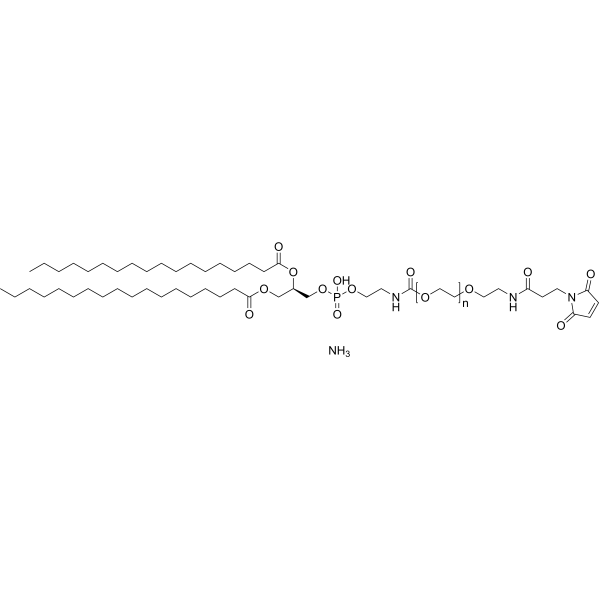
DSPE-PEG5000-Mal ammonium

Based on 1 Customer Validation
DSPE-PEG-Maleimide has DSPE phospholipid and maleimide to prepare nanostructured lipid carrier. DSPE-PEG-Maleimide extends blood circulation time and higher stability for encapsulated agents. DSPE-PEG5000-Mal ammonium contains PEG5000.
연구목적의 판매만을 진행합니다. 환자를 대상으로 한 판매는 하지 않습니다.
- Purity : 98.37%
- CAS No.: 474922-22-0
- 화학식: (C2H4O)nC51H92N1O13P.H3N
- 분자량:5000(Average)
-
보관:
-20°C, sealed storage, away from moisture
* In solvent : -80°C, 6 months; -20°C, 1 month (sealed storage, away from moisture)

To place orders, for customer services and technical support, please contact: MedChemExpress USA
Tel: 609-228-6898 E-mail: [email protected] [email protected]


-
 Biological Activity
-
Chemical Information
-
용액&용해도
- 순도&문서
- References
-
 Help & FAQs


-
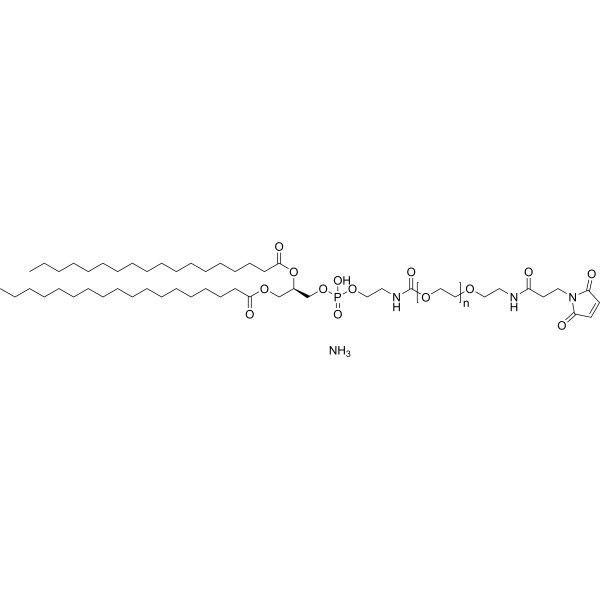
HY-144004
DSPE-PEG2000-Mal ammoniumLipid Carrier -
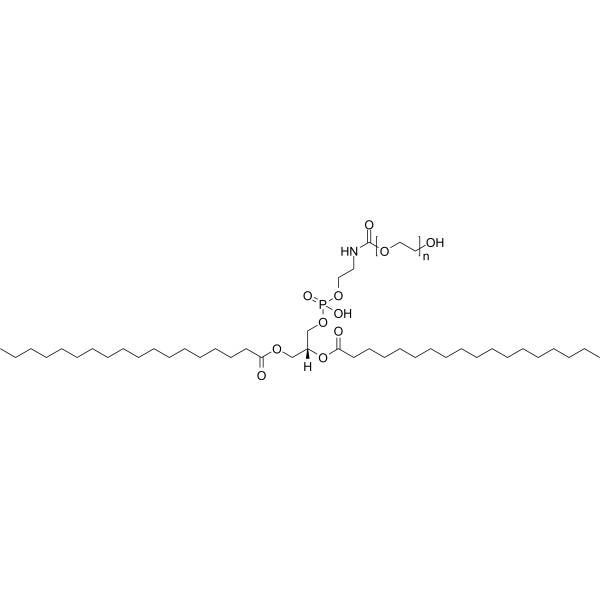
HY-142979
DSPE-PEG 2000PEG Lipid -
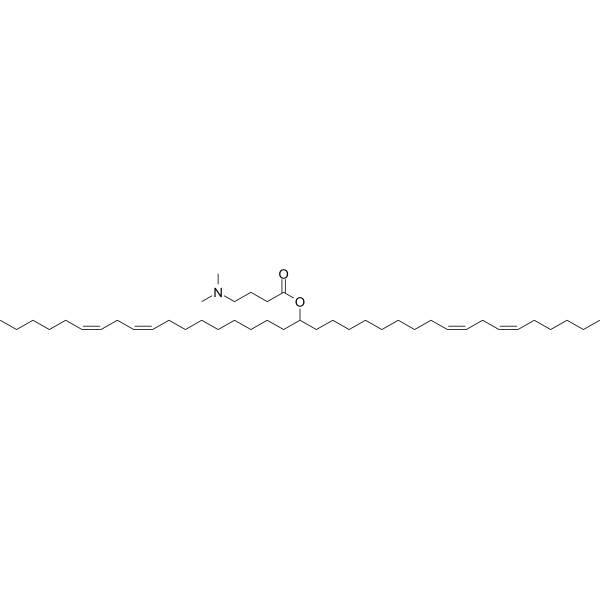
HY-112251
D-Lin-MC3-DMAsiRNA Delivery Vehicle -
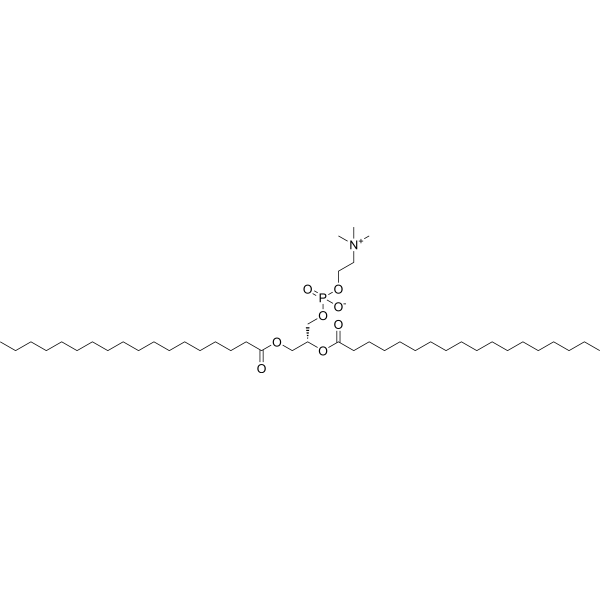
HY-W040193
DSPCLiposome Compound -
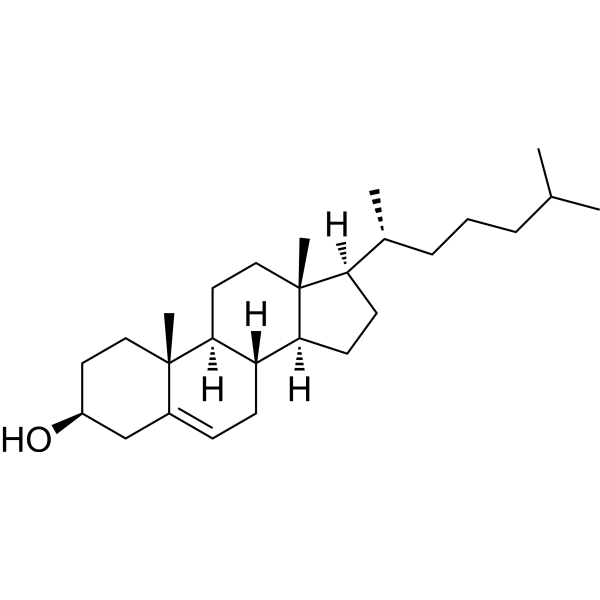
HY-N0322
Cholesterol (from animal)ERRα Agonist -

HY-Y1891
Tween 80 -
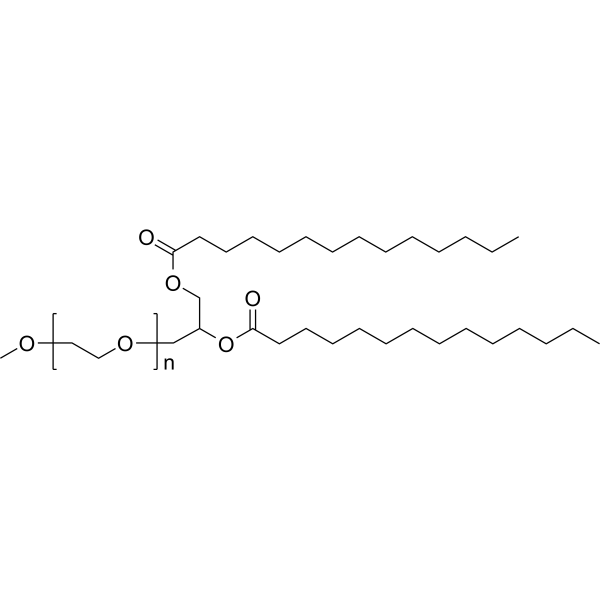
HY-112764
mPEG2000-DMGLiposome -
HY-125853
Phosphatidylcholines,soyaPhosphatidylcholine -

HY-W441009A
DSPE-PEG3400-Maleimide ammoniumPhospholipid -
HY-W127499
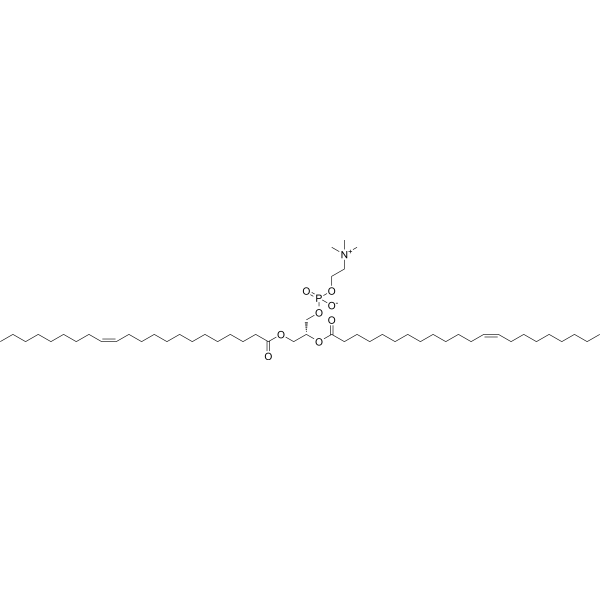
1,2-Dierucoyl-sn-glycero-3-phosphocholineLiposome Membrane Composition -

HY-131652
1,2-Di-O-hexadecyl-sn-glycero-3-phosphocholinePhospholipids -

HY-145547
1-Myristoyl-2-hydroxy-sn-glycero-3-phosphoethanolaminePhospholipids


Biological Activity
제품 설명
In Vitro
The immune liposomes constructed by DSPE-PEG-Maleimide can be used for the delivery of brain drugs[2].
MedChemExpress (MCE) has not independently confirmed the accuracy of these methods. They are for reference only.


Chemical Information
-
CAS No. 474922-22-0
-
Appearance Solid
-
분자량 5000(Average)
-
화학식 (C2H4O)nC51H92N1O13P.H3N
-
Color White to off-white
-
SMILES
O=C(NCCOP(O)(OC[C@@H](COC(CCCCCCCCCCCCCCCCC)=O)OC(CCCCCCCCCCCCCCCCC)=O)=O)OCCOCCNC(CCN1C(C=CC1=O)=O)=O.N.[n]
-
Synonyms
DSPE-PEG5000 Maleimide ammonium; 1,2-Distearoyl-sn-glycero-3-phosphoethanolamine-N-[maleimide(polyethylene glycol)-5000] ammonium
-
선적
Room temperature in continental US; may vary elsewhere.
-
보관
-20°C, sealed storage, away from moisture
* In solvent : -80°C, 6 months; -20°C, 1 month (sealed storage, away from moisture)


용액&용해도
In Vitro:
Ethanol : 20 mg/mL (Need ultrasonic)
In Vivo:
Select the appropriate dissolution method based on your experimental animal and administration route.
- For the following dissolution methods, please ensure to first prepare a clear stock solution using an In Vitro approach and then sequentially add co-solvents:
- To ensure reliable experimental results, the clarified stock solution can be appropriately stored based on storage conditions. As for the working solution for In Vivo experiments, it is recommended to prepare freshly and use it on the same day.
- The percentages shown for the solvents indicate their volumetric ratio in the final prepared solution. If precipitation or phase separation occurs during preparation, heat and/or sonication can be used to aid dissolution.
Add each solvent one by one: 10% EtOH 40% PEG300 5% Tween-80 45% Saline
Solubility: ≥ 2 mg/mL; Clear solution
This protocol yields a clear solution of ≥ 2 mg/mL (saturation unknown).
Taking 1 mL working solution as an example, add 100 μL EtOH stock solution (20.0 mg/mL) to 400 μL PEG300, and mix evenly; then add 50 μL Tween-80 and mix evenly; then add 450 μL Saline to adjust the volume to 1 mL.
Preparation of Saline: Dissolve 0.9 g sodium chloride in ddH₂O and dilute to 100 mL to obtain a clear Saline solution.
Add each solvent one by one: 10% EtOH 90% (20% SBE-β-CD in Saline)
Solubility: ≥ 2 mg/mL; Clear solution
This protocol yields a clear solution of ≥ 2 mg/mL (saturation unknown).
Taking 1 mL working solution as an example, add 100 μL EtOH stock solution (20.0 mg/mL) to 900 μL 20% SBE-β-CD in Saline, and mix evenly.
Preparation of 20% SBE-β-CD in Saline (4°C, storage for one week): 2 g SBE-β-CD powder is dissolved in 10 mL Saline, completely dissolve until clear.
In Vivo Dissolution Calculator
Please enter the basic information of animal experiments:
-
-
-
-
Recommended: Prepare an additional quantity of animals to account for potential losses during experiments.
Working solution concentration: 0.22 mg/mL


순도&문서
-
Data Sheet (269 KB)
-
SDS (394 KB)
- English - EN (394 KB)
- Français - FR (394 KB)
- Deutsch - DE (394 KB)
- Norwegian - NO (394 KB)
- Español - ES (394 KB)
- Swedish - SV (394 KB)
- Italian - IT (394 KB)
- Korean - KR (394 KB)
- Portuguese - PT (394 KB)
-
Handling Instructions (2659 KB)
References
[1]. Schnorenberg MR, et, al. Synthesis and Purification of Homogeneous Lipid-Based Peptide Nanocarriers by Overcoming Phospholipid Ester Hydrolysis. ACS Omega. 2018 Oct 31;3(10):14144-14150. [Content Brief]
[2]. Huwyler J, et, al. Brain drug delivery of small molecules using immunoliposomes. Proc Natl Acad Sci U S A. 1996 Nov 26;93(24):14164-9. [Content Brief]

Calculators
Concentration (start) × Volume (start) = Concentration (final) × Volume (final)


DSPE-PEG5000-Mal ammonium Related Classifications
HY-144004A Related Classifications
 Powered by Bioz