
Search Result
Results for "
glutamate release
" in MedChemExpress (MCE) Product Catalog:
24
Isotope-Labeled Compounds
| Cat. No. |
Product Name |
Target |
Research Areas |
Chemical Structure |
-
- HY-14608
-
|
|
Environmental Pollutants
Endogenous Metabolite
iGluR
Ferroptosis
Apoptosis
|
Neurological Disease
|
|
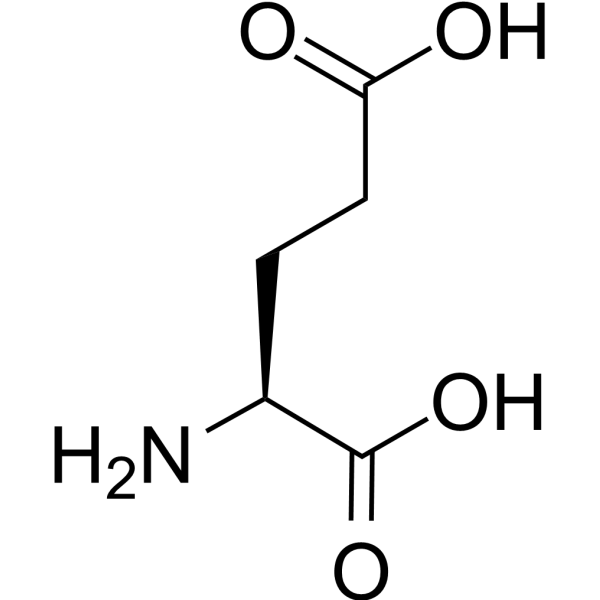
L-Glutamic acid is an excitatory amino acid neurotransmitter that acts as an agonist for all subtypes of glutamate receptors (metabolic rhodophylline, NMDA, and AMPA). L-Glutamic acid has an agonist effect on the release of DA from dopaminergic nerve endings. L-Glutamic acid can be used in the study of neurological diseases. L-Glutamic acid acts at ionotropic and metabotropic glutamate receptors .
|
-
-
- HY-14608A
-
|
|
Environmental Pollutants
iGluR
Apoptosis
Ferroptosis
Endogenous Metabolite
|
Neurological Disease
|
|
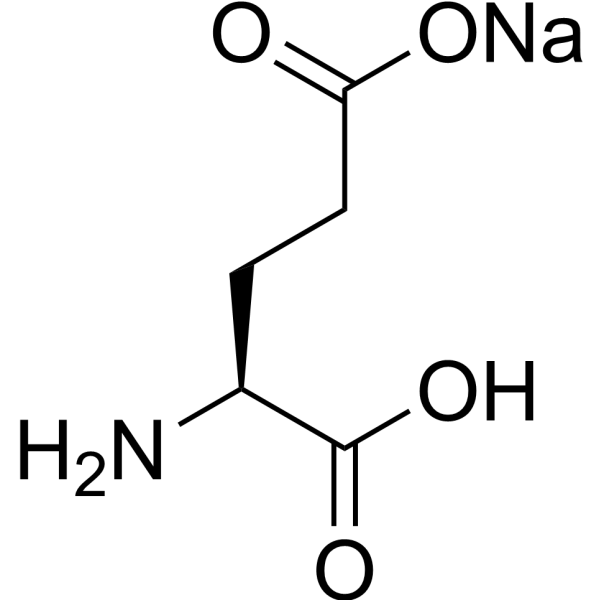
L-Glutamic acid monosodium salt is an excitatory amino acid neurotransmitter that acts as an agonist for all subtypes of glutamate receptors (metabolic rhodophylline, NMDA, and AMPA). L-Glutamic acid monosodium salt has an agonist effect on the release of DA from dopaminergic nerve endings. L-Glutamic acid monosodium salt can be used in the study of neurological diseases. L-Glutamic acid monosodium salt acts at ionotropic and metabotropic glutamate receptors .
|
-
-
- HY-B0495
-
|
LTG; BW430C
|
Sodium Channel
Autophagy
|
Neurological Disease
Cancer
|
|
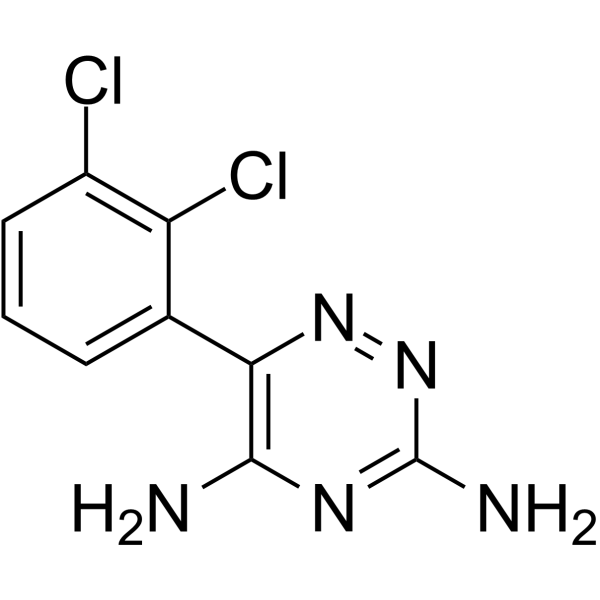
Lamotrigine (BW430C) is a potent and orally active anticonvulsant or antiepileptic agent. Lamotrigine selectively blocks voltage-gated Na + channels, stabilizing presynaptic neuronal membranes and inhibiting glutamate release. Lamotrigine can be used for the research of epilepsy, focal seizure, et al .
|
-
-
- HY-14608S5
-
|
|
Endogenous Metabolite
iGluR
Ferroptosis
Apoptosis
|
Neurological Disease
|
|
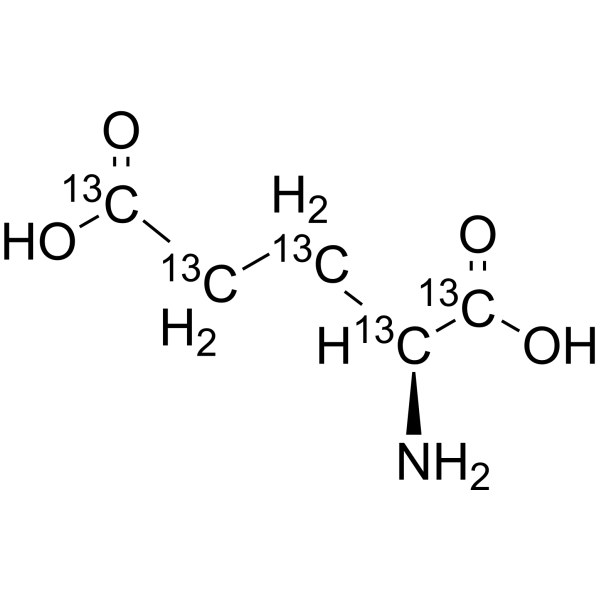
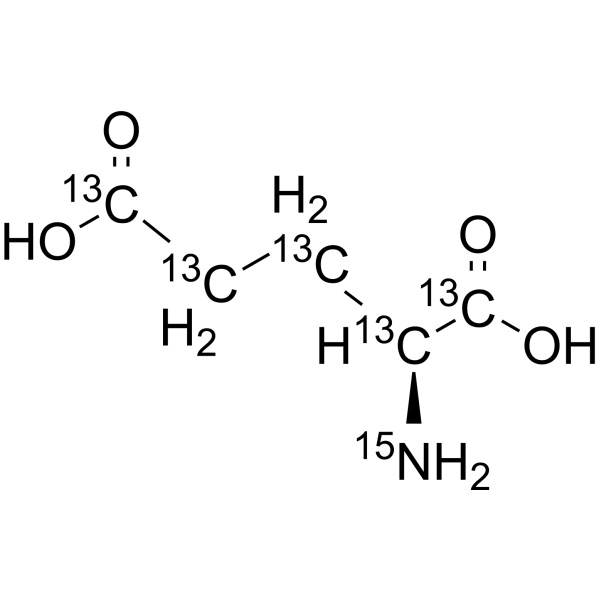
L-Glutamic acid- 13C5 is the 13C-labeled L-Glutamic acid. L-Glutamic acid acts as an excitatory transmitter and an agonist at all subtypes of glutamate receptors (metabotropic, kainate, NMDA, and AMPA). L-Glutamic acid shows a direct activating effect on the release of DA from dopaminergic terminals.
|
-
-
- HY-70057
-
|
FCE 26743; EMD 1195686
|
Monoamine Oxidase
|
Neurological Disease
|
|
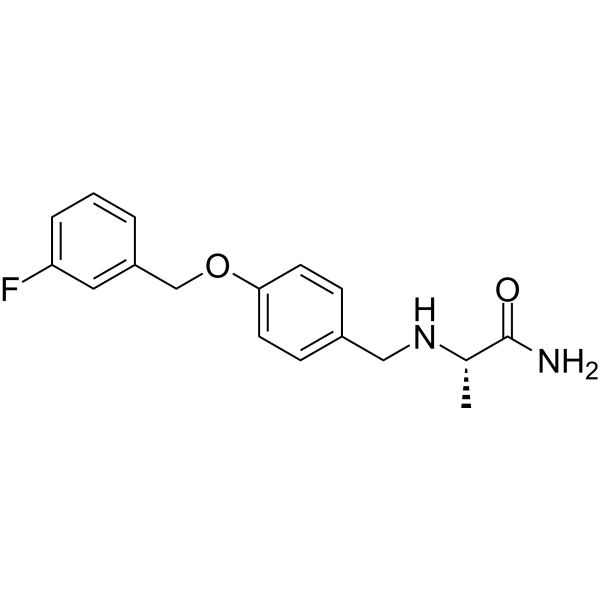
Safinamide is a potent, selective, and reversible monoamine oxidase B (MAO-B) inhibitor (IC50=0.098 μM) over MAO-A (IC50=580 μM) . Safinamide also blocks sodium channels and modulates glutamate (Glu) release, showing a greater affinity at depolarized (IC50=8 μM) than at resting (IC50=262 μM) potentials. Safinamide has neuroprotective and neurorescuing effects and can be used for the study of parkinson disease, ischemia stroke etc.al .
|
-
-
- HY-100403
-
Ro 67-7476
Maximum Cited Publications
23 Publications Verification
|
mGluR
|
Cancer
|
|
Ro 67-7476 is a potent positive allosteric modulator of mGluR1 and potentiates glutamate-induced calcium release in HEK293 cells expressing rat mGluR1a with an EC50 of 60.1 nM . Ro 67-7476 is a potent P-ERK1/2 agonist and activates ERK1/2 phosphorylation in the absence of exogenously added glutamate (EC50=163.3 nM) .
|
-
-
- HY-14608S7
-
|
|
Endogenous Metabolite
iGluR
Ferroptosis
Apoptosis
|
Neurological Disease
|
|
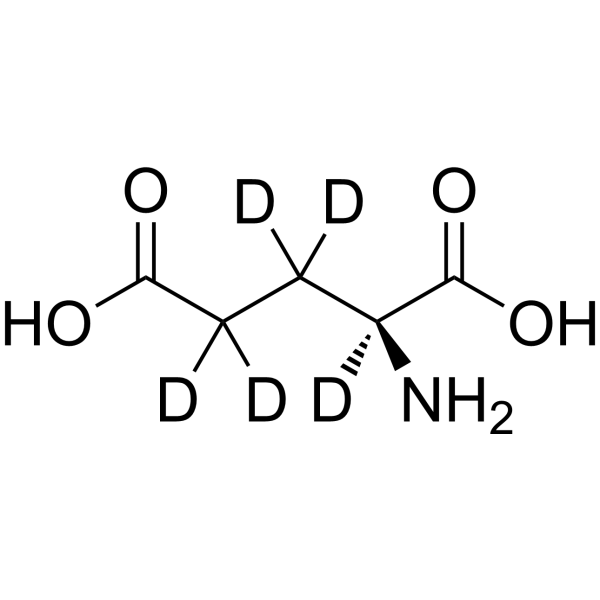
L-Glutamic acid-d5 is the deuterium labeled L-Glutamic acid. L-Glutamic acid acts as an excitatory transmitter and an agonist at all subtypes of glutamate receptors (metabotropic, kainate, NMDA, and AMPA). L-Glutamic acid shows a direct activating effect on the release of DA from dopaminergic terminals.
|
-
-
- HY-14608S8
-
|
|
Endogenous Metabolite
iGluR
Ferroptosis
Apoptosis
|
Neurological Disease
|
|
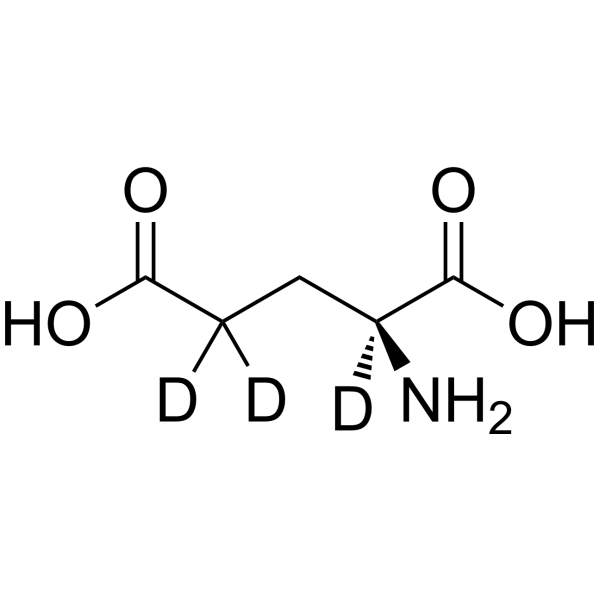
L-Glutamic acid-d3 is the deuterium labeled L-Glutamic acid. L-Glutamic acid acts as an excitatory transmitter and an agonist at all subtypes of glutamate receptors (metabotropic, kainate, NMDA, and AMPA). L-Glutamic acid shows a direct activating effect on the release of DA from dopaminergic terminals.
|
-
-
- HY-14608S3
-
-
-
- HY-B0194A
-
|
|
Adrenergic Receptor
Apoptosis
Akt
Wnt
β-catenin
|
Neurological Disease
Endocrinology
Cancer
|
|
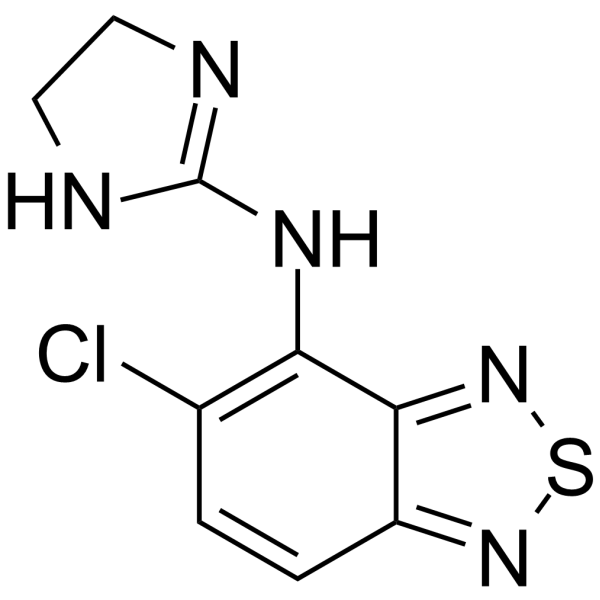
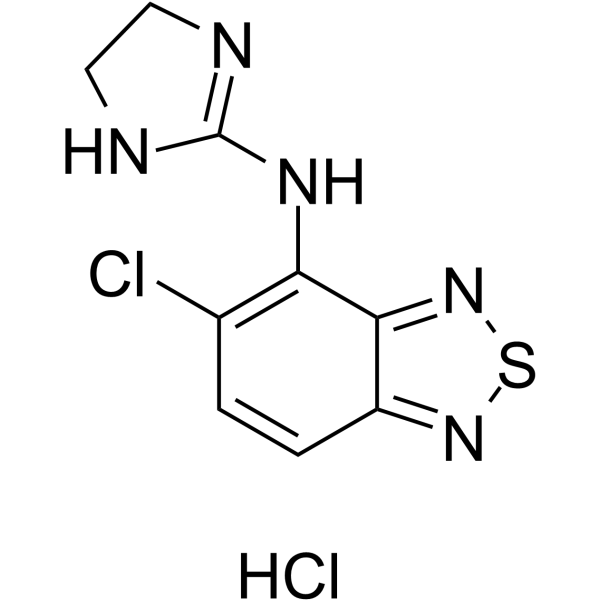
Tizanidine hydrochloride, a skeletal muscle relaxant, is an orally effective central α2-adrenoceptor agonist (IC50 = 6.9 nmol). Tizanidine hydrochloride primarily exerts muscle relaxation effects by inhibiting the release of excitatory amino acids (glutamate and aspartate) from the presynaptic terminals of spinal cord interneurons. Tizanidine hydrochloride has anti-injury activity and can inhibit gastrointestinal (GI) transport. Tizanidine hydrochloride can inhibit the proliferation, migration, and invasion of lung cancer cells and induce cell apoptosis by upregulating Nischarin and inhibiting the AKT and Wnt3a/β-catenin signaling pathways. Tizanidine hydrochloride can be used to treat spasticity caused by diseases such as multiple sclerosis (MS), stroke, and spinal cord injury (SCI) .
|
-
-
- HY-B0194
-
|
|
Adrenergic Receptor
Apoptosis
Akt
Wnt
β-catenin
|
Neurological Disease
Endocrinology
Cancer
|
|
Tizanidine, a skeletal muscle relaxant, is an orally effective central α2-adrenoceptor agonist (IC50 = 6.9 nmol). Tizanidine primarily exerts muscle relaxation effects by inhibiting the release of excitatory amino acids (glutamate and aspartate) from the presynaptic terminals of spinal cord interneurons. Tizanidine has anti-injury activity and can inhibit gastrointestinal (GI) transport. Tizanidine can inhibit the proliferation, migration, and invasion of lung cancer cells and induce cell apoptosis by upregulating Nischarin and inhibiting the AKT and Wnt3a/β-catenin signaling pathways. Tizanidine can be used to treat spasticity caused by diseases such as multiple sclerosis (MS), stroke, and spinal cord injury (SCI) .
|
-
-
- HY-N5063
-
|
|
Angiotensin-converting Enzyme (ACE)
IKK
Calcium Channel
PKC
Reactive Oxygen Species (ROS)
NF-κB
Apoptosis
Sirtuin
NOD-like Receptor (NLR)
|
Cardiovascular Disease
Neurological Disease
Inflammation/Immunology
|
|
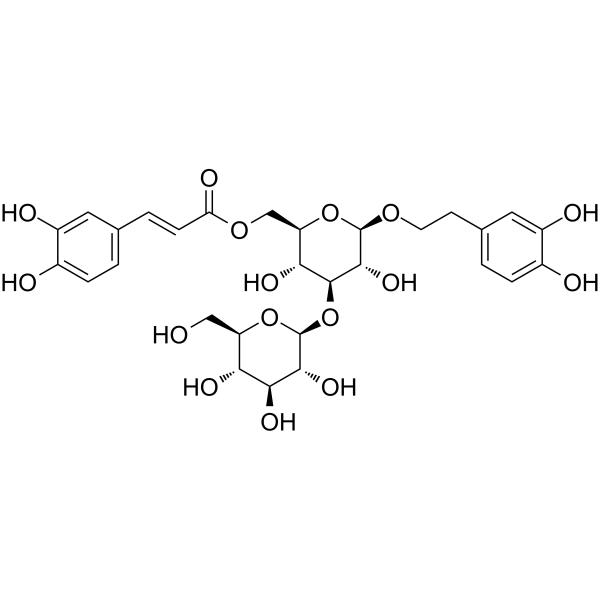
Plantainoside D, a phenylethanoid glycosides, is a IKK-β inhibitor with diverse biological activities. Plantainoside D shows inhibitory activity of angiotensin-converting enzyme (ACE) with an IC50 of 2.17 mM. Plantainoside D significantly reduces the release of glutamate from nerve terminals in the cerebral cortex of rats by inhibiting the voltage-dependent calcium channel (VDCCs) and protein kinase C (PKC) signaling cascade. Plantainoside D significantly alleviates cell apoptosis by inhibiting the generation of ROS and the activation of NF-κB. Plantainoside D significantly improves acute lung injury (ALI) induced by sepsis by regulating the Sirt3/NLRP3 signaling pathway. Plantainoside D can be used for the study of neuroprotection, antioxidant, anti-inflammation, antihypertension .
|
-
-
- HY-70057A
-
|
FCE 26743 mesylate; EMD 1195686 mesylate
|
Monoamine Oxidase
|
Cardiovascular Disease
Neurological Disease
|
|
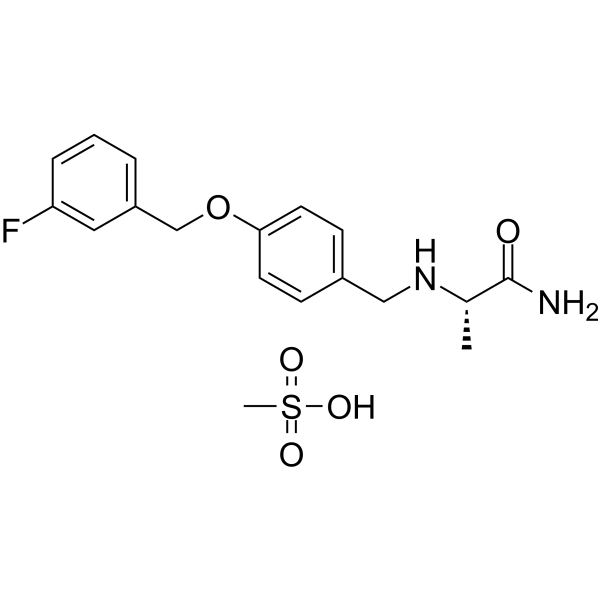
Safinamide (FCE 26743; EMD 1195686) mesylate is a potent, selective, and reversible monoamine oxidase B (MAO-B) inhibitor (IC50=0.098 μM) over MAO-A (IC50=580 nM) . Safinamide mesylate also blocks sodium channels and modulates glutamate (Glu) release, showing a greater affinity at depolarized (IC50=8?μM) than at resting (IC50=262?μM) potentials. Safinamide mesylate has neuroprotective and neurorescuing effects and can be used for the study of parkinson disease, ischemia stroke et.al .
|
-
-
- HY-14608R
-
|
|
Reference Standards
Endogenous Metabolite
iGluR
Ferroptosis
Apoptosis
|
Neurological Disease
|
L-Glutamic acid (Standard) is the analytical standard of L-Glutamic acid. This product is intended for research and analytical applications. L-Glutamic acid is an excitatory amino acid neurotransmitter that acts as an agonist for all subtypes of glutamate receptors (metabolic rhodophylline, NMDA, and AMPA). L-Glutamic acid has an agonist effect on the release of DA from dopaminergic nerve endings. L-Glutamic acid can be used in the study of neurological diseases .
IC50 & Target:DA .
In Vitro: L-Glutamic acid (120, 500, 750, 1000 mg/dL) can reduce the harmful effect of lithium on the embryonic development of Xenopus Xenopus .
L-Glutamic acid (2, 5, 10, 20 mM, 24-48 h) can induce neuroexcitotoxicity in neuroblastoma .
In Vivo: L-Glutamic acid (3 g/kg, subcutaneous injection) can promote excitotoxic degeneration of retinal ganglion cells in mice .
L-Glutamic acid (750 mg/kg, intraperitoneal injection) can reduce and inhibit oxidative stress induced by chlorpyrifos (CPF) in rats .
|
-
-
- HY-W419700
-
|
|
Endogenous Metabolite
iGluR
Ferroptosis
Apoptosis
|
Neurological Disease
|
|
L-Glutamic acid ammonium is an excitatory amino acid neurotransmitter that acts as an agonist for all subtypes of glutamate receptors (metabolic rhodophylline, NMDA, and AMPA). L-Glutamic acid ammonium has an agonist effect on the release of DA from dopaminergic nerve endings. L-Glutamic acid can be used in the study of neurological diseases. L-Glutamic acid ammonium acts at ionotropic and?metabotropic glutamate receptors .
|
-
-
- HY-P1080
-
|
|
Calcium Channel
|
Cardiovascular Disease
Neurological Disease
|
|
ω-Agatoxin IVA is a potent, selective P/Q type Ca 2+ (Cav2.1) channel blocker with IC50 values of 2 nM and 90 nM. ω-Agatoxin IVA inhibits glutamate exocytosis and calcium influx elicited by high potassium. ω-Agatoxin IVA inhibits Capsaicin (HY-10448)-induced CGRP release and vasodilation. ω-Agatoxin IVA can be used for the research of neurological and cardiovascular disease .
|
-
-
- HY-W016145
-
|
|
Endogenous Metabolite
iGluR
Ferroptosis
Apoptosis
|
Neurological Disease
Metabolic Disease
Inflammation/Immunology
Cancer
|
|
L-Glutamic acid monosodium hydrate is an excitatory amino acid neurotransmitter that acts as an agonist for all subtypes of glutamate receptors (metabolic rhodophylline, NMDA, and AMPA). L-Glutamic acid monosodium hydrate has an agonist effect on the release of DA from dopaminergic nerve endings. L-Glutamic acid monosodium hydrate can be used in the study of neurological diseases. L-Glutamic acid monosodium hydrate acts at ionotropic and?metabotropic glutamate receptors .
|
-
-
- HY-14608S
-
|
|
Endogenous Metabolite
iGluR
Ferroptosis
Apoptosis
|
Neurological Disease
|
|
L-Glutamic acid- 13C is the 13C-labeled L-Glutamic acid. L-Glutamic acid acts as an excitatory transmitter and an agonist at all subtypes of glutamate receptors (metabotropic, kainate, NMDA, and AMPA). L-Glutamic acid shows a direct activating effect on the release of DA from dopaminergic terminals.
|
-
-
- HY-N9404
-
|
|
Sodium Channel
|
Neurological Disease
|
|
6-Benzoylheteratisine is an Aconitum alkaloid with potential neuroprotective activity. 6-Benzoylheteratisine can antagonize tetrodotoxin, inhibit the increase of [Na +]i, [Ca 2+]i and glutamate release, and block sodium channels. 6-Benzoylheteratisine has an inhibitory effect on the neuronal activity underlying epileptiform burst discharge .
|
-
-
- HY-117483
-
|
|
iGluR
|
Neurological Disease
|
|
Gly-Pro-Glu is a neuroactive peptide with a potent action on acetylcholine release. Gly-Pro-Glu is the N-terminal tripeptide of insulin-like growth factor-I. Gly-Pro-Glu inhibits glutamate binds to N-methyl-D-aspartate (NMDA) receptor with an IC50 value of 14.7 μM. Gly-Pro-Glu can be used for the research of neuroprotection .
|
-
-
- HY-P1080A
-
|
|
Calcium Channel
|
Neurological Disease
|
|
ω-Agatoxin IVA TFA is a potent, selective P/Q type Ca 2+ (Cav2.1) channel blocker with IC50 values of 2 nM and 90 nM. ω-Agatoxin IVA TFA inhibits glutamate exocytosis and calcium influx elicited by high potassium. ω-Agatoxin IVA TFA inhibits Capsaicin (HY-10448)-induced CGRP release and vasodilation. ω-Agatoxin IVA TFA can be used for the research of neurological and cardiovascular disease .
|
-
-
- HY-120511
-
KNT-127
1 Publications Verification
|
Opioid Receptor
|
Neurological Disease
|
|
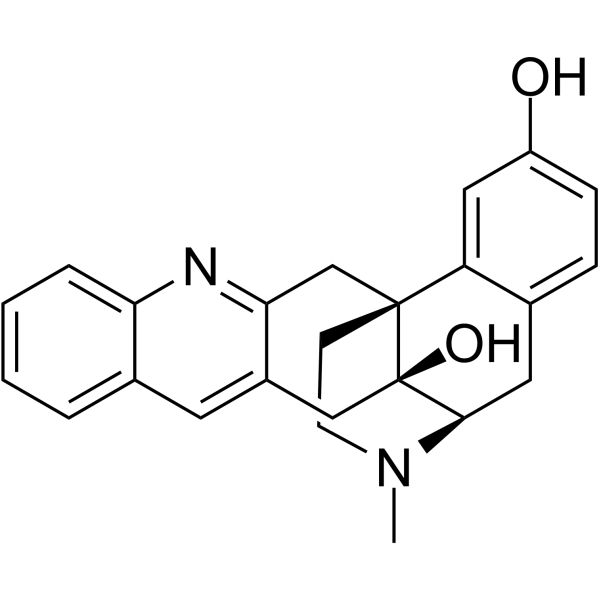
KNT-127 is a selective and BBB-penetrant δ-opioid receptor (DOR) agonist (Ki = 0.16 nM). KNT-127 is highly selective to the δ receptor, with Ki values of 0.16, 21.3 and 153 nM for δ, μ and κ receptors, respectively. KNT-127 acts as a biased ligand that mainly activates cyclic adenosine monophosphate (cAMP) signaling with lower beta-arrestin signaling activation. KNT-127 increases the release of dopamine and L-glutamate in the striatum, nucleus accumbens, and prefrontal cortex. KNT-127 exhibits antidepressant- and anxiolytic-like effects. KNT-127 can be studied in research on neurological diseases .
|
-
-
- HY-14608S2
-
|
|
Endogenous Metabolite
iGluR
Ferroptosis
Apoptosis
|
Neurological Disease
|
|
L-Glutamic acid- 15N is the 15N-labeled L-Glutamic acid. L-Glutamic acid acts as an excitatory transmitter and an agonist at all subtypes of glutamate receptors (metabotropic, kainate, NMDA, and AMPA). L-Glutamic acid shows a direct activating effect on the release of DA from dopaminergic terminals .
|
-
-
- HY-14608S1
-
|
|
Endogenous Metabolite
iGluR
Ferroptosis
Apoptosis
|
Neurological Disease
|
|
L-Glutamic acid-1- 13C is the 13C-labeled L-Glutamic acid. L-Glutamic acid acts as an excitatory transmitter and an agonist at all subtypes of glutamate receptors (metabotropic, kainate, NMDA, and AMPA). L-Glutamic acid shows a direct activating effect on the release of DA from dopaminergic terminals.
|
-
-
- HY-147512
-
|
|
Cannabinoid Receptor
|
Inflammation/Immunology
|
|
CB1/2 agonist 1 is a potent and cross the blood-brain barrier CB1/2 agonist with EC50s of 56.15, 11.63 nM for CB1R and CB2R, respectively. CB1/2 agonist 1 reduces glutamate release and LPS-induced activation of microglial cells. CB1/2 agonist 1 shows anti-inflammatory and antinociceptive effects. CB1/2 agonist 1 has the potential for the research of multiple sclerosis .
|
-
-
- HY-106865
-
|
|
Dopamine Receptor
Adrenergic Receptor
|
Cardiovascular Disease
|
|
Mivazerol is a selective α2-adrenoceptor agonist. Mivazerol decreases the spontaneous release of serotonin (5-HT) and significantly inhibits the immobilization stress-induced enhancement of norepinephrine (NE), dopamine (DA) and dihydroxyphenylacetic acid (DOPAC). Mivazerol inhibits intrathecal release of glutamate evoked by halothane withdrawal in rats, and exerts neuroprotective effects in forebrain ischemia rats. Mivazerol can be used for myocardial ischemia research .
|
-
-
- HY-14608S6
-
-
-
- HY-N6776
-
|
|
Potassium Channel
|
Neurological Disease
Cancer
|
|
Penitrem A is an indole diterpene neurotoxic alkaloid produced by Penicillium, acts as a selective BK channel antagonist with antiproliferative and anti-invasive activities against multiple malignancies. Penitrem A increases the spontaneous release of endogenous glutamate, gamma-aminobutyric acid (GABA) and aspartate from cerebrocortical synaptosomes, and induces tremorgenic syndromes in animals .
|
-
-
- HY-B0495R
-
|
LTG (Standard); BW430C (Standard)
|
Reference Standards
Sodium Channel
|
Neurological Disease
|
|
Lamotrigine (Standard) is the analytical standard of Lamotrigine. This product is intended for research and analytical applications. Lamotrigine (BW430C) is a potent and orally active anticonvulsant or antiepileptic agent. Lamotrigine selectively blocks voltage-gated Na + channels, stabilizing presynaptic neuronal membranes and inhibiting glutamate release. Lamotrigine can be used for the research of epilepsy, focal seizure, et al .
|
-
-
- HY-N10772
-
-
-
- HY-P3089A
-
|
|
Potassium Channel
|
Others
|
|
Dendrotoxin K TFA is a Kv1.1 channel blocker. Dendrotoxin K TFA determines glutamate release in CA3 neurons in a time-dependent manner through the control of the presynaptic spike waveform .
|
-
-
- HY-108335
-
|
619C89; BW 619C89
|
Sodium Channel
Calcium Channel
|
Neurological Disease
|
|
Sipatrigine (619C89), a neuroprotective agent, is a glutamate release inhibitor, voltage-dependent sodium channel and calcium channel inhibitor, penetrating the central nervous system. Has the potential in the study for focal cerebral ischemia and stroke .
|
-
-
- HY-B0495S4
-
|
LTG-13C3; BW430C-13C3
|
Sodium Channel
Autophagy
|
Neurological Disease
|
|
Lamotrigine- 13C3 is the 13C-labeled Lamotrigine. Lamotrigine (BW430C) is a potent and orally active anticonvulsant or antiepileptic agent. Lamotrigine selectively blocks voltage-gated Na+ channels, stabilizing presynaptic neuronal membranes and inhibiting glutamate release. Lamotrigine can be used for the research of epilepsy, focal seizure, et al .
|
-
-
- HY-14608S4
-
-
-
- HY-W276106
-
|
|
Others
|
Cancer
|
|
KM02894 is an inhibitor of glutamate release. Cancer cells release high levels of glutamate, which disrupts normal bone turnover and may lead to cancer-induced bone pain. KM02894 can be used for cancer related research .
|
-
-
- HY-B0194S
-
|
|
Isotope-Labeled Compounds
Adrenergic Receptor
Apoptosis
Akt
Wnt
β-catenin
|
Neurological Disease
Endocrinology
Cancer
|
|
Tizanidine-d4 is the deuterium labeled Tizanidine (HY-B0194). Tizanidine, a skeletal muscle relaxant, is an orally effective central α2-adrenoceptor agonist (IC50 = 6.9 nmol). Tizanidine primarily exerts muscle relaxation effects by inhibiting the release of excitatory amino acids (glutamate and aspartate) from the presynaptic terminals of spinal cord interneurons. Tizanidine has anti-injury activity and can inhibit gastrointestinal (GI) transport. Tizanidine can inhibit the proliferation, migration, and invasion of lung cancer cells and induce cell apoptosis by upregulating Nischarin and inhibiting the AKT and Wnt3a/β-catenin signaling pathways. Tizanidine can be used to treat spasticity caused by diseases such as multiple sclerosis (MS), stroke, and spinal cord injury (SCI).
|
-
-
- HY-P2210A
-
|
|
GPR171
|
Neurological Disease
|
|
BigLEN(mouse) TFA is a GPR171 agonist. BigLEN(mouse) TFA is a proSAAS-derived neuropeptide. BigLEN(mouse) TFA regulates food intake in mice. BigLEN(mouse) inhibits the release of glutamate onto parvocellular neurons of the paraventricular nucleus in a process dependent upon activation of postsynaptic G proteins.
|
-
-
- HY-14608S10
-
|
|
Apoptosis
iGluR
Ferroptosis
Endogenous Metabolite
|
Neurological Disease
|
|
L-Glutamic acid- 13C2 is the 13C labeled L-Glutamic acid . L-Glutamic acid acts as an excitatory transmitter and an agonist at all subtypes of glutamate receptors (metabotropic, kainate, NMDA, and AMPA). L-Glutamic acid shows a direct activating effect on the release of DA from dopaminergic terminals .
|
-
-
- HY-B0495S5
-
|
LTG-d3; BW430C-d3
|
Autophagy
Sodium Channel
|
Neurological Disease
|
|
Lamotrigine-d3 is the deuterium labeled Lamotrigine . Lamotrigine (BW430C) is a potent and orally active anticonvulsant or antiepileptic agent. Lamotrigine selectively blocks voltage-gated Na+ channels, stabilizing presynaptic neuronal membranes and inhibiting glutamate release. Lamotrigine can be used for the research of epilepsy, focal seizure, et al .
|
-
-
- HY-105084A
-
|
|
Sodium Channel
Calcium Channel
|
Cardiovascular Disease
Infection
Neurological Disease
Cancer
|
|
Lubeluzole dihydrochloride is the dihydrochloride salt of Lubeluzole (HY-105084). Lubeluzole dihydrochloride is the S-isomer of benzothiazole derivative. Lubeluzole dihydrochloride can inhibit glutamate release, glutamate-activated NO synthesis and block voltage-gated Sodium Channel and Calcium Channel. Lubeluzole dihydrochloride exhibits anti-ischemic and neuroprotective effects. Lubeluzole dihydrochloride also shows anti-bacterial and anti-diarrheal potential. Lubeluzole dihydrochloride can inhibit cardiac sodium channel and prolong cardiac action potential. Lubeluzole dihydrochloride can inhibit cancer cells proliferation and invasion and shows chemosensitizing effect. Lubeluzole dihydrochloride can be used for the researches of cancer, infection, neurological and cardiovascular disease such as stroke, infectious diarrhea and ovarian .
|
-
-
- HY-19742A
-
|
SRA-333 hydrochloride
|
5-HT Receptor
|
Neurological Disease
|
|
Lecozotan (SRA-333) hydrochloride is an orally active and selective antagonist of 5-HT1A with a Ki of 4.5 nM for cloned human 5-HT1A receptor. Lecozotan hydrochloride enhances the stimulated release of glutamate and acetylcholine in the hippocampus and possesses cognitive-enhancing properties. Lecozotan hydrochloride has the potential for mild-to-moderate Alzheimer's disease (AD) research .
|
-
-
- HY-B0495S3
-
|
|
Autophagy
Sodium Channel
|
Neurological Disease
|
|
Lamotrigine- 13C2, 15N is the 13C and 15N labeled Lamotrigine . Lamotrigine (BW430C) is a potent and orally active anticonvulsant or antiepileptic agent. Lamotrigine selectively blocks voltage-gated Na+ channels, stabilizing presynaptic neuronal membranes and inhibiting glutamate release. Lamotrigine can be used for the research of epilepsy, focal seizure, et al .
|
-
-
- HY-70057S1
-
|
FCE 26743-d4-1; EMD 1195686-d4-1
|
Isotope-Labeled Compounds
Monoamine Oxidase
|
Neurological Disease
|
|
Safinamide-d4-1 is deuterium labeled Safinamide. Safinamide is a potent, selective, and reversible monoamine oxidase B (MAO-B) inhibitor (IC50=0.098 μM) over MAO-A (IC50=580 μM) . Safinamide also blocks sodium channels and modulates glutamate (Glu) release, showing a greater affinity at depolarized (IC50=8?μM) than at resting (IC50=262?μM) potentials. Safinamide has neuroprotective and neurorescuing effects and can be used for the study of parkinson disease, ischemia stroke etc.al .
|
-
-
- HY-W037817
-
|
Dimethyl glutamate
|
Potassium Channel
Bacterial
|
Infection
Metabolic Disease
|
|
Dimethyl L-glutamate (Dimethyl glutamate), a membrane-permeable analog of Glutamate, can stimulate insulin release induced by Glucose. Dimethyl L-glutamate suppresses the KATP channel activities. Dimethyl L-glutamate inhibits E. gracilis growth and causes abnormal cell division. Dimethyl L-glutamate can be used in the research of diabetes, glucose transport, phosphorylation, and further metabolism .
|
-
-
- HY-102091
-
|
(2R,4R)-4-Aminopyrrolidine-2,4-dicarboxylic acid
|
mGluR
|
Neurological Disease
|
|
(2R,4R)-APDC is a group II metabotropic glutamate receptor (mGluR) agonist. (2R,4R)-APDC affects cell proliferation by inhibiting glutamate release, enhancing motor responses produced by D1 receptor activation, or reducing brain-derived neurotrophic factor (BDNF) levels. (2R,4R)-APDC can be used in the study of epilepsy and other neurological diseases .
|
-
-
- HY-110032
-
|
LTG isethionate; BW430C isethionate
|
Sodium Channel
Autophagy
|
Neurological Disease
Cancer
|
|
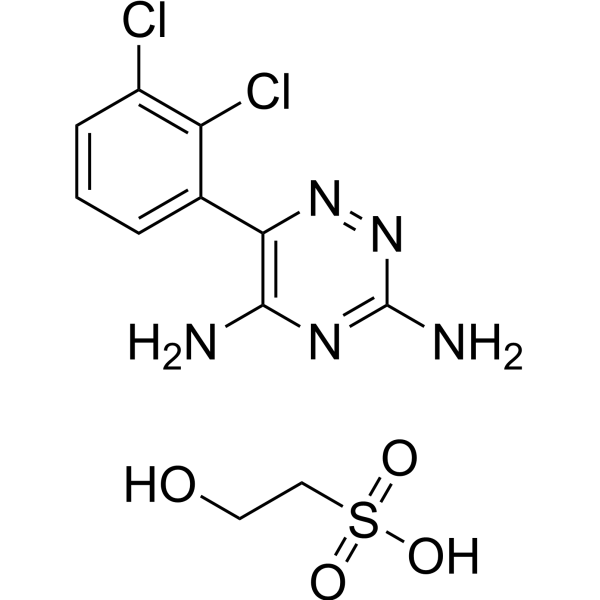
Lamotrigine (BW430C) isethionate is a potent and orally active anticonvulsant or antiepileptic agent. Lamotrigine isethionate selectively blocks voltage-gated Na + channels, stabilizing presynaptic neuronal membranes and inhibiting glutamate release. Lamotrigine isethionate can be used for the research of epilepsy, focal seizure, et al .
|
-
-
- HY-105181
-
|
|
nAChR
|
Neurological Disease
|
|
T 588 is an orally active neuroprotective agent. T 588 can increase acetylcholine release from the frontal cortex and hippocampus and meliorate cognitive dysfunction. T 588 can protect cerebellar granule cells from glutamate neurotoxicity. T 588can be used for the research of neurological disease, such as Alzheimer's disease .
|
-
-
- HY-105084
-
|
|
Sodium Channel
Calcium Channel
|
Infection
Cardiovascular Disease
Neurological Disease
Cancer
|
|
Lubeluzole is the S-isomer of benzothiazole derivative. Lubeluzole can inhibit glutamate release, glutamate-activated NO synthesis and block voltage-gated Sodium Channel and Calcium Channel. Lubeluzole exhibits anti-ischemic and neuroprotective effects. Lubeluzole also shows anti-bacterial and anti-diarrheal potential. Lubeluzole can inhibit cardiac sodium channel and prolong cardiac action potential. Lubeluzole can inhibit cancer cells proliferation and invasion and shows chemosensitizing effect. Lubeluzole can be used for the researches of cancer, infection, neurological and cardiovascular disease such as stroke, infectious diarrhea and ovarian .
|
-
-
- HY-B0495S1
-
|
LTG-13C,d3; BW430C-13C,d3
|
Isotope-Labeled Compounds
Sodium Channel
Autophagy
|
Neurological Disease
|
|
Lamotrigine- 13C,d3 is the 13C- and deuterium labeled Lamotrigine. Lamotrigine (BW430C) is a potent and orally active anticonvulsant or antiepileptic agent. Lamotrigine selectively blocks voltage-gated Na+ channels, stabilizing presynaptic neuronal membranes and inhibiting glutamate release. Lamotrigine can be used for the research of epilepsy,?focal seizure, et al .
|
-
-
- HY-14608AR
-
|
|
Reference Standards
iGluR
Apoptosis
Ferroptosis
Endogenous Metabolite
|
Neurological Disease
|
|
L-Glutamic acid (monosodium salt) (Standard) is the analytical standard of L-Glutamic acid (monosodium salt). This product is intended for research and analytical applications. L-Glutamic acid monosodium salt is an excitatory amino acid neurotransmitter that acts as an agonist for all subtypes of glutamate receptors (metabolic rhodophylline, NMDA, and AMPA). L-Glutamic acid monosodium salt has an agonist effect on the release of DA from dopaminergic nerve endings. L-Glutamic acid monosodium salt can be used in the study of neurological diseases .
|
-
- HY-70057R
-
|
FCE 26743 (Standard); EMD 1195686 (Standard)
|
Reference Standards
Monoamine Oxidase
|
Neurological Disease
|
|
Safinamide (Standard) is the analytical standard of Safinamide. This product is intended for research and analytical applications. Safinamide is a potent, selective, and reversible monoamine oxidase B (MAO-B) inhibitor (IC50=0.098 µM) over MAO-A (IC50=580 µM) . Safinamide also blocks sodium channels and modulates glutamate (Glu) release, showing a greater affinity at depolarized (IC50=8 µM) than at resting (IC50=262 µM) potentials. Safinamide has neuroprotective and neurorescuing effects and can be used for the study of parkinson disease, ischemia stroke etc.al .
|
-
- HY-120155
-
|
|
Sigma Receptor
iGluR
|
Neurological Disease
|
|
MS-377 is a selective and orally active sigma-1 receptor ligand (Ki=73 nM) with weak affinity for sigma-2 receptor (Ki=6900 nM) and no affinity for any other receptors including dopamine, serotonin, PCP site, glutamate, γ-aminobutylic acid, adenosine, adrenergic receptors, etc. (Ki: >10 μM). MS-377 indirectly modulates the NMDA receptor ion-channel complex. MS-377 is a antipsychotic agent. MS-377 inhibits PCP-induced behaviors by inhibition of the increase in dopamine and serotonin release in the rat medial prefrontal cortex. MS-377 can be used for research of schizophrenia .
|
-
- HY-105500
-
|
|
Sodium Channel
|
Neurological Disease
|
|
BW-1003C87 Ethylsulfate is a glutamate release inhibitor. BW-1003C87 Ethylsulfate exhibit neuroprotective effect. BW-1003C87 Ethylsulfate can elevate seizure threshold. BW-1003C87 Ethylsulfate can be used for the research of neurological disease, such as ischemic and seizure .
|
-
- HY-153691
-
|
|
mGluR
|
Others
|
|
BTB01303 is a (glutamate release) inhibitor. Cancer cells release high levels of (glutamate), which disrupts normal bone turnover and may lead to cancer-induced bone pain. BTB01303 has the potential to improve cancer-induced bone pain .
|
-
- HY-131885
-
|
|
GABA Receptor
|
Neurological Disease
|
|
RuBi-Glutamate hexafluorophosphate sodium is a neuronal activator. RuBi-Glutamate hexafluorophosphate sodium photocleaves to release glutamate upon one- or two-photon excitation, activating glutamate receptors in cortical pyramidal neurons. RuBi-Glutamate hexafluorophosphate sodium reduces peak amplitude of evoked GABAergic inhibitory postsynaptic currents in its caged form. RuBi-Glutamate hexafluorophosphate sodium can be used for the research of Huntington's disease .
|
-
- HY-100802
-
-
- HY-132219
-
|
|
mGluR
|
Cancer
|
|
N. N-dipropyrldopamine is a potent inhibitor of glutamate release and has anticancer activity. The increase of glutamate secretion leads to cancer-induced bone pain (CIBP). N. N-dipropyrldopamine plays an analgesic role in CIBP .
|
-
- HY-103467
-
|
|
Fluorescent Dye
|
Others
|
|
NPE-caged-HPTS sodium is a caged fluorophore that fluoresces upon uncaged fluorophore release, releasing the free highly polar fluorophore HPTS (Exc=470/40 nm, Em=525/50 nm). HPTS releases the fluorophore rapidly and uniformly, allowing for measurement of diffusion within tissues, with a diffusion coefficient of μm 2s -1, similar to that of synaptic L-glutamate .
|
-
- HY-P3089
-
|
|
Potassium Channel
|
Others
|
|
Dendrotoxin K is a Kv1.1 channel blocker. Dendrotoxin K determines glutamate release in CA3 neurons in a time-dependent manner through the control of the presynaptic spike waveform .
|
-
- HY-100815
-
|
|
iGluR
|
Neurological Disease
|
|
(R)-AMPA is an inactive AMPA receptor ligand that inhibits the release of excitatory amino acids from neurons. (R)-AMPA is inactive in experiments that enhance the release of [3H]D-aspartate induced by electrical stimulation. (R)-AMPA is inhibited by competitive and noncompetitive AMPA receptor selective antagonists in response to AMPA and glutamate .
|
-
- HY-120699
-
|
|
mGluR
|
Neurological Disease
|
|
RO5488608 is a negative allosteric metabotropic modulator of glutamate receptor 2/3. RO5488608 inhibits LY354740 (HY-18941)-induced intracellular Ca 2+ release and can be used for study of antidepressant .
|
-
- HY-14334
-
|
WAY-255315
|
5-HT Receptor
|
Neurological Disease
|
|
SAM-315 (WAY-255315) is a potent antagonist of 5-Hydroxytryptamine-6, with Ki and IC50 of 1.1 nM and 4.6 nM, respectively. SAM-315 significantly increases acetylcholine and glutamate release in hippocampus of the brain .
|
-
- HY-W016145S
-
|
|
Isotope-Labeled Compounds
Endogenous Metabolite
iGluR
Ferroptosis
Apoptosis
|
Neurological Disease
Metabolic Disease
Inflammation/Immunology
Cancer
|
|
L-Glutamic acid- 13C5 hydrate salt is the 13C labeled L-Glutamic acid hydrate salt. L-Glutamic acid monosodium hydrate is an excitatory amino acid neurotransmitter that acts as an agonist for all subtypes of glutamate receptors (metabolic rhodophylline, NMDA, and AMPA). L-Glutamic acid monosodium hydrate has an agonist effect on the release of DA from dopaminergic nerve endings. L-Glutamic acid monosodium hydrate can be used in the study of neurological diseases. L-Glutamic acid monosodium hydrate acts at ionotropic and?metabotropic glutamate receptors.
|
-
- HY-B0495A
-
|
LTG hydrate; BW430C hydrate
|
Sodium Channel
Autophagy
|
Neurological Disease
Cancer
|
|
Lamotrigine hydrate is a potent and orally active anticonvulsant or antiepileptic agent. Lamotrigine hydrate selectively blocks voltage-gated Na + channels, stabilizing presynaptic neuronal membranes and inhibiting glutamate release. Lamotrigine hydrate can be used for the research of epilepsy, focal seizure, et al .
|
-
- HY-14608S9
-
-
- HY-B0495S7
-
|
LTG-13C; BW430C-13C
|
Isotope-Labeled Compounds
|
Neurological Disease
Cancer
|
|
Lamotrigine- 13C (LTG- 13C) is 13C labeled Lamotrigine. Lamotrigine (BW430C) is a potent and orally active anticonvulsant or antiepileptic agent. Lamotrigine selectively blocks voltage-gated Na + channels, stabilizing presynaptic neuronal membranes and inhibiting glutamate release. Lamotrigine can be used for the research of epilepsy,?focal seizure, et al .
|
-
- HY-14608S12
-
|
L-Glutamic acid-14C
|
iGluR
Ferroptosis
Apoptosis
|
Neurological Disease
|
|
L-Glutamic acid-14C is L-Glutamic acid (HY-14608) labeled with the radioactive isotope carbon-14. L-Glutamic acid is an excitatory amino acid neurotransmitter and an agonist for all subtypes of glutamate receptors (metabotropic, NMDA, and AMPA). L-Glutamic acid acts as an agonist in the release of DA from dopaminergic nerve terminals and can be used in the study of neurological diseases .
|
-
- HY-102091A
-
|
(2R,4R)-4-Aminopyrrolidine-2,4-dicarboxylic acid hydrate
|
mGluR
|
Neurological Disease
|
|
(2R,4R)-APDC hydrate ((2R,4R)-4-Aminopyrrolidine-2,4-dicarboxylic acid hydrate) is a group II metabotropic glutamate receptor (mGluR) agonist. (2R,4R)-APDC hydrate affects cell proliferation by inhibiting glutamate release, enhancing motor responses produced by D1 receptor activation, or reducing brain-derived neurotrophic factor (BDNF) levels. (2R,4R)-APDC hydrate can be used in the study of epilepsy and other neurological diseases .
|
-
- HY-B0495S
-
|
LTG-13C3,d3; BW430C-13C3,d3
|
Isotope-Labeled Compounds
Sodium Channel
Autophagy
|
Neurological Disease
|
|
Lamotrigine- 13C3,d3 is the 13C-labeled Lamotrigine. Lamotrigine (BW430C) is a potent and orally active anticonvulsant or antiepileptic agent. Lamotrigine selectively blocks voltage-gated Na+ channels, stabilizing presynaptic neuronal membranes and inhibiting glutamate release. Lamotrigine can be used for the research of epilepsy,?focal seizure, et al .
|
-
- HY-114076
-
|
|
GABA Receptor
|
Neurological Disease
|
|
CGP55845 is a potent and selective GABAB receptor antagonist with activity that blocks agonist binding. The IC50 value of CGP55845 is 5 nM, indicating that it exhibits significant activity in inhibiting GABA and glutamate release. The apparent Kd of CGP55845 when forming a complex with the GABAB receptor is 30 nM, indicating its high affinity for this receptor. CGP55845 is as potent as 100 μM CGP 35348 in relieving the inhibitory effect of (R)-(-)-baclofen .
|
-
- HY-B0495S8
-
|
LTG-13C7,15N; BW430C-13C7,15N
|
Isotope-Labeled Compounds
Autophagy
Sodium Channel
|
Neurological Disease
Cancer
|
|
Lamotrigine- 13C7, 15N (LTG- 13C7, 15N) is 13C and 15N labeled Lamotrigine. Lamotrigine (BW430C) is a potent and orally active anticonvulsant or antiepileptic agent. Lamotrigine selectively blocks voltage-gated Na + channels, stabilizing presynaptic neuronal membranes and inhibiting glutamate release. Lamotrigine can be used for the research of epilepsy,?focal seizure, et al .
|
-
- HY-B0495S6
-
|
LTG-13C2,15N2,d3; BW430C-13C2,15N2,d3
|
Autophagy
Sodium Channel
Isotope-Labeled Compounds
|
Neurological Disease
Cancer
|
|
Lamotrigine- 13C2, 15N2,d3 is 15N and deuterated labeled Lamotrigine (HY-B0495). Lamotrigine (BW430C) is a potent and orally active anticonvulsant or antiepileptic agent. Lamotrigine selectively blocks voltage-gated Na + channels, stabilizing presynaptic neuronal membranes and inhibiting glutamate release. Lamotrigine can be used for the research of epilepsy, focal seizure, et al .
|
-
- HY-W269511
-
|
|
Drug Derivative
|
Neurological Disease
|
|
NW-1689 is a process-related impurity of safinamide mesilate (SAFM). SAFM can be used for the study of Parkinson's disease (PD). It is a highly selective and reversible inhibitor of monoamine oxidase-B (MAO-B) and also blocks sodium channels and N-type calcium channels. These effects of SAFM help reduce the breakdown of dopamine and inhibit the release of glutamate. NW-1689 has a similar chemical structure to SAFM and has some similar pharmacological effects as SAFM, and can be used in Parkinson's disease research .
|
-
- HY-70057S4
-
|
FCE 26743-d5; EMD 1195686-d5
|
Isotope-Labeled Compounds
Monoamine Oxidase
|
Neurological Disease
|
|
Safinamide-d5 (FCE 26743-d5) is deuterium labeled Safinamide. Safinamide is a potent, selective, and reversible monoamine oxidase B (MAO-B) inhibitor (IC50=0.098 μM) over MAO-A (IC50=580 μM) . Safinamide also blocks sodium channels and modulates glutamate (Glu) release, showing a greater affinity at depolarized (IC50=8?μM) than at resting (IC50=262?μM) potentials. Safinamide has neuroprotective and neurorescuing effects and can be used for the study of parkinson disease, ischemia stroke etc.al .
|
-
- HY-B0194R
-
|
|
Reference Standards
Adrenergic Receptor
Apoptosis
Akt
Wnt
β-catenin
|
Neurological Disease
Endocrinology
Cancer
|
|
Tizanidine (Standard) is the analytical standard of Tizanidine (HY-B0194). This product is intended for research and analytical applications. Tizanidine, a skeletal muscle relaxant, is an orally effective central α2-adrenoceptor agonist (IC50 = 6.9 nmol). Tizanidine primarily exerts muscle relaxation effects by inhibiting the release of excitatory amino acids (glutamate and aspartate) from the presynaptic terminals of spinal cord interneurons. Tizanidine has anti-injury activity and can inhibit gastrointestinal (GI) transport. Tizanidine can inhibit the proliferation, migration, and invasion of lung cancer cells and induce cell apoptosis by upregulating Nischarin and inhibiting the AKT and Wnt3a/β-catenin signaling pathways. Tizanidine can be used to treat spasticity caused by diseases such as multiple sclerosis (MS), stroke, and spinal cord injury (SCI).
|
-
- HY-B0194AR
-
|
|
Reference Standards
Adrenergic Receptor
Apoptosis
Akt
Wnt
β-catenin
|
Neurological Disease
Endocrinology
Cancer
|
|
Tizanidine hydrochloride (Standard) is the analytical standard of Tizanidine hydrochloride (HY-B0194A). This product is intended for research and analytical applications. Tizanidine hydrochloride, a skeletal muscle relaxant, is an orally effective central α2-adrenoceptor agonist (IC50 = 6.9 nmol). Tizanidine hydrochloride primarily exerts muscle relaxation effects by inhibiting the release of excitatory amino acids (glutamate and aspartate) from the presynaptic terminals of spinal cord interneurons. Tizanidine hydrochloride has anti-injury activity and can inhibit gastrointestinal (GI) transport. Tizanidine hydrochloride can inhibit the proliferation, migration, and invasion of lung cancer cells and induce cell apoptosis by upregulating Nischarin and inhibiting the AKT and Wnt3a/β-catenin signaling pathways. Tizanidine hydrochloride can be used to treat spasticity caused by diseases such as multiple sclerosis (MS), stroke, and spinal cord injury (SCI).
|
-
- HY-B0194AS
-
|
|
Isotope-Labeled Compounds
Adrenergic Receptor
Apoptosis
Akt
Wnt
β-catenin
|
Neurological Disease
Endocrinology
Cancer
|
|
Tizanidine-d4 hydrochloride is deuterium labeled Tizanidine hydrochloride (HY-B0194A). Tizanidine hydrochloride, a skeletal muscle relaxant, is an orally effective central α2-adrenoceptor agonist (IC50 = 6.9 nmol). Tizanidine hydrochloride primarily exerts muscle relaxation effects by inhibiting the release of excitatory amino acids (glutamate and aspartate) from the presynaptic terminals of spinal cord interneurons. Tizanidine hydrochloride has anti-injury activity and can inhibit gastrointestinal (GI) transport. Tizanidine hydrochloride can inhibit the proliferation, migration, and invasion of lung cancer cells and induce cell apoptosis by upregulating Nischarin and inhibiting the AKT and Wnt3a/β-catenin signaling pathways. Tizanidine hydrochloride can be used to treat spasticity caused by diseases such as multiple sclerosis (MS), stroke, and spinal cord injury (SCI).
|
-
- HY-100403R
-
|
|
mGluR
Reference Standards
|
Cancer
|
|
Ro 67-7476 (Standard) is the analytical standard of Ro 67-7476 (HY-100403). This product is intended for research and analytical applications. Ro 67-7476 is a potent positive allosteric modulator of mGluR1 and potentiates glutamate-induced calcium release in HEK293 cells expressing rat mGluR1a with an EC50 of 60.1 nM . Ro 67-7476 is a potent P-ERK1/2 agonist and activates ERK1/2 phosphorylation in the absence of exogenously added glutamate (EC50=163.3 nM) .
|
-
- HY-E71344
-
|
|
Biochemical Assay Reagents
|
Others
|
|
γ-L-Glutamyl-butirosin B γ-Glutamyl cyclotransferase (EC 4.3.2.6) catalyses the last step in the biosynthesis of the aminoglycoside antibiotic butirosin B. The enzyme acts as a cyclotransferase, cleaving the amide bond via transamidation using the α-amine of the terminal γ-L-glutamate of the side chain, releasing it as the cyclic 5-oxoproline.
|
-
- HY-182484
-
|
|
GlyT
|
Neurological Disease
|
|
Org 24461 is a selective and brain-penetrant GlyT-1 inhibitor. Org 24461 blocks glycine uptake, reuptake, reverse operation, [ 3H]glycine efflux and release. Org 24461 enhances NMDA receptor function, modulates striatal monoamine/glutamate levels, and reverses PCP-induced behavioral and electrographic abnormalities. Org 24461 can be used for the research of retinal hypoxia/ischemia, and schizophrenia .
|
-
- HY-D3189
-
|
|
Fluorescent Dye
PSMA
|
Cancer
|
|
5GluAF-2MeTG is an activatable fluorescent probe targeting the glutamate carboxypeptidase (CP) activity of PSMA (Ex/Em=490/500-600 nm). After being hydrolyzed by PSMA, 5GluAF-2MeTG releases a cell membrane-permeable fluorescent product, and achieves fluorescence activation by disrupting donor-excited photoinduced electron transfer (d-PeT). 5GluAF-2MeTG enables fluorescence imaging of live PSMA-expressing prostate cancer cells in vitro and visualizes the carboxypeptidase activity of PSMA. 5GluAF-2MeTG can be used to detect prostate cancer regions in preclinical excised tissue specimens .
|
-
| Cat. No. |
Product Name |
Type |
-
- HY-D3189
-
|
|
Fluorescent Dyes
|
|
5GluAF-2MeTG is an activatable fluorescent probe targeting the glutamate carboxypeptidase (CP) activity of PSMA (Ex/Em=490/500-600 nm). After being hydrolyzed by PSMA, 5GluAF-2MeTG releases a cell membrane-permeable fluorescent product, and achieves fluorescence activation by disrupting donor-excited photoinduced electron transfer (d-PeT). 5GluAF-2MeTG enables fluorescence imaging of live PSMA-expressing prostate cancer cells in vitro and visualizes the carboxypeptidase activity of PSMA. 5GluAF-2MeTG can be used to detect prostate cancer regions in preclinical excised tissue specimens .
|
| Cat. No. |
Product Name |
Target |
Research Area |
-
- HY-P1080
-
|
|
Calcium Channel
|
Cardiovascular Disease
Neurological Disease
|
|
ω-Agatoxin IVA is a potent, selective P/Q type Ca 2+ (Cav2.1) channel blocker with IC50 values of 2 nM and 90 nM. ω-Agatoxin IVA inhibits glutamate exocytosis and calcium influx elicited by high potassium. ω-Agatoxin IVA inhibits Capsaicin (HY-10448)-induced CGRP release and vasodilation. ω-Agatoxin IVA can be used for the research of neurological and cardiovascular disease .
|
-
- HY-117483
-
|
|
iGluR
|
Neurological Disease
|
|
Gly-Pro-Glu is a neuroactive peptide with a potent action on acetylcholine release. Gly-Pro-Glu is the N-terminal tripeptide of insulin-like growth factor-I. Gly-Pro-Glu inhibits glutamate binds to N-methyl-D-aspartate (NMDA) receptor with an IC50 value of 14.7 μM. Gly-Pro-Glu can be used for the research of neuroprotection .
|
-
- HY-P1080A
-
|
|
Calcium Channel
|
Neurological Disease
|
|
ω-Agatoxin IVA TFA is a potent, selective P/Q type Ca 2+ (Cav2.1) channel blocker with IC50 values of 2 nM and 90 nM. ω-Agatoxin IVA TFA inhibits glutamate exocytosis and calcium influx elicited by high potassium. ω-Agatoxin IVA TFA inhibits Capsaicin (HY-10448)-induced CGRP release and vasodilation. ω-Agatoxin IVA TFA can be used for the research of neurological and cardiovascular disease .
|
-
- HY-P3089A
-
|
|
Potassium Channel
|
Others
|
|
Dendrotoxin K TFA is a Kv1.1 channel blocker. Dendrotoxin K TFA determines glutamate release in CA3 neurons in a time-dependent manner through the control of the presynaptic spike waveform .
|
-
- HY-P2210A
-
|
|
GPR171
|
Neurological Disease
|
|
BigLEN(mouse) TFA is a GPR171 agonist. BigLEN(mouse) TFA is a proSAAS-derived neuropeptide. BigLEN(mouse) TFA regulates food intake in mice. BigLEN(mouse) inhibits the release of glutamate onto parvocellular neurons of the paraventricular nucleus in a process dependent upon activation of postsynaptic G proteins.
|
-
- HY-W037817
-
|
Dimethyl glutamate
|
Potassium Channel
Bacterial
|
Infection
Metabolic Disease
|
|
Dimethyl L-glutamate (Dimethyl glutamate), a membrane-permeable analog of Glutamate, can stimulate insulin release induced by Glucose. Dimethyl L-glutamate suppresses the KATP channel activities. Dimethyl L-glutamate inhibits E. gracilis growth and causes abnormal cell division. Dimethyl L-glutamate can be used in the research of diabetes, glucose transport, phosphorylation, and further metabolism .
|
-
- HY-P3089
-
|
|
Potassium Channel
|
Others
|
|
Dendrotoxin K is a Kv1.1 channel blocker. Dendrotoxin K determines glutamate release in CA3 neurons in a time-dependent manner through the control of the presynaptic spike waveform .
|
| Cat. No. |
Product Name |
Category |
Target |
Chemical Structure |
-
- HY-14608
-
-
-
- HY-14608A
-
-
-
- HY-N5063
-
-
-
- HY-14608R
-
|
|
Structural Classification
Microorganisms
Disease markers
Endocrine diseases
Amino acids
Nervous System Disorder
Endogenous metabolite
Cardiovascular System Disorder
Cancer
Source Classification
|
Reference Standards
Endogenous Metabolite
iGluR
Ferroptosis
Apoptosis
|
L-Glutamic acid (Standard) is the analytical standard of L-Glutamic acid. This product is intended for research and analytical applications. L-Glutamic acid is an excitatory amino acid neurotransmitter that acts as an agonist for all subtypes of glutamate receptors (metabolic rhodophylline, NMDA, and AMPA). L-Glutamic acid has an agonist effect on the release of DA from dopaminergic nerve endings. L-Glutamic acid can be used in the study of neurological diseases .
IC50 & Target:DA .
In Vitro: L-Glutamic acid (120, 500, 750, 1000 mg/dL) can reduce the harmful effect of lithium on the embryonic development of Xenopus Xenopus .
L-Glutamic acid (2, 5, 10, 20 mM, 24-48 h) can induce neuroexcitotoxicity in neuroblastoma .
In Vivo: L-Glutamic acid (3 g/kg, subcutaneous injection) can promote excitotoxic degeneration of retinal ganglion cells in mice .
L-Glutamic acid (750 mg/kg, intraperitoneal injection) can reduce and inhibit oxidative stress induced by chlorpyrifos (CPF) in rats .
|
-
-
- HY-N9404
-
-
-
- HY-N6776
-
|
|
Structural Classification
Microorganisms
Terpenoids
Diterpenoids
Source Classification
|
Potassium Channel
|
|
Penitrem A is an indole diterpene neurotoxic alkaloid produced by Penicillium, acts as a selective BK channel antagonist with antiproliferative and anti-invasive activities against multiple malignancies. Penitrem A increases the spontaneous release of endogenous glutamate, gamma-aminobutyric acid (GABA) and aspartate from cerebrocortical synaptosomes, and induces tremorgenic syndromes in animals .
|
-
-
- HY-N10772
-
-
-
- HY-14608AR
-
-
| Cat. No. |
Product Name |
Chemical Structure |
-
- HY-14608S5
-
1 Publications Verification
|
|
L-Glutamic acid- 13C5 is the 13C-labeled L-Glutamic acid. L-Glutamic acid acts as an excitatory transmitter and an agonist at all subtypes of glutamate receptors (metabotropic, kainate, NMDA, and AMPA). L-Glutamic acid shows a direct activating effect on the release of DA from dopaminergic terminals.
|
-
-
- HY-14608S7
-
|
|
|
L-Glutamic acid-d5 is the deuterium labeled L-Glutamic acid. L-Glutamic acid acts as an excitatory transmitter and an agonist at all subtypes of glutamate receptors (metabotropic, kainate, NMDA, and AMPA). L-Glutamic acid shows a direct activating effect on the release of DA from dopaminergic terminals.
|
-
-
- HY-14608S8
-
|
|
|
L-Glutamic acid-d3 is the deuterium labeled L-Glutamic acid. L-Glutamic acid acts as an excitatory transmitter and an agonist at all subtypes of glutamate receptors (metabotropic, kainate, NMDA, and AMPA). L-Glutamic acid shows a direct activating effect on the release of DA from dopaminergic terminals.
|
-
-
- HY-14608S3
-
|
|
|
L-Glutamic acid- 13C5, 15N is the 13C- and 15N-labeled L-Glutamic acid. L-Glutamic acid acts as an excitatory transmitter and an agonist at all subtypes of glutamate receptors (metabotropic, kainate, NMDA, and AMPA). L-Glutamic acid shows a direct activating effect on the release of DA from dopaminergic terminals.
|
-
-
- HY-14608S
-
|
|
|
L-Glutamic acid- 13C is the 13C-labeled L-Glutamic acid. L-Glutamic acid acts as an excitatory transmitter and an agonist at all subtypes of glutamate receptors (metabotropic, kainate, NMDA, and AMPA). L-Glutamic acid shows a direct activating effect on the release of DA from dopaminergic terminals.
|
-
-
- HY-14608S2
-
|
|
|
L-Glutamic acid- 15N is the 15N-labeled L-Glutamic acid. L-Glutamic acid acts as an excitatory transmitter and an agonist at all subtypes of glutamate receptors (metabotropic, kainate, NMDA, and AMPA). L-Glutamic acid shows a direct activating effect on the release of DA from dopaminergic terminals .
|
-
-
- HY-14608S1
-
|
|
|
L-Glutamic acid-1- 13C is the 13C-labeled L-Glutamic acid. L-Glutamic acid acts as an excitatory transmitter and an agonist at all subtypes of glutamate receptors (metabotropic, kainate, NMDA, and AMPA). L-Glutamic acid shows a direct activating effect on the release of DA from dopaminergic terminals.
|
-
-
- HY-14608S6
-
|
|
|
L-Glutamic acid-5- 13C is the 13C-labeled L-Glutamic acid. L-Glutamic acid acts as an excitatory transmitter and an agonist at all subtypes of glutamate receptors (metabotropic, kainate, NMDA, and AMPA). L-Glutamic acid shows a direct activating effect on the release of DA from dopaminergic terminals.
|
-
-
- HY-B0495S4
-
|
|
|
Lamotrigine- 13C3 is the 13C-labeled Lamotrigine. Lamotrigine (BW430C) is a potent and orally active anticonvulsant or antiepileptic agent. Lamotrigine selectively blocks voltage-gated Na+ channels, stabilizing presynaptic neuronal membranes and inhibiting glutamate release. Lamotrigine can be used for the research of epilepsy, focal seizure, et al .
|
-
-
- HY-14608S4
-
|
|
|
L-Glutamic acid- 13C5, 15N,d5 is the deuterium, 13C-, and 15-labeled L-Glutamic acid. L-Glutamic acid acts as an excitatory transmitter and an agonist at all subtypes of glutamate receptors (metabotropic, kainate, NMDA, and AMPA). L-Glutamic acid shows a direct activating effect on the release of DA from dopaminergic terminals.
|
-
-
- HY-B0194S
-
|
|
|
Tizanidine-d4 is the deuterium labeled Tizanidine (HY-B0194). Tizanidine, a skeletal muscle relaxant, is an orally effective central α2-adrenoceptor agonist (IC50 = 6.9 nmol). Tizanidine primarily exerts muscle relaxation effects by inhibiting the release of excitatory amino acids (glutamate and aspartate) from the presynaptic terminals of spinal cord interneurons. Tizanidine has anti-injury activity and can inhibit gastrointestinal (GI) transport. Tizanidine can inhibit the proliferation, migration, and invasion of lung cancer cells and induce cell apoptosis by upregulating Nischarin and inhibiting the AKT and Wnt3a/β-catenin signaling pathways. Tizanidine can be used to treat spasticity caused by diseases such as multiple sclerosis (MS), stroke, and spinal cord injury (SCI).
|
-
-
- HY-14608S10
-
|
|
|
L-Glutamic acid- 13C2 is the 13C labeled L-Glutamic acid . L-Glutamic acid acts as an excitatory transmitter and an agonist at all subtypes of glutamate receptors (metabotropic, kainate, NMDA, and AMPA). L-Glutamic acid shows a direct activating effect on the release of DA from dopaminergic terminals .
|
-
-
- HY-B0495S5
-
|
|
|
Lamotrigine-d3 is the deuterium labeled Lamotrigine . Lamotrigine (BW430C) is a potent and orally active anticonvulsant or antiepileptic agent. Lamotrigine selectively blocks voltage-gated Na+ channels, stabilizing presynaptic neuronal membranes and inhibiting glutamate release. Lamotrigine can be used for the research of epilepsy, focal seizure, et al .
|
-
-
- HY-B0495S3
-
|
|
|
Lamotrigine- 13C2, 15N is the 13C and 15N labeled Lamotrigine . Lamotrigine (BW430C) is a potent and orally active anticonvulsant or antiepileptic agent. Lamotrigine selectively blocks voltage-gated Na+ channels, stabilizing presynaptic neuronal membranes and inhibiting glutamate release. Lamotrigine can be used for the research of epilepsy, focal seizure, et al .
|
-
-
- HY-70057S1
-
|
|
|
Safinamide-d4-1 is deuterium labeled Safinamide. Safinamide is a potent, selective, and reversible monoamine oxidase B (MAO-B) inhibitor (IC50=0.098 μM) over MAO-A (IC50=580 μM) . Safinamide also blocks sodium channels and modulates glutamate (Glu) release, showing a greater affinity at depolarized (IC50=8?μM) than at resting (IC50=262?μM) potentials. Safinamide has neuroprotective and neurorescuing effects and can be used for the study of parkinson disease, ischemia stroke etc.al .
|
-
-
- HY-B0495S1
-
|
|
|
Lamotrigine- 13C,d3 is the 13C- and deuterium labeled Lamotrigine. Lamotrigine (BW430C) is a potent and orally active anticonvulsant or antiepileptic agent. Lamotrigine selectively blocks voltage-gated Na+ channels, stabilizing presynaptic neuronal membranes and inhibiting glutamate release. Lamotrigine can be used for the research of epilepsy,?focal seizure, et al .
|
-
-
- HY-W016145S
-
|
|
|
L-Glutamic acid- 13C5 hydrate salt is the 13C labeled L-Glutamic acid hydrate salt. L-Glutamic acid monosodium hydrate is an excitatory amino acid neurotransmitter that acts as an agonist for all subtypes of glutamate receptors (metabolic rhodophylline, NMDA, and AMPA). L-Glutamic acid monosodium hydrate has an agonist effect on the release of DA from dopaminergic nerve endings. L-Glutamic acid monosodium hydrate can be used in the study of neurological diseases. L-Glutamic acid monosodium hydrate acts at ionotropic and?metabotropic glutamate receptors.
|
-
-
- HY-14608S9
-
|
|
|
L-Glutamic acid- 15N,d5 is the deuterium and 15N-labeled L-Glutamic acid. L-Glutamic acid acts as an excitatory transmitter and an agonist at all subtypes of glutamate receptors (metabotropic, kainate, NMDA, and AMPA). L-Glutamic acid shows a direct activating effect on the release of DA from dopaminergic terminals.
|
-
-
- HY-B0495S7
-
|
|
|
Lamotrigine- 13C (LTG- 13C) is 13C labeled Lamotrigine. Lamotrigine (BW430C) is a potent and orally active anticonvulsant or antiepileptic agent. Lamotrigine selectively blocks voltage-gated Na + channels, stabilizing presynaptic neuronal membranes and inhibiting glutamate release. Lamotrigine can be used for the research of epilepsy,?focal seizure, et al .
|
-
-
- HY-B0495S
-
|
|
|
Lamotrigine- 13C3,d3 is the 13C-labeled Lamotrigine. Lamotrigine (BW430C) is a potent and orally active anticonvulsant or antiepileptic agent. Lamotrigine selectively blocks voltage-gated Na+ channels, stabilizing presynaptic neuronal membranes and inhibiting glutamate release. Lamotrigine can be used for the research of epilepsy,?focal seizure, et al .
|
-
-
- HY-B0495S8
-
|
|
|
Lamotrigine- 13C7, 15N (LTG- 13C7, 15N) is 13C and 15N labeled Lamotrigine. Lamotrigine (BW430C) is a potent and orally active anticonvulsant or antiepileptic agent. Lamotrigine selectively blocks voltage-gated Na + channels, stabilizing presynaptic neuronal membranes and inhibiting glutamate release. Lamotrigine can be used for the research of epilepsy,?focal seizure, et al .
|
-
-
- HY-B0495S6
-
|
|
|
Lamotrigine- 13C2, 15N2,d3 is 15N and deuterated labeled Lamotrigine (HY-B0495). Lamotrigine (BW430C) is a potent and orally active anticonvulsant or antiepileptic agent. Lamotrigine selectively blocks voltage-gated Na + channels, stabilizing presynaptic neuronal membranes and inhibiting glutamate release. Lamotrigine can be used for the research of epilepsy, focal seizure, et al .
|
-
-
- HY-70057S4
-
|
|
|
Safinamide-d5 (FCE 26743-d5) is deuterium labeled Safinamide. Safinamide is a potent, selective, and reversible monoamine oxidase B (MAO-B) inhibitor (IC50=0.098 μM) over MAO-A (IC50=580 μM) . Safinamide also blocks sodium channels and modulates glutamate (Glu) release, showing a greater affinity at depolarized (IC50=8?μM) than at resting (IC50=262?μM) potentials. Safinamide has neuroprotective and neurorescuing effects and can be used for the study of parkinson disease, ischemia stroke etc.al .
|
-
-
- HY-B0194AS
-
|
|
|
Tizanidine-d4 hydrochloride is deuterium labeled Tizanidine hydrochloride (HY-B0194A). Tizanidine hydrochloride, a skeletal muscle relaxant, is an orally effective central α2-adrenoceptor agonist (IC50 = 6.9 nmol). Tizanidine hydrochloride primarily exerts muscle relaxation effects by inhibiting the release of excitatory amino acids (glutamate and aspartate) from the presynaptic terminals of spinal cord interneurons. Tizanidine hydrochloride has anti-injury activity and can inhibit gastrointestinal (GI) transport. Tizanidine hydrochloride can inhibit the proliferation, migration, and invasion of lung cancer cells and induce cell apoptosis by upregulating Nischarin and inhibiting the AKT and Wnt3a/β-catenin signaling pathways. Tizanidine hydrochloride can be used to treat spasticity caused by diseases such as multiple sclerosis (MS), stroke, and spinal cord injury (SCI).
|
-
Your information is safe with us. * Required Fields.
Inquiry Information
- Product Name:
- Cat. No.:
- Quantity:
- MCE Japan Authorized Agent:

