



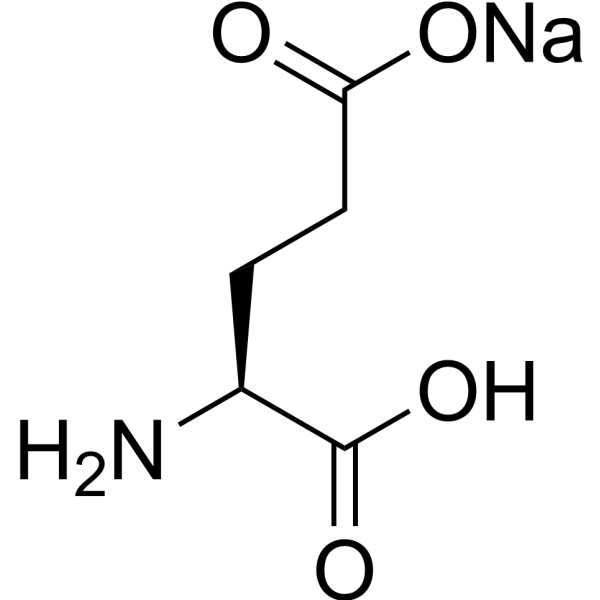
L-Glutamic acid monosodium salt
Based on 15 publication(s) in Google Scholar
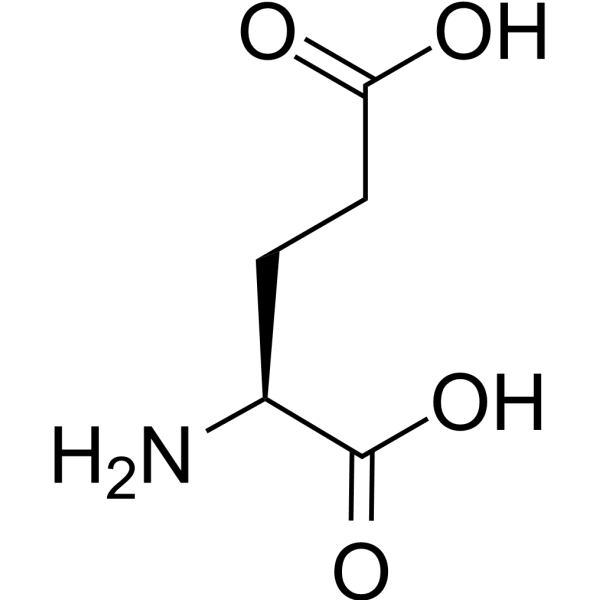
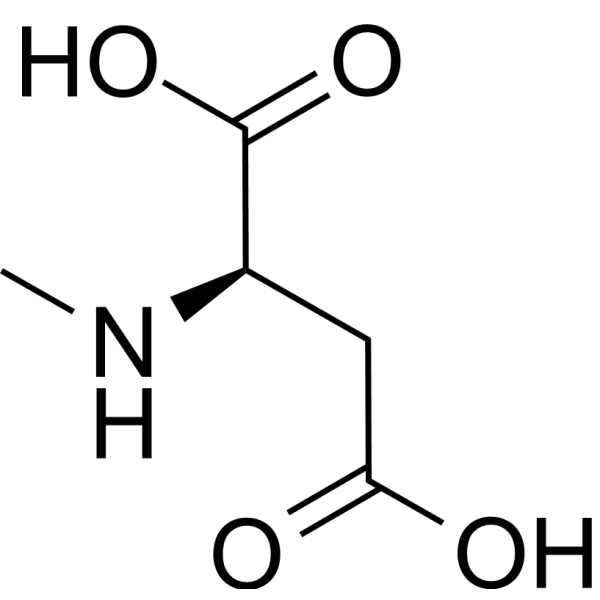
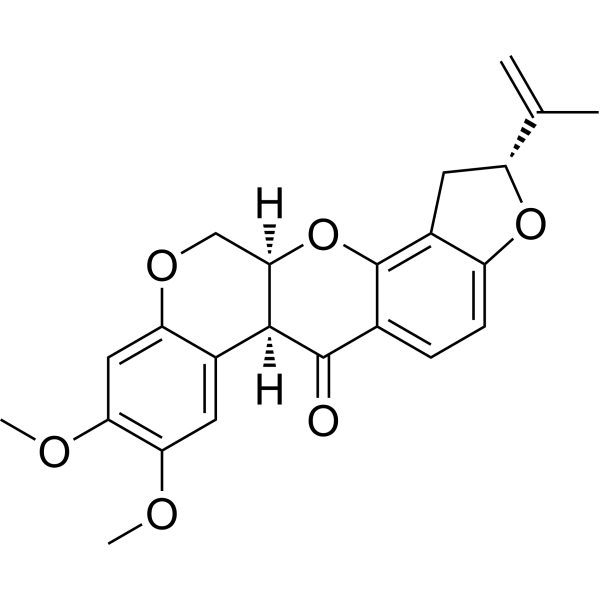
L-Glutamic acid monosodium salt is an excitatory amino acid neurotransmitter that acts as an agonist for all subtypes of glutamate receptors (metabolic rhodophylline, NMDA, and AMPA). L-Glutamic acid monosodium salt has an agonist effect on the release of DA from dopaminergic nerve endings. L-Glutamic acid monosodium salt can be used in the study of neurological diseases. L-Glutamic acid monosodium salt acts at ionotropic and metabotropic glutamate receptors.
For research use only. We do not sell to patients.
- Purity : 98.0%
- CAS No.: 142-47-2
- Formula: C5H8NNaO4
- Molecular Weight:169.11
-
Storage:
4°C, sealed storage, away from moisture
* In solvent : -80°C, 6 months; -20°C, 1 month (sealed storage, away from moisture)

To place orders, for customer services and technical support, please contact: MedChemExpress USA
Tel: 609-228-6898 E-mail: [email protected] [email protected]


-
 Biological Activity
-
Chemical Information
-
Solvent & Solubility
- Purity & Documentation
- References
-
 Help & FAQs


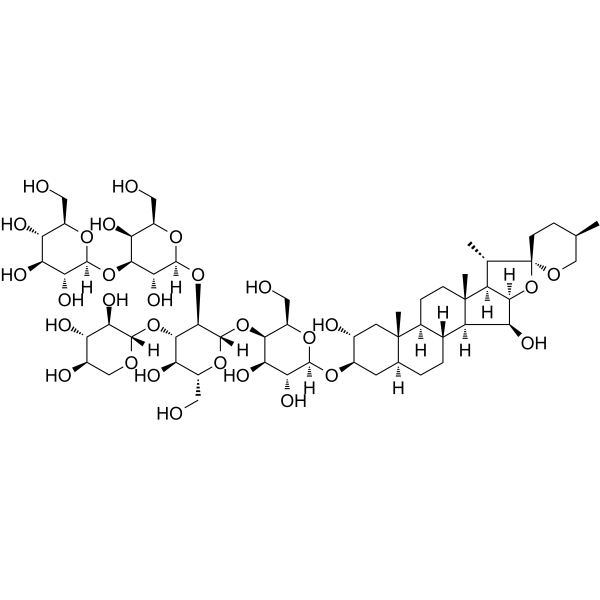
Publications Citing Use of MedChemExpress (MCE) L-Glutamic acid monosodium salt
More- Nature. 2025 Jul;643(8070):192-200. [Abstract]
- Redox Biol. 2024 May:71:103112. [Abstract]
- Adv Sci (Weinh). 2025 Oct 5:e11194. [Abstract]
- Adv Sci (Weinh). 2025 Feb;12(6):e2411479. [Abstract]
- J Transl Med. 2024 Feb 18;22(1):178. [Abstract]
- Cancer Immunol Immunother. 2025 Jun 7;74(8):240. [Abstract]
- Int Immunopharmacol. 2026 Feb 1:170:116080. [Abstract]
- Neurochem Int. 2023 Oct:169:105587. [Abstract]
- Neuropharmacology. 2025 Jun 15:271:110405. [Abstract]
- J Inflamm Res. 2025 Jan 27:18:1235-1254. [Abstract]
- Amino Acids. 2024 Sep 18;56(1):56. [Abstract]
- Fitoterapia. 2026 Apr:190:107182. [Abstract]
- Physiol Rep. 2026 Jun;14(11):e70975. [Abstract]
- Res Sq. 2024 Jun 03.
- Res Sq. 2024 May 20.
 Customer Validation & Images

-
Bio/Physico-chemical Assay
-
Flow Cytometry
-
Cell Proliferation/Viability Assay
-
RT-PCR
-
Cell Imaging/Staining
All iGluR Isoforms
MoreAll Endogenous Metabolite Isoforms
More

Biological Activity
Description
IC50 & Target
|
Microbial Metabolite |
AMPA Receptor |
Human Endogenous Metabolite |
In Vitro
L-Glutamic acid monosodium salt (120, 500, 750, 1000 mg/dL) can reduce the harmful effect of lithium on the embryonic development of Xenopus Xenopus[3].
L-Glutamic acid monosodium salt (2, 5, 10, 20 mM, 24-48 h) can induce neuroexcitotoxicity in neuroblastoma[4].
MedChemExpress (MCE) has not independently confirmed the accuracy of these methods. They are for reference only.
-
Cell Line:SH-SY5Y, IMR-32, SK-N-BE(2)
-
Concentration:2, 5, 10, 20 mM
-
Incubation Time:24 and 48 h
-
Result:Reduced cell viability in a dose-dependent manner.
In Vivo
L-Glutamic acid monosodium salt (750 mg/kg, intraperitoneal injection) can reduce and inhibit oxidative stress induced by chlorpyrifos (CPF) in rats[5].
MedChemExpress (MCE) has not independently confirmed the accuracy of these methods. They are for reference only.
-
Animal Model:Crv4 mice model[1]
-
Dosage:3g/kg
-
Administration:s.c., single dose
-
Result:Reduced the number of Brn-3a+ RGCs by >70%. In the absence of mGlu1 receptor, MSG-induced retinal damage is diminished.
-
Animal Model:CPF-induced rat model[5]
-
Dosage:750 mg/kg
-
Administration:i.p.
-
Result:Reduced CPF-induced oxidative stress by increasing the level of GSH and activity of GSH-related enzymes.


Chemical Information
-
CAS No. 142-47-2
-
Appearance Solid
-
Molecular Weight 169.11
-
Formula C5H8NNaO4
-
Color White to off-white
-
SMILES
O=C(O[Na])CC[C@H](N)C(O)=O
-
Structure Classification
-
Initial Source
-
Shipping
Room temperature in continental US; may vary elsewhere.
-
Storage
4°C, sealed storage, away from moisture
* In solvent : -80°C, 6 months; -20°C, 1 month (sealed storage, away from moisture)


Publications (15)
-
Journal Impact Factor
-
Most Recent
-
Nature
2025 Jul;643(8070):192-200. PMID: 39695227 -
Redox Biol
Enteric coronavirus PDCoV evokes a non-Warburg effect by hijacking pyruvic acid as a metabolic hub. [Abstract]2024 May:71:103112. PMID: 38461791 -
Adv Sci (Weinh)
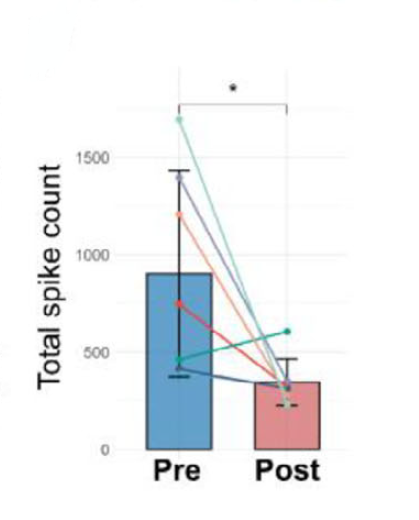
Assessing the Nature of Human Brain-Derived Extracellular Vesicles on Synaptic Activity Via the Development of an Air-liquid Microfluidic Platform. [Abstract]2025 Oct 5:e11194. PMID: 41047484
L-Glutamic acid monosodium salt purchased from MedChemExpress. Usage Cited in: Adv Sci (Weinh). 2025 Oct 5:e11194. [Abstract]
L-Glutamic acid (100 µM; 10 min) for activation of spike count. Spontaneous LFP activity is recorded from OPAB that has been pre-treated with Bicuculline and stimulated with L-Glutamic acid. The LFP signal from the activated OPAB is measured (pre), and then the electrical signal is inhibited for 10 min using a cocktail of TTX, CNQX, and AP5 and LFP was recorded again (post).
-
Adv Sci (Weinh)
Addressing Clinical Limitations of Glutaminase Inhibitors: Novel Strategies for Osimertinib-Resistant Lung Cancer by Exploiting Glutamine Metabolic Dependency. [Abstract]2025 Feb;12(6):e2411479. PMID: 39680480 -
J Transl Med
HuR promotes castration-resistant prostate cancer progression by altering ERK5 activation via posttranscriptional regulation of BCAT1. [Abstract]2024 Feb 18;22(1):178. PMID: 38369471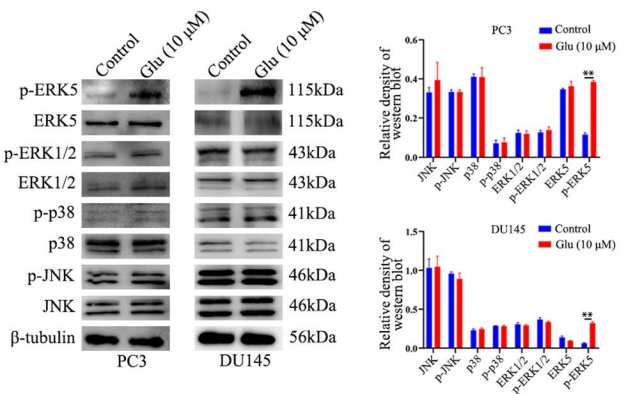
L-Glutamic acid monosodium salt purchased from MedChemExpress. Usage Cited in: J Transl Med. 2024 Feb 18;22(1):178. [Abstract]
PC3 and DU145 cells were treated with 10 μM glutamate for 24 h, after which the protein expression levels were analysed by western blotting. The expression intensity was normalized to that of β-tubulin (right panel).
-
Cancer Immunol Immunother
2025 Jun 7;74(8):240. PMID: 40481876
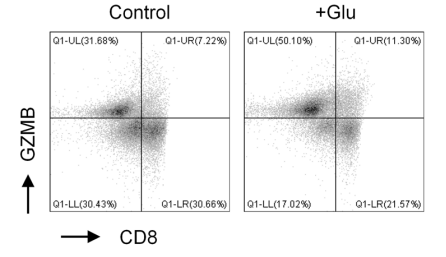
L-Glutamic acid monosodium salt purchased from MedChemExpress. Usage Cited in: Cancer Immunol Immunother. 2025 Jun 7;74(8):240. [Abstract]
Flow cytometry representative image showing the effect of exogenous glutamate (1 mM) on mouse primary T cells.
-
Int Immunopharmacol
CGRP alleviates epilepsy via JAK1-STAT1-P2RX7 signaling: a novel neuroprotective axis targeting neuronal damage. [Abstract]2026 Feb 1:170:116080. PMID: 41429063 -
Neurochem Int
Glutamate-aspartate transporter dysfunction enhances aminoglycoside-induced cochlear hair cell death via NMDA receptor activation. [Abstract]2023 Oct:169:105587. PMID: 37495172 -
Neuropharmacology
Neurotransmitter imbalance and amygdala synaptic plasticity in lumbar disc herniation-induced chronic pain and related emotional Disturbances:A multi-omics analysis. [Abstract]2025 Jun 15:271:110405. PMID: 40057176 -
J Inflamm Res
Lactate Ameliorates Kainic Acid-Induced Neuroinflammation and Cognitive Impairment via the Chemokine Signaling Pathway in Mice. [Abstract]2025 Jan 27:18:1235-1254. PMID: 39897526
L-Glutamic acid monosodium salt purchased from MedChemExpress. Usage Cited in: J Inflamm Res. 2025 Jan 27:18:1235-1254. [Abstract]
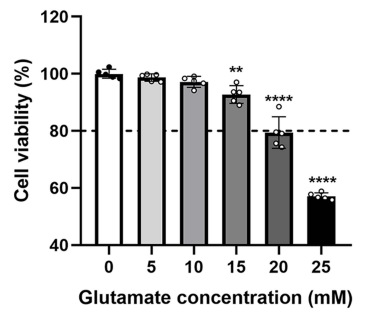
Viability of HT22 cells treated with Glutamate at different concentrations (0, 5, 10, 15, 20 and 25 mM) for 24 h (n=5 at each concentration).
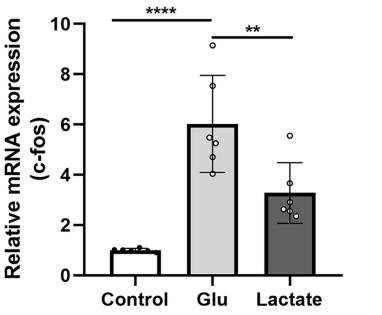
L-Glutamic acid monosodium salt purchased from MedChemExpress. Usage Cited in: J Inflamm Res. 2025 Jan 27:18:1235-1254. [Abstract]
The relative mRNA expression levels of c-fos in the control, glu (20 mM, 24 h) and lactate groups (n=6 in each group).
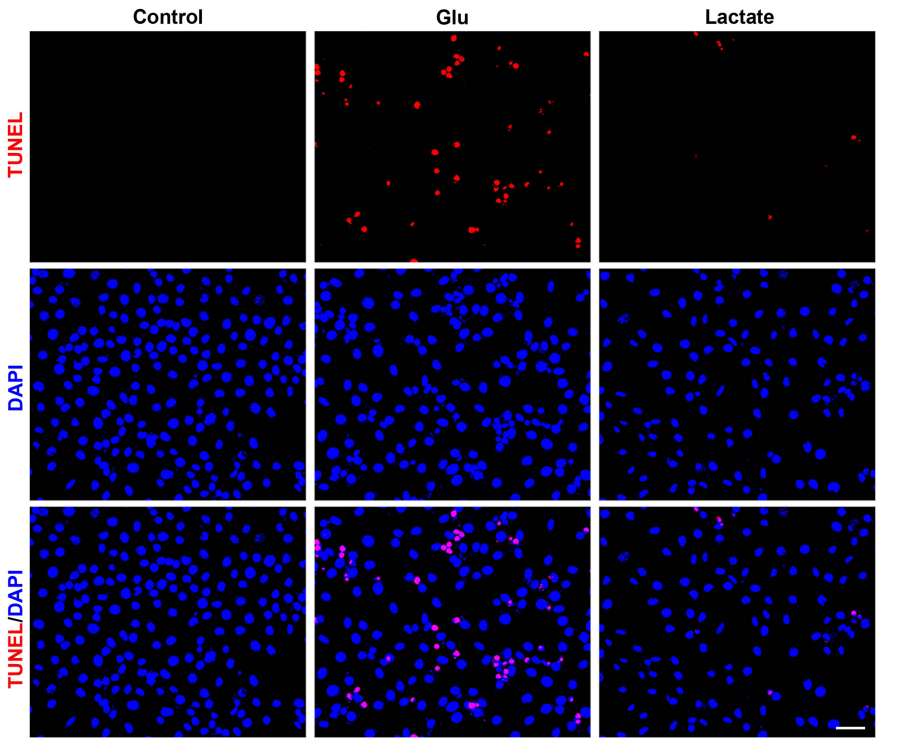
L-Glutamic acid monosodium salt purchased from MedChemExpress. Usage Cited in: J Inflamm Res. 2025 Jan 27:18:1235-1254. [Abstract]
Fluorescence images of TUNEL staining of HT22 cells in the control, glu (20 mM, 24 h) and lactate groups.
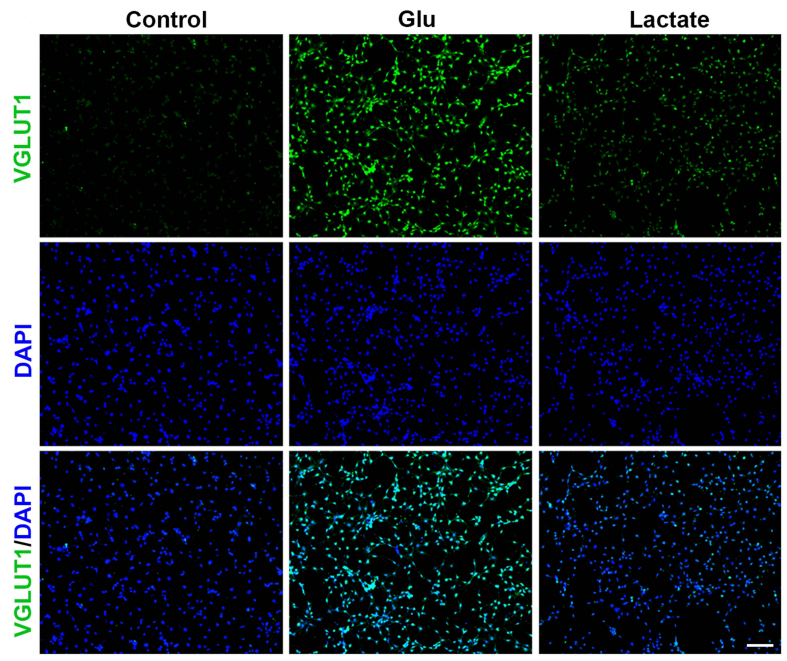
L-Glutamic acid monosodium salt purchased from MedChemExpress. Usage Cited in: J Inflamm Res. 2025 Jan 27:18:1235-1254. [Abstract]
Images of VGLUT1 fluorescence staining in HT22 cells from the control, glu (20 mM, 24 h) and lactate groups.
-
Amino Acids
Identification of amino acids metabolomic profiling in human plasma distinguishes lupus nephritis from systemic lupus erythematosus. [Abstract]2024 Sep 18;56(1):56. PMID: 39292313 -
Fitoterapia
The stem-derived bioactive fraction of Syringa oblata Lindl. Ameliorates insomnia via cAMP signaling-mediated regulation of neurotransmission, oxidative stress, and inflammation: A multi-omics study. [Abstract]2026 Apr:190:107182. PMID: 41861857 -
Physiol Rep
Monosodium glutamate-mediated Ca2+-dependent intestinal epithelial ion transports in health and IBS-D in male mice. [Abstract]2026 Jun;14(11):e70975. PMID: 42281391 -
-


Solvent & Solubility
In Vitro:
H2O : 100 mg/mL (591.33 mM; Need ultrasonic)
DMSO : < 1 mg/mL (insoluble or slightly soluble)
Please refer to the solubility information to select the appropriate solvent. Once prepared, please aliquot and store the solution to prevent product inactivation from repeated freeze-thaw cycles.
Storage method and period of stock solution: -80°C, 6 months; -20°C, 1 month (sealed storage, away from moisture). When stored at -80°C, please use it within 6 months. When stored at -20°C, please use it within 1 month.
* Note: If you choose water as the stock solution, please dilute it to the working solution, then filter and sterilize it with a 0.22 μm filter before use.
Please refer to the solubility information to select the appropriate solvent. Once prepared, please aliquot and store the solution to prevent product inactivation from repeated freeze-thaw cycles.
Storage method and period of stock solution: -80°C, 6 months; -20°C, 1 month (sealed storage, away from moisture). When stored at -80°C, please use it within 6 months. When stored at -20°C, please use it within 1 month.
* Note: If you choose water as the stock solution, please dilute it to the working solution, then filter and sterilize it with a 0.22 μm filter before use.
Concentration (start) × Volume (start) = Concentration (final) × Volume (final)
In Vivo:
For the following dissolution methods, please prepare the working solution directly:
It is recommended to prepare fresh solutions and use them promptly within a short period of time.
The percentages shown for the solvents indicate their volumetric ratio in the final prepared solution. If precipitation or phase separation occurs during preparation, heat and/or sonication can be used to aid dissolution.
Add each solvent one by one: PBS
Solubility: 100 mg/mL (591.33 mM); Clear solution; Need ultrasonic


Purity & Documentation
-
Data Sheet (282 KB)
-
SDS (393 KB)
- English - EN (393 KB)
- Français - FR (393 KB)
- Deutsch - DE (393 KB)
- Norwegian - NO (393 KB)
- Español - ES (393 KB)
- Swedish - SV (393 KB)
- Italian - IT (393 KB)
- Korean - KR (393 KB)
- Portuguese - PT (393 KB)
-
Handling Instructions (2659 KB)
References
[1]. Liberatore F, et al. Permissive role for mglu1 metabotropic glutamate receptors in excitotoxic retinal degeneration. Neuroscience. 2017 Sep 14. pii: S0306-4522(17)30640-1. [Content Brief]
[2]. Giorguieff MF, et al. Presynaptic effect of L-glutamic acid on the release of dopamine in rat striatal slices. Neurosci Lett. 1977 Oct;6(1):73-7. [Content Brief]
[3]. Boga Pekmezekmek A, et al. L-Glutamic acid monosodium salt reduces the harmful effect of lithium on the development of Xenopus laevis embryos. Environ Sci Pollut Res Int. 2020 Nov;27(33):42124-42132. [Content Brief]
[4]. Croce N, et al. Hydrochloric acid alters the effect of L-glutamic acid on cell viability in human neuroblastoma cell cultures. J Neurosci Methods. 2013 Jul 15;217(1-2):26-30. [Content Brief]
[5]. Salyha N, et al. Protective role of l-glutamic acid and l-cysteine in mitigation the chlorpyrifos-induced oxidative stress in rats. Environ Toxicol Pharmacol. 2018 Dec;64:155-163. [Content Brief]


Complete Stock Solution Preparation Table
Please refer to the solubility information to select the appropriate solvent. Once prepared, please aliquot and store the solution to prevent product inactivation from repeated freeze-thaw cycles.
Storage method and period of stock solution: -80°C, 6 months; -20°C, 1 month (sealed storage, away from moisture). When stored at -80°C, please use it within 6 months. When stored at -20°C, please use it within 1 month.
| Optional Solvent | Concentration Solvent Mass | 1 mg | 5 mg | 10 mg | 25 mg |
|---|---|---|---|---|---|
| H2O | 1 mM | 5.9133 mL | 29.5666 mL | 59.1331 mL | 147.8328 mL |
| 5 mM | 1.1827 mL | 5.9133 mL | 11.8266 mL | 29.5666 mL | |
| 10 mM | 0.5913 mL | 2.9567 mL | 5.9133 mL | 14.7833 mL | |
| 15 mM | 0.3942 mL | 1.9711 mL | 3.9422 mL | 9.8555 mL | |
| 20 mM | 0.2957 mL | 1.4783 mL | 2.9567 mL | 7.3916 mL | |
| 25 mM | 0.2365 mL | 1.1827 mL | 2.3653 mL | 5.9133 mL | |
| 30 mM | 0.1971 mL | 0.9856 mL | 1.9711 mL | 4.9278 mL | |
| 40 mM | 0.1478 mL | 0.7392 mL | 1.4783 mL | 3.6958 mL | |
| 50 mM | 0.1183 mL | 0.5913 mL | 1.1827 mL | 2.9567 mL | |
| 60 mM | 0.0986 mL | 0.4928 mL | 0.9856 mL | 2.4639 mL | |
| 80 mM | 0.0739 mL | 0.3696 mL | 0.7392 mL | 1.8479 mL | |
| 100 mM | 0.0591 mL | 0.2957 mL | 0.5913 mL | 1.4783 mL |
* Note: If you choose water as the stock solution, please dilute it to the working solution, then filter and sterilize it with a 0.22 μm filter before use.


L-Glutamic acid monosodium salt Related Classifications
HY-14608A Related Classifications
 Powered by Bioz