



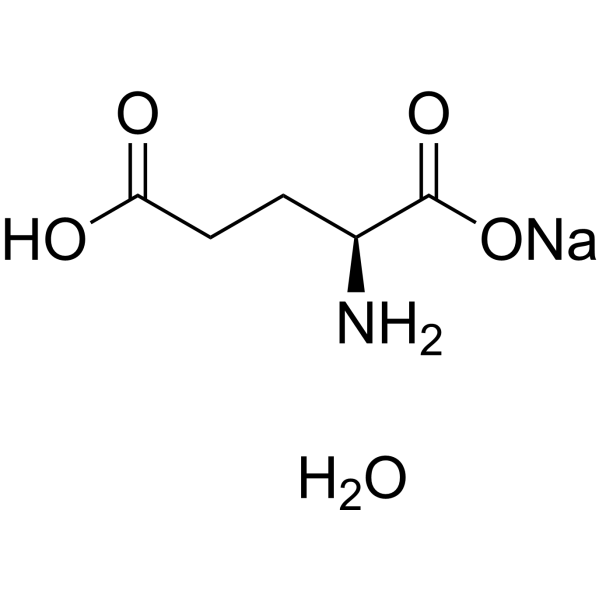
L-Glutamic acid monosodium hydrate

Based on 1 Customer Validation
L-Glutamic acid monosodium hydrate is an excitatory amino acid neurotransmitter that acts as an agonist for all subtypes of glutamate receptors (metabolic rhodophylline, NMDA, and AMPA). L-Glutamic acid monosodium hydrate has an agonist effect on the release of DA from dopaminergic nerve endings. L-Glutamic acid monosodium hydrate can be used in the study of neurological diseases. L-Glutamic acid monosodium hydrate acts at ionotropic and?metabotropic glutamate receptors.
For research use only. We do not sell to patients.
- Purity: 98.0%
- CAS No.: 6106-04-3
- Formula: C5H10NNaO5
- Molecular Weight:187.13
-
Storage:
Store at room temperature, keep dry and cool.
In solvent -80°C, 1 year , -20°C, 6 months

To place orders, for customer services and technical support, please contact: MedChemExpress USA
Tel: 609-228-6898 E-mail: [email protected] [email protected]


-
 Biological Activity
-
Chemical Information
-
Solvent & Solubility
- Purity & Documentation
- References
-
 Help & FAQs


-
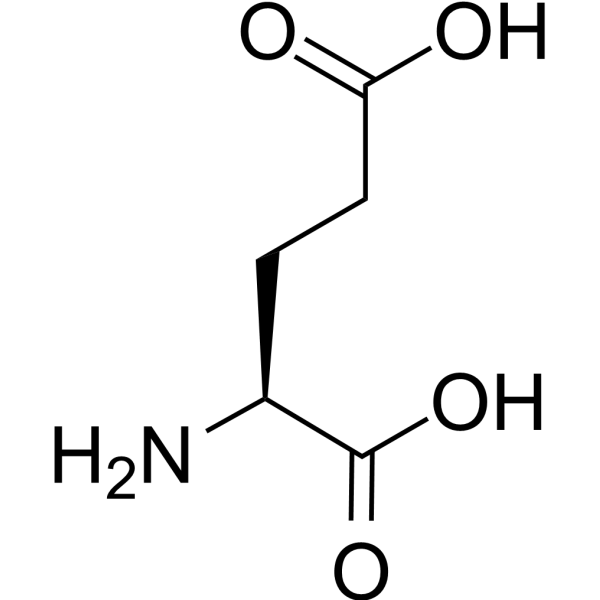
HY-14608
L-Glutamic acid -
HY-18739
Phorbol 12-myristate 13-acetate -
HY-N0666
L-Aspartic acid -

HY-N0666R
L-Aspartic acid (Standard) -

HY-14608R
L-Glutamic acid (Standard) -
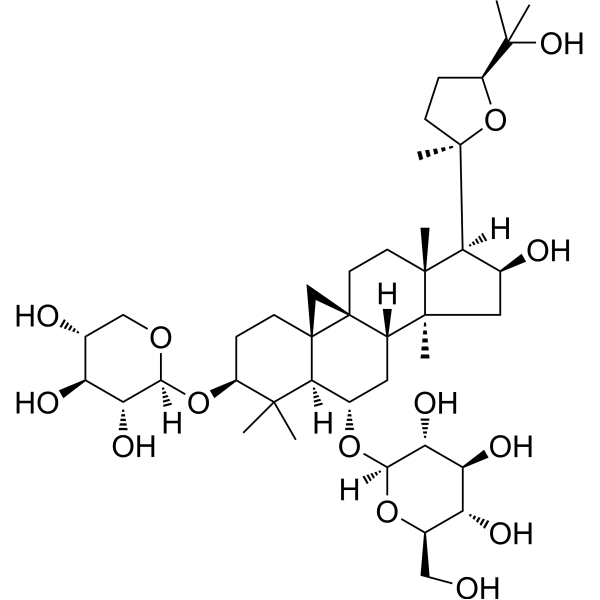
HY-N0431
Astragaloside IV -
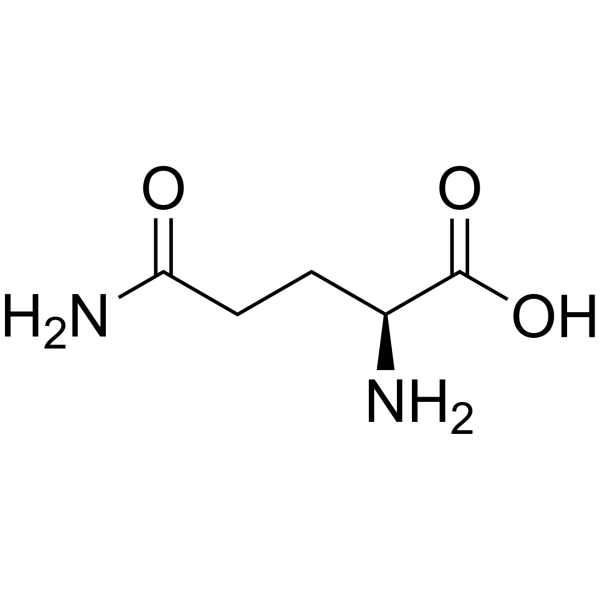
HY-N0390
L-Glutamine -
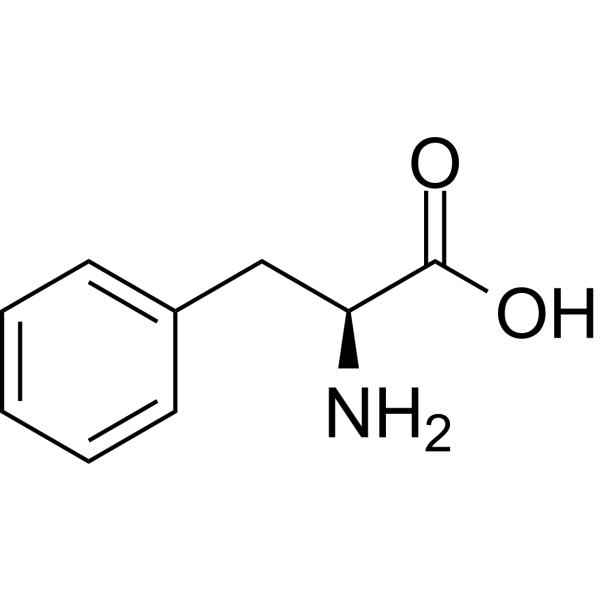
HY-N0215
L-Phenylalanine -
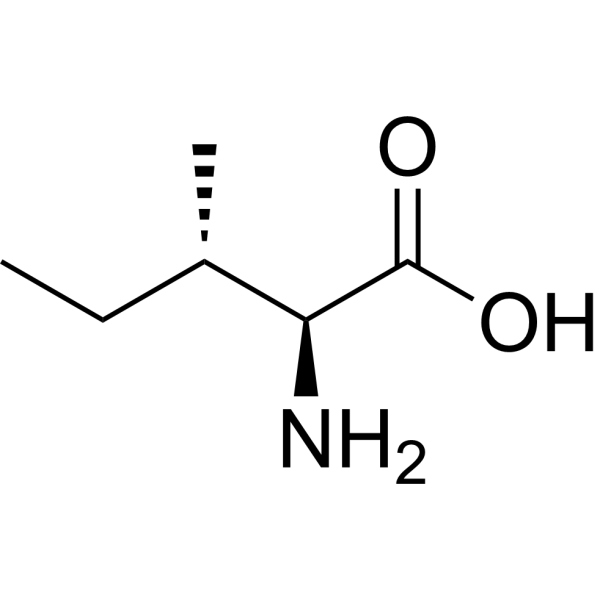
HY-N0771
L-Isoleucine -

HY-N0390R
L-Glutamine (Standard) -

HY-N0215R
L-Phenylalanine (Standard) -
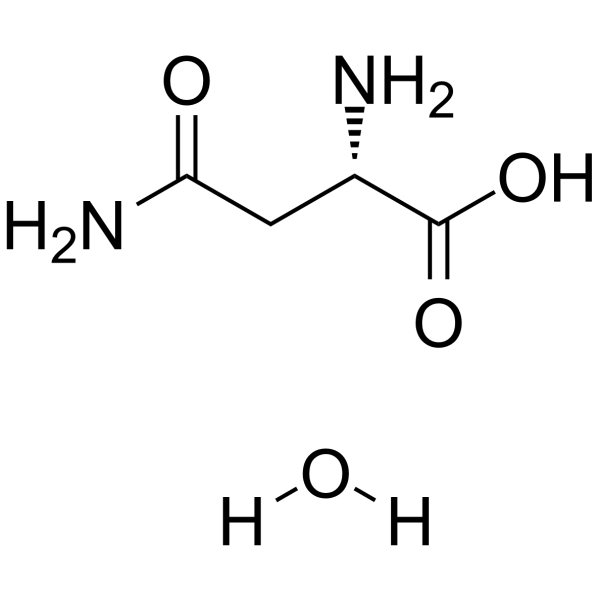
HY-W017443
L-Asparagine monohydrate


Biological Activity
Description
In Vitro
L-Glutamic acid (120-1000 mg/dL) monosodium hydrate can reduce the harmful effect of lithium on the embryonic development of Xenopus Xenopus[3].
L-Glutamic acid (2-20 mM, 24-48 h) monosodium hydrate can induce neuroexcitotoxicity in neuroblastoma[4].
MedChemExpress (MCE) has not independently confirmed the accuracy of these methods. They are for reference only.
-
Cell Line:SH-SY5Y, IMR-32, SK-N-BE(2)
-
Concentration:2, 5, 10, 20 mM
-
Incubation Time:24 and 48 h
-
Result:Reduced cell viability in a dose-dependent manner.
In Vivo
L-Glutamic acid (750 mg/kg, intraperitoneal injection) monosodium hydrate can reduce and inhibit oxidative stress induced by chlorpyrifos (CPF) in rats[5].
MedChemExpress (MCE) has not independently confirmed the accuracy of these methods. They are for reference only.
-
Animal Model:Crv4 mice model[1]
-
Dosage:3 g/kg
-
Administration:s.c., single dose
-
Result:Reduced the number of Brn-3a+ RGCs by >70%. In the absence of mGlu1 receptor, MSG-induced retinal damage is diminished.


Chemical Information
-
CAS No. 6106-04-3
-
Appearance Solid
-
Molecular Weight 187.13
-
Formula C5H10NNaO5
-
Color White to off-white
-
SMILES
O=C([C@H](CCC(O)=O)N)O[Na].O
-
Shipping
Room temperature in continental US; may vary elsewhere.
-
Storage
Store at room temperature, keep dry and cool
In solvent -80°C 1 year -20°C 6 months


Solvent & Solubility
In Vitro:
H2O : 100 mg/mL (534.39 mM; Need ultrasonic)
Please refer to the solubility information to select the appropriate solvent. Once prepared, please aliquot and store the solution to prevent product inactivation from repeated freeze-thaw cycles.
Storage method and period of stock solution: -80°C, 1 year; -20°C, 6 months. When stored at -80°C, please use it within 1 year. When stored at -20°C, please use it within 6 months.
* Note: If you choose water as the stock solution, please dilute it to the working solution, then filter and sterilize it with a 0.22 μm filter before use.
Please refer to the solubility information to select the appropriate solvent. Once prepared, please aliquot and store the solution to prevent product inactivation from repeated freeze-thaw cycles.
Storage method and period of stock solution: -80°C, 1 year; -20°C, 6 months. When stored at -80°C, please use it within 1 year. When stored at -20°C, please use it within 6 months.
* Note: If you choose water as the stock solution, please dilute it to the working solution, then filter and sterilize it with a 0.22 μm filter before use.
Concentration (start) × Volume (start) = Concentration (final) × Volume (final)


Purity & Documentation
-
Data Sheet (274 KB)
-
SDS (393 KB)
- English - EN (393 KB)
- Français - FR (393 KB)
- Deutsch - DE (393 KB)
- Norwegian - NO (393 KB)
- Español - ES (393 KB)
- Swedish - SV (393 KB)
- Italian - IT (393 KB)
- Korean - KR (393 KB)
- Portuguese - PT (393 KB)
-
Handling Instructions (2659 KB)
References
[1]. Liberatore F, et al. Permissive role for mGlu1 metabotropic glutamate receptors in excitotoxic retinal degeneration. Neuroscience. 2017 Nov 5;363:142-149. [Content Brief]
[2]. Giorguieff MF, et al. Presynaptic effect of L-glutamic acid on the release of dopamine in rat striatal slices. Neurosci Lett. 1977 Oct;6(1):73-7. [Content Brief]
[3]. Boga Pekmezekmek A, et al. L-Glutamic acid monosodium salt reduces the harmful effect of lithium on the development of Xenopus laevis embryos. Environ Sci Pollut Res Int. 2020 Nov;27(33):42124-42132. [Content Brief]
[4]. Croce N, et al. Hydrochloric acid alters the effect of L-glutamic acid on cell viability in human neuroblastoma cell cultures. J Neurosci Methods. 2013 Jul 15;217(1-2):26-30. [Content Brief]
[5]. Salyha N, et al. Protective role of l-glutamic acid and l-cysteine in mitigation the chlorpyrifos-induced oxidative stress in rats. Environ Toxicol Pharmacol. 2018 Dec;64:155-163. [Content Brief]


Complete Stock Solution Preparation Table
Please refer to the solubility information to select the appropriate solvent. Once prepared, please aliquot and store the solution to prevent product inactivation from repeated freeze-thaw cycles.
Storage method and period of stock solution: -80°C, 1 year; -20°C, 6 months. When stored at -80°C, please use it within 1 year. When stored at -20°C, please use it within 6 months.
| Optional Solvent | Concentration Solvent Mass | 1 mg | 5 mg | 10 mg | 25 mg |
|---|---|---|---|---|---|
| H2O | 1 mM | 5.3439 mL | 26.7194 mL | 53.4388 mL | 133.5970 mL |
| 5 mM | 1.0688 mL | 5.3439 mL | 10.6878 mL | 26.7194 mL | |
| 10 mM | 0.5344 mL | 2.6719 mL | 5.3439 mL | 13.3597 mL | |
| 15 mM | 0.3563 mL | 1.7813 mL | 3.5626 mL | 8.9065 mL | |
| 20 mM | 0.2672 mL | 1.3360 mL | 2.6719 mL | 6.6798 mL | |
| 25 mM | 0.2138 mL | 1.0688 mL | 2.1376 mL | 5.3439 mL | |
| 30 mM | 0.1781 mL | 0.8906 mL | 1.7813 mL | 4.4532 mL | |
| 40 mM | 0.1336 mL | 0.6680 mL | 1.3360 mL | 3.3399 mL | |
| 50 mM | 0.1069 mL | 0.5344 mL | 1.0688 mL | 2.6719 mL | |
| 60 mM | 0.0891 mL | 0.4453 mL | 0.8906 mL | 2.2266 mL | |
| 80 mM | 0.0668 mL | 0.3340 mL | 0.6680 mL | 1.6700 mL | |
| 100 mM | 0.0534 mL | 0.2672 mL | 0.5344 mL | 1.3360 mL |
* Note: If you choose water as the stock solution, please dilute it to the working solution, then filter and sterilize it with a 0.22 μm filter before use.


L-Glutamic acid monosodium hydrate Related Classifications
HY-W016145 Related Classifications
 Powered by Bioz