


1. Search Result
Search Result
Pathways Recommended: Metabolic Enzyme/Protease
Results for "

hydrolase enzyme

" in MedChemExpress (MCE) Product Catalog:

96

Inhibitors & Agonists

3

Fluorescent Dyes

1

Biochemical Assay Reagents

1

Peptides

2

Natural
Products

50

Recombinant Proteins

7

Antibodies

1

Oligonucleotides

Cat. No. Product Name Target Research Areas Chemical Structure
  • HY-P2775
    β-Glucosidase, almond
    1 Publications Verification

    Glycosidase Others
    β-Glucosidase, almond is the rate-limiting enzyme in cellulose degradation. β-Glucosidase is a major group among glycoside hydrolases. β-Glucosidase is involved in the degradation of cellulose in soils and has potential for monitoring soil quality .
    β-Glucosidase, almond
  • HY-B2193
    α-Amylase
    2 Publications Verification

    Environmental Pollutants Amylases Others
    α-Amylase is a hydrolase enzyme that catalyses the hydrolysis of internal α-1, 4-glycosidic linkages in starch to yield products like glucose and maltose.
    α-Amylase
  • HY-B0481
    Miglitol
    2 Publications Verification

    BAY1099; BAY-m1099

    Glycosidase AMPK Reactive Oxygen Species (ROS) Metabolic Disease
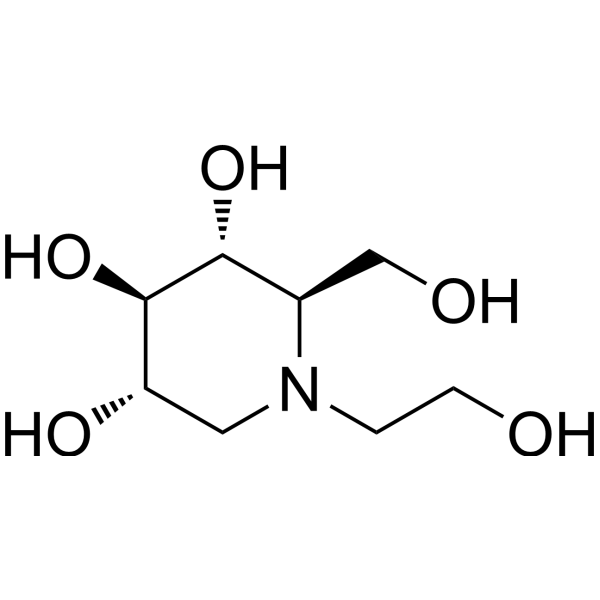
    Miglitol (BAY-m1099) is an orally active antidiabetic compound that inhibits the breakdown of glycoconjugates into glucose. Miglitol inhibits glycoside hydrolase enzymes called α-glucosidases. Miglitol inhibits oxidative stress-induced apoptosis and mitochondrial ROS over-production in endothelial cells by enhancement of AMP-activated protein kinase. Dietary supplementation with Miglitol from pre-onset stage in OLETF rats delays the onset and development of diabetes and preserves the insulin secretory function of pancreatic islets .
    Miglitol
  • HY-124700
    LYPLAL1-IN-1
    1 Publications Verification

    Cyclic GMP-AMP Synthase STING PD-1/PD-L1 Epoxide Hydrolase Metabolic Disease
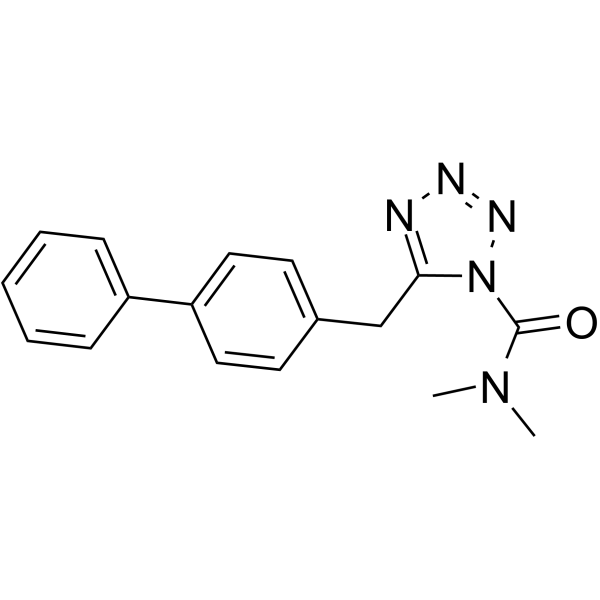
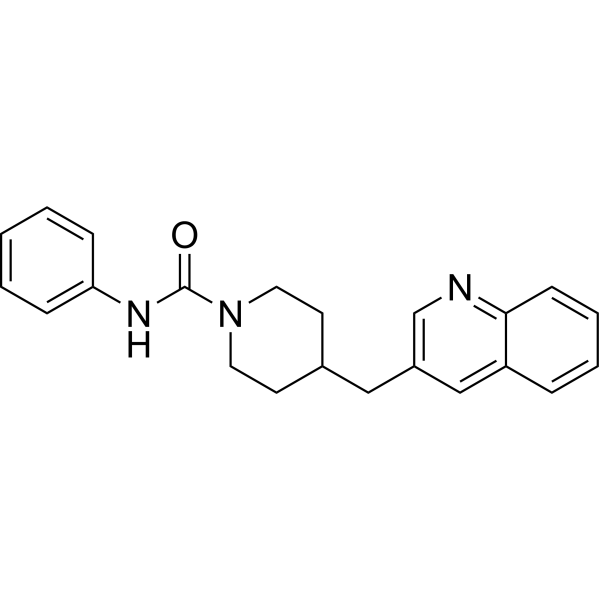
    LYPLAL1-IN-1 (compound 11) is a selective, covalent, and irreversible inhibitor of the lysophospholipase-like enzyme LYPLAL1 (IC50 = 6 nM). LYPLAL1-IN-1 shows selectivity against other serine hydrolases such as carboxylesterase CES1 (IC50 > 50 μM for CES1). LYPLAL1-IN-1 inhibits the depalmitoylation function of LYPLAL1, blocking its depalmitoylation modification of cyclic GMP-AMP synthase (cGAS), thereby promoting cGAS dimerization and activation, and initiating the cGAS-STING pathway-mediated innate immune response. LYPLAL1-IN-1 can enhance DNA-induced type I interferon production, upregulate PD-L1 expression in tumor cells, and promote the accumulation of tumor-infiltrating CD8 + T cells, with the core function of strengthening the anti-tumor immune response. LYPLAL1-IN-1 is primarily used in tumor immunology research, especially in combination with PD-1/PD-L1 inhibitors .
    LYPLAL1-IN-1
  • HY-W040256

    ACP

    Endogenous Metabolite Metabolic Disease Cancer
    Acid phosphatase, wheat (ACP) is a hydrolase enzyme found in wheat. Acid phosphatase, wheat catalyses the hydrolysis of orthophosphate monoesters under acidic conditions .
    Acid phosphatase, wheat
  • HY-10865
    LY2183240
    3 Publications Verification

    FAAH Autophagy Neurological Disease
    LY2183240 is a highly potent blocker of anandamide uptake (IC50= 270 pM; Ki=540 nM). LY2183240 is a potent, covalent inhibitor of the endocannabinoid-degrading enzyme fatty acid amide hydrolase (FAAH) with an IC50 of 12.4 nM. LY2183240 inactivates FAAH by carbamylation of the enzyme's serine nucleophile. LY2183240 also inhibits several other brain serine hydrolases with IC50s of 5.3, 0.09, 8.2 nM for MAG lipase, bh6 and KIAA1363, respectively .
    LY2183240
  • HY-P3017

    CtXyn11A; EC 3.2.1.8

    Poly(ADP-ribose) Glycohydrolase (PARG) Others
    Endo-1,4-β-xylanase (Xylanase) is an arabinoxylan (AX) degrading enzyme and a glycoside hydrolase, is often used in biochemical studies. Endo-1,4-β-xylanase cleaves the β-xylosidic bond between two d-xylopyranosyl residues linked in β-(1,4) .
    Endo-1,4-β-xylanase
  • HY-146248B

    Poly(ADP-ribose) Glycohydrolase (PARG) SARS-CoV Protease Activated Receptor (PAR) Metabolic Disease
    TFMU-ADPr diammonium is a selective reporter substrate of SARS-CoV-2 Macro1 (IC50=0.59 μM), with an excitation wavelength (λEx) of 385 nm, and an emission wavelength (λEm) of 502 nm (or 495 nm). TFMU-ADPr diammonium can also undergo enzymatic hydrolysis with Poly(ADP-ribose) Glycohydrolase (PARG) sourced from human, Tetrahymena thermophila and ADP-ribosylhydrolase 3 from human to release fluorophores, thereby directly reporting total poly (ADP-ribose) hydrolase activity. TFMU-ADPr diammonium binds to the ADPr-binding site of SARS-CoV-2 Macro1, and its TFMU moiety inserts into the narrow hydrophobic groove of this protein. TFMU-ADPr diammonium can thus be used to evaluate small-molecule inhibitors targeting PAR hydrolases under in vitro conditions, to investigate the regulatory mechanisms of ADP-ribosyl catabolic enzymes, or to detect PAR hydrolase activity in whole-cell lysate assays. TFMU-ADPr diammonium is also applicable to COVID-19-related research .
    TFMU-ADPr diammonium
  • HY-152148

    MAGL Neurological Disease
    JZP-MA-11 is a brain-penetrant positron emission tomography (PET) ligand targeting the brain endocannabinoid α/β-hydrolase domain 6 (ABHD6) enzyme. JZP-MA-11 selectively inhibits ABHD6 with an IC50 value of 126 nM. [18F]JZP-MA-11 has the potential for preclinical evaluation targeting the brain ABHD6 in mice and nonhuman primate (NHP) .
    JZP-MA-11
  • HY-18081

    FAAH Autophagy Neurological Disease Metabolic Disease
    PF 750 is a selective, covalent and brain-penetrant fatty acid amide hydrolase (FAAH) inhibitor. PF 750 covalently carbamylates FAAH's catalytic serine nucleophile to inactivate the enzyme .
    PF 750
  • HY-P2893A

    Creatine amidinohydrolase

    Endogenous Metabolite Metabolic Disease
    Creatinase (Recombinant) is a hydrolase responsible for catalyzing the hydrolysis of creatine (HY-W010388) into sarcosine (HY-101037) and urea (HY-Y0271). Creatinase (Recombinant) can be used in conjunction with creatinine deiminase (HY-P2838) and sarcosine oxidase (HY-P2861) in an enzyme cascade reaction to measure creatinine (HY-B0504) levels in blood and urine. Creatinase (Recombinant) is the rate-limiting enzyme in this enzymatic cascade, and the enzymatic quantification of creatinine is an important method for evaluating kidney function .
    Creatinase (Recombinant)
  • HY-B2193A

    1,4-alpha-D-Glucan-glucanohydrolase, ptyalin

    Biochemical Assay Reagents Metabolic Disease Inflammation/Immunology
    α-Amylase, Human Saliva (1,4-alpha-D-Glucan-glucanohydrolase) is a hydrolase enzyme that can be isolated from human saliva. α-Amylase, Human Saliva catalyses the hydrolysis of internal α-1, 4-glycosidic linkages in starch to yield products like glucose and maltose. α-Amylase, Human Saliva can be used in life science research .
    α-Amylase, Human Saliva
  • HY-B2193C

    1,4-alpha-D-Glucan-glucanohydrolase, amy2, PPA, PA

    Biochemical Assay Reagents Others
    α-Amylase, Porcine Pancreatic (1,4-alpha-D-Glucan-glucanohydrolase) is a hydrolase enzyme that can be isolated from porcine pancreatic. α-Amylase, Porcine Pancreatic catalyses the hydrolysis of internal α-1, 4-glycosidic linkages in starch to yield products like glucose and maltose. α-Amylase, Porcine Pancreatic can be used in life science research .
    α-Amylase, Porcine Pancreatic
  • HY-W001857

    N-Hydroxyoctanamide; Caprylhydroxamic acid

    Biochemical Assay Reagents Bacterial Others
    Octanohydroxamic acid (N-Hydroxyoctanamide; Caprylhydroxamic acid) can be used as an extractant for alkaloids, which are used in pharmaceutical and natural product research. Octanohydroxamic acid may also be involved in the inhibition of certain enzymes, such as hydroxamate hydrolases.
    Octanohydroxamic acid
  • HY-B2193B

    Amylase, a-Amylase, 1,4-a-D-glucan glucanohydrolase, glycogenase

    Biochemical Assay Reagents Others
    α-Amylase, Human Pancreas (Amylase) is a hydrolase enzyme that can be isolated from human pancreas. α-Amylase, Human Pancreas catalyses the hydrolysis of internal α-1, 4-glycosidic linkages in starch to yield products like glucose and maltose. α-Amylase, Human Pancreas can be used in life science research .
    α-Amylase, Human Pancreas
  • HY-146248

    SARS-CoV Poly(ADP-ribose) Glycohydrolase (PARG) Protease Activated Receptor (PAR) Infection
    TFMU-ADPr is a selective reporter substrate of SARS-CoV-2 Macro1 (IC50=0.59 μM), with an excitation wavelength (λEx) of 385 nm, and an emission wavelength (λEm) of 502 nm (or 495 nm). TFMU-ADPr can also undergo enzymatic hydrolysis with Poly(ADP-ribose) Glycohydrolase (PARG) sourced from human, Tetrahymena thermophila and ADP-ribosylhydrolase 3 from human to release fluorophores, thereby directly reporting total poly (ADP-ribose) hydrolase activity. TFMU-ADPr binds to the ADPr-binding site of SARS-CoV-2 Macro1, and its TFMU moiety inserts into the narrow hydrophobic groove of this protein. TFMU-ADPr can thus be used to evaluate small-molecule inhibitors targeting PAR hydrolases under in vitro conditions, to investigate the regulatory mechanisms of ADP-ribosyl catabolic enzymes, or to detect PAR hydrolase activity in whole-cell lysate assays. TFMU-ADPr is also applicable to COVID-19-related research .
    TFMU-ADPr
  • HY-120957

    AMC-AA; 7-Amino-4-methyl coumarin-arachidonamide

    Endogenous Metabolite Metabolic Disease
    AMC arachidonoyl amide (AMC-AA) is one of several fatty acid amides which can be used to measure fatty acid amide hydrolase (FAAH) activity.1 FAAH is a relatively unselective enzyme in that it accepts a variety of amide head groups other than the ethanolamine of its nominal endogenous substrate anandamide.2 Exposure of AMC-AA to FAAH activity results in the release of the fluorescent aminomethyl coumarin that absorbs at 360 nm and emits at 465 nm. This allows the fast and convenient measurement of FAAH activity using a simple cuvette or microplate fluorometer.
    AMC Arachidonoyl Amide
  • HY-150226

    Proteasome Inflammation/Immunology
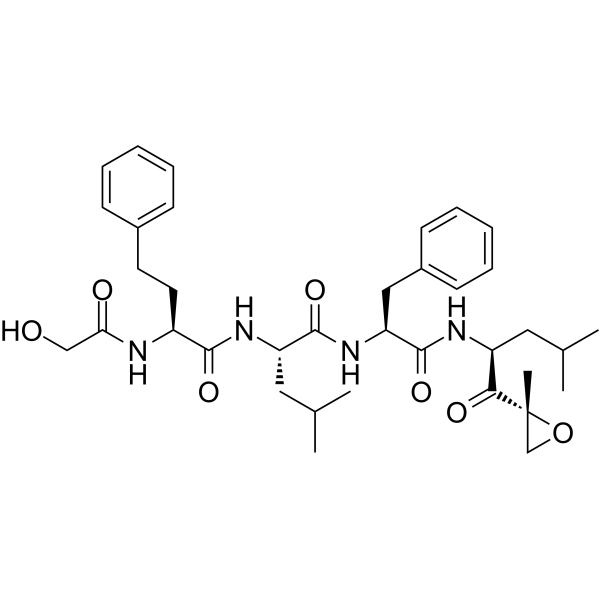
    Enzyme-IN-1 (compound 1) is a peptide-based inhibitor of N-terminal nucleophile (Ntn) hydrolases. Specifically, Enzyme-IN-1 inhibits the chymotrypsin-like activity (CT-L) of the 20S proteasome. Enzyme-IN-1 may has potential antiinflammatory properties .
    Enzyme-IN-1
  • HY-10825
    DG051
    1 Publications Verification

    Aminopeptidase Metabolic Disease
    DG051 is a potent leukotriene A4 hydrolase inhibitor of leukotriene B4 biosynthesis in the enzyme assay with an IC50=47 nM.
    DG051
  • HY-E70445

    Biochemical Assay Reagents Others
    Chondroitinase AC II is a hydrolase. Enzymes have high catalytic efficiency, high specificity, and mild operating conditions. It can be applied in industries such as pharmaceuticals, industrial production, food manufacturing, and aquaculture .
    Chondroitinase AC II
  • HY-146696

    Epoxide Hydrolase Cardiovascular Disease Neurological Disease Cancer
    mEH-IN-1 (Compound 62) is a potent microsomal epoxide hydrolase (mEH) inhibitor with the IC50 of 2.2 nM. The mEH is a mammalian α/β-fold hydrolase enzyme, expressed in almost all tissues, hydrolyzes a wide range of epoxide containing molecules. The mEH is mainly localized in the endoplasmic reticulum (ER) of eukaryotic cells. mEH-IN-1 can be used for the research of preeclampsia, hypercholanemia and cancer .
    mEH-IN-1
  • HY-134354A

    ADP-ribose-pNP disodium

    Poly(ADP-ribose) Glycohydrolase (PARG) Others
    pNP-ADPr disodium is a colorimetric substrate that used for the first continuous Poly(ADP-ribose) glycohydrolase (PARG) and ADP-ribosyl hydrolase 3 (ARH3) activity assays. pNP-ADPr disodium can be used for the research of poly(ADP-ribose)polymerase (PARP) enzymes .
    pNP-ADPr disodium
  • HY-E70418

    Endogenous Metabolite Cardiovascular Disease Inflammation/Immunology
    Epoxide hydrolase is an enzyme responsible for catalyzing the reaction between epoxides and water, converting epoxide groups into diols. Epoxide hydrolase plays a key role in the metabolism of environmental pollutants and lipids, contributing to detoxification, inflammation responses, and the regulation of cardiovascular system health. Additionally, epoxide hydrolase can be used in asymmetric catalytic reactions, such as the asymmetric ring-opening of epoxides, to produce chiral drug molecules .
    Epoxide hydrolase
  • HY-W097753

    4-Methoxydiphenylmethane

    Aminopeptidase Others
    4-MDM (4-Methoxydiphenylmethane) is an orally active anti-inflammatory compound that selectively enhances the Leukotriene A4 Hydrolase (LTA4H) aminopeptidase enzyme activity. 4-MDM reduces the neutrophil recruitment in the lung by enhancing the degradation of proline-glycine-proline by LTA4H, thereby reducing inflammation, and does not affect the epoxy-hydrolase activity of LTA4H. 4-MDM can be used for research on lung diseases .
    4-MDM
  • HY-E70438

    Biochemical Assay Reagents Others
    Endoproteinase Pro-C is a hydrolase. Enzymes have high catalytic efficiency, high specificity, and mild operating conditions. It can be applied in industries such as pharmaceuticals, industrial production, food manufacturing, and aquaculture .
    Endoproteinase Pro-C
  • HY-134354

    ADP-ribose-pNP

    Poly(ADP-ribose) Glycohydrolase (PARG) Others
    pNP-ADPr is a colorimetric substrate that used for the first continuous Poly(ADP-ribose) glycohydrolase (PARG) and ADP-ribosyl hydrolase 3 (ARH3) activity assays. pNP-ADPr can be used for the research of poly(ADP-ribose)polymerase (PARP) enzymes .
    pNP-ADPr
  • HY-118210

    FAAH Metabolic Disease
    PHOP is a fatty acid amide hydrolase (FAAH) inhibitor used to assess inhibitory activity in a fluorometric assay. PHOP can determine FAAH activity by measuring the amount of 4-pyridin-1-ylbutyric acid released by the enzyme in rat brain microsomes. PHOP demonstrates potential as a FAAH inhibitor and can directly measure FAAH activity by reversed-phase HPLC and fluorescence detection, providing a basis for the development of new inhibitors.
    PHOP
  • HY-146248A

    Poly(ADP-ribose) Glycohydrolase (PARG) SARS-CoV Protease Activated Receptor (PAR) Others
    TFMU-ADPr triethylamine is a selective reporter substrate of SARS-CoV-2 Macro1 (IC50=0.59 μM), with an excitation wavelength (λEx) of 385 nm, and an emission wavelength (λEm) of 502 nm (or 495 nm). TFMU-ADPr triethylamine can also undergo enzymatic hydrolysis with Poly(ADP-ribose) Glycohydrolase (PARG) sourced from human, Tetrahymena thermophila and ADP-ribosylhydrolase 3 from human to release fluorophores, thereby directly reporting total poly (ADP-ribose) hydrolase activity. TFMU-ADPr triethylamine binds to the ADPr-binding site of SARS-CoV-2 Macro1, and its TFMU moiety inserts into the narrow hydrophobic groove of this protein. TFMU-ADPr triethylamine can thus be used to evaluate small-molecule inhibitors targeting PAR hydrolases under in vitro conditions, to investigate the regulatory mechanisms of ADP-ribosyl catabolic enzymes, or to detect PAR hydrolase activity in whole-cell lysate assays. TFMU-ADPr triethylamine is also applicable to COVID-19-related research .
    TFMU-ADPr triethylamine
  • HY-N8279

    Endo-β-1,3-1,4-glucanase

    Glycosidase Metabolic Disease
    β-1,3-1,4-glucanase (Endo-β-1,3-1,4-glucanase) is a glycoside hydrolase family 16 enzyme (some members belong to subfamily 25). β-1,3-1,4-glucanase shows high substrate specificity toward mixed‑linked β‑glucans and cleaves β‑1,4 glycosidic bonds adjacent to β‑1,3 linkages in an endo‑type pattern. β-1,3-1,4-glucanase can be used in industrial enzyme applications and monogastric animal feed supplementation .
    β-1,3-1,4-Glucanase
  • HY-175816

    5-HT Receptor FAAH Apoptosis Reactive Oxygen Species (ROS) Neurological Disease
    5-HT6R/FAAH modulator 1 is a selective serotonin 5-HT6 receptor ligand and the fatty acid amide hydrolase (FAAH) enzyme inhibitor. 5-HT6R/FAAH modulator 1 shows a pKi of 6.33 (5-HT6) and a pIC50 valuesof 6.29 (FAAH). 5-HT6R/FAAH modulator 1 also slightly inhibits acetylcholinesterase (AChE) or butyrylcholinesterase (BChE) enzymes (pIC50 = 5.12). 5-HT6R/FAAH modulator 1 can inhibit apoptosis and reduce ROS levels. 5-HT6R/FAAH modulator 1 can be used for the research of neurological disease, such as Alzheimer’s disease (AD) .
    5-HT6R/FAAH modulator 1
  • HY-E70620

    Ser/Thr Protease Others
    Poly(ethylene terephthalate) hydrolase is an enzyme involved in the breakdown of Poly(ethylene terephthalate) (PET). Poly(ethylene terephthalate) is one of the most commonly discarded plastics .
    Poly(ethylene terephthalate) hydrolase
  • HY-165025

    Ser/Thr Protease Others
    2-thioacetyl MAGE is a colorimetric substrate of a serine hydrolase enzyme KIAA1363 .
    2-thioacetyl MAGE
  • HY-168909

    DNA/RNA Synthesis Metabolic Disease
    MRK-952, a chemical probe, is a NUDIX hydrolase inhibitor. NUDIX enzymes are involved in cellular metabolism and homeostasis, as well as mRNA processing .
    MRK-952
  • HY-E70422

    Biochemical Assay Reagents Others
    Cyclomaltodextrinase is a hydrolase. Enzymes have high catalytic efficiency, high specificity, and mild operating conditions. It can be applied in industries such as pharmaceuticals, industrial production, food manufacturing, and aquaculture .
    Cyclomaltodextrinase
  • HY-E70444

    Biochemical Assay Reagents Others
    Chondroitinase ABC II is a hydrolase. Enzymes have high catalytic efficiency, high specificity, and mild operating conditions. It can be applied in industries such as pharmaceuticals, industrial production, food manufacturing, and aquaculture .
    Chondroitinase ABC II
  • HY-121941

    Fluorescent Dye Others
    Epoxy Fluor 7 is a sensitive fluorescent substrate for soluble epoxide hydrolase (sEH) that can be used for human and mouse enzymes. Epoxy Fluor 7 is hydrolyzed to yield fluorescence used for monitoring the activity of sEH.
    Epoxy Fluor 7
  • HY-E70627

    Deubiquitinase Neurological Disease
    Ubiquitin thiolesterase UCHL1 (EC 3.1.2.15) is a member of the ubiquitin carboxy-terminal hydrolase family of deubiquitinating enzymes. Ubiquitin thiolesterase UCHL1 functions as an ubiquitin ligase and a mono-ubiquitin stabilizer .
    Ubiquitin thiolesterase UCHL1
  • HY-134019

    Others Others
    Arachidonoyl p-nitroaniline is a substrate for the hydrolysis of p-nitroaniline by FAAH in Dictyostelium discoideum with long-chain unsaturated fatty acids. Arachidonoyl p-nitroaniline can be used in enzyme kinetic studies. Examples include determining the hydrolysis rate of Arachidonoyl p-nitroaniline and analyzing the fatty acid amide hydrolase activity of recombinant His-FAAH purified from Dictyostelium to characterize the binding and catalytic specificity of mammalian FAAH enzymes .
    Arachidonoyl p-nitroaniline
  • HY-P3006

    Drug Metabolite Cardiovascular Disease
    Des-Leu10-angiotensin I is a nonapeptide that inhibits rabbit lung angiotensin-converting enzyme peptidyl-dipeptide hydrolase with a Ki value of 31 μM, which is generated from angiotensin I by the action of carboxypeptidase-like activities residing in the human platelet and mast cell .
    Des-Leu10-angiotensin I
  • HY-145831

    Cholinesterase (ChE) Neurological Disease Inflammation/Immunology
    sEH/AChE-IN-1 (Compound 12a) is a dual inhibitor of the enzymes soluble epoxide hydrolase (sEH) and acetylcholinesterase (AChE). sEH/AChE-IN-1 provides cumulative effects against neuroinflammation and memory impairment. sEH/AChE-IN-1 has the potential for the research of Alzheimer's disease (AD) .
    sEH/AChE-IN-1
  • HY-145832

    Cholinesterase (ChE) Neurological Disease Inflammation/Immunology
    sEH/AChE-IN-2 (Compound 12b) is a dual inhibitor of the enzymes soluble epoxide hydrolase (sEH) and acetylcholinesterase (AChE). sEH/AChE-IN-2 provides cumulative effects against neuroinflammation and memory impairment. sEH/AChE-IN-2 has the potential for the research of Alzheimer's disease (AD) .
    sEH/AChE-IN-2
  • HY-134110

    Endogenous Metabolite Metabolic Disease
    Anandamide (AEA) is an endogenous cannabinoid that binds to both central cannabinoid (CB1) and peripheral cannabinoid (CB2) receptors. The biological actions of AEA are terminated by cellular uptake and hydrolysis of the amide bond by the enzyme fatty acid amide hydrolase. Arachidonoyl-N-methyl amide is an analog of anandamide that binds to the human central cannabinoid (CB1) receptor with a Ki of 60 nM. It inhibits rat glial gap junction cell-cell communication 100% at a concentration of 50 μM.
    N-Methylarachidonamide
  • HY-134055

    Arachidonic acid-N,N-dimethyl amide

    Cannabinoid Receptor Metabolic Disease
    Anandamide (AEA) is an endogenous cannabinoid that binds to both central cannabinoid (CB1) and peripheral cannabinoid (CB2) receptors. The biological actions of AEA are terminated by cellular uptake and hydrolysis of the amide bond by the enzyme fatty acid amide hydrolase. Arachidonoyl-N,N-dimethyl amide is an analog of anandamide that exhibits weak or no binding to the human central cannabinoid (CB1) receptor (Ki >1 μM). It inhibits rat glial gap junction cell-cell communication 100% at a concentration of 50 μM.
    Arachidonoyl-N,N-dimethyl amide
  • HY-120971

    DepNA

    Endogenous Metabolite Metabolic Disease
    N-Decanoyl p-nitroaniline (DepNA) is one of several nitroaniline fatty acid amides which can be used to measure fatty acid amide hydrolase (FAAH) activity.1 FAAH is a relatively unselective enzyme in that it accepts a variety of amide head groups other than the ethanolamine of its endogenous substrate anandamide (AEA). It also will hydrolyze fatty acid amides with fewer carbons and fewer double bonds than arachidonate. Exposure of DepNA to FAAH activity results in the release of the yellow colorimetric dye p-nitroaniline (ε=13,500 at 410 nm). This allows the fast and convenient measurement of FAAH activity using a 96 well plate spectrophotometer.
    N-Decanoyl p-Nitroaniline
  • HY-E70118

    Glycosidase Others
    oligo-α-1,6-Glucosidase, Bacillus cereus ATCC7064 is a hydrolase that mainly hydrolyzes oligosaccharides with α-1,6-glycosidic bonds. oligo-α-1,6-Glucosidase, Bacillus cereus ATCC7064 can catalyzes the exo hydrolysis of α-1,6-glucoside bonds from the nonreducing ends of panose, palatinose, α-limit dextrins, and isomaltooligosaccharides. oligo-α-1,6-Glucosidase, Bacillus cereus ATCC7064 participates in the degradation pathway of starch and glycogen, assisting enzymes such as α-amylase to completely hydrolyzes amylopectin .
    oligo-α-1,6-Glucosidase, Bacillus cereus ATCC7064
  • HY-P2988H

    Influenza Virus Infection
    Neuraminidase,Vibrio cholerae (EC 3.2.1.18) is a glycoside hydrolase enzyme that cleave the glycosidic linkages of neuraminic acids.
    Neuraminidase,Vibrio cholerae
  • HY-E70940A

    Endogenous Metabolite Metabolic Disease
    Sphingomyelinase, Streptomyces sp. (EC 3.1.4.12) is a hydrolase enzyme that is involved in sphingolipid metabolism reactions. Sphingomyelinase is a member of the DNase I superfamily of enzymes and is responsible for breaking sphingomyelin (SM) down into phosphocholine and ceramide.
    Sphingomyelinase, Streptomyces sp.
  • HY-E70940

    Endogenous Metabolite Metabolic Disease
    Sphingomyelinase, Staphylococcus aureus (EC 3.1.4.12) is a hydrolase enzyme that is involved in sphingolipid metabolism reactions. Sphingomyelinase is a member of the DNase I superfamily of enzymes and is responsible for breaking sphingomyelin (SM) down into phosphocholine and ceramide.
    Sphingomyelinase, Staphylococcus aureus
  • HY-W274294

    Biochemical Assay Reagents Others
    H-Pro-Pna is a chromogenic substrate of peptidase and can be used to determine enzyme activity, such as leukotriene A4 hydrolase .
    H-Pro-Pna
  • HY-E70895

    Endogenous Metabolite Metabolic Disease
    α2-3 Neuraminidase S, Streptococcus pneumoniae is a glycoside hydrolase enzyme that cleave the glycosidic linkages of neuraminic acids.
    α2-3 Neuraminidase S, Streptococcus pneumoniae

Inquiry Online

Your information is safe with us. * Required Fields.

Salutation


Country or Region *

Applicant Name *


Organization Name *

Department *


Email Address *


Product Name *

Cat. No.


Requested quantity *

Phone Number *


Remarks

Inquiry Online

Inquiry Information

Product Name:
Cat. No.:
Quantity:
MCE Japan Authorized Agent:

