


Search Result
Results for "
migraines
" in MedChemExpress (MCE) Product Catalog:
1
Biochemical Assay Reagents
31
Isotope-Labeled Compounds
| Cat. No. |
Product Name |
Target |
Research Areas |
Chemical Structure |
-
- HY-10585
-
-
-
- HY-10585A
-
|
Sodium Valproate; VPA sodium; 2-Propylpentanoic acid sodium
|
Organoid
HDAC
Autophagy
Mitophagy
HIV
Notch
Apoptosis
Endogenous Metabolite
|
Infection
Neurological Disease
Metabolic Disease
Cancer
|
|
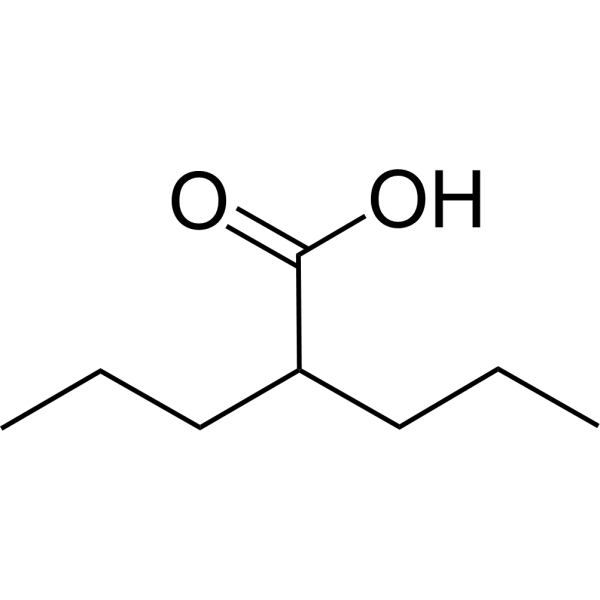
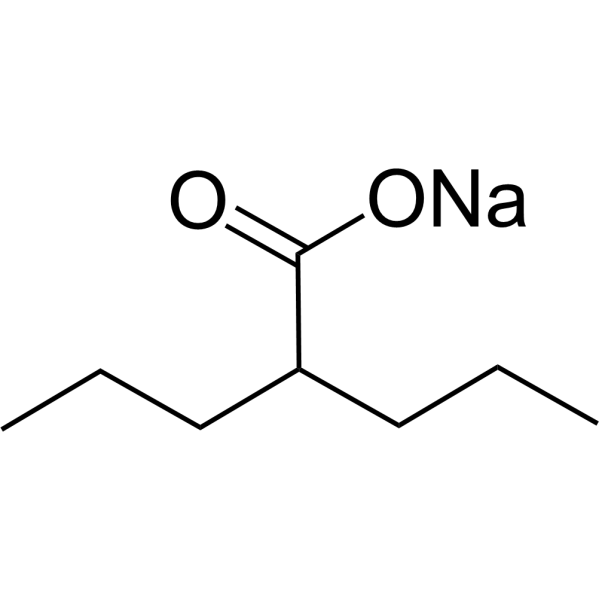
Valproic acid (Sodium Valproate) sodium is an orally active HDAC inhibitor, with IC50 in the range of 0.5 and 2 mM, also inhibits HDAC1 (IC50, 400 μM), and induces proteasomal degradation of HDAC2. Valproic acid sodium activates Notch1 signaling and inhibits proliferation in small cell lung cancer (SCLC) cells. Valproic acid sodium is used in the treatment of epilepsy, bipolar disorder, metabolic disease, HIV infection and prevention of migraine headaches .
|
-
-
- HY-P0203
-
|
CGRP (83-119), mouse, rat
|
CGRP Receptor
|
Cardiovascular Disease
Metabolic Disease
Inflammation/Immunology
|
|
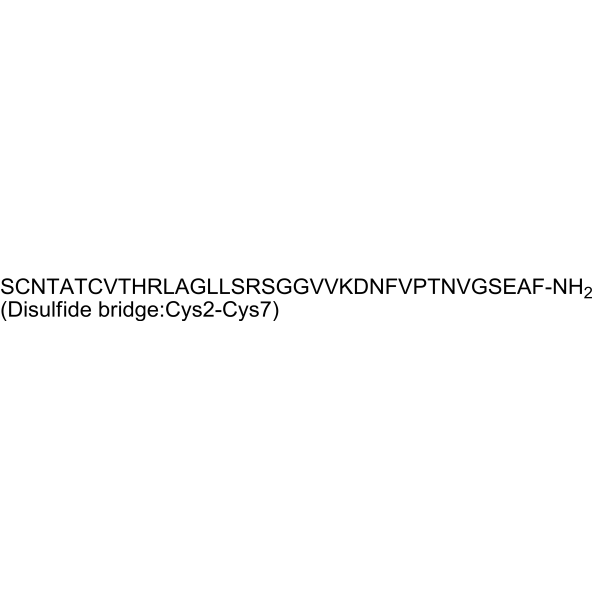
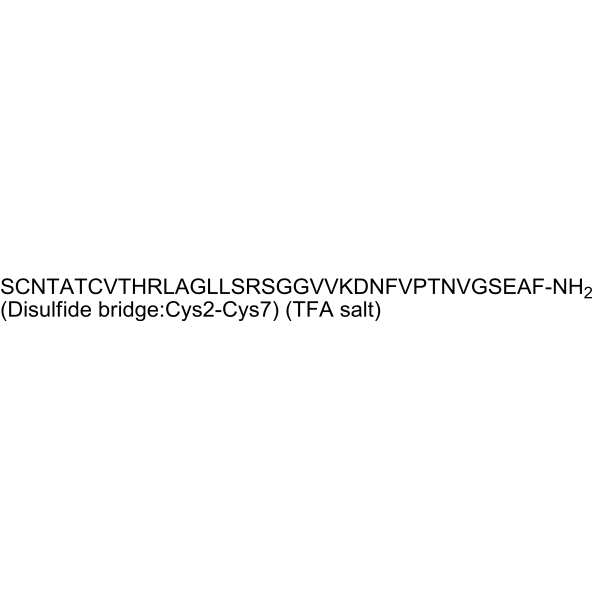
α-CGRP (mouse, rat), a neuropeptide (calcitonin gene-related peptide (CGRP)) mainly expressed in neuromuscular junction, is a potent vasodilator. α-CGRP (mouse, rat) can lead to a fall in blood pressure and an increase in heart rate by peripheral administration, also relax colonie smooth muscle. α-CGRP (mouse, rat) has the potential in cardiovascular, pro-inflammatory, migraine and metabolic studies .
|
-
-
- HY-15498
-
|
BMS-927711; BHV-3000
|
CGRP Receptor
|
Neurological Disease
|
|
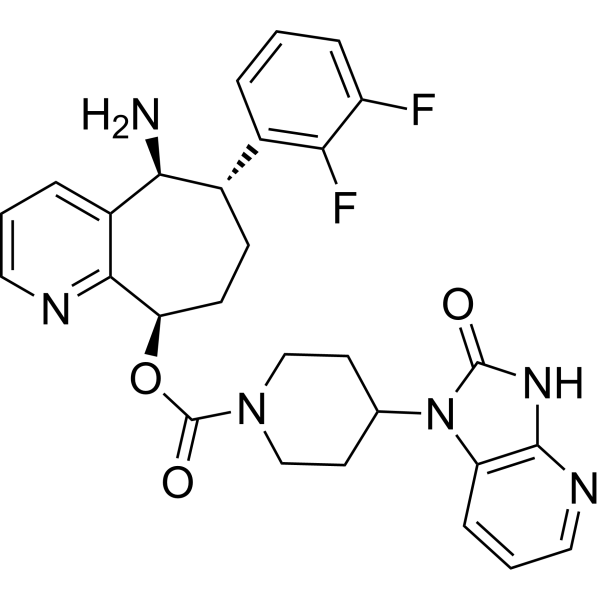
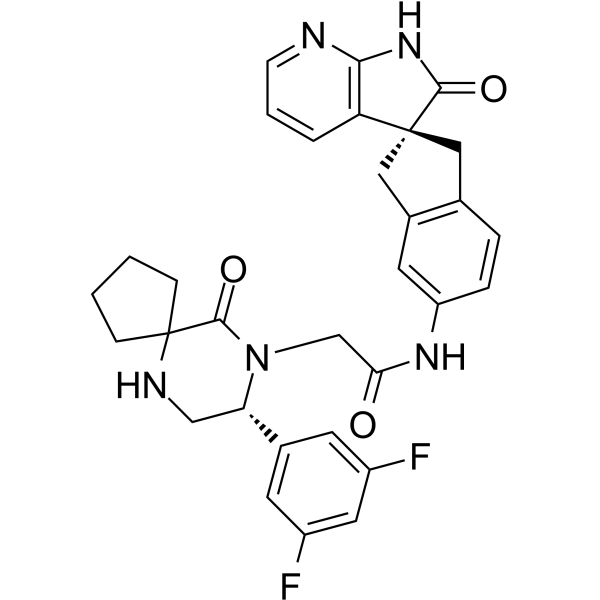
Rimegepant (BMS-927711) is an orally bioavailable and blood-brain barrier permeable antagonist of CGRP and AMY1 receptors, with a pIC50 of 8.01 and a Ki of 0.027 nM for human CGRP receptors. Rimegepant antagonizes cAMP production induced by αCGRP, βCGRP and amylin at CGRP and AMY1 receptors in humans, rats and mice, as well as at rat AMY3 receptors. Rimegepant can be used in research related to migraine .
|
-
-
- HY-B0670A
-
-
-
- HY-109022
-
|
MK-8031; AGN-241689
|
CGRP Receptor
|
Neurological Disease
|
|
Atogepant (MK-8031) is an orally active and selective calcitonin gene-related peptide receptor (CGRP) antagonist. Atogepant can be used for researching migraine .
|
-
-
- HY-B0121B
-
|
GR 43175 free base
|
5-HT Receptor
|
Neurological Disease
|
|
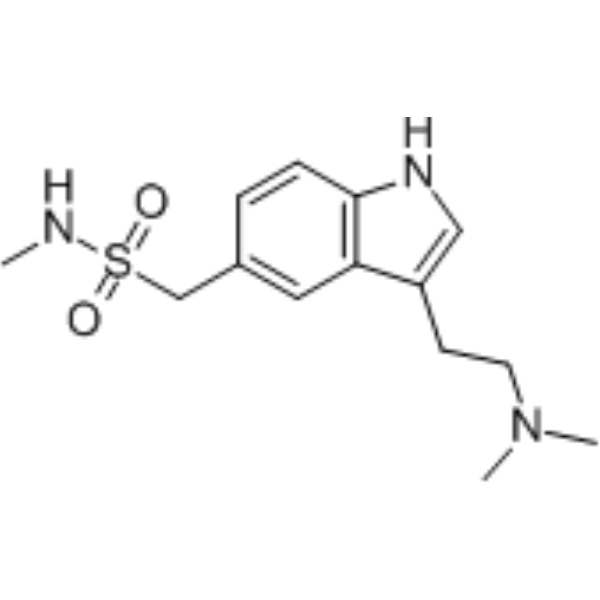
Sumatriptan (GR 43175) is an orally active 5-HT1 receptor agonist with IC50s of 7.3 nm, 9.3nm and 17.8 nm for 5-HT1D, 5-HT1B and 5-HT1F receptors, respectively. Sumatriptan can be used for migraine headache research .
|
-
-
- HY-12366
-
|
MK-1602
|
CGRP Receptor
|
Cardiovascular Disease
Neurological Disease
|
|
Ubrogepant (MK-1602) is an orally active and selective antagonist of calcitonin gene-related peptide receptor (CGRP). Ubrogepant has high affinity for CGRP receptors in human and rhesus monkeys, and can effectively block the cAMP response stimulated by α-CGRP. Ubrogepant can be used in the study of acute migraine .
|
-
-
- HY-10301
-
MK-3207
5 Publications Verification
|
CGRP Receptor
|
Neurological Disease
|
|
MK-3207 is an orally active, highly selective and species-specific CGRP receptor antagonist (for human CGRP receptor: IC50=0.12 nM; Ki=0.024 nM). MK-3207 can be used for migraine studies .
|
-
-
- HY-12713
-
|
|
Dopamine Receptor
|
Neurological Disease
|
|
Lisuride is an orally active dopamine D2 receptors agonist. Lisuride, as an ergot derivative, can be used for the research of Parkinson's disease, migraine, and high prolactin levels .
|
-
-
- HY-P99021
-
|
LY 2951742
|
CGRP Receptor
|
Neurological Disease
|
|
Galcanezumab (LY 2951742) is a humanized IgG4 monoclonal antibody against the CGRP ligand. Galcanezumab can be used for migraine or cluster headaches research .
|
-
-
- HY-134992
-
|
Zavegepant; BHV-3500
|
CGRP Receptor
|
Neurological Disease
|
|
Vazegepant (Zavegepant) is an orally active calcitonin gene-related peptide (CGRP) receptor antagonist. Vazegepant can be used in the study of migraine .
|
-
-
- HY-P9938
-
|
AMG-334
|
CGRP Receptor
|
Neurological Disease
|
|
Erenumab (AMG-334) is a fully human monoclonal antibody. Erenumab inhibits the calcitonin gene-related peptide (CGRP) receptor. Erenumab prevents the increase in dermal blood flow in cynomolgus monkeys. Erenumab can be used in the research of episodic migraine .
|
-
-
- HY-B0121
-
|
GR 43175 succinate
|
5-HT Receptor
|
Neurological Disease
|
|
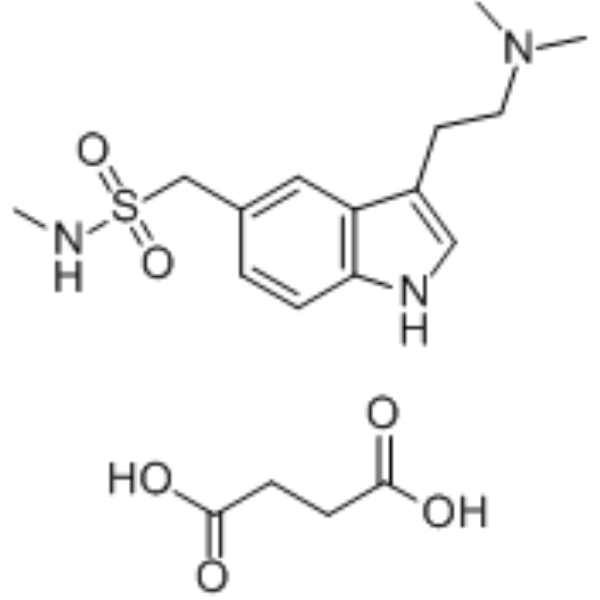
Sumatriptan succinate (GR 43175) is an orally active 5-HT1 receptor agonist with IC50s of 7.3 nm, 9.3nm and 17.8 nm for 5-HT1D, 5-HT1B and 5-HT1F receptors, respectively. Sumatriptan succinate can be used for migraine headache research .
|
-
-
- HY-B0229
-
|
BW-311C90; 311C90
|
5-HT Receptor
Endogenous Metabolite
|
Neurological Disease
|
|
Zolmitriptan (BW-311C90; 311C90) is a 5-HT1B/1D receptor partial agonist that can cross the blood-brain barrier, with Kis of 5.01 nM, 0.63 nM, and 63.09 nM for 5-HT1B, 5-HT1D, 5-HT1F receptor, respectively. Zolmitriptan can be used for the research of migraine .
|
-
-
- HY-N0745
-
|
|
Caspase
ERK
Keap1-Nrf2
Heme Oxygenase (HO)
Apoptosis
|
Neurological Disease
Inflammation/Immunology
|
|
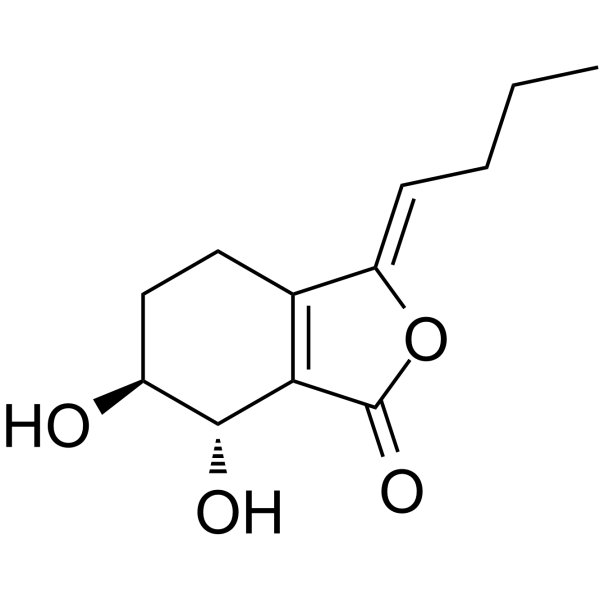
Senkyunolide I is an orally active, blood-brain barrier-permeable metabolite of Z-ligustilide (HY-N0401A) . Senkyunolide I is isolated from Ligusticum chuanxiong. Senkyunolide I upregulates p-Erk1/2 and Nrf2/HO-1, and inhibits Caspase 3. Senkyunolide I alleviates Apoptosis. Senkyunolide I increases the pain threshold in mice and reduces acetic acid-induced writhing responses in mice. Senkyunolide I improves neurological deficits, reduces infarct volume and alleviates cerebral edema in rats with focal cerebral ischemia-reperfusion injury. Senkyunolide I protects renal function and structural integrity in a mouse model of renal ischemia-reperfusion injury. Senkyunolide I is applicable to research related to focal cerebral ischemia-reperfusion injury, migraine, and renal ischemia-reperfusion injury .
|
-
-
- HY-15498A
-
|
BMS-927711 sulfate hydrate; BHV-3000 sulfate hydrate
|
CGRP Receptor
|
Neurological Disease
|
|
Rimegepant (BMS-927711) sulfate hydrate is a potent, orally active, selective and competitive calcitonin gene-related peptide (CGRP) receptor antagonist with a Ki of 0.027 nM and an IC50 of 0.14 nM for hCGRP receptor. Rimegepant sulfate hydrate can be used for migraine research .
|
-
-
- HY-P99017
-
|
ALD-403
|
CGRP Receptor
|
Neurological Disease
|
|
Eptinezumab (ALD-403) is a human monoclonal antibody targeting the α and β subtypes of human calcitonin gene-related peptide (CGRP). Eptinezumab binds to the CGRP ligand and blocks its binding to endogenous CGRP receptors, thereby inhibiting receptor activation. Eptinezumab can be used in research related to migraine .
|
-
-
- HY-P99019
-
|
TEV-48125; LBR-101; PF-04427429; RN-307
|
CGRP Receptor
|
Neurological Disease
Inflammation/Immunology
|
|
Fremanezumab (TEV-48125) is a humanized lgG2 monoclonal antibody that selectively and potently binds to calcitonin gene related peptide (CGRp) (IC50 values = 7.943 nM). Fremanezumab binds to mouse CGRP with an IC50 value of 19.6 nM. Fremanezumab counteracts anti-inflammatory effects of CGRP in vitro, including CGRP-mediated inhibition of LPS (HY-D1056)-induced microglial activation. Fremanezumab selectively inhibits the activation of Aδ meningeal nociceptors by cortical spreading depression (CSD) in rats. Fremanezumab can be used for the study of inflammation and chronic migraine .
|
-
-
- HY-B0383
-
|
PNU180638
|
5-HT Receptor
|
Neurological Disease
|
|
Almotriptan malate (PNU180638) is an orally active, highly selective agonist of the 5-HT1B/1D receptor (5-HT1B/1D receptor), with EC50 values of 1.6 nM and 3.1 nM, respectively. Almotriptan malate shows moderate affinity for the 5-HT1F receptor, and weak affinity for the 5-HT1A, 5-HT6 and 5-HT7 receptors. Almotriptan malate induces intracranial vasoconstriction, inhibits nociceptive neurotransmission in the trigeminocervical complex, and suppresses the release of vasoactive peptides from trigeminal nerve endings. Almotriptan malate can be used in research related to migraine .
|
-
-
- HY-B1804
-
|
Trioctanoin; Glyceryl trioctanoate
|
Endogenous Metabolite
|
Neurological Disease
Inflammation/Immunology
|
|
Tricaprilin (Trioctanoin) is an orally active and well tolerated ketogenic agent that safely induces ketosis. Tricaprilin restores brain electrical activity and metabolism to help counteract neuroinflammation in migraine. Tricaprilin is promising for research of migraine prevention and Alzheimer’s disease (AD). Tricaprilin is a pure C8 medium chain triglyceride (MCT) .
|
-
-
- HY-P0203A
-
|
CGRP (83-119), mouse, rat TFA
|
CGRP Receptor
|
Cardiovascular Disease
Metabolic Disease
Inflammation/Immunology
|
|
α-CGRP (mouse, rat) TFA, a neuropeptide (calcitonin gene-related peptide (CGRP)) mainly expressed in neuromuscular junction, is a potent vasodilator. α-CGRP (mouse, rat) TFA can lead to a fall in blood pressure and an increase in heart rate by peripheral administration, also relax colonie smooth muscle. α-CGRP (mouse, rat) TFA has the potential in cardiovascular, pro-inflammatory, migraine and metabolic studies .
|
-
-
- HY-17494
-
|
(S)-L-714,465; MK 950 free base
|
Adrenergic Receptor
|
Cardiovascular Disease
Inflammation/Immunology
Cancer
|
|
Timolol is a β-blocker available for both topical and systemic administration. Topical Timolol is primarily used to reduce intraocular pressure with open-angle glaucoma and ocular hypertension. Timolol can also be used for the research of infantile hemangiomas, hypertension, myocardial infarction, migraine prophylaxis, and atrial fibrillation.Timolol also has cardioprotective effect .
|
-
-
- HY-B1658A
-
|
(R)-Frovatriptan succinate hydrate; SB 209509 succinate hydrate; VML 251 succinate hydrate
|
5-HT Receptor
|
Neurological Disease
|
|
Frovatriptan succinate hydrate ((R)-Frovatriptan succinate hydrate) is a potent, high affinity, selective and orally active 5-HT1B (pK50 of 8.2) and 5-HT1D receptor agonist. Frovatriptan succinate hydrate exhibits >10-fold selectivity for 5-HT1B and 5-HT1D over 5-HT1A, 5-HT1F, and 5-HT7 and >1000-fold selectivity over other 5-HT, dopamine, histamine H1, and α1-adrenoceptor. Frovatriptan succinate hydrate has the potential for migraine research .
|
-
-
- HY-13788
-
|
|
5-HT Receptor
Adrenergic Receptor
|
Neurological Disease
|
|
LY 344864 is a selective, orally active 5-HT1F receptor agonist with a Ki of 6 nM. LY 344864 is a full agonist producing an effect similar in magnitude to serotonin itself. LY 344864 can cross the blood brain barrier to some extent .
|
-
-
- HY-10585R
-
|
VPA (Standard); 2-Propylpentanoic acid (Standard); Dipropylacetic acid (Standard)
|
Reference Standards
Organoid
HDAC
Autophagy
Mitophagy
HIV
Notch
Apoptosis
Endogenous Metabolite
|
Infection
Neurological Disease
Metabolic Disease
Cancer
|
|
Valproic acid (Dipropylacetic Acid) (Standard) is an analytical standard for valproic acid. This product is intended for research and analytical applications. Valproic acid is an orally active HDAC inhibitor (IC50=0.5-2 mM), inhibits the activity of HDAC1 (IC50=400 μM), and induces the degradation of HDAC2. Valproic acid activates Notch1 signaling and inhibits the proliferation of small cell lung cancer (SCLC) cells. Valproic acid is used in the study of epilepsy, bipolar disorder, metabolic diseases, HIV infection, and migraine .
|
-
-
- HY-100129
-
|
|
TRP Channel
|
Neurological Disease
|
|
JNJ-17203212 is a selective, potent and competitive TRPV1 antagonist. JNJ-17203212 is developed for researching pain management, such as migraine .
|
-
-
- HY-B0383A
-
|
PNU180638 free base
|
5-HT Receptor
|
Neurological Disease
|
|
Almotriptan (PNU180638 free base) is an orally active, highly selective agonist of the 5-HT1B/1D receptor (5-HT1B/1D receptor), with EC50 values of 1.6 nM and 3.1 nM, respectively. Almotriptan shows moderate affinity for the 5-HT1F receptor, and weak affinity for the 5-HT1A, 5-HT6 and 5-HT7 receptors. Almotriptan induces intracranial vasoconstriction, inhibits nociceptive neurotransmission in the trigeminocervical complex, and suppresses the release of vasoactive peptides from trigeminal nerve endings. Almotriptan can be used in research related to migraine .
|
-
-
- HY-P0203B
-
-
-
- HY-B1170
-
|
3,5,5-Trimethylcyclohexyl mandelate
|
Calcium Channel
|
Cardiovascular Disease
|
|
Cyclandelate is a vasodilator that can be used in the study of claudication, arteriosclerosis, Raynaud's disease, nocturnal leg cramps, and migraines.
|
-
-
- HY-78509
-
|
|
Biochemical Assay Reagents
Drug Intermediate
|
Neurological Disease
|
|
Dibenzosuberone belongs to the family of tricyclic antidepressant drugs, commonly referred to as Tricyclic antidepressants (TCAs), and is widely used in research on migraine, tension headaches, anxiety disorders, and schizophrenia. Dibenzosuberone is also a key intermediate in the synthesis of various active pharmaceutical ingredients (APIs), such as Amitriptyline (HY-B0527), Nortriptyline (HY-118620), Noxiptiline or Cyproheptadine (HY-B1622) .
|
-
-
- HY-172182
-
|
VU6011887
|
Potassium Channel
|
Neurological Disease
|
|
ONO-2920632 is an orally active and central nervous system (CNS)-penetrant TREK activator, with EC50 values of 0.3 µM and 2.8 μM for TREK-1 and TREK-2, respectively. ONO-2920632 exhibits selectivity for other K2P channels (>91-fold selective versus TASK1, TASK2, TASK3, TRAAK, and TWIK2; 31-fold selective versus TRESK). ONO-2920632 possesses analgesic effects and can be used in research on pain, migraine, and neurological disorders.
|
-
-
- HY-B1804S
-
|
Trioctanoin-13C3; Glyceryl trioctanoate-13C3
|
Isotope-Labeled Compounds
Endogenous Metabolite
|
Neurological Disease
Inflammation/Immunology
|
|
Tricaprilin- 13C3 (Trioctanoin- 13C3) is a 13C-labeled Tricaprilin (HY-B1804) . Tricaprilin is an orally active and well tolerated ketogenic agent that safely induces ketosis. Tricaprilin restores brain electrical activity and metabolism to help counteract neuroinflammation in migraine. Tricaprilin is promising for research of migraine prevention and Alzheimer’s disease (AD). Tricaprilin is a pure C8 medium chain triglyceride (MCT) .
|
-
-
- HY-117694
-
|
|
CGRP Receptor
|
Neurological Disease
Inflammation/Immunology
|
|
MK-8825 is an orally active, selective CGRP receptor antagonist with a Ki value of 47 pM for human CGRP receptors and 17 nM for rat CGRP receptors. MK-8825 blocks CGRP-stimulated cAMP responses and exhibits competitive-like antagonism. MK-8825 can be used in the research of migraine and temporomandibular joint disorders .
|
-
-
- HY-135809
-
|
|
Potassium Channel
|
Neurological Disease
|
|
A2764 dihydrochloride is a highly selective inhibitor of TRESK (TWIK-related spinal cord K + channel, K2P18.1), which has moderate inhibitory effects on TREK-1 and TALK-1. A2764 dihydrochloride is more sensitive to the activated mTRESK channels (IC50=6.8 μM) than the basal current. A2764 dihydrochloride can lead to cell depolarization and increased excitability in native cells, it has the potential for probing the role of TRESK channel in migraine and nociception .
|
-
-
- HY-10585B
-
|
Sodium Valproate (2:1); VPA sodium (2:1); 2-Propylpentanoic acid sodium (2:1)
|
HDAC
Autophagy
Mitophagy
HIV
Notch
Apoptosis
Endogenous Metabolite
|
Infection
Neurological Disease
Metabolic Disease
Cancer
|
|
Valproic acid (VPA) sodium (2:1) is an orally active HDAC inhibitor, with IC50 in the range of 0.5 and 2 mM, also inhibits HDAC1 (IC50, 400 μM), and induces proteasomal degradation of HDAC2. Valproic acid sodium (2:1) activates Notch1 signaling and inhibits proliferation in small cell lung cancer (SCLC) cells. Valproic acid sodium (2:1) is used in the treatment of epilepsy, bipolar disorder, metabolic disease, HIV infection and prevention of migraine headaches .
|
-
-
- HY-10585AR
-
|
Sodium Valproate (Standard); VPA sodium (Standard); 2-Propylpentanoic acid sodium (Standard)
|
Organoid
Reference Standards
HDAC
Autophagy
Mitophagy
HIV
Notch
Apoptosis
Endogenous Metabolite
|
Infection
Neurological Disease
Metabolic Disease
Cancer
|
|
Valproic acid (sodium) (Standard) is the analytical standard of Valproic acid (sodium). This product is intended for research and analytical applications. Valproic acid (Sodium Valproate) sodium is an orally active HDAC inhibitor, with IC50 in the range of 0.5 and 2 mM, also inhibits HDAC1 (IC50, 400 μM), and induces proteasomal degradation of HDAC2. Valproic acid sodium activates Notch1 signaling and inhibits proliferation in small cell lung cancer (SCLC) cells. Valproic acid sodium is used in the treatment of epilepsy, bipolar disorder, metabolic disease, HIV infection and prevention of migraine headaches .
|
-
-
- HY-120837
-
|
|
GABA Receptor
|
Neurological Disease
|
|
PZ-II-029 is a GABAA positive allosteric modulator that selectively binds with high affinity to α6β3γ2. PZ-II-029 shows anti-migraine effects .
|
-
-
- HY-103574
-
|
ADX-10059 hydrochloride
|
mGluR
|
Neurological Disease
|
|
Raseglurant hydrochloride is a negative allosteric modulator of mGluR5. Raseglurant hydrochloride can be used in study migraine .
|
-
-
- HY-101698
-
|
Alnitidan
|
5-HT Receptor
|
Neurological Disease
Inflammation/Immunology
|
|
Alniditan (Alnitidan) is a potent 5-HT1B and 5-HT1D receptors agonist, with IC50s of 1.7 nM and 1.3 nM for h5-HT1B and h5-HT1D receptors in HEK293 cells, respectively. Alniditan has migraine-preventive effects .
|
-
-
- HY-120294
-
|
|
CGRP Receptor
TRP Channel
|
Neurological Disease
|
|
Chrysin 6-C-glucoside 8-C-arabinoside can inhibit the CGRP releasing and the activation of TRPV1 channel. Chrysin 6-C-glucoside 8-C-arabinoside can be used for anti-migraine research .
|
-
-
- HY-124277
-
|
|
TRP Channel
|
Neurological Disease
|
|
ADM 12 is a highly selective transient receptor potential ankyrin 1 (TRPA1) channel antagonist. ADM 12 blocks nitroglycerin (NTG)-induced trigeminal hyperalgesia in animal models, reducing expression of pain-related genes (c-Fos, TRPA1) and neuropeptides (CGRP, SP). ADM_12 is promising for research of migraine and neuropathic pain .
|
-
-
- HY-A0039
-
|
UK-116044
|
5-HT Receptor
|
Neurological Disease
Inflammation/Immunology
|
|
Eletriptan (UK-116044) is a highly selective and orally active serotonin 5-HT1B and 5-HT1D receptor agonist, with pKi values of 8.0 and 8.9, respectively. Eletriptan has inhibitory effects on markers of neurogenic inflammation in rats. Eletriptan can be used for researching migraine .
|
-
-
- HY-14866
-
|
ADX-10059
|
mGluR
|
Neurological Disease
|
|
Raseglurant (ADX-10059) is a mGlu5 receptor negative allosteric modulator. Raseglurant is effective against migraine. Raseglurant reduces the Haloperidol (HY-14538)-induced catalepsy in mice .
|
-
-
- HY-12367
-
-
-
- HY-B0670
-
-
-
- HY-109022A
-
|
(3R,5R,6S)-MK-8031; (3R,5R,6S)-AGN-241689
|
CGRP Receptor
|
Neurological Disease
|
|
(3R,5R,6S)-Atogepant ((3R,5R,6S)-MK-8031) is the enantiomer of Atogepant (HY-109022). Atogepant is a calcitonin gene-related peptide receptor (CGRP) antagonist. Atogepant can be used for researching migraine.
|
-
-
- HY-114678
-
|
|
5-HT Receptor
|
Neurological Disease
|
|
LY302148 is a receptor ligand for 5-HT1F. Compared to the Emax of 5-HT, LY302148 behaves as a partial agonist for the 5-HT1F receptor. In the [ 35S]GTPγS binding assay targeting human 5-HT1F receptors, LY302148 exhibits good potency with an EC50 value of 5.23 nM. LY302148 can be used in the research of migraine .
|
-
-
- HY-19238
-
|
|
5-HT Receptor
|
Neurological Disease
|
|
BMS-181885 is a selective 5-HT1 receptor agonist and a ligand for 5-HT1B/1D receptors. BMS-181885 exhibits anti-migraine activity. BMS-181885 can be used in the research of neurological diseases such as migraine .
|
-
-
- HY-176297
-
|
|
AMPK
iGluR
|
Neurological Disease
|
|
Tezampanel etibutil is an orally active AMPA/GluR antagonist. Tezampanel etibutil can be used in the research of pain, migraine, and neurological disorders .
|
-
- HY-123442
-
-
- HY-174986
-
|
|
CGRP Receptor
|
Cardiovascular Disease
|
|
CGRP antagonist 7 is a potent calcitonin gene-related peptide receptor (CGRP) antagonist with a Ki of 0.029 nM. CGRP antagonist 7 Inhibit the production of cyclic adenosine monophosphate (cAMP) with an IC50 of 1.5 nM. CGRP antagonist 7 can be used for the study of migraine .
|
-
- HY-101698B
-
|
Alnitidan dihydrochloride
|
5-HT Receptor
|
Neurological Disease
Inflammation/Immunology
|
|
Alniditan (Alnitidan) dihydrochloride is a potent 5-HT1B and 5-HT1D receptors agonist, with IC50s of 1.7 nM and 1.3 nM for h5-HT1B and h5-HT1D receptors in HEK293 cells, respectively. Alniditan dihydrochloride has migraine-preventive effects .
|
-
- HY-B1658
-
|
(R)-Frovatriptan; SB 209509; VML 251
|
5-HT Receptor
|
Neurological Disease
|
|
Frovatriptan is a potent 5-HT1B//D receptor agonist and has the highest 5-HT1B potency in the triptan class. Frovatriptan is apparently cerebroselective. Frovatriptan is efficacious and even superior in some endpoints also when taken during the headache phase in migraine attacks with aura .
|
-
- HY-137090
-
|
BP 2.94
|
Histamine Receptor
|
Neurological Disease
|
|
BP 2-94 (BP 2.94) is an orally active and highly selective prodrug targeting the histamine H3 receptor. BP 2-94 exerts anti-inflammatory, analgesic and antinociceptive effects by inhibiting histamine release and modulating neurogenic inflammation. BP 2-94 is promising for research of asthma, migraines, and inflammatory pain-related disorders .
|
-
- HY-B0121R
-
|
GR 43175 succinate (Standard)
|
5-HT Receptor
Reference Standards
|
Neurological Disease
|
|
Sumatriptan (succinate) (Standard) is the analytical standard of Sumatriptan (succinate). This product is intended for research and analytical applications. Sumatriptan succinate (GR 43175) is an orally active 5-HT1 receptor agonist with Kis of 17 nM, 27 nM and 100 nM for 5-HT1D, 5-HT1B and 5-HT1A receptors, respectively. Sumatriptan succinate can be used for migraine headache research .
|
-
- HY-B0121BR
-
|
GR 43175 free base (Standard)
|
5-HT Receptor
Reference Standards
|
Neurological Disease
|
|
Sumatriptan (Standard) is the analytical standard of Sumatriptan. This product is intended for research and analytical applications. Sumatriptan (GR 43175) is an orally active 5-HT1 receptor agonist with IC50s of 7.3 nm, 9.3nm and 17.8 nm for 5-HT1D, 5-HT1B and 5-HT1F receptors, respectively. Sumatriptan can be used for migraine headache research .
|
-
- HY-10585AG
-
|
Sodium Valproate; VPA sodium; 2-Propylpentanoic acid sodium
|
Organoid
HDAC
Autophagy
Mitophagy
HIV
Notch
Apoptosis
Endogenous Metabolite
|
Infection
Neurological Disease
Metabolic Disease
Cancer
|
|
Valproic acid (Sodium Valproate) sodium is an orally active HDAC inhibitor, with IC50 in the range of 0.5 and 2 mM, also inhibits HDAC1 (IC50, 400 μM), and induces proteasomal degradation of HDAC2. Valproic acid sodium activates Notch1 signaling and inhibits proliferation in small cell lung cancer (SCLC) cells. Valproic acid sodium is used in the treatment of epilepsy, bipolar disorder, metabolic disease, HIV infection and prevention of migraine headaches .
|
-
- HY-W794759
-
|
Magnesium valproate; VPA magnesium; 2-Propylpentanoic acid magnesium
|
Organoid
HDAC
Autophagy
Mitophagy
HIV
Notch
Apoptosis
Endogenous Metabolite
|
Infection
Neurological Disease
Cancer
|
|
Valproic acid magnesium (Magnesium valproate) is an orally active HDAC inhibitor, with IC50 in the range of 0.5 and 2 mM. Valproic acid magnesium inhibits HDAC1 (IC50, 400 μM), and induces proteasomal degradation of HDAC2. Valproic acid magnesium activates Notch1 signaling and inhibits proliferation in small cell lung cancer (SCLC) cells. Valproic acid magnesium is used in the epilepsy, bipolar disorder, metabolic disease, HIV infection and prevention of migraine headaches .
|
-
- HY-B1658B
-
|
(R)-Frovatriptan succinate; SB 209509 succinate; VML 251 succinate
|
5-HT Receptor
|
Neurological Disease
|
|
Frovatriptan succinate ((R)-Frovatriptan succinate) is a potent, high affinity, selective and orally active 5-HT1B (pK50 of 8.2) and 5-HT1D receptor agonist. Frovatriptan succinate exhibits >10-fold selectivity for 5-HT1B and 5-HT1D over 5-HT1A, 5-HT1F, and 5-HT7 and >1000-fold selectivity over other 5-HT, dopamine, histamine H1, and α1-adrenoceptor. Frovatriptan succinate has the potential for migraine research .
|
-
- HY-145353
-
-
- HY-119121
-
|
|
TRP Channel
|
Neurological Disease
|
|
JNJ-38893777 is an orally active and highly selective transient receptor potential vanilloid type 1 (TRPV1) channel antagonist. JNJ-38893777 inhibits neuronal hyperactivation and reduces inflammatory hyperalgesia. JNJ-38893777 is promising for research of migraine headaches, neuropathic and inflammatory pain .
|
-
- HY-W018475
-
|
MK 462 free base
|
5-HT Receptor
|
Neurological Disease
|
|
Rizatriptan (MK 462 free base) is an orally active 5-HT1B/5-HT1D receptor agonist, with BBB permeability. Rizatriptan exerts significant anti-migraine effects by constricting intracranial and extracranial blood vessels and inhibiting neuropeptide release. Rizatriptan exhibits species- and tissue-specific metabolic characteristics; for example, it undergoes oxidative deamination mainly by MAO-A in the liver of brown rats, so co-administration with MAO-A inhibitors is prohibited. Rizatriptan may also exacerbate nitroglycerin-induced cutaneous allodynia, prolong the duration of central sensitization, and increase anxiety-like behavior and active drug-seeking behavior in mice. Rizatriptan has been widely used in studies related to migraine and medication-overuse headache .
|
-
- HY-106736
-
-
- HY-162925
-
|
|
CGRP Receptor
|
Neurological Disease
|
|
CGRP antagonist 6 (Compound 23) is a CGRP receptor antagonist (Ki: 0.84 nM). CGRP antagonist 6 can be used for research of migraine .
|
-
- HY-106124
-
-
- HY-111197
-
-
- HY-105192
-
-
- HY-110351
-
|
PGN 1531 hydrochloride
|
Prostaglandin Receptor
|
Neurological Disease
|
|
BGC 20-1531 (PGN 1531) hydrochloride is a potent and selective prostanoid EP4 receptor antagonist, with a pKb of 7.6. BGC 20-1531 hydrochloride has the potential for the research of migraine headache .
|
-
- HY-19849
-
|
PGN 1531 free base
|
Prostaglandin Receptor
|
Neurological Disease
|
|
BGC-20-1531 (PGN 1531) free base is a potent and selective prostanoid EP4 receptor antagonist, with a pKB of 7.6. BGC-20-1531 free base has the potential for the research of migraine headache .
|
-
- HY-135021
-
|
|
5-HT Receptor
|
Others
|
|
3,4-Dihydro Naratriptan is a serotonin 5-HT1-receptor agonist. 3,4-Dihydro Naratriptan exhibits selective vasoconstrictor activity. 3,4-Dihydro Naratriptan can be used for migraine diseases research .
|
-
- HY-114574
-
|
|
CGRP Receptor
|
Neurological Disease
|
|
BMS-694153 is a potent antagonist of the human calcitonin gene-related peptide receptor (CGRP Receptor). BMS-694153 can be used for migraine with rapid and efficient intranasal exposure .
|
-
- HY-B0121A
-
|
GR 43175 hydrochloride
|
5-HT Receptor
|
Neurological Disease
|
|
Sumatriptan hydrochloride (GR 43175) is an orally active 5-HT1 receptor agonist with IC50s of 7.3 nm, 9.3nm and 17.8 nm for 5-HT1D, 5-HT1B and 5-HT1F receptors, respectively. Sumatriptan hydrochloride can be used for migraine headache research .
|
-
- HY-19252
-
|
|
5-HT Receptor
|
Neurological Disease
|
|
GR-4991W93 is an orally active partial agonist against 5HT1B/1D receptor, with pIC50 values of 6.95 and 7.80 against 5HT1B and 5HT1D, respectively. GR-4991W93 demonstrates potent inhibition of electrically evoked plasma extravasation in the guinea pig. GR-4991W93 can be used for migraine research .
|
-
- HY-B0121BS2
-
|
GR 43175 free base-d5
|
5-HT Receptor
Isotope-Labeled Compounds
|
Neurological Disease
|
|
Sumatriptan-d5 is deuterated labeled Sumatriptan (HY-B0121B). Sumatriptan (GR 43175) is an orally active 5-HT1 receptor agonist with IC50s of 7.3 nm, 9.3nm and 17.8 nm for 5-HT1D, 5-HT1B and 5-HT1F receptors, respectively. Sumatriptan can be used for migraine headache research .
|
-
- HY-17494B
-
|
(S)-L-714,465 hemimaleate; MK 950 hemimaleate
|
Adrenergic Receptor
|
Cardiovascular Disease
Inflammation/Immunology
Cancer
|
|
Timolol ((S)-L-714,465; MK 950) hemimaleate is a β-blocker available for both topical and systemic administration. Topical Timolol hemimaleate is primarily used to reduce intraocular pressure with open-angle glaucoma and ocular hypertension. Timolol hemimaleate can also be used for the research of infantile hemangiomas, hypertension, myocardial infarction, migraine prophylaxis, and atrial fibrillation.Timolol also has cardioprotective effect .
|
-
- HY-17494R
-
|
(S)-L-714,465 (Standard); MK 950 free base (Standard)
|
Reference Standards
Adrenergic Receptor
|
Cardiovascular Disease
Inflammation/Immunology
Cancer
|
|
Timolol (Standard) is the analytical standard of Timolol. This product is intended for research and analytical applications. Timolol is a β-blocker available for both topical and systemic administration. Topical Timolol is primarily used to reduce intraocular pressure with open-angle glaucoma and ocular hypertension. Timolol can also be used for the research of infantile hemangiomas, hypertension, myocardial infarction, migraine prophylaxis, and atrial fibrillation.Timolol also has cardioprotective effect .
|
-
- HY-101635
-
-
- HY-B1658AR
-
|
(R)-Frovatriptan succinate hydrate (Standard); SB 209509 succinate hydrate (Standard); VML 251 succinate hydrate (Standard)
|
Reference Standards
5-HT Receptor
|
Neurological Disease
|
|
Frovatriptan (succinate hydrate) (Standard) is the analytical standard of Frovatriptan (succinate hydrate). This product is intended for research and analytical applications. Frovatriptan succinate hydrate ((R)-Frovatriptan succinate hydrate) is a potent, high affinity, selective and orally active 5-HT1B (pK50 of 8.2) and 5-HT1D receptor agonist. Frovatriptan succinate hydrate exhibits >10-fold selectivity for 5-HT1B and 5-HT1D over 5-HT1A, 5-HT1F, and 5-HT7 and >1000-fold selectivity over other 5-HT, dopamine, histamine H1, and α1-adrenoceptor. Frovatriptan succinate hydrate has the potential for migraine research .
|
-
- HY-B1804S1
-
|
Trioctanoin-d50; Glyceryl trioctanoate-d50
|
Isotope-Labeled Compounds
Endogenous Metabolite
|
Neurological Disease
Inflammation/Immunology
|
|
Tricaprilin-d50 (Trioctanoin-d50) is the deuterium labeled Tricaprilin (HY-B1804). Tricaprilin is an orally active and well tolerated ketogenic agent that safely induces ketosis. Tricaprilin restores brain electrical activity and metabolism to help counteract neuroinflammation in migraine. Tricaprilin is promising for research of migraine prevention and Alzheimer’s disease (AD). Tricaprilin is a pure C8 medium chain triglyceride (MCT) .
|
-
- HY-B1804S2
-
|
Trioctanoin-d15; Glyceryl trioctanoate-d15
|
Isotope-Labeled Compounds
Endogenous Metabolite
|
Neurological Disease
Inflammation/Immunology
|
|
Tricaprilin-d15 (Trioctanoin-d15) is the deuterium labeled Tricaprilin (HY-B1804). Tricaprilin is an orally active and well tolerated ketogenic agent that safely induces ketosis. Tricaprilin restores brain electrical activity and metabolism to help counteract neuroinflammation in migraine. Tricaprilin is promising for research of migraine prevention and Alzheimer’s disease (AD). Tricaprilin is a pure C8 medium chain triglyceride (MCT) .
|
-
- HY-B0670AR
-
|
|
Reference Standards
5-HT Receptor
|
Neurological Disease
|
|
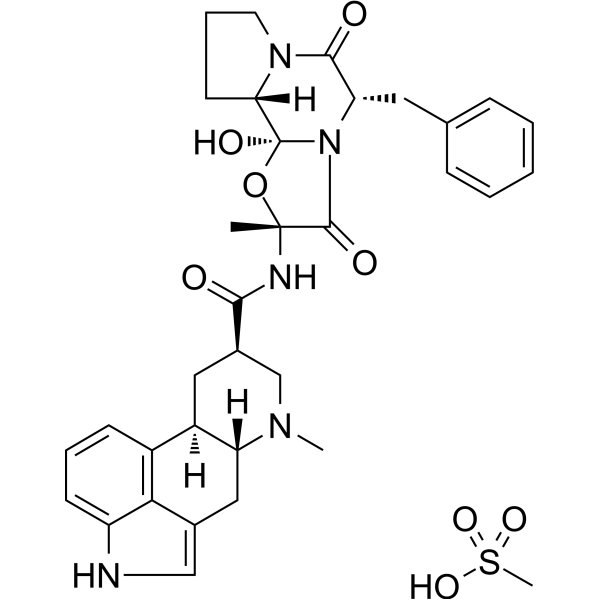
Dihydroergotamine (mesylate) (Standard) is the analytical standard of Dihydroergotamine (mesylate). This product is intended for research and analytical applications. Dihydroergotamine mesylate is a BBB-permeable ergot alkaloid that can be used for the research of migraines .
|
-
- HY-103107A
-
|
|
5-HT Receptor
|
Neurological Disease
|
|
LY334370 hydrochloride is a selective 5-HT1F receptor agonist with a Kd value of 0.446 nM. LY334370 hydrochlorid has anti-migraine activity .
|
-
- HY-139049
-
-
- HY-134992S
-
|
|
Isotope-Labeled Compounds
|
Others
|
|
(Rac)-Vazegepant- 13C,d3 is the C13 and deuterium labeled (Rac)-Vazegepant. Vazegepant (HY-134992) is the first intranasal CGRP receptor antagonist for the study the acute research of migraine .
|
-
- HY-P2428
-
|
|
Endogenous Metabolite
|
Neurological Disease
|
|
RI-61 is a compound that has activity in suppressing migraine, cluster headache, new daily persistent headache and cyclical vomiting syndrome. RI-61 has shown significant efficacy in relieving the symptoms of these disorders. RI-61 helps relieve pain and other related symptoms by modulating the action of neurotransmitters .
|
-
- HY-13788B
-
|
|
5-HT Receptor
Adrenergic Receptor
|
Neurological Disease
|
|
LY 344864 hydrochloride is a selective, orally active 5-HT1F receptor agonist with a Ki of 6 nM. LY 344864 hydrochloride is a full agonist producing an effect similar in magnitude to serotonin itself. LY 344864 hydrochloride can cross the blood brain barrier to some extent .
|
-
- HY-15498B
-
|
BMS-927711 hemisulfate; BHV-3000 hemisulfate
|
CGRP Receptor
|
Neurological Disease
|
|
Rimegepant (BMS-927711) hemisulfate is a potent, orally active, selective and competitive calcitonin gene-related peptide (CGRP) receptor antagonist with a Ki of 0.027 nM and an IC50 of 0.14 nM for hCGRP receptor. Rimegepant hemisulfate can be used for migraine research .
|
-
- HY-178698
-
-
- HY-109022R
-
|
MK-8031 (Standard); AGN-241689 (Standard)
|
Reference Standards
CGRP Receptor
|
Neurological Disease
|
|
Atogepant (Standard) is the analytical standard of Atogepant (HY-109022). This product is intended for research and analytical applications. Atogepant (MK-8031) is an orally active and selective calcitonin gene-related peptide receptor (CGRP) antagonist. Atogepant can be used for researching migraine .
|
-
- HY-183181
-
|
|
CGRP Receptor
|
Neurological Disease
|
|
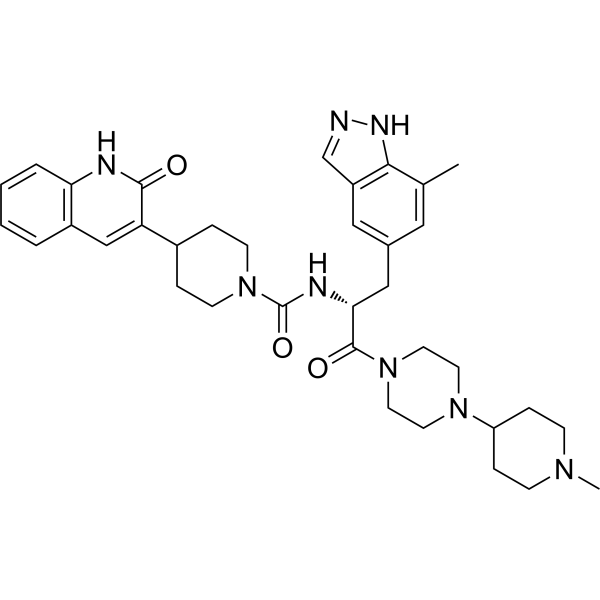
CGRP antagonist-9 is a CGRP receptor antagonist with an IC50 of 25 nM. It regulates the cAMP signaling pathway and can be used in migraine-related studies .
|
-
- HY-132131
-
|
Zavegepant hydrochloride; BHV-3500 hydrochloride
|
CGRP Receptor
|
Infection
Inflammation/Immunology
|
|
Vazegepant (BHV-3500) hydrochloride is a highly affinity CGRP receptor antagonist (hCGRP Ki= 0.023 nM). Vazegepant hydrochloride is the first intranasal gepant for migraine. Vazegepant hydrochloride may be helpful in effective management of COVID-19 associated pulmonary inflammation .
|
-
- HY-103574R
-
|
ADX-10059 hydrochloride (Standard)
|
mGluR
Reference Standards
|
Neurological Disease
|
|
Raseglurant hydrochloride (Standard) is the analytical standard of Raseglurant hydrochloride (HY-103574). This product is intended for research and analytical applications. Raseglurant hydrochloride is a negative allosteric modulator of mGluR5. Raseglurant hydrochloride can be used in study migraine .
|
-
- HY-183180
-
|
|
CGRP Receptor
|
Neurological Disease
|
|
CGRP antagonist-8 is a CGRP receptor antagonist with an IC50 of 2.7 nM. CGRP antagonist-8 can be used for the research of migraine .
|
-
- HY-179684
-
|
|
CGRP Receptor
5-HT Receptor
ERK
Epigenetic Reader Domain
|
Neurological Disease
|
|
PCC0105005 is a dual-target CGRP Receptor antagonist (IC50 = 1.01 nM) and a partial agonist of 5-HT1F Receptor (EC50 = 77.91 nM). PCC0105005 shows significant efficacy in the rat model of migraine. PCC0105005 significantly reduces the expression of CGRP and c-Fos proteins, and inhibits the phosphorylation levels of ERK and CREB. PCC0105005 can be used for research on migraine .
|
-
- HY-180955
-
|
|
CGRP Receptor
Cytochrome P450
|
Neurological Disease
|
|
Desfluoro-BMS-694153 (Compound 3) is a calcitonin gene-related peptide receptor (CGRP receptor) antagonist, with a Ki value of 0.01 nM. Desfluoro-BMS-694153 has a significantly reduced risk of CYP3A4 inhibition, and its IC50 values for CYP3A4-BFC and CYP3A4-BZR are 36 and 6 μM respectively. Desfluoro-BMS-694153 can be used for research on migraines .
|
-
- HY-106522
-
-
- HY-135079
-
|
|
5-HT Receptor
|
Cardiovascular Disease
Neurological Disease
|
|
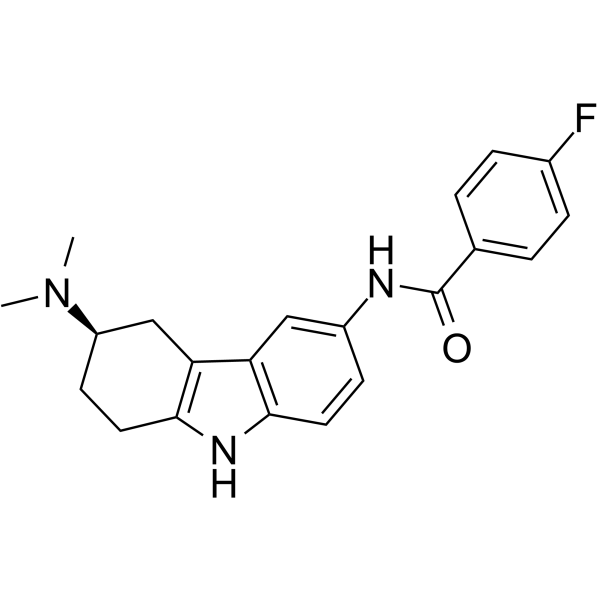
Lerimazoline is a selective 5-HT1D receptor agonist with Ki values of 72 and 3480 nM for h5-HT1D and h5-HT1B. Lerimazoline inhibits Forskolin (HY-15371)-stimulated cAMP production and induces contractions in rabbit saphenous vein preparations. Lerimazoline can be used for the research of migraine .
|
-
- HY-182548
-
|
|
GABA Receptor
Sodium Channel
iGluR
|
Cardiovascular Disease
Neurological Disease
|
|
BTS 72664 is a broad-spectrum, non-sedating, orally effective anticonvulsant. Its anticonvulsant effect mainly arises from enhancing GABAA receptor (GABAA receptor)-mediated chloride channel currents, while it exerts weak blocking effects on Na + channels (Ki = 350 μM) and NMDA receptors (NMDA receptor) (IC50 = 43 μM). BTS 72664 prevents the elevation of extracellular glutamate, glycine and serine concentrations in neurons, reduces cerebral infarct size, promotes functional recovery, prevents multiple types of epileptic seizures, and has low sedative potential. BTS 72664 can be used for the research of epilepsy, stroke and migraine .
|
-
- HY-18805
-
|
N-Phenylnicotinamide
|
Aquaporin
|
Neurological Disease
|
|
Nicotinanilide (N-Phenylnicotinamide) (Compound 12) is an aquaporin 4 (AQP4) inhibitor. Nicotinanilide can be used for research on diseases associated with AQP4 dysfunction, such as epilepsy and migraine .
|
-
- HY-130579
-
|
L-VNIO hydrochloride
|
NO Synthase
NADPH Oxidase
|
Cardiovascular Disease
Neurological Disease
|
|
Vinyl-L-NIO (L-VNIO) hydrochloride is a neuronal nitric oxide synthase (NOS) inhibitor with a rat Ki of 0.10 μM. Vinyl-L-NIO hydrochloride inhibits NADPH oxidase activity, attenuates renal fibrosis, inflammation, oxidative stress indices, and albuminuria. Vinyl-L-NIO hydrochloride can be used for the research of parkinson's disease, migraine headache, and hypertension .
|
-
- HY-103131
-
|
|
5-HT Receptor
|
Neurological Disease
|
|
PNU-142633 is a high affinity, selective and orally active 5-HT1D receptor agonist with Kis of 6 nM and > 18 000 nM for human 5-HT1D receptor and human 5-HT1B receptor, respectively. PNU-142633 has anti-migraine efficacy .
|
-
- HY-12366R
-
|
MK-1602 (Standard)
|
CGRP Receptor
Reference Standards
|
Cardiovascular Disease
Neurological Disease
|
|
Ubrogepant (Standard) is the analytical standard of Ubrogepant. This product is intended for research and analytical applications. Ubrogepant (MK-1602) is an orally active and selective antagonist of calcitonin gene-related peptide receptor (CGRP). Ubrogepant has high affinity for CGRP receptors in human and rhesus monkeys, and can effectively block the cAMP response stimulated by α-CGRP. Ubrogepant can be used in the study of acute migraine .
|
-
- HY-B1716
-
|
L-5-HTP; Oxitriptan
|
Endogenous Metabolite
|
Neurological Disease
Metabolic Disease
|
|
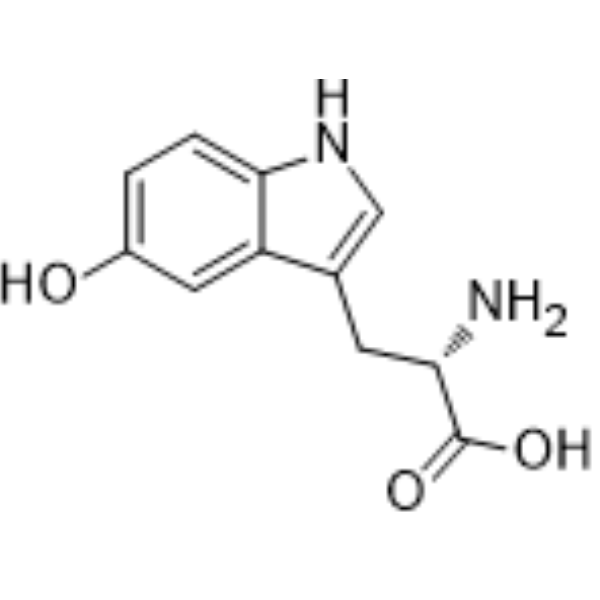
L-5-Hydroxytryptophan (L-5-HTP), a naturally occurring amino acid and a dietary supplement for use as an antidepressant, appetite suppressant, and sleep aid, is the immediate precursor of the neurotransmitter serotonin and a reserpine antagonist . L-5-Hydroxytryptophan (L-5-HTP) is used to treat fibromyalgia, myoclonus, migraine, and cerebellar ataxia .
|
-
- HY-B1658S
-
|
(R)-Frovatriptan-d3 hydrochloride; SB 209509-d3 hydrochloride; VML 251-d3 hydrochloride
|
5-HT Receptor
|
Neurological Disease
|
|
Frovatriptan-d3 (hydrochloride) is the deuterium labeled Frovatriptan . Frovatriptan is a potent 5-HT1B//D receptor agonist and has the highest 5-HT1B potency in the triptan class. Frovatriptan is apparently cerebroselective. Frovatriptan is efficacious and even superior in some endpoints also when taken during the headache phase in migraine attacks with aura .
|
-
- HY-10585AS1
-
|
Sodium Valproate-d14; VPA-d14 sodium; 2-Propylpentanoic acid-d14 sodium
|
Isotope-Labeled Compounds
HDAC
Autophagy
Mitophagy
HIV
Notch
Endogenous Metabolite
|
Cancer
|
|
Valproic acid-d14 (sodium) is deuterium labeled Valproic acid (sodium). Valproic acid sodium salt (Sodium Valproate) is an HDAC inhibitor, with IC50 in the range of 0.5 and 2 mM, also inhibits HDAC1 (IC50, 400 μM), and induces proteasomal degradation of HDAC2. Valproic acid sodium salt activates Notch1 signaling and inhibits proliferation in small cell lung cancer (SCLC) cells. Valproic acid sodium salt is used in the treatment of epilepsy, bipolar disorder and prevention of migraine headaches.
|
-
- HY-17494S1
-
|
|
Isotope-Labeled Compounds
Adrenergic Receptor
|
Cardiovascular Disease
Inflammation/Immunology
Cancer
|
|
Timolol-d9 (maleate) is deuterium labeled Timolol. Timolol is a β-blocker available for both topical and systemic administration. Topical Timolol is primarily used to reduce intraocular pressure with open-angle glaucoma and ocular hypertension. Timolol can also be used for the research of infantile hemangiomas, hypertension, myocardial infarction, migraine prophylaxis, and atrial fibrillation.Timolol also has cardioprotective effect .
|
-
- HY-10585AS
-
|
Sodium Valproate-d7; VPA-d7 sodium; 2-Propylpentanoic acid-d7 sodium
|
Isotope-Labeled Compounds
HDAC
Autophagy
Mitophagy
HIV
Notch
Endogenous Metabolite
|
Cancer
|
|
Valproic acid-d7 (sodium) is the deuterium labeled Valproic acid (sodium salt). Valproic acid sodium salt (Sodium Valproate) is an HDAC inhibitor, with IC50 in the range of 0.5 and 2 mM, also inhibits HDAC1 (IC50, 400 μM), and induces proteasomal degradation of HDAC2. Valproic acid sodium salt activates Notch1 signaling and inhibits proliferation in small cell lung cancer (SCLC) cells. Valproic acid sodium salt is used in the treatment of epilepsy, bipolar disorder and prevention of migraine headaches .
|
-
- HY-A0039S1
-
|
|
5-HT Receptor
|
Inflammation/Immunology
|
|
Eletriptan-d5 is the deuterium labeled Eletriptan . Eletriptan (UK-116044) is a highly selective and orally active serotonin 5-HT1B and 5-HT1D receptor agonist, with pKi values of 8.0 and 8.9, respectively. Eletriptan has inhibitory effects on markers of neurogenic inflammation in rats. Eletriptan can be used for researching migraine .
|
-
- HY-A0039S2
-
|
|
5-HT Receptor
|
Inflammation/Immunology
|
|
Eletriptan-d5 (hydrochloride) is the deuterium labeled Eletriptan hydrochloride . Eletriptan (UK-116044) hydrochloride is a highly selective and orally active serotonin 5-HT1B and 5-HT1D receptor agonist, with pKi values of 8.0 and 8.9, respectively. Eletriptan hydrochloride has inhibitory effects on markers of neurogenic inflammation in rats. Eletriptan hydrochloride can be used for researching migraine .
|
-
- HY-B0121BS1
-
|
GR 43175 free base-d6
|
Isotope-Labeled Compounds
5-HT Receptor
|
Neurological Disease
|
|
Sumatriptan-d6 is the deuterium labeled Sumatriptan. Sumatriptan is an orally active 5-HT1 receptor agonist with Kis of 17 nM, 27 nM and 100 nM for 5-HT1D, 5-HT1B and 5-HT1A receptors, respectively. Sumatriptan can be used for migraine headache research .
|
-
- HY-19136
-
|
|
5-HT Receptor
|
Neurological Disease
|
|
WAY-100289 is an orally active antagonist for 5-HT3 receptor, that exhibits high affinity to the isolated rat vagus nerves with pA2 of 8.9. WAY-100289 inhibits the Bezold-Jarisch reflex in anesthetized and awake rats .
|
-
- HY-12366S
-
|
MK-1602-d5
|
Isotope-Labeled Compounds
CGRP Receptor
|
Cardiovascular Disease
Neurological Disease
|
|
Ubrogepant-d5 (MK-1602-d5) is deuterium labeled Ubrogepant. Ubrogepant (MK-1602) is an orally active and selective antagonist of calcitonin gene-related peptide receptor (CGRP). Ubrogepant has high affinity for CGRP receptors in human and rhesus monkeys, and can effectively block the cAMP response stimulated by α-CGRP. Ubrogepant can be used in the study of acute migraine .
|
-
- HY-105082
-
|
BMS 180048
|
5-HT Receptor
|
Cardiovascular Disease
Neurological Disease
|
|
Avitriptan is a 5-HT1B/1D receptor agonist, with pKis of 7.44 ( 5-HT1B rat), 7.68 ( 5-HT1B human) and 8.36 ( 5-HT1D human). Avitriptan constricts the isolated coronary artery. Avitriptan can be used for migraines .
|
-
- HY-10585S3
-
|
Sodium Valproate-d4; VPA-d4 sodium; 2-Propylpentanoic acid-d4 sodium
|
Isotope-Labeled Compounds
HDAC
Autophagy
Mitophagy
HIV
Notch
Endogenous Metabolite
|
Cancer
|
|
Valproic acid-d4 (sodium) is the deuterium labeled Valproic acid. Valproic acid (VPA; 2-Propylpentanoic Acid) is an HDAC inhibitor, with IC50 in the range of 0.5 and 2 mM, also inhibits HDAC1 (IC50, 400 μM), and induces proteasomal degradation of HDAC2. Valproic acid activates Notch1 signaling and inhibits proliferation in small cell lung cancer (SCLC) cells. Valproic acid sodium salt is used in the treatment of epilepsy, bipolar disorder and prevention of migraine headaches.
|
-
- HY-10585S4
-
|
VPA-d4-1; 2-Propylpentanoic acid-d4-1
|
Isotope-Labeled Compounds
HDAC
Autophagy
Mitophagy
HIV
Notch
Endogenous Metabolite
|
Cancer
|
|
Valproic acid-d4-1 is the deuterium labeled Valproic acid. Valproic acid (VPA; 2-Propylpentanoic Acid) is an HDAC inhibitor, with IC50 in the range of 0.5 and 2 mM, also inhibits HDAC1 (IC50, 400 μM), and induces proteasomal degradation of HDAC2. Valproic acid activates Notch1 signaling and inhibits proliferation in small cell lung cancer (SCLC) cells. Valproic acid sodium salt is used in the treatment of epilepsy, bipolar disorder and prevention of migraine headaches .
|
-
- HY-10585S2
-
|
VPA-d15; 2-Propylpentanoic acid-d15
|
HDAC
Autophagy
Mitophagy
HIV
Notch
Endogenous Metabolite
|
Cancer
|
|
Valproic acid-d15 is the deuterium labeled Valproic acid. Valproic acid (VPA; 2-Propylpentanoic Acid) is an HDAC inhibitor, with IC50 in the range of 0.5 and 2 mM, also inhibits HDAC1 (IC50, 400 μM), and induces proteasomal degradation of HDAC2. Valproic acid activates Notch1 signaling and inhibits proliferation in small cell lung cancer (SCLC) cells. Valproic acid sodium salt is used in the treatment of epilepsy, bipolar disorder and prevention of migraine headaches .
|
-
- HY-10585S
-
|
VPA-d4; 2-Propylpentanoic acid-d4
|
HDAC
Autophagy
Mitophagy
HIV
Notch
Endogenous Metabolite
|
Cancer
|
|
Valproic acid-d4 is the deuterium labeled Valproic acid. Valproic acid (VPA; 2-Propylpentanoic Acid) is an HDAC inhibitor, with IC50 in the range of 0.5 and 2 mM, also inhibits HDAC1 (IC50, 400 μM), and induces proteasomal degradation of HDAC2. Valproic acid activates Notch1 signaling and inhibits proliferation in small cell lung cancer (SCLC) cells. Valproic acid sodium salt is used in the treatment of epilepsy, bipolar disorder and prevention of migraine headaches .
|
-
- HY-10585S1
-
|
VPA-d6; 2-Propylpentanoic acid-d6
|
HDAC
Autophagy
Mitophagy
HIV
Notch
Endogenous Metabolite
|
Cancer
|
|
Valproic acid-d6 is the deuterium labeled Valproic acid. Valproic acid (VPA; 2-Propylpentanoic Acid) is an HDAC inhibitor, with IC50 in the range of 0.5 and 2 mM, also inhibits HDAC1 (IC50, 400 μM), and induces proteasomal degradation of HDAC2. Valproic acid activates Notch1 signaling and inhibits proliferation in small cell lung cancer (SCLC) cells. Valproic acid sodium salt is used in the treatment of epilepsy, bipolar disorder and prevention of migraine headaches .
|
-
- HY-B0121BS
-
|
GR 43175C-d6
|
5-HT Receptor
Isotope-Labeled Compounds
|
Neurological Disease
|
|
Sumatriptan-d6 succinate is the deuterium labeled Sumatriptan succinate. Sumatriptan succinate is an orally active 5-HT1 receptor agonist with Kis of 17 nM, 27 nM and 100 nM for 5-HT1D, 5-HT1B and 5-HT1A receptors, respectively. Sumatriptan succinate can be used for migraine headache research .
|
-
- HY-182466
-
|
BHV-2100
|
TRP Channel
|
Neurological Disease
|
|
Ponometrep (BHV-2100) is a transient receptor potential melastatin 3 (TRPM3) antagonist with IC50 values of 1-10 nM. Ponometrep shows analgesic activity and can be used for the research of neurological diseases .
|
-
- HY-100942
-
|
5-CT maleate
|
5-HT Receptor
|
Neurological Disease
|
|
5-Carboxamidotryptamine maleate (5-CT maleate) is a potent 5-HT1A, 5-HT1B, 5-HT1D, 5-HT5 and 5-HT7 receptors agonist .
|
-
- HY-100942R
-
|
5-CT maleate (Standard)
|
5-HT Receptor
Reference Standards
|
Neurological Disease
|
|
5-Carboxamidotryptamine (maleate) (Standard) is the analytical standard of 5-Carboxamidotryptamine (maleate) (HY-100942). This product is intended for research and analytical applications. 5-Carboxamidotryptamine maleate (5-CT maleate) is a potent 5-HT1A, 5-HT1B, 5-HT1D, 5-HT5 and 5-HT7 receptors agonist .
|
-
- HY-B1716R
-
|
L-5-HTP (Standard); Oxitriptan (Standard)
|
Endogenous Metabolite
Reference Standards
|
Neurological Disease
Metabolic Disease
|
|
L-5-Hydroxytryptophan (Standard) is the analytical standard of L-5-Hydroxytryptophan. This product is intended for research and analytical applications. L-5-Hydroxytryptophan (L-5-HTP), a naturally occurring amino acid and a dietary supplement for use as an antidepressant, appetite suppressant, and sleep aid, is the immediate precursor of the neurotransmitter serotonin and a reserpine antagonist . L-5-Hydroxytryptophan (L-5-HTP) is used to treat fibromyalgia, myoclonus, migraine, and cerebellar ataxia .
|
-
- HY-B1716S1
-
|
L-5-HTP-d3-1; Oxitriptan-d3-1
|
Endogenous Metabolite
|
Metabolic Disease
|
|
L-5-Hydroxytryptophan-d3-1 is the deuterium labeled L-5-Hydroxytryptophan . L-5-Hydroxytryptophan (L-5-HTP), a naturally occurring amino acid and a dietary supplement for use as an antidepressant, appetite suppressant, and sleep aid, is the immediate precursor of the neurotransmitter serotonin and a reserpine antagonist . L-5-Hydroxytryptophan (L-5-HTP) is used to treat fibromyalgia, myoclonus, migraine, and cerebellar ataxia .
|
-
- HY-B0807A
-
|
|
Dopamine Receptor
NADPH Oxidase
Dengue Virus
Flavivirus
|
Neurological Disease
Inflammation/Immunology
Cancer
|
|
Prochlorperazine dimaleate is an orally active phenothiazine-type dopamine D2 receptor (D2R) antagonist. Prochlorperazine exhibits anti-cancer activity in vitro against various cancer cell lines. Prochlorperazine dimaleate exhibits IC50 values of 6.4 μM, 4.5 μM and 2.3 μM for NOX1, NOX2 and NOX5, respectively. Prochlorperazine dimaleate has antedesmosidic activity against dengue virus (DENV). Prochlorperazine dimaleate can be used for research on nausea, vomiting, migraine, and schizophrenia .
|
-
- HY-B1716S
-
|
L-5-HTP-d3; Oxitriptan-d3
|
Endogenous Metabolite
|
Neurological Disease
Metabolic Disease
|
|
L-5-Hydroxytryptophan-d3 is the deuterium labeled L-5-Hydroxytryptophan. L-5-Hydroxytryptophan (L-5-HTP), a naturally occurring amino acid and a dietary supplement for use as an antidepressant, appetite suppressant, and sleep aid, is the immediate precursor of the neurotransmitter serotonin and a reserpine antagonist . L-5-Hydroxytryptophan (L-5-HTP) is used to treat fibromyalgia, myoclonus, migraine, and cerebellar ataxia .
|
-
- HY-B0229S
-
-
- HY-B0121BS3
-
|
GR 43175 free base-d6 formate
|
Isotope-Labeled Compounds
5-HT Receptor
|
Neurological Disease
|
|
Sumatriptan-d6 (formate) (GR 43175 free base-d6 (formate)) is deuterium labeled Sumatriptan. Sumatriptan (GR 43175) is an orally active 5-HT1 receptor agonist with IC50s of 7.3 nm, 9.3nm and 17.8 nm for 5-HT1D, 5-HT1B and 5-HT1F receptors, respectively. Sumatriptan can be used for migraine headache research .
|
-
- HY-B0197
-
|
GR-85548A
|
5-HT Receptor
|
Cardiovascular Disease
Neurological Disease
Inflammation/Immunology
|
|
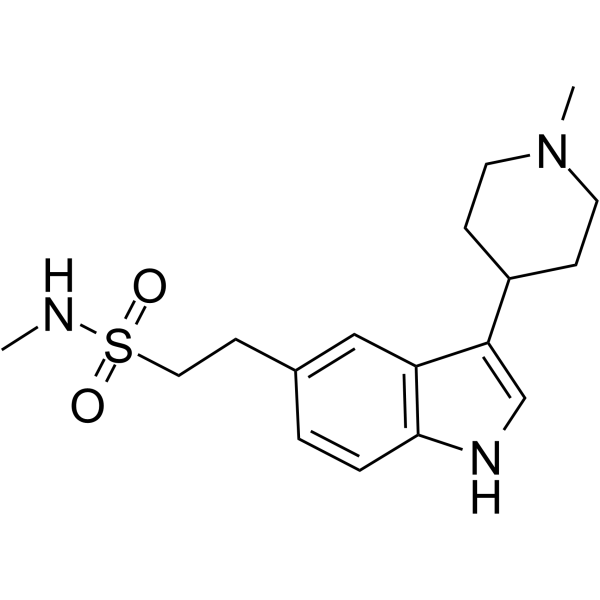
Naratriptan is an orally active and selective 5-HT1B/1D receptor agonist. Naratriptan is peripherally active and has good oral bioavailability, inducing cranial artery vasoconstriction by activating 5-HT1B/1D receptors (EC50=0.11 μM for dog basilar artery). Naratriptan also inhibits trigeminal nerve-mediated dural neurogenic plasma extravasation and reduces sterile inflammation. Naratriptan is mainly used in the research of acute migraine, targeting cranial vascular and neuroinflammatory mechanisms .
|
-
- HY-172583
-
|
|
Drug Derivative
|
Neurological Disease
|
|
Neuroprotective agent 9 (compound 7) is a neuroprotective agent. Neuroprotective agent 9 is promising for research of neuron injury such as cerebral apoplexy, cerebral injury, and neuropathic pain .
|
-
- HY-148032
-
|
5-BT
|
5-HT Receptor
|
Neurological Disease
|
|
5-Benzyloxytryptamine (5-BT) is a selective partial agonist for 5-hydroxytryptamine 1D/1B (5-HT1D/1B) receptors with an IC50 value of 40 nM for bovine caudate 5-HT1D and reduced affinity for other receptors (5-HT2 IC50>470 nM). 5-Benzyloxytryptamine inhibits adenylate cyclase to decrease neurotransmitter release and downregulate cAMP signaling. 5-Benzyloxytryptamine is promising for research of neurotransmitter imbalance-related disorders like migraine .
|
-
- HY-B1716S2
-
|
L-5-HTP-d4; Oxitriptan-d4
|
Isotope-Labeled Compounds
Endogenous Metabolite
|
Metabolic Disease
|
|
L-5-Hydroxytryptophan-d4 (L-5-HTP-d4; Oxitriptan-d4) is a deuterium labeled L-5-Hydroxytryptophan (HY-B1716). L-5-Hydroxytryptophan (L-5-HTP), a naturally occurring amino acid and a dietary supplement for use as an antidepressant, appetite suppressant, and sleep aid, is the immediate precursor of the neurotransmitter serotonin and a reserpine antagonist . L-5-Hydroxytryptophan (L-5-HTP) is used to treat fibromyalgia, myoclonus, migraine, and cerebellar ataxia .
|
-
- HY-B0197A
-
|
GR-85548A hydrochloride
|
5-HT Receptor
|
Cardiovascular Disease
Neurological Disease
Inflammation/Immunology
|
|
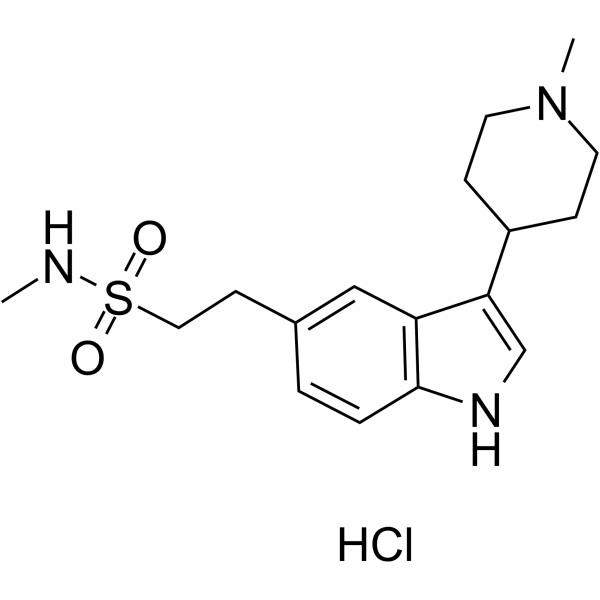
Naratriptan (GR-85548A) hydrochloride is a selective 5-HT1B/1D receptor agonist. Naratriptan hydrochloride is peripherally active and has good oral bioavailability, inducing cranial artery vasoconstriction by activating 5-HT1B/1D receptors (EC50=0.11 μM for dog basilar artery). Naratriptan hydrochloride also inhibits trigeminal nerve-mediated dural neurogenic plasma extravasation and reduces sterile inflammation. Naratriptan hydrochloride is mainly used in the research of acute migraine, targeting cranial vascular and neuroinflammatory mechanisms .
|
-
- HY-W335976
-
|
|
5-HT Receptor
|
Neurological Disease
|
|
Almotriptan (PNU180638) hydrochloride is an orally active, highly selective agonist of the 5-HT1B/1D receptor (5-HT1B/1D receptor), with EC50 values of 1.6 nM and 3.1 nM, respectively. Almotriptan hydrochloride shows moderate affinity for the 5-HT1F receptor, and weak affinity for the 5-HT1A, 5-HT6 and 5-HT7 receptors. Almotriptan hydrochloride induces intracranial vasoconstriction, inhibits nociceptive neurotransmission in the trigeminocervical complex, and suppresses the release of vasoactive peptides from trigeminal nerve endings. Almotriptan hydrochloride can be used in research related to migraine.
|
-
- HY-B1716SA
-
|
L-5-HTP-d3 hydrate; Oxitriptan-d3 hydrate
|
Isotope-Labeled Compounds
Endogenous Metabolite
|
Neurological Disease
Metabolic Disease
|
|
L-5-Hydroxytryptophan-d3 (L-5-HTP-d3) hydrate is the deuterium labeled L-5-Hydroxytryptophan (HY-B1716). L-5-Hydroxytryptophan-d3 is the deuterium labeled L-5-Hydroxytryptophan. L-5-Hydroxytryptophan (L-5-HTP), a naturally occurring amino acid and a dietary supplement for use as an antidepressant, appetite suppressant, and sleep aid, is the immediate precursor of the neurotransmitter serotonin and a reserpine antagonist . L-5-Hydroxytryptophan (L-5-HTP) is used to treat fibromyalgia, myoclonus, migraine, and cerebellar ataxia .
|
-
- HY-B0197S
-
|
GR-85548A-d3-1
|
5-HT Receptor
|
Cardiovascular Disease
Neurological Disease
Inflammation/Immunology
|
|
Naratriptan-d3 (GR-85548A-d3) is the deuterium labeled Naratriptan (HY-B0197). Naratriptan is a selective 5-HT1B/1D receptor agonist. Naratriptan is peripherally active and has good oral bioavailability, inducing cranial artery vasoconstriction by activating 5-HT1B/1D receptors (EC50=0.11 μM for dog basilar artery). Naratriptan also inhibits trigeminal nerve-mediated dural neurogenic plasma extravasation and reduces sterile inflammation. Naratriptan is mainly used in the research of acute migraine, targeting cranial vascular and neuroinflammatory mechanisms .
|
-
- HY-B0197AR
-
|
GR-85548A hydrochloride (Standard)
|
Reference Standards
5-HT Receptor
|
Cardiovascular Disease
Neurological Disease
Inflammation/Immunology
|
|
Naratriptan (GR-85548A) hydrochloride (Standard) is the analytical standard of Naratriptan hydrochloride (HY-B0197A). This product is intended for research and analytical applications. Naratriptan is a selective 5-HT1B/1D receptor agonist. Naratriptan is peripherally active and has good oral bioavailability, inducing cranial artery vasoconstriction by activating 5-HT1B/1D receptors (EC50=0.11 μM for dog basilar artery). Naratriptan also inhibits trigeminal nerve-mediated dural neurogenic plasma extravasation and reduces sterile inflammation. Naratriptan is mainly used in the research of acute migraine, targeting cranial vascular and neuroinflammatory mechanisms .
|
-
- HY-B0197AS
-
|
GR-85548A d3
|
5-HT Receptor
|
Cardiovascular Disease
Neurological Disease
Inflammation/Immunology
|
|
Naratriptan-d3 (GR-85548A-d3) is the deuterium labeled Naratriptan hydrochloride (HY-B0197A). Naratriptan hydrochloride is a selective 5-HT1B/1D receptor agonist. Naratriptan hydrochloride is peripherally active and has good oral bioavailability, inducing cranial artery vasoconstriction by activating 5-HT1B/1D receptors (EC50=0.11 μM for dog basilar artery). Naratriptan hydrochloride also inhibits trigeminal nerve-mediated dural neurogenic plasma extravasation and reduces sterile inflammation. Naratriptan hydrochloride is mainly used in the research of acute migraine, targeting cranial vascular and neuroinflammatory mechanisms .
|
-
- HY-B1658BS
-
|
(R)-Frovatriptan-d3 succinate; SB 209509-d3 succinate; VML 251-d3 succinate
|
Isotope-Labeled Compounds
5-HT Receptor
|
Neurological Disease
|
|
Frovatriptan-d3 (succinate) is deuterium labeled Frovatriptan (succinate). Frovatriptan succinate ((R)-Frovatriptan succinate) is a potent, high affinity, selective and orally active 5-HT1B (pK50 of 8.2) and 5-HT1D receptor agonist. Frovatriptan succinate exhibits >10-fold selectivity for 5-HT1B and 5-HT1D over 5-HT1A, 5-HT1F, and 5-HT7 and >1000-fold selectivity over other 5-HT, dopamine, histamine H1, and α1-adrenoceptor. Frovatriptan succinate has the potential for migraine research .
|
-
- HY-B0383AS2
-
|
PNU180638 free base-d3 benzoate
|
Isotope-Labeled Compounds
5-HT Receptor
|
Neurological Disease
|
|
Almotriptan-d3 benzoate (PNU180638 free base-d3) is deuterated labeled Almotriptan benzoate. Almotriptan benzoate is an orally active, highly selective agonist of the 5-HT1B/1D receptor (5-HT1B/1D receptor), with EC50 values of 1.6 nM and 3.1 nM, respectively. Almotriptan benzoate shows moderate affinity for the 5-HT1F receptor, and weak affinity for the 5-HT1A, 5-HT6 and 5-HT7 receptors. Almotriptan benzoate induces intracranial vasoconstriction, inhibits nociceptive neurotransmission in the trigeminocervical complex, and suppresses the release of vasoactive peptides from trigeminal nerve endings. Almotriptan benzoate can be used in research related to migraine.
|
-
- HY-B0383AS
-
|
PNU180638 hydrochloride-d6
|
Isotope-Labeled Compounds
5-HT Receptor
|
Neurological Disease
|
|
Almotriptan-d6 (PNU180638-d6) hydrochloride is the deuterium labeled Almotriptan hydrochloride. Almotriptan hydrochloride is an orally active, highly selective agonist of the 5-HT1B/1D receptor (5-HT1B/1D receptor), with EC50 values of 1.6 nM and 3.1 nM, respectively. Almotriptan hydrochloride shows moderate affinity for the 5-HT1F receptor, and weak affinity for the 5-HT1A, 5-HT6 and 5-HT7 receptors. Almotriptan hydrochloride induces intracranial vasoconstriction, inhibits nociceptive neurotransmission in the trigeminocervical complex, and suppresses the release of vasoactive peptides from trigeminal nerve endings. Almotriptan hydrochloride can be used in research related to migraine.
|
-
- HY-143797S
-
|
|
Isotope-Labeled Compounds
5-HT Receptor
|
Neurological Disease
|
|
Almotriptan-d6 (PNU180638-d6) maleate is the deuterium labeled Almotriptan maleate. Almotriptan malate is an orally active, highly selective agonist of the 5-HT1B/1D receptor (5-HT1B/1D receptor), with EC50 values of 1.6 nM and 3.1 nM, respectively. Almotriptan malate shows moderate affinity for the 5-HT1F receptor, and weak affinity for the 5-HT1A, 5-HT6 and 5-HT7 receptors. Almotriptan malate induces intracranial vasoconstriction, inhibits nociceptive neurotransmission in the trigeminocervical complex, and suppresses the release of vasoactive peptides from trigeminal nerve endings. Almotriptan malate can be used in research related to migraine.
|
-
| Cat. No. |
Product Name |
Type |
-
- HY-10585AG
-
|
Sodium Valproate; VPA sodium; 2-Propylpentanoic acid sodium
|
Fluorescent Dye
|
|
Valproic acid (Sodium Valproate) sodium is an orally active HDAC inhibitor, with IC50 in the range of 0.5 and 2 mM, also inhibits HDAC1 (IC50, 400 μM), and induces proteasomal degradation of HDAC2. Valproic acid sodium activates Notch1 signaling and inhibits proliferation in small cell lung cancer (SCLC) cells. Valproic acid sodium is used in the treatment of epilepsy, bipolar disorder, metabolic disease, HIV infection and prevention of migraine headaches .
|
| Cat. No. |
Product Name |
Type |
-
- HY-10585AG
-
|
Sodium Valproate; VPA sodium; 2-Propylpentanoic acid sodium
|
Biochemical Assay Reagents
|
|
Valproic acid (Sodium Valproate) sodium is an orally active HDAC inhibitor, with IC50 in the range of 0.5 and 2 mM, also inhibits HDAC1 (IC50, 400 μM), and induces proteasomal degradation of HDAC2. Valproic acid sodium activates Notch1 signaling and inhibits proliferation in small cell lung cancer (SCLC) cells. Valproic acid sodium is used in the treatment of epilepsy, bipolar disorder, metabolic disease, HIV infection and prevention of migraine headaches .
|
| Cat. No. |
Product Name |
Target |
Research Area |
-
- HY-P0203
-
|
CGRP (83-119), mouse, rat
|
CGRP Receptor
|
Cardiovascular Disease
Metabolic Disease
Inflammation/Immunology
|
|
α-CGRP (mouse, rat), a neuropeptide (calcitonin gene-related peptide (CGRP)) mainly expressed in neuromuscular junction, is a potent vasodilator. α-CGRP (mouse, rat) can lead to a fall in blood pressure and an increase in heart rate by peripheral administration, also relax colonie smooth muscle. α-CGRP (mouse, rat) has the potential in cardiovascular, pro-inflammatory, migraine and metabolic studies .
|
-
- HY-P0203A
-
|
CGRP (83-119), mouse, rat TFA
|
CGRP Receptor
|
Cardiovascular Disease
Metabolic Disease
Inflammation/Immunology
|
|
α-CGRP (mouse, rat) TFA, a neuropeptide (calcitonin gene-related peptide (CGRP)) mainly expressed in neuromuscular junction, is a potent vasodilator. α-CGRP (mouse, rat) TFA can lead to a fall in blood pressure and an increase in heart rate by peripheral administration, also relax colonie smooth muscle. α-CGRP (mouse, rat) TFA has the potential in cardiovascular, pro-inflammatory, migraine and metabolic studies .
|
-
- HY-P0203B
-
-
- HY-P2428
-
|
|
Endogenous Metabolite
|
Neurological Disease
|
|
RI-61 is a compound that has activity in suppressing migraine, cluster headache, new daily persistent headache and cyclical vomiting syndrome. RI-61 has shown significant efficacy in relieving the symptoms of these disorders. RI-61 helps relieve pain and other related symptoms by modulating the action of neurotransmitters .
|
| Cat. No. |
Product Name |
Target |
Research Area |
Image |
-
- HY-P99021
-
|
LY 2951742
|
CGRP Receptor
|
Neurological Disease
|
|
Galcanezumab (LY 2951742) is a humanized IgG4 monoclonal antibody against the CGRP ligand. Galcanezumab can be used for migraine or cluster headaches research .
|
-
(5)
-
- HY-P9938
-
|
AMG-334
|
CGRP Receptor
|
Neurological Disease
|
|
Erenumab (AMG-334) is a fully human monoclonal antibody. Erenumab inhibits the calcitonin gene-related peptide (CGRP) receptor. Erenumab prevents the increase in dermal blood flow in cynomolgus monkeys. Erenumab can be used in the research of episodic migraine .
|
-
(5)
-
- HY-P99017
-
|
ALD-403
|
CGRP Receptor
|
Neurological Disease
|
|
Eptinezumab (ALD-403) is a human monoclonal antibody targeting the α and β subtypes of human calcitonin gene-related peptide (CGRP). Eptinezumab binds to the CGRP ligand and blocks its binding to endogenous CGRP receptors, thereby inhibiting receptor activation. Eptinezumab can be used in research related to migraine .
|
-
(5)
-
- HY-P99019
-
|
TEV-48125; LBR-101; PF-04427429; RN-307
|
CGRP Receptor
|
Neurological Disease
Inflammation/Immunology
|
|
Fremanezumab (TEV-48125) is a humanized lgG2 monoclonal antibody that selectively and potently binds to calcitonin gene related peptide (CGRp) (IC50 values = 7.943 nM). Fremanezumab binds to mouse CGRP with an IC50 value of 19.6 nM. Fremanezumab counteracts anti-inflammatory effects of CGRP in vitro, including CGRP-mediated inhibition of LPS (HY-D1056)-induced microglial activation. Fremanezumab selectively inhibits the activation of Aδ meningeal nociceptors by cortical spreading depression (CSD) in rats. Fremanezumab can be used for the study of inflammation and chronic migraine .
|
-
(5)
| Cat. No. |
Product Name |
Category |
Target |
Chemical Structure |
-
- HY-10585
-
-
-
- HY-10585A
-
-
-
- HY-B1716
-
|
L-5-HTP; Oxitriptan
|
Monophenols
other families
Phenols
Amino acids
Plants
Endogenous metabolite
|
Endogenous Metabolite
|
|
L-5-Hydroxytryptophan (L-5-HTP), a naturally occurring amino acid and a dietary supplement for use as an antidepressant, appetite suppressant, and sleep aid, is the immediate precursor of the neurotransmitter serotonin and a reserpine antagonist . L-5-Hydroxytryptophan (L-5-HTP) is used to treat fibromyalgia, myoclonus, migraine, and cerebellar ataxia .
|
-
-
- HY-B0229
-
-
-
- HY-N0745
-
-
-
- HY-B1804
-
-
-
- HY-B1716R
-
-
-
- HY-10585B
-
-
-
- HY-10585AR
-
|
Sodium Valproate (Standard); VPA sodium (Standard); 2-Propylpentanoic acid sodium (Standard)
|
Structural Classification
Ketones, Aldehydes, Acids
Endogenous metabolite
Source Classification
|
Organoid
Reference Standards
HDAC
Autophagy
Mitophagy
HIV
Notch
Apoptosis
Endogenous Metabolite
|
|
Valproic acid (sodium) (Standard) is the analytical standard of Valproic acid (sodium). This product is intended for research and analytical applications. Valproic acid (Sodium Valproate) sodium is an orally active HDAC inhibitor, with IC50 in the range of 0.5 and 2 mM, also inhibits HDAC1 (IC50, 400 μM), and induces proteasomal degradation of HDAC2. Valproic acid sodium activates Notch1 signaling and inhibits proliferation in small cell lung cancer (SCLC) cells. Valproic acid sodium is used in the treatment of epilepsy, bipolar disorder, metabolic disease, HIV infection and prevention of migraine headaches .
|
-
-
- HY-120294
-
-
| Cat. No. |
Product Name |
Chemical Structure |
-
- HY-10585S
-
1 Publications Verification
|
|
Valproic acid-d4 is the deuterium labeled Valproic acid. Valproic acid (VPA; 2-Propylpentanoic Acid) is an HDAC inhibitor, with IC50 in the range of 0.5 and 2 mM, also inhibits HDAC1 (IC50, 400 μM), and induces proteasomal degradation of HDAC2. Valproic acid activates Notch1 signaling and inhibits proliferation in small cell lung cancer (SCLC) cells. Valproic acid sodium salt is used in the treatment of epilepsy, bipolar disorder and prevention of migraine headaches .
|
-
-
- HY-10585S1
-
|
|
|
Valproic acid-d6 is the deuterium labeled Valproic acid. Valproic acid (VPA; 2-Propylpentanoic Acid) is an HDAC inhibitor, with IC50 in the range of 0.5 and 2 mM, also inhibits HDAC1 (IC50, 400 μM), and induces proteasomal degradation of HDAC2. Valproic acid activates Notch1 signaling and inhibits proliferation in small cell lung cancer (SCLC) cells. Valproic acid sodium salt is used in the treatment of epilepsy, bipolar disorder and prevention of migraine headaches .
|
-
-
- HY-B1716S
-
|
|
|
L-5-Hydroxytryptophan-d3 is the deuterium labeled L-5-Hydroxytryptophan. L-5-Hydroxytryptophan (L-5-HTP), a naturally occurring amino acid and a dietary supplement for use as an antidepressant, appetite suppressant, and sleep aid, is the immediate precursor of the neurotransmitter serotonin and a reserpine antagonist . L-5-Hydroxytryptophan (L-5-HTP) is used to treat fibromyalgia, myoclonus, migraine, and cerebellar ataxia .
|
-
-
- HY-B1804S
-
|
|
|
Tricaprilin- 13C3 (Trioctanoin- 13C3) is a 13C-labeled Tricaprilin (HY-B1804) . Tricaprilin is an orally active and well tolerated ketogenic agent that safely induces ketosis. Tricaprilin restores brain electrical activity and metabolism to help counteract neuroinflammation in migraine. Tricaprilin is promising for research of migraine prevention and Alzheimer’s disease (AD). Tricaprilin is a pure C8 medium chain triglyceride (MCT) .
|
-
-
- HY-10585S2
-
|
|
|
Valproic acid-d15 is the deuterium labeled Valproic acid. Valproic acid (VPA; 2-Propylpentanoic Acid) is an HDAC inhibitor, with IC50 in the range of 0.5 and 2 mM, also inhibits HDAC1 (IC50, 400 μM), and induces proteasomal degradation of HDAC2. Valproic acid activates Notch1 signaling and inhibits proliferation in small cell lung cancer (SCLC) cells. Valproic acid sodium salt is used in the treatment of epilepsy, bipolar disorder and prevention of migraine headaches .
|
-
-
- HY-10585S4
-
|
|
|
Valproic acid-d4-1 is the deuterium labeled Valproic acid. Valproic acid (VPA; 2-Propylpentanoic Acid) is an HDAC inhibitor, with IC50 in the range of 0.5 and 2 mM, also inhibits HDAC1 (IC50, 400 μM), and induces proteasomal degradation of HDAC2. Valproic acid activates Notch1 signaling and inhibits proliferation in small cell lung cancer (SCLC) cells. Valproic acid sodium salt is used in the treatment of epilepsy, bipolar disorder and prevention of migraine headaches .
|
-
-
- HY-B1716S2
-
|
|
|
L-5-Hydroxytryptophan-d4 (L-5-HTP-d4; Oxitriptan-d4) is a deuterium labeled L-5-Hydroxytryptophan (HY-B1716). L-5-Hydroxytryptophan (L-5-HTP), a naturally occurring amino acid and a dietary supplement for use as an antidepressant, appetite suppressant, and sleep aid, is the immediate precursor of the neurotransmitter serotonin and a reserpine antagonist . L-5-Hydroxytryptophan (L-5-HTP) is used to treat fibromyalgia, myoclonus, migraine, and cerebellar ataxia .
|
-
-
- HY-A0039S1
-
|
|
|
Eletriptan-d5 is the deuterium labeled Eletriptan . Eletriptan (UK-116044) is a highly selective and orally active serotonin 5-HT1B and 5-HT1D receptor agonist, with pKi values of 8.0 and 8.9, respectively. Eletriptan has inhibitory effects on markers of neurogenic inflammation in rats. Eletriptan can be used for researching migraine .
|
-
-
- HY-10585AS1
-
|
|
|
Valproic acid-d14 (sodium) is deuterium labeled Valproic acid (sodium). Valproic acid sodium salt (Sodium Valproate) is an HDAC inhibitor, with IC50 in the range of 0.5 and 2 mM, also inhibits HDAC1 (IC50, 400 μM), and induces proteasomal degradation of HDAC2. Valproic acid sodium salt activates Notch1 signaling and inhibits proliferation in small cell lung cancer (SCLC) cells. Valproic acid sodium salt is used in the treatment of epilepsy, bipolar disorder and prevention of migraine headaches.
|
-
-
- HY-10585AS
-
|
|
|
Valproic acid-d7 (sodium) is the deuterium labeled Valproic acid (sodium salt). Valproic acid sodium salt (Sodium Valproate) is an HDAC inhibitor, with IC50 in the range of 0.5 and 2 mM, also inhibits HDAC1 (IC50, 400 μM), and induces proteasomal degradation of HDAC2. Valproic acid sodium salt activates Notch1 signaling and inhibits proliferation in small cell lung cancer (SCLC) cells. Valproic acid sodium salt is used in the treatment of epilepsy, bipolar disorder and prevention of migraine headaches .
|
-
-
- HY-10585S3
-
|
|
|
Valproic acid-d4 (sodium) is the deuterium labeled Valproic acid. Valproic acid (VPA; 2-Propylpentanoic Acid) is an HDAC inhibitor, with IC50 in the range of 0.5 and 2 mM, also inhibits HDAC1 (IC50, 400 μM), and induces proteasomal degradation of HDAC2. Valproic acid activates Notch1 signaling and inhibits proliferation in small cell lung cancer (SCLC) cells. Valproic acid sodium salt is used in the treatment of epilepsy, bipolar disorder and prevention of migraine headaches.
|
-
-
- HY-B0229S
-
|
|
|
Zolmitriptan-d6 is deuterium labeled Zolmitriptan. Zolmitriptan (BW-311C90; 311C90) is a 5-HT1B/1D receptor partial agonist with Kis of 5.01 nM, 0.63 nM, and 63.09 nM for 5-HT1B, 5-HT1D, 5-HT1F receptor, respectively. Zolmitriptan can be used for the research of migraine .
|
-
-
- HY-B0197AS
-
|
|
|
Naratriptan-d3 (GR-85548A-d3) is the deuterium labeled Naratriptan hydrochloride (HY-B0197A). Naratriptan hydrochloride is a selective 5-HT1B/1D receptor agonist. Naratriptan hydrochloride is peripherally active and has good oral bioavailability, inducing cranial artery vasoconstriction by activating 5-HT1B/1D receptors (EC50=0.11 μM for dog basilar artery). Naratriptan hydrochloride also inhibits trigeminal nerve-mediated dural neurogenic plasma extravasation and reduces sterile inflammation. Naratriptan hydrochloride is mainly used in the research of acute migraine, targeting cranial vascular and neuroinflammatory mechanisms .
|
-
-
- HY-B0121BS2
-
|
|
|
Sumatriptan-d5 is deuterated labeled Sumatriptan (HY-B0121B). Sumatriptan (GR 43175) is an orally active 5-HT1 receptor agonist with IC50s of 7.3 nm, 9.3nm and 17.8 nm for 5-HT1D, 5-HT1B and 5-HT1F receptors, respectively. Sumatriptan can be used for migraine headache research .
|
-
-
- HY-B1804S1
-
|
|
|
Tricaprilin-d50 (Trioctanoin-d50) is the deuterium labeled Tricaprilin (HY-B1804). Tricaprilin is an orally active and well tolerated ketogenic agent that safely induces ketosis. Tricaprilin restores brain electrical activity and metabolism to help counteract neuroinflammation in migraine. Tricaprilin is promising for research of migraine prevention and Alzheimer’s disease (AD). Tricaprilin is a pure C8 medium chain triglyceride (MCT) .
|
-
-
- HY-B1804S2
-
|
|
|
Tricaprilin-d15 (Trioctanoin-d15) is the deuterium labeled Tricaprilin (HY-B1804). Tricaprilin is an orally active and well tolerated ketogenic agent that safely induces ketosis. Tricaprilin restores brain electrical activity and metabolism to help counteract neuroinflammation in migraine. Tricaprilin is promising for research of migraine prevention and Alzheimer’s disease (AD). Tricaprilin is a pure C8 medium chain triglyceride (MCT) .
|
-
-
- HY-134992S
-
|
|
|
(Rac)-Vazegepant- 13C,d3 is the C13 and deuterium labeled (Rac)-Vazegepant. Vazegepant (HY-134992) is the first intranasal CGRP receptor antagonist for the study the acute research of migraine .
|
-
-
- HY-B1658S
-
|
|
|
Frovatriptan-d3 (hydrochloride) is the deuterium labeled Frovatriptan . Frovatriptan is a potent 5-HT1B//D receptor agonist and has the highest 5-HT1B potency in the triptan class. Frovatriptan is apparently cerebroselective. Frovatriptan is efficacious and even superior in some endpoints also when taken during the headache phase in migraine attacks with aura .
|
-
-
- HY-17494S1
-
|
|
|
Timolol-d9 (maleate) is deuterium labeled Timolol. Timolol is a β-blocker available for both topical and systemic administration. Topical Timolol is primarily used to reduce intraocular pressure with open-angle glaucoma and ocular hypertension. Timolol can also be used for the research of infantile hemangiomas, hypertension, myocardial infarction, migraine prophylaxis, and atrial fibrillation.Timolol also has cardioprotective effect .
|
-
-
- HY-A0039S2
-
|
|
|
Eletriptan-d5 (hydrochloride) is the deuterium labeled Eletriptan hydrochloride . Eletriptan (UK-116044) hydrochloride is a highly selective and orally active serotonin 5-HT1B and 5-HT1D receptor agonist, with pKi values of 8.0 and 8.9, respectively. Eletriptan hydrochloride has inhibitory effects on markers of neurogenic inflammation in rats. Eletriptan hydrochloride can be used for researching migraine .
|
-
-
- HY-B0121BS1
-
|
|
|
Sumatriptan-d6 is the deuterium labeled Sumatriptan. Sumatriptan is an orally active 5-HT1 receptor agonist with Kis of 17 nM, 27 nM and 100 nM for 5-HT1D, 5-HT1B and 5-HT1A receptors, respectively. Sumatriptan can be used for migraine headache research .
|
-
-
- HY-12366S
-
|
|
|
Ubrogepant-d5 (MK-1602-d5) is deuterium labeled Ubrogepant. Ubrogepant (MK-1602) is an orally active and selective antagonist of calcitonin gene-related peptide receptor (CGRP). Ubrogepant has high affinity for CGRP receptors in human and rhesus monkeys, and can effectively block the cAMP response stimulated by α-CGRP. Ubrogepant can be used in the study of acute migraine .
|
-
-
- HY-B0121BS
-
1 Publications Verification
|
|
Sumatriptan-d6 succinate is the deuterium labeled Sumatriptan succinate. Sumatriptan succinate is an orally active 5-HT1 receptor agonist with Kis of 17 nM, 27 nM and 100 nM for 5-HT1D, 5-HT1B and 5-HT1A receptors, respectively. Sumatriptan succinate can be used for migraine headache research .
|
-
-
- HY-B1716S1
-
|
|
|
L-5-Hydroxytryptophan-d3-1 is the deuterium labeled L-5-Hydroxytryptophan . L-5-Hydroxytryptophan (L-5-HTP), a naturally occurring amino acid and a dietary supplement for use as an antidepressant, appetite suppressant, and sleep aid, is the immediate precursor of the neurotransmitter serotonin and a reserpine antagonist . L-5-Hydroxytryptophan (L-5-HTP) is used to treat fibromyalgia, myoclonus, migraine, and cerebellar ataxia .
|
-
-
- HY-B0121BS3
-
|
|
|
Sumatriptan-d6 (formate) (GR 43175 free base-d6 (formate)) is deuterium labeled Sumatriptan. Sumatriptan (GR 43175) is an orally active 5-HT1 receptor agonist with IC50s of 7.3 nm, 9.3nm and 17.8 nm for 5-HT1D, 5-HT1B and 5-HT1F receptors, respectively. Sumatriptan can be used for migraine headache research .
|
-
-
- HY-B0197S
-
|
|
|
Naratriptan-d3 (GR-85548A-d3) is the deuterium labeled Naratriptan (HY-B0197). Naratriptan is a selective 5-HT1B/1D receptor agonist. Naratriptan is peripherally active and has good oral bioavailability, inducing cranial artery vasoconstriction by activating 5-HT1B/1D receptors (EC50=0.11 μM for dog basilar artery). Naratriptan also inhibits trigeminal nerve-mediated dural neurogenic plasma extravasation and reduces sterile inflammation. Naratriptan is mainly used in the research of acute migraine, targeting cranial vascular and neuroinflammatory mechanisms .
|
-
-
- HY-B0383AS
-
|
|
|
Almotriptan-d6 (PNU180638-d6) hydrochloride is the deuterium labeled Almotriptan hydrochloride. Almotriptan hydrochloride is an orally active, highly selective agonist of the 5-HT1B/1D receptor (5-HT1B/1D receptor), with EC50 values of 1.6 nM and 3.1 nM, respectively. Almotriptan hydrochloride shows moderate affinity for the 5-HT1F receptor, and weak affinity for the 5-HT1A, 5-HT6 and 5-HT7 receptors. Almotriptan hydrochloride induces intracranial vasoconstriction, inhibits nociceptive neurotransmission in the trigeminocervical complex, and suppresses the release of vasoactive peptides from trigeminal nerve endings. Almotriptan hydrochloride can be used in research related to migraine.
|
-
-
- HY-B1658BS
-
|
|
|
Frovatriptan-d3 (succinate) is deuterium labeled Frovatriptan (succinate). Frovatriptan succinate ((R)-Frovatriptan succinate) is a potent, high affinity, selective and orally active 5-HT1B (pK50 of 8.2) and 5-HT1D receptor agonist. Frovatriptan succinate exhibits >10-fold selectivity for 5-HT1B and 5-HT1D over 5-HT1A, 5-HT1F, and 5-HT7 and >1000-fold selectivity over other 5-HT, dopamine, histamine H1, and α1-adrenoceptor. Frovatriptan succinate has the potential for migraine research .
|
-
-
- HY-B0383AS2
-
|
|
|
Almotriptan-d3 benzoate (PNU180638 free base-d3) is deuterated labeled Almotriptan benzoate. Almotriptan benzoate is an orally active, highly selective agonist of the 5-HT1B/1D receptor (5-HT1B/1D receptor), with EC50 values of 1.6 nM and 3.1 nM, respectively. Almotriptan benzoate shows moderate affinity for the 5-HT1F receptor, and weak affinity for the 5-HT1A, 5-HT6 and 5-HT7 receptors. Almotriptan benzoate induces intracranial vasoconstriction, inhibits nociceptive neurotransmission in the trigeminocervical complex, and suppresses the release of vasoactive peptides from trigeminal nerve endings. Almotriptan benzoate can be used in research related to migraine.
|
-
-
- HY-143797S
-
|
|
|
Almotriptan-d6 (PNU180638-d6) maleate is the deuterium labeled Almotriptan maleate. Almotriptan malate is an orally active, highly selective agonist of the 5-HT1B/1D receptor (5-HT1B/1D receptor), with EC50 values of 1.6 nM and 3.1 nM, respectively. Almotriptan malate shows moderate affinity for the 5-HT1F receptor, and weak affinity for the 5-HT1A, 5-HT6 and 5-HT7 receptors. Almotriptan malate induces intracranial vasoconstriction, inhibits nociceptive neurotransmission in the trigeminocervical complex, and suppresses the release of vasoactive peptides from trigeminal nerve endings. Almotriptan malate can be used in research related to migraine.
|
-
-
- HY-B1716SA
-
|
|
|
L-5-Hydroxytryptophan-d3 (L-5-HTP-d3) hydrate is the deuterium labeled L-5-Hydroxytryptophan (HY-B1716). L-5-Hydroxytryptophan-d3 is the deuterium labeled L-5-Hydroxytryptophan. L-5-Hydroxytryptophan (L-5-HTP), a naturally occurring amino acid and a dietary supplement for use as an antidepressant, appetite suppressant, and sleep aid, is the immediate precursor of the neurotransmitter serotonin and a reserpine antagonist . L-5-Hydroxytryptophan (L-5-HTP) is used to treat fibromyalgia, myoclonus, migraine, and cerebellar ataxia .
|
-
| Cat. No. |
Product Name |
Target |
Research Areas |
Chemical Structure |
-
- HY-10585AG
-
|
Sodium Valproate; VPA sodium; 2-Propylpentanoic acid sodium
|
Organoid
HDAC
Autophagy
Mitophagy
HIV
Notch
Apoptosis
Endogenous Metabolite
|
Infection
Neurological Disease
Metabolic Disease
Cancer
|
|
Valproic acid (Sodium Valproate) sodium is an orally active HDAC inhibitor, with IC50 in the range of 0.5 and 2 mM, also inhibits HDAC1 (IC50, 400 μM), and induces proteasomal degradation of HDAC2. Valproic acid sodium activates Notch1 signaling and inhibits proliferation in small cell lung cancer (SCLC) cells. Valproic acid sodium is used in the treatment of epilepsy, bipolar disorder, metabolic disease, HIV infection and prevention of migraine headaches .
|
-
Your information is safe with us. * Required Fields.
Inquiry Information
- Product Name:
- Cat. No.:
- Quantity:
- MCE Japan Authorized Agent:

