



Valproic acid sodium (Standard)

Based on 1 Customer Validation
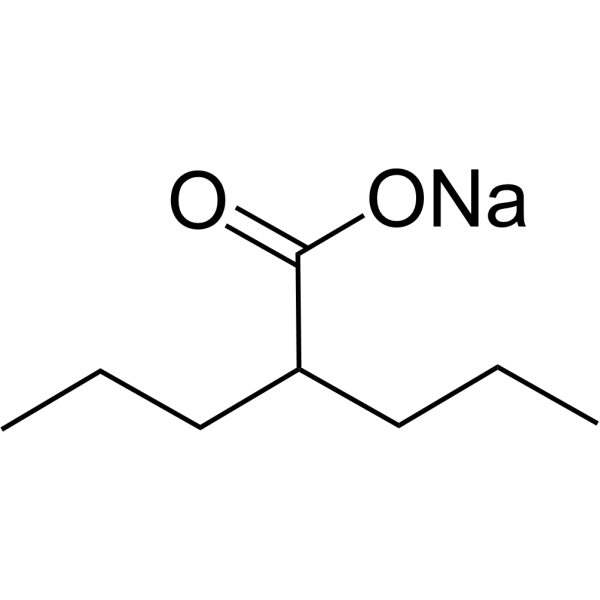
Valproic acid (sodium) (Standard) is the analytical standard of Valproic acid (sodium). This product is intended for research and analytical applications. Valproic acid (Sodium Valproate) sodium is an orally active HDAC inhibitor, with IC50 in the range of 0.5 and 2 mM, also inhibits HDAC1 (IC50, 400 μM), and induces proteasomal degradation of HDAC2. Valproic acid sodium activates Notch1 signaling and inhibits proliferation in small cell lung cancer (SCLC) cells. Valproic acid sodium is used in the treatment of epilepsy, bipolar disorder, metabolic disease, HIV infection and prevention of migraine headaches.
For research use only. We do not sell to patients.
- Purity : 98.92%
- CAS No.: 1069-66-5
- Formula: C8H15NaO2
- Molecular Weight:166.19
-
Storage:
Please store the product under the recommended conditions in the Certificate of Analysis.


To place orders, for customer services and technical support, please contact: MedChemExpress USA
Tel: 609-228-6898 E-mail: [email protected] [email protected]


-
 Product Information
-
Chemical Information
- Purity & Documentation
-
 Help & FAQs


-
HY-10585A
Valproic acid sodiumHDAC Inhibitor -
HY-10585
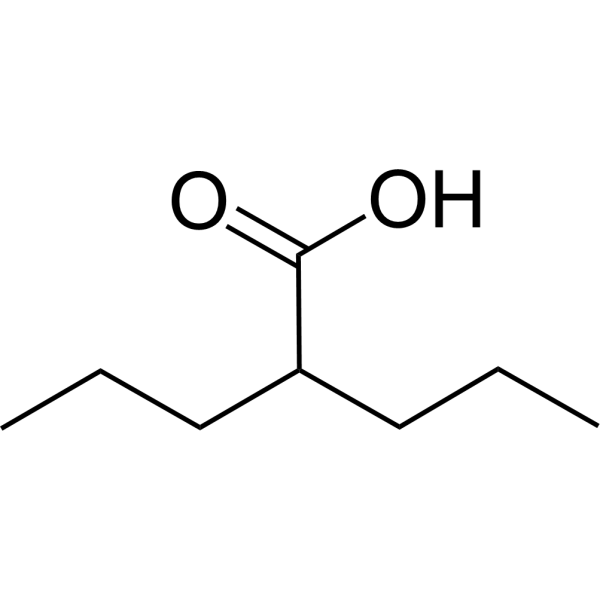
Valproic acidHDAC Inhibitor -

HY-10585R
Valproic acid (Standard)HDAC Inhibitor -

HY-10585AG
Valproic acid sodium (GMP)HDAC Inhibitor -
HY-10221
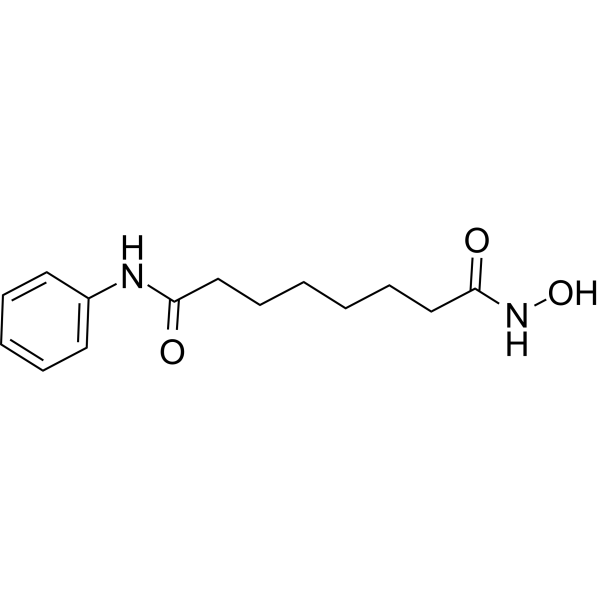
VorinostatHDAC Inhibitor -
HY-10224
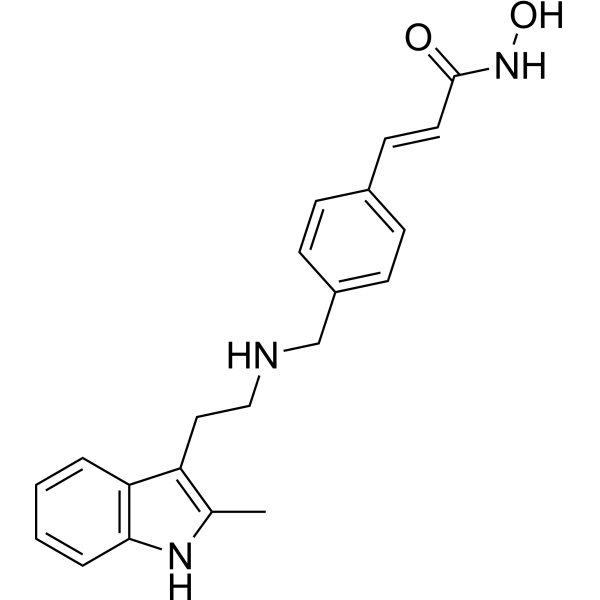
PanobinostatHDAC Inhibitor -
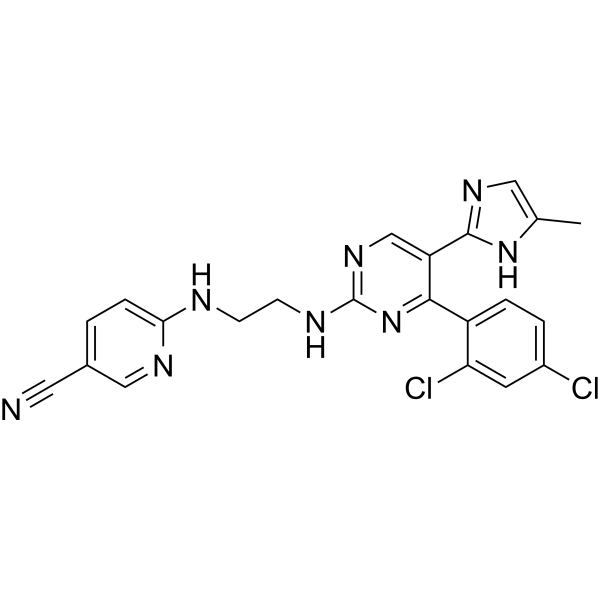
HY-10182
LaduviglusibGSK-3 Inhibitor -
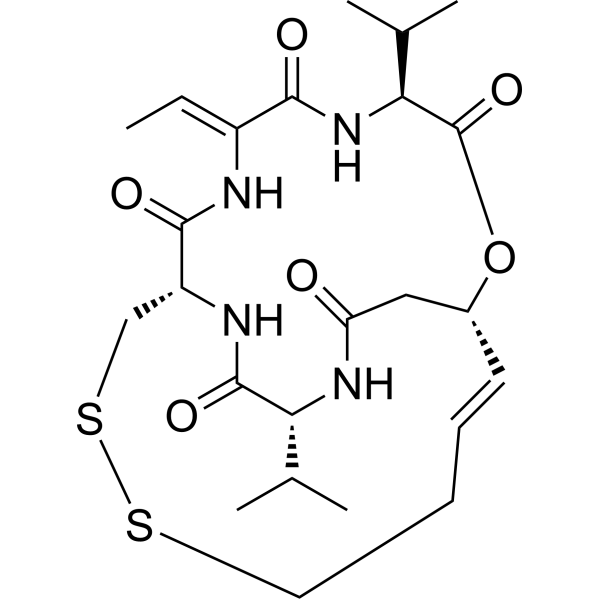
HY-15149
RomidepsinHDAC Inhibitor -
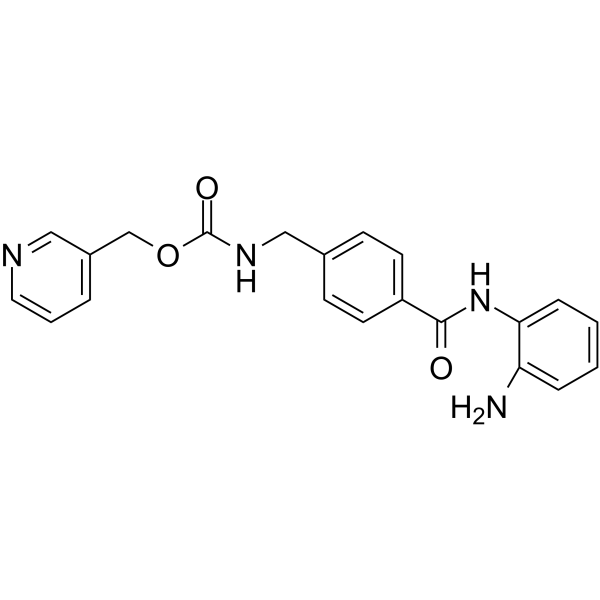
HY-12163
EntinostatHDAC Class I Inhibitor -
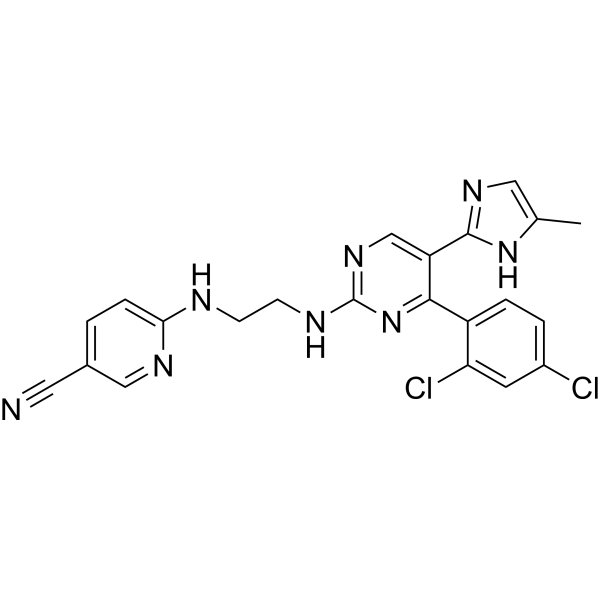
HY-10182G
Laduviglusib (GMP)GSK-3α/β Inhibitor (GMP) -
HY-B0350A
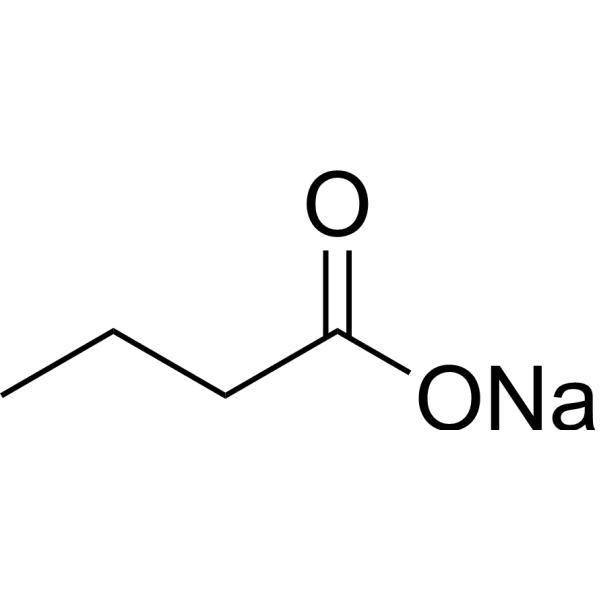
Sodium butyrateHDAC Inhibitor -
HY-15654
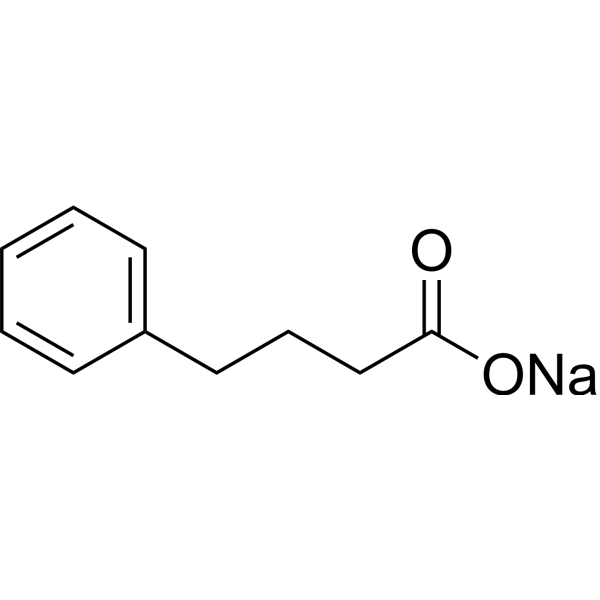
Sodium 4-phenylbutyrateHDAC/ERS Inhibitor


Product Information
Information
Application
The compound is the grade of analytical standard, which is the reference standard supplied assay. It is commonly used in qualitative, quantitative and methodological research experiments in HPLC, GC and MS.


Chemical Information
-
CAS No. 1069-66-5
-
Appearance Solid
-
Molecular Weight 166.19
-
Formula C8H15NaO2
-
Color White to off-white
-
SMILES
O=C(O[Na])C(CCC)CCC
-
Synonyms
Sodium Valproate (Standard); VPA sodium (Standard); 2-Propylpentanoic acid sodium (Standard)
-
Structure Classification
-
Initial Source
-
Shipping
Room temperature in continental US; may vary elsewhere.
-
Storage
Please store the product under the recommended conditions in the Certificate of Analysis.


Purity & Documentation
-
SDS (557 KB)
- English - EN (557 KB)
- Français - FR (557 KB)
- Deutsch - DE (557 KB)
- Norwegian - NO (557 KB)
- Español - ES (557 KB)
- Swedish - SV (557 KB)
- Italian - IT (557 KB)
- Korean - KR (557 KB)
- Portuguese - PT (557 KB)
-
Handling Instructions (2659 KB)
References
[1]. Han BR, et al. Valproic acid inhibits the growth of HeLa cervical cancer cells via caspase-dependent apoptosis. Oncol Rep. 2013 Dec;30(6):2999-3005. [Content Brief]
[2]. Valproic acid, et al. Histone deacetylase is a direct target of valproic acid, a potent anticonvulsant, mood stabilizer, and teratogen. J Biol Chem. 2001 Sep 28;276(39):36734-41. [Content Brief]
[3]. Zhang ZH, et al. Valproic acid inhibits tumor angiogenesis in mice transplanted with Kasumi 1 leukemia cells. Mol Med Rep. 2013 Nov 28. [Content Brief]
[4]. Cohen OS, et al. Acute prenatal exposure to a moderate dose of valproic acid increases social behavior and alters gene expression in rats. Int J Dev Neurosci. 2013 Dec;31(8):740-50. [Content Brief]
[5]. Avery LB, et al. Valproic Acid Is a Novel Activator of AMP-Activated Protein Kinase and Decreases Liver Mass, Hepatic Fat Accumulation, and Serum Glucose in Obese Mice. Mol Pharmacol. 2014 Jan;85(1):1-10. [Content Brief]
[6]. Platta CS, et al. Valproic acid induces Notch1 signaling in small cell lung cancer cells. J Surg Res. 2008 Jul;148(1):31-7. [Content Brief]
[7]. Routy JP, et al. Valproic acid in association with highly active antiretroviral therapy for reducing systemic HIV-1 reservoirs: results from a multicentre randomized clinical study. HIV Med. 2012 May;13(5):291-6. [Content Brief]

Calculators
Concentration (start) × Volume (start) = Concentration (final) × Volume (final)


Valproic acid sodium (Standard) Related Classifications
HY-10585AR Related Classifications
 Powered by Bioz
Keywords
- Valproic acid sodium (Standard)
- 1069-66-5
- Sodium Valproate (Standard)
- VPA sodium (Standard)
- 2-Propylpentanoic acid sodium (Standard)
- Organoid
- Reference Standards
- HDAC
- Autophagy
- Mitophagy
- HIV
- Notch
- Apoptosis
- Endogenous Metabolite
- proteasomal
- degradation
- Notch1
- SCLC
- epilepsy
- bipolar disorder
- migraine
- headaches
- small cell lung cancer
- anticancer
- anticonvulsant
- hepatic fat accumulation
- Inhibitor
- inhibitor
- inhibit