1. Cell Cycle/DNA Damage TGF-beta/Smad Epigenetics Anti-infection Apoptosis Metabolic Enzyme/Protease
  2. Topoisomerase PKC Orthopoxvirus Apoptosis Endogenous Metabolite
  3. Mitoxantrone dihydrochloride

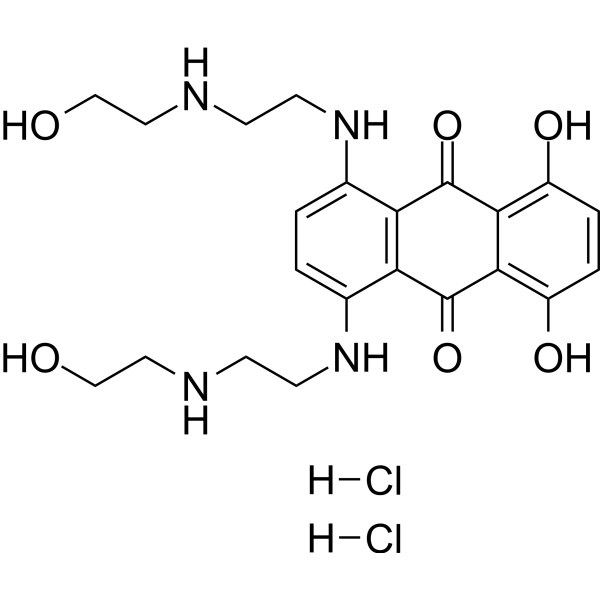
Mitoxantrone dihydrochloride  (Synonyms: Mitozantrone dihydrochloride; NSC 301739 dihydrochloride)

Cat. No.: HY-13502A Purity: 98.98%
Handling Instructions Technical Support

Mitoxantrone dihydrochloride is a potent topoisomerase II inhibitor. Mitoxantrone dihydrochloride also inhibits protein kinase C (PKC) activity with an IC50 of 8.5 μM. Mitoxantrone dihydrochloride induces apoptosis of B-CLL (B-chronic lymphocytic leukaemia) cells. Mitoxantrone dihydrochloride shows antitumor activity. Mitoxantrone dihydrochloride also has anti-orthopoxvirus activity with EC50s of 0.25 μM and and 0.8 μM for cowpox and monkeypox, respectively.

연구목적의 판매만을 진행합니다. 환자를 대상으로 한 판매는 하지 않습니다.

CAS No. : 70476-82-3

사이즈 가격 재고 수량
Solid + Solvent (Highly Recommended)
10 mM * 1 mL in DMSO
ready for reconstitution
해외재고보유
Solution
10 mM * 1 mL in DMSO 해외재고보유
Solid
50 mg 해외재고보유
100 mg 해외재고보유
200 mg   견적 받기  
500 mg   견적 받기  

* 장바구니에 담기 전 물품의 수량을 선택해 주십시오.

This product is a controlled substance and not for sale in your territory.

고객리뷰

Based on 46 publication(s) in Google Scholar

Other Forms of Mitoxantrone dihydrochloride:

Top Publications Citing Use of Products

46 Publications Citing Use of MCE Mitoxantrone dihydrochloride

Cell Proliferation/Viability Assay
Apoptosis Analysis
IF
WB

    Mitoxantrone dihydrochloride purchased from MedChemExpress. Usage Cited in: Exp Mol Med. 2025 Nov;57(11):2559-2573.  [Abstract]

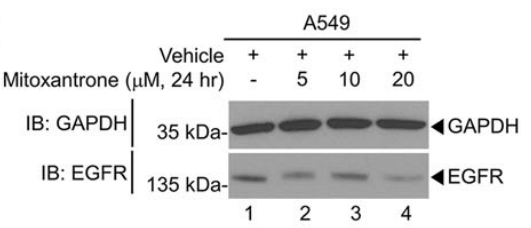
    The USP11 inhibitor Mitoxantrone (5-20 μM; 24 h) was treated to A549 (western blotting for EGFR) cells. The EGFR protein levels were assessed by western blotting using an anti-EGFR antibody.

    Mitoxantrone dihydrochloride purchased from MedChemExpress. Usage Cited in: J Exp Clin Cancer Res. 2025 Aug 5;44(1):228.  [Abstract]

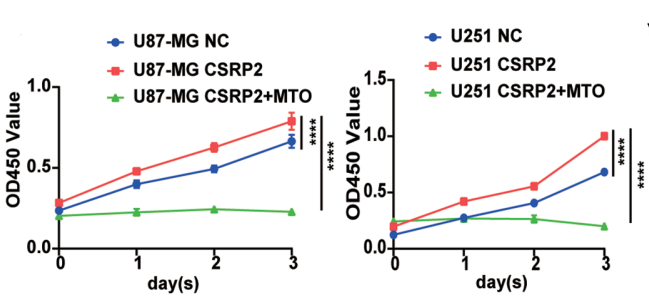
    U87-MG and U251 cells with stable CSRP2 overexpression (CSRP2) were treated with or without 0.5 µM Mitoxantrone (MTO) for indicated time periods and the cell proliferation was analyzed. Cells transfected with control vector (NC) were used as a negative control. Two-way ANOVA with Sidak’s post hoc test, n = 6 per group for U87-MG and U251.

    Mitoxantrone dihydrochloride purchased from MedChemExpress. Usage Cited in: J Exp Clin Cancer Res. 2025 Aug 5;44(1):228.  [Abstract]

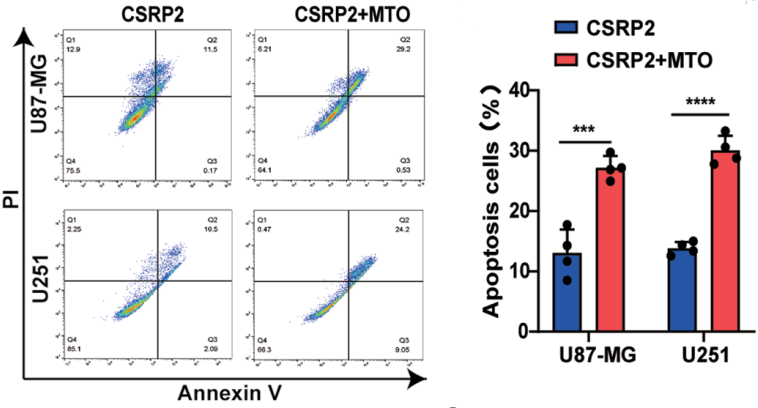
    U87-MG and U251 cells with stable CSRP2 overexpression were treated with 0.5 µM Mitoxantrone (MTO) for 48 h and cell apoptosis was measured by flow cytometry

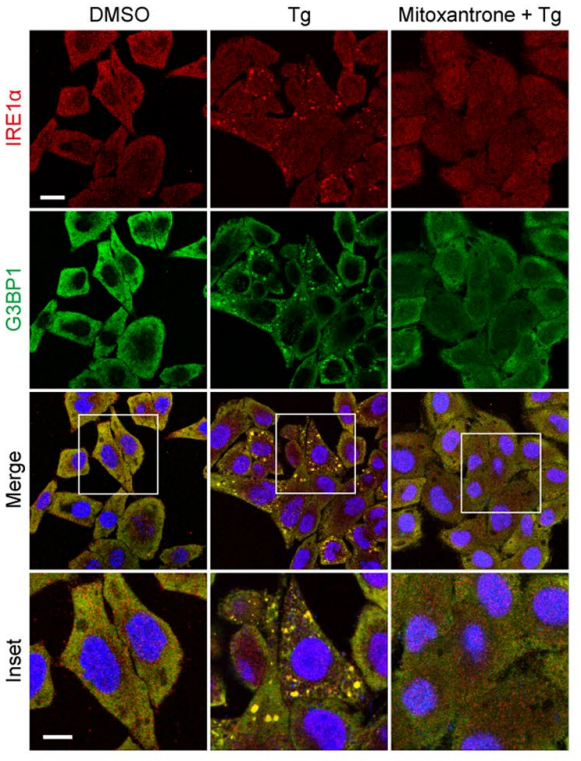
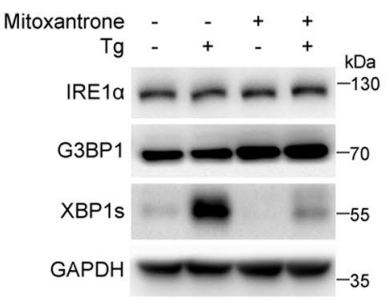
    Mitoxantrone dihydrochloride purchased from MedChemExpress. Usage Cited in: Nat Cell Biol. 2024 Jun;26(6):917-931.  [Abstract]

    HeLa cells were pre-treated with DMSO or Mitoxantrone (10 μM, 1 h) followed by Tg treatment (1 μM, 3 h).

    Mitoxantrone dihydrochloride purchased from MedChemExpress. Usage Cited in: Nat Cell Biol. 2024 Jun;26(6):917-931.  [Abstract]

    HeLa cells were pre-treated with DMSO or Mitoxantrone (10 μM, 1 h) followed by Tg treatment (1 μM, 3 h).

    View All Topoisomerase Isoform Specific Products:

    View All PKC Isoform Specific Products:

    View All Endogenous Metabolite Isoform Specific Products:

    • Biological Activity

    • Protocol

    • 순도&문서

    • References

    • 고객리뷰

    제품 설명

    Mitoxantrone dihydrochloride is a potent topoisomerase II inhibitor. Mitoxantrone dihydrochloride also inhibits protein kinase C (PKC) activity with an IC50 of 8.5 μM. Mitoxantrone dihydrochloride induces apoptosis of B-CLL (B-chronic lymphocytic leukaemia) cells. Mitoxantrone dihydrochloride shows antitumor activity[1][2][3][4]. Mitoxantrone dihydrochloride also has anti-orthopoxvirus activity with EC50s of 0.25 μM and and 0.8 μM for cowpox and monkeypox, respectively[5].

    IC50 & Target[1][2]

    PKC

    8.5 μM (IC50)

    Topoisomerase II


    Cellular Effect
    Cell Line Type Value Description References
    HL-60 IC50
    7.2 nM
    Compound: NVT
    Antiproliferative activity against human HL60 cells after 72 hrs by MTT assay
    Antiproliferative activity against human HL60 cells after 72 hrs by MTT assay
    [PMID: 28333459]
    HL60/MX2 IC50
    350.7 nM
    Compound: NVT
    Antiproliferative activity against human HL60/MX2 cells after 72 hrs by MTT assay
    Antiproliferative activity against human HL60/MX2 cells after 72 hrs by MTT assay
    [PMID: 28333459]
    LoVo IC50
    0.1 μM
    Compound: Mitoxantrone
    Cytotoxicity against human LoVo cells under oxic condition assessed as growth inhibition after 74 hrs by sulforhodamine B assay
    Cytotoxicity against human LoVo cells under oxic condition assessed as growth inhibition after 74 hrs by sulforhodamine B assay
    [PMID: 22011244]
    LoVo IC50
    0.9 μM
    Compound: Mitoxantrone
    Cytotoxicity against human LoVo cells under hypoxic condition assessed as growth inhibition after 74 hrs by sulforhodamine B assay
    Cytotoxicity against human LoVo cells under hypoxic condition assessed as growth inhibition after 74 hrs by sulforhodamine B assay
    [PMID: 22011244]
    MCF7 IC50
    0.1 μM
    Compound: Mitoxantrone
    Cytotoxicity against doxorubicin-sensitive human MCF7 cells under oxic condition assessed as growth inhibition after 74 hrs by sulforhodamine B assay
    Cytotoxicity against doxorubicin-sensitive human MCF7 cells under oxic condition assessed as growth inhibition after 74 hrs by sulforhodamine B assay
    [PMID: 22011244]
    MCF7 IC50
    1 μM
    Compound: Mitoxantrone
    Cytotoxicity against doxorubicin-sensitive human MCF7 cells under hypoxic condition assessed as growth inhibition after 74 hrs by sulforhodamine B assay
    Cytotoxicity against doxorubicin-sensitive human MCF7 cells under hypoxic condition assessed as growth inhibition after 74 hrs by sulforhodamine B assay
    [PMID: 22011244]
    MCF7 IC50
    4.7 μM
    Compound: Mitoxantrone
    Cytotoxicity against doxorubicin-resistant human MCF7 cells under oxic condition assessed as growth inhibition after 74 hrs by sulforhodamine B assay
    Cytotoxicity against doxorubicin-resistant human MCF7 cells under oxic condition assessed as growth inhibition after 74 hrs by sulforhodamine B assay
    [PMID: 22011244]
    MCF7 IC50
    > 10 μM
    Compound: Mitoxantrone
    Cytotoxicity against doxorubicin-resistant human MCF7 cells under hypoxic condition assessed as growth inhibition after 74 hrs by sulforhodamine B assay
    Cytotoxicity against doxorubicin-resistant human MCF7 cells under hypoxic condition assessed as growth inhibition after 74 hrs by sulforhodamine B assay
    [PMID: 22011244]
    In Vitro

    Mitoxantrone dihydrochloride inhibits PKC in a competitive manner with respect to histone H1, and its Ki value is 6.3 μM and in a non-competitive manner with respect to phosphatidylserine and ATP[1].
    Mitoxantrone dihydrochloride (0.5 μg/mL, 48 h) induces a decrease in B-CLL cells. Mitoxantrone dihydrochloride induces DNA fragmentation and the proteolytic cleavage of poly(ADP-ribose) polymerase (PARP), demonstrating that the cytotoxic effect of Mitoxantrone dihydrochloride is due to induction of apoptosis[2].
    Mitoxantrone dihydrochloride shows cytotoxicity to human breast carcinoma cell lines MDA-MB-231 and MCF-7 with IC50 values of 18 and 196 nM, respectively[3].

    MedChemExpress (MCE) has not independently confirmed the accuracy of these methods. They are for reference only.

    In Vivo

    Mitoxantrone dihydrochloride (IP, 0-3.2 mg/kg/day) produces a statistically significant number of 60-day survivors at 1.6 mg/kg in mice with IP implanted L1210 leukemia[4].
    Mitoxantrone dihydrochloride (IV, 0-3.2 mg/kg/day) shows effective antitumor activities and produces a 60% ILS (increase in lifespan) at 3.2 mg/kg in SC implanted Lewis lung carcinoma[4].

    MedChemExpress (MCE) has not independently confirmed the accuracy of these methods. They are for reference only.

    분자량

    517.40

    화학식

    C22H30Cl2N4O6

    CAS No.
    Appearance

    Solid

    Color

    Dark blue to black

    SMILES

    O=C1C2=C(C(NCCNCCO)=CC=C2NCCNCCO)C(C3=C(O)C=CC(O)=C13)=O.[H]Cl.[H]Cl

    Structure Classification
    Initial Source
    선적

    Room temperature in continental US; may vary elsewhere.

    보관

    4°C, sealed storage, away from moisture and light

    *In solvent : -80°C, 2 years; -20°C, 1 year (sealed storage, away from moisture and light)

    용액&용해도
    In Vitro: 

    H2O : 100 mg/mL (193.27 mM; Need ultrasonic)

    DMSO : 31.25 mg/mL (60.40 mM; Need ultrasonic; Hygroscopic DMSO has a significant impact on the solubility of product, please use newly opened DMSO)

    Preparing
    Stock Solutions
    Concentration Solvent Mass 1 mg 5 mg 10 mg
    1 mM 1.9327 mL 9.6637 mL 19.3274 mL
    5 mM 0.3865 mL 1.9327 mL 3.8655 mL
    View the Complete Stock Solution Preparation Table

    * Please refer to the solubility information to select the appropriate solvent. Once prepared, please aliquot and store the solution to prevent product inactivation from repeated freeze-thaw cycles.
    Storage method and period of stock solution: -80°C, 2 years; -20°C, 1 year (sealed storage, away from moisture and light). When stored at -80°C, please use it within 2 years. When stored at -20°C, please use it within 1 year.

    * Note: If you choose water as the stock solution, please dilute it to the working solution, then filter and sterilize it with a 0.22 μm filter before use.

    • 몰농도 계산기

    • 농도 희석 계산기

    Mass (g) = Concentration (mol/L) × Volume (L) × Molecular Weight (g/mol)

    Mass
    =
    Concentration
    ×
    Volume
    ×
    Molecular Weight *

    Concentration (start) × Volume (start) = Concentration (final) × Volume (final)

    This equation is commonly abbreviated as: C1V1 = C2V2

    Concentration (start)

    C1

    ×
    Volume (start)

    V1

    =
    Concentration (final)

    C2

    ×
    Volume (final)

    V2

    In Vivo:

    Select the appropriate dissolution method based on your experimental animal and administration route.

    For the following dissolution methods, please ensure to first prepare a clear stock solution using an In Vitro approach and then sequentially add co-solvents:
    To ensure reliable experimental results, the clarified stock solution can be appropriately stored based on storage conditions. As for the working solution for in vivo experiments, it is recommended to prepare freshly and use it on the same day.
    The percentages shown for the solvents indicate their volumetric ratio in the final prepared solution. If precipitation or phase separation occurs during preparation, heat and/or sonication can be used to aid dissolution.

    • Protocol 1

      Add each solvent one by one:  10% DMSO    40% PEG300    5% Tween-80    45% Saline

      Solubility: ≥ 2.5 mg/mL (4.83 mM); Clear solution

      This protocol yields a clear solution of ≥ 2.5 mg/mL (saturation unknown).

      Taking 1 mL working solution as an example, add 100 μL DMSO stock solution (25.0 mg/mL) to 400 μL PEG300, and mix evenly; then add 50 μL Tween-80 and mix evenly; then add 450 μL Saline to adjust the volume to 1 mL.

      Preparation of Saline: Dissolve 0.9 g sodium chloride in ddH₂O and dilute to 100 mL to obtain a clear Saline solution.
    • Protocol 2

      Add each solvent one by one:  10% DMSO    90% (20% SBE-β-CD in Saline)

      Solubility: ≥ 2.5 mg/mL (4.83 mM); Clear solution

      This protocol yields a clear solution of ≥ 2.5 mg/mL (saturation unknown).

      Taking 1 mL working solution as an example, add 100 μL DMSO stock solution (25.0 mg/mL) to 900 μL 20% SBE-β-CD in Saline, and mix evenly.

      Preparation of 20% SBE-β-CD in Saline (4°C, storage for one week): 2 g SBE-β-CD powder is dissolved in 10 mL Saline, completely dissolve until clear.

    For the following dissolution methods, please prepare the working solution directly. It is recommended to prepare fresh solutions and use them promptly within a short period of time.
    The percentages shown for the solvents indicate their volumetric ratio in the final prepared solution. If precipitation or phase separation occurs during preparation, heat and/or sonication can be used to aid dissolution.

    • Protocol 1

      Add each solvent one by one:  PBS

      Solubility: 2 mg/mL (3.87 mM); Clear solution; Need ultrasonic and warming and heat to 60°C

    In Vivo Dissolution Calculator
    Please enter the basic information of animal experiments:

    Dosage

    mg/kg

    Animal weight
    (per animal)

    g

    Dosing volume
    (per animal)

    μL

    Number of animals

    Recommended: Prepare an additional quantity of animals to account for potential losses during experiments.
    Calculation results:
    Working solution concentration: mg/mL
    This product has good water solubility, please refer to the measured solubility data in water/PBS/Saline for details.
    The concentration of the stock solution you require exceeds the measured solubility. The following solution is for reference only.If necessary, please contact MedChemExpress (MCE).
    순도&문서

    Purity: 98.98%

    References
    Cell Assay 
    [3]

    The human breast carcinoma cell lines MDA-MB-231 and MCF-7 are seeded in standard 96-well plates. One day after seeding, the culture medium is changed and replaced by medium containing different concentration of Mitoxantrone (10-5 to 5 μM) with or without DHA (30 μM) during 7 days. Viability of cells are measured as a whole by the tetrazolium salt assay[3].

    MCE 는 독립적으로 이러한 방법들의 정확성을 확인하지 않았습니다. 참고용으로만 봐주십시오.

    Animal Administration
    [4]

    Mice: Mitoxantrone is tested for antitumor activity against experimental tumors in mice and the results are compared with those of seven antitumor antibiotics. The drugs are given IP or IV, in general on days 1, 5, and 9 following tumor inoculation. Mitoxantrone is given IP at the optimal dose (1.6 mg/kg/day; as a free base)[4].

    MCE 는 독립적으로 이러한 방법들의 정확성을 확인하지 않았습니다. 참고용으로만 봐주십시오.

    References

    Complete Stock Solution Preparation Table

    * Please refer to the solubility information to select the appropriate solvent. Once prepared, please aliquot and store the solution to prevent product inactivation from repeated freeze-thaw cycles.
    Storage method and period of stock solution: -80°C, 2 years; -20°C, 1 year (sealed storage, away from moisture and light). When stored at -80°C, please use it within 2 years. When stored at -20°C, please use it within 1 year.

    Optional Solvent Concentration Solvent Mass 1 mg 5 mg 10 mg 25 mg
    DMSO / H2O 1 mM 1.9327 mL 9.6637 mL 19.3274 mL 48.3185 mL
    5 mM 0.3865 mL 1.9327 mL 3.8655 mL 9.6637 mL
    10 mM 0.1933 mL 0.9664 mL 1.9327 mL 4.8319 mL
    15 mM 0.1288 mL 0.6442 mL 1.2885 mL 3.2212 mL
    20 mM 0.0966 mL 0.4832 mL 0.9664 mL 2.4159 mL
    25 mM 0.0773 mL 0.3865 mL 0.7731 mL 1.9327 mL
    30 mM 0.0644 mL 0.3221 mL 0.6442 mL 1.6106 mL
    40 mM 0.0483 mL 0.2416 mL 0.4832 mL 1.2080 mL
    50 mM 0.0387 mL 0.1933 mL 0.3865 mL 0.9664 mL
    60 mM 0.0322 mL 0.1611 mL 0.3221 mL 0.8053 mL
    H2O 80 mM 0.0242 mL 0.1208 mL 0.2416 mL 0.6040 mL
    100 mM 0.0193 mL 0.0966 mL 0.1933 mL 0.4832 mL

    * Note: If you choose water as the stock solution, please dilute it to the working solution, then filter and sterilize it with a 0.22 μm filter before use.

    • No file chosen (Maximum size is: 1024 Kb)
    • If you have published this work, please enter the PubMed ID.
    • Your name will appear on the site.
    Help & FAQs
    • Do most proteins show cross-species activity?

      Species cross-reactivity must be investigated individually for each product. Many human cytokines will produce a nice response in mouse cell lines, and many mouse proteins will show activity on human cells. Other proteins may have a lower specific activity when used in the opposite species.

    최근 본 상품:

    온라인 문의

    Your information is safe with us. * Required Fields.

    상품명


    Requested Quantity *

    고객명 *


    호칭

    메일주소 *


    전화번호 *

    Department


    회사명 *

    City

    Country or Region *


    비고

    대량구매 문의

    Inquiry Information

    상품명:
    Mitoxantrone dihydrochloride
    Cat. No.:
    HY-13502A
    수량:
    MCE Japan Authorized Agent: