130 Results for "

Drug design

" in MedChemExpress (MCE) Product Catalog:
Products (130)

130 Results for "Drug design" in MCE Product Catalog:

Cat. No.: HY-P10033
CAS No.: 245080-24-4
Target:  

Ser/Thr Protease

Research Areas:  

Others

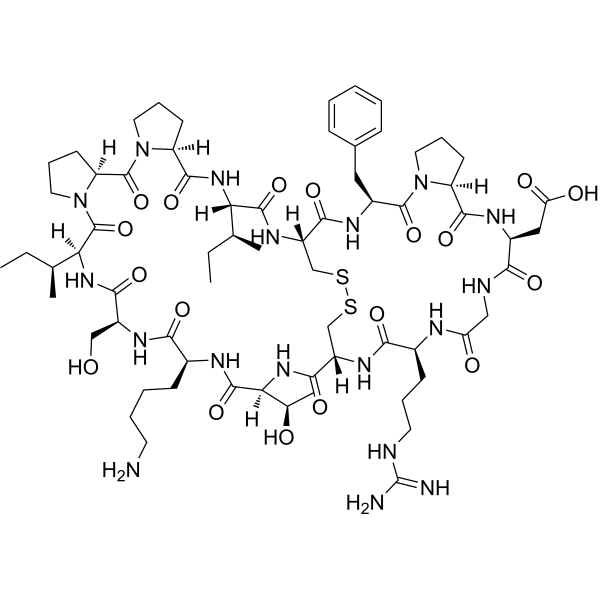
SFTI-1 is a cyclic peptide trypsin inhibitor consisting of 14 amino acid residues. SFTI-1 belongs to the Bowman-Birk class of inhibitors. Characterized by its small size, high stability, and potent activity, SFTI-1 can be used for research on peptide drug design platforms .
loading...
    loading...
Cat. No.: HY-Y0135
CAS No.: 532-24-1
Target:  

Drug Intermediate

Research Areas:  

Cancer

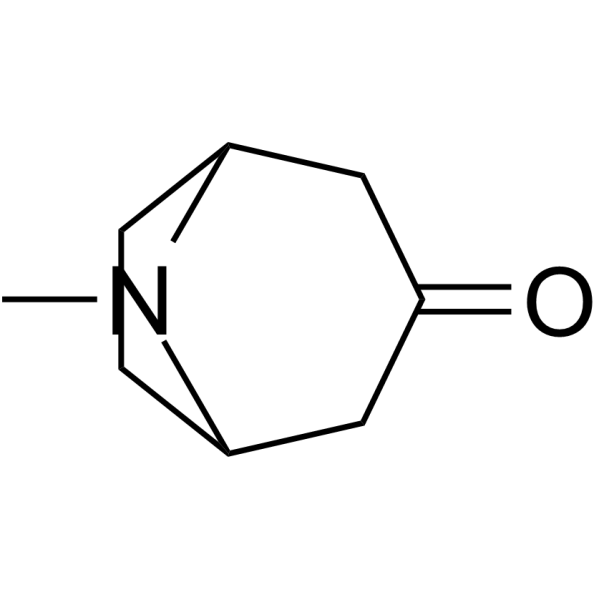
Tropinone is an organic synthesis intermediate and a skeleton for constructing derivatives containing thiazole rings and other structures. Tropinone derivatives have anticancer activities such as inducing tumor cell apoptosis and inhibiting tyrosinase activity, and can be used in research such as anticancer drug development and tyrosinase inhibitor design .
loading...
    loading...
Cat. No.: HY-I0314
CAS No.: 269410-08-4
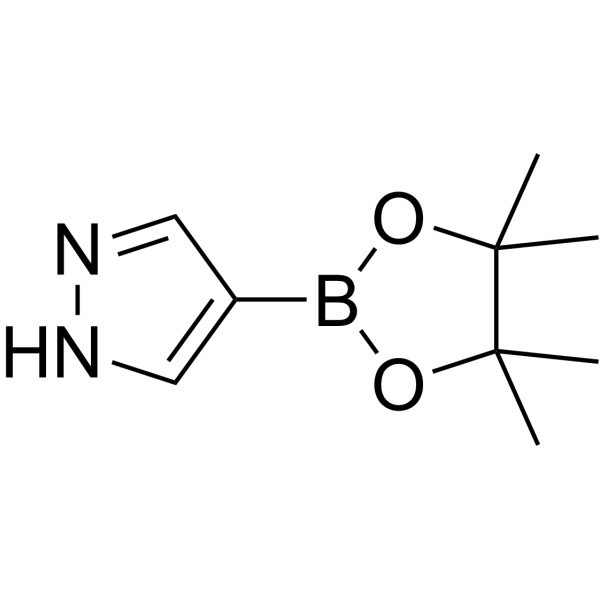
1H-Pyrazole-4-boronic acid pinacol ester is a drug intermediate that can be used for the synthesis of Mps1 kinase inhibitors .
loading...
    loading...
Cat. No.: HY-162088
CAS No.: 2241311-72-6
Research Areas:  

Inflammation/Immunology

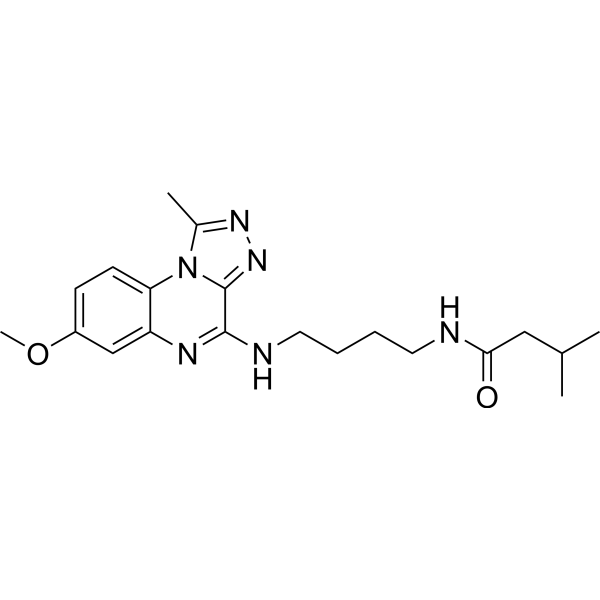
DW71177 is a novel [1,2,4]triazolo[4,3-a] quinoxaline-based potent and BD1-Selective BET inhibitor, and can be used for study of acute myeloid leukemia .
loading...
    loading...
Cat. No.: HY-149408
Target:  

Monoamine Oxidase

Research Areas:  

Cancer

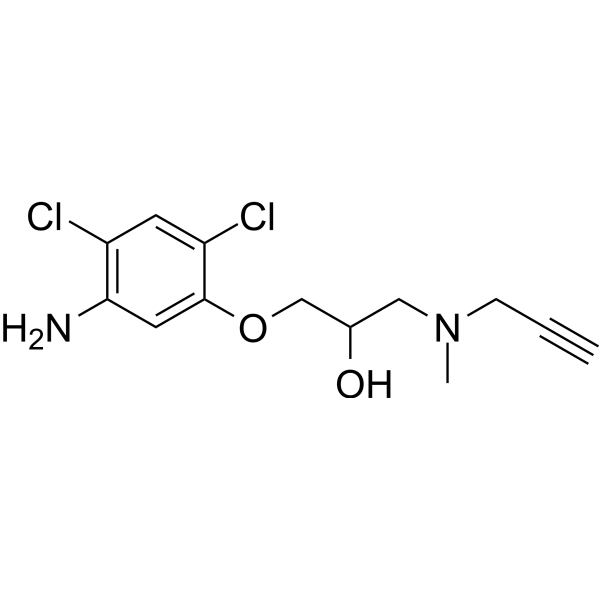
MAOA-IN-1 (compound 15) is an orally active MAOA inhibitor with cytotoxicity against prostate cancer cells. MAOA-IN-1 has Caco-2 permeability and lower CNS permeability. MAOA-IN-1 can be further used in the research of anti-cancer and anti-inflammatory indications .
loading...
    loading...
Cat. No.: HY-179177
CAS No.: 1081122-55-5
Research Areas:  

Neurological Disease

AO-365/43472821 is a selective, brain-penetrant Dual-specificity tyrosine phosphorylation-regulated kinase 1A (DYRK1A) inhibitor (IC50 = 0.29 μM) and shows a significant inhibitory effect on (CDC-like kinase 1) CLK1 (IC50 = 0.08 μM). AO-365/43472821 could protect the human neuroblastoma cell line SH-SY5Y from Okadaic acid (HY-N6785) (OA)-induced injury. AO-365/43472821 decreased tau (pSer396)/tau and Aβ1-42 protein expression. AO-365/43472821 can be used for the study of Alzheimer's disease .
loading...
    loading...
Cat. No.: HY-W004440
CAS No.: 6531-38-0
Research Areas:  

Others

2,2'-(Piperazine-1,4-diyl)diethanamine is a piperazine with two N-ethanamine groups. This type of molecule may be used to build drug molecules or design novel ionizable aminolipid head groups for lipid nanoparticles.
loading...
    loading...
Cat. No.: HY-128871
CAS No.: 2130869-17-7
Research Areas:  

Cancer

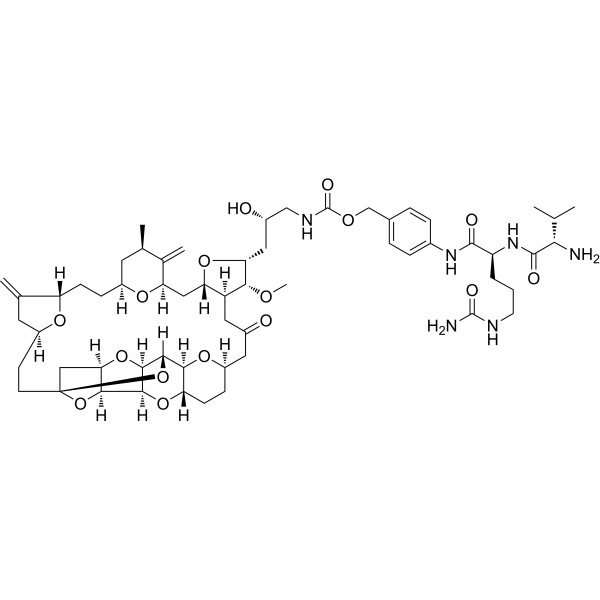
VCP-Eribulin is a bioactive molecule-linker conjugate designed for ADCs (Drug-Linker Conjugates for ADC), formed by conjugating an ADC linker (VCP) with Eribulin (HY-13442). Eribulin is a unique microtubule inhibitor exhibiting antitumor activity. VCP-Eribulin can be utilized for antibody conjugation .
loading...
    loading...
Cat. No.: HY-151748
CAS No.: 1994267-98-9
Target:  

ADC Linkers

Research Areas:  

Others

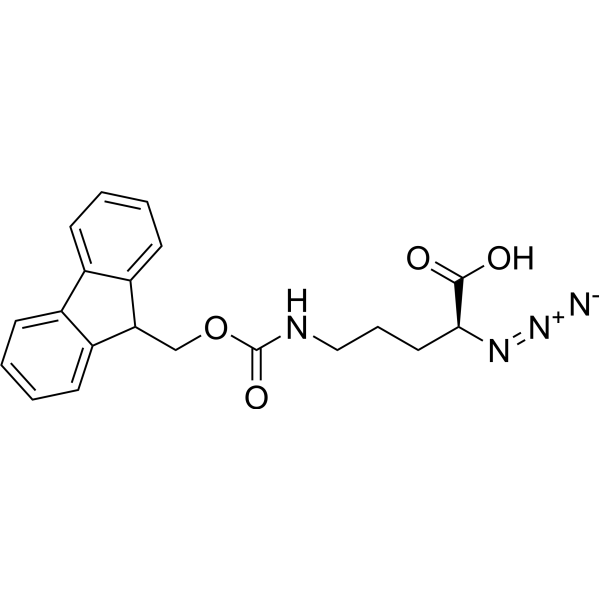
N3-L-Orn(Fmoc)-OH is a non-natural amino acid building block specially designed for solid-phase peptide synthesis and click chemistry. N3-L-Orn(Fmoc)-OH can be used as a linker for ADC (antibody-drug conjugate) or for the development of targeting peptides.
loading...
    loading...
Cat. No.: HY-126055
CAS No.: 689-13-4
Hadacidin is a competitive inhibitor of adenylate synthase. Hadacidin binds to the active site of adenylate synthase, competitively inhibiting L-aspartate binding. Hadacidin can be used in drug design, to help develop new inhibitors or activators to regulate adenylate synthase activity, and to play a role in the study of related diseases .
loading...
    loading...
Cat. No.: HY-D1352A
Sulfo-Cyanine7 NHS ester (TEA) is an amine-reactive succinimide ester. Sulfo-Cyanine7 NHS ester (TEA) reagent allows to prepare sulfo-Cyanine7-labeled biomolecules, such as proteins, with ease. Dye labeled molecules can be subsequently used for various research and agent design related experiments.
loading...
    loading...
Cat. No.: HY-176734
Research Areas:  

Cancer

CZL-S092 is a PLK4 inhibitor with an IC50 value of 0.9 nM and excellent selectivity over other PLK4 family members (PLK1, PLK2, and PLK3). CZL-S092 exhibits anti-neuroblastoma activity in vitro (IMR-32 cells, IC50 = 1.143 μM). CZL-S092 inhibits cell migration and halts the cell cycle and induces apoptosis. CZL-S092 can be used in studies of various cancers including neuroblastoma cancer .
loading...
    loading...
Cat. No.: HY-178760
Target:  

5-HT Receptor

Research Areas:  

Neurological Disease

TGF-8027 is a selective 5-HT2A agonist that can cross the blood-brain barrier. TGF-8027 exhibits EC50s of 3.3 nM, 160 nM and 7600 nM against human 5-HT2A, 5-HT2C and 5-HT2B and exhibits EC50s against mouse 5-HT2A and mouse 5-HT2C of 14 and 210 nM. TGF-8027 can induce a head-shaking response in mice. TGF-8027 can be used to study diseases that target the 5-HT2A receptor (such as depression) .
loading...
    loading...
Cat. No.: HY-153264
CAS No.: 2439115-08-7
Target:  

Taste Receptor

Research Areas:  

Others

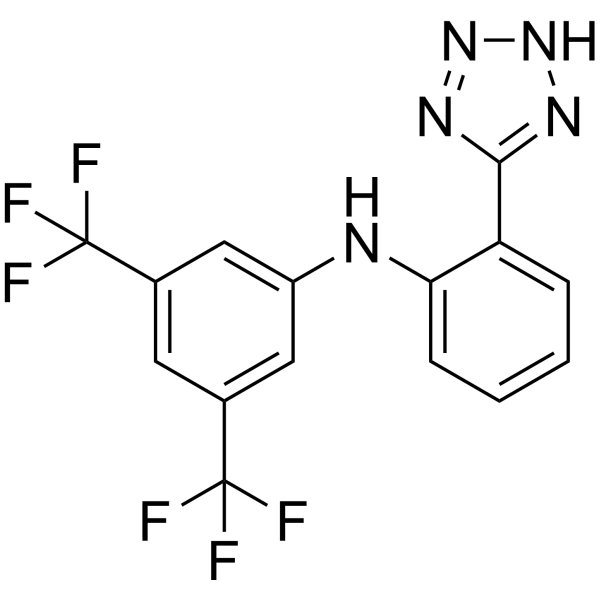
TAS2R14 agonist is a potent TAS2R14 partial agonist with an EC50 of 116.6 ±23.6 nM .
loading...
    loading...
Cat. No.: HY-16979
CAS No.: 189015-24-5
Target:  

Opioid Receptor

Research Areas:  

Neurological Disease

RK-851 is a highly selective and orally active δ-opioid receptor antagonist, with a negative logarithm of the antagonist concentration (pA2) of 8.84. TRK-851 exhibits the selectivity for the δ receptor of more than 100 times higher than that for the μ or κ receptors. TRK-851 exhibits a potent antitussive effect in a rat model of capsaicin-induced cough. TRK-851 can be used for research on antitussive effects .
loading...
    loading...
Cat. No.: HY-147128
CAS No.: 2378039-23-5
PY109 is an orally active and highly selective aryl hydrocarbon receptor (AHR) agonist. PY109's EC50 values in human-derived HepG2 and mouse Hepa-1c1c7 cells are 1.2 nM and 1.4 nM respectively. PY109 significantly upregulates the expression of CYP1A1 and IL-22, and inhibits the expression of IL-17A. PY109 significantly improves colitis in mice. PY109 can be used for research on colitis .
loading...
    loading...
Cat. No.: HY-P11260
CAS No.: 3051556-89-6
Research Areas:  

Metabolic Disease

MD5 is a selective TMPRSS6 mimetic peptide inhibitor with an IC50 for recombinant human TMPRSS6 protein of 22 nM and a Ki of 3.4 nM. MD5 exhibits the significantly reduced inhibitory effect on Matriptase, with an IC50 of 352 nM and a Ki of 99.2 nM. MD5 exhibits good target specificity and only has a weak inhibitory effect on thrombin (Thrombin), with Ki of 120 nM. MD5 demonstrates good initial drugability and can be used for the study of iron overload diseases (such as hereditary hemochromatosis, β-thalassemia) .
loading...
    loading...
Cat. No.: HY-179395
CAS No.: 3074990-47-6
Target:  

YAP

Research Areas:  

Cancer

TEAD-IN-23 (Compound 22) is an efficient pan-TEAD inhibitor with an IC50 of 10 nM. TEAD-IN-23 exhibits potent anti-proliferative activity in both NCI-H226 and MSTO-211H. TEAD-IN-23 causes complete tumor regression in the MSTO-211H xenograft tumor model. TEAD-IN-23 can be used for the study of mesothelioma and hepatocellular carcinoma .
loading...
    loading...
Cat. No.: HY-164785
CAS No.: 2748951-17-7
Target:  

Drug Intermediate

Research Areas:  

Others

TCO-PEG5-maleimide is a PEG linker with TCO and maleimide groups, specifically enabling tetrazine click chemistry and thiol conjugation for bioconjugation, probe design, and drug delivery.
loading...
    loading...
Cat. No.: HY-178955
Research Areas:  

Cancer

EGFR-IN-182 (Compound 4) is an EGFR inhibitor with an IC50 value of 199 nM. EGFR-IN-182 inhibits HSP90 and PI3K, with IC50 values of 5.007 and 13.596 μM respectively. EGFR-IN-182 exhibits strong anti-proliferative activity against MCF-7 and MDA-MB-231 cells. EGFR-IN-182 downregulates Cyclin D1, inducing cell cycle arrest; it enhances the activity of caspase-9, inducing cell apoptosis. EGFR-IN-182 downregulates the expressions of ERK and AKT. EGFR-IN-182 can be used for research on breast cancer .
loading...
    loading...

